



Abstract
This study investigates the phenomenon of magnification illusion, where the perception of perspective and optical slant angles changes when a scene is magnified. Our findings indicate that magnification influences these angles differently depending on location, which suggests that the illusion might be caused by changes in three-dimensional (3D) interpretation. Our findings reveal that the change of perspective angle interpretation primarily occurred when the stimuli were on the ground and sidewall but not those on the ceiling. Specifically, stimuli on the ceiling exhibit a significant underestimation of optical slant angles, while the perspective angle remains relatively stable. We developed a mathematical model based on the hypothesis of changes in 3D interpretation, which aligns well with our data. It was found that the interpretation of the perspective angle and the optical slant angle changes when a scene is magnified as indicated by the proposed relationship. This research provides the characteristics underlying spatial perception and its alteration under magnification and relative location, with potential applications in virtual reality and augmented reality system designs.
How to cite this article
Sripian, P., Ijiri, T., & Yamaguchi, Y. (2025). Magnification effects on perspective angle and optical slant angle across locations. i-Perception, 16(4), 1–26. https://doi.org/10.1177/20416695251351412
Introduction
When we look at two parallel lines on a floor running from the foot to infinity, the lines appear closer or converge into the distance. This linear perspective effect helps the visual system determine depth and spatial orientation. However, when one looks at the two parallel lines with a pair of binoculars, the expected convergence appears reversed, making parallel lines seem to diverge, as shown in Figure 1. We refer to this perception as “Magnification illusion.” perce The first documented report of this perceptual distortion was by Eltenton (1976). Later, Tsuinashi (2013) observed a similar effect when viewing rectangular stimuli on the ground through binoculars. To the best of our knowledge, only these two papers have mentioned this phenomenon. The underlying mechanism of this illusion remains unclear, and previous explanations have attributed it to potential optical distortions introduced by binocular lenses. However, our experimental findings contradict this explanation. Specifically, we observed that the retinal image formed through binoculars is an accurate magnification of the real scene, as shown in the left and right of Figure 2. This suggests that the illusion is not a result of optical distortions but rather a perceptual phenomenon tied to how the visual system interprets magnified scenes.
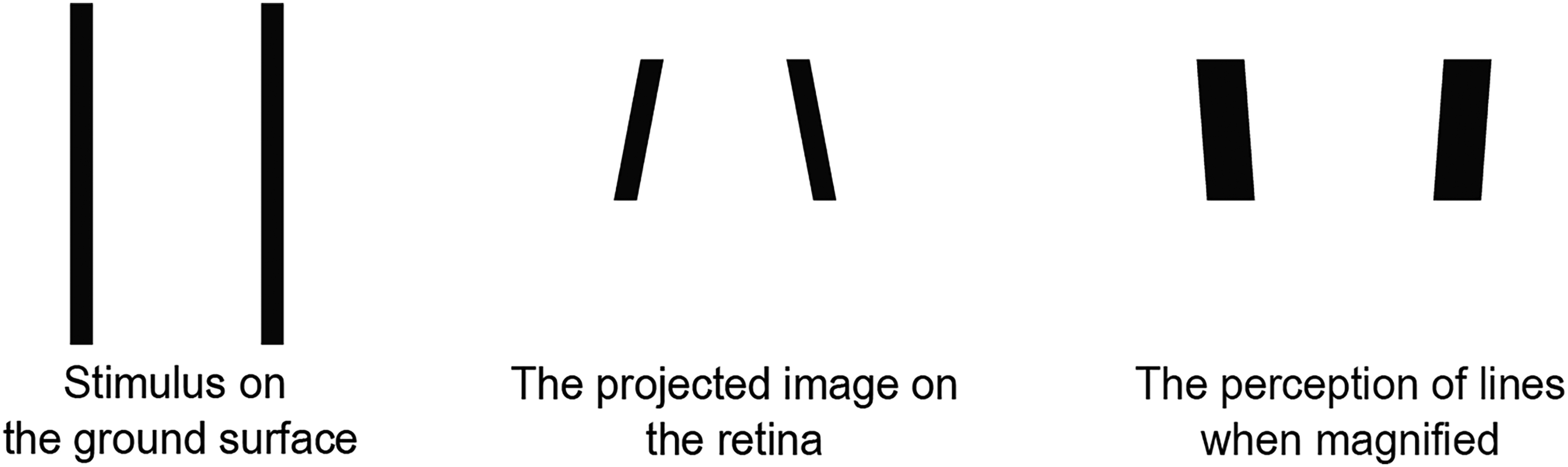
The example of the magnification illusion. Left: The stimulus on the ground surface. Middle: The projected image on the retina. Right: The perception of the same stimulus when magnified, as reported by Eltenton (1976).
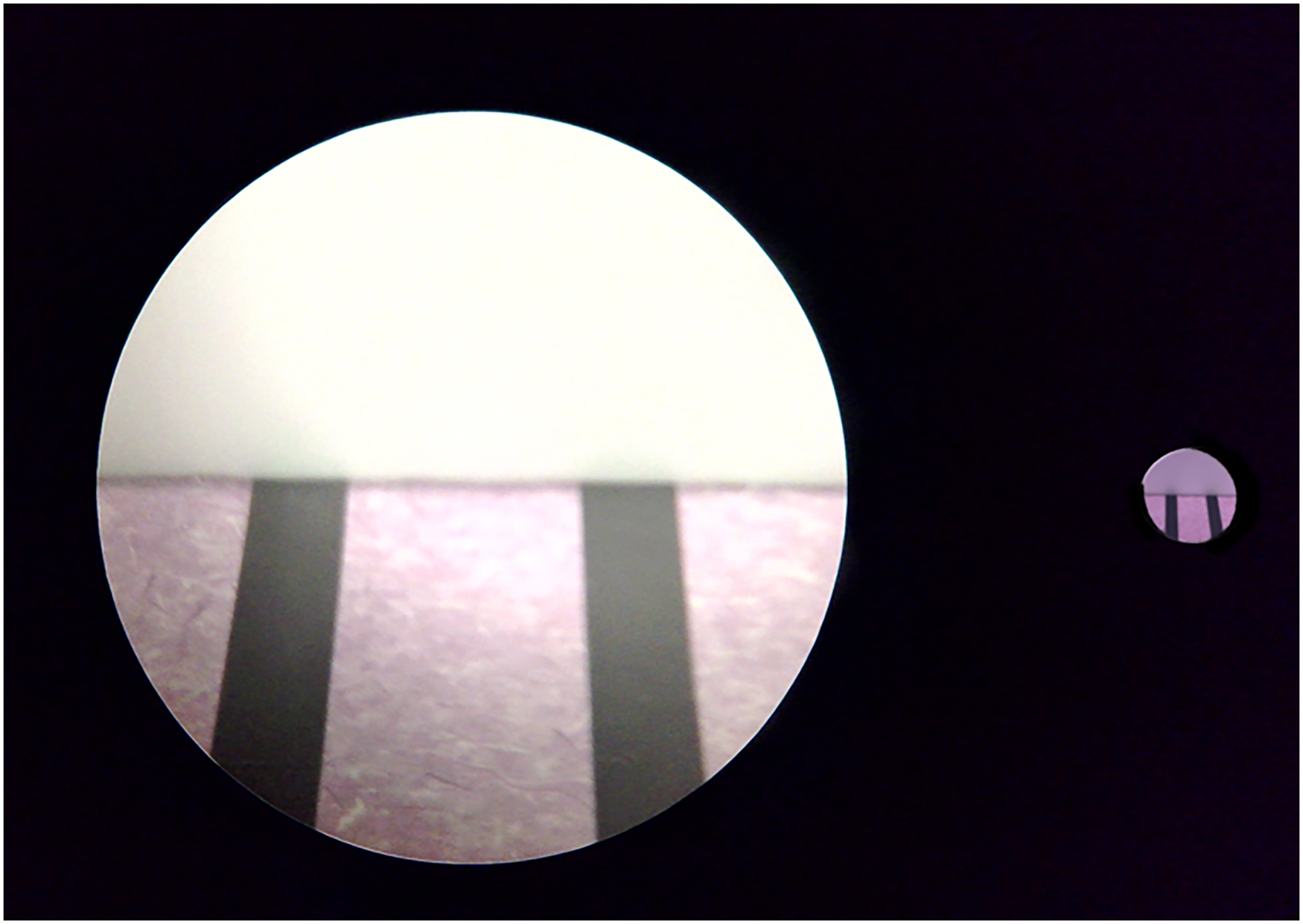
Images of the parallel lines stimulus in the ground setting of the experiment. The views are centered on the far edge of the stimuli. Left: The image was taken with a camera lens attached to binoculars. Right: The image was taken with the camera lens at the end of the paper cylinder tube.
To explain this illusion, we proposed an alternative theory based on the depth compression Sripian et al. (2021, 2023). The interpretation of an angle between the lines in the three-dimensional (3D) scene is changed due to magnification, which may be related to depth compression. Objects seen through binoculars appear to have less depth, with regard to the binoculars’ optical axis, making them appear closer together than their actual distance. The perspective projection without magnification can be expressed with the following equation, given that a point
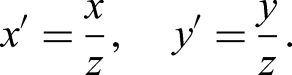


Perspective projection illustrating depth compression along the optical axis,
Binoculars consist of two parallel barrels that create aligned optical axes. This leads to depth compression along the optical axis that aligns with the midpoint of the barrels, which affects binocular disparity in a way that resembles depth compression. We perceive the objects as simply appearing closer when they are magnified.
Magnification alters depth perception, leading to slant angle underestimation due to depth compression along the optical axis, as illustrated in Figure 4. The relationship between retinal perspective, stimulus size, and slant perception has been extensively studied, with Freeman Jr (1966) demonstrating that both retinal perspective and stimulus size play critical roles in determining the absolute threshold for visual slant. Similarly, Braunstein and Payne (1969) found that relative slant judgments depend on form ratio and perspective cues. These findings indicate that retinal images serve as critical inputs for depth perception.

The concept of slant underestimation caused by depth compression along the optical axis: the plane (in red) appears closer as if the plane is less slanted (in blue).
We assume that the depth compression might affect the perception of the slant angle and also the angles between two lines, which could cause the magnification illusion. The interpretation of the angles between two lines are changed according to the change of slant angle of the plane on which the lines lie. Figure 5 illustrates the change in the 3D interpretation of the two parallel lines on the ground, indicated in bold black lines. The parallel lines would converge at a vanishing point

Illustration for multiple interpretations of one projected retinal image (yellow). One can interpret this image as being parallel lines placed on the ground (black lines), being converged and slanted upward (blue lines), or being diverged and slanted downward (green lines).
We explored how depth compression influences the perception of two kinds of angles, the optical slant angle (
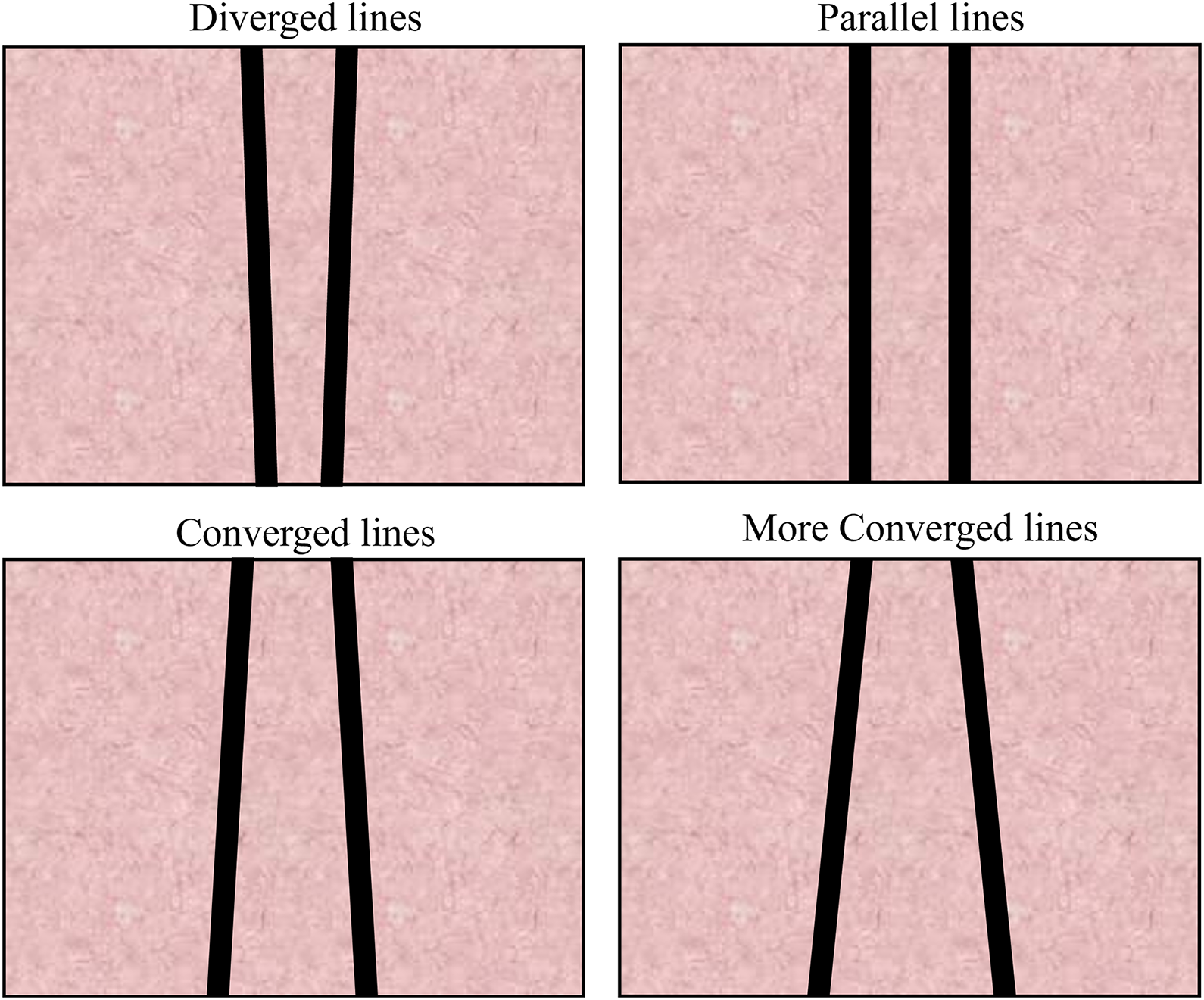
Four stimuli used in the experiment by Sripian et al. (2021) and Sripian et al. (2023).
While setting up the experiment, we noticed that the perception of parallel lines placed in different locations, such as the ceiling or sidewall, was somewhat different from the perception on the ground when viewed through binoculars. This observation implies that changes in magnification might vary based on location, which could provide valuable cues to understand the magnification illusion. In this work, we explore the magnification illusion by examining the optical slant and perspective angles of two lines placed on the ground, sidewall, and ceiling.
Distance Perception
The image of the external world on the retina is flat or 2D, but it is still possible to reproduce the 3D information with remarkable precision, even if perceived with a single eye. The visual system relies on depth cues to reconstruct 3D information from the 2D image projected on the retina. Cutting and Vishton (1995) adapted the plot from Nagata (1989) to form a just-discriminable depth thresholds as a function of the log of distance from the observer, from 0.5 to 5000 m, based on nine sources of information about the layout, which were convergence, accommodation, binocular disparity, motion, height, aerial, occlusion, relative size, and relative density. Based on the functions, the space around the observer could be divided into three types of space: personal space, action space, and vista space. However, their plot did not include important cues such as texture gradient, linear perspective, shading, and so on. For instance, the ground surface is vital for accurate egocentric distance judgment (Gibson, 1950; Sinai et al., 1998). Wu et al. (2004) showed that an observer judges the distance of an object by the sequential-surface-integration process. The surface integration process (He et al., 2004) is performed by integrating local patches of ground information into a global surface reference frame. This process reliably provides depth information, but it operates directionally, integrating cues primarily from near to far distances.
When a field of view (FOV) is restricted, the scene size could appear smaller (Creem-Regehr et al., 2005; Dolezal, 1982; Hagen et al., 1978). For example, the restricted FOV could corrupt spatial judgment because of its effect on reduced peripheral information (Dolezal, 1982). In other words, reduced FOV is found to compress perceived distance in the real environment experiments (Dolezal, 1982; Hagen et al., 1978), and also in the virtual environments (Loomis & Knapp, 2003; Thompson et al., 2004; Willemsen et al., 2008).
Optical Slant Perception With Regard to Distance Perception in Various Locations
Over centuries, distance perception in human visual perception has been extensively investigated. Many studies reported that humans would compress egocentric distance, that is, perceived distance from an observer to an object, as much as 0.7 when observing the scene using the naked eye (Foley et al., 2004; Kelly et al., 2004). This depth compression may cause an underestimation in optical slant (Kammann, 1967; Proffitt et al., 1995; Wagner, 1985).
Li and Durgin (2010) conducted an experiment to investigate how perceived optical slant varies with different physical slants. Their methodology employed an innovative approach, using implicit judgments of optical slant based on an apparent isosceles right triangle on the eye-level surface. This method provided a novel way to assess slant perception without relying on explicit judgments. The results of their study closely aligned with the logarithmic function of viewing distance proposed by Bridgeman and Hoover (2008). They also introduced the angular expansion theory, which suggests an underlying gain for a perceived optical slant of
Building upon their initial work, Li and Durgin (2012) later compared the angular expansion theory with the intrinsic bias hypothesis, providing additional insights into the mechanisms underlying slant underestimation. These findings collectively suggest that perceived optical slant is subject to systematic biases influenced by factors such as depth compression and binocular disparity information.
Slant perception is believed to be affected by different environmental surfaces. The ground theory proposed by Gibson (1950) suggested that there is visual anisotropy in slant perception and that surface continuity is important for organizing 3D scenes (Epstein & Park, 1964). Bian et al. (2005, 2006) found that human visual perception relies on the optical contact information provided by the ground, not by the ceiling, to organize 3D scenes. In their later work (Bian & Andersen, 2011), they also found that visual space perception when viewing a ground surface is less compressed than when viewing a ceiling surface. This suggests the unique role of the ground surface in the perceptual organization of 3D scenes. In the study of perceived slant from texture by Higashiyama and Yamazaki (2016), the pattern in which the direction of the gradient replicates that of the ground appears to be less slanted from the fronto-parallel plane, than the ceiling regardless of the head position.
Magnification Illusion on the Ground
According to Sripian et al. (2023), we hypothesized that the perception of perspective and optical slant angles would change when the scene is magnified. This perceptual shift could be attributed to changes in the 3D interpretation of lines during magnification. Figure 7 shows the two specific theoretical projection models of the possible changes in the interpretation when viewing the parallel lines under magnification.

Two specific interpretations when viewing a scene through a telescope: left—parallel lines on a slanted plane, and right—diverging lines on a level plane. The fronto-parallel planes are colored red for naked-eye viewing conditions and blue for magnified viewing conditions.
To test this hypothesis, we analyze how the perceived perspective angle and the perceived optical slant deviate from the actual perspective and optical slant angles under different viewing conditions (magnification or naked eyes, under monocular vision or binocular vision) using multiple stimuli with different actual perspective angles placed on the ground. In the experiment, participants were asked to view different stimuli through binoculars (magnified viewing condition) using both eyes (binocular vision) and only one eye (monocular vision) and through paper cylinders (naked eyes) using both eyes (binocular vision) and only one eye (monocular vision). The results showed that the perspective angle is underestimated for all stimuli if magnified only when viewed with binocular vision. Meanwhile, the optical slant is underestimated even when viewed using the naked eye, and it is even more underestimated when magnified, regardless of binocular or monocular vision, when the stimuli are placed on the ground.
Research Purpose and Hypothesis
In a previous experiment on the ground surface, (Sripian et al., 2023), we observed that the perspective angle
During that experiment, we noticed interesting variations in the interpretation change depending on the stimulus location. When viewed through the telescope, the stimulus in other locations appeared to slant towards the fronto-parallel plane, while the perspective angle remained unchanged, indicating a decrease in the optical slant angle only. The difference of the stimulus location merely causes the 2D rotation in the retinal image. We hypothesize that changes in the location of the stimulus, particularly due to rotations within the 2D retinal image plane, will influence the 3D interpretation of
The interpretation change could arise from the nature of the surfaces themselves. The ceiling and sidewall are typically perceived as man-made structures, whereas the ground is a natural surface. Thus, the ground may be seen as a unique case that is different from the sidewalls and ceiling. On the other hand, differences in interpretation may be caused by binocular disparity. Research by Backus et al. (1999), Gillam and Lawergren (1983), Howard and Rogers (1996), Li and Durgin (2013), and Rogers and Bradshaw (1993) indicates that vertical and horizontal structures lead to variations in perception. While the standard terminology in vision science literature (Gillam & Lawergren, 1983; Howard & Rogers, 1996) distinguishes between slant (orientation about a vertical axis) and inclination (orientation about a horizontal axis), for reader convenience and consistency throughout this manuscript, we use the unified term ‘‘slant angle,
Methods
In this study, our primary objective was to investigate how perspective angle and optical slant angle are perceived in different locations. The stimulus was placed on various surfaces, including the ground, ceiling, and sidewall, and participants’ perceptions were measured accordingly.
Participants
Twenty-three students participated in the experiment, including 16 males and seven females. The average age of the participants was 24.5 years, with a standard deviation of 4.76 years. The research was conducted with the approval and compliance with the regulations of the Institutional Review Board of Shibaura Institute of Technology. Prior to the experiment, all participants provided informed consent, indicating their willingness to participate. The participants were not given any information about the study’s specific objectives. All participants had either normal vision or wore corrective lenses to ensure normal vision. To assess their stereo acuity, four random-dot stereograms were presented, and all participants were able to identify all the images displayed correctly.
Stimulus
Similar to our previous experiment described by Sripian et al. (2023), we utilized four stimuli in this study. Figure 6 shows the four stimuli employed in the experiment: diverged lines, parallel lines, converged lines, and more converged lines, with physical perspective angles of
Apparatus
In this study, we examined the perception of stimuli in three different locations: ground, sidewall, and ceiling. To set up the experiment, we employed specific apparatus and arrangements for each location. For the stimulus placed on the ground, we directly positioned it on the floor of the experiment room. For the stimuli on the ceiling and the sidewall, we designed stimulus holders that securely held the stimuli in place, parallel to the actual ceiling and sidewall surfaces. The slant of the stimuli remained constant throughout each location. Figure 8 illustrates the experimental room setup for all three stimulus locations.
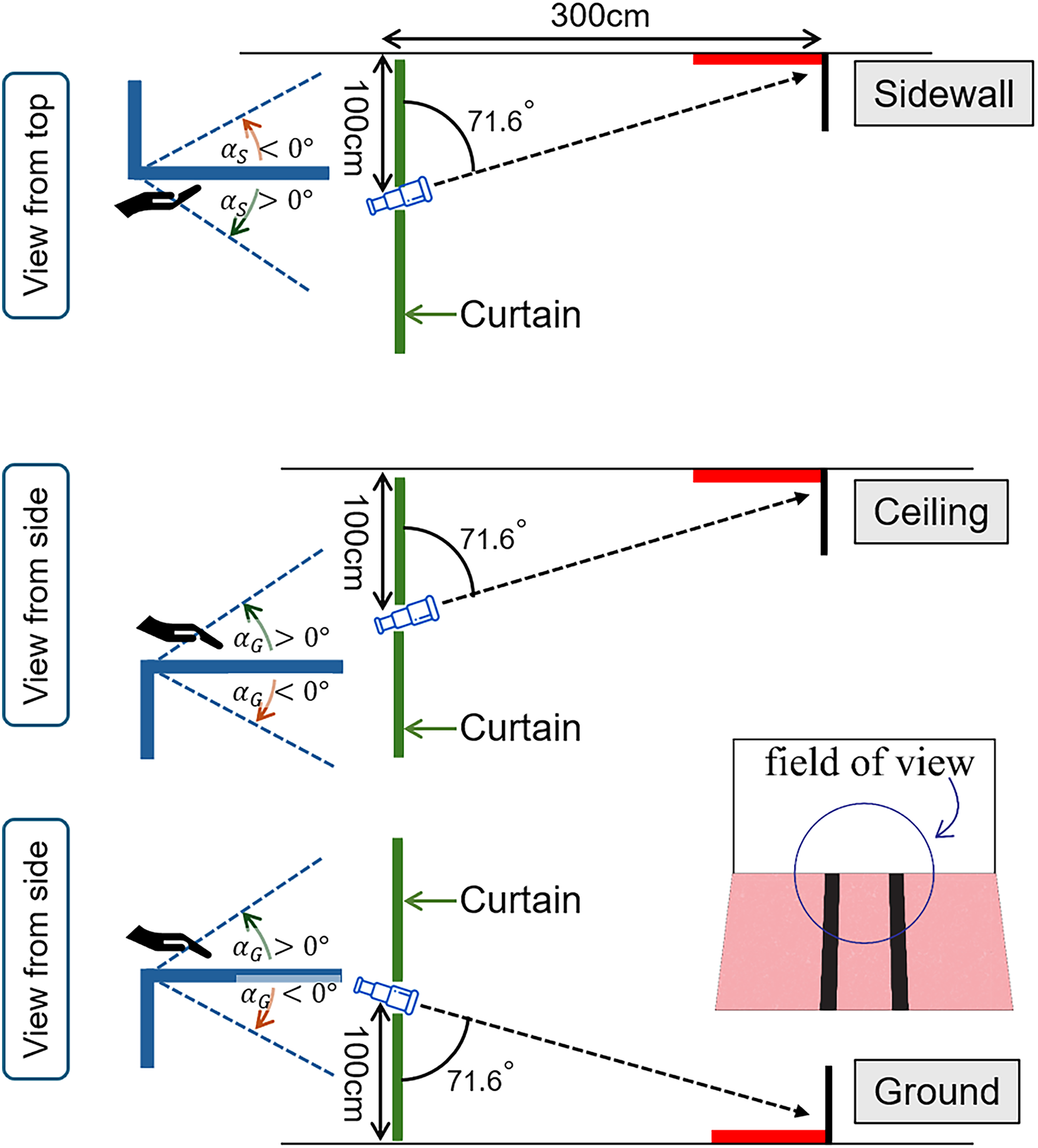
The experimental setup for the three locations.
To ensure that participants could only view the experimental setup through either binoculars or paper cylinders, the experiment area was covered by a curtain, leaving only a hole in the middle for the binoculars or paper cylinders to fit through. We used Olympus 8
Each set of viewing tools was mounted on its respective tripod, positioned 300 cm away from the far edge of the stimulus, and set at a height of 100 cm from the stimulus, as shown in Figure 8. Therefore, the optical axis is inclined at an angle of
Figure 9 shows a photo of the experiment setup. We developed customized tools to facilitate the measurement and replication of perceived angles. For the perspective angle, we created an angle adjuster using two digital angle finders, measuring

The photo from the experiment. The participant was looking at the stimulus placed on the sidewall, therefore the slant pad is designed to replicate the direction accordingly. The angle adjuster is placed on the small table near the participant.
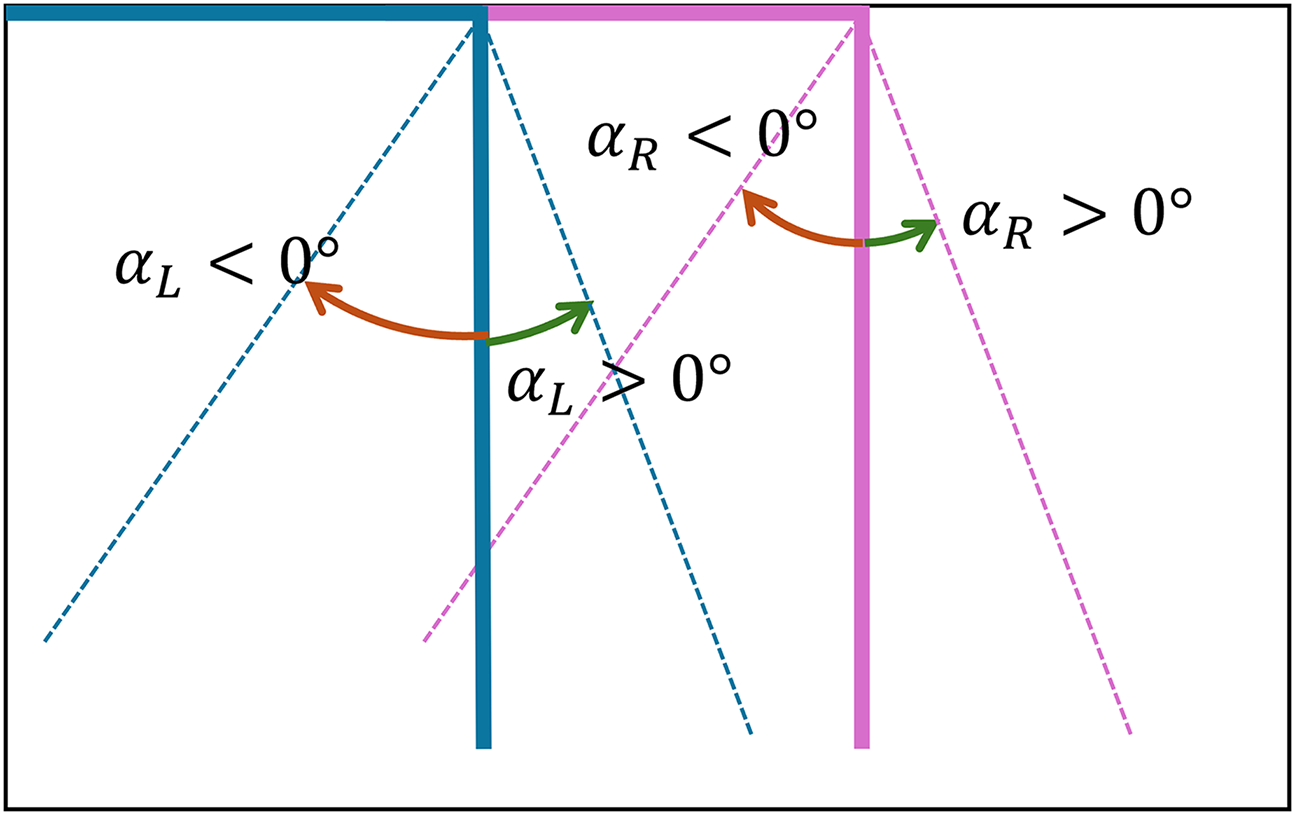
The design of angle adjuster.
To measure the slant angle, we designed a slant pad inspired by a palm board (Proffitt et al., 1995) and attached a digital angle finder to it. For the ground and ceiling stimuli, the slant pad which measures
Design
There are four types of conditions in the experiment;
Experimental Sequence 1: Stimulus presentation

Participants viewed four stimuli presented in a fully randomized order to avoid biases. For each stimulus, the participant was asked to estimate the stimulus’s perspective and optical slant angles. The participants first looked at the stimulus and then adjusted the digital angle finders until the angle adjuster and slant pad replicated their answers. After reaching a satisfactory alignment, participants directly recorded the angles
For the perspective angle,
For the optical slant angle,
After finishing the recording, the participant was instructed to sit on a chair until the experimenter had finished changing the stimulus. The participant was not allowed to see the stimulus during the changing time. In other words, he/she was permitted to observe their surroundings on his/her side of the curtain. The experimenter stayed with the participant the whole time. The participant was not given any feedback regarding their performances.
Results and Discussion
This section presents our findings on the changes in perspective angle (
We conducted a four-way repeated measures ANOVA to comprehensively analyze the complex interactions between these multiple factors. This section summarizes the main findings and their implications. For detailed results, including ANOVA outcomes, pairwise comparisons, and interaction effects, please refer to the Appendix. We will first look at the effects on
Our primary hypothesis was that changes in stimulus location would influence the changes in
Analysis on Perspective Angle
The analysis of perspective angle

Comparison of perspective angle

Average perspective angle
For the comparison among LOs, we found no significant main effect of LO on
Analysis on Optical Slant Angle
The analysis of optical slant angle
In terms of comparisons among LO, there was a significant interaction effect of LO
In our experiment, the slants of all the stimuli are the same (always
The perception of optical slant is influenced by the reference frame used to define zero slant. Kammann (1967) and Proffitt et al. (1995) measured geographical slant rather than optical slant, with Proffitt emphasizing an overestimation of slant when zero was defined relative to the horizontal plane. In contrast, when optical slant is defined with fronto-parallel as zero, it is typically underestimated, as reported in studies such as Wagner (1985). Additionally, Li and Durgin (2013) demonstrated that perceived optical slant exhibits a nonlinear bias and interacts with binocular disparity information. Consistent with these findings, our experiment also revealed an underestimation of optical slant when defined relative to a fronto-parallel reference frame.
The analysis of perspective angle (
Our prior expectation was either that the ground would be distinct from other locations because of its nature being a natural surface or that the sidewall would be distinct due to the relationship between vertical disparity and horizontal disparity components in binocular vision. However, the observation from the experiment result shows that the ceiling was otherwise, distinct from the other location. Further experiments will be necessary to better understand the nature of this discrepancy.
Relationship of the Perspective Angle and Optical Slant Angle Regarding Magnification
While the previous section analyzed
Let us discuss the relationship between the perspective angle 


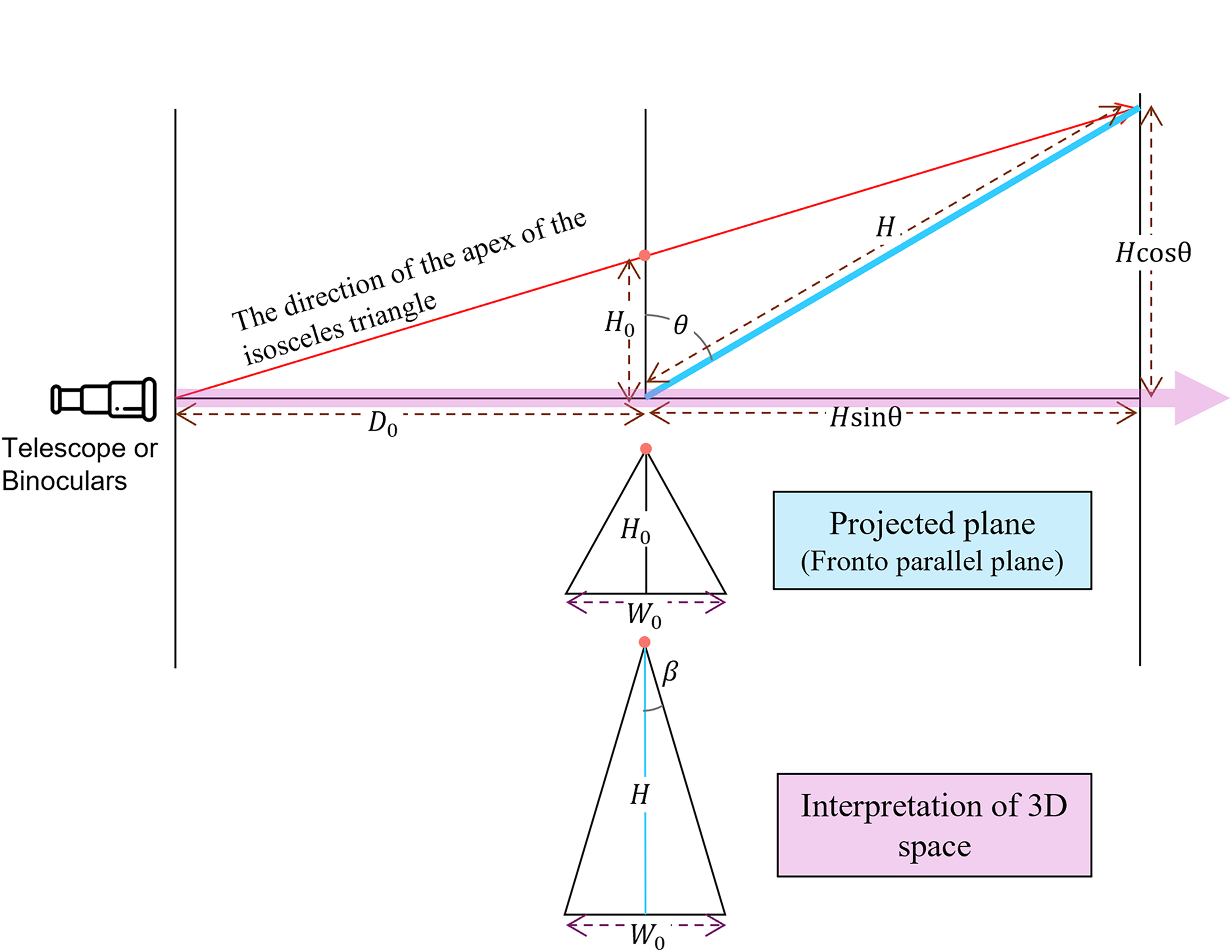
The relationship of the interpretations of perspective angle

The setup of telescope viewing the parallel lines stimulus (shown in red) placed on a level ground, at the height of 100 cm and the horizontal distance from the stimulus of 300 cm, resulting in the distance from the eyes to the stimulus,
When a scene is enlarged, the height and the width of the isosceles triangle, 
From the equation, it is possible to plot the relationship between the interpretation of

The relationship between the interpretations of the perspective angle
Meanwhile, when a scene is magnified by factors of 2.5
Assuming the hypothesis of changes in 3D interpretation, we identify two specific cases of the possible interpretations of the perspective angle and the optical slant angle, as illustrated in Figure 7. In the context of this hypothesis, Figure 15 represents the following two characteristic examples, depicted as arrows on the graph.
The lines remain parallel while they are placed on a slanted plane (Figure 7 left). The lines are placed on a level plane, causing them to no longer appear parallel (Figure 7 right).
The first interpretation corresponds to the blue leftward arrow in Figure 15, where
Changes of
and
When Magnified: Combined Analysis
The observation results of
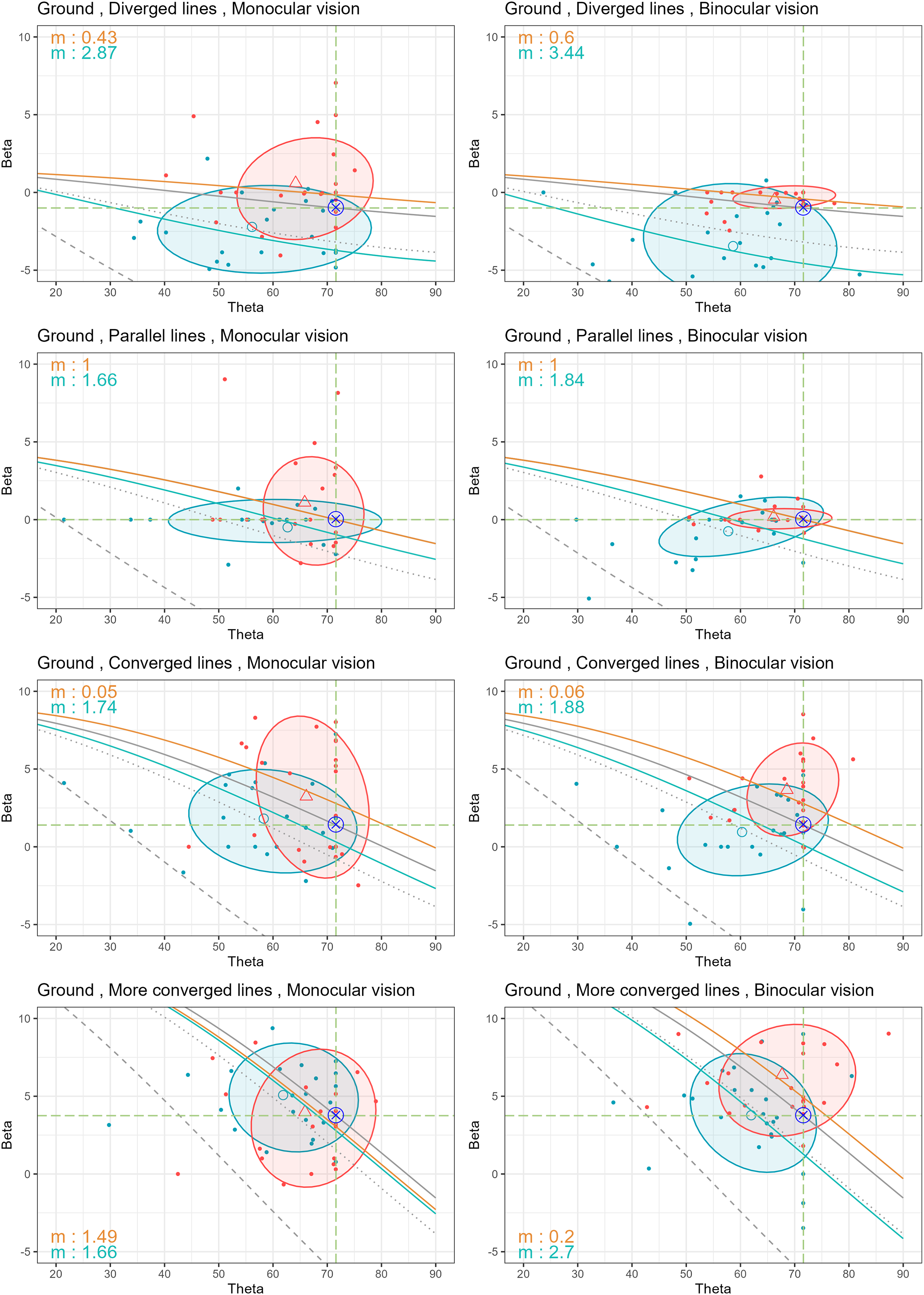
Observation results of

Observation results of
The average values of
To verify whether our observed data aligns with the hypothesis of changes in 3D interpretation, we fitted the data to the relationships derived from this hypothesis, optimizing the parameter
We illustrate the best-fit magnifications for the naked-eye and magnified conditions using orange and blue solid lines in Figures 16 and 17, with the
It is to be noted that only in the case of the parallel lines viewed under the naked-eye condition did the best-fit magnification align perfectly with the actual 1
Conclusion
This study explored the effects of magnification on the perception of perspective angle and optical slant angle for stimuli placed on the ground, sidewall, and ceiling. The results indicated that the perspective or optical slant angle is influenced by magnification, with varying degrees of effect depending on where the stimulus is positioned. Importantly, these differences in perception arise only from rotations within the 2D retinal image plane, which indicates that this illusion is caused by the change in 3D interpretation. We developed a calculation model based on the hypothesis of changes in 3D interpretation to describe the relationship between the perspective angle, optical slant angle, and magnification factor. By fitting the observed data to this model, we found that the data support the hypothesis, indicating that the magnification factor is larger when using binoculars compared to the naked-eye condition. This alignment between the model and data reinforces the idea that changes in 3D interpretation are involved.
We initially expected that if natural surface priors influenced perception, the ground location would show unique effects, whereas if binocular disparity played a key role, the sidewall would be distinct. Specifically, we hypothesized that the relationship between vertical disparity and horizontal disparity components in binocular vision would become particularly relevant for sidewall orientations, as outlined in our hypothesis. However, our results did not support either expectation. Instead, we found that the ceiling location exhibited a distinct response, suggesting a unique perceptual mechanism at play. Additionally, one notable exception was observed in the naked-eye condition for parallel lines, where the magnification factor accurately matched the actual value (1
These findings could enhance our understanding of how magnification affects spatial perception and provide important insights for designing virtual reality (VR) and augmented reality (AR) systems, where depth and angle perceptions are critical. Yet, the underlying reasons for the ceiling’s unique perceptual response to magnification and the interpretation of parallel lines under the naked-eye condition remain unclear and require future investigation.
Supplemental Material
sj-csv-1-ipe-10.1177_20416695251351412 - Supplemental material for Magnification effects on perspective angle and optical slant angle across locations
Supplemental material, sj-csv-1-ipe-10.1177_20416695251351412 for Magnification effects on perspective angle and optical slant angle across locations by Peeraya Sripian, Takashi Ijiri, and Yasushi Yamaguchi in i-Perception
Footnotes

Author Contribution(s)
Funding
This work was partially supported by Japan Society for the Promotion of Science (JSPS KAKENHI) Grant Numbers 23K11152 and 20H04203.
Declaration of Conflicting Interests
The author(s) declared no potential conflicts of interest with respect to the research, authorship, and/or publication of this article.
Supplemental Material
Supplemental material for this article is available online.
Appendix
References
Supplementary Material
Please find the following supplemental material available below.
For Open Access articles published under a Creative Commons License, all supplemental material carries the same license as the article it is associated with.
For non-Open Access articles published, all supplemental material carries a non-exclusive license, and permission requests for re-use of supplemental material or any part of supplemental material shall be sent directly to the copyright owner as specified in the copyright notice associated with the article.
