



Abstract
Blast wave ingress into a room through a facade opening results in complex pressure-time loadings on interior surfaces due to shock diffraction and interior reflections. The U.S. DoD UFC 3-340-02 Structures to Resist the Effects of Accidental Explosions includes a method to predict internal loading for such cases. Parameters such as the opening size, room dimensions and the external pressure wave characteristics influence the interior loading. Recent work suggests that the UFC methodology might overpredict the interior loading by some 600%. Such conservatism can result in over-engineered or prohibitively expensive protective solutions. In this paper we critically review the methodology of the UFC, that of Kaplan’s preceding work (on which the UFC relies), and the experimental data that informed both these works. Through a series of 45 case-studies we compare the UFC and Kaplan’s predictions with those of a computational fluid dynamics (CFD) model. The UFC consistently overpredicts the CFD area-averaged peak pressure of the back wall by up to 290% and the side-wall by up to 425%. Similarly, the UFC overpredicted the CFD side wall positive phase impulse by up to 565%. By contrast, the UFC predicted back wall positive phase impulse was similar to the CFD results. As our CFD results for side and back walls are area averaged, and not solely for the wall centre-point, as in other recent work, our paper gives support for the use of CFD prediction over the UFC for cost-effective design of structures to resist blast ingress.
Introduction
The facade of a structure at known risk of blast loading is usually designed to reflect the oncoming shock wave. In many cases the shock can “leak” or ingress into the structure through necessary facade openings. The shock propagates through the interior by a complex sequence of diffractions and reflections with the interior loading dependent on the structure’s geometry. This complicates the task of designing blast resistant interior walls, floors and ceilings. A commonly employed methodology for predicting loads from blast ingress is Section 2-15.4 of UFC 3-340-02 Structures to Resist the Effects of Accidental Explosions (U.S. Department of Defense, 2014), hereafter referred to as the UFC.
There are three typical cases where blast ingress consideration should occur as part of the design of protective structures. The first occurs in countries with increased terrorism risk, where government and business resilience is actively increased by providing blast protection to critical buildings. When protecting the entire building is infeasible, safe havens may be provided inside the structure. Such protected spaces are provided in all newly built public and commercial buildings in both Singapore (Singapore Civil Defence Shelter Act, 1997) and Israel (IDF HFC, 2010), as well as in embassies worldwide. In such instances, the shock is likely to ingress through failed parts of the unprotected facade, or through open windows or doors, and then load the safe haven’s walls.
The second case results from the ventilation required for occupants and operations. In protected critical infrastructure, such as command rooms and data centres, there is an increased demand for high flow air intake for backup generators and cooling equipment (U.S. FEMA, 2006). To prevent blast leakage, a pressure valve (U.S. Army Corps of Engineers, 2009) is fitted to all air intake ducts. As most such valves do not support high flow rates, numerous valves are needed which may both complicate the design and require an increase in the structure’s exposed face area, as seen in Figure 1. An array of circular blast valves in an external civil defence shelter wall, Helsinki, Finland (Image courtesy of Temet International Oy Ltd).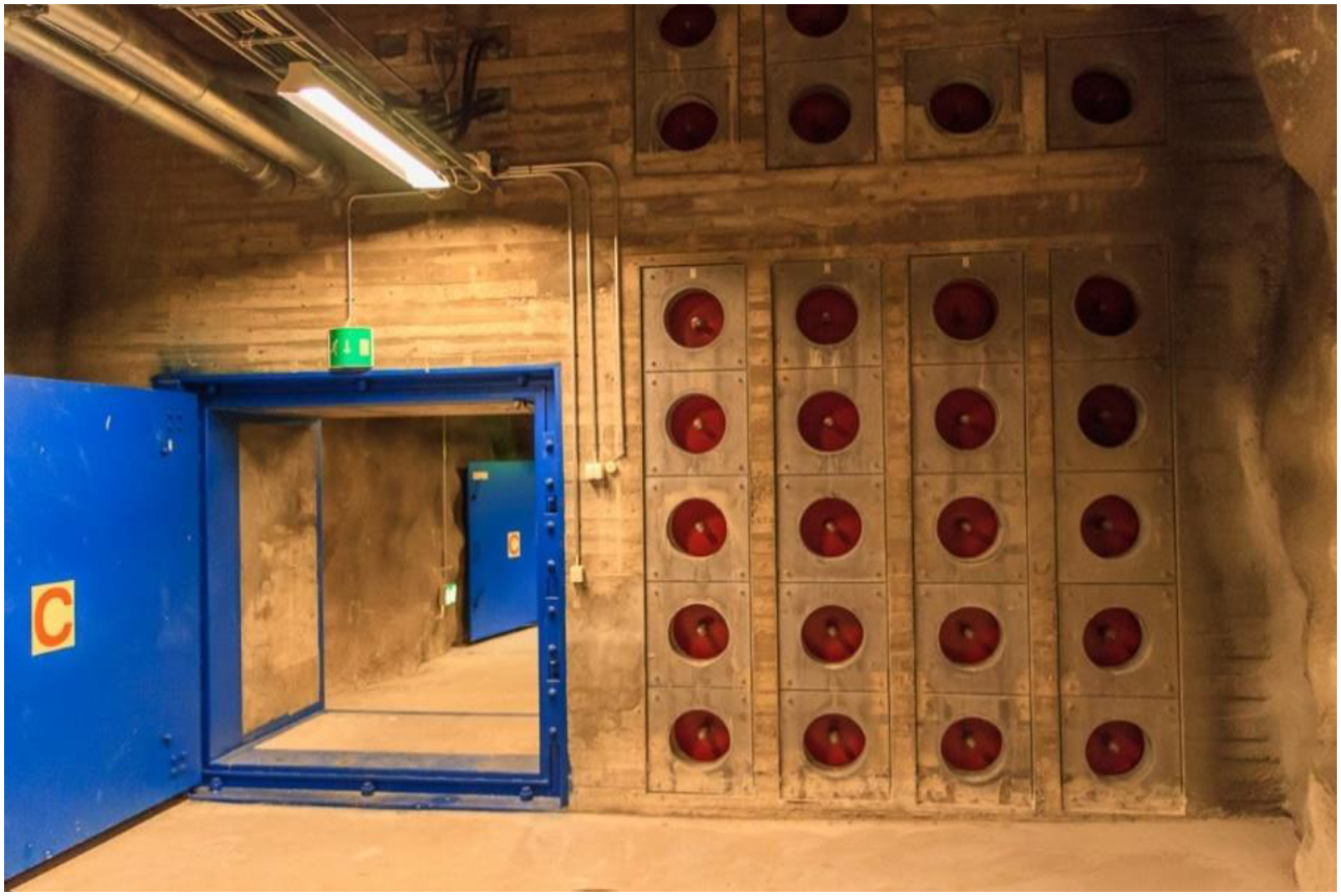
Finally, any protected facade that includes a doorway should consider the effects of shock ingress through a door left open during an attack. This case is often neglected in blast vulnerability analysis.
Within the open literature there is minimal research published on the topic of blast ingress. Amongst the earliest publications was a method to calculate the pressure change inside a room as a result of leakage through a small opening which was published in 1962 (BRL, 1962). It was incorporated into the first edition of the “TM 5-1300 - Structures to Resist the Effects of Accidental Explosions” manual (US Department of Commerce, 1969). Kaplan (1979) developed a method to predict the loading on interior walls which formed the basis for a future method, and is reviewed in detail hereafter. Kingery and Watson (1982) reported research on pressure leakage into hardened aircraft shelters through an open door and included a comparison with Kaplan’s (1979) method. It suggested that Kaplan’s method overpredicts the interior pressure for cases of narrow openings but might be adequate for large openings. Ayvazyan et al. (1986) produced an extension to TM 5-1300 chapter four (US Department of Commerce, 1969) to include a new method for predicting pressure and impulse on interior walls from shock ingress. Their method was incorporated into the updated TM 5-1300 (U.S. Department of Defense, 1990). In the early 1990s, shock tube experiments on pressure ingress were performed by Mercx (1990a, 1990b, 1991), which resulted in a calculation method produced by curve fitting functions for a limited set of room sizes.
In related work, Feldgun et al. (2016) and Xu et al. (2018) considered pressure leakage outwards from a partially confined explosion but focused on the quasi-static loading from afterburning effects. Within a cityscape it has been shown that pressure ingress from failed facades result in reduced risk for neighbouring buildings (Drazin, 2017; Smith et al., 2002) and increased risk for supposedly shielded buildings (Dib et al., 2022).
For complex internal structures, Ram et al.’s (2016) study of interior partitioning effects on pressure ingress suggested that interior loading develops in a similar manner to that of shock transmission through porous materials. The shock attenuation properties of porous/lattice geometries were reported by Abdelaim (2013), Berger et al. (2015), Britan et al. (2006) and Skews (2005). They demonstrated how different geometric obstacles manipulate the shock gas flow and drew a relationship between porosity and rearward pressure.
In work directly relevant to ours, Codina and Ambrosini (2018, 2019) conducted a limited set of full-scale experiments of blast ingress into a cuboid structure and compared the results from their four blast gauges with the corresponding UFC predictions. They concluded the UFC underestimates the impulse on the back wall by up to 60% and overestimates it on the side wall by up to 685%. They proposed correction factors to the UFC to better match their experimental data.
The UFC’s purpose is to serve as a manual for safe design of structures at risk of blast loading and therefore is expected to be conservative. Most standards apply a safety factor in their calculations to account for variability in design parameters. Indeed, the UFC itself recommends applying a 20% increase to the charge mass as part of the design process. However, conservatism in excess of 600% as reported by Codina and Ambrosini (2018, 2019) is beyond practical safe design principles and causes us to question the UFC’s underlying theory for blast ingress.
Within his work that underpinned the UFC, Kaplan (1979) repeatedly asserts the need for further testing and assessment of his methodology which was developed by limited experimental data. Despite the three reissues of the UFC (1990, 2008, 2014) we can find no reports of such work being performed. As such we have undertaken a review of the theory and data used in the UFC. This work is hampered because the UFC, as a technical manual, presents graphs of predicted loading without detailing how these graphs were derived.
Other blast resistance design standards (ASCE 59-11, 2011; CSA S850-12, 2012) acknowledge proper computational modelling (or indeed, physical testing) is a valid method to assess blast loading and response. Such tools were not widely available at the time blast ingress was incorporated into the UFC.
In this paper, we present and review Kaplan’s (1979) methodology on which the UFC appears to be based. We outline the current UFC approach, highlighting several issues we believe require addressing. Thereafter we compare the results from these two calculation methods with an appropriate CFD model. Our conclusions and description of future work are then summarised.
Kaplan’s 1979 model
Kaplan (1979) (referred to as Kaplan henceforth) details a method for predicting internal loading from blast ingress dependent on the room dimensions (width (1) A 2.4 (2) Shock tube tests simulating a scaled 500,000 kg hemispherical TNT charge with duration of 160 msec using a 1:24 scale structure (Coulter, 1969). (3) Shock tube tests on a full-scale room with a 2.6 × 3.6 m facade subjected to peak pressure of 69 kPa and 100 msec duration (Wilton et al., 1978).
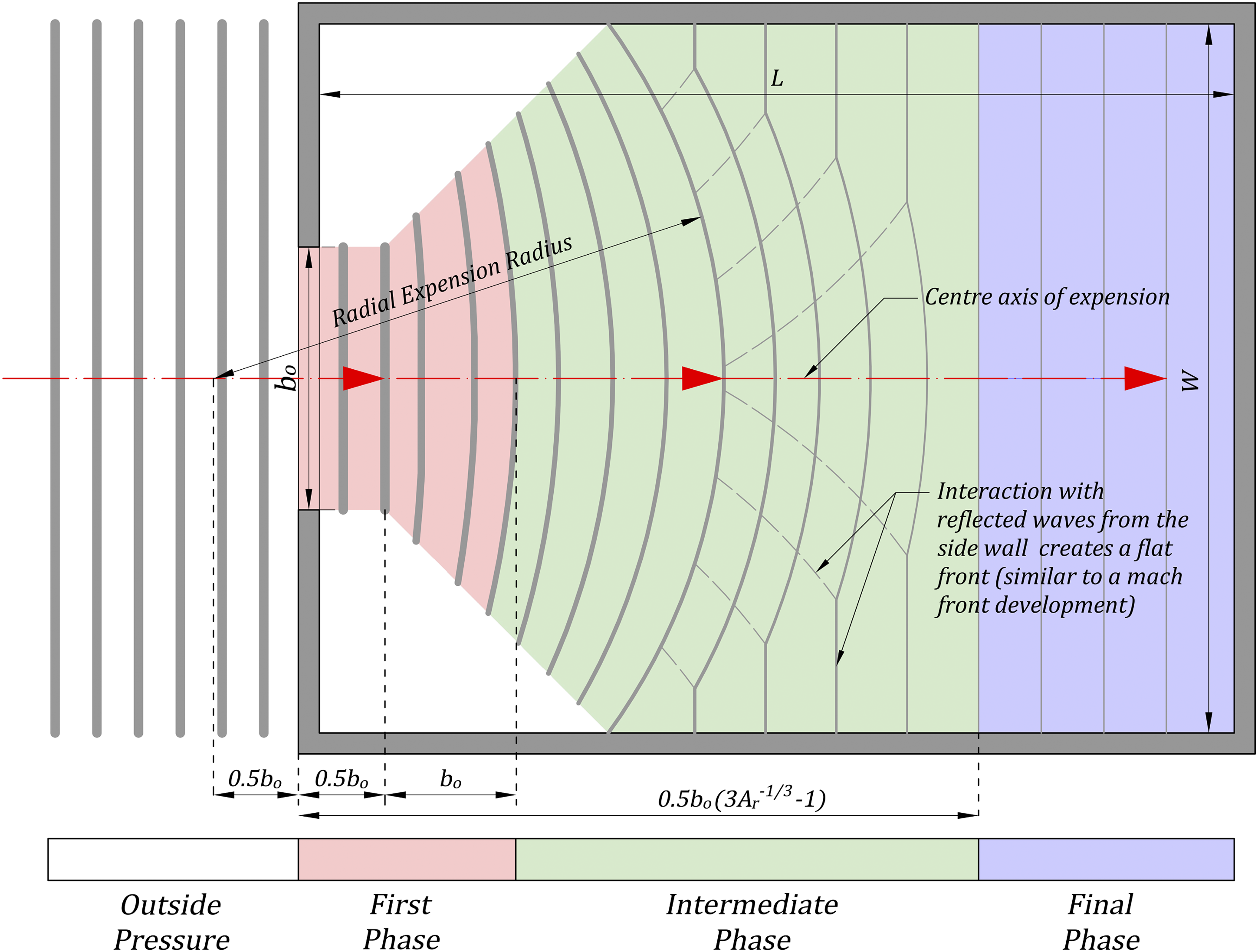
Kaplan defined a relative opening area (1) First Phase – the shock is assumed to be initially planar and remains so until (2) Intermediate Phase – at (3) Final Phase – it is assumed that multiple reflections from the sidewall, ceiling and/or the floor in the Intermediate Phase have caused the shock to become planar again before it reaches the rear wall. Kaplan states that while “…it is difficult to say when it [the planar wave] can be said to form…a reasonable (though still arbitrary) guideline” is at a distance Plan view of Kaplan’s (1979) proposed three phases of interior shock wave development as a function of the distance
Calculating the pressure along the centre axis
Kaplan calculates the shock front pressure




Calculating the off-axis pressure
In Kaplan’s model, the shock front’s off-axis pressure Plan view illustrating the parameters to calculate the off-axis pressure 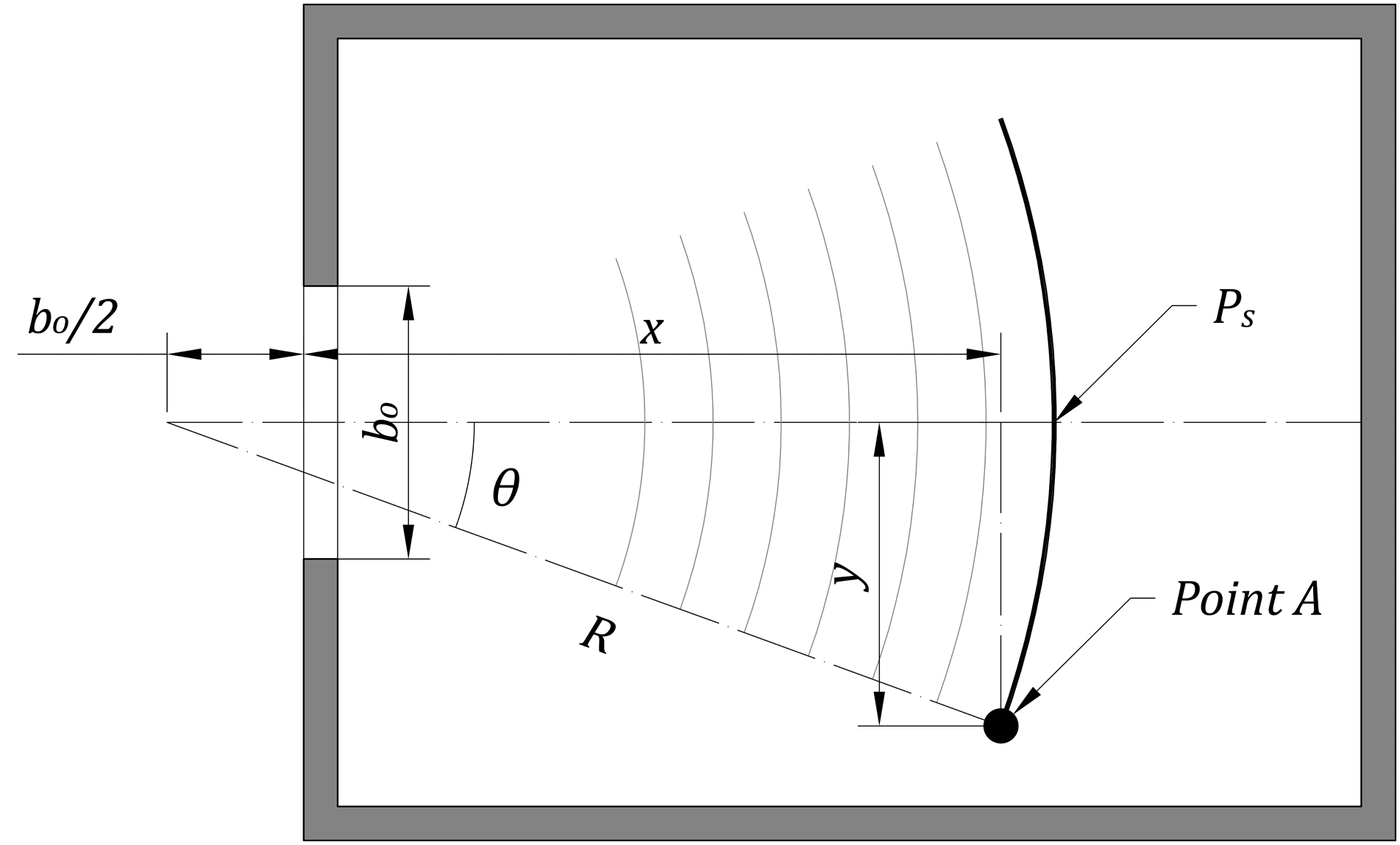


The side wall reflected pressure


Kaplan suggested that when the shock expands from the opening there are “…uncertainties about the value of pressure” reaching the wall, whether it is incident or reflective, and that the “shock front itself might not be too well defined”.
If the shock reaches the rear wall during the intermediate phase, the reflected pressure is calculated as per Glasstone’s (1964) formula,

Shock reflections from the rear wall may be re-reflected at the front wall, reduced by partial outward venting, to give the re-reflected pressure

Such interior reflections can repeat for “…several such cycles” (Kaplan, 1979).
Calculating the pressure-time history on interior walls
For design purposes, Kaplan concludes that the Final Phase pressure Equation (2-4) should be used for both side and rear wall loading irrespective of the shock theory previously described. Kaplan reasoned that the actual “…pressures themselves could be both greater and smaller than plane wave values…”, and the planar wave is rather “in the middle”. Kaplan adopted TM 5-1300’s (US Department of Commerce, 1969) equivalent uniform pressure loading profiles of Figure 4 for the side wall and Figure 5 for the back wall. TM 5-1300 – Equivalent uniform pressure loading for a Side Wall span perpendicular to the shock plane, with Kaplan’s (1979) equivalent uniform pressure loading for the rear wall for instantaneous peak reflected pressure 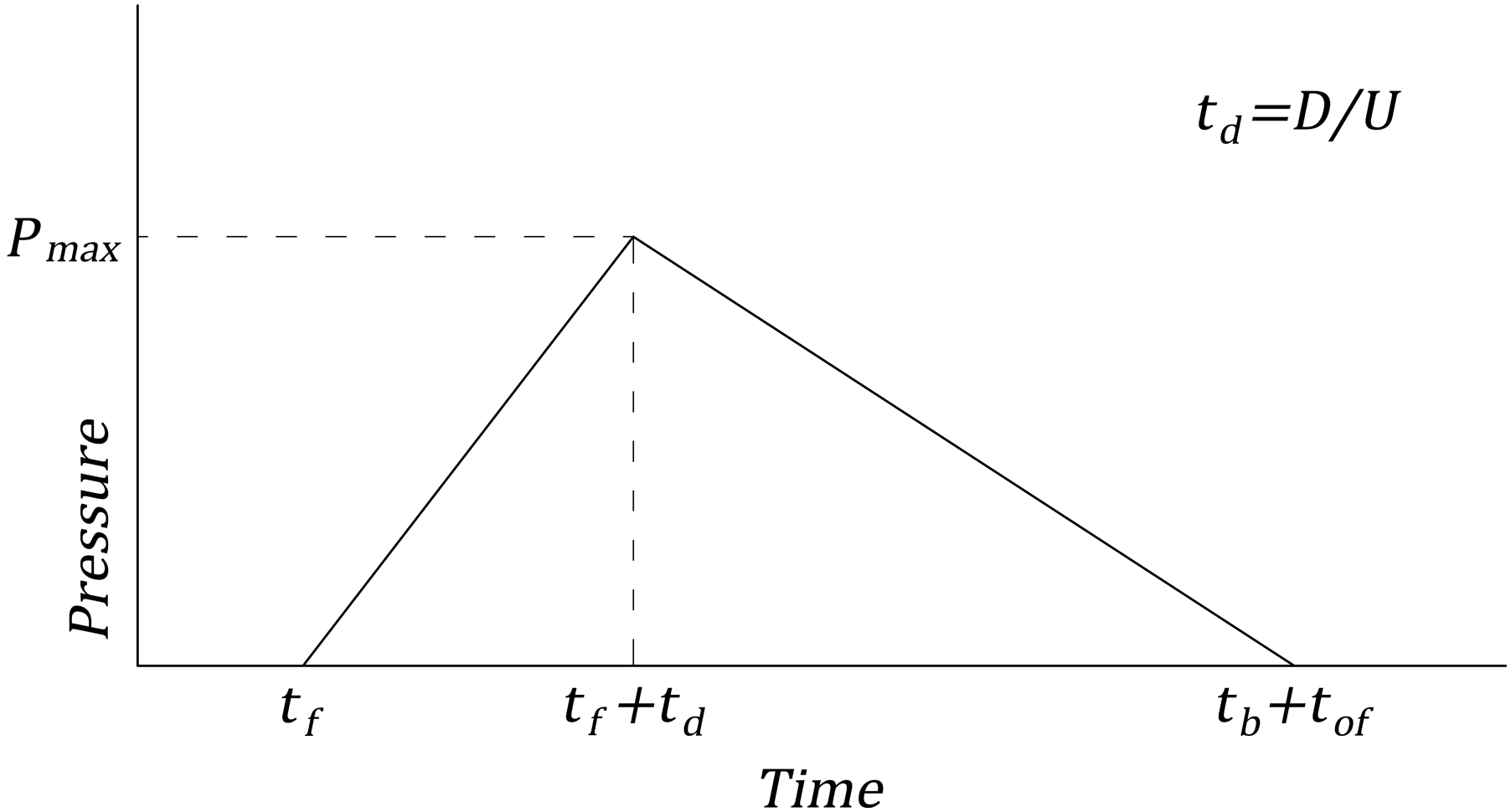
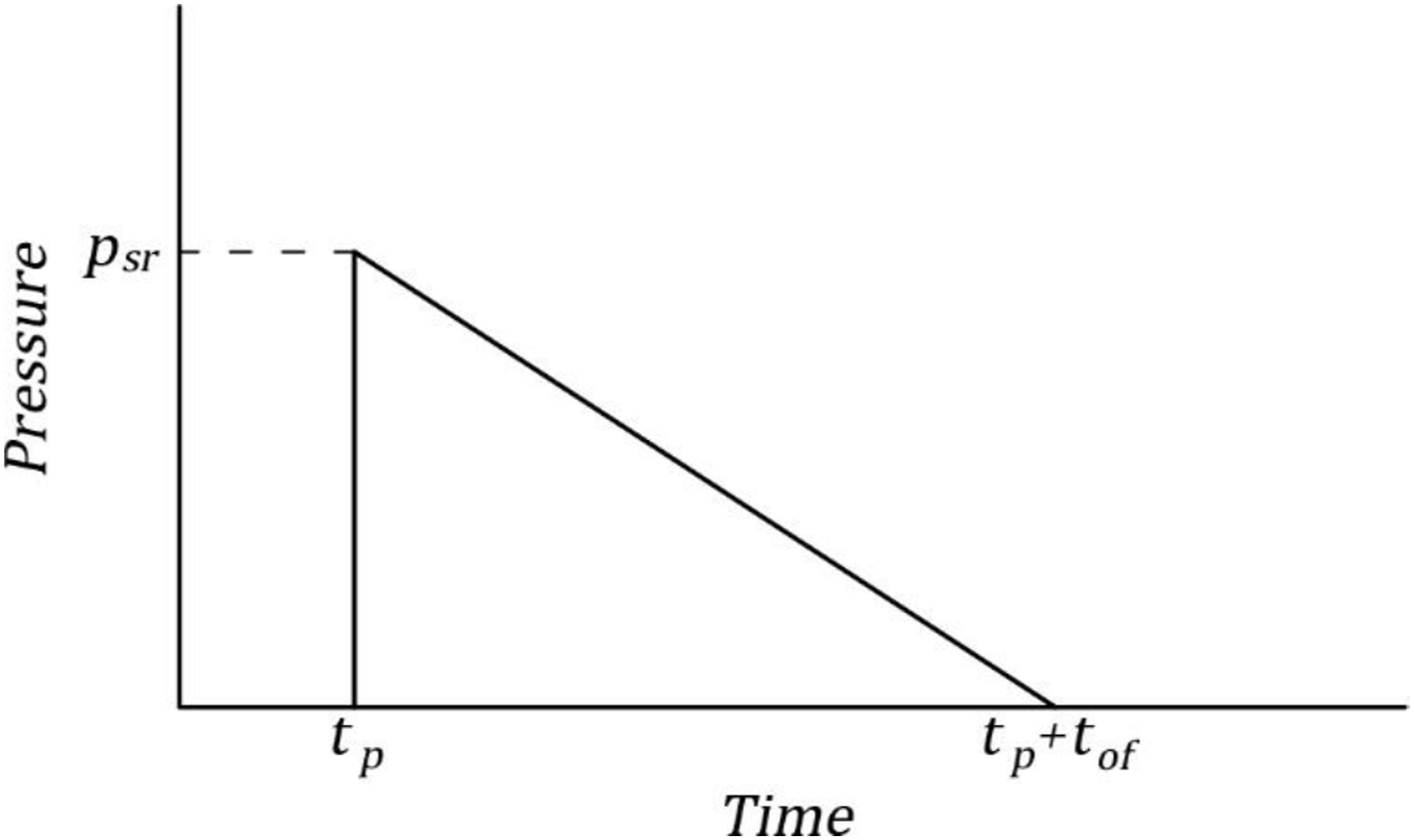
Kaplan states that the methodology is valid for “…structures located where initial peak blast overpressures from accidental explosions range from about 1 psi [6.9 kPa] to 20 psi [137.9 kPa]”. Kaplan defines accidental explosions as those fitting Brode’s (1957) pressure-time relationship, that is the Friedlander equation (Friedlander, 1946). Out of 21 experiments examined by Kaplan, 20 were shock tube experiments with a non-Friedlander pressure curve. Furthermore, out of the 21 experiments 80% were performed in the 31.0-41.4 kPa range, with the remaining 20% at ranges of 6.9-73.8 kPa. It is therefore unclear how Kaplan claims validation for overpressures up to 137.9 kPa, and how the UFC extends the range to 296.5 kPa.
Acknowledged limitations
Kaplan acknowledges the limitations of his method stating that “inadequate data exists on some important blast phenomena that are size dependent.”. As such he concludes with a recommendation to “…design and carry out an analytical and experimental program involving blast waves that are relatively short compared with structural dimensions”. To the authors’ knowledge none of this recommended work has been performed to date.
The UFC 3-340-02 method
The purpose of the UFC is to provide “easy to use” predictive tools. It provides graphical solutions for typical structure sizes using shock parameters such as incident overpressure Idealised side wall loading used by the UFC 3-340-02 defined by the four time points (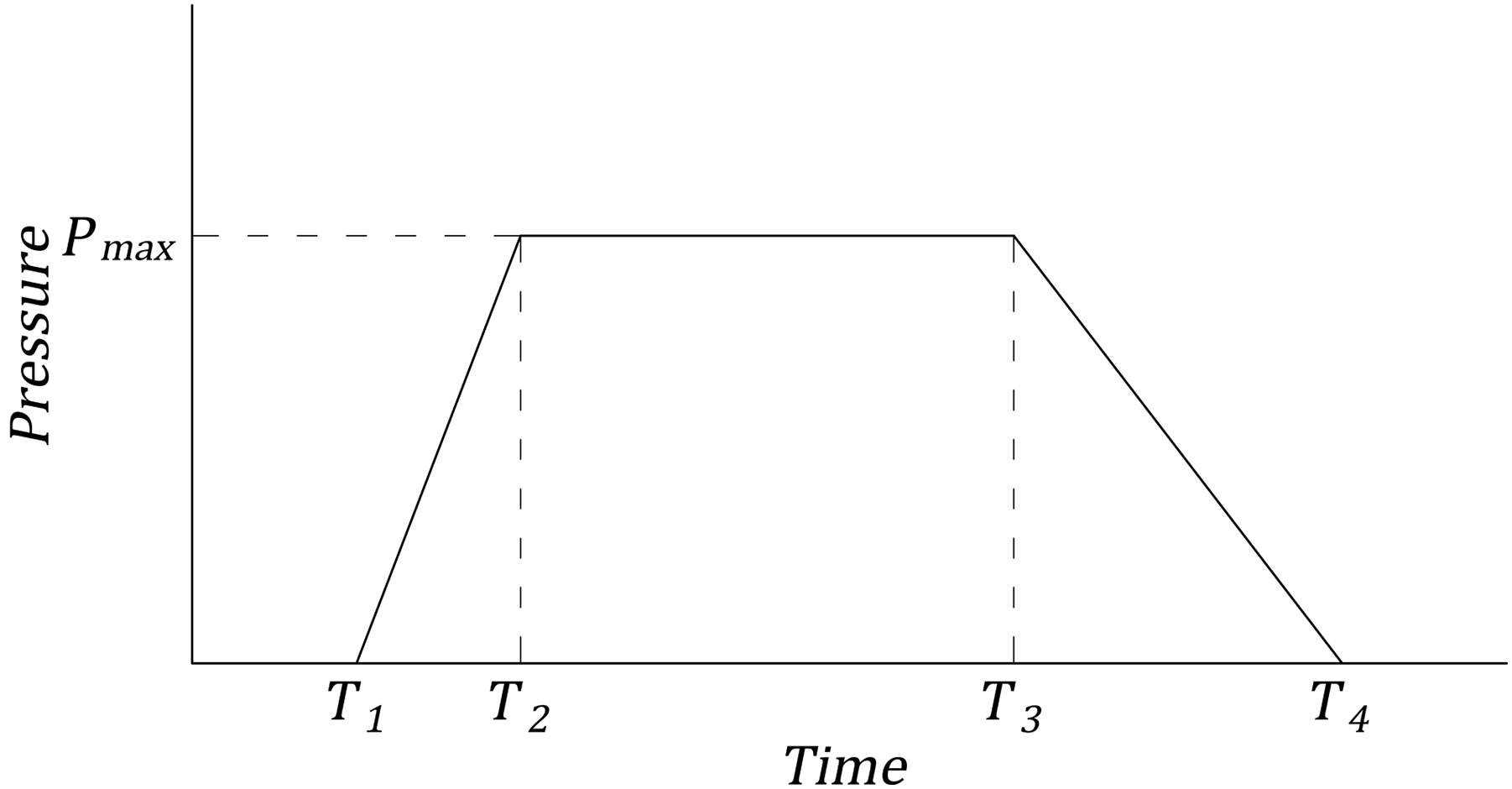




UFC side wall
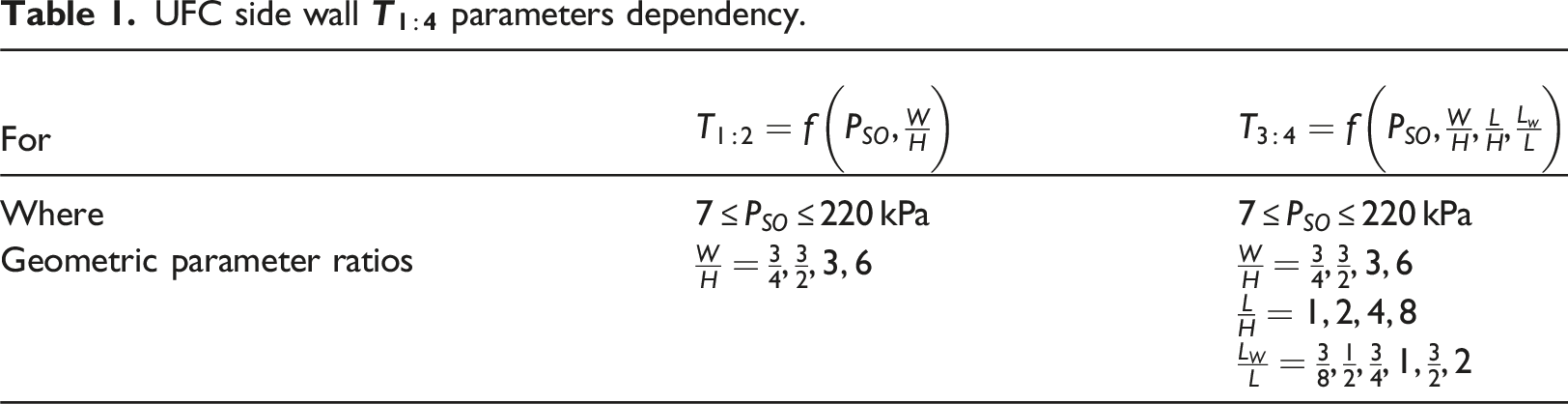
The form of the back wall parameters UFC 3-340-02 – Idealised back wall loading defined by two time points UFC back wall 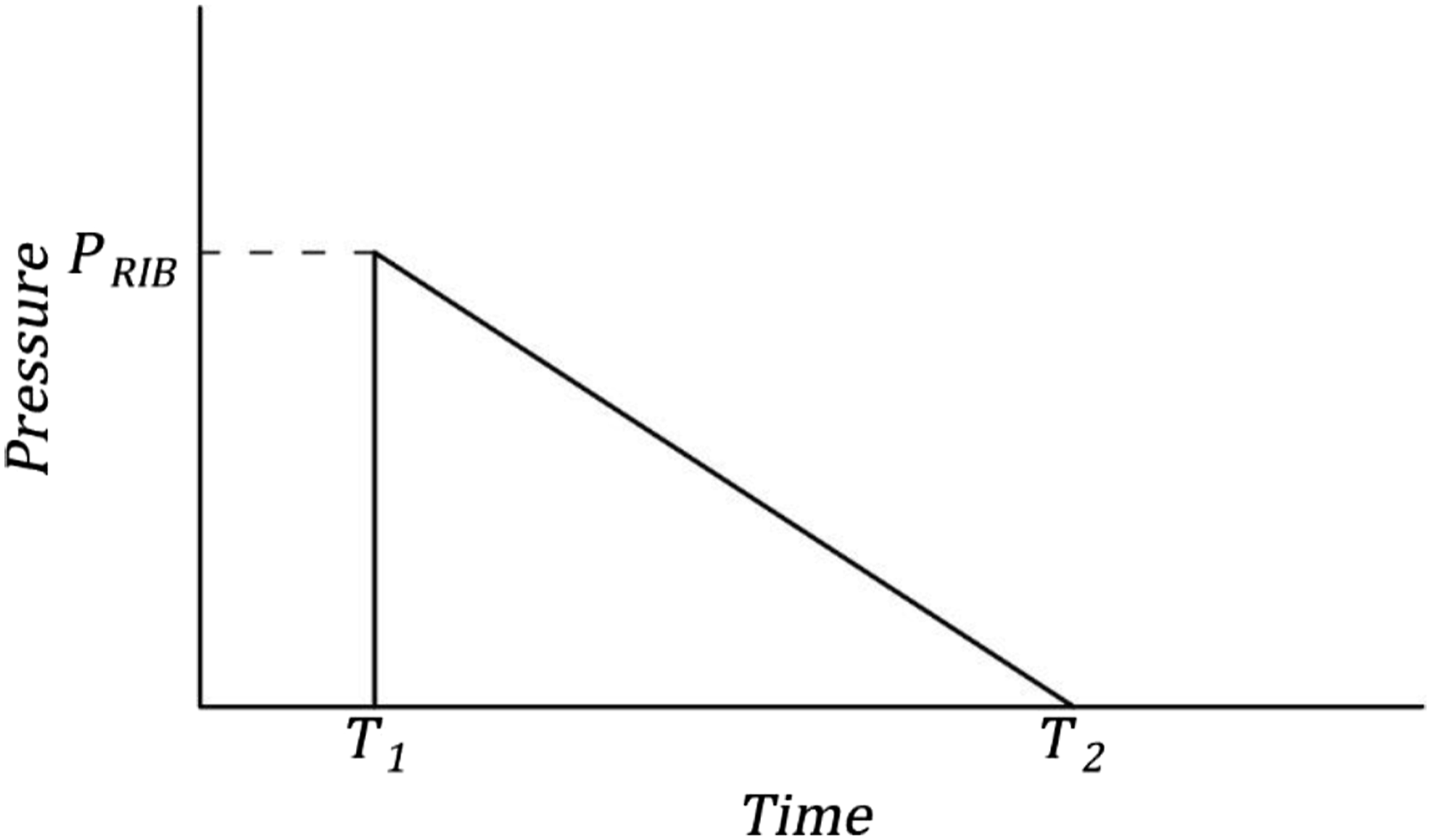
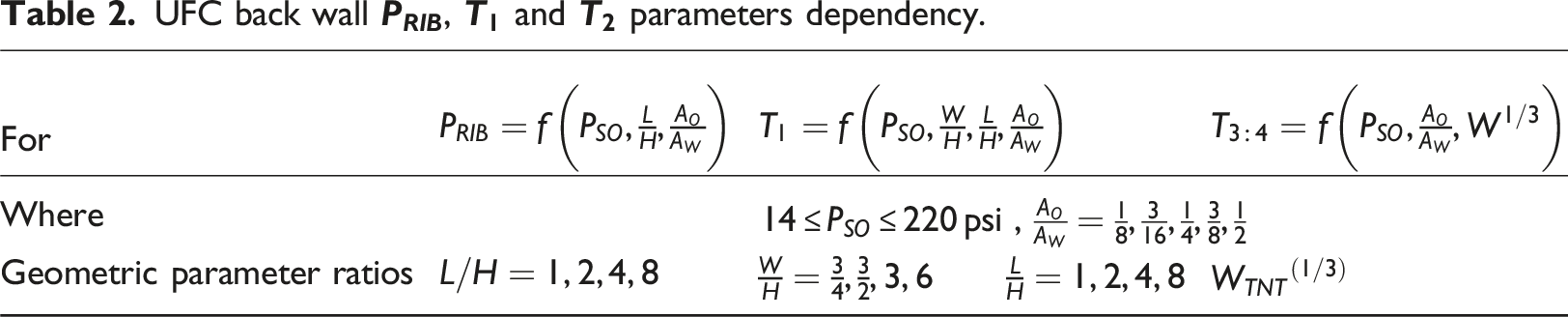

With the UFC methodology thus laid out and contrasted to that of its most likely basis Kaplan (1979), careful analysis of the UFC raises concerns over its reliability. These are discussed in the subsequent sections as per the order they appear in the UFC.
Side wall maximum pressure
To better illustrate the sensitivity of the side wall maximum pressure (a-d) Variation of the simplified UFC side wall pressure ratio 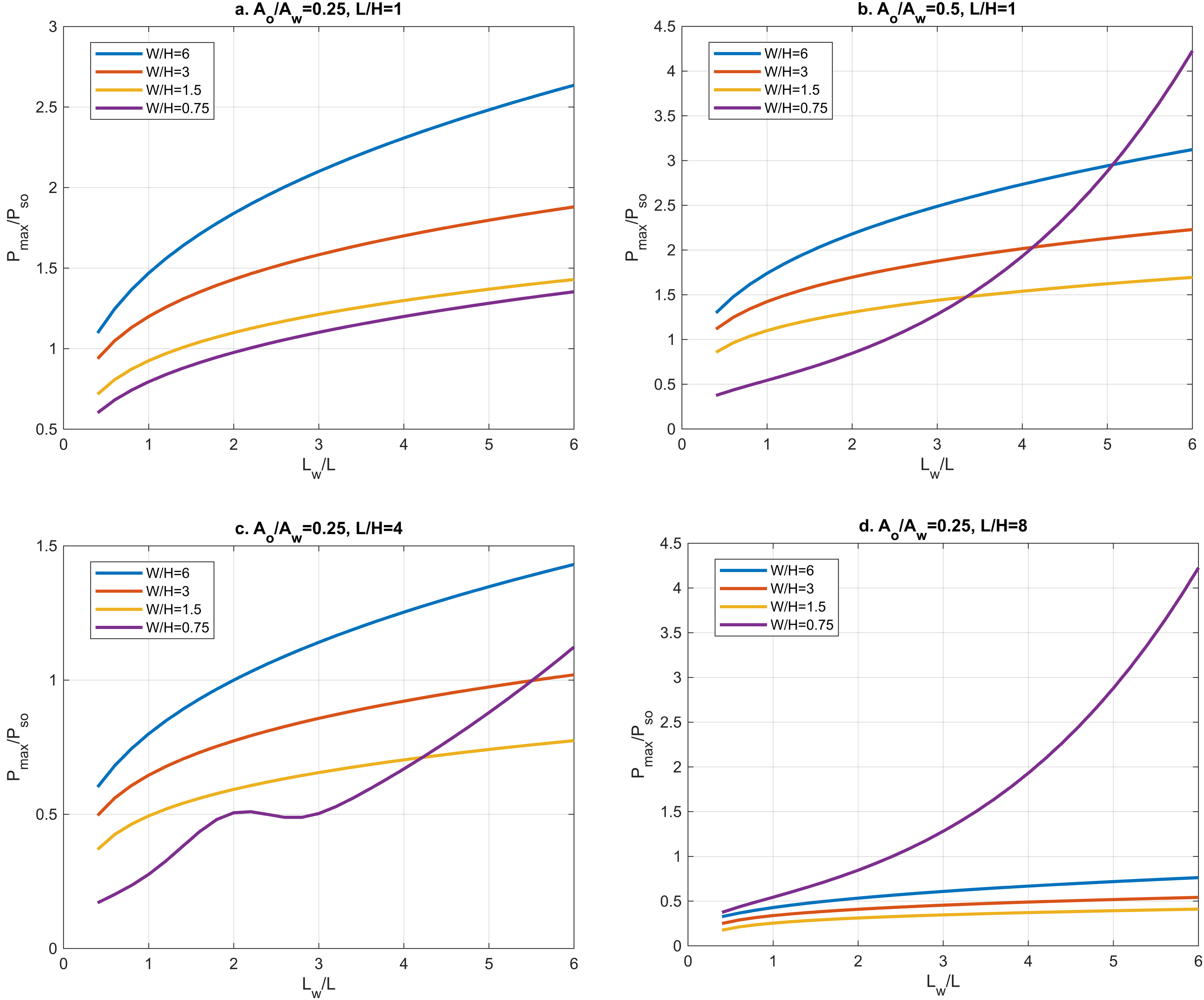
From Figure 8(a), for
Side wall pressure times
,
,
and
The side wall impulse is a function of the four side wall timings as shown by Figure 6. Firstly, it is important to note that the UFC determines
Secondly, the UFC does not use the side wall length
Thirdly, consider the UFC solutions for the end time of the maximal positive loading The UFC loading duration 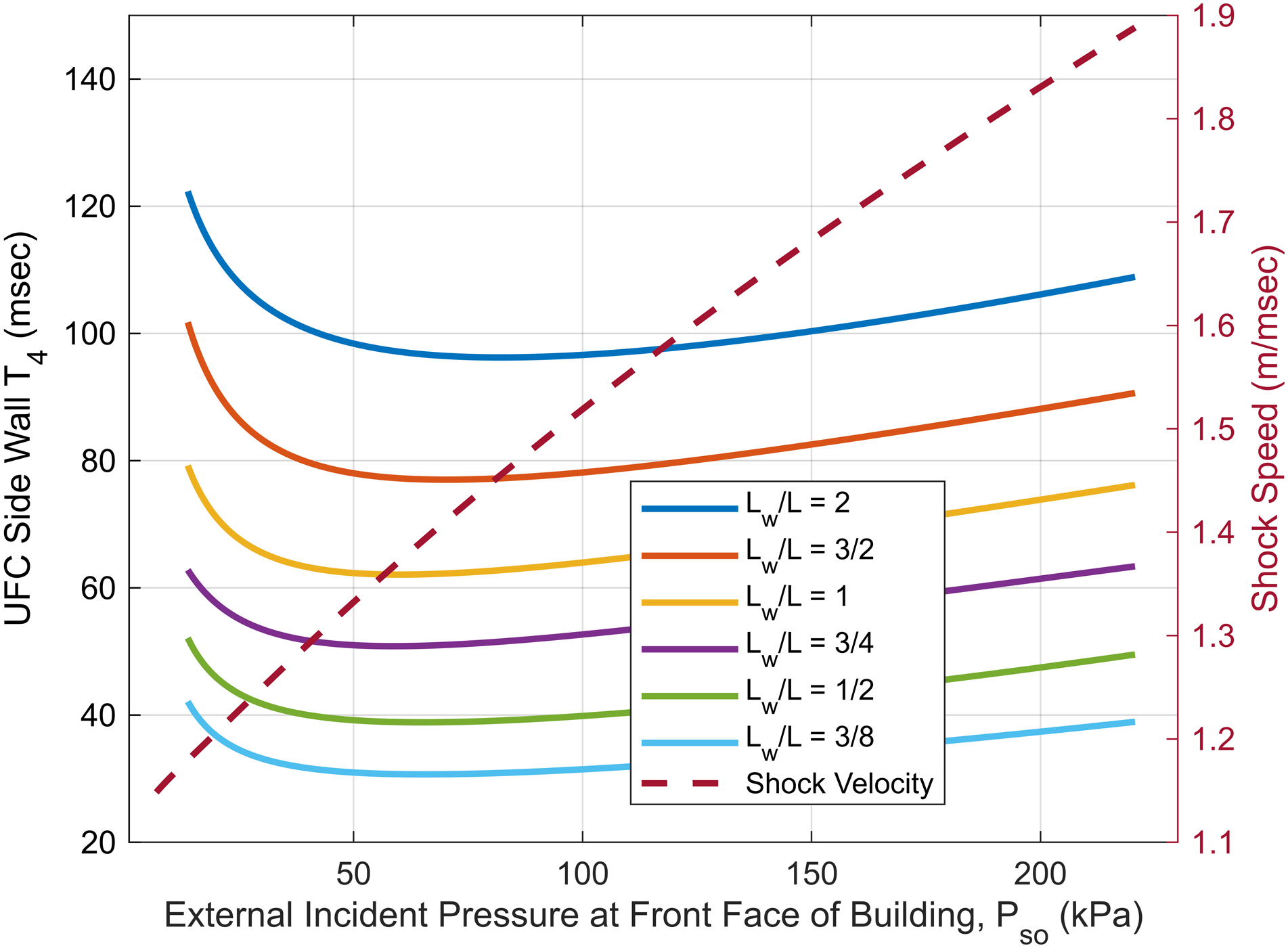
Back wall time of arrival
The UFC’s back wall time of arrival
Back wall positive phase duration
In line with Kaplan, the UFC does not consider the effect of the building length on the positive phase loading duration. By contrast, Kaplan’s approach explicitly accounts for the re-reflected shock from the interior front wall whilst it is unclear if the UFC’s single triangular pulse of Figure 7 accounts for any interior reflections.
Comparative example of loading methods
Comparative example cases parameters.
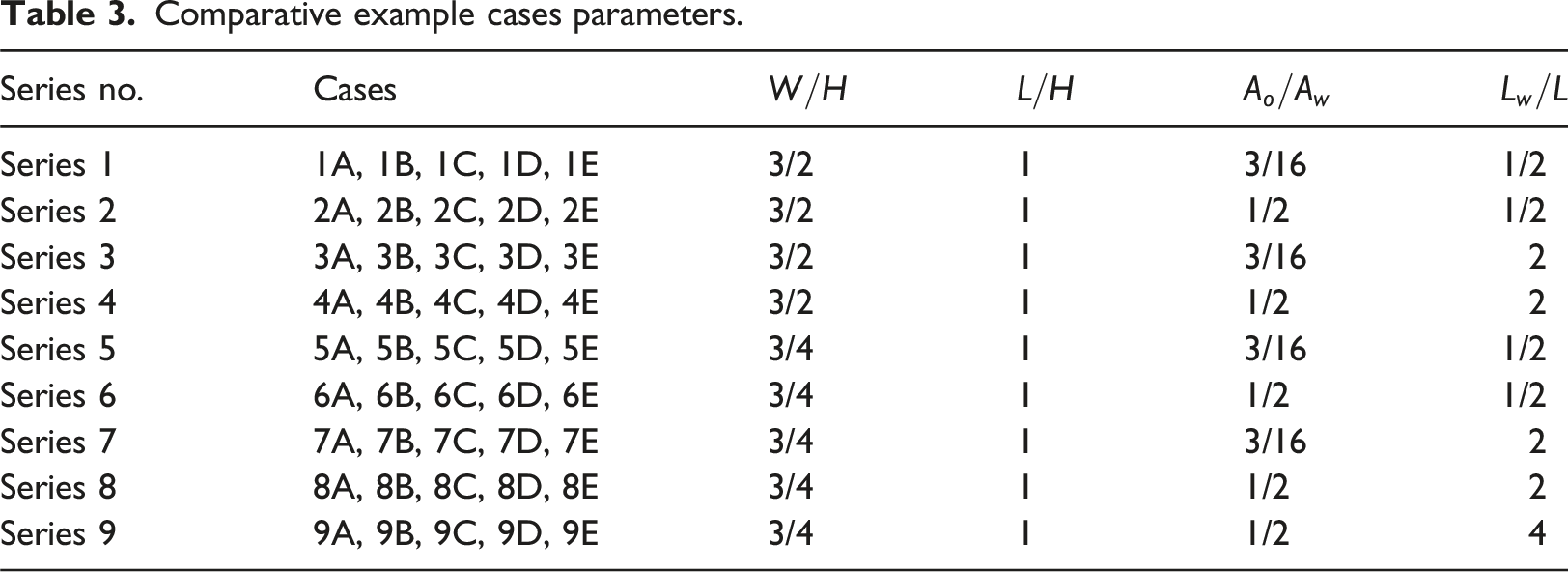
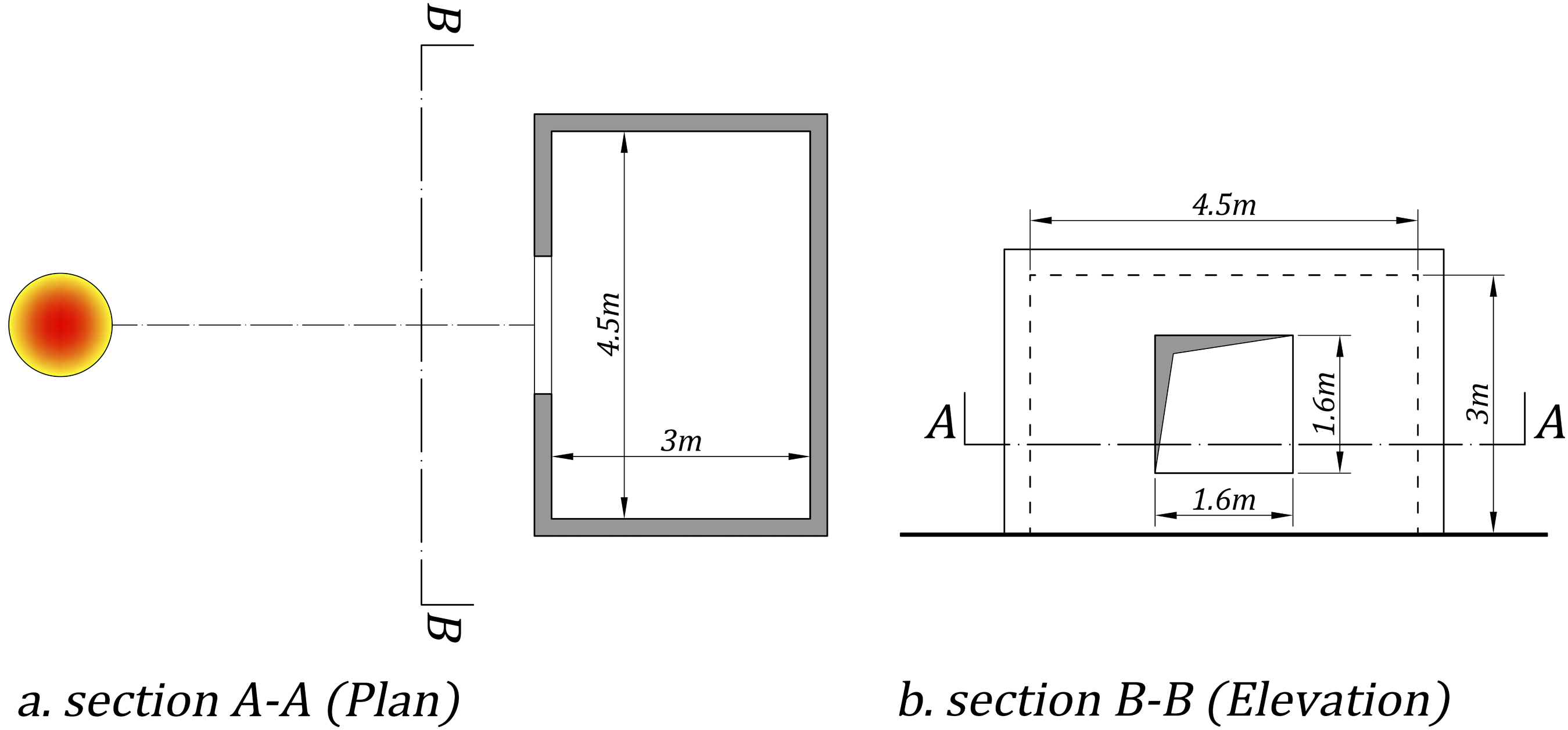
Dimensions of the cuboid structure of Series 1 and 3 with
CFD solutions were produced using the computational blast loading tool ProSAir (Forth, 2022) with the simulation parameters detailed in Appendix D. The blast loading was modelled in three stages to exploit the symmetry conditions. In the first stage the loading was modelled as an ideal spherical charge at 1.5 m above ground (structure mid-height) for a 1.5 m radius spherically symmetric domain until the blast wave reached the ground. This spherical model used a mesh size equal to one fiftieth the charge radius as per the ProSAir user manual. The results were then remapped to a 2D axisymmetric domain with a perfectly reflective base to represent the ground and a mesh size of 5 mm. When the pressure wave reached a radius equal to the standoff distance for each case, the model was remapped to a 3D domain. The building was modelled using half-symmetry to exploit the reflective-symmetry across the building centre-axis, using a 50 mm mesh cell size which was sufficiently small to accurately capture the shock pressures. The pressure was recorded on a grid of 100 mm spacing on the side and back walls.
Whilst the UFC and Kaplan methods provide a single equivalent uniform pressure value for each wall, the ProSAir model captures the entire spatial and temporal pressure-time history of the walls. To enable a comparison, the ProSAir results are reported as an equivalent uniform loading by integrating the gauge values across the entire wall. We also report results for a gauge at the wall mid-span for comparison. Both methods presented by Kaplan (1979) are used, namely the “simplistic” method (2-4) and the “detailed” method detailed in Figure 2. Kaplan’s results are calculated for two interior reflection cycles, as per the examples in the report. In the following sections, we report on the results of the UFC, Kaplan’s simplistic method and ProSAir integrated results across the wall. More detailed results including the Kaplan’s detailed method are supplied in Appendix A.
Comparison of side wall loading methods
Figure 11, shows that in six of the eight series the peak pressures of the UFC method are greater than those of the Kaplan’s method, which in turn are greater than those of ProSAir for the same external incident pressure. The exceptions are Series 6 and 8 in which Kaplan’s method’s peak pressure exceeds the UFC’s but both still exceed the ProSAir results. Side wall equivalent uniform peak pressure results for Series 1-8.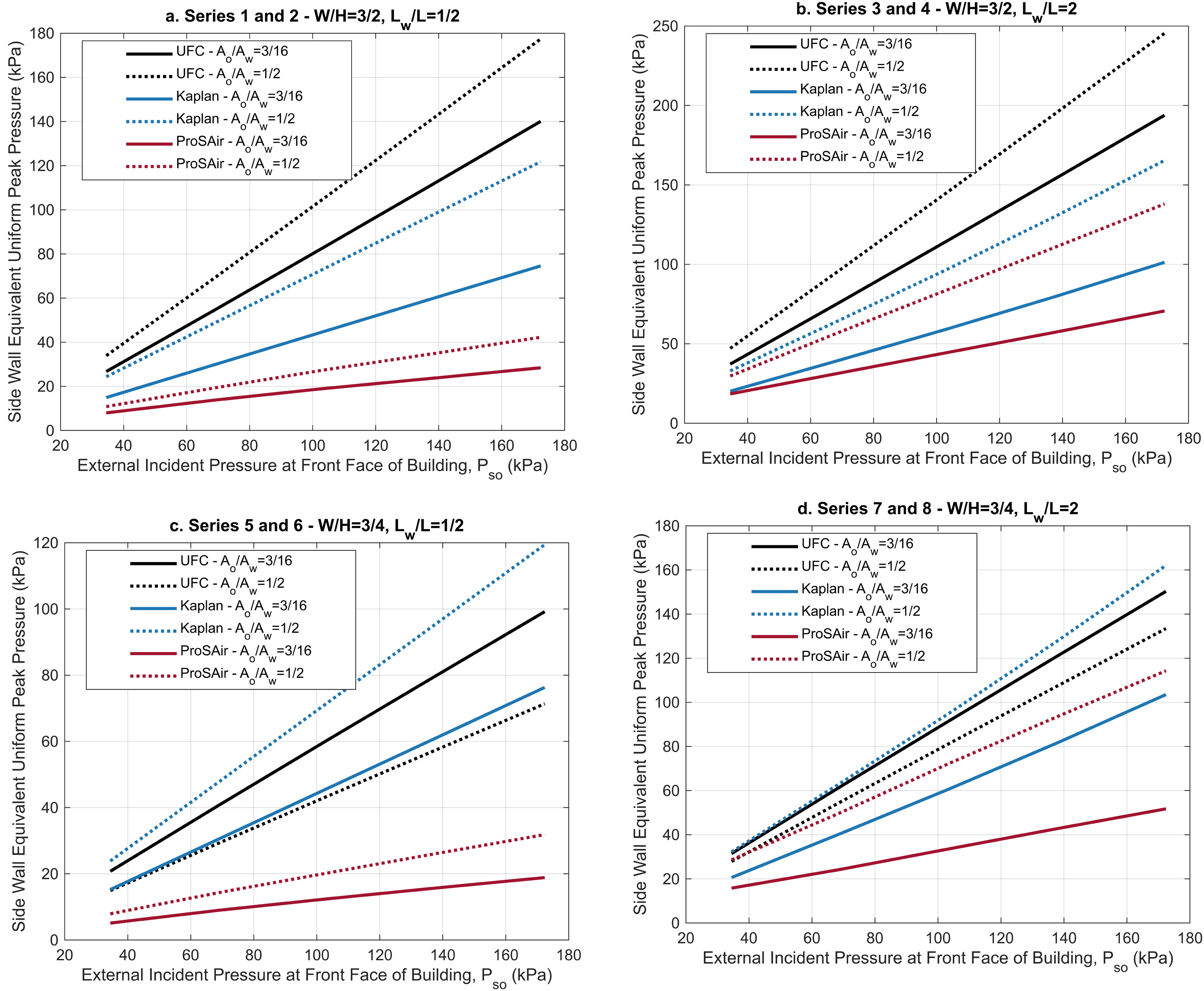
Unsurprisingly therefore, the results for side wall impulse of Figure 12 are similar to the UFC, giving the largest predictions for all except Series 6 and 8. Side wall equivalent uniform first phase impulse results for Series 1-8.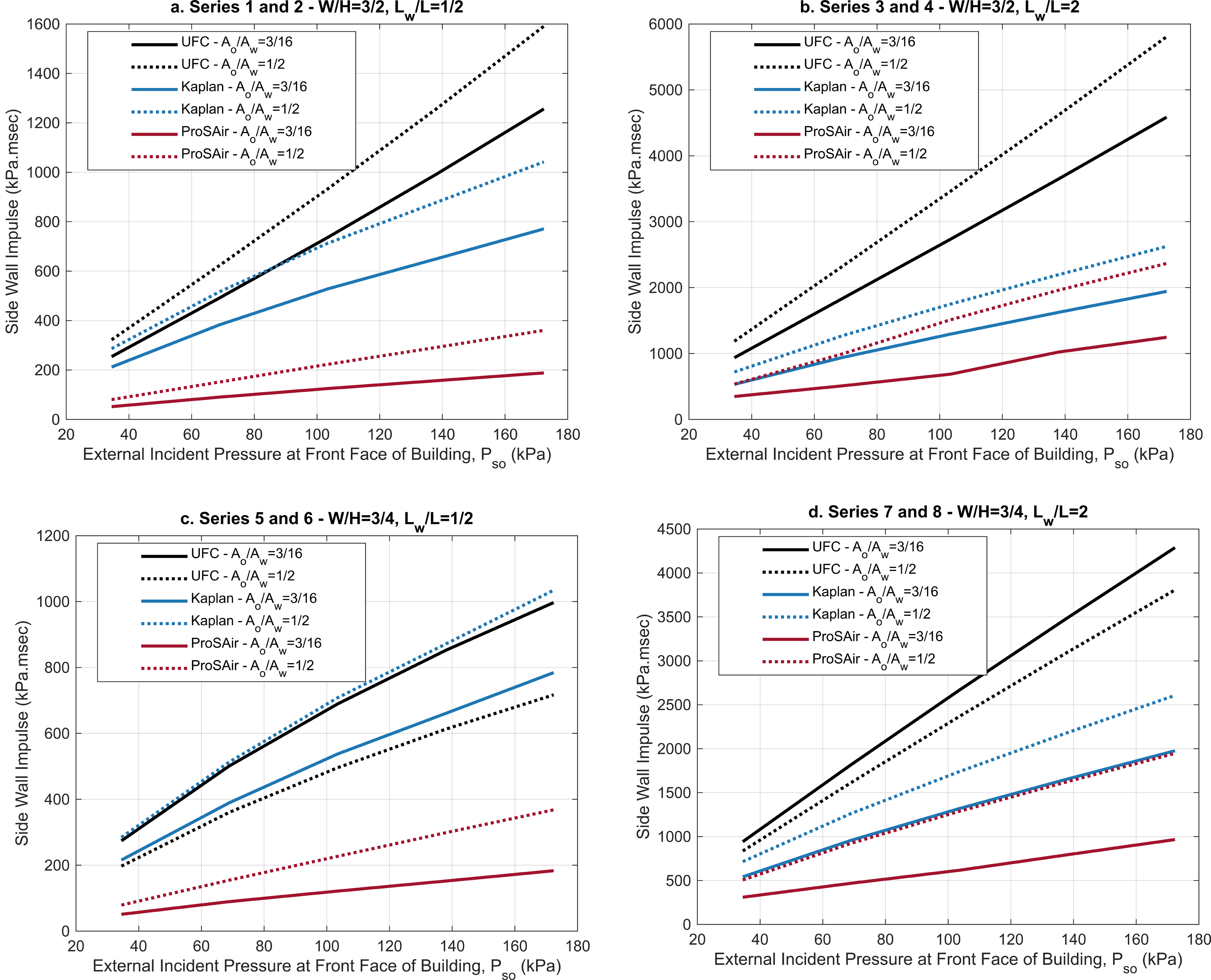
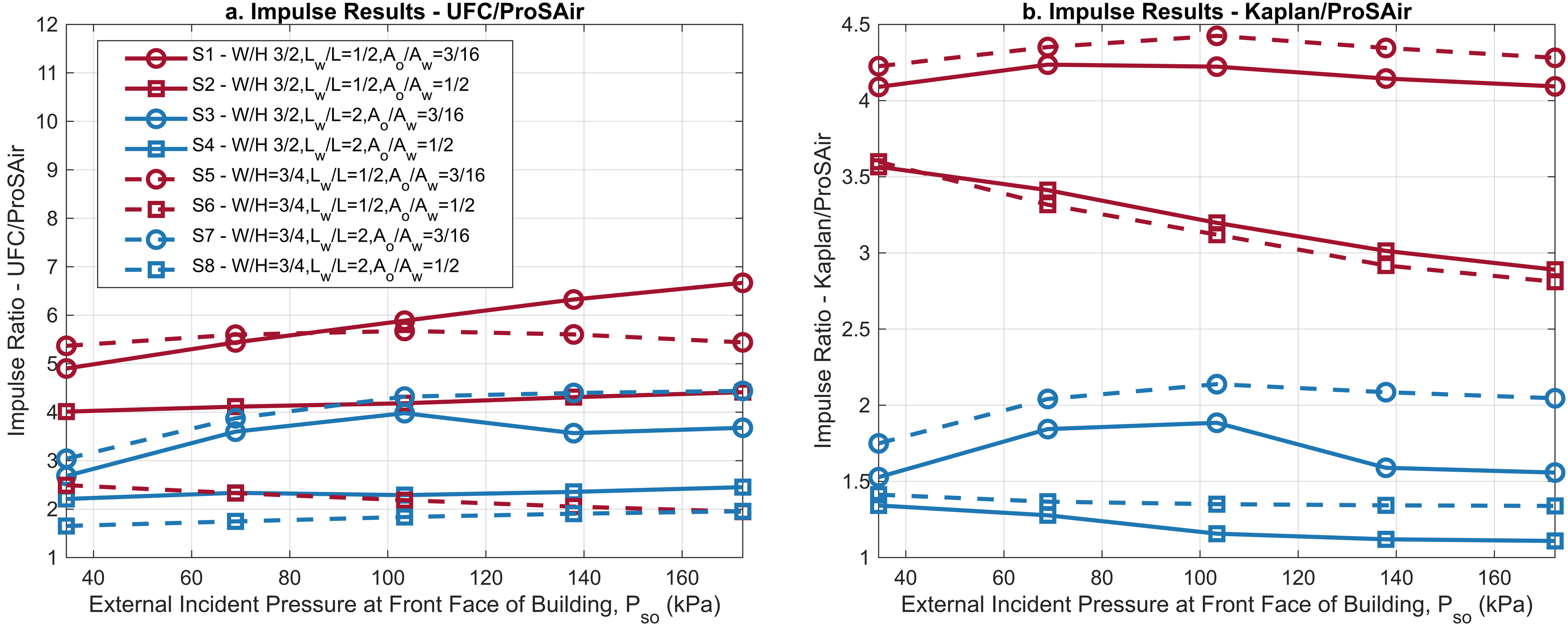
To better quantify the overestimate from the UFC and Kaplan’s method we plot the relative results of the UFC and Kaplan divided by those of ProSAir as shown in Figure 13 for pressure and Figure 14 for impulse. As we have confidence in the ProSAir results, Figure 13 shows that the UFC overpredicts the side wall peak pressure by factors of 1.06 to 5.25 and Kaplan’s method overpredicts by factors of 1.1 to 4.0. Similarly, Figure 14 shows that the UFC overpredicts the side wall impulse by factors of 1.65 to 6.65 and Kaplan’s method by factors of 1.1 to 4.4. Equivalent uniform peak pressures ratios for Series 1-8; (left) UFC/ProSAir, (right) Kaplan/ProSAir. Equivalent uniform impulse ratio for Series 1-8; (left) UFC/ProSAir and (right) Kaplan/ProSAir.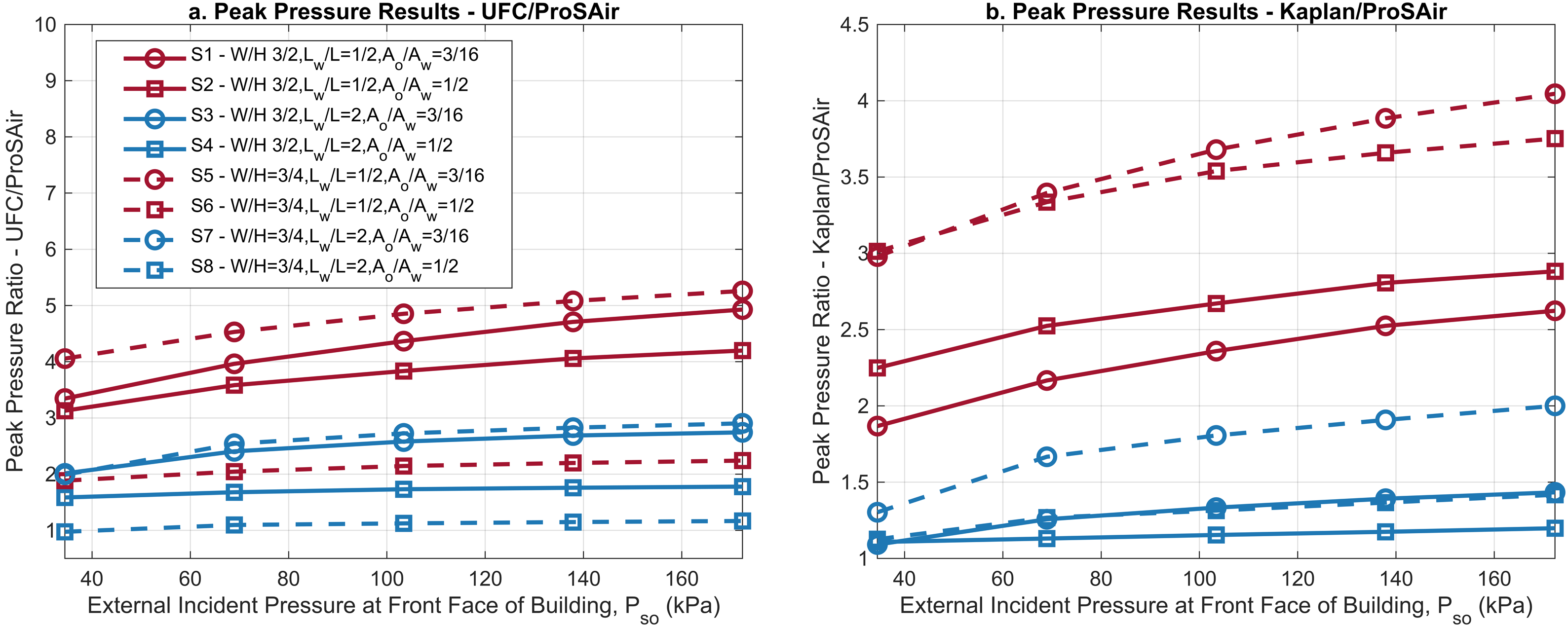
The results can be rearranged to examine the inconsistency shown in Figure 8 for the side wall maximum pressure Variation of the UFC side wall 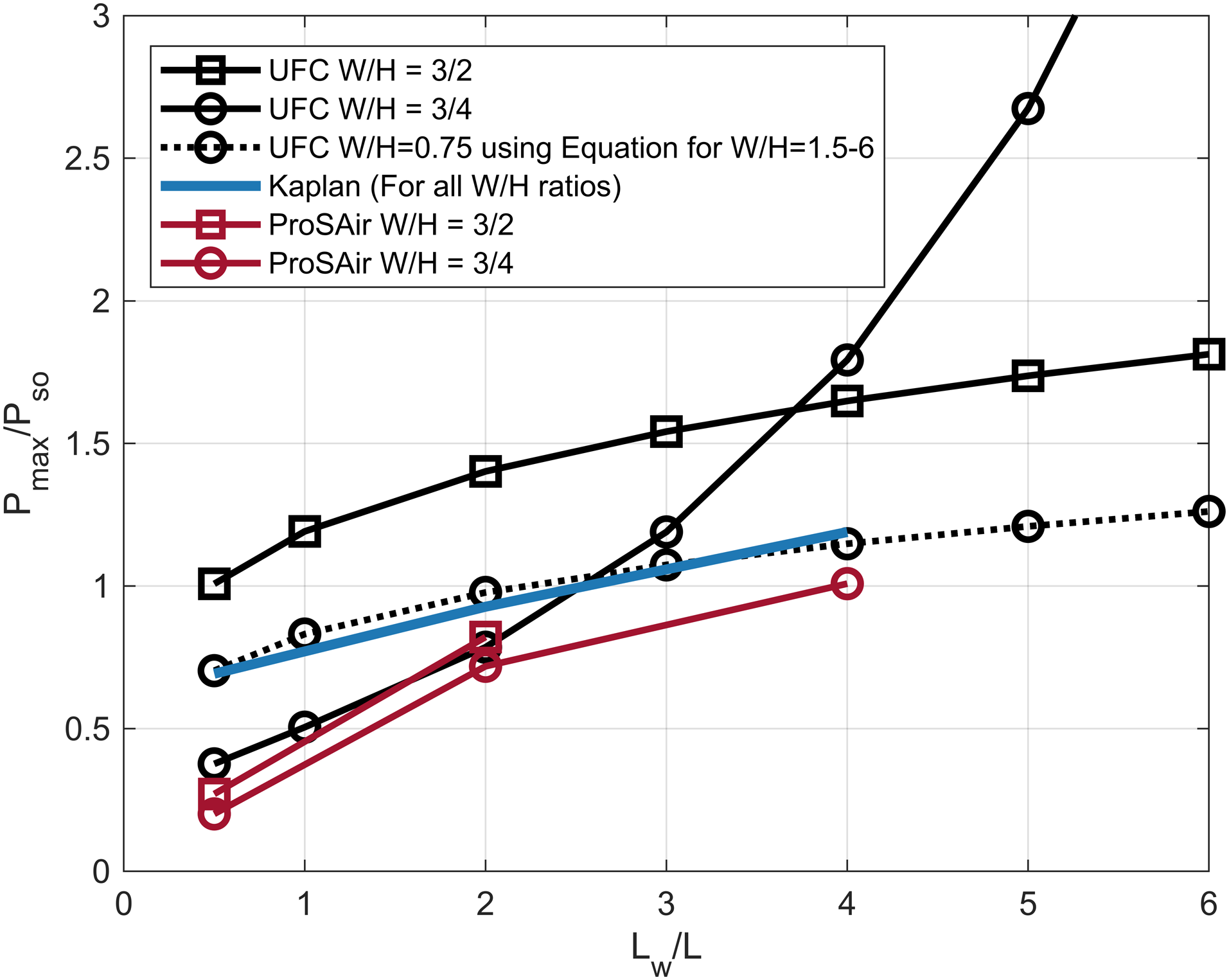
To address the issue for the UFC method that the side wall arrival time Variation of the side wall time of arrival 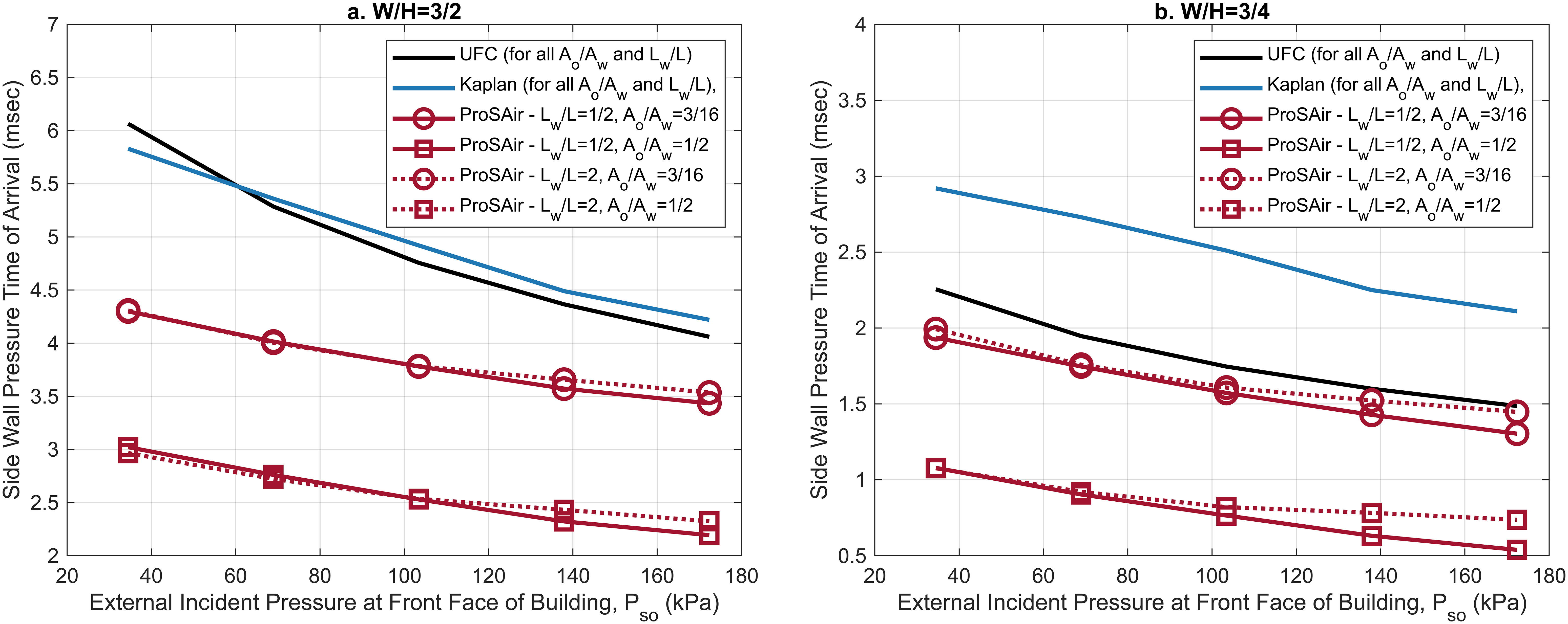
The question raised about the UFC Side wall loading duration 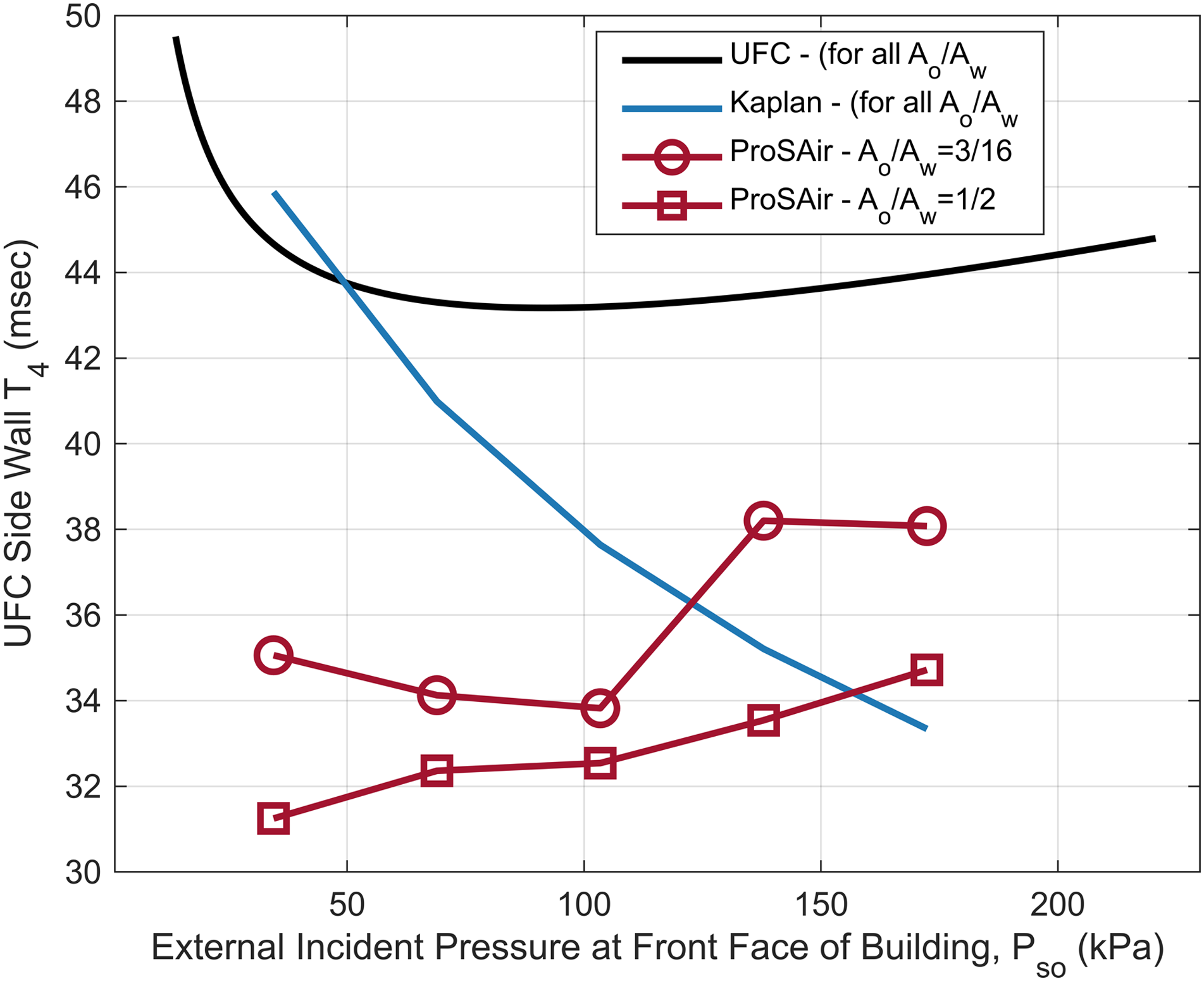
Kaplan’s solution shows
The complexity of the loading across the wall can be demonstrated by the ProSAir mid-span gauge as shown in Figure 18. During the UFC’s predicted positive load duration, the ProSAir simulation predicts 12 different reflections with the peak pressure suprisingly at the fifth. This demonstrates the immense challenge the UFC authors faced in accounting for such complex behaviour whilst restricted to a relatively simple mathematical form. Side wall loadings predictions for Case 3A where 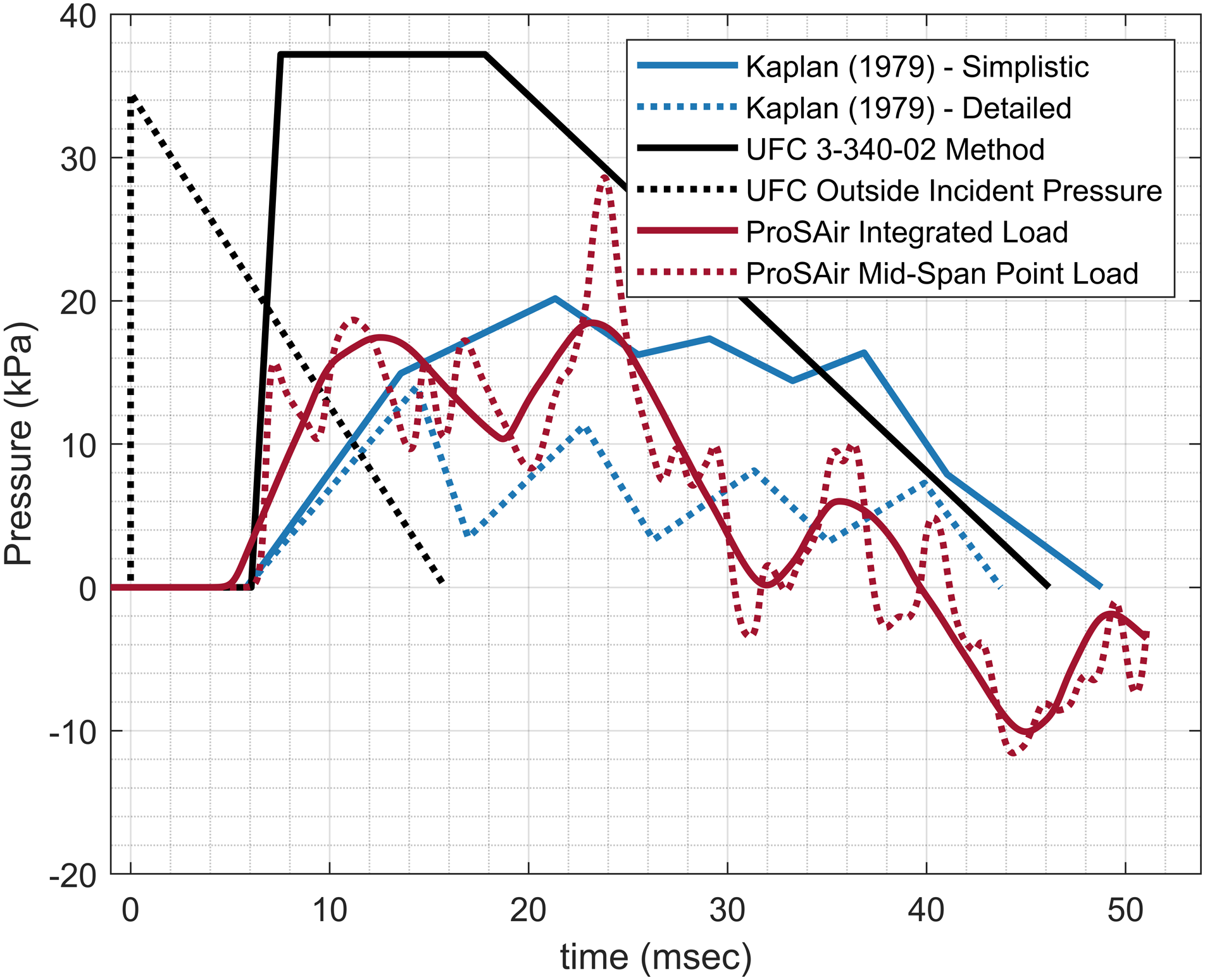
Evaluation of back wall loading methods
The results of the equivalent uniform peak pressure and impulse for the back wall are summarised in Figures 19 and 20, with the detailed pressure-time histories for each case included in Appendix A. Back wall equivalent uniform peak pressure results for Series 1-8. Back wall equivalent uniform first phase impulse results for Series 1-8.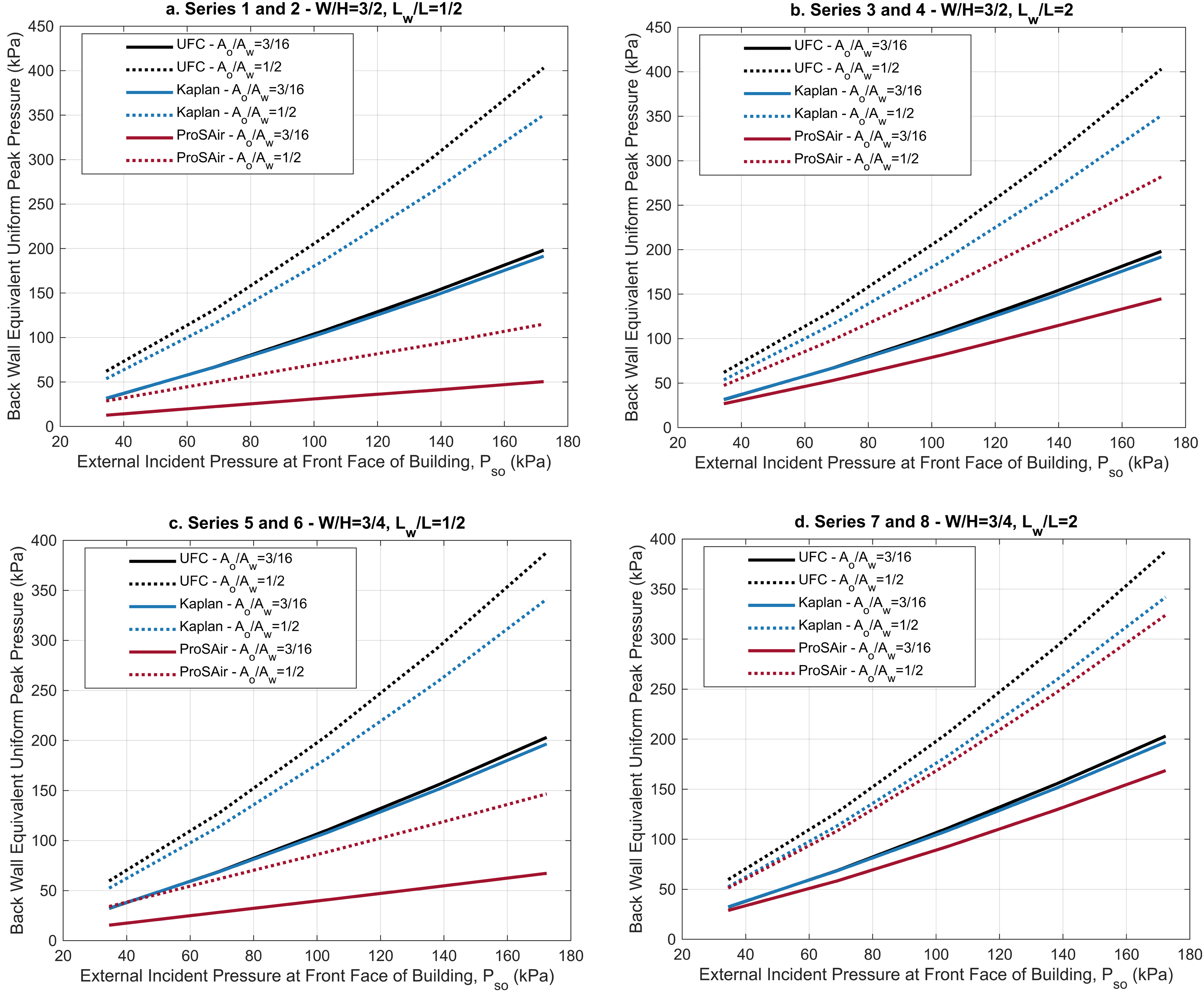
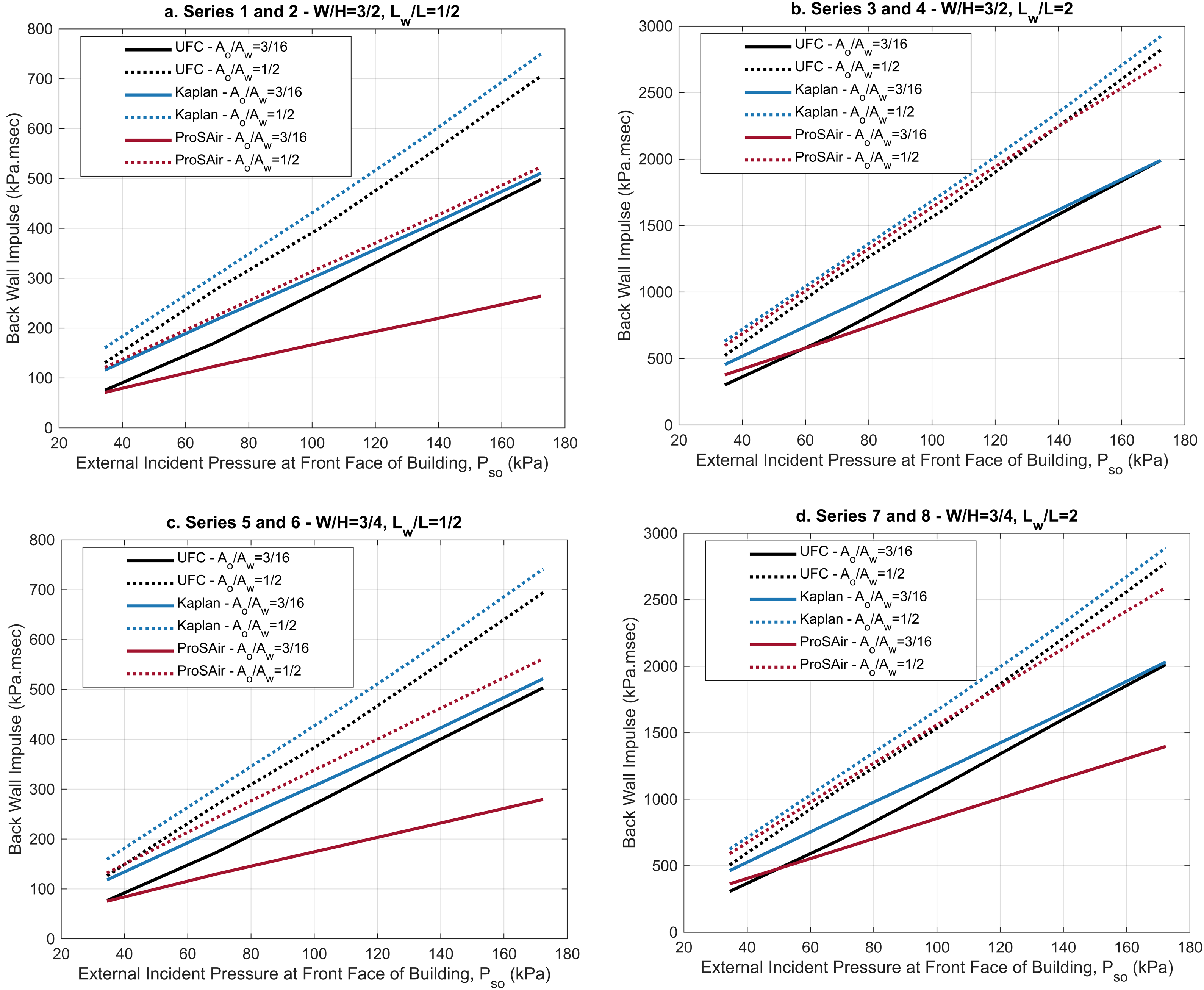
The UFC predictions of peak pressure are in good agreement with Kaplan’s for all series where Equivalent uniform peak pressure ratios for Series 1-8; (left) UFC/ProSAir and (right) Kaplan/ProSAir. Equivalent uniform impulse ratios for Series 1-8; (left) UFC/ProSAir and (right) Kaplan/ProSAir.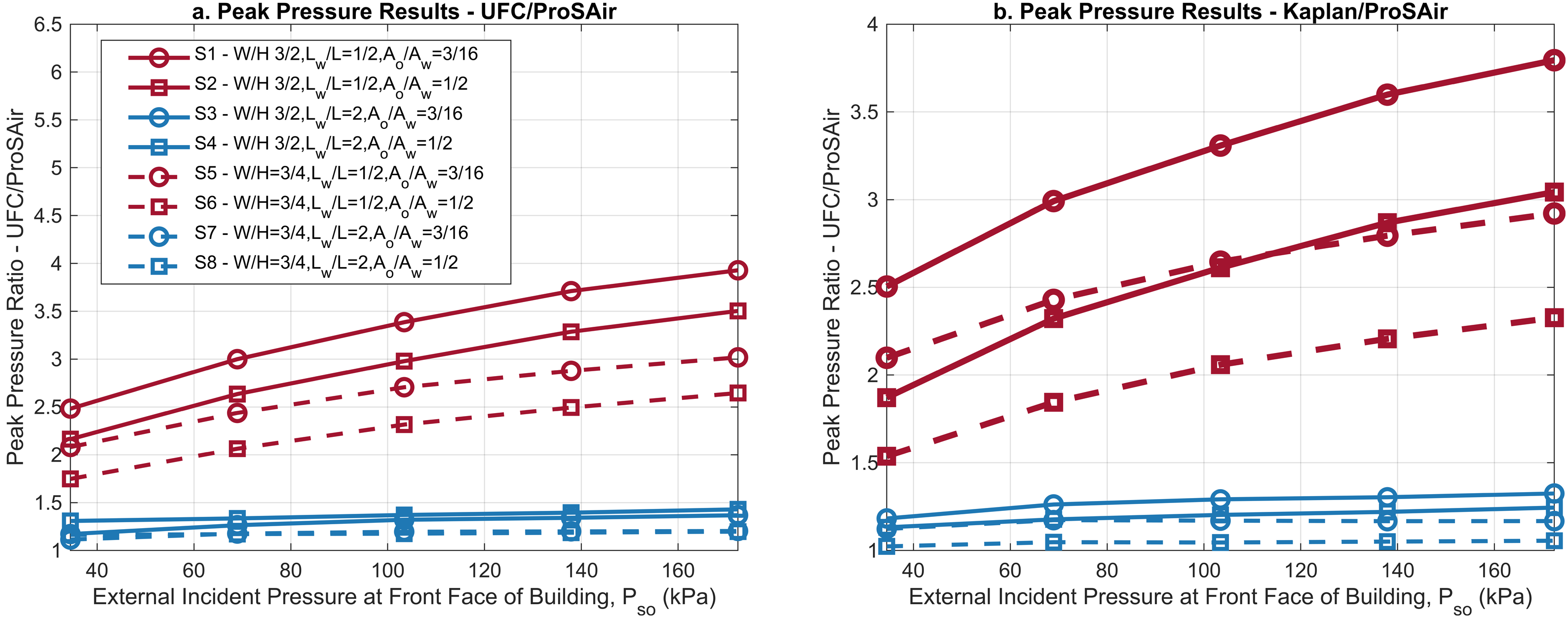
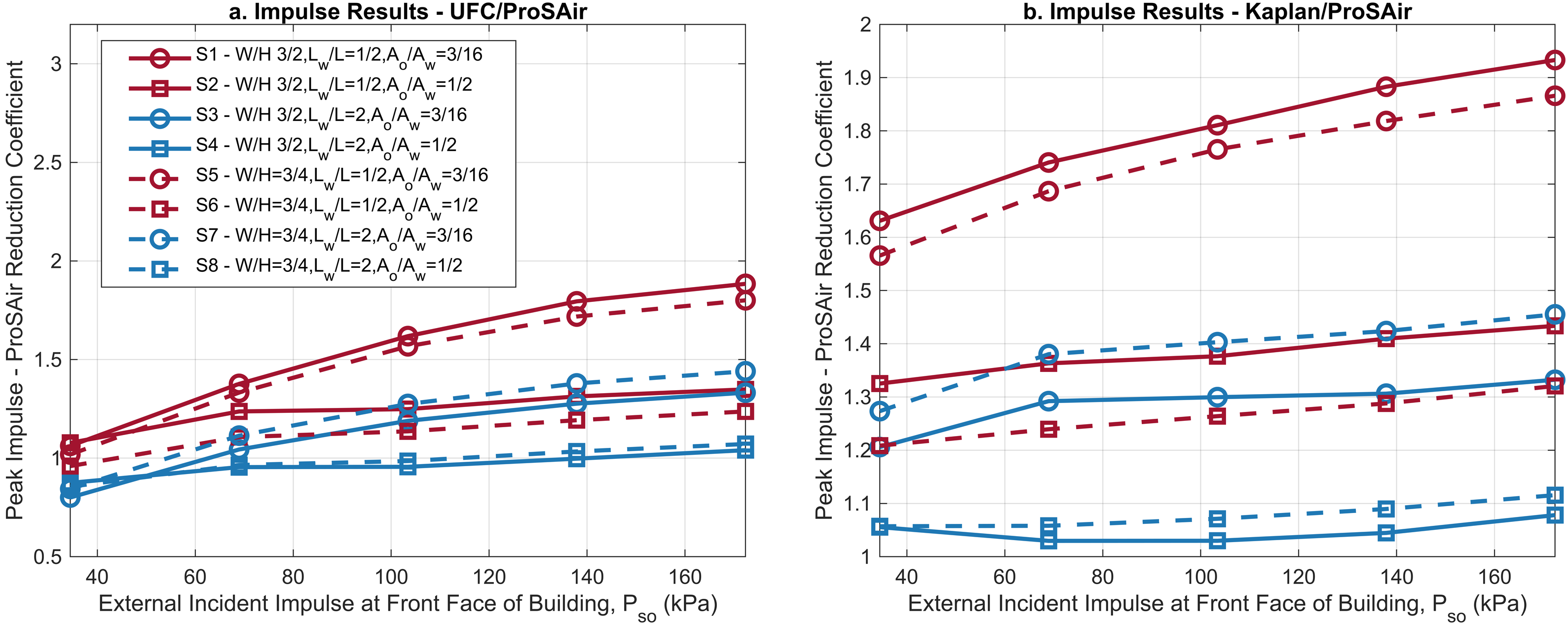
The factors across the
The results for back wall time of arrival Variation of the predicted back wall time of arrival 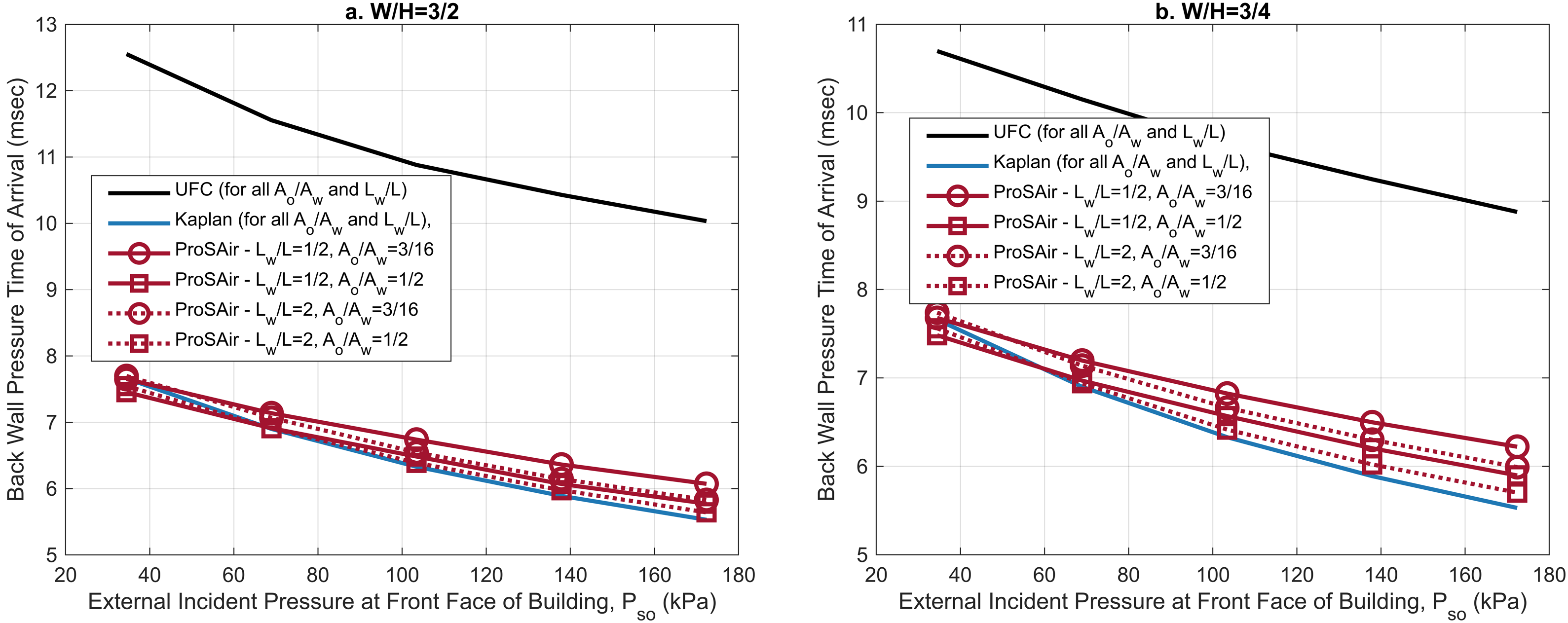
While it appears that ProSAir’s impulse predictions are somewhat in agreement with the UFC, it is still unclear if the UFC considers interior re-reflections. The loading on the back wall is composed of a complex set of interior reflections. This can be illustrated by the ProSAir mid-span gauge results in Figure 24. During the ProSAir integrated positive phase, the mid-span gauge records irregularly spaced pressure peaks, with the peak pressure unexpectedly at the fifth. Side wall loadings predictions for Case 3B (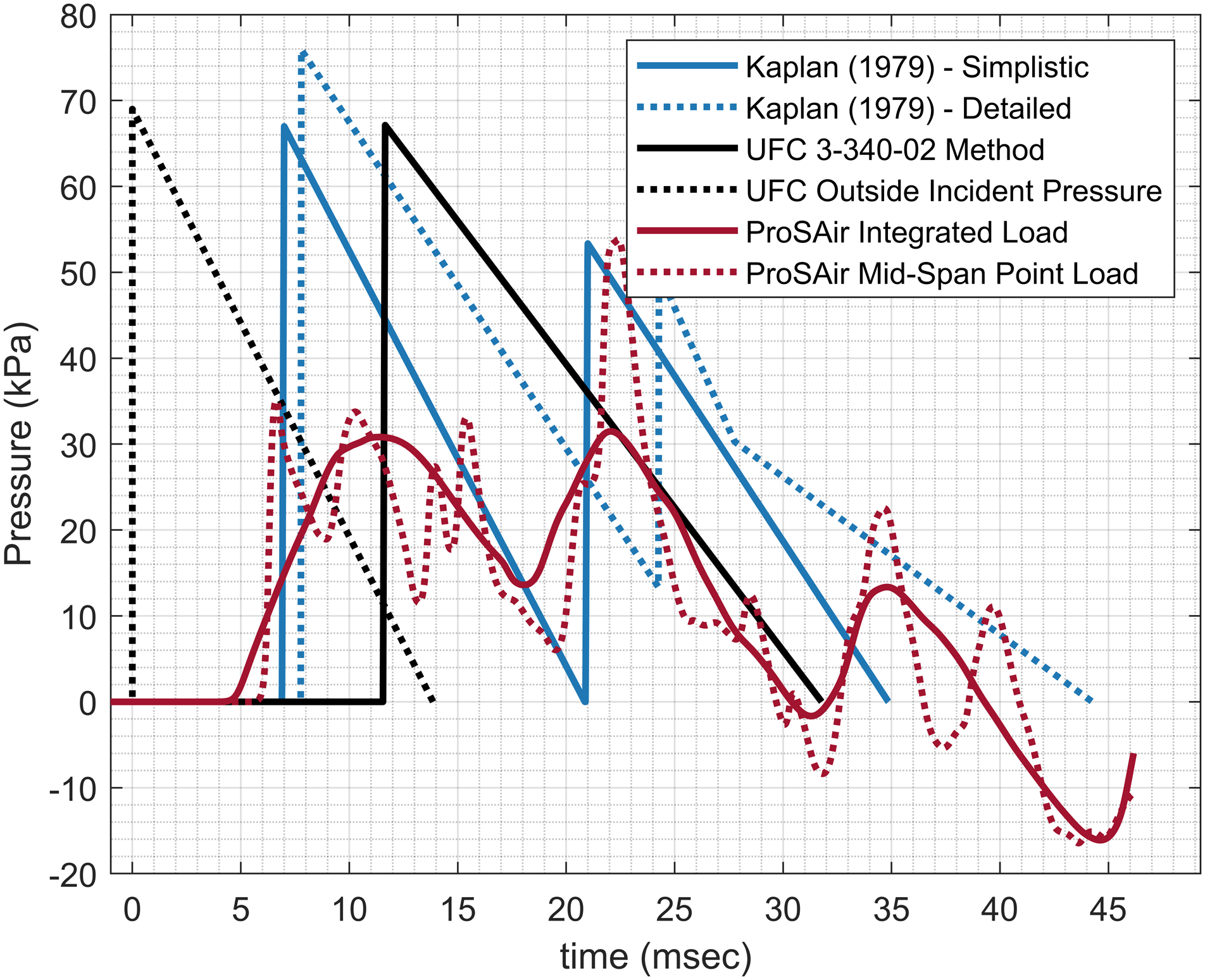
It is now suggested that the UFC impulse similarity with ProSAir might be coincidental for the cases included in this study. In all cases, ProSAir positive phase duration is longer than the UFC (as depicted in Figure 25), while maintaining a lower peak pressure. The UFC calculated impulse might be a result of overestimating the pressure for a shorter duration comprised of a single reflection. This requires further investigation which is beyond the scope of this paper. Variation of the predicted back wall positive phase duration with external incident pressure; (left) for Series 1,2,5,6 (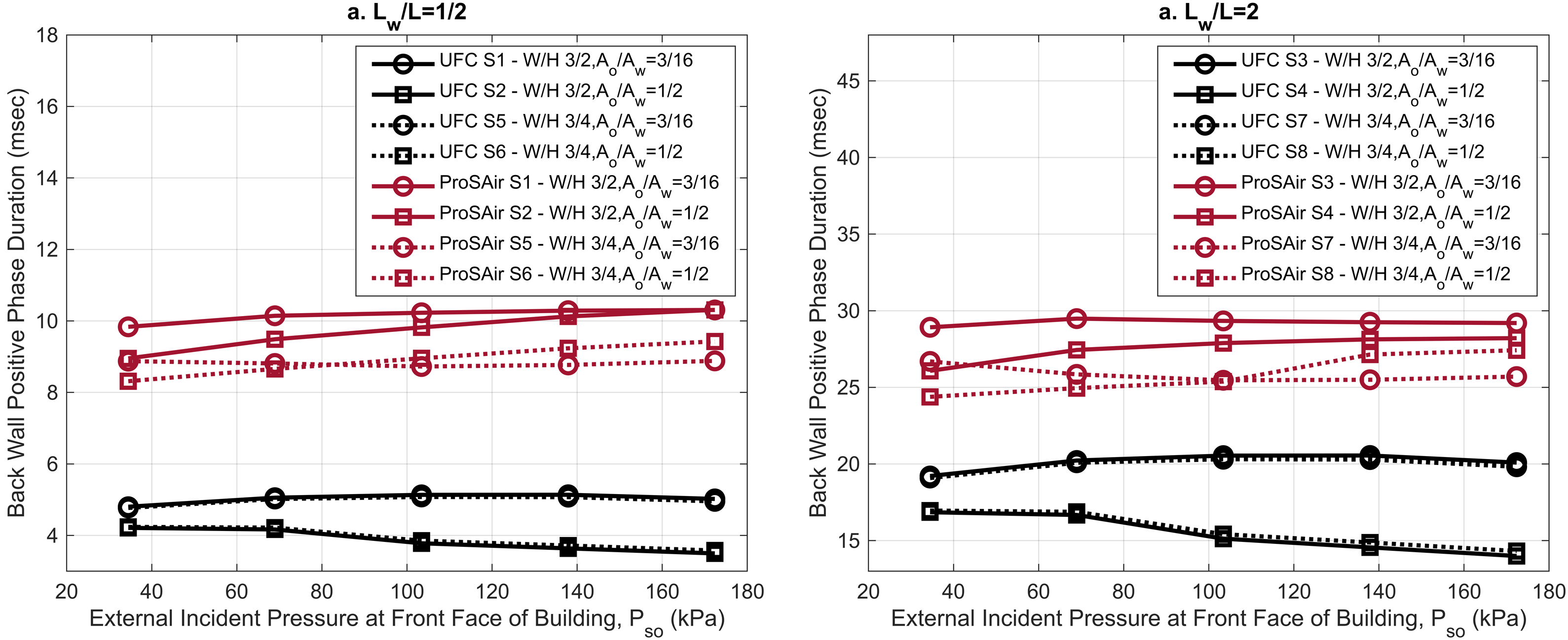
Conclusions and further work
In this paper we have presented a review of the UFC 3-340-02 (U.S. Department of Defense, 2014) method for predicting the load on interior walls due to ingress of blast pressure through a facade opening. The past research which informed the development of the method has been detailed and contrasted with the final methodology proposed by the UFC. We have explored these differences by conducting a numerical analysis using a modern computational blast loading tool (ProSAir) to evaluate a series of different structural geometries to elucidate the cumulative effect of the various methods’ assumptions.
The UFC provides scant detail of its underlying assumptions and theory for blast ingress, however as a prominent methodology for designing protective structures a reader might fairly assume a well-researched underlying basis informed by relevant experimental data. The critical review of the past research which formed the basis of the UFC methodology highlighted severe shortcomings, many of which were identified by the original authors but are not referenced by the UFC nor evidently accounted for. Both past and present research is severely limited by the lack of high-quality experimental data, with the key publication (Kaplan, 1979) explicitly acknowledging this whilst relying on several unjustified assumptions to account for the shock propagation. The UFC authors were limited to the tools and datasets available at the time of publication; it is concerning that no subsequent revisions of the method have acted on the concerns and recommendations in Kaplan's original publication (Kaplan, 1979) nor attempted to use modern tools to evaluate these assumptions.
In our numerical study using modern computational tools a stark contrast is visible between the pressure predictions for the different methods. The UFC results are seen to greatly exceed the side wall loadings predicted by ProSAir, with pressures and impulses of up to 425% and 565% respectively relative to ProSAir. The ProSAir results demonstrated that parameters such as the shock time of arrival are dependent on the physical dimensions of the structure rather than the dimensionless geometric ratios assumed in the UFC.
By contrast, the differences in the back wall loading predictions are less dramatic. Whilst the UFC peak pressures were again consistently higher than the ProSAir predictions by up to 290%, surprisingly the impulse predictions were similar. From examination of the detailed pressure-time results, it is theorised that this similarity is coincidental. It was observed that the UFC predicts higher peak pressures than ProSAir but for a shorter duration. It is hypothesised that the UFC methodology only accounts for a single reflection of higher peak pressure and shorter duration, for which the impulse is coincidently similar to ProSAir (which accounts for all the interior re-reflections). This will be examined in future work by the authors as a greater variation in structural geometries is required to ascertain the relation.
The considerable overestimates of the loadings by the UFC methodology, relative to modern modelling techniques, could results in significant overdesign of protective structures greatly increasing costs and environmental impacts. Furthermore, it may even result in structures foregoing protection where indicative costs based on UFC predictions are too prohibitive.
Whilst the numerical study presented here included 45 different loading cases, considerably more simulations are required to fully evaluate the accuracy of the UFC across its stated range of applicability. Similarly, the absence of high-quality experimental data of blast ingress is an immediate lacuna that needs filling to form the basis for any approach seeking to update or replace the UFC methodology. In the interim, the use of CFD simulations to evaluate the interior loading due to pressure ingress is recommended for a more realistically estimated blast loadings, particularly for the side walls of structures.
As part of the future work identified by the authors in the course of this review paper, work on validating ProSAir specifically against pressure ingress scenarios has been conducted and yet unpublished. Furthermore, this modelling approach has been extended to simulate 720 case studies to encapsulate the full range of structures and blast parameters considered in the UFC. This exhaustive study (paper in preparation) will be used to justify an improved method for predicting blast ingress, which in contrast to the UFC will include complete transparency of the underlying data and assumptions.
Supplemental Material
Supplemental Material - Blast wave ingress into a room through an opening – Review of past research and US DoD UFC 3-340-02
Supplemental Material for Blast wave ingress into a room through an opening – Review of past research and US DoD UFC 3-340-02 by Alex Eytan, Shaun A Forth, Rachael Hazael, Erik G Pickering and Stephanie J Burrows in International Journal of Protective Structures
Footnotes
Declaration of Conflicting Interests
The author(s) declared no potential conflicts of interest with respect to the research, authorship, and/or publication of this article.
Funding
The author(s) received no financial support for the research, authorship, and/or publication of this article.

Supplemental Material
Supplemental material for this article is available online.
References
Supplementary Material
Please find the following supplemental material available below.
For Open Access articles published under a Creative Commons License, all supplemental material carries the same license as the article it is associated with.
For non-Open Access articles published, all supplemental material carries a non-exclusive license, and permission requests for re-use of supplemental material or any part of supplemental material shall be sent directly to the copyright owner as specified in the copyright notice associated with the article.
