




Abstract
This paper makes the case for an evolutionary mismatch between digital work and the way human ancestors engaged in work. Psychological adaptations for producing things that early humans needed to survive and thrive, such as cognitive mechanisms for obtaining and processing food, toolmaking, and learning valuable working skills, evolved in the context of small networks of hunter–gatherers. These adaptations are central to understanding the significance of work in human evolution. Evolutionary mismatches operate when novel environments cue ancestral adaptations in ways that no longer provide adaptive benefits. We argue that digital work, although efficient and productive, is misaligned with some fundamental human needs, preferences, and routines, thereby illuminating a potential dark side. Yet digitalization also offers opportunities for matching the modern work environment to our evolved work psychology. We conclude with an agenda for advancing research in industrial and organizational psychology on digital work from an evolutionary mismatch perspective.
Digital Work and Human Evolution
This paper talks about how the way we work now with computers and digital technology is verydifferent from how our human ancestors used to work. Our ancestors had to do specific tasks to survive, like finding food and making tools. These tasks were done in small nomadic groups. Our brains evolved to be good at these tasks. But now, our work is mostly done on computers with digital tools. This can sometimes make us feel stressed or unhappy because it doesn't match up with what our brains are good at. However, there are also positive things about working with digital technology, for example, that we can work from anywhere. We should do more research on this topic to understand it better.
Keywords
Introduction
We are in the midst of a digital revolution in the workplace. This mega-transition has been going on for some time now, to the extent that there are virtually no jobs left that are unsupported by some kind of digital technology (West, 2018). The recent COVID-19 pandemic that, almost overnight, forced millions of workers around the globe to work from home has merely accelerated the speed of the digital transition (Kniffin et al., 2021). Digital connectivity tools such as email, docsharing, and videoconferencing have made working from home a widely available option (Bartik et al., 2020). Notwithstanding the benefits in productivity, efficiency, and flexibility, there may be various unintended social and psychological consequences of the digital workplace transition that need to be better understood (Marsh et al., 2022). 1 For example, work climate surveys show a steady decline in job satisfaction and work engagement among workers, and an increase in the prevalence of work-related mental health problems, such as work stress, burnout, and depression, which have all been linked to digitalization (Estévez-Mujica & Quintane, 2018). The trend towards digitalization also coincides with a population-wide decrease in physical activity, the underlying cause of many health-related problems such as obesity and cardio-vascular disease (Moreno-Llamas et al., 2020). Understanding the consequences of the digital work transition, both positive and negative, for individuals and organizations, is therefore crucially important, especially in relation to the way humans worked historically and how our working routines and psychologies have been designed to function throughout human evolution.
The speed of the digital transition has given rise to a flourishing body of journalistic and scholarly studies, exploring the increasing reliance on digital technologies in the workplace and beyond (e.g., Frank et al., 2017; West, 2018). In 2011, tech-expert and co-founder of Netscape, Marc Andreessen predicted in an op-ed for the Wall Street Journal that the fastest-growing companies of the future would be the ones run largely on software. The success of Amazon, Apple, Booking, Microsoft, and Uber proves his point. Furthermore, almost three-quarters of companies in Europe and the US are either already using—or planning to use—a hybrid work-model in which their employees work remotely at least some of the time with the aid of digital tools such as videoconferencing. Digital technology is now an integral part of the modern workplace. More than 90% of jobs analyzed in the US and EU require at least some digital skills—from simple computer use to sophisticated coding and analytics (National Skills Coalition, 2023). While many workers can get by with basic computer literacy, it is likely that those who operate in even a partial digital environment (everyone from car mechanics to physicians) will need to increase their digital skills. The percentage of specific work-tasks that are either fully or partially digital has risen sharply (Frank et al., 2017) and many work processes that were undertaken by people are now accomplished—fully or partially—by digital technology. Examples include basic customer service, language translation, spell checks/editing, stock portfolio allocation, tax accounting, piloting (cars, airplanes), supply chain logistics, as well as online education, law, medicine, counseling, and therapy. Moreover, artificial intelligence (AI) is ushering in an even more profound transition where digital technology will most likely move from a supporting to a leading role in creative, intellectual, professional, leadership, and management activities (Quaquebeke & Gerpott, 2023). Despite the growth in data and publications, however, there is surprisingly little systematic research and theorizing about the digital work transition in the scholarly industrial and organizational psychology literature, although the consequences of this transition, both psychologically and behaviorally, are likely to be substantial (Cascio & Montealegre, 2016).
Now is a good time for a critical self-examination of how digital technology is reshaping the psychology and experience of work. In this paper we adopt an evolutionary mismatch perspective, which is rooted in the science of evolutionary psychology (Li et al., 2018), to understand why and how digitalization affects the well-being and productivity of workers, examining both its positive and negative consequences. The evolutionary mismatch perspective contrasts the current digital work environment with the way humans worked in ancestral times. Across 99% of human evolutionary history, from around 2.5 million years ago to around 12,000 years ago, humans lived and worked predominantly as hunters and gatherers in small, nomadic family networks in natural, outdoor environments. A fundamental assumption from evolutionary psychology is that the way humans engage in work and relate to work—our innate, adaptive work psychology—was shaped during that long phase of our evolutionary history, commonly referred to as the Environment of Evolutionary Adaptedness or, in short, EEA (Colarelli, 1998; Nicholson, 2015; Tooby & Cosmides, 1990).
We propose that certain aspects of digital work align (match) with our adaptive work psychologies, while other aspects are misaligned (mismatch). The digital workplace constitutes an evolutionary mismatch, because it pulls people further away from physical work and face-to-face interactions to virtual work and remote interactions, for instance. To the extent that there are evolutionary mismatches, this could lead to a chronic activation of our stress and anxiety mechanisms (Brenner et al., 2015), resulting in a variety of costs for employee's mental and physical health (Lieberman, 2014). The basic argument of our article is summarized in Figure 1.
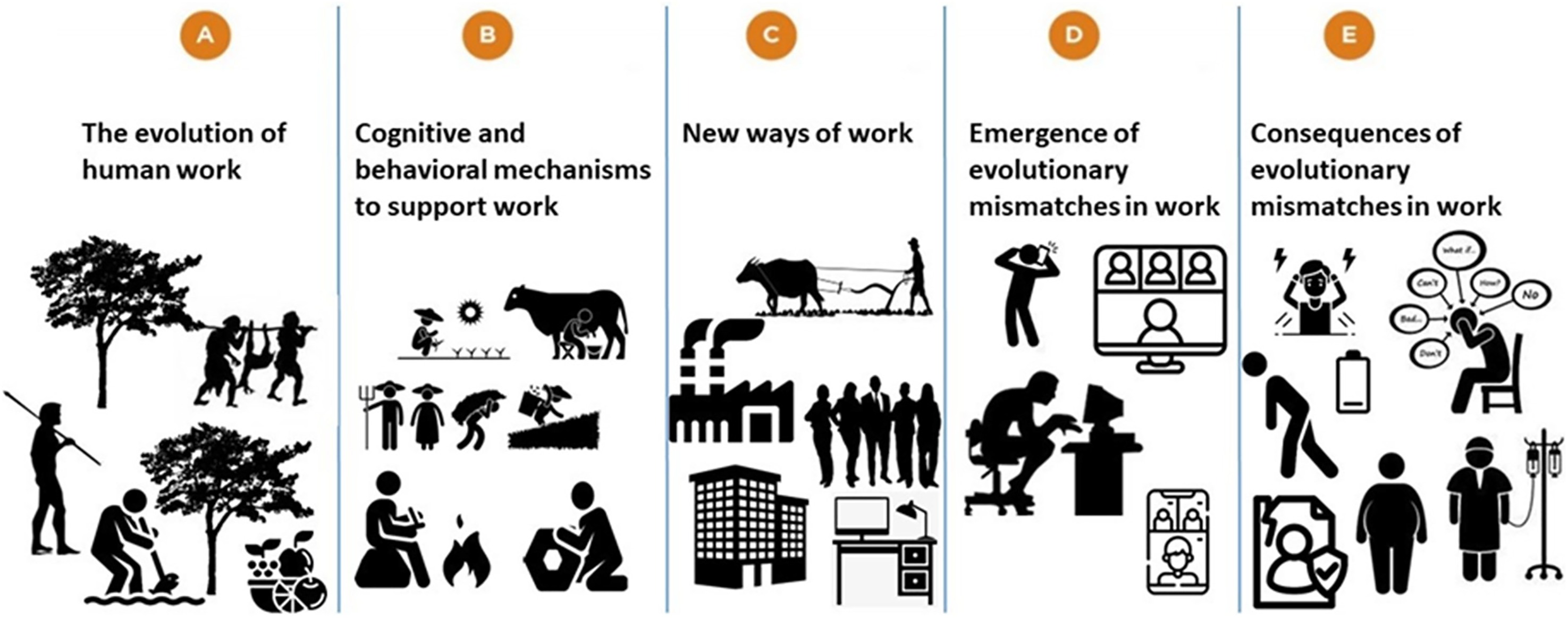
Evolutionary mismatches in digital work. The basic argument of this article is that (a) work is an essential aspect of human evolution, and that (b) humans have evolved cognitive and behavioral adaptations to engage in work; yet (c) new ways of working have emerged with recent technological revolutions that (d) highlight the potential for various evolutionary mismatches to occur with (e) various maladaptive consequences for the health and well-being of workers (if left unchecked).
Note that some other theories make a similar prediction about the negative impact of digitalization on workers, such as the transactional model of stress (Lazarus & Folkman, 1987) or the job demands–resources model (Bakker et al., 2023). However, these theories offer proximate explanations for why digital work produces stress and burnout—through increasing job demands or reducing job resources (Demerouti, 2022). For these models to explain their own assumptions—for instance, why 24/7 digital connectivity is inherently stressful—these theories must ultimately turn to evolutionary psychology and the way humans lived and worked for 99% of their existence. Finally note that the digital work transition could make some aspects of work more matched to human nature than during the industrial age of the 19th and 20th centuries. For instance, working digitally from home often aligns with people's evolved preference to be near their family and mix work with leisure activities during the day, perhaps resulting in a better work–life balance.
In this review, we tackle three primary questions. First, what is digital work and what are the fundamental differences and similarities with the way humans worked in the EEA? Second, to what extent does digital work create the potential for evolutionary mismatches with our innate, adaptive work psychology? Third, how do we find evidence for these evolutionary mismatches in the workplace, and what research should we do to develop evidence-based interventions such that there are net-benefits for the well-being of employees and work organizations in the digital age? This paper is structured as follows. In the first section, we discuss what digital work is and what the digital workplace transition encompasses. The second section is devoted to an evolutionary perspective on work. What did work look like in the hunter–gatherer societies in which humans evolved, and how do ancestral working conditions compare to the way humans worked after the agricultural, industrial, and, recently, digital revolutions? The third section introduces the evolutionary mismatch hypothesis and applies it to digital work, identifying some key mismatches related to, for example, the physical, cognitive, and social aspects of the digital workplace. In the concluding section, we discuss what future research needs to be done to test some key predictions from this evolutionary mismatch hypothesis to develop evidence-based interventions.
Digital Revolution in the Workplace
The digital workplace is a concept that refers to the integration of digital technology into the work environment. The term has been in vogue in the business world for a decade (Marsh et al., 2022) but is sparsely used in academic research (Attaran et al., 2019). Workplace digitalization aims to improve productivity, efficiency, and flexibility in modern organizations and encompasses all the digital tools and technologies that employees use daily to do their jobs, including software for communication, collaboration, and productivity, regardless of their location or type of device (e.g., PC, tablet, smartphone). For example, productivity tools, communication tools, calendar tools, HR-systems, intranet, and emerging technologies that use elements of automation and AI are all part of the digital workplace. Visionaries argue that digitalization will fundamentally reshape the nature of our work practices and result in a novel configuration of relationships between humans and technology (West, 2018). Already, the digital workplace allows employees to work remotely, access information and work-related files from anywhere, and communicate distally in real-time with colleagues, clients, and customers from around the globe.
Digital technologies involve a broad range of computer-based hardware and software that electronically store, manipulate, and communicate information. For this review, we define digital work as the broad set of digital technologies and practices involved in employees’ daily work experience, irrespective of their physical location. This includes—but is not limited to—working-from-the-office, working-from-home (WFH), working-from-anywhere (WFA), or a mixture, which is usually referred to as hybrid working. Some of the challenges of the digital workplace that we discuss later are related specifically to remote work, but because this is impossible without the support of digital tools, we concentrate in this article on the broader theme of digital work. This includes studying the impact of this technology transition on leadership and management (Quaquebeke & Gerpott, 2023), organizational culture and design (Wrede et al., 2020), human resource management (Kim et al., 2021) and physical workplace elements (An et al., 2016).
The digital revolution is having a substantial impact on problem-solving, communication, and interactions at work, as digitally mediated communication is replacing real-time, in-person face-to-face interactions. This is a profound shift in how humans worked in our evolutionary past. For 99% of human history and prehistory, people worked primarily in close proximity to each other as hunter–gatherer foragers, communicating mostly in-person with familiar faces. In the digital workplace, this is no longer the case. In some industries (like in IT or in virtual call centers) colleagues who work together have never met in person, and almost certainly never will. Although people have always discovered new technologies that make their work more efficient throughout history—think of primitive stone tools, hand-axes, ploughs, steam engines, or assembly lines—the digital era is different in that technologies are augmenting—and increasingly replacing—human physical and cognitive power. Many problems that require human cognitive capacities to address can now be more efficiently solved by digital technology with fewer errors. Think of emerging technologies such as AI-based language tools (e.g., ChatGPT, Google Bard) that may, to some extent, become substitutes for human cognitive effort, problem-solving, and creativity. Digitalization has also increased the availability of expertise. Anyone with internet access can find expert advice on anything from managing a team to learning computer coding languages. Although it is still unclear how, to what degree, or in what contexts online instruction results in actual skill enhancement or outperforms in-person instruction, it is undeniable that expertise and instruction through digital media are playing an increasingly prominent role in learning and education. Furthermore, digitalization may fundamentally change the working relations between employers and employees. On the one hand it empowers employees by giving them more job autonomy and the flexibility to work when and where they want. On the other hand, there are fears that employers will use software technology to monitor and control the online behaviors of workers in ways that are detrimental to employee's privacy and autonomy.
Thus, the digital workplace has, and will continue to have profound implications for how employees are connected with each other and their organizations, how work gets done, and how problems are solved. It is also likely to have implications for organizational design and culture, leadership, and human resource management, including aspects of job design, recruitment and selection, learning and training, and work–life balance, amongst many other elements.
Short Evolutionary History of Work
It is probably no exaggeration to state that humans are born-to-work, by which we mean that humans evolved to apply their physical, neural, social and other kinds of resources to produce certain goods or services (Cascio & Montealegre, 2016). Evolutionary biologists define work as energy expended on producing things that help organisms survive, thrive, and ultimately reproduce (Suzman, 2020). For instance, worker bees gather nectar and pollen and work together to construct and maintain the hive and defend the colony. How much organisms work is addressed comprehensively by an evolutionary model called optimal foraging theory (Pyke, 2019). In organizational psychology, conservation-of-resources (COR) theory further underscores the evolutionary drive to minimize resource losses and maximize energy gains through work (Hobfoll et al., 2018). These models explain how organisms maximize their energy gain while minimizing the time and energy expended to obtain food. It suggests that natural selection favored individuals who are efficient at finding, processing, and consuming food and that organisms adjust their foraging behavior based on the availability of food and the energy required to obtain it. In support of these ecological models, studies have shown that hunter–gatherers make decisions about food acquisition based on the availability of food resources. When resources are scarce, they tend to favor high-energy foods such as meat and honey over low-energy foods such as fruits and vegetables (Smith et al., 1983).
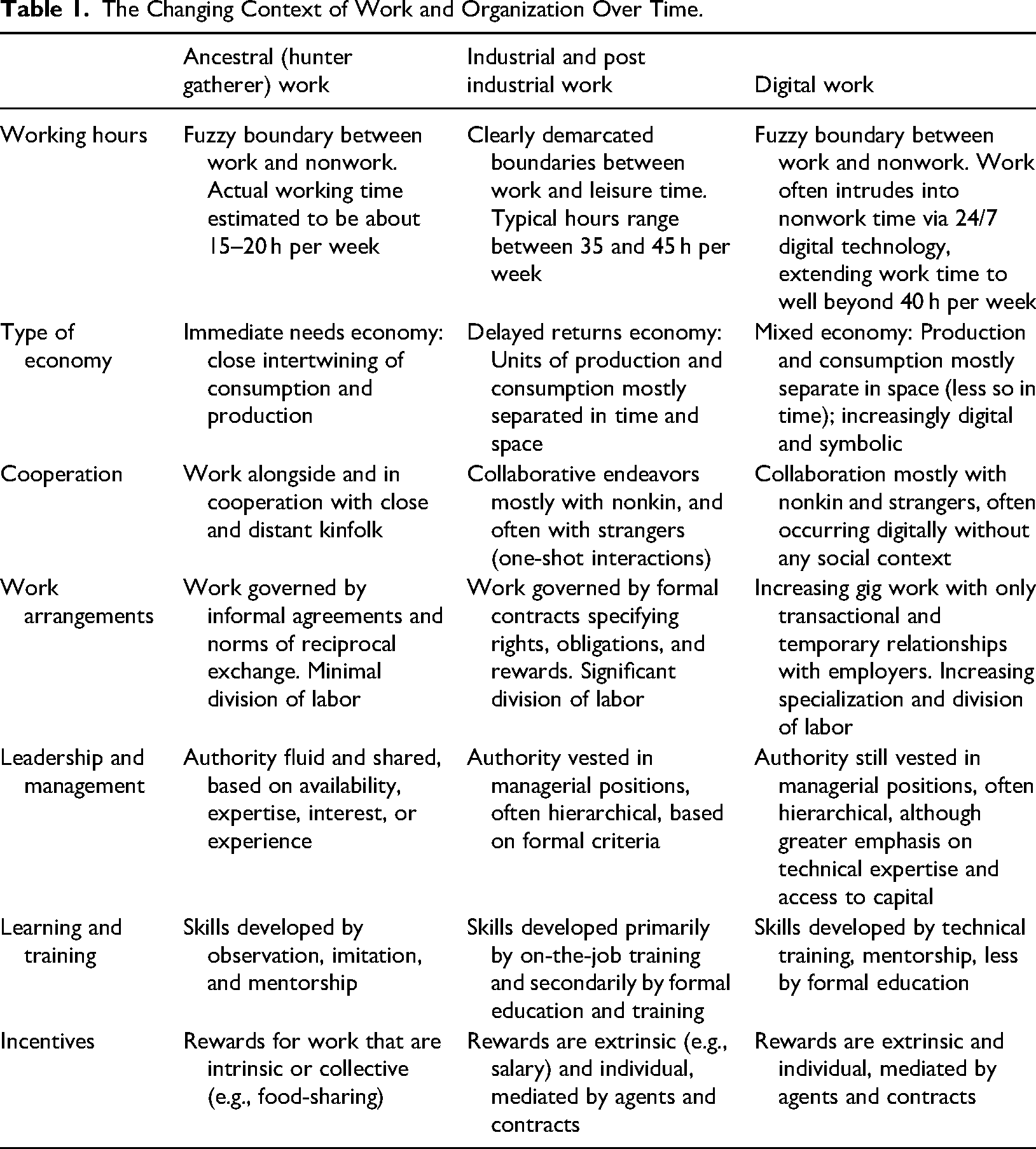
To understand the changing context of work and organization over evolutionary time, Table 1 compares some key characteristics of work and organization during the ancestral, industrial/postindustrial, and digital eras (see also Colarelli et al., 2020). For most of evolutionary history, humans lived in foraging societies of varying degrees of social complexity (Singh & Glowacki, 2022). Working primarily consisted of activities that characterized a hunting and gathering lifestyle—hunting for small and larger game animals, collecting berries, fruits, nuts, tubers, honey, shellfish, and producing tools to acquire and process these different foods (Hawkes et al., 1993). There are still some small-scale societies around that live primarily as foragers from which we can learn about the way our human ancestors have lived and worked for many thousands of generations, in essence, constituting our human work-related nature. Examples are the Hadza from Tanzania, Kun Sang in Namibia, Inuit in Northern Canada, and Ache in the Amazon Basin. Anthropologists have studied work in these foraging societies, and a number of conclusions can be drawn from the ethnographic records (e.g., Lee, 1979; Marlowe, 2010; Von Rueden & Van Vugt, 2015). Foraging societies have an immediate-return economy, which means that people get instant benefits from their labor, and do not build up surpluses in food or material wealth. On any given day, when they have collected more food than they need, they share the extras with their family and friends. Hunter–gatherer work is largely physical, and people spend a considerable amount of energy to obtain energetic food sources; hence, they lead a “thrifty” lifestyle, meaning that they do not expend more energy than they have to. Much of the work is done outdoors in natural environments with little division of labor, except by gender—men tend to do most of the large-game hunting and women most of the gathering and childcare. So each adult member of a society possesses a broad skill set to engage in different work activities. Work is highly social, involving cooperative efforts in small groups for hunting and gathering activities. Collective hunting usually takes place in groups of 5–8 related adult men who will track an animal for sometimes days to kill it and upon their return the meat is shared widely among the society (Lee, 1979). Importantly, working is optional and on any given day a person can decide to join or not join a working activity. How much do hunter–gatherers work? Although this question is debated, they work less than most of us in postindustrial societies. Lee (1979) showed that the hunter–gatherers of Namibia only worked 13–15 h each week, the rest of the time was filled with social activities like play, rituals, and ceremonies. This was later coined the “original affluent society” (Sahlins, 1983), because it contrasts with modern industrial society in which people spend 2–3 times doing work. The typical hunter–gatherer work-week only approaches our standard 35–40 h if we include domestic chores such as processing food, cleaning the living space, and childcare (Bhui et al., 2019).
The Changing Context of Work and Organization Over Time.
Combining ecological models and anthropological studies we can conclude that the human mind contains an adaptive work psychology, evolved over thousands of generations, consisting of a set of psychological mechanisms that help regulate their work activities to maximize energy gains while minimizing expended energy (Hobfoll et al., 2018). Adaptive psychological mechanisms for work include decision rules for: (i) selecting between different resources (e.g., food); (ii) allocating the time and energy budgets to different activities (e.g., obtaining resources, making tools, finding trustworthy partners); (iii) assessing opportunities to gain expertise and obtain status through work. These decision rules operate as mental algorithms that helped our human ancestors decide when to start and stop working on any given day and with whom and what type of work activity would be most productive in light of the balance between energy expenditure and energy costs. Yet, these mental algorithms may not operate optimally in novel work environments that have arisen in the blink of an eye in evolutionary time.
As humans migrated out of Africa around 50,000 years ago, transitioning to colder climates necessitated increased work efforts for survival. The agricultural revolution took place approximately 12,000 years ago, probably due to a combination of climatic (warmer weather with more rainfall) and social factors (higher population density), which further altered the nature of work, demanding more labor and introducing risks associated with farming. While early farming societies faced health challenges due to a less diverse diet, advancements in farming techniques and technology gradually improved productivity, needed to feed more people (Mummert et al., 2011). The industrial revolution, starting around 1750, marked a significant shift as fossil-fuel technologies replaced physical labor, fostering urbanization and a growing division of labor. Factory work became prevalent, accompanied by long hours and adverse health effects. Workers eventually organized into labor unions, leading to improved conditions. The industrial era saw the emergence of centralized administrative and management systems, further dividing work and family life. Automation, information technology, and globalization later facilitated the transition to postindustrial economies in the 20th century. The ongoing digital revolution, initiated in the late 20th century with personal computers and the internet, has further transformed work dynamics (Frank et al., 2017).
While the digital era has reduced the physical demands of work, promised advancements, such as a significant reduction in working hours, have yet to materialize. Despite technological advancements, productivity gains often translate into increased profitability for organizations rather than reduced working hours for employees. Moreover, continuous digital connectivity could even contribute to heightened workloads, challenging the envisioned benefits of reduced working hours (Demerouti, 2022). The proliferation of electronic performance monitoring (EPM) systems, initially used in call centers and logistics, may have enhanced productivity, but at the same time has contributed to employee stress, anxiety, and burnout (Ravid et al., 2020). And digital work, while enhancing connectivity and collaboration between remote workers, has compromised the privacy of employees. As former Sun Microsystems CEO Scott McNealey quipped, “You have zero privacy [on the internet]… Get over it” (Sprenger, 1999).
In conclusion, an evolutionary perspective on work provides insights into the adaptive nature of human work psychology that was shaped over thousands of generations in foraging societies. The journey from hunter–gatherer societies to the digital workplace reflects the dynamic interplay between technological advancements and changing work demands. Understanding these major transitions (as outlined in Table 1) is crucial for addressing the challenges and unintended consequences associated with the digital workplace revolution.
Evolutionary Mismatches in Digital Work
With each technological revolution, new ways of working emerged that increasingly departed from how humans used to work as hunter–gatherers. Think of the long working hours of factory workers in dismal labor conditions for very little pay or the cubicle-bound office workers in nature-deprived buildings with little privacy and opportunity for physical movement. Yet some new working practices seem more closely aligned with human adaptive work psychology. Think of the physical, outdoor labor of farmers or the gig workers whose flexible, project-based efforts resemble hunter–gatherer work. Taking an evolutionary approach can help to identify in what ways the digital workplace matches or mismatches our adaptive work psychology.
The evolutionary mismatch hypothesis is one of the core principles of evolutionary psychology (Li et al., 2018), the science that views the human mind as the product of deeper evolutionary processes shaped by natural selection. This process produces physical and psychological adaptations, species-typical traits that have been retained by natural selection because they help organisms to survive and reproduce. Psychological adaptations are mechanisms that take specific environmental cues as inputs, process these inputs according to evolved decision rules, and produce as outputs adaptive beliefs, emotions, and behaviors. Evolutionary mismatch refers to the adaptive lag that occurs if the environment changes more rapidly than the time needed for the mechanism to adapt to the change. The human suite of psychological mechanisms, including how we communicate, cooperate, and work, evolved during that long ancestral period (roughly 99% of evolutionary history) when humans lived as hunter–gatherers. The subsequent agricultural, industrial, and current digital revolutions produced vast divergences from this past hunter–gatherer lifestyle, creating the potential for evolutionary mismatch (Giphart & Van Vugt, 2018).
Evolutionary mismatches occur when organisms are forced into novel environments, for instance, when deforestation causes habitat loss for birds and other forest-dwelling species such that they no longer have access to food and shelter. In humans, forced mismatches occur when being required to work in environments deprived of naturally-occurring stimuli or cues such as the presence of close and familiar co-workers (see Figure 2), greenery, or the ability to physically move whilst working. Alternatively, a mismatch occurs when novel cues hijack our psychological mechanisms, such that the novel stimulus is favored over the stimulus that the mechanism originally evolved to process. An example is when children prefer fabricated candy over naturally-occurring sweet foods like fruits and berries that are much healthier to eat. The continuous 24/7 digital connectivity of the workplace may be such a novel cue that hijacks our psychological mechanisms for information gathering such that we fail to stop working. Finally, evolutionary mismatches can occur because of significant changes either in the input cues or in the outputs. For example, in doing digital work, physical activity inputs are lacking, the result of which is that employees move too little during the day. In terms of outputs, psychological mechanisms that calibrated our ancestors’ work efforts to immediate, tangible outcomes (such as getting meat from a successful hunt) may not be functioning in a context where workers receive a monthly digital paycheck.
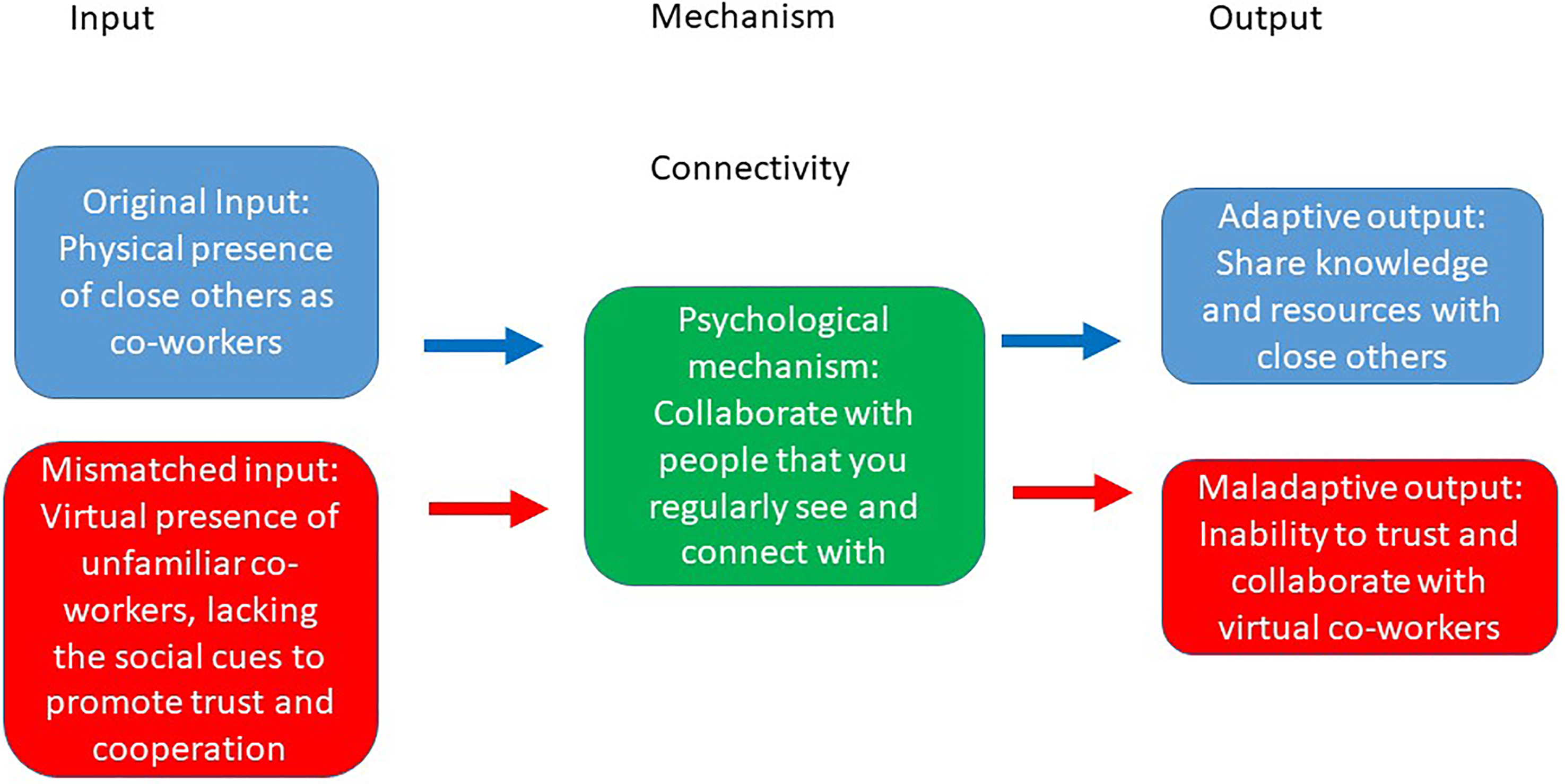
Example of how evolutionary mismatch affects digital work. The figure shows the input and output of a social connectivity mechanism (green) that was adaptive for working as hunter–gatherers in ancestral environments as it promoted sharing resources and knowledge among close co-workers (blue) and the input and output of a process that is maladaptive (red) as a consequence of the virtual presence of unfamiliar co-workers in the novel digital workplace (social mismatch).
Evolutionary mismatches have been linked to a number of problematic issues in modern society such as the rise in life-style diseases like high-blood pressure, diabetes, and obesity, and the prevalence of mental health problems related to chronic stress, burnout, and depression (Brenner et al., 2015; Li et al., 2020). These physical and mental health problems are relatively rare in current hunter–gatherer societies (Marlowe, 2010), suggesting that they can in part be accounted for by evolutionary mismatch. Take chronic work stress—a major theme of this article. Stress is an adaptive phenotypic state necessary for survival and our psychological mechanisms evolved to produce acute stress as output in response to threatening situations, including those that may cause physical harm or a loss of resources (Nesse et al., 2016). In modern societies, however, such immediate dangers have been replaced by constant pressures from evolutionarily novel sources. Most current workplaces bear little resemblance to hunter–gatherer environments where there are high degrees of trust and kinship, little or no hierarchical differences, no real distinction between one's work life and private life, and a continuous physical engagement with the natural environment. Thus, in modern work organizations, which do not have these features, our psychological mechanisms lack many of the inputs that they have evolved to process, resulting in these mechanisms producing maladaptive psychological and behavioral outputs that could contribute to chronic stress (Brenner et al., 2015).
Although the industrial and organizational psychology literature has made heavy use of the concept of mismatch, for example, accounting for job stress as the result of the discrepancy between job demands and resources (Bakker et al., 2023) or between a person's needs and what the work environment supplies (Harrison, 1978), this literature has neglected to integrate the fundamental and useful concept of evolutionary mismatch to explain why so many workers suffer from these problems by considering fundamental shifts in the inputs and/or outputs of the psychological mechanisms that humans have evolved to regulate work activities adaptively. We are not claiming that all discrepancies with ancestral conditions are necessarily bad. Modernity has removed many work-related hazards and enhanced people's physical safety. For instance, work in ancestral environments was physically more dangerous (e.g., accidents, injuries from attacks by animals) than today.
Digitally (Dis)Connected
Although digital work has only been around for about 30 years or so, yet—as a profoundly new way of working—it may contribute to a suite of different evolutionary mismatches. Here, we identify six key evolutionary mismatch features of digital work. The good news about the digital transition is that—if handled well—it could help to realign work more closely to the way humans worked throughout most of evolutionary history. Humans are, after all, a cultural species (Muthukrishna & Henrich, 2016) with the ability to develop innovative solutions to mitigate against evolutionary mismatch (Giphart & Van Vugt, 2018). Table 2 shows both novel features of digital work that could exacerbate evolutionary mismatch—resulting in an expected increase in chronic work stress and related physical and mental health problems—and some other features that are more matched with ancestral work conditions, and are therefore predicted to reduce work stress. Some of these impacts of digital work have been empirically validated, while others await empirical validation. Bringing them together under the umbrella of evolutionary mismatch theory can ultimately help to stimulate research on the causes and consequences of digital work.
Features of Digital Work Predicted to Result in Either an Increase (Mismatch) or Decrease (Match) of Work Stress.
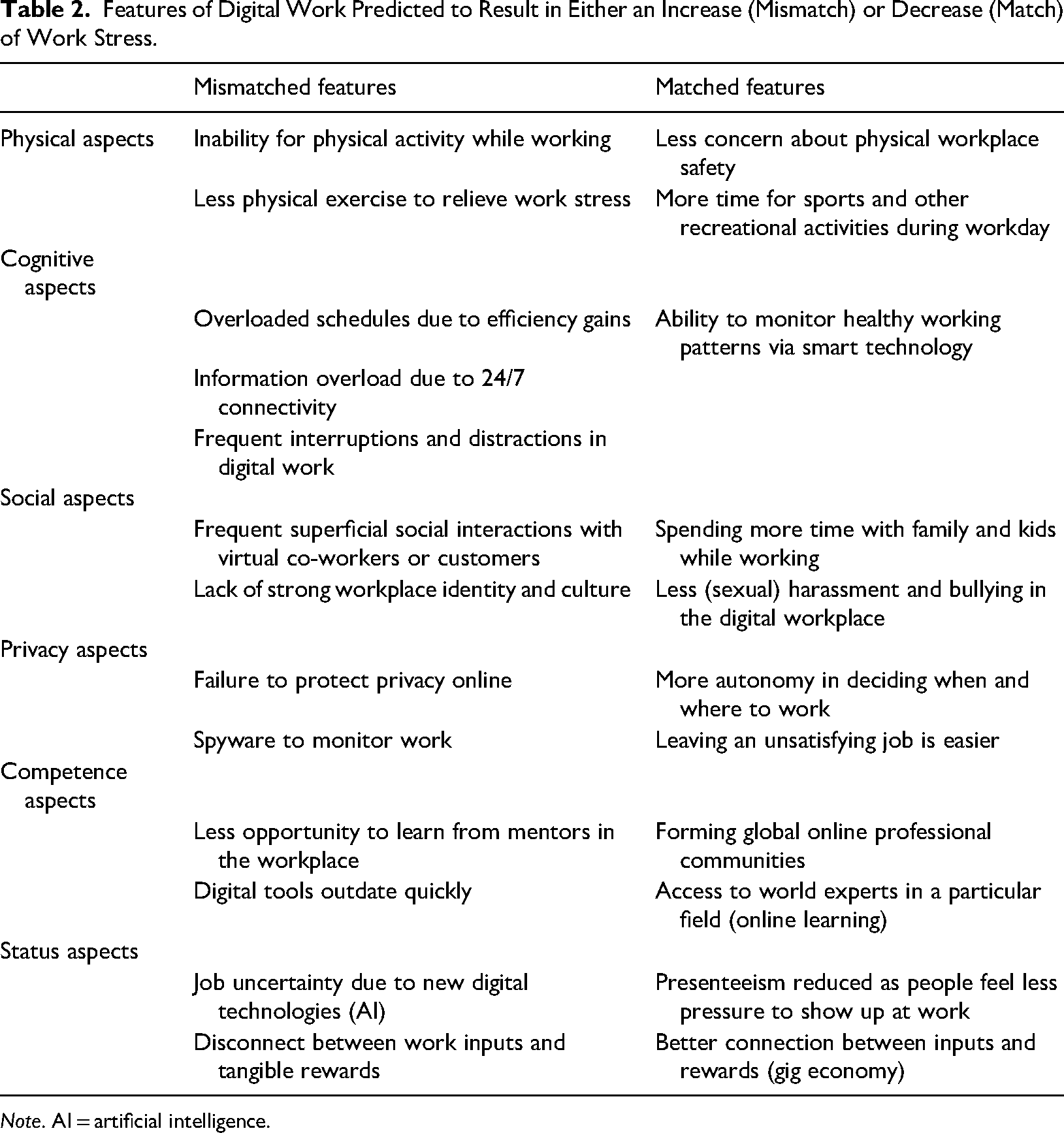
Note. AI = artificial intelligence.
Physical Mismatch
The digital workplace creates a physical mismatch in that the evolutionarily-ancient connection between energy expenditure and energy capture is mostly lacking in the digital workplace. That is, digitalization allows people to accomplish an increasingly high amount of tasks without having to expend physical effort. The insight from optimal foraging theory and COR-theory—that our bodies and minds have evolved to do work with a minimum amount of energy—is that with digital work people are not challenged to be physically active. As this psychological mechanism receives little input when we do most of our work sedentary online, the resulting output is a high degree of physical inactivity, needed to relieve daily stress, resulting in a suite of physical and mental health problems. Evidence comes from various sources including a recent study showing a sharp increase in the prevalence of physical health problems (such as back pains, neck pains, frozen shoulders, pinched nerves, and weight gains) during the COVID-19 pandemic when many workers were working digitally remotely (Hasson et al., 2022). Pre-pandemic research across European nations revealed that digitalization is associated with an increase in sitting behavior, which predicts a trend toward the development of health-related problems such as obesity, lower back-pain, cardio-vascular disease (Moreno-Llamas et al., 2020), and dementia (Raichlen et al., 2023). Thus, to the extent that physical immobility is a feature of much digital work, evolutionary mismatch theory predicts an epidemic of physical and mental health problems when workplaces are being digitalized. Research should investigate whether intensifying physical activity inputs could ameliorate some of these consequences. For instance, ergonomic workspaces, such as standing desks and exercise balls could promote physical movement during work and so could the introduction of a playful work design with game rooms, for instance (Scharp et al., 2019). Digital workers who take time for sports and other recreational activities during the day would be expected to experience less mismatch, and therefore less stress (Table 2). The evolutionary mismatch hypothesis finally suggests that a reduction in caloric inputs (e.g., eating less) may be needed to compensate for the lack of physical activity in digital work.
Cognitive Mismatch
Digitalization also produces the risk of cognitive mismatch. There is a constant stimulus/attention overload in the digital world as well as frequent interruptions and distractions that prevent workers from focusing on what information is important to do their work effectively. In addition, being connected to digital media during work hours could increase stress and anxiety about remote issues, such as news reports about natural or economic disasters elsewhere (Folwarczny et al., 2021), also known as “doom-scrolling.” These frequent, intense and constantly changing inputs, which are exacerbated by 24/7 online connectivity, put our evolved information gathering mechanisms—which have been designed by evolution to focus on a narrow set of cues to conduct relatively basic tasks—into overdrive. The result is an increase in workload and chronic stress, also known as technostress, that have been linked to a sharp rise in mental health problems in the digital workforce (Marsh et al., 2022). Furthermore, environmental inputs that cue the transition from work to private life, such as colleagues leaving the office after a day's work, are missing when working digitally remotely. This could exacerbate maladaptive work practices and contribute to workaholism—an excessive and uncontrollable obsession with work. Research should study if there is a link between digital work and workaholism (Buono et al., 2023). Research could also investigate whether the input intensity of digital work can be reduced, for example, by rewarding people who keep sensible hours or using smart technologies to block digital communications at nonworking hours, especially at times when humans naturally tend to rest and sleep (Table 2). Finally, the research could examine if training programs such as mindfulness and meditation exercises or regular nature walks could help to restore people's attention by helping them to manage better the input intensity of digitally acquired information.
Social Mismatch
The risk of a social mismatch is also exacerbated in the digital workplace (see Figure 2). As we have argued, human ancestors worked collaboratively in highly cohesive teams with face-to-face interaction (Dunbar, 1998). However, inputs that cue social connectivity and trust in co-workers are frequently missing in the digital age, because people work remotely and there is limited opportunity to form a deeper emotional attachment. Some digital workers interface largely or only with machines. Hence, the deep, trusting relations that our ancestors had with co-workers are difficult to replace in the digital workplace. Trust has indeed been found to be lower in virtual teams than in face-to-face teams (Allen et al., 2014), and impoverished social connections have been linked to lower degrees of creativity and innovation (Muthukrishna & Henrich, 2016). A survey among Microsoft workers during COVID-19 found that going completely digital decreased their ability to communicate and share knowledge with colleagues, especially between members of different teams (Yang et al., 2022). The same study also detected a decrease in synchronous communication and an increase in asynchronous communication during the pandemic.
Research on mitigating the social mismatch could focus on enriching the impoverished social cues associated with digital team work. We would expect that working digitally in a synchronous way with colleagues (e.g., via Google Docs) rather than asynchronously enhances trust and connectivity (Table 2). Synchronous behavior is associated with prosociality (Kirschner & Tomasello, 2010) and better mood and social bonding (Mogan et al., 2017). In addition, socially enriched digital collaboration tools such as videoconferencing (e.g., Zoom) would be expected to promote higher levers of trust and bonding between co-workers. Yet research finds that videoconference meetings are not processed in the same way as face-to-face interactions. A recent study has identified a link between the frequency and duration of videoconferencing and burnout symptoms, also known as Zoom fatigue (Montag et al., 2022). Factors potentially contributing to Zoom fatigue are difficulties reading the nonverbal behaviors of others and the need to exaggerate one's own nonverbal cues. The self-view in videoconferencing tools, which causes anxiety, might further exacerbate social mismatch as humans did not evolve with mirror views of themselves. Others’ eye gaze could also play a role. In normal face-to-face conversations, gaze aversion is common, and direct gaze is used seldom (Kleinke, 1986). Yet in videoconferencing people feel that they are being stared at constantly by team members, which could exacerbate anxiety and fatigue. The evolutionary mismatch hypothesis predicts that the greater the discrepancy between natural and digitally mediated conversations the greater the stress, anxiety, and fatigue experienced by workers.
Privacy Mismatch
A fourth, privacy mismatch, refers to problems of maintaining privacy in a digital workplace. Workers frequently report having concerns about their online privacy, but they tend to take little care to protect it (Gerber et al., 2018). This privacy paradox may be explained in terms of evolutionary mismatch (Shariff et al., 2021). Among hunter–gatherers, it was relatively easy to protect one's physical space and personal boundaries while working and one could simply move away from the group to forage alone on any particular day. The problem is that the input cues for workers to know that their activities are visible to others are missing in the digital world. Employees do not “feel” watched, but in a digital workspace everything is stored and nothing is forgotten. The result of these missing privacy inputs is that people are less concerned about their reputation and feel less inhibited to, for instance, watch offensive content on the internet or send an angry email to a colleague in the spur of the moment that they later come to regret. This privacy mismatch may come at a cost. One in five employers have dismissed workers because of something they posted on social media and four out of five have rejected a job candidate based on their online behaviors (PRNewswire, 2020). Adding to privacy concerns, there is increasing evidence that organizations rely on spy-software to monitor the online activities of their employees without this being explicitly communicated (Kniffin et al., 2021). A report from ExpressVPN found that close to 80% of employers use monitoring software (EPM) to track employee performance and online activity (Tong, 2023) and this has been linked to an increase in employee stress and anxiety (Ravid et al., 2020). Future research should study ways in which privacy concerns can be upregulated in the digital world such that workers are more aware of what they share with whom.
Competence Mismatch
The digital workspace also creates the potential for a competence mismatch. Compared to foraging work in which task-relevant skills (hunting–gathering) are relatively few and quite stable over generations, digital work skills are manifold, they age very quickly and can become outdated even within the space of a year. Thus, many workers experience difficulties and substantial stress constantly keeping up with the introduction of new software tools and programs and not knowing when to specialize or switch (Demerouti, 2022; Marsh et al., 2022). In digital work, there is an overwhelming intensity of inputs into the psychological mechanism for skills acquisition that potentially elicits stress. At the same time, the consequences of this mechanism's outputs have changed with digital work as it does not pay to spend as much time and energy in developing a particular skill as in our ancestral environment. The competence mismatch may be further exacerbated by the fact that it is not always clear who in the organization are the experts in particular digital applications. As positions of authority are often based on seniority and age in work settings, as they are in most traditional societies, digital expertise may not yet be sufficiently valued and rewarded. The consequence of this is that the most techno-savvy people are reluctant to share their knowledge (Price & Van Vugt, 2014).
It could be interesting to study how digital work affects people's learning and task competence. On the one hand, digitalization is expected to decrease people's competence feelings, because digital tools are quickly outdated and people get much less time to learn the digital skills needed to do their jobs and in-person instruction is often not available. On the other hand, because through the internet it is easier to liaise with experts outside the work organization, it can boost people's learning by access to all kinds of role models, from world-wide experts to influencers, and by learning via communities of practice (e.g., LinkedIn professional communities; see Table 2). Yet it is still too early to know to what degree online instruction results in actual skills enhancement, or outperforms in-person instruction, so this needs to be tested in future studies.
Status Mismatch
Finally, there is the potential for a status mismatch in digital work. The connection between the inputs (invested energy, skill, time) and the outputs of work in terms of status (salary, promotion) is not so clear in the digital workplace, unlike in the immediate returns economy of hunter–gatherer societies where the fruits of work are immediately available and it is clear who is successful and who is not (the one bringing back the meat). Inputs that regulate one's status-assessment mechanism may be lacking in the digital workspace, because it is not so clear how much effort you put into your work, compared to your colleagues. In addition, the status outputs of work such as the corner office, the company car, but also the celebration of someone's achievements are no longer automatically there in the digital workplace, and this could produce chronic feelings of insecurity and anxiety. Research shows that visibility in the office is a stronger predictor of getting a promotion than productivity even when most work is done remotely online (Oleschuk, 2020). Additionally, the global competition for jobs in the digital world can produce increased status anxiety as there are constant cues of workers with better CVs than yourself (De Botton, 2005). Finally, digital employees may be anxious about losing their jobs as they fear that one day they could be replaced by intelligent machines (like AI), a worry that is not unfounded for many occupations. Finally, the digital work transition may increase people's anxiety about status inequalities. Older age workers—who in traditional societies are usually well respected—are generally less techno-savvy and this might increase their status anxiety. Research should monitor the effects of digitalization on status inequalities in the workplace and how this affects health and well-being (Bapuji et al., 2021). Digitalization may have implications for the status of management in particular (Quaquebeke & Gerpott, 2023). AI is likely to take over some key functions from managers that machines can do better, such as making more accurate forecasts. In addition, AI is not inherently influenced by status and power motives as humans are. But are managers willing to relinquish their power and accept a loss of status? As AI evolves, its implications for leadership and management require attention from status researchers.
Finally, an interesting trend that mitigates the status mismatch is the growth of the gig economy. Hunter–gatherer ancestors had an immediate return-economy and the amount they worked was directly converted into a tangible product. The modern equivalent of this, the gig economy, allows people to work independently in doing casual, short-term, on-demand work for which they are directly compensated for their services (Cropanzano et al., 2023). Gig work has become increasingly prevalent in recent years as digital technologies have made it easier to connect with customers and clients who need specific services or products (e.g., Uber, Airbnb). It would be interesting to study what kind of individuals are attracted to doing gig work and for what reasons as gig workers would be predicted to experience less status mismatch (Table 2).
Conclusions, Challenges, and Future Research
This contribution makes a case for viewing the digital work transition through the lens of evolutionary mismatch. In describing the way humans lived and worked for thousands of generations in hunter–gatherer societies—as still some do—we asserted that humans possess an innate, adaptive work psychology: a suite of evolved psychological mechanisms enabling them to produce things they need for their survival, growth, and (ultimately) reproduction. Beyond hunting and gathering, these include psychological mechanisms for processing food, toolmaking and tool use, learning valuable skills, finding cooperation and sharing partners, obtaining status through work, and allocating time budgets for these distinct work activities. Different technology transitions in human history have importantly changed our relationship with work, thereby creating the potential for evolutionary mismatches that potentially produce maladaptive consequences for worker's physical and mental health. We propose that the digital transition, although efficient and productive, is misaligned with some basic aspects of our innate work psychology. At the same time, digital work also offers opportunities for matching the work environment to our basic psychological needs, which requires further study. For example, opportunities for (sexual) harassment and bullying would be expected to be reduced in the digital workplace, eliminating some potential stressful work experiences (Table 2). Below, we conclude with a discussion of the opportunities and challenges of adopting an evolutionary mismatch framework for studying the psychological impact of digital work.
Research Agenda: Searching for Moderators
A first implication of the evolutionary mismatch hypothesis is that in industries and organizations, and even nations, in which digital work technologies are, and will be, adopted more rapidly and more substantially, employees will experience greater work-related stress, anxiety, and burnout, culminating in higher susceptibility to physical and mental health issues. This prediction can be tested by measuring and comparing the various indices of workplace digitalization (e.g., percentage of computer-based work time) on indicators of employee well-being across industries and societies. A second consideration for further research is that not every digital worker may experience these evolutionary mismatches to the same degree. Moderators may be related to people's personalities, for instance. We predict that digital employees high on the trait conscientiousness are more likely to experience a cognitive mismatch as they may find it hard to deal with the intensity and overload of information cues. In terms of social mismatch, introverted employees might cherish the opportunity to work digitally, thus being able to lower their social connectivity to colleagues, whereas extroverted workers who cherish social connectivity more may find digital work more challenging. Finally, neurotic individuals may be more prone to burnout (Zoom fatigue) when using videoconferencing tools as they experience greater anxiety being gazed at constantly by others.
Work habits and preferences could also make a difference in experiencing mismatch. People who find it difficult to integrate work and private life—so-called segmenters—may experience greater mismatch problems of all kinds, and thus distress, when working digitally remotely than workers who find it easy to quickly switch between work life and private life—so-called integrators (Becker & Lanzl, 2023; Kniffin et al., 2021). Similarly, workers with lower self-control could experience more (physical) mismatch in the digital context, resulting in a lack of physical movement, overeating, and obesity as a consequence. Finally, having a higher IQ–or better executive functioning–may help individuals deal with the evolutionary novelty of the digital workplace, and shield them from experiencing stress and decreased psychological well-being in a mismatched environment (Kanazawa & Li, 2018).
Demographic factors, such as age and gender, might exacerbate certain mismatches too. For instance, younger, less experienced workers may be more prone to experience competence mismatches in the digital world as regular in-person access to more experienced role models is limited when people are not regularly working onsite. Older employees might experience competence mismatch too, but in a different way as they feel that their skills are outdated and are more fearful of being replaced—research indeed suggests that age correlates positively with experiencing technostress (Marsh et al., 2022).
Another avenue for further research is the role of organizational culture and leadership. A culture that is perceived as family supportive could reduce some of the mismatches we have noted, for instance the status mismatch, by decreasing the pressure to be working all the time, whereas a more competitive climate might exacerbate the status mismatch, producing workaholism. Regarding leadership, managers who are good role models can ensure that workers do not feel the pressure to work at times when humans naturally rest and sleep. Furthermore, managers and team leaders should come up with creative ways to build deeper social connections among the members of their virtual teams and engage in activities that foster a strong social identity (Shi et al., 2023).
Finally, adopting an evolutionary mismatch framework suggests some novel individual differences to study in relation to the digital work transition. An individuals’ life history strategy describes the temporal orientation of people towards their energy expenditures and desired work-related payoffs (Ellis et al., 2009). Reflecting on conditions faced in early childhood, so-called “fast” strategists are more impulsive, and tend to focus their energy and efforts on living in the here and now, whereas “slow” strategists are more focused on the future. When individuals’ expectations, based on their life history strategies, are mismatched with the conditions in their work environments, they may experience significant distress (Kavanagh & Kahl, 2018). Compared to slow strategists, fast strategists may be benefiting more from the opportunities provided by doing temporary, project-based work, because there is a close connection between what they put in and what they get out, much like in foraging societies. Future research could investigate the relationship between life history strategies and preferences for gig work.
Challenges Ahead
There are various challenges ahead for stimulating research on the digital workplace from an evolutionary mismatch perspective. First, industrial and organizational psychologists are generally not very familiar with concepts and theories from evolutionary psychology, resulting in various misconceptions (Van Vugt, 2017). A common misconception is that an evolutionary explanation implies genetic determinism, which is simply untrue. The environment plays a crucial role in shaping our work habits and preferences. For instance, humans have an inbuilt drive to work, but what kind of work people like and how much they want to work also depends upon cultural and economic factors (Bhui et al., 2019). Critics also accuse evolutionary psychology of being reductionist. Yet, reductionism is one of the core features of the scientific enterprise because it forces researchers to study phenomena at different levels of explanation—proximate and ultimate—and connect them. For instance, understanding why night-shift work is stressful, and therefore a job demand is greatly helped by knowing that humans are diurnal creatures. Another criticism is that evolutionary hypotheses are untestable because we do not know what past environments looked like. Granted, there is no time capsule that brings us back to the ancestral environment of humans. Yet, by combining knowledge from a range of different fields, including anthropology and archeology, we have a solid picture of how our ancestors worked (Suzman, 2020) and therefore which aspects of the digital workplace are matched or mismatched. Nevertheless, finding evidence for the evolutionary mismatch is not easy as it requires us to find significant differences between ancestral and modern work conditions (see Table 1) as well as link this difference directly to maladaptive outcomes, such as a higher prevalence of mental health issues in modern populations compared to hunter–gatherer populations.
Some methodological concerns are also worth noting. First, some of the research on the impact of digital work on stress that we reviewed is relatively recent, and some studies conflate the effects of digitalization with those of the COVID-19 pandemic when many people were forced to work from home and many workers were anxious about contracting the virus, which may have contributed to stress and anxiety (Kniffin et al., 2021). Second, research on remote work and virtual teamwork has in the past focused almost exclusively on a self-selected group of people who opted into working-from-home by choice (Allen et al., 2014). Yet the digital workplace transition is something more substantial as people do not have a choice in the matter and therefore this transition will affect the way humans work fundamentally. How this systemic change affects work dynamics and employee outcomes in the long run can be better understood by adopting an evolutionary mismatch framework and developing research to test predictions and ultimately design evidence-based interventions. Some challenges to design workplace interventions are worth noting. A first challenge is dealing with employees who are not in the office all day. Employers can structure the work environment for employees in such a way as to increase the attractiveness of adaptive choices, for example, through offering healthy foods in the canteen or green spaces around the office. However, when people are working digitally and remotely, this puts most of the burden on themselves to overcome mismatch. Digitalization can be a huge problem if there are no external controls, affordances, or incentives to operate in a manner that guides people to make adaptive, healthy choices.
In conclusion, to consider the impact of the digital work transition of which we are in the midst, it is helpful to delve deeper into evolutionary history to examine how humans worked and related to their work in the forager societies in which humans lived for thousands of generations. Work shapes our bodies and brains in fundamental ways, and the extent to which digital work differs from work in our ancestral environment may help to understand the consequences—both good and bad—of this transition. An evolutionary mismatch perspective can serve as a compass to guide us through this grand-scale experiment in which our evolutionary wired minds are increasingly digitally connected.
Footnotes
Author’s note
Mark van Vugt is also affiliated with University of Oxford, UK.
Acknowledgments
Funding
The author(s) disclosed receipt of the following financial support for the research, authorship, and/or publication of this article: This work was supported by the Alexander von Humboldt-Stiftung, HORIZON EUROPE (grant number NLD 1212903 GSA, ADVANCE (101080323)).
Notes
Author Biographies
