



Abstract
Background
The growing environmental and health concerns associated with petroleum-based conventional packaging have intensified the search for sustainable alternatives. While terrestrial crop-based biopolymers have been explored, seaweed-derived polysaccharides remain underutilized despite their superior ecological benefits.
Research gap
Existing reviews primarily focus on material characterization and biodegradability of biopolymers, lacking comprehensive integration of recent extraction innovations (2020–2025), mechanical reinforcement strategies, quantitative performance analysis, lifecycle sustainability, economic viability assessments for seaweed-based packaging.
Novelty
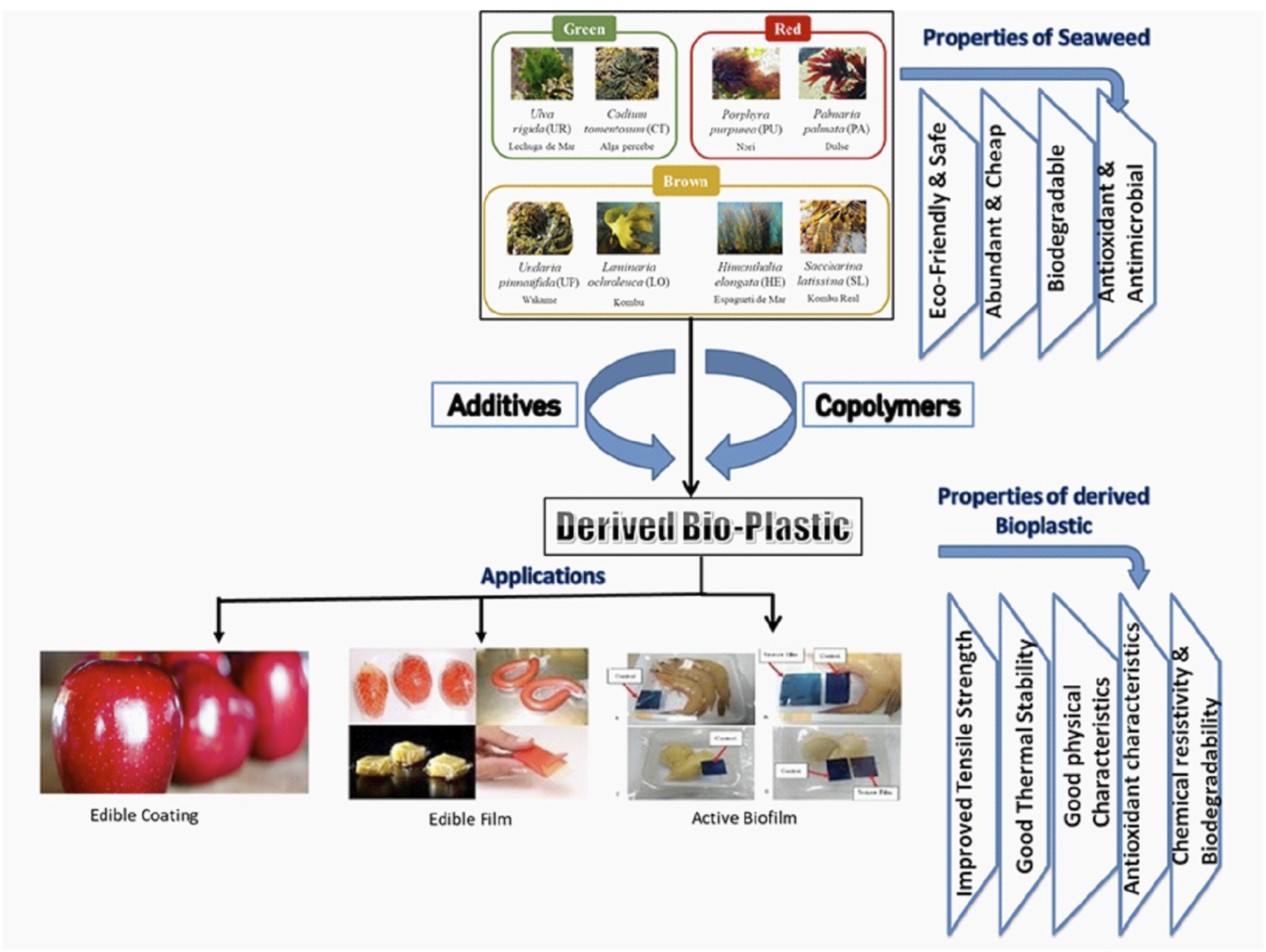
This review uniquely synthesizes advances in enzyme-assisted, microwave-assisted, and ultrasound-assisted extraction methods with nano-reinforcement strategies, providing comprehensive techno-economic analysis of seaweed polysaccharides (alginate, carrageenan, agar, ulvan, fucoidan, laminarin) for food packaging. The review integrates material science innovations with lifecycle assessments, market forecasts and commercialization roadmaps.
Methodology
Systematic literature analysis from Scopus, Web of Science, and Google Scholar (2019–2025) using defined inclusion criteria: peer-reviewed studies with experimental validation, quantitative analysis, and sustainability metrics.
Key results
(1) Advanced extraction methods improve polysaccharide yield and purity while lowering energy use. (2) Blending with PLA/PHB and nano-reinforcement (ZnO/AgNPs) enhances mechanical strength and antimicrobial performance. (3) Seaweed-based films effectively extend the shelf life of perishable foods. (4) Although current production costs are higher than conventional plastics, life-cycle assessments show environmental and waste-management benefits. (5) Market outlooks suggest strong growth potential driven by regulations and increasing consumer preference for sustainable packaging.
Conclusions
Seaweed-derived polysaccharides represent viable and sustainable alternatives to conventional plastics and terrestrial biopolymers, offering a superior environmental profile and functional versatility for food packaging applications. However, their large-scale commercialization requires cost-effective biorefinery optimization, standardized processing, hybrid material design for enhanced performance, and supportive policy frameworks. This review outlines key pathways linking research innovation to industrial-scale adoption in sustainable food packaging.
Keywords
Get full access to this article
View all access options for this article.