



Abstract
Background:
Cervical cancer poses a considerable worldwide health issue, where infection with the human papillomavirus (HPV) plays a vital role as a risk factor. Photodynamic therapy (PDT) is a minimally invasive treatment for HPV-related cervical lesions, which uses photosensitizers and light to selectively destroy abnormal cells.
Objectives:
Our objective is to present a comprehensive overview of the different types of molecules employed in PDT to reduce the occurrence and fatality rates associated with cervical cancer.
Design:
Scoping review and bibliometric analysis.
Methods:
The article explores clinical trials investigating the efficacy of PDT in treating low-grade squamous intraepithelial lesion and high-grade squamous intraepithelial lesion, as well as preclinical approaches utilizing various molecules for PDT in cervical cancer. Furthermore, the article sheds light on potential molecules for PDT enhancement, examining their properties through computer modeling simulations, molecular docking, and assessing their advantages and disadvantages.
Results:
Our findings demonstrate that PDT holds promise as a therapeutic approach for treating cervical lesions associated with HPV and cervical cancer. Additionally, we observe that the utilization of diverse dye classes enhances the anticancer effects of PDT.
Conclusion:
Among the various molecules employed in PDT, functionalized fullerene exhibits a notable inclination toward overexpressed receptors in cervical cancer cells, making it a potential candidate for intensified use in PDT. However, further research is needed to evaluate its long-term effectiveness and safety.
Plain language summary
Cervical cancer is a significant global health concern, often linked to the human papillomavirus (HPV). There is a less invasive treatment called photodynamic therapy (PDT), which employs light and special substances to target and destroy abnormal cells related to HPV. In this review, we aim to give you a comprehensive look at the different substances used in PDT to reduce the occurrence and severity of cervical cancer. We have examined clinical trials focusing on treating specific types of cervical lesions and explored preclinical approaches using various substances. We have also delved into computer simulations and molecular docking to understand the strengths and weaknesses of these substances. Our findings show that PDT has potential as a treatment for HPV-related cervical lesions and cancer. Different dye classes used in this therapy enhance its effectiveness against cancer. Notably, a substance called functionalized fullerene stands out for its tendency to target receptors overexpressed in cervical cancer cells. It looks promising, but more research is necessary to ensure its long-term effectiveness and safety.
Keywords
Introduction
Cervical cancer ranks among the leading causes of cancer-related fatalities among women worldwide. 1 The presence of human papillomavirus (HPV) represents a significant contributing factor to the development of cervical cancer. 2 Traditional treatment methods often encounter challenges in identifying and managing precursor lesions that precede the onset of cancer. The cervix’s cell lining can give rise to various precancerous cervical intraepithelial neoplasia (CIN), including CIN1, CIN2, and CIN3, and high-grade squamous intraepithelial lesion (HSIL), and low-grade squamous intraepithelial lesion (LSIL) 3 (Table 1). LSIL denotes the mildest form of these lesions, while CIN2 falls in an intermediate category, and CIN3 signifies the most severe condition. 4 HSIL encompasses both CIN2 and CIN3 and is considered a high-risk precursor to cervical cancer. 5 If left untreated, HSIL poses a higher likelihood of progressing to cancer compared to LSIL or CIN1. 6
Different types of cervical cancer based on histology indices 3 .

To tackle this obstacle, scientists have devised an innovative technology aimed at enhancing the efficiency of treating underlying and precancerous lesions of the cervix linked to HPV. 7 This technology leverages photodynamic therapy (PDT), a minimally invasive therapeutic method that employs photosensitizers and light to specifically target and eliminate abnormal cells. 7 The novel approach incorporates a combination of a fluorescent dye and a specialized imaging system, facilitating real-time visualization of cervical lesions.8,9 During the procedure, the cervix is coated with the photosensitizer, and subsequently, the targeted region is exposed to light of a specific wavelength. 10 This process triggers the photosensitizer to generate reactive oxygen species, which selectively eradicate abnormal cells. 11 By precisely targeting the affected cells, this technique mitigates the risk of harm to healthy tissue, thereby enhancing treatment efficacy. 12 Furthermore, the utilized imaging system guarantees accurate and effective identification of cervical lesions correlated with HPV. 13 Timely detection of these lesions via this technology holds the potential for enhanced treatment interventions and superior patient outcomes.8,14
By enhancing the precision and efficacy of treatment, this technology holds the potential to decrease the global incidence and mortality rates of cervical cancer. The selection of an appropriate dye is a crucial aspect of PDT development. Over the years, various molecules have been employed in this technique. However, it is imperative to identify and assess these molecules to develop new photosensitizers that offer higher anticancer potency and greater convenience of use. 15
This article aims to provide an overview of the potential advantages of PDT in reducing the occurrence and fatality rates associated with cervical cancer. We will summarize the safety and efficacy of PDT in patients with high-risk LSIL of the cervix, cervical ectropion, high-risk HPV infection, and postmenopausal women with persistent HPV infection and/or CIN1. Cervical ectropion is a benign condition considered a normal variant observed in women within the reproductive age group. In this state, the columnar epithelium, consisting of glandular cells, which typically lines the endocervix, extends onto the ectocervix, resulting in the exposure of these columnar cells to the vaginal environment.
To accomplish this, we conducted a bibliometric analysis to investigate the utilization of PDT for cervical cancer treatment. Numerous studies exploring the applications of PDT in this domain have been examined, with a focus on photochemotherapy, nanoparticles, and photosensitizing agents. Furthermore, we aimed to identify the molecules with the highest binding affinity to overexpressed receptors in cervical cancer cells, suggesting their potential as promising agents for PDT use.
Methods
Data collection and extraction for bibliometric analysis
Eligibility criteria and data source
In January 2024, an evaluation was carried out on the Scopus and Web of Science online databases to pinpoint the frequently employed keywords related to the use of PDT in the treatment of cervical cancer. We acquired all pertinent metadata in BibTeX format from Scopus and in text format from Web of Science. Subsequently, the data were consolidated using RStudio through a merging code (Supplemental Table S1) and saved as an Excel file (Supplemental Excel File).
Search strategy
In this scientific inquiry, an in-depth exploration was carried out in the Scopus and Web of Science databases utilizing advanced search functionalities. We utilized a blend of Boolean and Wildcard search operators to identify pertinent keywords for our study, as outlined in Supplemental Tables S2 and S3. The search was executed in January 2024, and the comprehensive search strategy is elucidated in Figure 1. Articles deemed irrelevant based on their titles, abstracts, and full-text content were systematically excluded. Subsequently, research articles were imported for bibliometric analyses from the obtained results.
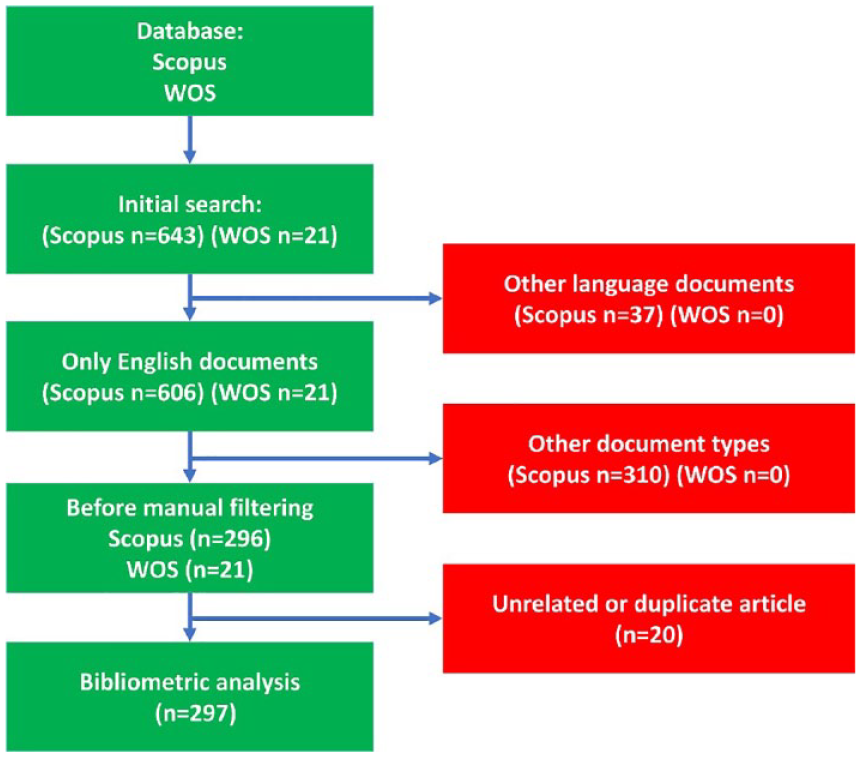
Flowchart for selecting articles in the bibliometric analysis of applications of PDT in treating cervical cancer.
Bibliometric analyses
Data management and bibliometric analysis were executed utilizing the bibliometric package (version 4.1.3) and Biblioshiny web applications within RStudio (RStudio 2023.09.1+494, PBC, Boston, MA). The analytical scope encompassed a 40-year timeframe for research articles, concentrating on publication and citation metrics, as well as citation trends.16,17 Prolific institutions were discerned based on the quantity of articles related to the applications of PDT in treating cervical cancer.
Furthermore, collaborative networks were established among 582 leading research institutes using clustering algorithms and data normalization from 297 research articles, guided by an association parameter. Authors with noteworthy contributions were identified based on the frequency of their published articles. The evaluation also involved pinpointing the top 10 most frequently cited documents and leading journals.
This investigation delved into interactions among 10 prominent journals, fields of study, and countries contributing to research on the applications of PDT in treating cervical cancer. To depict global research collaboration, connections were visualized on a world map. A TreeMap visualization portrayed the 10 most frequently used keywords in articles published on this topic. Lastly, a ‘Thematic Map’ categorized topics into four domains: primary subjects, specialized subjects, emerging or declining subjects, and overarching foundational subjects.
Molecular interactions and docking studies of receptors that are overexpressed in cervical cancer cells and various molecules that are used in PDT
The identification of nine receptors that exhibit overexpression on the surface of cervical cancer cells was derived from previous studies including folate receptor α (FRα), 18 transferrin receptor 1 (TR1), 19 epidermal growth factor receptor (EGFR), 20 CD44, 21 prominin 1 (CD133), 22 vascular endothelial growth factor receptor 2 (VEGFR2), 23 vascular cell adhesion molecule-1 (VCAM-1), 24 aminopeptidase-N (CD13), 25 and biotin receptor (BR). 26
To evaluate the binding affinity between the mentioned receptors and various molecules used in PDT, AutoDock Vina 27 was employed. The 3D structures of the 19 molecules and nine receptors, namely, FRα, TR1, EGFR, CD44, VEGFR2, VCAM-1, CD13, BR, and CD133, were obtained from the PubChem 28 and Protein Data Bank (PDB) databases. The corresponding PDB codes for these receptors were 4km6, 2nsu, 7sye, 1poz, 2met, 1vsc, 4fyq, 5n7x, and UniRef90_O43490 21 for CD133.
Following that, the receptors were remodeled using the SWISS-MODEL Server. 29 Nonpolar hydrogens and ionic pairs were merged, and Gasteiger partial charges were assigned to each ligand atom. Grid boxes were generated using the Computed Atlas of Surface Topography of Proteins (CASTp 3.0). Subsequently, docking was performed, resulting in nine conformations for each receptor and dye pair. The docking conformations were ranked based on their binding affinity, and the conformation with the lowest negative energy and an Root Mean Square Deviation (RMSD) value of ⩽2 Å was selected as the optimal conformation.
Visualization of intermolecular interaction
The PyMOL software (The PyMOL Molecular Graphics System, Version 1.2r3pre, Schrödinger, LLC., New York, USA) was utilized for visualizing the 3D structure of the optimal conformations. Furthermore, the detailed information regarding intermolecular interactions between the ligand and receptor was presented in a 2D format using Discovery Studio Visualizer.
In addition to the aforementioned analyses, we will address the limitations and future directions of PDT in treating cervical lesions. This includes an evaluation of the current clinical applications of PDT and a discussion of preclinical studies involving different molecules. We will also explore potential molecules for future studies on PDT application for cervical cancer, as well as evaluate the suitability of certain compounds as molecules for PDT through in silico simulations. Lastly, we will discuss the existing challenges and propose potential solutions for the application of PDT in cervical cancer treatment.
Data collection and extraction for systematic analysis of molecules for PDT of cervical cancer
Furthermore, an exhaustive and methodical literature exploration was undertaken to identify pertinent articles concentrating on the application of PDT for treating cervical lesions linked to HPV. The search spanned electronic databases, including Scopus and Web of Science, with a specific focus on articles published in the English language.
The search strategy incorporated the use of specific keywords such as ‘photodynamic therapy’, ‘cervical cancer’, ‘cervical lesions’, ‘human papillomavirus’, ‘HPV’, ‘precancerous lesions’, ‘dye’, ‘photosensitizer’, and ‘cervix’. These keywords were combined using appropriate Boolean operators (AND, OR) to refine the search outcomes. Initially, the titles and abstracts of the retrieved articles were scrutinized to identify potentially relevant studies. Subsequently, the full text of these articles was meticulously examined to ascertain their eligibility for inclusion in the analysis. Additionally, a manual exploration of the reference lists of relevant articles was conducted to uncover any additional studies meeting the predefined inclusion criteria.
The inclusion of articles in this assessment adhered to specific criteria, encompassing: (a) studies investigating the safety and efficacy of PDT in treating HPV-associated cervical lesions, (b) studies involving patients with high-risk LSIL of the cervix, cervical ectropion, high-risk HPV infection, postmenopausal women with persistent HPV infection, and/or CIN, and (c) studies published in peer-reviewed journals. Two independent reviewers conducted the article screening, and any disparities were resolved through discussion between the reviewers.
Results
Bibliometric analysis for PDT of cervical cancer
The analysis conducted using Biblioshiny classified the 297 studies (Figure 2). The findings, which explored the applications of PDT in the treatment of cervical cancer cells, revealed that ‘photodynamic therapy’ emerged as the most frequently encountered author keywords to date (Figure 3).

The number of studies on photodynamic therapy in the field of treating cervical cancer cells.

The most 10 frequent author keywords that have been used in the field of the usages of photo dynamic therapy in the field of treating cervical cancer cells.
Most contributing authors and their collaboration network
In our investigation of the PDT of cervical cancer, we analyzed the number of documents authored by different researchers. Among the most contributing authors of research articles, as shown in Supplemental Figure S1, Zhang Y had the highest number of articles (n = 18).
Most productive journals
Among the published articles in the field of our concern, 10 research articles were featured in the journal ‘Photodiagnosis and Photodynamic Therapy’ followed by 55 research articles in the journal, as shown in Supplemental Figure S3.
World research production
Supplemental Figure S3A illustrates the highest scholarly output related to the PDT of cervical cancer, China with emerging as the top production among the 33 countries. In our bibliometric analysis, the China emerges as the most cited country in research articles on PDT of cervical cancer (Supplemental Figure S3B).
Fullerenes, aluminum phthalocyanine chloride, and zinc phthalocyanine binding affinity to overexpressed receptors in cervical cancer cells
According to the data presented in Table 2, fullerenes demonstrated the strongest binding affinity to VEGFR, VCAM1, CD44, EGFR, and TR1 (Table 2). On the other side, aluminum phthalocyanine chloride and zinc phthalocyanine displayed the most in silico tendency to BR, CD13, and CD133 (Table 2). On the other hand, aluminum phthalocyanine chloride showed the most binding affinity to FR (Table 2). Furthermore, Figure 4 provides a visual representation of the molecules involved in the binding interactions between fullerenes, aluminum phthalocyanine chloride, and zinc phthalocyanine and mentioned receptors. The two-dimensional structures of all three remarked compounds, displaying its highest affinity to the mentioned receptors, are depicted in Figure 5.
The affinity of molecules that have been used in photodynamic therapy to the receptors that are overexpressed in cervical cancer cells (Kcal/mole).

BR, Biotin receptor, CD13, Aminopeptidase-N, CD133, Prominin 1, EGFR, Epidermal growth factor receptor, FRα, Folate receptor α, TR1, Transferrin receptor 1, VCAM-1, vascular cell adhesion molecule 1, VEGFR, vascular endothelial growth factor receptor.

The molecules and interactions that are involved in the binding site of best binding conformation fullerene, zinc phthalocyanine, and aluminum phthalocyanine chloride and the overexpressed receptors in cervical cancer. The interactions between all three mentioned receptors and following receptors: folate receptor α (FRα), Transferrin receptor 1 (TR1), epidermal growth factor receptor (EGFR), aminopeptidase-N (CD13), CD44, prominin 1 (CD133), vascular cell adhesion molecule 1 (VCAM-1), vascular endothelial growth factor receptor (VEGFR), and biotin receptor (BR) are demonstrated in detail.

The 2D structure of fullerene, zinc phthalocyanine, and aluminum phthalocyanine chloride.
Clinical trials for PDT for LSIL
Numerous clinical trials, pilot studies, retrospective analyses, and prospective studies have explored the application of PDT for treating LSIL, employing various photosensitizing molecules (Table 3). These clinical trials have demonstrated promising outcomes when utilizing different photosensitizing molecules, such as 5-aminolevulinic acid (ALA), aluminum phthalocyanine chloride, photofrin, hexaminolevulinate, talaporfin sodium, and chlorin e6, for LSIL treatment. However, further investigations are necessary to validate the effectiveness and safety of these treatments and establish the optimal treatment parameters.
Treatment of low-grade squamous intraepithelial lesion (LSIL) with photodynamic therapy.
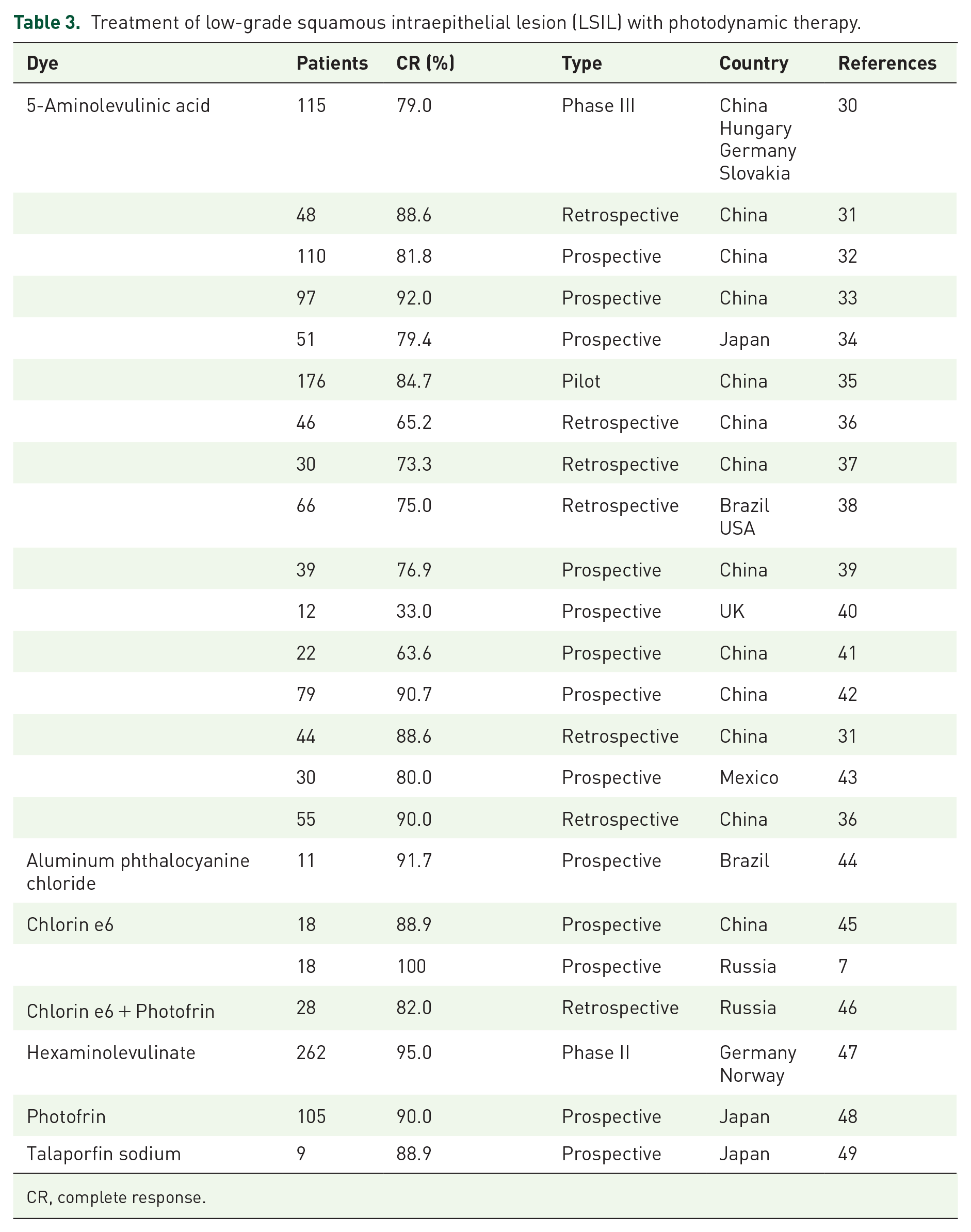
CR, complete response.
Clinical trials for PDT for HSIL
HSIL represents a more advanced stage of precancerous lesions with an elevated risk of developing into cervical cancer. Numerous molecules have undergone clinical trials (Table 4) to assess their suitability for PDT in treating HSIL, including ALA, chlorin e6, porphyrin, and hexaminolevulinate. While these molecules have exhibited promising outcomes in terms of complete response rates, they have also been associated with higher recurrence rates when compared to surgical interventions like Cold Knife Cone. Further investigation is warranted to enhance the efficacy and safety of PDT for HSIL.
Treatment of high-grade squamous intraepithelial lesion (HSIL) with photodynamic therapy.

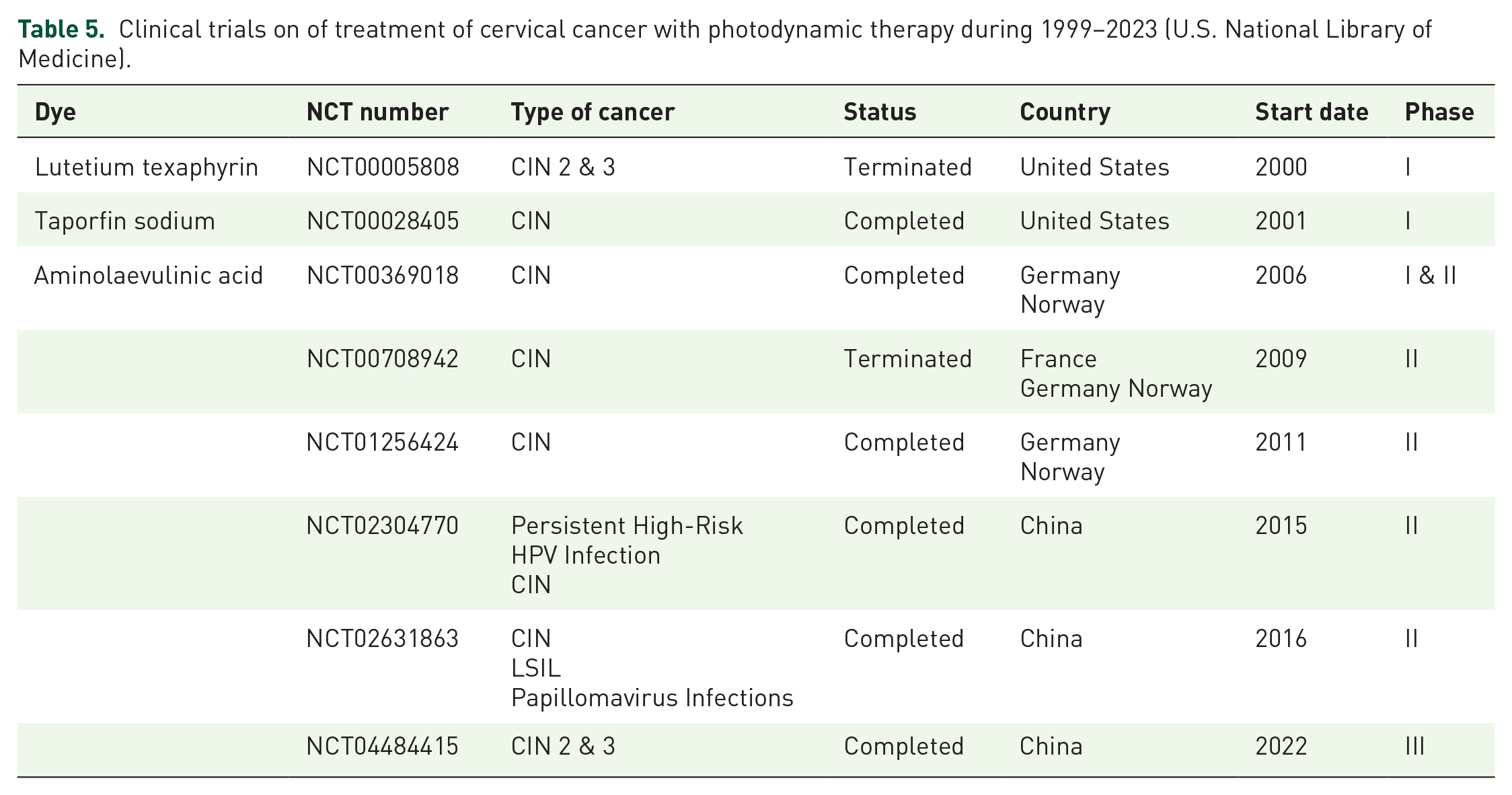
As per the records available on clinicaltrials.gov, out of the 591 registered studies on PDT for various cancer types up until the end of March 2023, only seven studies were specifically focused on cervical cancer. The relevant details of these studies can be found in Table 5. By analyzing the information gathered from clinicaltrials.gov (Table 5) along with the published clinical articles provided in Tables 4 and 5, we generated Figures 6 and 7. Figure 6 illustrates the frequency of dye applications in cervical cancer PDT, with ALA being the most commonly used. Additionally, Figure 7 reveals that China is at the forefront in terms of conducting clinical studies on PDT for cervical cancer.
Clinical trials on of treatment of cervical cancer with photodynamic therapy during 1999–2023 (U.S. National Library of Medicine).
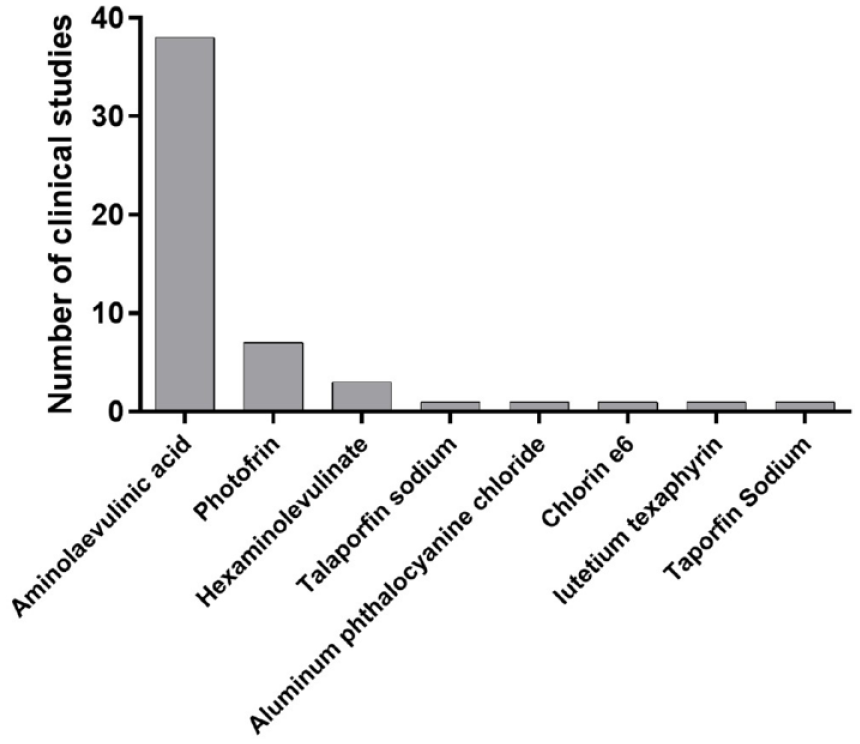
Frequency of application of molecules for photodynamic therapy of cervical cancer during 1999–2023 in clinical trials.

Frequency of country contributions in clinical trials on photodynamic therapy of cervical cancer during 1999–2023.
Discussion
PDT as a novel approach for cervical cancer therapy
While previous studies have acknowledged the advantages of PDT in the treatment of cervical cancer, 6 our analysis revealed a decline in the number of studies focusing on the application of PDT for this purpose since 2022. This outcome (Figure 2) contradicts the findings reported in earlier research.
Photochemotherapy author keywords in the field of the usages of PDT for treating cervical cancer cells
This study revealed that photo chemotherapy emerged as the most frequently used MeSH author keywords in the context of PDT applications for treating cervical cancer cells. In other words, scientists have sought to enhance the effectiveness of anticancer treatment for cervical cancer by combining PDT with chemotherapy. 65 Our findings align with this result, supporting the notion that researchers have focused on improving the delivery of photosensitizing agents to enhance PDT efficacy.
Fullerenes, aluminum phthalocyanine chloride, and zinc phthalocyanine affinity on overexpressed receptors in cervical cancer
Previous studies have highlighted the efforts of scientists to enhance the delivery of photosensitizers to cancer cells, aiming to improve the efficacy of PDT. 66 Additionally, these studies have indicated that overexpressed receptors on the surface of cancer cells can serve as potential binding sites for photosensitizers. 66 Consequently, photosensitizers that exhibit a stronger tendency to attach to these overexpressed receptors facilitate their own delivery to cancer cells. 66 Thus, photosensitizers demonstrating a higher affinity for these receptors can be considered promising candidates for PDT. Through our in silico analysis, we found that fullerenes, aluminum phthalocyanine chloride, and zinc phthalocyanine displayed the highest affinity for overexpressed receptors in cervical cancer cells (Table 3). Therefore, these three identified candidates exhibit substantial potential as photosensitizers for PDT in the management of cervical cancer. However, further in vitro and in vivo studies are necessary to validate this finding.
Approved molecules for clinical approaches of PDT of cervical cancer
There are various types of molecules utilized in clinical studies of PDT for cervical cancer:
(A) 5-aminolevulinic acid: ALA is a photosensitizer employed in PDT for cervical cancer. 67 Several clinical trials have assessed the safety and efficacy of ALA-PDT in patients with CIN (Tables 4 and 5). Additional clinical studies are necessary to evaluate the long-term effectiveness of ALA-PDT in cervical cancer treatment.
(B) Aluminum phthalocyanine chloride: A second-generation photosensitizer, is utilized in PDT for various cancers, including cervical cancer. 44 Further clinical studies are required to evaluate the long-term efficacy of aluminum phthalocyanine chloride-mediated PDT in cervical cancer treatment.
(C) Photofrin: A photosensitizer approved for use in PDT for multiple cancers, including cervical cancer. 67 Additional clinical studies are needed to assess the long-term effectiveness of photofrin-mediated PDT in treating cervical cancer.
(D) Hexaminolevulinate: A photosensitizer employed in PDT for different cancers, including cervical cancer. 67 Further clinical studies are necessary to evaluate the long-term efficacy of hexaminolevulinate-mediated PDT in cervical cancer treatment.
(E) Talaporfin sodium: A photosensitizer approved for use in PDT for various cancers, including cervical cancer. 49 Studies have indicated that talaporfin-based PDT can be effective for cervical cancer treatment. 65
(F) Chlorin e6: Another photosensitizer used in PDT for cervical cancer. 45 It exhibits a high absorption rate in the near-infrared region, enabling deeper tissue penetration compared to other photosensitizers. Chlorin e6 has also demonstrated high selectivity for cancer cells over healthy cells, making it a promising candidate for PDT. 68
(G) Porphyrin derivatives: Derivatives, such as protoporphyrin IX and hematoporphyrin derivatives, are natural photosensitizers employed in PDT for cervical cancer. 63 These compounds naturally occur in the body and have shown higher accumulation rates in cancer cells than in healthy cells. When exposed to light of a specific wavelength, these photosensitizers generate reactive oxygen species capable of destroying cancer cells. 69
(H) Texaphyrins: Synthetic molecules investigated for their potential use in PDT for various cancers, including cervical cancer. 70 Preclinical studies have indicated that texaphyrin-based PDT can effectively induce cell death in cancer cells. 71
Preclinical approaches of PDT of cervical cancer
Other types of molecules have shown promise for PDT in cervical cancer based on preclinical studies, but further research is necessary to evaluate their safety and effectiveness in human trials, as indicated in Table 6.
(A) Curcumin: A natural polyphenol compound found in turmeric. It has demonstrated anticancer properties. 72 Studies have explored the use of curcumin-based PDT for cervical cancer. 73
(B) Hypericin: A compound present in St. John’s wort. It possesses photosensitizing properties and has been utilized in PDT for cervical cancer. 74 Upon activation by light, hypericin generates reactive oxygen species capable of damaging cancer cells. In vitro and animal studies have shown the effectiveness of hypericin in killing cancer cells, 75 but further investigation is required to assess its efficacy in humans.
(C) Indocyanine green (ICG): A water-soluble near-infrared dye that has been employed in PDT for various cancers, including cervical cancer. 76 Preclinical studies have indicated the potential use of ICG for PDT in cervical cancer. 77
(D) Methylene blue: A blue dye that has been utilized in medicine for several years. It has demonstrated effectiveness in PDT for cervical cancer. 78 Evidence suggests that methylene blue-mediated PDT successfully induces cell death in cervical cancer cells.74,79 Upon light activation, methylene blue generates reactive oxygen species (ROS) that can damage cancer cells. In vitro and animal studies have shown the efficacy of methylene blue in killing cancer cells, but further research is needed to evaluate its effectiveness in humans.
(E) Rose Bengal: A red dye with photosensitizing properties. It has been used in medicine for many years and has also been employed in PDT for cervical cancer. 75 Upon light activation, Rose Bengal generates reactive oxygen species that can harm cancer cells. In vitro and animal studies have shown the effectiveness of Rose Bengal in killing cancer cells, 75 but further research is necessary to determine its effectiveness in humans.
(F) Zinc phthalocyanine: A photosensitizer that can be utilized in PDT for cervical cancer. 67 It exhibits high absorption in the red-light region, making it effective for PDT. When exposed to light at a specific wavelength, the photosensitizer generates reactive oxygen species capable of destroying cancer cells. 68
Comparison of different molecules for PDT in cervical cancer with approve preclinical effects.

PDT, photodynamic therapy.
Potential molecules for PDT of cervical cancer
Several molecules have been the subject of preclinical studies for potential use in PDT for various cancers, although their application in cervical cancer settings remains unexplored.
(A) Other chlorophyll derivatives apart from chlorin e6: Chlorophyll and its derivatives have been investigated for their potential use in PDT for various cancers, including cervical cancer. 80 Studies have demonstrated that chlorophyll-based PDT can induce apoptosis in cancer cells. 81
(B) Methyl violet: A cationic dye that has exhibited photodynamic activity. 82 Preclinical studies have examined the use of methylene violet-based PDT for cancer treatment. 82
(C) Bacteriochlorins: Belong to a class of photosensitizers that have been investigated for their potential use in PDT for various cancers. 83 However, there is currently no research indicating the effectiveness of bacteriochlorin-based PDT for treating cervical cancer.
(D) Fullerenes: Carbon molecules that have been studied for their potential use in PDT for various cancers. 84 Preclinical studies have shown that fullerene-based PDT can effectively induce cell death in cancer cells. 85 Notably, preclinical studies have demonstrated that a particular fullerene, namely C60 fullerene, has shown significant promise in effectively inducing cell death in cancer cells. 86 C60 fullerene, also known as buckyball, is a specific type of fullerene with a spherical shape. Its unique structure and ability to generate reactive oxygen species upon light activation make it a promising candidate for targeted cancer therapy through PDT. 86
(E) Xanthene molecules: Xanthene molecules, such as eosin and erythrosine, are a class of fluorescent molecules used in various applications, including as photosensitizers in PDT for different cancers. 85
Challenges and solutions related to using molecules for PDT of cervical cancer
The limited solubility of molecules in water poses a significant challenge when using them for cancer treatment, as it can reduce their efficacy and increase their toxicity. However, nanotechnology offers a potential solution by enhancing the solubility, stability, and targeted delivery of molecules to cancer cells. 87
Nanoparticle-based delivery systems have been developed for various photosensitizers, including porphyrins, chlorophylls, and phycobilins. These nanoparticles can be designed to specifically target cancer cells, improve the solubility and stability of the photosensitizer, and enhance its distribution and pharmacokinetics. Moreover, some nanoparticles possess intrinsic anticancer properties and can augment the therapeutic effects of PDT.
Overall, the combination of photosensitizers and nanotechnology holds great promise for the development of effective and targeted PDT for cervical cancer and other types of cancer.
In addition to limited solubility, there are several other challenges associated with the use of molecules for PDT in cervical cancer. These challenges include:
Tumor targeting: Achieving specific targeting of the dye to tumor cells while minimizing uptake by healthy tissues is a challenge that needs to be addressed to avoid potential toxicity. 88
Depth of penetration: The depth to which the activating light can penetrate is limited, making it challenging to treat tumors located deep within the body. 89
Photobleaching: Molecules can undergo photobleaching, causing a loss of their ability to generate reactive oxygen species upon light exposure. This can limit their effectiveness in PDT. 90
Stability: Some molecules may exhibit instability in biological environments, affecting their efficacy and safety. 91
Regulatory approval: Obtaining regulatory approval for clinical use can be a time-consuming and costly process, which can impede the availability of molecules for PDT in cervical cancer. 92
To address these challenges, potential solutions can be considered:
Solubility: Encapsulating the dye within lipid-based or polymeric nanocarriers can improve solubility and stability. 93
Tissue penetration: Exploring alternative delivery methods such as intratumoral injection or topical application may enhance tissue penetration. 94
Specificity: Enhancing specificity through ligand conjugation or utilizing activatable molecules that are selectively activated in cancer cells. 66
Photobleaching: Optimizing dye concentration, light dose, and using photostable molecules can help reduce photobleaching. 95
Toxicity: Mitigating toxicity by using lower dye and light doses, as well as optimizing drug delivery methods to minimize off-target effects. 96
Regulatory approval: Adhering to established regulatory guidelines for drug development and clinical trials is crucial to ensure safety and efficacy before seeking regulatory approval for clinical use. 97
Tumor targeting: Utilizing targeted delivery systems like nanoparticles, stem cell-derived exosomes, or liposomes can improve tumor targeting. These systems can be conjugated with specific ligands or antibodies that recognize and bind to tumor cells, increasing photosensitizer accumulation in the tumor while minimizing uptake in healthy tissues. Another approach involves using light sources with specific wavelengths that selectively activate the photosensitizer in tumors while minimizing activation in surrounding healthy tissues.98–101
Limitations of this review
While our scoping review provides valuable insights into the applications of PDT for cervical cancer, it is essential to acknowledge certain limitations. Firstly, the scoping review primarily focuses on the analysis of author keywords and in silico binding affinities, which, while informative, may not fully capture the complexity of PDT applications. The identified molecules with high binding affinities, like fullerene, aluminum phthalocyanine chloride, and zinc phthalocyanine, demonstrate promise, but their clinical viability requires further validation through in vitro and in vivo studies. Furthermore, the discussion of approved molecules and ongoing clinical trials provides a comprehensive overview, but the landscape of PDT for cervical cancer may evolve with the emergence of new research. Therefore, while our review offers valuable insights, the field’s dynamic nature underscores the need for continuous exploration and validation of PDT approaches for cervical cancer treatment.
Conclusion
The findings suggest that research on PDT for cervical cancer has been ongoing for several years, although its pace may have slowed down recently. Photo chemotherapy, nanoparticles, and photosensitizing agents have emerged as commonly employed approaches in these studies. Notably, fullerene shows promise as a dye for PDT due to its strong binding affinity to overexpressed receptors in cervical cancer cells. However, further research is needed to validate Fullerene’s potential and develop effective PDT treatments for cervical cancer. The utilization of PDT, combining a fluorescent dye with a specialized imaging system, represents a significant advancement in the treatment of HPV-associated cervical lesions. This minimally invasive approach offers targeted therapy for abnormal cells while minimizing harm to healthy tissue. Furthermore, research has shown that ALA-PDT provides a safe and effective alternative for treating CIN and HSIL associated with HPV. Through early detection and treatment of these lesions, PDT and ALA-PDT have the potential to reduce the global incidence and mortality of cervical cancer. Continued research and development in this area will likely drive further progress in the treatment of HPV-related cervical lesions, leading to improved patient outcomes and a decreased global burden of cervical cancer.
Supplemental Material
sj-docx-1-taj-10.1177_20406223241233206 – Supplemental material for Photodynamic therapy of cervical cancer: a scoping review on the efficacy of various molecules
Supplemental material, sj-docx-1-taj-10.1177_20406223241233206 for Photodynamic therapy of cervical cancer: a scoping review on the efficacy of various molecules by Nasrulla Abdullaevich Shanazarov, Afshin Zare, Nadiar Maratovich Mussin, Rustam Kuanyshbekovich Albayev, Asset Askerovich Kaliyev, Yerbolat Maratovich Iztleuov, Sandugash Bakhytbekovna Smailova and Amin Tamadon in Therapeutic Advances in Chronic Disease
Supplemental Material
sj-xlsx-1-taj-10.1177_20406223241233206 – Supplemental material for Photodynamic therapy of cervical cancer: a scoping review on the efficacy of various molecules
Supplemental material, sj-xlsx-1-taj-10.1177_20406223241233206 for Photodynamic therapy of cervical cancer: a scoping review on the efficacy of various molecules by Nasrulla Abdullaevich Shanazarov, Afshin Zare, Nadiar Maratovich Mussin, Rustam Kuanyshbekovich Albayev, Asset Askerovich Kaliyev, Yerbolat Maratovich Iztleuov, Sandugash Bakhytbekovna Smailova and Amin Tamadon in Therapeutic Advances in Chronic Disease
Footnotes

References
Supplementary Material
Please find the following supplemental material available below.
For Open Access articles published under a Creative Commons License, all supplemental material carries the same license as the article it is associated with.
For non-Open Access articles published, all supplemental material carries a non-exclusive license, and permission requests for re-use of supplemental material or any part of supplemental material shall be sent directly to the copyright owner as specified in the copyright notice associated with the article.
