




Abstract
Aging leads to a high burden on society, both medically and economically. Cellular senescence plays an essential role in the initiation of aging and age-related diseases. Recent studies have highlighted the therapeutic value of senescent cell deletion in natural aging and many age-related disorders. However, the therapeutic strategies for manipulating cellular senescence are still at an early stage of development. Among these strategies, therapeutic drugs that target cellular senescence are arguably the most highly anticipated. Many recent studies have demonstrated that a variety of drugs exhibit healthy aging effects. In this review, we summarize different types of drugs promoting healthy aging – such as senolytics, senescence-associated secretory phenotype (SASP) inhibitors, and nutrient signaling regulators – and provide an update on their potential therapeutic merits. Taken together, our review synthesizes recent advancements in the therapeutic potentialities of drugs promoting healthy aging with regard to their clinical implications.
Introduction
The aging population is growing rapidly worldwide, leading to a great challenge for public health and societal economics. 1 According to epidemiological data from the World Health Organization (WHO), elderly people (over 60 years) will account for 11–22% of the population by 2050. 2 Aging is the highest risk factor for all chronic disorders, such as cardiovascular diseases, stroke, and Alzheimer’s disease, which signifies the need for developing effective healthy aging strategies.3,4 Compared with gene manipulation, therapeutic drugs targeting senescent cells have unique advantages in treatment compliance. However, currently available strategies are mostly at an early research stage. Cellular senescence plays a causative role in lifespan and in multiple diseases associated with aging. 5 Cellular senescence is defined as a cell fate in which proliferating or differentiated cells undergo replication arrest and develop into a fibrotic or pro-inflammatory senescence-associated secretory phenotype (SASP). 6 Cellular senescence consists of both replicative senescence and non-replicative senescence. Replicative senescence is related to the limited capacity of cellular division, relating to telomerase dysfunction. In repeated cell division, the length of telomeres may gradually shorten, which would trigger stress-induced premature senescence. 7 In contrast, non-replicative senescence can be induced by a variety of factors, including DNA damage, inflammation, mitochondrial dysfunction, epigenetic disruption, and strong mitogen signaling or oncogenes. DNA damage, caused by various stress factors such as oxidative stress, ultraviolet or gamma irradiation, and chemotherapeutics, is the main cause of cellular senescence, since it may activate the p53/p21 pathways, and result in permanent cell cycle arrest. 8 Unregulated inflammation also plays an important role in the pathogenesis and progression of age-related diseases. 9 Besides, senescent cells could also secrete proinflammatory factors, 10 which may further aggravate inflammation. Mitochondrial dysfunction may cause reactive oxygen species (ROS) accumulation and promote the formation of superoxide radicals – key players in cellular senescence and accelerated aging. 11 Another factor that could induce cellular senescence is epigenetic modification, which includes DNA methylation, histone posttranslational modifications, and noncoding RNAs. Epigenetic alterations play important roles in oxidative stress, persistent inflammation, and autophagy deficiency – all important causes of cellular senescence. 12 Besides, strong mitogen signaling or oncogenes can also induce the cellular senescence. The activation of oncogenes can act as a genetic stress and cause irreversible growth arrest, which is thought to be a barrier to malignant transformation because of its suppression effect on cell proliferation. 13
The molecular biomarkers of senescent cells include senescence-associated β-galactosidase (SA-β-gal), p16INK4a, and p53.14,15 p16INK4a/Rb and p53/p21 are the two main pathways that regulate cellular-growth arrest, 16 which is the defining characteristic of senescence (Figure 1). DNA damage will increase the deposition of γH2AX and 53BP1 in chromatin, which, in turn, activates kinase cascades, which ultimately results in p53 activation. The activation of p53 induces transcription of the cyclin-dependent kinase inhibitor, p21CIP1, which blocks CDK4/6 activity and consequently causes Rb dephosphorylation and cell cycle arrest. Another related pathway is the p16INK4a/Rb pathway. p16INK4a, p15INK4b and ARF are tumor suppressors residing within the INK4/ARF locus. Furthermore, p16INK4a and p15INK4b are cyclin-dependent kinase inhibitors that inhibit CDK4/6, which also cause Rb dephosphorylation and cell cycle arrest. In addition, ARF inhibits MDM2, resulting in increased levels of p53, and thereby allowing cross talk with the p53/p21CIP1 pathways.

The signaling pathways of senescence. Two main pathways, p16INK4a/Rb and p53/p21CIP1, regulate senescence-mediated growth arrest, and they both converge on repression of CDK4/6. In addition, ARF inhibits MDM2, resulting in increased levels of p53 and thereby allowing cross talk with the p53/p21CIP1 pathways.
Cellular senescence is an important determinant of death in the elderly,17 –19 and contributes to accelerated aging. Senescent cells can develop into a SASP, arrested proliferation, and resistance to proapoptotic pathways through senescence-associated antiapoptotic pathways. The persistent presence of senescent cells results in the secretion of multiple factors including cytokines or chemokines, proteases, ROS and microRNAs, which further cause inflammation, tissue fibrosis, and stem cell dysfunction, and results in the dysfunction of multiple organs and accelerated aging. 20 A study has shown that transplanting a small number of senescent cells into the knee joint region can cause osteoarthritis-like changes and impair joint function. 21 In addition, transplanting senescent cells into young mice results into persistent physiological dysfunction and induces host-cell senescence, whereas transplanting fewer senescent cells into older mice reduces their survival. 22 These studies show that senescent cells can induce the senescence of surrounding normal cells through a bystander effect,23,24 which will cause the continuous accumulation of senescent cells, ultimately leading to organ aging. On the contrary, clearance of p16Ink4a-positive cells delayed tumorigenesis and attenuated age-related deterioration of organ function without apparent side effects, which means that senescent cells negatively influence lifespan and promote age-dependent pathologies. 25 In addition, the immune cells and immune responses undergo the phenotypic and genetic changes during aging, which is also known as immunosenescence.26,27 Immunosenescence is associated with a low-grade inflammation called inflammaging because of the impaired immune surveillance. Aging, likely via inflammaging, is associated with the emergence of many chronic diseases. 28
There is growing evidence of nutrition-mediated alleviation of different aspects of cellular senescence, which may help confer a state of healthy organismal aging. Studies have shown that drugs promoting healthy aging can improve heart function and carotid vascular reactivity in aged mice, 29 and provide lots of benefits in patients with idiopathic pulmonary disease and obesity-induced metabolic dysfunction.6,30 In addition, some drugs promoting healthy aging can retard the development of tumors and extend the median lifespan through elimination of senescent cells. 25 The underlying mechanisms are related to many different pathways (Figures 2–4). In this review, we will discuss different kinds of drugs that target cellular senescence (Table 1), and highlight their advancement in terms of therapeutic potential. We also provide some important clues for their use in clinical applications.

The targeted signaling pathways involved in senolytics. Senolytic drugs, such as Dasatinib, Quercetin, Fisetin, 17-DMAG, Navitoclax, Catechins, etc., induce the senescent cells apoptosis through different pathways, including the BCL-2/BCL-xL, P53, and PI3K/AKT pathways.
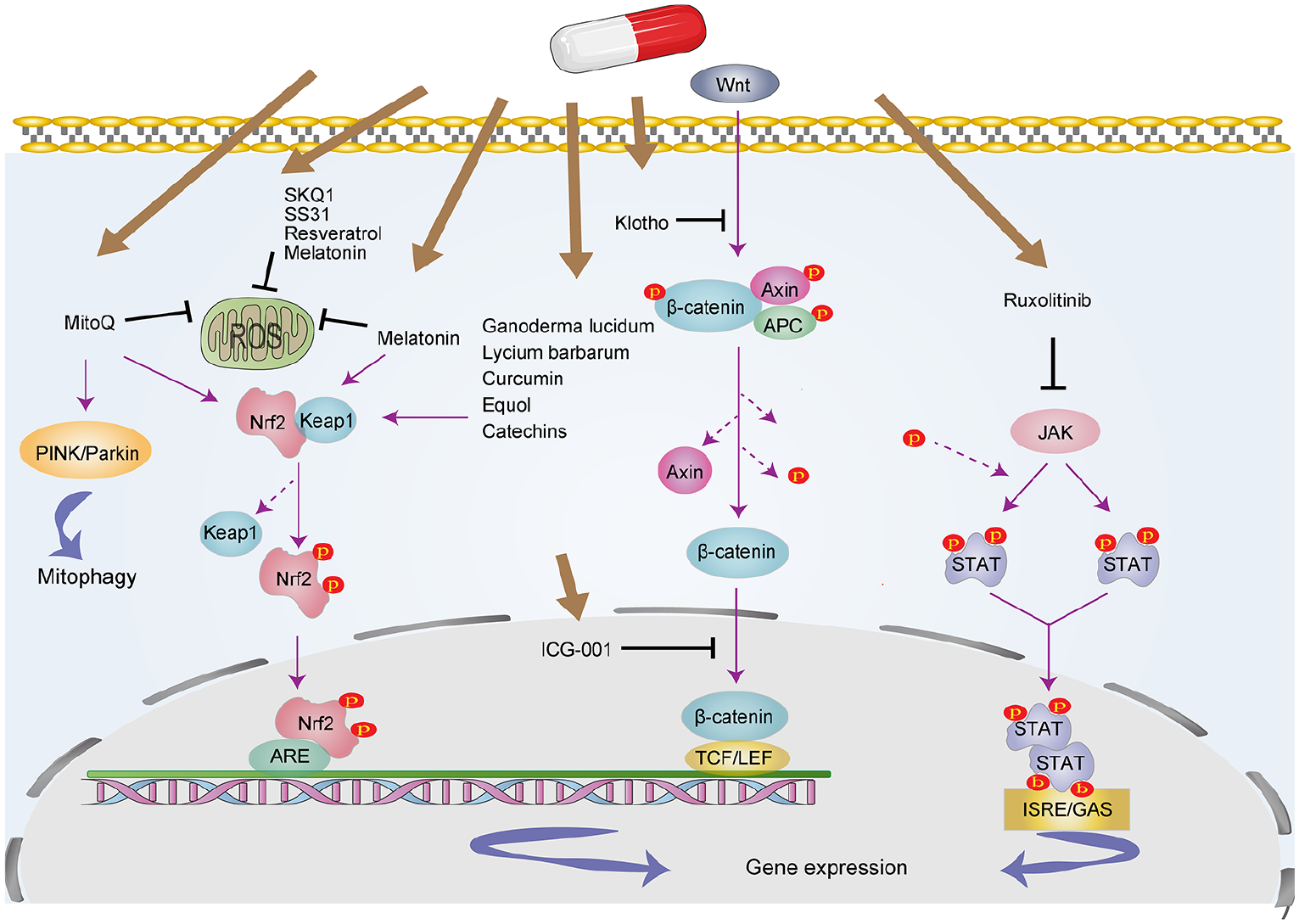
Targeted signaling pathways involved in SASP inhibitor. These drugs include antioxidants, Wnts/β-catenin signaling inhibitor, JAK inhibitor, and so on. The related pathways include Nrf2, NF-κB, Wnt/β-catenin, and JAK pathways.
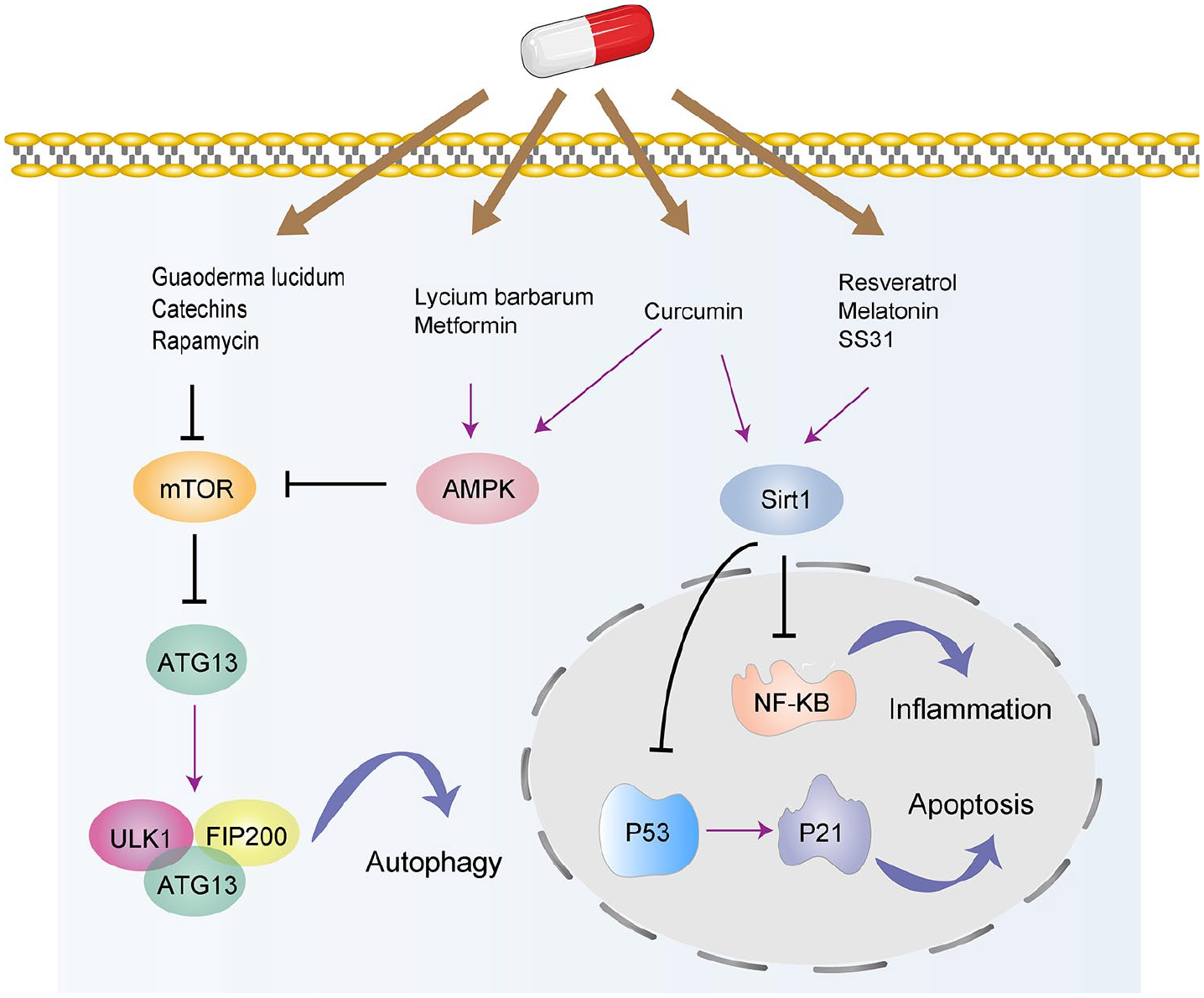
The targeted signaling pathways involved in nutrient signaling regulator. These drugs include resveratrol, curcumin, metformin, rapamycin, Lycium barbarum, etc. The related signaling pathways include the Sirtuin, mTOR, and AMPK pathways.
Therapeutic drugs targeting of senescence.

ROS, reative oxygen species; SASP, senescence-associated secretory phenotype.
Therapeutic drugs targeting senescence
Although scientists are eager to find the best way to prevent, delay, or alleviate aging, therapeutic strategy development still has a long way to go.83,84 In this field, drug discovery is of potential interest. In this review, we will introduce current advancements in drugs promoting healthy aging. According to the mechanism and the related signaling pathways, they are classified into senolytics, SASP inhibitors, and nutrient signaling regulators.
Senolytics
Senolytics are agents that selectively induce the apoptosis of senescent cells. This type of drug can be classified into BCL family inhibitors, PI3K/AKT inhibitors, and FOXO regulators.
BCL family inhibitors
The BCL family is composed of pro-apoptotic proteins and pro-survival proteins, including BCL-2, BCL-xL, and McL-1.85,86 BCL-2/BCL-xL is one of the pro-survival pathways, meaning that targeting BCL family proteins may effectively clear senescent cells. However, BCL-xL inhibitors may have significant side effects, such as thrombocytopenia and neutropenia.35,37 At present, BCL inhibitors with healthy aging effects include mainly navitoclax (namely ABT263), A1331852, A1155463, and ABT737. 87
Navitoclax
Navitoclax is a BCL-2 inhibitor that is orally bioavailable and has a high affinity for BCL-xL, BCL-2, and BCL-w. 86 The healthy aging effects of navitoclax can reduce the viability of certain senescent cells, such as human umbilical vein epithelial cells, human lung fibroblasts, and mouse embryonic fibroblasts (MEFs), but not human primary preadipocytes. 36 In a study by Chang et al., senescent cells in either sublethally irradiated or normally aged mice are effectively eliminated after treatment with navitoclax. 35 In addition, navitoclax is also used as a therapeutic drug for the side effects of adjuvant treatment of tumors through promoting senescent-cell apoptosis generated by adjuvant therapy, thus reducing tumor recurrence and metastasis.88,89
ABT737, A1331852, and A1155463
ABT737, A1331852, and A1155463 are also BCL-2 family protein inhibitors. ABT737 – a precursor of navitoclax – is a BH3-mimetic drug that can block the interaction between anti-apoptotic family members (e.g., BCL-2, BCL-w and BCL-xL) and pro-apoptotic proteins containing the BH3 domain, and induce the apoptosis of senescent cells. 90 Compared with navitoclax, ABT737 is not orally bioavailable and has a low aqueous solubility. These poor physiochemical and pharmaceutical properties greatly limit its application. 86 A1331852 and A1155463 have been shown to induce senescent cell death, but have no effect on non-senescent cells. 32 Compared with the less-specific BCL-2 family inhibitor navitoclax, A1331852 and A1155463 are selective BCL-xL inhibitors with lower blood toxicity, 32 which makes them a better candidate for clinical application.
Panobinostat
Panobinostat is a histone deacetylase inhibitor that has anti-tumor effects. 91 Panobinostat has been found to be able to kill the senescent cells that accumulate during standard chemotherapy. During tumor treatment, normal tissues will also be impaired, resulting in a senescent phenotype. Cellular senescence is one of the reasons for the survival of cancer cells after chemotherapy. A study by Samaraweera et al. discovered that panobinostat could effectively kill senescent cancer cells after chemotherapy, 38 and the possible mechanism may be related to inhibition of BCL-xL. The expression of BCL-xL is increased in chemotherapy-induced senescent cells, but it is decreased after panobinostat treatment.
Catechins
Green tea has been studied extensively for its beneficial effects, and epidemiological studies have shown the association between drinking tea and beneficial effects. 92 Catechins are polyphenolic compounds found in green tea, and the most abundant catechins are (–)-epigallocatechin gallate (EGCG) and (–)-epigallocatechin. 93 In recent years, EGCG has attracted significant research interest due to its benefits in health effects. In a study by Kumar et al., 94 EGCG treatment could alleviate macrophage inflammation and senescence, and curb incidences of inflammatory disorders in the elderly. Besides, catechins are powerful antioxidants and radical scavengers possessing a potential role in the management of neurodegenerative diseases and cardiovascular disorders.95,96 It has also been proved that catechins have anti-tumor effects by suppressing proangiogenic factors. 97 The protective effects of catechins may be related to several pathways, including Nrf2, PI3K/AKT/mTOR and Bax/Bcl-2. In the study of Shin et al., 40 EGCG pre-treatment reduces acetylated p53 and p21 protein levels in H2O2-treated hMSCs (human mesenchymal stem cells), but loses its antioxidant effect in Nrf2-knockdown hMSCs, which indicates that EGCG prevents oxidative stress-induced cellular senescence through Nrf2 activation. In another study by Kumar et al., 41 EGCG could inhibit SASP, protect against ROS production and DNA damage, and downregulate the activation of PI3K/Akt/mTOR pathway. It could also induce senescent cell death through inhibiting Bcl-2 expression. These results collectively show that EGCG could act as an mTOR inhibitor and SASP modulator as well as a potential senolytic agent, indicating its multi-faceted attributes that could be useful for developing healthy aging or age-delaying therapies.
PI3K/AKT inhibitors
The PI3K/AKT pathway is one of the pro-survival pathways in senescent cells. Studies have shown that phosphoinositide 3-kinase (PI3K) is involved in protecting cells against apoptosis, 98 and one of its targets is the pleckstrin homology (PH) domain-containing serine/threonine kinase Akt, the activation of which can phosphorylate Bad, caspase-9, and FKHRL1, leading to their inactivation and cell survival.
Dasatinib and quercetin
Dasatinib (D) is a tyrosine kinase inhibitor that can affect a variety of tyrosine kinases, thus inhibit cell replication, migration, and invasion, and induce tumor cell apoptosis. 99 Quercetin (Q), a rich micronutrient in daily diet, is a natural flavonol that inhibits the activity of mTOR and PI3K. 100 Epidemiological studies recommend that diet plans consisting of flavonoids such as quercetin have positive health benefits, especially for the heart. 101 D and Q are the first senolytic drugs to be discovered via a hypothesis-driven approach, and they have been demonstrated to relieve a variety of age-related diseases and improve survival in older mice. 6 In the study of Xu et al., the combination of D and Q was proved to selectively kill senescent cells, reduce the secretion of pro-inflammatory cytokines, alleviate physiological dysfunction, and increase survival of elderly mice. The D/Q combination has been applied in clinical trials and the results show that D/Q significantly improve the physiological function in idiopathic pulmonary fibrosis (IPF) patients, 6 and could effectively eliminate p16INK4a-positive cells, reduce the activity of SA-β-gal, and reduce the release of inflammatory factors in patients with diabetic nephropathy. 31 Since a D/Q combination strategy inhibits tyrosine kinase and PI3K, long-term medication may affect a variety of biological pathways, which may cause serious side effects like pulmonary edema. Therefore, the current treatment via a D/Q combination involves intermittent administration, which is not only sufficient to eliminate senescent cells, but also to avoid off-target effects and reduce side effects. 22
Fisetin
Fisetin is a natural flavonoid found in many fruits and vegetables, such as apples, persimmons, grapes, onions, cucumbers, and strawberries. 102 Epidemiological studies have suggested that flavonoid intake has beneficial effects on vascular health, and is associated with a decreased risk of coronary heart disease and cardiovascular disease.103,104 In the nervous system, fisetin could inhibit the activity of lipoxygenase and reduce the production of pro-inflammatory eicosanoids and their by-products, and thus protect brain function in age-related neurological diseases. 105 Recently, fisetin has been found to have senolytic activity. A study by Zhu et al. demonstrated that fisetin could induce apoptosis in aged human umbilical-vein endothelial cells. 32 Besides, fisetin treatment could reduce the proportion of senescent cells, inflammation, and oxidative stress in premature-aging mice, while in elderly mice it could restore tissue homeostasis, reduce age-related pathological changes, and extend the median and maximum life span. 33 The mechanism of fisetin in senescent-cell apoptosis may be related to its blocking on the PI3K/AKT pathway. A study has shown that fisetin could block the PI3K/AKT pathway during anti-tumor treatment, 106 to lead to senescent cell death. 29 Compared with the features of other senolytics, fisetin derives from natural foods, has few adverse reactions, and can act on many different types of senescent cells. 33
HSP90 inhibitors
HSP90 is a highly conserved chaperone protein that plays an important role in protein stabilization and degradation. It interacts with cochaperone proteins to ensure proper folding, stabilization, and degradation of proteins involving in growth, development, and apoptosis.107,108 HSP90 affects a variety of cellular processes, improves cell survival, and promotes wound healing, and it also promotes cell survival by stabilizing AKT and/or ERK.34,108 AKT and p-AKT, as HSP90 client proteins, are key regulators of the PI3K/AKT pathway, 98 and the interaction of HSP90-AKT facilitates the survival of senescent cells. 17-DMAG is an HSP90 inhibitor derived from bacteria. A previous study has shown that 17-DMAG inhibits HSP90, downregulates the PI3K/AKT pathway, reduces senescent cells, and promotes senescent cell apoptosis. 34 Meanwhile, 17-DMAG treatment in Ercc1–/Δ mice can significantly reduce the incidence of age-related symptoms, including kyphosis, dystonia, tremor, loss of forelimb grip, compromised coat condition, ataxia, gait disorder, and general impairments in body condition. However, at present, only a few studies have investigated the healthy aging effects of HSP90 inhibitors.
FOXO regulators
FOXO4-DRI
FOXOs controls cell functions such as growth, survival, metabolism, and oxidative stress as transcriptional factor to regulate the expression of target genes 109 ; FOXO4 plays an important role in FOXO function. FOXO4 can interact with p53, which is involved in the regulation of multiple target genes and controls a wide range of cellular processes, including metabolic adaptation, DNA repair, cell cycle arrest, apoptosis, and senescence.110,111 Studies have shown that FOXO4 can interact with p53, inhibit p53-mediated apoptosis, and thus maintain the vitality of senescent cells. 39 In order to interfere with FOXO4-p53 interactions, a peptide named FOXO4-DRI is designed, which comprises part of the p53-interaction domain in FOXO4. Compared with the properties of FOXO4, FOXO4-DRI has a higher affinity for p53 binding, leading to the release of p53 in the nucleus to induce apoptosis. Therefore, FOXO4-DRI can effectively block p53-FOXO4 interaction, and, thus, selectively target senescent cells that depend on the p53 pathway. FOXO4-DRI has been shown to restore fitness, fur density, and renal function in both rapidly aging mice XpdTTD/TTD, and naturally aging mice. 39 However, only a few relevant studies have demonstrated that FOXO4-DRI exerts a healthy aging effect.
In addition to the BCL family inhibitors, PI3K/AKT inhibitors and FOXO4-DRI, some other compounds could also eliminate senescent cells, such as UBX0101, piperlongumine, azithromycin, and roxithromycin. However, the mechanisms of these drugs inducing senescent cell apoptosis have not been fully elucidated. Jeon et al. demonstrate that intra-articular injection of UBX0101 selectively clears senescent cells that accumulate in the articular cartilage, thus reducing the development of post-traumatic osteoarthritis and promoting chondrogenesis. 112 However, this study does not address the mechanism through which UBX0101 clears senescent cells, which will require further studies for its elucidation. Piperlongumine is a natural product isolated from pepper plants, and has been shown to kill senescent cells by inducing apoptosis. In addition, it has a strong synergistic effect on the senolytic activity of ABT-263, and combined use can reduce the dose of ABT-263 needed to clear senescent cells. 113 Still, the mechanism by which piperlongumine induces apoptosis is not clear. Azithromycin and roxithromycin are macrolide antibiotics with anti-infection effects and were reported to have senolytic effects in a recent study. 114 In this latter study, human fibroblast senescence was induced via chronic treatment with a DNA-damaging agent, and azithromycin intervention did not affect the viability in normal fibroblasts but did selectively kill senescent fibroblasts. In addition, azithromycin also protects mice from lung damage caused by radiation. The mechanism for azithromycin scavenging senescent cells has not been clarified, but may be related to drug metabolism. This study shows that azithromycin induces autophagy and glycolysis in senescent cells, and it can also affect mitochondrial activity, which may support its specific senolytic activity.
In summary, senolytics contribute to healthy aging by clearing senescent cells. Over the years, animal studies and clinical trials have shown that selectively eliminating senescent cells can reduce the burden of aging, improve symptoms of age-related diseases, and extend median lifespan. However, senolytics still have some problems that need to be addressed. Since different senolytics may target different types of senescent cells, senolytic drugs should be selected according to distinct senescent cell types. Some senolytics have significant adverse effects, so they need to be assessed to determine whether their administration is therapeutic or deleterious. Hence, more research is needed to confirm the safety and efficacy of senolytics drugs.
SASP inhibitors
Irreversible cell cycle arrest is commonly regarded as the key characteristic of senescent cells, and senolytics alleviate aging by inducing apoptosis of senescent cells. However, another major feature of senescent cells is the acquisition of SASP. Drugs that target SASP, such as antioxidants, Wnt/β-catenin inhibitors, and Janus kinase (JAK) inhibitors, also have healthy aging effects since SASP is associated with a pro-inflammatory status and a faster aging rate.
Antioxidants
MitoQ
MitoQ is an antioxidant that targets mitochondria, and has a strong effect on preventing mitochondrial oxidative damage.115,116 Studies have shown that mitoQ can reduce the production of ROS, improve mitochondrial function, and alleviate aging associated with oxidative stress. 42 Heart failure can decrease mitochondrial contents in subsarcolemmal and interfibrillar area, and further reduce tissue respiration, while mitoQ can restore mitochondrial membrane potential and improve tissue respiration. 117 In elderly mice, supplementation of mitoQ can improve vascular endothelial function and inhibit arterial sclerosis by reducing mitochondrial ROS. 43 Moreover, a study by Xiao et al. shows that mitoQ can reduce tubular damage in diabetic nephropathy. 44 All of these studies have demonstrated the protective effects of mitoQ, and the mechanism is related to mitochondrial autophagy and the Nrf2/PINK pathway. Mitochondrial autophagy helps to remove damaged mitochondria and reduce cellular senescence, while PINK1/Parkin is an important pathway for mitochondrial autophagy.118,119 Nrf2 is an antioxidant and key factor in oxidative stress and metabolism, while Keap1 is a negative regulator of Nrf2 and can be activated during oxidative stress. 120 A study by Xiao et al. 44 demonstrated decreased levels of LC3, PINK, Parkin, and Nrf2 in the tubular cells of db/db mice, while Keap1 was up-regulated. However, these changes were reversed after mitoQ treatment, meaning that mitoQ regulates mitochondrial autophagy through both Nrf2/Keap1 and PINK/Parkin pathways.
SS31
SS31 is a cell-permeable antioxidant peptide that targets mitochondria, which can reduce the generation of mitochondrial ROS, protect mitochondrial structure, and alleviate mitochondrial dysfunction.47,121,122 In studies of acute kidney injury (AKI) induced by ischemia-reperfusion injury, SS31 has been shown to protect cells from oxidative stress-induced mitochondrial dysfunction and apoptosis, promote the production of ATP, and improve the prognosis of the kidneys. 45 The mechanism of SS31 in reducing oxidative stress and protecting mitochondria may be related to SIRT1/SIRT3, the NF-κB pathway, and CD36. A study by Lee et al. shows that SS31 upregulates the expression of SIRT1/SIRT3 and the level of ATP in H9C2 cells, as well as inhibiting oxidative stress. 46 However, the protective effect of SS31 disappears when SIRT1/SIRT3 expression is inhibited via a targeted siRNA. In addition, the protective effect of SS31 may also be related to the downregulation of CD36 and NF-κB. CD36 is a glycosylated surface receptor found in the plasma membrane and mitochondria in various cells and can regulate oxidative stress and ROS production.123 –126 Study has shown that SS31 can inhibit NF-κB, downregulate CD36, reduce the production of ROS, inhibit oxidative stress, improve the kidney function of db/db mice, and ameliorate high glucose-induced damage in HK-2 cells. 127 In summary, the protective effect of SS31 in reducing oxidative stress and protecting mitochondria may be related to the up-regulation of SIRT1/SIRT3, inhibition of the NF-κB pathway, and downregulation of CD36.
SKQ1
SKQ1 is an antioxidant that contains plastoquinone, which targets mitochondria and has a stronger antioxidative effect than that of mitoQ. 128 SKQ1 has been shown to extend the lifespan of mice, 48 inhibit the development of some age-related diseases, such as cataracts and retinopathy, 128 decrease arrhythmia caused by H2O2 or ischemia in isolated rat hearts, 129 and reduce ROS levels and inhibit tumorigenesis in p53(–/–) mice. 130 It can also inhibit oxidative stress, effectively prevent damage caused by ultraviolet light, and promote corneal wound healing after eye surgery. 131 Collectively, these studies suggest that SKQ1 has the potential to become an effective antioxidant and a promising drug promoting healthy aging.
Melatonin
Melatonin is a methoxyindole whose physiological function is to convey circadian information on light and darkness. 132 Epidemiological research has suggested that Melatonin has significant apoptotic, angiogenic, oncostatic, and anti-proliferative effects on various oncological cells. 133 Melatonin is also found to have a higher concentration in mitochondria than in other organelles, and have the ability to scavenge oxygen radicals. 134 In a study of gastric mucosa, melatonin could reduce mitochondrial oxidative stress, inhibit indomethacin-induced activation of the mitochondrial apoptotic pathway, and prevent collapse of the mitochondrial membrane potential. 49 Besides, it can inhibit oxidative stress in a Parkinson’s disease model and reduce mitochondrial fragmentation and neuronal death. 50 It also has a protective effect on myocardial infarction, improving mitochondrial integrity and reducing the production of ROS. 135 The mechanism by which melatonin alleviates oxidative stress and protects mitochondria may be related to both the Keap1/Nrf2/ARE pathway and SIRT1 activation.136,137 Melatonin may inhibit the ubiquitination of Nrf2, thereby reduce its degradation by proteasomes. In addition, studies have shown that melatonin activates sirtuins. Since sirtuin pathways are involved in free-radical regulation, melatonin may alleviate oxidative stress by activating sirtuins.
Astaxanthin
Astaxanthin is a red pigment in the carotenoid lutein subclass, has a strong antioxidant capacity by clearing free radicals, and has great potential to fight disease. 138 Studies have shown that the protective effect of astaxanthin is related to the maintenance of mitochondrial function. It can protect mitochondrial membranes and cristae from H2O2-induced structural damage, inhibit mitochondrial dysfunction caused by oxidative stress, and ultimately reduce apoptosis. 139
Ganoderma lucidum
Ganoderma lucidum is a traditional Chinese medicine belonging to the white-rot fungus, and has been found to promote health, increase vitality, and prolong life. 56 Epidemiological studies have demonstrated inverse correlation between mushroom intake and gastric, gastrointestinal, and breast cancer. 140 In a study by Sudheesh et al., 57 the level of glutathione, glutathione peroxidase, and glutathione-s-transferase activities increased significantly after feeding aged mice with G. lucidum, while lipid peroxidation, advanced oxidation protein products (AOPP), and ROS were significantly reduced. Another study has shown that G. lucidum can enhance Krebs-cycle dehydrogenases and the activity of the mitochondrial electron transport chain complex IV in aged rats, which effectively ameliorates age-associated declines in cellular energy. 141 In addition, G. lucidum exhibits anti-inflammatory and immunomodulatory effects. 58 The healthy aging mechanism of G. lucidum may be related to Nrf2, mTOR and MAPK pathways. A previous study has shown that G. lucidum treatment induces the expression of Nrf2, while transfection with Nrf2 siRNA attenuates its protection effects. 142 In another study, G. lucidum protects Caenorhabditis elegans from paraquat- and heavy metals-induced oxidative stress through the mTOR signaling pathway. 143 In addition, Ganoderma lucidum can upregulate the Toll-interleukin 1 receptor intracellular domain and activate the MAPK pathway, which increases expression of DAF-16 – a transcription factor related to the lifespan of C. elegans, thereby extending its lifespan. 59
Equol
Equol is a polyphenolic compound derived from soy isoflavones and has high antioxidant properties. 60 Epidemiological evidence has shown that diets rich in phytoestrogen-containing foods could reduce the risk of a number of syndromes and chronic diseases, including cardiovascular and neurodegenerative diseases, and certain types of cancer. 144 Equol may help to prevent osteoporosis in postmenopausal women, 145 and is strongly associated with a lower incidence of prostate cancer in men. 146 In addition, equol has been reported to have a kidney-protective effect, and reduce serum creatinine, serum phosphorus, C-reactive protein (CRP), and proteinuria levels in patients with chronic kidney diseases. 61 The healthy aging mechanism of equol may be related to the reduction of oxidative stress and activation of the Nrf2/ARE pathway. In a rat model of cerebral ischemia, equol can increase the endogenous antioxidant effect, reduce the oxidative stress, and decrease the cerebral infarction area and neurological dysfunction. 62 In human umbilical-vein endothelial cells, equol treatment can induce Nrf2 activation and increase gene products of heme oxygenase-1 (HO-1), improve cell survival in response to H2O2, and reduce apoptosis; however, the protective effect of equol on H2O2-induced apoptosis is reduced in cells transfected with Nrf2 siRNA. 147
Wnt/β-catenin inhibitors
Wnt/β-catenin signaling is an evolutionarily conserved pathway involved in organ development and tissue repair, which is silent in normal adults but is reactivated after kidney injury in a wide range of chronic kidney disease models. 53 Wnt/β-catenin signaling has been demonstrated to be related to cellular senescence, and inhibitors of the Wnt/β-catenin pathway, such as Klotho and ICG-001, have healthy aging effects. 52
Klotho
Klotho is an anti-aging protein that is expressed predominantly in normal tubular cells. 148 Studies have shown that a deficiency of Klotho is associated with the increased extent of vascular calcification in chronic kidney disease (CKD) patients, while supplementation of Klotho can inhibit the differentiation of vascular smooth muscle cells into osteoid or osteoblastic cells, thereby inhibiting vascular calcification. 149 In a study using AKI rats, deficiency of Klotho exacerbates kidney injury, while Klotho supplementation attenuates renal damage and promotes recovery from AKI. 51 The mechanism of the healthy aging effect of Klotho is related to the inhibition on Wnt/β-catenin signaling pathway. A previous study has shown that continuous Wnt exposure accelerates cellular senescence, while Klotho could bind to different types of Wnt ligands, resulting in the suppression of the downstream signaling transduction of the Wnt/β-catenin pathway. 150 On the contrary, deletion of α-Klotho increases Wnt/β-catenin signaling in mice. These results suggest that Klotho may exert healthy aging effects by suppressing the Wnt signaling pathway.
ICG-001
ICG-001 is a small molecule that blocks β-catenin-mediated gene transcription in a CBP [cAMP-responsive element binding (CREB)-binding protein]-dependent manner. 151 Studies have shown that ICG-001 reduces tumor growth in both in vitro and in vivo xenograft models. 152 Furthermore, in a study on liver fibrogenesis, ICG-001 significantly inhibits fibrotic parameters in vitro, and significantly attenuates collagen accumulation and inhibits macrophage infiltration, intrahepatic inflammation, and angiogenesis in vivo. 153 The mechanism of the healthy aging effect of ICG-001 is related to inhibition of the Wnt/β-catenin signaling pathway. By inhibiting the binding of β-catenin with the transcription coactivator CBP, ICG-001 is able to inhibit the downstream signaling transduction of the Wnt/β-catenin pathway. For example, studies have shown that ICG-001 can inhibit Wnt9a-induced p53 and p21 expression, 53 and inhibition of Wnt/β-catenin by ICG-001 protects mitochondrial biogenesis and cellular proliferation, suggesting its great value in protection against age-related mitochondrial dysfunction. 52
JAK inhibitors
The JAK pathway plays an important role in the regulation of cytokine production. The JAK family consists of four members, including JAK1, JAK2, JAK3, and tyrosine kinase 2 (TYK2), of which JAK1 and 2 are associated with inflammatory signaling. 154 The JAK pathway is related to aging. Studies have shown that the JAK pathway is activated in aging adipose tissue and produces pro-inflammatory factors, while inhibition of the JAK pathway can inhibit SASP and reduce inflammation and weakness in aged mice. 54 Aging is often associated with lipid metabolism disorders, and JAK inhibitors can inhibit the production of senescent cell activin A and weaken senescent-cell-mediated inhibition of adipogenesis. 155
Ruxolitinib
Ruxolitinib is a JAK1/2 inhibitor, and its healthy aging effect is related to the inhibition of the JAK pathway.54,155 The healthy aging effect of ruxolitinib as a JAK inhibitor has also been demonstrated in many studies. In a study by Griveau et al. 55 , ruxolitinib rescues progerin-induced cell cycle arrest, cellular senescence, and disrupts nuclei in human normal fibroblasts expressing progerin. In addition, in a mouse model of progeria, ruxolitinib can reduce several premature aging phenotypes, such as bone fractures, bone mineral content, and grip strength. These results show that ruxolitinib has the potentiality to be a drug that promotes healthy aging.
In summary, SASP inhibitors contribute to healthy aging by reducing oxidative-stress damage, improving mitochondrial function, and inhibiting the bystander effect of senescent cells. We notice that some drugs may contribute to healthy aging through different mechanisms at the same time. For example, as mentioned above, catechin is a senolytic; however, it can also prevent oxidative stress-induced cellular senescence and alleviate inflammatory disorders, which shows that it can also act as an SASP inhibitor. 41 Though SASP inhibitors have health benefits, careful consideration should be taken before their application. For example, proper intake of antioxidants may benefit health, while excessive intake of exogenous antioxidants may inhibit the synthesis of endogenous antioxidant enzymes and disrupt the balance between oxidative and anti-oxidative processes, which is important for maintaining homeostasis.156,157 Besides, SASP of senescent cells may also have beneficial effects in certain conditions. For example, study has shown that, in the mouse model, senescent fibroblasts and endothelial cells appear very early in response to a cutaneous wound and they accelerate wound closure by inducing myofibroblast differentiation through the secretion of platelet-derived growth factor AA, which defines a beneficial role for the SASP in tissue repair. 158
Nutrient signaling regulators
Nutrients are necessary for life, as they are a crucial requirement for biological processes, and nutrient sensing signaling has been shown to regulate ageing in eukaryotic organisms from yeast to humans through dietary and pharmacological manipulation. 159 Therefore, signaling systems including Sirtuin, mTOR, and AMPK, play important roles in regulating physiological decisions and the drugs that modulate these signaling pathways may help to alleviate aging and age-relate disease.
Sirtuin regulators
Resveratrol
Resveratrol is one of the polyphenols found in many red wines and has attracted considerable attention in recent years due to its healthy aging effects. 160 Epidemiological studies have indicated that resveratrol plays a key role in prostate cancer prevention as dietary micronutrient. 161 Resveratrol also has been reported to extend the lifespans of nematodes and yeast and to prevent age-related diseases in the elderly.71 –73,162 –165 Studies have shown that the antioxidant and healthy aging effects of resveratrol may be related to the Sirtuin pathway. Sirtuin 1 (SIRT1) is a NAD(+)-dependent deacetylase that targets various transcription factors, and through the deacetylation of transcription factors and histones, SIRT1 plays a variety of roles in gene silencing, anti-oxidative stress, anti-apoptosis, and inhibition of inflammation. 166 SIRT1 levels and activity are reduced during chronic inflammation or aging in response to oxidative stress, while resveratrol is able to increase the levels of SIRT1. 167 Another study by Liu et al. demonstrates that resveratrol significantly increases the activity of SIRT1, inhibits the NF-κB pathway, and reverses the loss of intestinal stem cells. 168 However, although resveratrol has been shown to increase the lifespan of nematodes and yeast, it has not been shown to increase the lifespan of mice. 67 Hence, more research is needed in the impact on longevity of resveratrol.
mTOR inhibitors
Rapamycin
Rapamycin is an inhibitor of mTOR signaling and has been shown to exert healthy aging effects by delaying many age-related pathological processes in mice. 63 It can also delay pathological changes in the brain in Alzheimer’s disease, thereby improving cognitive function. 64 Furthermore, feeding rapamycin to mice can also extend their lifespan, even when fed late in life.65,67 The healthy aging effect of rapamycin is related to mTOR signaling. mTOR plays an important role in the regulation of cellular growth and cancer, but increased activity of mTOR can also lead to cellular senescence.169,170 Studies have shown that rapamycin can extend the lifespan of mice by targeting mTOR. 65 By inhibiting mTOR, rapamycin can induce autophagy to improve the pathologies of amyloid beta and tau, which are two primary hallmarks of Alzheimer’s disease, and ultimately improve cognitive deficits in Alzheimer’s disease. 64 The inhibitory effect of rapamycin on cellular senescence may also be related to the Nrf2 pathway. 171 In this study, rapamycin can reduce cytoplasmic Keap1 levels, activate the Nrf2 pathway, and reduce the expression levels of p16, p21, and pH2AX. In contrast, rapamycin has no effect on p21 or p16 levels in the Nrf2-deleted mice, while the inhibition effect of rapamycin is restored after Nrf2 transfection. Of note, rapamycin has other effects, such as immunosuppression, thrombocytopenia, delaying wound healing, altering glucose homeostasis, and increasing incidence of cataracts, which may limit its application in geriatrics. 66
Spermidine
Spermidine is a polyamine synthesized by eukaryotic cells, which has anti-inflammatory properties and can maintain mitochondrial function and prevent stem cells from aging; additionally, in epidemiological studies, dietary intake of polyamines has been associated with reduced cardiovascular and cancer-related mortalities. 172 Besides, recent epidemiological data also reports a positive association between nutritional spermidine uptake and human health span and lifespan. 173 During the aging process, the concentration of spermidine in cells gradually decreases, and supplementation of spermidine can effectively inhibit the oxidative stress in aging mice. 174 Hyperglycaemia (HG)-induced neurotoxicity leads to the pathogenesis of diabetic encephalopathy and neuronal senescence, while spermidine can prevent HG-induced neurotoxicity and senescence. 81 In a kidney ischemia/reperfusion injury model, spermidine supplementation can markedly attenuate increases in plasma creatinine concentrations and tubular injury, inhibit oxidative stress, and suppress tissue necrosis. 175 The healthy aging effect of spermidine may be related to the enhancement of autophagy. Studies have shown that autophagy defects in liver cells trigger oxidative stress-induced cell death, while spermidine treatment can enhance autophagy and reduce liver fibrosis and liver tumor lesions, and long-term administration of spermidine can prolong the lifespan of mice. 82 In another study, oral supplementation of spermidine extends the lifespan of older mice and has a cardioprotective effect since spermidine-feeding enhances cardiac autophagy and mitochondrial autophagy; however, in mice that lack the autophagy-related protein ATG5 in cardiomyocytes, spermidine-feeding fails to provide cardioprotection. 176
AMPK activators
Metformin
Metformin is a drug used for the treatment of type-2 diabetes, 177 and, in recent years, it has been found to have healthy aging and life-extending effects. Epidemiological studies have documented an association between metformin and reduced cancer incidence and mortality. 178 Besides, studies have shown that long-term use of metformin can reduce cognitive decline, 70 reduce the oxidative damage and chronic inflammation, and prolong the health and lives. 69 Patients with type-2 diabetes treated with metformin live longer than those treated with sulfonylureas. 68 Moreover, metformin can also reduce vascular complications by inhibiting the damage of vascular endothelial cells caused by oxidative stress and can reduce the apoptosis of cardiomyocytes and improve the structure and function of the heart.179,180 The healthy aging mechanism of metformin may be related to the AMPK and NF-κB pathways. AMPK is a conserved cellular-energy sensor that regulates many other cellular processes, while metformin acts as an AMPK agonist.181 –183 In a study by He et al., 180 the AMPK pathway is activated and hyperglycemic-induced apoptosis in H9c2 cells is reduced after intervention with metformin. Besides, Studies have shown that metformin inhibits the activation of the NF-kB pathway by preventing the translocation of NF-κB to the nucleus and inhibiting the phosphorylation of IκB and IKKα/β. 184 By inhibiting the NF-κB pathway, metformin can inhibit the expression of various inflammatory cytokines during cellular senescence.
Curcumin
Curcumin is a polyphenol found in Curcuma longa, which exhibits healthy aging properties. 185 It has been reported to extend the lifespan of C. elegans and Drosophila, is able to regulate the expression of genes related to aging,77,78 and has antioxidant effects. 186 Epidemiologic studies also suggest a link between curcumin supplementation and cognitive benefits and highlight its neuroprotective effects.187,188 In neurodegenerative diseases, curcumin has a variety of therapeutic effects, including anti-oxidative, anti-apoptotic, anti-inflammatory, and neurogenesis-promoting properties. 79 These results suggest that curcumin may be a potential preventive and therapeutic agent in neurodegenerative diseases. The healthy aging mechanism of curcumin may be related to AMPK, sirtuin, PI3K/AKT, NF-κB, and Nrf2 pathways. In mice receiving endurance training, curcumin treatment increases AMPK phosphorylation in skeletal muscle, up-regulates SIRT1 expression, and increases mitochondrial biogenesis. 80 In tumor treatments, curcumin can inhibit the proliferation in a variety of tumor cells by down-regulating PI3K/AKT signaling, and can induce tumor-cell apoptosis. 189 Curcumin can also activate sirtuin and inhibit the NF-κB pathway by inhibiting the acetylation of p65, thereby inhibiting the release of inflammatory cytokines. In addition, it can relieve oxidative stress and inflammation in chronic diseases through the Nrf2-keap1 pathway, inhibit the pro-inflammatory pathways related to many chronic diseases, and block the production of TNF.190,191
Lycium barbarum
Lycium barbarum is also a traditional Chinese medicine, belonging to the plant family solanaceae, 192 and has been shown to exert both antioxidative and healthy aging effects. For example, a study by Hsieh et al. has shown that L. barbarum could reduce cellular oxidative stress and protect cells from apoptosis. 74 In addition, it can alleviate inflammation and improve neurotransmission in neurodegenerative diseases, 75 and reduce insulin resistance induced by a high-fat diet. 76 The antioxidative mechanism of L. barbarum may be related to AMPK and Nrf2 pathways. Study has shown that L. barbarum could increase the activity of AMPK and reduce endoplasmic reticulum stress in db/db mice 193 ; however, after blocking AMPK with siRNA, the protective effect of L. barbarum is eliminated. In another study, L. barbarum could induce Nrf2 nuclear translocation and increase the expression of Nrf2-dependent ARE, while the protective effect is abolished by siRNA-mediated silencing of Nrf2. 194
Conclusion
In summary, we show the advancements in therapeutic drugs that target cellular senescence. Through modulating inflammation, oxidative stress, mitochondrial function, and so on, these drugs could selectively or indirectly retard the aging process. These drugs are classified into three types: senolytics, SASP inhibitors, and nutrient signaling regulators (Table 1). Besides, we also collected data on some drugs that have been applied in clinical trials (Table 2).6,31,43,195 –198 In addition to promote healthy aging, these drugs could also serve as the therapeutic drugs for various age-related diseases. To improve healthy aging and longevity is a big strategy for social and economic development in the world. Living healthily with a long lifespan is the best expectation of everyone. Hence, healthy aging is increasingly recognized as a healthcare priority. Hopefully, some drugs are very promising in this regard. However, exploration of the best application of strategies in more clinical trials is also needed. Nevertheless, our review provides important clues for the use of future prospective drugs that exhibit healthy aging activities.
Clinical trials of drugs promoting healthy aging.
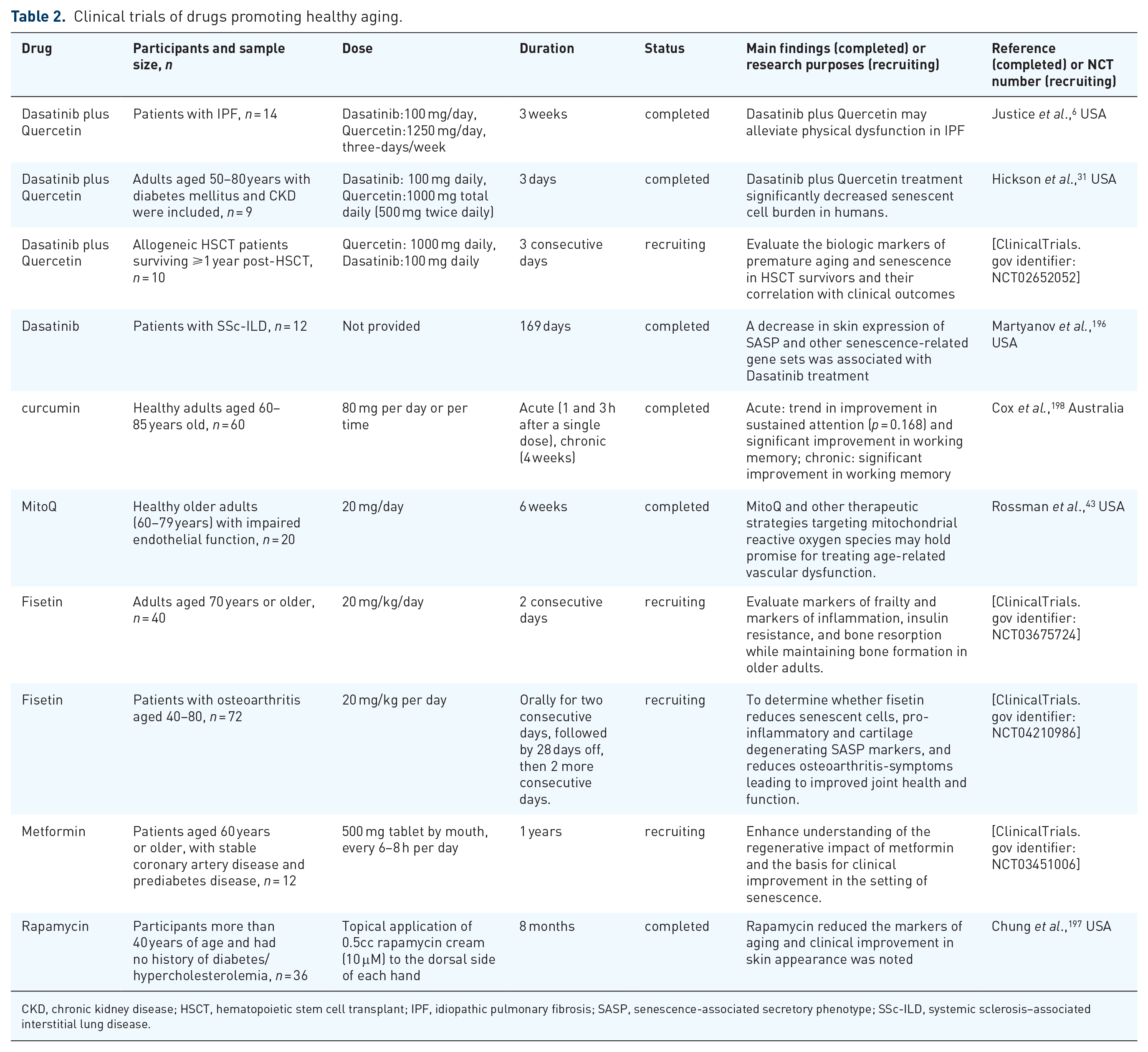
CKD, chronic kidney disease; HSCT, hematopoietic stem cell transplant; IPF, idiopathic pulmonary fibrosis; SASP, senescence-associated secretory phenotype; SSc-ILD, systemic sclerosis–associated interstitial lung disease.
Footnotes
Conflict of interest statement
The authors declare that there is no conflict of interest.
Funding
The authors disclosed receipt of the following financial support for the research, authorship, and/or publication of this article: This work was supported by the National Natural Science Foundation of China grants (82070707, 91949114, 81722011 and 81521003); National Key Research and Development Project 2019YFC2005000; the Project of Innovation Team of Chronic Kidney Disease with Integrated Traditional Chinese and Western Medicine (2019KCXTD014); Frontier Research Program of Guangzhou Regenerative Medicine and Health Guangdong Laboratory (2018GZR110105004) and Outstanding Scholar Program of Guangzhou Regenerative Medicine and Health Guangdong Laboratory (Grant No. 2018GZR110102004).
