



Abstract
Introduction
This study aimed to determine the association between food insecurity and eating disorders in university students.
Methods
The sample of the study consisted of 679 students from a public university in Turkey. Data were collected using a questionnaire. The questionnaire included participants’ general information, dietary habits, Household Food Security Survey Module Short Form (HFSSM-SF), and the Eating Attitudes Test 26 (EAT-26).
Results
Of the students, 12.4% experienced very low food security, 37.3% low food security, 20.6% marginal food security, and 29.7% high food security. Adjusted linear regression analysis showed that higher EAT-26 scores (β = 0.078, p = 0.038) and lower frequency of fruit (β = −0.158, p < 0.001) and raw vegetable (β = −0.148, p < 0.001) consumption were significant predictors of increased HFSSM-SF (food insecurity) scores.
Conclusions
As a result, it has been observed that students experiencing food insecurity are more prone to eating disorders and consume less fruit and vegetables. Approaches to prevent food insecurity can contribute to healthier dietary habits and reduce the propensity for disordered eating behaviors among university students.
This is a visual representation of the abstract.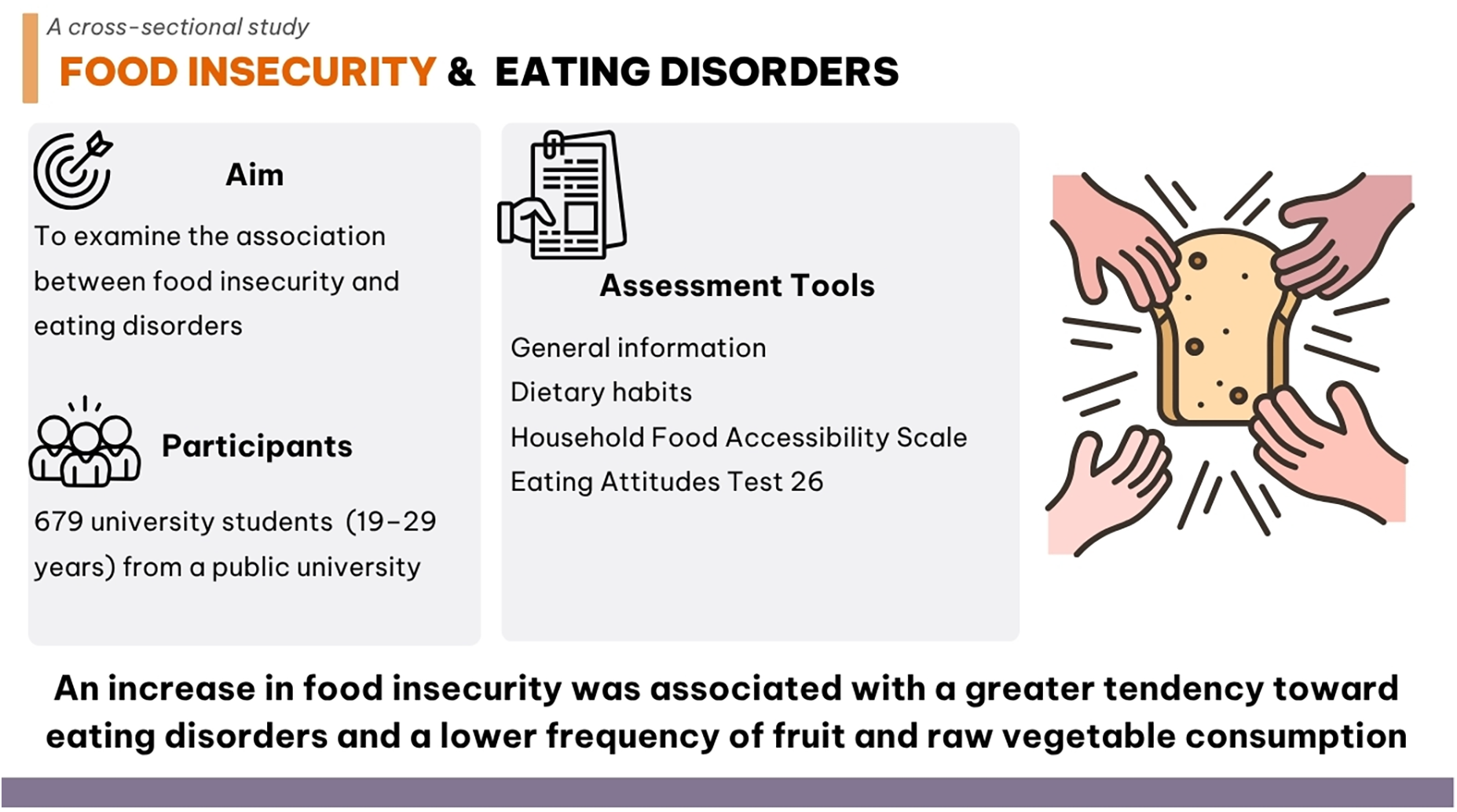
Get full access to this article
View all access options for this article.