




Abstract
Brief interactions with strangers can enhance well-being, yet people often avoid them. Building on a new theoretical framework—the Stranger Engagement Model—we designed an intervention to promote positive interactions between strangers. In a field experiment with adults on a university campus (N = 563), we enabled individuals to send explicit signals indicating whether or not they were interested in engaging with strangers. Our findings suggest that this simple intervention can increase the frequency, length, and depth of interactions between unacquainted community members, with downstream benefits for social connection and happiness. Our results also suggest that this intervention may enable individuals to meet new people if they wish to do so, without forcing social interactions on those who prefer solitude. More broadly, we argue that the Stranger Engagement Model can provide a framework for identifying when and how to promote interactions between strangers in diverse social contexts.
Loneliness and social isolation pose a serious health risk, akin to smoking up to 15 cigarettes daily (Holt-Lunstad et al., 2010). Recent research suggests, however, that even brief interactions with strangers and acquaintances can make people feel happier and more socially connected (e.g., Epley & Schroeder, 2014; Gunaydin et al., 2021; Sandstrom & Dunn, 2014a, 2014b; Van Lange & Columbus, 2021). These benefits have been demonstrated in diverse settings, among Starbucks customers in Canada (Sandstrom & Dunn, 2014a), bus commuters in Turkey (Gunaydin et al., 2021), and train passengers in the United Kingdom (Schroeder et al., 2022). Yet, people often studiously avoid interacting with others in public spaces (Epley & Schroeder, 2014). How can we effectively foster more social interactions among strangers?
To address this question, social psychologists have identified specific cognitive biases that may prevent people from interacting with strangers. One such bias is that people systematically underestimate how good they would feel after interacting with strangers (Dunn et al., 2007; Epley & Schroeder, 2014). Another bias is that people may fail to recognize their own ability to initiate and maintain a conversation (Sandstrom & Boothby, 2021). Finally—and perhaps most importantly—people may overestimate others’ reluctance to chat. For example, commuters on Chicago public transit predicted that they would be more interested in talking to their fellow passengers than their fellow passengers would be in talking to them (Schroeder et al., 2022). Researchers have designed interventions to tackle each of these cognitive biases, with the goal of increasing social interactions between strangers.
Yet, these interventions have produced largely disappointing results (Lok, 2023; Sandstrom & Boothby, 2021; Sandstrom et al., 2022). Why? These studies typically focus on one specific cognitive bias at a time, but these biases may operate in tandem. Thus, effectively promoting social interactions between strangers may depend on identifying all the conditions that need to be met for us to engage with new people. Latané and Darley (1970) came to a similar conclusion in their classic line of research examining the decision to help strangers, leading them to formulate the multistep Bystander Intervention Model.
Drawing on this classic model, Dunn and Lok (2022) developed the Stranger Engagement Model, outlining the decision process that underlies the choice to interact with someone new. As shown in Figure 1, people must first notice that a stranger is nearby (Step 1). However, merely noticing a stranger is not enough; one must also interpret the situation as an opportunity for social interaction (Step 2). For example, if a professor walks into a coffee shop determined to get work done, she may notice the strangers at the coffee shop, but not consider them as potential conversation partners. The interpretation of the situation should also hinge on the strangers’ behavior: if the strangers are wearing headphones and staring at their laptops, then the situation may not be perceived as a social opportunity—but if they look up and smile, then a conversation could occur. Of course, someone must take responsibility for starting it (Step 3) and know how to initiate the interaction (Step 4), which may be difficult in the absence of a shared social script. Finally, in order for people to actually initiate a conversation (Step 5), the potential costs (e.g., time, physical danger) must not outweigh the perceived benefits.
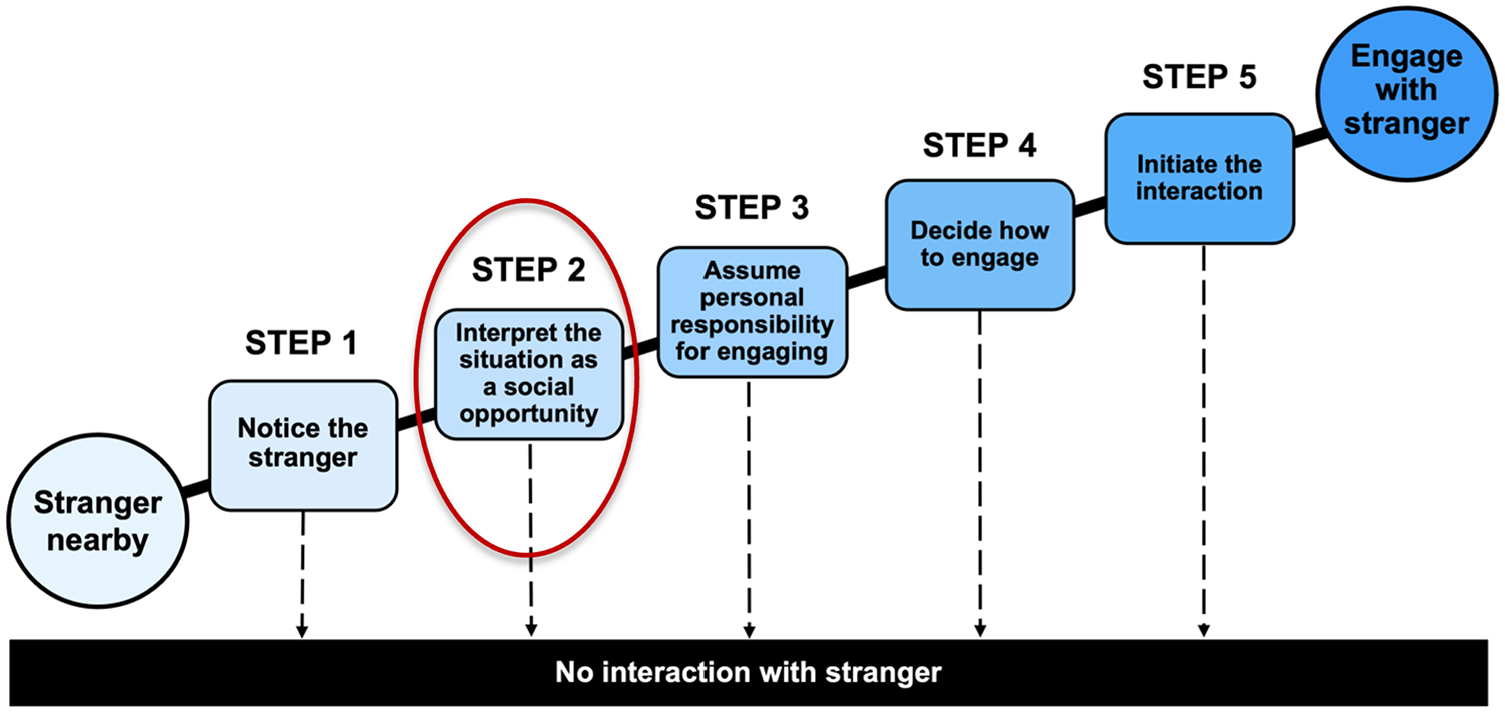
Stranger Engagement Model. A Framework for Fostering Social Interactions Among Strangers. Adapted From Latané and Darley’s (1970) Bystander Intervention Model
If the Stranger Engagement Model is correct, then addressing any one barrier to social interactions between strangers should increase sociability, as long as the other key barriers are effectively minimized. Thus, in the present research, we tested an intervention designed to increase social interactions by enhancing the likelihood that people would interpret the situation as a social opportunity (Step 2), while simultaneously minimizing core barriers to social interaction at all the other stages. Specifically, we manipulated whether the stranger provided a clear signal indicating a willingness to engage in conversation, within a context where it was easy and safe for the participant to initiate an interaction.
Of course, participants who would rather keep to themselves (like a laptop-wielding professor entering a coffeeshop) should not perceive the situation as a social opportunity. Therefore, in the present research, we distinguished between “wallflowers” who prefer to keep to themselves, and “social butterflies” who are open to making new connections. We predicted that participants would be most likely to interact with a stranger when they themselves wished to do so and perceived that the stranger shared this social preference.
From our theoretical perspective, however, this intervention (at Step 2) should only be effective if there are no substantial barriers at other steps of the Stranger Engagement Model. Thus, we conducted the experiment in a small seating area, in which a single confederate sat alone, making her presence easy to notice (Step 1). The confederate looked up and smiled, thereby inviting the participant to assume personal responsibility for initiating a conversation (Step 3). We ran the study in the comfortable and familiar setting of a university campus to ensure that participants could draw on a shared cultural script for greeting one another (Step 4). To minimize potential risks (to physical or psychological safety) associated with initiating an interaction (Step 5), we only ran the study during daylight hours with a female confederate.
If our intervention successfully promotes interactions between strangers, then we should also observe downstream benefits for participants’ feelings of social connection and happiness. Thus, while our primary outcomes focused on participants’ social behavior, we also measured their feelings afterward.
Method
Transparency and Openness
We report how we determined our sample size, all data exclusions, all manipulations, and all measures in the study, following the Journal Article Reporting Standards (JARS). All data, analysis code, and research materials are publicly available at https://osf.io/2x6ac/?view_only=03cb9ef98a634c5ea506486f8e2afba0. Data were analyzed using R, version 4.3.2 (R Core Team, 2021), and the Lmer package (Bates et al., 2015) to analyze direct effects and the Lavaan package (Rosseel, 2012) to analyze indirect effects. The hypotheses, methods, and analysis plan were preregistered on OSF on October 3, 2022, prior to data collection, which began on Janurary 2, 2023. There were no deviations from the preregistration.
Study Design
Participants were invited to have a snack in an outdoor seating area on campus, where a female confederate (posing as another participant) was already seated (see Figure 2). Each participant was randomly assigned to one of three conditions. In the “social signaling” condition, the confederate explicitly signaled that she was willing to talk, whereas in the “solitude signaling” condition, the confederate explicitly signaled that she would prefer not to talk. In the control condition, the confederate did not provide any explicit signals. 1
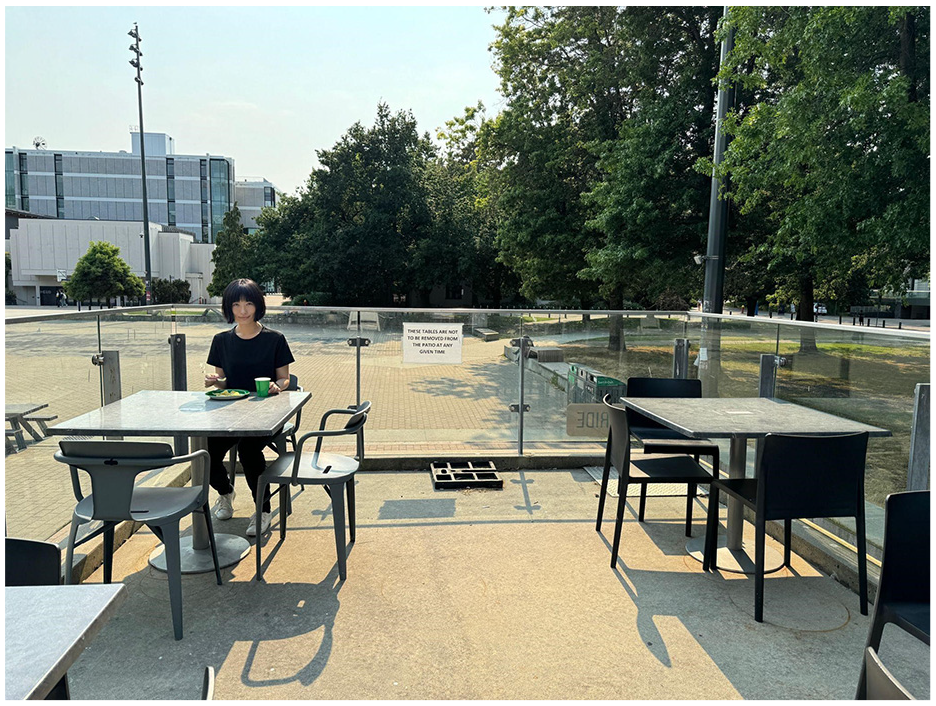
A Confederate Using Colored Plates and Cups to Indicate Her Preference for Socializing or Solitude in a Naturalistic Environment on a University Campus
Participants
The final sample included 563 participants (54% females; M Age = 21.8 years, Range Age = 16–64) who received a chance to win a $500 gift card. Participants were recruited near an outdoor seating area at a University Campus (University name masked for reviewers). Most participants were undergraduates (77%), but others were graduate students (10%), faculty/staff (2%), or visitors to campus (11%). Research assistants invited passersby to participate if they were alone (64%) or with no more than one or two other people (36%). Participants who completed the study with a friend were run together in the same session, and we anticipated a high degree of interdependence within sessions. Thus, we planned to use multilevel modeling to account for non-independence and planned our sample size at the level of sessions (rather than individual participants). We conducted a preliminary study as part of the second author’s dissertation (masked author’s name for reviewers) with 100 sessions per condition, which was powered to detect an effect size of h = 0.40. In the present study, we preregistered a 33% increase in sample size, necessitating at least 133 sessions per condition. We stopped running at the end of the day after meeting this target for each condition (with a resulting minimum cell size of 135 usable sessions).
Procedures
Research assistants invited people passing by an outdoor seating area to have some snacks and drinks and complete surveys. After providing consent, all participants read that: On some occasions, we ask participants to choose between one of two colored plates. Choose PLATE A if you are willing to talk to someone new or make a new connection at this location. Choose PLATE B if you prefer not to talk to someone new or make a new connection at this location.
In the “social signaling” condition, participants were told to ask the research assistant for Plate A or Plate B, based on their preference, and then they received a colored plate corresponding to their preference. For example, participants might receive a green plate if they indicated a preference to socialize, or a red plate if they indicated a preference for solitude. 2 They were then given snacks and a drink and directed to an area with several tables and chairs, where the female confederate was already seated. Regardless of what plate participants chose, the confederate in the social signaling condition always had a plate indicating that she was willing to socialize. In the “solitude signaling” condition, participants’ experience was exactly the same, except that the confederate had a plate indicating that she preferred to keep to herself.
In the control condition, participants reported whether they would prefer Plate A or Plate B, but then they were told that all participants would simply be using white plates to signal that they were in the study. They received a white plate, and when they entered the seating area, they saw a confederate with a white plate.
Confederates were kept blind to the meaning of the plate colors. In all conditions, as participants entered the seating area, the confederate made eye contact and smiled, without initiating a conversation. If the participant initiated an interaction with the confederate, the confederate was instructed to respond to questions and mirror those questions back to the participant while refraining from introducing new topics. If the participant did not interact with the confederate, the confederate remained seated with her snack and drink until the study concluded. After participants finished their food, they completed questions about their experience in the study and were debriefed.
Exclusion Criteria
In our preliminary study (Lok, 2023), we found that many participants did not notice the confederate or their plate color, which is not surprising given that the study was conducted in a naturalistic outdoor setting. Rather than moving to a more artificial lab setting, in the current experiment, we preregistered strict exclusion criteria to ensure that all participants noticed the confederate (Step 1) and understood whether the confederate was willing to talk, based on their plate color (Step 2). On our post-experimental questionnaire, we asked everyone whether they had noticed the other participant in the seating area; we excluded 95 participants who did not report noticing their presence. As a manipulation check, we also asked whether the other participant was willing to talk, based on their plate and cup color; we excluded 86 participants in the social signaling condition and 68 participants in the solitude signaling condition who did not correctly identify the signal sent by the confederate’s plate color (we did not exclude any control participants on this basis because the white plate did not provide a social/solitude signal). We also preregistered that we would exclude participants who failed to complete our three primary dependent variables, but after applying our other exclusion criteria, all remaining participants had complete data on these measures. In total, we excluded 249 participants out of the full sample of 812 participants, leaving 563 participants (in 498 sessions) who met our preregistered criteria.
Measures
We preregistered three primary variables capturing participants’ social behavior during the study. Specifically, participants reported whether they initiated an interaction with someone new (the confederate), the duration of their interaction, and the depth of the interaction. We also preregistered two downstream psychological outcomes: feelings of social connection and positive mood.
Making a New Connection
To assess whether or not participants made a new connection with the confederate, we asked them: “During the study, did you talk to someone new and make a new connection? An interaction can involve a greeting, exchanging pleasantries or an extended conversation. Please do not count interactions with our research team in your answer. YES/NO.”
Interaction Length
To measure how long participants spent interacting with the confederate, we asked: “During the study, what percentage of time did you spend engaging in conversation with someone new? This includes time you spent talking while others paid attention and the time you spent paying attention while others were talking.” Response options ranged from 1 (1%–20% of the time) to 5 (81%–100% of the time).
Interaction Depth
To measure interaction depth, we asked participants about whether they (a) made eye contact or smiled at someone new, (b) greeted someone new (e.g., saying “hello”), (c) exchanged extended pleasantries such as asking “how are you,” and (d) engaged in an extended conversation in which they shared (or learned) something personal about someone new. We scored participants based on their highest level of engagement. For example, participants who did not talk to someone new at all received a score of 0, whereas participants who engaged in an extended conversation received a score of 4.
State Social Connection
Participants completed the 10-item UBC State Social Connection Scale (UBC-SSCS; Lok & Dunn, 2023), rating their current feelings of social connection on a 7-point Likert-type scale from 1 (strongly disagree) to 7 (strongly agree). Example items were “I felt distant from people” and “I felt like I was able to connect with other people” (refer to Appendix for complete items).
Positive Mood
Positive mood was measured using the six-item Positive Experience subscale from the Scale of Positive and Negative Experiences (SPANE; Diener et al., 2009). We asked participants to rate the extent to which they felt the following emotions on a 5-point Likert-type scale from 1 (not at all) to 5 (very much): Positive, Good, Happy, Pleasant, Joyful, and Contented. We averaged the six items to create a composite score.
Results
All analyses reported below were conducted exactly as preregistered. In addition, we conducted one exploratory analysis, which is explicitly labeled as such.
Analytic Strategy
Because some participants (36%) entered the study with a friend, we expected interdependence within sessions; consistent with this expectation, we found non-trivial levels of interdependence for making a new connection (intraclass correlation coefficient [ICC] = .25), interaction length (ICC = .77), interaction depth (ICC = .79), state social connection (ICC = .30), and positive mood (ICC = .13). Thus, as preregistered, we used multilevel modeling to account for the interdependence, nesting participants (Level 1) within sessions (Level 2). We used a fixed slope model, allowing only the intercept to vary across sessions. We used the Lmer package in R to analyze direct effects and the Lavaan package in R to analyze indirect effects.
Social Behavior
We hypothesized that participants would be more likely to talk to someone new (i.e., the confederate) when the confederate explicitly signaled her willingness to talk, rather than displaying no signals or explicitly signaling a preference for solitude. Consistent with our preregistered hypothesis, a higher percentage of participants in the social signaling condition (56%) made a new connection with the confederate, compared with 41% in the control condition (b = 0.74, p = .008), and 20% in the solitude signaling condition (b = 1.94, p < .001); participants in the control condition were also significantly more sociable than those in the solitude signaling condition (b = 1.20, p < .001; see Figure 3).
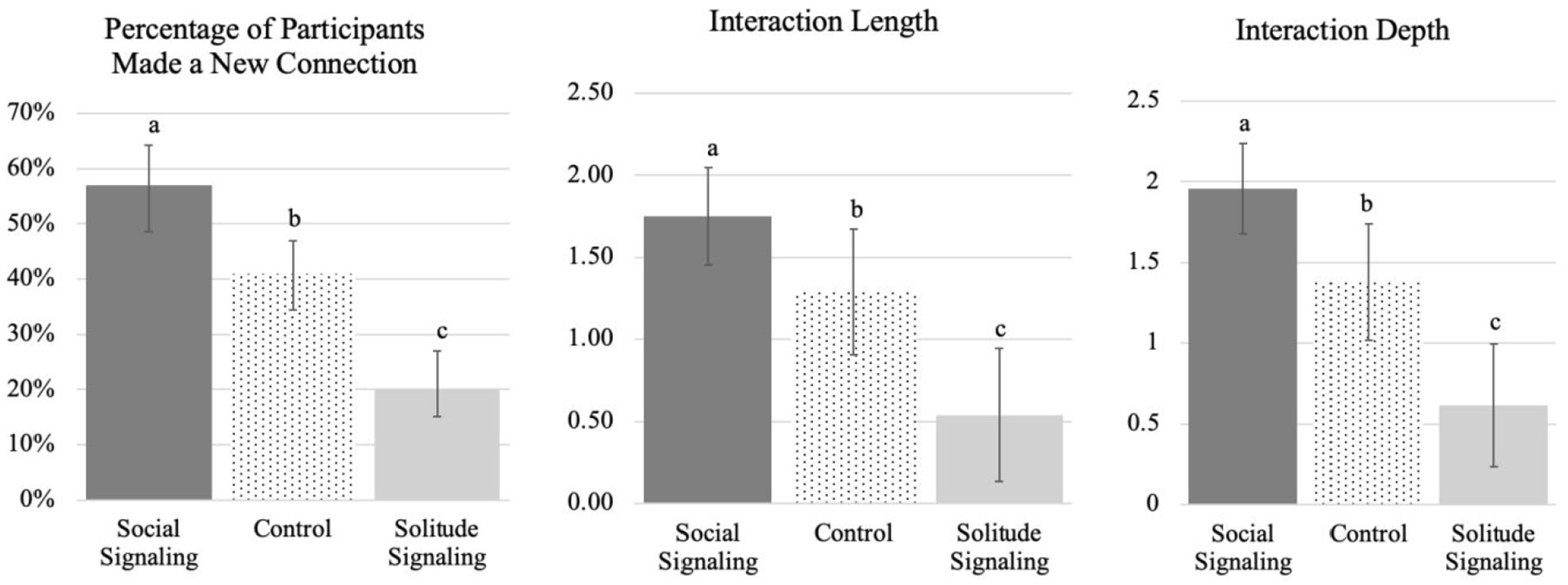
The Effect of Explicit Signaling on Participants’ Social Behaviors
We also hypothesized that participants would have longer and deeper interactions in the social signaling condition compared with the other conditions. Indeed, participants in the social signaling condition interacted longer with the confederate (M = 1.84, SD = 2.06) than those in the control condition (M = 1.30, SD = 1.91, b = 0.46, p = .028) and the solitude signaling condition (M = 0.52, SD = 1.29, b = 1.18, p < .001). Similarly, participants in the social signaling condition had deeper interactions (M = 2.03, SD = 1.87) than those in the control condition (M = 1.38, SD = 1.78, b = 0.54, p = .003) and the solitude signaling condition (M = 0.59, SD =1.29, b = 1.31, p < .001; see Figure 3). 3
Social Butterflies and Wallflowers
Before being assigned to condition, all participants indicated whether they were willing to make a new connection. Most participants indicated a willingness to connect (76%); as shorthand, we refer to these individuals as social butterflies (n = 428), while referring to participants who preferred not to talk to someone new as wallflowers (n = 135). 4 According to our preregistered hypothesis, there should be a significant difference between conditions for social butterflies, but not for wallflowers. That is, we expected that the presence of explicit signals would enable social butterflies to connect with a stranger, without forcing wallflowers to override their personal preference for solitude.
Social Butterflies
As shown in Figure 4, 68% of social butterflies interacted with the confederate compared with 50% in the control condition (b = 0.94, p = .006) and 25% in the solitude signaling condition (b = 2.33, p < .001). Social butterflies also had longer interactions in the social signaling condition (M = 2.30, SD = 2.10) than in the control condition (M = 1.59, SD = 1.99, b = 0.62, p = .003) and the solitude signaling condition (M = 0.66, SD = 1.45, b = 1.50, p < .001). Finally, butterflies in the social signaling condition reported deeper interactions (M = 2.49, SD = 1.79) than in the control condition (M = 1.71, SD = 1.83, b = 0.68, p < .001) or the solitude signaling conditions (M = 0.74, SD = 1.41, b = 1.59, p < .001).
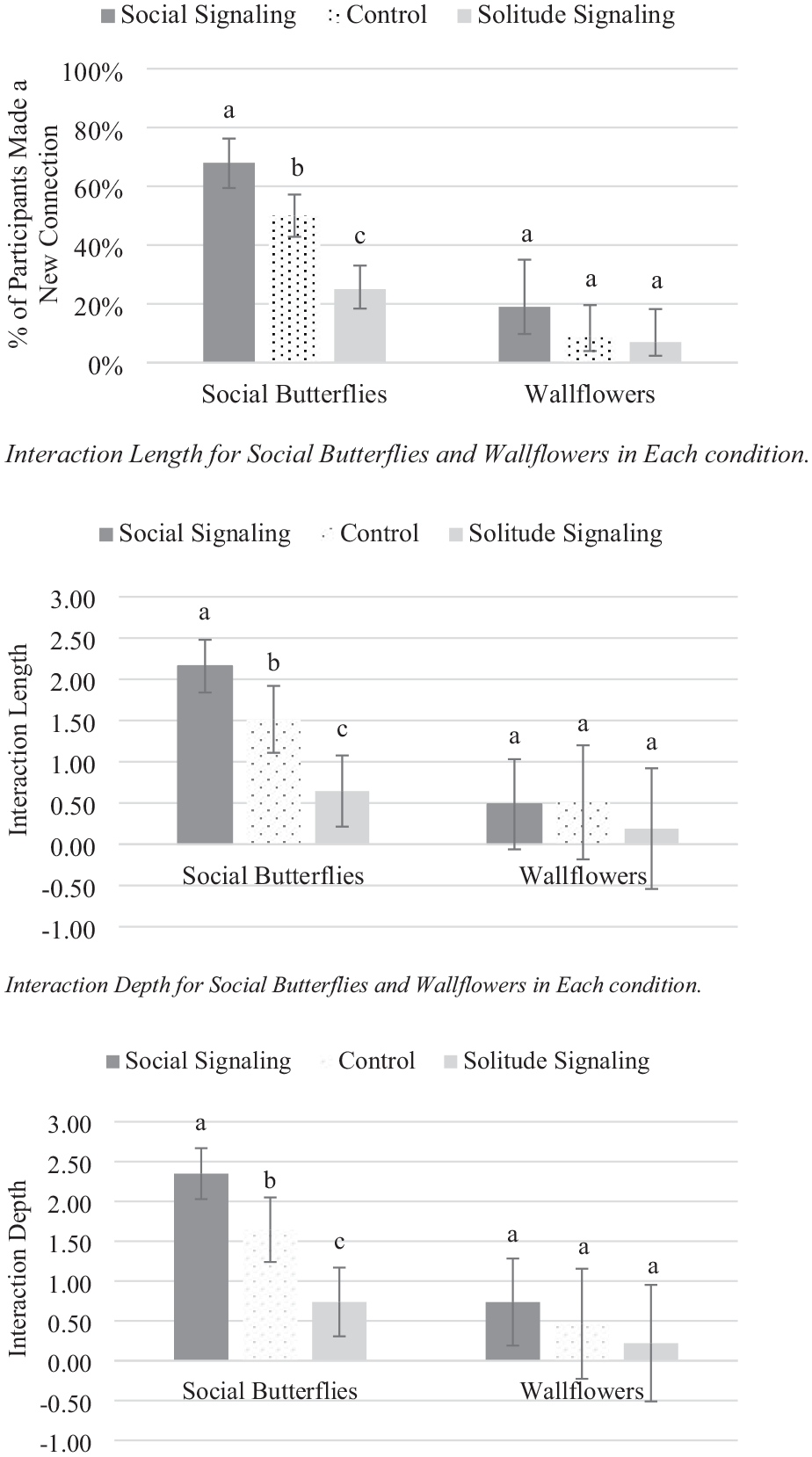
The Percentage of Social Butterflies and Wallflowers Who Made a New Connection in Each Condition. Interaction Length for Social Butterflies and Wallflowers in Each Condition. Interaction Depth for Social Butterflies and Wallflowers in Each Condition
Wallflowers
As expected, among wallflowers, we found no significant effects of condition on any of our measures of social behavior, although this may have stemmed in part from the smaller size of this subsample. In the social signaling condition, 19% of wallflowers interacted with the confederate, compared with 9% in the control condition (b = 0.82, p = .251) and 7% in the solitude signaling condition (b = 1.18, p = .25). Wallflowers in the social signaling condition did not report significantly longer or deeper interactions than their counterparts in the other two conditions (see Table S4 in the SOM). 5
Downstream Psychological Outcomes 6
State Social Connection
Next, as preregistered, we examined whether condition directly affected participants’ feelings of social connection. Participants in the social signaling condition reported feeling more socially connected (M = 4.60, SD = 1.09) than those in the solitude signaling condition (M = 4.16, SD = 1.04, b = −0.43, p < .001), but not more connected than those in the control condition (M = 4.46, SD = 1.04, b = −0.15, p = .193). This effect was driven by social butterflies, who exhibited a significant difference between the social vs. solitude signaling condition (b = 0.61, p < .001), whereas wallflowers experienced no significant difference (b = 0.10, p = .667).
As preregistered, we also tested whether condition assignment indirectly affected feelings of connection by altering social behavior. Compared with participants in the control condition, those in the social signaling condition were more likely to make a new connection (a = 0.61, p = .004), which mediated their increased feeling of social connection (b = 0.90, p < .001; ab = 0.13, p = .014), as shown in Figure 5. When we repeated the analysis, replacing making a new connection with interaction length and interaction depth, we found the same pattern (see Table S5 in the SOM).
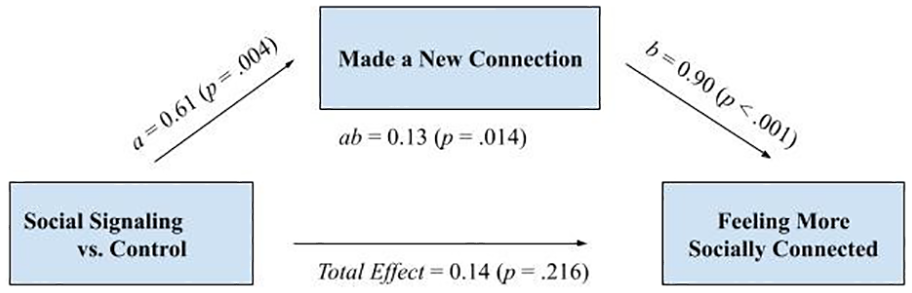
Indirect Effect of Social Signaling (vs. Control) on Increased State Social Connection Through Making a New Connection
Is this indirect effect primarily driven by social butterflies rather than wallflowers? Among social butterflies, the results mirrored the significant indirect effects observed in the full sample. For wallflowers, no significant indirect effects were observed. For detailed reports, please refer to Tables S6 and S7 in the SOM.
Positive Mood
Similarly, as preregistered, we looked at whether condition directly increased positive mood. Participants in the social signaling condition reported feeling slightly happier (M = 3.57, SD = 0.70) compared with those in the control condition (M = 3.42, SD = 0.81, b = 0.16, p = .051), but not happier than those in the solitude signaling condition (M = 3.45, SD = 0.81, b = 0.12, p = .176). Social butterflies reported feeling significantly happier in the social signaling condition (M = 3.65, SD = 0.66) compared with both the control condition (M = 3.45, SD = 0.84, b = −0.21, p = .029) and the solitude signaling condition (M = 3.43, SD = 0.84, b = −0.22, p = .030), whereas there were no significant differences among wallflowers (ps > .1).
Condition assignment also indirectly affected positive mood by altering social behavior. Compared with participants in the control condition, those in the social signaling condition were more likely to make a new connection (a = 0.61, p = .004), which mediated their enhanced positive mood (b = 0.29, p < .001; ab = 0.04, p = .014). We repeated the analysis, replacing making a new connection with interaction length and interaction depth, and found the same pattern (see SOM Table S5). The indirect effect on positive mood was also primarily driven by social butterflies rather than wallflowers. For detailed reports, please refer to Tables S6 and S7 in the SOM.
Exploratory Analysis
As an exploratory analysis, we tested how much weight participants placed on their own preference and the confederate’s perceived preference when deciding whether to initiate an interaction. Using a logistic regression model, we predicted whether or not participants made a new connection based on two dichotomous variables: (a) their own self-reported preference for socializing versus solitude and (b) the confederate’s perceived preference (i.e., whether the confederate displayed a solitude vs. social signal). Participants in the control condition were not included in this analysis since the confederate did not provide a signal in this condition. Participants’ decision to initiate an interaction was strongly based on their own self-reported preference to socialize (b = 2.44, p < .001), but descriptively speaking the confederate’s perceived preference mattered nearly as much (b = 2.21, p < .001).
Discussion
This naturalistic field experiment offers the first test of the Stranger Engagement Model (Dunn & Lok, 2022). Addressing key barriers at a single stage of the model—interpreting the situation as a social opportunity—while minimizing barriers in other stages, can effectively increase social interactions between strangers. Specifically, when strangers used a colored plate to explicitly signal their willingness to engage, participants were more likely to make a new connection and have longer, deeper interactions. This explicit signal not only encouraged greater social engagement but was also associated with increased feelings of social connection and happiness afterwards. Notably, these patterns were driven by participants who were open to making a new connection at the outset of the study. Thus, this intervention demonstrates the potential to help individuals connect with new people when desired, without imposing social interactions on those who prefer solitude.
However, in some contexts, allowing people to display explicit signals indicating whether they prefer socializing or solitude could actually undercut social interactions. In the context we examined—a university campus—most participants were open to connecting with someone new, but in other environments—such as a public bus—a majority of individuals might signal a preference for solitude. Our findings suggest that explicitly signaling a preference for solitude reduces social interactions, compared with having no signals at all. Based on our data, we estimate that if at least half the people in a particular context are open to making a new connection, then introducing explicit signals should increase the number of social interactions that will occur (see SOM for probability calculations). Conversely, if fewer than half are open to making new connections, then introducing explicit signals should actually reduce the total number of interactions that occur. Understanding these dynamics is important in part because some organizations are already using explicit signaling interventions. For example, the nonprofit organization Chatty Cafe Scheme has partnered with coffee shops across the United Kingdom to create “Chatter and Natter” tables where customers can explicitly signal a willingness to socialize with strangers. Meanwhile, offices have begun to experiment with a “FlowLight” system that changes from red to green to indicate whether employees should be left alone or are available to chat.
In applying our results, it is also important to emphasize that we carefully controlled key features of the situation. According to the Stranger Engagement Model (Lok & Dunn, 2022), people will only interact with a stranger if a conjunctive set of conditions are met: one must notice the stranger, perceive the situation as an opportunity for social interaction, take responsibility for starting the conversation, and know how to initiate it, while perceiving that the costs of doing so are relatively low. Based on this model, we carefully constructed a situation in which core barriers to social engagement were minimized. By doing so, we were able to isolate the role of explicit social signals and demonstrate their potential value in promoting interactions. In this way, our research offers a theoretical contribution by providing the first direct causal evidence that people consider not only their own social preferences, but also their assessments of others’ social preferences, in deciding whether to initiate interactions. Our exploratory analyses suggest that participants weighted their own preferences and the stranger’s perceived preferences about equally in deciding whether to interact.
Future research could directly manipulate each of the steps in the Stranger Engagement Model to identify their relative importance. We excluded a considerable number of participants who simply failed to notice the confederate (Step 1), underscoring the importance of this initial step of the model. It would be interesting to identify the steps of the model that are more influential in shaping whether social interactions occur in common, everyday contexts, such as cafes, parks, and public transit.
In the meantime, we would urge caution in applying our signaling intervention. It is important to assess the multiple barriers that could make people reluctant to engage with strangers, particularly given the potential for explicit signaling interventions to backfire. Doing so would provide insights into the most important elements for creating environments that effectively facilitate social interactions, at a time when loneliness has reached epidemic proportions.
Supplemental Material
sj-docx-1-spp-10.1177_19485506251338874 – Supplemental material for Explicit Signals Enhance Social Engagement Between Strangers
Supplemental material, sj-docx-1-spp-10.1177_19485506251338874 for Explicit Signals Enhance Social Engagement Between Strangers by Ruo-Ning Li, Iris Lok, Säde Stenlund and Elizabeth Dunn in Social Psychological and Personality Science
Footnotes
Appendix
Acknowledgements

Handling Editor: Lora, Park
Declaration of Conflicting Interests
The author(s) declared no potential conflicts of interest with respect to the research, authorship, and/or publication of this article.
Funding
The author(s) disclosed receipt of the following financial support for the research, authorship, and/or publication of this article: This research was supported by funding from the Social Sciences and Humanities Research Council of Canada (SSHRC).
Supplemental Material
The supplemental material is available in the online version of the article.
Notes
Author Biographies
References
Supplementary Material
Please find the following supplemental material available below.
For Open Access articles published under a Creative Commons License, all supplemental material carries the same license as the article it is associated with.
For non-Open Access articles published, all supplemental material carries a non-exclusive license, and permission requests for re-use of supplemental material or any part of supplemental material shall be sent directly to the copyright owner as specified in the copyright notice associated with the article.
