




Abstract
A substantial rise of vote shares of Green parties across European countries suggests an increasing support of environmental issues. A critical question for researchers and policymakers alike is, who endorses Green parties? Here, we examined the Big Five personality predictors of green partisanship, voting behavior, and party switching in a nationally representative sample of more than 27,000 Germans collected over a period of 16 years. Consistent with previous research, high openness and low conscientiousness emerged as the strongest personality predictors of green partisanship and voting behavior. Critically, high openness also predicted the likelihood to switch to a Green party vote across two federal elections. These effects held when controlling for demographics and environmental concerns, suggesting that the association between personality and support for Greens reflects more than social norms or attitudes about the environment. We close with a discussion of the theoretical and practical implications of these findings.
Meeting the growing threat of climate change requires structural reforms that affect public and macroeconomic policies, such as taxes, regulations, and government spending. Psychological research has begun to identify personality traits that predict individual differences in proenvironmental attitudes and behaviors (Soutter et al., 2020). However, less work has focused on the factors that predict support for broader green policies (Hoffmann et al., 2022). A substantial rise of vote shares of Green parties across European countries suggests an increasing support of environmental issues. A critical question for researchers and policymakers alike is, who endorses Green parties and associated proenvironmental policies?
The purpose of this study was to examine the personality predictors of green partisanship, voting behavior, and party switching. Specifically, replicating previous research, we examined which Big Five personality traits (John et al., 2008) distinguished Green party voters from voters of other mainstream parties over the past two decades and tested whether these associations held after controlling for environmental concerns and relevant demographic characteristics. Extending previous research, we then tested whether personality traits also predicted the likelihood to switch to versus from a Green party vote across two federal elections.
To do this, we used nationally representative panel data from more than 27,000 Germans collected between 2005 and 2019 as part of the German Socioeconomic Panel (GSOEP, Goebel et al., 2019). Germany has a multiparty political system. The largest parties by members and parliament seats are the center-right Christian Democrats (CDU/CSU), the center-left Social Democratic Party (SPD), the liberal/libertarian Free Democratic Party (FDP), the left-wing party (Die LINKE), and the Green party (Bündnis 90/Grüne) with its main focus on environmental and climate change issues. The Green party played a pivotal role in shaping green politics in Europe over the past 30 years, with their initial program stating four core principles: ecological, social, grassroots, and nonviolent (https://www.britannica.com/topic/Green-Party-of-Germany). Even though other political parties have increasingly included climate change issues into their political programs, the Greens continue to be the party that is mainly associated with proenvironmental politics in Germany. A recent survey indicated that the majority of German voters (32%) believe that the Green party is most capable of doing competent environmental and climate politics compared with all other German parties (ARD-DeutschlandTREND, April 2023, p. 16). Similar to other European countries, Germany’s Green party has seen a transformation from a radical fringe movement in the late 20th century to a mainstream party that appeals to a broader share of voters who support proenvironmental policies for tackling climate change.
Personality Predictors of Green Partisanship
Why are some people more likely to endorse proenvironmental policies than others? Contemporary theories emphasize the importance of thoughts, feelings, and behavior in shaping proenvironmental behavior (Hopwood et al., 2022; Hornsey et al., 2016). Consistent with these perspectives, there is growing evidence that personality traits—relatively enduring patterns of thoughts, feelings, and behavior that distinguish individuals from one another—predict different types of proenvironmental attitudes and behaviors (Hopwood et al., 2023; Soutter et al., 2020) including political partisanship and voting (Caprara et al., 2006; Hufer et al., 2020; Kandler et al., 2012).
Of the Big Five traits, openness and, to a lesser degree, agreeableness have been theorized to predict green partisanship (Bakker et al., 2015; Caprara et al., 1999). Open people tend to be more comfortable with new ideas, behaviors, and change, and should be more likely to endorse proenvironmental policy changes than people who are low in this trait (Osborne et al., 2021; Sibley et al., 2012). Agreeable people are compassionate and considerate of others’ needs; they favor communal goals and should thus be more likely to engage in proenvironmental behavior compared with people who are low in this trait (Soutter et al., 2020; Stahlmann et al., 2024). Although links between the other Big Five traits and green partisanship have been posited, the reasons for such associations are less clear. Some have argued that conscientiousness, the tendency to act planful, consistent with norms, and obedient to rules, may be negatively linked with green politics (Schoen & Schumann, 2007). Others have argued that higher levels of neuroticism, the tendency to experience anxiety, anger, and distress, may be related to environmental concerns and, thus also, green partisanship (Bakker et al., 2015; Hopwood et al., 2021). Extraversion, the tendency to be sociable, outgoing, and action-oriented, has been theorized to predict political participation but links with political partisanship seem less clear (Mondak & Halperin, 2008).
Existing research supports the important role of openness in predicting green attitudes and voting behavior. However, there is no consistent evidence for the other Big Five traits. For example, Schoen and Schumann (2007) found higher levels of both openness and agreeableness to predict positive attitudes toward the Green party in a sample of ~2,500 German adults. They also found high neuroticism to predict positive attitudes toward the Green party, but no links with extraversion and conscientiousness. Focusing on party identification in two waves of the GSOEP, Bakker et al. (2015) also found a positive correlation between openness and people’s identification with the Green party. In contrast to Schoen and Schumann (2007), however, they found lower levels of neuroticism to predict Green party identification and no effects of agreeableness. Overall, existing evidence for links between green partisanship and other traits than openness is mixed.
In summary, theoretical and empirical research indicates that openness and potentially agreeableness may be characteristic traits of Green party voters. However, existing studies relied on data that had been collected prior to 2010, raising questions about the replicability of the personality effects on green partisanship in recent years. The past decade has seen a surge in green vote shares across Europe. This transformation of Green parties from fringe movements to mainstream factions that win elections (Hartleb, 2015) might be reflected in the personality profiles of green voters. To the degree that Green parties and politics are perceived as more normative and less extreme, we might expect Green party voters’ personality profiles to be more similar to those who vote for popular centrist parties, as indicated by decreased links with openness and increased associations with agreeableness and conscientiousness; that is, trait profiles that are considered to elicit the tendency to swim with the sociocultural tide (Gebauer et al., 2014; Schoen & Schumann, 2007).
Do Personality Traits Predict Green Party Switching?
A hitherto unanswered question concerns the personality predictors of vote switching. Specifically, who will switch to and from a Green party vote across two federal elections? Whereas party identification in two-party systems like the United States tends to be highly stable (Schickler & Green, 1997), citizens of multiparty systems, like Germany, may be more likely to change their party identification and switch votes across parties, especially if there are ideologically similar alternatives (Satherley et al., 2023). For example, measuring party identification between 1984 and 2001 in the GSOEP, Schmitt-Beck et al. (2006) found that 76% of participants changed their party identification at least once, either to a different party or to an identification as an “independent” voter.
People’s decision to switch votes may be driven by political, social, or individual reasons. For example, people may engage in strategic voting based on their perceptions of party performance (Bowler et al., 2010) or cast a vote for a party that their partner or family identified with (Schmitt-Beck et al., 2006). Individual predictors of party switching include demographic and psychological variables. For example, there is some evidence that younger, college-educated people who are politically interested are more likely to change their party identification (Kuhn, 2009).
Here, we examined the role of the Big Five traits as predictors of switching to and from a Green party vote across two German federal elections. Consistent with aforementioned research on personality and green partisanship (Bakker et al., 2015; Schoen & Schumann, 2007), we expected high levels of openness and potentially agreeableness to predict a switch to a Green party vote. We further expected younger, college-educated people who are concerned about the environment but have not yet established a consistent voter identity to be more likely to change their vote to a Green party vote (Cowie et al., 2015; Kuhn, 2009). We had no expectations about the demographic or personality predictors of switching from a Green party vote to a vote of a different party.
The Present Study
The purpose of this study was to examine the personality predictors of green partisanship, voting behavior, and vote switching in nationally representative data from more than 27,000 German adults collected in 2005, 2009, 2013, 2017, and 2019. Consistent with theory and previous research, we expected openness and agreeableness to predict green partisanship and voting behavior. We explored whether the links between personality traits and green partisanship had changed between 2005 and 2019 and tested whether any trait effects held when controlling for demographic differences and environmental concerns.
Using data from the 2013 and 2017 federal election years, we then examined the personality predictors of green vote switching. We expected younger, college-educated people with environmental concerns and higher levels in openness and agreeableness to be more likely to switch to a Green party vote. Understanding the personality predictors of green partisanship and vote switching will advance our understanding of the psychological factors that contribute to the transformation toward a greener economy and more sustainable society.
Method
Transparency and Openness
Data came from the GSOEP, an ongoing longitudinal panel study with more than 15,000 households. Data collection began in 1984 and continues annually. This study was not preregistered. All materials and code are available at https://osf.io/62cdh/. Data are freely available by application at https://www.diw.de/soep.
Sample
GSOEP includes five waves of Big Five assessments and annual assessments of people’s political preferences and voting behavior. Here, we included data from all participants who were eligible to vote at the time they reported about their voting behavior, completed a personality assessment and a political preference (voting) questionnaire in at least one of the five assessment waves (2005, 2009, 2013, 2017, and 2019), and reported a preference/vote for one of the five mainstream parties in Germany (Greens, CDU, SPD, FDP, and LINKE). Table 1 shows the number of observations by party preference and assessment year. The overall sample consisted of N = 27,695 individuals aged 17 to 103 years (Mage = 54.53, SDage = 16.60), of whom 49.62% identified as female. Table 2 shows the number of respondents per assessment year and party preference and the total number of observations including repeated observations across different assessment years.
Sample Sizes by Party Preference and Assessment Year
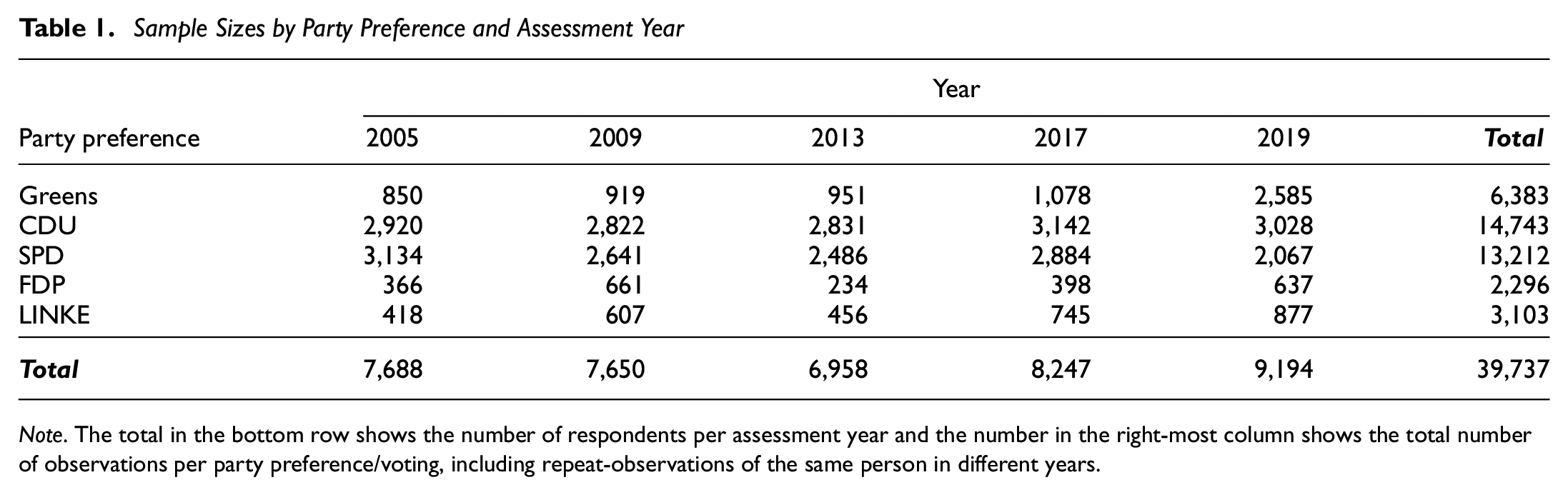
Note. The total in the bottom row shows the number of respondents per assessment year and the number in the right-most column shows the total number of observations per party preference/voting, including repeat-observations of the same person in different years.
Summary Statistics for the Full Sample Across Assessment Years
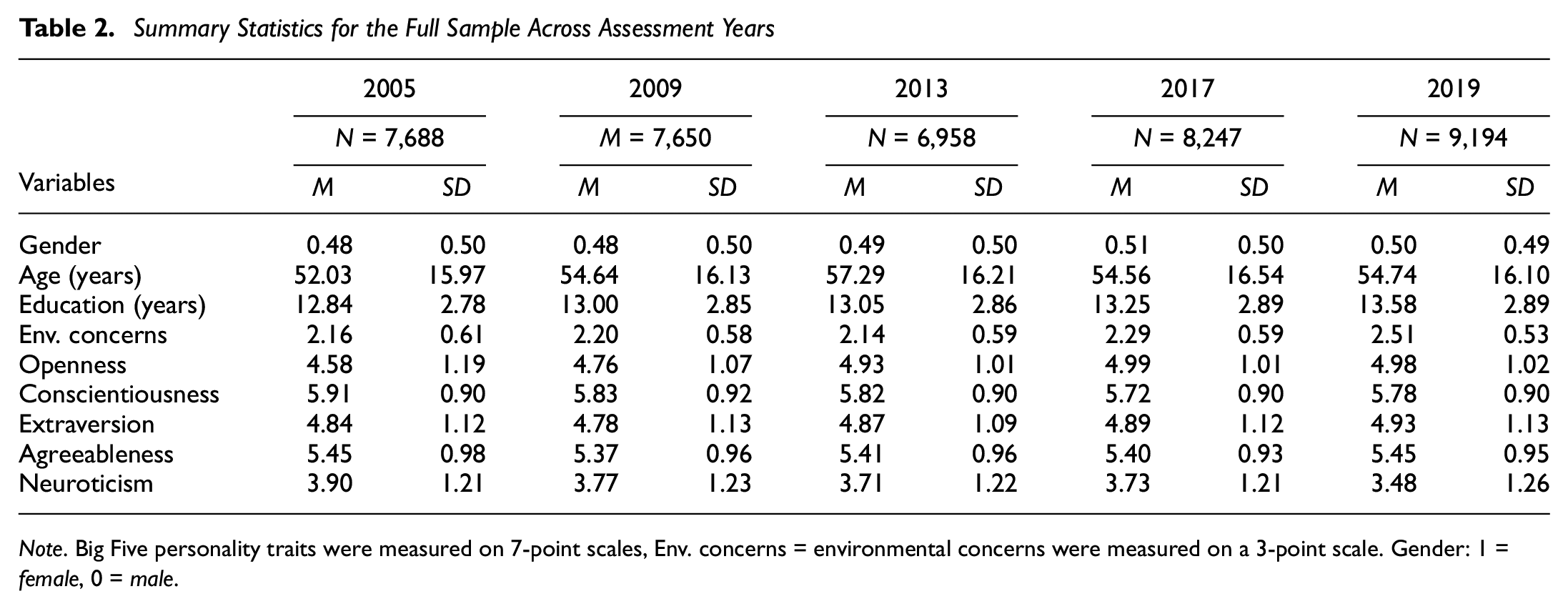
Note. Big Five personality traits were measured on 7-point scales, Env. concerns = environmental concerns were measured on a 3-point scale. Gender: 1 = female, 0 = male.
Measures
Personality Traits
The Big Five traits were measured with a 15-item version of the Big Five Inventory (BFI-S, Gerlitz & Schupp, 2005). Participants rated each item on a 7-point scale, ranging from 1 = does not apply to me/disagree to 7 = applies to me/agree. The BFI-S was administered in 2005, 2009, 2013, 2017, and 2019. Across assessment waves, the internal consistencies were ω = .62 to .67 (openness), ω = .64 (conscientiousness), ω = .71 (extraversion), ω = .57 (agreeableness), and ω = .65 (neuroticism).
Environmental Concerns
Environmental concerns were measured with two 3-point scales, one asking “What is your attitude toward environmental protection?” and the other asking “What is your attitude towards the impact of climate change?,” with answer options 0 = not at all concerned, 1 = somewhat concerned, and 2 = very concerned. 1 Both scales were strongly correlated (r = .73 in 2009, r = .73 in 2013, r = .75 in 2017, and r = .78 in 2019), so that we averaged both questions and used them as one indicator of environmental concerns. 2
Political Party Preference and Voting
Since 1984, participants have been annually asked about their party preferences with the question “toward which party do you lean?” and were given in total 30 different answer choices (including coalitions such as CDU/CSU or SPD/LINKE) of which they had to select one. For our analyses, we included those participants who reported leaning toward one of the five mainstream parties (Greens, CDU, SPD, FDP, and LINKE). We excluded participants who preferred coalitions.
In 2013 and 2017, participants were asked “In the last Bundestag (National) election, which party did you vote for?” and were provided with the same 30 answer choices as for the measurement of party preferences. We again only included data from those participants who reported having voted for one of the five mainstream parties (Greens, CDU, SPD, FDP, and LINKE). The correlation between Green party preference and having cast a vote for the Green party was r = .90 in 2013 and r = .91 in 2017. Of the 11,722 (14,312) people in 2013 (2017), who reported both their party preference and their vote, 5,264 (44.91%) (5,581 [39.0%]) reported preferring and having voted for the same party.
Results
All analyses were conducted in Stata 17. We interpreted mean-level differences with Cohen’s d >.20 as meaningful, effects with a value of p < .05 as statistically significant, and reported 95% confidence intervals (CIs) for all inferential statistics.
Descriptives
Table 2 shows the mean levels and standard deviations of the key study variables for the full sample at each of the five assessment waves. Summary statistics by party preference and assessment year are presented in the Supplemental Online Materials at https://osf.io/62cdh/. Highlighting the benefits of nationally representative data, the observed distributions of election votes in GSOEP approximate the actual results of the German federal elections in 2013 and 2017 (https://www.bundestag.de/parlament/wahlen/ergebnisse_seit1949-244692).
Mean Differences Between People Who Prefer the Green Versus Other Mainstream Parties
We first examined the personality mean-level differences (Cohen’s d) in demographics, environmental concerns, and the Big Five across people who prefer the Green party versus the other mainstream parties for each of the five assessment waves (Table 3). Compared with people who preferred the other mainstream parties, people who preferred the Green party were more likely to be female, on average about 10 years younger, more educated, and more concerned about the environment, with medium to large effect sizes for environmental concerns ranging from d = .34 compared with the Left party in 2005 to d = .93 compared with the FDP in 2013 and 2019.
Mean-Level Differences Between People Who Prefer the Green Party Versus Other Mainstream Parties
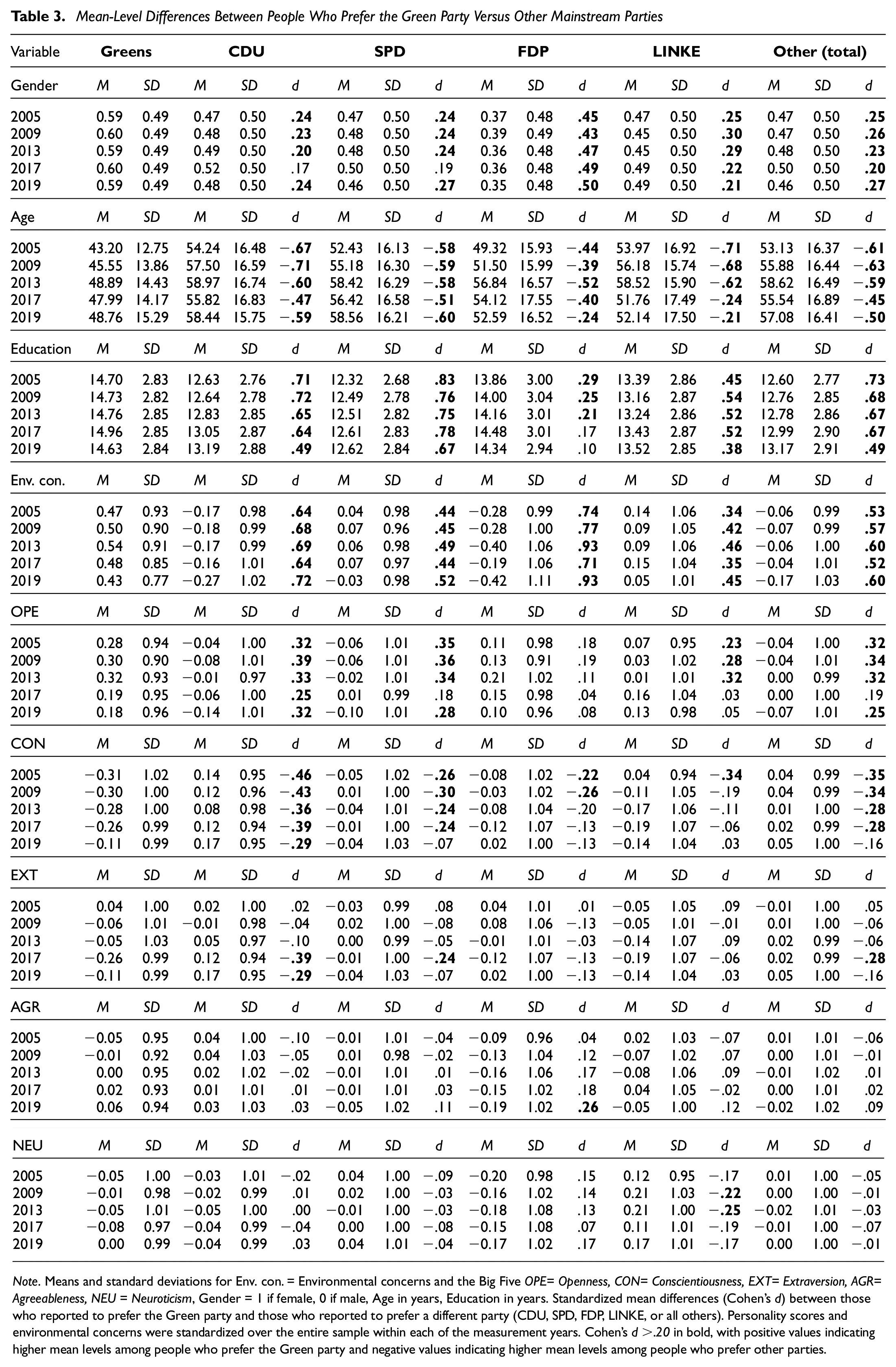
Note. Means and standard deviations for Env. con. = Environmental concerns and the Big Five OPE= Openness, CON= Conscientiousness, EXT= Extraversion, AGR= Agreeableness, NEU = Neuroticism, Gender = 1 if female, 0 if male, Age in years, Education in years. Standardized mean differences (Cohen’s d) between those who reported to prefer the Green party and those who reported to prefer a different party (CDU, SPD, FDP, LINKE, or all others). Personality scores and environmental concerns were standardized over the entire sample within each of the measurement years. Cohen’s d >.20 in bold, with positive values indicating higher mean levels among people who prefer the Green party and negative values indicating higher mean levels among people who prefer other parties.
People who favored the Green party also tended to be higher in openness, except for people who preferred the FDP and, in the most recent two assessment years, the Left party and SPD. Overall, the effect sizes for openness were somewhat smaller compared with the effects for environmental concerns with the biggest differences emerging between people who favor the CDU. We found a somewhat similar pattern for conscientiousness, suggesting that people who preferred the Green party tended to score lower on this trait compared with people who favored the other mainstream parties, particularly the CDU and SPD. Mean-level differences with other trait domains were less consistent and emerged only sporadically in certain assessment years.
Have the Links Between the Big Five and Green Party Preference Changed Over Time?
We used diff-in-diff regression models to test whether the predictive effects of personality traits on Green party preferences had changed from 2005 to 2019. In these models, environmental concerns and each Big Five trait were included as dependent variables and Green party preference (0 = others vs. 1 = Green party), assessment year (0 = 2005 vs. 1 = 2019), and the interaction between party preference and assessment year as independent variables. Significant interaction effects would indicate a change in the associations between Big Five traits and Green party preference between 2005 and 2019.
Compared with 2005, those who preferred the Green party in 2019 scored higher in conscientiousness (b = .172, p = .000, 95% CI = [.095, .250]) and agreeableness (b = .143, p = .000, 95% CI = [.064, .221]) and lower in openness (b = −.128, p = .007, 95% CI = [−.221, −.035]) and extraversion (b = −.145, p = .003, 95% CI = [−.240, −.049]). There were no significant changes in the associations with environmental concerns (b = .006, p = .799, 95% CI = [−.041, .053]) and neuroticism (b = .056, p = .293, 95% CI = [−.048, .159]). Figure 1 visualizes the standardized mean-level differences between those who preferred the Green party versus other mainstream parties in 2005 and 2019, highlighting that the average personality profile of green partisans has become more similar to those who prefer the other mainstream parties.
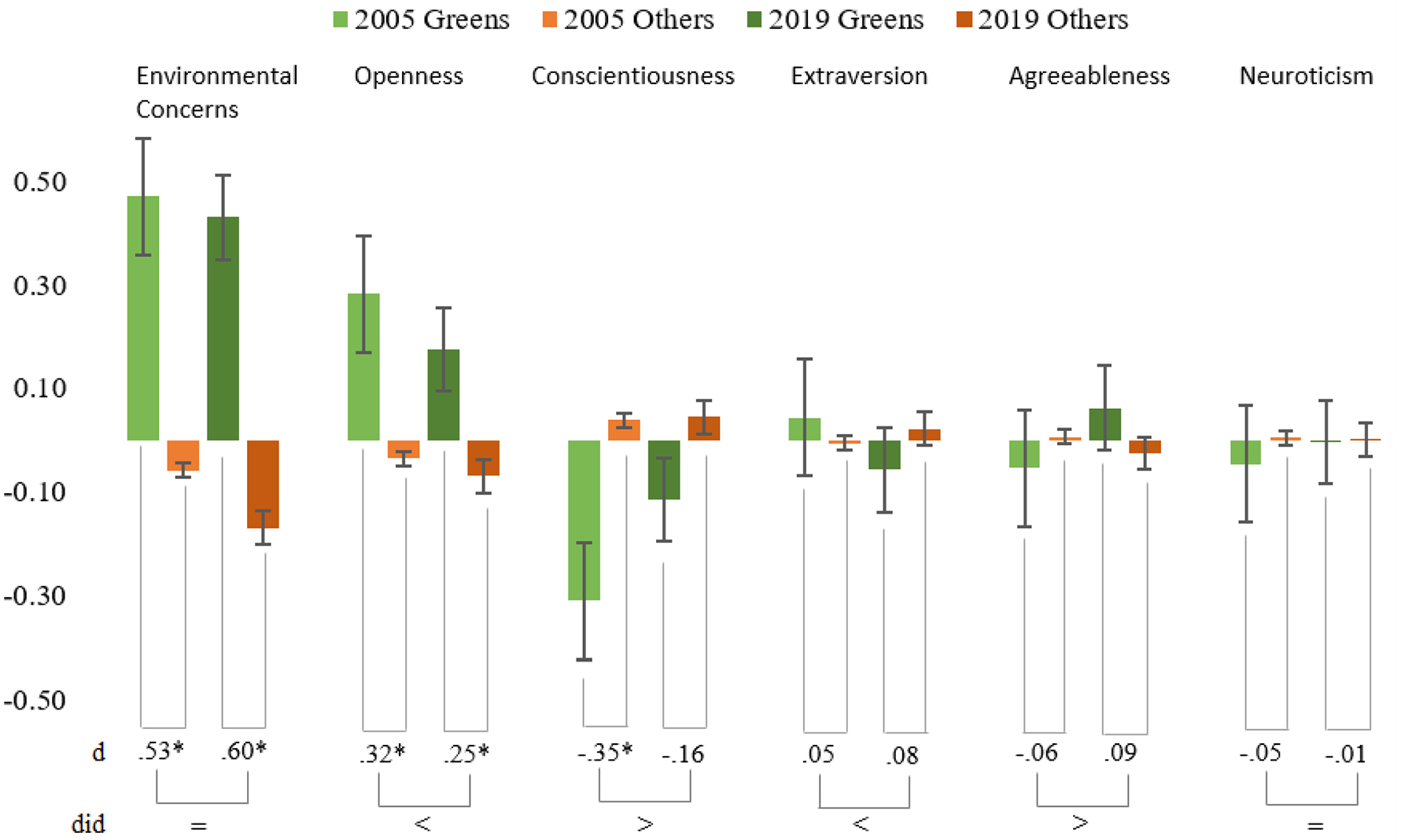
Standardized Means and Mean-Level Differences (Cohen’s d) Between People Who Preferred the Green Party (Green) and Other Parties (Orange) in 2005 (Lighter Colors) and 2019 (Darker Colors)
Incremental Validity of the Big Five in Predicting Green Party Preference and Voting
We then estimated a series of hierarchical logistic regression models to predict Green party preference/vote versus other party preference/vote using demographics, environmental concerns, and the Big Five. For each of the five assessment years, we included age, gender, and education as a first block of predictor variables, environmental concerns as a second block, and the Big Five as a third block to test the incremental validity of personality traits over and above demographics and environmental concerns. Table 4 shows the marginal effect sizes from these models, reflecting the change in the predicted probability of preferring the Green party over the other mainstream parties with a one-unit change in the independent variable (Table S1 in the supplemental online materials (SOM) shows the results for Green party voting in the 2013 and 2017 federal elections).
Marginal Effect Sizes From Logistic Regressions Predicting Green Party Versus Other Party Preference
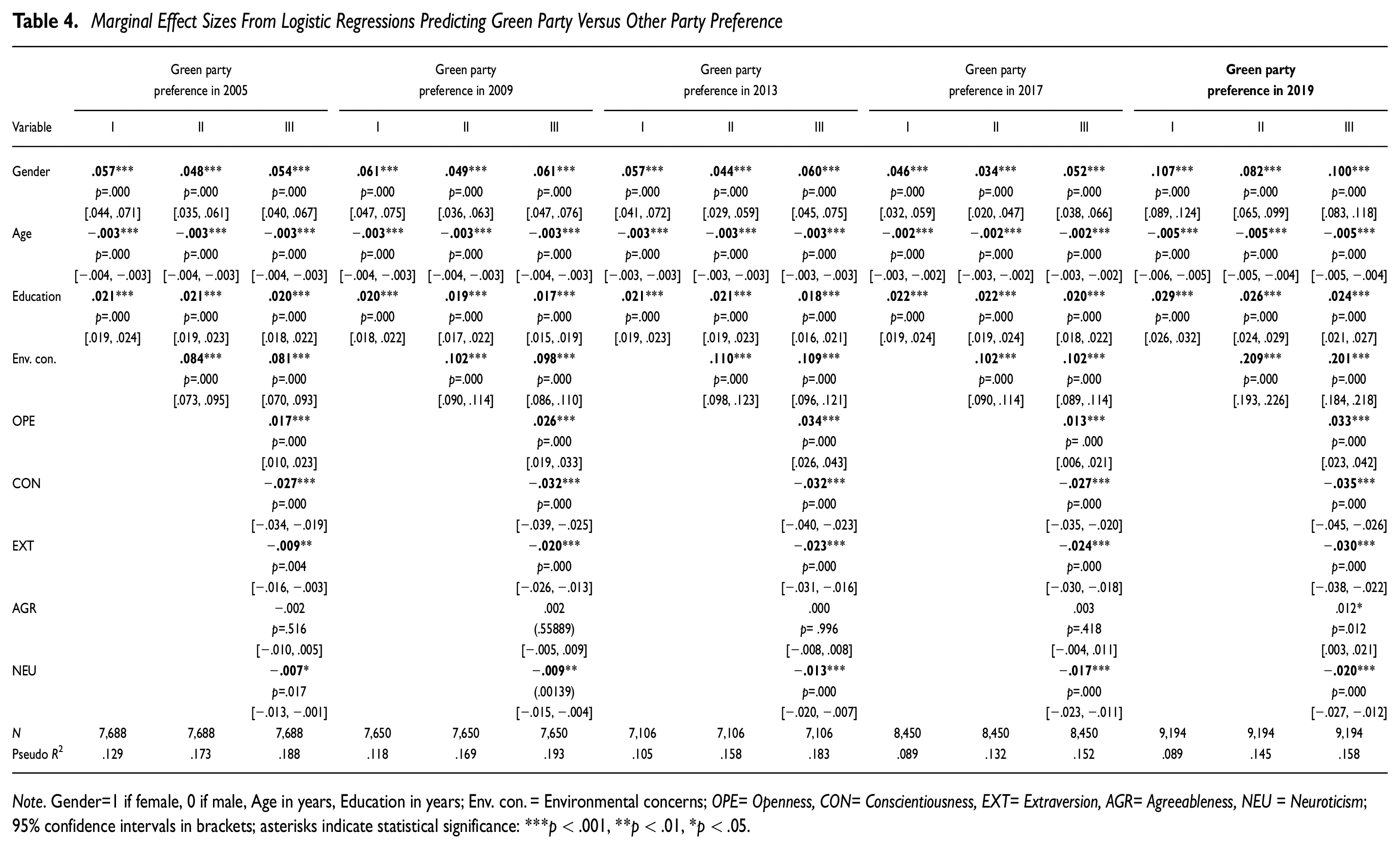
Note. Gender=1 if female, 0 if male, Age in years, Education in years; Env. con. = Environmental concerns; OPE= Openness, CON= Conscientiousness, EXT= Extraversion, AGR= Agreeableness, NEU = Neuroticism; 95% confidence intervals in brackets; asterisks indicate statistical significance: ***p < .001, **p < .01, *p < .05.
Across assessment years, age, gender, and education explained between ~9% and 13% (see pseudo R 2) of the total variance in people’s preference for the Green party (Model I). Being a woman increased the probability to prefer the Green party by 5% to 10%; being younger and more educated led to another 0.5% to 2% increase in the probability to prefer the Green party per life year and year of education, respectively. Including environmental concerns (Model II) led to a 34% to 63% increase in explained variance across assessment waves. Specifically, a one-unit increase in environmental concern was associated with an 8% (in 2005) to 20% (in 2019) increase in the probability of preferring the Green party. Finally, adding the Big Five (Model III) led to another 9% to 15% increase in explained variance across assessment waves. We found significant effects for all traits except agreeableness. A one-unit increase in openness was associated with a 1% to 3% increase in the probability to prefer the Green party, whereas one-unit increases in conscientiousness, extraversion, and neuroticism were associated with a 1% to 4% decrease in the likelihood to prefer the Green party. Overall, the full model explained between 15% and 19% of the total variance in people’s preference for the Green versus other mainstream parties.
Do the Big Five Predict Green Party Switching?
Using data from all people who responded to questions about their vote in the German federal elections in 2013 and 2017, we estimated hierarchical logistic regression models to predict switching to and from Green party vote as well as a benchmark model predicting party switching across all parties across the two elections. Again, we first included demographics as a first block of predictors, environmental concerns as a second block, and the Big Five as a third block to test the incremental validity of personality traits over and above demographics and environmental concerns (see Table 5).
Marginal Effect Sizes From Logistic Regressions Predicting Party Switching Across the 2013 and 2017 German Federal Elections
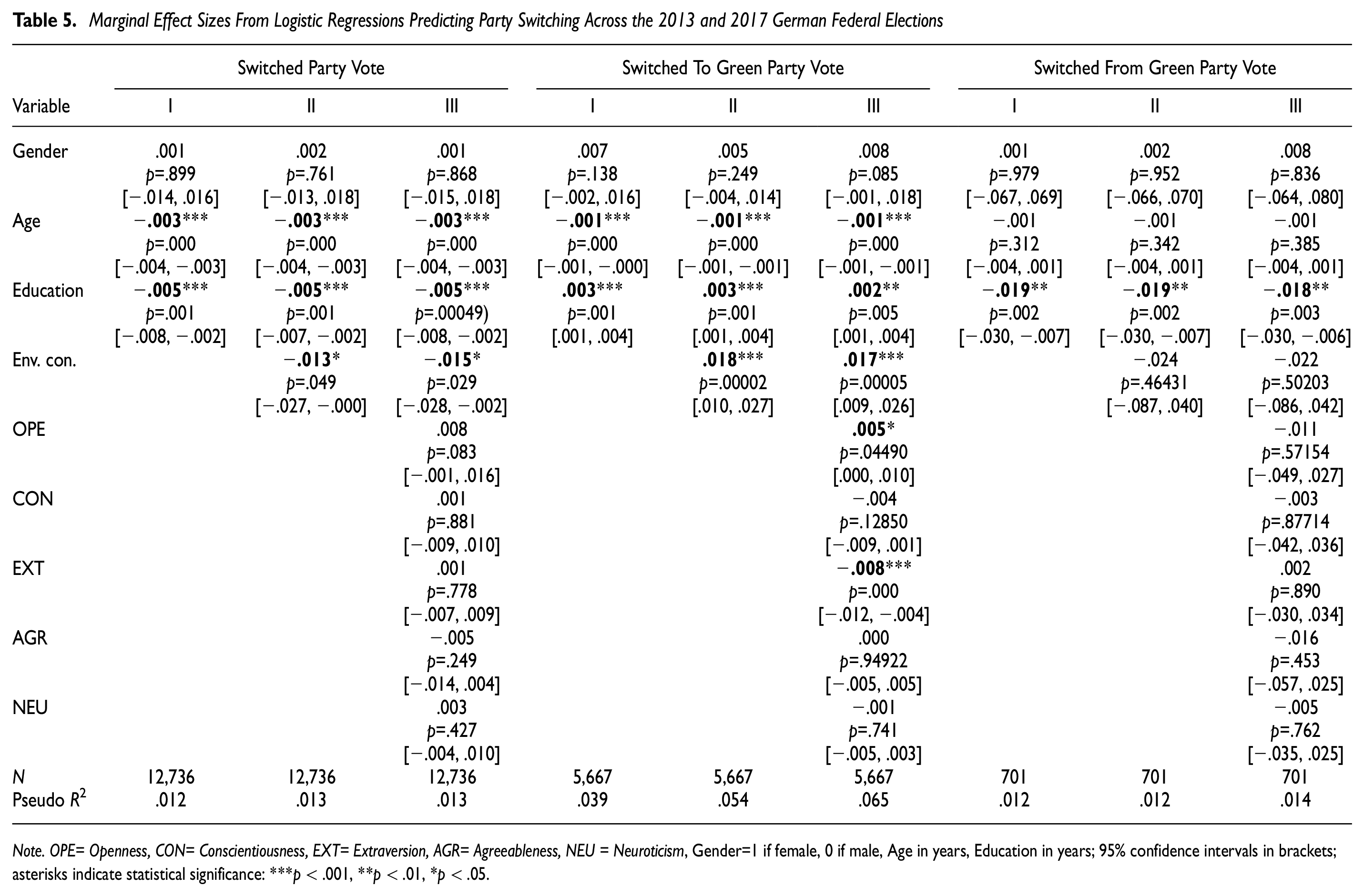
Note. OPE= Openness, CON= Conscientiousness, EXT= Extraversion, AGR= Agreeableness, NEU = Neuroticism, Gender=1 if female, 0 if male, Age in years, Education in years; 95% confidence intervals in brackets; asterisks indicate statistical significance: ***p < .001, **p < .01, *p < .05.
A total of 12,736 participants reported who they voted for in the 2013 and 2017 federal elections. Of those, 3,508 switched party votes, with 165 joining and 194 leaving the group of Green party voters in 2017. We found few effects predicting the general likelihood to switch party votes in the benchmark models. Younger and less educated people with fewer environmental concerns were more likely to switch votes, while there were no effects of gender and the Big Five. Overall, the full model explained less than 2% of the total variance in party switching.
We found more significant effects predicting the likelihood of switching to a Green party vote. Specifically, younger and more educated participants were more likely to switch to a Green party vote. Including environmental concerns led to an increase in explained variance of 29% (change in pseudo R 2), suggesting that people who were more concerned about the environment were more likely to switch to a Green party vote. Adding the Big Five led to another 17% increase in explained variance, with higher scores in openness and lower scores in extraversion predicting an increased likelihood to switch to a Green party vote. Overall, the full model explained about 7% of the total variance.
Finally, only lower education emerged as a significant predictor of switching from a Green party vote to a different mainstream party. The full model explained less than 2% of the variance.
Discussion
Effective proenvironmental measures toward a climate neutral economy necessitate structural changes that require broad support by the public (Hoffmann et al., 2022). Endorsing climate change policy and voting for a Green party that invests in economic, social, and political measures to support the environment has the potential for wide-reaching consequences (Schumacher, 2014). A better understanding of the psychological predictors of proenvironmental policy support is important to identify the factors that contribute to the transformation toward a greener economy and more sustainable society (Bleidorn et al., 2019, 2021; Hornsey et al., 2016). Here, we examined the role of Big Five personality traits in predicting the endorsement of and voting for the Green party in a nationally representative sample of Germans.
Consistent with theory and previous research on green partisanship, people who preferred the Green party over other mainstream parties were more likely to be women, younger, more educated, and more concerned about the environment (Aguilar-Luzón et al., 2020; Bakker et al., 2015). Moreover, people who favored the Green party were also higher in openness and lower in conscientiousness, supporting theoretical arguments that people who are curious, open-minded, and intellectually interested are more likely to cast a green vote, whereas those who are obedient to rules, deliberate about choices, and more cautious in their decision-making are less likely to endorse Green party policies (Schoen & Schumann, 2007).
Notably, those who preferred the Green party in 2019 scored higher in conscientiousness and agreeableness and lower in openness compared to those who preferred the Greens in 2005, indicating that the personality profile of Green party voters has become more normative over the past two decades (Gebauer et al., 2014). In other words, the personality profile of the average Green party voter in 2019 is less extreme and more similar to the personality profiles of those who vote for centrist mainstream parties (see Figure 1). This finding is consistent with our prediction that the Green party’s transformation from a fringe movement to a mainstream party that wins elections is reflected in the personality profile of their votership.
We further found evidence for the incremental validity of personality traits in predicting green partisanship and voting. Specifically, controlling for demographics and environmental concerns, a one-unit increase in openness was associated with a 1% to 3% increase in the probability to prefer the Green party over other mainstream parties, whereas one-unit increases in conscientiousness, extraversion, and neuroticism were associated with a 1% to 4% decrease in the likelihood to endorse the Greens. This suggests that, although demographics and proenvironmental attitudes are key predictors of Green party endorsement, other aspects of personality are also relevant. For example, open people may not only hold proenvironmental attitudes but may also be open to thinking differently about political issues and changing their behavior in a more proenvironmental way. Overall, the full model explained up to 19% of the variance in people’s preference for the Green party, a substantial proportion given the known influence of several other circumstantial and contextual factors, including election campaigns, environmental changes, or spousal preferences (Caprara et al., 2006; Hoffmann et al., 2022; Schmitt-Beck et al., 2006).
Extending previous research on personality and political partisanship, we further found that personality traits predicted Green party switching across two federal elections. Again, controlling for demographic differences and environmental concerns, higher levels of openness and lower levels of extraversion significantly increased the likelihood to switch to a Green party vote. These effects are particularly interesting, given that there were no effects of the Big Five on the likelihood to switch from a Green party to different mainstream party vote nor were there any trait effects on switching party votes in general, highlighting the unique role of openness for the endorsement of green politics.
In contrast to theory and some research, however, we found no links between agreeableness and Green party preferences, voting, or vote switching in this sample. This finding was somewhat surprising, given that agreeableness is considered an important driver of proenvironmental attitudes and moral behavior more generally (Hopwood et al., 2021, 2024; Smillie et al., 2019; Soutter et al., 2020). A possible reason for this finding might have to do with the agreeableness measure used in the GSOEP, which emphasizes politeness over compassion content. These two defining aspects of agreeableness—compassion and politeness—have been theorized to have distinctive and dissociable links with proenvironmental behavior (Hopwood et al., 2022, 2023; Smillie et al., 2019). While compassionate people should be more likely to respond to green policy changes to protect our planet, polite people should be more responsive to policies that emphasize norm adherence and etiquette. The lack of compassionate content in the current Big Five measure may thus at least partly explain the null effects of agreeableness across analyses.
In summary, there is strong evidence for the incremental validity of personality traits, and especially openness, in predicting green partisanship and Green party voting. These findings are consistent with theory and research on the personality predictors of proenvironmental attitudes and behavior (Soutter et al., 2020). Together, they add to our growing understanding of the psychological factors that predict the endorsement of and actions toward proenvironmental change. Knowledge about the specific personality traits that predict the support of proenvironmental policy can be used to target certain populations, identify psychological obstacles that work against desired policy changes, and aid in developing effective campaigns that are tuned to the personality profiles of those that may be otherwise less likely to endorse proenvironmental policies. For example, if higher levels of conscientiousness reduce the likelihood to endorse proenvironmental policy changes, effective campaigns may focus on communicating changes in a way that emphasizes the establishment of norms and long-term strategies rather than radical transformations.
The present findings are also consistent with the literature on personality and political partisanship (e.g., Caprara et al., 2006). According to these works, personality traits are thought to guide people’s perceptions of political messages and their reactions to political leaders and campaigns. People who are high in openness and low in conscientiousness should thus be more attracted to Green party leaders and campaigns because they reflect and speak to these traits in terms of their programs, rhetoric, and images (Caprara et al., 2007). In other words, people appear to be indeed more likely to affiliate with a party that matches their personality, attitudes, and beliefs (Bakker et al., 2015; Bleidorn et al., 2016).
This study had several limitations. First, we examined the links between personality traits and green partisanship in data from one particular country. Our results are consistent with studies on other proenvironmental behaviors that relied on samples from, for example, New Zealand, the United Kingdom, or the United States (Hopwood et al., 2022; Soutter et al., 2020). However, patterns of both personality and political partisanship are highly contextualized, leaving it open as to whether these results generalize to other parts of the world with different political systems and party structures.
Second, the Big Five were assessed with short self-report measure with modest reliability and somewhat narrow content validity. Particularly, the relatively narrow focus of the agreeableness scale might have limited our ability to detect associations with green partisanship and voting behavior in this study.
Third, participants did not report their motives for endorsing a particular political party. Even though the German Green party considers environmental protection as the cornerstone of their politics, they also stand for other social justice issues (Schumacher, 2014). In addition to capturing individual’s willingness to support proenvironmental policy, our measure of political preference and voting may thus assess a broader inclination to endorse a Green party ideology beyond proenvironmental politics.
Conclusion
Understanding the psychological factors that increase people’s support for environmental protection and climate action is of great relevance. Using 16-year data from a nationally representative sample of Germans, we found strong evidence that being higher in openness and lower in conscientiousness predicts a higher likelihood to prefer the Green party over other mainstream parties over and above demographic predictors and environmental concerns. These results highlight the role of personality traits in shaping the endorsement of proenvironmental policy and climate change action.
Footnotes
Handling Editor: Danny Osborne
Declaration of Conflicting Interests
The author(s) declared no potential conflicts of interest with respect to the research, authorship, and/or publication of this article.
Funding
The author(s) disclosed receipt of the following financial support for the research, authorship, and/or publication of this article: TS acknowledges funds received from the National Science Centre Poland (NCN) SONATA BIS 10 project (# 111.2022.NCN.WNHP).
Open Science Statement
The study materials, data, and analysis scripts used for this article can be accessed at https://osf.io/62cdh/. Data are freely available by application at  .
.
Supplemental Material
The supplemental material is available in the online version of the article.