




Abstract
The present study examined the size and possible sources of life satisfaction differences between immigrants and natives in a sample of over 55,000 adults (aged 50+ years) across 16 European countries and Israel. Consistent with theory and prior research, immigrants reported lower life satisfaction than natives on average, while the size of the life satisfaction gap varied substantially across individuals and countries. Low neuroticism and high extraversion reduced the life satisfaction gap, suggesting that these personality traits may serve as internal resources for immigrants when faced with migration-related stressors. In contrast, we found a wider life satisfaction gap between immigrants and natives in high-income countries, suggesting that economic disparities between immigrants and natives in prosperous nations may contribute to the observed life satisfaction gap.
Statement of Relevance
Compared to natives, how satisfied are immigrants with their lives? In this study, we examined the life satisfaction gap between immigrants and natives in over 50,000 older adults (aged 50+ years) across 16 European countries and Israel. We found that older immigrants, on average, were less satisfied with their lives than natives, a trend consistent with previous research. Notably, this life satisfaction gap varied substantially across individuals and countries. Supporting theories that consider personality traits as inner resources that can buffer immigrants from migration-related stress, we found a smaller life satisfaction gap among emotionally stable and extraverted immigrants. In contrast, the life satisfaction gap was widened in high-income countries, suggesting that, in prosperous nations, economic disparities between immigrants and natives may contribute to the observed disparities in life satisfaction.
The immigration experience affords both challenges and opportunities that may affect aging immigrants’ life satisfaction in fundamental ways (Safi, 2010). Individual resources and cultural differences likely shape whether and to what degree immigrants’ subjective evaluation of their lives differs from that of natives (Sand & Gruber, 2018). Using data from the Survey of Health, Aging, and Retirement in Europe (SHARE, https://share-eric.eu/data/data-documentation/data-and-documentation-tool), we quantified the differences in life satisfaction between older immigrants and natives across 16 European countries and Israel and examined the role of immigrants’ personality and national wealth in shaping the effects of immigrant status on life satisfaction.
Life Satisfaction Among Older Immigrants
An important indicator of immigrants’ well-being is their global life satisfaction, which can be defined as a person’s subjective evaluation of their life as a whole (Kogan et al., 2018; Lanari et al., 2018). This evaluation typically results from comparing one’s own circumstances with what is considered a normative or appropriate standard (Diener et al., 1985).
Existing research suggests that immigrants are more likely to refer to the norms of their host countries when evaluating their life as a whole (Hadjar & Backes, 2013), with most studies reporting lower life satisfaction in immigrants compared to natives. For example, Safi (2010) found 18- to 65-year-old immigrants to report significantly lower life satisfaction than natives across 13 European countries from the European Social Survey. Similarly, Sand and Gruber (2018) found significant disparities in a broader measure of subjective well-being among older immigrants and natives from 11 European countries.
Notably, the overall effect of immigrant status on well-being is small (d∼ 0.1) and varies significantly between individuals and countries, raising questions about the factors that shape immigrants’ life satisfaction (Lanari et al., 2018). Here, we focus on immigrants’ personality and cultural income as potential levelers of the immigrant-native life satisfaction gap.
Personality as a Resource
Decades of research showed that people’s life satisfaction is strongly correlated with their personality traits (Mõttus et al., 2023; Schimmack et al., 2004). Specifically, people who score low on the Big Five trait neuroticism and high on extraversion, agreeableness, and conscientiousness tend to report higher levels of life satisfaction on average (Deneve & Cooper, 1998; Steel et al., 2008). These traits may function as an “inner resource” for people’s life satisfaction by shaping the ways people perceive, select, and react to their environments (Luchetti et al., 2021; Olaru et al., 2023).
Such personality resources may be particularly relevant for immigrants who tend to have less access to external sources of happiness and may be exposed to more stress than natives. For example, the ability to stay calm and regulate negative emotions, which are expressions of emotional stability, may help immigrants to cope with migration-related stressors. Likewise, high levels of extraversion may help immigrants establish social networks and assert themselves in their host society, thus buffering them from negative outcomes associated with cultural integration processes (Safi, 2010).
To date, there is some evidence in support of the personality-as-resource hypothesis in the health domain. For example, low levels of neuroticism and high levels of conscientiousness have been linked to fewer health problems among people with lower socioeconomic status (Elliot et al., 2017). Here, we tested whether this moderation pattern extended to the life satisfaction gap between immigrants and natives. Specifically, we expected that low neuroticism and high extraversion, in particular, may serve as inner resources that buffer people from migration-related stress, and thus hypothesized stronger links between these two traits and life satisfaction in immigrants than in natives (Anglim et al., 2020). We further explored the moderating effects of the other Big Five traits on the immigrant-native gap in life satisfaction.
Cultural Income Differences
In addition to individual resources, contextual factors impact the life satisfaction gap between immigrants and natives (Sand & Gruber, 2018). For example, economic prosperity and low unemployment rates are important contextual determinants of a society’s well-being (e.g., Veenhoven, 2001) and individuals’ life satisfaction (Diener et al., 2003). The gross domestic product per capita (GDP) serves as a reliable indicator of national economic prosperity and has been linked to various aspects of societal well-being, including low unemployment rates, higher education levels, access to food and health care, and overall longevity (Diener & Suh, 1999).
Even though life satisfaction tends to be higher in the general population of high-GDP countries (Diener et al., 2003), there is some evidence of an increased well-being gap between immigrants and natives in high-income countries (Hadjar & Backes, 2013). That is, the income boost on life satisfaction appears to be less pronounced in immigrants, thus widening the life satisfaction gap. One explanation may be that high-income countries tend to have higher costs of living and offer more economic opportunities to their native populations. Immigrants, on the other hand, may face more challenges in accessing these opportunities, which may contribute to a larger gap in life satisfaction to the degree that the perception of inequality can lead to feelings of injustice and lower life satisfaction, especially for older people who may be in need of care and financial support (Bartram, 2011; Sand & Gruber, 2018). Again, low levels of neuroticism and high levels of extraversion may serve as inner resources that protect immigrants from these culture-level stressors, which would imply particularly strong links between these two personality traits and life satisfaction in immigrants who reside in high-income countries (Luchetti et al., 2021).
In our sample of 17 countries, we examined the effect of per capita GDP on life satisfaction differences in older populations of immigrants and natives. We further tested whether the aforementioned personality advantages buffered immigrants from the potential negative effects associated with higher country-level GDP.
The Present Study
We used data from 55,280 older adults to examine the differences in life satisfaction between immigrants and natives from 16 European countries and Israel. Consistent with the personality-as-resource hypothesis, we predicted that low neuroticism and high extraversion would narrow the life satisfaction gap between immigrants and natives. We further examined the effects of cultural income differences and expected to replicate previous findings of larger life satisfaction differences between immigrants and natives in high-income countries. Finally, we explored whether personality differences would mitigate the negative effects of high-income cultures on immigrants’ life satisfaction.
Method
Openness and Transparency
This study used data from the SHARE (Börsch-Supan et al., 2013). SHARE received ethical approval from the Ethics Committee of the University of Mannheim and the Ethics Council of the Max Planck Society. Data is available on request to registered SHARE users (https://share-eric.eu/data/data-access). We report how we determined our sample sizes, data exclusions, and all measures in the study. All code and Supplementary Material are available at https://osf.io/qe3ya/. This study was not pre-registered.
Sample
SHARE is an ongoing cross-national panel study on health, socioeconomic status, and social and family networks initiated in 2004 with over 120,000 participants aged 50 years or older from 27 European countries plus Israel. Surveys are administered biennially via computer-assisted personal interviews (CAPI). People were excluded from the SHARE target population if they were incarcerated, hospitalized, or out of the country during the entire survey period, unable to speak the country’s language(s) or had moved to an unknown address.
Here, we included data from all SHARE participants who reported (a) their country of origin, (b) life satisfaction, (c) age, and (d) gender in the two most recent waves, Wave 7 or Wave 8. Moreover, we only included SHARE countries that contained at least 100 immigrants (i.e., participants born in a country other than the country of interview vs. natives who were born in the country of interview) to balance power considerations against our goal to include as many countries as possible (Bleidorn et al., 2016; Sand & Gruber, 2018).
These inclusion criteria resulted in a sample of N = 55,280 SHARE participants (57.59% female, Mage = 68.95, SDage = 9.84), including N = 6,501 immigrants (58.73% female, Mage = 68.83, SDage = 10.06) and N= 48,779 natives (57.44% female, Mage = 68.96, SDage = 9.81) from: Austria (AT), Belgium (BE), Croatia (HR), Czechia (CZ), Denmark (DK), Estonia (EE), France (FR), Germany (DE), Greece (EL), Israel (IL), Latvia (LV), Lithuania (LT), Luxembourg (LU), Slovenia (SI), Spain (ES), Sweden (SE), and Switzerland (CH). We excluded data from Bulgaria (BG), Cyprus (CY), Finland (FI), Hungary (HU), Ireland (IE), Italy (IT), Malta (MT), Netherlands (NL), Poland (PL), Portugal (PT), Romania (RO), and Slovakia (SK) because of the small number of immigrants in these samples.
Measures
All measures were administered as part of the Wave 7 or 8 SHARE survey (see https://share-eric.eu/data/data-documentation/questionnaires). We included age (in years), gender (0 = male, 1 = female), and SHARE wave (0 = Wave 7, 1 = Wave 8; the vast majority of participants came from Wave 7, see Table 1) as individual-level covariates.
Descriptive Statistics and Standardized Differences Between Immigrants and Natives in the Total Sample
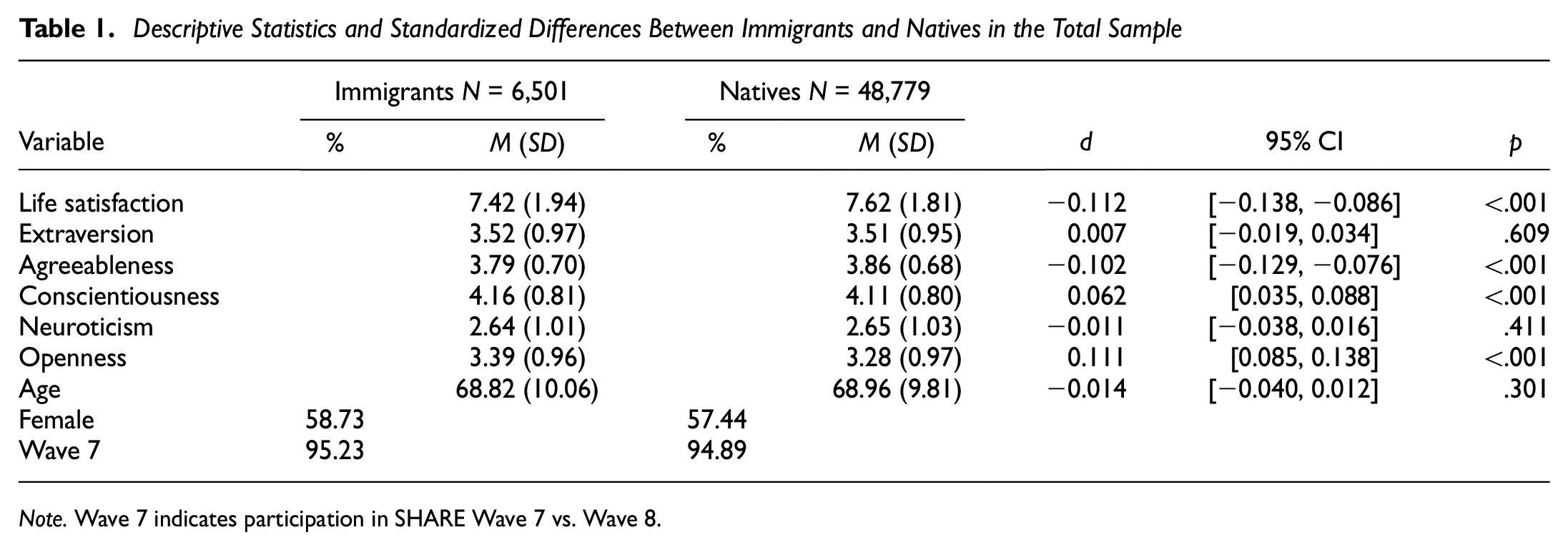
Note. Wave 7 indicates participation in SHARE Wave 7 vs. Wave 8.
Participants reported on their immigrant status with the item “Were you born in [current country of residence]?.” We created a binary variable that equals 0 for natives who were born in their country of residence and 1 for immigrants who were born in a country other than their country of residence.
Participants completed a single-item life satisfaction measure by responding to the question “On a scale from 0 to 10, where 0 means completely dissatisfied and 10 means completely satisfied, how satisfied are you with your life?” This measure has been used extensively in psychological research, including several cross-cultural studies (Bartram, 2021; Lutz et al., 2021).
Big Five personality traits were measured with an 11-item modified version of the 10-item Big Five Inventory-10 (BFI-10; Rammstedt & John, 2007). Each Big Five trait was measured with two items, except agreeableness, which was measured with three items. Responses were measured on a 5-point Likert-type scale ranging from 1 (disagree strongly) to 5 (agree strongly). Correlations between the two items per scale ranged from .14 (openness) to .42 (neuroticism). The three-item measure of agreeableness had an internal consistency of α = .38 / ω-total = .45. These consistencies fall within the range of short-scale personality measures (Rammstedt & Beierlein, 2014) which are designed to balance internal consistency with content validity.
We used the log-transformed GDP per capita in current U.S. dollars in 2017 as an indicator of national income, retrieved from https://databank.worldbank.org/indicator/NY.GDP.PCAP.CD/1ff4a498/Popular-Indicators#. The GDP reported by the World Bank relates to the gross value of all final goods and services added by all resident producers in the economy plus product taxes and minus any subsidies not included in the value of the products.
Analyses
We first examined the standardized mean-level differences (Cohen’s d) in life satisfaction between immigrants and natives per country. We then used a multilevel modeling approach with individuals (Level 1) nested in countries (Level 2) to estimate the overall effect of immigrant status on life satisfaction, while accounting for the Level 1 covariates wave, age, and gender (Model 1). We extended the model by including the Big Five traits (group-mean centered) and their interactions with immigrant status at Level 1 to test the personality as resource hypothesis (Model 2). Finally, we included country-level per capita GDP (grand-mean centered), its cross-level interactions with immigrant status, and its cross-level interactions with immigrant status and the Big Five (Model 3). We conducted all analyses in R (R Core Team, 2021; see https://osf.io/txq39) using the packages lme4 (Bates et al., 2015) and lmerTest (Kuznetsova et al., 2017). We interpreted d > 0.10 and r > .10 as meaningful, p-values < .05 as statistically significant, and reported 95% confidence intervals (Funder & Ozer, 2019).
Results
Descriptives
Table 1 shows the means and standard deviations of life satisfaction, the Big Five, and age as well as the percentage of females and Wave 7 participants in the subsamples of immigrants and natives across all countries. Table 2 presents the product-moment correlations of all study variables in the total sample. Country-level descriptives are presented in the Supplemental Materials (https://osf.io/g42c5).
Correlations Between Study Variables Across All Participants and Countries
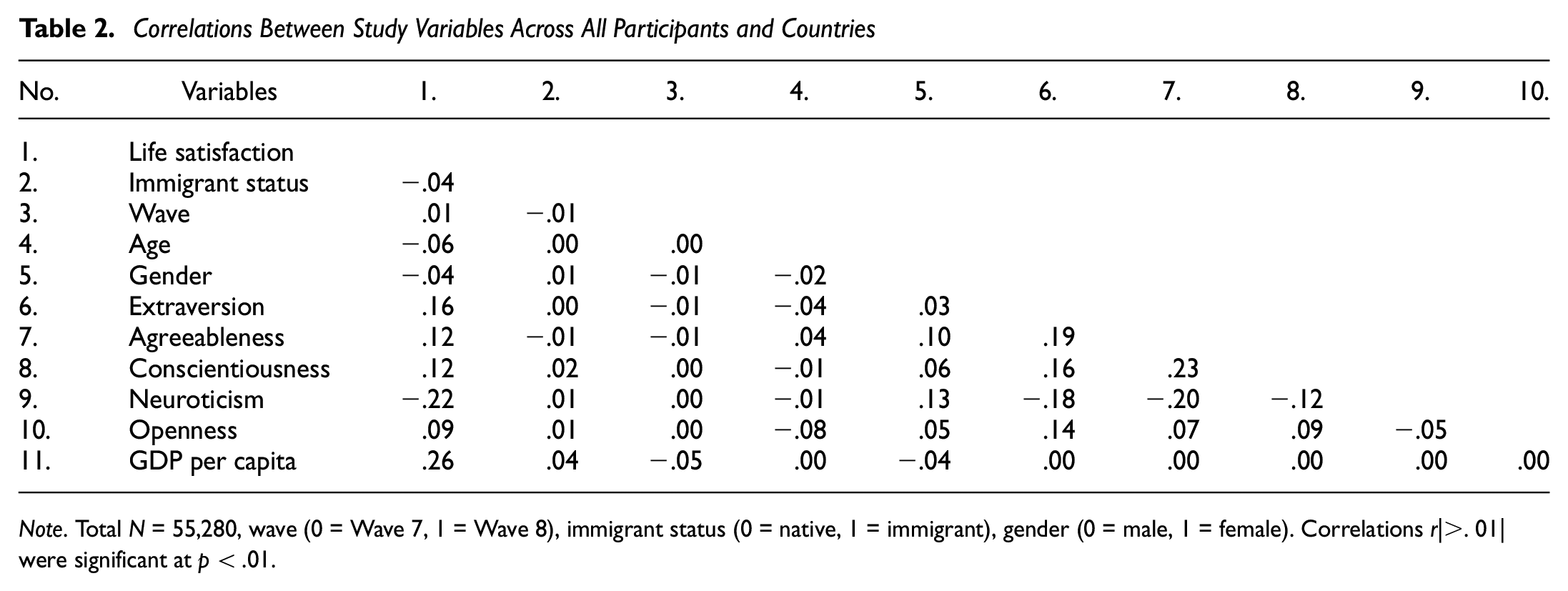
Note. Total N = 55,280, wave (0 = Wave 7, 1 = Wave 8), immigrant status (0 = native, 1 = immigrant), gender (0 = male, 1 = female). Correlations r|>. 01| were significant at p < .01.
Mean-Level Differences in Life Satisfaction Between Immigrants and Natives
Table 3 and Figure 1 show the standardized mean-level differences in life satisfaction per country. Immigrants reported lower life satisfaction across several countries, with significant gaps in Austria, Switzerland, Germany, Denmark, Greece, Israel, and Luxembourg. Effect sizes ranged from small (d = −.14 in Germany) to moderate (d = −.46 in Denmark).
Differences in Life Satisfaction Between Immigrants and Natives in 17 Countries
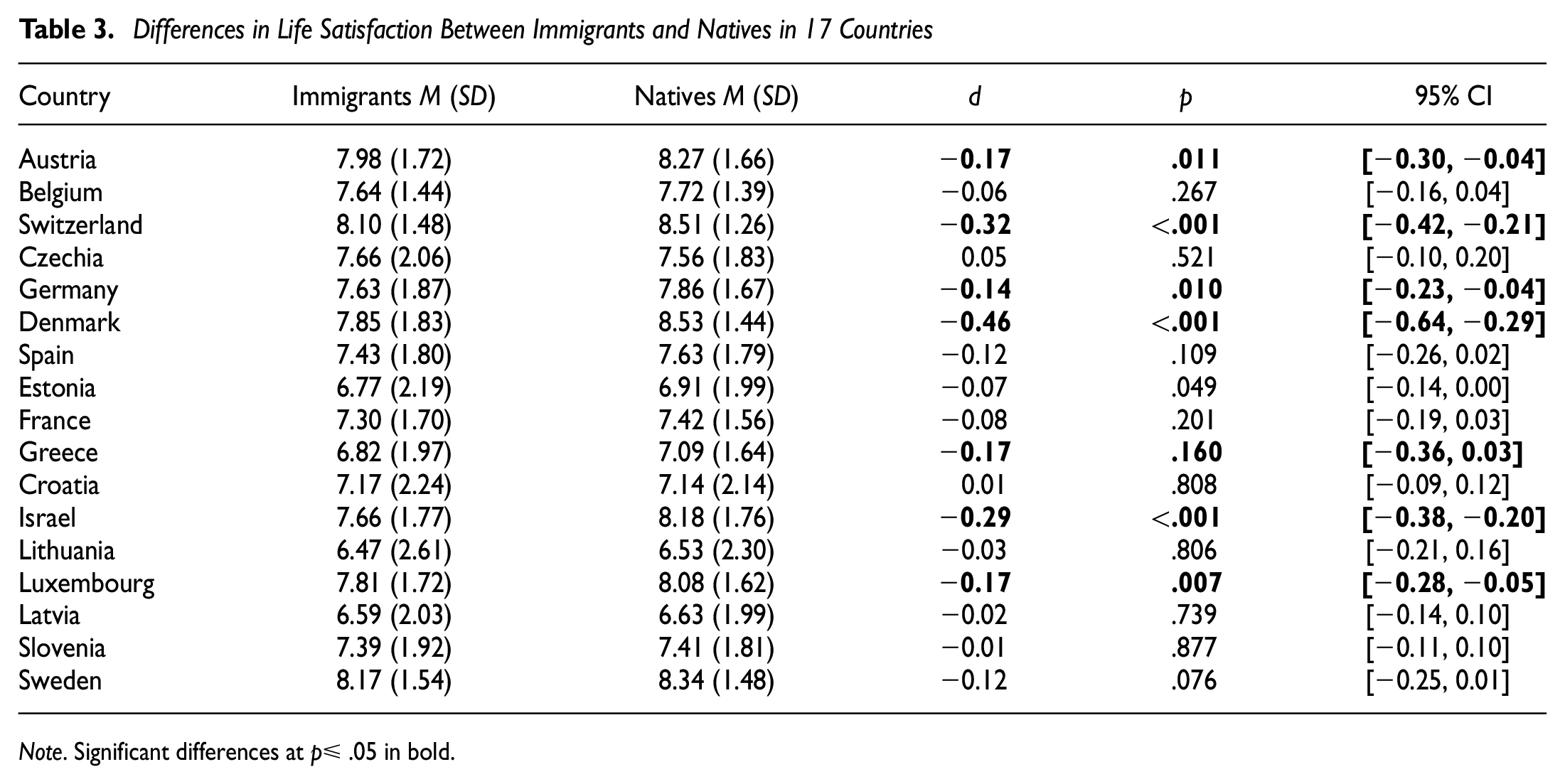
Note. Significant differences at p≤ .05 in bold.
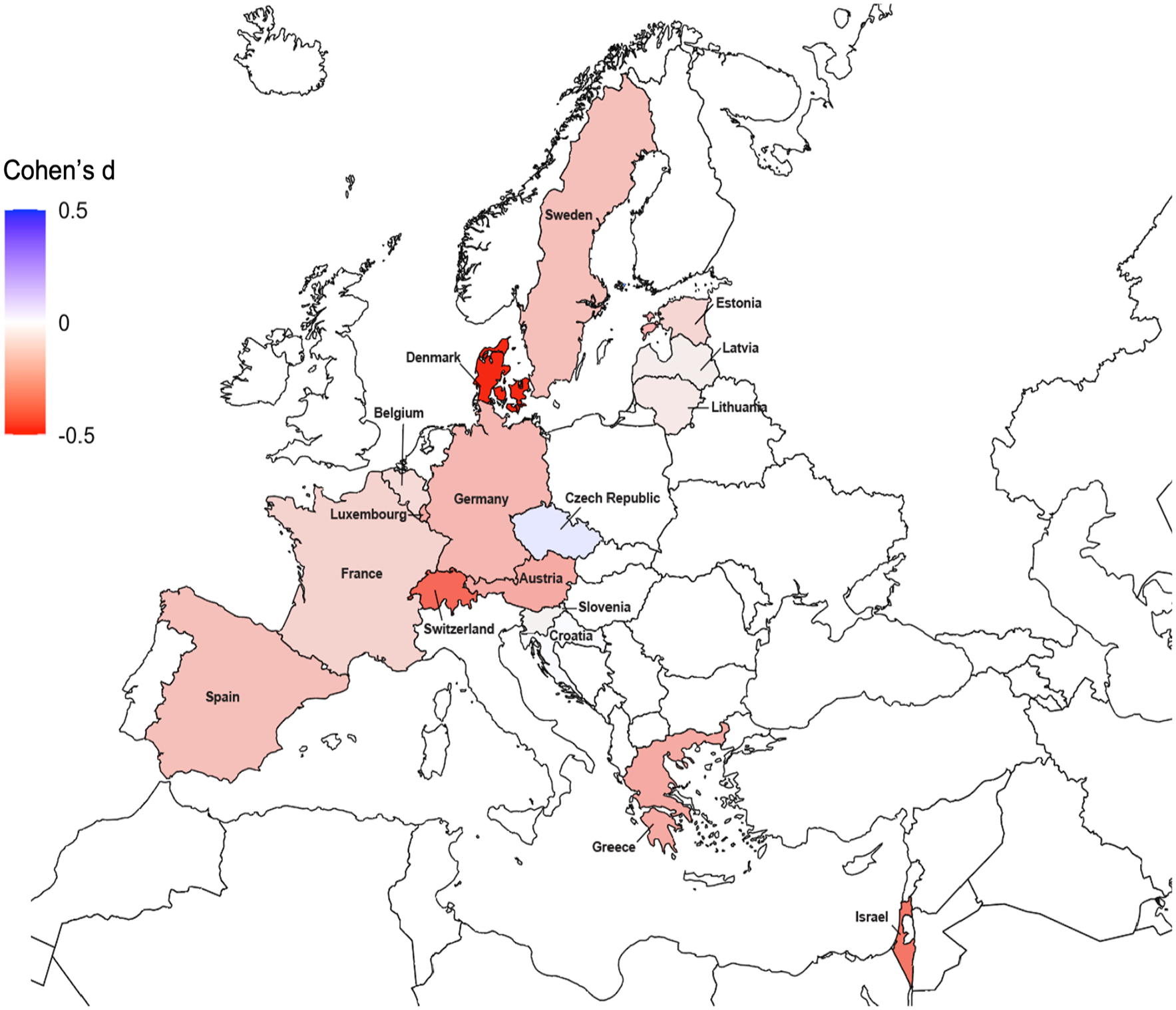
Standardized Mean-Level Differences (Cohen’s d) in Life Satisfaction Between Immigrants and Natives in 16 European Countries and Israel. Negative Effects Indicate Lower Life Satisfaction Among Immigrants Than Natives
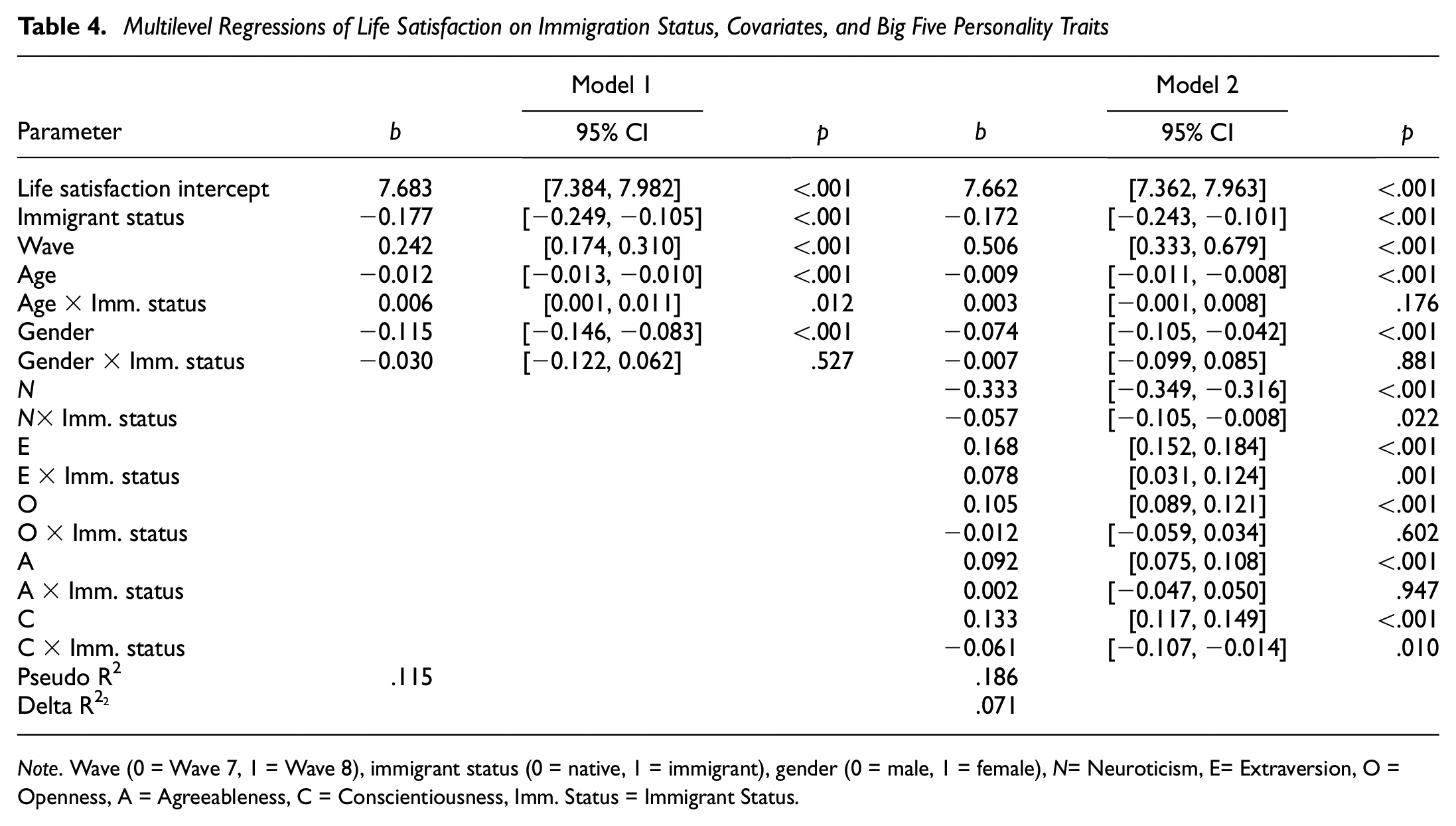
We then estimated a multilevel model to test the overall effect of immigrant status on life satisfaction across participants and countries while accounting for wave, gender, and age effects (Table 4, Model 1). Overall, immigrant status had a significant negative effect on life satisfaction. We further found negative effects of age and female gender. There were no significant interaction effects between immigrant status with age or gender. Model 1 explained about 12% of the variance in life satisfaction.
Multilevel Regressions of Life Satisfaction on Immigration Status, Covariates, and Big Five Personality Traits
Note. Wave (0 = Wave 7, 1 = Wave 8), immigrant status (0 = native, 1 = immigrant), gender (0 = male, 1 = female), N= Neuroticism, E= Extraversion, O = Openness, A = Agreeableness, C = Conscientiousness, Imm. Status = Immigrant Status.
Does Personality Function as a Resource Among Immigrants?
We then included the Big Five and their interactions with immigrant status in the model (Table 4, Model 2). Adding these variables explained an additional 7% of the variance in life satisfaction. Consistent with previous research (Anglim et al., 2020), we found negative main effects of neuroticism and positive main effects of extraversion, openness, agreeableness, and conscientiousness on life satisfaction. That is, across countries, participants with lower levels of neuroticism and higher levels in the other four traits were generally more satisfied with their lives.
Confirming the personality as resource hypothesis, we further found significant interaction effects between immigrant status and personality traits, suggesting that the beneficial effects of low neuroticism and high extraversion were stronger in immigrants than in natives. Figure 2 visualizes the effect of high versus low levels of extraversion on life satisfaction in native and immigrant samples. Inconsistent with our predictions, higher levels of conscientiousness seem to be less beneficial for immigrants than natives. We found no interaction effects between immigrant status with agreeableness or openness.
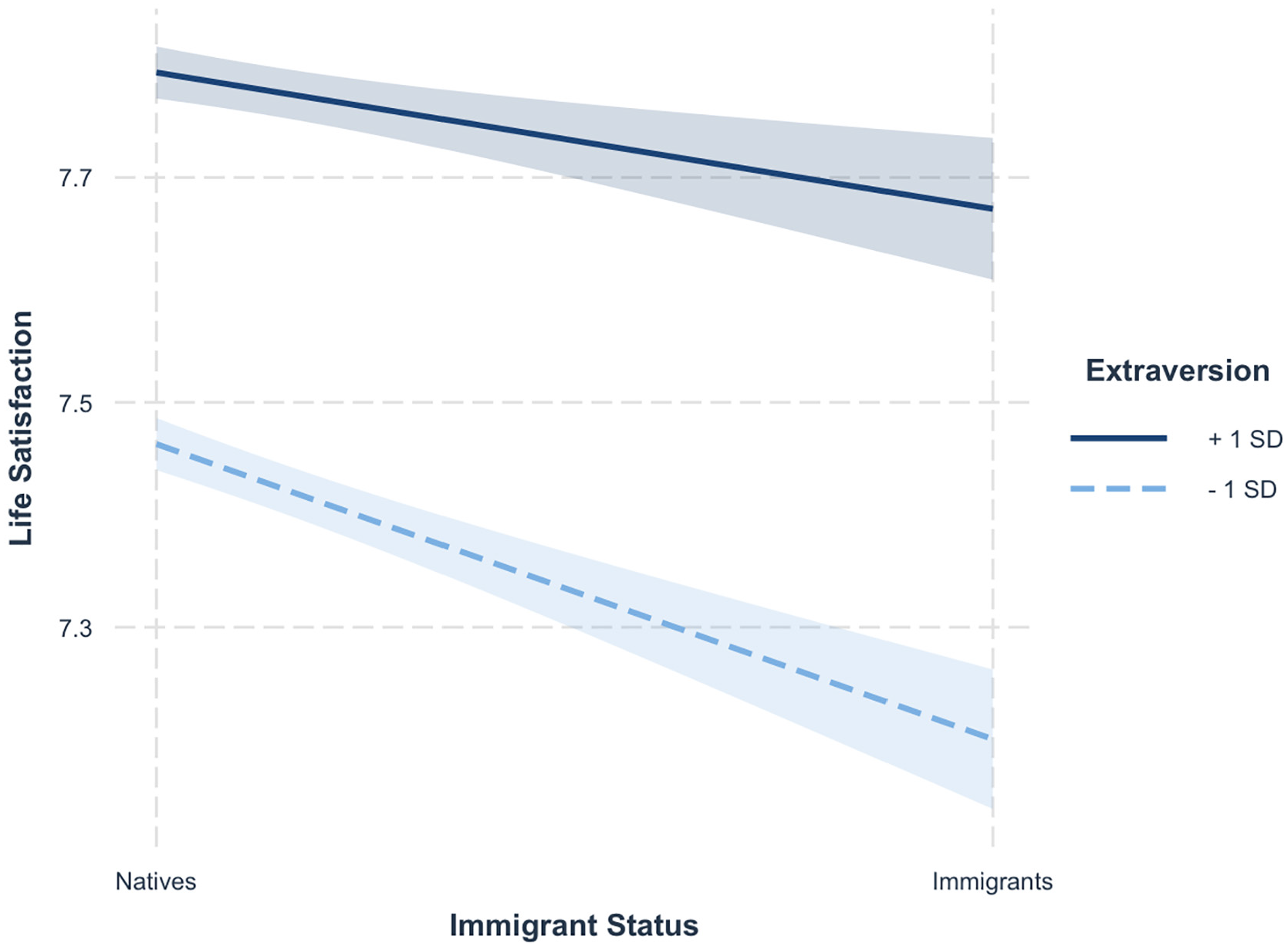
Life Satisfaction of Natives and Immigrants With High (1 Standard Deviation Above the Mean) Versus Low (1 Standard Deviation Below the Mean) Levels of Extraversion (See Table 4)
The Effects of Cultural Income Differences
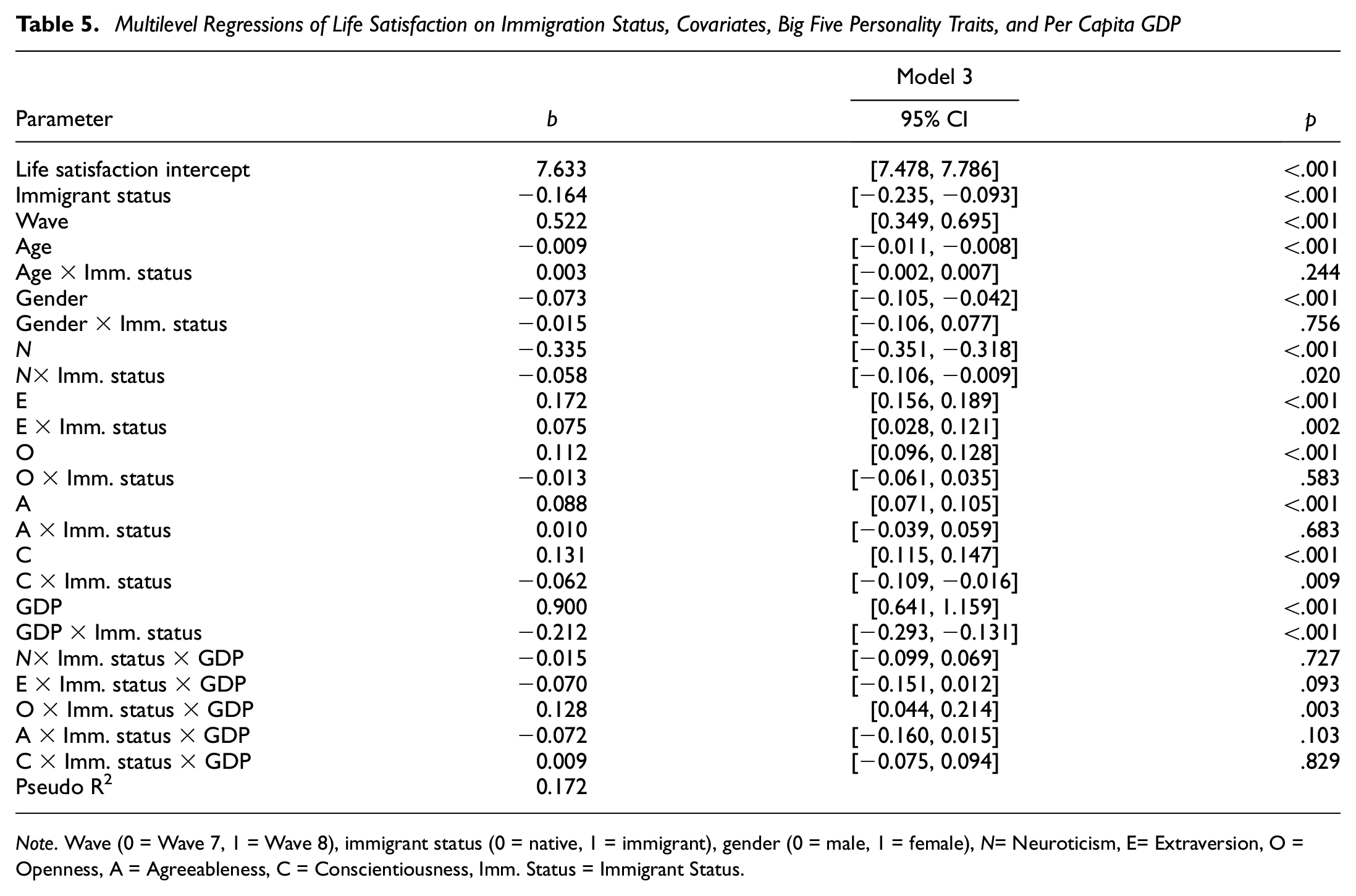
We then extended the multilevel model by including the culture-level main and cross-level interaction effects of per capita GDP (Model 3, Table 5). Consistent with previous research, we found positive main effects of GDP on life satisfaction, but a negative interaction with immigrant status. That is, people were on average more satisfied with their lives in higher-income countries, but this effect was less pronounced in immigrants than in natives, thus significantly widening the life satisfaction gap. Figure 3 visualizes the effect of high versus low GDP on life satisfaction among immigrants and natives.
Multilevel Regressions of Life Satisfaction on Immigration Status, Covariates, Big Five Personality Traits, and Per Capita GDP
Note. Wave (0 = Wave 7, 1 = Wave 8), immigrant status (0 = native, 1 = immigrant), gender (0 = male, 1 = female), N= Neuroticism, E= Extraversion, O = Openness, A = Agreeableness, C = Conscientiousness, Imm. Status = Immigrant Status.
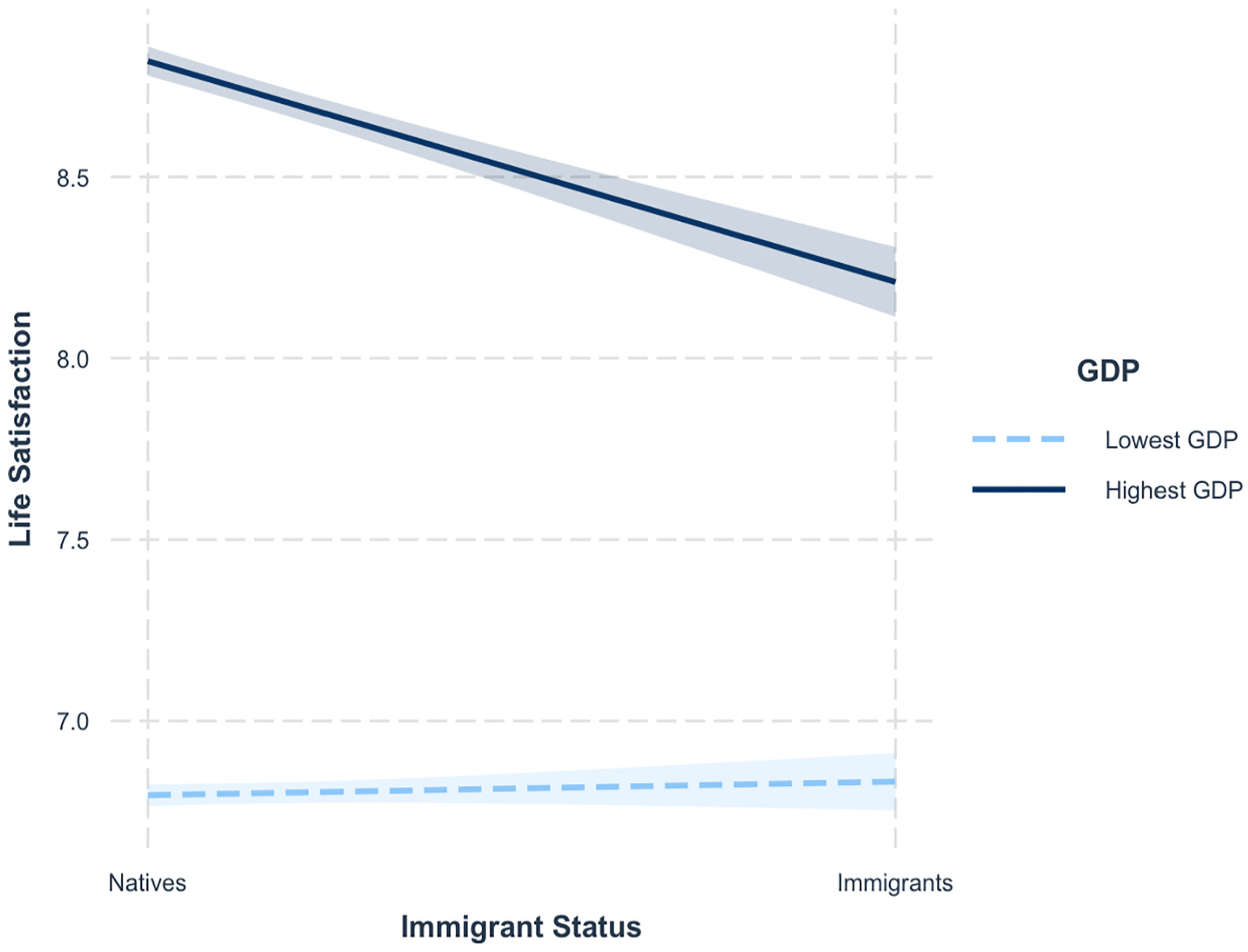
Life Satisfaction of Natives and Immigrants Who Reside in the Country With the Highest (Luxembourg) and Lowest (Croatia) Per Capita Gross Domestic Product (GDP) in the Present Sample (See Table 5)
We further explored the four-way cross-level interactions between per capita GDP, immigrant status, and the Big Five but found only one unexpected interaction with openness to experience. This effect, suggesting that immigrants with higher levels of openness are less affected by the negative life satisfaction effects of country-level GDP, should be interpreted with caution prior to replication in future research.
Discussion
Over the past 20 years, international immigration rates have nearly doubled worldwide (McAuliffe et al., 2022). Increasing migration rates and demographic aging have transformed the population structure and posed new challenges for individuals and societies (Kogan et al., 2018; Sand & Gruber, 2018). In this study, we examined the life satisfaction gap between immigrants and natives in over 50,000 older adults across 16 European countries and Israel.
Overall, we found the average immigrant in our sample to report lower life satisfaction than the average native. This is consistent with theory and previous studies suggesting that immigrants are more likely to refer to the norms of their host countries instead of their countries of origin when evaluating their life as a whole (Hadjar & Backes, 2013; Safi, 2010). Several migration-related stressors may explain the observed well-being gap, including challenges of integration, discrimination, and socioeconomic disparities (Hendriks, 2015). Despite these apparent challenges, the effects of immigrant status on life satisfaction were small to moderate across countries (d = −0.10 to d = −0.46). To better understand the substantial heterogeneity of this effect, we examined the role of immigrants’ personality traits and cultural differences in wealth as levelers of the native-immigrant gap in life satisfaction.
As predicted by the personality-as-resource perspective (e.g., Luchetti et al., 2021; Olaru et al., 2023), we found stronger links between life satisfaction with neuroticism and extraversion in immigrants. Specifically, low neuroticism and high extraversion had stronger life satisfaction benefits among immigrants than natives, indicating that these traits may serve as an inner resource for immigrants who tend to have less access to external sources of happiness and are exposed to different kinds of migration-related stressors (Safi, 2010). In contrast to our predictions, we found no resource effects of agreeableness, and a negative effect of conscientiousness, suggesting that immigrants with high levels of conscientiousness tend to have lower life satisfaction than highly conscientious natives.
Our data further suggested that the immigrant-native gap in life satisfaction is significantly wider in high-income countries, such as Denmark or Switzerland, as can be also seen in Figure 1. That is, despite an overall positive effect of national wealth on people’s life satisfaction, this effect is diminished in immigrants who may have less access to the economic opportunities than natives, which may lead to feelings of injustice, prejudice, and lower life satisfaction, in accordance with previous research on younger populations (Hadjar & Backes, 2013). In other words, the disparity in life satisfaction between immigrants and natives may widen in countries with higher GDP, because in prosperous nations, the standard of living for the native population may significantly surpass the living conditions of migrants, who often originate from economically disadvantaged countries (Sand & Gruber, 2018).
In contrast to our expectations, we found no evidence that extraversion and neuroticism may be particularly important personality resources for immigrants residing in high-income countries. We did find a significant effect for openness, suggesting that the cultural income effect on the life satisfaction gap between immigrants and natives was less pronounced among open immigrants. Critically, this four-way interaction effect should be replicated in data from a larger number of countries before further theoretical interpretations of this effect.
Several limitations should be considered. First, the population of older immigrants in this sample is special, because they speak the corresponding language proficiently. It is established that immigrants without local language skills face more challenges, experience more migration-related stress, and are less socially integrated than immigrants who are proficient in their host country’s language (Sand & Gruber, 2018), suggesting that the estimated life satisfaction gap in our sample is conservative and potentially wider for non-fluent populations of immigrants. Second, we focused on the Big Five traits as personality resources, while other demographic, psychological, or social variables, such as educational attainment, self-esteem, or social support may also serve as inner resources for immigrants. Third, we relied on short or single-item measures of personality traits and life satisfaction. These measures have been used extensively in previous studies, ensuring the comparability of results, but are less reliable and may thus demonstrate smaller correlations with life satisfaction than has been reported in previous research with longer scales (Anglim et al., 2020). Fourth, in addition to national income, other cultural factors of both the host and birth country may impact immigrants’ life satisfaction (e.g., Solano & Huddleston, 2020). For example, the birth region appears to have a significant effect on the life satisfaction gap between natives and immigrants (Sand & Gruber, 2018; see Supplemental Figure S1 in Supplemental Materials for a replication of this effect). Relatedly, with only 17 countries, this study had limited statistical power to detect the moderating effects of cultural factors on the links between immigrant status and life satisfaction (McNeish & Stapleton, 2016). This is particularly relevant for the four-way interactions among immigrant status, personality, national income, and life satisfaction. As mentioned earlier, data from a larger number of countries, ideally with similar sample sizes, would be needed to estimate the interaction effects between cultural factors, personality, and immigrant status on life satisfaction with sufficient power.
Conclusion
The present findings affirm the prevailing notion that older immigrants, on average, report lower life satisfaction compared to natives, a trend consistent with previous research. This life satisfaction gap varies substantially across individuals and countries. Consistent with the personality-as-resource perspective, we found that high levels of extraversion and low levels of neuroticism buffered immigrants from the negative effects of the immigrant status on life satisfaction. In contrast, high per capita GDP, while generally beneficial for people’s life satisfaction, widened the gap between natives and immigrants, suggesting that economic disparities between immigrants and natives in prosperous nations may contribute to the observed disparities. Future research is needed to further examine the role of personality resources for immigrants who are exposed to potentially harmful cultural-level stressors.
Supplemental Material
sj-docx-1-spp-10.1177_19485506241237293 – Supplemental material for Personality and Cultural Income Differences Shape the Life Satisfaction Gap Between Aging Immigrants and Natives in Europe
Supplemental material, sj-docx-1-spp-10.1177_19485506241237293 for Personality and Cultural Income Differences Shape the Life Satisfaction Gap Between Aging Immigrants and Natives in Europe by Wiebke Bleidorn, Madeline R. Lenhausen, David Richter and Christopher J. Hopwood in Social Psychological and Personality Science
Footnotes
Acknowledgements
This paper uses data from SHARE Waves 1, 2, 3, 4, 5, 6, 7, and 8 (DOIs: 10.6103/SHARE.w1.800, 10.6103/SHARE.w2.800, 10.6103/SHARE.w3.800, 10.6103/SHARE.w4.800, 10.6103/SHARE.w5.800, 10.6103/SHARE.w6.800, 10.6103/SHARE.w7.800, 10.6103/SHARE.w8.800, 10.6103/SHARE.w8ca.800) see Börsch-Supan et al. (2013) for methodological details.(1) The SHARE data collection has been funded by the European Commission, DG RTD through FP5 (QLK6-CT-2001-00360), FP6 (SHARE-I3: RII-CT-2006-062193, COMPARE: CIT5-CT-2005-028857, SHARELIFE: CIT4-CT-2006-028812), FP7 (SHARE-PREP: GA N°211909, SHARE-LEAP: GA N°227822, SHARE M4: GA N°261982, DASISH: GA N°283646) and Horizon 2020 (SHARE-DEV3: GA N°676536, SHARE-COHESION: GA N°870628, SERISS: GA N°654221, SSHOC: GA N°823782, SHARE-COVID19: GA N°101015924) and by DG Employment, Social Affairs & Inclusion through VS 2015/0195, VS 2016/0135, VS 2018/0285, VS 2019/0332, and VS 2020/0313. Additional funding from the German Ministry of Education and Research, the Max Planck Society for the Advancement of Science, the U.S. National Institute on Aging (U01_AG09740-13S2, P01_AG005842, P01_AG08291, P30_AG12815, R21_AG025169, Y1-AG-4553-01, IAG_BSR06-11, OGHA_04-064, HHSN271201300071C, RAG052527A) and from various national funding sources is gratefully acknowledged (see  ).
).
Handling Editor: Eranda, Jayawickreme
Declaration of Conflicting Interests
The author(s) declared no potential conflicts of interest with respect to the research, authorship, and/or publication of this article.
Funding
The author(s) received no financial support for the research, authorship, and/or publication of this article.
Supplemental Material
The supplemental material is available in the online version of the article.
Author Biographies
References
Supplementary Material
Please find the following supplemental material available below.
For Open Access articles published under a Creative Commons License, all supplemental material carries the same license as the article it is associated with.
For non-Open Access articles published, all supplemental material carries a non-exclusive license, and permission requests for re-use of supplemental material or any part of supplemental material shall be sent directly to the copyright owner as specified in the copyright notice associated with the article.
