




Abstract
The current research adopted a person-centered approach to examine whether people’s experiences of lifetime need frustration interact with their personality trait profiles to predict their problems and pathology from the perspectives of both the interpersonal circumplex (IPC) and the five-factor model (FFM). Data (N = 1,026) were analyzed using multilevel modeling. Consistent with prediction, lifetime need frustration predicted participants’ overall levels of interpersonal distress and personality pathology. Furthermore, levels of lifetime need frustration predicted the strength of the relationship between participants’ trait profiles (i.e., IPC and FFM) and their corresponding profiles of interpersonal problems and personality pathology. Findings from the present study demonstrate how between-person differences in lifetime need frustration give rise to the within-person organization of psychological maladjustment and highlight the importance of people’s traits in predicting their unique maladaptations to having their basic psychological needs frustrated.
From the perspective of Self-Determination Theory (SDT; Ryan & Deci, 2000), the frustration of people’s basic psychological needs for autonomy, competence, and relatedness (i.e., their needs to feel volitional, capable, and connected to others) serves as transdiagnostic sources of risk for problems and psychopathology. However, as universality of risk does not equal uniformity of outcome (Vansteenkiste & Ryan, 2013), a fundamental task for researchers entails explaining why people’s psychological problems and pathologies are so dissimilar given similar experiences of psychological need frustration. In the present research, we test the idea that the patterns of interpersonal problems and personality psychopathology that need-frustrated individuals manifest are conditioned upon the structure and organization of their personalities. We use multilevel modeling to demonstrate that the elevation and shape of people’s profiles of interpersonal problems and personality pathology can be respectively predicted from their overall levels of lifetime need frustration and from the cross-level interaction between their lifetime experiences of need frustration and their personality trait profiles.
Basic Psychological Needs: Frustration and Fulfillment
Central to SDT is the organismic principle that all living organisms possess an inherent tendency to both maintain and enhance their functioning while preserving their overall integrity (Ruiz-Mirazo et al., 2000). However, people’s natural inclinations to explore their environments and progress in the direction of increasing self-organization and self-integration are facilitated by the satisfaction of their basic psychological needs (Ryan & Deci, 2000), and compromised by long-term need thwarting or frustration (Ryan et al., 2016; Vansteenkiste & Ryan, 2013). Need-frustrating experiences not only disrupt normative developmental processes but also catalyze social, emotional, and biological vulnerabilities (Ryan & Deci, 2000).
Although need frustration is considered within SDT to be a source of transdiagnostic risk for individuals’ psychological health and well-being, universality is not tantamount to uniformity (Soenens et al., 2015). Indeed, past research has demonstrated that people’s experiences of psychological need frustration are associated with several forms of maladjustment, including depression (Levine et al., 2022), anxiety (Rouse et al., 2019), conduct disorder (Rodríguez-Meirinhos et al., 2019), borderline personality disorder (van der Kaap-Deeder et al., 2021), and antisocial behavior (Manzano-Sánchez et al., 2021). While recognizing the comorbidities among categorical indicators of psychopathology and ill-being (Krueger et al., 2018), the co-occurrence of diagnoses is far enough away from unity (Caspi et al., 2020) to suggest that people may still vary in the form of maladjustment that manifests in response to need frustration.
Here, we propose that as need frustration disrupts the natural course of personality development and organismic integration, the form of dysfunction that follows will be conditioned upon the individual’s idiosyncratic psychological characteristics. This proposition is in keeping with the idea of pathoplasticity, which holds that an individual’s premorbid personality traits influence the manner in which their psychopathology presents (Widiger, 2011). Indeed, individual differences in interpersonal functioning have been found to account for variation in symptom expression and treatment outcomes for individuals suffering from major depression (Cain et al., 2012), generalized anxiety disorder (Przeworski et al., 2011), panic disorder (Zilcha-Mano et al., 2015), post traumatic stress disorder (Thomas et al., 2014), and eating pathology (Ambwani & Hopwood, 2009). Similarly, the dimensionally oriented alternative model for personality disorders (DSM-5; AMPD, American Psychiatric Association [APA], 2013) emphasizes the role of personality traits in shaping the particular form of maladaptation that manifests.
One way to frame this problem would be in terms of diathesis (i.e., a personality dimension) and stress (i.e., need frustration), and test for their interaction across a range of outcomes to show that the same level of need frustration predicts different outcomes across individuals depending upon the personality characteristics of the individual in question. To illustrate, consider three individuals with exposure to a common stressor (e.g., COVID-19 pandemic lockdowns): one individual who is characteristically dominant, a second who is characteristically affiliative, and a third who is characteristically conscientious. On the basis of their commensurate levels of need frustration, we would predict that the first individual might become controlling and domineering, the second individual might become dependent and reassurance-seeking, and the third might become rigid and perfectionistic. However, while previous work adopting this variable-centered approach has shown that people’s maladaptive traits can be independently predicted from their overall levels of personality dysfunction and their normative personality traits, two-way interactions between people’s traits and their dysfunction have yielded mixed results (Morey et al., 2022).
To build upon the variable-centered approach used in Morey et al. (2022), which requires the researcher to test as many two-way interactions as the number of personality traits (inflating the Type 1 error rate), we propose a person-centered approach, wherein personality elements (i.e., traits) are conceptualized as within-person units that operate conjointly to shape how people adapt to need-frustrating experiences. The person-centered approach allows us to both identify the prominent features of one’s personality and acknowledge the importance of the organization of personality elements within persons (Allport, 1937; Sheldon, 2013). In contrast to the variable-centered perspective, whereby some individuals are differentiated from other individuals along some particular trait, the person-centered perspective would examine how some traits are differentiated from other traits for some particular individual. Past person-centered research has shown how individuals’ profiles of psychological characteristics can predict a wide range of adjustment-related outcomes (Beck & Jackson, 2022; Beeney et al., 2017; Thomas et al., 2014; Wright et al., 2016).
This person-centered perspective can be realized in a multilevel model, wherein personality elements are entered at Level 1 of the model, people’s experiences of need frustration are entered at Level 2, and their cross-level interaction is also entered. The multilevel framework allows us to partition the between-person variance in general dysfunction from the within-person variance due to the pattern and shape of dysfunction, providing a clearer understanding of how people’s experiences of need frustration and their dispositional tendencies combine and interact to predict the elevation and shape of their dysfunction (Morey et al., 2022). However, the person-centered perspective requires models and measures of personality that will permit the assessment of people’s dispositions and dysfunctions along parallel dimensions, so that the profiles of dispositional and dysfunctional tendencies have corresponsive X-axes. Two models of personality satisfy this condition.
The Interpersonal Circumplex (IPC)
From the IPC perspective (e.g., Fournier et al., 2010), all interpersonal characteristics can be conceptualized within a two-dimensional space around orthogonal axes defined by the meta-concepts of agency (dominance vs. submission) and communion (affiliation vs. hostility). The IPC framework has served as the basis for developing measures with which to assess people’s profiles of interpersonal traits (e.g., Wiggins, 1979) and their profiles of maladaptive interpersonal problems (e.g., Horowitz, 1979) around octants of the IPC (Figure 1). People’s interpersonal traits and interpersonal problems consistently converge (e.g., Boudreaux et al., 2018), suggesting that those who are high on a particular trait dimension (e.g., dominant) are more likely to report the corresponding interpersonal problem (e.g., domineering).
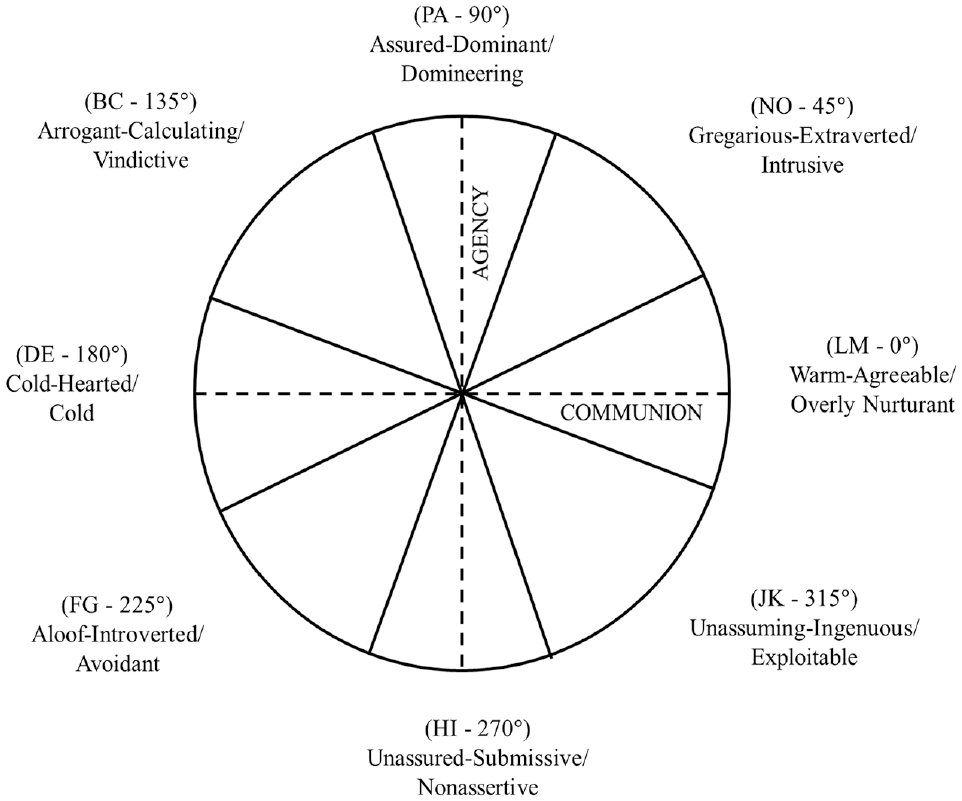
The Interpersonal Circumplex
The Five-Factor Model (FFM)
From the FFM perspective (e.g., Goldberg, 1990), descriptions of personality are largely expected to reduce to differences in five dispositional domains (i.e., extraversion, agreeableness, conscientiousness, neuroticism, and openness to experience). Within the DSM-5 AMPD (APA, 2013), dimensions of personality pathology (i.e., impaired sense of self and interpersonal functioning) are conceptualized in terms of maladaptive or extreme variants of these personality traits (i.e., detachment, antagonism, disinhibition, negative affect, and psychoticism; Skodol et al., 2015). Importantly, apart from openness and psychoticism, people’s normative (e.g., introversion) and maladaptive (e.g., detachment) FFM traits consistently converge (Markon et al., 2013), and the convergence of normative and maladaptive FFM traits increases after accounting for the variance that each maladaptive trait shares with general personality dysfunction (Morey et al., 2022).
The Present Study
The present study used a cross-sectional design and adopted a person-centered (profile) approach to examine whether people’s levels of lifetime psychological need frustration interact with their IPC and FFM personality trait profiles to predict the patterning of their interpersonal problems and personality pathology. All hypotheses were tested using multilevel models in R (R Core Team, 2022) with the lme4 (Bates et al., 2015) and lmerTest (Kuznetsova et al., 2017) packages. Personality elements (i.e., IPC octant scores and FFM domain scores) were entered as within-person (Level 1) predictors and need frustration was entered as a between-person (Level 2) predictor. All hypotheses were pre-registered on the open science framework (OSF) and can be found at https://osf.io/8kxrd/?view_only=55cc156c86ec4c598327e05c7052f0af.
We predicted (a) a significant and positive Level 1 main effect for people’s personality trait profiles (i.e., IPIP-IPC and BFI-2) on their corresponding profiles of dysfunction (i.e., IIP and PID-5), (b) a significant and positive Level 2 main effect for people’s levels of lifetime need frustration on their overall levels of interpersonal problems and personality pathology, and (c) a significant and positive cross-level interaction effect between people’s levels of need frustration and their personality trait profiles (i.e., IPIP-IPC and BFI-2), such that levels of need frustration will respectively augment the association between people’s IPC and FFM traits and their patterning of interpersonal problems and personality pathology.
To further examine the association between people’s traits and their unique patterns of psychological dysfunction, an additional set of analyses examining participants’ normative and distinctive personality profiles was tested. The normative trait profile refers to the patterning of trait characteristics for the average person; the distinctive trait profile refers to the ways in which the patterning of trait characteristics for a specific person differs from the average. Removing the characteristics of the normative person from each participant’s profile allows the distinctive characteristics that remain to capture each person’s unique profile of dispositional tendencies (i.e., IPC or FFM traits). We began by calculating normative profiles for both the IPC and FFM data by averaging the octant and domain scores across participants. We then calculated the distinctive IPC and FFM trait profiles by removing the relevant normative trait profile from each participant’s raw trait profile. Participants’ profiles of interpersonal problems and personality pathology were respectively predicted from their corresponding normative and distinctive trait profiles (Level 1), from participants’ levels of need frustration (Level 2), and from their respective cross-level interactions.
Finally, despite SDT’s theoretical emphasis on lifetime need frustration and fulfillment (Ryan & Deci, 2000; Vansteenkiste & Ryan, 2013), all existing self-report measures of need frustration and fulfillment focus on temporally recent or domain-specific experiences (Chen et al., 2015; Deci et al., 2001; La Guardia et al., 2000). However, as SDT researchers believe that it is the cumulative experience of need frustration across the life course that matters (Ryan & Deci, 2017), the current study also set out to examine the incremental validity of a newly constructed measure of lifetime need frustration to predict people’s interpersonal problems and personality pathology over and above the variance explained by current need frustration. As need satisfaction and frustration are theorized to be inversely related but conceptually non-redundant (such that the absence of need satisfaction is considered necessary but not sufficient for need frustration; Vansteenkiste & Ryan, 2013), the current study sought to determine the unique predictive validity of lifetime need frustration by controlling for lifetime need satisfaction. The dysregulating role of lifetime need frustration was further evaluated by controlling for subjective well-being, which is strongly linked to both interpersonal distress (Wei et al., 2021) and personality pathology (Hart et al., 2021).
Method
Sample and Procedure
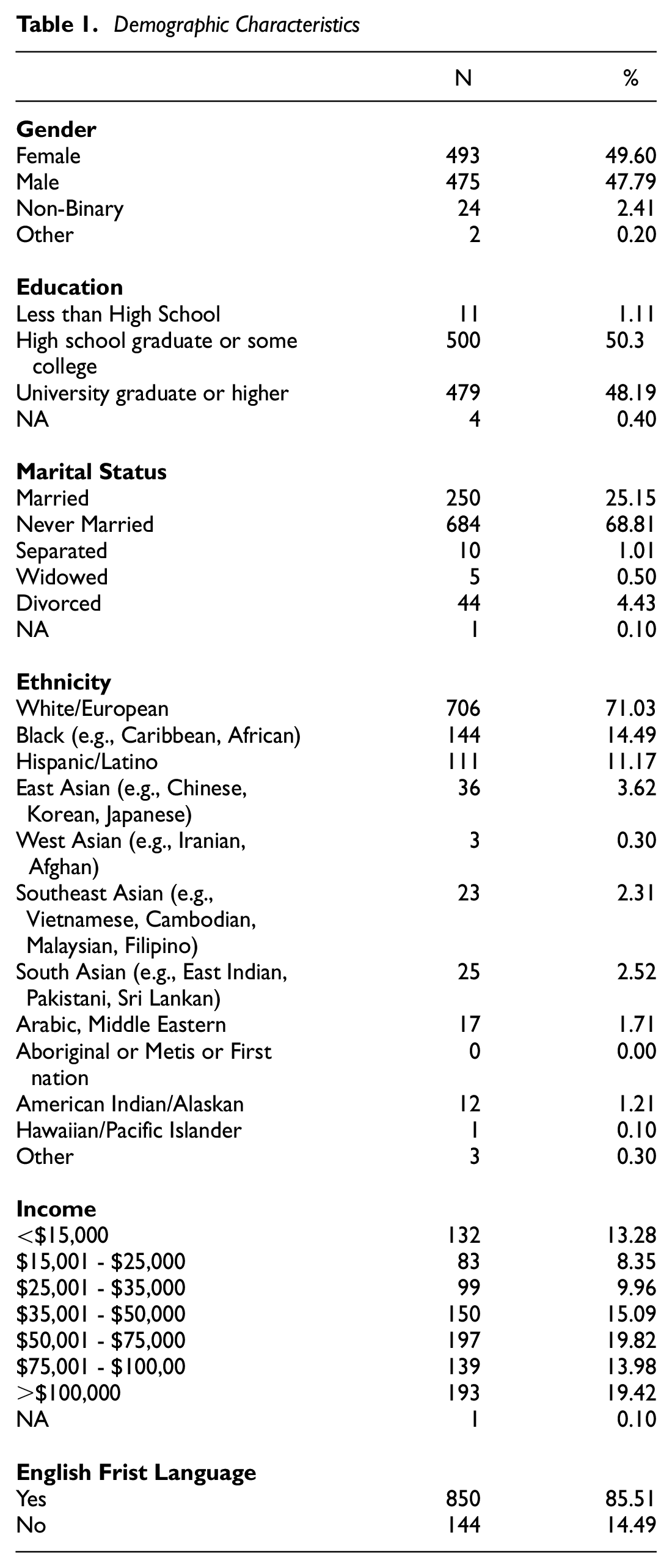
A simulated power analysis (Lane & Hennes, 2018) suggested that a sample of 1,000 participants would provide 87% power to detect a significant cross-level interaction with an
Demographic Characteristics
Measures and Variables
Psychological Need Fulfillment
The Basic Psychological Need Satisfaction and Frustration Scale (BPNSFS; Chen et al., 2015) asks participants to indicate the extent to which they agree with 24 items regarding their current levels of relatedness satisfaction (e.g., “I feel that the people I care about also care about me”), relatedness frustration (e.g., “I feel excluded from the group I want to belong to”), autonomy satisfaction (e.g., “I feel a sense of choice and freedom in the things I undertake”), autonomy frustration (e.g., “Most of the things I do feel like ‘I have to’”), competence satisfaction (e.g., “ I feel confident that I can do things well”), and competence frustration (e.g., “I have serious doubts about whether I can do things well”) on a scale from 1 (“Not true at all”) to 5 (“Completely true”). To assess lifetime psychological need satisfaction and frustration, we adapted the BPNSFS by adding instructions and a prompt emphasizing that participants should reflect on their need-relevant experiences over the course of their lives (“Over the course of my life . . .”) and changed the items to past tense (“I have felt that the people I care about also care about me”). To assess the frequency with which participants have had each kind of need-relevant experience, items are rated on a scale from 1 (“Never”) to 5 (“Always”). Both current and lifetime satisfaction and frustration scores were calculated for each need separately as well as across needs.
Interpersonal traits
The International Item Pool-Interpersonal Circumplex (IPIP-IPC; Markey & Markey, 2009) is a self-report measure of interpersonal traits. Individuals rate how accurately 32 statements describe them on a scale from 1 (“Very inaccurate”) to 5 (“Very accurate”). Interpersonal traits on the IPIP-IPC are assessed via four-item scales, each corresponding to a distinct IPC octant (see Figure 1).
Interpersonal problems
The Inventory of Interpersonal Problems Short Circumplex Form (IIP-SC-32; Soldz et al., 1995) is a self-report measure of the interpersonal problems that people experience in their lives. Items on the IIP-SC-32 are split into two sections, those behaviors that individuals perform too often (e.g., “I argue with other people too much”) and those that individuals find challenging to perform (e.g., “It is hard for me to be firm when I need to be”). The IIP-SC-32 asks participants to rate all items on a scale from 0 (“Not at all”) to 4 (“Extremely”). Interpersonal problems on the IIP-SC-32 are assessed via four-item scales, each corresponding to a distinct IPC octant (see Figure 1). General interpersonal dysfunction is assessed by averaging scores across octants.
Five-factor personality traits
The Big Five Inventory-2 Short Form (BFI-2-S; Soto et al., 2017) asks participants to rate the extent to which they agree with 30 statements regarding their extraversion (e.g., “acts as a leader”), neuroticism (e.g., “worries a lot”), conscientiousness (e.g., “is reliable, can always be counted on”), agreeableness (e.g., “is compassionate, has a soft heart”), and openness to experience (e.g., “is fascinated by art, music, or literature”) on a scale from 1 (“Disagree strongly”) to 5 (“Agree strongly”).
Maladaptive personality traits
The Personality Inventory for DSM-5-Brief Form (PID5-BF; Krueger et al., 2013) asks participants to rate their level of agreement with 25 statements regarding their detachment (e.g., “I often feel like nothing I do really matters”), negative affect (e.g., “I worry about almost everything”), disinhibition (e.g., “people would describe me as reckless”), antagonism (e.g., “It’s no big deal if I hurt other people’s feelings”), and psychoticism (e.g., “my thoughts often don’t make sense to others”) on a scale from 0 (“Very false or often false”) to 3 (“Very true or often true”). General personality dysfunction is assessed by averaging scores across domains.
Subjective Well-Being
Participants’ levels of subjective well-being were assessed with both the Satisfaction with Life Scale (SWLS; Diener et al., 1985), a five-item measure that asks participants to rate their general life satisfaction (e.g., “The conditions of my life are excellent”) on a scale from 1 (“Strongly disagree”) to 7 (“Strongly agree”), and the Scale of Positive and Negative Experience (SPANE; Diener et al., 2010), a 12-item measure that asks participants to rate how frequently they have experienced a series of positive (e.g., “happy”) and negative (e.g., “sad”) emotions over the past 4 weeks on a scale from 1 (“Very rarely or never “) to 5 (“Very often or always”). Scores on the SWLS and the two dimensions of the SPANE were standardized and then averaged (with negative affect reverse-scored) to create a composite well-being index.
Results
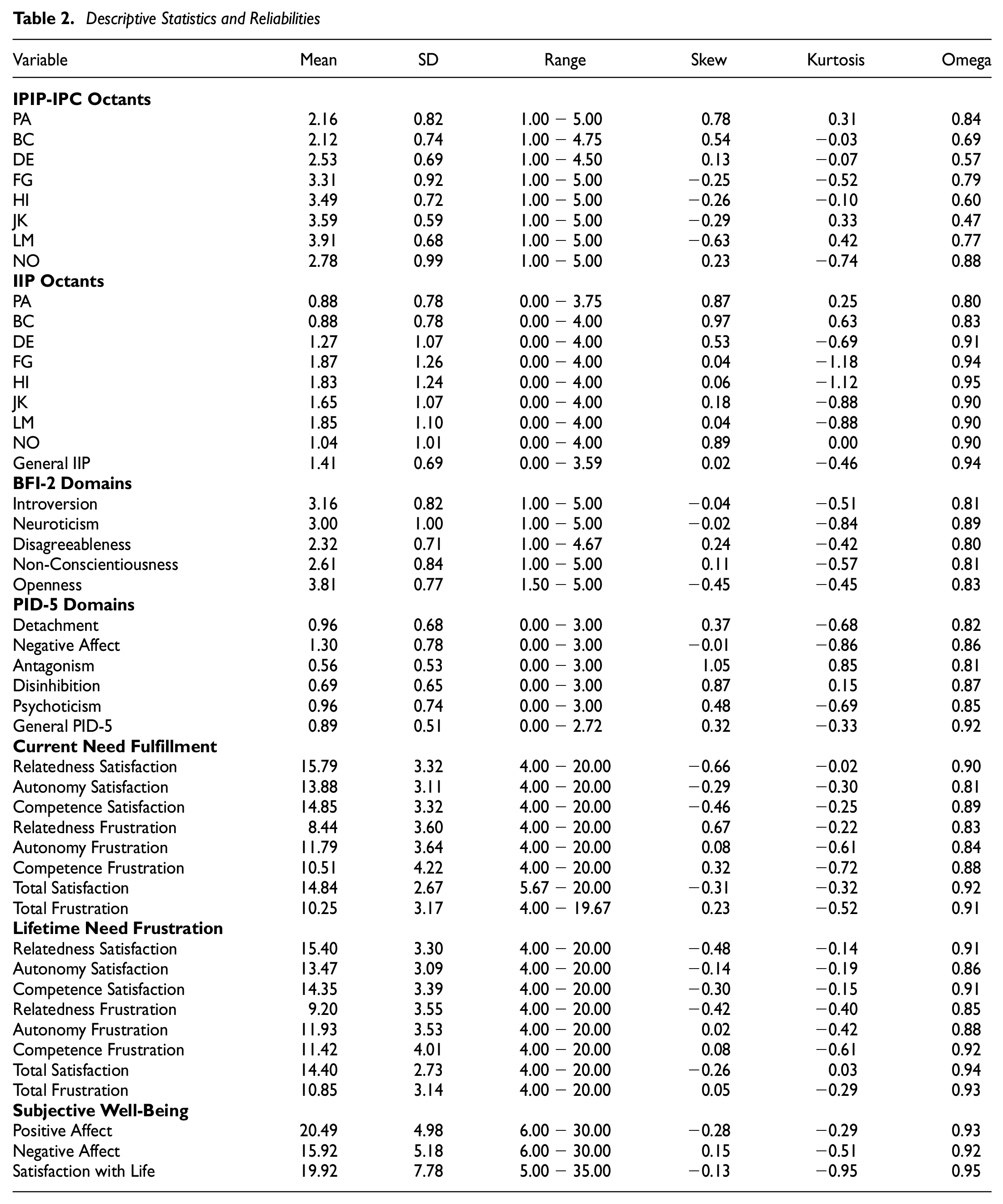
Code for all primary analyses and data are publicly available at https://osf.io/8kxrd/?view_only=55cc156c86ec4c598327e05c7052f0af. Descriptive statistics and omega totals for all variables are presented in Table 2. Correlations between the IPC, FFM, need satisfaction and frustration, and subjective well-being variables are respectively presented in Tables 3, 4, and 5. Importantly, participants’ scores on the IPIP-IPC (trait) octants substantially converged with their corresponding IIP (problem) octants, and both sets of scores conformed to a circumplex structure (Table 3). However, corresponding BFI-2 and PID-5 dimensions did not demonstrate the same level of convergence (Table 4). This lack of convergence persisted even after we had subtracted participants’ average levels of dysfunction from each of their domain scores to remove the variance due to general dysfunction (i.e., ipsatizing).
Descriptive Statistics and Reliabilities
Zero-Order Correlations between IPC Variables with 95% Confidence Intervals
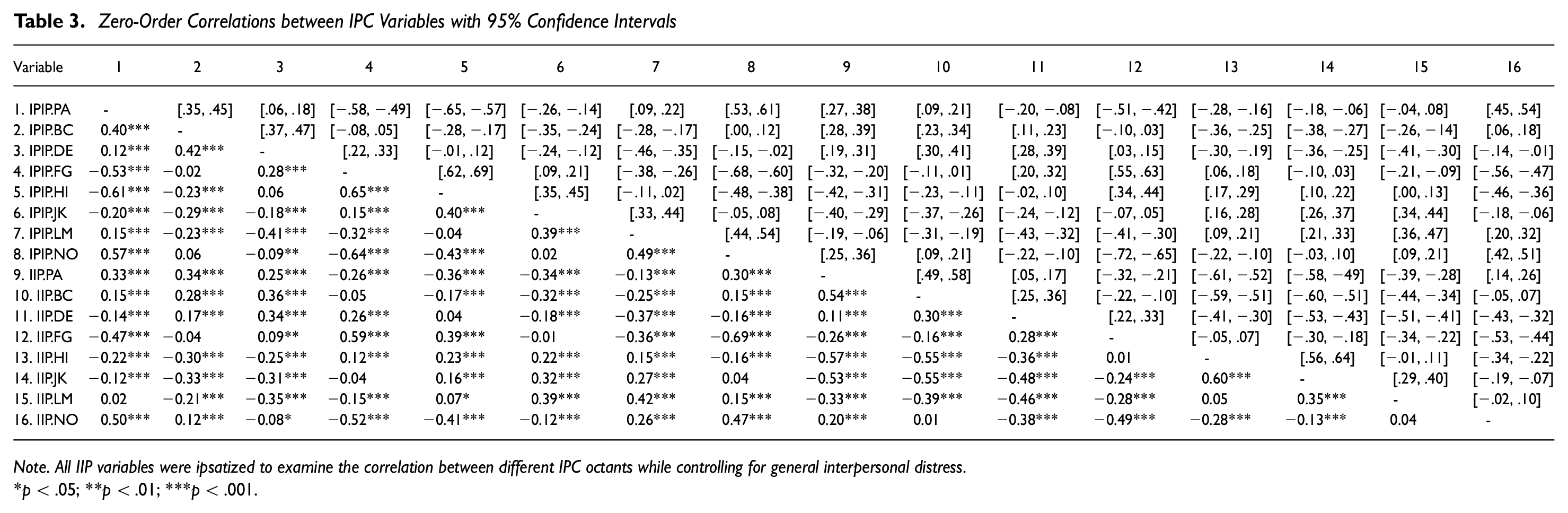
Note. All IIP variables were ipsatized to examine the correlation between different IPC octants while controlling for general interpersonal distress.
p < .05; **p < .01; ***p < .001.
Zero-Order Correlations between FFM Variables with 95% Confidence Intervals
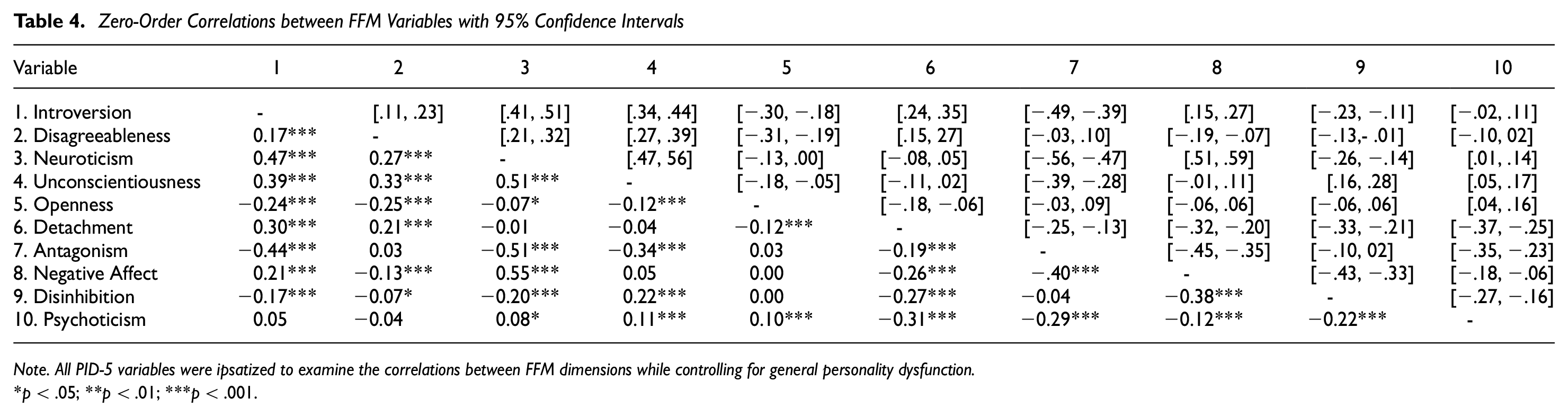
Note. All PID-5 variables were ipsatized to examine the correlations between FFM dimensions while controlling for general personality dysfunction.
p < .05; **p < .01; ***p < .001.
Zero-Order Correlations between Need Fulfillment and Subjective Well-Being with 95% Confidence Intervals
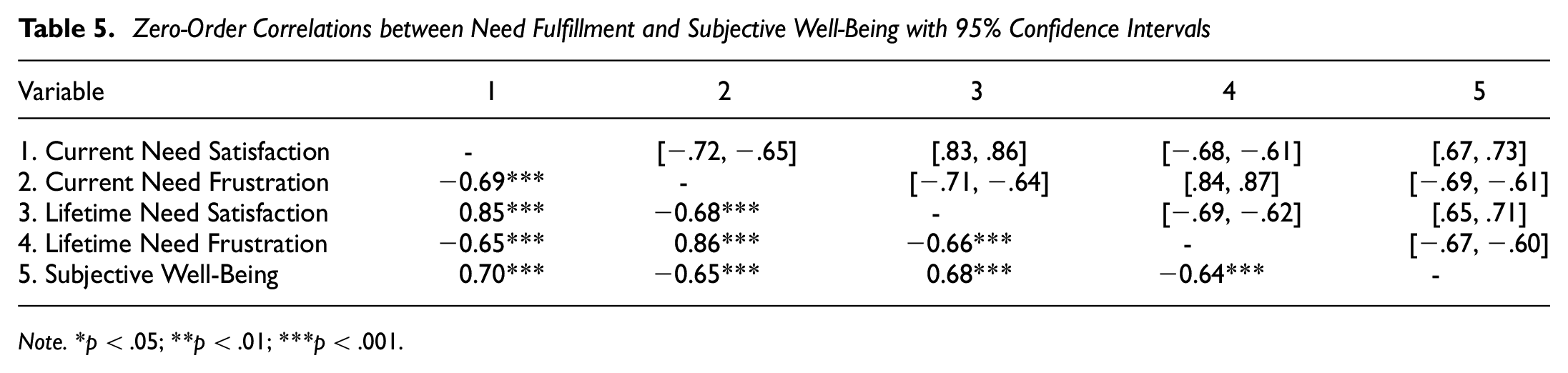
Note.*p < .05; **p < .01; ***p < .001.
For the IPC analyses, people’s IPIP-IPC octant scores were entered as Level 1 units (eight units per person) to predict their corresponding IIP octant scores. For the FFM analyses, people’s BFI-2 domain scores were similarly entered as Level 1 units (five units per person) to predict their corresponding PID-5 domain scores; however, the BFI-2 scores first needed to be rescaled to properly parallel the PID-5 dimensions (i.e., extraversion was rescaled as introversion to parallel detachment; agreeableness was rescaled as disagreeableness to parallel antagonism; conscientiousness was rescaled as unconscientiousness to parallel disinhibition; and neuroticism and openness to experience were left in their original scaling to respectively parallel negative affect and psychoticism). All models had lifetime need frustration entered as a Level-2 main effect and as a cross-level moderator of slopes.
All Level 1 predictors (i.e., IPIP-IPC and BFI-2 profile scores) were group-mean centered and all Level 2 predictors were standardized prior to model estimation. The IIP octant and PID-5 domain scores used were left unipsatized so that profiles would retain information pertaining to participants’ levels of general distress (IIP) or dysfunction (PID-5). Furthermore, to examine the incremental validity of lifetime need frustration, additional models (Tables 6 and 7) were tested that controlled for the effects of subjective well-being (Models 3 and 4), lifetime need fulfillment (Models 5 and 6), and current need frustration (Models 7 and 8). To appropriately model the variability in the convergence between participants’ profile of dispositional traits and their corresponding profile of dysfunction, all models were estimated with a random intercept and slope for the relevant Level 1 predictor. However, convergence errors in the BFI analyses required that we drop the random slope(s) from these models.
Multilevel Models Predicting Participants’ Profiles of Interpersonal Problems
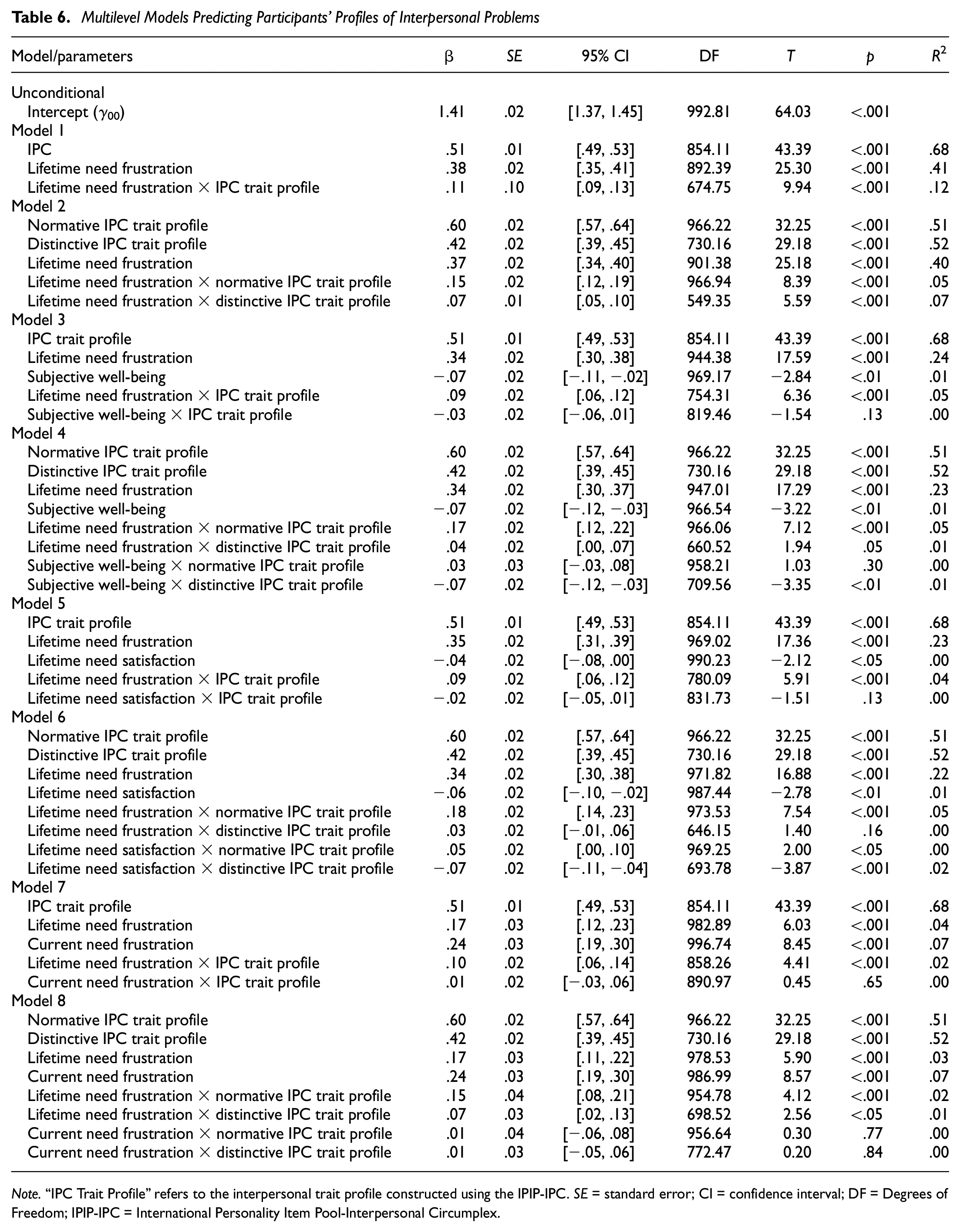
Note.“IPC Trait Profile” refers to the interpersonal trait profile constructed using the IPIP-IPC. SE = standard error; CI = confidence interval; DF = Degrees of Freedom; IPIP-IPC = International Personality Item Pool-Interpersonal Circumplex.
Multilevel Models Predicting Participants’ Profiles of Maladaptive Personality Traits
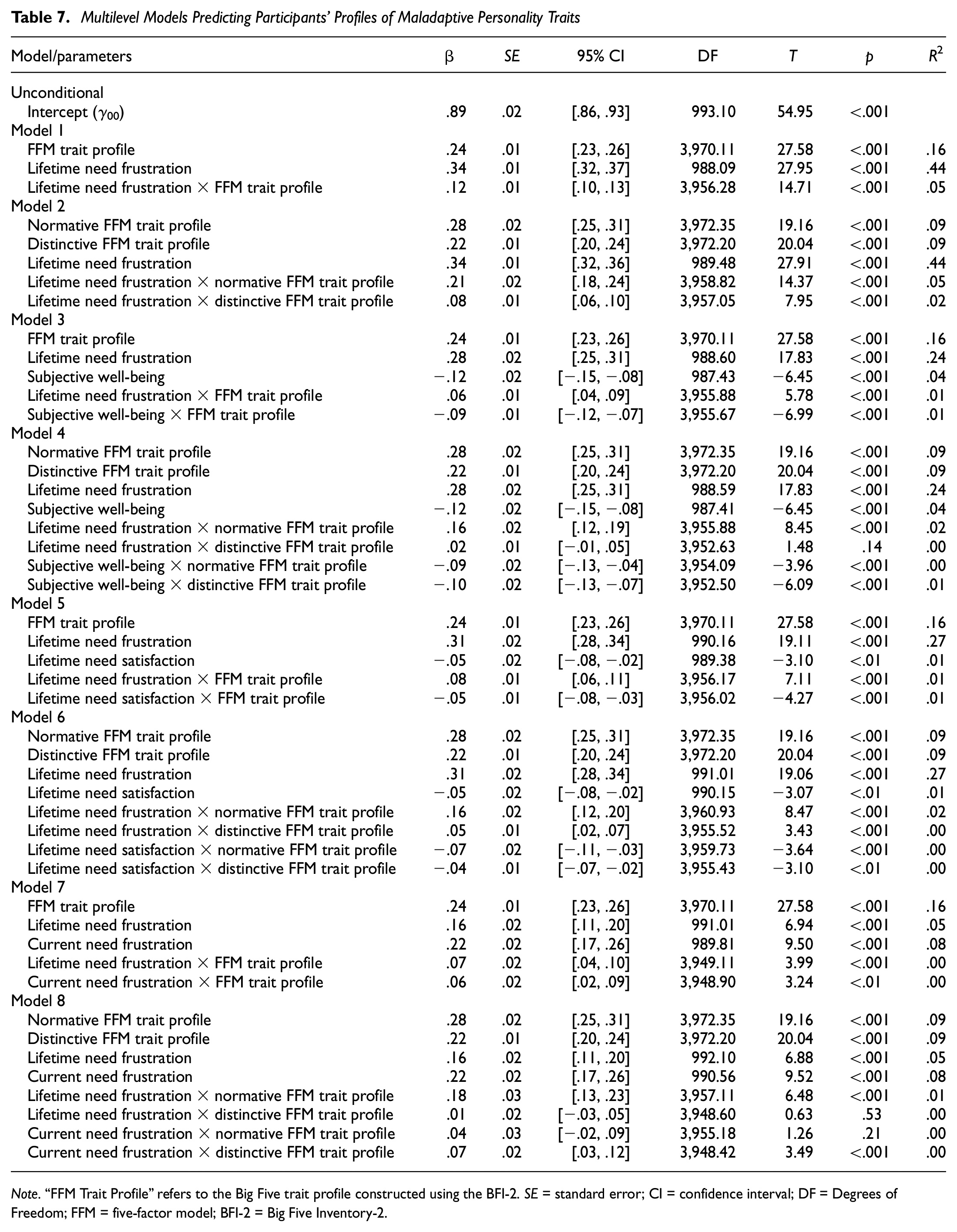
Note. “FFM Trait Profile” refers to the Big Five trait profile constructed using the BFI-2. SE = standard error; CI = confidence interval; DF = Degrees of Freedom; FFM = five-factor model; BFI-2 = Big Five Inventory-2.
IPC Analyses
Interpersonal problems were clustered within participants (intraclass correlation = .29), supporting the use of multilevel models. Findings from these models are displayed in Table 6. At Level 1, participants’ raw trait profiles (Models 1, 3, 5, and 7) and both normative and distinctive trait profiles (Models 2, 4, 6, and 8) predicted participants’ unique patterns of interpersonal problems. At Level 2, lifetime need frustration significantly predicted participants’ overall levels of interpersonal distress across all analyses. Furthermore, lifetime need frustration strengthened the association between participants’ interpersonal trait profiles and the unique patterning of their interpersonal problems (Model 1; Figure 2), even when controlling for subjective well-being (Model 3), lifetime need satisfaction (Model 5), and current need frustration (Model 7). Finally, lifetime need frustration also strengthened the associations between both normative and distinctive trait profiles and participants’ unique patterning of interpersonal problems (Model 2; Figures 3 and 4), even when controlling for current need frustration (Model 8), but only for the normative profile when controlling for subjective well-being (Model 4) and lifetime need satisfaction (Model 6).
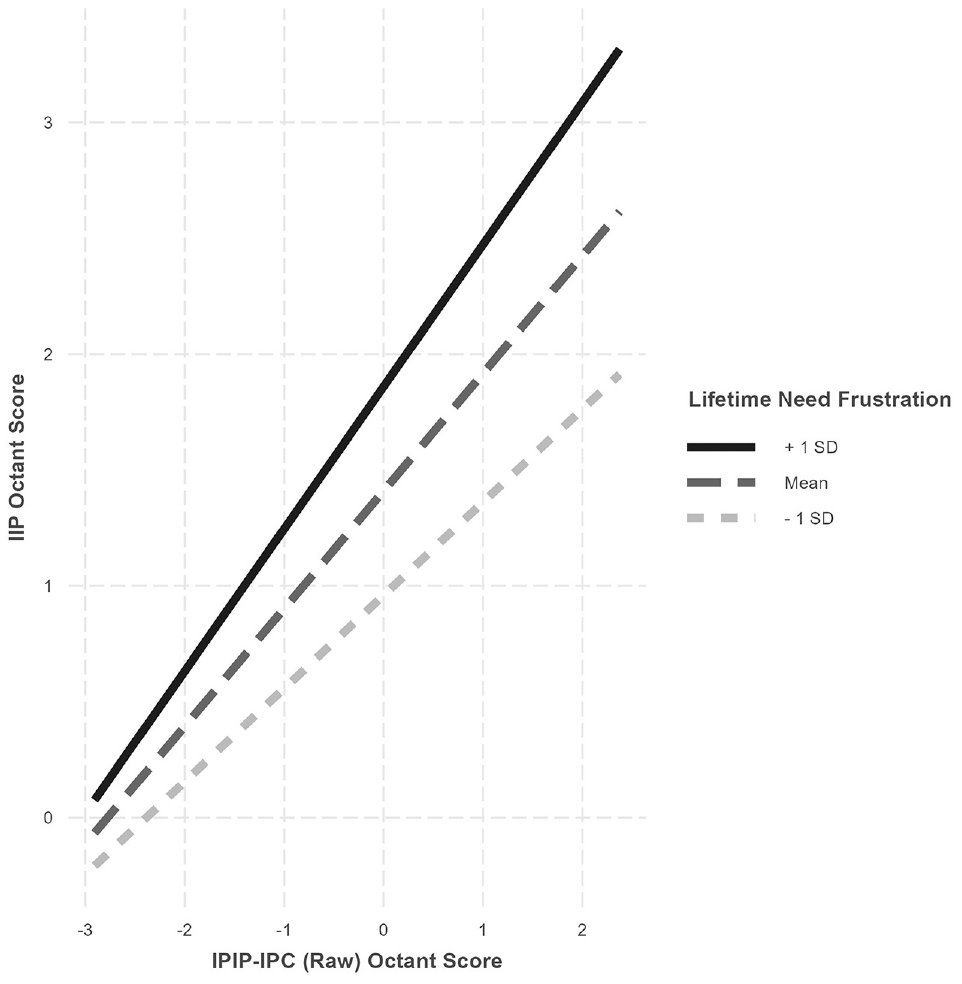
Slopes depict the increasing levels of convergence between individuals’ interpersonal problems on the IIP and their raw interpersonal traits on the IPIP-IPC as a function of increasing levels of lifetime need frustration. Each slope represents the expected association between an individual’s IIP octant scores and their corresponding IPIP-IPC octant scores at low (–1 SD), medium (mean), and high (+1 SD) levels of lifetime need frustration
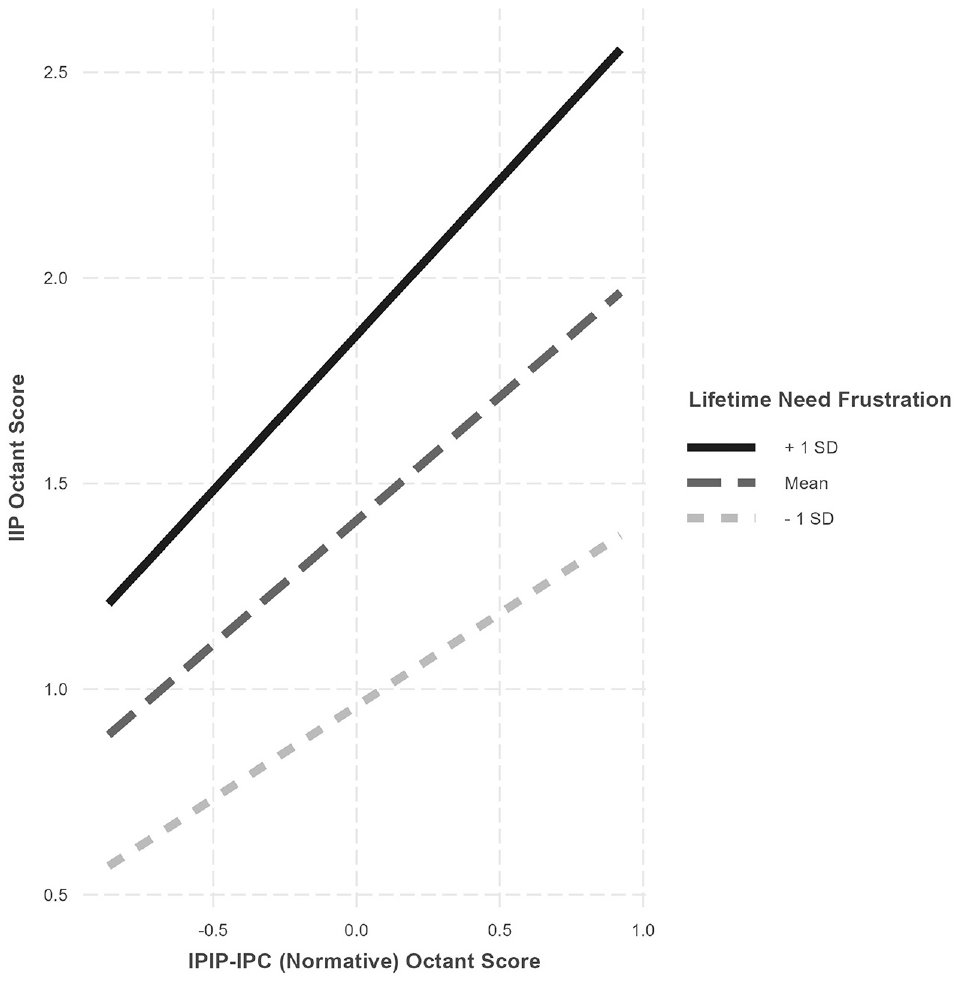
Slopes depict the increasing levels of convergence between individuals’ interpersonal problems on the IIP and the interpersonal traits of the normative individual on the IPIP-IPC as a function of increasing levels of lifetime need frustration. Each slope represents the expected association between an individual’s IIP octant scores and the corresponding IPIP-IPC octant scores of the normative profile at low (–1 SD), medium (mean), and high (+1 SD) levels of lifetime need frustration
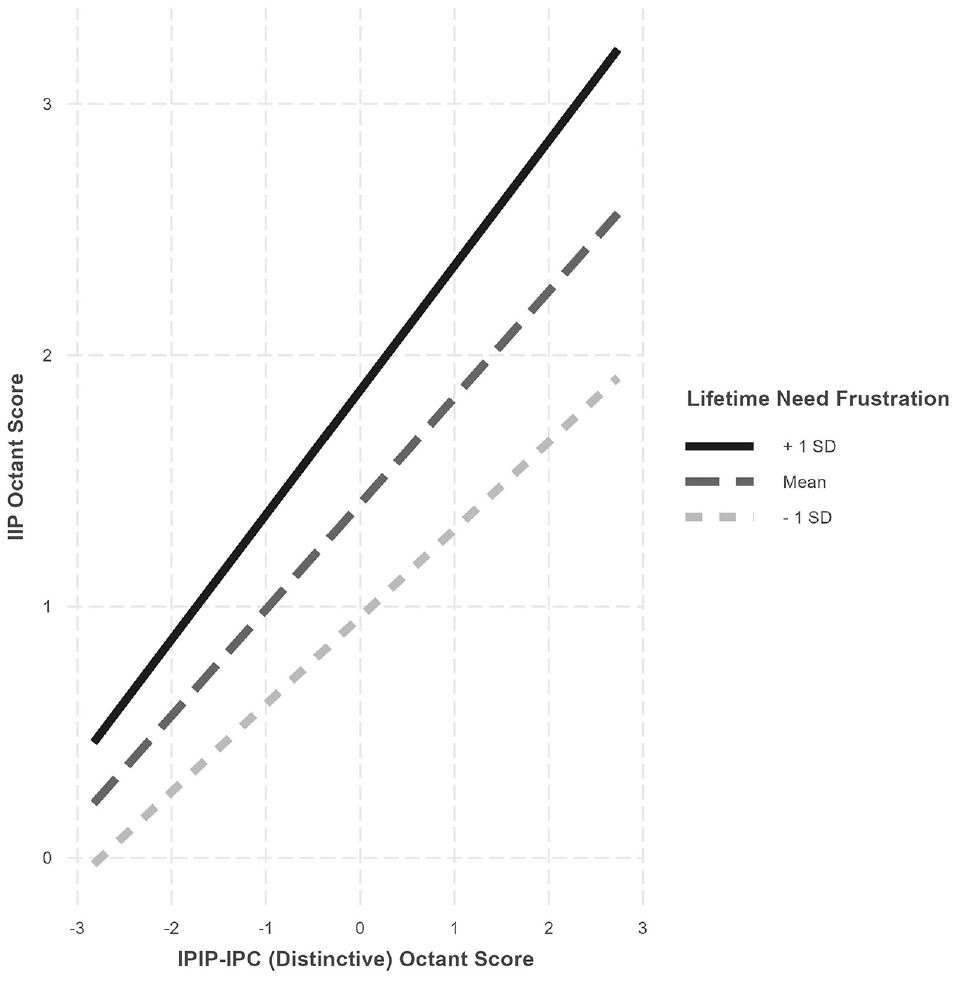
Slopes depict the increasing levels of convergence between individuals’ interpersonal problems on the IIP and their distinctive interpersonal traits on the IPIP-IPC (controlling for the interpersonal traits of the normative individual) as a function of increasing levels of lifetime need frustration. Each slope represents the expected association between an individual’s IIP octant scores and their corresponding distinctive IPIP-IPC octant scores at low (–1 SD), medium (mean), and high (+1 SD) levels of lifetime need frustration
FFM Analyses
Maladaptive traits were clustered within participants (intraclass correlation = .37), supporting the use of multilevel models. Findings from these models are displayed in Table 7. At Level 1, participants’ raw trait profiles (Models 1, 3, 5, and 7) and both normative and distinctive trait profiles (Models 2, 4, 6, and 8) predicted participants’ unique patterns of maladaptive traits. At Level 2, lifetime need frustration significantly predicted participants’ overall levels of personality dysfunction across all analyses. Furthermore, lifetime need frustration strengthened the association between participants’ BFI-2 trait profiles and the unique patterning of their maladaptive traits (Model 1; Figure 5), even when controlling for subjective well-being (Model 3), lifetime need satisfaction (Model 5), and current need frustration (Model 7). Finally, lifetime need frustration also strengthened the associations between both normative and distinctive trait profiles and participants’ unique patterning of maladaptive traits (Model 2; Figures 6 and 7), even when controlling for lifetime need satisfaction (Model 6), but only for the normative profile when controlling for subjective well-being (Model 4) and current need frustration (Model 8).
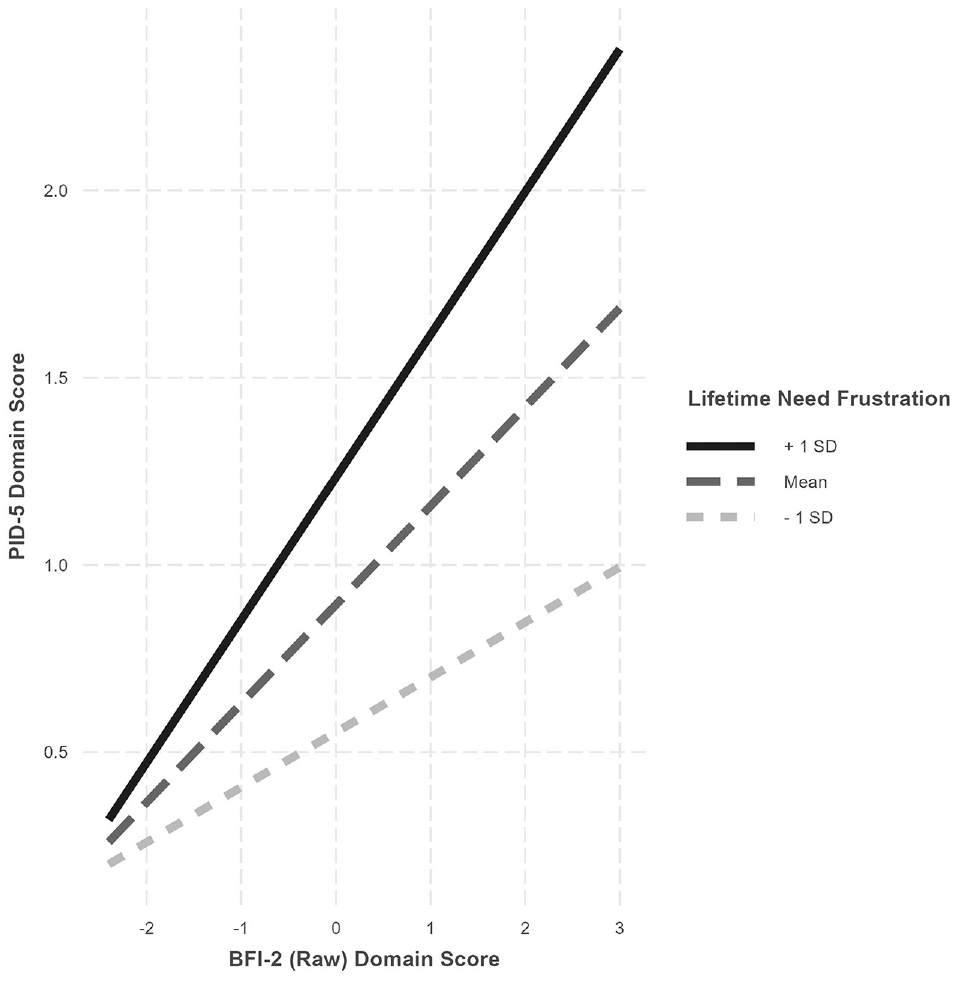
Slopes depict the increasing levels of convergence between individuals’ maladaptive personality traits on the PID-5 and their raw personality traits on the BFI-2 as a function of increasing levels of lifetime need frustration. Each slope represents the expected association between an individual’s PID-5 domain scores and their corresponding BFI-2 domain scores at low (–1 SD), medium (mean), and high (+1 SD) levels of lifetime need frustration
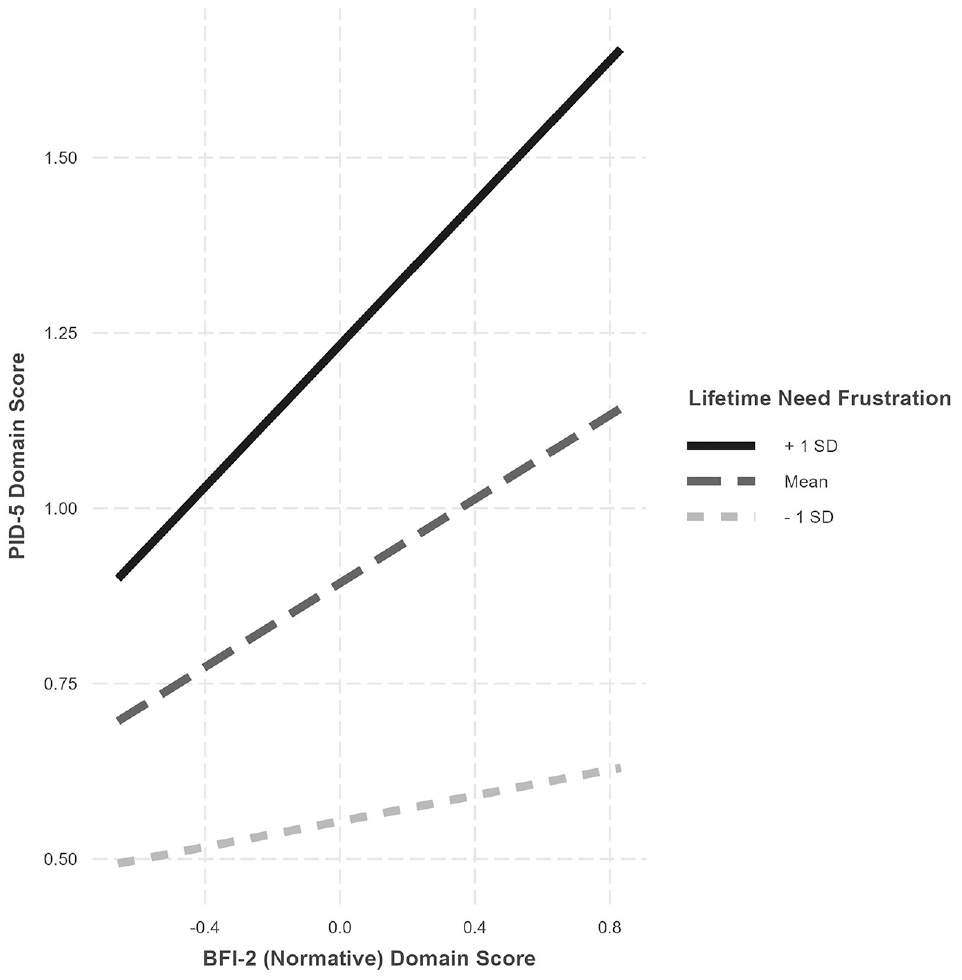
Slopes depict the increasing levels of convergence between individuals’ maladaptive personality traits on the PID-5 and the personality traits of the normative individual on the BFI-2 as a function of increasing levels of lifetime need frustration. Each slope represents the expected association between an individual’s PID-5 domain scores and the corresponding BFI-2 domain scores of the normative profile at low (–1 SD), medium (mean), and high (+1 SD) levels of lifetime need frustration
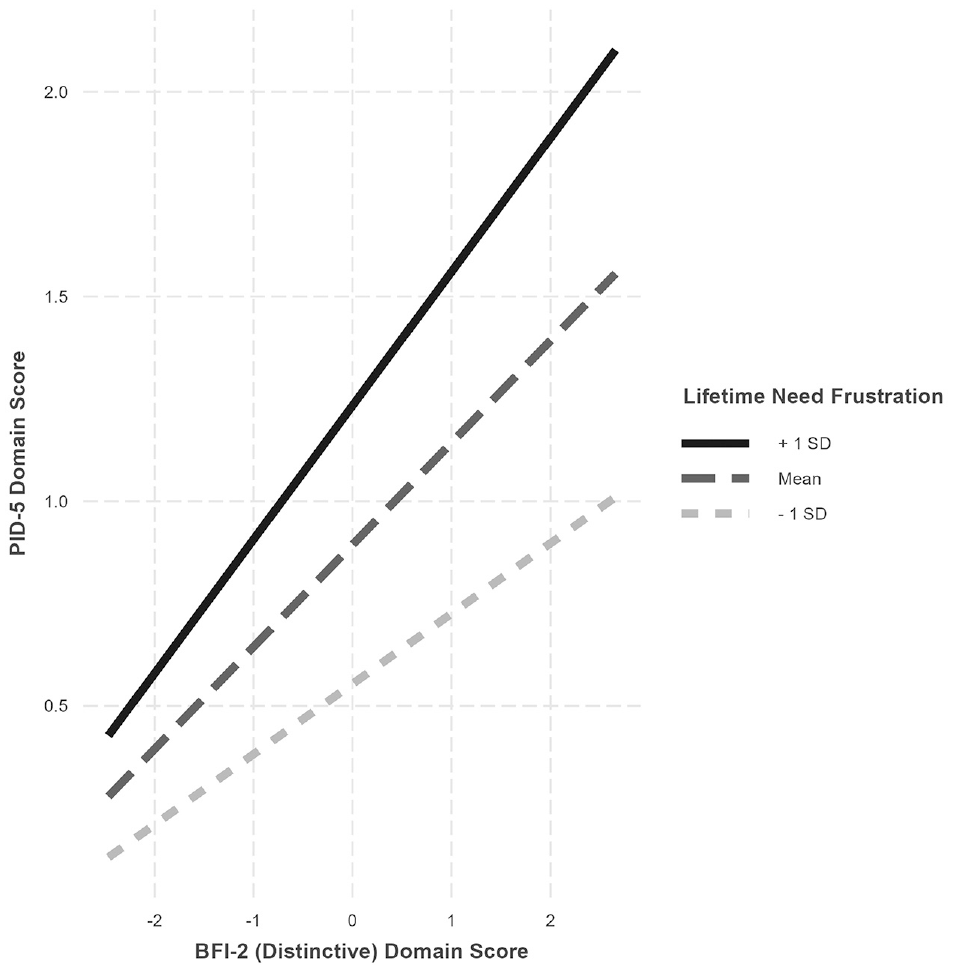
Slopes depict the increasing levels of convergence between individuals’ maladaptive personality traits on the PID-5 and their distinctive personality traits on the BFI-2 (controlling for the personality traits of the normative individual) as a function of increasing levels of lifetime need frustration. Each slope represents the expected association between an individual’s PID-5 domain scores and their corresponding distinctive BFI-2 domain scores at low (-1 SD), medium (mean), and high (+1 SD) levels of lifetime need frustration
Discussion
The current research proposed a conceptual and analytic framework for understanding the disparate outcomes associated with long-term need frustration. Consistent with our pre-registered hypotheses, lifetime histories of need frustration predicted the elevation of participants’ profiles of interpersonal problems and personality pathology and predicted the strength of the association between participants’ pattern of dispositions (i.e., IPC and FFM) and their corresponding pattern of dysfunction. Furthermore, when the normative and distinctive components of participants’ profiles of IPC and FFM traits were separated, lifetime need frustration continued to predict the strength of their respective associations with participants’ profiles of interpersonal problems and personality pathology. The current study also demonstrated the incremental validity of a newly constructed measure of lifetime need frustration over and above subjective well-being, lifetime need satisfaction, and current need frustration, providing some preliminary evidence for the role of lifetime histories of need frustration in unlocking people’s vulnerability to maladjustment.
Theoretical Implications
These findings confirm both that psychological need frustration is associated with a wide range of psychological outcomes (Ryan et al., 2016) and that people’s lifetime histories of need frustration interact with their personality trait profiles to predict their specific patterns of maladjustment. While past work has recognized that the universally negative consequences of need frustration may not manifest in a uniform set of symptoms across people (Soenens et al., 2015), the comorbidities among mental health outcomes typically assessed in the SDT literature (Ryan & Deci, 2017) have made it difficult to determine whether the lack of uniformity reflects divergent patterns of maladjustment or the accumulation of multiple forms of dysfunction within need-frustrated individuals. However, by incorporating two separate dimensional models (i.e., IPC and FFM) and a multilevel framework, we were able to account for the common variance shared across dimensions of maladjustment (Morey et al., 2022), and provide evidence for the disparate outcomes associated with need frustration.
Thus, these findings suggest that when we partition the variance in people’s dysfunction into between-person variation in the elevation of their dysfunction and within-person variation in the pattern and shape of their dysfunction, two important correlates of lifetime need frustration emerge: first, lifetime need frustration is associated with average levels of interpersonal distress and personality pathology across all octants and domains, respectively; and second, lifetime need frustration is associated with patterns of interpersonal problems and maladaptive traits that are corresponsive with the patterns of people’s dispositional tendencies. For instance, participants high in lifetime need frustration and who were interpersonally dominant were those most likely to endorse problems with being too interpersonally domineering. Interestingly, these findings diverge from the mixed results reported in analogous variable-centered research (Morey et al., 2022), highlighting how person-centered and variable-centered work can respectively produce disparate patterns of results (Howard & Hoffman, 2018). Specifically, by treating personality elements (i.e., traits) as within-person units (Allport, 1937, 1961), we examined how experiences of need frustration interact with the prominent features of the person rather than with traits in isolation. This approach formally integrates personality traits into the organismic principles of SDT and suggests that the specific form of dysfunction associated with psychological need frustration is conditioned on the individual’s unique personality characteristics.
The present findings may also speak to the processes through which our personalities “cast their shadows.” As lifetime need frustration was found to strengthen the associations between people’s profiles of personality traits and their profiles of maladjustment, the dysregulating experiences of need frustration may serve to problematize and pathologize people’s personality traits into their maladaptive or pathological counterparts. These results are in line with recent dimensional models suggesting that personality pathology can be understood as maladaptive variants of general personality traits (APA, 2013), and with work suggesting that the correspondence between normative and maladaptive traits is strengthened once the variance associated with overall levels of dysfunction has been taken into account (Morey et al., 2022). Furthermore, in order to complement the growing number of proposed dimensional models of psychopathology (e.g., DSM-5; AMPD, ICD-11, and HiTop), and mechanistic explanations for personality maladjustment (e.g., DeYoung & Krueger, 2018; Hopwood & Back, 2018; Pincus, 2005), the present study provides a framework for modeling how a transdiagnostic risk (i.e., lifetime need frustration) might predict individuals’ overall levels of psychopathology as well as the widely disparate patterns of maladjustment that they manifest.
Limitations and Future Directions
A major limitation of the present research was its reliance upon a cross-sectional design, which precludes any potential causal interpretation. For instance, the current results could also suggest that when people’s traits become maladaptive, they experience greater levels of need frustration. The cross-sectional design also makes it difficult to separate lifetime from current need frustration, as the latter is likely to influence perceptions of the former. Therefore, longitudinal work is needed to fully examine whether the organization of a person’s traits shapes the form of maladjustment catalyzed by long-term experiences of psychological need frustration. Furthermore, given that all variables were measured solely through self-reports, introducing the limitation of shared methods (Campbell & Fiske, 1959), the current results should be replicated with more diverse forms of measurement (i.e., informant reports). Importantly, recent work has questioned the extent to which need satisfaction and frustration are distinguishable in the present measures (Murphy et al., 2023), making replication with alternative measures imperative.
In addition, future work could examine the role of specific need frustration on the development of personality and interpersonal dysfunction. Indeed, in line with Whole Trait Theory (Fleeson & Jayawickreme, 2015), cybernetic personality psychology (DeYoung, 2015), and SDT (Church et al., 2013; Vansteenkiste & Ryan, 2013), the frustration of specific needs (e.g., relatedness) may elicit specific and related behavioral responses (e.g., overly nurturing interpersonal problems). Consequently, the frustration of specific needs might predict specific forms of maladaptation that are not as contingent upon one’s personality. However, given the inter-correlations between the dimensions of need frustration (Chen et al., 2015), the current study focused on participants’ overall levels of frustration across the needs for autonomy, competence, and relatedness.
One potential limitation of the proposed person-centered approach is that it requires personality dimensions and psychological outcomes that are conceptually parallel. Although past work has demonstrated convergence between the FFM personality traits and their maladaptive counterparts (Sleep et al., 2018), the present results (Table 5) affirmed alternative accounts questioning the unique association between openness and psychoticism (Markon et al., 2013; Morey et al., 2022). This, combined with the limited number of within-person units (i.e., five) and the skew present in the PID-5 measurement (Table 2), likely contributed to the convergence errors that occurred when random slopes were included in the FFM analyses. Furthermore, unlike the IPC analyses, the FFM dimensions only allowed us to examine how personality traits become pathologized at one end of the trait continuum. Examining how both high and low levels of a given FFM trait become pathologized into their maladaptive counterparts (e.g., how less conscientious individuals become impulsive and how more conscientious individuals become compulsive) would expand our understanding of the dysregulating effect of need frustration. Therefore, future work should examine a wider range of between-person transdiagnostic risk factors and within-person personality elements in the prediction of well-being outcomes.
Conclusion
One fundamental feature of human psychology is that there are a multitude of ways through which normative processes can be disrupted and degenerate into psychopathology (APA, 2013). The present research suggests that psychological need frustration may serve as a source of transdiagnostic risk for a wide range of mental health outcomes (Ryan et al., 2016), but cautions that the specific form of maladjustment that manifests is contingent upon the person’s unique configuration of personality elements (i.e., traits). We hope that this proposed conceptual and analytic framework underscores the importance of considering the within-person structure and organization of people’s traits when predicting how they will respond to need frustration. Subsequent research should replicate the current findings with a more rigorous (i.e., prospective and multi-method) design that allows for greater causal inference and the examination of the specific processes that become dysregulated by long-term experiences of need frustration, problematizing and pathologizing people’s unique personality characteristics into their maladaptive variants.
Footnotes
Handling Editor: Peter Rentfrow.
Declaration of Conflicting Interests
The author(s) declared no potential conflicts of interest with respect to the research, authorship, and/or publication of this article.
Funding
The author(s) received no financial support for the research, authorship, and/or publication of this article.
