




Abstract
We do not know what happens in initial interactions to spark platonic or romantic relationships. This requires data on relationships from their inception, tracked over time. Building on theory about relationship promotion, we identified three exemplar behaviors to test novel hypotheses about relationship development. When starting college, a greenhouse for relationship initiation, first-year undergraduates (N = 143) reported initial interactions with potential friends and romantic partners, and then 129 of them reported back about those 591 people over the semester. As predicted, reports of each behavior—affectionate touch, shared laughter, and partner’s gratitude expression—were associated with immediate interest in affiliating with the new person, beyond their perceived warmth, competence, and attractiveness; theoretically derived social perceptual mechanisms explained these links. Critically, although not all potential connections blossomed into relationships, these behavioral precursors to relationship promotion predicted relationship development via post-interaction interest in affiliating. Findings are contextualized within attraction literature with implications for relationship development.
Keywords
What sparks a new relationship? Given the central role of high-quality relationships in productivity, well-being, physical health, and even longevity, just as important as the question of how to not lose an existing relationship, researchers must begin to rigorously tackle the question of how people get into good relationships in the first place (Algoe, 2019). A reasonable body of evidence exists regarding initial social interactions, yet three important gaps exist. The first is that the vast majority focuses on people in romantic relationships (i.e., “initial attraction” research, Finkel & Eastwick, 2008; Finkel et al., 2007). Although romantic relationships play a central role in happiness, 47% of the population is not in one at any given time, and—for all people at all times—friends are central to happiness and health (Bagwell et al., 2005; Demir et al., 2007; Pew Research Center, 2019; Uno et al., 2002). Second, whether focusing on romantic or platonic potential relationships (Aron et al., 1997), researchers rarely have data on whether an initial interaction develops into an actual relationship. Third, despite widespread popular interest in what makes people “click,” very little evidence directly examines what happens in initial encounters to keep people coming back for more. That is, we know about initial attitudes (e.g., ideal partner preferences; Eastwick et al., 2014), general perceptions of the other (e.g., warmth, competence, attractiveness; Helmreich et al., 1970; Li et al., 2002; Walster et al., 1966), or subjective outcomes (e.g., perceived similarity; Montoya et al., 2008; Tidwell et al., 2013), but much less about the behaviors that make (or break) the encounter. To address these gaps, we use theory on social behavior and a novel method to capture and track real relationships just as they develop naturally. Specifically, we focus on three behaviors theorized to be relationship-promoting, regardless of relationship type—affectionate touch, shared laughter, and expressed gratitude—predicting that their self-reported presence in initial encounters will forecast the development of the relationship.
Over the past 35 years of research on people in established relationships, substantial efforts have focused on understanding the social behavior that might explain how relationships protect mental and physical health (e.g., providing social support during stress, Cohen & Syme, 1985) and how to keep them from breaking (e.g., fighting respectfully, Gottman & Levenson, 1992). Recently, theory and evidence have consolidated around another important category of behavior as well: those which momentarily bring people together in the service of bonding (Algoe & Jolink, 2021). That is, they are relationship-promoting. By “promotion,” we mean an activity that supports growth or improvement. There are many social behaviors that may incidentally have relationship benefits, like providing responsive social support, or that fix bad situations, like resolving conflict, but the direct purpose of those social behaviors is typically to provide comfort to someone or overcome a conflict, respectively. We have recently reviewed a different set of behaviors where the direct (not merely indirect) result of the behavior is to actively enhance connection (Algoe & Jolink, 2021).
Specifically, relative to other positive emotions, an expression of gratitude serves a primary function of identifying and drawing in good potential partners (Algoe, 2012; Algoe et al., 2016; Chang et al., 2021). Most laughter occurs in social contexts, and a key feature of shared laughter is that it is theorized to connect people by revealing that they see the world the same way, in that moment (Kurtz & Algoe, 2017). And affectionate touch literally connects people, in a positive way (Jakubiak & Feeney, 2017; 2019). There may be other types of behaviors that fall in this category of directly enhancing connection, but these three are strongly grounded in theory—they are great exemplars. Finally, although most research on these behaviors has been in established romantic relationships (except Kurtz & Algoe, 2017; Williams & Bartlett, 2015), theory suggests they should also promote connections in the context of new relationships.
Furthermore, evidence from established relationships has outlined pathways through which these behaviors momentarily enhance connection. Specifically, although expressing gratitude for another’s kind actions has demonstrated interpersonal boosts (Lambert et al., 2010), for the current work, we focused on perceiving an expression of gratitude from the other, as it may draw the person in to the relationship by increasing the perception that the grateful expresser is responsive—that is, understanding, validating, and caring—to the self (Algoe et al., 2013, 2016, 2020). Second, sharing laughter (not simply laughing alone) is associated with greater perceptions of similarity (Flamson & Barrett, 2008; Kurtz & Algoe, 2015, 2017), and perceived similarity is associated with a host of beneficial relationship consequences (Montoya et al., 2008; Waugh & Fredrickson, 2006). Finally, although both providing and receiving affectionate touch have been theorized to enhance connection through increased perceptions of intimacy (Debrot et al., 2013; Jolink et al., 2021), here we focused on the participant’s provision of affectionate touch to better reflect their own agency and sidestep possible ambiguous intentions of receiving touch in these stranger-based interactions. Theory states that these behaviors can enhance short moments of connection (Algoe & Jolink, 2021), yet work on these moments (Hypothesis 1) and the mechanistic pathways (Hypothesis 2) through which they may operate has been conducted almost exclusively in the context of ongoing romantic relationships, not new relationships.
Moreover, if the definition of promotion means to advance, it begs the question of whether at zero-acquaintance, relationship-promoting behaviors forecast an improvement to that relationship or, literally, its development or growth (Hypothesis 3). From prior evidence documenting that perceptions immediately following an interaction with a partner forecast outcomes into the future (Algoe et al., 2013; Fletcher et al., 2000; Gable et al., 2006), momentary connection-promoting behaviors during initial interactions should create an immediate spark (i.e., interest in affiliating) that then keeps people coming back for more—perhaps making one more likely to reach out to see that new person again—and push the relationship forward (Hypothesis 4). Critically, very few studies prospectively follow the development of either new romantic relationships or new friendships (Asendorpf et al., 2011; Hays, 1984, 1985; Sprecher & Duck, 1994). The present study fills this gap by prospectively following both relationship types simultaneously. Finally, despite the fact that most evidence on these behaviors is from romantic relationships, we theorize that these relationship-promoting behaviors are domain-general (Algoe & Jolink, 2021) and, therefore, examine them in both potential friends and romantic interests at zero-acquaintance.
How will we test this? We capitalize on a natural setting where a wide variety of meaningful relationships start at zero-acquaintance, simultaneously, and develop (or fizzle) naturally: the first few days and months of young adults’ arrival on a college campus (Aspelmeier & Kerns, 2003; Tanner, 2006; Yelle et al., 2009). Specifically, inspired by early event sampling paradigms (Reis & Wheeler, 1991), we asked participants to live their lives and notify us when they met and had a meaningful interaction with someone whom they perceived to be a potential friend or potential romantic partner. Note that, unlike a speed dating paradigm, where romantically interested people briefly interact with many potential partners and report on every person they meet regardless of interest (Eastwick & Finkel, 2008), the threshold here is initial interest, theoretically setting the stage for a higher base rate of relationship development (Eastwick et al., 2021). Yet there will be variability in what happens in these initial encounters, so we can use the reported presence of these theoretically derived relationship-promoting behaviors to predict relationship outcomes after one semester.
The Current Research
This study advances the literature on relationship initiation by testing whether and how theoretically derived relationship-promoting behaviors might be key to the development of new relationships, whether romantic or platonic. Using a novel paradigm, we measured an individual’s reported affectionate touch provision, shared laughter, and partner’s gratitude expression within new potential relationships as they naturally began—that is, immediately following a first meeting with someone new in the real world—as well as how those first meetings left off, such as if the participant wanted to get to know the new person better. Then, participants reported on the relationship as it developed, at 3 days, 1 week, and an average of 2 months after the first meeting. Hypotheses 1, 2, and 3 (1-week outcomes) were preregistered (https://aspredicted.org/blind.php?x=p3ry6v). 1 We note here that we did not observe actual behavior during initial interactions, but instead, we had participants self-report the behaviors that occurred during the interaction immediately after it happened. We have a strong reason to believe those reports are grounded in the reality of what happened in the interaction given how quickly they were reported after the event (Kahneman et al., 2004; Reis & Gable, 2000; Robinson & Clore, 2002) and because prior literature documents positive correlations between observed and self-reports of these behaviors (Jolink et al., 2021; Kurtz & Algoe, 2017). Therefore, we believe self-reports are a reasonable proxy for behavior, as relevant to our hypotheses. Specifically, we hypothesized the following:
Hypothesis 1. Providing affectionate touch, sharing laughter, and perceiving an expression of gratitude from the partner, reported immediately following an initial interaction, will each be positively associated with concurrent interest in affiliating with the potential social partner, controlling for the partner’s perceived warmth, competence, or attractiveness.
Hypothesis 2. Each self-reported focal behavior will be associated with greater interest in affiliating via its theoretically derived social perceptual mechanism: greater intimacy from affectionate touch, greater perceived similarity from shared laughter, and greater perceived expresser responsiveness from their expressed gratitude.
Hypothesis 3. The three focal behaviors from the initial interaction will each be positively associated with relationship development at 1 week and the end of the semester.
Hypothesis 4. Each focal behavior will be indirectly associated with relationship development through the mechanism of post-interaction interest in affiliating with the partner.
Method
Participants
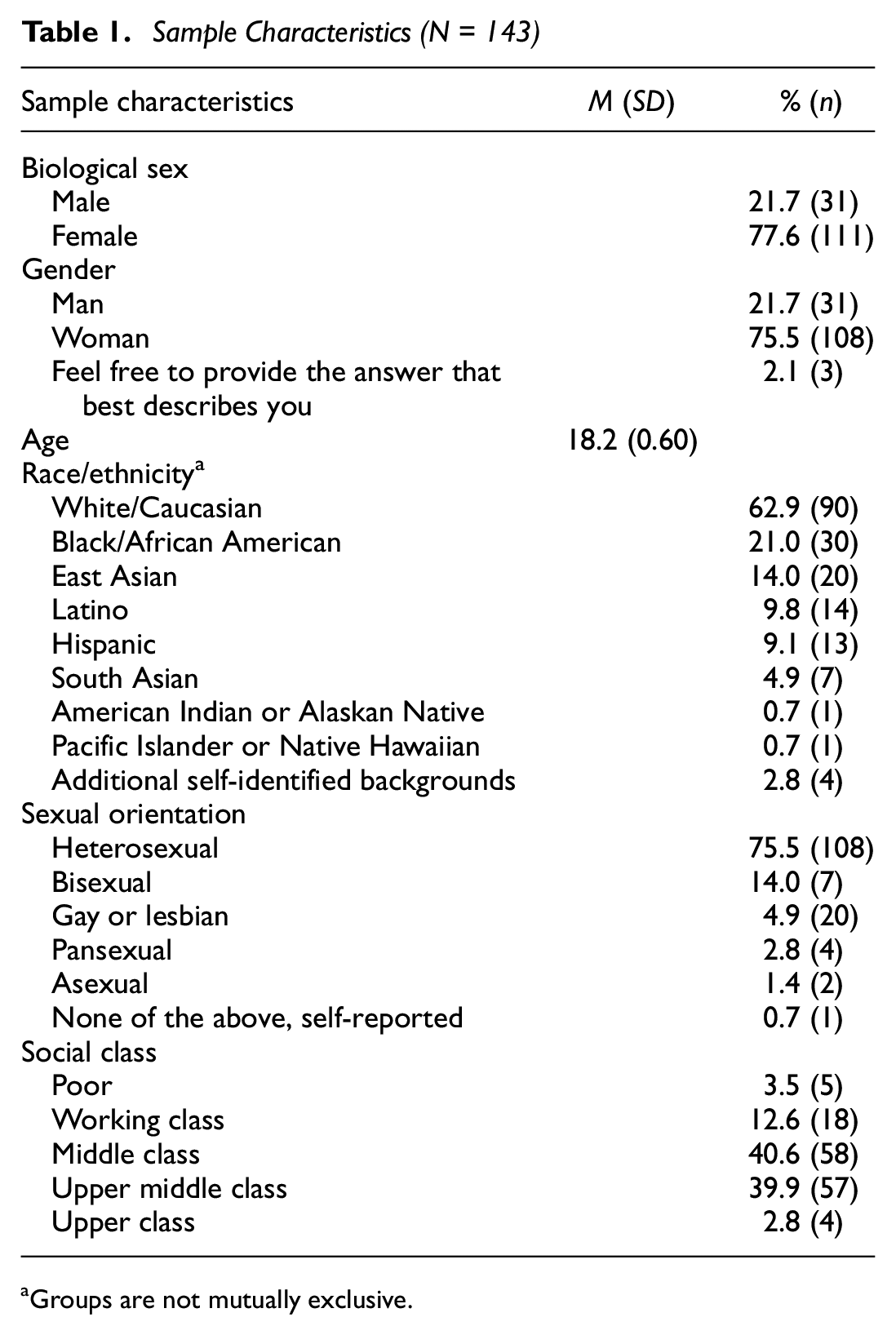
Participants were recruited among the undergraduate students at a university in the southeastern United States. Eligible participants had to be at least 18 years old, spending their first year on their university’s campus, single, and open and willing to make new friends and interested in going on dates. This campus required first years live on-campus in dormitories, meaning there was ample opportunity to meet new people in a wide variety of social settings and to see the people again over time, effectively creating a greenhouse in which new relationships could blossom and grow. Although 150 participants completed the baseline survey, seven did not attend the initial in-lab session, thus eliminating them from the remainder of the study. Table 1 describes characteristics of the 143 sample participants.
Sample Characteristics (N = 143)
Groups are not mutually exclusive.
Assuming no interdependence due to the nested structure of the data, a conservative approach, a priori power analyses suggested a target sample size of N = 145 had ample power (80%) to detect a small-to-medium effect (f2 = .055) at the person-level. Given the much larger number of observations at the report-level, our sample size is above recommendations of sampling at least 50 observations at Level 2 and at least 3 (M = 4.58) observations at Level 1 to avoid biased standard error estimates (Maas & Hox, 2005).
Procedure
Participants enrolled in this semester-long study within the first 5 weeks on campus of the first semester of their first year at their university. First, they completed a baseline online survey and an initial in-lab session. Over the remainder of the semester, participants fulfilled the event-sampling portion of the study, in which they completed a 10-min online questionnaire immediately after social time spent in-person with a new potential friend or romantic interest. Participants were instructed to complete up to nine of these Initial Social Interaction Reports during the study, specifically, up to six for new potential friends and three for new potential romantic interests, if they had them. After completing an Initial Social Interaction Report, participants were automatically sent Follow-Up Reports 3 days and again 1 week after the initial meeting, answering questions about that particular person. Finally, to understand relationship progression, participants completed an End-of-Semester Follow-Up in which they reported on each potential partner for whom they had completed an Initial Social Interaction Report. On average, the number of days between the initial social interaction report and completion of the end-of-semester follow-up was 57.63 (Mdn = 57, range = 5–126), or approximately 2 months (see Supplementary Online Material [SOM] for more details).
Initial Social Interaction Report
Participants were instructed to complete an Initial Social Interaction Report immediately after any new meaningful interaction with new potential friends and potential romantic interests. A meaningful interaction was defined as “a short face-to-face conversation or a longer social event, but it’s the one that makes you think there may be potential for friendship or a romantic relationship with that person.” The interaction needed to be with a unique person who was new to the participant, and participants answered a question to affirm that at the beginning of the report. Participants were specifically instructed not to report on anyone they had a history with and to report on first-time in-person interactions only. We requested participants complete the report as soon as possible after the interaction occurred, ideally within 1 to 2 hr of the event, but at most within 24 hr. The median length of the initial interaction was 90 min.
A small subset of participants (n = 14; 9.79% of the sample) who attended the in-lab session completed zero Initial Social Interaction Reports. The total number of Initial Reports was 591 (M for participants who completed at least one = 4.58). 2 Participants categorized the interaction partner as either “a new acquaintance” or “someone I’m interested in romantically” and indicated the interaction partner’s gender (see SOM for cross-tabulation of participant’s and partner’s Gender × Relationship Type). Participants described the interaction and answered questions about their experience during it and their perceptions of the interaction partner. To be cautious, we also asked if they knew the person at all prior to the interaction (e.g., from around campus or social media).
See Table 2 for details on the Initial Social Interaction Reports and Follow-Ups.
Frequencies of Initial Social Interaction Reports and Follow-Up Reports
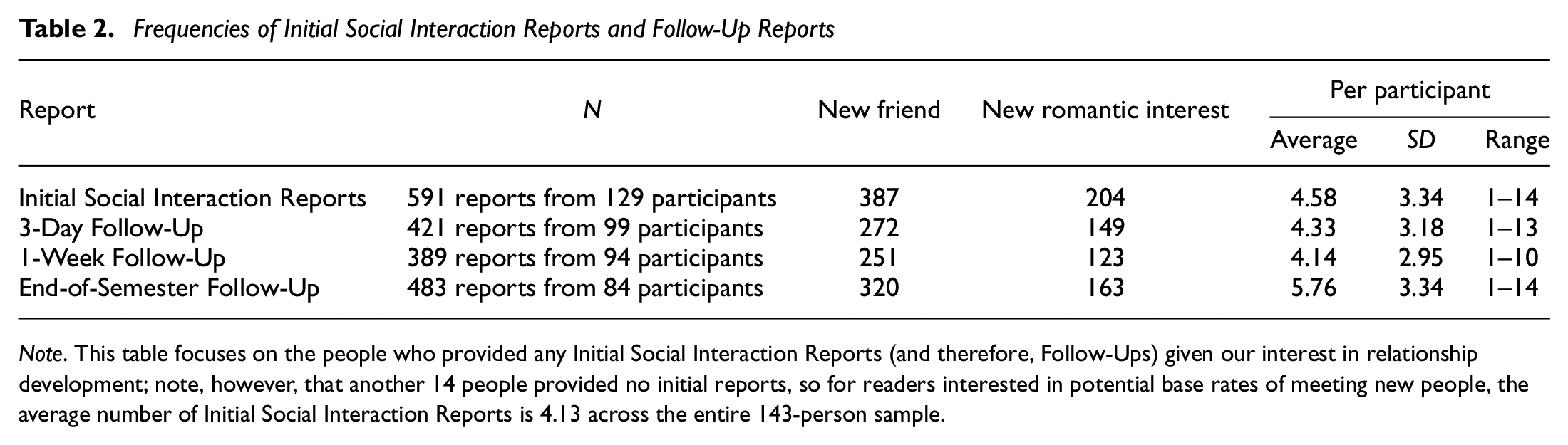
Note. This table focuses on the people who provided any Initial Social Interaction Reports (and therefore, Follow-Ups) given our interest in relationship development; note, however, that another 14 people provided no initial reports, so for readers interested in potential base rates of meeting new people, the average number of Initial Social Interaction Reports is 4.13 across the entire 143-person sample.
Measures
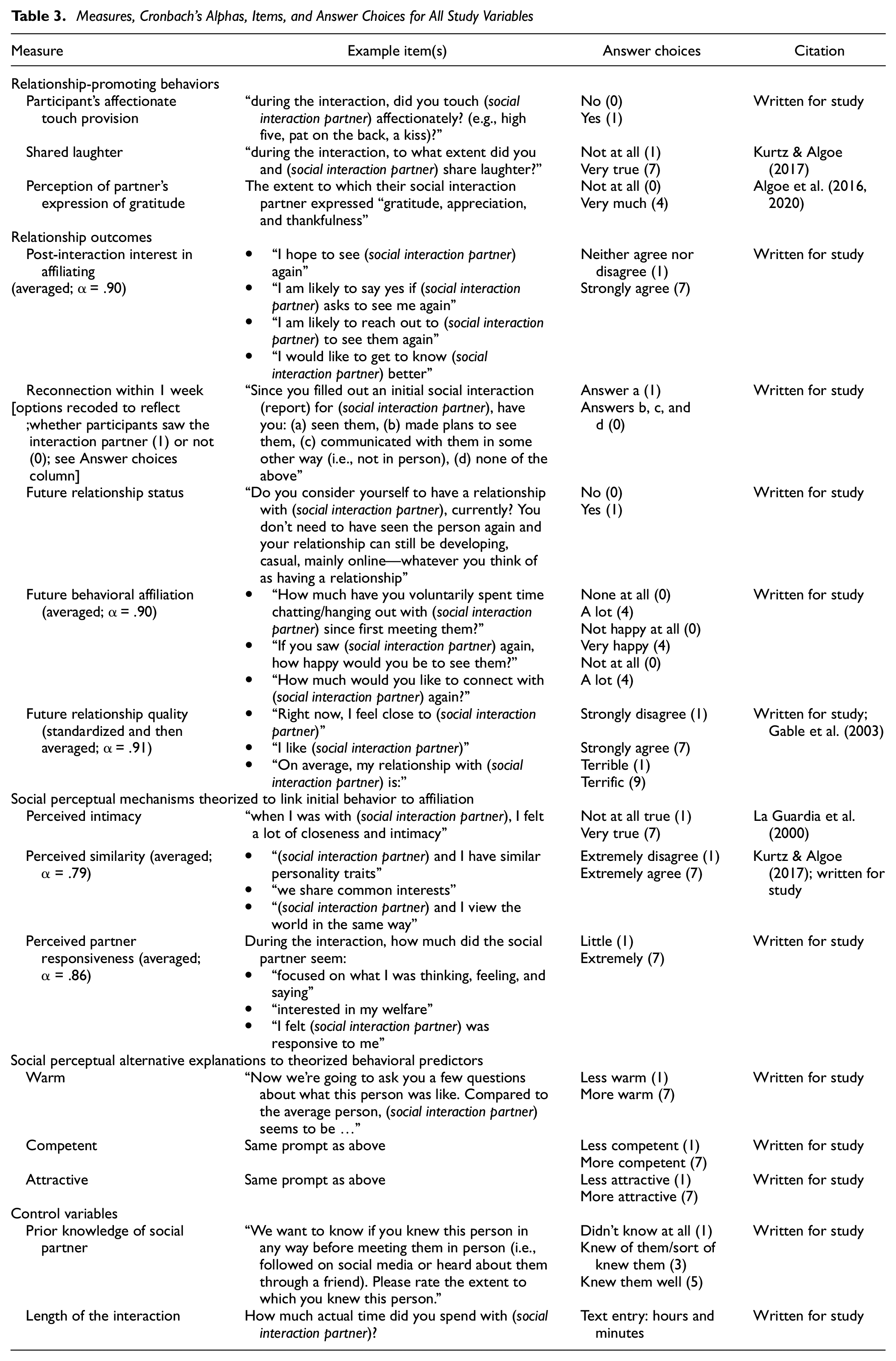
All study measures can be found in Table 3. The predictors were three reported relationship-promoting behaviors—participant’s affectionate touch provision, shared laughter, and social partner’s gratitude expression. Outcomes included one concurrent outcome, post-interaction interest in affiliating, and four future outcomes about relationship development. Finally, Table 3 also includes the three theoretically derived social perceptual mechanisms linking each behavior to concurrent interest in affiliating (Hypothesis 2), variables addressing the three social perceptual alternative explanations, and two relevant control variables.
Measures, Cronbach’s Alphas, Items, and Answer Choices for All Study Variables
Results
Data Analysis Strategy
We conducted multilevel analyses in which each social interaction partner was nested within the participant (Laurenceau & Bolger, 2005). For all models, we used maximum likelihood estimation and allowed intercepts to vary randomly while treating slopes as fixed. See SOM for R packages and functions used for specific models.
To test Hypothesis 1, we separately tested the association between each self-reported behavior and post-interaction interest in affiliating. We also controlled for how well the participant knew the social partner prior to the interaction and, separately, the duration of the initial interaction. Additional models controlling for a different type of variable, enjoyment of the interaction, can be found in SOM. We then investigated three alternative explanations for each association in separate models; these models controlled for three unique facets of desirability of the social partner: warmth, competence, and attractiveness. Based on the theory, we did not predict Hypothesis 1 would be moderated by relationship type and also test that model.
Tests of all indirect effects to address Hypothesis 2 (i.e., theorized social perceptual mechanisms linking behavior with post-interaction interest in affiliating) used the standard of 1-1-1 mediation (Zhang et al., 2009). Specifically, we used the Monte Carlo Method for Assessing Mediation (MCMAM; Selig & Preacher, 2008), setting iterations to 20,000 and the confidence interval (CI) significance threshold to 95%. The pre-registered analyses testing the same social perceptual mechanisms linking behavior with 1-week future reconnection can be found in the SOM.
To address Hypothesis 3, we tested whether each social behavior was directly associated with longitudinal outcomes, specifically, interacting with the social partner again within the week (categorical) as well as relationship status (categorical), affiliation behavior (continuous), and relationship quality (continuous) at the end of the semester, controlling for how well they knew them prior to the initial interaction.
Finally, to test Hypothesis 4, we use the same MCMAM strategy outlined above to examine if those direct associations were mediated by immediate interest in affiliating as a result of the initial interaction. 3
Descriptive Statistics
Table 4 displays descriptive information for all study variables, organized by relationship type (potential friend versus potential romantic interest). As planned, these interactions were of brand-new, budding relationships: Only 31 of the 591 total reports reported somewhere between knowing of the social partner and knowing them well (n = 2). Notably, despite feeling there was potential for a relationship when completing the Initial Interaction Report, not every meaningful first encounter developed into one: Whether participants considered themselves to have a relationship with the person approximately 2 months later was much higher than base rates from speed-dating paradigms (Eastwick et al., 2021) but not much better than chance: Approximately 61% and 57% of the potential friends and romantic interests, respectively, were said to be in relationships at the end-of-semester follow-up.
Means, SDs, and Frequencies for all Study Variables, Grouped by Relationship Type
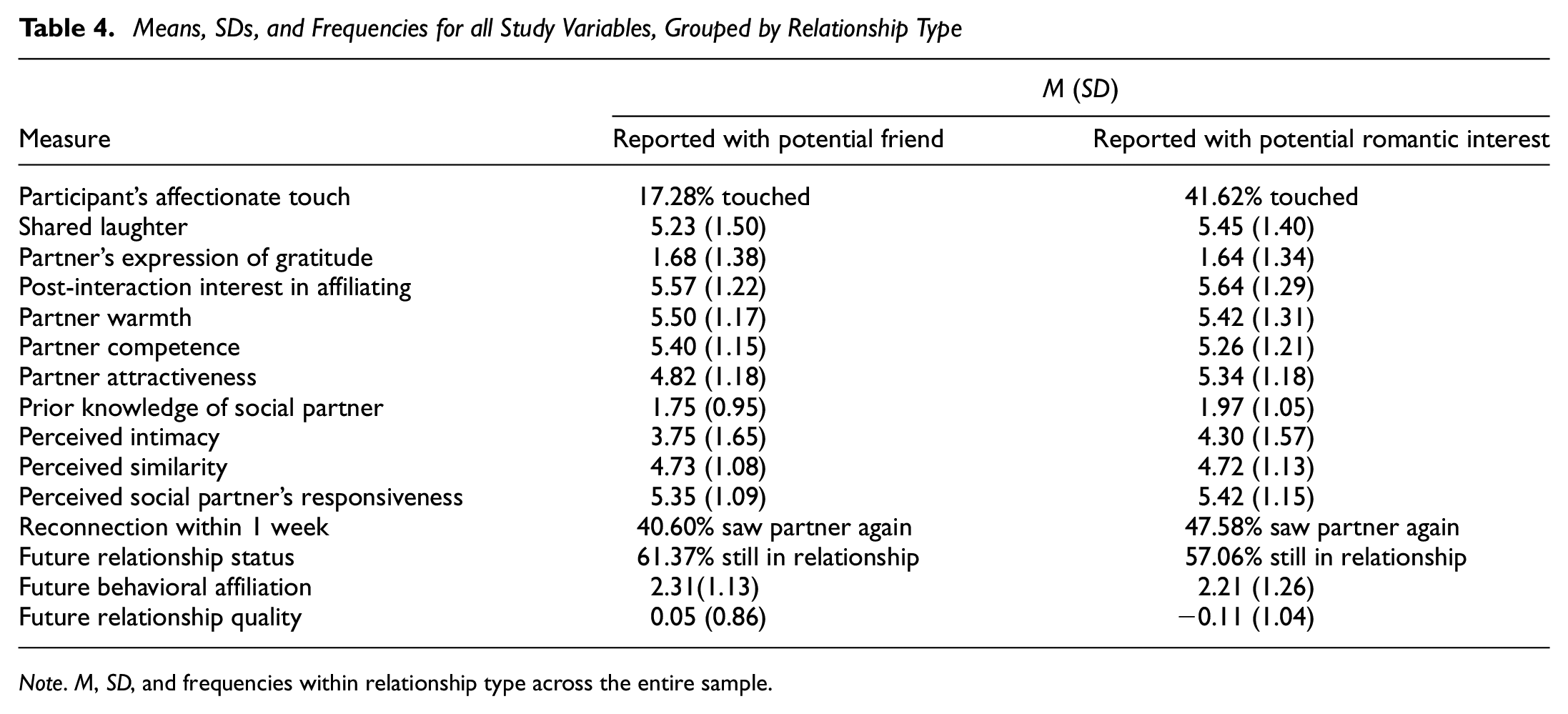
Note. M, SD, and frequencies within relationship type across the entire sample.
All means, SDs, ranges, and bivariate correlations for study variables can be found in Table 5. Note the bivariate correlations do not account for nesting of the data (i.e., report nested within participant) but illustrate the associations. We note significant but modest correlations between participant’s affectionate touch and shared laughter (r = .15) and between shared laughter and partner’s gratitude expression (r = .16) but no correlation between affectionate touch and partner’s gratitude (r = .06), suggesting participants did not unilaterally endorse all three behaviors.
Raw Bivariate Correlations, Means, Level 1 and Level 2 SDs, and Ranges for All Study Variables
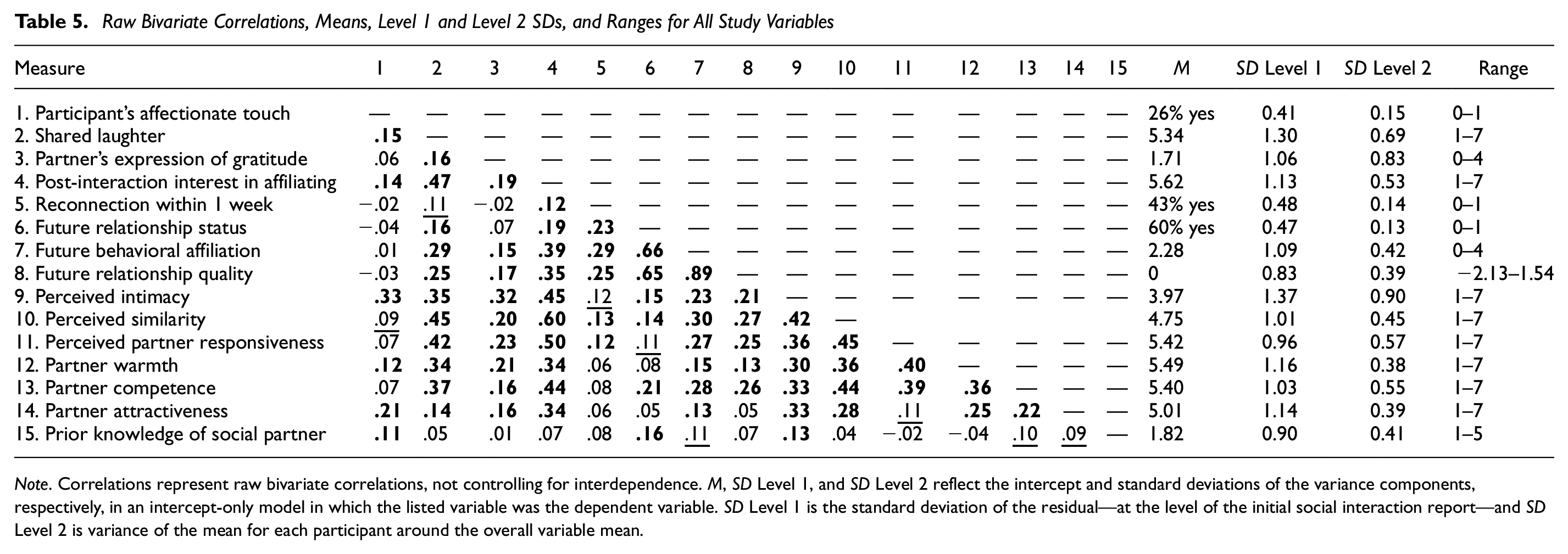
Note. Correlations represent raw bivariate correlations, not controlling for interdependence. M, SD Level 1, and SD Level 2 reflect the intercept and standard deviations of the variance components, respectively, in an intercept-only model in which the listed variable was the dependent variable. SD Level 1 is the standard deviation of the residual—at the level of the initial social interaction report—and SD Level 2 is variance of the mean for each participant around the overall variable mean.
Bold number p < .01. Underlined number p < .05.
Hypothesis Tests
Hypothesis 1: Does Behavior Predict Post-Interaction Interest in Affiliating?
In separate models with each reported behavior predicting post-interaction interest in affiliating, engaging in affectionate touch with the social partner (b = .40, p < .01), sharing a laugh with them (b = .39, p < .001), and perceiving the social partner to express gratitude (b = .17, p < .001) were each associated with greater interest in affiliating at the end of the interaction, controlling for knowing the social partner prior; see SOM for full model results.
In the interest of space, we present the results of several additional tests in the SOM. Results held after controlling for the length of the interaction (Supplementary Table 3). Each behavior also continued to predict interest in affiliating when controlling for the warmth, competence, or attractiveness of the social partner, separately (Supplementary Table 6). In models with all three behaviors simultaneously predicting post-interaction interest in affiliating, the conclusions are the same (Supplementary Table 5). Finally, with one exception, the association was not moderated by relationship type, and even there (shared laughter), the simple slopes within each type remained significant, with the expected association being stronger for romantic interests than for friends (Supplementary Table 7).
Hypothesis 2: Did the Theorized Social Perceptual Mechanisms Link Each Behavior With Post-Interaction Interest in Affiliating?
Results are consistent with hypotheses. Participant’s affectionate touch was significantly positively associated with perceiving greater intimacy with the social partner (b = 1.08, 95% CI = [0.81, 1.36]), which in turn predicted the participant’s greater interest in affiliating with the person immediately following the interaction (b = 0.34, 95% CI = [0.28, 0.40]), controlling for affectionate touch. The indirect effect had an associated 95% CI of [0.28, 0.51]. Sharing laughter was significantly positively associated with perceiving the social partner as more similar (b = 0.32, 95% CI = [0.26, 0.38]), which in turn was associated with the participant’s greater immediate post-interaction interest in affiliating (b = 0.54, 95% CI = [0.46, 0.62]), controlling for shared laughter. The indirect effect had an associated 95% CI of [0.13, 0.21]. Finally, partner’s expression of gratitude predicted perceiving that partner as responsive (b = 0.18, 95% CI = [0.11, 0.25]), which in turn predicted participant’s greater post-interaction interest in affiliating (b = 0.54, 95% CI = [0.45, 0.62]), controlling for partner’s gratitude expression. The indirect effect had an associated 95% CI of [0.05, 0.13].
Hypothesis 3: Do Social Behaviors Forecast Relationship Development?
One key question this study addresses is whether behavior during initial interactions forecasts the long-term development of a relationship. Of all the reported new potential social partners, participants saw 43% of them again within the week. And, approximately 2 months later, 60% of them were still in relationships. Table 6 summarizes the results of models with each behavior directly predicting the four indicators of relationship development.
Initial Affectionate Touch Provision, Shared Laughter, and Expressed Gratitude Predicting Future Indicators of Relationship Development

Note. All associations with future outcomes held when controlling for number of days between the initial interaction and completion of end-of-semester follow-up. CI = confidence interval.
p < .05. **p < .01. ***p < .001.
Participant’s affectionate touch did not directly forecast the development of the relationship: No associations were significant. However, shared laughter robustly forecasted the development of the relationship, significantly predicting whether they saw the social partner again within the week, whether they indicated the relationship was ongoing at the end-of-semester follow-up, as well as greater future behavioral affiliation and future relationship quality. Partner’s gratitude expression was not significantly associated with the categorical outcomes of seeing the partner again within the week or indicating that they had a relationship with the person at the end-of-semester follow-up but did significantly positively forecast future behavioral affiliation and future relationship quality. Results held when controlling for prior knowledge of the social partner; see SOM for full results.
Conclusions for reconnecting within 1 week held when controlling for social perceptions of the partner (see Supplementary Table 6). Conclusions also held when controlling for the number of days between the initial interaction and long-term outcomes (i.e., end-of-semester follow-up), and those full results are reported in the SOM (Supplementary Table 9).
Hypothesis 4: Does Behavior Predict Relationship Development Through Post-Interaction Interest in Affiliating?
Consistent with Hypothesis 4, 11 out of 12 mediation models revealed that, through the mechanism of post-initial-interaction interest in affiliating, each theorized relationship-promoting behavior within that initial interaction was associated with each long-term relationship outcome. Figures 1 to 3 present mediational models for each behavior.
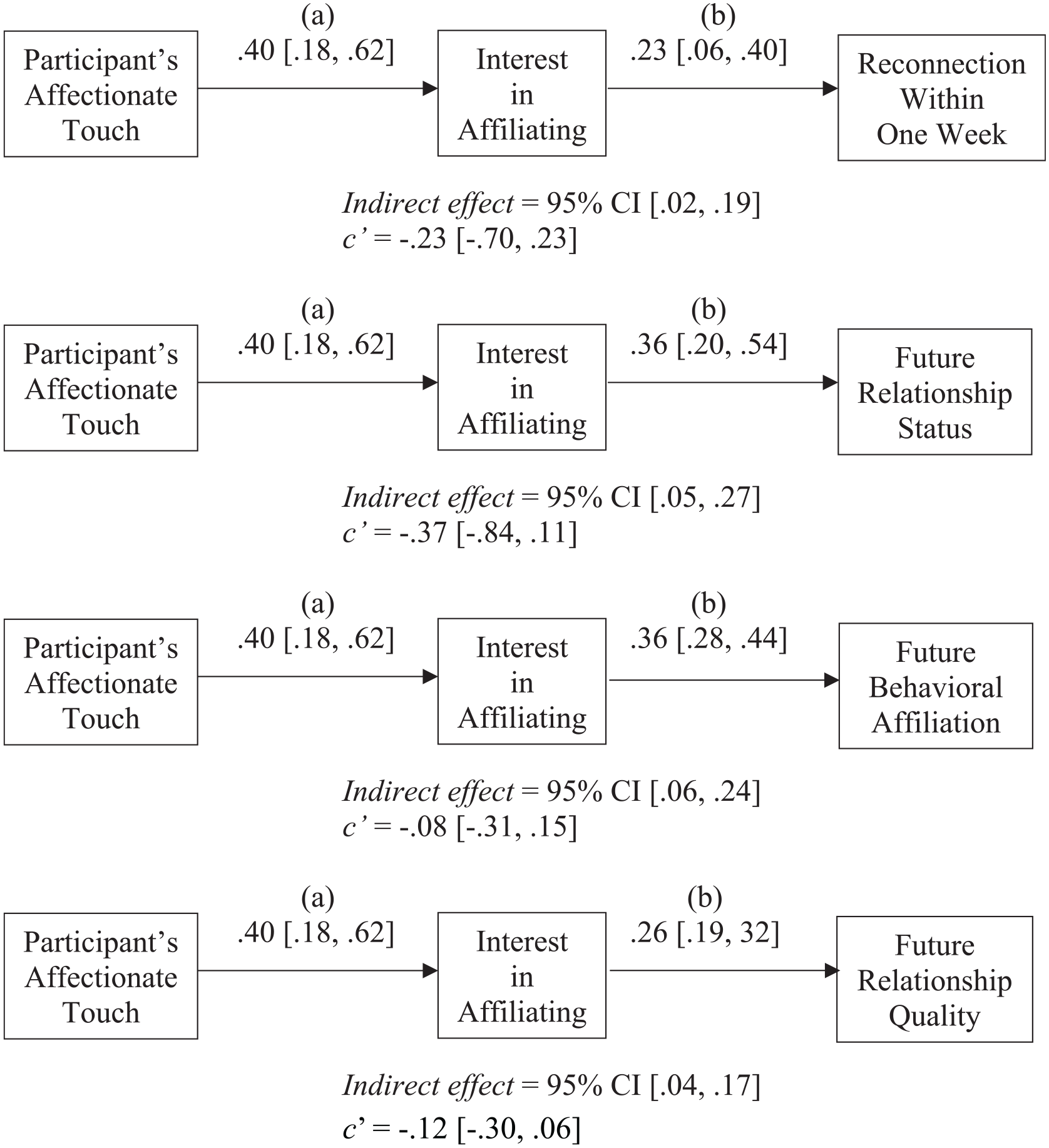
Mediation Analyses Examining Post-Interaction Interest in Affiliating as a Mechanism Linking Participant’s Affectionate Touch With Future Relationship Outcomes
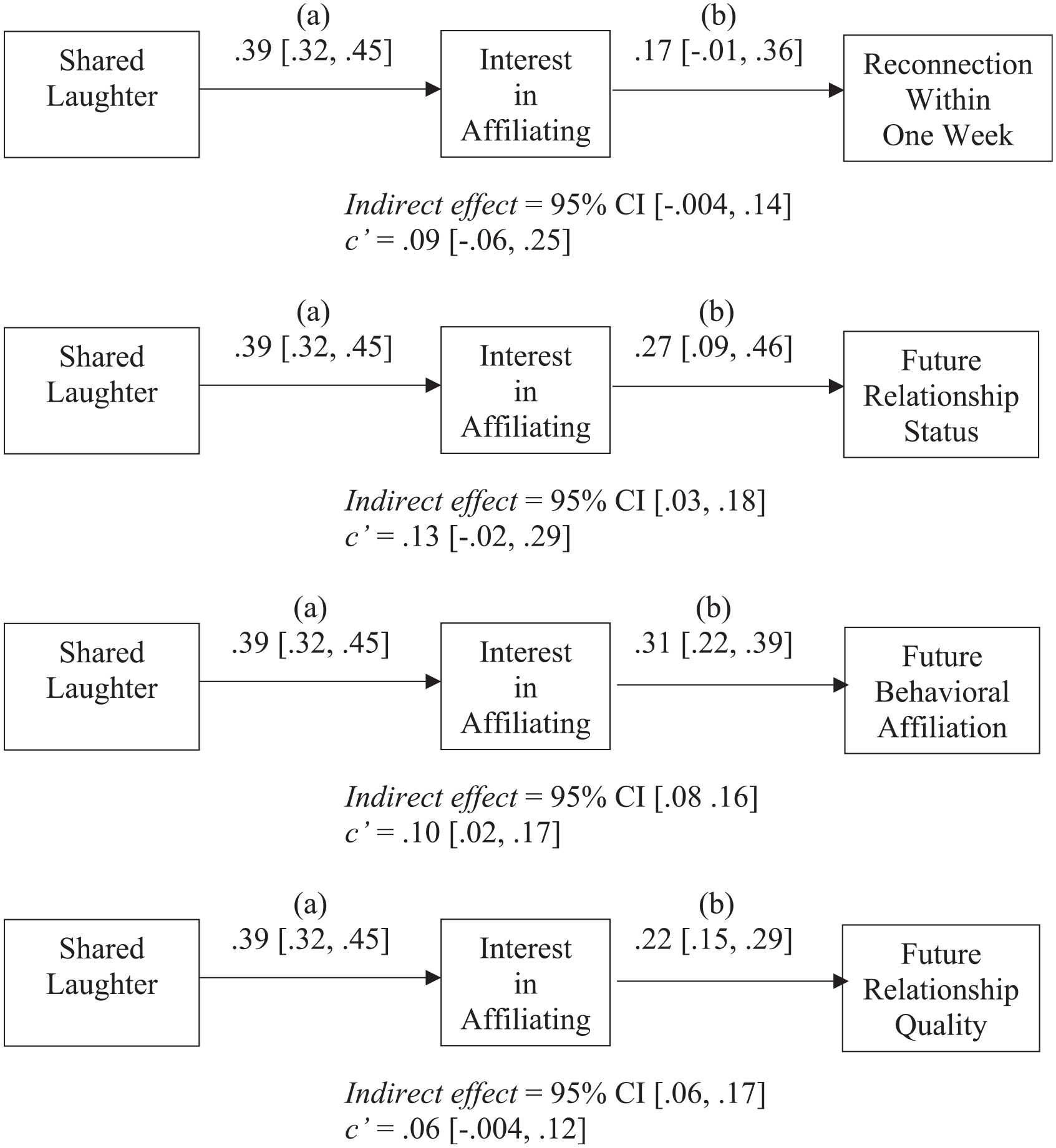
Mediation Analyses Examining Post-Interaction Interest in Affiliating as a Mechanism Linking Shared Laughter With Future Relationship Outcomes
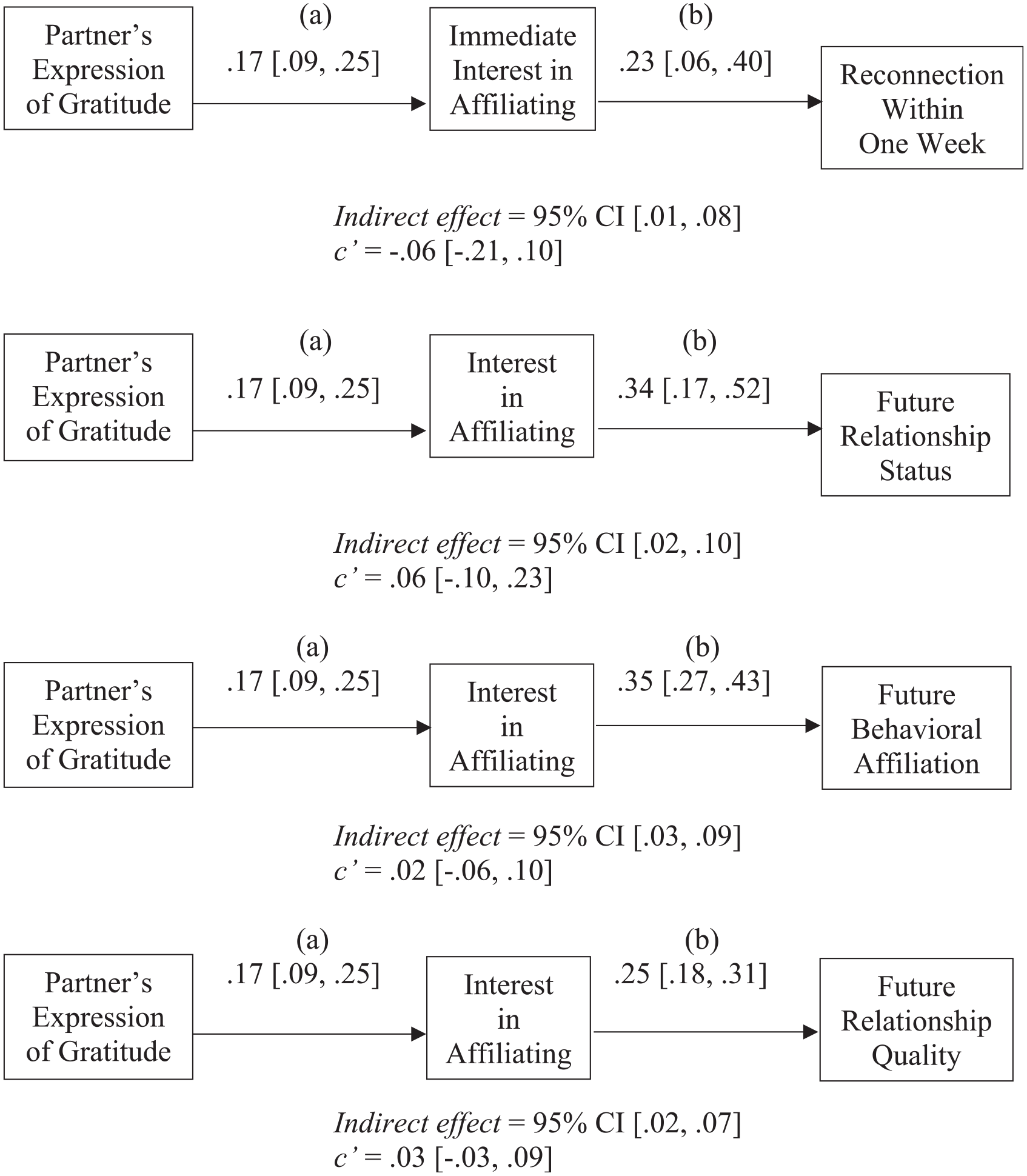
Mediation Analyses Examining Post-Interaction Interest in Affiliating as a Mechanism Linking Perception of Partner’s Expression of Gratitude With Future Relationship Outcomes
Discussion
What happens the first time someone meets another person should set the stage for what comes next. Interpersonal behaviors send interpersonal signals that help strike the proverbial match. In turn, this initial spark can feed forward to the development of a high-quality relationship. This study addressed a significant gap in the relationship initiation literature by using real-world first encounters to predict relationship formation.
Specifically, we focused on reports of three key behaviors in initial interactions between both friends and romantic interests that are theorized to promote relationships via interpersonal signals. The behaviors were affectionate touch, shared laughter, and partner's expressed gratitude. As predicted, reported affectionate touch was associated with greater concurrent interest in affiliating via increased perceptions of intimacy, shared laughter was associated with greater interest in affiliating via greater perceptions of similarity, and partner’s expressed gratitude was associated with greater interest in affiliating via perceptions of that person’s responsiveness. Moreover, consistent with our theorizing, this greater interest in affiliating at the end of a first meaningful interaction provided an important mediating pathway through which each behavior was associated with greater likelihood of seeing that person within the week (except shared laughter, which had a singular and strong direct effect on reconnecting within the week), as well as greater likelihood of saying one was in a relationship with the person, greater reported behavioral affiliation, and higher quality of the relationship an average of 2 months later.
These three behaviors, each with their own area of research within established relationships, particularly those that are romantic in nature, share in common their value in promoting social bonds (Algoe & Jolink, 2021). However, this is the first study, which we are aware of, to study their value in the context of new potential romantic relationships, and—with just two exceptions (cf. Kurtz & Algoe, 2017; L. A. Williams & Bartlett, 2015)—new potential friends. Moreover, the focal behaviors predicted immediate interest in affiliating, even beyond well-established social perceptual factors of perceived partner warmth, competence, and attractiveness. Critically, these effects were significant regardless of relationship type, which speaks to the potential value of examining relationship-transcending behavioral signals in future research (e.g., Montoya et al., 2018; Vacharkulksemsuk et al., 2016) as well as to the potential generalizability of the findings to other relational contexts (e.g., co-workers, mentor/mentee). Broadly, these findings provide an important contribution to the traditionally siloed literatures of friendship and romantic relationship initiation (Sprecher et al., 2018).
We believe these are some of the first data to document associations between what happens in initial encounters and future development of a relationship with both friends and lovers. Furthermore, our novel event-based paradigm offers several strengths. First, we studied people in a developmental period where they had ample opportunity to meet and continue to connect with others, meaning we could collect repeated measures from participants in a reasonable timeframe. Second, our assessments began when the spark began, meaning we may have increased the chance for the relationship to develop, compared to a zero-acquaintance paradigm like speed dating (Eastwick et al., 2021). Indeed, an average of 2 months later, approximately 60% said they were still in relationships. This means that participants could not always predict which relationships would develop from initial interactions, but we capitalized on that variability, using a theory to test which aspects of those interactions might engender future relationships. Overall, despite recent evidence (Eastwick et al., 2018) and theoretical models (Eastwick et al., 2019) of relationship initiation trajectories over time, the present work leveraged prospective rather than retrospective reports to capture a real-world phenomenon that has eluded rigorous psychological study: the actual genesis of high-quality relationships (Campbell & Stanton, 2014).
Although the prospective tests of relationship development strengthen conclusions, we acknowledge the limitation that the findings are correlational. This leaves open the possibility that the order of the proposed theoretical pathways for each behavior could be reversed (e.g., perhaps greater perceived similarity facilitated shared laughter). Although our hypotheses were well grounded in prior literature, we would encourage replication using complementary methods. The fact that we used self-reported rather than observed behavior is a limitation that we believe is offset by the ecological validity of the context and the myriad of studies documenting that perceptions of behavior tend to be correlated with observed behavior (e.g., positive and negative emotions, Gordon & Chen, 2014; shared laughter, Kurtz & Algoe, 2017; conflict, Tobin et al., 2015) and meaningfully contribute to future outcomes (Fletcher et al., 2000). That said, self-report is not a perfect substitute for actual observed behavior and could instead be a reflection of another higher-level perception about the partner or relationship (e.g., initial attraction, reciprocal liking). Future work should endeavor to replicate these findings using more proximal reports (e.g., Electronically Activated Recorders worn in daily life) or observations (e.g., videorecorded initial interactions). Despite these methodological limitations, we see the current data as promising initial evidence that the relationship-promoting behaviors of affectionate touch provision, shared laughter, and perceptions of expressed gratitude may enhance social connections at their outset and serve as important cues about the potential trajectory of high-quality relationships. There may be others.
In addition, we acknowledge that, as behavior and interest in affiliating were measured concurrently at the end of the interaction, they could have actually occurred in the reverse order that we tested. For example, one’s initial interest in someone may motivate them to engage in affectionate touch, as a way to signal that interest (Burgoon et al., 1992; Williams & Kleinke, 1993). This seems most plausible for affectionate touch, but a case could be made for shared laughter and partner expression of gratitude as well, and ultimately these processes likely work as a dynamic, bidirectional system. However, for the present study, we base our conclusions about Hypothesis 4 on the following pieces of evidence: First, mediational results are consistent with our hypothesized order. Second, in that these were initial interactions—the people did not know one another in advance—it makes logical sense that behavior would be an important signal of whether one might like someone, after, third, controlling (as we did) for perceived warmth, competence, and attractiveness. Finally, other evidence lends further support to our theorized causal order from behavior to downstream relationships, regardless of whether other factors sometimes prompted the behaviors (especially touch): Controlling for either their prior knowledge of the person or interaction length did not mitigate results of Hypothesis 1, nor—crucially—did prior knowledge mitigate the significant direct associations between shared laughter or partner expressed gratitude and downstream relationship outcomes (Hypothesis 3). However, it will be important for future work to investigate precursors to these behaviors in initial interactions.
In closing, this study demonstrates an ecologically valid test of the hypothesis that behaviors known to promote existing relationships (Algoe & Jolink, 2021) are also important when those relationships are just beginning. In fact, they appear to sometimes directly, but always indirectly, contribute to the growth of new relationships. This work highlights affectionate touch provision, shared laughter, and partner’s expression of gratitude as important features of initial interactions that may signal a potential viable social bond at zero-acquaintance and may help to ramp up initial interest in getting to know that person better—via initial interest in affiliating, which in turn spurs future interactions with them. The findings highlight relationship-promoting behaviors as an avenue for exploration within relationship initiation contexts while showcasing a novel method to prospectively study trajectories of relationship development.
Supplemental Material
sj-docx-1-spp-10.1177_19485506231153438 – Supplemental material for What Happens in Initial Interactions Forecasts Relationship Development: Showcasing the Role of Social Behavior
Supplemental material, sj-docx-1-spp-10.1177_19485506231153438 for What Happens in Initial Interactions Forecasts Relationship Development: Showcasing the Role of Social Behavior by Tatum A. Jolink and Sara B. Algoe in Social Psychological and Personality Science
Footnotes
Acknowledgements
The authors thank Kylie Chandler, Brian Don, Emily Hooker, Brett Murphy, Ayana Younge, and Jieni Zhou for their feedback on an earlier version of this manuscript. The authors are grateful to the participants who gave their time and the research assistants who helped make the study possible.
Handling Editor: Richard Slatcher
Authors’ Note
Portions of this article have been presented at conferences.
Author Contributions
Both authors developed the study concept and study design and collected the data. T. A. Jolink conducted the data analysis, and both authors interpreted the data. T. A. Jolink drafted the manuscript, and S. B. Algoe provided critical revisions. Both authors approved the final version of the manuscript for submission.
Declaration of Conflicting Interests
The author(s) declared no potential conflicts of interest with respect to the research, authorship, and/or publication of this article.
Funding
The author(s) disclosed receipt of the following financial support for the research, authorship, and/or publication of this article: The study was supported by a grant from the John Templeton Foundation (#61280).

Supplemental Material
Supplemental material for this article is available online.
Notes
Author Biographies
References
Supplementary Material
Please find the following supplemental material available below.
For Open Access articles published under a Creative Commons License, all supplemental material carries the same license as the article it is associated with.
For non-Open Access articles published, all supplemental material carries a non-exclusive license, and permission requests for re-use of supplemental material or any part of supplemental material shall be sent directly to the copyright owner as specified in the copyright notice associated with the article.
