



Abstract
How do people’s religious beliefs and behaviors change over the course of adulthood? Previous research found rapid decreases in religiosity during young adulthood and rebounds in middle and late adulthood. However, secularization trends—if not accounted for—can bias or obscure age-graded changes in religiosity. Using longitudinal data from over 14,000 Dutch participants aged 16 to 101 years, we disentangled secularization trends from developmental changes in religiosity. Controlling for secularization, we found no evidence for age-graded declines in religiosity among young adults but lifelong increases in religiosity. These increases were most pronounced during middle to late adulthood, consistent with theories that emphasize the self-transcendent focus of this life stage. College-educated individuals were generally less religious and experienced less pronounced age-graded increases in their religious beliefs. These findings must be understood in the context of secularization trends as indicated by significant decreases in religiosity among people of all demographic groups.
Introduction
Individual differences in religiosity are not static but develop over time (Dillon & Wink, 2007). Social scientists have studied the development of religiosity for decades (Hites, 1965). The extant research provides a rough picture of the lifespan trajectory of religiosity, with most studies pointing to plummeting levels in young adulthood, increasing levels during middle adulthood, and peak levels during late adulthood. However, most existing studies did not account for prevailing secularization trends that may bias or obscure age-graded changes in religiosity (Newport, 2019). Religiosity is among the psychological variables that undergo massive historical changes (Swatos & Christiano, 1999). It is critically important to account for these changes when modeling lifespan changes in religiosity. In the present study, we disentangle developmental changes in religiosity from secularization trends using 11-wave longitudinal data from over 14,000 Dutch participants aged 16 to 101 years.
Religiosity Across the Lifespan
Young adulthood has been frequently associated with dramatic declines in religiosity (Desmond et al., 2010). In Western societies, most “emerging adults” leave the parental home after high school. This change of residence appears to coincide with significant shifts in values and religious beliefs (Arnett & Jensen, 2002). College experiences may further spur emerging adults’ desire to explore different worldviews and novel activities, driving them farther away from previously held religious beliefs and activities. Existing research has partly supported the theorized decreases in religiosity during emerging adulthood (Chan et al., 2015). For example, Stoppa and Lefkowitz (2010) found significant declines in college students’ religious service attendance. However, in contrast to theoretical predictions, religious beliefs remained stable in this sample. Desmond et al. (2010) also found significant declines in religious service attendance among U.S. youth. In this sample, religious beliefs also decreased over time, but these decreases were less dramatic than those observed for service attendance.
There are reasons to expect religiosity to rebound in middle adulthood. As people marry and settle down, they often invest in roles that are connected with religious institutions and values. The few studies that have tracked religiosity in middle adulthood provided mixed evidence for this hypothesis, with some reporting increases in religiosity (McCullough et al., 2005) and others finding religiosity to be stable (Hayward & Krause, 2013) or decrease during this life stage (Dillon & Wink, 2007).
As individuals grow closer to the end of life, religious activities are thought to serve as important meaning-making processes and coping strategies (Idler, 2006). On the other hand, age-graded declines in physical health may hinder older adults’ ability to participate in religious activities (Benjamins, 2004). Existing studies provided no conclusive evidence for late-life changes in religiosity, with some reporting increasing levels up until old age (Bengtson et al., 2015), some indicating stable levels (Courtenay et al., 1992), and others finding decreases, particularly among the oldest old (Idler et al., 2001).
Secularization Trends
Theory and existing research make a strong case for a curvilinear lifespan trajectory of religiosity, with dramatic declines in young adulthood, increasing levels during middle and late adulthood, and potential declines in old age. Conclusive evidence for this trajectory would provide a solid foundation on which theorists and researchers can develop their understanding of the mechanisms driving developmental changes in religiosity.
However, there is one issue that potentially undermines the conclusions that can be drawn from existing research. Over the past 50 years, most Western societies have been growing less religious over time (Bruce, 2002; Joshanloo & Gebauer, 2020; Swatos & Christiano, 1999). These well-documented secularization trends affect all ages and may—if not explicitly modeled—obscure age-graded changes in religiosity.
Thus, accounting for secularization trends may challenge previous conclusions concerning religious development (Wink et al., 2019). For instance, the sharp declines in young adults’ religiosity may partly reflect secularization trends. Similarly, age-graded increases in religiosity during middle and late adulthood might have been obscured or canceled out by secularization effects. Several studies have attempted to disentangle age from secularization effects on religious development; however, most of these studies were constrained by their use of repeated cross-sectional data (e.g., Hayward & Krause, 2015, Twenge et al., 2015). Few longitudinal studies have accounted for secularization trends when charting religious development across the lifespan (for an example, see Bengtson et al., 2015). The first goal of the present study was thus to separate the effects of age (i.e., development) and time (i.e., secularization) to draw a more precise picture of lifespan changes in religiosity in a large and nationally representative sample of the Netherlands.
Moderators of Religiosity Development
Normative changes in religiosity do not imply that everyone changes in the same way. People differ in their individual religiosity trajectories. For instance, although most young adults appear to decrease in religiosity, some remain stable or increase in their religious activities and beliefs (Chan et al., 2015).
What drives individual differences in religiosity development? Here, we examined the moderating effects of variables that have been theorized to predict individual differences in religiosity across the lifespan: gender (McCullough et al., 2005), educational attainment (Arnett & Jensen, 2002), religious background (Petts, 2009), and health (Benjamins, 2004). Consistent with previous research, we expected men, college-educated individuals, and people without a religious upbringing to be less religious on average, more prone to secularization trends, and less prone to age-graded increases across the lifespan. We further expected changes in subjective and functional health to track with decreases in religious activities in old adulthood.
The Present Study
We used longitudinal data from a nationally representative sample of the Netherlands to disentangle age-graded changes in religiosity from secularization trends. Historically, the Netherlands has been a Christian country, with a strong Protestant majority up until the late 19th Century. Since then, there has been a steady decline in Christianity. Today, roughly half of the population report no religious affiliation, 45% are Christians, and 5% Muslim (https://www.cbs.nl/nl-nl/publicatie/2019/22/trends-in-nederland-2019). Against the backdrop of this increasingly secular Western culture, we examined age-graded changes in three measures of religiosity: belief in God, religious service attendance, and praying. Dissociating developmental changes across these measures will refine our understanding of religiosity development, ascertain the role of secularization, and contribute novel information about the processes underlying lifespan changes in religiosity in a secular culture.
Method
Data came from the Longitudinal internet Studies for the Social Sciences (LISS) panel, which includes 11 annual assessments of religiosity in a nationally representative sample of over 14,000 Dutch individuals (Scherpenzeel, 2011). Since 2008, LISS participants have completed annual online surveys on various topics including religious practices and beliefs. Refreshment cohorts are regularly added to LISS to maintain sample representativeness. Some authors of this study have used LISS data in previous studies to examine the development of personality traits (e.g., Schwaba & Bleidorn, 2018), values (Bleidorn et al., 2020) and self-esteem (Bleidorn et al., 2021; Bleidorn & Schwaba, 2018). None of these studies have analyzed changes in religiosity (http://dataarchive.lissdata.nl/publications).
Participants
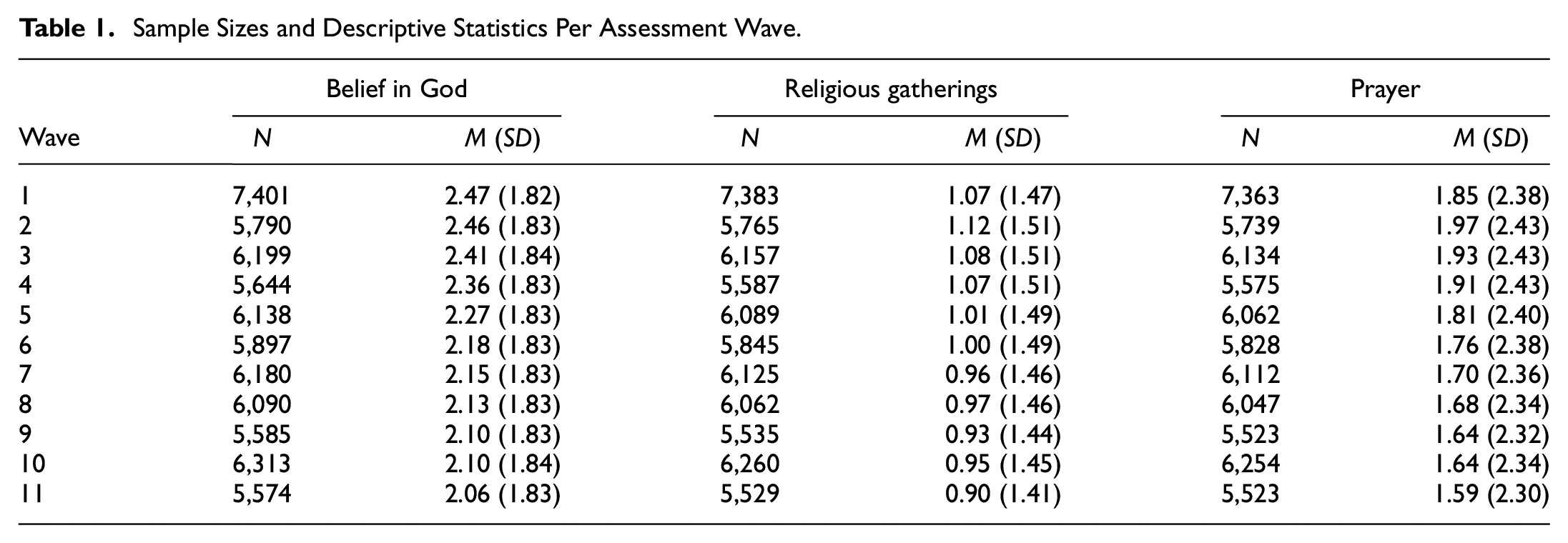
We included participants from all LISS cohorts (2008, 2010, 2012, and 2014) who responded at least once to at least one of three religiosity items described below. The final sample consisted of 14,348 participants aged 16 to 101 years (Mage = 45.61, SDage = 16.06 in 2008). The sample was 53.7% female and 59.14% had a college degree. At the first assessment wave in 2008, 53% of the participants reported no affiliation with a church; 42% were affiliated with a Christian church (18.99% Roman Catholic, 9.84% Protestant, 6.32% Dutch Reformed Church, 2.91% Reformed Churches in the Netherlands, 4.30% other Christian denominations), 2.16% were Muslim, and 1% reported affiliations with other religions. The sample sizes varied across assessment waves and measures (see Table 1).
Sample Sizes and Descriptive Statistics Per Assessment Wave.
Measures
Religiosity
We used three items to assess individual differences in religiosity across 11 annual waves from 2008 to 2019. Two of these items—“Aside from special occasions such as weddings and funerals, how often do you attend religious gatherings nowadays?” and “Aside from when you attend religious gatherings, how often do you pray?” focused on religious behavior and practices. Participants responded to these items on a 7-point Likert-type scale (0 = every day to 6 = never). Responses were reverse coded so that 0 indicated never and 6 indicated every day. The third item focused on participants’ religious beliefs “Which of the following statements best matches your idea of God?” Participants responded to this item on a 6-point Likert-type scale (0 = I do not believe in God to 5 = I believe without any doubt that God exists).
Moderators
We examined the effects of gender (0 = male, 1 = female), educational attainment, and religious background as time-invariant moderators. Participants’ highest educational attainment was included as a dichotomous variable (0 = no college, 1 = college). Participants’ religious background was assessed at baseline through the item “When you were 15 years old, did your parents consider themselves members of a certain religion or church community,” (0 = no, 1 = yes).
We examined participants’ subjective and functional health as time-varying moderators. Subjective health was assessed at each wave (except in 2014) using the item “How would you describe your health, generally speaking?” (1 = poor to 5 = excellent). Functional health was assessed at each wave except in 2014 through three items: (a) “To what extent did your physical health or emotional problems hinder your daily activities over the past month, for instance in going for a walk, walking up-stairs, dressing yourself, washing yourself, visiting the toilet,” (b) “To what extent did your physical health or emotional problems hinder your social activities over the past month, such as visiting friends and acquaintances?” and (c) “To what extent did your physical health or emotional problems hinder your work over the past month, for instance in your job, the housekeeping, or in school,.” Participants responded to these items at each assessment wave on a 5-point Likert-type scale (1 = not at all to 5 = very much). Responses were reverse coded so that 1 indicated poor functional health and 5 indicated excellent functional health. We used these items to compute an overall functional health score at each assessment wave (internal consistencies ranged from α = .86–.91; ω h = .87–.92).
Analyses
We ran a series of mixed growth curve models (Ferrer et al., 2004) to separate the effects of age (i.e., development) and time (i.e., secularization) on changes in the three religiosity measures. We computed each individual’s exact age per assessment wave by subtracting the birth date from the interview date. Time was scaled as single-unit change in assessment wave. For each of the three religiosity measures, we started with an intercept-only (no growth) model and used stepwise model building strategies to identify the change model that fit the data best. To compare the fit of nested models, we used the Bayesian Information Criterion (BIC). To account for the large number of tests, we interpreted p-values <.001 as indicating significant effects. All analyses were conducted in R (R core team, 2020) using the packages lme4 (Bates et al., 2015), nlme (Pinheiro et al., 2021), and psych (Revelle, 2017). All analysis scripts are available at https://osf.io/zgf7v/
We first compared a no growth model to a linear age-based growth curve model that can be written as

at Level 1, where Y[t]n is the observed religiosity score of person n at time t, y0 n is the latent initial level religiosity score of person n, age[t]n is the observed age of person n at time t, ys1 is a latent slope representing age-graded changes in religiosity of person n, and e[t] n is the latent error score of person n at time t. This model includes sources of individual differences in the level and slope, which can be expressed as

at Level 2, where the level and age slope have fixed group means (μ0, μs1) and residuals (e0n, es1n), and these residuals have variance components (σ20, σ2s1). We then extended this model to polynomial models that consider different nonlinear age functions (i.e., quadratic, cubic). Finally, to separate aging processes from secularization trends, we included a term that captures changes in religiosity across assessment waves. The full model can be written as

at Level 1, where Y[t]n is the observed religiosity score of person n at assessment time t, y0 n is the latent initial level religiosity score of person n, age[t] n is the observed age of person n at time t, y1s is a latent slope representing linear age-graded changes in religiosity of person n, agep[t] n is the age basis of power p, yspn a latent polynomial component score of person n, wave[t] n represents the effects of unit change in assessment wave on person n at time t, ys2 is a latent slope, representing change in religiosity across assessment waves for person n, and e[t] n is the latent error score of person n at time t. Again, this model includes sources of individual differences in the level and slopes, which can be expressed at Level 2 as
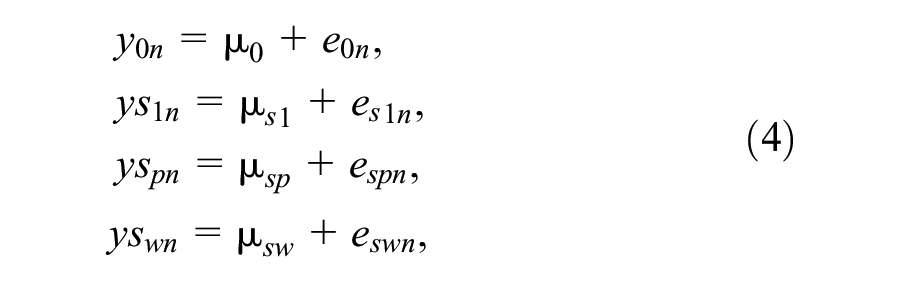
where the intercept, age, and wave slopes have fixed group means (μ0, μs1, μ sp , μ sw ) and residuals (e0n, es1n, espn, and eswn), and these residuals have variance components (σ20, σ2s1, σ2sp, σ2sw). According to this model (see Figure 1), change in religiosity (Y) can be described as a function of two processes: an age-based growth process (i.e., average change in religiosity per year) and a secularization trend (i.e., average change in religiosity per unit change in assessment wave). As a final step, we included each of the moderator variables. Specifically, time-invariant moderators (e.g., gender) were included as covariates at Level 2 and time-variant moderators (e.g., subjective health) at Level 1. Continuous moderators were z-standardized with M = 0 and SD = 1.
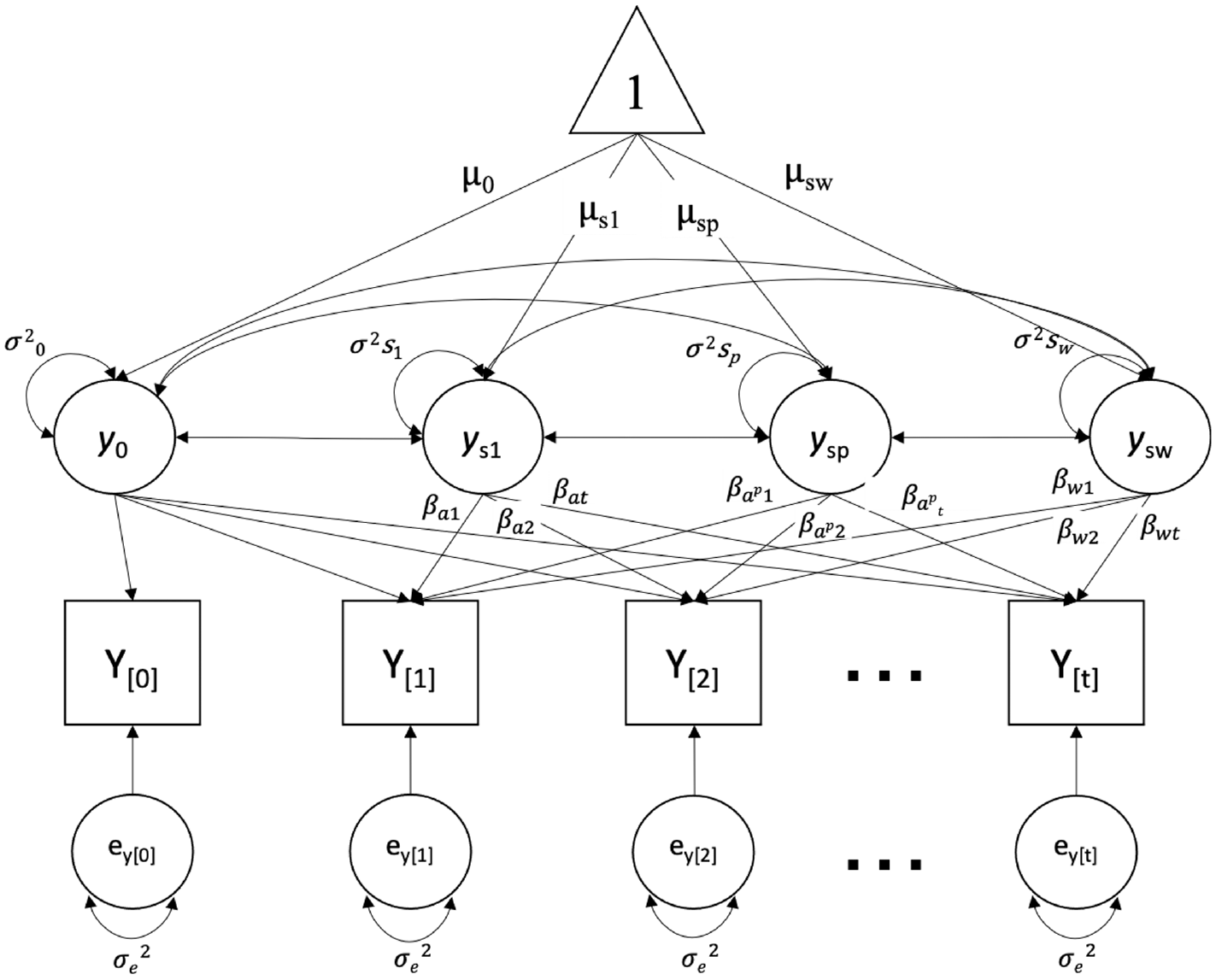
Path Diagram of a Latent Growth Model With Two Processes. Y[t] Score at Time t; y0 = Intercept; ys1 = Linear Age Slope; ysp = Quadratic Age Slope, ysw = Wave Slope; ey[t] Error; 1 Constant; βa = Basis Coefficients for Age; βw = Basis Coefficients for Wave; μ = Means; σ2 = Variances.
Results
Table 1 shows the sample sizes and descriptive statistics for the three religiosity measures at each of the 11 assessment waves. Correlations among the three variables across all waves are available at https://osf.io/zgf7v/
Age- and Occasion-Based Mixed Growth Curve Models
As a starting point, we ran a series of age-based mixed models to identify the age function that best described the different religiosity indicators over time. These models included a model of no growth, a linear age model (with age grand-mean centered at 49.76 years), a quadratic age model, and a cubic age model. Model comparison tests indicated that quadratic age-based growth models with random intercepts and slopes fit the data best for all three religiosity indicators (see Table S1 in the supplemental online materials [SOM] for a comparison of all model BICs). We then extended these models to age- and occasion-based mixed growth models (see Equation 3). For all three religiosity measures, adding a random linear slope that captured change across assessment waves significantly improved model fit. Table 2 presents the parameter estimates of the best-fitting age- and occasion-based mixed growth models.
Best-Fitting Age- and Occasion-Based Mixed Growth Model Parameters for Three Religiosity Indicators
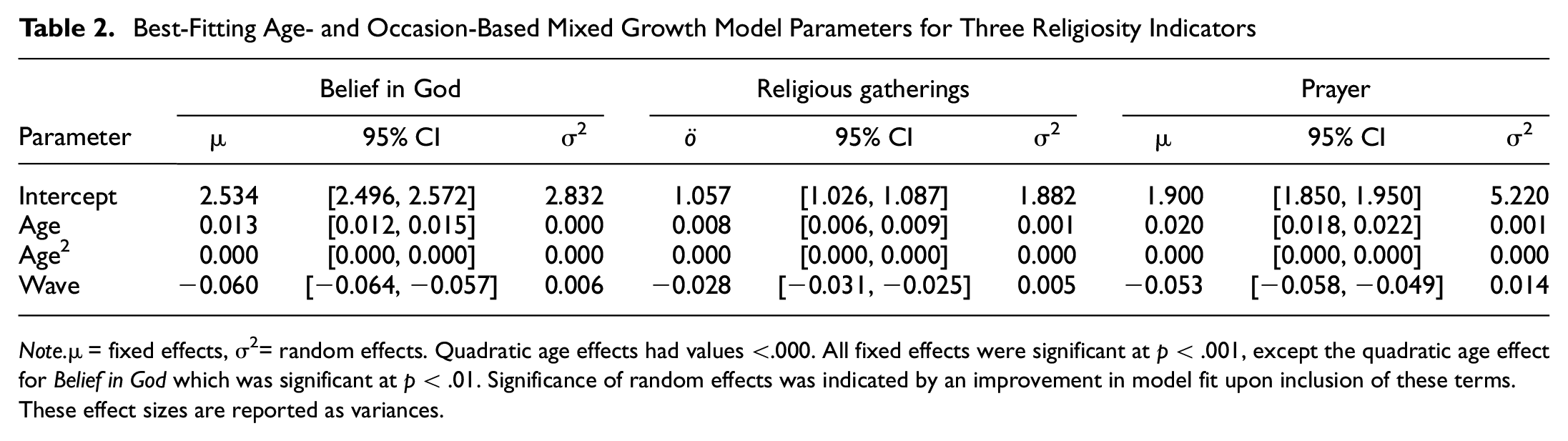
Note.μ = fixed effects, σ2= random effects. Quadratic age effects had values <.000. All fixed effects were significant at p < .001, except the quadratic age effect for Belief in God which was significant at p < .01. Significance of random effects was indicated by an improvement in model fit upon inclusion of these terms. These effect sizes are reported as variances.
Results indicated similar lifespan trajectories for the three religiosity measures, with age-graded increases over the course of adulthood up until old age (see Figure 2A) and peak-levels around age 80 years. The significant linear age effects (μs1 = 0.01 to μs1 = 0.02) suggested that religious beliefs and behaviors increased by this amount per year across the adult lifespan, with significant individual differences in development. The small but significant quadratic age effects indicated that most of the age-graded changes occurred in middle to late adulthood (~age 55–80), again with individual differences in change across individuals. Overall, the magnitude of total age-graded increases in the three religiosity measures from ages 16 to 80 years corresponded to medium-sized effects (Cohen’s ds: 0.36–0.57).
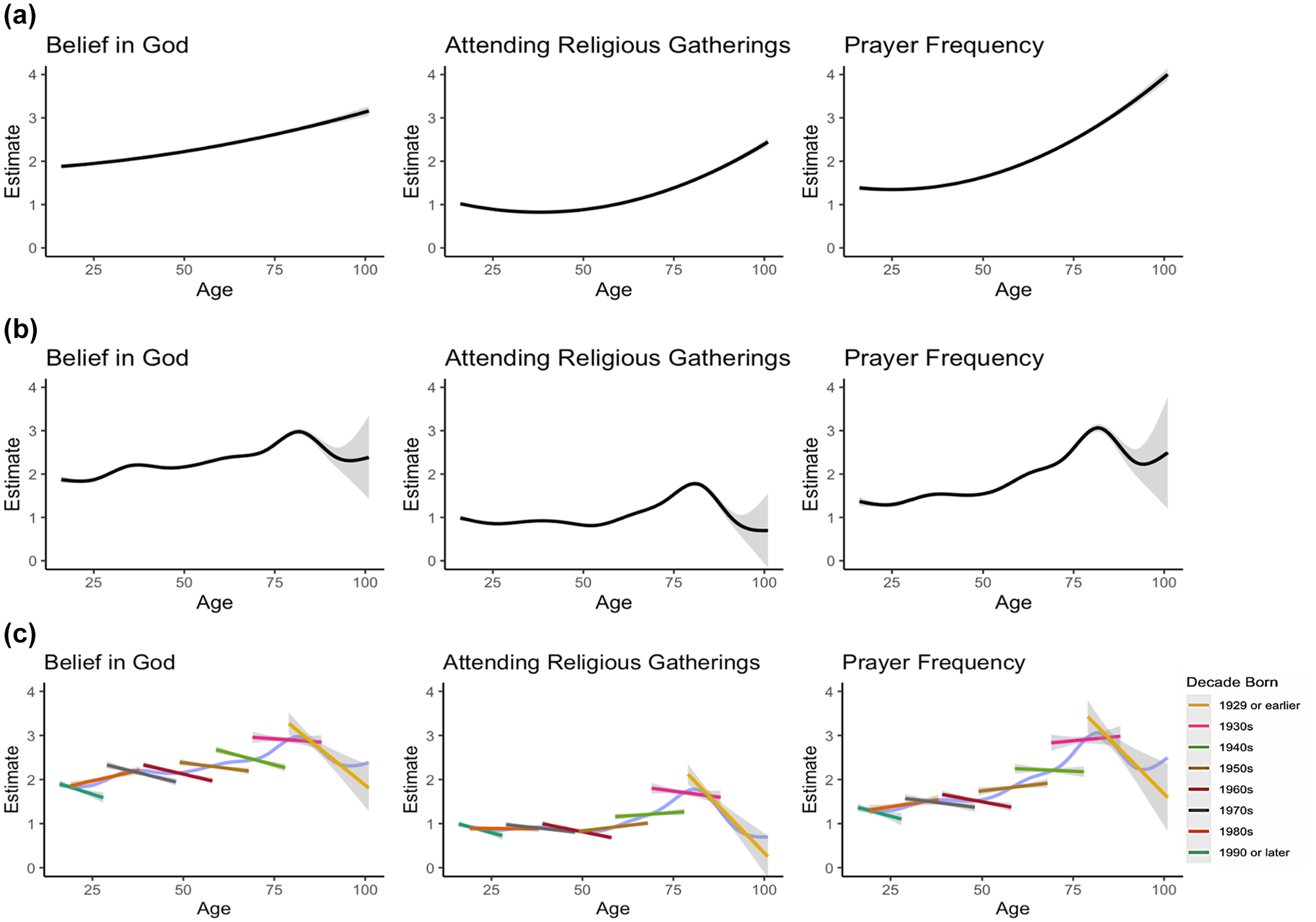
Model-Implied Age-Graded Trajectories (Panel a), LOESS Smoothed Raw Data (Panel b), and Effects of Age and Wave Across Eight Age Groups (Panel c) for Three Religiosity Indicators. Belief in God was Assessed on a 0 to 5 Scale; Attendance of Religious Gatherings and Prayer on 0 to 6 Scales. Solid Lines Capture the Average Trajectories, Grey Areas Cover the 95% Confidence Intervals
The significant random wave effects (μsw= −0.03 to −0.06) indicated that religious beliefs and behaviors decreased by this amount from wave to wave with significant individual differences around this trend. Across the three religiosity measures, the magnitude of these secularization trends corresponded to small to medium-sized effects (Cohen’s ds:|0.13| to |0.25|). Illustrating the different contributions of age and time to people’s lifespan religiosity development, Panel B of Figure 2 visualizes the changes in the three religiosity indicators across assessment waves for eight different age groups.
Moderators of Lifespan Religiosity Development
We estimated the effects of time-invariant and time-variant covariates on overall religiosity levels and their interactions with age and time (see Table 3). Consistent with previous research, we found significant main effects of gender on the intercepts of all three religiosity measures, suggesting that women expressed stronger beliefs in God, attended religious gatherings more often, and prayed more frequently than men did. In addition, we found significant interaction effects between education and age, indicating that college-educated individuals experienced less pronounced increases in belief in God over the course of adulthood. Results indicated a similar interaction effect for praying as well as smaller interaction effects between educational attainment and wave; however, these effects did not meet our strict significance level of p < .001. To illustrate, Figure 3 visualizes the lifespan trajectories of belief in God for individuals with and without a college degree.
Effects of Covariates on Growth Curve Parameters From Age- and Occasion-Based Mixed Models for Belief in God, Attendance of Religious Gatherings, and Praying
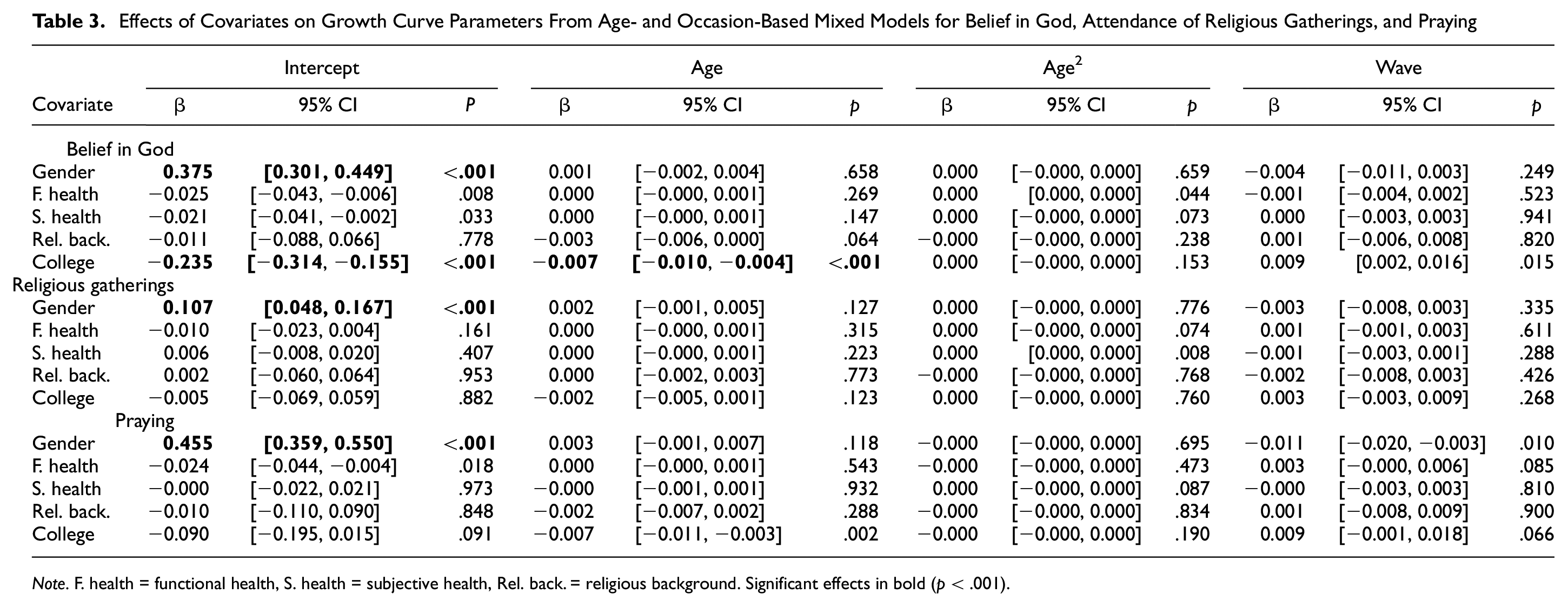
Note. F. health = functional health, S. health = subjective health, Rel. back. = religious background. Significant effects in bold (p < .001).
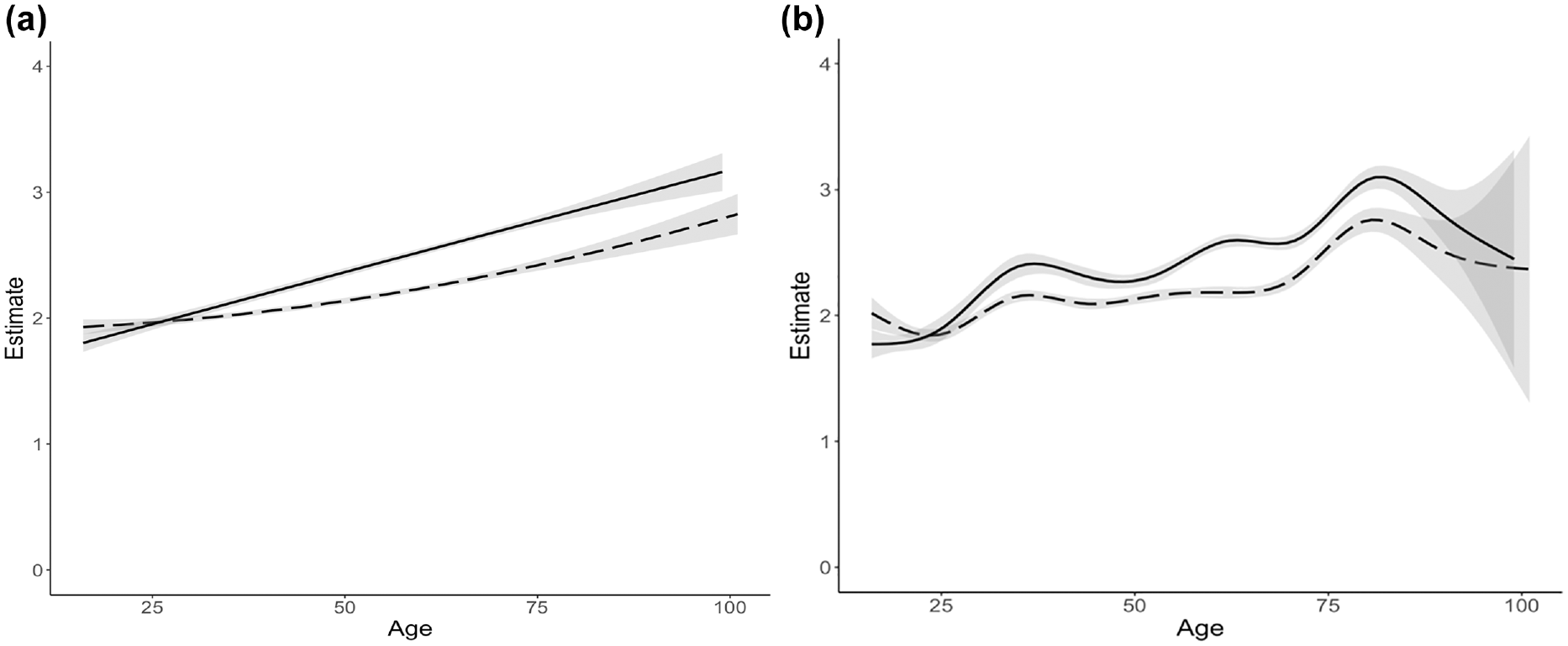
Model-Implied Lifespan Trajectory (A) and LOESS Smoothed Lifespan Trajectory (B) of Belief in God for People With (Dashed Line) and Without (Solid Line) a College Degree
Discussion
How do people’s religious beliefs and behaviors change over the course of adulthood? In this 11-wave longitudinal study, we separated developmental changes in three measures of religiosity—belief in God, religious service attendance, and praying—from secularization trends to draw a more precise picture of the lifespan trajectory of religiosity in a large, nationally representative sample from the Netherlands.
Results indicated that the average trajectory of all three religiosity measures was best captured by a quadratic curve, with increases over the course of adulthood and peak levels at about age 80 years. Consistent with national and international polling data (https://news.gallup.com/poll/1690/religion.aspx), we also found evidence for a significant secularization trend. That is, the average Dutch person in our sample experienced significant decreases in religiosity between 2008 and 2019.
As expected, not all individuals followed these average trends. Consistent with previous research (Arnett & Jensen, 2002; McCullough et al., 2005), men and college-educated individuals were generally less religious. Moreover, age-graded increases in belief in God were less pronounced in college-educated individuals compared to individuals without college education. In contrast to our predictions, religious background and health were unrelated to overall levels or changes in religiosity.
Implications of Findings
The present findings provide important insights into the effects of age and time on religious beliefs and behaviors in a secular culture like the Netherlands. By taking into account secularization trends, we identified a different trajectory of lifespan changes in religiosity than previous studies have. Four findings stand out.
First, in contrast to studies that emphasized the loss of religion among adolescents and young adults (e.g., Desmond et al., 2010; Hayward & Krause, 2013), we found no evidence for age-graded decreases in religiosity during emerging adulthood. When taking secularization effects into account, emerging adults were relatively stable or even increased in their religious beliefs and behaviors over the course of young adulthood (Twenge et al., 2015). In other words, observed decreases in religiosity were completely explained by secularization trends in the present sample.
Second, the quadratic trajectories indicate that most of the age-graded changes in religiosity occur during middle and late adulthood. The enhanced focus on religious beliefs and behavior in middle adulthood is consistent with lifespan developmental theories that emphasize the self-transcending and reflective focus of this life stage (Freund & Baltes, 2002; McAdams, 2001). These findings also correspond with findings on personality development in middle adulthood. Changes that typically occur during this life stage tend to reflect growth toward social maturity and adjustment (Schwaba et al., 2022), as indicated by increases in conscientiousness and agreeableness—traits that have been found to be consistently related to religiosity (Entringer et al., 2021; Gebauer et al., 2014; Saroglou, 2010).
Third, the present results shed more light on religiosity development in late adulthood. Consistent with Pascal’s wager and psychological theories that consider religious beliefs and behaviors as important strategies to cope with late-life challenges (Idler, 2006), we found significant increases in religiosity up until old age. A closer inspection of change among the oldest old suggests potential declines as people approach the end of their life. However, the relatively small sample of adults older than 85 and limited information about sample mortality precluded a more precise estimation of end-of-life changes in religiosity.
Fourth, with one exception, there was little evidence for moderators of lifespan changes in religiosity. Supporting previous research that found negative links between higher education and religiosity (Desmond et al., 2010), we found college-educated individuals to be less religious and experience less pronounced age-graded increases in their religious beliefs.
Limitations
We note some important limitations to this study. We focused on three core aspects of the religious experience; however, there may be other components of religiosity that were not covered in the present study. The generalizability of the present findings is further constrained by the moderate time period of the study (2008–2019) and the culture in which it was conducted. The Netherlands is among the most secularized Western countries and has seen accelerated secularization trends over the past decades. More longitudinal research on religiosity on samples from diverse countries and cultures is needed to gauge the generalizability of the present findings. More research is also needed to address these fundamental questions about the causes of the age-graded changes in religiosity.
Conclusion
Do young adults lose their religion as they grow up? Is middle adulthood a time of religious rebound? At what age do people peak in their religious beliefs and behaviors? By separating developmental processes from secularization trends in a nationally representative sample from the Netherlands, the present study provides strong evidence for age-graded increases in religiosity up until old age. These age-graded changes must be understood in the context of prevailing secularization trends as indicated by significant decreases in religious beliefs and behaviors among people of all ages. Whether these trends generalize to other cultures than the Netherlands remains a question for future research.
Supplemental Material
sj-docx-1-spp-10.1177_19485506221076684 – Supplemental material for Secularization Trends Obscure Developmental Changes in Religiosity
Supplemental material, sj-docx-1-spp-10.1177_19485506221076684 for Secularization Trends Obscure Developmental Changes in Religiosity by Wiebke Bleidorn, Madeline R. Lenhausen, Ted Schwaba, Jochen E. Gebauer and Christopher J. Hopwood in Social Psychological and Personality Science
Footnotes
Acknowledgements
We thank Emilio Ferrer for helpful comments on our analytic approach.
Handling Editor: Will Gervais
Authors’ Note
Ted Schwaba is affiliated now to Department of Psychology at The University of Texas at Austin.
Declaration of Conflicting Interests
The author(s) declared no potential conflicts of interest with respect to the research, authorship, and/or publication of this article.
Funding
The author(s) received no financial support for the research, authorship, and/or publication of this article.

Supplemental Material
The supplemental material is available in the online version of the article.
Author Biographies
References
Supplementary Material
Please find the following supplemental material available below.
For Open Access articles published under a Creative Commons License, all supplemental material carries the same license as the article it is associated with.
For non-Open Access articles published, all supplemental material carries a non-exclusive license, and permission requests for re-use of supplemental material or any part of supplemental material shall be sent directly to the copyright owner as specified in the copyright notice associated with the article.
