



Abstract
Building on the benign violation theory and self-construal theory, we conducted four studies to examine how culture and social distance would influence humor appreciation, sharing, and production. Study 1 found that Chinese participants appreciated and intended to share a joke involving distant others more than that involving close others. They also generated funnier titles for a joke involving distant others than close others. Studies 2a and 2b compared Chinese and Americans using various types of jokes, replicating the social distance effect among Chinese but finding little effect of social distance among Americans. In Study 3, interdependence-primed participants generated more humorous titles for a joke involving distant than close others, whereas independence-primed participants showed no effect of social distance. The research provides further support to the benign violation theory from a cultural perspective and has important implications for cross-cultural communications.
Humor plays an important role in promoting physical and psychological health. Sometimes an event may feel funny when involving strangers, but not when involving oneself or close others. Thus, whether an event is deemed humorous may depend on its psychological or social distance to an individual. In addition, what is humorous can be heavily contingent on cultural contexts, which explains why some jokes are not transferable across cultures. Despite its importance, not much research has examined the effect of culture on humor. This article presents one of the first investigations on humor appreciation, sharing, and production across cultures, focusing on the impacts of culture and social distance on humor.
Humor Appreciation and Benign Violation Theory
Humor appreciation refers to the psychological response “characterized by amusement, the tendency to laugh, and the perception that something is funny” (Warren et al., 2021, p. 43). A recent review (Warren et al., 2021) evaluated various humor theories against research evidence and identified three antecedents of humor appreciation: simultaneity (holding contrasting perceptions, interpretations, or ideas simultaneously), violation appraisal (appraising negative stimuli or situations as threatening to a person’s well-being, identity, or normative beliefs), and benign appraisal (appraising the situation as harmless or tolerable). These findings are consistent with the benign violation theory (McGraw & Warren, 2010), which argues that humor occurs when a violation (i.e., a stimulus that is physically or psychologically threatening) is simultaneously appraised as benign (i.e., harmless).
Relevant to this research, psychological distance and low commitment can independently facilitate benign appraisal and increase humor appreciation. Psychological distance refers to the degree to which people feel removed from a situation or event. It can reduce threats associated with adverse experiences and increase the possibility of benign appraisal in otherwise aversive stimuli (McGraw et al., 2012). One form of psychological distance is social distance, the perceived distance between oneself and another person. For example, people find highly aversive experiences (e.g., getting hit by a car) to be more amusing when they happen to strangers than to close others. On the contrary, psychological closeness may increase perceived humor in minor mishaps due to enhanced relevance (McGraw et al., 2012, 2014). The simultaneous presence of violation and benign appraisals contributes to humor appreciation.
A factor related to social distance is commitment, which refers to how much an individual cares about another person or a relevant social norm. If an individual is less committed to a violated person or norm, it is easier to appraise negative experiences (violations) as benign. In contrast, high norm commitment results in an increased difficulty to see humor when that norm is violated. For example, insulting jokes are funnier and less offensive to people who do not care about the violated individuals (Burmeister & Carels, 2014; Warren et al., 2021). In relation to social distance, people tend to care more about close others than about strangers, and thus are more committed to the former than the latter groups. Overall, low commitment likely contributes to the effect associated with social distance, facilitating benign appraisal and humor appreciation involving targets that are socially distant.
Humor Appreciation, Sharing, and Production
Humor appreciation can lead to humor sharing. Recognized as an interpersonal phenomenon (Glenn, 1989), humor is often shared with others. People are more likely to share content that they find humorous (Berger & Milkman, 2012; Campo et al., 2013; McGraw et al., 2015). For example, Tellis and colleagues (2019) found that amusement positively affected online sharing. Thus, sharing a joke can be a natural consequence of finding it funny.
Humor appreciation may positively contribute to humor production—the creation of humor (Köhler & Ruch, 1996). The relationship between humor appreciation and production, however, has not been straightforward in past research (e.g., Köhler & Ruch, 1996; Kozbelt & Nishioka, 2010; Moran et al., 2014), likely due to their conceptualization and measurement (Greengross et al., 2020; Martin, 2003). In this research, we conceptualize humor appreciation, sharing, and production, as (related) responses to given stimuli. For example, the funnier a joke seems, the more likely people will share it and give it a funny title. Thus, the way we operationalize humor production (i.e., generating a title for a joke) makes it an extension or result of humor appreciation instead of a trait or ability independent from humor appreciation. Therefore, we expected a positive association between humor appreciation and production. Furthermore, we anticipated that finding a joke funny (vs. not) would lead people to come up with a funnier title for it, for at least two reasons: (1) funny joke contents may facilitate humorous thoughts when thinking about a title for the joke, and (2) finding a joke funny indicates a strong sense of humor, which can contribute to humor production.
Culture and Humor
Despite the limited number of existing cross-cultural studies, cultural differences in perception and value of humor have been observed (e.g., Jiang et al., 2019; F. Jiang et al., 2011). Yue and Hiranandani (2014) found that Canadian students valued humor more and considered themselves as more humorous than Chinese students did. There is little cross-cultural investigation on humor appreciation and production, with an exception of that conducted by Yue and colleagues (2016), who measured, through self-report, how much people appreciate others who generate humor and how often they initiate humorous interactions. The present research is one of the first to investigate humor appreciation and production across cultures with behavioral measures.
Cultures vary on many dimensions, with one important dimension being independence-interdependence (Markus & Kitayama, 1991). Independent cultures, such as the United States, emphasize individual autonomy, uniqueness, and self-reliance. The self is viewed as independent from other people and social relationships. In contrast, interdependent cultures, such as many East Asian countries, emphasize the self in relation to others. Social relationships and interpersonal harmony are highly valued in interdependent cultures (Hwang, 1987). To be sure, independent people also value social relationships and distinguish different relationships, but not to the same extent as interdependent people. For interdependent East Asians, depending on the distance of various social relationships, they behave and respond in drastically different ways while applying different rules (Fei, 1992; Yang, 2001; Yuan & Guo, 2017; Zhang et al., 2018). For example, Chinese people’s relationships with close others are more communal, but their relationships with distant others are more instrumental (Hwang, 1987). In other words, they care more about and are more committed to close others than to distant others.
Given that people from interdependent cultures are more likely than those from independent cultures to respond differently to others of varying social distances, it is reasonable to expect culture to moderate the effect of social distance on humor. Interdependence in China is mainly manifested through social relationships, which is highly influenced by Confucianism and its emphasis on social ethics and social hierarchy. Individuals in these Confucian cultures rarely make fun of their relatives, elders, and friends, because of their high commitment to important relations and the social consequences of undermining such relations (Lin, 1974). In addition, a unique aspect of Chinese interdependence is “face”—the cultural understanding of respect, honor, and pride associated with one’s public standing, especially that of family members or friends (Lee, 1991). According to Fei (1992), Chinese people often regard family or friends as their in-group or insiders. If an in-group member loses face, it is equivalent to oneself losing face. Thus, Chinese people are generally unwilling to reveal embarrassment that has occurred to family members or friends, and rarely appreciate and share jokes about their in-group during interpersonal communication.
The story is different for the independent Americans. In the United States, social relationships are relatively equal and cultural norms do not prohibit joking with close others. In such a society, humor has become a lubricant for social interaction (Liao et al., 2006). McGraw et al. (2012) found that, when the content of a joke involved accidentally donating a small amount of money (instead of a large amount), Western participants considered a joke about a friend funnier than a joke about a stranger. Thus, it is very likely that social distance would have different effects on humor in different cultural contexts.
Present Research
Based on cultural differences in interdependence-independence, we hypothesized that the influence of social distance on humor would unfold differently among interdependent people than among independent people. Specifically, we predicted that interdependent participants would be more likely to appreciate, share, and create jokes pertaining to distant others than close others, whereas such an effect of social distance would be weaker or nonexistent among independent participants. Such predictions are also consistent with the benign violation theory (McGraw &Warren, 2010): Owing to their stronger perceived closeness and higher commitment to in-groups, interdependent people should be less likely to appreciate jokes pertaining to close others.
We conducted four studies to investigate the influence of social distance on humor in different cultural contexts. Study 1 investigated the influence of social distance on humor appreciation, sharing, and production in China, a typical interdependent culture. Studies 2a and 2b compared the influence of social distance on humor appreciation and sharing in Chinese and American participants. Study 3 primed interdependence and independence and explored the mechanism underlying the effect of social distance on humor.
Study 1
In Study 1, we examined the hypotheses that Chinese participants would appreciate jokes pertaining to distant others more, share these jokes more, and create funnier titles for these jokes, compared with jokes pertaining to close others.
Method
Participants
G*Power (Faul et al., 2009) estimated that a minimum of 265 participants was required for a small repeated-measure main effect (f = .10, power = .90). We recruited 440 university students online through Credamo, a Chinese platform similar to Mechanical Turk. Twenty-one students failed the quality check questions and thus were excluded, leaving a final sample of 419 participants (142 men, 277 women; Mage = 22.15 years, SDage = 2.39).
Procedure
Participants read the following joke (in Chinese): Z was invited to a City Concert Hall to play the piano. At the concert, however, he noticed many empty seats. Z said, “My dear audience, I’m so glad to perform in a city with such a strong passion for piano.” The audience was puzzled. Z proceeded by saying, “I can’t believe all of you bought extra seats in order to better appreciate the music!”
We manipulated social distance as a within-participant factor by having participants respond to the joke twice, once imagining that Z was “a family member or a close friend,” and once imagining that he was “a stranger.” In each condition, participants rated the joke on how funny it was (1 = not funny, 7 = very funny) and indicated their willingness to share the joke (1 = not willing, 7 = very willing). In addition, we measured humor production by asking participants to create a title for the joke and then rate how funny the title was (1 = not funny, 7 = very funny). The order was counterbalanced across participants.
Results
Social Distance as Within-Participant 1
A 2 (Distance: within-participant) × 2 (Order: between-participant) mixed analysis of variance (ANOVA) on humor appreciation, sharing, and production, respectively, revealed no significant interaction effect, 2 Fs(1, 417) < 1, ps > .25. As expected, participants found the joke funnier, were more willing to share it, and created a funnier title 3 for it if the joke involved a stranger than a close other (see Table 1).
The Effect of Social Distance on Humor Appreciation, Sharing, and Production (Study 1).
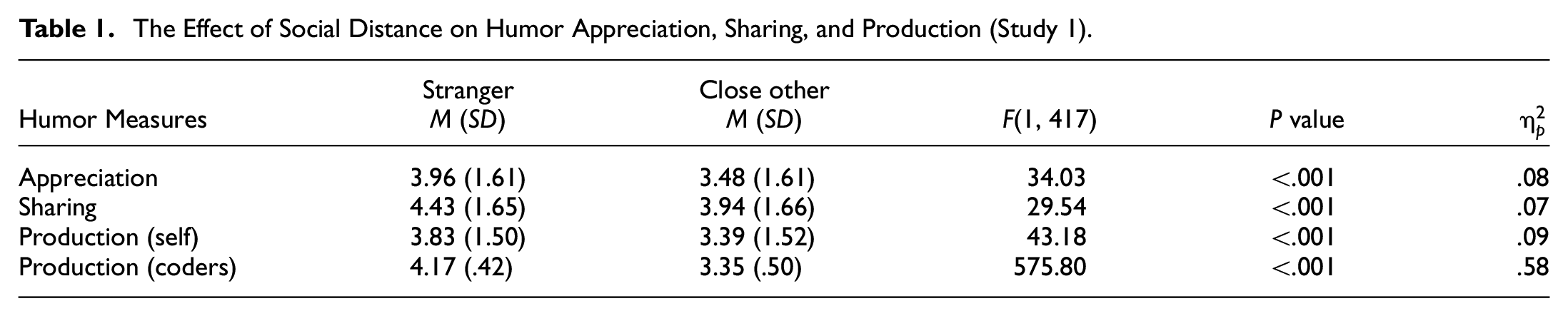
We recruited 120 university student coders blind to the study to rate how funny each title was (1 = not funny, 7 = very funny), with each coder rating 68 to 70 titles and each title getting 10 ratings. These ratings were averaged for each title, then submitted to a 2 (distance) × 2 (order) mixed ANOVA. As seen in Table 1, titles created for the joke involving strangers were rated funnier than those involving close others. 4
First Responses as Between-Participant Design
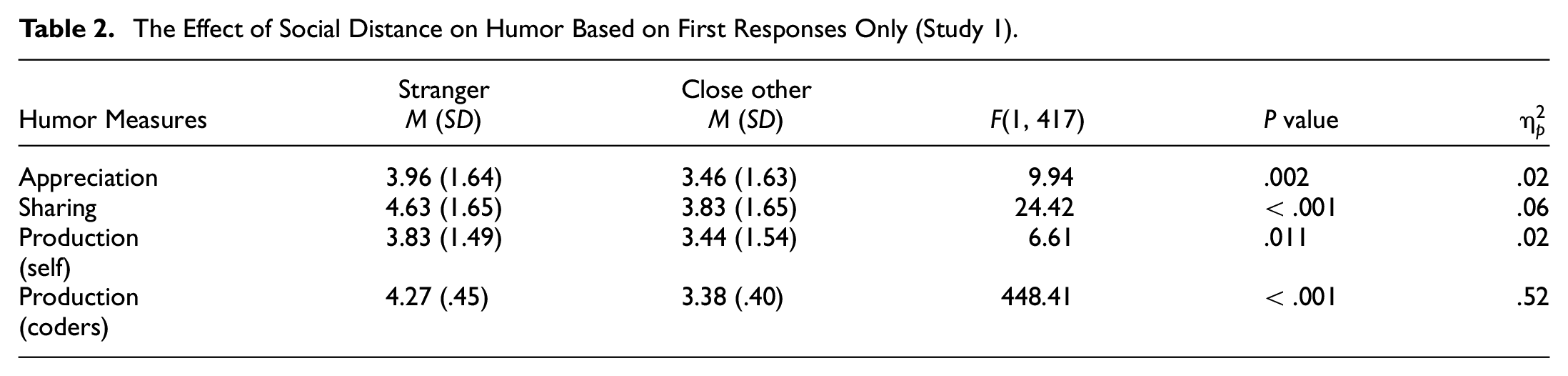
To eliminate potential confounds associated with the within-participant design (e.g., demand characteristics), we analyzed only responses to the first distance condition presented to participants. Thus, social distance became a between-participant variable. The results replicated those based on the within-participant design (see Table 2).
The Effect of Social Distance on Humor Based on First Responses Only (Study 1).
Relationships Among Humor Appreciation, Sharing, and Production
First, we calculated the correlations among humor appreciation, sharing, and production (see Table 3). In general, humor appreciation was positively associated with humor sharing and humor production. The correlations between coders’ ratings and the other variables were relatively weaker and sometimes not significant.
Correlations (Study 1).
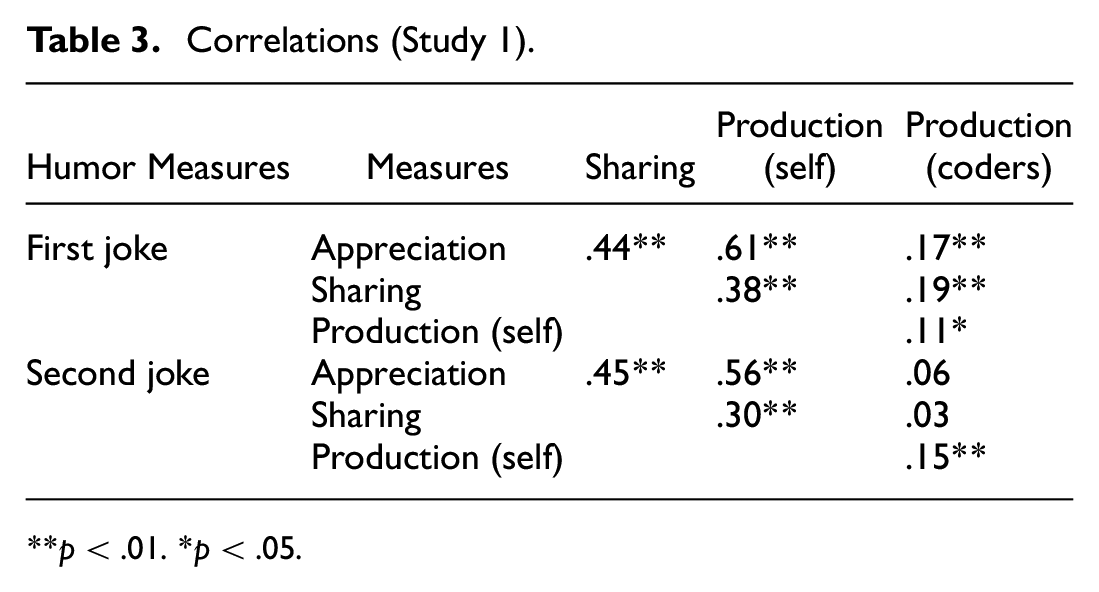
p < .01. *p < .05.
Next, we examined the indirect effect of social distance through humor appreciation on humor sharing and production (self-rating), respectively, using Model 4 from Hayes’s (2018) Process in SPSS. We used responses to the first distance condition only and thus social distance was a between-participant factor. As seen in Figure 1, a percentile bootstrap confidence interval for the indirect effect (b=.22, SE=.07) based on 10,000 bootstrap samples was entirely above 0 [0.08, 0.36], indicating a significant indirect effect of social distance on humor sharing through humor appreciation across conditions (Figure 1A). Similarly, the indirect effect of social distance on humor production through humor appreciation across conditions (b = .28, SE = .09) was also significant, 95% CI = [0.10, 0.46] (Figure 1B).
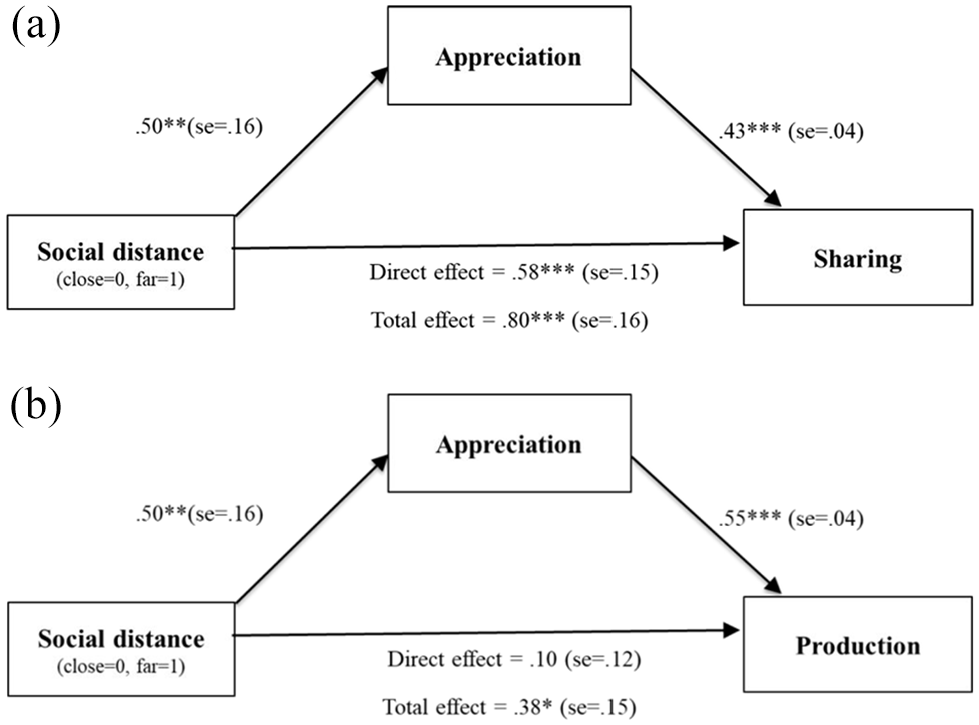
(A) Indirect Effect of Social Distance on Humor Sharing Through Appreciation (Unstandardized Coefficients) and (B) Indirect Effect of Social Distance on Humor Production Through Appreciation (Unstandardized Coefficients).
Thus, consistent with our hypotheses, Chinese participants found the jokes funnier, were more willing to share them, and created funnier titles for them if the jokes happened to strangers than to close others. These findings were replicated in two other studies with a different joke (see supplemental material). Furthermore, mediation analyses indicate that humor appreciation mediated the effect of social distance on humor sharing and production, respectively.
Study 2a
Studies 2a and 2b examined cultural differences between Chinese and Americans in humor appreciation and sharing. We hypothesized that Chinese participants would be more likely to appreciate and share jokes about distant than close others, whereas such an effect of social distance would be weaker or nonexistent among Americans.
Method
Participants
Assuming a small to medium effect size (f = .15), power = .90, at least 120 participants were required for a 2 × 2 mixed design to identify an interaction. 5 We recruited 125 Chinese university students and 125 American university students from Mechanical Turk. Fifteen Chinese and 31 American participants failed the quality check and consequently were excluded, leaving a final sample of 204 participants, including 110 Chinese (15 men, 95 women, Mage = 18.57 years, SDage = 0.87) and 94 Americans (33 men, 61 women, Mage = 23.51 years, SDage = 2.51). The Chinese were significantly younger than Americans and thus age was controlled for in the analyses. 6
Procedure
Five jokes were selected from previous research (McGraw et al., 2012; Wiseman, 2002; Yam et al., 2019), which were deemed appropriate for both cultures (see supplemental material). As in Study 1, we manipulated social distance as a within-participant factor by having participants respond to the jokes twice, once imagining that main character in each joke was “a family member or a close friend,” and once imagining that the main character was “a stranger.” Participants rated how funny each joke was and their willingness to share each joke, in the same way as in Study 1.
The study was conducted online. The material was translated into English from Chinese and then back-translated to ensure equivalence.
Results
We computed the means of humor appreciation (Cronbach’s α = .70 for strangers and .73 for close others, respectively) and sharing (Cronbach α = .80 for both strangers and close others, respectively) by averaging the ratings across the five jokes.
Humor Appreciation and Sharing
A 2 (Culture: between-participant) × 2 (Social Distance: within-participant) mixed analysis of covariance (ANCOVA) on humor appreciation, with age as a covariate, showed a significant interaction effect of culture by social distance, F(1, 201) = 5.67, p = .018,
As seen in Figure 1, Chinese participants found the jokes funnier if they happened to strangers (M = 4.21, SD = 1.09) than to close others (M = 3.51, SD = 1.25), F(1, 201) = 35.64, p < .001,
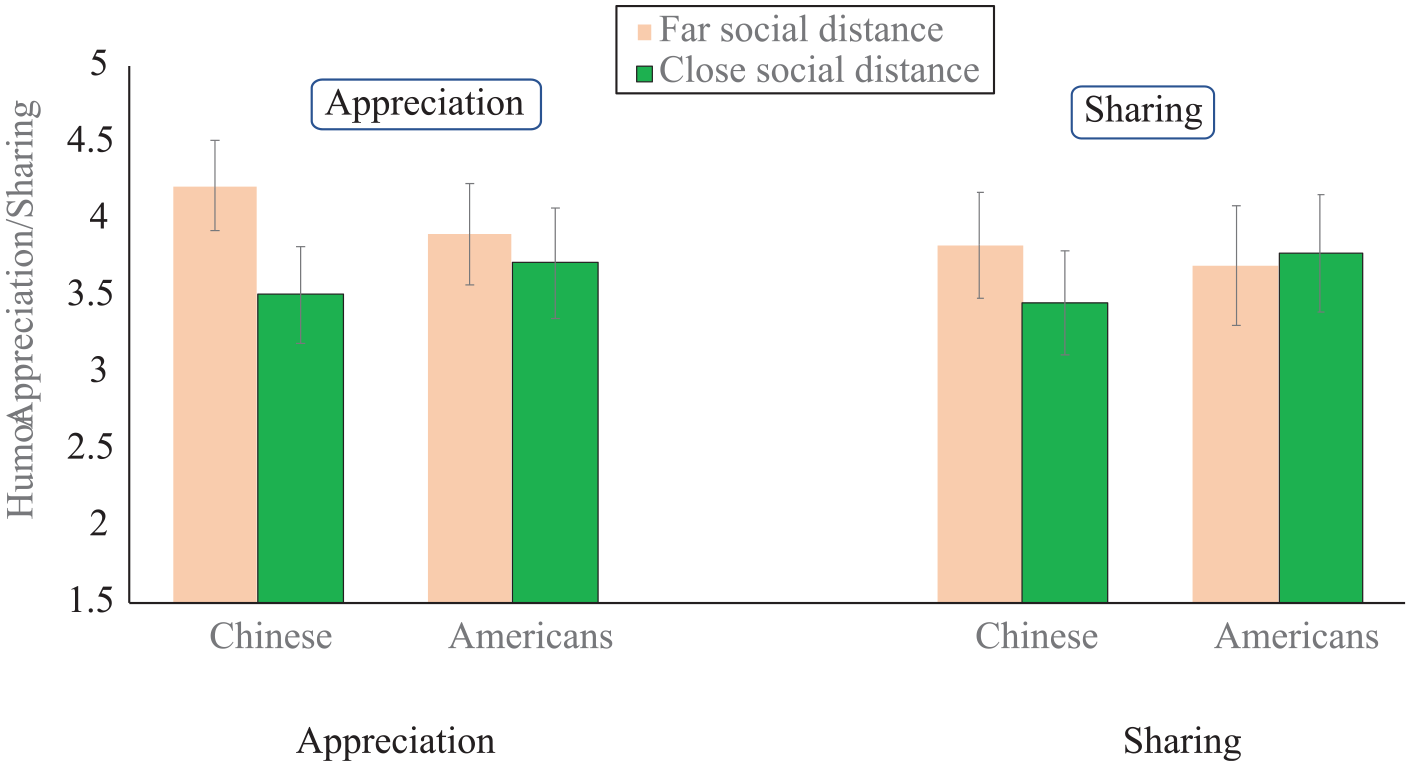
Effects of Culture and Social Distance on Humor Appreciation and Sharing (Study 2a).
Indirect Effect
Next, we examined the indirect effect of culture on humor sharing through humor appreciation between conditions, using Model 4 from Hayes’s (2018) Process in SPSS. The dependent variable was humor sharing in the distant condition minus that in the close condition. The mediator was humor appreciation in the distant condition minus that in the close condition. Age was entered as a covariate. 7 A percentile bootstrap confidence interval for the indirect effect (b = .19, SE = .10), based on 10,000 bootstrap samples, was entirely above 0 [0.01, 0.41], indicating a significant indirect effect of culture on humor sharing through humor appreciation across conditions (Figure 3).
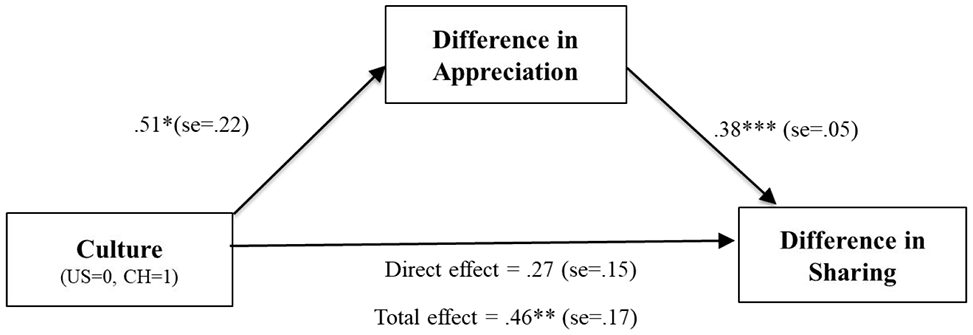
Indirect Effect of Culture on Humor Sharing Through Appreciation (Unstandardized Coefficients).
Thus, replicating Study 1, Chinese participants found the jokes funnier and were more willing to share them if they pertained to distant others than to close others, whereas Americans showed no such effect. Furthermore, cultural effects on humor sharing across conditions were mediated by humor appreciation across conditions.
Study 2b
According to Martin et al. (2003), there are four types of humor: humor used to enhance the self (Self-enhancing), to enhance one’s relationships with others (Affiliative), to enhance the self at the expense of others (Aggressive), and to enhance relationships at the expense of the self (Self-defeating). To test the generalizability of Study 2a’s findings, Study 2b examined all four types of humor.
Method
Participants
Study 2b involved 280 Chinese students from Chinese universities and 280 American university students from Prolific. Fifty-one Chinese and 30 American participants failed the quality check and consequently were excluded, leaving a final sample of 479 participants, including 229 Chinese (74 men, 155 women, Mage = 22.29 years, SDage = 3.11) and 250 Americans (149 men, 101 women, Mage = 23.76 years, SDage = 3.05). The Chinese were significantly younger than Americans, so age was controlled for in the analyses. 8
Procedure
The study was conducted online. Participants read eight jokes in a random order, two of each type (affiliative, self-enhancing, aggressive, and self-defeating; see supplemental material). The study material was first developed in Chinese, and then translated into English and examined by three bilingual researchers to ensure equivalence. As in Study 2a, participants rated how funny each joke was and their willingness to share the joke, while imagining the target person was a close other or a stranger, in a counterbalanced order. Overall, the study followed a 2 (culture) × 2 (social distance) × 4 (types of jokes) design, with the latter two as within-participant variables.
Results
We computed the means of humor appreciation and sharing, respectively, by averaging the ratings across the two jokes within each type.
A 2 (culture) × 2 (social distance) × 4 (type of jokes) mixed ANCOVA on humor appreciation with age as a covariate showed a significant culture by social distance interaction effect,
9
F(1, 476) = 47.14, p < .001,
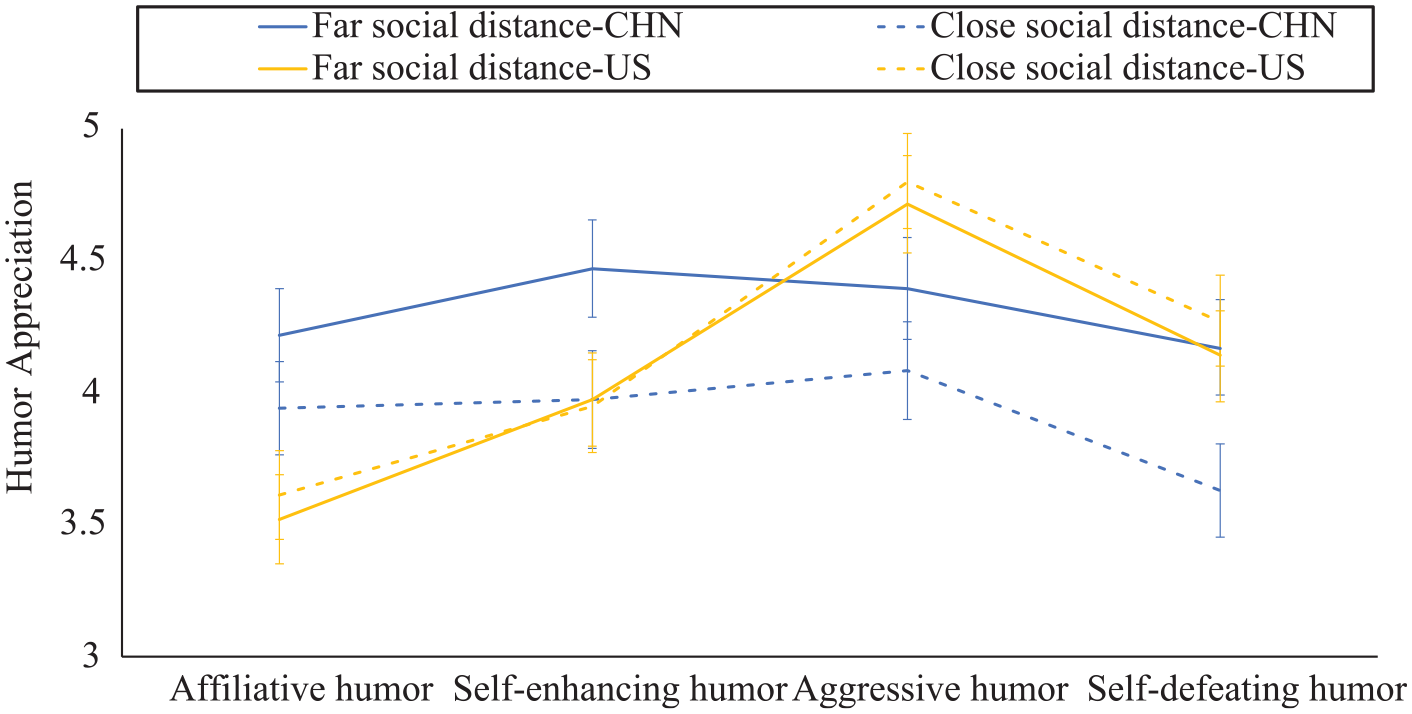
Effects of Culture and Social Distance on Humor Appreciation (Study 2b).
We found a similar interaction effect of culture by social distance on humor sharing
11
, F(1, 476) = 27.51, p < .001,
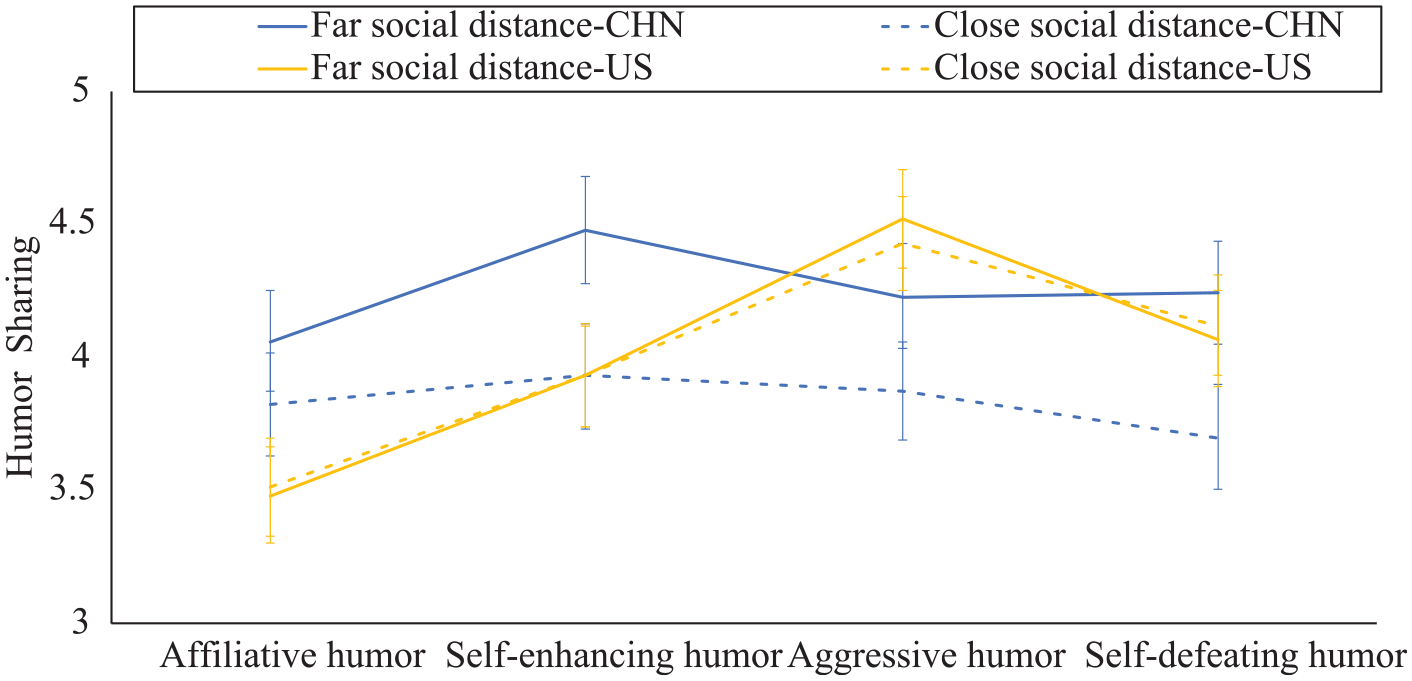
Effects of Social Distance and Culture on Humor Sharing (Study 2b).
Replicating Study 2a, Chinese participants found the jokes funnier and were more willing to share them if they happened to distant others than to close others, whereas Americans showed no distance effect. This was true across various types of humor.
Indirect Effect
A similar indirect effect test as in Study 2a revealed a significant indirect effect (b = .37, SE = .06) of culture on humor sharing through humor appreciation across conditions (Figure 6), with a percentile bootstrap confidence interval for the indirect effect based on 10,000 bootstrap samples entirely above 0 [0.26, 0.49].
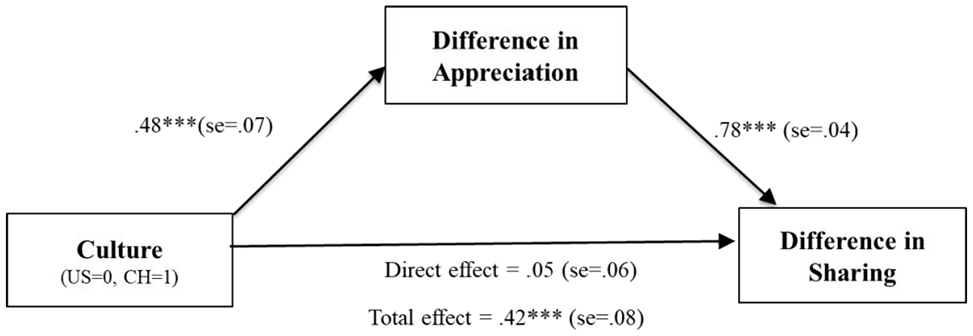
Indirect Effect of Culture on Humor Sharing Through Appreciation (Unstandardized Coefficients).
Study 3
We proposed that interdependence would account for the social distance effect observed among Chinese (Study 1) and found the expected differences between interdependent Chinese and independent Americans (Studies 2a and 2b). Given that Chinese and Americans differ in many ways, does interdependence truly cause the observed effect of social distance among Chinese? Study 3 unpacked culture and examined such a causal relationship by priming interdependence and independence.
Using humor production as the dependent variable, we hypothesized that participants primed with interdependence would create more humorous titles for a story involving distant others than close others, whereas the effect of social distance would be weaker or nonexistent for those primed with independence.
Method
Participants
Participants were 220 students from a Chinese university. Among them, 16 participants failed the quality check and were excluded, leaving a final sample of 204 participants (51 men, 153 women, Mage = 20.35 years, SDage = 1.94).
Procedures
We used a 2 (Priming Condition: interdependence vs. independence; between-participant) × 2 (Social Distance: within-participant) mixed design.
Participants were randomly assigned to either an interdependence or an independence prime condition. Following Trafimow et al. (1991), we primed interdependence (independence) by having participants write down similarities (differences) between themselves and their close ones. As a manipulation check, they then indicated their agreement (1 = strongly disagree, 7 = strongly agree) on three items of interdependence and three items of independence (selected based on highest factor loadings) from Singelis’ (1994) Self-Construal Scale.
Afterward, all participants read a joke (see supplemental material) from a Chinese humor book called XiaoZan ( ). To measure humor production, we asked participants to create a humorous title for the joke twice—once imagining the man was their grandfather (close condition) and once imagining the man was a fictional character, in a counterbalanced order. They then rated the funniness of the two titles as in Study 1. In addition, 20 graduate student coders, blind to the study, rated how funny each title was, as in Study 1, and their ratings were averaged for each title.
Results
Manipulation Check
We averaged the six items from Singelis’ scale (Cronbach’s α = .63) after reverse coding as appropriate and submitted it to a one-way ANOVA. Participants reported higher interdependence in the interdependence condition (M = 4.16, SD = .70) than in the independence condition (M = 3.84, SD = .61), F(1, 202) = 11.82, p = .001,
Self-Ratings and Coders’ Ratings
A 2 (Prime Condition: between-participant) × 2 (Social Distance: within-participant) mixed ANOVA on the funniness of the titles showed a significant interaction effect on self-ratings, F(1, 202) = 19.03, p < .001,
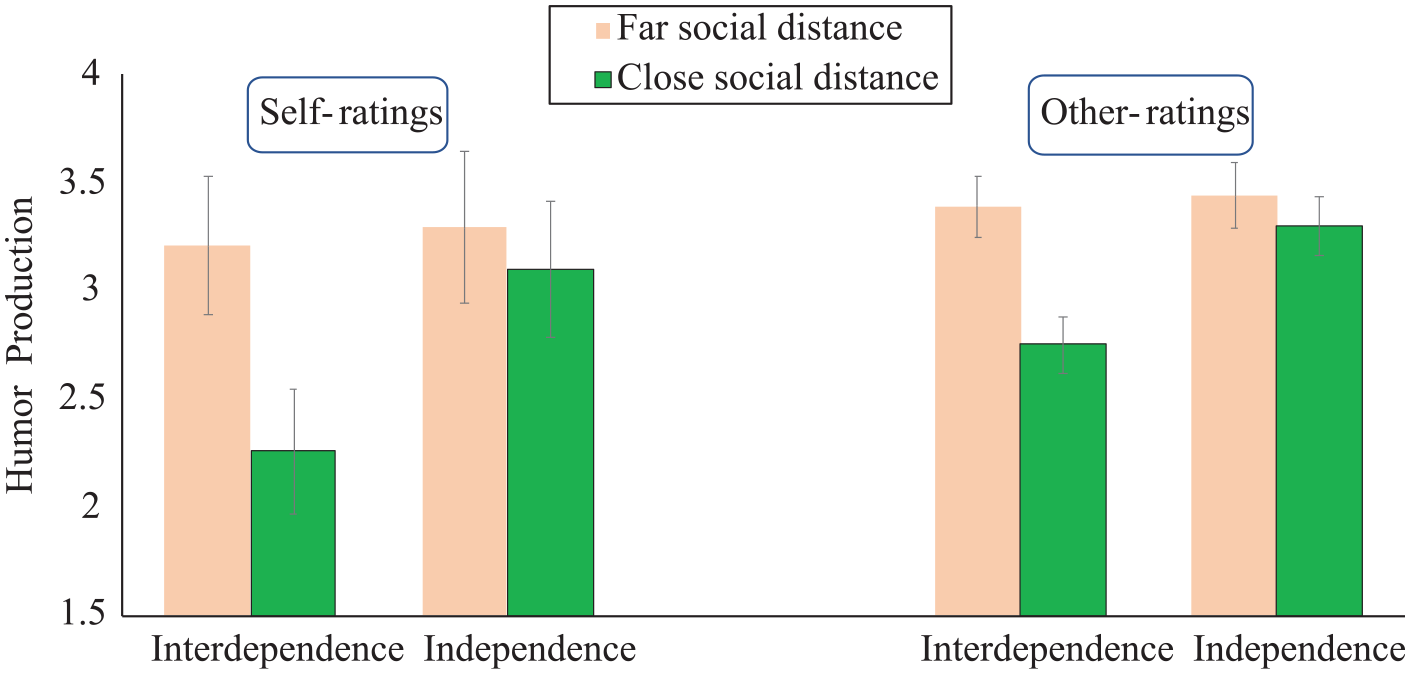
Effects of Priming and Social Distance on Humor Creation (Study 3).
Thus, consistent with our prediction, social distance had different effects on humor production depending on the cultural primes.
General Discussion
This research examined the impact of culture and social distance on humor. With both within-participant and between-participant designs, we found that Chinese participants were more likely to appreciate, share, and produce jokes involving distant others than close others. Such an effect of social distance was not observed among Americans. Furthermore, priming interdependence versus independence among Chinese replicated the cross-cultural effect: interdependent primed participants created more humorous titles for jokes about distant others than for jokes about close others, whereas independent primed participants showed no effect of social distance. Thus, the research presents consistent findings that interdependence, either as a cultural variable or as a manipulated variable, facilitates the effect of social distance on humor appreciation, sharing, and production.
Previous research has shown social distance effects with Western samples. For example, Americans found a tragedy funnier if it happened to a stranger than to a friend, and a mishap funnier if it happened to a friend than a stranger (McGraw et al., 2012, Study 3). Although we had a larger sample (N = 250 Americans in Study 2b, for a repeated measure design) than in McGraw et al. (2012; N ranged from 67 to 90 for a 2 × 2 mixed designs in Studies 1 to 4), we only identified the distance effect among Americans when combining three types of jokes (see Note 9). Thus, the distance effect among Americans is likely weaker than previously believed.
Implications
This research has both theoretical and practical implications. Theoretically, the observation that interdependent people find jokes involving distant others funnier than those involving close others is consistent with interdependent self-construal and the benign violation theory. Given that interdependent people tend to conceptualize themselves as part of their in-group, or close others as part of themselves (Zhu et al., 2007), making fun of close others is threatening to oneself and has negative interpersonal and intrapersonal implications. Thus, it is difficult for one to appraise such a threat as benign, which reduces the humor associated with jokes about close others. More importantly, we examined and found consistent distance effects across various types of humor among Chinese participants. Thus, the findings provide further support to the benign violation theory from a cultural perspective. Furthermore, we expand the findings to humor sharing and production, providing insights into the role of culture and social distance in the psychology of humor broadly.
This research is informative to those who wish to use humor through daily interactions. To harvest humor’s benefits (see Dillon et al., 1985; Martin, 2001; Warren et al., 2018, for a review), humor must be used properly. It is crucial to understand cultural and social contexts when conveying jokes, especially for cross-cultural communications. This is particularly important for people working in international business, global relations, and multicultural media.
Limitations and Future Directions
This research relied on self-report for humor sharing although we did measure humor production behaviorally. Future studies may explore more indirect or behavioral measures. In addition, the studies included mainly university students, so future research should include more diverse samples.
The lack of social distance effect among Americans, or independence-primed participants, suggests that independent individuals are more likely to respond similarly, regardless of social distance, despite typically drawing clear distinctions between themselves and other people (Markus & Kitayama, 1991; Sorokowska et al., 2017). Based on this reasoning, we speculate whether independent individuals would find jokes involving close others to be funnier than those involving the self, whereas interdependent individuals may not make such distinctions. This will be an interesting direction for future research.
Another direction of future research would be to examine whether and how cross-cultural differences may exist in the effects of other aspects of psychological distance. For example, research has shown that Chinese participants perceive the past and future closer to the present, compared with Euro-Canadians (Ji et al., 2009, 2019). This may have implications for the effect of temporal distance, another form of psychological distance.
In conclusion, this research has shown that culture and social distance interact to influence humor. Chinese or interdependent participants are more likely to appreciate, share, and create humor pertaining to distant than close others, whereas this social distance effect is weaker or nonexistent among Americans or independent participants. Furthermore, interdependence is causally responsible for the effect of social distance on humor production.
Supplemental Material
sj-docx-1-spp-10.1177_19485506211065938 – Supplemental material for The Impact of Culture and Social Distance on Humor Appreciation, Sharing, and Production
Supplemental material, sj-docx-1-spp-10.1177_19485506211065938 for The Impact of Culture and Social Distance on Humor Appreciation, Sharing, and Production by Yi Cao, Yubo Hou, Zhiwen Dong and Li-Jun Ji in Social Psychological and Personality Science
Footnotes
Acknowledgements
The authors thank Alicia Mora and Josh Martin for their help with earlier versions of the article.
Handling Editor: Yuri Miyamoto
Declaration of Conflicting Interests
The author(s) declared no potential conflicts of interest with respect to the research, authorship, and/or publication of this article.
Funding
The author(s) disclosed receipt of the following financial support for the research, authorship, and/or publication of this article: This research was supported by a grant from the Chinese National Natural Science Foundation (31671159) to Y. Hou, and a grant from the Social Science and Humanities Research Council of Canada (SSHRCC Grant 435-2018-0061) to L.J. Ji.

Supplemental Material
The supplemental materials is available in the online version of the article.
Notes
Author Biographies
References
Supplementary Material
Please find the following supplemental material available below.
For Open Access articles published under a Creative Commons License, all supplemental material carries the same license as the article it is associated with.
For non-Open Access articles published, all supplemental material carries a non-exclusive license, and permission requests for re-use of supplemental material or any part of supplemental material shall be sent directly to the copyright owner as specified in the copyright notice associated with the article.
