



Abstract
Loneliness levels were assessed in a longitudinal, nationwide sample (N total = 6,010) collected over the course of the first 3 months of the COVID-19 pandemic in Germany. When in-person social contact restrictions were put in place, loneliness increased significantly compared to prepandemic levels but began to decrease again even before contact restrictions were eased. The loneliness costs were distributed unequally, such that greater increases in loneliness were experienced by women, younger, and extraverted, neurotic, and conscientious individuals. Our findings add to the growing literature on the importance of individual differences in crisis situations.
In early 2020, the COVID-19 pandemic began to spread across the globe, having a major direct impact on health; but the pandemic may also have affected health indirectly, as a result of the measures designed to combat the spread of the coronavirus, many of which focused on reducing in-person social contact. Even before the pandemic, loneliness was known to be a major public health issue, associated with increased risks of morbidity and mortality (Holt-Lunstad et al., 2017). So, soon after the first social distancing measures were implemented, concerns were voiced that loneliness—which is linked to social isolation (Holt-Lunstad et al., 2015; Schrempft et al., 2019)—might increase in the general population (Bu et al., 2020b).
Research on this topic accumulated rapidly, 1 but has yielded inconsistent findings. Some studies found an increase in loneliness from prepandemic to pandemic (Bu et al., 2020b; Killgore et al., 2020), others found that loneliness was relatively stable (Luchetti et al., 2020; McGinty et al., 2020; Sutin et al., 2020), and still others documented decreases in loneliness (Folk et al., 2020).
Furthermore, it is not yet clear if certain individuals were particularly affected by the measures and, thus, particularly susceptible to loneliness. A number of potential predictors for loneliness during the COVID-19 pandemic have been examined, including prior levels of loneliness (Bu et al., 2020a, 2020b), sociodemographic characteristics (e.g., age, gender; Varga et al., 2021), and personality (e.g., Extroversion; Folk et al., 2020). Again, these studies have resulted in inconclusive findings, in part due to methodological issues.
In particular, most existing studies relied on cross-sectional designs and relatively small data sets drawn from convenience samples collected during a short period immediately after the onset of the pandemic (van der Velden et al., 2021). To assess changes in loneliness, however, longitudinal samples that allow for a prepandemic to pandemic comparison are necessary (Kühne et al., 2020). Further, loneliness may continue to accumulate over the time that social distancing measures are in place (Buecker, Horstmann et al., 2020). Therefore, it is necessary to analyze the trajectories of loneliness over a longer period of time, preferably over a lockdown period when social distancing measures are in place and beyond (Buecker, Horstmann et al., 2020). Finally, to identify individuals at-risk for increases in loneliness, it is necessary to analyze the role of known predictors for loneliness alongside predictors likely to be particularly important during a crisis, such as personality (Aschwanden et al., 2021). We adopt such a design.
Theoretical Background
Loneliness is an aversive emotional state resulting from a perceived deficiency in the quality or quantity of one’s social relationships (Mund et al., 2020). The social distancing measures implemented to combat the spread of the coronavirus reduced in-person social contact to a minimum. Although subjective feelings of loneliness are theoretically distinct from the objective number of social interactions, the two constructs are related (Folk et al., 2020; Russell et al., 1980). Consequently, many researchers predicted that during lockdowns individuals would perceive their social relationships as deficient and, thus, become lonelier (i.e., a “deprivation” perspective; Bu et al., 2020a, 2020b).
Yet, even if opportunities for in-person social contact are severely curtailed by social distancing measures, subjective feelings of loneliness could remain stable or even decrease. Specifically, if humans have a fundamental need to belong (Baumeister & Leary, 1995), then they may find alternate ways to satisfy this need when deprived of their usual sources of social contact. This “substitution” perspective holds that intimacy and closeness can be created in different ways and in-person social contact is not always necessary. In fact, numerous studies have shown that loneliness is only weakly associated with objective network characteristics, such as network size and contact frequency (Coyle & Dugan, 2012; Luhmann & Hawkley, 2016).
Several studies have identified predictors for feeling lonely during the first months of the COVID-19 pandemic, including prior levels of loneliness (lonely individuals became even lonelier during the crisis; Bu et al., 2020a, 2020b), age (younger individuals were lonelier than older individuals; Bu et al., 2020a; Varga et al., 2021), gender (women were lonelier than men; Bu et al., 2020a; Varga et al., 2021), income (low-income individuals were lonelier than high-income individuals; Bu et al., 2020a, 2020b), and household size (individuals living alone were lonelier than cohabiting individuals; Bu et al., 2020a, 2020b).
Personality may also be a significant predictor of loneliness (Folk et al., 2020; Modersitzki et al., 2020). Some studies have found that personality traits outperformed the predictive power of sociodemographic characteristics during the pandemic (Aschwanden et al., 2021; Modersitzki et al., 2020). The most widely accepted model for organizing personality traits is the Big Five framework, consisting of Extroversion, Neuroticism, Agreeableness, Conscientiousness, and Openness to New Experiences (hereafter: Openness; McCrae & Costa, 1999).
There are many reasons why personality traits could be associated with increases in loneliness during the COVID-19 pandemic. Specifically, personality traits shape individuals’ need and desire for social contact, but also their actual social interactions and, thus, the quality of their social relationships (Back et al., 2011). For instance, lockdown conditions may represent a situation that is advantageous for introverts 2 because, compared to extraverts, introverts tend to have a lower desire for social contact (John & Srivastava, 1999), smaller social networks (Harris et al., 2017), and fewer social interactions (Lucas et al., 2008; Saklofske & Yackulic, 1989). Therefore, for introverts the restriction of in-person social contact represents a smaller departure from their normal social behavior than it does for extraverts. Supporting this idea, one study showed that the stringency of measures implemented to combat the spread of the coronavirus was positively associated with depressive symptoms for extraverts, but negatively for introverts (Wijngaards et al., 2020). Another study found that during social-contact restrictions, extraverts exhibited a greater drop in social connectedness compared to introverts, and this larger decline could be explained by the higher level of social connectedness they experienced prior to the pandemic (Folk et al., 2020).
On the other hand, compared to introverts, extraverts tend to have stronger and more high-quality social relationships (Stokes, 1985) and report higher levels of social support (Swickert et al., 2002), which could buffer against loneliness when in-person social contact is restricted. Extraverts also tend to be happier and more optimistic than introverts (Watson & Clark, 1997), so they may perceive their social relationships more positively, even during a crisis; consistent with this reasoning, a series of cross-sectional studies found that Extroversion was associated with higher well-being (Modersitzki et al., 2020) and lower loneliness (Gubler et al., 2020) when in-person social contact was restricted.
Neuroticism has consistently emerged as another major predictor for loneliness (Buecker, Maes et al., 2020) and it is possible that the pandemic further strengthened this association. Specifically, Neuroticism is characterized by an overall negative emotionality accompanied by a heightened reactivity to negative stimuli (John & Srivastava, 1999). When faced with stressors, neurotic individuals tend to react with maladaptive coping strategies, such as avoidance and worry (Barańczuk, 2019). During the COVID-19 pandemic, in-person social contact poses an infection risk and is, thus, a stressor. Therefore, it is possible that neurotic individuals try to avoid in-person social contact more than emotionally stable individuals do, rendering them eventually lonelier than emotionally stable individuals.
Alternatively, even before the onset of the COVID-19 pandemic, neurotic individuals were lonelier than emotionally stable individuals (Buecker, Maes et al., 2020). Neurotic and emotionally stable individuals do not differ in their social network sizes (Roberts et al., 2008), so this association is best explained by the tendency of neurotic individuals to perceive their social networks as deficient and to behave dysfunctionally in their social relationships (Vater & Schröder-Abé, 2015). Thus, it is possible that the restriction of in-person social contact does not affect the association between loneliness and Neuroticism, such that it remains negative but does not strengthen further. Two initial studies found a moderate, negative association between Neuroticism and mean levels of loneliness when contact restrictions were in place (Gubler et al., 2020; Michinov & Michinov, 2020), but both studies relied on cross-sectional data sets and, thus, could not detect any pandemic-related increases in loneliness.
The remaining three personality traits (Agreeableness, Conscientiousness, Openness) were not known to be major predictors of loneliness before the onset of the COVID-19 pandemic (Buecker, Maes et al., 2020). Further, theory makes no clear predictions regarding changes in their associations with loneliness when in-person social contact is restricted. Nonetheless, we still report their associations with changes in loneliness.
The Present Research
The present research seeks to make three major contributions. First, we test whether loneliness increased during the onset of the COVID-19 pandemic in Germany using a longitudinal, nationwide sample (Ntotal = 6,010). To estimate changes in loneliness, we model latent change scores with loneliness assessed in 2017 (before the pandemic) and in 2020 (over a 3-month period during the pandemic). Second, we analyze who was particularly lonely during the first 3 months of the pandemic. Specifically, we tested the effects of known loneliness predictors (i.e., prior levels of loneliness, age, female gender, income, and living conditions) alongside predictors that might be of special importance in times of crisis (i.e., personality traits, focusing on Extroversion and Neuroticism). Finally, we plot the trajectories of loneliness over the first 3 months of the COVID-19 pandemic and analyze how the associations between changes in loneliness and personality traits evolved from lockdown to postlockdown conditions. None of our hypotheses were preregistered, so this research is exploratory in nature.
Method
Sampling Strategy
Participants came from the “The Spread of the Coronavirus in Germany: Socio-Economic Factors and Consequences” (SOEP-CoV) project, funded by the German Federal Ministry of Education and Research with the goal of understanding the acute, medium-term, and long-term consequences of the COVID-19 pandemic in Germany (Kühne et al., 2020). Every week from March 31 to July 4, 2020, a different set of about 700 participants were randomly contacted via telephone and surveyed about their work and family life, their psychological and physical health, and their acceptance of the measures designed to prevent the spread of the coronavirus. The sample was collected relatively evenly over a 14-week period, allowing us to plot the trajectories of the constructs under investigation over 3 months of the pandemic. Information on the data set, study design, and study materials can be found at https://www.soep-cov.de/Methodik/.
Participants were randomly selected from the German Socioeconomic Panel Study (GSOEP), a nationally representative, longitudinal household study running since 1984 in Germany (see Siegers et al., 2020 and https://www.diw.de/de/diw_02.c.222729.de/instrumente___feldarbeit.html for all study materials). The SOEP-CoV study interviewed one member per GSOEP household (the member who picked up the telephone). Recruiting participants from this ongoing panel study had several advantages. First, a great deal is already known about each participant from previous interviews, including household composition, household financial situation, sociodemographic characteristics, and personality traits. Second, the panel structure also allowed us to draw on information gathered before the coronavirus arrived in Germany. Thus, we could compare loneliness levels over the course of the first lockdown and beyond to loneliness levels measured before the pandemic. Furthermore, we could draw on personality trait ratings provided before the pandemic arrived in Germany (personality ratings used here were collected in 2019) and could, thus, rule out potential pandemic-related biases in personality ratings.
All participants provided informed consent; ethical permission for the GSOEP and the SOEP-CoV Study was granted by the Scientific Advisory Board of DIW Berlin. The SOEP-CoV data together with the GSOEP data from 2020 will be made available for scientific use at the beginning of 2022.
Participants
Interviews for the SOEP-CoV study were conducted over 14 weeks (March 31 to July 4), yielding a sample of N = 6,010 (M age = 54.64 years, SD age = 15.54, 60.93% female; see Table 1 for sample characteristics and exclusions).
Sociodemographic Characteristics of the Sample.
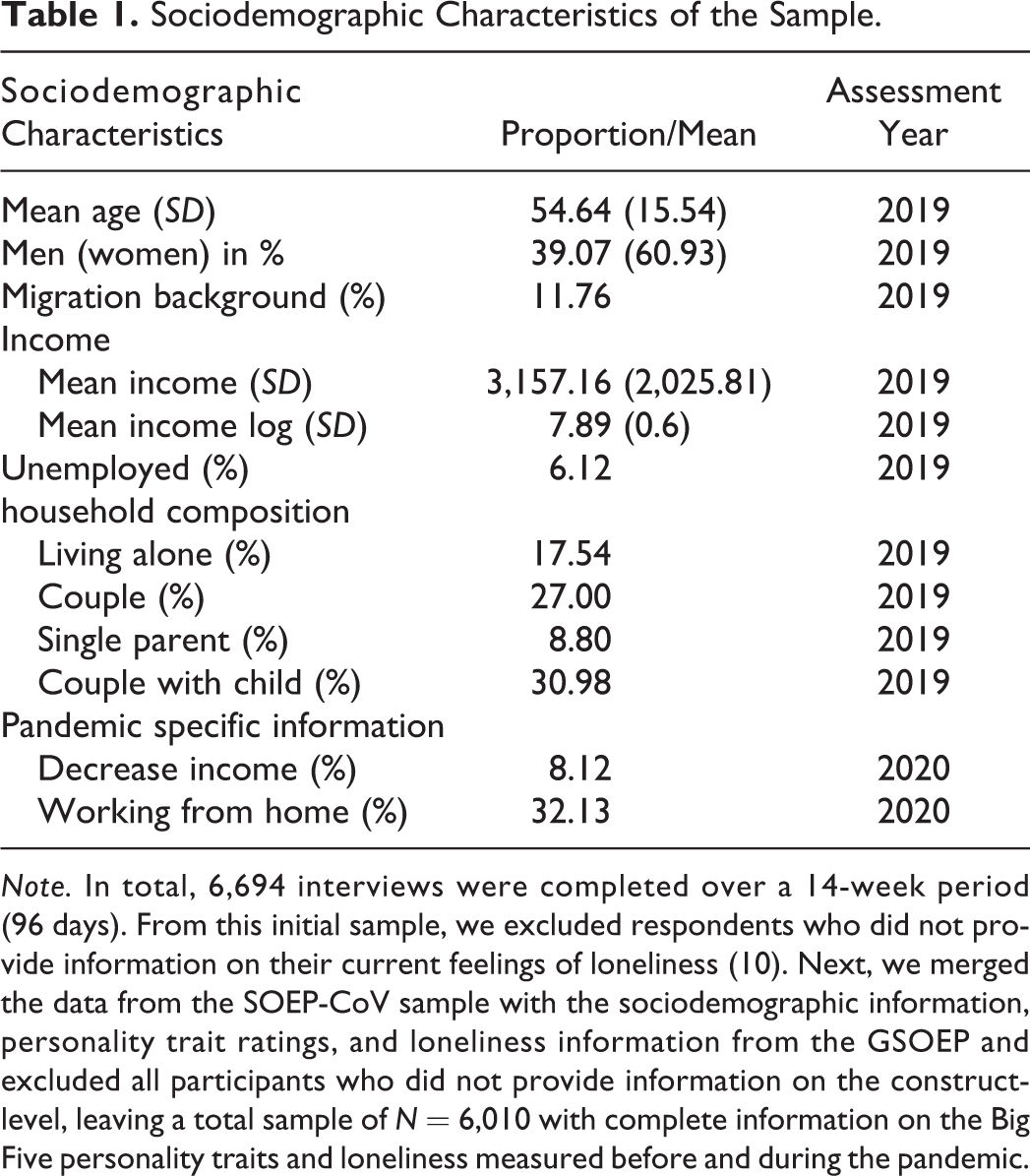
Note. In total, 6,694 interviews were completed over a 14-week period (96 days). From this initial sample, we excluded respondents who did not provide information on their current feelings of loneliness (10). Next, we merged the data from the SOEP-CoV sample with the sociodemographic information, personality trait ratings, and loneliness information from the GSOEP and excluded all participants who did not provide information on the construct-level, leaving a total sample of N = 6,010 with complete information on the Big Five personality traits and loneliness measured before and during the pandemic.
Measures
Loneliness
Loneliness was measured twice in the GSOEP (2013 and 2017) using the 3-item GSOEP-UCLA Loneliness Scale (Hawkley et al., 2016). We used self-rated loneliness from 2017 as a prepandemic loneliness indicator and compared it to the loneliness ratings collected during the pandemic. 3 Table 2 provides means, standard deviations, and omega reliabilities of the loneliness scale; overall, reliabilities were good (.73 ≤ omega ≤ .78).
Means, Standard Deviations, and Omega Reliabilities for Loneliness and the Big Five Personality Traits.
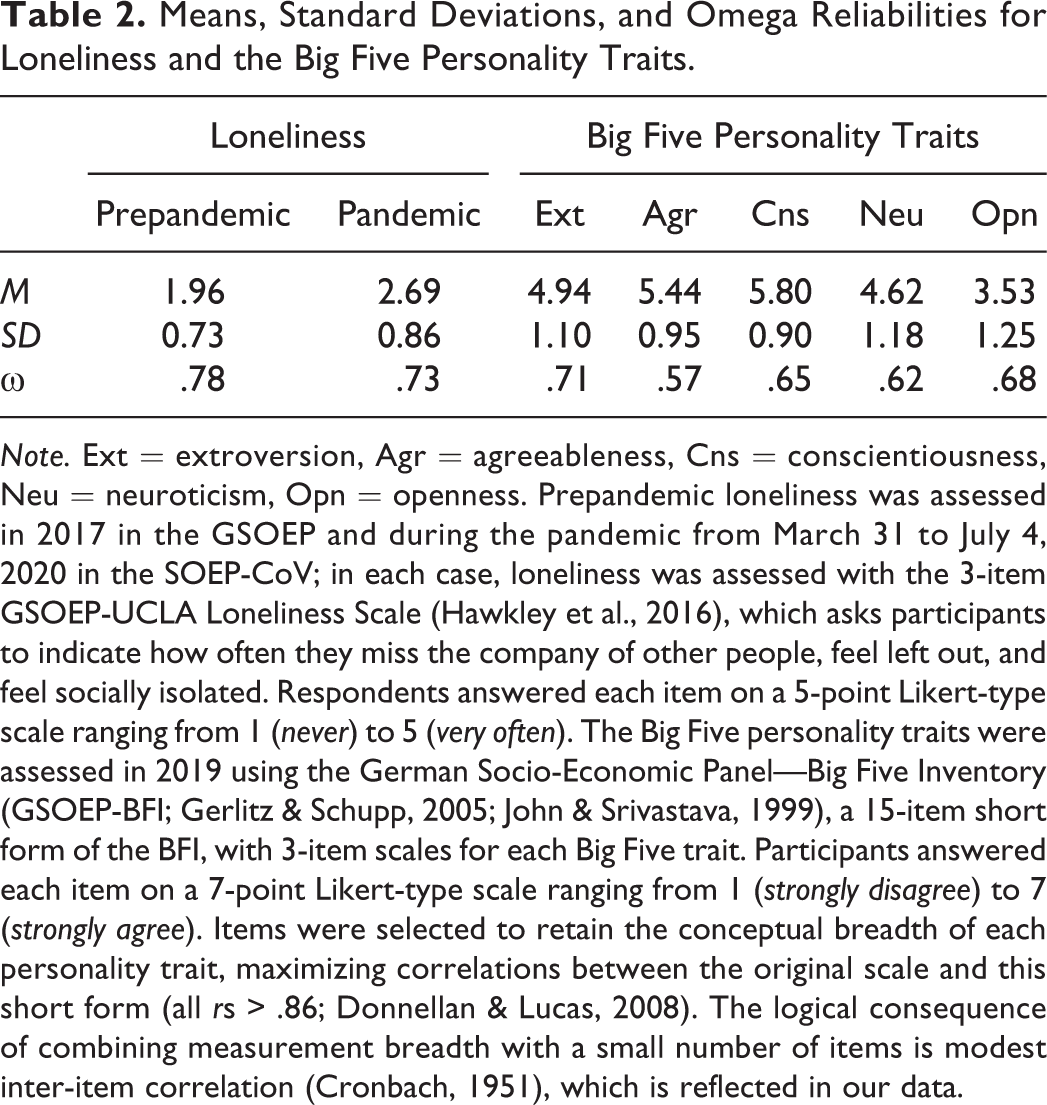
Note. Ext = extroversion, Agr = agreeableness, Cns = conscientiousness, Neu = neuroticism, Opn = openness. Prepandemic loneliness was assessed in 2017 in the GSOEP and during the pandemic from March 31 to July 4, 2020 in the SOEP-CoV; in each case, loneliness was assessed with the 3-item GSOEP-UCLA Loneliness Scale (Hawkley et al., 2016), which asks participants to indicate how often they miss the company of other people, feel left out, and feel socially isolated. Respondents answered each item on a 5-point Likert-type scale ranging from 1 (never) to 5 (very often). The Big Five personality traits were assessed in 2019 using the German Socio-Economic Panel—Big Five Inventory (GSOEP-BFI; Gerlitz & Schupp, 2005; John & Srivastava, 1999), a 15-item short form of the BFI, with 3-item scales for each Big Five trait. Participants answered each item on a 7-point Likert-type scale ranging from 1 (strongly disagree) to 7 (strongly agree). Items were selected to retain the conceptual breadth of each personality trait, maximizing correlations between the original scale and this short form (all rs > .86; Donnellan & Lucas, 2008). The logical consequence of combining measurement breadth with a small number of items is modest inter-item correlation (Cronbach, 1951), which is reflected in our data.
Sociodemographic characteristics
As noted above, earlier studies have found associations between loneliness and sociodemographic characteristics, so we included age, gender, the logarithmic household income, 4 a dummy variable indicating whether participants were unemployed, and the household composition 5 (cf. Table 1) of the participants into the model. We also included a dummy variable indicating whether participants had a direct migration background into the model, because research has shown that a migration background is positively associated with loneliness (Ten Kate et al., 2020). Finally, we included two dummy variables specific to the COVID-19 pandemic, with one indicating whether participants were generally working from home at the time of the interview and another for whether participants’ income decreased since the beginning of the pandemic; both variables also reflect a change in in-person social interactions since the onset of the pandemic and might, in turn, affect loneliness.
Big Five personality traits
The Big Five personality traits were measured in five waves of the GSOEP (2005, 2009, 2013, 2017, 2019) using the 15-item GSOEP-BFI (Gerlitz & Schupp, 2005). We used the scores from 2019, which minimized the chances that changes took place between the assessment and the onset of the COVID-19 pandemic. Table 2 provides means, standard deviations, and omega reliabilities (.57 ≤ omega ≤ .71) of the scales. 6
Analytic Strategy
All data analysis scripts are publicly available on the Open Science Framework (https://osf.io/7fn5p/?view_only=db8662c92b3348c39f3b77ca0d30ce65).
Figure 1 displays our data analytical strategy to predict changes in loneliness.
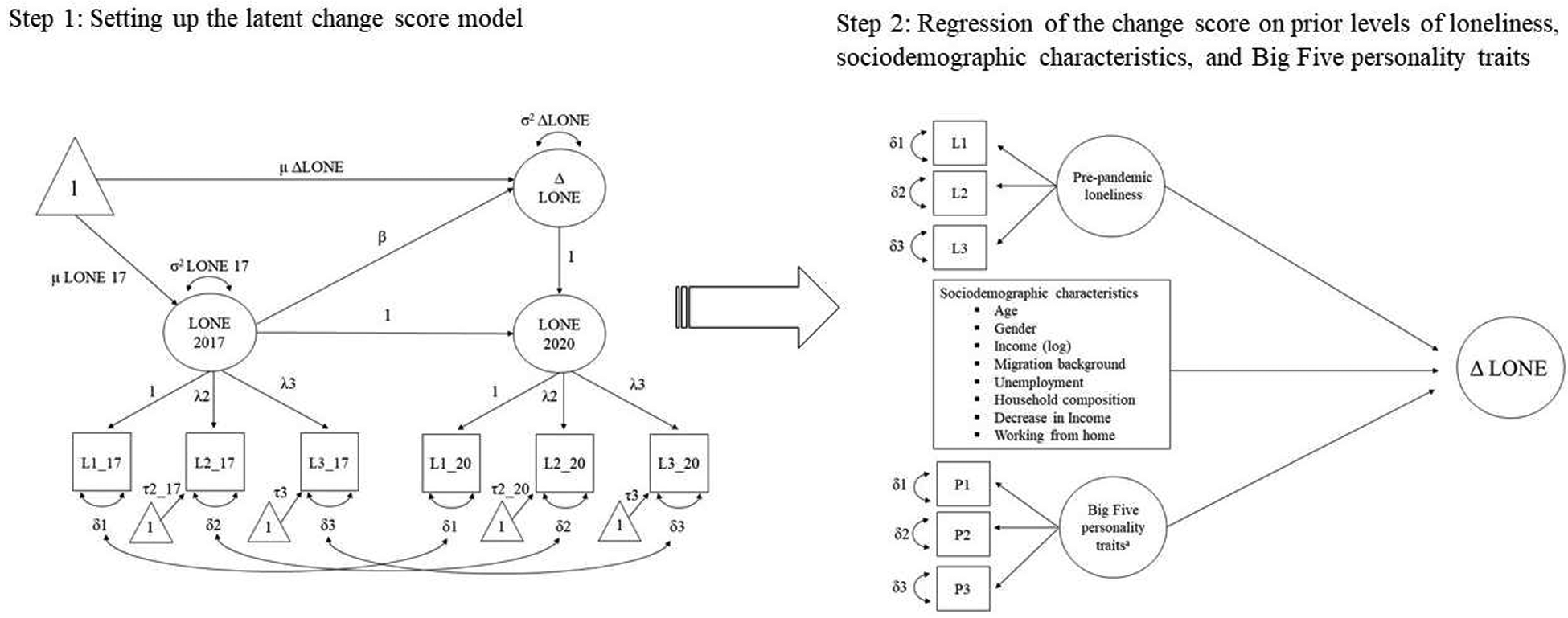
Data analytical strategy to predict changes in loneliness from prepandemic to pandemic. Note. We began by setting up a latent change score model (McArdle, 2009), reflecting the intraindividual changes in loneliness from prepandemic to pandemic (Step 1). For the measurement part of the model, we modeled one latent variable for loneliness assessed in 2017 (prepandemic) and one latent variable for loneliness assessed in 2020 (during the pandemic). The three loneliness items served as indictors for the latent variables. Our measurement invariance tests (see online supplement S2) showed that the model fit for partial scalar invariance was acceptable, so we restricted the item loadings and intercepts to be equal across both years. 7 Furthermore, to control for additional bias due to indicator-specific variance not captured by the latent variable (Cole & Maxwell, 2003), we allowed the residuals of identical indicators to correlate across the two survey years. For the latent change score part of the model, we regressed loneliness assessed in 2017 on loneliness assessed in 2020 and fixed the regression weight to 1. Next, we defined a latent change score variable, which was measured by loneliness in 2020, with a factor loading fixed to 1. Finally, we specified the means and the variances of the latent variables. To reach convergence, we set the mean and the variance of the latent variable for loneliness in 2020 to zero. By doing so, the latent change score variable captured the change in loneliness from prepandemic to pandemic. In Step 2, we predicted the latent change score variable with prior levels of loneliness, the sociodemographic characteristics, and the personality trait ratings. 8 Thus, the effect sizes reported in the results section reflect the association between each predictor and a change in loneliness from prepandemic to pandemic, given the same level of loneliness before the onset of the pandemic and controlling for the shared variance between personality traits. To account for potential biases in the parameter estimates due to measurement error, we also modeled the Big Five personality traits as latent variables.
Next, we examined (1) how loneliness itself fluctuated over time and (2) how the associations between changes in loneliness and personality traits evolved over time. Loneliness probably evolved nonlinearly over the course of the pandemic (Buecker, Horstmann et al., 2020), so we used local structural equation modeling (LSEM; Hildebrandt et al., 2016; Olaru et al., 2019). 9 LSEM is based on the latent change score model fitted to answer our first two research questions, but it also allowed us to test for the continuous effect of time on the different model parameters (online supplement S4 explains the logic behind LSEM). To estimate LSEMs, we used the R package sirt (Robitzsch, 2019) with a bandwidth parameter of h = 2 (Hildebrandt et al., 2016) and across a 90% range of all possible time points, excluding the first and last 5%. Finally, we estimated the LSEMs using both days and weeks as time units; the results converged. We present the results using days below because they offer a finer grained picture than weeks do (online supplement S5 provides the results using weeks).
Effect size expectations
We consider associations of zPE ≈ .10 as medium, because this probably is the average effect size in personality and social psychology (Entringer et al., 2021). Further, we consider zPEs of half that size as small, but certainly not as negligible (Funder & Ozer, 2019). Specifically, “small” effects can be highly consequential (Rosenthal, 1994; Götz et al., 2021); for instance, the association between antihistamines and relief from runny noses/sneezing is r = .11, the association between chemotherapy and breast cancer survival is r = .03, and the association between aspirin and reduced risk of death by heart attack is r = .02 (for a review, see Meyer et al., 2001).
Results
Overall Increases in Loneliness
Overall, our results revealed a large increase in loneliness from prepandemic to pandemic. Specifically, we estimated the intercept of the latent change score variable to be zPE = 1.275; 95%CI = [1.212, 1.339]. Thus, loneliness increased more than one standard deviation from prepandemic to pandemic, a large effect by any standard (Cohen, 1988; Funder & Ozer, 2019).
Identifying Individuals At-Risk for Increases in Loneliness
As shown in Table 3, and contradicting previous research, prior loneliness was negatively associated with increases in loneliness during the first months of the pandemic, zPE = −0.605, 95%CI = [−0.637, −0.573]; individuals who were already lonely before the pandemic experienced smaller increases in loneliness during the pandemic than did individuals who were not lonely beforehand. 10 Gender was the strongest predictor of increases in loneliness: In line with extant research, women experienced significantly higher increases in loneliness that did men, zPE = 0.111, 95%CI = [0.085, 0.137]. Moreover, higher age was associated with smaller increases in loneliness, zPE = −0.033, 95%CI = [−0.063, −0.004], and so was higher income, zPE = −0.050, 95%CI = [−0.084, −0.016]. Participants who were unemployed before the pandemic experienced smaller increases in loneliness than did participants who were employed beforehand, zPE = −0.051, 95%CI = [−0.079, −0.024]. However, a decrease in income during the first months of the pandemic was associated with higher increases in loneliness, zPE = 0.035, 95%CI = [0.009, 0.061], suggesting that participants who had lost their jobs during the pandemic or were working less than beforehand were particularly lonely during the first months of the pandemic. Finally, neither household composition, migration background, nor working from home were associated with increases in loneliness.
Associations Between Sociodemographic Characteristics, Big Five Personality Traits, and Increases in Loneliness From Prepandemic to Pandemic.
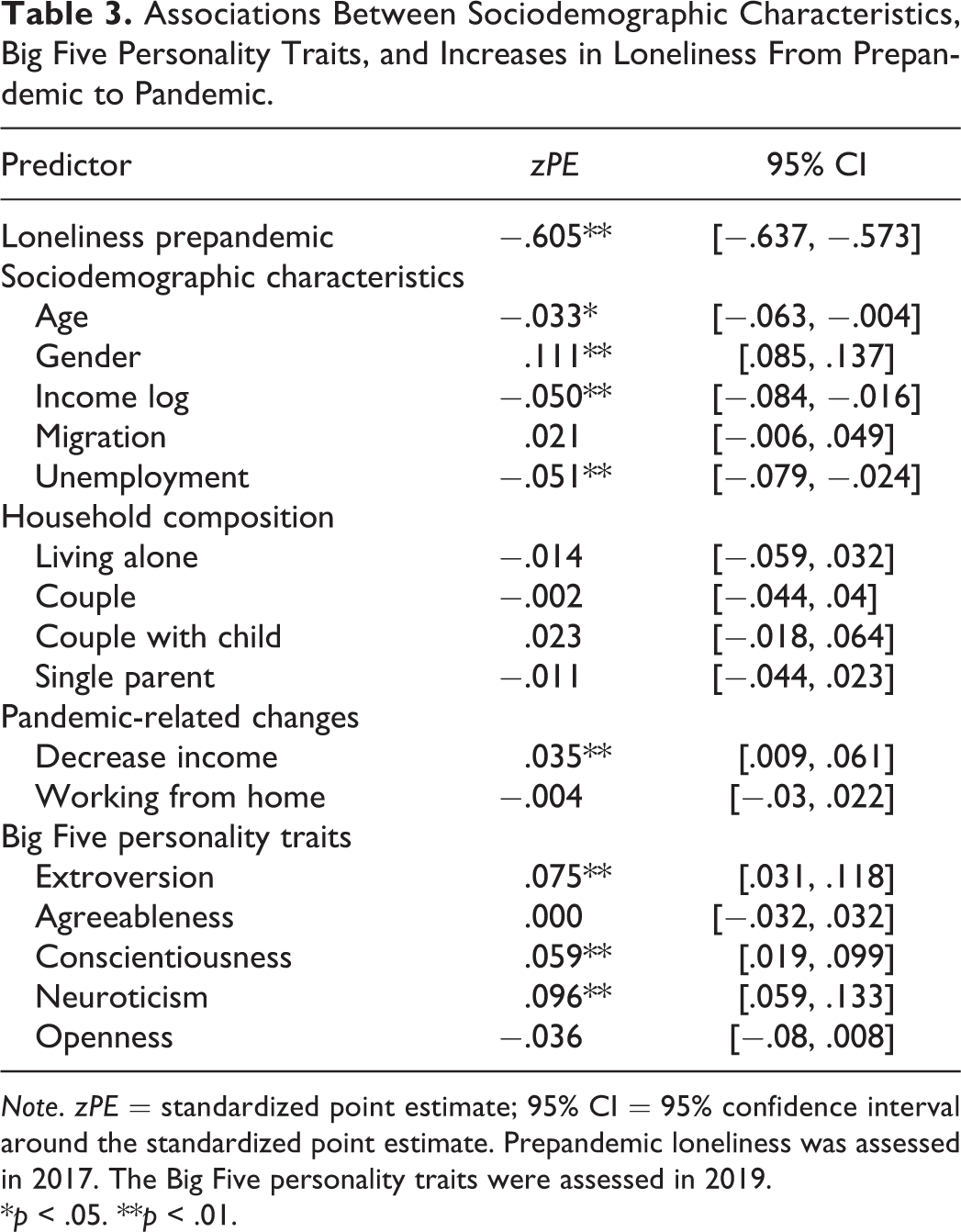
Note. zPE = standardized point estimate; 95% CI = 95% confidence interval around the standardized point estimate. Prepandemic loneliness was assessed in 2017. The Big Five personality traits were assessed in 2019.
*p < .05. **p < .01.
As shown in the lower part of Table 3, three personality traits were positively associated with increases in loneliness during the first 3 months of the pandemic. As expected on the basis of the idea that social contact restrictions represented a bigger departure from normal social behavior for extraverts than for introverts, Extroversion predicted larger increases in loneliness, zPE = 0.074, 95%CI = [0.031, 0.118]. Further, supporting the hypothesis that neurotic individuals cope dysfunctionally with stressors, Neuroticism predicted larger increases in loneliness, zPE = 0.096, 95%CI = [0.059, 0.133]. Finally, Conscientiousness for which we had no expectations, also predicted larger increases in loneliness, zPE = 0.059, 95%CI = [0.019, 0.099].
With regard to effect sizes, prior levels of loneliness had the largest effect on increases in loneliness during the first months of the pandemic, zPE = −0.605, followed by gender, zPE = 0.111. Generally, personality trait effects on increases in loneliness were smaller, but still in the small to medium effect size range,
Effect of Time
Figure 2 depicts the mean levels of loneliness over the first 3 months of the COVID-19 pandemic. This period covered the first lockdown in Germany and a 7-week period after the lockdown ended (on Day 37). As shown in the figure, loneliness increased during the lockdown period, and decreased during the postlockdown period. Note, loneliness had already begun to decrease shortly before contact restrictions were officially eased.
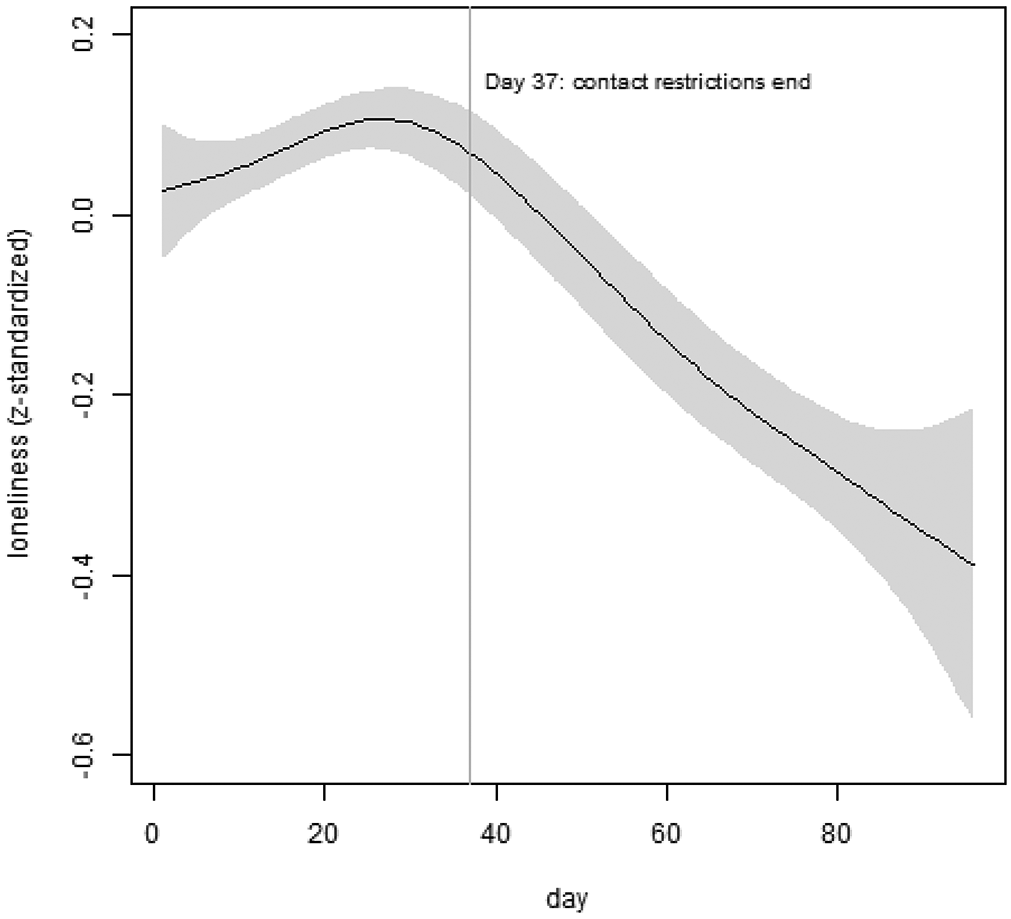
Development of loneliness over 3 months of the COVID-19 pandemic, including a lockdown and postlockdown period. Note. The solid black line shows the (standardized) mean loneliness for each day of the data collection period. Data collection started on March 31 (Day 1) and ended on July 4 (Day 96). The gray area around the black line marks the 95% confidence interval around the estimated mean loneliness. The gray vertical line indicates the date on which the first lockdown in Germany officially ended (Day 37, i.e., May 6, 2020), at which point strict contact restrictions were eased and people were again allowed to meet more than one person from another household. Thus, the left-hand side of the gray line displays the mean loneliness during the lockdown when contact restrictions were in place. The right-hand side of the gray line displays the mean loneliness after the lockdown ended.
Figure 3 depicts the associations between increases in loneliness and personality traits over the lockdown and postlockdown periods, estimated using LSEM (online supplement S7 lists the effect sizes and confidence intervals at each day). As shown in the figure, the strength of the associations between increases in loneliness and personality traits ratings showed considerable variation over time, Panel A: Extroversion—
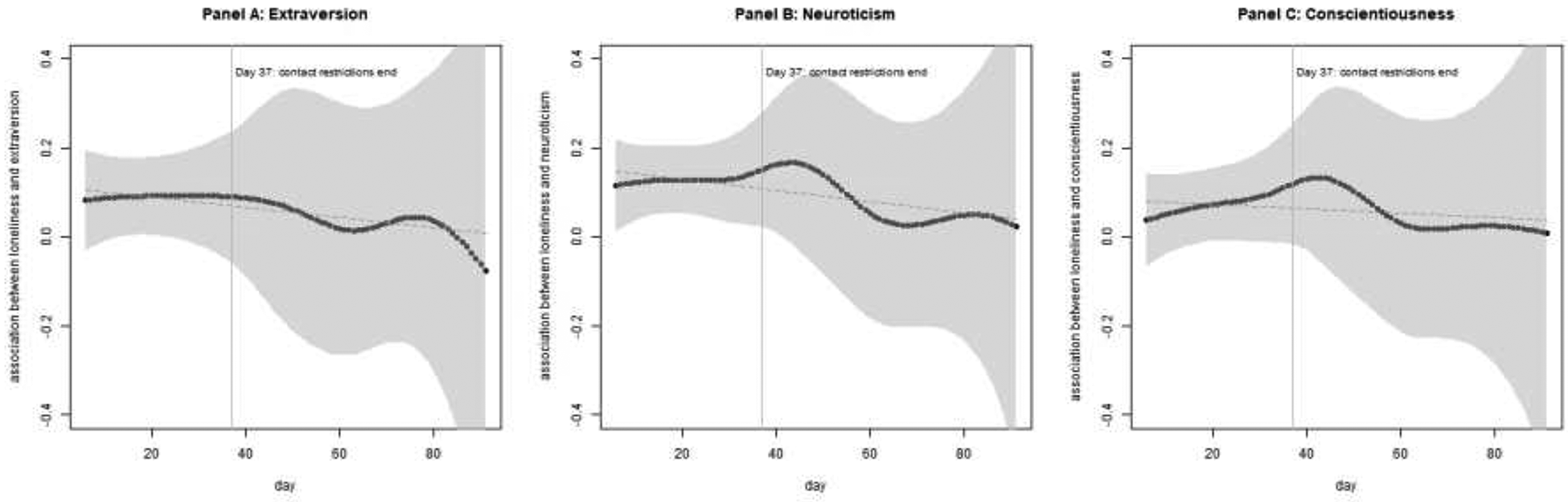
Associations between increases in loneliness and personality traits over 3 months of the COVID-19 pandemic, including a lockdown and a postlockdown period (using days as units of time). Note. The three panels depict the associations between increases in loneliness and personality traits over 3 months of the COVID-19 pandemic, from a lockdown period to a postlockdown period. Within each panel, the black bold dots represent the associations between increases in loneliness and personality traits estimated at each day using local structural equation modeling. The gray area around the black line marks the 95% confidence interval around the associations. The red dotted line depicts the overall linear trend in the data. The vertical gray line in each panel indicates the day on which the first lockdown ended in Germany (Day 37). Thus, the left-hand side of the gray line displays the associations between increases in loneliness and personality traits during the lockdown. The right-hand side of the gray line displays the associations between increases in loneliness and personality traits after the lockdown ended. The results were estimated using local structural equation modeling. Table S5 in the Online Supplement contains the respective effect sizes and confidence intervals estimated at each day.
Finally, the associations between changes in loneliness and Conscientiousness were overall smaller, resulting in nonsignificant point estimates at each day (the confidence intervals included zero). Thus, based on LSEM, it was not possible to determine how these associations evolved over the course of the lockdown and beyond.
Discussion
The present research examined changes in loneliness in response to the measures designed to slow down the spread of COVID-19 over the first 3 months of the pandemic in Germany. Consistent with the deprivation perspective, the in-person social contact restrictions were associated with substantial increases in loneliness from prepandemic to pandemic periods. This increase of 0.73 points (M 2017 = 1.96 vs. M 2020 = 2.69) dwarfs the changes in loneliness of 0.03 over the previous period, from 2013 to 2017, (M 2013 = 1.99 vs. M 2017 = 1.96). This finding adds to the accumulating literature reporting increases in loneliness in response to the social distancing measures implemented across Europe (Bu et al., 2020b; Van der Velden et al., 2021; Van Tilburg et al., 2020). At the same time, other studies—mostly from North America—found no increases in loneliness and related constructs during the initial COVID-19-related lockdowns (Luchetti et al., 2020; McGinty et al., 2020; Sibley et al., 2020). Thus, the trajectories of loneliness in response to the COVID-19 pandemic appear to vary across countries and are likely to be affected by culture-level variables (e.g., individualism—collectivism; Heu et al., 2019) and factors like case numbers, fatalities, and the stringency of the actions taken to combat the spread of the virus.
Loneliness costs were not distributed equally. In particular, women, younger individuals, and individuals with lower income or who had lost their jobs/were working reduced hours since the onset of the pandemic were at higher risk of experiencing loneliness during the crisis. While younger age and lower income are known predictors for loneliness (Luhmann & Hawkley, 2016; Hawkley et al., 2008), female gender emerged as a new predictor for loneliness during the pandemic (Maes et al., 2019; Varga et al., 2021).
Contrasting with previous studies, however, the present research revealed that the lonelier individuals were before the onset of the pandemic, the smaller was their increase in loneliness during the pandemic; this finding supports the idea that less-lonely individuals had more room for increases in loneliness than already lonely individuals (note though that prepandemic loneliness was positively associated with loneliness during the pandemic, zPE = 0.257, 95%CI [0.215, 0.299], cf. Table S4 in the online supplement). Thus, the first months of the pandemic did not particularly penalize individuals who were already at-risk for loneliness before the pandemic (Bu et al., 2020a, 2020b); instead, these first months seemed to work as an “equalizer,” leveling preexisting interindividual differences in loneliness. More research, however, is needed to determine whether these effects persisted over the full course of the pandemic (Buecker, Horstmann et al., 2020).
Personality traits were also important predictors of increases in loneliness when in-person social contact was restricted, even after controlling for sociodemographic characteristics and initial levels of loneliness. In particular, extraverted, neurotic, and conscientious individuals experienced larger increases in loneliness than did introverted, emotionally stable, and nonconscientious individuals. The higher loneliness costs borne by extraverts during the lockdown reverses the typical pattern of results in which Extroversion is negatively associated with loneliness (Buecker, Horstmann et al., 2020) and reveals important insights into the core features of Extroversion.
Specifically, it appears that the association between loneliness and Extroversion is best explained by extraverts’ innate need for in-person social contact—and less by their higher quality relationships, larger social networks, or overall positive affect (Stokes, 1985; Watson & Clark, 1997). The higher increase in loneliness experienced by neurotic individuals during the lockdown (and beyond) can be explained by their overall negative emotionality (John & Srivastava, 1999) and their tendency to react with maladaptive coping strategies to stressors (Barańczuk, 2019). The pandemic is a major stressor for most individuals and it is, thus, likely that it amplified the dysfunctional coping and interpersonal behavior of neurotic individuals (McNulty, 2008), rendering them particularly lonely during the pandemic.
The link between increases in loneliness and Conscientiousness was unexpected, but is easily reconciled with the tendency of conscientious individuals to adhere to rules and social norms (Gebauer et al., 2014, McCrae & Costa, 1999). One previous study found that conscientious individuals adhered to the in-person social contact restrictions more than nonconscientious individuals did (Carvalho et al., 2020), likely rendering them relatively socially isolated. Future research, however, is needed to examine this mechanism in detail.
Finally, we found that during the first 3 months of the pandemic, increases in loneliness occurred largely in line with in-person social contact restrictions. Specifically, loneliness increases accumulated almost linearly when in-person social contact restrictions were in place, but also decreased quickly after they were eased. This finding is in line with two previous studies that also found substantial variation in loneliness over the course of the initial lockdown (Bu et al., 2020b; Buecker, Horstmann et al., 2020). The finding implies that increases in loneliness in relation to the contact restrictions were rather temporary (or state-like) and may not have affected levels of chronic (trait) loneliness. State and trait loneliness differ not only in their temporal stability, but also in their most defining covariates. Specifically, chronic loneliness is a major risk factor for mental health (Beutel et al., 2017; Hawkley, & Cacioppo, 2010). Initial studies found that pandemic-related worries and uncertainty had negative effects on mental health (Rettie & Daniels, 2020). In addition, one previous study found a link between loneliness and increased depression symptoms in adolescents during the pandemic (Lee et al., 2020). Yet, to date it is not clear if the contact restrictions and their associated increases in loneliness also affected mental health negatively; thus, future research is needed on this topic.
Limitations
We note two limitations, which point to more avenues of future research. First, our research estimated the trajectories of increases in loneliness and the associations between increases in loneliness and personality traits over just the first 3 months of the COVID-19 pandemic. This time period is longer than that covered in previous studies (Bu et al., 2020b; Buecker, Horstmann et al., 2020; Luchetti et al., 2020) but leaves many questions unanswered about the effects of prolonged contact restrictions. As the pandemic has continued and contact restrictions have been reintroduced, sometimes over longer periods, economic resources that may have initially buffered against loneliness might become depleted, and the living situation of many individuals living with their partner and/or children might become additional stressors. Thus, more research is needed to understand the longer-term impact of the pandemic on loneliness.
Second, a strength of the present design is our use of longitudinal data to estimate increases in loneliness from prepandemic to pandemic. Yet, to analyze the trajectories of the increases in loneliness and the associations between increases in loneliness and personality traits over time, we did not rely on longitudinal data but analyzed the mean-level changes over time. The sample was also collected unevenly over the 3 months, with a larger share collected during the lockdown (N = 4,078) and a smaller share after the lockdown ended (N = 1,932). Therefore, the confidence intervals around the point estimates became larger after the lockdown ended, making it more difficult to draw long-term conclusions from our findings. To track intraindividual processes over the course of the ongoing pandemic, more research is needed that relies on long-term, high-resolution intraindividual assessments of loneliness, preferably using some form of experience sampling method.
Supplemental Material
Supplemental Material, sj-docx-1-spp-10.1177_19485506211037871 - Loneliness During a Nationwide Lockdown and the Moderating Effect of Extroversion
Supplemental Material, sj-docx-1-spp-10.1177_19485506211037871 for Loneliness During a Nationwide Lockdown and the Moderating Effect of Extroversion by Theresa M. Entringer and Samuel D. Gosling in Social Psychological and Personality Science
Footnotes
Declaration of Conflicting Interests
The author(s) declared no potential conflicts of interest with respect to the research, authorship, and/or publication of this article.
Funding
The author(s) disclosed receipt of the following financial support for the research and/or authorship of this article: This study received funding from the Federal Ministry of Education and Research (BMBF, Grant: 01UJ1911BY and 01KI2087A).

Supplemental Material
The supplemental material for this article is available online.
Notes
References
Supplementary Material
Please find the following supplemental material available below.
For Open Access articles published under a Creative Commons License, all supplemental material carries the same license as the article it is associated with.
For non-Open Access articles published, all supplemental material carries a non-exclusive license, and permission requests for re-use of supplemental material or any part of supplemental material shall be sent directly to the copyright owner as specified in the copyright notice associated with the article.
