



Abstract
Single adults, on average, experience worse well-being compared to coupled adults. But why? The current research bridged interpersonal and intergroup perspectives to examine the influence of social support and social discrimination on single versus coupled adults’ well-being. We drew on a nationally representative prospective study from New Zealand (Study 1, N = 4,024) and an integrative data analysis of three North American data sets examining peoples’ general (Study 2, N = 806) and day-to-day (Study 2, N = 889 and 9,228 observations) social experiences. The results demonstrated that single adults reported lower life satisfaction compared to coupled adults, and this may be partly due to single adults reporting lower perceptions of social support availability and greater experiences of negative treatment and discrimination compared to coupled adults. These novel findings move away from stereotypical assumptions about singlehood and highlight the important role of social relationships and interactions in determining single adults’ happiness and well-being.
Rates of singlehood and people living alone are on the rise (United Nations, 2019). In many societies around the world, the number of adults who are not currently in a romantic relationship is comparable to—and sometimes outnumbers—the number of people in committed relationships (United Nations, 2008). Today, people are single more often and for longer as they delay or rebuff romantic partnerships to pursue career goals and personal aspirations (Copen et al., 2012), as divorce rates rise (Schoen & Canudas-Romo, 2006), and as more people choose solo-living (DePaulo, 2007; Kislev, 2019). The increasing rates of solo-living and single status suggest that singlehood across the lifespan is becoming more socially acceptable. Despite this, meta-analytic (Diener et al., 2000; Haring-Hidore et al., 1985) and longitudinal (Buecker et al., 2020; Purol et al., 2020) studies suggest that, on average, single adults experience worse life satisfaction and subjective well-being compared to coupled adults.
Unfortunately, there has been little insight about why these group differences appear so prevalent—which may fuel problematic assumptions that romantic relationships are inherently good for well-being. The current research aims to move away from these assumptions and explore whether the way single adults are treated by others—rather than being single per se—shapes well-being. We draw on two theoretical perspectives that may provide (at least partial) explanations for why single adults may be at risk of experiencing worse well-being compared to coupled adults, including (1) interpersonal perspectives that single adults perceive lower social support availability, such as feeling unable to turn to others for help and guidance, and (2) intergroup perspectives that single adults experience greater social discrimination, such as being excluded from social events or pressured to “settle down.”
Relationship Status and Well-Being
A well-replicated finding, including meta-analyses of 58 studies (Haring-Hidore et al., 1985) and 42 culturally diverse nations (Diener et al., 2000), has illustrated that single adults report lower life satisfaction and subjective well-being compared to adults in relationships. These between-group differences have also been corroborated by longitudinal evidence. Purol and colleagues (2020) utilized a large nationally representative sample to illustrate that adults who were consistently coupled across their life span reported greater well-being compared to adults who were consistently single across their life span. Similarly, adults experience reductions in loneliness across time following marriage and increases in loneliness following marital separation/divorce (Buecker et al., 2020).
Single Adults’ Perceptions of Social Support and the Impact on Well-Being
One interpersonal perspective suggests that single adults experience worse well-being compared to coupled adults due to lower perceptions of social support availability. Single adults may feel less able to seek advice and comfort from close others, especially if romantic partnerships are perceived to be a primary source of support in adulthood (S. Cohen & Wills, 1985; Reis et al., 2000). Given that people are turning to spouses for social support more than family or friends (McPherson et al., 2006), it is not surprising that some single adults feel like they are missing out on the support of a romantic partner (Adamczyk, 2017). Indeed, despite single individuals reporting larger social networks and better-quality relationships with friends and family compared to coupled adults (Sarkisian & Gerstel, 2016), single adults perceive that others are less available for support, which has been shown to undermine single adults’ life satisfaction and mental health (Adamczyk & Segrin, 2015a, 2015b; Stronge et al., 2019). These findings corroborate decades of research highlighting that perceiving others will be supportive buffers the negative impact of life stress on well-being (S. Cohen & Willis, 1985), helps people capitalize on positive life events (Feeney & Collins, 2015), and reduces mortality risk over and above health indicators such as smoking, drinking, and exercise habits (Holt-Lustad et al., 2010).
Single Adults’ Experiences of Social Discrimination and the Impact on Well-Being
Single adults may also experience lower well-being due to institutional and societal discrimination. “Singlism” may involve excluding single adults from social events, making assumptions that single adults have “deficiencies” that keep them from entering or maintaining intimate relationships, pressuring single adults to “settle down,” and denying single adults tax or health benefits that are afforded to coupled adults (DePaulo, 2007; DePaulo & Morris, 2005). Supporting this perspective, experimental studies show that participants rate single characters in hypothetical vignettes as less friendly and trustworthy (Hertel et al., 2007; also see Morris et al., 2007), despite little evidence that single and couple people differ on personality traits (Greitemeyer, 2009). Single adults also self-report discrimination due to their single status (Fisher & Sakaluk, 2020), although no research to date (to our knowledge) has examined whether single adults’ experiences of discrimination impact their well-being. However, two meta-analyses have demonstrated that perceiving discrimination against one’s disadvantaged group (e.g., racism, sexism) undermines well-being, including greater psychological distress and lower life satisfaction (Pascoe & Smart-Richman, 2009; Schmitt et al., 2014).
The Current Research
In the current study, we extend the singlehood literature by bridging interpersonal and intergroup theories to examine whether social support and societal discrimination simultaneously explain why single adults tend to report worse well-being compared to coupled adults (see Figure 1). We tested our hypotheses in a nationally represented prospective study (Study 1) and an integrative data analysis (IDA) of three daily diary data sets (Study 2). In Study 1, we examined whether relationship status predicted (a) concurrent and (b) prospective well-being and whether these associations were mediated by perceptions of social support availability and negative treatment. Notably, Study 1 captured global measures and only assessed negative treatment rather than discrimination. Thus, in Study 2, we examined whether relationship status predicted (1) global life satisfaction and whether this association was mediated by perceptions of social support availability and discrimination attributed to relationship status and (2) daily life satisfaction and whether this association was mediated by day-to-day perceptions of social support availability and negative treatment across a 2-week period.
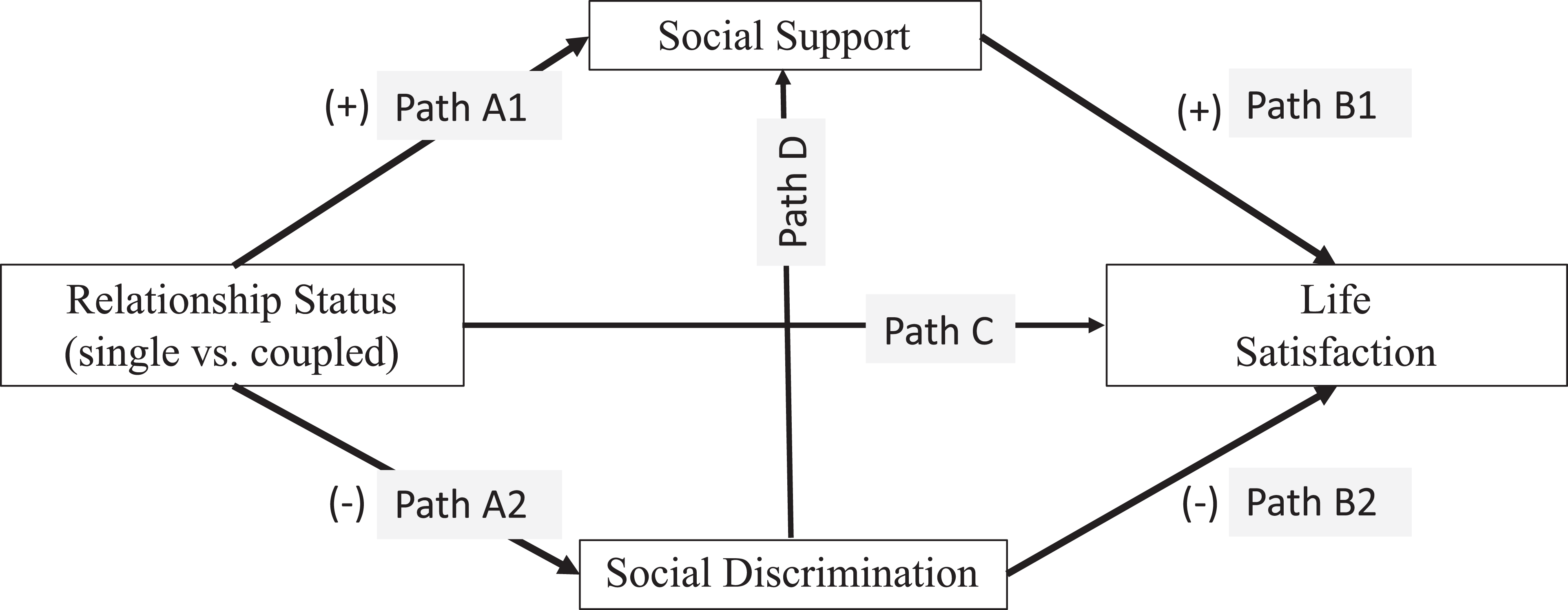
Theoretical model illustrating the associations between relationship status (−1 = single, 1 = coupled), perceptions of social support (top pathway) versus perceptions of social discrimination (bottom pathway), and life satisfaction.
Study 1
Method
Sampling Procedure and Power Considerations
These data were drawn from an existing nationally representative study called the New Zealand Attitudes and Values Study (NZAVS; Sibley, 2014). Power analyses were not conducted prior to data collection. Sample size was determined by the number of people that opted into the study and met our analysis criteria (see below). Nonetheless, our sample of approximately 4,000 participants exceeds guidelines for conducting structural equation models (SEMs; Wolf et al., 2013).
Participants
The NZAVS Time 1 questionnaire was posted to 40,500 randomly selected participants from the publicly available version of the 2009 NZ electoral roll, with valid responses from 6,518 participants; 68% of the sample responded at Time 1 and Time 2 1 year later (N = 4,423). Of these retained participants, 4,099 were coded as (a) being single at Time 1 and Time 2 or (b) being in a relationship with the same partner at Time 1 and Time 2. Seventy-five respondents could not clearly be classified based on information provided, leaving a total of 4,024 participants analyzed here (2,461 women, 1,563 men). At Time 1, participants ranged from 18 to 94 years of age (M = 50.55 years; SD = 14.90). Participants identified as New Zealand European (42.5%), Asian (26.8%), Indian (11.8%), Maori (3.9%), Non-New Zealand European (3.9%), Pacific (2.4%), or other (8.7%). See the NZAVS website for further sample information.
Procedure and Measures
Participants first completed a Time 1 questionnaire that assessed their relationship status, gender, age, household income, life satisfaction, social support availability, and negative treatment (along with other measures not germane to this study). A year later, a Time 2 questionnaire assessed their relationship status and life satisfaction (along with other measures not germane to this study). All procedures were performed in accordance with the university ethics committee standards.
Relationship status
In response to “What is your relationship status?” participants selected “single,” “dating,” “living together/de facto,” “married,” and “other.” Participants were asked to specify when selecting “other,” producing responses like divorced/separated, widow/widower, and civil union. We classified participants as (1) single, including those whose “other” descriptions represented currently single (e.g., “divorced/separated,” “widow/widower”), or (2) involved in a relationship, including “dating,” “living together/de facto,” and “married,” and other relationships described (e.g., engaged, civil union). Given that changes in relationship status might impact any between-group differences, we only focused on individuals who were single or involved in the same relationship at both time points. A total of 864 (21.5%) participants were categorized as single at both Time 1 and 2. A total of 3,160 (78.5%) participants were in a relationship with the same partner at both time points, which primarily involved people who were married/civil union (61.7%) with small proportions cohabiting (13.8%) or dating (2.5%). Average relationship length was 21.88 years (SD = 14.73).
Perceived social support availability
At baseline, participants rated three items that assessed the extent to which people perceive social support (e.g., “There are people I can depend on to help me if I really need it,” “There is no one I can turn to for guidance in times of stress” [reverse-scored], and “I know there are people I can turn to when I need help,” 1 = strongly disagree, 7 = strongly agree).
Negative treatment
At baseline, participants were asked “In your day-to-day life, how often do people in New Zealand act toward you in the following ways? (1 = have never experienced this, 7 = often experience this)” and rated 12 items developed by Sibley (2011; also see Cuddy et al., 2007) to assess subjective experiences of active harm (“Do things to threaten you”), passive harm (“Insist that they know what is best for you”), active facilitation (“Are friendly and willing to help you”), and passive facilitation (“Happily interact with you in formal situations but not social ones”).
Subjective well-being
At both time points, participants rated two items to assess life satisfaction (e.g., “I am satisfied with my life” and “In most ways my life is close to ideal,” 1 = strongly disagree, 7 = strongly agree; Diener et al., 1985). Participants also rated how satisfied they were with their “standard of living,” “health,” “future security,” and “personal relationships” 1 (0 = completely dissatisfied, 10 = completely satisfied; Cummins et al., 2003). These two scales were highly correlated at both time points (rs ≥ .70) and were combined to create an overall well-being score by converting all items to a 1-7 Likert scale and averaging across all six items (α = .83).
Results
Data for Study 1 are not publicly available, but code and output are available on the Open Science Framework (https://osf.io/h2z5m/?view_only=e95b5e2df83047888cda02ffa42e057f). Hypotheses and analyses for this project were not preregistered. Table 1 displays descriptive statistics and scale reliabilities. We conducted an SEM using lavaan (Rosseel, 2012) in R (Version 3.6.1). We examined the path between relationship status and baseline well-being and included perceived social support and negative treatment (i.e., active harm, passive harm, active facilitation, and passive facilitation) as mediators (see Figure 1). We also included paths between each negative treatment subscale and social support availability, given that experiences of discrimination can undermine peoples’ perceptions of social support (e.g., Kondrat et al., 2018; also see the rejection-identification model by Branscombe et al., 1999). All negative treatment subscales were allowed to covary. Given that gender and age may influence experiences of social support (Schnittker, 2007; Stronge et al., 2019) and singlism (DePaulo & Morris, 2005), we included the pathways between participants’ gender (0 = woman, 1 = man) and age (grand-mean centered) and all dependent variables in our model. To minimize listwise deletion of missing data, we also included (full information) maximum likelihood estimation when fitting the SEM model. This model fit the data well (used observations = 4,014, comparative fit index [CFI] = .931, root mean square error of approximation [RMSEA] = .047, standardized root mean square residual [SRMR] = .033).
Descriptive Statistics and Correlations Across Measures (Study 1).
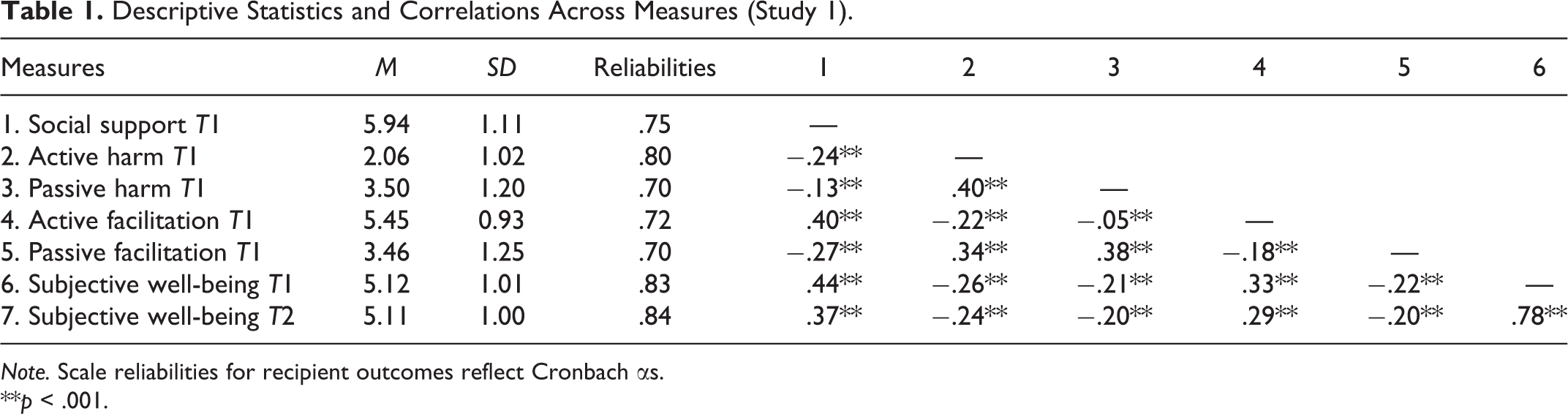
Note. Scale reliabilities for recipient outcomes reflect Cronbach αs.
**p < .001.
The key path coefficients are presented in Table 2 (left-hand column) and account for all other pathways that were run simultaneously in the SEM. Table 3 shows the indirect-effect path coefficients (left-hand column). Single adults reported lower baseline well-being compared to people in relationships. Single adults also reported (1) lower perceptions of social support and (2) greater negative treatment, including greater active harm, passive harm, and passive facilitation and lower active facilitation compared to coupled adults. Both the theorized pathways demonstrated significant indirect effects, including for social support (relationship status → social support → well-being), passive harm (relationship status → passive harm → well-being), and active facilitation (relationship status → active facilitation → well-being). Furthermore, greater active harm and passive facilitation and lower active facilitation undermined well-being via reduced social support (relationship status → active harm/passive facilitation/active facilitation → social support → well-being).
Structural Equation Modeling Estimates for the Association Between Relationship Status, Social Support, Negative Treatment, and Well-Being (Study 1).
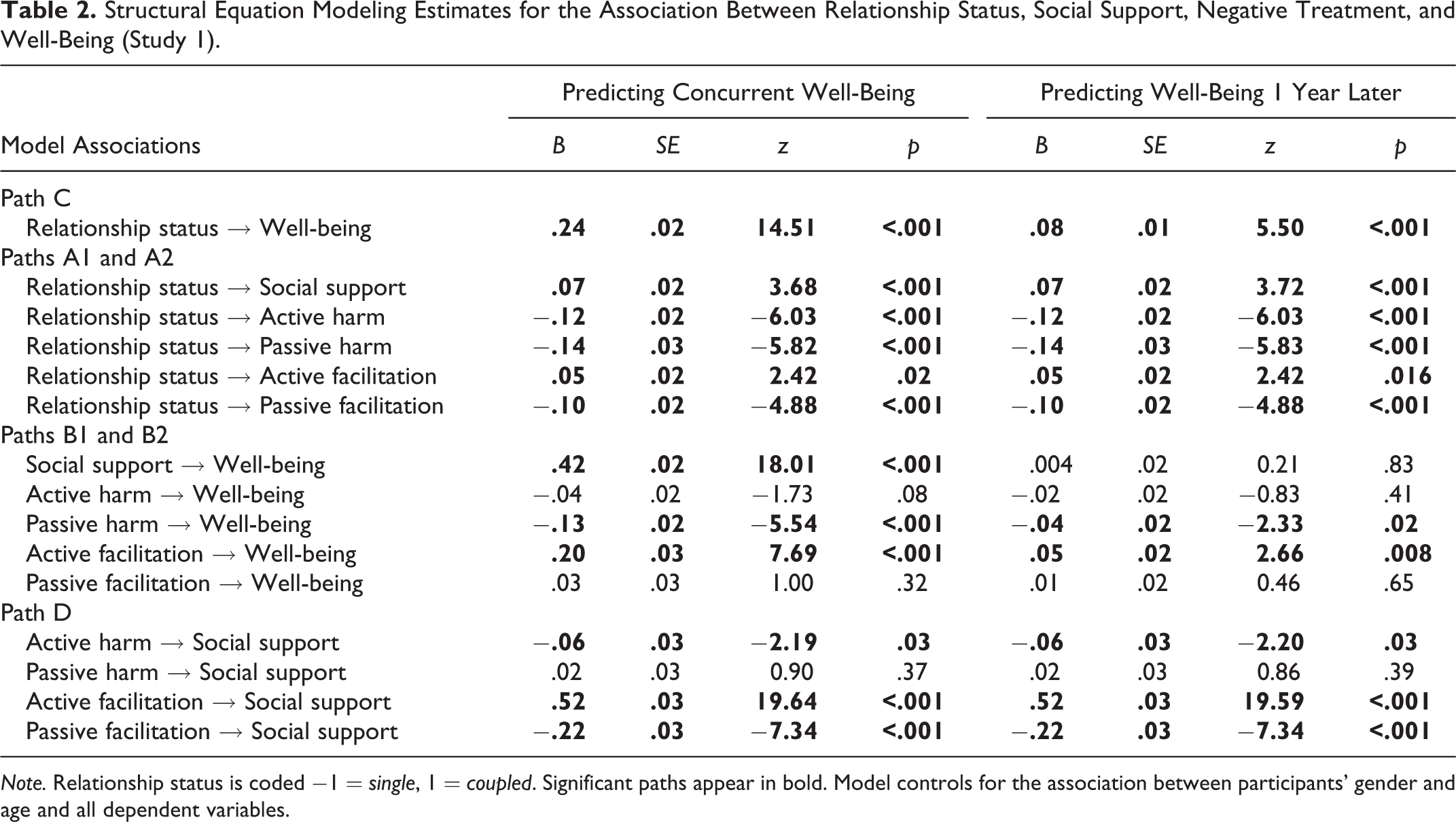
Note. Relationship status is coded −1 = single, 1 = coupled. Significant paths appear in bold. Model controls for the association between participants’ gender and age and all dependent variables.
Indirect Effects for Relationship Status and Well-Being Mediated by Social Support and Negative Treatment (Study 1).
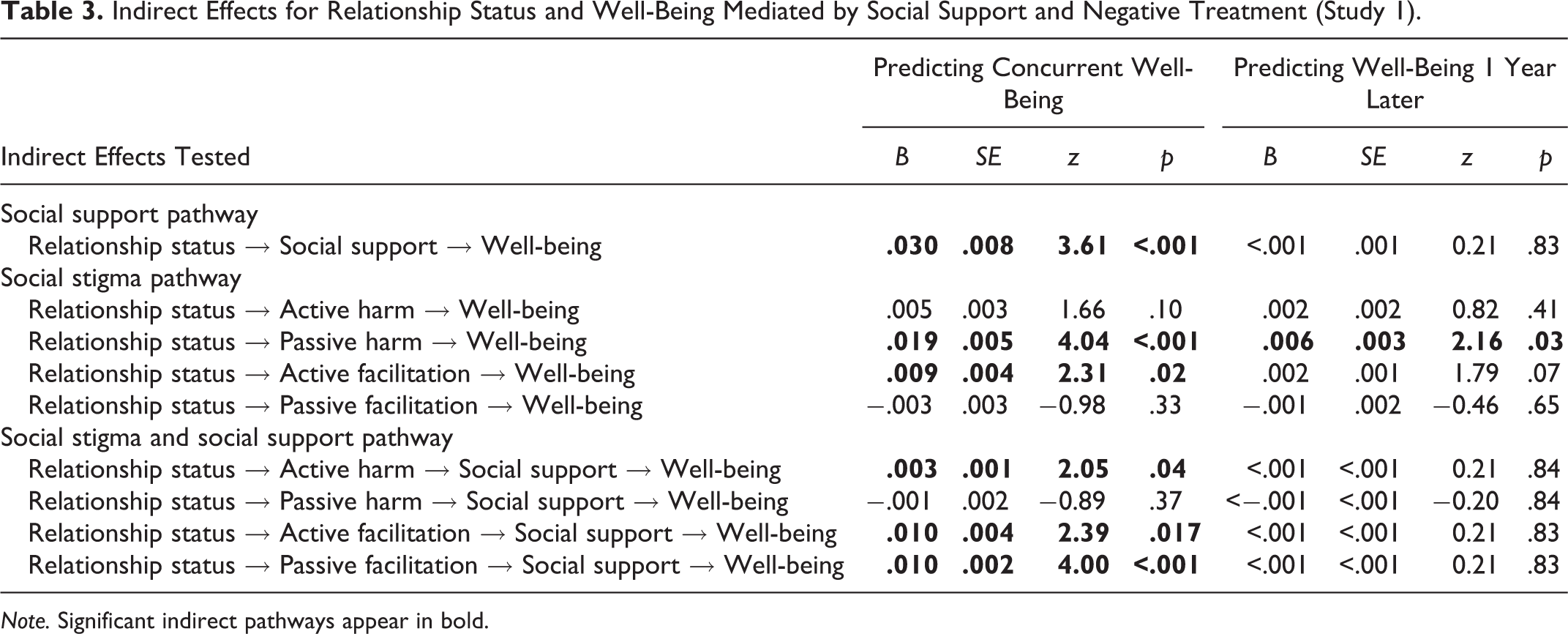
Note. Significant indirect pathways appear in bold.
Next, we ran an identical model predicting well-being a year later, controlling for baseline well-being, which fit the model at acceptable levels (used observations = 4,014, CFI = .814, RMSEA = .075, SRMR = .113). The key path coefficients are presented in Table 2 (right-hand column) and account for all other pathways that were run simultaneously in the SEM. Table 3 shows the indirect-effect path coefficients (right-hand column). Single adults reported lower well-being across a year compared to people in relationships. Furthermore, single adults also reported (1) lower perceptions of social support and (2) greater negative treatment, including greater active harm, passive harm, and passive facilitation, and lower active facilitation compared to coupled adults. Unlike the concurrent model, only the passive harm pathway showed evidence of significant indirect effects (relationship status → passive harm → well-being). Taken together, Study 1 provided evidence that single adults experienced lower well-being compared to coupled adults because they (1) perceived a lack of social support availability (at least when predicting concurrent well-being) and (2) experienced negative treatment from others (e.g., insisting they know what is best for them, interacting with them in formal contexts, but being excluded from social contexts).
Control Analyses
Coupled individuals often benefit from partners’ financial contributions, thus one concern raised during the review process was that financial status (rather than relationship status) carries the weight of the link to well-being. We reran the analyses presented in Table 2 and included the association between household income (log10 transformed) and well-being. Even when accounting for the strong association between household income and concurrent and prospective well-being (B = .39, z = 8.03, p < .001; B = .15, z = 3.72, p < .001, respectively), relationship status continued to play a unique role in determining concurrent and prospective well-being (B = .20, z = 10.44, p < .001; B = .05, z = 2.92, p = .004, respectively). Furthermore, six of the seven indirect effects displayed in Table 3 remained significant (ps ≤ .02). See Online Supplementary Material for detailed results. 2
Study 2
Method
Sampling Procedure and Power Considerations
We pooled data across three available data sets with identical procedure and measures to conduct an IDA, which provides more reliable estimates and in which the estimate from the raw data across studies is recommended over a meta-analyzed effect of separate estimates (Curran & Hussong, 2009; Hussong et al., 2013). We pooled the data using raw scores from constructs which were assessed identically across the studies and accounted for the heterogeneity across samples. Power analyses were not conducted prior to data collection, and sample size was determined by the number of data sets that were available for data analysis. Nonetheless, our sample size of approximately 800 participants exceeds guidelines for conducting SEM (Wolf et al., 2013) and multilevel models (Bolger & Laurenceau, 2013), respectively.
Participants
Participants were 1,017 adults, of which 966 contributed baseline and/or daily diary data. 3 Specifically, 808 participants completed the baseline questionnaire (Dataset 1, N = 201, Dataset 2, N = 318, 4 and Dataset 3, N = 289), and 889 participants completed the daily diary questionnaires (Dataset 1, N = 197, Dataset 2, N = 303, and Dataset 3, N = 389). Participants’ ages ranged from 17 to 68 years (M age = 24.06 years, SD = 7.54). There were 649 females, 310 males, and seven participants who identified as gender nonbinary. Participants identified as White (N = 484, 50.1%), Asian (N = 261, 27%), Indian (N = 67, 6.9%), Black (N = 22, 2.3%), Indigenous (N = 6, .6%), Bi- or Multiracial (N = 74, 7.7%), or other ethnicities (N = 47, 4.9%). Five participants preferred not to disclose their ethnic background. Participants were recruited through online advertising at a university in the United States and compensated with course credit (Dataset 1), online community advertising across Canada and compensated with a CAD$25 Amazon voucher (Dataset 2), or from a psychology course across four semesters at a Canadian university and entered into a prize-draw to win one of the six CAD$50 Amazon vouchers per semester (Dataset 3).
Procedure and Measures
Participants first completed a baseline questionnaire that assessed their relationship status, life satisfaction, social support availability, and discrimination attributed to their relationship status (among other measures not germane to this study). Following this, participants were invited to complete a 14-day daily diary study where they completed daily measures of life satisfaction, perceived social support availability and experiences of negative treatment (among other measures not germane to this study). On average, people completed 10.38 dairy entries, contributing a total of 9,228 daily observations. All procedures were performed in accordance with the university ethics committee standards.
Relationship status
In response to “What is your relationship status?” participants selected “single,” “dating,” “living together,” “engaged,” “married,” “separated/divorced,” and “other.” We classified 431 (44.6%) participants as single, including those whose descriptions represented currently “single” or “divorced/separated,” and 535 (55.4%) participants as involved in a relationship, including “dating,” “living together/de facto,” “engaged,” and “married.” Average relationship length was 3.18 years (SD = 3.89, N = 506). Average singlehood length was 11.29 years (SD = 11.06, N = 309) but represented a bimodal distribution of people who were single for less than 2 years or had never been in a relationship.
Baseline perceived social support availability
Participants rated eight items that assessed the extent to which people perceive social support (e.g., “There are people I can depend on to help me if I really need it,” “There is no one I can turn to for guidance in times of stress” (reverse-scored), 1 = strongly disagree, 7 = strongly agree).
Baseline perceived discrimination
Participants were asked “How often do people treat you in the following ways because you’re (participants’ relationship status); 1 = this never happens, 7 = this happens all the time” and rated identical items as in Study 1 to assess subjective experiences of active harm, passive harm, active facilitation, and passive facilitation.
Baseline life satisfaction
Participants rated five items to assess life satisfaction (e.g., “I am satisfied with my life” and “In most ways my life is close to ideal,” 1 = strongly disagree, 7 = strongly agree; Diener et al., 1985).
Daily perceived social support availability
Participants rated two items in regard to their social interactions that day: “I could depend on the people around me for help if I needed it” and “There was no one around that I could turn to for guidance if I needed it” (reverse-scored; 1 = not at all, 7 = very).
Daily negative treatment
Participants rated five items in regard to their social interactions that day: “I felt treated unfairly,” “I felt out of place,” “I felt harassed,” “I felt pitied,” and “I felt patronized” (1 = not at all, 7 = very).
Daily life satisfaction
Participants completed a shorted version of the Satisfaction with Life Scale (Diener et al., 1985) regarding their day. Participants rated two items: “I felt satisfied with my life” and “In most ways my life was close to ideal” (1 = not at all, 7 = very).
Results
Data for Study 2 are not publicly available, but code and output are available at https://osf.io/h2z5m/?view_only=e95b5e2df83047888cda02ffa42e057f. Hypotheses and analyses for this project were not preregistered. Table 4 displays descriptive statistics and scale reliabilities.
Descriptive Statistics and Correlations Across Measures (Study 2).
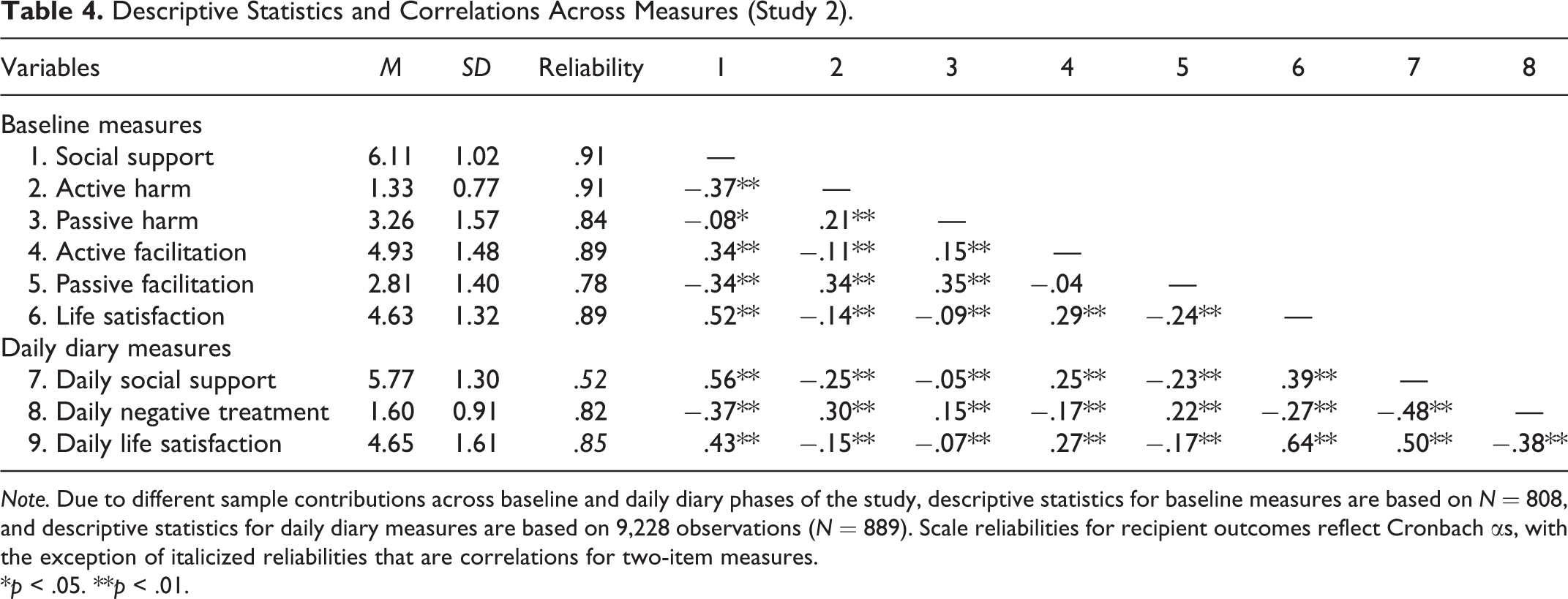
Note. Due to different sample contributions across baseline and daily diary phases of the study, descriptive statistics for baseline measures are based on N = 808, and descriptive statistics for daily diary measures are based on 9,228 observations (N = 889). Scale reliabilities for recipient outcomes reflect Cronbach αs, with the exception of italicized reliabilities that are correlations for two-item measures.
*p < .05. **p < .01.
Baseline Perceptions of Social Support and Social Discrimination
First, we ran an identical SEM as in Study 1 (note: gender data of nonbinary participants [N = 7] were treated as missing variables). Notably, in order to account for the heterogeneity across data sets in Study 2, we conducted our analyses using multiple group analysis. Our default multigroup model did not have any equality constraints and fit the model well (used observations = 802, CFI = .932, RMSEA = .057, SRMR = .056). We next added group equality constraints for model loadings, residuals, residual covariances, latent variable variances and covariances, and regression coefficients. This model with equality constraints fit the model at acceptable levels (used observations = 802, CFI = .888, RMSEA = .069, SRMR = .093).
The key path coefficients are presented in Table 5 and account for all other pathways that were run simultaneously in the SEM. Table 6 shows the indirect-effect path coefficients. Single adults reported lower life satisfaction compared to people in relationships. Furthermore, single adults also reported (1) lower perceptions of social support and (2) greater societal discrimination, including active harm and passive facilitation and lower levels of active facilitation compared to coupled adults. Replicating Study 1, single adults experienced lower life satisfaction compared to coupled adults because (1) they perceived a lack of social support availability from their social networks (i.e., relationship status → social support → well-being) and (2) experienced various forms of discrimination attributed to their singlehood status, including more active harm, less active facilitation, and more passive facilitation (relationship status → active harm/active facilitation/passive facilitation → life satisfaction). Notably, the effects of discrimination on well-being occurred via reduced social support (relationship status → active harm 5 /active facilitation/passive facilitation → social support → life satisfaction).
Structural Equation Modeling Estimates for the Association Between Relationship Status, Life Satisfaction, Social Support, and Societal Discrimination (Study 2).
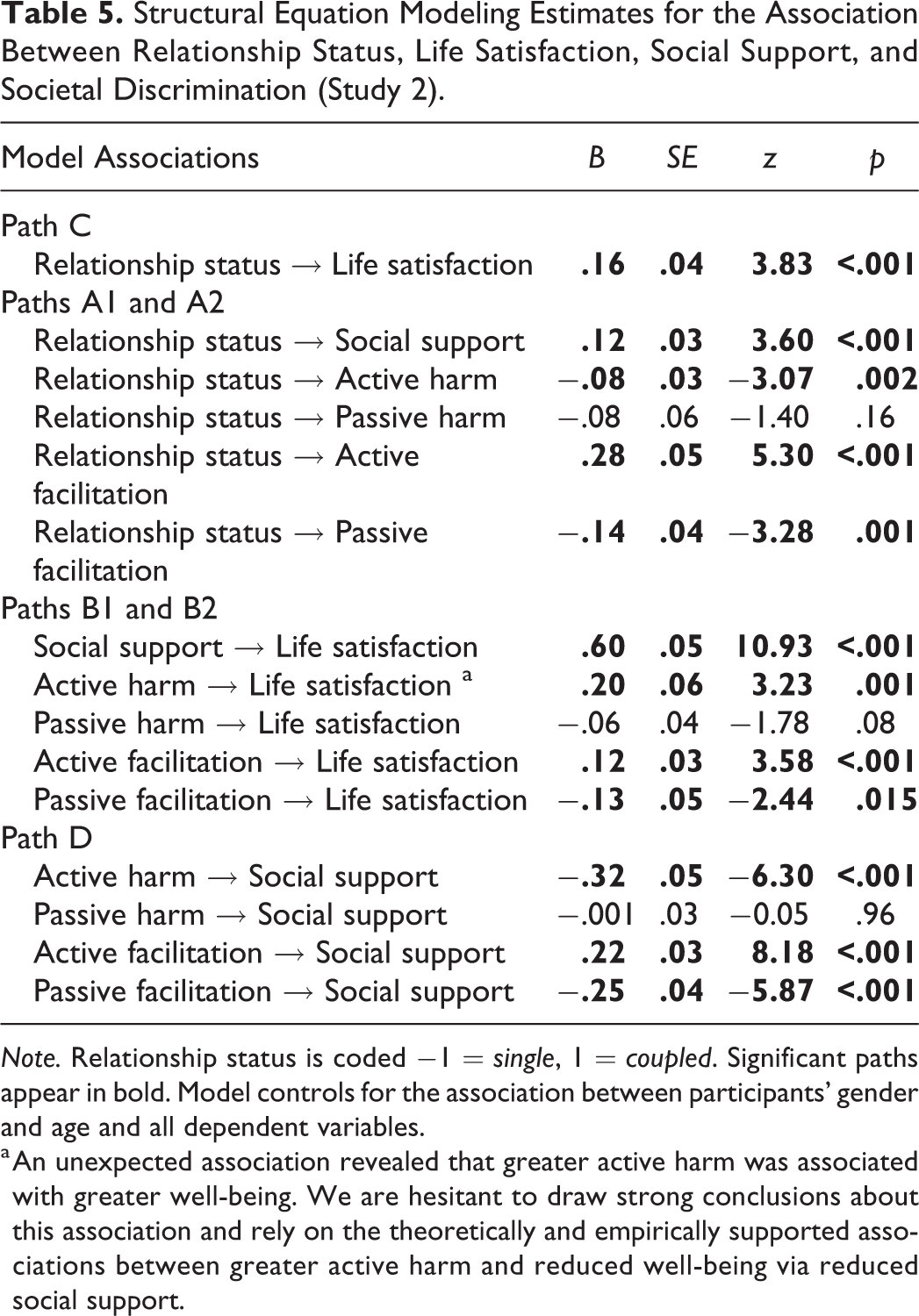
Note. Relationship status is coded −1 = single, 1 = coupled. Significant paths appear in bold. Model controls for the association between participants’ gender and age and all dependent variables.
a An unexpected association revealed that greater active harm was associated with greater well-being. We are hesitant to draw strong conclusions about this association and rely on the theoretically and empirically supported associations between greater active harm and reduced well-being via reduced social support.
Indirect Effects for Relationship Status and Life Satisfaction Mediated by Social Support and Societal Discrimination (Study 2).
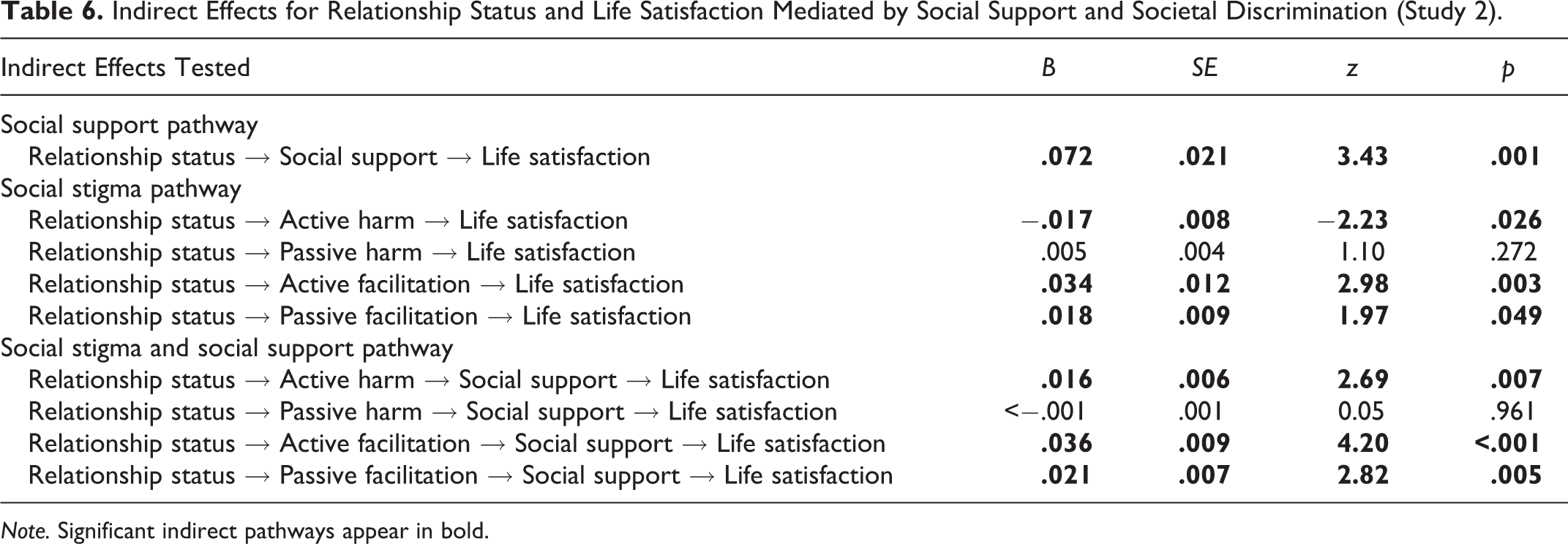
Note. Significant indirect pathways appear in bold.
Daily Perceptions of Social Support and Social Harm
Next, we examined the association between relationship status and daily life satisfaction, mediated by daily social support and negative treatment. Given the nested structure of our data (i.e., days nested under individuals), we followed Bolger and Laurenceau’s (2013) recommendations for analyzing repeated measures data, employing a MIXED procedure in SPSS 25 and applied an autoregressive covariance structure. We controlled for the main effects of participants’ gender and age. All continuous predictors were grand-mean cantered. In order to account for the heterogeneity across data sets, we also included the main and interaction effects of codes for data set membership (Curran & Hussong, 2009). We used weighted effect coding to code for sample membership (J. Cohen et al., 2013), thus the main effects of relationship status, social support, and negative treatment represent the average effect across data sets.
We ran a series of multilevel models to test our hypothesized model. A summary of the focal pathways is presented in Table 7. Single adults reported lower daily life satisfaction compared coupled adults, and this effect remained significant even when controlling for daily social support and negative treatment. Furthermore, single adults also reported (1) lower perceptions of daily social support (controlling for daily negative treatment) and (2) greater daily negative treatment (controlling for daily social support) compared to coupled adults. Although greater daily negative treatment predicted lower daily social support, both lower daily social support and greater daily negative treatment independently predicted lower daily life satisfaction. Finally, we calculated the indirect effects and associated confidence intervals (CI) by using the procedure recommended by Tofighi and MacKinnon (2011) using the RMediation Package. The CIs did not overlap zero for either the social support pathway (indirect effect = .045, SE = 0.006, 95% CI = [.033, .056]) or the negative treatment pathway (indirect effect = .018, SE = 0.005, 95% CI = [.007, .028]), providing support that single adults experienced lower daily life satisfaction because they perceived lower social support availability and greater negative day-to-day interactions compared to coupled adults.
Summary of Associations Between Relationship Status, Daily Life Satisfaction, Daily Social Support, and Daily Negative Treatment (Study 2).
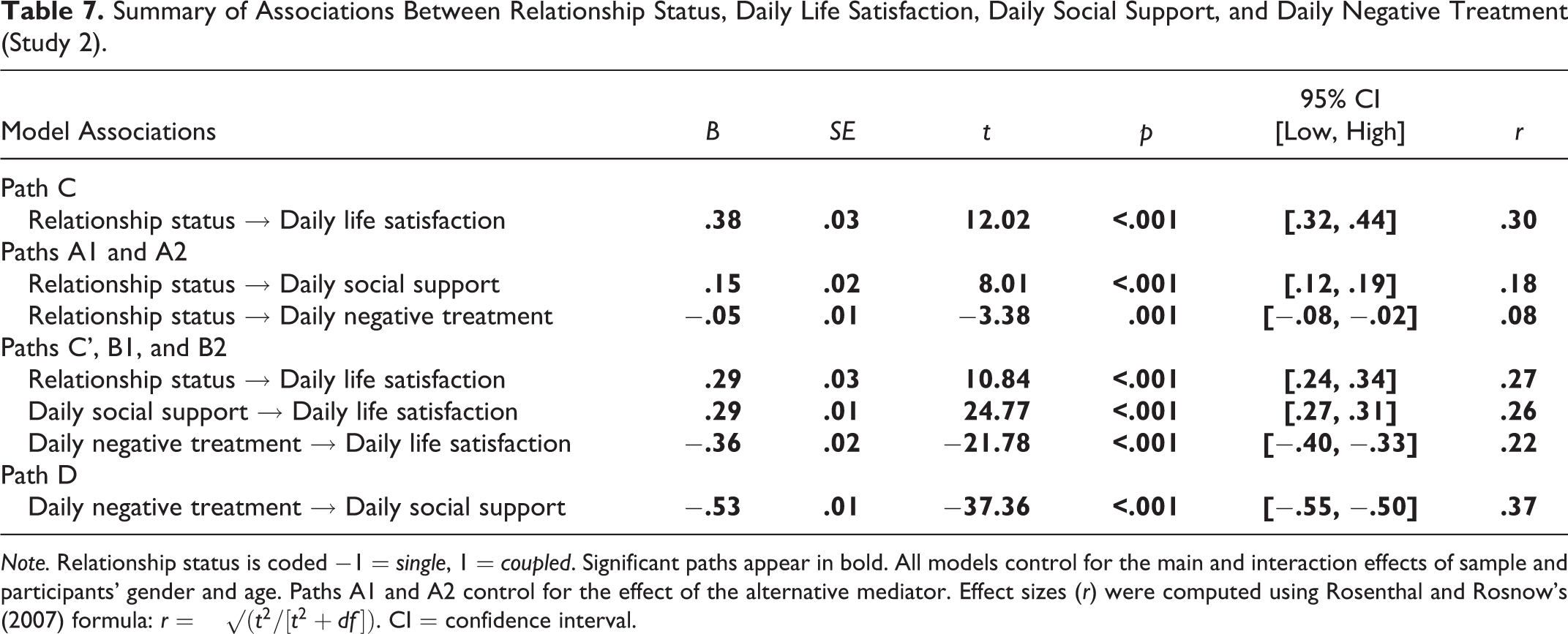
Note. Relationship status is coded −1 = single, 1 = coupled. Significant paths appear in bold. All models control for the main and interaction effects of sample and participants’ gender and age. Paths A1 and A2 control for the effect of the alternative mediator. Effect sizes (r) were computed using Rosenthal and Rosnow’s (2007) formula:
Discussion
Our findings bring together interpersonal and intergroup theories to provide evidence that some single adults might experience lower well-being compared to coupled adults (at least partly) because of their experiences with people they interact with. Specifically, the current research corroborated two theoretical perspectives, suggesting that single adults can be at risk of experiencing lower well-being because they (1) perceive a lack of social support from close others (Studies 1 and 2) and (2) experience greater negative treatment (Studies 1 and 2) and societal discrimination attributed to their relationship status (Study 2) compared to coupled adults. We discuss the implications of these findings below.
Single Adults Are Unsupported and Stigmatized Compared to Coupled Adults
Our results replicate existing work demonstrating that single adults report lower well-being, at least in part due to lower social support availability (Adamczyk & Segrin, 2015a, 2015b; Stronge et al., 2019). In fact, the social support mediation pathways were the most consistent across studies (with one exception for the prospective effects in Study 1), supporting the interpersonal perspective that social support availability is a key ingredient for fostering psychological well-being (S. Cohen & Wills, 1985; Feeney & Collins, 2015). However, our findings also extend existing literature examining singlism (Fisher & Sakuluk, 2020) by demonstrating that another important risk factor for single adults’ well-being is experiencing greater negative treatment and discrimination compared to coupled adults. Interestingly, by testing both social support and societal discrimination pathways simultaneously, our findings push the literature forward by providing novel evidence that one mechanism by which social discrimination undermines single adults’ well-being may be by interfering with whether single adults feel supported by close others (e.g., Kondrat, et al., 2018). That is, single adults may experience discrimination from the very people that they also need to turn to for comfort (e.g., a parent asking when they plan on “settling down,” a friend not inviting them to a social event with couples). Examining the extent to which the social support pathway captures the perceived lack of support from a romantic partner versus discrimination from close friends and family is a fruitful area for future research.
Caveats, Considerations, and Conclusions
Despite utilizing two large samples in order to capture a wide range of singlehood experiences, our samples and analyses were limited. Our samples were drawn from individualist countries where people may depend on family ties for support less and experience less pressure to marry compared to communal cultures (Ibrahim & Hassan, 2009; Osteria, 2015). The social support and discrimination pathways may also operate differently based on peoples’ gender and age. Given that men tend to rely on support from romantic partners more than women, single men might find the lack of social support more jarring (Stronge et al., 2019). In contrast, single women who tend to be viewed as threatening or burdensome (Gordon, 2016; Ji, 2015) or older single adults who have not conformed to societal standards about the appropriate time to “settle down” (DePaulo & Morris, 2005) may experience harsher discrimination. There may also be unique challenges for single adults with marginalized identities (Hostetler & Cohler, 1997; Moorman, 2020) or who are single out of choice versus circumstance (Pepping et al., 2018; Slonim et al., 2015). Understanding the diversity of singlehood experiences is an important avenue for future research and to appreciate the heterogeneity of singlehood experiences.
Our findings also hold practical implications by highlighting how others treat single adults—rather than single status per se—plays an important role in facilitating single adults’ well-being. Indeed, single adults may be happier when they rebuff unhealthy relationship dynamics (Girme et al., 2016b), are able to meet their sexual needs (Park et al., 2021), and have high quality relationships with family and friends (Fisher et al., 2021; Park et al., 2021). The composition of single adults’ social networks and communities may also contribute to their well-being. Single adults who have more single friends, family, and colleagues might feel more supported and less exposed to discrimination compared to single adults whose social networks are saturated by coupled others. In conclusion, by highlighting the impact that social relationships have on single adults’ well-being, this research demonstrates the importance of raising societal awareness about solo-living and challenging ideologies that place romantic partnerships on a pedestal.
Supplemental Material
Supplemental Material, sj-docx-1-spp-10.1177_19485506211030102 - Unsupported and Stigmatized? The Association Between Relationship Status and Well-Being Is Mediated by Social Support and Social Discrimination
Supplemental Material, sj-docx-1-spp-10.1177_19485506211030102 for Unsupported and Stigmatized? The Association Between Relationship Status and Well-Being Is Mediated by Social Support and Social Discrimination by Yuthika U. Girme, Chris G. Sibley, Benjamin W. Hadden, Michael T. Schmitt and Jeffrey M. Hunger in Social Psychological and Personality Science
Footnotes
Declaration of Conflicting Interests
The author(s) declared no potential conflicts of interest with respect to the research, authorship, and/or publication of this article.
Funding
The author(s) disclosed receipt of the following financial support for the research, authorship, and/or publication of this article: The New Zealand Attitudes and Values Study (Study 1) is supported by a grant from the Templeton Religion Trust (TRT0196). Dataset 2 in Study 2 was supported by a Simon Fraser University/Social Sciences and Humanities Research Council Small Research Grant. Dataset 3 in Study 2 was supported by the Simon Fraser University Institute for the Study of Teaching and Learning in the Disciplines Teaching and Learning Development Grant.

Supplemental Material
The supplemental material is available in the online version of the article.
Notes
References
Supplementary Material
Please find the following supplemental material available below.
For Open Access articles published under a Creative Commons License, all supplemental material carries the same license as the article it is associated with.
For non-Open Access articles published, all supplemental material carries a non-exclusive license, and permission requests for re-use of supplemental material or any part of supplemental material shall be sent directly to the copyright owner as specified in the copyright notice associated with the article.
