




Abstract
The fear of being single can put people at risk for worse personal and relational well-being. The current research moves beyond individual-deficit models by exploring whether endorsement of relationship pedestal beliefs—the belief that people need to be in a relationship to be truly happy—is associated with greater fear of being single. Across four studies (N = 641 single individuals and 256 coupled individuals), single individuals’ endorsement of relationship pedestal beliefs was associated with greater fear of being single, and greater fear of being single was associated with lower daily life satisfaction (Studies 1–4). Coupled individuals’ endorsement of relationship pedestal beliefs was also associated with greater fear of being single, and greater fear of being single was associated with lower daily life and relationship satisfaction (Study 4). These findings highlight how people’s endorsement of societal beliefs that place relationships on a pedestal may contribute to fears about singlehood.
Singlehood is on the rise globally (United Nations, Department of Economic and Social Affairs, Population Division, 2019). Singlehood is increasing across the lifespan because people are delaying age of first marriage and re-entering singlehood later in life due to divorce, and more people choosing to remain single throughout their lifespan (Copen et al., 2012; Kislev, 2019; Schweizer, 2020). Despite evidence that many single people are happy and thriving (DePaulo, 2023; Girme et al., 2023; Kislev, 2019), several meta-analyses and longitudinal studies find that, on average, single people tend to report lower life satisfaction and psychological well-being compared with people in committed romantic relationships (Diener et al., 2000; Luhmann et al., 2012; Purol et al., 2021).
Several risk factors may influence single people’s well-being and motivations for remaining single (see Girme et al., 2023). Intrapersonal factors, such as people’s attachment insecurities or difficulties with dating may lead to selection effects for who is able to enter romantic relationships (Apostolou, 2021; Pepping et al., 2018). Interpersonal factors, such as whether single people experience singlehood-based discrimination or social pressure to partner may also undermine single people’s well-being and motivate single people to find a romantic partner (Girme et al., 2022; Sprecher & Felmlee, 2021). In contrast, single people who meet their sexual needs and have important friendships are less inclined to desire romantic relationships (Park et al., 2021). Finally, the extent to which societal and cultural norms prioritize marriage and family may also influence people’s beliefs about singlehood and romantic relationships (Day et al., 2011; DePaulo & Morris, 2005).
One at-risk intrapersonal factor that has received significant attention to explain worse singlehood and relationship outcomes is the fear of being single—that is, the “concern, anxiety, or distress regarding the current or prospective experience of being without a romantic partner” (Spielmann et al., 2013, p. 1049). Single people who have greater fears about their single status tend to experience worse personal and interpersonal well-being (Adamczyk, 2017; Spielmann & Cantarella, 2020; Spielmann et al., 2013, 2016). Yet, little research has sought to examine when people might experience such fears and anxieties about singlehood. In the current research, we move away from individual-deficit based assumptions that the fear of being single is simply the result of individual insecurities and consider how the endorsement of societal beliefs that place relationships on a pedestal may be associated with greater fear of being single, which subsequently may undermine single (and coupled) people’s life satisfaction.
The Fear of Being Single and Relationship Pedestal Beliefs
The fear of being single has been linked to individual characteristics related to anxious tendencies, including attachment anxiety, neuroticism, avoidance social goals, and interpersonal sensitivities (Adamczyk et al., 2021; Spielmann et al., 2013). The association between attachment anxiety and fear of being single has received the most attention to date. Individuals high in attachment anxiety harbor chronic concerns about whether others love and care about the individual and have an intense desire for closeness and intimacy (Mikulincer & Shaver, 2016). The fear of being single is rooted in similar anxieties about being “forever alone” and worries that potential or existing partners would not want to be romantically involved with them. Thus, it is not particularly surprising that attachment anxiety tends to be moderately correlated with similar fears of not receiving the love and care of a romantic partner (Spielmann et al., 2013). Nonetheless, focusing only on individual insecurities and anxieties may not account for the role that societal beliefs may play in predicting fear of being single. Focusing only on individual characteristics may also reinforce deficit-based assumptions about singlehood that may perpetuate negative stereotypes about single people (DePaulo, 2023).
People’s endorsement of societal beliefs about romantic relationships may predict the fear of being single. Contemporary society reinforces the idea that romantic relationships are central for happiness and well-being. DePaulo and Morris (2005) argue that there is an “ideology of marriage and family,” a societal perspective that views romantic relationships as more important and desirable than being single. Indeed, society often values, celebrates, and encourages coupledom, and romantic partners tend to be an important life goal and achievement across societies (Ko et al., 2020). Furthermore, common law and married people receive tax and health care benefits and have better access to housing that are less available to single people (DePaulo, 2023; Morris et al., 2007). These societal beliefs about committed relationships are endorsed and defended by individuals. Day et al. (2011) found that people defend the ideology of marriage and family when threatened because these relationship beliefs help to make sense of the world.
Stigmatizing beliefs about singlehood may also arise in a societal system where romantic relationships are viewed as being central to well-being. Indeed, there is growing evidence that single people are stigmatized and discriminated against (Fisher & Sakaluk, 2020; Girme et al., 2022). Experimental studies have found that compared with coupled characters, single characters are viewed as less warm, less extroverted, less agreeable, less conscientious, having less self-esteem, being less satisfied with life and relationship status, and being more lonely and neurotic (Greitemeyer, 2009; Hertel et al., 2007). This is despite little evidence that single and coupled people actually differ on a range of personality traits (Greitemeyer, 2009; although see recent Hoan & MacDonald, 2024 for evidence that single people may be lower in extraversion and higher in neuroticism compared to coupled people). Furthermore, single people are aware they are being viewed more negatively because of their single group identity (Dupuis & Girme, 2024; Fisher & Sakaluk, 2020). Thus, the fear of being single may not simply reflect individual worries about single status, but also reflect societal values that favor romantic relationships at the expense of singlehood. Taken together, people who endorse societal beliefs that relationships are central to happiness (relationship pedestal beliefs) may be more likely to experience fears of being single.
Relationship Pedestal Beliefs, Fear of Being Single, and Well-Being
The association between relationship pedestal beliefs and life satisfaction appears complex. On one hand, given that romantic partnerships are viewed as an important life goal across societies (Ko et al., 2020) and that 90% of adults do enter into at least one committed romantic relationship in their lifetime (Purol et al., 2021), the endorsement of relationship pedestal beliefs may be positively associated with life satisfaction. Given that relationship status is fluid—that is, people are able to enter and exit romantic relationships—people should be able to hold prorelationship beliefs even when single without it impacting their well-being (i.e., a happily single person may endorse relationship pedestal beliefs and want partnership in the future, without it undermining current well-being). On the other hand, studies have demonstrated that a strong desire for a romantic partner (a concept that may be related to relationship pedestal beliefs) undermines single people’s life satisfaction and singlehood satisfaction (Kislev, 2021; Park et al., 2021). Thus, we did not have strong hypotheses about the association between relationship pedestal beliefs and life satisfaction but anticipated that relationship pedestal beliefs may be detrimental when it threatens people’s fear about current or potential single status.
There is substantial evidence that fears of being single undermine single and coupled people’s well-being. Single people who experience greater fears of being single experience a host of negative outcomes, including greater romantic loneliness (Adamczyk, 2018), lower satisfaction with their singlehood status (Adamczyk et al., 2021), lower life satisfaction, emotional and psychological well-being, and greater risk of depressive symptoms (Adamczyk, 2017; Spielmann et al., 2013). Furthermore, greater fear of being single is associated with negative dating outcomes, such as increased willingness to accept lower quality partners (Spielmann & Cantarella, 2020; Spielmann et al., 2013) and increased likelihood of reaching out to an ex-partner (Spielmann et al., 2016). Even among people in less satisfying romantic relationships, greater fears of being single are associated with increased dependence on the current partner and less willingness to initiate a breakup (Spielmann et al., 2013). Thus, the fear of being single is likely to undermine well-being regardless of one’s current relationship status.
Current Research
The current research explored whether the endorsement of societal beliefs that place relationships on a pedestal might be associated with greater fears of being single. Across four studies, we validate a newly developed Relationship Pedestal Beliefs Scale (i.e., the belief that people need to be in a relationship to be truly happy). Although Day et al. (2011) developed a similar Commitment Ideology Scale to assess the extent to which people believe that committed relationships are an important life goal (e.g., “The concept of a committed relationship is the ultimate answer”), this scale does not explicitly assess the reasons why people may hold these beliefs. Indeed, people may believe that romantic relationships are important for a variety of reasons, such as to have children, to secure financial resources, or have access to a consistent sexual partner. Thus, the Relationship Pedestal Beliefs Scale extends this work by assessing the extent to which romantic relationships are central to people’s happiness (e.g., “It is important to be in a relationship if people want to feel fulfilled”).
We then tested whether the endorsement of relationship pedestal beliefs is associated with greater fears of being single, and that greater fears of being single is associated with lower life satisfaction (see Figure 1). We tested our hypotheses across four studies in which participants completed measures of relationship pedestal beliefs, fears of being single, and life satisfaction. In Study 4, we also tested whether relationship pedestal beliefs are associated with fears of being single among coupled people, and whether this undermines coupled people’s life and relationship satisfaction. We also ruled out the possibility that the association between relationship pedestal beliefs and fear of being single is not due to age, gender, singlehood length, or attachment anxiety. Specifically, younger singles and women may experience greater pressure to partner compared with older singles and men (Luke & Poulin, 2023; Sprecher & Felmlee, 2021). Similarly, people who have been single for a long time may develop relationship pedestal beliefs (Adamczyk, 2018). Finally, people who are higher in attachment anxiety (cf. attachment avoidance) tend to harbor worries and anxieties about being loved and cared about (Mikulincer & Shaver, 2016) and so may also exhibit greater fears of being single (Spielmann et al., 2013) and relationship pedestal beliefs.

Theoretical Model Illustrating the Associations Between Endorsement of Relationship Pedestal Beliefs, Fear of Being Single, and Life Satisfaction
Considerations About Open-Source Data and Materials
Our research team does not have ethics approval to post data to an online repository for any of the data reported here, but de-identified data can be requested by contacting the authors. The Methodology File containing study materials and a supplementary file containing the analyses code for all four studies are available on the Open Science Framework (OSF; https://osf.io/zhjyb/?view_only=b50664c137b8494a9e850a1131be8753).
Study 1
Methods
Power Considerations
Power analyses were not conducted prior to data collection. Sample size was determined by funding constraints and the number of people who opted into the study during the study timeframe. Nonetheless, post hoc power analyses for linear regression using G*Power revealed that our sample of 70 participants has over 99% power to detect our Path A association (effect size = .46; Faul et al., 2007) and meets guidelines for conducting multilevel analyses for our Path C and B associations (Bolger & Laurenceau, 2013).
Participants
Study 1 consisted of 70 single Canadians collected from the community between 2017 and 2018. 1 These participants were recruited using online community boards and in-person university campus boards. The mean age of the sample was 29.87 (SD = 10.19, range = 18–59 years). Participants identified themselves as female (62.9%) or male (37.1%) and no participants self-identified another gender diverse identity. Participants selected all ethnicities they identified with, including White (44.3%), Asian (34.3%), Indian/South-East Asian (11.4%), Black (5.7%), Middle Eastern (4.3%), Indigenous/First Nations (1.4%), and other ethnicities (5.7%). Notably, 7.1 % of our sample identified bi- or multi- ethnic identities. These single participants reported their single status as “single” (82.9%) or “separated/divorced” (17.1%) and had been single for an average for 8.94 years (SD = 11.66).
Procedures and Materials
Participants filled out a baseline questionnaire that assessed their relationship pedestal beliefs and fear of being single (and other measures not germane to this article). Participants were invited to complete a daily questionnaire for 14 days, in which they reported on their daily life satisfaction. Sixty-eight participants completed at least one daily entry. On average, participants completed 11.43 of the 14 daily entries that resulted in 777 observations after accounting for missing daily life satisfaction data.
Relationship Pedestal Beliefs
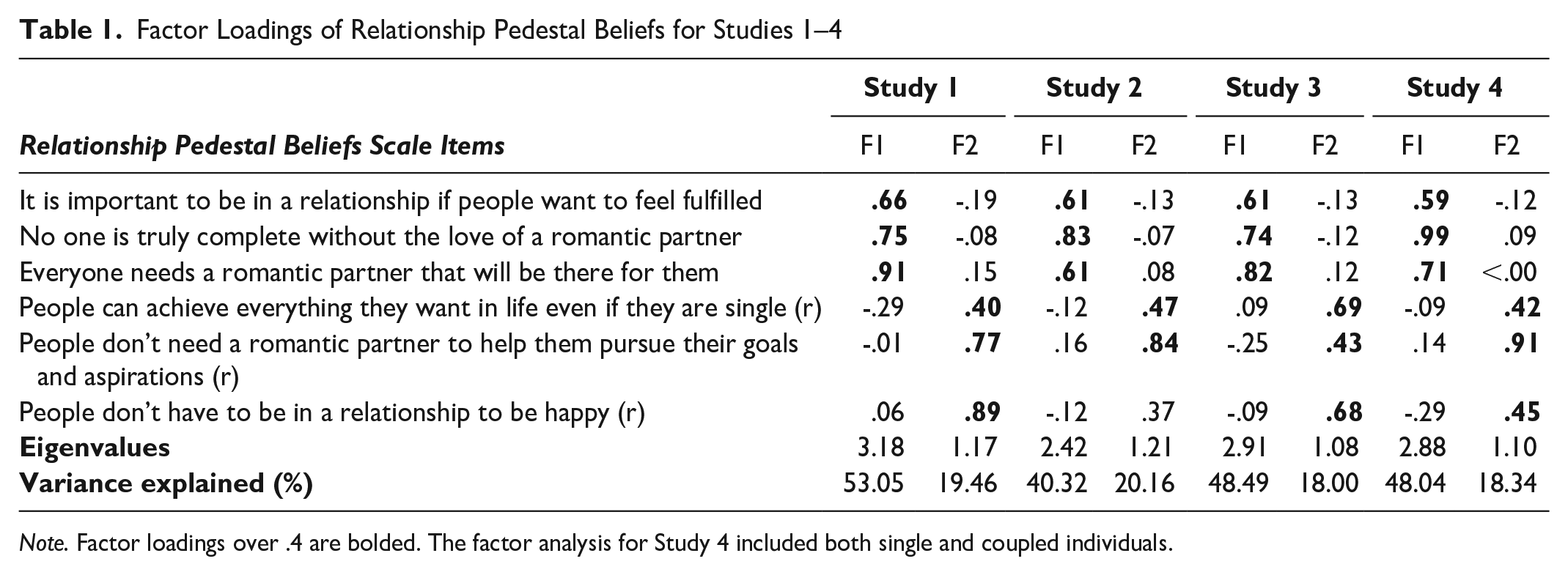
We developed the Relationship Pedestal Belief Scale to assess individuals’ endorsement of societal beliefs that relationships are central for happiness. Similar to other measures that have examined individuals’ endorsement of societal beliefs (e.g., Commitment Relationship Ideology Scale, Day, 2016; Ambivalent Sexism Inventory, Glick & Fiske, 1996), we asked participants to think about single versus coupled people in society and the extent to which they personally agree or disagree with each statement. Participants completed six items to assess how strongly people adhere to relationship pedestal beliefs (e.g., “It is important to be in a relationship if people want to feel fulfilled,” “No one is truly complete without the love of a romantic partner,” “People 2 can achieve everything they want in life even if they are single (reversed scored)”; see Table 1 for a full list of items). Items were reverse-scored and averaged so that higher scores indicate greater endorsement of relationship pedestal beliefs (Cronbach’s alpha [α] = .82). See the “Results” section for full details on scale validation.
Factor Loadings of Relationship Pedestal Beliefs for Studies 1–4
Note. Factor loadings over .4 are bolded. The factor analysis for Study 4 included both single and coupled individuals.
Fear of Being Single
Participants completed six items from the Fear of Being Single Scale (Spielmann et al., 2013; e.g., “It scares me to think that there might not be anyone out there for me”; 1 = not true at all, 5 = very true). Items were averaged so that higher scores indicate higher fears of being single (α = .82).
Attachment Anxiety
Participants completed a shortened version of the Revised-Experiences in Close Relationships scale (Fraley et al., 2000). Three items included “I often worry that people don’t really care for me,” “I’m afraid that other people may abandon me,” and “I worry that others won’t care about me as much as I care about them” (1= strongly disagree, 7 = strongly agree), where higher scores indicate higher attachment anxiety (α = .91).
Daily Life Satisfaction
Participants rated two items that assessed their daily life satisfaction (Diener et al., 1985): “I felt satisfied with my life” and “In most ways my life was close to ideal” (1 = not at all, 7 = very). Items were averaged so that higher scores indicate greater daily life satisfaction (average r across days = .79).
Results
Validation of the Relationship Pedestal Beliefs Scale (Studies 1–4)
We first conducted assessed the internal validity of the Relationship Pedestal Beliefs Scale. To avoid repetition, we report the results across all four studies here. We first conducted an exploratory Principal Axis Factor (PAF) analysis with a Direct Oblimin Rotation of the six items in the Relationship Pedestal Beliefs Scale. The results are displayed in Table 1. The PAF analyses extracted 2 Factors with Eigenvalues over 1. The pattern of results across all four studies were identical; Factor 1 includes positive loadings over .40 with all the positive scored items, whereas Factor 2 includes positive loadings over .40 with the reversed-scored items (with one exception in Study 2 that had a factor loading of .37). Thus, the Relationship Pedestal Beliefs Scale reflects two ends of a spectrum where low values indicate lower endorsement of relationship pedestal beliefs and high values indicate greater endorsement of relationship pedestal beliefs.
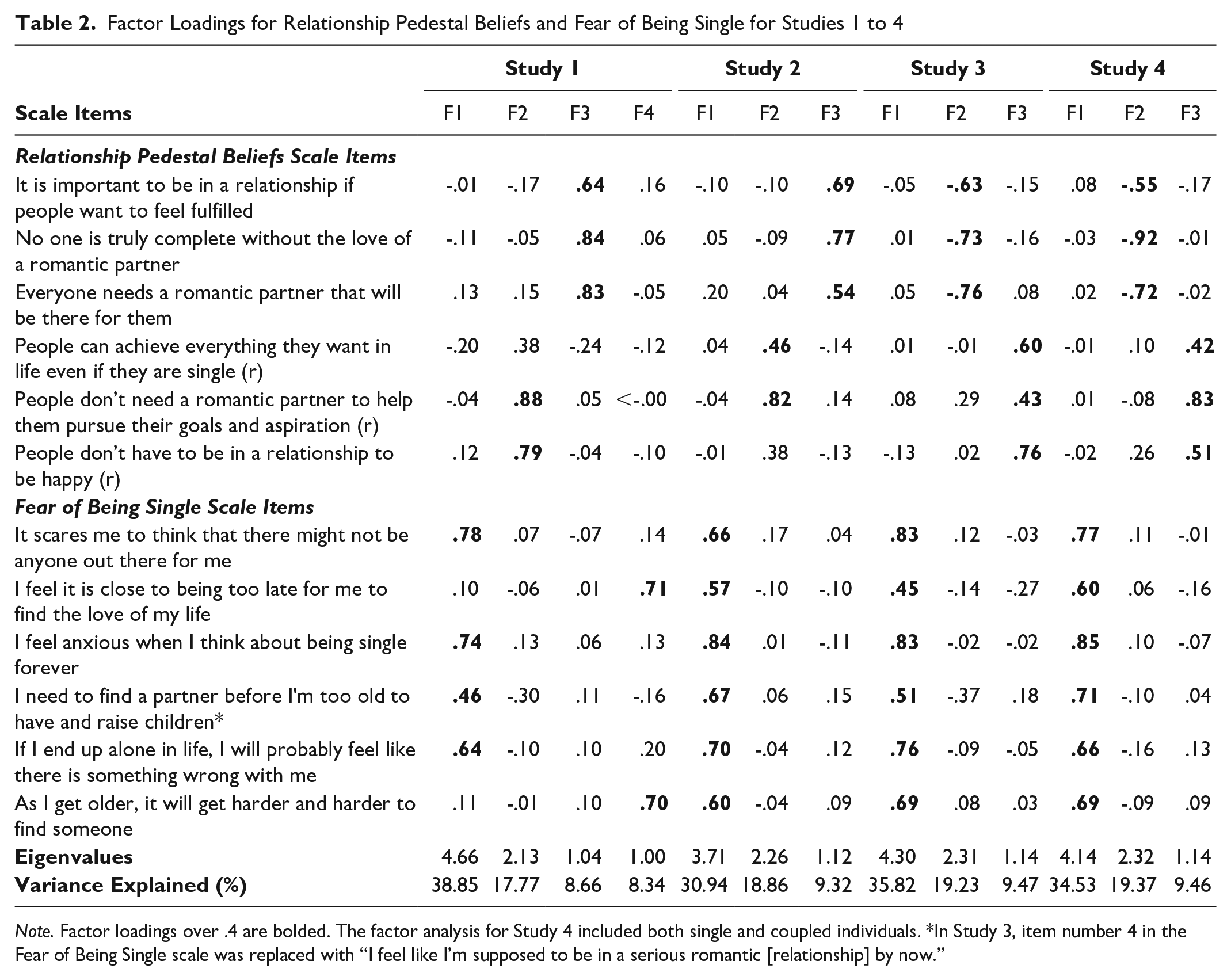
Next, we wanted to rule out the possibility that the Relationship Pedestal Beliefs Scale and (a) the Fear of Being Scale or (b) Attachment Anxiety Scale are capturing one similar underlying construct. We conducted another exploratory PAF analysis with a Direct Oblimin Rotation of the six items in the Relationship Pedestal Beliefs Scale, and the six items in the Fear of Being Single Scale. The results are displayed in Table 2. The PAF analysis extracted four factors with Eigenvalues over 1 in Study 1, and three factors Eigenvalues over 1 in Studies 2 to 4. The pattern of results was highly similar across all four studies; two factors in all the studies included loadings over .40 of the positive scored items and negative scored items of the Relationship Pedestal Beliefs Scale (with two exceptions that had factor loadings of .38). Specifically, Factors 2 and 3 in Studies 1-4, although note that in Studies 3 and 4, the positive scored items loaded negatively onto Factor 2, but in Studies 1 and 2, the positively scored items loaded positively onto Factor 3. Two factors in Study 1 and one factor in Studies 2 to 4 included positive loadings over .40 of the Fear of Being Scale items (Factors 1 and 4 in Study 1, Factor 1 in Studies 2–4).
Factor Loadings for Relationship Pedestal Beliefs and Fear of Being Single for Studies 1 to 4
Note. Factor loadings over .4 are bolded. The factor analysis for Study 4 included both single and coupled individuals. *In Study 3, item number 4 in the Fear of Being Single scale was replaced with “I feel like I’m supposed to be in a serious romantic [relationship] by now.”
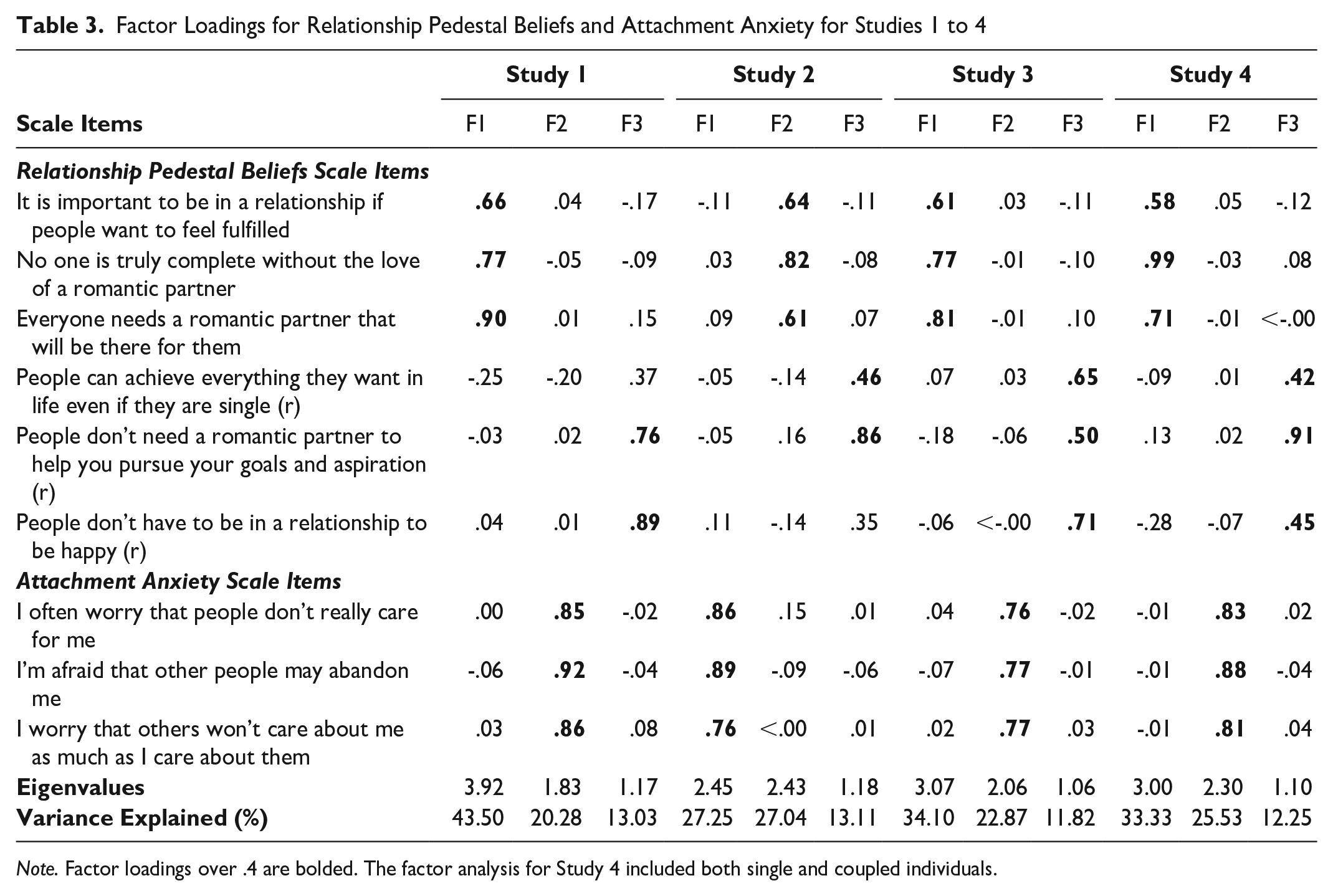
We ran similar exploratory PAF analyses for the six items in the Relationship Pedestal Beliefs Scale and the three items in the Attachment Anxiety Scale. The results are displayed in Table 3. Across all four studies, the PAF analysis extracted three factors with Eigenvalues over 1. The pattern of results was identical across all the studies; two factors included positive loadings over .40 of the positive scored items and negative scored items of the Relationship Pedestal Beliefs Scale (with two exceptions that had factor loadings of .35 and .37). Specifically, Factors 1 and 3 in Studies 1, 3, and 4 and Factors 2 and 3 in Study 2. Finally, one factor included positive loadings over .40 of the Attachment Anxiety Scale items (Factor 2 in Studies 1, 3, and 4 and Factor 1 in Study 2). Taken together, the results across all four studies highlight that relationship pedestal beliefs are a unique and independent construct to fears of being single and attachment anxiety.
Factor Loadings for Relationship Pedestal Beliefs and Attachment Anxiety for Studies 1 to 4
Note. Factor loadings over .4 are bolded. The factor analysis for Study 4 included both single and coupled individuals.
Associations Between Relationship Pedestal Beliefs, Fear of Being Single, and Daily Life Satisfaction
Descriptive statistics and correlation matrix for all measures in Study 1 are reported in Tables 4 and 5. We tested the model illustrated in Figure 1 to examine whether relationship pedestal beliefs were associated with the fear of being single, and whether the fear of being single was associated with life satisfaction. Given that our data included cross-sectional data and repeated measures across days (i.e., multiple days nested within individuals), we ran a series of regressions and multilevel models using the MIXED procedure in SPSS 27 (Bolger & Laurenceau, 2013). First, we ran a linear regression that regressed fear of being single on the endorsement of relationship pedestal beliefs (Path A). Then we employed multilevel modeling and regressed individuals’ reports of daily life satisfaction on individuals’ endorsement of relationship pedestal beliefs (Path C). Next, we regressed individuals’ daily life satisfaction on fear of being single (Path B) and relationship pedestal beliefs (Path C’). All continuous predictors were grand mean centered.
Descriptive Statistics Across Measures (Studies 1–4)
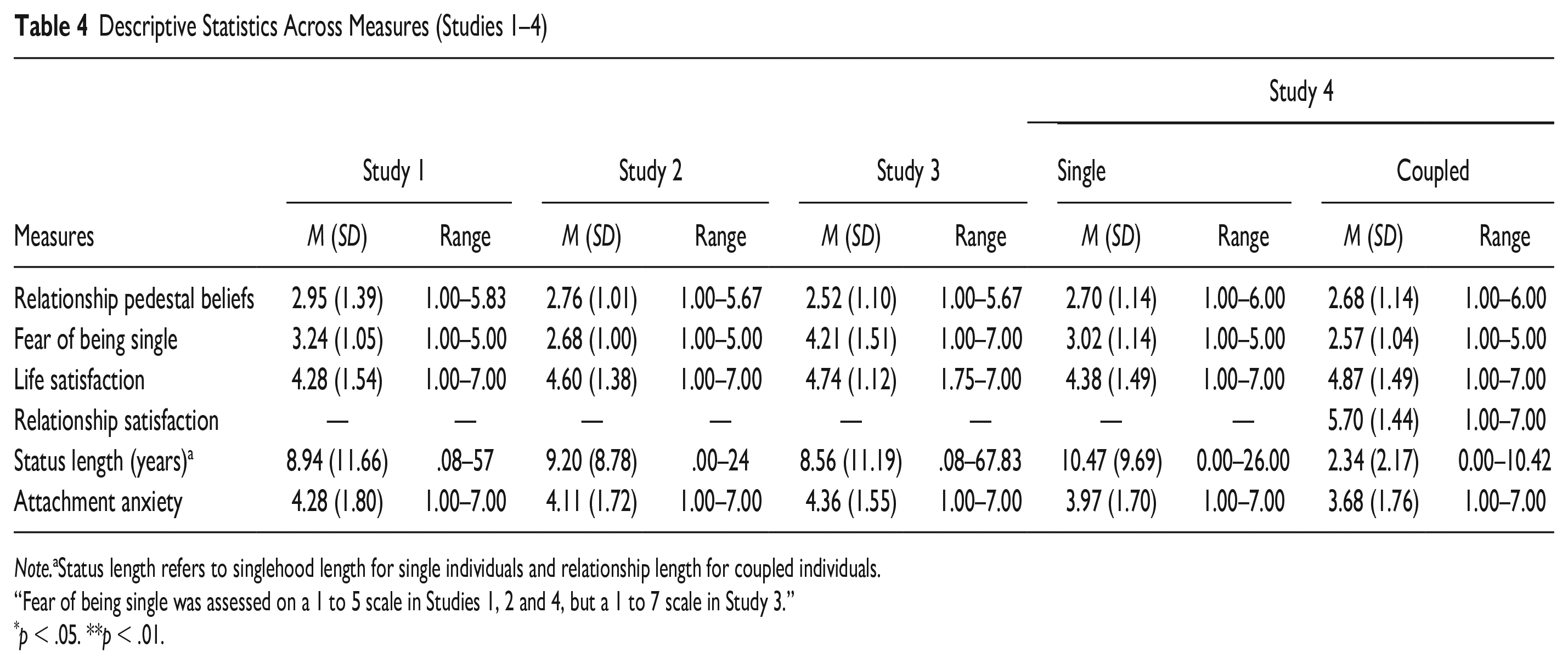
Note. Status length refers to singlehood length for single individuals and relationship length for coupled individuals.
“Fear of being single was assessed on a 1 to 5 scale in Studies 1, 2 and 4, but a 1 to 7 scale in Study 3.”
p < .05. **p < .01.
Correlation Matrix Across Measures (Studies 1 and 2)
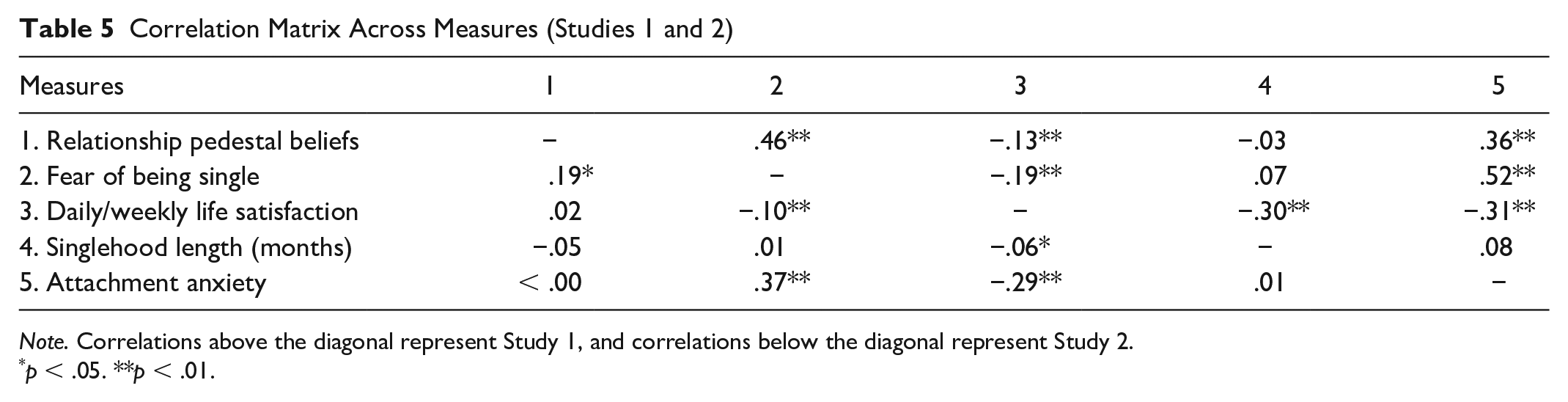
Note. Correlations above the diagonal represent Study 1, and correlations below the diagonal represent Study 2.
p < .05. **p < .01.
The results are illustrated in Table 6. Participants’ greater endorsement of relationship pedestal beliefs was associated with greater fear of being single (Path A). Participants with greater fear of being single had lower daily life satisfaction (Path B). Notably, our results indicated that greater endorsement of relationship pedestal beliefs was not directly associated with lower daily life satisfaction (Path C), and this association remained nonsignificant when controlling for fear of being single (Path C’). Finally, we calculated the indirect effect and associated confidence interval (CI) using the procedure recommended by Tofighi and MacKinnon (2011) using the RMediation Package. The CI did not overlap zero (see Table 7), providing support that greater endorsement of relationship pedestal beliefs may undermine single people’s life satisfaction via greater fears of being single.
The Associations Between Relationship Pedestal Beliefs, Fear of Being Single, and Life Satisfaction for Single Individuals (Studies 1–4)
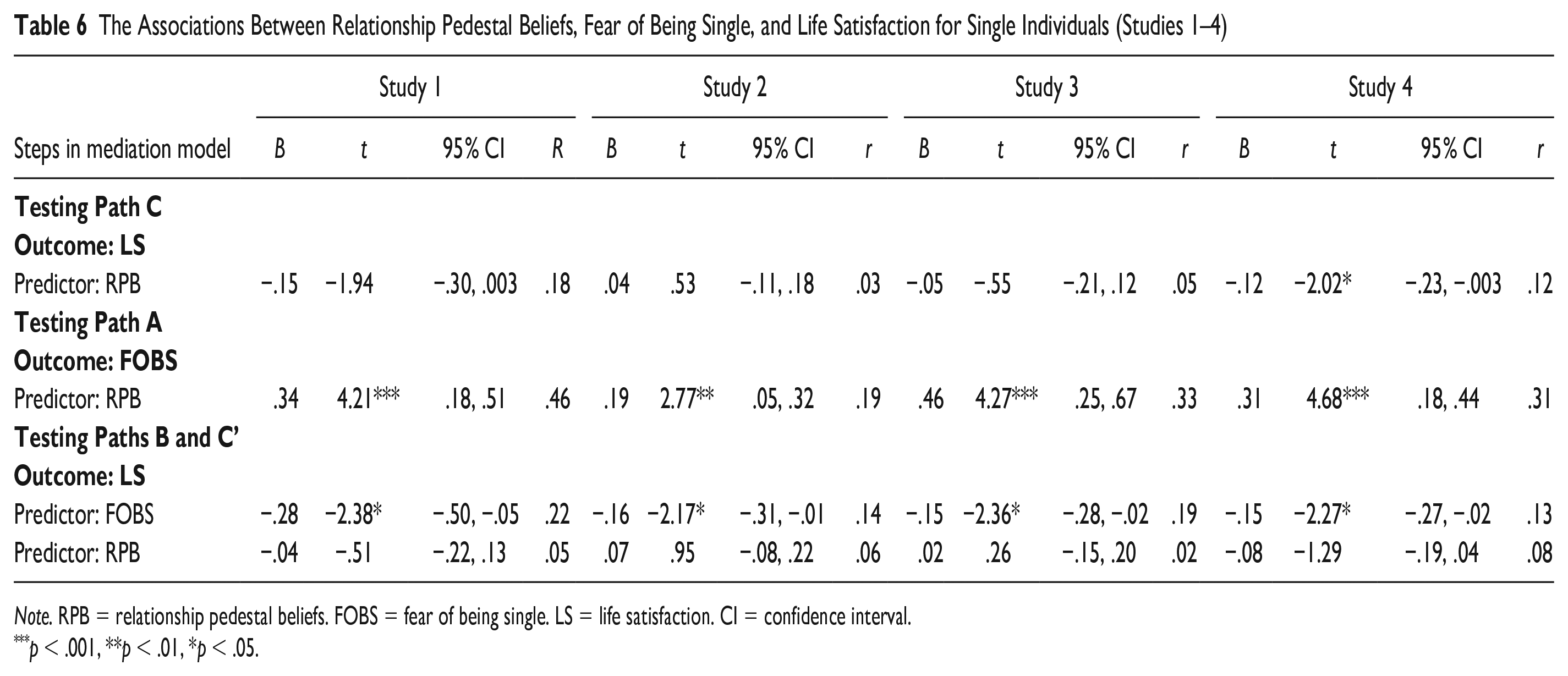
Note. RPB = relationship pedestal beliefs. FOBS = fear of being single. LS = life satisfaction. CI = confidence interval.
p < .001, **p < .01, *p < .05.
Indirect Effects for Relationship Pedestal Beliefs and Life/Relationship Satisfaction Mediated by Fear of Being Single
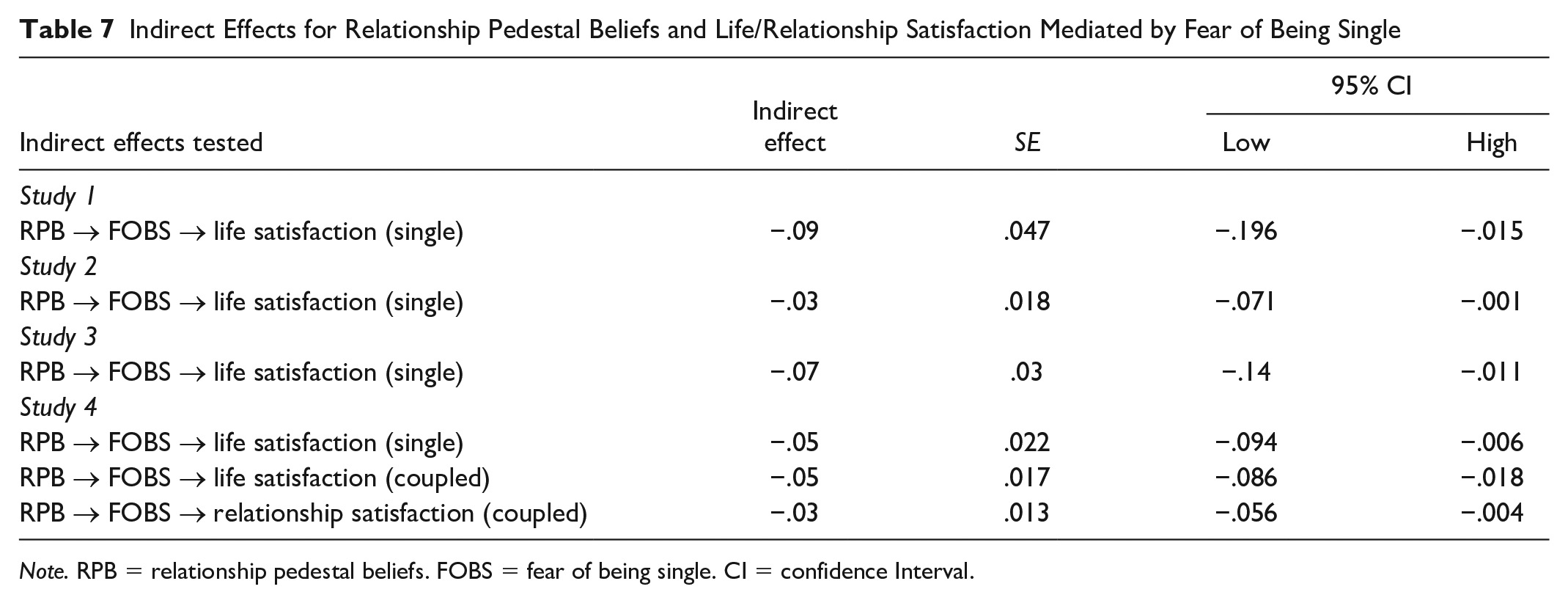
Note. RPB = relationship pedestal beliefs. FOBS = fear of being single. CI = confidence Interval.
Control Analyses
We also wanted to rule out the possibility that the focal association between relationship pedestal beliefs and fear of being single may be driven by participants’ age, gender, singlehood length, or anxious predispositions (Adamczyk et al., 2021; Spielmann et al., 2013). Thus, we re-ran the original models separately controlling for age, gender (0 = female, 1 = male), singlehood length or attachment anxiety. All continuous control variables were grand mean centered. The focal association between endorsement of relationship pedestal beliefs and fear of being single remained significant controlling for age (t = 4.17, p < .001), gender (t = 4.14, p < .001), singlehood length (t = 4.22, p < .001), and attachment anxiety (t = 2.95, p = .004).
Furthermore, the association between fear of being single and daily life satisfaction held when controlling for age (t = −2.29, p = .024; indirect effect = −.10, 95% CI = [–.19, −.01]), and gender (t = −2.18, p = .032; indirect effect = −.09, 95% CI = [–.20, −.01]), but dropped to nonsignificance when controlling for singlehood length (t = 1.96, p = .053; indirect effect = −.07, 95% CI = [–.17, .00]) and attachment anxiety (t = −.39, p = .696; indirect effect = −.01, 95% CI = [–.08, .05]). 3
Alternative Pathway
Given the correlational nature of our data, it is possible that fear of being single undermines well-being via relationship pedestal beliefs (fear of being single → relationship pedestal beliefs → daily life satisfaction). Theoretically, this alternative model makes less sense given that beliefs about (heteronormative) relationships are learnt in early childhood (Cannoni & Bombi, 2016; Gansen, 2017) and should predate fears about one’s relationship status in adulthood. Focusing on the indirect pathways, although greater fears of being single was significantly associated with greater relationship pedestal beliefs (t = 4.21, p < .001), the association between greater relationship pedestal beliefs and daily life satisfaction was nonsignificant (t = −.51, p = .609). Thus, there was insufficient evidence for the alternative pathway (indirect effect = −.027, 95% CI = [–.14, .08]).
Study 2
Study 1 provided initial evidence that relationship pedestal beliefs are associated with greater fear of being single, which can undermine single people’s daily well-being. In Study 2, we aimed to replicate these findings in a larger sample.
Methods
Power Considerations
Power analyses were not conducted prior to data collection. Sample size was determined by research credits available. Nonetheless, post hoc power analyses for linear regression using G*Power revealed that our sample of 212 participants has over 99% power to detect our Path A association (effect size = .19; Faul et al., 2007) and exceeds guidelines for conducting multilevel analyses for our Path C and B associations (Bolger & Laurenceau, 2013).
Participants
We recruited 212 single undergraduate participants from a Canadian university in 2019. The mean age of the sample was 19.54 years (SD = 2.55, range = 17–40 years). Participants identified their biological sex as either male (48.1%) or female (51.9%), and their gender identity as either male (47.6%) or female (52.4%). Participants selected all ethnicities they identified with, including Asian (43.9%), White (35.4%), Indian/South-East Asian (15.6%), Middle Eastern (5.7%), and other ethnicities (3.8%). Notably, 4.2% of participants identified bi- or multi-ethnic identities. Participants defined their single status as “single” (99.5%) or “widowed” (.5%). Participants had been single for an average of 9.20 years (SD = 8.78), although this was represented by a bimodal distribution of participants who have been single for less than a year or approximately 20 years (i.e., the entirety of their lives). Participants received research credit for their participation.
Procedures and Materials
Participants first completed a baseline questionnaire, including identical measures from Study 1 assessing relationship pedestal beliefs (α = .70), fear of being single (α = .84), and attachment anxiety (α = .87), along with other measures not germane to the current study. Participants were invited to complete a weekly entry for 6 weeks in which they completed a two-item scale assessing their weekly life satisfaction similar to Study 1 (average r across weeks = .81). 204 participants completed at least one weekly follow up entry. On average, participants completed 5.32 of the six entries, resulting in 1,085 observations.
Results
Descriptive statistics and the correlation matrix across measures are reported in Tables 4 and 5. We employed identical analyses as Study 1. The results are displayed in Table 6. Participants’ higher endorsement of relationship pedestal beliefs was significantly associated with higher fear of being single (Path A), and higher fear of being single was associated with significantly lower weekly life satisfaction (Path B). The endorsement of relationship pedestal beliefs was not directly associated with participants’ weekly life satisfaction (Path C), and this association remained nonsignificant when controlling for fear of being single (Path C’). Finally, mediation analyses provided evidence that greater endorsement of relationship pedestal beliefs may undermine single people’s life satisfaction via greater fear of being single (see Table 7).
Control Analyses
As in Study 1, we re-ran our analyses to control for participants’ age, gender (0 = female, 1 = male), singlehood length, and attachment anxiety. All continuous control variables were grand mean centered. The focal association between relationship pedestal beliefs and fear of being single remained significant when controlling for age (t = 2.77, p = .006), gender (t = 3.66, p < .001), singlehood length (t = 2.77 p = .006), and attachment anxiety (t = 2.98, p = .003). Furthermore, the association between fear of being single and weekly life satisfaction remained significant when controlling for age (t = −2.14, p = .033; indirect effect = −0.03, 95% CI = [–.07, −.001]) and singlehood length (t = −2.14, p = .033; indirect effect = −0.03, 95% CI = [–.07, −.001]), but dropped to nonsignificance when controlling for gender (t = −1.62, p = .106; indirect effect = −.03, 95% CI = [–.08, .01]) and attachment anxiety (t = −.01, p = .989; indirect effect = <.00, 95% CI = [–.03, .03]).
Alternative Pathways
Finally, we tested whether relationship pedestal beliefs mediated the association between fears of being single and life satisfaction. Focusing on the indirect pathways, although greater fear of being single was associated with greater endorsement of relationship pedestal beliefs (t = 2.77, p = .006), the association between relationship pedestal beliefs and weekly life satisfaction was nonsignificant (t = .95, p = .342). Thus, replicating Study 1, there was insufficient evidence for the alternative pathway (indirect effect = .01, 95% CI = [–.02, .05]).
Study 3
Studies 1 and 2 provided evidence that single people’s endorsement of relationship pedestal beliefs is associated with greater fears of being single. However, these samples were limited. Study 1 involved a diverse community sample of single adults but was a small sample. Study 2 reflected a much larger sample, but only included young single adults. Thus, Study 3 aimed to replicate these findings in a larger community sample made up of single adults with more diverse ages and relationship histories.
Methods
Power Considerations
Power analyses were not conducted prior to data collection. A sample size of 150 individuals was predetermined prior to data collection based on funding constraints. Nonetheless, post hoc analyses of linear regression using G*Power found that our sample size of 149 has more than 99% power to detect our focal associations (effect sizes = .19-.33; Faul et al., 2007).
Participants
In 2022 and early 2023, 149 community members were recruited as part of a larger longitudinal study from the Greater Vancouver area, Canada. Participants on average were 24.78 years old (SD = 6.94, range = 18–67 years). Participants identified as a woman (67.8%), man (26.2%), nonbinary (4.7%), or specified another gender identity (1.3%). Participants defined themselves as single and not dating anyone (90.6%) or single and casually dating (9.4%), and on average had been single for 8.56 years (SD = 11.19). Participants defined themselves as White/Caucasian (32.9%), East Asian (25.5%), South Asian (24.2%), Black (14.1%), Middle Eastern/North Africa (3.4%), Latin American (2.7%), and other self-identified ethnicities (5.4%). Notably, 8.7% of participants reported bi- or multi-ethnic identities. 1 participant did not disclose their ethnicity. Participants were paid $15 CAD for completing this initial baseline questionnaire.
Procedure and Materials
Participants completed a baseline questionnaire that assessed relationship pedestal beliefs (α = .78), fear of being single (1 = strongly disagree, 7 = strongly agree; α = .86), and attachment anxiety (α = .81) identical to Studies 1 and 2 (although see Table 2 notes about one item that was changed in the fear of being single scale), along with other measures not germane to the current study. Participants also completed a four-item measure of life satisfaction (α = .84) similar to Studies 1 and 2.
Results
Descriptive statistics and the correlation matrix across measures are reported in Tables 4 and 8. We follow similar procedures as in Studies 1 and 2 but only conducted multiple regression analyses given our cross-sectional data set. The results are displayed in Table 6. Participants’ higher endorsement of relationship pedestal beliefs was significantly associated with higher fear of being single (Path A), and higher fear of being single was associated with significantly lower life satisfaction (Path B). Notably, the endorsement of relationship pedestal beliefs was not directly associated with participants’ life satisfaction (Path C), and this association remained nonsignificant when controlling for fear of being single (Path C’). Finally, mediation analyses provided evidence that greater endorsement of relationship pedestal beliefs may undermine single people’s life satisfaction via greater fear of being single (see Table 7).
Correlation Matrix Across Measures (Study 3)
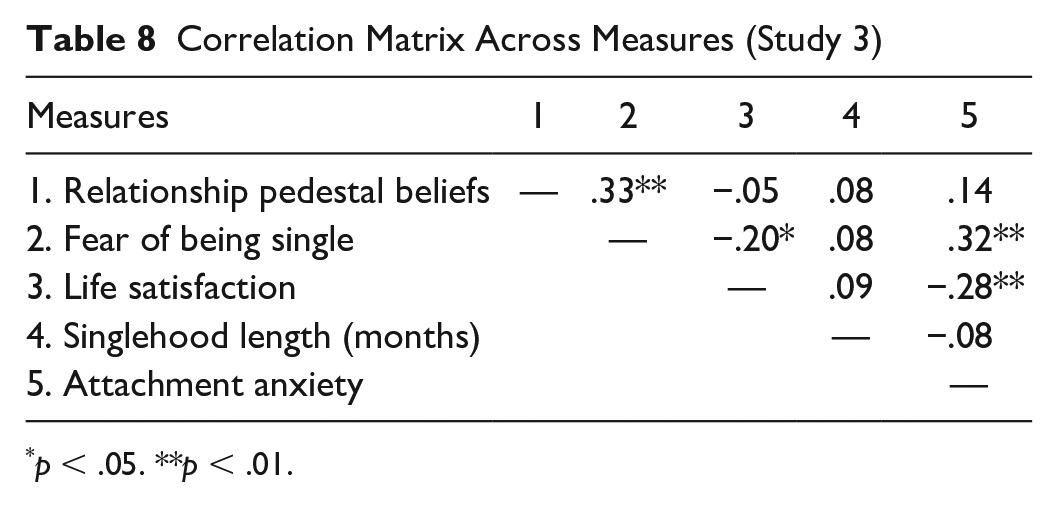
p < .05. **p < .01.
Control Analyses
As in the previous studies, we re-ran our analyses separately controlling for age, gender (0 = female, 1 = male; 9 gender diverse participants were not included in these analyses), singlehood length, and attachment anxiety. All continuous control variables were grand mean centered. The association between relationship pedestal beliefs and fear of being single held when controlling for age (t = 4.24, p < .001), gender (t = 4.19, p < .001), singlehood length (t = 4.18, p < .001), and attachment anxiety (t = 3.91, p < .001). The association between fear of being single and life satisfaction held when controlling for age (t = −2.23, p = .019; indirect effect = −.07 CI = [–.14, −.01]), and singlehood length (t = −2.45, p = .015; indirect effect = −.07 CI = [–.14, −.01]), but dropped to nonsignificance when controlling for gender (t = −1.910, p = .058; indirect effect = −.06 CI = [–.14, .002]), and attachment anxiety (t = −1.49, p = .14; indirect effect = −.04 CI = [–.10, .01]).
Alternative Pathways
As in Studies 1 and 2, we tested whether relationship pedestal beliefs mediated the association between fears of being single and life satisfaction. Focusing on the indirect pathways, although greater fear of being single was associated with greater endorsement of relationship pedestal beliefs (t = 4.27, p < .001), the association between relationship pedestal beliefs and life satisfaction was nonsignificant (t = .26, p = .80). Thus, replicating Studies 1 and 2, there was insufficient evidence for the alternative pathway (indirect effect = .01, 95% CI = [–.04, .05]).
Study 4
Studies 1 to 3 provided robust evidence that single individuals’ endorsement of relationship pedestal beliefs was associated with greater fears of being single, which was associated with lower life satisfaction. In Study 4, we aimed to extend our findings among coupled individuals.
Methods
Power Considerations
Power analyses were not conducted prior to data collection. Sample size was determined by the number of people that opted into the study each semester. Nonetheless, post hoc power analyses for linear regression using G*Power revealed that our sample of 210 single and 256 coupled individuals has over 99% power to detect our Path A associations (effect sizes = .31 and .24, respectively; Faul et al., 2007) and exceeds guidelines for conducting multilevel analyses for our Path C and B associations (Bolger & Laurenceau, 2013).
Participants
Participants were 466 upper-level undergraduates from a Canadian university. Data were collected across four semesters spanning 2017 to 2020 and aggregated into one data set to maximize sample size and statistical power. On average, participants were 22.14 years old (SD = 2.77 years, range = 18–45) and participants identified themselves as female (78.8%) or male (20%) or another gender identity, such as gender fluid (1.3%). Two hundred ten participants were categorized as single; those who reported their relationship status as “single” (44.4%) or “separated/divorced” (.6%). Participants had been single for 10.47 years (SD = 9.69), although this was represented by a bimodal distribution of participants who have been single for less than a year or approximately 20 years (i.e., the entirety of their lives). Two hundred fifty-six participants were categorized as coupled; those who reported their relationship status as “dating non-exclusively” (4.9%), “dating exclusively” (37.3%), “living together” (10.1%), “engaged” (1.1%), or “married” (1.5%) and had been in their relationship for 2.34 years (SD = 2.17). Participants selected all ethnicities they identified with, including White (41.8%), Asian (41.0%), Indian/South-East Asian (11.6%), Middle Eastern (4.3%), Black (1.7%), Indigenous/First Nations (1.5%), and other ethnicities (8.2%). Notably 10.3% of participants reported bi- or multi-ethnic identities). Participants went into a draw to win one of six CAD$50 Amazon vouchers per semester.
Procedures and Materials
Participants first completed a baseline questionnaire with identical measures from Studies 1 to 3 assessing relationship pedestal beliefs (α = .78), fear of being single (α = .86), and attachment anxiety (α = .88), along with measures not germane to the current study. Following this, participants were invited to complete a daily questionnaire for the following 14 days, where they completed an identical life satisfaction scale from Study 1 (average r across days = .84). Participants involved in a relationship also reported on their relationship satisfaction (e.g., “Today, I felt satisfied with our relationship”; “Today, our relationship made me very happy”; 1 = strongly disagree; 7 = strongly agree; average r across days = .92). Three hundred eighty-eight participants completed at least one daily entry. On average, participants completed 8.87 of the 14 daily entries, resulting in 3,440 observations after accounting for missing data on both daily life and relationship satisfaction.
Results
Descriptive statistics for single and coupled individuals are reported in Table 4. The correlation matrix across measures for single and coupled individuals is reported in Table 9. We employed identical analyses as in Studies 1 and 2. The results for single individuals are displayed in Table 6. Participants’ greater endorsement of relationship pedestal beliefs was associated with greater fear of being single (Path A). Greater fear of being single was associated with lower daily life satisfaction (Path B). Greater endorsement of relationship pedestal beliefs was directly associated with lower daily life satisfaction (Path C), and this association dropped to nonsignificance when controlling for fear of being single (Path C’). Finally, mediation analyses provided evidence that the endorsement of relationship pedestal beliefs may undermine single people’s life satisfaction via greater fears of being single (see Table 7).
Correlation Across Measures for Single and Coupled Individuals (Study 4)
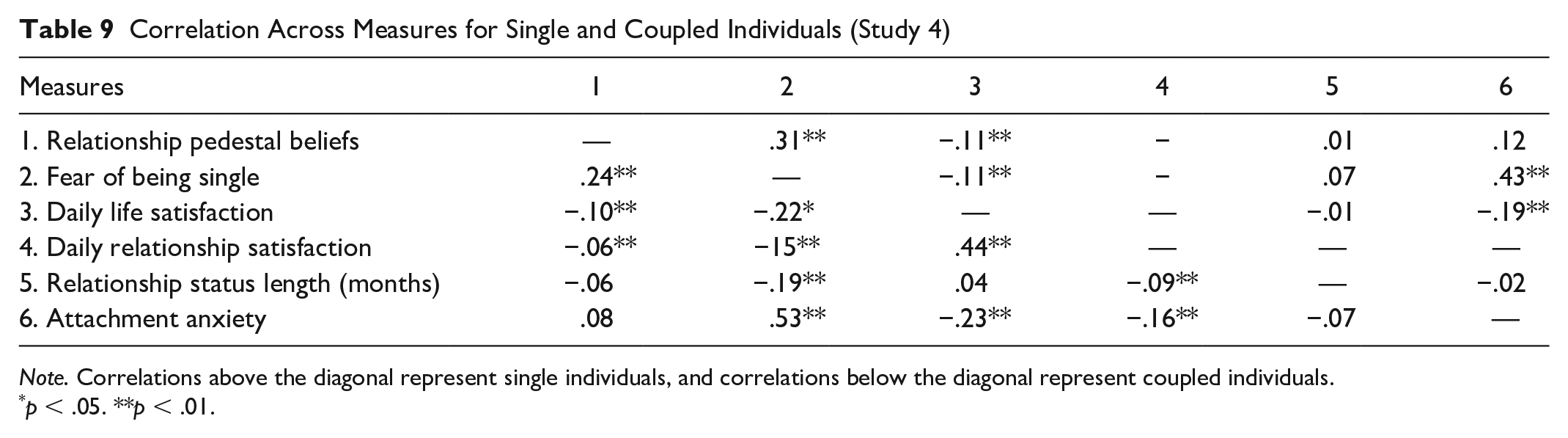
Note. Correlations above the diagonal represent single individuals, and correlations below the diagonal represent coupled individuals.
p < .05. **p < .01.
Next, we ran analogous models for coupled individuals’ (a) daily life satisfaction and (b) relationship satisfaction. In both models, we controlled for the alternative outcome (i.e., when predicting daily life satisfaction, we controlled for daily relationship satisfaction and vice versa). The results are displayed in Table 10. Coupled participants’ higher endorsement of relationship pedestal beliefs was associated with greater fear of being single (Path A). Moreover, greater fear of being single was associated with lower daily life satisfaction and lower relationship satisfaction (Path B). Notably, greater endorsement of relationship pedestal beliefs was not directly associated with daily life satisfaction or daily relationship satisfaction (Path C), and these associations remained nonsignificant when controlling for fear of being single (Path C’). Finally, mediation analyses provided evidence that the endorsement of relationship pedestal beliefs may undermine coupled people’s life satisfaction and relationship satisfaction via greater fear of being single (see Table 7). Thus, the analyses for coupled individuals conceptually replicated the pattern of results for single individuals across Studies 1 to 4.
The Associations Between Relationship Pedestal Beliefs, Fear of Being Single, and Daily Life Satisfaction and Relationship Satisfaction for Coupled Individuals (Study 4)
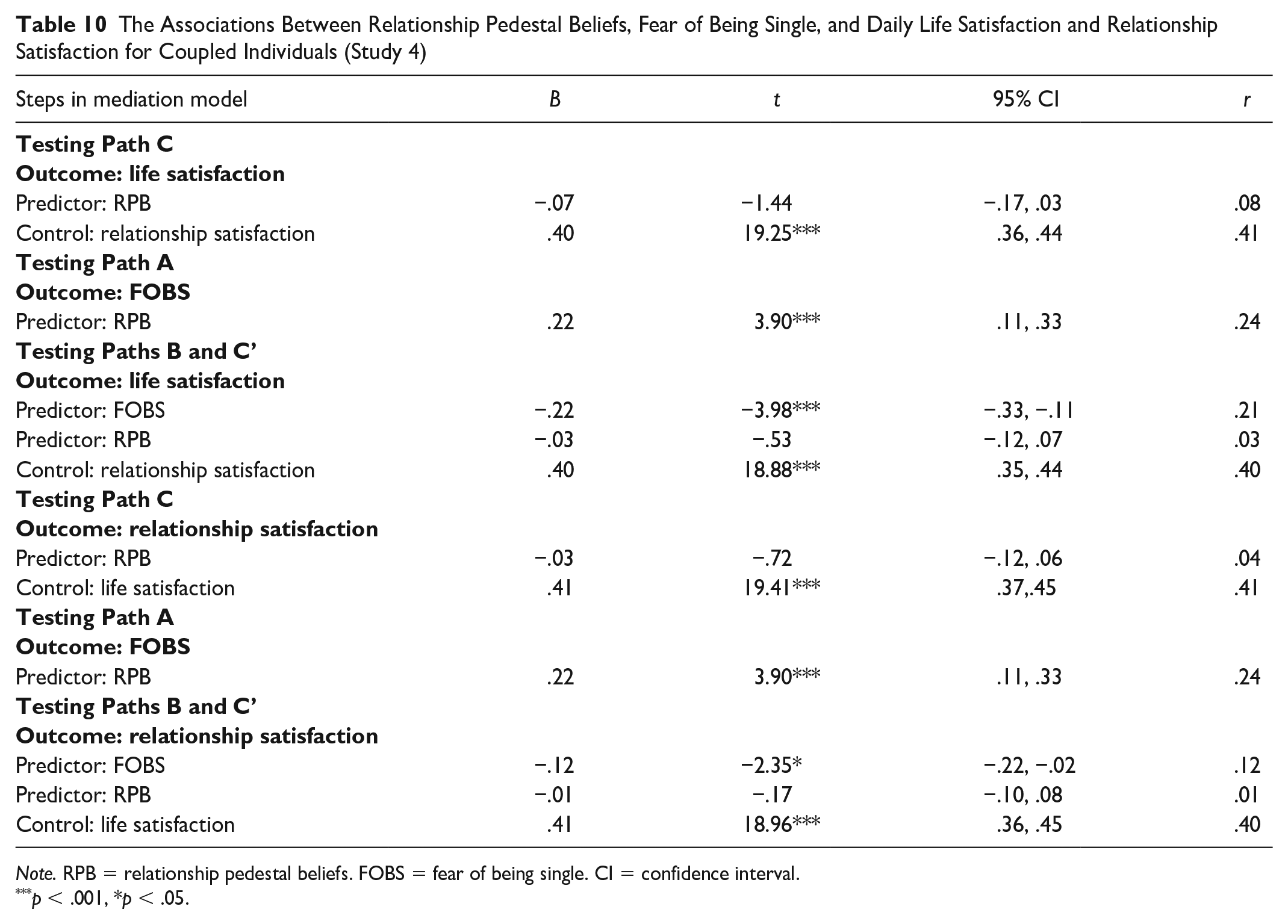
Note. RPB = relationship pedestal beliefs. FOBS = fear of being single. CI = confidence interval.
p < .001, *p < .05.
Control Analyses
We also re-ran the analyses controlling for participants’ age, gender (0 = female, 1 = male; six gender diverse participants were not included in the gender codes), singlehood/relationship length, or attachment anxiety. All continuous control variables were grand mean centered. The focal association between endorsement of relationship pedestal beliefs and fear of being single held across all controls for both single and coupled participants, including controlling for age (single: t = 4.67, p < .001; coupled: t = 3.90, p < .001), gender (single: t = 4.81, p < .001; coupled: t = 4.30, p < .001), singlehood/relationship length (single: t = 4.70, p < .001; coupled: t = 4.07, p < .001), and attachment anxiety (single: t = 4.34, p < .001; coupled: t = 3.82, p < .001).
Next, the association between fear of being single and life satisfaction held when controlling for age, gender, and singlehood/relationship length, but not attachment anxiety. Specifically, this association held controlling for age (single: t = −2.29, p = .023; indirect effect = −.05, 95% CI = [–.09, −.01]; coupled life satisfaction: t = −3.99, p < .001; indirect effect = −.05, 95% CI = [–.09, −.02]; coupled relationship satisfaction: t = −2.41, p = .017; indirect effect = −.03, 95% CI = [–.06, −.004]). This association also held when controlling for gender (single: t = −2.48, p = .014; indirect effect = −.05, 95% CI = [–.10, −.01]; coupled life satisfaction: t = −4.21, p < .001; indirect effect = −.06, 95% CI = [–.10, −.02]; coupled relationship satisfaction: t = −2.15, p = .032); indirect effect = −.03, 95% CI = [–.06, −.002]). This association also held when controlling for singlehood length (single: t = −2.13, p = .034; indirect effect = −.04, 95% CI = [–.10, −.003]) and relationship length (coupled life satisfaction: t = −3.43, p < .001; indirect effect = −.04, 95% CI = [–.08, −.01]; coupled relationship satisfaction: t = −2.35, p = .020); indirect effect = −.03, 95% CI = [–.06, −.004]). However, this association did not hold when controlling for attachment anxiety (single: t = −.70, p = .487; indirect effect = −.01, 95% CI = [–.05, .02]; coupled life satisfaction: t = −1.78, p = .076; indirect effect = −.02, 95% CI = [–.05, .002]); coupled relationship satisfaction: t = −1.67, p = .097; indirect effect = −.02, 95% CI = [–.04, .003]).
Alternative Pathways
As in Studies 1 to 3, we ran alternative models that tested whether relationship pedestal beliefs mediated the association between fears of being single and life/relationship satisfaction. Our results were similar for single and coupled individuals. Focusing on the indirect pathways, although greater fears of being single was associated with greater relationship pedestal beliefs (ts > 3.90, ps < .001), the associations between relationship pedestal beliefs and daily life/relationship satisfaction were nonsignificant (life satisfaction ts < –1.29, ps > .198; relationship satisfaction t = −.17 p = .865). Thus, these findings provide insufficient evidence for the alternative pathways (singles life satisfaction: indirect effect = −.02, 95% CI = [–.07, .01]; coupled life satisfaction: indirect effect = −.01, 95% CI = [–.04, .02]; coupled relationship satisfaction: indirect effect = -.002, 95% CI = [–.03, .02]).
General Discussion
The current research moves away from an individual-deficit perspective of the fear of being single and considers whether the endorsement of societal values that places relationships on a pedestal may be associated with greater fears of being single. The results across four studies provided evidence that greater endorsement of relationship pedestal beliefs is associated with greater fears of being single, and greater fears of being single is associated with single people reporting lower life satisfaction (Studies 1–4) and coupled people reporting lower life satisfaction and relationship satisfaction (Study 4). Furthermore, we ruled out that the focal association between relationship pedestal beliefs and fear of being single was due to age, gender, singlehood or relationship length, or attachment anxiety. Thus, to the extent that people believe that a person cannot be happy without a romantic relationship, relationship pedestal beliefs may cultivate fears about singlehood—regardless of their relationship status. In the sections that follow, we explore the theoretical and practical implications of our findings.
Relationship Pedestal Beliefs Are Associated With Fears of Being Single, But Not Life Satisfaction
Our results provide novel insights into possible antecedents of fear of being single, which may be embedded in societal level beliefs about committed relationships, and answers how endorsing relationship pedestal beliefs are associated with life satisfaction. Previous research has examined the association between fear of being single and individual characteristics related to insecure tendencies, such as attachment anxiety, neuroticism, avoidance social goals, and interpersonal sensitivity (Adamczyk et al., 2021; Spielmann et al., 2013). Our findings, however, suggest that rather than simply individual tendencies, the fear of being single may emerge (at least in part) because of societal values that place relationships on a pedestal at the expense of singlehood. In fact, the association between relationship pedestal beliefs and fear of being single emerged for both single and coupled individuals, highlighting the pervasiveness of societal values surrounding romantic relationships. This is consistent with our argument that the fear of being single is not simply due to individual differences among people, but also social pressures that are placed on single people to enter relationships and coupled people to maintain their relationships (DePaulo & Morris, 2005).
Notably, relationship pedestal beliefs did not directly undermine personal or relational well-being. Instead, our results suggest that there is an indirect pathway where relationship pedestal beliefs are associated with greater fear of being single, and then greater fear of being single is associated with lower personal and relational well-being. This suggests that endorsing the belief that relationships are central to happiness and well-being may not necessarily be maladaptive. While this goes against similar research highlighting that relationship desire negatively impacts single people’s well-being (Kislev, 2021; Park et al., 2021), there may be other motives at play. Certainly, entering and maintaining romantic and intimate relationships is an almost universal motivation across several societies (Ko et al., 2020) and plays an important role in fostering feelings of security and closeness (Mikulincer & Shaver, 2016). As such, relationship pedestal beliefs may generally serve adaptive functions, but become detrimental when they become misaligned with people’s current or future circumstances (Adamczyk et al., 2021; Day et al., 2011; Spielmann et al., 2013). That is, relationship pedestal beliefs may only undermine well-being when these beliefs trigger fears and anxieties about singlehood.
The Fear of Being Single Is Associated With Lower Life Satisfaction and Relationship Satisfaction
Our results found that fear of being single was associated with lower life satisfaction in single and coupled people and lower relationship satisfaction in coupled people. This is consistent with prior research that has found that fear of being single can undermine personal well-being, such as lower life satisfaction, emotional and psychological well-being, and greater risk of depressive symptoms (Adamczyk, 2017; Spielmann et al., 2013). Our results extend prior research by highlighting that these costs to life satisfaction are also evident for coupled people, despite them being in serious relationships (the average relationship length in Study 4 was approximately 2 years). While previous research suggests that greater fear of being single are associated with coupled individuals being more dependent on their current partner and less willingness to initiate a breakup (Spielmann et al., 2013), our results illustrate that fear of being single is also associated with negative relationship satisfaction more broadly, which may have downstream consequences for relationship functioning and stability. Taken together, our results support extant research that fears of being single foster unhappiness and unhealthy romantic coupling but provides novel evidence that these fears may stem in part from endorsing broader societal values that place relationships on a pedestal.
Strengths and Caveats
The current research had several strengths. Our research moves away from defective narratives about singlehood and contributes novel knowledge about how societal factors may underpin why fears of being single manifest; including evidence for a scale that assesses people’s endorsement of relationship pedestal beliefs. Our findings replicated across four studies that included single individuals that were particularly ethnically diverse (across all our studies, no single racial identity made up a majority in our sample). We also replicated our findings in a sample of couple individuals, which offered important insights that the processes examined here are not unique to single individuals but reflect broader psychological processes that impact people regardless of their relationship status (see Park et al., 2024). Our results also hold important practical and therapeutic implications by isolating societal beliefs as an important factor for understanding why fears of being single develop. Our findings highlight that one possible way to combat fears of being single may be to lower people’s endorsement of relationship pedestal beliefs by presenting an alternative societal view—that people can be happily single (see Girme et al., 2023 for a review).
Nonetheless, there are also caveats to be considered. Despite our samples being racially diverse, race and culture may intersect with relationship pedestal beliefs to alter the associations examined here. Indeed, the endorsement of relationship pedestal beliefs among people from collectivist cultures that have strong marriage norms may experience particularly greater fears of being single (see Himawan et al., 2018). Furthermore, despite our analyses illustrating that our findings remained significant when accounting for participant age and singlehood length, the lack of variation in our student samples (Studies 2 and 4) may have impacted our ability to accurately account for age. Notably, exploratory moderation analyses in our community samples did suggest that older singles in Studies 1 and 3 may be more negatively impacted by relationship pedestal beliefs (see Footnote 3). Indeed, older singles that are beyond the normative ages of marriage report facing unique challenges (Band-Winterstein & Manchik-Rimon, 2014; Baumbusch, 2004), although may also be more adjusted to single life and be able to challenge relationship pedestal beliefs (Park et al., 2022). Future studies would benefit from recruiting large samples of singles with intersectional identities that can test the generalizability of our findings.
Furthermore, our data are cross-sectional, which limit our ability to make causal claims about the association between relationship pedestal beliefs and fear of being single. For example, fear of being single may increase relationship pedestal beliefs. While this seems less theoretically likely given that societal beliefs about relationships tend to develop early in life (Cannoni & Bombi, 2016; Gansen, 2017), additional analyses did demonstrate that fear of being single did predict relationship pedestal beliefs. Importantly, our additional analyses did not provide evidence of the reversed mediational pathway (fear of being single → relationship pedestal beliefs → life satisfaction). Similarly, while our theory-driven model treated life satisfaction and relationship satisfaction as outcomes, it is possible that people who are less happy in life and in their romantic relationship may experience greater fears of being single and believe that they need the love of a romantic partner to be truly happy. Future research ought to consider longitudinal or experimental evidence to test the directionality of these associations.
Relatedly, it is also possible that attachment anxiety may underlie some of the effects outlined here. Specifically, the association between fear of being single and life satisfaction was dropped to nonsignificant across all four studies when controlling for attachment anxiety. This is not all that surprising given that underlying attachment anxiety and fear of being single is a deep-seated worry and concern about being loved and cared about (Mikulincer & Shaver, 2016) and that previous research has demonstrated that attachment anxiety is moderately correlated with the fear of being single (Adamczyk et al., 2021; Spielmann et al., 2013). Despite this, our factor analyses provided evidence across all four studies that relationship pedestal beliefs and attachment anxiety are unique constructs from one another and the association between relationship pedestal beliefs and the fear of being single remained significant even when controlling for attachment anxiety. This suggests that while attachment anxiety and fears of being single may be overlapping constructs, relationship pedestal beliefs are not simply a reflection of individual insecurities but also a distinct construct reflecting broader societal values and beliefs. Nonetheless, more work needs to be done to untangle the ways that relationship pedestal beliefs, fears of being single, and attachment anxiety influence one another.
Finally, while we argue that societal beliefs about marriage and family ideologies may be learnt in early childhood (Cannoni & Bombi, 2016; Gansen, 2017), there may be other relevant contexts that promote the endorsement of relationship pedestal beliefs. For example, because relationship pedestal beliefs reflect broader structural societal systems, the endorsement of relationship pedestal beliefs may be particularly strong in people who endorse just-world beliefs (Furnham, 2003) or believe in following societal order or norms (Duckitt & Sibley, 2009). There may also be intrapersonal differences that impact people’s endorsement of relationship pedestal beliefs. For example, people who have a less developed and integrated concepts of themselves (e.g., people with low self-esteem, lower self-concept clarity, or are highly neurotic) tend to rely on close others for validation and are motivated to conform to what is considered acceptable by others (Denissen & Penke, 2008; Leary et al., 1995). Such individuals may be more likely to endorse relationship pedestal beliefs. Understanding how relationship pedestal beliefs develop is an interesting avenue for future research.
Conclusion
In sum, the extant research examined whether individuals’ endorsement of relationship pedestal beliefs—that is, the belief that people need to be in a romantic relationship to be truly happy—is associated with the fear of being single. Across four studies, our results illustrated that single individuals’ endorsement of relationship pedestal beliefs was associated with greater fears of being single, and greater fears of being single were associated with lower life satisfaction. We also illustrated that these associations replicate among coupled people; coupled individuals’ endorsement of relationship pedestal beliefs was associated with greater fear of being single, and greater fear of being single was associated with lower life satisfaction and lower relationship satisfaction. Taken together, these findings broaden understanding about fears of being single beyond individual insecurities to broader societal beliefs that place relationships on a pedestal.
Supplemental Material
sj-docx-1-psp-10.1177_01461672241239122 – Supplemental material for Relationships on a Pedestal: The Associations Between Relationship Pedestal Beliefs, Fear of Being Single, and Life Satisfaction in Single and Coupled Individuals
Supplemental material, sj-docx-1-psp-10.1177_01461672241239122 for Relationships on a Pedestal: The Associations Between Relationship Pedestal Beliefs, Fear of Being Single, and Life Satisfaction in Single and Coupled Individuals by Brittany E. Dennett and Yuthika U. Girme in Personality and Social Psychology Bulletin
Footnotes
Declaration of Conflicting Interests
The author(s) declared no potential conflicts of interest with respect to the research, authorship, and/or publication of this article.
Funding
The author(s) disclosed receipt of the following financial support for the research, authorship, and/or publication of this article: Study 1 was supported by a Simon Fraser University/Social Sciences and Humanities Research Council (SSHRC) Small Research Grant and Simon Fraser University Psychology Departmental Research Grant. Study 3 was supported by a Simon Fraser University/Social Sciences and Humanities Research Council (SSHRC) Small Research Grant and Social Sciences and Humanities Research Council (SSHRC) Insight Grant. Study 4 was supported by the Simon Fraser University Institute for the Study of Teaching and Learning in the Disciplines (ISTLD) Teaching and Learning Development Grant.

Supplemental Material
Supplemental material is available online with this article through the Open Science Framework (OSF).
Notes
References
Supplementary Material
Please find the following supplemental material available below.
For Open Access articles published under a Creative Commons License, all supplemental material carries the same license as the article it is associated with.
For non-Open Access articles published, all supplemental material carries a non-exclusive license, and permission requests for re-use of supplemental material or any part of supplemental material shall be sent directly to the copyright owner as specified in the copyright notice associated with the article.
