




Abstract
COVID-19 threatens lives, livelihoods, and civic institutions. Although restrictive public health behaviors such as social distancing help manage its impact, these behaviors can further sever our connections to people and institutions that affirm our identities. Three studies (N = 1,195) validated a brief 10-item COVID-19 Threat Scale that assesses (1) realistic threats to physical or financial safety and (2) symbolic threats to one’s sociocultural identity. Studies reveal that both realistic and symbolic threats predict higher distress and lower well-being and demonstrate convergent validity with other measures of threat sensitivity. Importantly, the two kinds of threats diverge in their relationship to restrictive public health behaviors: Realistic threat predicted greater self-reported adherence, whereas symbolic threat predicted less self-reported adherence to social disconnection behaviors. Symbolic threat also predicted using creative ways to affirm identity even in isolation. Our findings highlight how social psychological theory can be leveraged to understand and predict people’s behavior in pandemics.
An almost “perfect killing machine.” Sanchez (CNN, March 15, 2020, referring to COVID-19) America, as we knew it, is on hold. Maxouris et al. (CNN, March 12, 2020)
In December 2019, an outbreak of pneumonia was reported in Wuhan, China, which scientists attributed to a novel coronavirus: SARS-CoV-2. In mere months, this novel coronavirus unleashed a global pandemic of COVID-19. The spread of the coronavirus is reshaping social life, and social psychology is at the forefront of studying these changes (e.g., Everett et al., 2020; Van Bavel et al., 2020). Essential to this research is understanding—and measuring (Flake et al., 2017)—how people perceive the threat of the virus.
Laypeople (Sanchez, 2020), public health leaders (Hennekens et al., 2020), and social psychologists (Esses et al., 1998) often conceptualize threat as realistic threat: a concrete attack on physical or material well-being. Although realistic threat is undoubtedly important, social psychology research highlights another important threat: symbolic threat, an assault on our sociocultural identity (e.g., Kachanoff et al., 2019; Stephan et al., 2009; Tajfel & Turner, 1979). Both realistic and symbolic threats likely increase psychological distress but may differentially predict adherence to the socially restrictive public health behaviors that help contain the pandemic. Here, we validate a 10-item scale that assesses both perceived symbolic and realistic threats of COVID-19 and examine their consequences for psychological distress, well-being, and adherence to public health behaviors.
Disease and Threat
Diseases most obviously pose realistic threats to an individual’s (or group’s) physical health and economic well-being (Hennekens et al., 2020; Matsuishi et al., 2012; O’Leary et al., 2018; Smith et al., 2009; Viboud et al., 2006). Public health officials have warned that COVID-19 is an “almost perfect killing machine” (Sanchez, 2020; also see Hennekens et al., 2020), and attempts to stop its spread have created mass unemployment (Davies et al., 2020; Patterson, 2020). Not surprisingly then, a recent Pew research poll on Americans’ perceptions of threat from COVID-19 focused exclusively on realistic threat (Pew Research Poll, Wave 63.5, March 10, 2020).
Despite the importance of realistic threat, it is not the only threat caused by pandemics. Humans are not just animals with biological needs; we are social animals who depend on our cultural groups for motivation (Oyserman, 2007), psychological well-being (Jetten et al., 2015), and structure (Gelfand et al., 2011). Threats to the “integrity or validity of a group’s meaning system [such as] religion, values, belief system, ideology, philosophy, morality, and world view” (Stephan et al., 2009, pp. 3–5) are called symbolic threats. COVID-19 poses a symbolic threat because social distancing—the primary method for combatting its spread—may result in a weakened sense of community or national identity. The norms, routines, and institutions of social groups that give people a sense of meaning are unraveled by COVID-19 (Maxouris et al., 2020; ur-Rehman et al., 2020). COVID-19 means that “America [and all Nations], as we knew it, is on hold” (Maxouris et al., 2020).
Although realistic threats can translate into symbolic threats—if everyone in a group dies, so will its culture—the integrated threat theory of intergroup relations suggests that both kinds of threats can have unique consequences (Stephan & Stephan, 2000; Zárate et al., 2004). We apply this integrated approach to studying COVID-19, operationalizing realistic threat as its danger to the physical health and financial well-being of both individuals and their group and symbolic threat as its danger to the group’s values and identity, as affirmed by core social processes. We do not focus on individual symbolic threats (e.g., personal shame and dishonor; Stephan & Renfro, 2002), as this seems to be less salient amid the public discourse surrounding COVID-19. COVID-19 is likely relevant to many group contexts, but we focus on American’s national group given its salience in public, political, and global health discussion (e.g., statistics about the number of cases in America). National identity is also salient in people’s responses to the virus, as American anti-lockdown protestors wave the American flag.
Unique and Sometimes Opposite Consequences of Realistic Versus Symbolic Threats
Examining realistic and symbolic threats of COVID-19 provides a unique opportunity to extend the predictions of integrated threat theory beyond intergroup contexts and may also help better understand people’s response to restrictive yet essential public health behaviors. One clear prediction is that—as psychological threats—both realistic and symbolic threats should each independently predict increased distress (Horowitz et al., 1979). Within intergroup contexts, both realistic threat and symbolic threat cause distress (see Major et al., 2013, for review), and so we expected both types of threats to predict feelings of general anxiety during the COVID-19 pandemic (Beck et al., 1988). We also expected both symbolic and realistic threats to predict two forms of subjective distress often associated with traumatic events (e.g., the 2004 SARS crisis; Hawryluck et al., 2004): intrusion of unwanted thoughts about the event (impact intrusion) and deliberate attempts to avoid thinking about the event (impact avoidance; Horowitz et al., 1979). We speculated that symbolic threat might most robustly predict avoiding thoughts about COVID-19, as impact avoidance can help people maintain the idea that life is unchanged by the pandemic. In contrast, realistic threat might most robustly be associated with impact intrusion, given that realistic concerns about death may be difficult for people to push from their mind. We also predicted that both threats would be associated with diminished psychological well-being (i.e., life satisfaction; Diener et al., 1985), reduced positive affect, and greater negative affect, given the associations of these outcomes with other forms of realistic and symbolic group threats (e.g., de la Sablonnière et al., 2013; Usborne & Taylor, 2010).
Although both kinds of threats should increase distress, they may oppositely predict adherence to restrictive public health behaviors; social distancing helps mitigate realistic threat while simultaneously increasing symbolic threat by undermining group cohesion. Accordingly, we hypothesized that realistic threat would predict increased self-reported support and adherence to socially restrictive public health behaviors like social distancing, whereas feelings of symbolic threat would predict decreased self-reported support and adherence. We also expected realistic threat to be associated with nonrestrictive public health behaviors such as handwashing given that they also mitigate the spread of the virus. However, we did not expect symbolic threat to be associated with nonrestrictive public health behaviors given that they do not disrupt the norms and social structures of the group. 1
Finally, we hypothesized that individuals who experience symbolic threat may be more likely to engage in behaviors that explicitly affirm their symbolic (national) identity such as consuming food, music, or cultural events linked to (national) identity. We also explored whether symbolic threat might increase engagement in virtual substitutes for social behaviors that while not explicitly tied to national identity were nonetheless socially affirming (e.g., online family get-togethers). 2
Present Research
We conducted three studies (see Figure 1 for overview) using cross-sectional (Studies 1 and 2) and longitudinal (Studies 1 and 3) designs in which we assessed the symbolic and realistic threats of COVID-19 within the national context of America. We had two core objectives. First, we developed a psychometrically sound 10-item scale measuring realistic or symbolic threat in a national group context. To assess factor structure, we used exploratory factor analysis (Study 1), confirmatory factor analysis (CFA; Study 2), and invariance analysis (Study 3). To examine convergent validity, we tested whether realistic and symbolic threats were correlated with other measures tied to threat sensitivity. Because coping with the COVID-19 pandemic involves dealing with prolonged uncertainty about health, economic security, or cultural norms, we hypothesized (H1) that individuals who have predispositions to react adversely to uncertainty (i.e., a need for cognitive closure; Rubin, 2018), who generally perceive threats in the world (i.e., a belief in a dangerous world; Duckitt & Fisher, 2003), who have unstable emotional responses to stressors (Schneider, 2004), or who value security, conformity, and tradition (Schwartz et al., 2000) would perceive a higher level of realistic and symbolic threats from COVID-19. To assess divergent validity, we tested the hypothesis (H2) that individual differences less clearly associated with threat sensitivity, such as Big Five personality traits (other than emotional instability, Gosling et al., 2003), and the other universal values described by Schwartz and colleagues (2000), would not be robustly associated with COVID-19 threat.
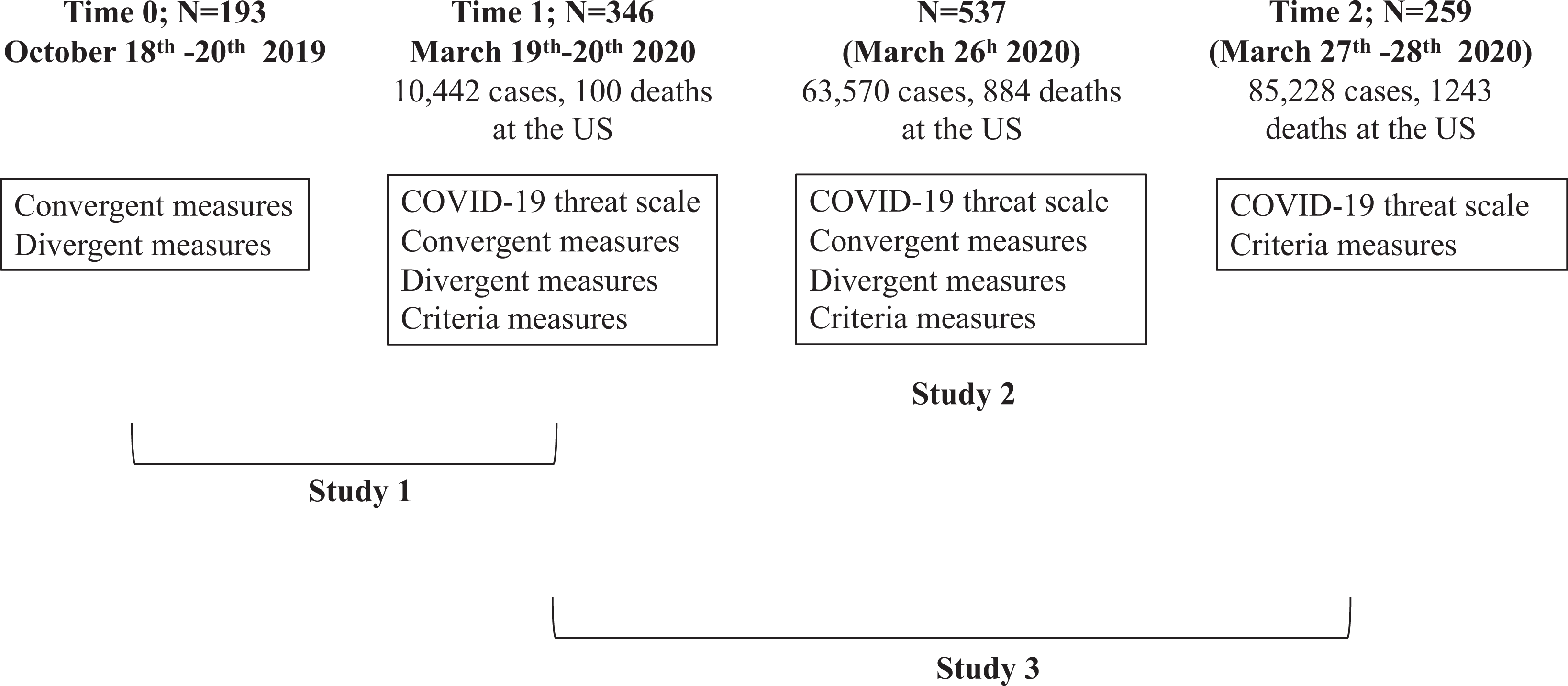
Overview of all studies.
Second, as outlined above, we examined the dissociable impact of realistic and symbolic threats on (1) psychological distress and well-being and affect (H3), (2) self-reported adherence to socially restrictive public health behaviors (H4), and (3) new ways of maintaining (national) identity while social distancing (H5). We detail the samples of all three studies in Table 1. See Supplemental Material for further information regarding the samples and statistical power considerations.
Detailed Summary of All Study Samples.
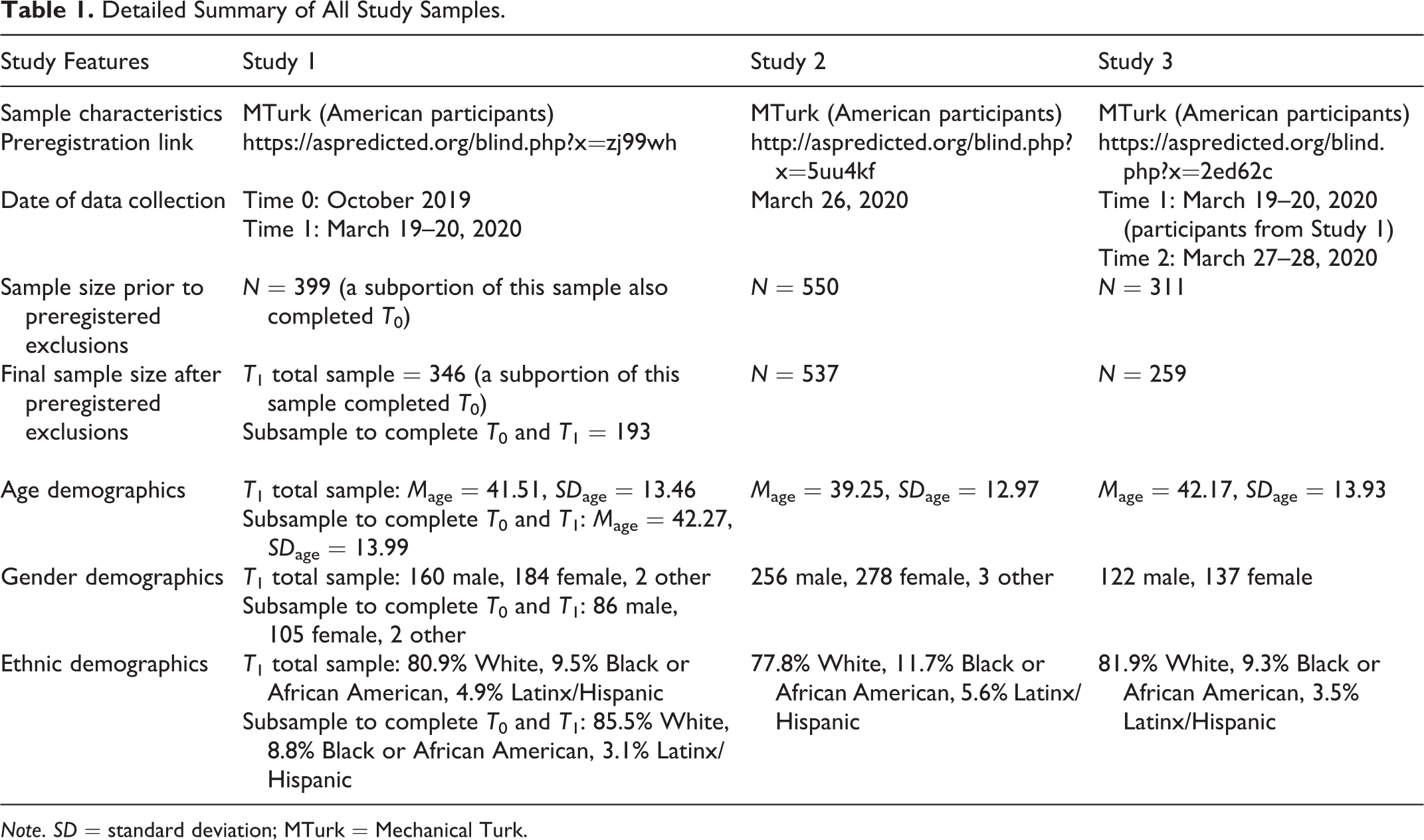
Note. SD = standard deviation; MTurk = Mechanical Turk.
Study 1
We examined the convergent, divergent, and criterion validity of an initial item set developed to assess perceived realistic and symbolic threats of COVID-19. Half of our sample had previously completed a survey unrelated to COVID-19 in October 2019, which allowed us to assess scale validity both cross-sectionally (analyzing all responses during COVID-19) and longitudinally (analyzing pre- and post-COVID-19 differences among the same sample).
Method
Integrated COVID-19 Threat Scale
All items (listed in Table 2) were framed with the opening: “How much of a threat, if any, is the coronavirus outbreak to…” and were rated from 1 (not a threat) to 4 (major threat). To assess realistic threat, we adapted 5 preexisting items (α = .77) used by the Pew Research Poll (Wave 63.5, March 10, 2020). We created 5 items (α = .85) to assess symbolic threat of COVID-19. Four items were based on Stephan and colleagues’ (2009) definition of symbolic threat cited above, while 1 item assessed threat to the freedom of one’s national group (Kachanoff et al., 2019). 3
Oblique Promax Rotated Factor Loadings of a Principal Axis Factoring Analysis of the 10-Item Integrated COVID-19 Threat Scale.
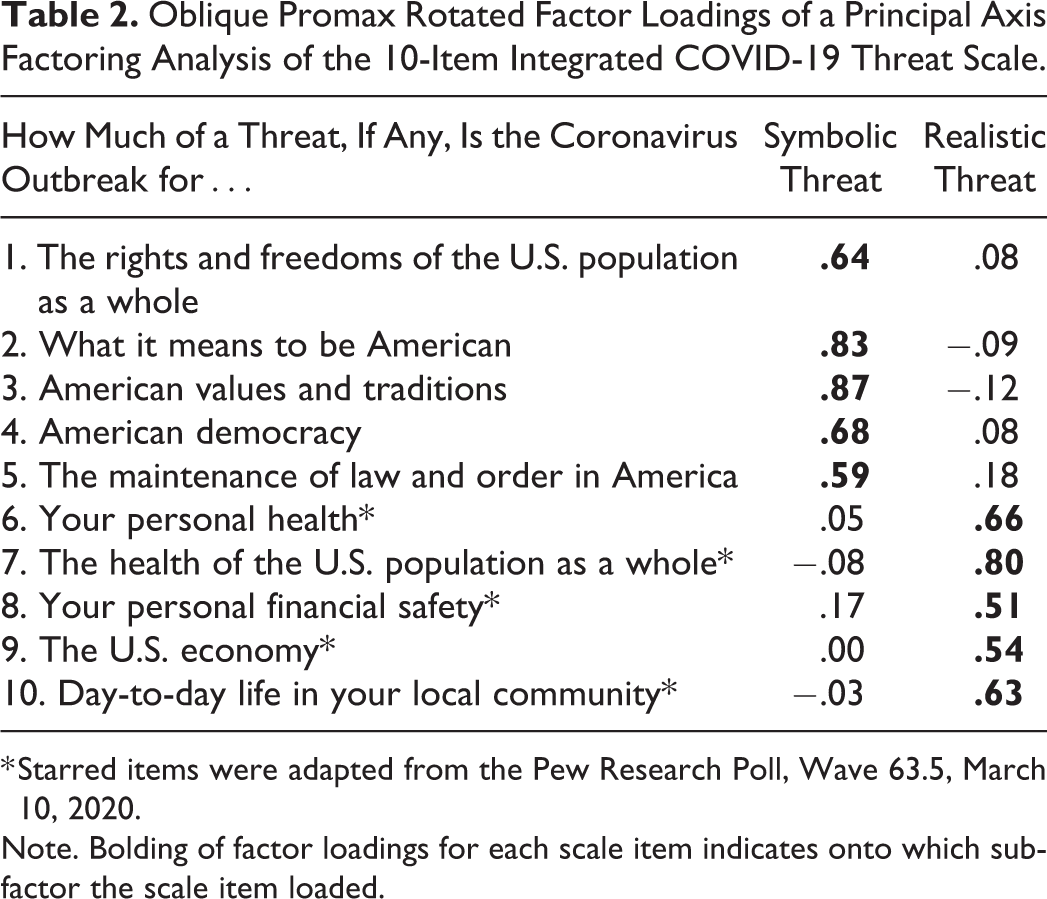
* Starred items were adapted from the Pew Research Poll, Wave 63.5, March 10, 2020.
Note. Bolding of factor loadings for each scale item indicates onto which sub-factor the scale item loaded.
Other Measures
All questionnaires reported are available in the Supplemental Material and detailed in Table 3.
Correlations Between COVID-19 Threat and All Measures Assessed During the COVID-19 Outbreak.
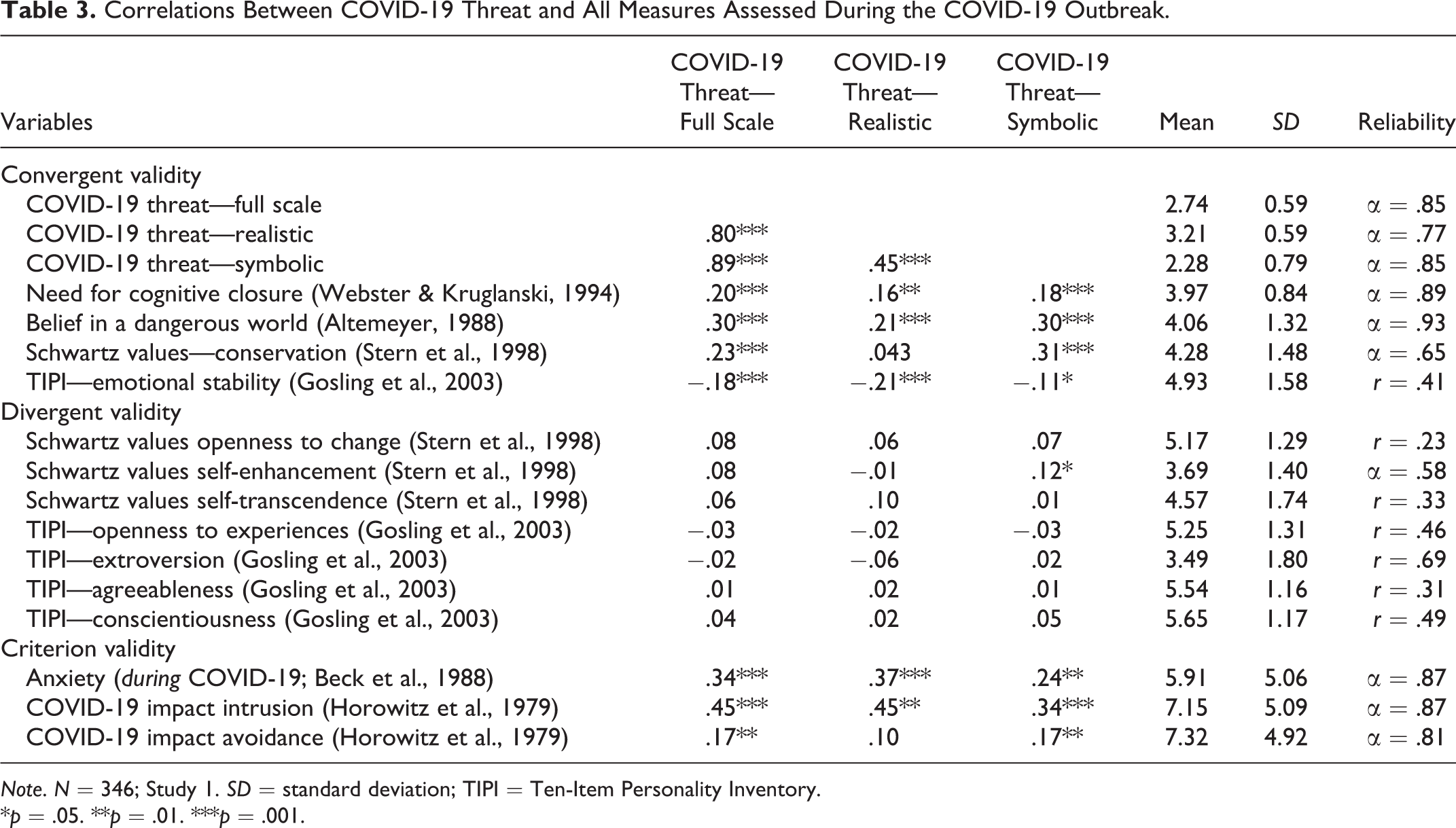
Note. N = 346; Study 1. SD = standard deviation; TIPI = Ten-Item Personality Inventory.
*p = .05. **p = .01. ***p = .001.
Results
For all studies, we provide a more detailed result summary in the Supplemental Material.
Factor Structure of Integrated COVID-19 Threat Scale
Exploratory factor analysis using principal axis factoring and oblique promax rotation (Carpenter, 2018; see the Supplemental Material for details) revealed a two-factor solution: one factor with 5 items assessing symbolic threat (eigenvalue = 4.20) and one factor with 5 items assessing realistic threat (eigenvalue = 1.64). See Table 2 for factor loadings.
Cross-Sectional Analysis (Full Sample)
Convergent and divergent validity
Indicating convergent validity (H1), perceived threat of COVID-19 was positively associated with need for cognitive closure, belief in a dangerous world, values associated with conservation, and was negatively associated with emotional stability (whether both dimensions were combined or—largely—examined independently). Indicating divergent validity (H2), threat of COVID-19 (combining both dimensions) was not significantly associated with any of the other dimensions of Schwartz’s value scale or the Ten-Item Personality Inventory. See Table 3 for descriptive statistics and correlations.
Criterion validity
We examined the relation between realistic threat and symbolic threat, and psychological distress outcomes (H3) simultaneously with one structural equation model (SEM; Byrne, 1994; see the Supplemental Material for details). Realistic threat was significantly positively associated with anxiety (b = 2.79, 95% CI [1.85, 3.72], p < .001) and COVID-19 impact intrusion (b = 3.18, 95% CI [2.29, 4.07], p < .001) but was not associated with COVID-19 impact avoidance (b = 0.25, 95% CI [−0.72, 1.22], p = .613). Symbolic threat was significantly positively associated with COVID-19 impact avoidance (b = 0.98, 95% CI [0.26, 1.70], p = .008) and COVID-19 impact intrusion (b = 1.10, 95% CI [0.43, 1.77], p = .001) but was not significantly associated with anxiety (b = 0.56, 95% CI [−0.14, 1.26], p = .114).
Longitudinal Evidence (Repeat Participants Only)
Convergent and divergent validity
See Table 4 for descriptive statistics and correlations. Indicating convergent validity (H1), and replicating our cross-sectional results, the perceived threat of COVID-19 was positively associated with all four individual differences associated with threat sensitivity (whether both dimensions were combined or—largely—examined independently). Indicating divergent validity (H2), threat of COVID-19 was largely not associated with other values or personality traits.
Correlations Between COVID-19 Threat at Time 1 and All Measures Assessed at Time 0.
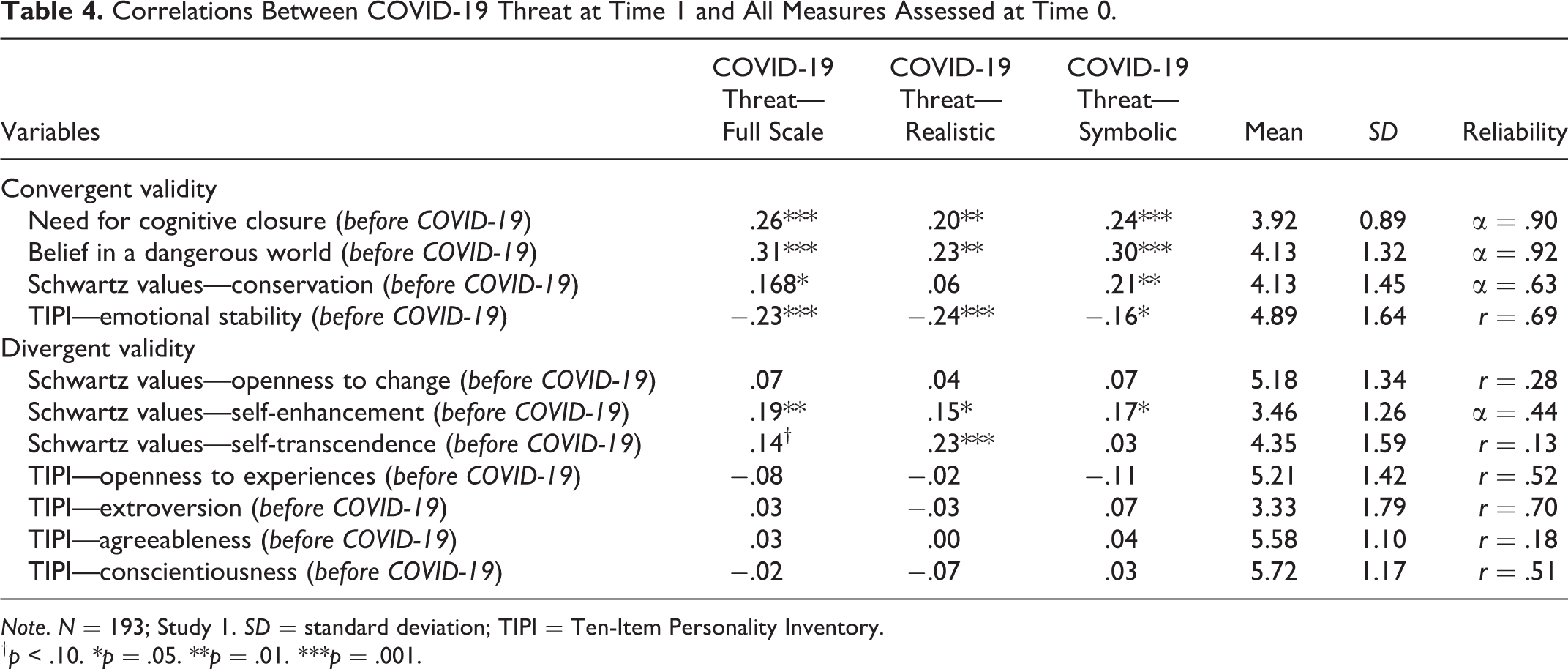
Note. N = 193; Study 1. SD = standard deviation; TIPI = Ten-Item Personality Inventory.
†p < .10. *p = .05. **p = .01. ***p = .001.
Criterion validity
Providing partial support for H3, realistic threat (b = 1.71, 95% CI [0.67, 2.75], p = .001) but not symbolic threat (b = 0.28, 95% CI [−0.50, 1.06], p = .486) was associated with anxiety during the pandemic, controlling for baseline anxiety.
Discussion
We found initial support in Study 1 for the factorial structure, as well as for the convergent and divergent validity of our scale. The threat of COVID-19 was robustly associated with individual differences linked to threat sensitivity (supporting H1), but COVID-19 threat was not consistently associated with other personality traits or universal values (supporting H2). Demonstrating criterion validity, both realistic and symbolic threats were uniquely related to psychological distress (supporting H3). Realistic threat was robustly associated with having intrusive thoughts about the virus, and heightened anxiety (even when controlling for anxiety 5 months prior). Symbolic threat (but not realistic threat) was associated with trying to avoid thinking about or dealing with the virus, as well as intrusive thoughts. We further tested the validity of our scale in Study 2 and examined whether/how realistic or symbolic threat predicts socially restrictive public health behaviors.
Study 2
We sought to fully replicate Study 1 that provided support for H1–H3. With regard to H3, we also assessed psychological well-being (Diener et al., 1985) and affect (Watson et al., 1988) to broaden the scope of Study 1, which was limited to psychological distress outcomes. In addition, we tested (H4) whether realistic and symbolic threats might be inversely related to self-reported support and adherence to socially restrictive public health behaviors (i.e., social distancing) but not nonrestrictive public health behaviors (i.e., handwashing). Lastly, we tested (H5) whether symbolic threat related to finding new ways to maintain social (national) identity in isolation.
Method
Measures
All questionnaires reported are available in the Supplemental Material and are detailed in Table 5. In Table 6, we provide all items used to assess compliance with public health behaviors and social identity affirmation in isolation.
Descriptives, Reliability, and Pearson’s Correlations for Variables Pertaining to Convergent and Divergent Validity, Study 2.
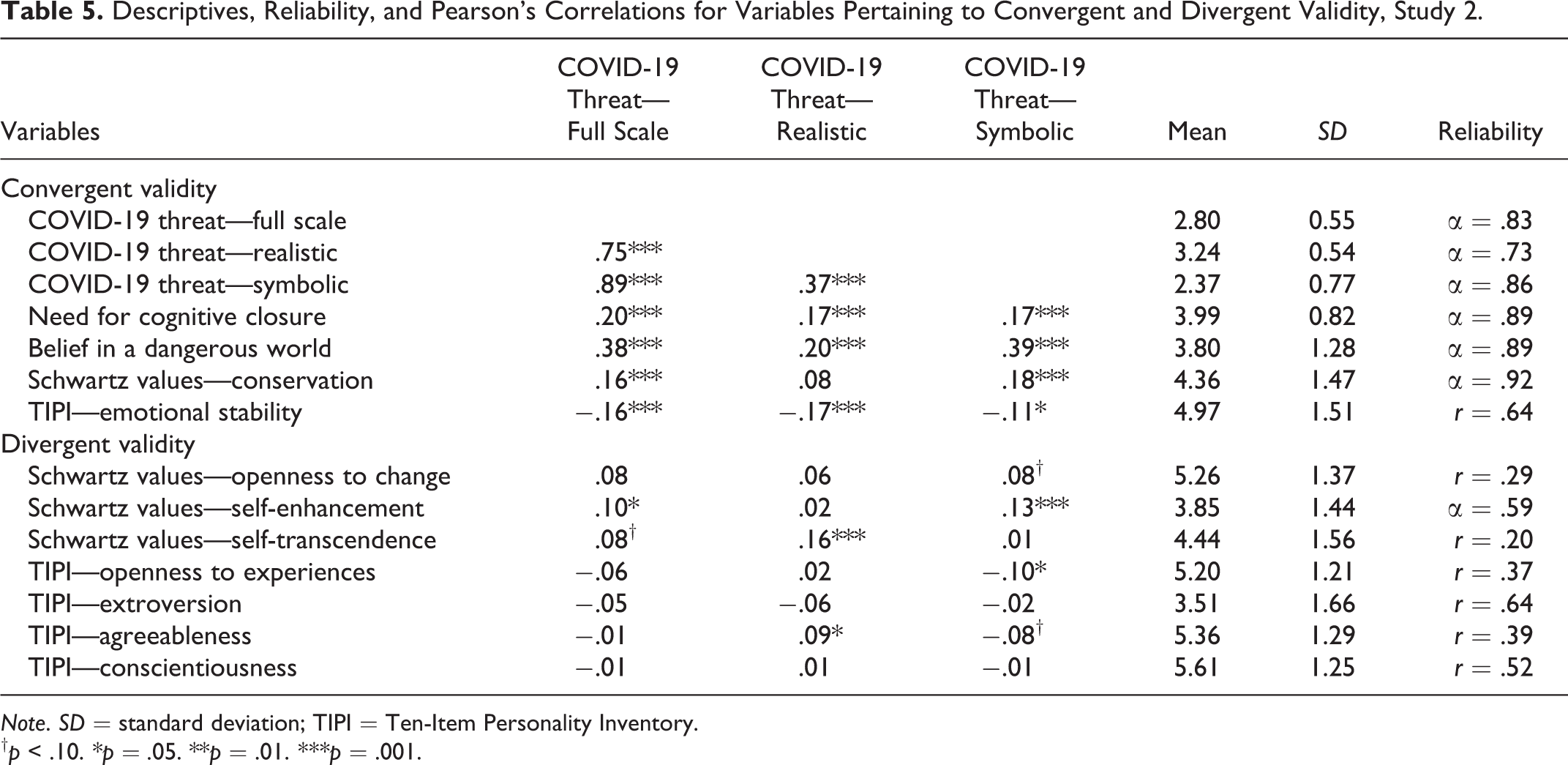
Note. SD = standard deviation; TIPI = Ten-Item Personality Inventory.
†p < .10. *p = .05. **p = .01. ***p = .001.
Items Used to Measure Attitudinal and Behavioral Responses to COVID-19, Study 2.
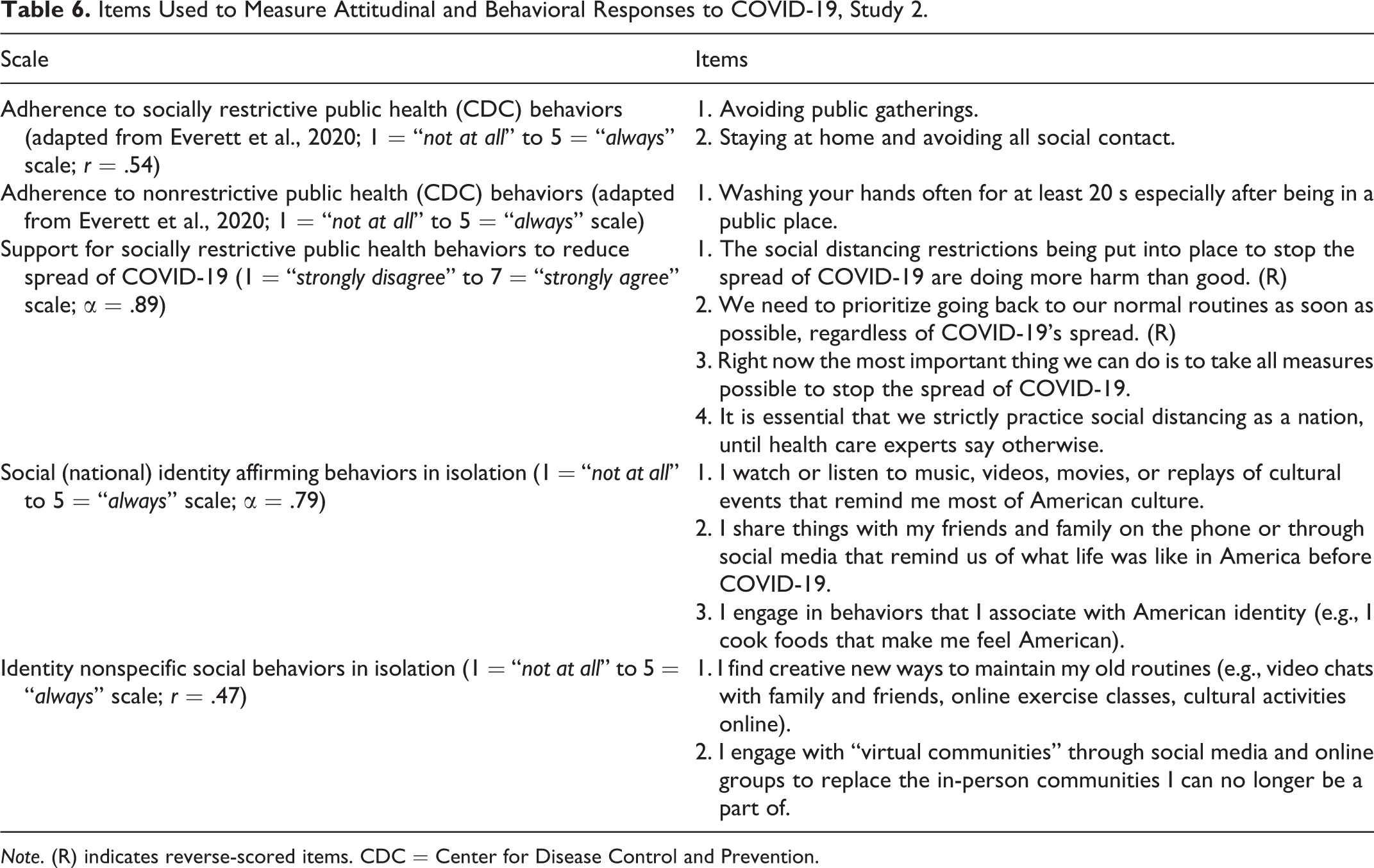
Note. (R) indicates reverse-scored items. CDC = Center for Disease Control and Prevention.
Results
CFA
CFA (Byrne, 1994) indicated the two-factor model had acceptable model fit indices: comparative fit index (CFI) = .94, standardized root-mean-square residual (SRMR) = .06, root-mean-square error of approximation (RMSEA) = .08, 90% CI [.07, .09], Bayesian information criterion (BIC) = 11852.71, χ2 = 144.03 (Byrne, 1994; Hu & Bentler, 1999; Steiger, 1990) and no negative error variances or improper solutions, see Figure 2. The two-factor model had superior fit
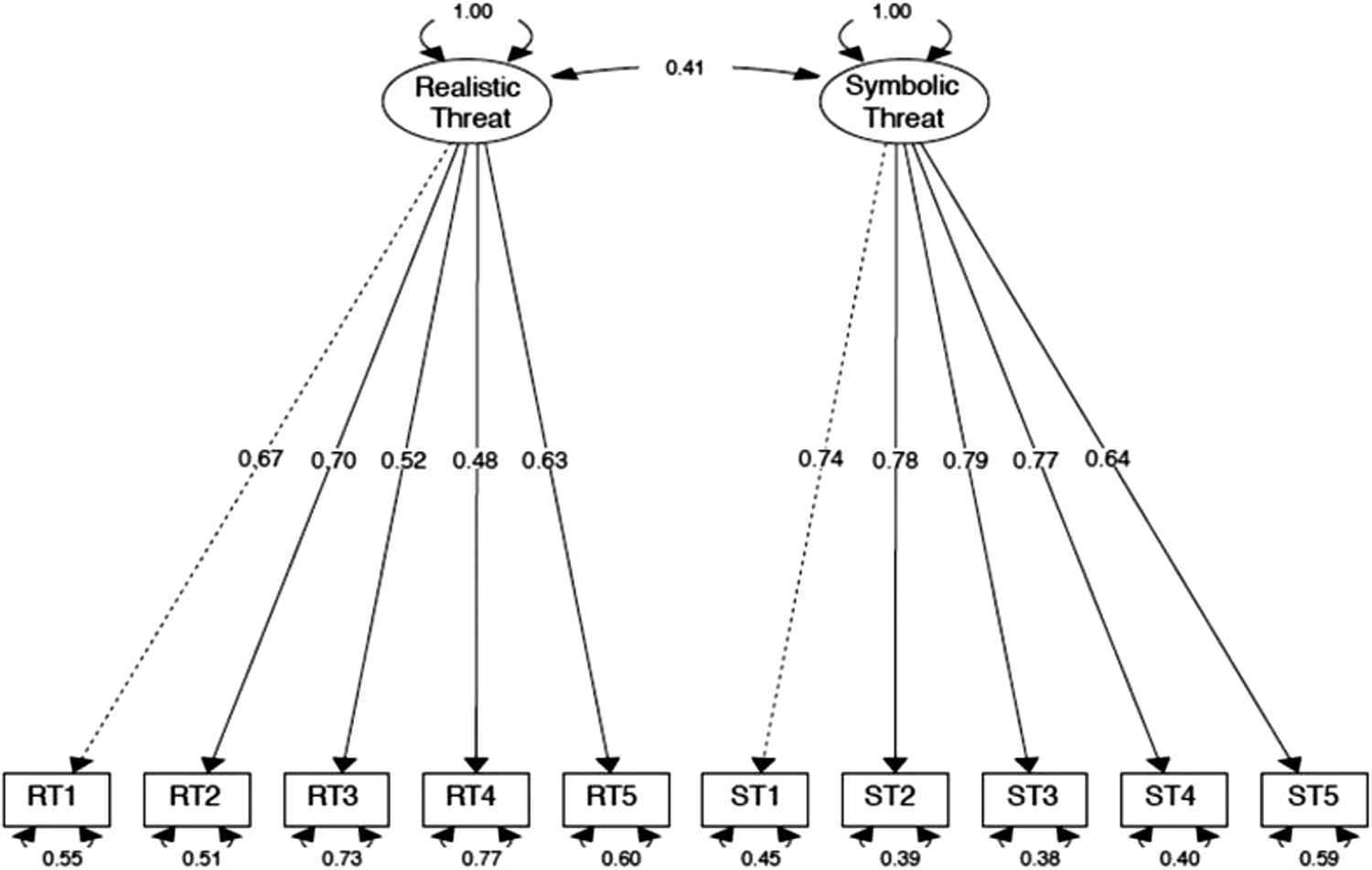
Confirmatory factor analysis testing the predicted two-factor structure of the 10-item Integrated COVID-19 Threat Scale (Study 2).
Convergent and Divergent Validity
Overall, the results were consistent with Study 1, supporting both convergent (H1) and divergent (H2) validity. See Table 5 for descriptives and correlations and the Supplemental Material for full description of results.
Criterion Validity
Table 7 summarizes descriptives for all criterion outcomes as well as their zero-order correlations with COVID-19 threat. As in Study 1, we assessed the association between realistic threat and symbolic threat, and all criterion outcomes simultaneously within one SEM (see Table 8). All results described below refer to relations observed in the full SEM.
Descriptives and Pearson’s Correlations for Criterion Outcomes, Study 2.
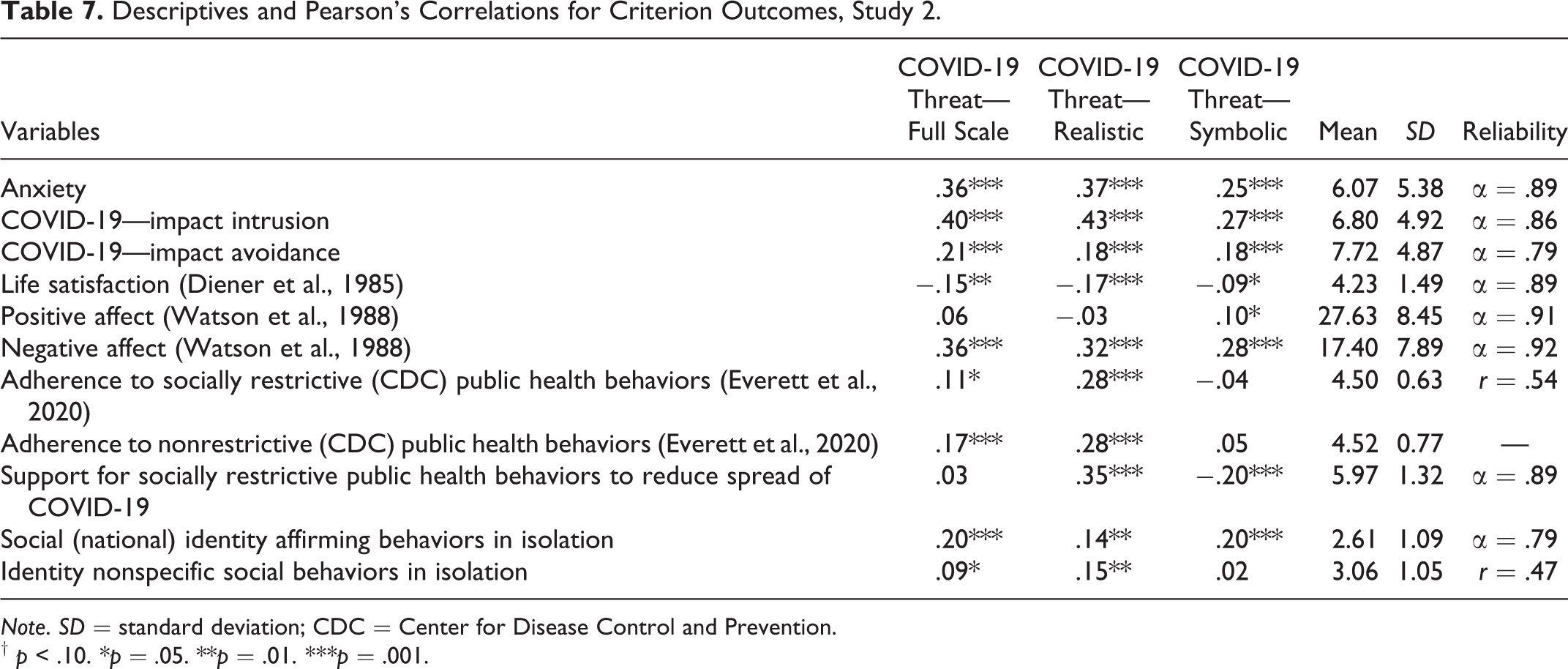
Note. SD = standard deviation; CDC = Center for Disease Control and Prevention.
† p < .10. *p = .05. **p = .01. ***p = .001.
Symbolic and Realistic Threats of the COVID-19 Virus in Relation to Criterion Outcomes, Study 2.
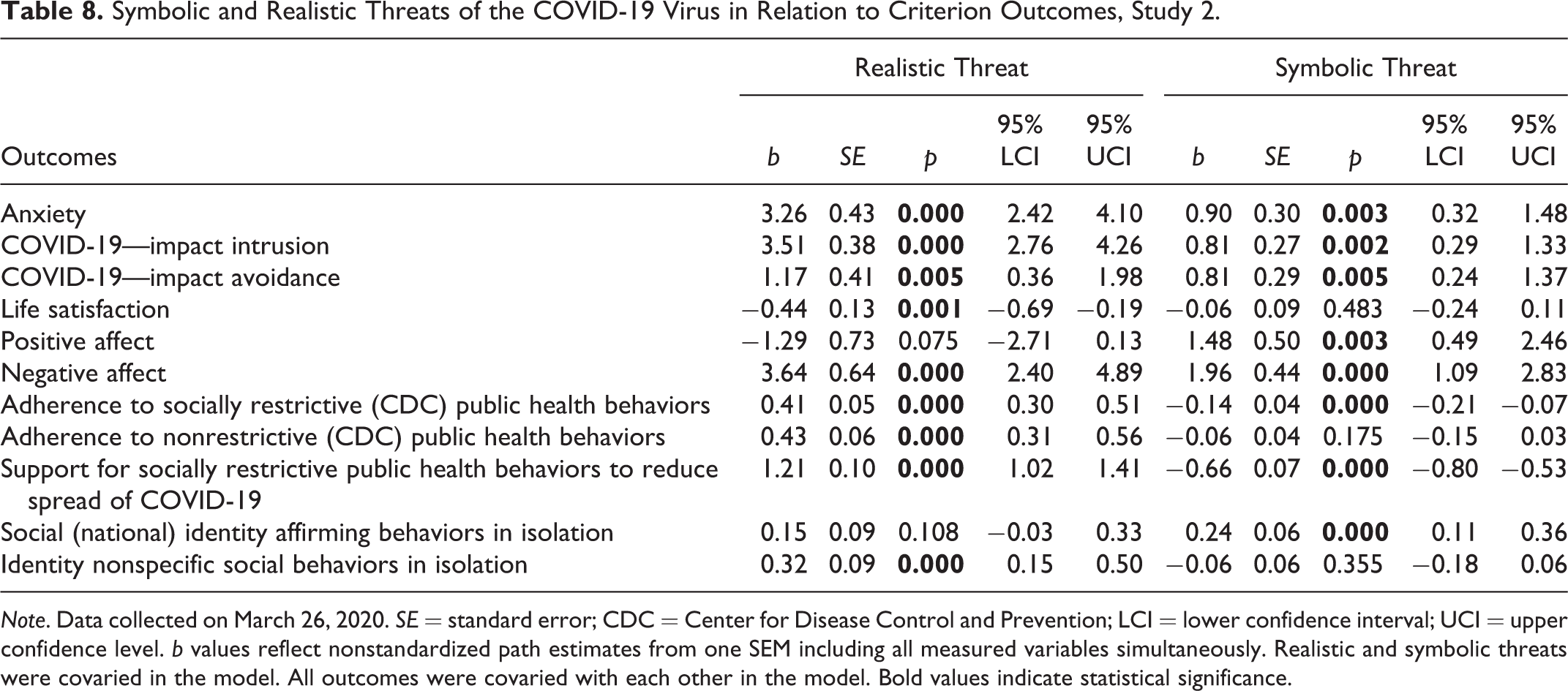
Note. Data collected on March 26, 2020. SE = standard error; CDC = Center for Disease Control and Prevention; LCI = lower confidence interval; UCI = upper confidence level. b values reflect nonstandardized path estimates from one SEM including all measured variables simultaneously. Realistic and symbolic threats were covaried in the model. All outcomes were covaried with each other in the model. Bold values indicate statistical significance.
Psychological distress, well-being, and affect (H3)
Replicating Study 1, realistic threat was significantly positively associated with anxiety and COVID-19 impact intrusion, while symbolic threat was significantly positively associated with COVID-19 impact avoidance and COVID-19 impact intrusion. In contrast to Study 1, realistic threat was also associated with COVID-19 impact avoidance, while symbolic threat was also significantly associated with anxiety.
Providing partial support for H3, realistic (but not symbolic) threat was negatively associated with life satisfaction. Symbolic and realistic threats were positively associated with negative affect. We observed an unanticipated significant positive relation between symbolic threat and positive affect. Exploratory parallel mediation analysis revealed this effect was partially mediated by increased social (national) identity affirming behaviors in isolation but not decreased adherence to socially restrictive public health behaviors (see analysis in the Supplemental Material for details).
Support and adherence with socially restrictive and nonrestrictive public health behaviors (H4)
Realistic threat was significantly and positively associated with support of and self-reported adherence to socially restrictive public health behaviors (i.e., social distancing) and nonrestrictive health behaviors (i.e., handwashing). In contrast, symbolic threat was significantly and negatively associated with support and adherence to socially restrictive public health behaviors and was unrelated to nonrestrictive health behaviors.
Social (national) identity affirmation in isolation (H5)
Symbolic (but not realistic) threat was positively associated with engaging in behaviors (while in isolation) to affirm one’s (national) identity (e.g., cooking food subjectively associated with America). In contrast, realistic threat (but not symbolic threat) was associated with engagement in identity nonspecific social behaviors that were routine prior to the pandemic (e.g., communication with family, exercise groups, or local communities).
Discussion
Study 2 further suggested that realistic threat and symbolic threat are two distinct forms of COVID-19 threat (using CFA) and replicated Study 1 findings pertaining to convergent (H1) and divergent (H2) validity. Both threats were consequential. Supporting H3, people who experienced greater realistic and symbolic threats reported greater psychological distress and negative affect. Realistic threat was also associated with less life satisfaction and positive affect.
Realistic and symbolic threats oppositely predicted support and engagement with socially restrictive public health behaviors (H4). People higher in realistic threat reported more adherence/support for social distancing, while people higher in symbolic threat reported less adherence/support. Realistic threat also predicted self-reported handwashing, while symbolic threat was unrelated to this behavior. As predicted, experiencing symbolic threat was positively associated with engaging in social (national) identity affirming behaviors in social isolation (e.g., consuming food, music, or media associated with national identity). Realistic threat was related to engaging in social behaviors (virtually) that were less directly tied to social identity (e.g., seeing friends or engaging in online fitness classes), presumably because individuals high in realistic threat were spending more time in isolation.
Study 3
In Study 3 we aimed to replicate Study 2’s findings pertaining to criterion outcomes (i.e., H3, H4, and H5), using a longitudinal design in which we examined whether perceived threat of COVID-19 predicted outcomes 1 week later. To do this, we resampled as many participants who took part in Study 1 (Time 1: March 19–20) as possible and asked them to complete criterion measures 1 week later (Time 2: March 27–28). In addition, we asked participants to complete the 10-item COVID-19 Threat Scale at the end of the survey, so we could test the longitudinal invariance of the scale.
Method
Measures
We assessed realistic and symbolic threats and all criterion validity measures used in Study 2. See Table 9 for reliability and the Supplemental Material for the full questionnaires.
Descriptives and Pearson’s Correlations of COVID-19 Threat at T1 and Criterion Outcomes at T2 1 Week Later, Study 3.
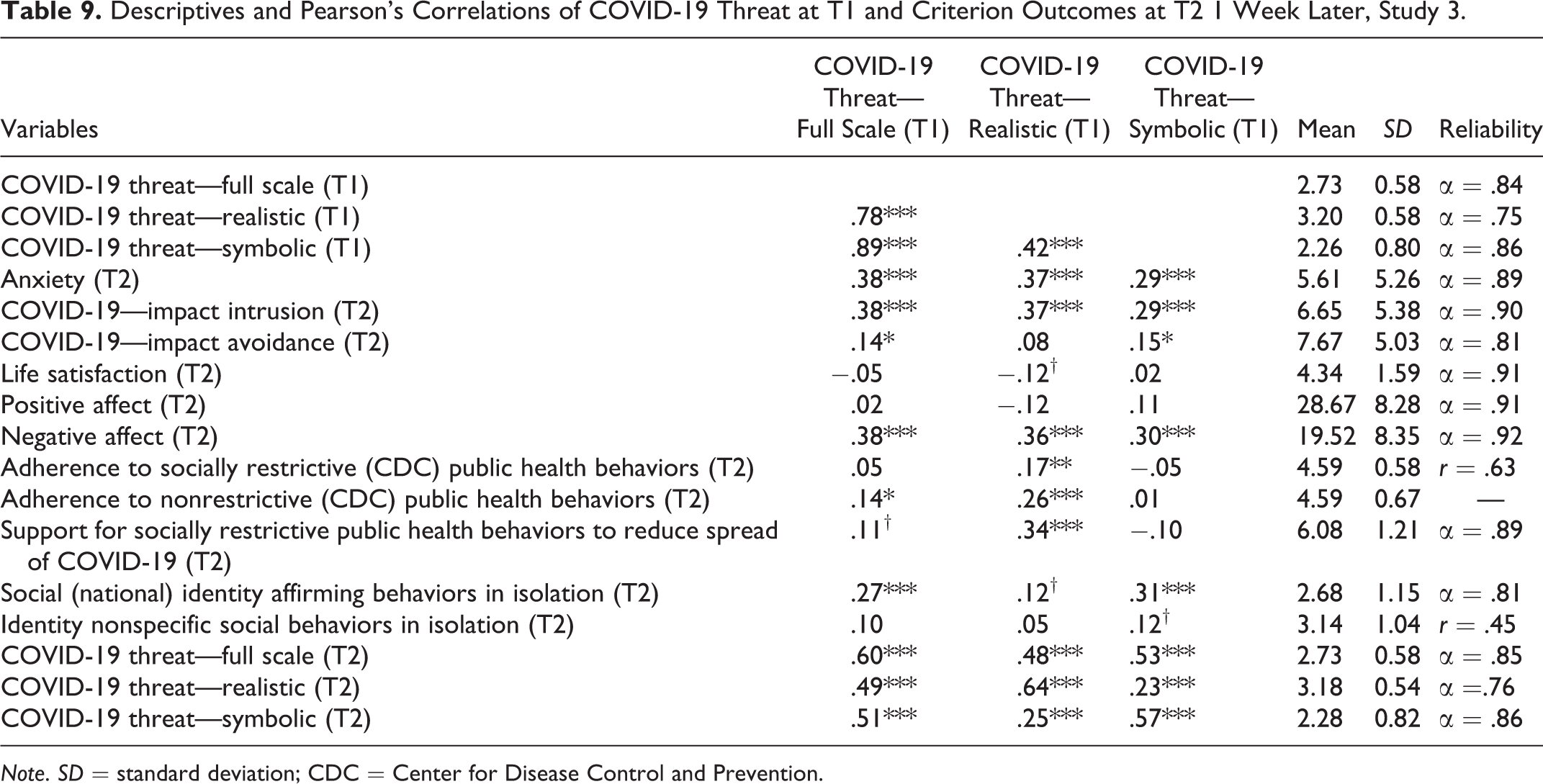
Note. SD = standard deviation; CDC = Center for Disease Control and Prevention.
Results
Scale Invariance
We examined the invariance of both subscales using longitudinal CFA (Meredith, 1993; see the Supplemental Material for details). Because we confirmed two distinct factors in Study 2, and because our analyses focus on the separate subscales, we explored invariance of each subscale separately. We found evidence of configural invariance (i.e., the scale assessed the same construct over time), metric invariance (i.e., the scale had the same meaning over time), scalar invariance (i.e., it is valid to compare means over time) and that the means were equivalent over time (see Table 10; all Δχ2 n.s, all ΔCFIs did not indicate fit deterioration >−.01, all ΔRMSEAs <.015; Chen, 2007; Byrne et al., 1989).
Longitudinal Invariance Analysis Testing Invariance of the Integrated COVID-19 Threat Subscales Across Time, 1 Week.
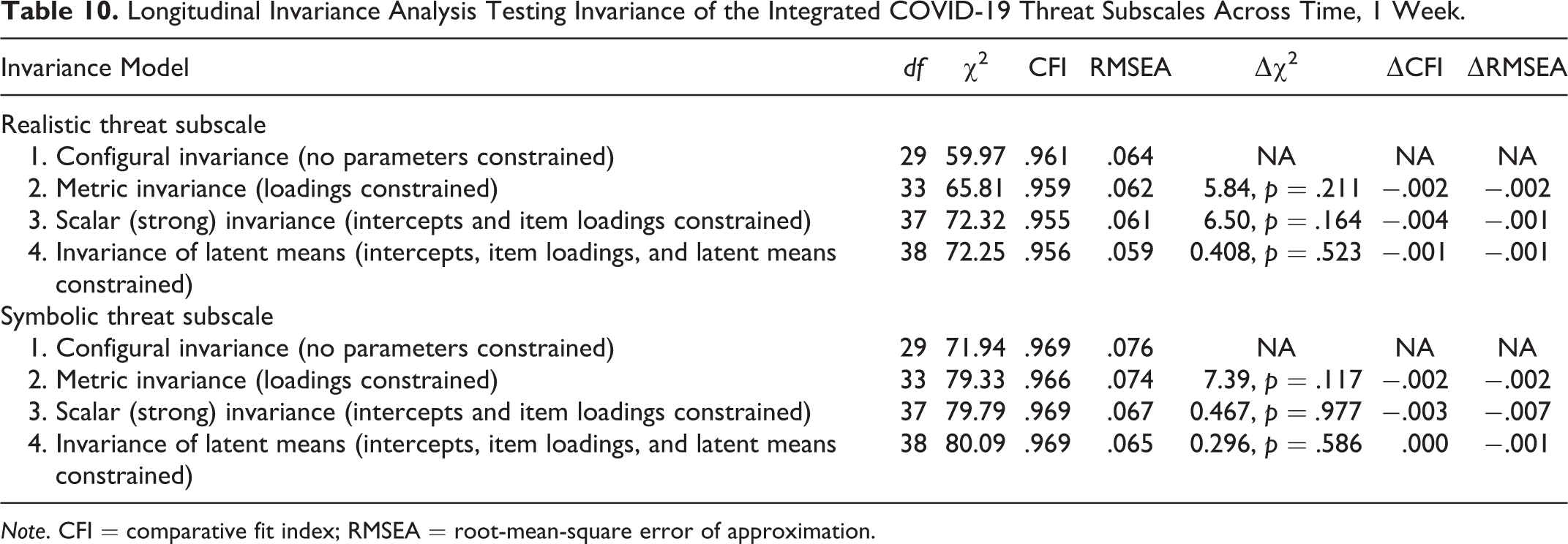
Note. CFI = comparative fit index; RMSEA = root-mean-square error of approximation.
Criterion Validity
Table 9 summarizes descriptives for all criterion outcomes (T2) as well as their zero-order correlations with COVID-19 threat assessed at T1. Using SEM, we examined the association between realistic threat and symbolic threat (at T1), and all criterion outcomes assessed 1 week later (at T2), simultaneously in one model (Table 11). All results described below refer to the relations observed in the full SEM.
Symbolic and Realistic COVID-19 Threats on March 20, 2020 Predicting Criterion Outcomes on March 27, 2020, Study 3.
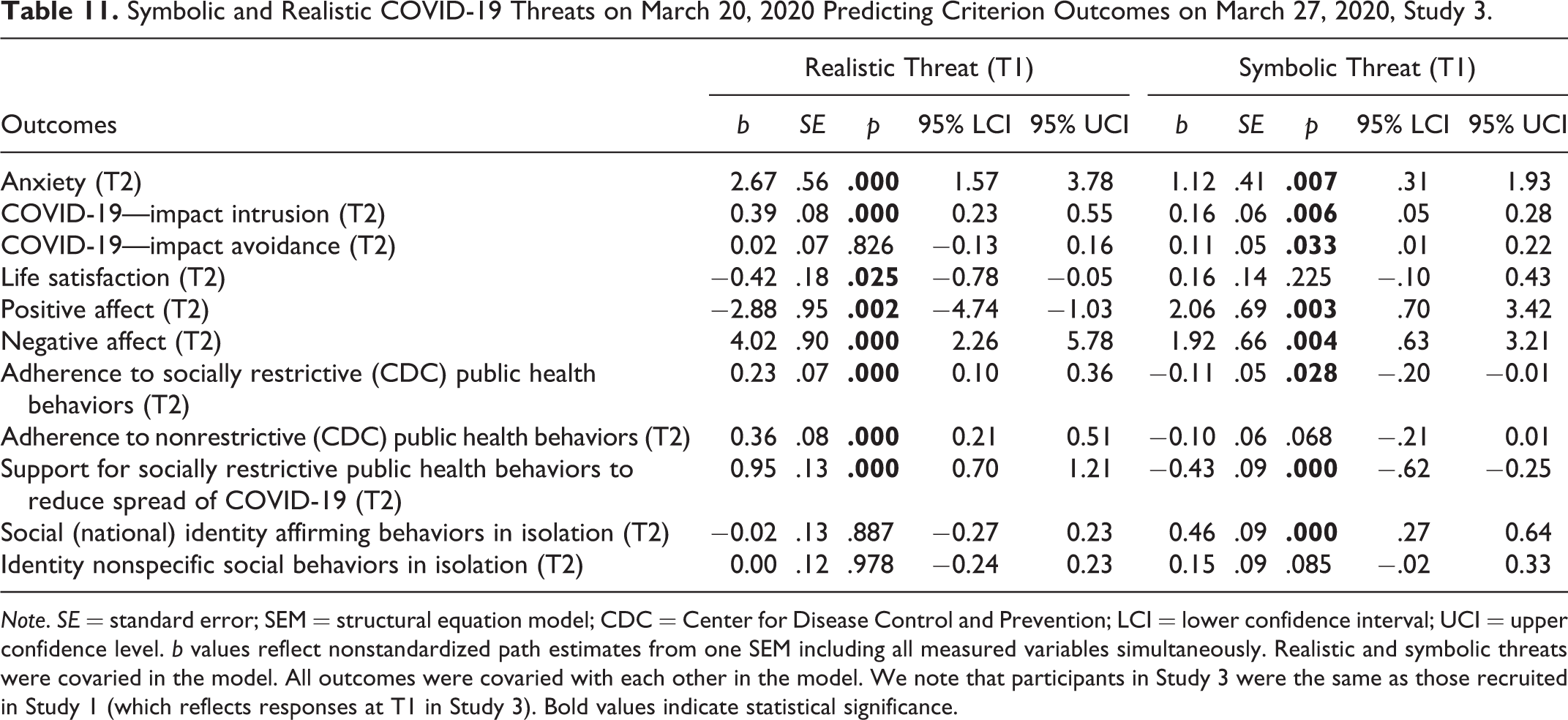
Note. SE = standard error; SEM = structural equation model; CDC = Center for Disease Control and Prevention; LCI = lower confidence interval; UCI = upper confidence level. b values reflect nonstandardized path estimates from one SEM including all measured variables simultaneously. Realistic and symbolic threats were covaried in the model. All outcomes were covaried with each other in the model. We note that participants in Study 3 were the same as those recruited in Study 1 (which reflects responses at T1 in Study 3). Bold values indicate statistical significance.
Psychological distress, well-being, and affect (H3)
Realistic threat (at T1) was associated with COVID-19 impact intrusion and anxiety but was not associated with COVID-19 impact avoidance over the course of the following week (measured at T2). Symbolic threat was also significantly positively associated with COVID-19 impact intrusion, general anxiety, and additionally impact avoidance.
Both types of threats (at T1) were positively associated with negative affect experienced over the course of the subsequent week. Replicating Study 2, realistic threat (but not symbolic threat) was negatively associated with life satisfaction. As in Study 2, we again observed an unanticipated significant positive relation between symbolic threat and positive affect. Exploratory parallel mediation analysis showed this effect was mediated by increases in social (national) identity affirming behaviors in isolation but not decreased adherence to socially restrictive public health behaviors.
Support and adherence to socially restrictive and nonrestrictive public health behaviors (H4)
Replicating Study 2, experiencing realistic threat (at T1) was significantly and positively associated with support and adherence to socially restrictive public health behaviors to fight COVID-19 over the course of the subsequent week (assessed at T2). In direct contrast, experiencing symbolic threat was significantly and negatively associated with support and adherence. Realistic threat also predicted adherence to nonrestrictive public health behaviors (handwashing) over the week, while symbolic threat was marginally negatively related.
Social identity affirmation in isolation (H5)
Replicating Study 2, symbolic (but not realistic) threat (at T1) was positively associated with self-reported engagement in behaviors (while in isolation) to affirm one’s (national) identity over the course of the next week. Unlike Study 2, we did not observe an association between realistic threat and virtual engagement in identity nonspecific social behaviors. 4
Discussion
Both dimensions of the 10-item threat scale were invariant when reassessed 1 week later, suggesting that the scale can be used to compare changes in perceived threat over time (Flake et al., 2017). Consistent with Studies 1 and 2, and supporting H3, both threats were uniquely associated with greater psychological distress and more negative affect 1 week later (with some nuance in terms of which distress outcomes were impacted). Realistic threat was also associated with reduced well-being and less positive affect. Supporting H4, realistic threat predicted greater support and self-reported adherence to socially restrictive health behaviors, while symbolic threat predicted diminished adherence and support. Realistic (but not symbolic) threat also predicted self-reported adherence to nonrestrictive health behaviors (i.e., handwashing). Supporting H5, symbolic threat (but not realistic threat) was associated with engaging in behaviors while in social isolation that directly affirm social (national) identity.
General Discussion
We validated a 10-item scale assessing two kinds of psychological threats—realistic threat and symbolic threat—in response to the COVID-19 pandemic. Using cross-sectional and longitudinal methodologies, we found the psychometric properties of the scale were sound, with exploratory factor analysis (Study 1) and CFA (Study 2) supporting two distinct types of COVID-19 threats (realistic and symbolic). In Study 3, we found evidence of scalar invariance when administering the scale twice over a 1-week period (Flake et al., 2017).
Our scale demonstrated convergent and divergent validity. Realistic and symbolic threats were significantly related to individual difference traits linked to threat sensitivity. Yet, COVID-19 threats were not reliably related to individual difference traits less clearly tied to threat sensitivity. This pattern of results was robust when we assessed COVID-19 threat and the individual difference traits at the same time, as well as when we assessed the individual difference traits 5 months prior to the pandemic hitting the United States.
Both threats uniquely predicted important outcomes for psychological health and public health, when measured simultaneously with (Studies 1 and 2) or 1 week prior (Study 3) to outcome assessment. Realistic and symbolic threats uniquely predicted greater negative affect and more intrusive thoughts about the pandemic. Realistic threat most reliably predicted increased anxiety and diminished life satisfaction, while symbolic threat most consistently predicted having an avoidant response to the pandemic.
Realistic and symbolic threats also had significant yet different consequences for support and self-reported adherence to restrictive public health behaviors essential to stopping the spread of the virus. Americans who perceived high levels of realistic threat were more likely to support and self-reportedly adhere to social distancing even though social distancing might disrupt the norms and structures they might associate with American identity. In direct contrast, symbolic threat of COVID-19 to American national identity predicted less support for social distancing. Importantly, however, if people did engage in social distancing, experiencing symbolic threat predicted engaging in creative behaviors to express and maintain a sense of American identity even in isolation.
Implications
The Integrated COVID-19 Threat Scale provides a solid starting point for measuring the psychological threats tied to COVID-19 and the public health measures that are reshaping our society. Although the realistic threat of disease is obvious, we leverage insights from theories of intergroup relations to argue the importance of another form of threat—symbolic threats to social identity—especially as they relate to socially restrictive public health behaviors. Future interventions to COVID-19—and other pandemics—should work to minimize both realistic and symbolic threats. Our work is also one of the first papers to demonstrate the validity of applying theories of intergroup threat (Stephan et al., 2009) to understand how people perceive threats from an agent or entity other than another social group (also see Gamez-Djokic & Waytz, in press).
Limitations and Future Directions
We note limitations of this work. First, we only assessed COVID-19 threat among Americans. People from different nations might be impacted differently by COVID-19 and may have different responses to symbolic or realistic threats of the virus. For instance, nations with more (or less) vulnerable health care systems or with greater (or less) poverty may be most susceptible to realistic threats posed by the pandemic.
Another limitation is that we only considered threats to national groups. While clearly relevant within national contexts (Maxouris et al., 2020; Sanchez, 2020), the virus may also have distinct implications for group contexts based on ethnicity (Ro, 2020), religion (Chebbine, 2020), or social class (Blow, 2020). Future work examining COVID-19 threat in other group contexts is essential. It will also be important for future research to assess the realistic and symbolic threats of COVID-19 to people’s global identity (McFarland & Brown, 2012) as the virus impacts the whole world.
Our assessment of symbolic threat was limited to the group level. Future work is needed to test how the COVID-19 pandemic might elicit individual symbolic threats such as dishonor (Stephan & Renfro, 2002). For example, individuals may feel dishonor if they feel they are not adequately contributing to collective efforts in response to the pandemic. Finally, this research relied on self-reported measures: More research is also essential to replicate our findings when assessing actual behavior.
We acknowledge some unexpected results. Symbolic threat was associated with greater positive affect, although exploratory mediation analysis suggests this might be due to symbolic threat increasing social identity affirming behaviors. Values relating to self-enhancement were associated with COVID-19 threat. We did not predict this a priori, but previous work has shown self-enhancement to be associated with threat sensitivity (Schwartz et al., 2000). Finally, while symbolic threat was more robustly associated with impact avoidance than realistic threat as we expected, Study 2 suggested that realistic threat is also associated with impact avoidance. We refrain from speculating on this inconsistency, as further research is needed to replicate this effect.
Conclusion
As the scientific community rallies to contain COVID-19 and mitigate its psychological toll, it is essential to fully capture how people feel threatened by the pandemic. We offer a brief scale that captures two kinds of threats and present preliminary evidence that it may be important for public health initiatives to not only help protect people’s physical bodies but also their social identities.
Supplemental Material
Supplemental_Materials_Revision_04302020_Final - Measuring Realistic and Symbolic Threats of COVID-19 and Their Unique Impacts on Well-Being and Adherence to Public Health Behaviors
Supplemental_Materials_Revision_04302020_Final for Measuring Realistic and Symbolic Threats of COVID-19 and Their Unique Impacts on Well-Being and Adherence to Public Health Behaviors by Frank J. Kachanoff, Yochanan E. Bigman, Kyra Kapsaskis and Kurt Gray in Social Psychological and Personality Science
Footnotes

Declaration of Conflicting Interests
The author(s) declared no potential conflicts of interest with respect to the research, authorship, and/or publication of this article.
Funding
The author(s) disclosed receipt of the following financial support for the research, authorship, and/or publication of this article: This research was funded by the Charles Koch Foundation.
Supplemental Material
The supplemental material is available in the online version of the article.
Notes
References
Supplementary Material
Please find the following supplemental material available below.
For Open Access articles published under a Creative Commons License, all supplemental material carries the same license as the article it is associated with.
For non-Open Access articles published, all supplemental material carries a non-exclusive license, and permission requests for re-use of supplemental material or any part of supplemental material shall be sent directly to the copyright owner as specified in the copyright notice associated with the article.
