




Abstract
In two preregistered studies, we find that initiators of unrequited romantic advances fail to appreciate the difficult position their targets occupy, both in terms of how uncomfortable it is for targets to reject an advance and how targets’ behavior is affected, professionally and otherwise, because of this discomfort. We find the same pattern of results in a survey of science, technology, engineering, and mathematics (STEM) graduate students (N = 942) who recalled actual instances of unwanted or unrequited romantic pursuit (Study 1) and in an experiment in which participants (N = 385) were randomly assigned to the roles of “target” or “suitor” when reading a vignette involving an unwanted romantic advance made by a coworker (Study 2). Notably, women in our Study 1 sample of STEM graduate students were more than twice as likely to report having been in the position of target as men; thus, our findings have potential implications for the retention of women in STEM.
Keywords
I can think of several cases I’ve investigated where the (usually male) perpetrator is completely oblivious, and the (usually female) target feels like she’s trapped and can’t really say “no.”
The line between romantic courtship and sexual harassment is not always clear (Mainiero & Jones, 2013; Pierce & Aguinis, 1997). What passes as seduction to one person (e.g., the initiator of a romantic advance) can be unnerving, or worse, to another (e.g., the target). In the current research, we identify an egocentric bias (Epley, Keysar, Van Boven, & Gilovich, 2004) with potential implications for better understanding these dynamics. Specifically, we find that initiators of romantic advances underestimate how difficult and uncomfortable it is for the targets of their advances to say “no.” Underestimating the role of discomfort in driving targets’ reluctance to say “no” may lead suitors to misattribute this reluctance to genuine romantic interest, hence perpetuating—and potentially escalating—a cycle of romantic pursuit and uncomfortable evasion.
A key question in harassment cases is often how the target responded to the perpetrator’s initial romantic or sexual advances. As described by Jahren (2016) in The New York Times, “[t]he first e-mail is important because it is the one that the powers that be will point to and say, ‘Why didn’t you do something when you first got this?’” In an ideal world, an uninterested romantic target would say some form of “no, thanks, I’m not interested,” and the encounter would end there. However, there are many reasons targets of romantic or sexual advances do not explicitly reject these advances: concerns with repercussions, both professional (Fitzgerald, Swan, & Fischer, 1995) and reputational (Perilloux & Buss, 2008); worries that one’s own behavior will be misconstrued (Jensen & Gutek, 1982); doubts surrounding one’s experience or interpretation of the event (Gutek & Koss, 1993).
In addition to the above considerations, there is a fundamental aspect of rejecting another person that is extremely powerful, yet often dismissed as trivial: It is awkward and uncomfortable (Bohns, 2016; Sabini, Siepmann, & Stein, 2001). This discomfort can manifest in a variety of ways, depending on the context. Targets of sincere romantic advances report feeling guilty about rejecting suitors and concerned with hurting their feelings (Baumeister, Wotman, & Stillwell, 1993; Joel, Teper, & MacDonald, 2014). Targets of explicit sexual harassment report feeling afraid and acquiescent (Woodzicka & LaFrance, 2001, 2005). In both scenarios, uninterested targets ultimately find themselves in an uncomfortable situation.
The discomfiting prospect of rejecting an advance or confronting inappropriate behavior is further exacerbated if there is any ambiguity about the other person’s intentions. For example, if it is possible one’s boss’s offer to buy one a drink was simply collegial, or that one’s colleague genuinely didn’t realize where his hand was when he leaned over, it would be deeply embarrassing to everyone involved to insinuate otherwise. People are strongly averse to insinuating something negative, and plausibly deniable, about another person (Brown & Levinson, 1987; Goffman, 1955; Sah, 2012).
As a result of these concerns, targets often find it easier to simply smile, laugh off, or ignore an inappropriate sexual remark rather than confront it (Woodzicka & LaFrance, 2001, 2005). Likewise, targets of unwanted romantic advances may communicate rejection indirectly (Baumeister et al., 1993), or even accept advances from unappealing suitors (Joel et al., 2014), in order to avoid the discomfort of rejecting someone outright.
Romantic suitors, however, are unlikely to appreciate the intense discomfort targets experience at the prospect of rejecting their advances. Anecdotal evidence abounds of individuals accused of sexual harassment who are baffled by the question of why a target didn’t just say “no” or speak up in some way. We propose that such anecdotes reflect a systematic bias, whereby initiators of romantic advances underestimate how difficult and uncomfortable it is for targets to reject their advances.
In general, people tend not to appreciate the power of self-consciousness and discomfort in driving their own and others’ behavior (Sabini et al., 2001). In a phenomenon dubbed the “illusion of courage,” people overestimate how emboldened others would feel to engage in a variety of embarrassing acts, such as dancing in front of an audience in exchange for money (Van Boven, Loewenstein, & Dunning, 2005). Similarly, forecasters predicting their own behavior overestimate how assertively they would behave in a variety of uncomfortable situations—for example, overestimating the likelihood that they would stand up to racist (Kawakami, Dunn, Karmali, & Dovidio, 2009) or homophobic (Crosby & Wilson, 2015) remarks, confront sexual harassment (Woodzicka & LaFrance, 2001, 2005), or reject someone they were not romantically interested in (Joel et al., 2014). Romantic suitors should likewise overestimate how emboldened their targets would feel to say “no” to them.
Additional research on predicting compliance with nonromantic requests supports this hypothesis (Bohns, 2016). Targets of requests made in these studies find the prospect of refusal extremely uncomfortable. Yet requesters, egocentrically focused on their own fears of imposition and rejection, seem oblivious to their targets’ concerns. For these reasons, requesters think targets will be more willing than they actually are to say “no” to a variety of requests ranging from the commonplace, such as asking someone to complete a questionnaire (Flynn & Lake, 2008) or mail a letter (Newark, Flynn, & Bohns, 2014), to the dubious, such as asking someone to vandalize a library book (Bohns, Roghanizad, & Xu, 2014). The egocentric dynamics at play when requesters ask targets to comply with these sorts of nonromantic requests are likely to extend to the even more fraught domain of romantic advances.
Finally, romantic suitors may have specific concerns that make them particularly susceptible to such a bias. Much of one’s self-esteem is derived from one’s relationships with others (Leary, Tambor, Terdal, & Downs, 1995), and the corresponding motivation to see oneself as desirable often leads to errors in social perception. Hopeful suitors mistakenly perceive targets’ friendliness or eye contact as indicators of sexual interest (Abbey, 1982; Farris, Treat, Viken, & McFall, 2008; Jacques-Tiura, Abbey, Parkhill, & Zawacki, 2007; Shotland & Craig, 1988). Rejected suitors construct narratives of the rejection that paint them in the best light—for example, depicting the attraction as mutual, and denying outright rejection (Baumeister et al., 1993). Similarly, suitors should have little motivation to appreciate targets’ concerns with discomfort: If a suitor’s advances are accepted, it would be dispiriting to presume the target acquiesced out of feelings of guilt or coercion; if a suitor’s advances are rejected, it would be disheartening to acknowledge that a target said “no” despite the extraordinary discomfort of doing so.
In sum, we hypothesize that initiators of romantic advances will fail to appreciate the difficult position they put targets in. Specifically, suitors will underestimate the discomfort targets experience when rejecting an advance. We further hypothesize that suitors will fail to recognize the variety of ways in which targets change their behavior in order to cope with this discomfort and are consequently impacted professionally and otherwise by such advances. In order to examine these predictions, we conducted two studies: one in which we solicited the recollections of people who have actually had these experiences and one in which we randomly assigned participants to condition using hypothetical vignettes.
Study 1: Survey of Science, Technology, Engineering, and Mathematics (STEM) Graduate Students
We examined this question initially within the context of STEM because of potential implications for the retention of women in STEM-related fields. Behaviors that start out or can pass as romantic courtship may escalate to sexual harassment, an established factor affecting the retention of women in STEM (Blickenstaff, 2005; Jagsi et al., 2016; Roberts & Ayre, 2002; Servon & Visser, 2011; Settles, Cortina, Malley, & Stewart, 2006). Thus, this context is ideal for exploring our primary question of whether suitors underestimate the emotional impact of their advances on targets, as well as whether there are role differences in appreciating the potential downstream consequences of these advances, particularly those that might disproportionately affect women.
Preregistration and Data Accessibility
This study was preregistered at AsPredicted.org (#6048: https://aspredicted.org/573eq.pdf). Data and materials are available at Open Science Framework (OSF; https://osf.io/tcb2d/).
Participants
We e-mailed an invitation to complete an online survey advertised as the “STEM Grad Student Survey” and five reminder e-mails over the course of 3 weeks to 2,782 STEM graduate students and postdocs. Respondents were offered a US$5 Amazon.com gift certificate for participating. A research assistant was instructed to gather potential participants’ e-mail addresses from publicly available STEM lab websites that were affiliated with a single specified R1 university. Eight of the initial e-mail addresses bounced back and 10 were identified as duplicates, leaving us with 2,764 unique working addresses. Of these, 942 participants responded (answered at least one question) for a response rate of 34.1%.
Two hundred and seventy-seven respondents indicated having either made an advance on someone in their field or lab who was not interested in them, or having been the target of an unwanted advance by someone in their field or lab. As described below, these 277 respondents were used to test our primary hypothesis related to participants with actual experiences in the roles of “suitor” or “target.” This sample size, which results in N > 100 per recalled experience (target or suitor), should be sufficient for detecting differences of medium size (Simmons, Nelson, & Simonsohn, 2013), which is the minimum difference we were interested in. Note that we use the full sample of 942 participants to explore questions related to the relative incidence of undesired and unrequited romantic pursuit.
Mean age was 26.98 years for the full sample and 27.12 years for the core sample. Women were more than twice as likely to report having been pursued by someone whom they were not interested in than men, a finding discussed further below. Consequently, there was a greater ratio of women to men in our core sample (154 female, 86 male, and 37 unspecified) than our full sample (387 female, 355 male, and 200 unspecified), and there were more women in the role of “target” (112 female, 39 male, and 25 unspecified) than the role of “suitor” (42 female, 47 male, and 12 unspecified). Complete demographics for our full sample of 942 participants and our core sample of 277 participants are reported in Table S1 of our supplementary online materials (SOM).
Procedure
All participants answered three initial questions: Have you ever been romantically pursued by someone in your lab, academic field, or academic workplace whom you weren’t interested in? Have you ever romantically pursued someone in your lab, academic field, or academic workplace whom you discovered wasn’t interested in you? and Have you ever heard of someone (other than yourself) being pursued by someone they worked with in their lab, academic field, or academic workplace whom they weren’t interested in? For each question, participants also reported how many times this had happened.
Participants who answered affirmatively to having either made an advance on someone who was not interested in them or having been the target of an advance by someone they were not interested in were assigned to answer a series of questions about their experience. As per our preregistered procedure, participants without this direct experience were redirected to a series of exploratory questions we do not discuss further here.
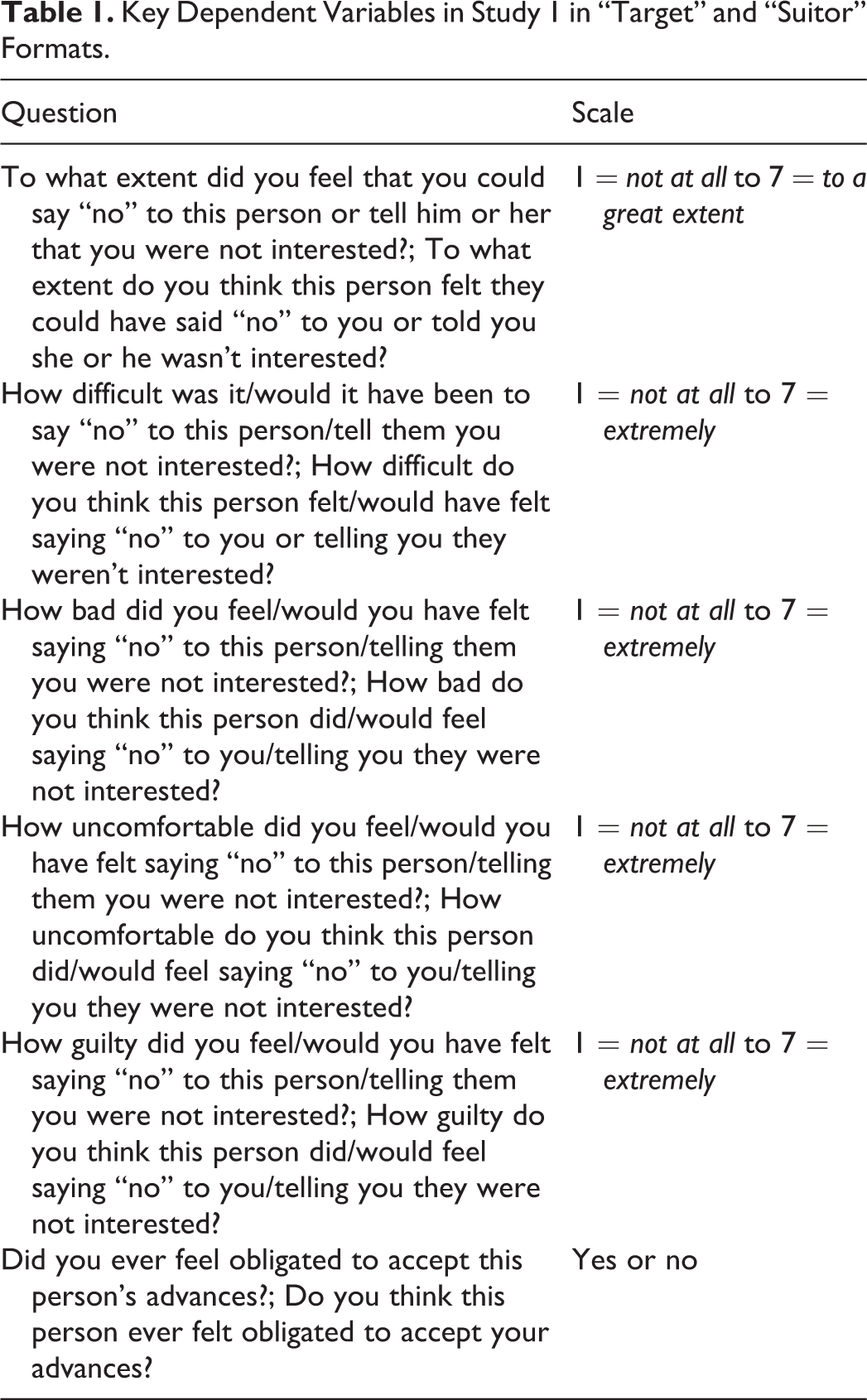
Participants in our core sample were asked to think of a specific time they were either pursued by someone they were not interested in or pursued someone who was not interested in them (if they had both experiences, as was true for 23.5% of our core sample, they were randomly assigned to recall their experience as either target or suitor). They were then asked to answer a series of questions about (1) the details of the experience (e.g., how the advance and rejection occurred, the reason for the person’s lack of interest, the relationship between the people involved); (2) how difficult and uncomfortable it was for the target to reject the suitor, which comprised our key dependent variables (DVs; see Table 1); (3) targets’ concerns with the professional and social repercussions of rejecting the advance; (4) downstream behavioral consequences to the target of the advance (e.g., whether the target engaged in avoidance and coping behaviors, whether the target’s productivity suffered); (5) demographic information; and (6) a series of exploratory vignette questions not discussed here (but available at OSF: https://osf.io/tcb2d/).
Key Dependent Variables in Study 1 in “Target” and “Suitor” Formats.
Results
Frequency of Unwanted/Unrequited Advances
Of the full sample of 942 participants, 22.8% reported having been pursued by someone in their field or lab whom they were not interested in, 14.3% reported pursuing someone in their field or lab who was not interested in them, and 54.2% reported hearing of someone in their field or lab being pursued by someone they were not interested in. When asked how many times this had happened to them, most (74.8%) participants who reported being pursued by someone they weren’t interested in and most (88.2%) participants who reported pursuing someone who was not interested in them indicated this happened just once or twice.
Role Differences in Perceptions of the Discomfort of Rejecting an Advance
Our primary hypothesis was that participants (N = 101) who recalled a time they pursued someone who was not interested in them would think the targets of their advances felt more comfortable rejecting them than participants (N = 176) who recalled a time they were pursued by someone whom they were not interested in reported having felt. This hypothesis was supported on all six of our preregistered DVs. Analysis of variance results for our five continuous DVs are depicted in Table 2. In addition, targets reported feeling obligated to agree (23.21%) more than 4 times as much as suitors imagined their targets felt (5.21%), χ2(1, N = 264) = 14.26, p < .001.
Role Differences in Perceptions of the Discomfort of Rejecting an Advance in Study 1.
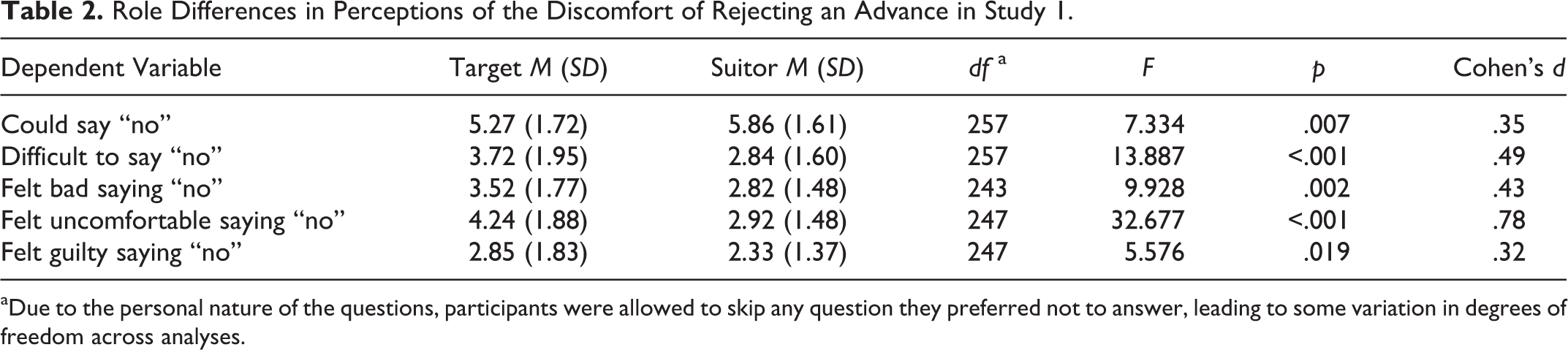
aDue to the personal nature of the questions, participants were allowed to skip any question they preferred not to answer, leading to some variation in degrees of freedom across analyses.
After analyzing each of these DVs separately, we combined the five continuous DVs into a single “difficulty and discomfort saying ‘no’” index (α = .84; see SOM for justification). The findings on this scale mirrored those of the individual DVs with targets scoring significantly higher (M = 3.39, SD = 1.40) than suitors (M = 2.58, SD = 1.17), F(1, 244) = 21.31, p < .001, d = .67.
Since a key concern of our design is that “suitors” and “targets” may be fundamentally different types of people and/or may be recalling fundamentally different types of interactions, we ran a simultaneous multiple regression that included all of the ways—of those we measured—in which the recollections of these two experiences differed (see SOM for more details on these differences). As depicted in Table 3, differences between targets and suitors on our discomfort and difficulty saying “no” index remained significant when including these variables in the model.
Predicting Difficulty and Discomfort Saying “No” Index.
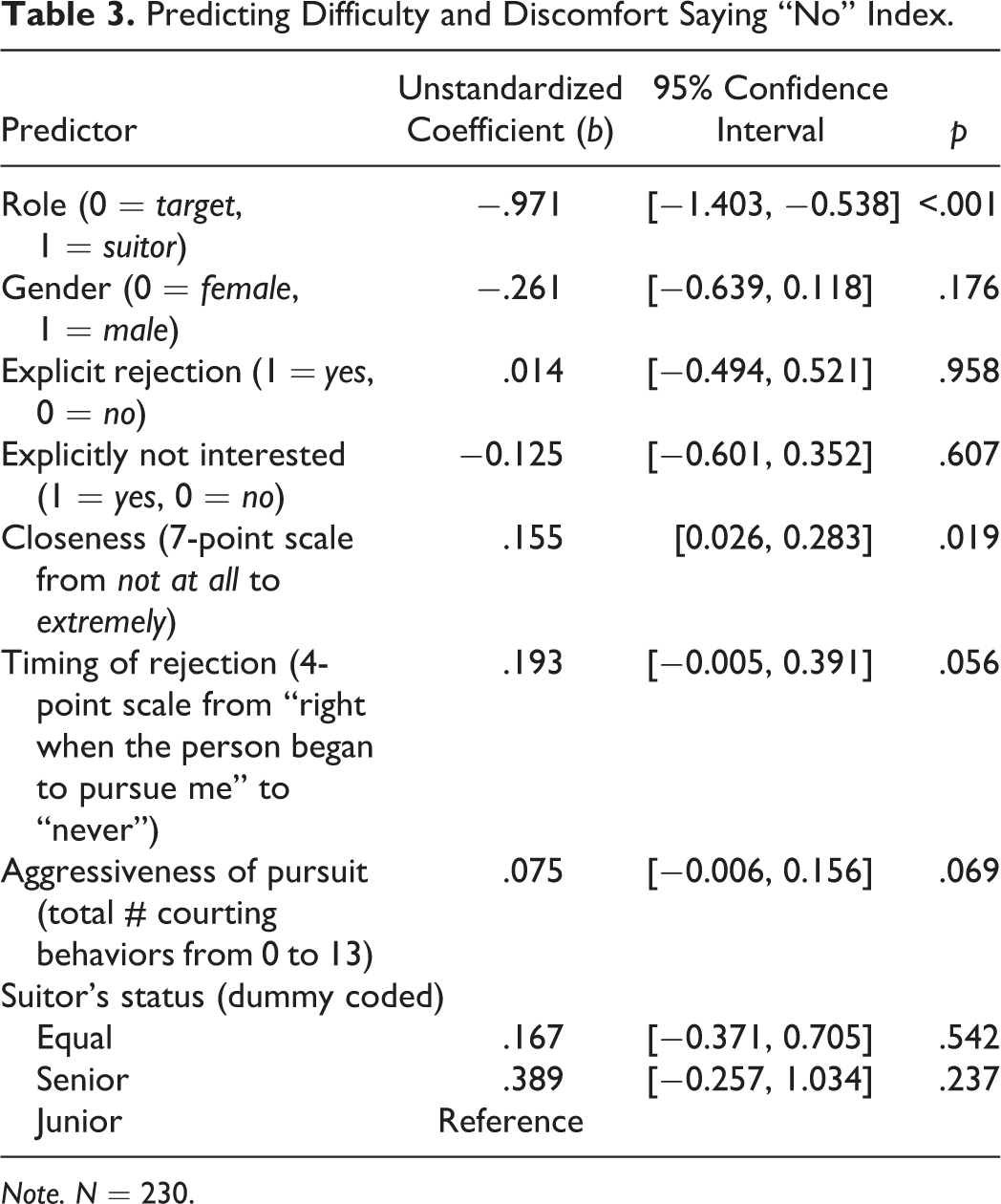
Note. N = 230.
Role Differences in Perceptions of Downstream Consequences
To explore role differences in perceptions of the downstream consequences of these advances, we examined targets’ concerns (vs. suitors’ perceptions of their concerns) about the potential repercussions of rejecting an advance as well as the actual behavior changes targets reported engaging in following these advances (or were perceived by suitors to have engaged in). Targets reported being more worried about the professional repercussions of saying “no” to an advance (M = 2.15, SD = 1.75) than suitors imagined their targets being concerned with (M = 1.64, SD = 1.32), F(1, 247) = 5.77, p = .017, d = .33. Targets also reported more concerns with what a suitor would say about them to other people (M = 2.85, SD = 2.12) than suitors imagined their targets being concerned with (M = 1.76, SD = 1.22), F(1, 247) = 19.60, p < .001, d = .63. Looking at specific behavioral changes, targets reported engaging in more avoidance and coping, productivity-related, and retention-related behaviors than suitors imagined their targets had engaged in (Table 4).
Role Differences in Perceptions of Individual Behavioral Consequences.
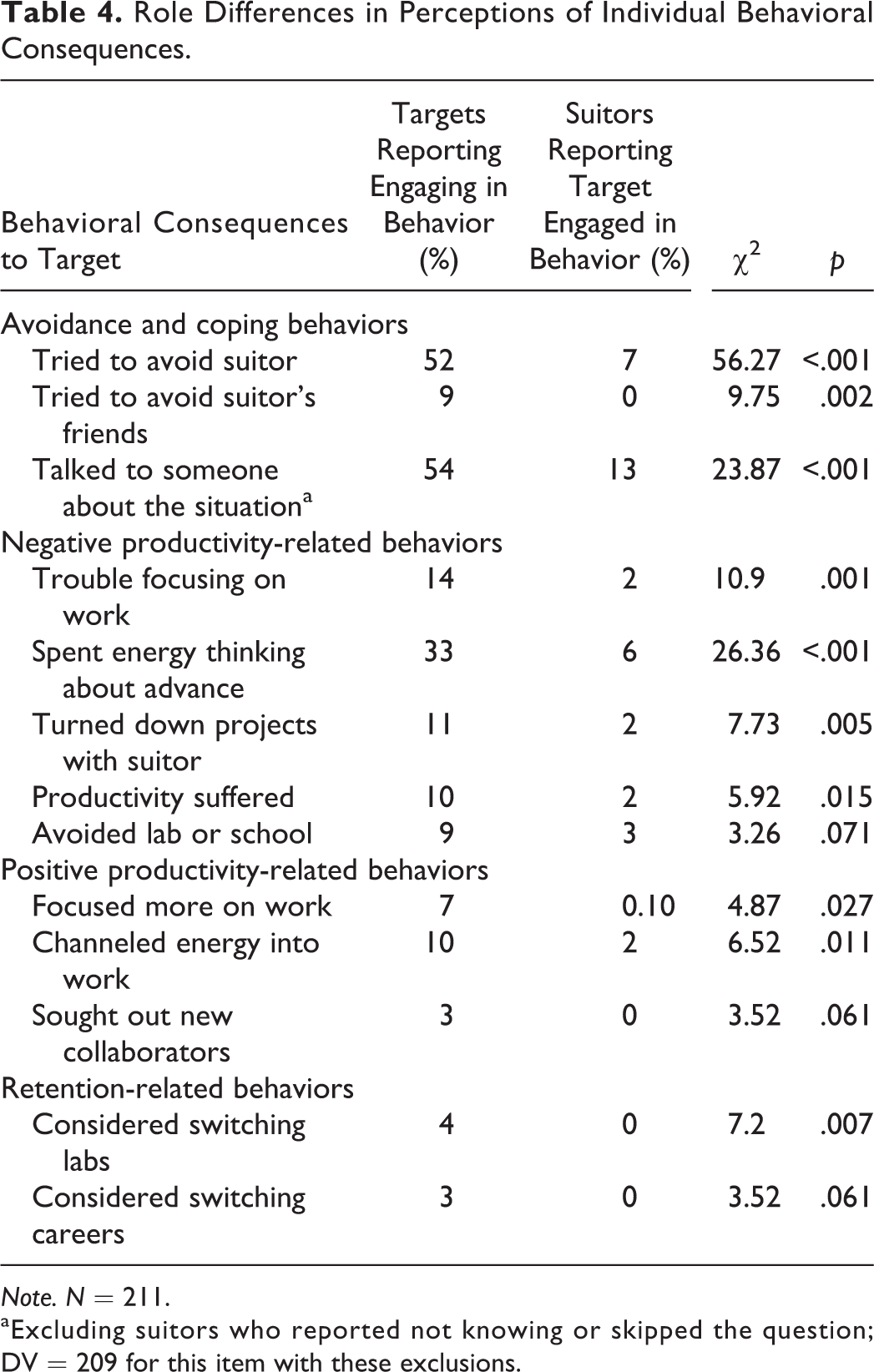
Note. N = 211.
aExcluding suitors who reported not knowing or skipped the question; DV = 209 for this item with these exclusions.
Overall, targets reported more behavioral consequences (M = 1.86, SD = 1.97) than suitors thought their targets had engaged in (M = 0.42, SD = 0.99), F(1, 276) = 47.30, p < .001, d = .92. This difference remained significant in a multiple regression including all of the other ways in which the two roles differed as predictors in the model (Table 5).
Predicting Total Behavioral Consequences.
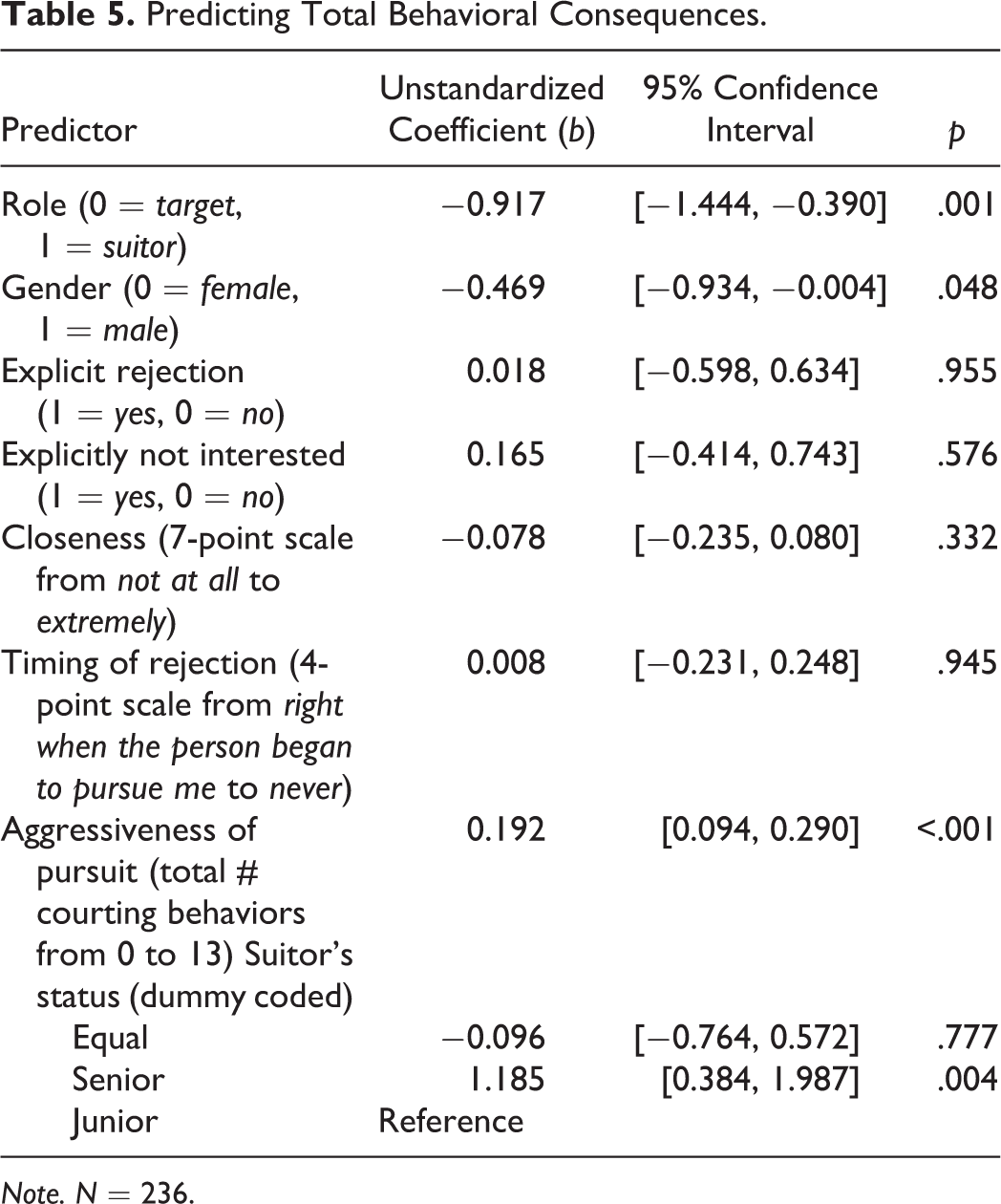
Note. N = 236.
Discomfort Saying “No” Mediates Role Differences in Perceptions of Behavioral Consequences
We hypothesized that role differences in perceived behavioral consequences would result at least in part from suitors’ failure to recognize the variety of ways in which targets change their behavior in order to cope with the discomfort of rejecting someone. A bootstrapping mediation analysis using Hayes’ (2013) PROCESS macro supported this hypothesis. The 95% bias-corrected confidence interval for the size of the indirect effect of our “difficulty and discomfort index” on behavioral consequences excluded zero [−.5754, −.1508].
The Impact of Previous Experience as a Target of an Unwanted Advance
We examined whether having had previous experience as the target of an unwanted advance would impact participants’ impressions of how difficult it is for targets to say “no,” even when considering such a question from the role of “suitor,” as this finding could have important implications for interventions. To explore this possibility, we took advantage of the fact that approximately one fifth of our sample reported having had experiences as both target and suitor and was therefore randomly assigned to role. Of this subset of participants, 28 (17 female, 11 male, and 1 undisclosed) were randomly assigned to recall a time they were in the suitor role. We compared this group of participants—participants who were assigned to the suitor role but also had experience in the target role—to the remaining 61 participants (25 female, 36 male) in the suitor role without experience as targets. We found that participants with previous experience as targets rated the difficulty and discomfort of saying “no” to be higher (M = 2.97, SD = 1.03) than those without this experience (M = 2.39, SD = 1.19), F(1, 86) = 4.97, p = .028, d = .52.
Gender Analyses
To examine the role of gender, we first analyzed the relative incidence of unwanted and unrequited romantic pursuit. Women were more than twice as likely to report having been pursued by someone they were not interested in as men (33%, or one in three of the 387 women who completed the survey, compared to 14.1%, or one in seven of the 355 men who completed it), χ2(2, N = 781) = 37.94, p < .001. There were no gender differences in likelihood of pursuing someone who was not interested.
We also looked at whether women were generally more attuned to the discomfort and difficulty of saying “no” to advances. While women’s ratings on our discomfort index (M = 3.29, SD = 1.38) were higher than men’s (M = 2.78, SD = 1.33), F(1, 233) = 7.57, p = .006, d = .38, this difference was no longer significant when controlling for previous experience as a target, F(1, 233) = 2.25, p = .135.
As per our preregistration, we examined whether the underestimation of discomfort on the part of romantic suitors was moderated by gender. Gender did not interact with role to predict our discomfort index, Finteraction(1, 230) = 0.12, p = .727. Both women, Mtarget = 3.52, SDtarget = 1.37; Msuitor = 2.68, SDsuitor = 1.22; F(1, 150) = 11.87, p = .001, d = .65, and men Mtarget = 3.15, SDtarget = 1.43; Msuitor = 2.45, SDsuitor = 1.44; F(1, 82) = 6.28, p = .014, d = .49, displayed our hypothesized bias.
The interaction of gender with role almost approached significance when predicting total behavioral consequences, Finteraction(1, 239) = 3.80, p = .052. However, again, both women, Mtarget = 2.34, SDtarget = 2.13; Msuitor = 0.57, SDsuitor = 1.38; F(1, 153) = 24.87, p < .001, d = .99, and men, Mtarget = 1.23, SDtarget = 1.25; Msuitor = 0.38, SDsuitor = 0.61; F(1, 85) = 16.93, p < .001, d = .86, displayed this bias.
Finally, also in accordance with our preregistration, we examined whether the underestimation of discomfort by romantic suitors was mitigated by the gender ratio of an individual’s lab. In this case, there was a significant interaction of role with lab gender composition (percentage female), Binteraction = −.019, t(212) = −2.32, p = .022. However, the pattern of results was the opposite of our original prediction: A larger percentage of women was positively associated with targets’ discomfort saying “no,” r(136) = .214, p = .012, and negatively (but nonsignificantly) associated with suitors’ assumptions about targets’ discomfort, r(77) = −.120, p = .298.
Discussion
Altogether, participants who recalled real instances in which they pursued someone who was not interested in them (suitors) imagined that the targets of their advances felt more comfortable saying “no,” were less worried about the repercussions of saying “no,” and experienced fewer downstream behavioral consequences than participants who recalled being pursued by someone they were not interested in (targets) reported experiencing. Role differences in the perceived downstream behavioral consequences of saying “no” were mediated by role differences in the perceived difficulty and discomfort of rejecting the advance. Further, participants with previous experience as a target of an unwanted advance rated the difficulty and discomfort of saying “no” to be greater than those without such experience, even when recalling an experience in which they were the suitor. Finally, there were stark gender differences in the frequency with which women versus men reported being targets of unwanted romantic pursuit; however, the role of gender with respect to other outcomes was less clear.
Study 2: Replication in a Vignette Study With Random Assignment
A concern in interpreting the findings from Study 1 is that because participants were not randomly assigned to the conditions of suitor and target, suitors and targets may either be fundamentally different types of people or may be remembering fundamentally different types of encounters. Notably, although we controlled for all of the ways the two conditions differed in their reported demographic information and in the reported details of the recalled incidents in Study 1, there were in fact a number of differences between targets and suitors, both in the encounters they recalled and the demographic distribution of participants’ experiences. The most convincing way to control for such issues is to randomly assign participants to the conditions of suitor and target. Thus, we ran a second study in which we randomly assigned participants to read a vignette involving an undesired romantic advance from one of these perspectives.
Preregistration and Data Accessibility
This study was preregistered at AsPredicted.org (#2820: https://aspredicted.org/yc2ds.pdf). Data and materials are available (OSF: https://osf.io/tcb2d/).
Participants
We preregistered a target sample of 400 participants or 200 participants per condition. Our goal was to have enough power to identify a medium-sized effect, which was the smallest effect we were interested in (Simmons et al., 2013), as well as the potential moderation of that effect by gender (Simonsohn, 2014). Ultimately, we recruited 385 participants (146 female, 239 male, and MAge = 34.02) from Amazon Mechanical Turk who were paid US$.50 for completing a 5-min survey (an additional 15 participants skipped to the end of the survey and received payment without completing any items).
Procedure
Participants read the following vignette in which a coworker asks another single, sexually compatible coworker out for a romantic dinner from the perspective of either the suitor or the target (target wording in brackets). Imagine that you are romantically interested in one of your co-workers [you suspect one of your co-workers is romantically interested in you] and you’d like an opportunity to get to know this person better [and has been trying to find an opportunity to get to know you better]. You know that your co-worker is [You are] single and you [and your co-worker] have compatible sexual orientations. The two of you are working late one night, and as you are wrapping up, you look at your co-worker [this person looks at you], take[s] a deep breath, and say[s], “Can I take you out to dinner?
Finally, participants indicated whether they had ever had an experience like the one described and reported their gender, race/ethnicity, age, professional employment/rank, and salary.
Results
Our hypothesis that suitors would underestimate the difficulty and discomfort of saying “no” was supported on all four of our preregistered DVs (Table 6). When we combined these four DVs into a single “difficulty and discomfort saying ‘no’” index (α = .90), as we did in Study 1, our results mirrored the individual variables (target: M = 4.74, SD = 1.14; suitor: M = 3.96, SD = 1.72), F(1, 383) = 23.615, p < .001, d = .53.
Role Differences in Perceptions of the Discomfort of Rejecting an Advance in Study 2.

As in Study 1, women (53.7%) reported having been in the target role significantly more often than men (27.8%), χ2(1, N = 144) = 9.679, p = .002. There were no gender differences in the frequency with which participants reported having been in the suitor role. Also consistent with Study 1, there was no interaction of gender with condition when predicting the discomfort and difficulty of saying “no.”
In sum, participants randomly assigned to the conditions of target and suitor displayed the same pattern of results as those recalling their real-life experiences as targets and suitors in Study 1.
Discussion
Our results across two studies reveal a consistent pattern: It appears that initiators of romantic advances fail to appreciate the difficult position they put targets in. Specifically, suitors underestimate the discomfort targets experience when rejecting an advance. Further, they fail to recognize all of the ways in which targets change their behavior in order to cope with this uncomfortable situation and are impacted (or are worried about being impacted) professionally and otherwise by their reactions to such advances.
We found the same pattern of results for participants who recalled actual instances of unwanted or unrequited romantic pursuit in Study 1 and for participants who were randomly assigned to the roles of target or suitor in Study 2. While each of these studies has limitations—namely, potential sampling issues in Study 1 and the hypothetical nature of Study 2—as a package, we believe each study offsets the weaknesses of the other.
Another potential limitation is that both of our studies focused on workplace contexts. We believe the workplace is a particularly consequential environment within which to examine issues of unwanted romantic pursuit, especially given the prevalence with which women are subjected to such advances at work (Fitzgerald et al., 1988; Jagsi et al., 2016). However, it is possible the dynamics we have identified here are exacerbated in the workplace, since targets may find rejecting coworkers to be especially awkward. Thus, future research should explore whether these findings generalize to other contexts.
Due to the important role of gender in both academic and nonacademic discussions of unwanted romantic advances, we paid particular attention to potential gender effects in our studies. The most salient gender difference, which emerged in both studies, is that women were much more likely to report having been pursued by someone they were not interested in than men. This pattern is consistent with previous research on the relative incidence of sexual harassment experienced by women versus men in the workplace, including in academia (Fitzgerald et al., 1988; Jagsi et al., 2016). However, gender did not moderate our main underestimation-of-discomfort effect in either study, a finding which is also consistent with research on underestimating discomfort in other domains (Bohns, 2016). Although we found some additional gender effects in Study 1, these effects were unexpected and did not seem especially robust. Thus, without the benefit of replication afforded to the two findings noted above, we are hesitant to draw conclusions from these additional findings. Altogether, we believe the primary takeaway regarding gender from our studies is that women find themselves in the role of target more often than do men; however, when they do occupy the role of suitor, women and men underestimate discomfort to similar degrees.
The egocentric bias we have identified may be exacerbated when a suitor is in a position of power over a romantic target. Previous research has found that individuals in powerful positions who engage in sexual harassment are often “not aware that their actions are inappropriate or a misuse of their power,” a tendency that has been attributed to automatic processes linking power and sexual desire (Bargh, Raymond, Pryor, & Strack, 1995, p. 768). However, this tendency may also be the result of a perspective-taking failure that makes people in powerful positions particularly oblivious to the uncomfortable position they put their targets in (Galinsky, Magee, Inesi, & Gruenfeld, 2006). Nonetheless, it is important to note that our findings held even when controlling for suitors’ professional status; thus, this bias does not appear to be limited to suitors who are in positions of power over their targets.
Prior research on the antecedents of sexual harassment in the workplace has focused predominantly on individual differences that predict who is likely to be an offender (Pryor, 1987; Pryor & Stoller, 1994) or a target (Barak, Fisher, & Houston, 1992) and identifying the environmental factors that contribute to the prevalence of harassment, for example, organizational climate, gender ratio, and power structures (Fitzgerald, 1993; Fitzgerald, Drasgow, Hulin, Gelfand, & Magley, 1997; Hemming, 1985; Hulin, Fitzgerald, & Drasgow, 1996). Relatively little research, however, has explored how ordinary psychological biases, such as a systematic cognitive asymmetry between the roles of suitor and target, might perpetuate cycles of unwanted romantic pursuit (for exceptions, see Abbey, 1982; Woodzicka & LaFrance, 2005). Approaching the problem through this lens suggests a different, complementary set of solutions designed to increase romantic suitors’ appreciation of their targets’ perspectives with the hope of preventing romantic courtship from escalating to sexual harassment.
One of our findings in particular hints at the effectiveness of an intervention along these lines: Participants in Study 1 who reported previous experience as a target of an unwanted romantic advance were more likely to appreciate the difficulty and discomfort their targets would experience saying “no,” even when recalling an instance in which they were the suitor. This finding suggests that interventions designed to foster perspective taking could potentially be effective at reducing the egocentric bias identified by our studies.
Supplemental Material
SPPS769880_suppl_mat - Rejecting Unwanted Romantic Advances Is More Difficult Than Suitors Realize
SPPS769880_suppl_mat for Rejecting Unwanted Romantic Advances Is More Difficult Than Suitors Realize by Vanessa K. Bohns and Lauren A. DeVincent in Social Psychological and Personality Science
Footnotes
Supplemental Material
The supplemental material is available in the online version of the article.
Declaration of Conflicting Interests
The author(s) declared no potential conflicts of interest with respect to the research, authorship, and/or publication of this article.
Funding
The author(s) received no financial support for the research, authorship, and/or publication of this article.

References
Supplementary Material
Please find the following supplemental material available below.
For Open Access articles published under a Creative Commons License, all supplemental material carries the same license as the article it is associated with.
For non-Open Access articles published, all supplemental material carries a non-exclusive license, and permission requests for re-use of supplemental material or any part of supplemental material shall be sent directly to the copyright owner as specified in the copyright notice associated with the article.
