




Abstract

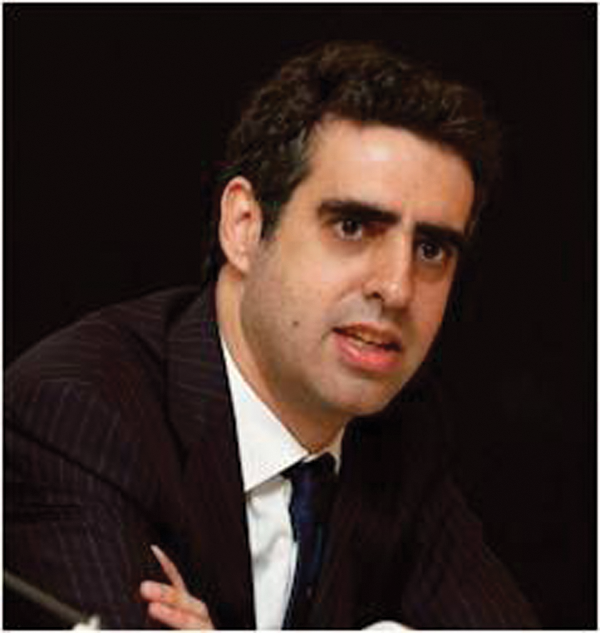
Manel Esteller graduated in medicine with honors from the Universidad de Barcelona in 1992, where he also obtained his PhD degree, specializing in molecular genetics of endometrial carcinoma, in 1996. He was an invited researcher at the School of Biological and Medical Sciences at the University of St. Andrews (Scotland, UK), during which time his research interests focused on the molecular genetics of inherited breast cancer.
From 1997 to 2001, Esteller was a postdoctoral fellow and a research associate at the Johns Hopkins University and School of Medicine (Baltimore, Maryland, USA) where he studied DNA methylation and human cancer. His work was decisive in establishing promoter hypermethylation of tumor suppressor genes as a common hallmark of all human tumors. From October 2001 to September 2008, Dr. Esteller was the leader of the CNIO Cancer Epigenetics Laboratory, where his principal areas of research were the alterations in DNA methylation, histone modifications, and chromatin in human cancer. Since October 2008, Dr. Esteller has been director of the Cancer Epigenetics and Biology Program of the Bellvitge Institute for Biomedical Research (IDIBELL) in Barcelona, professor of genetics in the School of Medicine of the University of Barcelona, and an ICREA Research Professor. His current research is devoted to the establishment of the epigenome maps of normal and transformed cells, the study of the interactions between epigenetic modifications and non-coding RNAs, and the development of new epigenetic drugs for cancer therapy.
Author of more than 280 original peer-reviewed manuscripts in biomedical sciences, he is also a member of numerous international scientific societies and editorial boards and reviewer for many funding agencies. His numerous awards include the following: Best Young Cancer Researcher Award by the European School of Medical Oncology (1999), First Prize in Basic Research at the Johns Hopkins Oncology Center (1999), Best Young Investigator Award from the European Association for Cancer Research (2000), Carcinogenesis Award (2005), Beckman-Coulter Award (2006), Fondazione Piemontese per la Ricerca sul Cancro (FPRC) Award (2006), Swiss Bridge Award (2006), Human Frontier Science Program Award (2007), Debiopharm-EPFL Award (2009), Dr. Josef Steiner Cancer Research Award (2009), Lilly Foundation Preclinical Biomedical Research Award (2009), World Health Summit Award (2010), and European Research Council Advanced Grant (2011).