




Abstract
This article presents a speculative design project and discusses its potential to facilitate a mutually beneficial cohabitation between humans, nonhuman species, and the natural environment. Currently, digital-simulated nature and nonhumans within our society (including species and objects) often fail to cultivate a responsible and sustainable future because most of them excessively cater to human entertainment. This research draws on philosophies, game studies, and design studies regarding human-computer interaction (HCI) and proposes an alternative approach: Wanderer, a mobile application developed around preliminary design principles informed by our theoretical frameworks. The app advocates for more-than-human and multi-species futures by utilizing three pillars in speculative design: a semi-virtual nature environment, un-interactive interaction, and system design. The result contributes to dissolving the boundaries between humans and nonhumans, indoor and outdoor environments, and virtual and real worlds. Through system thinking and interaction design, we propose posthuman-computer interaction (postHCI), which refuses human exceptionalism and human-centered views in conventional HCI by considering ecological systems and humans’ relationships with nonhumans via the interaction between humans and computers. The paper translates theoretical frameworks to visual design and programming regarding posthuman thinking and opens a discussion on alternative interactions between humans, nonhumans, and nature.
Introduction
Exposure to natural environments and the connection to more-than-human species benefit human well-being and happiness (Nadkarni et al. 2017). However, in reality, human activities of natural exposure often do more harm than good to nonhumans, such as polluting and disturbing ecologies: plants, animals, and natural resources. Nonetheless, digital and technological simulations provide little help in moving toward a sustainable and responsible future since most of the simulations are designed with human-centered purposes and cater to entertainment and data mining for profit (Costanza-Chock 2020; Lupton 2023). In light of the shortcomings of contemporary design in cultivating reciprocity between humans and nature, this paper aims to offer an alternative design that breaks existing boundaries regarding humans/nonhumans, indoors/outdoors, and virtuality/reality. It also opens discussion on how the interaction itself—a term we refer to as posthuman-computer interaction (postHCI)—contributes to a more considerate and responsible future that belongs to more than humans.
Both the authors of this article are designers and design researchers, and we are dedicated to exploring non-Western thinking and bridging conventional disciplines. Our goal is to speculate on a new way to reconnect humans with nature. A way that is theoretically grounded and feasible for contemporary technology design and usage. To do so, we first overview the theoretical frameworks of Wanderer, including philosophical foundations, game studies, and design studies. Secondly, we dive into the project Wanderer in terms of design principles and its environmental, interaction, and system design. Thirdly, we discuss how Wanderer reimagines and advances several boundaries, such as human and nonhuman actors, indoor and outdoor environments, user experience in virtuality and reality. We also discuss perspectives from audiences and ourselves as designers to see how the translation from nature to virtuality is received and processed. Fourthly, we unpack the concept of postHCI in terms of its political stance, philosophical inquiries, and the synthesis of natureculture. Finally, we conclude by illustrating how the conceptual components used in Wanderer could be implemented in public sectors (e.g., healthcare facilities, educational institutions, and open spaces), in which it promotes environmental awareness and the connection between the public and nature.
Theoretical Frameworks
This section gives an overview of the theories and practices used in the Wanderer project, yet limits the scope of the aspects applicable to the project. Given that Wanderer is a transdisciplinary amalgamation, we loosely bracket the theoretical frameworks into four groups. The listed approaches are not exhaustive or exclusive; instead, they present a road map connecting and building upon established knowledge of the project and provide an opening for further conversation.
Posthumanism, Natureculture, Taoism, and Multispecies-Computer Interaction
In light of social constructionism, posthumanism interrogates the concept of the human and its boundaries (Braidotti 2013; Hayles 1999; Herbrechter 2013). Building on diverse feminisms and new materialism, posthuman thinkers urge us to rethink previously marginalized populations, including nonhuman species and natural resources, and to consider them in our accounts of the worlds we inhabit (Bennett 2004; Braidotti 2013; Hayles 1999; Herbrechter et al. 2022). Among others, object-oriented feminism (OOF) advocates thinking with objects as objects (Behar 2016). As Behar (2016) argues, a self-recognition in objecthood allows us to cultivate “a praxis of care” (19) that applies to all beings and things.
Closely connected to posthumanism, the concept of natureculture (Haraway 2003, 2008) rethinks the ontological separation of “nature” and “culture” by emphasizing their co-constitution within material-semiotic practices. Building upon an insistence on situated knowledges (Haraway 1988) that highlight the partial, embodied, and contingent ways humans and nonhumans co-produce shared worlds, rather than treating nature and culture as distinct by default, Haraway shows how beings and worlds emerge through entangled relations of multispecies, technological, and ecological cohabitation (Haraway 2016; Latour 1993). Natureculture thus foregrounds hybridity, relationality, and the porousness of boundaries, challenging modernist binaries and universalizing claims, functioning not only as a descriptive term but as a critical intervention into how we conceptualize and ethically engage with more-than-human worlds.
In non-Western contexts, Taoism offers a distinctive Eastern orientation that resonates with posthumanist and naturecultural critiques of human exceptionalism. It emphasizes attunement to the Tao—the generative flow of the cosmos—through natural ways of living and relational alignment with others (Zhuangzi 2013). According to this view, an integrated and authentic individual is not a bounded self but rather one who cultivates receptivity to the dynamic patterns, rhythms, and transformations inherent in nature through continual becoming-with (Ames 2016; Thompson 2016). As illustrated in the Zhuangzi (2013): The Sage leans on the sun and moon, tucks the universe under his arm, merges himself with things, leaves the confusion and muddle as it is, and looks on slaves as exalted. Ordinary men strain and struggle; the Sage is stupid and blockish. He takes part in ten thousand ages and achieves simplicity in oneness. For him, all the ten thousand things are what they are, and thus they enfold one another. (16)
This orientation parallels posthumanist concerns with situatedness, interdependence, and perspectival multiplicity, as it challenges anthropocentric divides by encouraging shifts in viewpoint across beings and processes. In addition, Taoism’s emphasis on fluid co-constitution opens fertile ground for reimagining design beyond the human, aligning with naturecultural understandings of entanglement and anticipating the relational ethos of multispecies-computer interaction.
Multispecies-computer interaction presents an alternative to conventional human-computer interaction (HCI) (Aspling 2015). Joined by other reformation attempts, such as animal-computer interaction (Lupton 2023; Mancini 2011; McGrath 2009) and plant-computer interaction (Kuribayashi et al. 2007; Poupyrev et al. 2012), Aspling (2015) argues for considering nonhuman species in multispecies-computer interaction by including factors such as physiological differences and preferences among species. However, most practices seem to study the species and use the knowledge produced to benefit human society, rather than exploring possibilities for removing anthropocentric purposes in such interactions. For example, although the concept of species-specific aesthetics (French et al. 2020) and projects such as ZooJam (French et al. 2019) design technological experiences primarily for the sensory worlds and welfare of captive nonhuman species, exemplifying how interaction design can decenter human users by prioritizing nonhuman agency and environmental fit, the practice in managed environments can hardly avoid the implications of anthropocentric purposes. As Lupton (2023) points out, animals are popular in mainstream wellness cultures as emotional companions and cute economic figures. Considering the above, this paper re-envisions a more-than-human approach to multispecies-computer interaction by reducing human-centric purposes (including the use of digital animals as emotional support), recognizing nonhuman species’ agency, and rebalancing power dynamics between humans and nonhumans.
Anti-Anthropomorphism and Anti-Gamification
Anthropomorphism has long been associated with interaction design to involve nonhuman species and objects. The cute animals and objects entertain humans by attracting them to interact with them and develop a close affective connection. However, Lupton (2023) points out that having animal avatars in gaming runs the risk of objectifying nonhuman species, endorsing human domination, and encouraging animal exploitation. Players in such games are instructed to monetize produce (e.g., Animal Crossing, Minecraft), train animals, and deploy them in battles (e.g., Pokémon Go). Additionally, Bruni et al. (2018) report that some consider the anthropomorphic portrait of nonhumans falsely attributes sentiments to nonhuman animals, yet some from psychological perspectives argue that anthropomorphic nonhumans assist sense and decision-making because humans are more responsive to their appearance. Alternatively, Timberlake (1997, 2007) proposes theromorphism, which “consider[s] the world from the standpoint of the animal rather than the standpoint of the human observer, and including multiple determinants rather than only simple laws” (Timberlake 1997, 114). Theomorphic approaches allow humans to enter the nonhuman species’ worlds by providing knowledge regarding their sensory, motor, and motivational worlds and the causality of their behavior (Timberlake 2007).
Gamification, another strategy often used in interaction design, utilizes playful and incentive mechanics (e.g., levels and badges) to encourage product engagement and nudge human users toward expected actions. In technology design, gamification often causes a sense of enchantment—involving unexpected events such as excitement and liveliness—to attract and induce emotional connections in the user (Bennet 2001; Rose 2014). Nevertheless, these enchanted elements result in raising ethical concerns regarding addiction, exploitation, and manipulation as their affective forces keep users in the loop of interacting with the objects (Andrade, Mizoguchi, and Isotani 2016; Kim and Werbach 2016; Lupton 2020; Nyström 2021). Nyström (2021) argues that a gaming experience with a sensational flow could lead to addiction, and designers should safeguard the user from being addicted to the game by embedding intermittent interruptions and a daily maximum time.
To counteract the tendency of conventional interaction in technology design, we draw on planned ignoring to change the dynamics. Planned ignoring is a behavior management strategy to reduce and manage attention-seeking and other unwanted behaviors. Although it is considered a punishment-based intervention in educational settings (Justus, Hott, and Heiniger 2023), it could be an affirmative approach for the natural environment and species by reducing people’s impulse to control and exploit them.
Holistic Design and Systems Thinking
User experience (UX) design concerns the pleasure and satisfaction of human users when interacting with an artifact. In UX design, holistic design is an overhead analysis of all environments in which a user interacts with a product to picture how a design best fits the designer’s goals (Interaction Design Foundation - IxDF 2016). Holistic design asks a designer to create the most palatable and memorable experience for a user to create a repeat user. It is used across industries, including business and healthcare. In the context of Wanderer, we use holistic design to ensure that each interaction factor aligns with our goals in ways that restore the agency of nonhuman interactors.
Complementing holistic UX design, systems thinking helps situate and analyze Wanderer within larger systems in contemporary society. According to Ramage and Shipp (2009), systems thinking is a way to comprehend the world’s complexity and dynamics by viewing it as a whole within complex contexts. In systems thinking, a system can be understood in different ways and applied across disciplines to investigate phenomena (e.g., a product, a function, a species) within contexts such as ecology, society, culture, technology, and politics. Regarding the design of systems, Churchman (1971) proposes that the systems designer aspires to “identify the whole relevant system and its components; the design alternatives are defined in terms of the design of the components and their interrelationships” (7). In developing Wanderer, we are mindful of the situatedness and implications of our design approaches and aims. We are aware of the potential challenges of advocating for a more biocentric alternative in Western society, which has a long history of an anthropocentric worldview and a capitalist economy. However, part of our goal is to translate and introduce alternative values and practices by tackling the challenges.
Speculative Design and Persuasive Technology
Contrary to business perspectives, speculative design (and often with critical design) attempts to provoke the audience into critically thinking, engaging with a product, and asking how the product can change society; therefore, a speculative design product often serves communicative purposes (Johannessen et al. 2019). Dunne and Raby (2013) see speculative design as a dreaming vehicle: “It’s about meaning and culture, about adding to what life could be, challenging what it is, and providing alternatives that loosen the ties reality has on our ability to dream” (189). In practice, Lukens and DiSalvo (2012) list six critical properties of speculative design: 1) future-oriented, 2) emphasizing the potentials and consequences of technological progress and application, 3) holistic thinking, 4) cross-disciplinary and integrative, 5) showing an understanding of system thinking in information technology, and 6) leaning toward exploring possibilities via creative approaches instead of their market value (27). Unlike profit- or market-driven design approaches, speculative design does not require deliverables and focuses on its exploratory goals (DiSalvo and Jonathan, 2009).
Persuasive technology is a field of study and practice that uses technology to influence and persuade people’s behavior, attitudes, or choices. Fogg (2002) considers computers as social actors that utilize five types of social cues (physical, psychological, language, social dynamics, and social roles) to lead people to be aware of computing technology’s social presence (91). With their social presence, technological artifacts encourage human users to take specific actions or adopt certain behaviors as appropriate social responses. Nevertheless, Verbeek (2006) argues that persuasive technologies raise ethical concerns as they entail technological persuasion and mediation, urging us to examine not only the persuasions themselves but also the methods through which they are enacted, in light of moral principles such as nonmaleficence, beneficence, respect for autonomy, and justice.
Project Wanderer
In the context of multispecies interactive art and multispecies-computer interaction, scholars have sought to translate the senses and perceptions of nonhuman species for human audiences. For instance, Alinta Krauth’s Under-Mine invites audiences to experience nonhuman perceptions of climate-threatened species with data-driven installations (Art Laboratory Berlin 2017), Groutars et al. (2024)’s living artefacts propose integrating living organisms into interactive systems to foster reciprocal interactions among humans and other species in everyday environments, and Maliheh Ghajargar’s (2025) landscape-based multispecies design explores storytelling methods for decentering the human, foregrounding nonhuman needs, and designing for cohabitation and multispecies kinship. These projects collectively illustrate an emerging design orientation that seeks to attune humans to the perceptual, ecological, and relational worlds of other beings.
Building on this trajectory, the present project turns to Taoist philosophy to frame an alternative mode of multispecies encounter. One of the core values in Taoist philosophy is free and easy wandering (Zhuangzi 2013). Each being is unique in its own way, and the human ideal indwells “being in accord with all living things” (Jochim 2016, 57). The project thus draws on Taoist wisdom in its naming—Wanderer—indicating that all participating actors are wandering through perceived worlds. At a glance, Wanderer is an ongoing, app-based speculative design rooted in Taoist and posthuman thinking regarding the relationship between humans and nature. The project’s target environment is the Texas Trinity River in the United States, which is significant to the geography, ecology, and history of Texas. The app features a simulated underwater ecology of the river (Dallas-Fort Worth area in particular) and highlights a human-nature relationship in which all parties are connected and respected. In this section, we dive into Wanderer’s design principles and its environmental, interaction, and system design, and elaborate on how these concepts are implemented in practice. A relational logic of Wanderer regarding theoretical frameworks and practices is presented as follows (Figure 1). Relational logic of Wanderer—from theoretical frameworks to posthuman-computer interaction.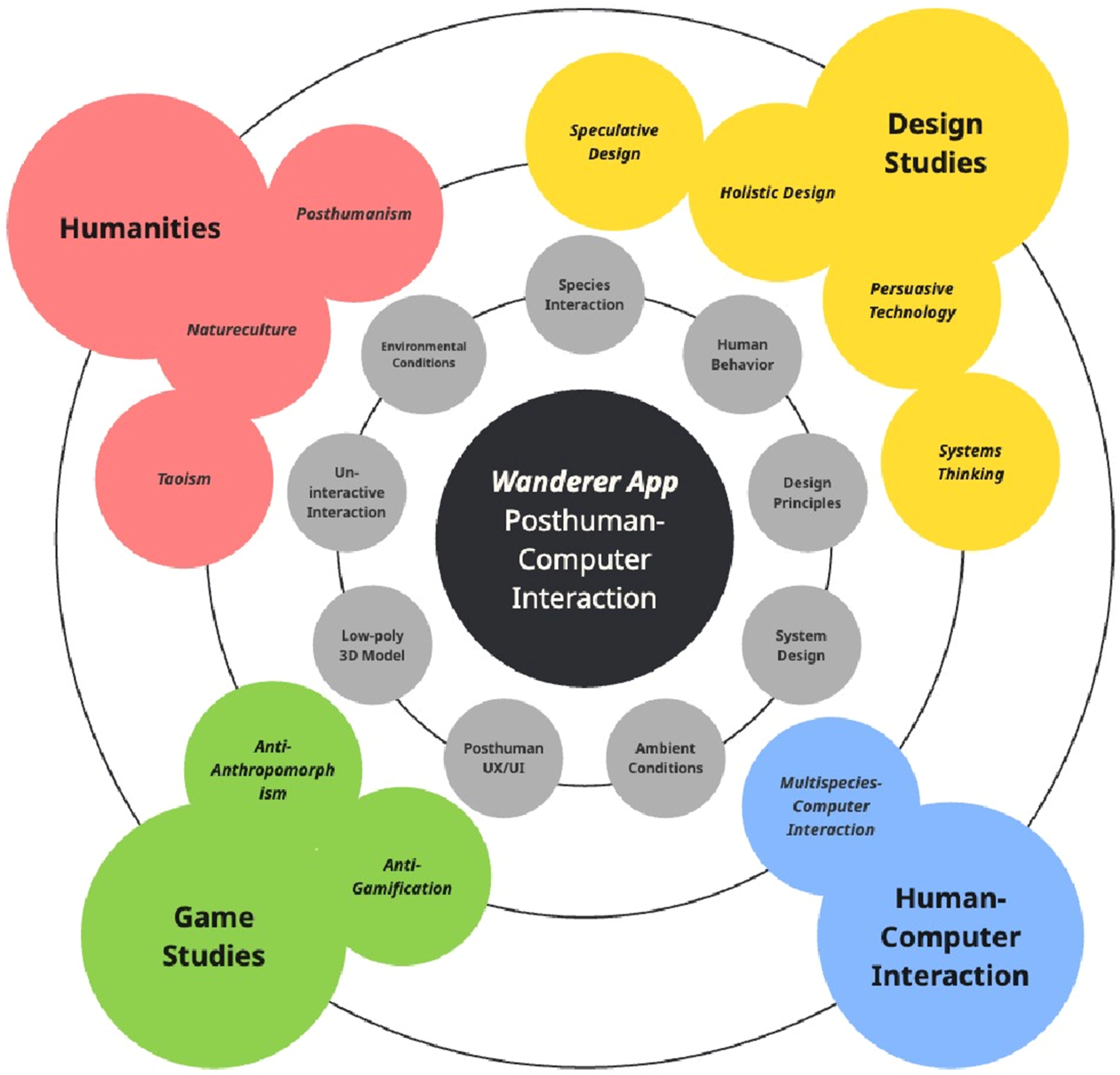
Design Principles of Wanderer
Informed by the theoretical frameworks of the project, we develop eight design principles for rethinking interaction beyond anthropocentric conventions to guide Wanderer’s design: (1) Honor Nonhuman Rhythms: Align design with the temporalities and behaviors of nonhuman species rather than forcing responsiveness to human input. (2) Refuse Anthropocentrism: Avoid anthropomorphic representation or gamified control that reduces nonhumans to human entertainment or research. (3) Design for Entanglement: Emphasize interdependence among human, nonhuman, and technological actors as co-constitutive of shared systems. (4) Embrace Wuwei: Value inaction and co-presence, allowing meaning to emerge through attentiveness rather than direct manipulation. (5) Synchronize Environments: Connect spaces, temporalities, and virtuality to make ecological entanglements perceptible in everyday life. (6) Reveal Hybridity and Fragility: Represent absence or retreat as ecological signals, emphasizing vulnerability and care. (7) Foster Openness: Support open-source, participatory adaptation that allows communities to localize design to reflect their own situatedness. (8) Speculate Beyond Human Futures: Use design as a method to imagine multispecies futures where humans are participants rather than protagonists.
These principles frame Wanderer as a speculative gesture in Taoist postHCI, where design becomes less about control or utility and more about cultivating reciprocity, attentiveness, and cohabitation across multispecies and technological worlds.
Semi-virtual Nature Environment
Wanderer aims to create a semi-virtual natural environment based on the real-world Texas Trinity River. We conducted field research and documented visual elements and the underwater audio of the river at the Lewisville Lake Environmental Learning Area and the Trinity River Audubon Center (Figure 2). Visual elements around the Trinity River. (A.B.C: varied shore views; D: bedrock; E: seagrass; F: underwater view after heavy rain; G: turtles on tree branches; H: crawfish debris; I: trash on the shore.)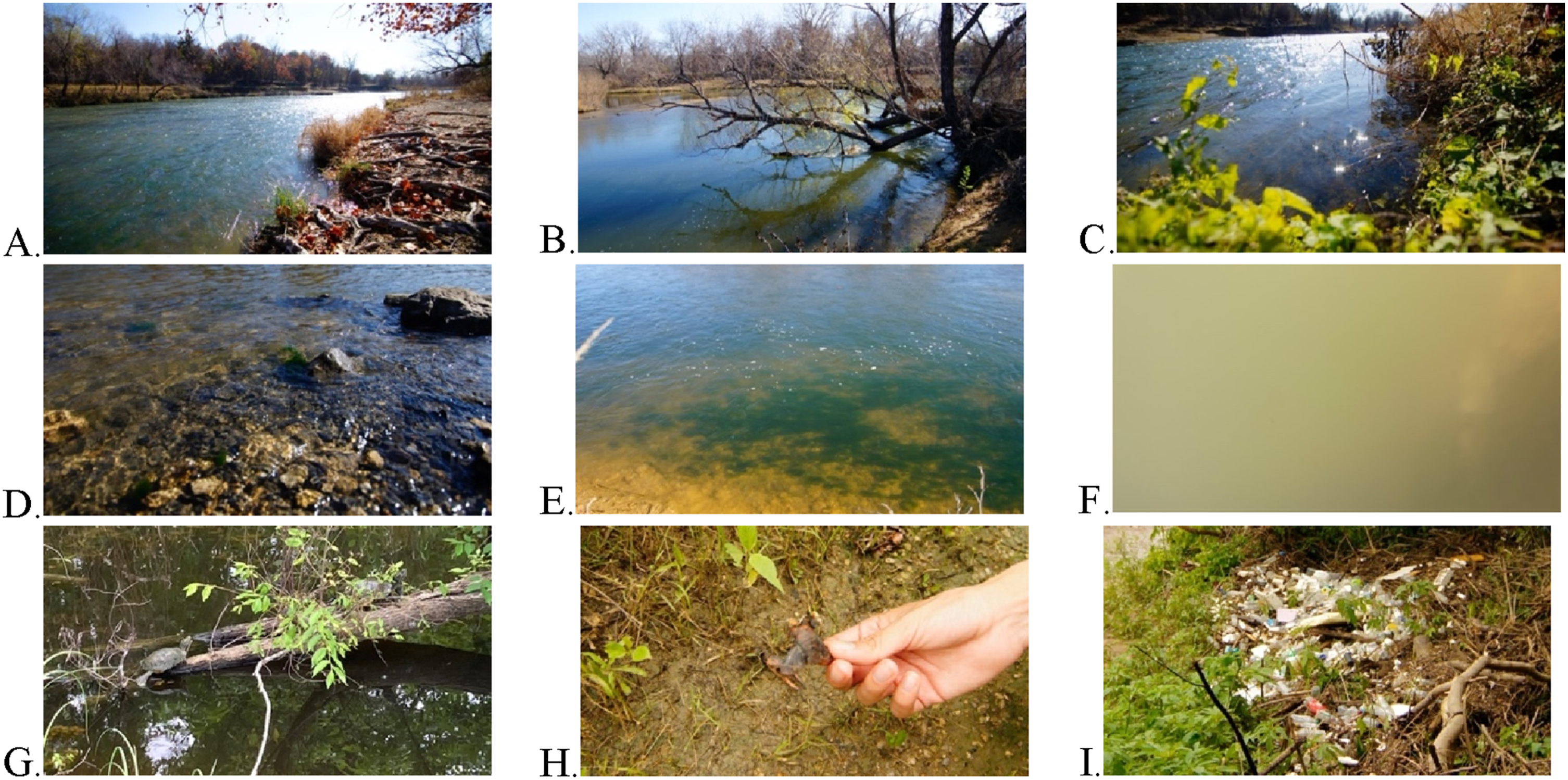
We fabricated and translated these visual elements into Wanderer’s virtual simulation by modeling and texturing in 3D graphics software using Unity and Blender (Figure 3). The main view presents an underwater profile of the middle course of the long river profile of the Trinity River, including bedrock and various seagrass types. We fix the camera angle at a single location so that viewers gradually become familiar with the virtual site and perceive differences across varying time and environmental conditions. Given that the Trinity River has been heavily polluted by industrial and human waste (Gard 2020), we model trash and blend digital and real ecologies (Figure 3(D)) to help viewers perceive the natureculture entanglement and foster eco-awareness. Wanderer environmental design. (A: environment overview; B: bedrock closeup; C: seagrass; D: pollutants.)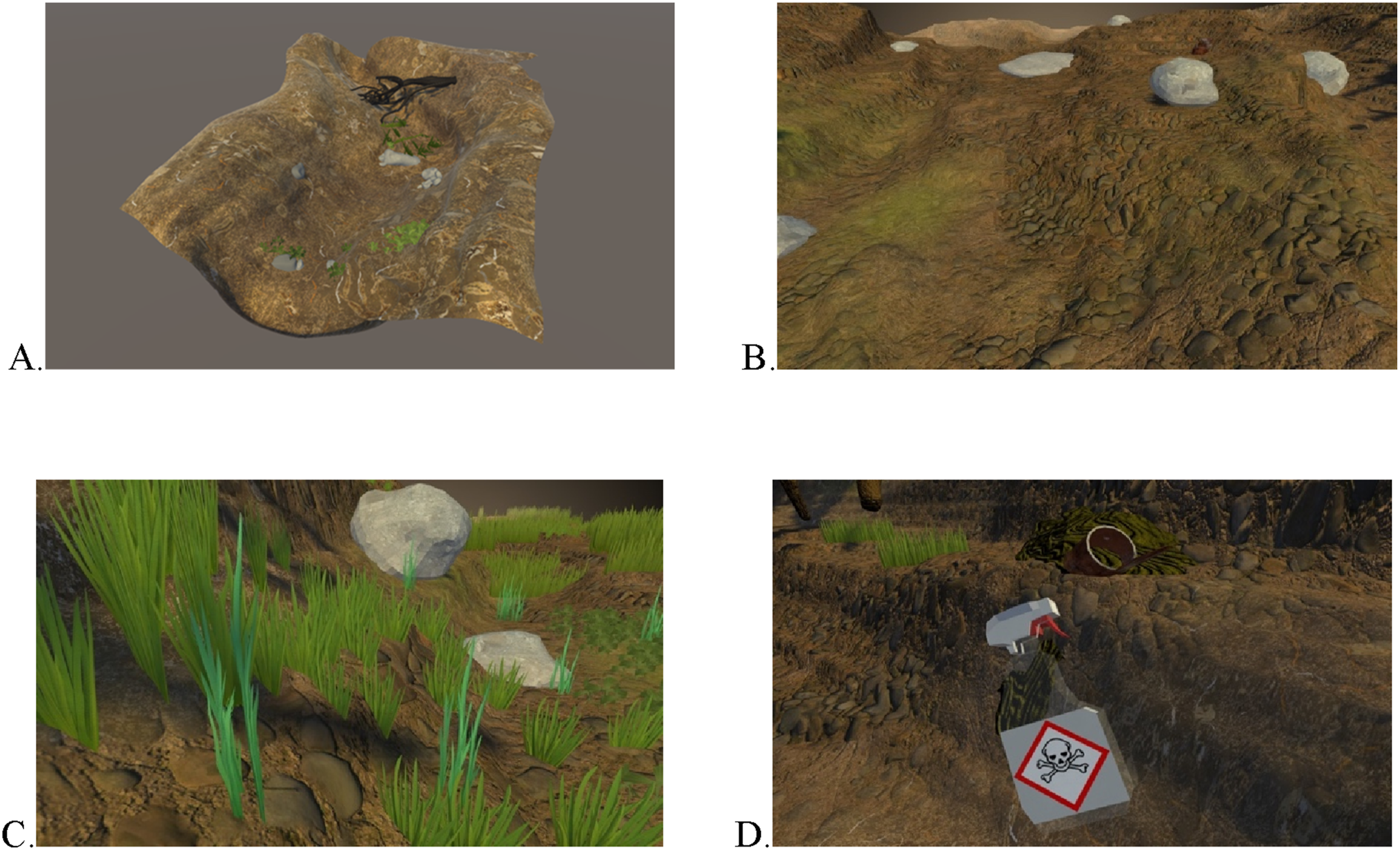
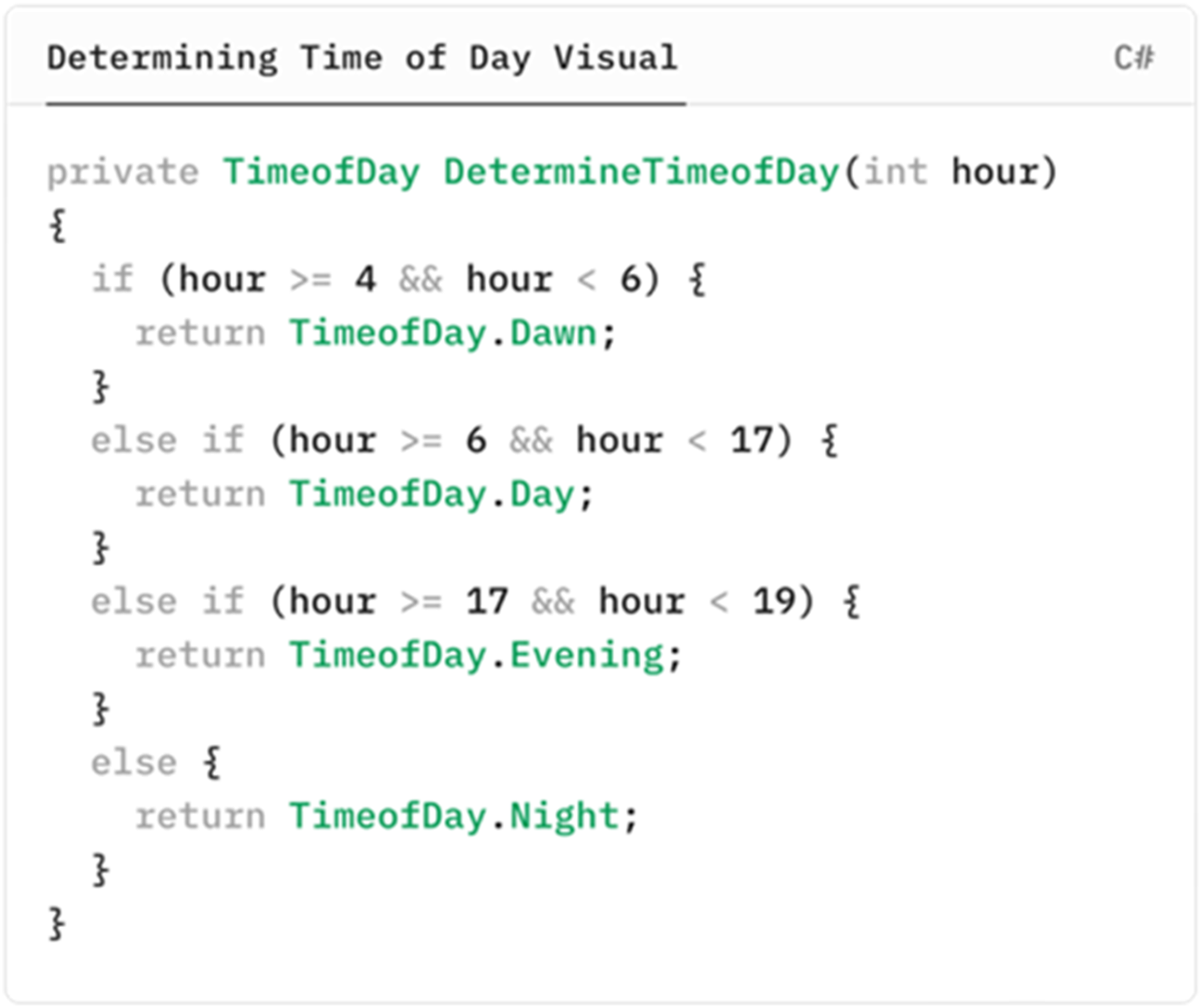
On top of the virtual environment, we simulate sunlight and its rotation for a variety of times of day, using weather data retrieved from the device system and application programming interfaces (APIs) every five minutes. Specifically, Wanderer displays dawn/dusk between 4 and 6 a.m. and 5–7 p.m., daytime from 6 a.m. to 5 p.m., and nighttime from 7 p.m. to 4 a.m. (Figure 4(A), (B), (C)). When it rains in the Dallas area, a rain effect is layered over the corresponding time-of-day view (Figure 4(D)). Wanderer scene variation. (A: dawn/dusk; B: daytime; C: nighttime; D: rain effect.)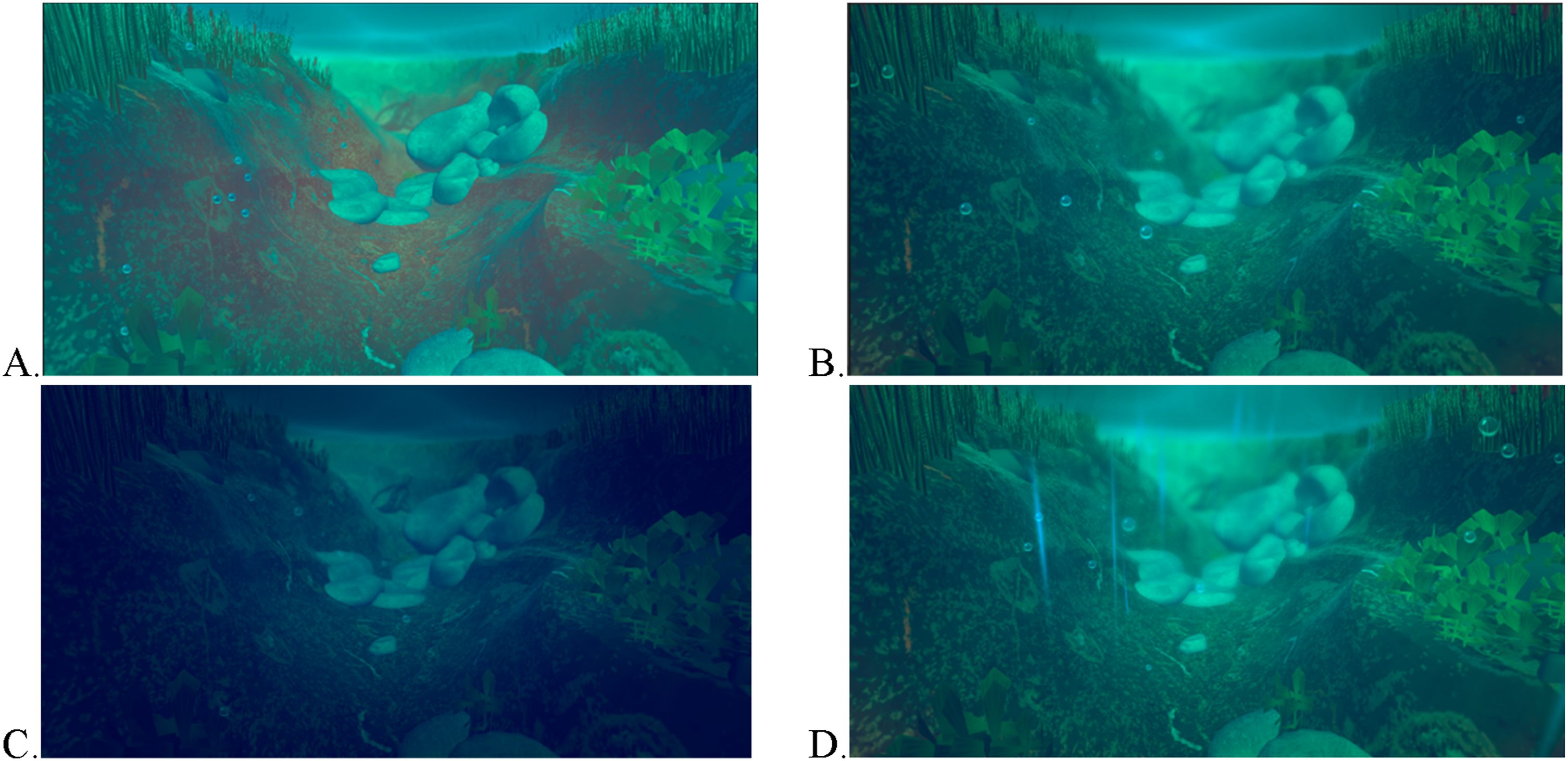
In addition, the selection of the simulated species is based on the native species in the Trinity River (Johnson 2009) and their preferred conditions. Consequently, different species would appear under varying environmental conditions (e.g., temperature and weather). At the current stage, we have employed six underwater species (Figure 5). Wanderer species modeling. (A: Yellow Bass. B: Bluegill. C: Longnose Gar. D: Pond Slider. E: American Paddlefish. F: Crawfish).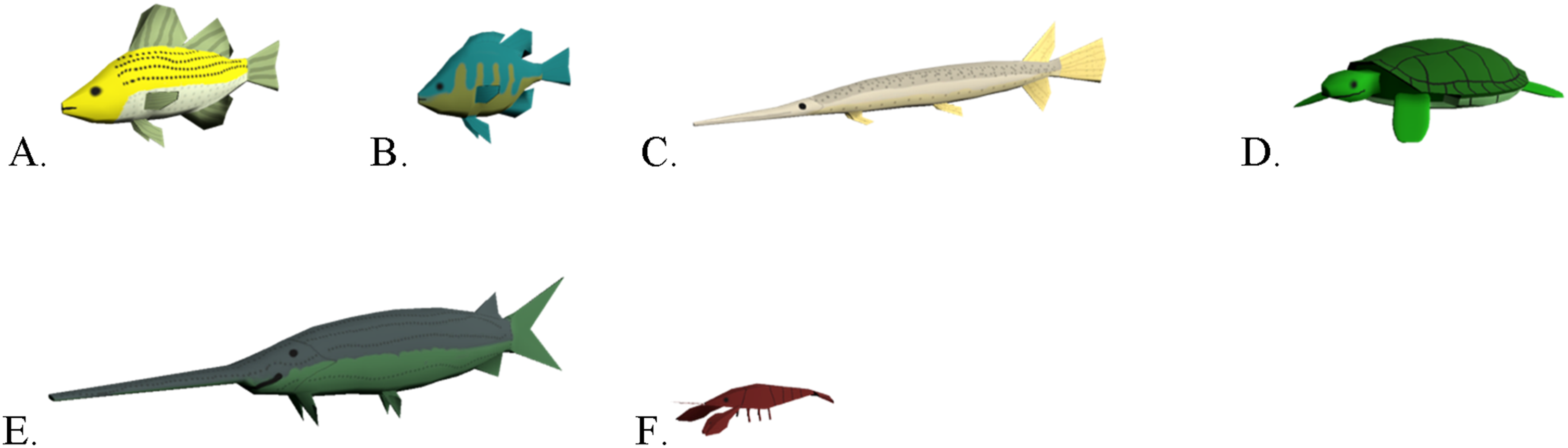
We also employ low-poly modeling techniques for the selected species for both pragmatic and philosophical reasons. From a pragmatic perspective, low-poly 3D models enable rapid design and iteration, as their simplified shapes and textures reduce production complexity. Philosophically, the deliberately minimal forms serve to blur the boundary between “beings” and “objects” through the theoretical lenses of posthumanism, natureculture, and Taoism. Their abstraction produces an object-like quality while still maintaining a recognizable resemblance to the real species. We also intentionally avoid anthropomorphic and “cute” features in these models to limit the formation of affective attachments based on their appearance. These visuals contribute to the virtual counterpart of the Texas Trinity River, preserving important visual characteristics of the natural environment while infusing our theoretical speculation into the app and modifying human perception of the environment.
Un-Interactive Interaction
In light of posthumanism and Taoism, we recognize and respect the agency of underwater actors by prioritizing the preferences of underwater species and their connection to environmental conditions over the technological responses of human control and feedback. To do so, we apply two Taoist concepts—Tao and wu-wei—as the core of Wanderer’s interaction design. In Taoism, Tao (道; translated as “the Way”) can be understood as an intangible flow that passes through and beyond worlds, without shape or form, and that does not differentiate things or assess their value (Henricks 1989; Zhuangzi 2013). However, Tao can be approached by relegating all judgments to the constant and, unknowingly, relying on that constant (Zhuangzi 2013). As Zhuangzi connects the concept of temporality to the self, encompassed in the Way, “Heaven and earth were born at the same time I was, and the ten thousand things are one with me” (13). Within this framework, wu-wei (無為; translated as “actionless action”) refers to a state in which human activity flows with the same spontaneity and effortlessness as processes in the natural world, and such a state arises from engaging in actions that are free from intentional pursuit of gain or deliberate striving (Zhuangzi 2013). As Laozi states in Te-Tao Ching: [T]he Sage dwells in nonactive affairs and practices the wordless teaching. The ten thousand things arise, but he doesn’t begin them; He acts on their behalf, but he doesn’t make them dependent; He accomplishes his tasks, but he doesn’t dwell on them; It is only because he doesn’t dwell on them, that they therefore do not leave him. (Henricks 1989, 54)
The idea of wu-wei plays a key role in connecting humans and nonhumans. In this mode of being, “all human actions become as spontaneous and mindless as those of the natural world” (Zhuangzi 2013, p. xi). It enables people to reach beyond themselves, engaging with other humans and nonhumans, through unforced, intuitive interaction. Given the above, Wanderer translates the concepts of Tao and wu-wei into un-interactive interaction, in that: 1)
Un-interactive interaction resonates strongly with natureculture theory, which insists that interaction is never a matter of isolated subjects or objects but always emerges through entangled relations. In Wanderer, the absence of direct human control foregrounds this co-constitution; species behaviors are not designed to respond to human commands but to the interwoven rhythms of environmental data, device ambience, and nonhuman agency. For human actors, this creates an experience of situated embeddedness, where they sense their own actions (such as making noise indoors or approaching the device) rippling through the semi-virtual ecology. Instead of treating “nature” as a backdrop or “culture” as a separate human sphere, Wanderer lets human actors perceive themselves as part of an entangled multispecies system, thereby encouraging reflection on responsibility and cohabitation.
Parameters of Wanderer Species Interaction.
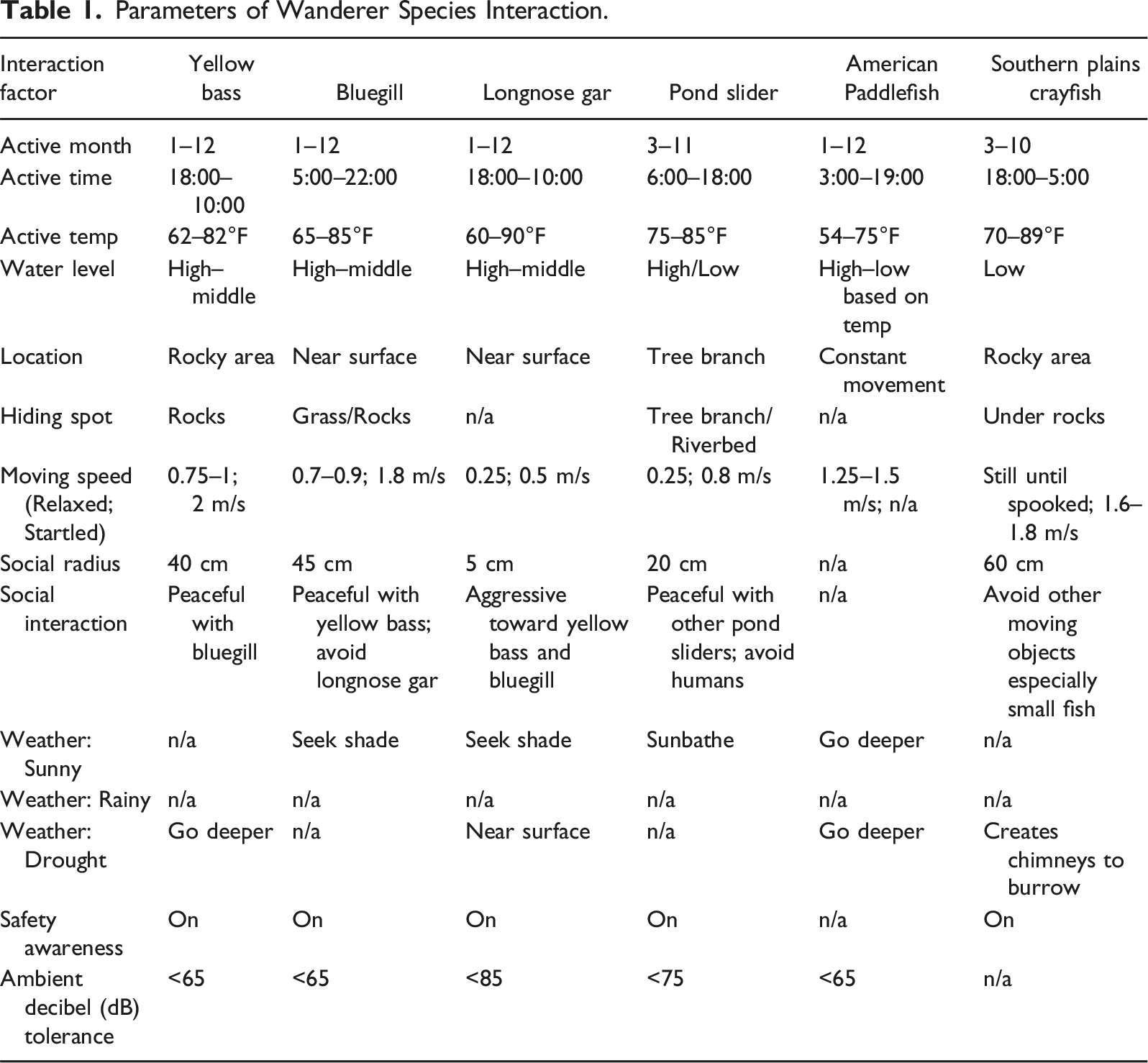
The factors in Table 1 present different aspects of the species in Wanderer. Namely, active month, time, and temperature affect the species’ presence; water level, location, and hiding spot indicate the species’ preferred spatial patterns; moving speed and social radius show the species’ swimming performance and the triggering distance, in which an actor would react to the movement of other actors; social interaction conditions how each species responds to other species under normal circumstances; the weather-related variance affects the action of the species during the condition in sunny, rainy, and drought; safety awareness marks the face and sound level detection functions in the app. Currently, safety awareness connects to ambient factors and is activated under two conditions: 1) human face detection and 2) indoor sound level. Active species will move to their hiding spots when a human face is detected within the device’s camera range (Figure 6(B)) or when the sound level exceeds their tolerance range. In a later stage, we plan to incorporate additional ambient data, such as indoor light levels and temperature. In addition to ambient factors, we are implementing water data APIs to incorporate regional water-quality information. For example, when water quality is poor, such as due to post-hurricane contamination or hazardous industrial waste, species will be absent from the virtual space, despite other factors being present. Through the connection of more ambient data (indoor) with environmental data (outdoor), we weave the natureculture by bridging the spatial conditions of both sides and the living preferences among the human and underwater actors. Screenshots of the Yellow Bass’s safety awareness (A: human face not detected; B: human face detected).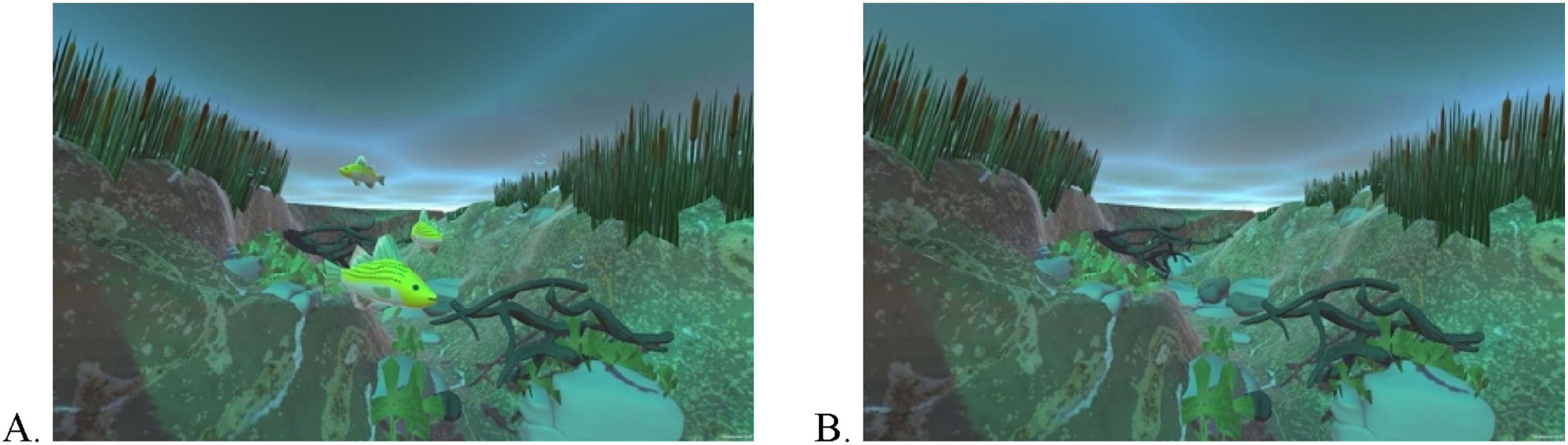
Collectively, un-interactive interaction in Wanderer occurs when human and underwater actors progress through space-time according to their natural rhythms. As Barad (2012) argues, “Each ‘individual’ always already includes all possible intra-actions with ‘itself’ through all the virtual Others, including those that are noncontemporaneous with ‘itself’” (214). Given the interaction factors in Table 1, the meaning of “interaction” deviates from conventional interaction design, moving toward response-ability (Barad 2012) and embodying the notion of natureculture (Haraway 2003 2008), making Wanderer’s interactions less about control and more about cohabiting within shared, hybrid ecologies.
System Design
To translate the interaction factors (Table 1) into a mobile app, we developed four “managers” to govern the data that drive Wanderer’s interactions: time, weather, AR, and audio (Figure 7). Each manager processes specific environmental or ambient data and communicates with species and other managers regarding the corresponding actions and the representations of the virtual ecology. Simplified workflow of the manager system.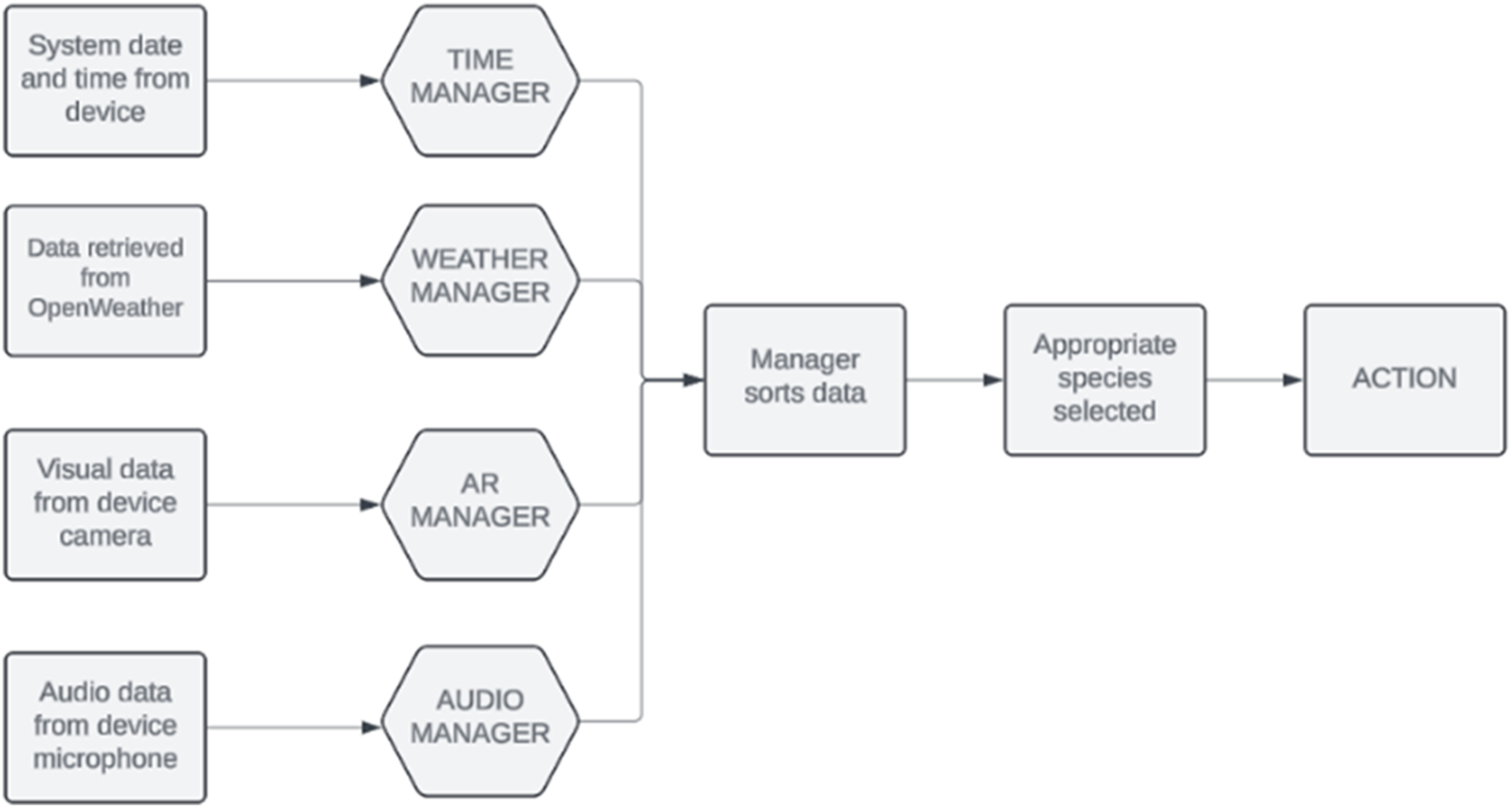
The time manager is the most decisive component, as it retrieves the device’s date and time and synchronizes the virtual movements and view. The date and time data would be considered alongside other environmental or ambient factors in assessing the potential appearance of the underwater actors (Figure 8). Additionally, the real-time data will be used to adjust the visual to dawn, daytime, dusk, and nighttime, respectively (Figure 9). Processing Yellow Bass’s active status in the time manager. Processing times of day in the time manager.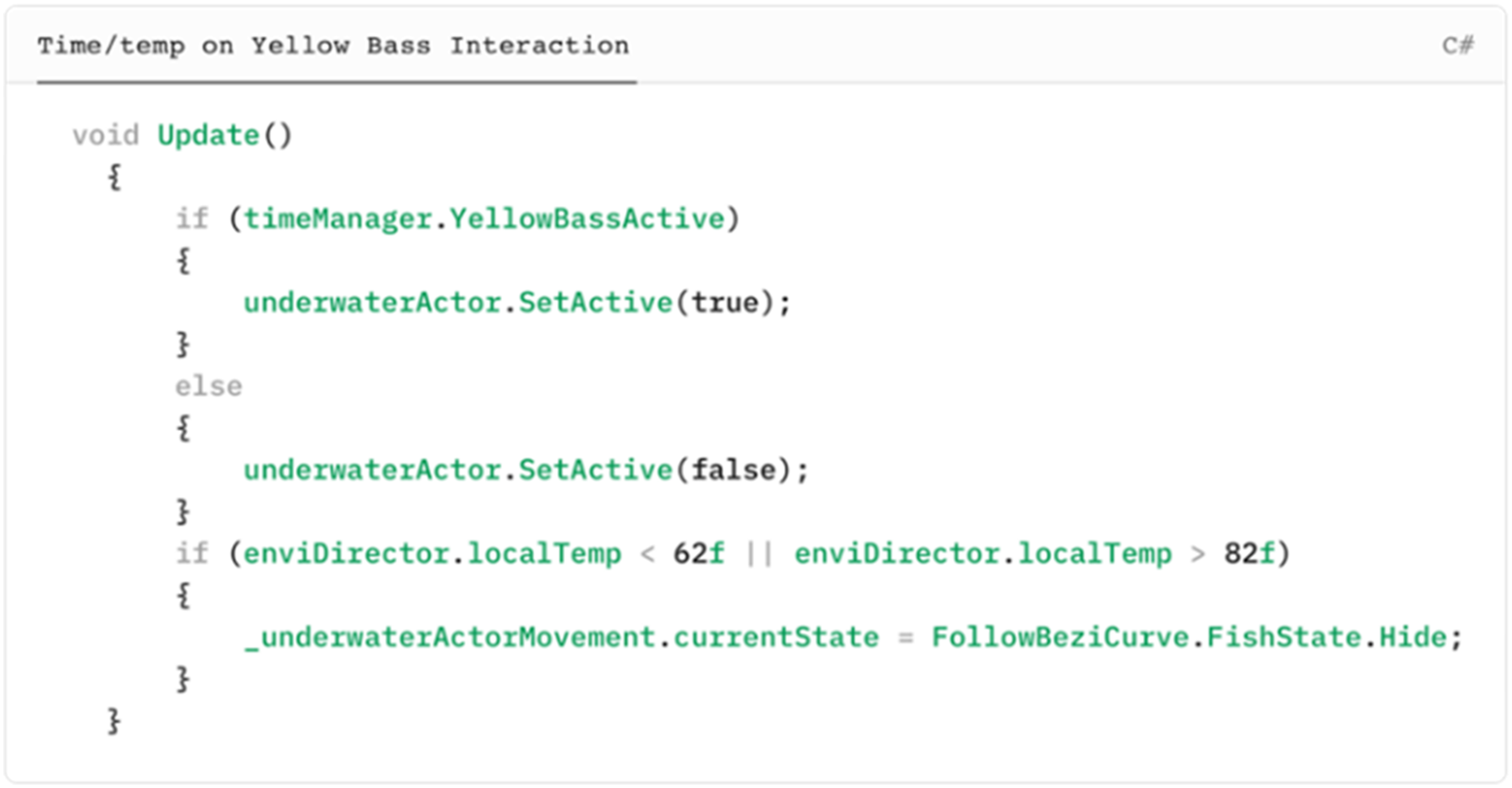
The weather manager integrates weather information and manages the visuals of underwater actors’ actions and the view. It retrieves real-time weather data from the OpenWeather API (OpenWeather, 2024) over the Trinity River area every five minutes and filters keywords that appear in the data. For example, the keywords “rain” and “thunderstorm” are used to detect the presence of rain in reality. Once a keyword is detected, the rain effect will be activated (Figure 10). In addition to their respective tasks, the weather and time managers are interconnected to facilitate cross-referencing and post-processing settings for virtual simulation. Processing rain effect in the weather manager.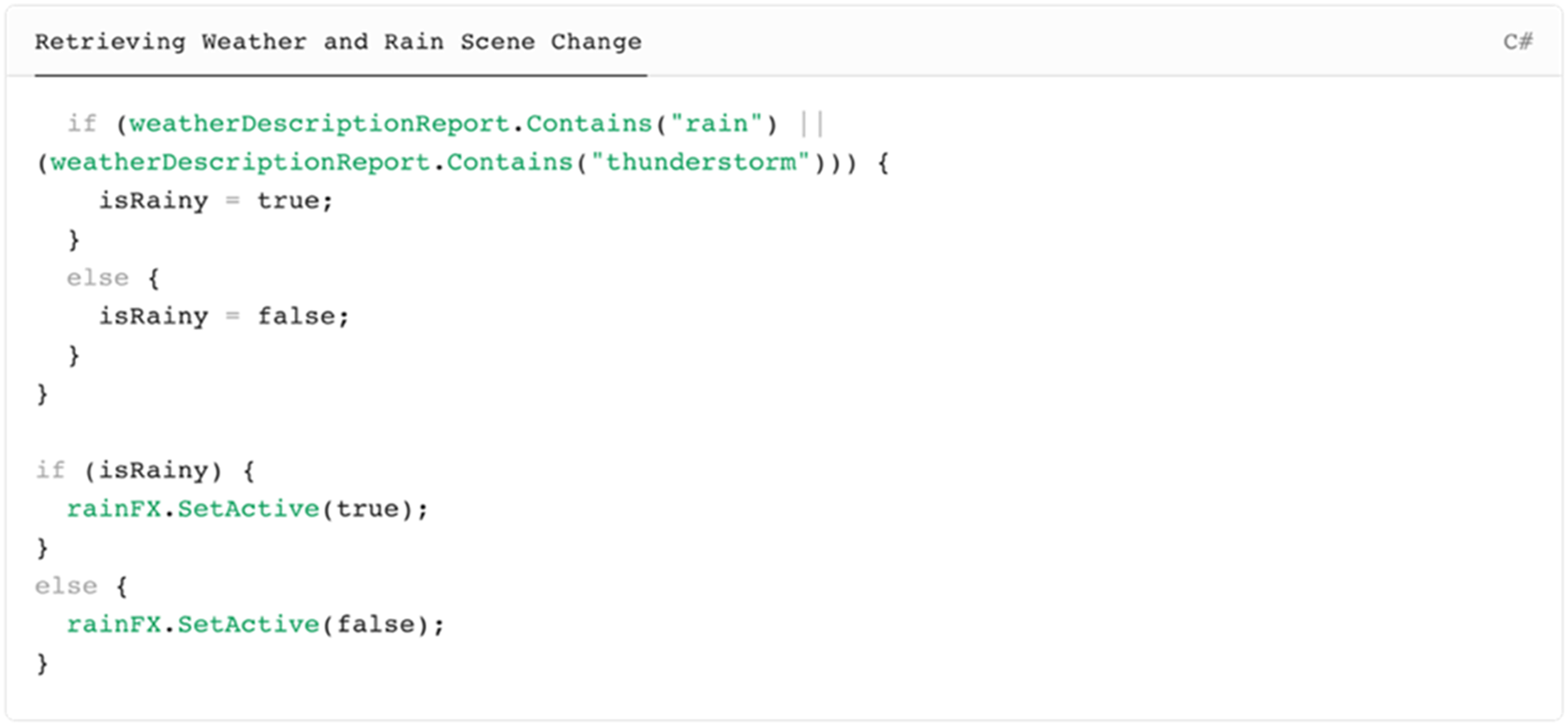
The AR manager processes data retrieved from the device’s built-in sensors (e.g., camera, accelerometer, and gyroscope) to measure the presence and intensity of human activity surrounding the device. Then, through the augmented reality tools in the programming software, the AR manager activates individual triggers for different types of underwater actors. Lastly, the audio manager detects and transmits audio data from the device; underwater audio of the Trinity River is played through the device’s speakers. Meanwhile, the device captures ambient sound via the microphone and quantifies it in decibels to assess species-specific responses to auditory stimuli.
Overall, data from environmental and ambient conditions are processed by these managers, shaping which underwater actors appear in the virtual Trinity River and how they move and behave under these conditions. Rather than treating environmental inputs and technological systems as separate domains, Wanderer embodies natureculture (Haraway 2003, 2008) by interweaving them through entangled human behaviors, environmental conditions, and technicalities. In this sense, every behavioral shift of a species within the app is not only an ecological response but also a cultural-technical translation, in which sensors, code, and the API mediate relations among human, nonhuman, and environmental actors. By foregrounding these entanglements, Wanderer reframes system design as more than a computational structure but a means of rendering visible the hybrid and co-constitutive dynamics of multispecies worlds.
In the same vein, Wanderer is designed as an open-source application that will be released publicly upon completion, enabling the underwater actors, interaction factors, and parameters to be adapted to local species and regional environmental conditions. This participatory openness reflects a naturecultural ethos, inviting designers, communities, and ecologies to co-shape the project rather than treating it as a fixed human-centered artifact. To support this, the project’s code base is hosted on GitHub, making it accessible for modification and reuse by others. We have also optimized the app for accessibility and performance. For example, we minimized texture file sizes, grouped species response signals to reduce processing demands, and parsed weather data at 5-min intervals to limit network traffic. By keeping Wanderer lightweight, mobile-friendly, and open to collaborative adaptation, we aim not only to sustain its technical usability but also to cultivate a posthuman design practice rooted in reciprocity, hybridity, and shared responsibility across species and communities.
Dissolving Boundaries
Our work aims to challenge and dissolve conventional boundaries that culturally and spiritually separate humans from nonhumans and nature. By opening Wanderer to collective modification and embedding ecological and cultural entanglements into its very structure, the project unsettles conventional divisions between humans and nonhumans, indoor and outdoor environments, and the virtual and real worlds, and advances human-computer interaction toward posthuman-computer interaction. Although the boundaries in question are grouped in this way, they are interconnected and overlapping in many respects. The project highlights the cross-boundary entanglement of natureculture and envisions a more responsible, reciprocal mutualism in which human and nonhuman actors co-inhabit and co-shape a shared environment for the future.
Human vs. Nonhuman Species
Wanderer’s un-interactive interaction design dissolves the boundaries between humans and nonhumans by intentionally refusing common interactive features in human-centered applications and the affordances provided by technological devices. That is, we do not grant humans the privilege they once held in anthropocentric cultures as the dominant species. In addition to being detected by the device, human actors exert no influence on the underwater species through common hand gestures, such as tapping or swiping. Although they could force the underwater actors to react (i.e., hide) by appearing in front of the device’s camera, they would thereby forgo their participation in the more-than-human ecological system. In addition to interaction design, we return screen time to the underwater actors by prioritizing their preferences regarding environmental conditions and their social relations with one another, since they are the main characters in Wanderer’s virtual environment.
Additionally, we appreciate the uniqueness of underwater actors by rejecting gamified interaction design and by breaking the human-nonhuman ownership and entertainment supply chain. By limiting human-initiated interaction and presenting underwater species with their natural rhythms, Wanderer shifts ecological dynamics from an anthropocentric perspective to a more multispecies, equilibrium-based relation. On the one hand, it renders human and nonhuman actors as “just” beings, existing on both sides of the screen, without hierarchy. On the other hand, it recognizes underwater species as “co-users” of the human-developed app and places particular emphasis on their need to balance power dynamics between humans and nonhumans in contemporary society. This alignment with natureculture reminds human actors that their experience with the Wanderer is of coexistence. By encountering species as autonomous actors rather than as game elements, viewers are invited to reflect on their own place within ecological systems and develop greater awareness of the ethical stakes of human-nonhuman relations.
Indoors vs. Outdoors
Equipped with mobile devices, Wanderer introduces underwater actors and the environmental conditions of the Trinity River into mostly human-dominated environments and teases the spatial perceptions. Unlike conventional mobile app designs that separate indoor and outdoor spaces by bracketing user experience within the device surroundings, Wanderer’s interaction connects human and nonhuman perceptions across indoor and outdoor settings and fosters a sense of natureculture. Despite being digitally situated in a device, underwater actors’ behavior depends not only on their biological preferences but also on human-induced interaction factors, such as human faces and ambient sound.
Specifically, Wanderer dissolves the in-/outdoor boundaries through cross-transmission and cross-influence. Cross-transmission delivers information that does not affect the condition from one side of the screen to another, whereas cross-influence refers to the delivery of information that would exert influence on the ecology and actors’ actions of another side. For example, river audio is projected to humans without effect, whereas ambient sound influences the behavior of underwater species. Nonetheless, Wanderer also strives to maintain pluralistic worldviews by keeping partial constants of individual environments. For example, viewers can see the pond sliders sunbathing on the rocks in Wanderer’s daytime view, even in situations where sunlight cannot be observed indoors. By interlacing indoor ambience with outdoor environmental data, Wanderer enacts natureculture as a lived experience. Everyday cultural practices such as speaking or moving become entangled with the rhythms of the river. For human actors, this creates a heightened sensitivity to how even mundane actions ripple through multispecies environments, cultivating mindfulness about their ecological footprint in both virtual and real worlds.
Virtuality vs. Reality
The semi-virtual environment in Wanderer blurs the boundary between virtuality and reality by integrating virtual simulations with real-time data from the regional environment and the mobile device’s surroundings. For example, the view and sunlight in Wanderer will vary by time of day, and rain effects will be added to the scene when it is raining in the Dallas area. Moreover, underwater actors in the virtual world will also flee from the screen when human actors approach the device. By connecting the virtual and real worlds, the un-interactive interaction in Wanderer occurs only when circumstances are suitable for both humans and underwater interactors. For example, yellow bass would not appear on the screen regardless of human action or inaction, except during their natural active period from 6 p.m. to 10 a.m., which means that viewers cannot summon the species in Wanderer through the interface. Although some may argue that humans could attract nonhuman species with incentives in reality, we intentionally chose to avoid such actions in our virtual simulation, as they would affect ecological sustainability in the real world.
A meaningful connection between the virtual and real worlds depends on the respectful relationship between the actors. With this goal in mind, Wanderer helps expand human empathy into nonhuman species and the shared environment, in that a virtual environment is no longer separate from human society but ecologically connected through shared rhythms and entanglements. Since virtual worlds materially influence physical worlds, we argue that designers should not exclude the responsibility and awareness of reality in their virtual creation but strive to bring humanity across the virtual-real boundary to care for “virtual reality” and all the actors within. Seen through the lens of natureculture, Wanderer’s user experience becomes less about escaping mundanity by entering a simulation and more about perceiving how virtual and real ecologies are co-constituted. The fluctuating presence of species makes environmental change directly perceptible to viewers, transforming abstract data into affective encounters that encourage deeper ecological awareness and responsibility.
User Reception and Designers’ Reflection
During the project development, we displayed Wanderer in an exhibition setting for over a month. The app was installed on a tablet and positioned slightly below eye level for wider audience viewing and face detection (Figure 11). The tablet and the app were on almost 24/7, except for troubleshooting and updating. Therefore, viewers could see the species’ daily routine and how the scene changes with weather conditions and time of day, and we received feedback on the app and observed viewer-device interaction. We collected anonymous, non-identifiable product feedback to inform iterative improvements. These activities were carried out in informal conversations and did not involve human-subjects research; no personal data were collected. Wanderer is shown in a tablet on a desk below eye level.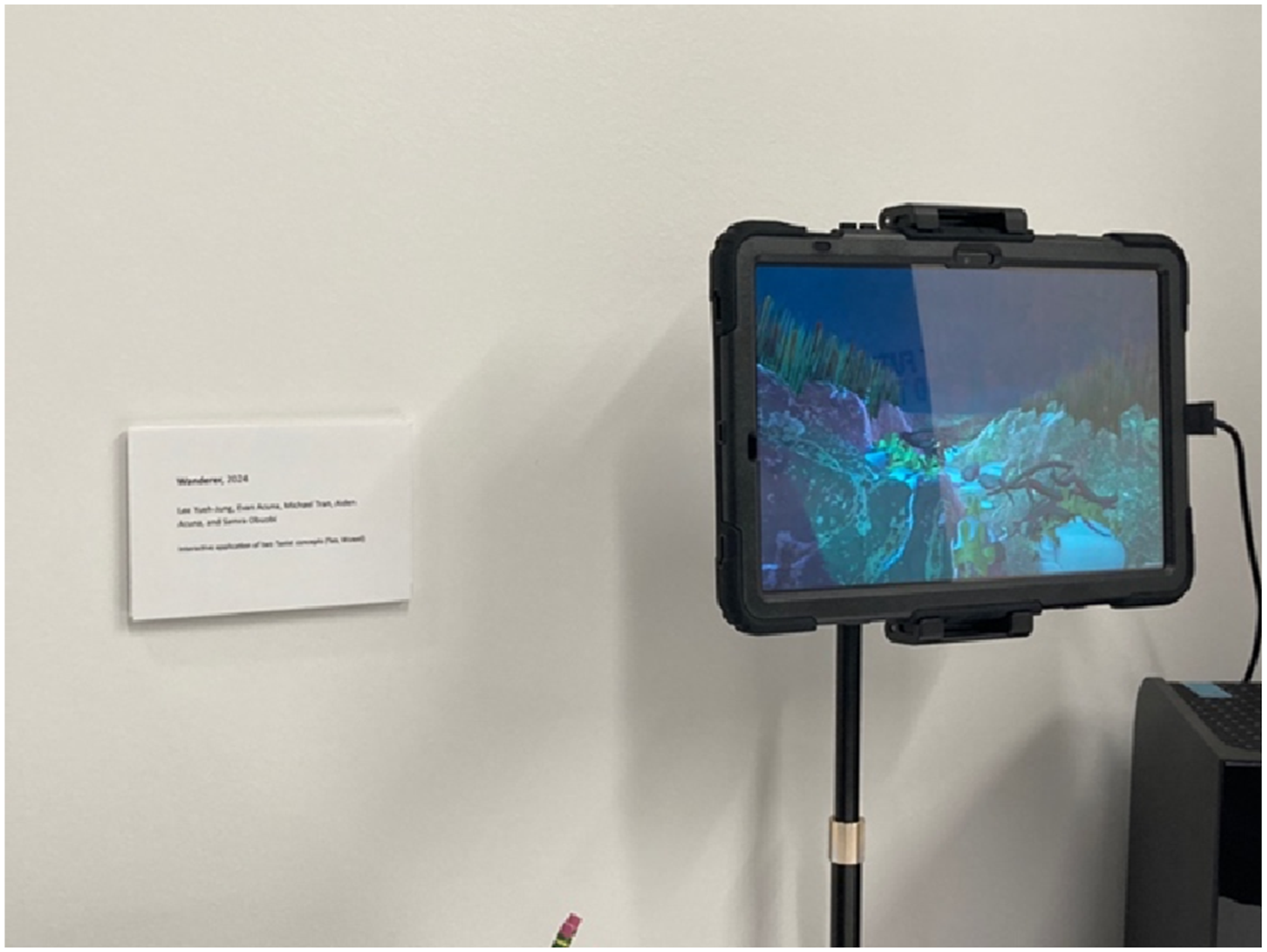
In our observations, the audience initially expressed curiosity by interacting intensively with the app (tapping, waving, or suddenly showing their faces after hiding from the device’s camera) (Figure 12), and eventually accepted the setting. We also noticed some viewers would carefully move past it at a distance to avoid interrupting their swimming. Although it is unclear whether changes in human behavior could be further transformed into respectful interactions with humans and nonhumans, the team observes a shared pattern: people have gradually learned not to disrupt the fish when passing by the site and to appreciate the view from a distance. One viewer said it reminds them that life depends on broader conditions, not just our own actions, while also expressing concern about whether digital representations still oversimplify rich ecosystems into controlled conditions. A young audience attempted to obscure their faces, then reappeared in front of the app.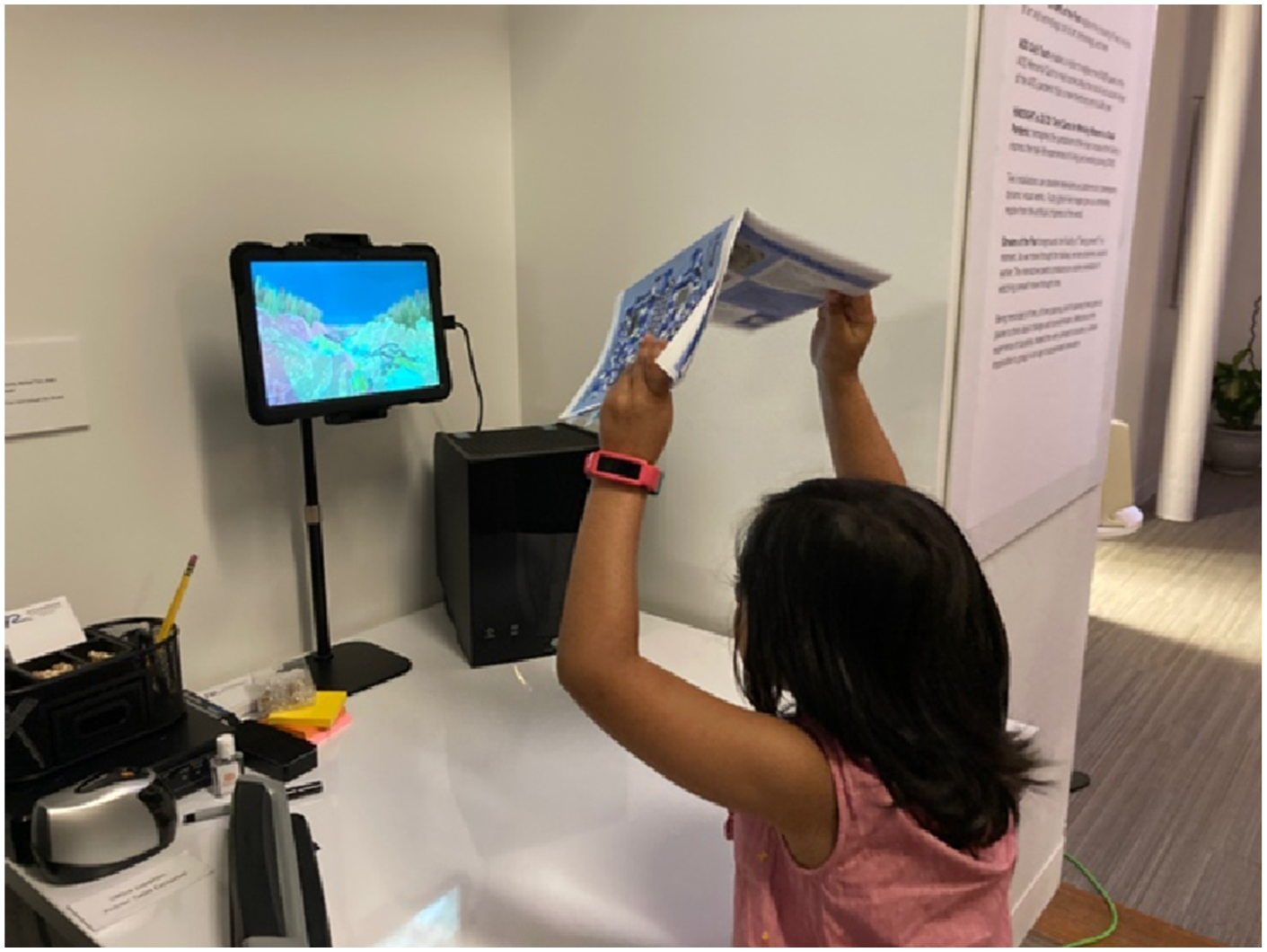
From design perspectives, achieving legibility and coherence required multiple iterations that challenged conventional design practices. Rather than relying on game-like feedback cues (e.g., particle effects and color changes), the project emphasizes subtle species movements, spatial variations, and ecological signals. The translation from natural reality to visual elements, such as the water surface, was repeatedly iterated (often in ways that defied physical realism) to create a perceptually convincing river environment. These conceptual and technical negotiations illustrate how Wanderer blurs the boundary between ecological modeling and interface design, prioritizing multispecies rhythms and environmental awareness over entertainment logics. In doing so, the design challenges mirrored the audience’s gradual adjustment from expecting conventional interactivity to engaging more attentively with ecological presence.
Posthuman-Computer Interaction (PostHCI)
Wanderer, a mobile application, seeks to shape conventional HCI toward posthuman-computer interaction (postHCI). Although several terms and practices have been developed, such as post-human computer interaction (PHCI) (Brown, Ovalle, and Matsuda 2023), posthuman HCI (Nicenboim et al. 2023), and post-human interaction design (Van Dijk 2020), referring to broader animal-, plant-, and multispecies-computer interaction that study and explore the way nonhuman species interact with or react to computers for human society, through the lens of critical posthumanism, we found that simply replacing “human” with “animal,” “plant,” and “multispecies” does not necessarily change the anthropocentric view of the interaction. Dedeoğlu and Chandra’s (2025) study, within the posthuman turn in computing and design, urges designers and computing professionals to consider multispecies justice and ecological impact in their work, recognizing the interconnectedness of all entities affected by their technological and design decisions. Given that, we use the term postHCI with a political intention to emphasize design as an ethical practice of cohabitation that resists anthropocentrism and foregrounds reciprocity with more-than-human actors.
Political Stance
In this paper, our objective is not to understand the “know-how” of the interaction between multispecies and computers, but to envision a sustainable future within more-than-human worlds by rejecting human exceptionalism and decentering human position and intention (Nicenboim et al. 2023). The transition from HCI to postHCI is thus of political and technological significance, as it places “post-” as a prefix to HCI to indicate a temporal and conceptual break from conventional HCI and acknowledge the critical continuity that carries HCI values and legacies. The term postHCI also serves as a reconceptualization, incorporating Taoist and posthumanist perspectives, emphasizing entanglements among humans, technologies, and environments, and addressing the ethical and conceptual demands of a world in which agency is distributed.
Philosophical Inquiries
The transition from HCI to postHCI invites philosophical questions and challenges. For example, can we, as humans, create technologies that are not human-centered or serve human purposes? By what measure can we determine the methods or evaluate the outcomes of such development? Nicenboim et al. (2023) highlight the tensions and practical challenges in creating nonhuman-centered technologies, noting that decentering does not exclude humans but rather recontextualizes them within broader assemblages of ecologies, materials, and multispecies. Since we are still fleshing out the idea and its entailment, we provide no definition or rules for practicing postHCI. However, we can discuss our efforts with the project Wanderer to conceptualize the potential processes.
Drawing from Nicenboim et al.’s (2023) five dimensions of decentering, Wanderer shifts interaction design away from anthropocentrism in several ways. As a cornerstone, it draws on posthumanist, Taoist, and naturecultural theories that frame humans as entangled rather than exceptional. Its crux lies in problematizing human-centered HCI logics, resisting gamified control in favor of nonhuman rhythms and agencies. In the constitution, the system fosters reciprocal relations by asking human actors to attune to underwater species and environmental conditions through un-interactive interactions that cultivate response-ability. The context situates Wanderer within postHCI, sustainable HCI, and more-than-human design. Finally, its contribution is to provide a design exemplar, a methodological strategy, and a set of principles that translate ecological data into affective encounters, thereby fostering empathy, environmental awareness, and multispecies cohabitation.
Naturecultural Encounter
With Wanderer’s un-interactive interaction design, the overall experience emerges as an encounter with natureculture, where human actors perceive themselves as part of an entangled ecology in which technological, human, and nonhuman actors co-shape one another. The independent yet connected mobility of the nonhuman species also resonates with natureculture by showing human actors that technology is not separate from ecological systems but an active participant in them. Under the circumstances, Wanderer’s interface becomes an ecological mediator: rather than delivering entertainment, it fosters experiences of interdependence and vulnerability that make environmental entanglements tangible and ethically pressing.
Conclusion
Wanderer is an experimental project that speculates on a responsible and sustainable future for more-than-human worlds. It encourages us to broaden our empathy for the local environment and to appreciate nonhumans in the shared space. Although the effects of human exposure to virtual nature urge further investigation, the project offers an alternative modality of technology that opens possibilities for humans to cohabit with, yet not interrupt or manipulate, nonhuman species and digital devices.
Given the context, we envision that Wanderer could be implemented in public sectors, such as healthcare facilities, educational institutions, and open spaces. In healthcare facilities, Wanderer provides real-time virtual simulations of local scenery and species, enhancing a sense of connection to nature and improving patients’ well-being. In educational institutions, Wanderer displays rich ecological information and immerses viewers in a virtual environment where they learn about aquatic ecosystems and biology. On the other hand, its noninteractive design offers a different perspective for viewers, allowing them to experience a respectful relationship among humans, computers, and nonhuman species in the simulation. In other public open spaces, Wanderer not only serves the local community at its core by bringing humans and nonhumans together, but also provides critical environmental information that benefits residents in the area. Furthermore, residents can gain insight into how human activities affect the ecosystems of nonhuman species if urban factors (e.g., noise, light, and water pollution) are incorporated into the program. These potential installations would advocate environmental awareness and weave the connection between humans and nature.
Since the project is still a work in progress, its specifications are subject to change to integrate more environmental and ambient data into its interaction and optimize its performance. Nevertheless, we have applied several theories, conceptions, and techniques to concretize a mutually beneficial relationship between humans and nature via a mobile device and application, challenge human-centered conventions that dominate Western HCI, reconnect human perception with ecological cycles, and remind viewers that cultural practices and ecological processes are inseparably entwined. Through these designs, Wanderer cultivates natureculture in postHCI that resists anthropocentric values of nature-culture dualism and instead foregrounds reciprocity, entanglement, and cohabitation with more-than-human others.
Footnotes
Acknowledgements
The authors would like to thank Aidan Acuna, Evan Acuna, and Michael Tran for their teamwork on the project Wanderer.
Declaration of Conflicting Interests
The authors declared no potential conflicts of interest with respect to the research, authorship, and/or publication of this article.
Funding
The authors disclosed receipt of the following financial support for the research, authorship, and/or publication of this article: The authors received $1000 from the Mabel H. Bremer Travel Award, $1000 from the 2024-2025 Harry W. Bass Jr. Graduate Travel Award, $500 from the Dennis M. Kratz Research Fund, and $500 from the Harry W. Bass Jr. Graduate Research Award at the University of Texas at Dallas for the project Wanderer.
