




Abstract
With a rapidly expanding population of people in Africa, the demand for food is predicted to increase, with a need for higher environmental sustainability. As such, meeting food consumption needs while continuing on track to limit global warming below 1.5°C and reverse biodiversity loss is referred to as the Food-Climate-Biodiversity challenges posed by the Anthropocene era. The nexus Food-Climate-Biodiversity is complex and interconnected, and solving it requires bridging diverse sources of experience and knowledge. Using the Mono Transboundary Biosphere Reserve that extends across the Togo and the Benin Republic boundary as a case study, this paper explores the future of such a nexus from the perspective of Indigenous Peoples and Local Communities based on their cultural and local knowledge. We conducted six focus group discussions with 57 participants from six villages located in the Mono Transboundary Biosphere Reserve between February and April 2024. The study explored experiences and perceptions of the Food-Climate-Biodiversity nexus, the benefits and possible threats impacting it, the role played by Indigenous and Local Knowledge, and the perceived future. Findings demonstrated that despite the foregoing functional importance of mangrove ecosystems, they are disappearing rapidly due to anthropogenic actions, and their future in supporting sustainable food production, regulating drastic weather patterns, and conserving key biodiversity species is full of uncertainties. This study stressed the need to reintegrate Indigenous and Local Knowledge in conservation practices in order to change the current trajectory of the nexus Food Climate Biodiversity.
Introduction
We are now in the age of the Anthropocene, where human activity is the main driver of unprecedented environmental change (Steffen et al. 2018). The Anthropocene is characterized by a range of novel and diverse challenges. There is no certainty over the rapidly evolving planetary social-ecological entanglements of the Anthropocene (Ellis 2023). This new age has profound meaning for humanity (Folke et al. 2021), as some societies, cultural practices, and institutions are disappearing as a result (Ellis 2023). The rapid and cumulative environmental changes observed in the Anthropocene age are mainly caused by anthropogenic pressures that have transformed the natural environment and the Earth system (Yang et al. 2022), resulting in the disintegration of natural ecosystems (Jones 2022) and a drastic decline in biodiversity (Cepic, Bechtold, and Wilfing 2022). It is estimated that the world’s population is expected to increase by nearly 2 billion persons in the next 30 years (United Nations 2023), with most of the increase being observed on the African continent (African Development Bank Group 2019). While the human population is predicted to increase, wildlife populations are in drastic decline, with around 70 percent of wild animals becoming extinct since 1970 (WWF 2022). For instance, in Tanzania, many of the presently abundant types of wildlife species are projected to begin disappearing by 2050 as the number of people in contact with wildlife increases (Masanja 2014). These human-nature nexus predictions may have serious implications for the quest for environmental sustainability and food security around the world (Sala et al. 2017), ultimately impacting the survival of our human species (Vågsholm Arzoomand, and Boqvist 2020).
The Western region of Africa is not exempt from the consequences of human pressures on ecosystems in general. For the past 75 years, human-induced pressures have intensified and are expected to worsen in the future with potentially devastating cascading effects on human societies (Moullec et al. 2021). Besides direct anthropogenic pressures and natural ecosystem loss, biodiversity changes in the Anthropocene are affected by climate change (Sinsin et al. 2021; Storch et al. 2022). West Africa is one of the world’s most sensitive regions to climate change (African Development Bank Group 2022; Niasse, Abel, and Abou 2004), and as climate change impacts rise in the future, natural ecosystems’ distribution patterns are anticipated to change (United Nations Environment Programme 2007). Climate change will increase pressure on land (Organisation for Economic Co-operation and Development 2022) by directly impacting soil fertility, rain patterns, crop yields, and food production (Owino et al. 2022). Despite the uncertainty posed by climate change, the demand for food, especially meat consumption, is on the rise within West African countries (Adesogan et al. 2020). For instance, meat consumption per capita increased by 20 kg from 1961 to 2014 (Vermeulen et al. 2020). Consequently, the demand for livestock is projected to increase by 70 percent by 2050 (Owino et al. 2022).
Meeting such food consumption needs while continuing on track to limit global warming below 1.5°C and reverse biodiversity loss is referred to as a Food-Climate-Biodiversity (FCB) challenge posed by the Anthropocene era (Baldwin-Cantello et al. 2020). The interconnected and mutually reinforcing FCB challenges and how they impact human populations in West Africa remain poorly explored (Owino et al. 2022). According to Sumaila and Cheung (2022), solving FCB challenges requires bridging diverse sources of experience and knowledge. They have also called for a transdisciplinary approach, which is crucial to finding solutions for FCB challenges, by bringing together researchers, knowledge-holders, stakeholders, and rights-holders to co-develop knowledge and policy options. Yet, Indigenous Peoples and Local Communities (IPLCs) who are local knowledge holders are often marginalized (Ayaa and Waswa 2016), ignored (Maweu 2011), and discriminated against (Whyte 2012) in decision-making for the future. Their contribution has been inferiorized (Horsthemke 2004) as they have been regarded as less progressive by modern societies (Rist and Dahdouh-Guebas 2006).
IPLCsare experienced partners in solving the FCB challenges at the local level, as they have intricate knowledge of the patterns of local biodiversity and ecosystem change. Engaging them in future decision-making is increasingly recognized as a key element in the quest for long-term sustainability (Hamza et al. 2023; Owuor, Icely, and Newton, 2019). The Intergovernmental Science-Policy Platform on Biodiversity and Ecosystem Services Global Assessment (IPBES-GA), for example, is the first global-scale assessment to engage systematically with issues of importance to IPLCs (IPBES, 2019). Furthermore, some studies have revealed the merits of incorporating IPLCs for the future of natural ecosystem management and climate change (Heneidy and Waseem 2007; Kanene 2016; Madonsela and Machete 2023; Ngara and Mangizvo 2013). Today, there is a global understanding of the crucial role played by IPLCs in tackling the major challenges posed by the Anthropocene Age.
The aim of this paper is to understand the experiences and perceptions of the FCB nexus from IPLCs’ perspectives in the Mono Transboundary Biosphere Reserve in the Benin Republic and Togo, West Africa. By looking at the nexus through a mangrove ecosystem lens, IPLCs were invited to discuss the opportunities and challenges around the nexus and explore its perceived future for the next generation. This study aims to provide a reference point as to the possible contribution of IPLCs in exploring the future of the complex and reciprocal FCB interaction and provide an alternative way of addressing the wicked problems of the Anthropocene.
Literature Review
Indigenous and Local Knowledge-Nature Nexus
Historically, IPLCs have been using their associated knowledge to cope with severe environmental change and enable sustainability at the local level. Whilst not simple to define, their knowledge broadly refers to the expressions, practices, beliefs, understandings, insights, and experiences generated over centuries of profound interaction with a particular territory (Grey 2014). Terms commonly used in the literature to define their knowledge include ‘Indigenous and local knowledge’, ‘traditional knowledge’, ‘traditional forest knowledge’, ‘local ecological knowledge’ (Boafo et al. 2016), ‘Indigenous technical knowledge’, and ‘rural knowledge’ (Masinde and Bagula 2011). Indigenous and Local Knowledge (ILK) will be used in this paper to encompass all aspects related to this field of knowledge (Williams, Sikutshwa, and Shackleton, 2020).
There is a growing understanding of the contribution of ILK in conserving nature and reversing the advanced degradation of local biodiversity. At the global level, the main document of the 1992 Earth Summit in Rio de Janeiro, Agenda 21, explicitly states the vital role that ILK and practices play in environmental management and development (United Nations Conference on Environment and Development 1992). With regard to natural resources management, ILK has been identified as relevant in addressing the current unsustainable utilization of different categories of ecosystem services (Millennium Ecosystem Assessment 2005). The information, techniques, theory, and practices provided by ILK (Hill et al. 2020) are key to sustainable natural ecosystem management and conservation (Kanene 2016). Moreover, Donato-Kinomis (2016) argued that the use of ILK is an important catalyst for sustainability due to its direct connection to ecosystem management and conservation. An example of the value of ILK can be observed in the Samburu and Laikipia Maasai communities in Kenya, which have managed to survive challenging and unpredictable droughts and sustain their livelihoods (Roué et al. 2017). In times of severe drought, the communities use a vibrating stone believed to possess spiritual power to seek rain through Indigenous ceremonies that include prayers, milk offerings, the sacrifice of black and white goats, and singing (Oguge 2017). In Ghana, forest ecosystem services have been protected for decades through varied Indigenous practices, which involve customary laws and taboos (Corcoran, Ravilious, and Skuja, 2007). For example, in the Kpalgun and Yoggu communities of Ghana, it is a custom that parts of the shea tree can only be harvested for firewood when a newborn is introduced to the community (Boafo et al. 2016). Failure to comply with such customary law often results in a fine of money or livestock, public flogging, and, in extreme cases, expulsion from the village (Boafo et al. 2016). The Benin Republic is well known for its traditional and cultural religion named Vodoun. Followers of Vodoun believe in the existence of spiritual entities that significantly impact the sustainability of ecosystem services through local beliefs and customary laws (Djagoun et al. 2022). There is clear evidence that ILK and its practices have the potential to act as a foundation for local communities to assist in coping with adverse environmental conditions and promote sustainability at the local level (Tcheton et al. 2025).
Nevertheless, globalization, along with swift socioeconomic shifts, ecological challenges, loss of biodiversity, and climate change, undermines the connections between IPLCs and the continuity and dynamism of their associated knowledge in nature conservation (Fernández-Llamazares et al. 2021; Teixidor-Toneu et al. 2023). According to Cassidy et al. (2011) the risk of losing such knowledge is not from a lack of application or need but from outsiders’ indifference and devaluation of these knowledge systems. Colonialism has not been helpful either (Mapara 2009; Maunganidze 2016; Risiro & Tshuma 2013). Across many communities in Africa, colonizers, in the quest for local resources, engaged in the over-exploitation of natural resources without much consideration of the cultural beliefs embedded within the Indigenous communities (Risiro & Tshuma 2013). Consequently, the existing systems of ILK were erased and replaced with Western-driven belief, culture, and knowledge systems (Anwar 2011). Even though some forms of knowledge have remained resilient over time, the effects of colonialism have led to a rapid decline of ILK (Mosepele et al. 2007), which now threatens the relationship between IPLCs and nature (Horsthemke 2004).
Food-Climate-Biodiversity Nexus
Mangrove forests are a crucial resource all around the world. Sub-Saharan Africa contains over one-fifth of the world’s mangrove forests, with 70 percent of these found in 19 West African nations (Corcoran, Ravilious, and Skuja 2007). A total area of 15,704.47 km2 is covered by mangroves in that region of Africa, representing 10.3 percent of global mangrove areas (Spalding, Kainuma, and Collins 2011). In the Mono Transboundary Biosphere Reserve (MTBR), mangrove forests remain natural and occupy 7.50 percent of this reserve area (Adjonou et al. 2023). Today, the major roles of West African mangroves are now being understood in many West African countries, and their significant ecological and socioeconomic importance is well documented (Ajonina, Diame, and Kairo 2018; Feka & Ajonina 2011; Ndour, Dieng, and Fall 2012).
Mangroves represent a significant ‘natural capital’ (Aheto et al. 2016) and play a critical role in supplying food to local communities (Fousseni et al. 2017), mitigating and regulating the adverse effects of climate change (Yulianda et al. 2014), and hosting a unique ecosystem extremely rich in biodiversity (Feka & Ajonina 2011). Beninese mangrove forests provide local communities with timber and non-timber forest products, as well as abundant fishing grounds and salt (Teka et al. 2019). They are among the most carbon-rich tropical forests (Alongi 2022; Sinsin et al. 2021) and hence serve as greenbelts to mitigate the negative effects of climate change on coastal biomes (Yulianda et al. 2014). They have fewer tree species than other ecosystems, which sometimes leads people to believe that they are not rich. Mangrove richness is demonstrated as they serve as resting and breeding grounds for thousands of migrating birds (Aheto et al. 2016), and support large populations of vertebrate and invertebrate species (Corcoran, Ravilious, and Skuja 2007). However, the advanced degradation of such an ecosystem remains problematic. For example, 30 percent of their cover has been lost in 25 years, predominantly because of human-induced activities (Fousseni et al. 2017; Padonou et al. 2021). This is likely to lead to a severe threat to the reproduction of aquatic species and potentially enhance human beings’ vulnerability to poverty, climate disruption, and food insecurity (Sunkur et al. 2023; Teka et al. 2019). Consequently, there is a need for a deeper understanding of the reciprocal and complex system of Mangroves-FCB for future generations. This includes not only the supporting role of mangroves (Sunkur et al. 2023) but also requires the analysis of the fundamental relationship between IPLCs, their associated knowledge, and the FCB nexus (Martinez et al. 2024).
Mangroves offer a novel lens for understanding the relationship between food, climate, and biodiversity in West Africa. Therefore, this study aims to explore the understanding of the context and perceived futures of Mangroves-FCB from IPLCs’ perspectives in the MTBR.
Objectives: (1) Exploring the relationship between IPLCs and mangroves in the context of food, climate, and biodiversity. (2) Understanding how IPLCs perceive the future of mangroves in the context of food, climate, and biodiversity. (3) Identifying the role ILK plays in the relationship between mangroves and food-climate-biodiversity.
Research Questions: (1) How do IPLCs experience the benefits and threats of mangroves in relation to food, climate, and biodiversity? (2) How do IPLCs perceive the future of mangroves within the context of food, climate, and biodiversity? (3) What role does ILK play in the relationship between mangroves and food, climate, and biodiversity?
Materials and Methods
Study Area
Located in the south-west of the Benin Republic and Togo, the MTBR site covers an area of 346,285 ha (UNESCO 2018). The reserve is located in the dry Dahomey corridor, characterized by a diverse range of ecosystems, including mangroves (Kokou and Sokpon 2006). The Mono River is the main river upon which the reserve is built. The reserve has a tropical and humid climate with four distinct seasons: two dry (November to March and July to September) and two rainy (March to July and September to November) seasons (Adjonou et al. 2023). The study area was selected because it allows for the exploration of the intersection of food, climate, and biodiversity challenges for IPLCs. In the MTBR, around 2 million people are local (Adjonou et al. 2023), with 80 percent largely depending on the ecosystem services provided by the reserve (Kokou & Sokpon 2006). Such dependency from the local communities has drastically reduced the mangrove cover from 13,306 ha in 1995–9452 ha in 2015, representing a loss of 29 percent in 20 years (Sinsin et al., 2021). This significant loss has severe implications for forest resources (Adjonou et al. 2020) and may increase local people’s vulnerability to poverty (Teka et al. 2019), climate disruption, and food insecurity in the region (United Nations Development Programme 2022).
The study was conducted in eight villages where IPLCs access, interact with, and depend on the MTBR, and who have witnessed some patterns of change in the mangrove, climate, food, and local biodiversity. The villages considered in this study were chosen based on two criteria (Tcheton et al. 2025). Initially, we used the Global Mangrove Watch data from March 2024 to pinpoint locations where mangrove ecosystems are present within the reserve. We then projected the coordinates of all villages in the reserve to determine which ones are situated in or near mangrove areas, suggesting they might rely on these resources. We visited the villages identified as being in or near the mangrove ecosystem and arranged an initial meeting with the village chiefs. Subsequently, in every village, we requested village chiefs to evaluate the degree of interaction and reliance of village members on mangrove ecosystems by scoring it from 1 to 5, where 1 indicates low interaction, and 5 represents the highest level of interaction. The villages that recorded the highest level of interaction were considered in this study. Among the villages in the MTBR in Togo located close to mangrove ecosystems with the highest interaction, only two fell within our criteria of selection, Agbanankin and Agonkpamè. In the Benin Republic side of the reserve, only six villages -Gonguèkpè, Avlo, Bopa Centre, Dohi, Houakpè-Daho, and Nazoumè fit our selection criteria.
Figure 1 below shows the proximity of the villages included in the study within the MTBR. Map of the Mono Transboundary Biosphere Reserve (MTBR) with the study villages.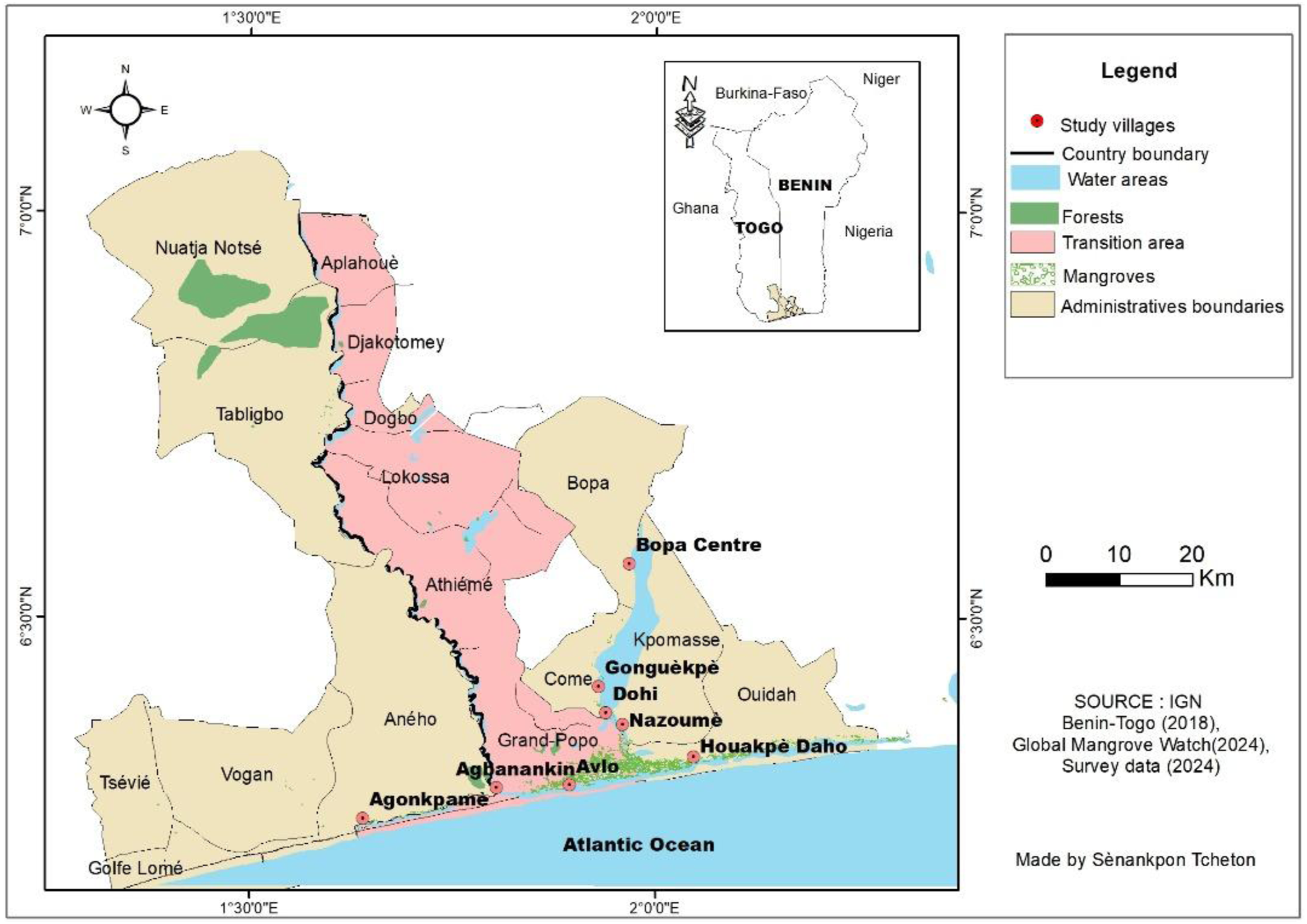
Study Participants
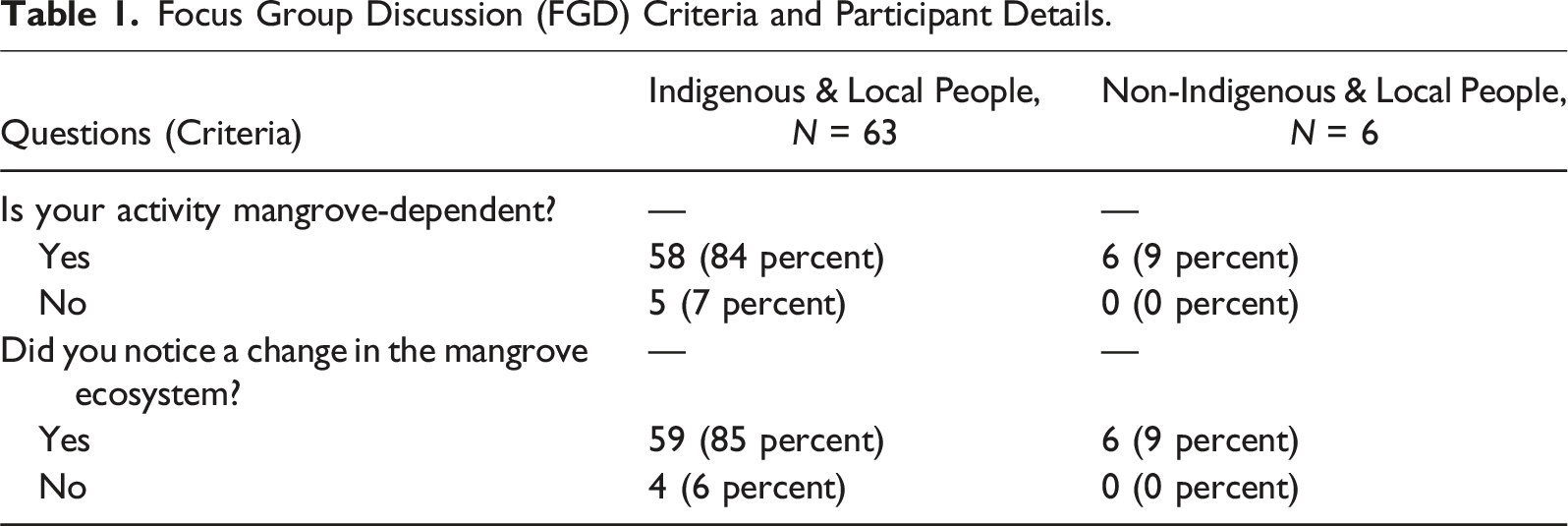
Focus Group Discussion (FGD) Criteria and Participant Details.
Focus Group Discussions
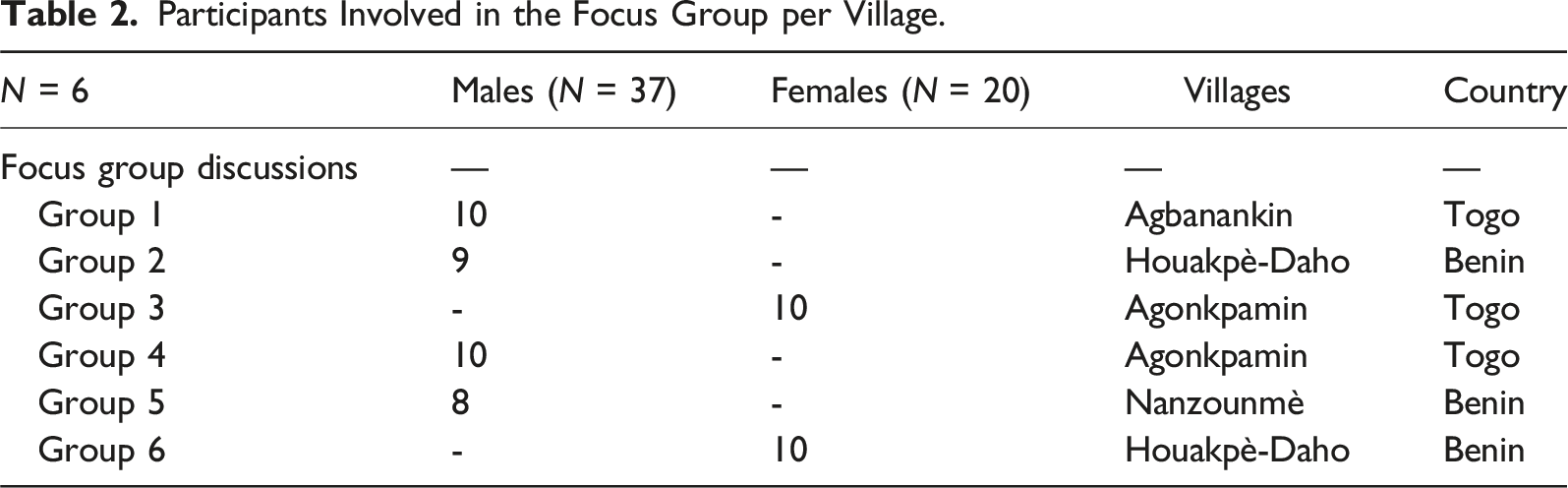
Participants Involved in the Focus Group per Village.
Data Analysis
The data was captured as audio recordings during the focus groups, after which detailed notes were taken for analysis. The notes were then transcribed from the local languages “Xweda” and “Fon”, and French to English by the primary researcher. Those transcripts were used for inductive coding. Inductive coding refers to a data analysis process wherein the researcher reads and interprets raw textual data to develop concepts or themes (Chandra & Shang 2019). The inductive coding approach was used as our research addresses a new dimension of interest within the FCB nexus, with very limited scientific knowledge. Inductive reasoning was used to code the first-order terms identified in the transcripts, aggregate them into the second-order categories, and then into the final category or themes (Chandra & Shang 2019; Tcheton et al. 2025). The first level of coding describes the participant’s perception related to the mangroves-food-climate-biodiversity benefits, threats, behaviors, future, and the role of ILK. We coded for the benefits (What are the benefits for you and for the ecosystem?), threats (What possible threats can make such a nexus more fragile?), behaviors (What can we positively do about such a nexus?), future (How do you see such nexus in the future?), and role of ILK (What is the place of ILK in such nexus?). That information was then aggregated into the second category of coding to give a sense of their relationship with the nexus Mangroves-FCB. Afterward, the second researcher expanded the coding using thematic content analysis (Kuiper et al. 2022; Schaal et al. 2023). Themes were then developed into a final category to provide a broader understanding of the complexity of the relationship between mangroves and the FCB in the reserve. Both researchers moved back and forth between various coding cycles to verify concepts, codes, and interpretations (Zreik et al. 2022). The data analysis process continued until both researchers agreed that saturation was achieved (Zreik et al. 2022). Table 1 in the supplemental material provides a detailed example of the coding process.
Results
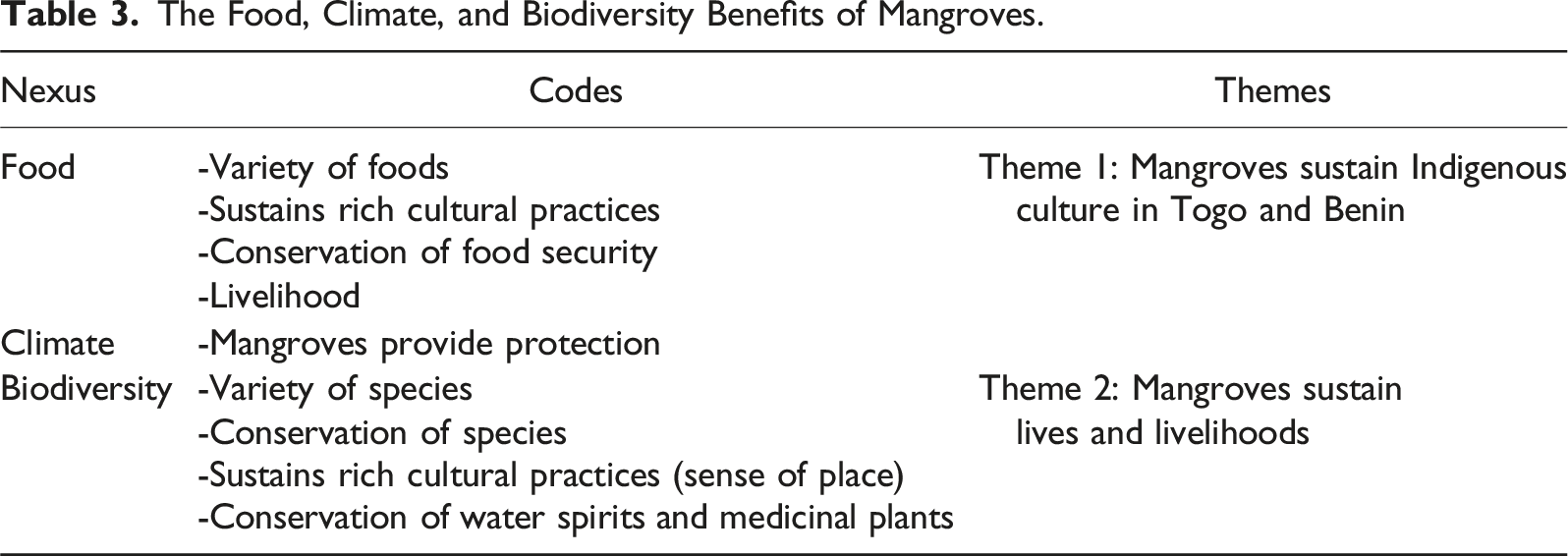
The Food, Climate, and Biodiversity Benefits of Mangroves.
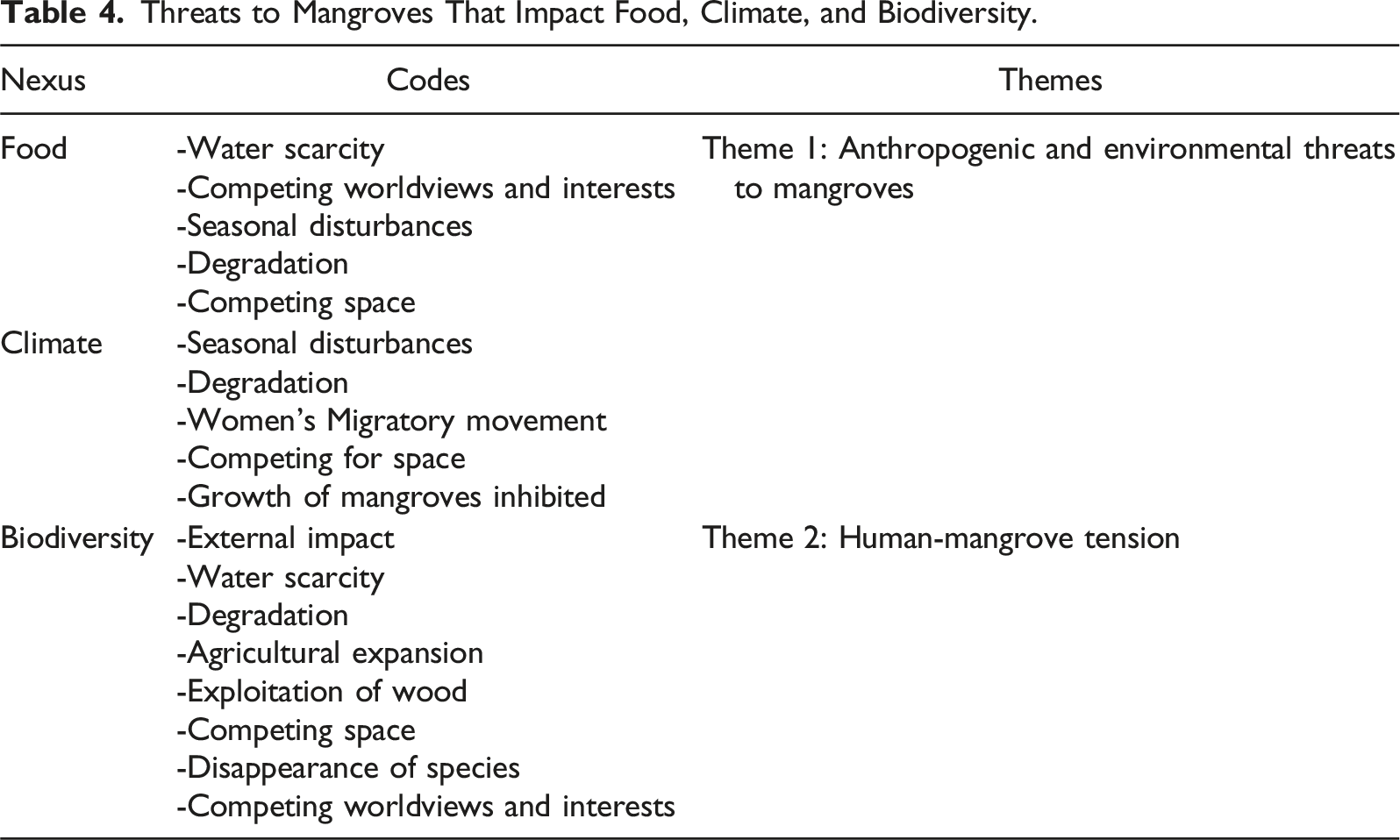
Threats to Mangroves That Impact Food, Climate, and Biodiversity.
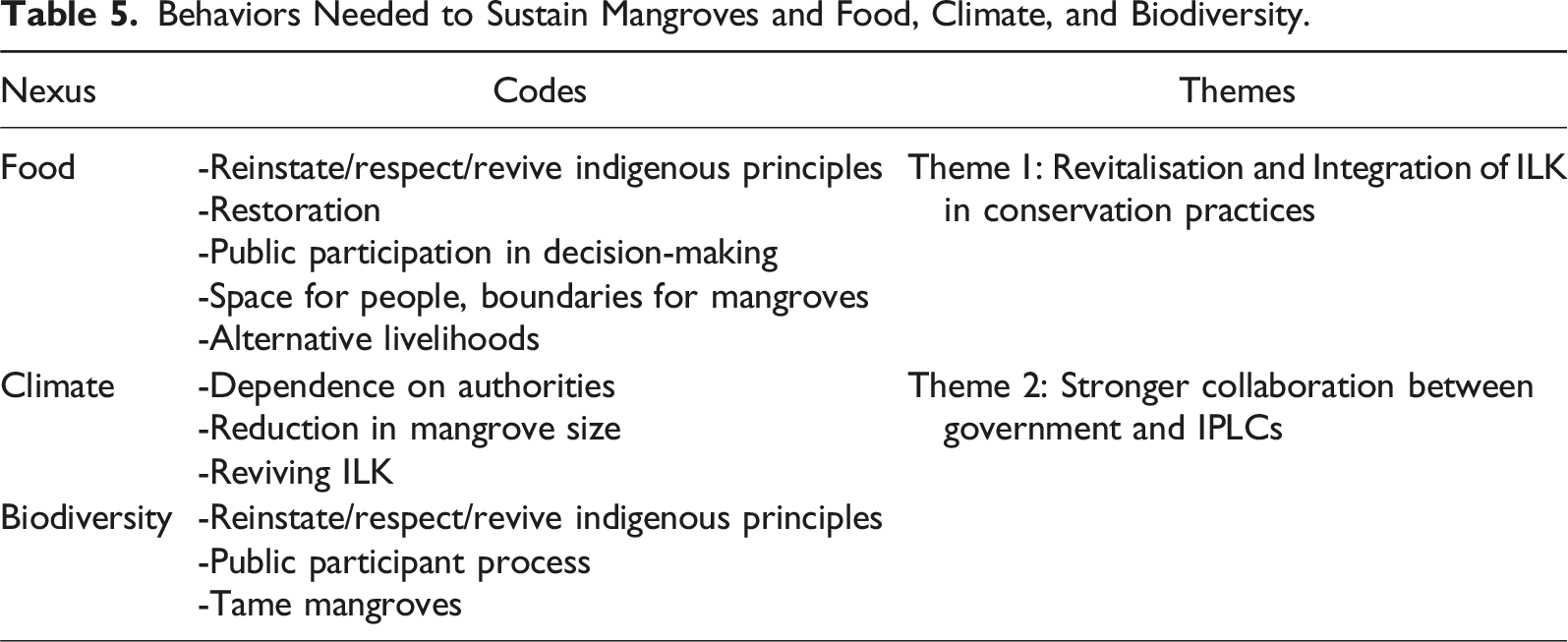
Behaviors Needed to Sustain Mangroves and Food, Climate, and Biodiversity.
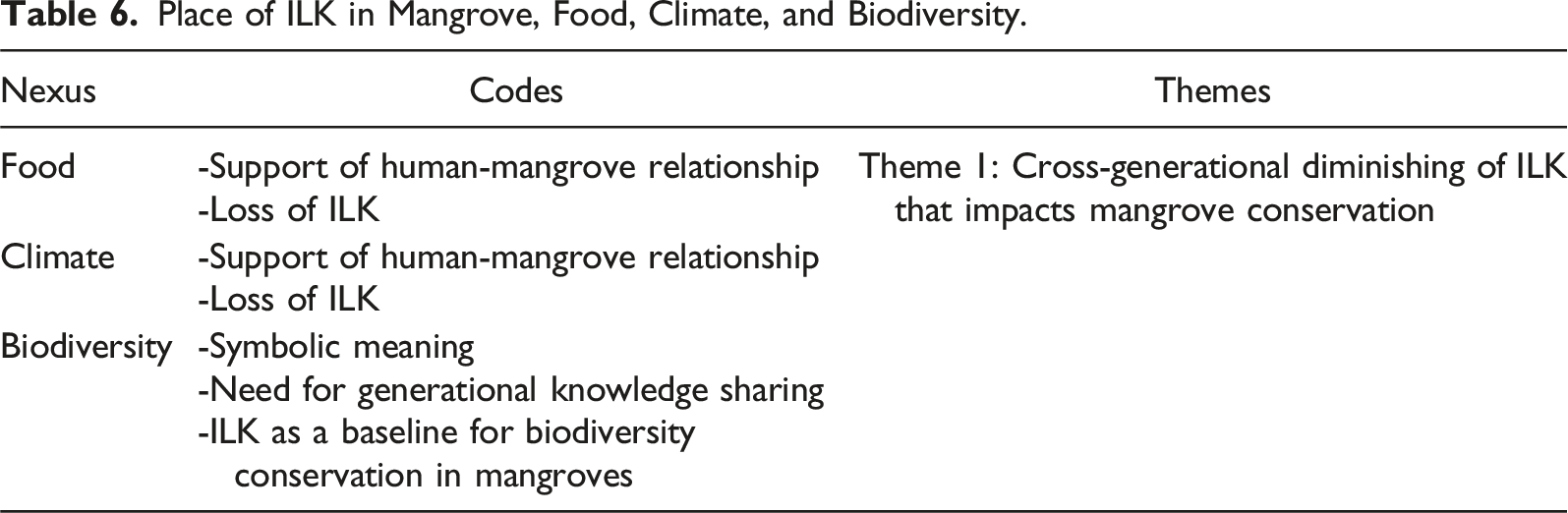
Place of ILK in Mangrove, Food, Climate, and Biodiversity.
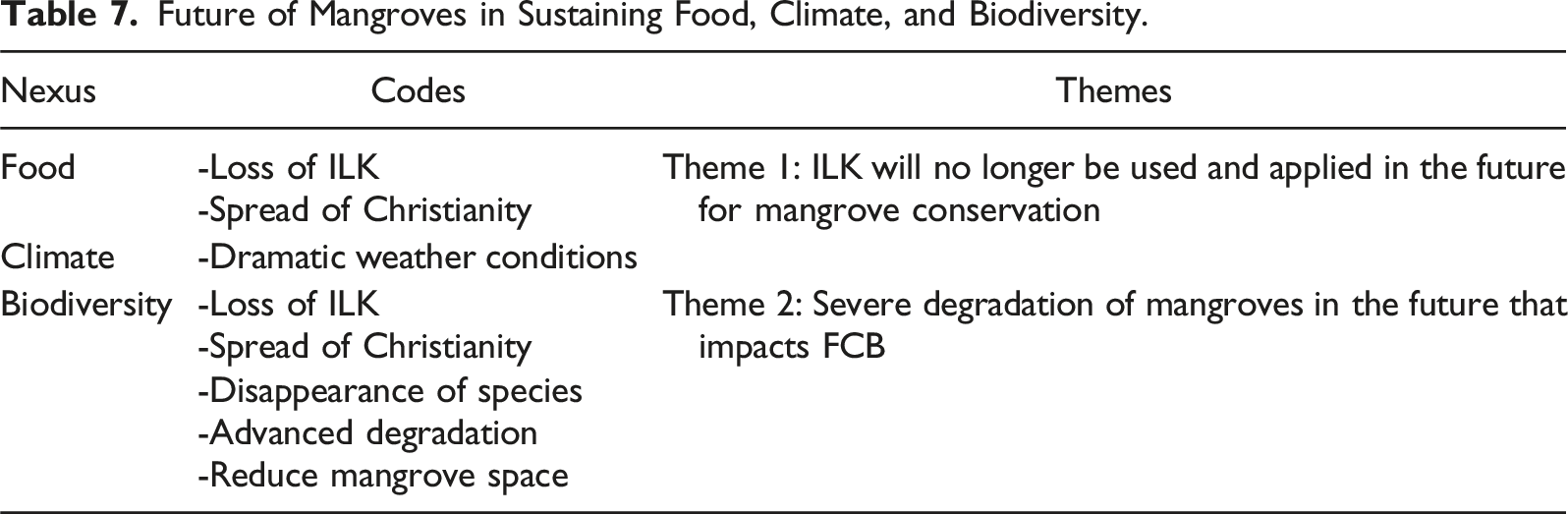
Future of Mangroves in Sustaining Food, Climate, and Biodiversity.
Mangrove FCB Benefits
The benefits of mangroves in terms of food, climate, and biodiversity were interconnected through the expression and experience of culture and livelihoods. Mangroves in the MTBR sustained the Indigenous culture and livelihoods of IPLCs living around (Table 3).
Two main themes emerged from 9 codes related to the food, climate, and biodiversity benefits of mangroves. First, mangroves sustained Indigenous culture through the conservation of cultural practices, beliefs, sacred rituals, and ceremonies. Secondly, mangroves sustained the lives and livelihoods of IPLCs by providing a variety of foods, conserving indigenous species, and protecting against extreme weather patterns.
Mangroves Sustain Indigenous Culture in Togo and Benin
Participants believed that mangroves play an important role in preserving the rich cultural heritage of their communities in Togo and the Benin Republic. For them, these ecosystems fostered a deep connection to a sense of place, which is expressed through the region’s biodiversity, sacred rituals, and Indigenous practices. Ceremonies linked to food, such as fishing and harvesting, were intertwined with cultural practices and Indigenous beliefs, including the veneration of water spirits and the use of medicinal plants. For participants, mangroves not only supported their cultural practices but also contributed to the conservation of various species by providing essential breeding grounds and shelters for species, thus reinforcing the symbiotic relationship between nature and their culture. “We believe in the spiritual entity that governs the water and helps us protect our mangroves.” (Benin, Houakpè-Daho, Male) “The roots of mangrove trees constitute calm nesting places for fish to reproduce, and when they are grown, they come out so that we can catch them.” (Benin, Nazoumè, Male)
Mangroves Sustain Lives and Livelihoods
Mangroves were perceived as critical for the support of human lives, food security, and local economies. Participants recognised that they act as natural protectors, offering services such as wave attenuation, shade for birds, resting areas for fish, and the provision of clean water and air. Moreover, participants referred to fishing, raising livestock, and non-farm activities as the common livelihoods supported by mangroves in the reserve. By providing a variety of foods, including fish, crabs, and snails, mangroves ensured food security and contributed to the livelihoods of these local communities. The fish trade, tourism driven by birdwatching, and the harvest and use of non-timber mangrove forest products, such as nuts, medicinal plants, and honey, provide essential food and generate income for IPLCs, illustrating how mangroves were integral to the economic resilience and well-being of these communities. “I cannot express in one word all the benefits that we generate from mangroves. They sustain our daily lives in so many ways and are a source of income for us as we welcome tourists.” (Togo, Agbanankin, Male) “I am a reseller of aquatic resources such as fish, snails, and crabs to support my family. This will not be possible if we do not have mangroves in our community.” (Benin, Houakpè-Daho, Female) “Fishing and hunting have been our main activities in the village for decades now, and we have an obligation to be grateful for mangroves to exist and support our livelihoods.” (Benin, Houakpè-Daho, Male)
Despite these recognized benefits, mangrove ecosystems were perceived as facing several threats that affected their intrinsic ability to supply food to local communities, contribute to mitigating and regulating the adverse effects of climate change, and support the rich and unique biodiversity.
Mangrove FCB Threats
Table 4 shows the perceived threats to mangroves that impact food, climate, and biodiversity are exacerbated by natural events such as seasonal disturbances and water scarcity. Participants described anthropogenic disturbances that have caused competition between humans and mangroves, the disappearance of key species, the degradation of natural habitats, and agricultural expansion, which has led to human and mangrove tension.
Two main themes emerged from 18 codes related to the food, climate, and biodiversity threats to mangroves. First, there are anthropogenic threats to mangroves. Second, there is an emergence of human-mangrove tensions in the study area.
Anthropogenic and Environmental Threats to Mangroves
According to participants, the resilience of mangrove systems to face threats is negatively impacted by a range of encroachments, such as dams, warm water, sand, mud, and motorboats, that also impact the availability of fish. Water scarcity is being experienced due to the encroachment of sand and mud, which negatively impacts mangrove growth and reduces fish populations. Degradation caused by illegal cutting, pollution, and agricultural expansion is perceived to further degrade mangrove systems, which in turn reduces their resilience, making them more prone to environmental impacts. Furthermore, seasonal disturbances, whether natural or anthropogenic, were perceived to heighten stress on the mangrove and negatively impact the availability of fish. The expansion of salt production and increasing village populations are experienced as being in competition with the mangroves for space, which threatens the future of the mangroves. “The Nagbéto dam is the biggest threat we have seen for decades now. When we are in the rainy season, such a dam stores water and releases it once in the dry season. The power of releasing chases a lot of our aquatic resources away.” (Benin, Nanzoumè, Male) “Today, the community is growing, and every single person or kid wants to go in the water and fish. It is obvious that the fish in the water are no longer enough for us.” (Togo, Agonkpamin, Male)
Human-Mangrove Tension
Participants experienced a strong disconnection between Indigenous principles and governmental laws, as well as religious beliefs and attitudes that negatively impacted the natural practices related to mangrove conservation. In addition, the competition for space between human activities (such as salt production and mosquitoes causing illness) and mangrove conservation created tension, which highlighted the need for alternative ways. For instance, participants explained that women who are involved in salt production are impacted by the conflict between their livelihoods and conservation. The collective degradation and exploitation of mangroves have resulted in the disappearance of species that, in turn, have impacted livelihoods and indigenous practices, according to participants. “Before, fishing activities were organized in groups to avoid over-fishing and breaking the water principles. Things change, and our community is growing. I think it is normal that we are more fishers to fish, more hunters to hunt, and more farmers to farm.” (Togo, Agonkpamin, Male) “There were some key wild species that we used to see before, and they are no longer seen. Before, our activities were mainly mangrove-dependent, and the more we grow now, the more we need spaces for living.” (Benin, Nanzoumè, Male)
Most threats associated with mangroves that impacted food, climate, and biodiversity were directly or indirectly the result of anthropogenic behaviors.
Mangrove FCB Behaviors
Participants mentioned that behaviors that are needed to sustain mangroves and their impact on food, climate, and biodiversity need to be through the shift to alternative livelihoods, restoration actions, and the respect of indigenous principles. They also highlighted that there is a need to reinforce the collaboration between IPLCs, and governmental agencies (Table 5).
Two main themes emerged from 11 codes related to the food, climate, and biodiversity, and the needed behavior towards mangroves. First, there is a need for the revitalisation and integration of ILK in conservation practices. Secondly, there is a need for stronger collaboration between government and IPLCs.
Revitalisation and Integration of ILK in Conservation Practices
Participants felt that Indigenous principles for water are no longer respected, which created a disconnection between humans and nature. Such disconnection was mainly due to the break of some Indigenous principles that have been practiced for decades. Participants shared that women are still breaking one of the Indigenous principles of not practicing any related mangrove activities when they are in menstruation. This is an offense to the water spirit, according to participants. Fishers kept fishing on unauthorized days and, therefore, offended the gods. However, participants felt that the acceptance and respect of Indigenous principles are needed to ensure biodiversity conservation, water provision, and the prediction of weather patterns because indigenous principles have been playing a significant role in allowing nature to rest and recover, or to live in better harmony with the availability of fish. “I think we are the source of our own problem in this community. The gods are angry with us because we have failed to respect basic rules and follow instructions they have initiated for decades. Nothing good will come from our disrespect and bad behaviors.” (Benin, Houakpè-Daho, Male) “From what I have seen so far since I was born, I can say that no one can defy Zangbéto. This is our first Vodoun, commonly called the night guardian. It protects people and our lands. When we set it in the mangrove, no one dares to collect wood or cut mangroves.” (Benin, Nanzoumè, Male)
Stronger Collaboration Between the Government and IPLCs
Participants expressed a need for collaborative work between IPLCs and governmental authorities to revive the use of Indigenous practices in mangrove restoration. They felt that this was only possible when IPLCs were given a seat at the decision-making table and heard equally. However, the dependency of IPLCs on the governmental laws and funding system was disturbing the implementation of some rituals and ceremonies. Some of the rituals were experienced as being expensive, and there was no financial support from the government. Participants felt that IPLCs are very limited in their continuous conservation efforts, especially in controlling advancement or cutting mangroves, as governmental laws now protect them. As a result, some of the mangrove trees were domesticated for local use by the local population. For participants, the most important aspects to consider are strengthening the partnership with the government and other funding agencies in order to sustain their livelihoods and Indigenous practices and ensure the conservation of mangroves. “From my point of view, I feel like the government only tends to financially support Indigenous groups of people with whom they politically share interests and the same ideology. We respect their decision, but do not feel like we matter to them.” (Benin, Nanzoumè, Male) “We are only asking for the right to cut the mangroves where necessary, as they are taking our living space, and it is becoming difficult for us to easily navigate.” (Benin, Houakpè-Daho, Female)
The result suggested that incorporating, promoting, revitalizing, and integrating ILK in conservation practices is key to sustaining food, climate, and biodiversity. Therefore, it is crucial to explore the place of ILK in sustaining mangroves and FCB.
Mangrove FCB and Place of ILK
Table 6 shows results related to the place of ILK to support human and mangrove relationships through food provision and climate. However, the loss of ILK is impacting biodiversity conservation, which has implications for the symbolic meaning that some key biodiversity species have.
One main theme emerged from 7 codes related to the food, climate, and biodiversity and ILK. The loss of ILK appears as coding to show the current status and place of ILK in sustaining mangroves for FCB. The theme relates to the cross-generational diminishing of ILK that impacts mangrove conservation.
Cross-Generational Diminishing of ILK that Impacts Mangrove Conservation
According to participants, it was crucial to use ILK for decision-making regarding local biodiversity conservation. Participants described rituals and ceremonies that are performed to make sure the natural resources are available for everyone. ILK sustains livelihoods and strengthens human-mangrove relationships. Participants felt that the sacralization of certain areas had proven to be an efficient way of preventing mangrove cutting and reducing pressures on natural resources. The local beliefs associated with crocodiles and some key species reduced their vulnerability. However, two significant threats were mentioned. First, the cultural services provided by the ecosystem are at risk because of the advanced degradation. Second, elders, who are the main custodians, accuse the young generation of leaving their roots and giving more consideration to modern practices and Christianity that came from outside. This is halting the knowledge sharing and transmission from elders to the young. Participants felt that there is an urgent need for the re-establishment of ILK and practices, beliefs, and symbolic meanings to advance conservation practices in the region amongst the youth. “Christianity, which is progressively taking ground in our villages, is destroying the precious connection people had with their traditions. Young people are not interested in our legacy, and this is making us question the future of Indigenous practices.” (Togo, Agonkpamin, Female) “One cannot transmit the knowledge if he is not given back the due respect, and our young people are not ready for this.” (Benin, Nanzoumè, Male)
Our results demonstrated the rapid disappearance of ILK in conserving mangroves and supporting food, climate, and biodiversity. This may have severe implications for the future of mangroves and FCB.
Mangroves FCB and Future
Table 7 shows that the loss of ILK practices in mangrove conservation is causing dramatic weather conditions, advanced habitat degradation, and the disappearance of wild species.
Two themes emerged from 8 codes related to the future of mangroves in sustaining food, climate, and biodiversity. Loss of ILK appears as coding to show that the continuous loss of ILK in the future could lead to a severe degradation. The first theme relates to the perception that ILK will no longer be used and applied in the future for mangrove conservation. The second deals with severe degradation of mangroves in the future.
ILK will no Longer be Used and Applied in the Future for Mangrove Conservation
According to participants, the negligence and marginalization of Indigenous practices have meant that there is no hope that things will change in the future. Efforts to stop such negligence are limited, as not everyone in the community believes in Indigenous practices. Participants felt that modern practices due to Christianity are gaining ground and will worsen in the future for their kids. Participants found it challenging to project a positive future for Indigenous practices and mangrove conservation. Participants felt that the loss of Indigenous practices and experiences is creating a place for disconnected ways of doing and practicing that will negatively impact the survival of ILK and mangroves in the future. “The decline in the use of our knowledge in sustaining our livelihoods is not from a lack of application but from outsiders’ view and marginalization.” (Togo, Agonkpamin, Female) “Young people are no longer interested in Indigenous practices, and this is getting us worried about the future of the use of such knowledge.” (Togo, Agonkpamin, Male) “Our local knowledge is used to sacralize some specific parts of the ecosystem, which helps a lot in conserving the biodiversity, but now some of the elders that are the primary practitioners are dying without transferring the knowledge to the young generation, as they are not interested.” (Benin, Nanzoumè, Male)
Severe Degradation of Mangroves in the Future that Impacts FCB
Participants felt that there would be an advanced degradation of biodiversity coupled with dramatic weather conditions in the future due to the lack of use of Indigenous practices. They believed that key biodiversity species such as birds, monkeys, and crocodiles would continue to disappear at an escalating rate, highlighting the urgent need to reconnect to the experiences and skills of IPLCs to halt the loss and support the human-nature relationship in the future. Mangroves were also cut for diverse purposes, and this is reducing space and degrading the habitats of thousands of species that depend on them. By continuing like this, mangroves will not provide food or protection against extreme weather conditions in the future (Figure 2). “The common observation that everyone will talk about in our community is that the rain comes at unexpected times, and the stock of fish is not enough to feed us.” (Benin, Nanzoumè, Male) “When I was a kid, there were monkeys everywhere within the community. They are all gone now because we used to cut mangroves, and they had no other place to live in.” (Benin, Houakpè-Daho, Male). Perceived view on the future of FCB: Food (extreme weather conditions), Climate (extreme weather conditions), Biodiversity (habitat degradation and disappearance of key species).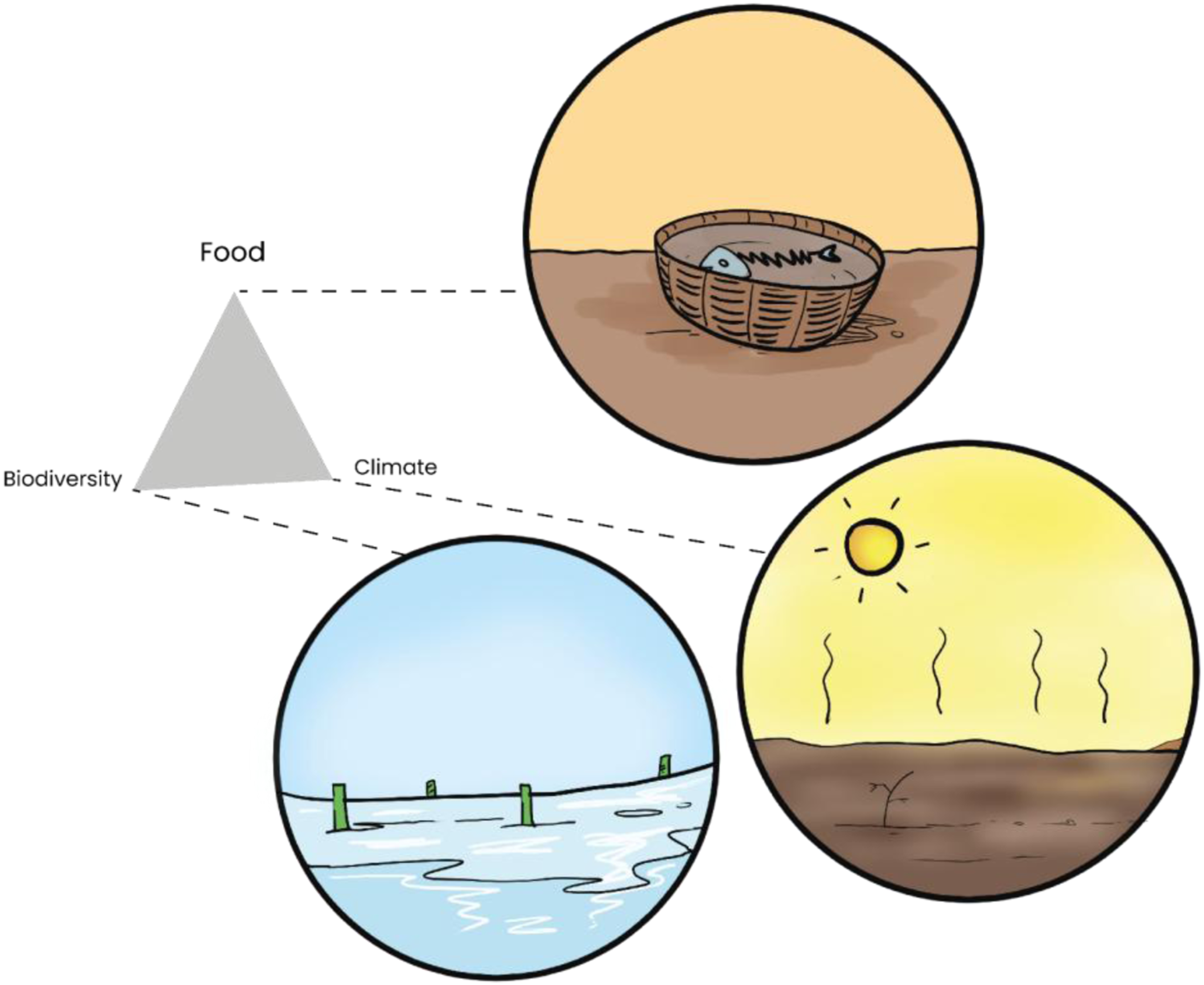
Discussion
Indigenous Peoples and Local Communities and the Benefits and Threats of Mangroves in Relation to Food, Climate, and Biodiversity
This study recorded several benefits and threats of mangroves in sustaining food, climate, and biodiversity in the MTBR. As supported by Gnansounou et al. (2022a), the MTBR provides twenty-one benefits to IPLCs. Of those, sixteen were recorded in this study, including fish and crab provision, timber collection, climate regulation, and biodiversity conservation, among others. The slight difference in the number of benefits in the two studies may be due to the size of the participants considered or the qualitative research method used in each study (Marshall et al. 2013). The former used household surveys with more than two hundred participants, while the latter used focus group discussions with fifty-six participants. However, despite the foregoing functional importance of mangrove ecosystems demonstrated in this study (Aheto et al. 2016), there are various factors that impacted their function (Feka and Ajonina 2011) to sustain sustainable food production and biodiversity conservation (Worm et al. 2006). Our results showed that most threats associated with mangroves that impacted food, climate, and biodiversity were directly or indirectly the result of anthropogenic actions. As reported by many studies in the reserve, anthropogenic actions were the main factors leading to the degradation of mangrove ecosystems (Adanguidi et al. 2020; Gnansounou et al. 2022a; Teka et al. 2019; Zanvo et al. 2021).
Our results also suggested that changing human behaviors may have the power to alter the trajectory of the FCB nexus positively. This aligns with the findings of many authors, including (Amel et al. 2017; Bowie et al. 2020; Frank, Glikman, and Marchini 2019; Weber 2017), among others, who reported that building successful behavior change is key to creating positive impacts on our natural environment. Our study called for a stronger collaborative work between IPLCs and governmental authorities to sustain mangroves and food, climate, and biodiversity in the MTBR. Even though a study demonstrated that such collaborative work had a positive impact on mangrove ecosystems in the reserve (Gnansounou et al. 2022b) there is still a lack of evidence of how such an approach induces behavior change toward conservation practices (Baldauf 2020). This is probably because IPLCs are not given the same rights in such an approach in order to advance sustainability. As claimed by the participants in this study, they still rely on the governmental funding system, which delays the implementation of some rituals and ceremonies intended to conserve biodiversity and improve weather patterns.
Indigenous and Local Knowledge in the Relationship Between Mangroves and Food, Climate, and Biodiversity
Our study demonstrated that the place of ILK in mangroves, food, climate, and biodiversity is critical, as knowledge is disappearing due to many factors. Marginalization and cross-generational issues were identified as big challenges that impacted mangrove conservation in sustaining food, climate, and biodiversity. As widely debated by researchers, marginalization is the biggest factor ever recorded, leading to the loss of ILK in conservation practices in Africa (Anwar 2011; Ayaa and Waswa 2016; Eyong 2007; Horsthemke 2004; Makwara 2013). Generally, marginalization is linked to other factors, such as globalization, modernization, the spread of Christianity, and the adoption of colonial Western science and culture (Maunganidze 2016). This supported the claim of the participants in this study, who pointed out Christianity as a key factor that is erasing the existing cultural knowledge in the communities. Similarly, in Tanzania, as Christianity is gaining popularity in Indigenous communities, most young people are transforming their traditional culture, beliefs, and local lifestyles to meet Western culture models (Selemani 2020). As reported in our study and others (Hari 2020; Mapara 2009; Roué et al. 2017), young people do not use such knowledge in conservation practices in the way it was previously used by their elders. This has created a lot of contestations and tensions within Indigenous communities in Zimbabwe, for instance, as the old generation wanted the young to perpetuate their tradition (Maunganidze 2016). In the MTBR, participants reported that the young generation is leaving their roots and giving more consideration to modern practices that came from outside. This may explain the halting of the knowledge transmission from one generation to another. This is consistent with Makwara’s (2013) findings in Zimbabwe, which showed that the old generation is dying with decades of accumulated Indigenous practices without transmitting them to the new generation. Besides the death of ILK practice holders, forced or deliberate emigration of IPLCs, the influence of Western knowledge, and Christianity are halting the successful implementation of ILK practices in mangrove conservation practices in the MTBR (Tcheton et al. 2025). This is likely to negatively impact mangrove ecosystem sustainability in the reserve and therefore put them at risk of severe degradation.
Future of Mangroves within the Context of Food, Climate, and Biodiversity from the View of Indigenous Peoples and Local Communities
Our findings supported the idea that there will be a severe degradation of mangroves in the future due to the lack of use of ILK in conserving mangroves and sustaining food, climate, and biodiversity. As the authors already pointed out, the future of mangrove ecosystems in providing food to local communities and supporting biodiversity is unpredictable (Yessoufou and Stoffberg 2016). Especially in the Benin Republic, such a future is uncertain, as many studies have demonstrated the key role played by Indigenous practices in conserving the natural ecosystems (Djagoun et al. 2022; Gnansounou et al. 2024). For instance, in the MTBR, the implementation of traditional beliefs and local deities associated with mangroves has reduced anthropogenic pressures (Gnansounou et al. 2024). As demonstrated in a comparative study between the Benin Republic and Togo in the MTBR, mangroves are severely degraded on the Togolese side of the reserve, most likely because local stakeholders are no longer incorporating customary laws and traditional means into their conservation (Gnansounou et al. 2022b).
The participants in this study claimed that key biodiversity species, such as birds, monkeys, and crocodiles, are disappearing at an escalating rate, and there is a need to reconnect with the experiences and skills of IPCLs to halt the extinction and support the human-nature relationship. For instance, in South Africa, their knowledge has been described as a crucial instrument in protecting the remaining Indigenous forests (Sinthumule and Mashau 2020) or setting Indigenous rules and regulations for ecosystem services management in rural communities in Ghana (Boafo et al. 2016). Similar patterns have been found in forest management practices in Eastern Nigeria (Chukwuone, Kehinde, and Chukwuone 2020), and South-central Ethiopia (Tamene et al., 2024). Recently, Tcheton et al. (2025) documented the experiences and skills of IPLCs in the form of beliefs and taboos in conserving the local biodiversity and sustaining the cultural values of mangrove ecosystems in the MTBR. Such a study informed their importance in preserving biocultural diversity in the reserve. Historically, IPLCs have sustainably cared for biodiversity and natural ecosystems in many countries in Africa. In the Benin Republic, findings show that the use of local beliefs and customary laws through Indigenous initiatives can be an effective strategy that benefits the quest for mangrove ecosystem sustainability in the reserve (Tcheton et al. 2025b, in preparation). Even though those initiatives are not yet widely accepted or well-known worldwide, they are contributing to safeguarding the ILK practices in food provision, climate change adaptation, and biodiversity conservation in the reserve.
Reflections and Recommendations
In the MTBR, mangrove ecosystems are disappearing rapidly, and their future in supporting sustainable food production, regulating drastic weather patterns, and conserving key biodiversity species is full of uncertainties. Such uncertainties offer an opportunity to be creative in responding to challenges by exploring alternative pathways. Indigenous practices, skills, and beliefs, which have always been used as the foundation for biodiversity conservation practices and local decision-making in the MTBR, should be restored where they are no longer used and improved where they are practiced but ineffectively. This cannot be done without collaborative work between IPLCs and governmental authorities. Creating a future where we can rely on Indigenous practices is crucial, and we, therefore, recommend further studies to explore the positive and desirable future of the MTBR from the participatory perspective of different stakeholders. If we genuinely want to change the current trajectory of FCB, we must ensure that individuals or groups of underrepresented communities are given the same rights and opportunities, listened to, and empowered to take action.
Supplemental Material
Supplemental Material - Future of the Food-Climate-Biodiversity Nexus: Evidence From Indigenous and Local Peoples of the Mono Transboundary Biosphere Reserve (Benin Republic-Togo) in West Africa
Supplemental Material for Future of the Food-Climate-Biodiversity Nexus: Evidence From Indigenous and Local Peoples of the Mono Transboundary Biosphere Reserve (Benin Republic-Togo) in West Africa by Sènankpon Tcheton, Andrea Marais-Potgieter, Denis Worlanyo Aheto, Laura Pereira in World Futures Review.
Footnotes
Declaration of Conflicting Interests
The authors declared no potential conflicts of interest with respect to the research, authorship, and/or publication of this article.
Funding
The authors disclosed receipt of the following financial support for the research, authorship, and/or publication of this article: This study is supported by Future Ecosystems for Africa Programme at Wits University in partnership with Oppenheimer Generations Research and Conservation (OPGF021), Tellus Foundation through the prestigious Harry Schwarz Scholarships at Wits University, The Swedish Research Council FORMAS Project (2020-00670), Social Sciences and Humanities Research Council (Canada) through Solving the Sustainability Challenges at the Food-Climate-Biodiversity Nexus Programme at the University of British Columbia, Canada

Supplemental Material
Supplemental material for this article is available online.