



Abstract
This study examines the application of comics in futures research to involve stakeholders in infrastructure strategy discussions for disruptive futures. It employs a graphic novel called “Vanishing Point! Our Built World,” which augments generative AI art with human storytelling to transport participants into a speculative 2150 with a solarpunk theme. The narrative applies the concept of future-self continuity and a temporal discontinuity framework to promote visions of sustainability for both humanity and the environment. The research emphasises the ability of comics to foster meaningful discussions on future infrastructure coordination by incorporating Social Construction Theory, Social Construction of Technology Theory, and Actor Network Theory. Comics being adapted into videos and used in workshops highlight their effectiveness in promoting engagement and facilitating semi-structured discussions. This demonstrates comics as a dynamic tool in futures research and participatory methodologies.
Introduction
This article examines the use of comics in the field of infrastructure futures research, with the objective of effectively conveying complex and provocative ideas to a wide range of potential and selected research participants interested in infrastructure and the futures of civilisation. The specific aim of the comic was to recruit and engage with individuals with busy professional lives, enable collaborative futures research workshops, and establish an innovative framework for collecting data. The article details the development of a graphic novel called “Vanishing Point! Our Built World” (MacGeorge, R 2023a) which merges AI-generated artwork with a narrative based on a factual past and speculative futures relevant to professionals in the field of infrastructure planning. The comic presented participants with past, present and futures, prompting participants to imagine and discuss the lasting consequences of infrastructure planning on human and environmental well-being. This paper additionally outlines the process of transforming the comic into a video format and its use in the data collection workshops. The research method, which involved the use of social media for serialisation and workshop recruitment, is also addressed. It is anticipated this article will add to the wider discussion on novel approaches in futures research, especially by highlighting the value of comics as a means of including stakeholders in difficult discussions and rethinking the tools and methods used to anticipate and prepare for disruptive futures.
Literature Review
A literature review by MacGeorge (2023b) and this discussion are driven by two central research questions: (i) How effective are current infrastructure planning approaches in creating a sustainable balance between human and natural well-being? and; (ii) How can the planning and delivery of socially sustainable infrastructure be envisioned and implemented in a way that considers both human and natural well-being? These questions aim to explore the depth of current infrastructure strategies and their potential evolution towards a more sustainable and inclusive future.
Infrastructure and Society
Infrastructure represents a central aspect of human civilisation, serving as a complex system of interconnected physical structures essential to enhancing societal well-being (New Zealand Infrastructure Commission 2020, 2). Infrastructure is distinguished also by its significant dependence on the conversion of natural elements, which anthropocentric humans refer to as “resources” (Chaulagain 2020; Josa and Aguado 2019; Nelson 2004). The process of converting these resources into infrastructure is a result of a deliberative process often encapsulated in the term “planning” (Marshall 2010 2012).
To understand infrastructure planning in the context of futures research, Inayatullah's (2005) “Futures Triangle” was used to analyse associated academic literature (MacGeorge 2023b). The Futures Triangle is a framework for analysing the impact of the “burden of the past”, “push of the present” and “pull of the future” to gain a holistic view of legacy, present day forces and future signals as a method for considering alternative futures (Fergnani 2019). This focus on the historical, current, and potential future influences on infrastructure offers a comprehensive perspective, setting the stage for a deeper understanding of infrastructure policies and their development over time.
Sustainable Infrastructure and Ecological Harmony
MacGeorge’s (2023b) review of the evolution of human civilisation and its relationship with infrastructure development uncovered some important insights. Entrenchment is one of these (Duin and Ligtvoet 2019; Egyedi and Spirco 2011; de; Haan 2011; Ono 2018; van der), especially when the depth of the link between humans and infrastructure in terms of extraction and growth has been evident since the Neolithic era (Christian 2011; Derrible 2017; Harari 2014; Olsson and Paik 2016). Extraction for human growth presumes a human-centred planning approach, even when the extraction of finite resources for growth is intrinsically unsustainable, as shown by the “triple planetary crises” of climate change, biodiversity loss, and pollution (United Nations Statistics Division 2022). The review also revealed a colonial-like relationship between humans and nature. Key drivers of this dynamic, such as population growth, individual consumption, and defensive measures against environmental challenges, significantly contribute to issues like the planetary crises. This relationship highlights the urgency for adopting a post-colonial perspective towards the earth system (Fishel 2023), one that recognises and respects the interdependence and balance required between human activities and ecological health to ensure mutual well-being. The review thus suggests the development of infrastructure policies should prioritise integrating human well-being and ecological health as critical measures for progress. Challenging the traditional extractive model of economic growth, which is intrinsically linked to environmental degradation, MacGeorge (2023a) contends the escalating challenges of climate change must compel humanity to recognise and respect the vital role of Earth's ecological systems, akin to a civil rights movement for nature. Thus, the literature underscores the need for a paradigm shift in infrastructure policy-making, emphasising the integration of human well-being with ecological sustainability as a cornerstone for future development strategies.
Adaptive, Future-Oriented Infrastructure Planning
The review highlights a critical gap in infrastructure planning: the underutilisation of holistic and foresight-driven methodologies. This gap exposes a need for diversifying planning approaches, shifting reliance away from traditional predictive models largely dependent on empirical data. The challenge, as MacGeorge (2023b) identifies, lies not only in adopting new methodologies but also in transforming the entrenched culture of infrastructure planning.
Understanding how such a transformation might be effected requires experimenting with new approaches, identifying key stakeholders to whom these ideas could be introduced, and strategising for wider systemic change. MacGeorge's (2023a) research thus progressed into exploring effective ways to introduce and embed these methodologies within the planning ecosystem. Doing so involved identifying key influencers and decision-makers in the infrastructure planning field, assessing the barriers to adoption, and developing a framework for the broader application of foresight techniques. This process sought to establish a planning culture open to many outcomes and narratives to make infrastructure development in the Anthropocene and beyond more robust and sustainable.
Attention Economy and Infrastructure Planning
A first challenge was to gain the attention of infrastructure professionals. Infrastructure planners and policymakers are time poor like many people working in the attention economy, a term coined by Simon (1971). Bueno, in describing ‘cognitive capitalism’ calls on Simon’s notion about how the workplace ‘creates a poverty of attention, and a need to allocate the attention efficiently among the overabundance of information sources that might consume it’ (Bueno 2016, 2). There is consequently much focus on the pressures of the now, and thus capturing the attention of busy professionals with topics temporally far beyond those pressures (even though the infrastructure for which they are planning or making policy reaches into those distances) is challenging. Identifying ways of engaging with infrastructure policymakers in a way both captivating and relevant becomes necessary.
Wonder and Imagination in Urban Planning
One means of influencing an entrenched culture of infrastructure planning is to identify a deep common link planners have, which is they were once children. Children are typified by having a deep sense of wonder, which to some degree is lost in adulthood. As Parsons asserts, “Philosophy begins in wonder but wonder begins in the child” (Parsons 1969, 101). Wonder is characterised as an intense and sudden experience deepening cognitive focus and heightening awareness of one's ignorance regarding an object. It combines feelings of unsettlement and delight, suggesting a deeper complexity to the subject in question (Piersol, 2013). Schinkel et al.'s (2022) paper extends the connection between wonder and human flourishing in education. They argue fostering a sense of wonder in education can significantly improve human life, including epistemic, aesthetic, and spiritual aspects. Wonder is not just an emotional experience but also involves cognitive and existential elements, leading to a deeper appreciation of life and its complexities. Schinkel et al. suggest wonder is not a necessary component of human flourishing, yet it greatly enriches life and can be cultivated through education. They conclude education aimed at human flourishing should be 'wonder-full', inspiring and nurturing a sense of wonder to support individual well-being and development. As the essence of infrastructure and its planning relate directly to these objectives, an opportunity lay in rekindling this sense of wonder amongst infrastructure professionals. Bussey et al. (2017) also note the need for “anticipatory imagination” in the field of engineering, which involves envisioning potential future scenarios and challenges by thinking beyond existing boundaries. Doing so requires fostering a mindset that is receptive to change but is proactive in influencing future outcomes, Bussey argues.
Schinkel et al. describe the relationship between wonder and the use of one’s imagination, stating wonder “involves a stirring of the imagination, which may range from a delicate probing to a wandering, restlessly searching attempt to ‘get one’s head around’ something, and again to an active ‘play’ of the imagination” (2022, 148). Futures thinking involves much getting one’s head around many things and therefore the stirring of the imaginations of infrastructure planners' seems an important component of the planning process. There is much work connecting the use of imagination and planning, especially in an urban planning context (Davis and Hatuka 2014; Hall 2014; Tewdwr-Jones, Phelps, and Freestone 2013). Phelps (2021) most recently describes imagination as essential to urban planning, involving designing habitable, productive, and agreeable settings. This approach involves rationalising activities in a limited space and creatively reinventing space for a sustainable and fulfilling future. Imaginative planning, as a future-focused activity, thus combines thinking and action, with urban spaces expressing our existence and coexistence in the world.
Storytelling and Innovation in Planning
Imagination and storytelling go together, suggesting this technique might engage infrastructure planners and generate childlike wonder. Horst (2021) describes how Botswanan writer, Bessie Head’s novels show a significant link between urban planning innovation and storytelling approaches. For example, Head’s portrayal of alternative planning strategies in “When Rain Clouds Gather” illustrates innovative planning, which switches from top-down, technological solutions to more inclusive, ground-up techniques. Characters in the novel represent divergent planning ideologies and emphasise the need of local knowledge and democratic processes in creating sustainable urban futures (Head 1969). Storytelling in infrastructure has also found a place, notably in Scandinavia in support of spatial planning through, in the case of the “Loop City”, the creation of persuasive “spatial visions” to assist policymaking (Olesen 2017), and helping planners consider resilient infrastructure in the face of changing weather conditions (Sillmann, Burford, and Stackpole Dahl 2021).
Comics in Futures Studies and Policy
Thus, the connection between wonder, the sparking of one’s imagination, the relationship between imagination and planning - especially in the urban context, and the use of storytelling as a mechanism for fostering the use of imagination in planning are each established in the literature. Also established is the use of differing media, such as novels and film, though what has not been explored well by scholars is the use of cartoons and comics as a narrative device to assist in futures and foresight, planning processes, and even less so amongst infrastructure policymakers. And yet there is potential for comics in each of these spaces for engagement, advocacy, data collection and education.
Dougherty (2002) promotes the use of comics and cartoons for education, contending comics and cartoons can convey complex messages and provoke thought, findings also supported by Priego (Priego 2016). Comics, moreover, are especially helpful to explore critical thinking, as a basis for group discussions and as an engagement method generally. According to Dougherty, comics require a mix of historical knowledge, a cultural context and analytical skills if they are to be understood. Flowers also examines the role of comics in experimenting with narrative forms in educational settings. This work suggests comics, with their combination of visuals and text, offer a compelling medium for storytelling and learning, especially in conveying abstract or challenging concepts (Flowers 2017, 8). Priego (2016) in creating a comic adaptation of a research project examining the impact of higher education funding policies on students, also identified how comics are particularly helpful for the dissemination of research. Consequently, the development of a comic as a way of communicating infrastructure planning research findings is also supported by the literature.
Comics have emerged, albeit weakly to date, as a potentially powerful tool in social science and futures research. Dahlgren et al. for example explore comics as a methodological innovation in researching automated futures. They argue comics facilitate participation and flexibility in research settings, enabling a deeper exploration of complex subjects (Dahlgren et al. 2022, 1–3). Similarly, Kuttner et al. highlight comics’ “affordances” in interdisciplinary research, particularly in their ability to present multifaceted narratives and engage diverse audiences effectively (Kuttner et al., 2021, 2–4). A further benefit of comics in the social sciences is the ability for this medium to traverse difficult subjects. Figoureux and Van Gorp discuss the effectiveness of cartoon elicitation in interviews on complex and sensitive topics, demonstrating how images can lower barriers to communication on these matters (Figoureux and Van Gorp 2021, 5). Fradkin also underscores the value of cartoons in assessing social science concepts, providing a uniquely engaging way of helping others understand and evaluate complex ideas. This is achieved because of the simplification afforded by images and text being brought together and also because comics set the scene for an interactive and creative way for participatory discussions to be conducted (Fradkin, 2019, p. 2).
Yet the use of comics in research and for conveying information is not without its challenges. Translating intricate academic material into comic format requires specialised expertise and experience, which is not typically found in traditional academic environments (Priego; Dahlgren et al., 2022). Both authors recognise the absence of established techniques for peer review and citation in the comic format, emphasising a notable deficiency in the official recognition of comics in academic discussions (Priego; Dahlgren et al., 2022). Moreover, comics encounter obstacles in terms of being easily found inside conventional academic databases, which restricts their exposure and influence within the scholarly community (Dahlgren et al., 2022). The quality of research can also be perceived to be lower when conveyed in a visual format, as opposed to the conventional text-based articles (Priego; Dahlgren et al., 2022). These combined observations emphasise the necessity for the academic community to create and adopt more inclusive and comprehensive frameworks acknowledging and authenticating comics as a powerful medium in research.
After examining infrastructure, society, planning entrenchment, the value of wonder and storytelling, and the comics’ potential to impact infrastructure development, we can move to this study's more precise methodological approach.
Methodology
The primary approach employed in this research is grounded in participatory futures research methods. These actively engage a diverse group of participants in the exploration and development of potential futures both sustainable and desirable. The study was particularly influenced by Popp's advocacy for participatory futures research. This method involves identifying and comparing a current state with a desired state, and then examining these states through active participation (Popp 2013). The Futures-Design-Process model developed by Ollenburg also makes a valuable contribution to the methodology by combining normative and foresight-based approaches through seeking to both generate knowledge and promote action towards sustainable futures (Ollenburg. S 2019). Bina and Ricci’s (2016) case study on urban futures in China in the year 2050 then informs the practical application of engaging stakeholders in a visioning process. Their use of both archetypal and backcasting worldviews to gain insights into and for influencing the development of urban futures are especially instructive. Bringing forecasting and backcasting together is helpful in the context of infrastructure planners' entrenchment in forecasting from empirical data, which can be addressed with the addition of foresight-based and narrative-oriented approaches.
Comic Creative Process and Narrative Design
Making use of comics as a means of communicating complex information derived from literature poses certain challenges. These can be classified as both creative and technical in nature. The creative process entailed the researcher imagining a captivating narrative focused on future possibilities. Through research, the concept of future self-continuity was revealed (Ganschow et al. 2021; Hegenbart 2020; Hershfield 2011), providing a framework for the description of a future setting and its participants reflecting on the present time from that vantage. The selection of the year 2150 was made with the intention of placing participants at a significant temporal distance from the present, thereby minimising the influence of current trends and avoiding potential biases. However, the researcher considered 2150 was also soon enough for participants’ future selves to still be influenced by society's current happenings. The story consequently needed a believable explanation for how people who are aware of their existence in 2023 might come to think of themselves in 2150 and, once there, the actions they might take. The method chosen as a narrative device to transport individuals from the present time to the year 2150 was through a process of cryogenically induced sleep.
Participants being “frozen” and then awakened in the future, would expect to feel disoriented and confused upon their sudden arrival. To assist participants in navigating the narrative and alleviating their confusion, a character named Lisette was introduced as their guide. In the narrative, Lisette assumes the role of a historian from the year 2150, who exhibits a profound fascination with the present era. The historians of 2150 find the arrival of participants from “the past” intriguing for their potential to shed light on a previously unaccounted period between 2023 and 2050 in their historical records. The comic provides an explanation for this interest in that the absence of records during the 2023–2050 period is attributed to a significant event occurring around 2050, such as a powerful electromagnetic pulse or another phenomenon. This event resulted in the destruction of nearly all records from this time frame and is referred to in the comic as the “Vanishing Point”.
Narrative Device: The Vanishing Point
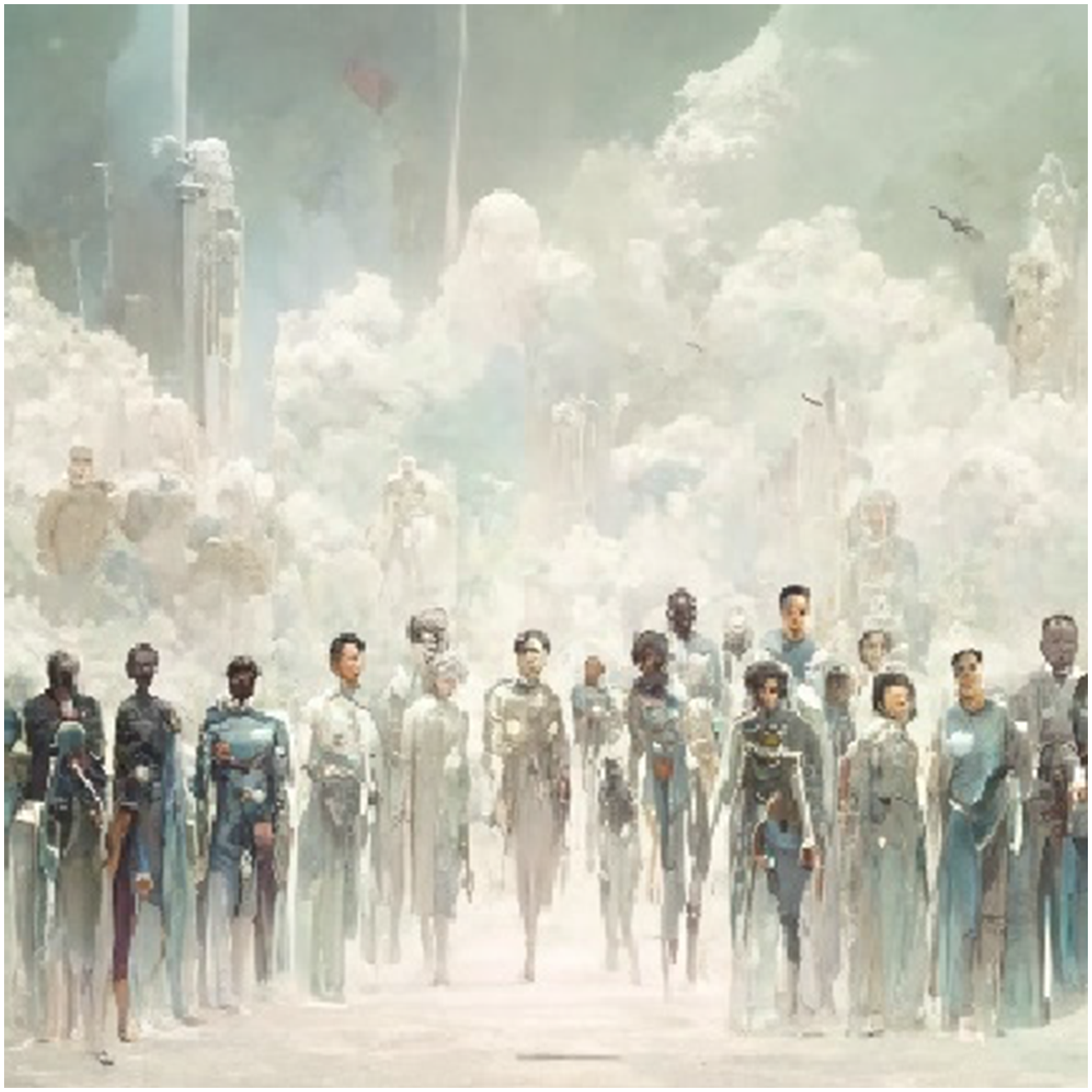
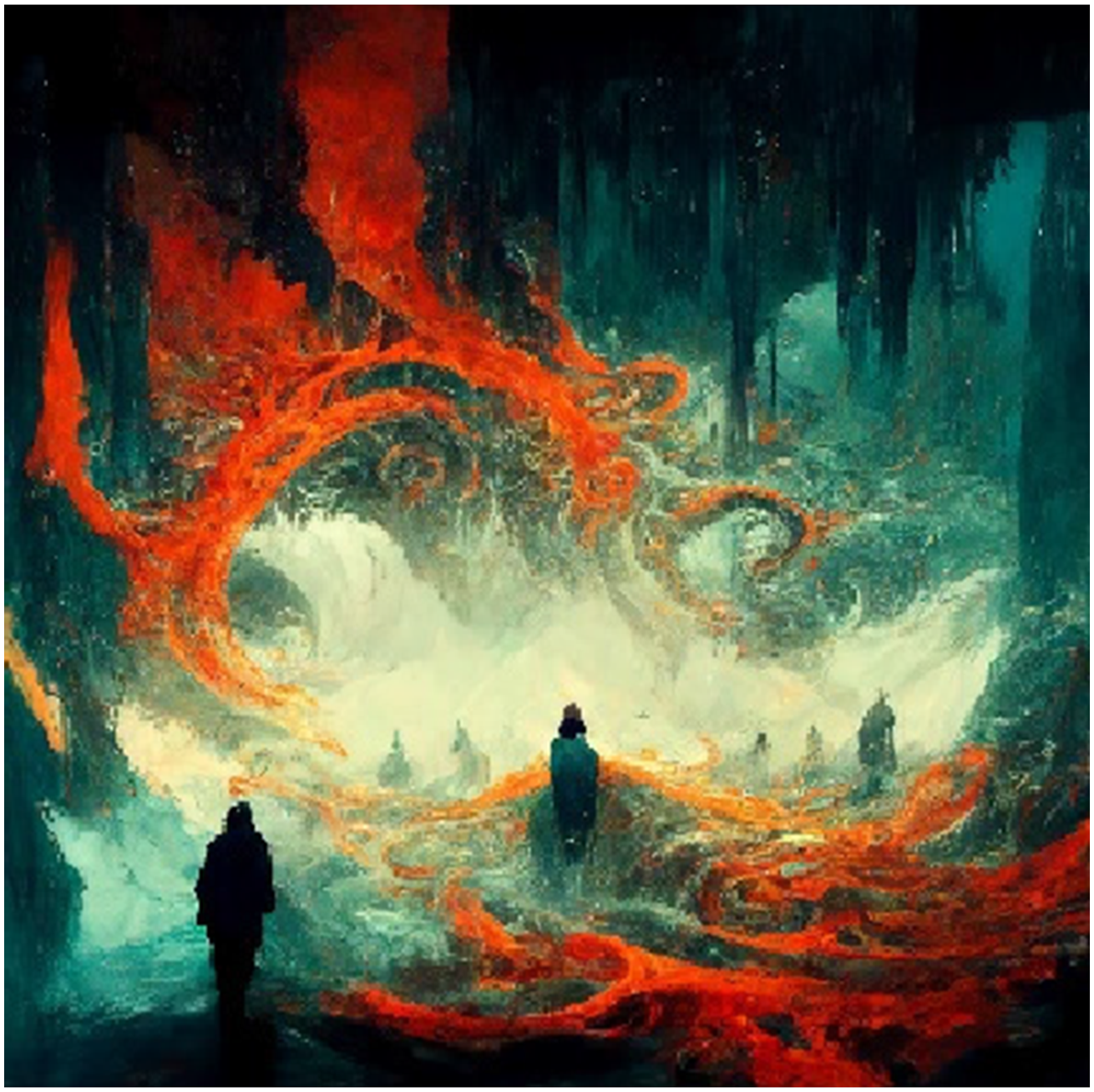
The construct of the Vanishing Point not only described a narrative device, but it also came to name the comic. The concept of temporal discontinuity through the missing years between 2023-2050 was significant for the research. The construct provided a “blank canvas” onto which participants could envision and have agency over the actions they could take during this lost time. These actions were intended to be aimed at positively impacting the world of 2150. This temporal blank canvas also allowed participants to explore possibilities individually and collectively during subsequent workshop discussions. The canvas also led to a call to action for recruits and participants emerging organically, taking the form of a question: “If you looked back from 2150, what would you change today?” This question served as the catalyst for the participant recruitment campaign aimed at attracting attention from the researcher's established professional connections and beyond. Figure 1,2,3,4,5 and 6 Cover artwork: Vanishing point! “We call them The Heroes, and you are one of them”. “The UN also said ‘transforming our relationship with nature is key to a sustainable future’”. Lisette, a 2150 historian. A final call to action. Example post on LinkedIn.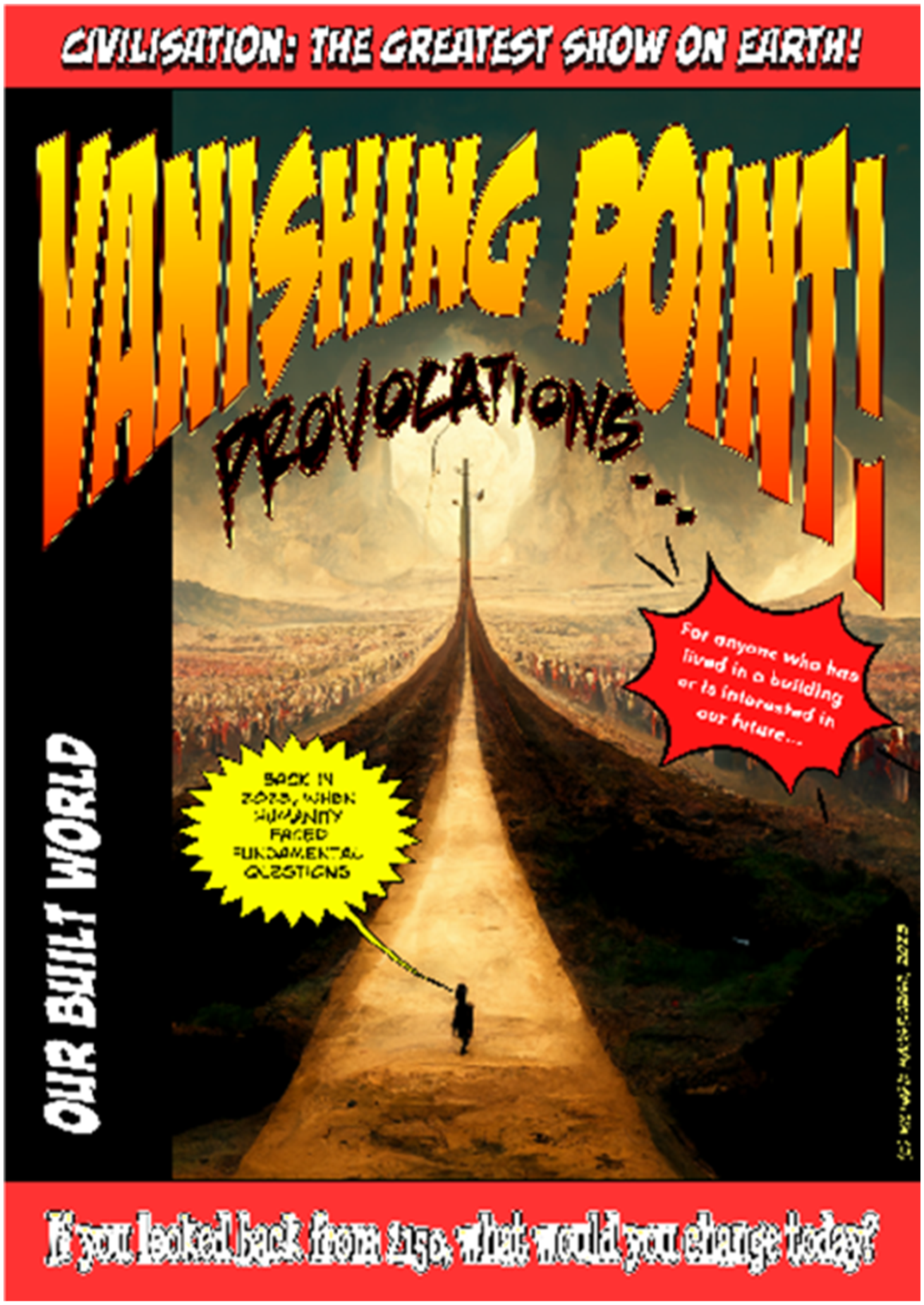


Heroic Perspective and Solarpunk Genre
To further empower recruits and participants, the intention was for the comic book to not only transport participants to the year 2150, but also inform them their actions in the years before the Vanishing Point had made them heroes among a flourishing population of that future time. This positive positioning of humanity gave the comic a Solarpunk setting. Influenced by Cyberpunk and Steam punk, Solarpunk is a speculative art movement emerging from 2010, especially in Brazil. The genre anticipates sustainable and equitable futures striking an ecological balance (Reina-Rozo 2021). Solarpunk is also used in futures studies to promote positive and sustainable futures, counteracting dystopian narratives (Jordan, Bernier, and Zuiker 2021). The Solarpunk field places a particular emphasis on turning ideas into action and encourages proponents to shape the futures through storytelling and speculative fiction (Donn 2021; Houlden and Veletsianos 2023)
The concept of waking up as a hero in the year 2150 is appealing as a narrative, and it may generate interest among potential participants. However, this alone does not ensure individuals interested in exploring the connections between infrastructure, planning, and the trajectory of civilisation will choose to participate in the research. Nevertheless, at this point in the creative process, a platform for sharing MacGeorge’s (2023a) review findings through the comic, one of the objectives of developing the work, had been achieved.
Using a Central Character to Provide an Historical Context
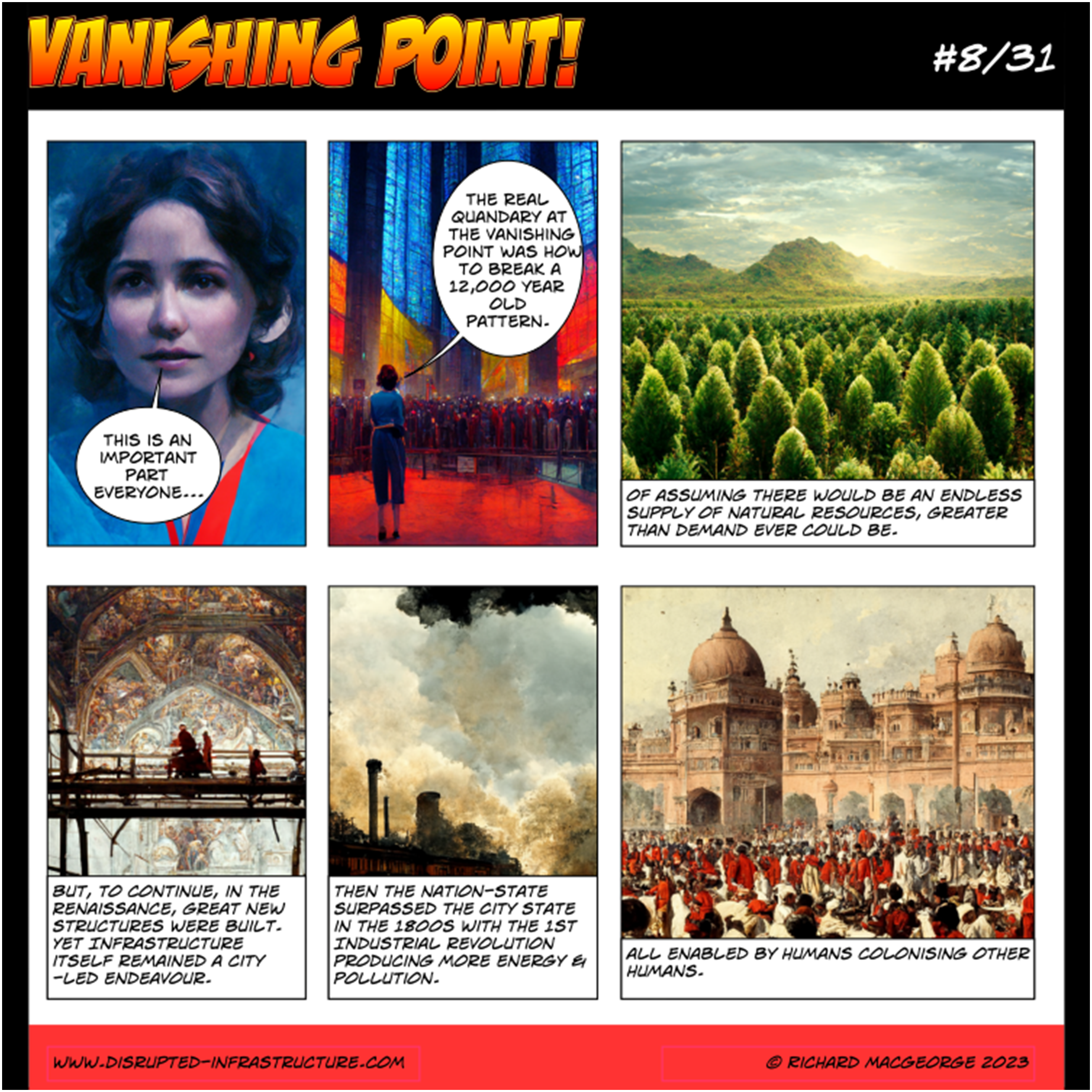
Lisette, as a 2150 historian, becomes the central and guiding character of the comic to engage with reader-research participants. She explains to the newly awakened reader-research participants the macro-history of infrastructure planning from the Neolithic through until 2023. The narrative reflects the literature review but using some twenty percent of the words required for the review itself. In doing so the comic illuminates in a digestible form the close relationship between infrastructure development and civilisation since the agricultural revolution, the creation of surplus, and the establishment of an extraction-growth paradigm continuing to endure at the cost of ecological well-being. Infrastructure is placed at the heart of climate change, biodiversity loss and pollution, as a consumer itself and as “arteries for consumption” (MacGeorge, R 2023a, 19). The challenges of the modern times of 2023 are then articulated and the challenge to rethink how infrastructure planning is undertaken is proposed for reader-research participants to consider.
Speculative Narrative and Future Scenarios
The comic then moves into a more speculative narrative, where Lisette muses about some of the post-2023 developments as areas for reader-researcher participants to co-imagine. These include the emergence of various schools of thought, including “neo-planners” who envision a built world like an integrated system akin to an organism. A further group, referred to as the “Humanists” also emerges, which group places emphasis on theories such as Maslow’s Hierarchy of Needs as a lens through which infrastructure priorities are decided. A final group, called the “Planeteers” explore concepts such as a Naturacene, a period beyond the Anthropocene in which natural processes, including the use of living building materials, dominate. Each of these dimensions served to create an imaginative space for participants to reflect upon, especially in light of Lisette’s final call to action that reader-research participants imagine their preferred futures, along with the changes necessary for those preferences to be realised.
Illustrating a Comic as a Non-Illustrator
The final creative challenge for the researcher was to illustrate the comic. For a non-illustrator this is an almost impenetrable obstacle without assistance. Assistance prior to 2022 would necessarily come in the form of a human illustrator, though with the introduction of generative artificial intelligence such as DALL-E and Midjourney (2022) producing images, access to image creation become significantly more accessible. With a comic script to provide guidance, Midjourney was used to create the images with trial and error “prompt engineering”, articulating what is contained in one’s mind’s eye in hopes of a comparable result, and then repeating the process until an acceptable image is produced. With images and script having been completed, the comic was produced using ComicLife (Plasq LLC, United States, 2022), a comic production software. The completed work then became available as promotional content via social media for outreach to potential research participants.
Participant Recruitment: Research Website and Social Media Campaign
Participatory research relies on recruiting participants, which required a multistep approach for the study. In addition to the creation of the comic, engagement materials needed to be written, and a recruitment campaign needed design and execution. Furthermore, content for workshops as the medium for participation and data collection was necessary, and the workshops then needed to be conducted, with associated data collection methods and all within an ethically robust setting. We turn now to take each of these elements into account:
With a completed comic came the need to promote the research and recruit participants. The researcher's network, which consisted of approximately 2300 social media connections, was contacted. The connections established encompassed a wide array of individuals, industries, educational backgrounds, and areas of interest pertaining to infrastructure, with a particular focus on planning, social aspects, and environmental considerations. The initial strategy involved a one-month recruitment campaign available to all users of LinkedIn, a social media website, with posts featuring a serialised version of the ‘Vanishing Point!' comic.
The objective of the recruitment campaign was to attract individuals who were interested in joining a research group and it directed candidates to register. Potential collaborators were directed to visit a research platform website, https://research.macgeorge.co.nz/publications, to access information, and a consent form with associated ethics information linked to the platform.
Workshop Content Creation
Workshops as the intended medium through which deliberative dialogue with research participants would be conducted require a clear agenda and materials. The researcher developed a two hour workshop agenda reflecting the past, present and futures of the futures triangle findings in MacGeorge’s review and comic (2023a; 2023b). To account for busy professionals not having time to read pre-workshop material, the workshop content was self-contained through video production of the comic in 3 - 4 minute segments. Each segment was followed by a short survey and a discussion.
The release of Synthesia (Synthesia Ltd, London 2023), An AI avatar video generation software, was used to create the videos using Vanishing Point! Comic images overlaid with an AI avatar. This afforded an opportunity to, in video form, continue the vanishing point narrative as if in 2150, with the avatars representing one of “Lisette’s” assistants along with other avatars representing 2150 AI agents operating in 2023 mode so as “not to overwhelm” participants. Doing so allowed “conversations” with ChatGPT4 to be inserted into the workshop content as a catalyst for participant discussions.
The workshop content was inserted into Makeshapes (2023), a learning experience curation software. The benefit of doing so was to manage time, content, survey capture and discussions readily in a manner that allowed the researcher to conduct and focus on facilitating the workshops without additional assistance.
With consent from participants, the workshops were each recorded and transcribed using Otter.ai, an artificial intelligence meeting recording software. The benefit of this approach was to promote efficient capture of participants voices for later automated transcription, thus allowing the researcher to not take notes and thus concentrate on the discussion at hand.
The sum of the workshop design consequently focussed on various aspects of infrastructure planning and its evolution from the Neolithic period to the year 2150. The workshops used a combination of scales, polls, and discussions to explore diverse themes. The past and present of civilisation and infrastructure planning were workshopped in three segments. A first segment of the workshops examined the relevance of historical perspectives (Neolithic to Renaissance) on modern infrastructure planning, questioning the impact of ancient practices on future developments and sustainability. A second segment shifted the focus to the period from the Renaissance to 2023, probing the relationship between environmental policies, unsustainable consumption, and societal challenges. A third segment addressed contemporary infrastructure planning issues, including the integration of social planning, the reliability of historical data for future predictions, and the effectiveness of current strategies. In a fourth segment, polls employed metaphors and hypothetical scenarios (like “Virtual Reality Dwellers” or “Off-World Colonists”) to gauge participant perceptions on potential future directions of human lifestyles. Participants were then invited to weigh different visions for 2150 infrastructure, including advanced VR/AR systems, space travel infrastructure, and sustainable eco-communes, among others. Participants were then asked to reflect on what metaphors best described the nature of future infrastructure planning, such as “Navigating uncharted waters” and “Building bridges to the future” to understand preferences in future planning methodologies.
Results
The method was tested through recruitment and workshop delivery processes. A LinkedIn research participant recruitment campaign aimed to attract applicants. During the initial week of the 30-day campaign, comic posts received an average of 2200 daily impressions. There were approximately forty likes, comments, and some ten comments or reposts per day. Despite receiving a high number of replies on LinkedIn and effectively conveying study material, the campaign did not yield significant recruiting outcomes. Only nine out of the twenty-five research platform online registrants attended the workshop due to attrition. The registration process in New Zealand was heavily influenced by mature European men, which resulted in a lack of diversity in terms of race, region, and gender. More researchers had to be recruited from the researcher’s professional network. Four individuals were recognised as “champions” through this method, which also generated interest within their respective organisations. They understood the possibilities of the research and made a strategic decision to leverage their political influence to introduce a fresh approach to their colleagues.
A total of sixty-one participants took part in workshops. A mix of seven online and physical workshops were conducted across six countries, involving participants from various sectors such as development banking, government, consulting engineering, university, and citizen activists. These workshops facilitated a total of 120 person-hours of interaction. Participants commended the comic and video material in post workshop surveys. The workshops had a significant impact on the participants, who generally expressed a shift in their perspective regarding the futures. Participants also emphasised the importance of studying macro-history to evaluate how historical events can shape future possibilities. Overall, the workshops challenged participants to broaden their perspectives and think in fresh terms. Comics and video were found to be effective tools for disseminating information and for conducting a research enquiry.
Discussion
When exploring the use of comics-based research to engage individuals in discussing infrastructure strategy, social constructionism stands out as a comprehensive and inclusive theoretical framework that aligns well with the applied technique.
Social Construction Theory
Social Construction Theory (SCT) proposes that social realities are not objective, but rather emerge from social interactions and shared meaning. This perspective questions conventional ideas about reality and emphasises how language, culture, and power shape our perception of the world. SCT highlights the significance of power dynamics, knowledge, and discourse in shaping individuals’ understanding of their environment. When infrastructure strategy-making incorporates this technique, it becomes evident how certain concepts, points of view, and interests take precedence in shaping outcomes, while others are marginalised or disregarded. Engaging with a wide range of participants and avoiding “echo chambers” is a crucial finding of this research approach. The use of comics as a medium and method makes this approach more accessible. The comic “Vanishing Point! Our Built World” thus serves as a valuable tool for participants to envision and reshape their understanding of infrastructure in a future-oriented manner, contributing to the social construction of future realities.
Social Construction of Technology Theory
This study also considers tangential theories of social construction, such as the Social Construction of Technology Theory (SCOT), as a theoretical basis. According to SCOT, technology is influenced by various factors, including social, economic, political, scientific, and technical variables. The development and adoption of a particular technology are influenced by the social context in which it is situated. Within this context, SCOT holds particular significance for this discussion. It is, for instance, important that we understand how generative AI, like Midjourney, comes to be used in comic production. This technological advancement is not only a reflection of progress but also a response to societal preferences for more interactive and captivating modes of investigation previously unavailable to the researcher and research participant. SCOT thus encourages us to assess how technical tools and processes are adapted to address present social dynamics and needs.
Actor Network Theory
This work can also be grounded in Actor Network Theory (ANT), which enhances our comprehension of the intricate web of actors involved in infrastructure strategy-making. ANT considers the interconnectedness of both human and non-human entities, recognising their mutual influence on each other. This approach is key to analysing the interplay among individuals, communities, institutions, technology, the natural world, and infrastructure. ANT theory also applies to the temporal aspect, potentially considering time as an additional actor. Bringing these together, and in developing infrastructure strategies for the future, ANT is useful for analysing how different actors interact and influence each other. In this research, these actors also include: the comic's research-participant-readers; readers who did not participate in the research but who were nonetheless actors providing feedback and encouragement to the researcher; the AI and other technologies used in the comic’s production; the video derived from the comic; and the comic's narrative. Their collective role in contributing to, envisioning or strategising for future infrastructure needs can thus be explored through this ANT lens.
Comics in Futures Research: Theory Integration and Relevance
The adoption of comics in infrastructure futures research can be explained by social construction, SCOT, and ANT theories. Comic based research can significantly influence perceptions of future infrastructure possibilities. Social standards and values impact the comic's plot, which helps readers imagine future scenarios. According to SCOT, the comic's usage of AI is both technical and reflective of contemporary patterns of transmitting information and interaction. ANT helps frame analyses of the comic, its creators, readers, and conceptual interactions.
The theories and methods presented in this study are thus relevant to infrastructure strategy, social sciences, and futures research. Each help show how social dynamics, technology effects, and actor interconnection ought to be considered when developing infrastructure strategies. Planners and policymakers can create more inclusive, responsive, and sustainable infrastructure development policies by seeing that social settings impact infrastructure development beyond technical aspects alone. In the social sciences, the of use social construction and related ideas helps us understand the complicated link between society and technology. In futures studies, visualising and shaping futures through theoretically sound comics-based research emphasises the range of possibilities in imagining future possibilities through stimulating engagement with varied participants.
Overall, the SCT, SCOT, and ANT framework expressed through a comics-based research method in this study offers, in this case, an in-depth investigation of infrastructure strategy decision-making yet points more generally to the role of innovative tools like comics in futures research. In doing so, a theoretical foundation underpins the provision of practical insights for infrastructure planning and futures research more widely.
Conclusions
In this study, several conclusions have been identified relating to comics, their use in participatory futures research, and their role in shaping infrastructure strategy amid disruptive futures. The use of comics as a medium is strongly endorsed in academic literature, especially in the social sciences and psychology. This research demonstrates the effectiveness of employing imagination in the realms of urban and infrastructure planning by incorporating comics. The concept of future self-continuity allows for a reflective discourse that sheds light on current concerns and the ability to make proactive efforts towards desired future outcomes. The comic, video, and workshop materials introduced a focus on future lifestyles (Neuvonen et al. 2014), which serves as an intermediate step in the process of conceiving future infrastructures.
The act of creating a narrative, regardless of the medium used, is highly performative and can evoke a sense of wonder, stimulate the imagination, and engage the audience in active reflection. The method, along with the use of temporal discontinuity as an “action space” provides a mentally engaging setting for participants to detach from their daily responsibilities and investigate ideas that relate to their roles as influencers of future infrastructure. The comic-based research method, when set within social construction theory and its derivatives, suggests also that much social construction of future infrastructure is required before physical construction begins.
With respect to participant recruitment, gaining timely access to influential individuals can be difficult, but strategic networking and finding advocates who are interested in promoting organisational-level initiatives can be highly effective. Therefore, focusing participant recruitment efforts on specific targets, rather than using a general approach, is particularly advantageous. Yet, comic books and animated comics have evident widespread appeal across ages, gender, professional backgrounds, geography, culture and language, and the distilled approach of a picture telling a thousand words has great merit in finding broad appeal.
As to implementation of the method, creating comics and videos for research purposes requires a significant amount of research, creativity, time and effort. It should not be seen as a quick and easy way to present research findings or engage with participants for data collection purposes, yet the method calls to have an elevated status as a vehicle for academic enquiry. The wide range of people who can be reached and engaged, the effectiveness of the medium as a means of communication, and the ability to reuse comic content in differing formats all contribute to making comics-based research a valuable tool in the arsenal of futures research.
Footnotes
Declaration of conflicting interests
The author(s) declared no potential conflicts of interest with respect to the research, authorship, and/or publication of this article.
Funding
The author(s) received no financial support for the research, authorship, and/or publication of this article.
