



Abstract
This pilot study explores educational leadership identities and perspectives amongst a group of international graduate students in a Master of Educational Leadership program. It engages collage as a methodology with a goal to challenge normative notions of educational leadership. Analysis of the collages reveals that while hierarchical structures are present within them, a strong sense of shelter, hope, care, empathy, and love emerge. Educational leadership is humanized and conceptualized as a form of heart work in opposition to limiting colonial/western notions. Collage creation is proposed as a means of exploring new forms and possibilities for understanding and teaching educational leadership.
Keywords
Each year across Canada, universities welcome international students into their programs. Demand for Canadian post-secondary education has been on the rise for some time as students from around the world seek out opportunities to grow and learn in different contexts (Schinnerl & Ellermann, 2023). Even in the midst of recent restrictions surrounding student visa programs in Canada, the interest in them remains as many students consider such programs as a pathway toward migration (Robinson et al., 2024). This paper focuses on a Master of Education in educational leadership program offered in a university in eastern Canada. International students with experiences in a multitude of educational spaces are invited into this program to expand their knowledge and enhance students’ educational leadership skills, perspectives, and competencies as global citizens. As an instructor of these students and a researcher of educational leadership, and as PhD and MEd international students at the university, we have found international students to be very keen to learn and grow as leaders and educators. Recognizing this, we nevertheless take the position that the program we offer these students is limiting, as it provides a rather narrow perspective of educational leadership steeped in western knowledge and perspectives.
This paper explores what international students bring to this discourse surrounding educational leadership, potentially reflecting perspectives of leadership from the global south and eastern regions of the world. In his journal, Richard Wagamese, an Ojibway author and storyteller, shared some wisdom given to him by his spiritual father, that nothing grows from the outside in (Wagamese, 2016). Wagamese shares that these words helped him to become the very best version of himself (Wagamese, 2016). There is something very compelling about this approach in terms of coming to see ourselves as leaders. Normative notions of leadership in white, western contexts often uphold binary thinking in the sense that there is a right/wrong approach to leadership rather than one which emerges from our collective experiences (Shah, 2022). Often, we are focused on skills, attributes, and competencies of leadership which often align with colonial notions of what it means to lead (Regmi, 2022).
Research Questions
This paper asks:
How might we shift away from normative notions of leadership to make space for understandings of leadership which emerge from international students’ experiences?
What benefits might unfold when looking at leadership from the inside out as opposed to the outside in?
This paper seeks to explore the lived experiences amongst international students who participated in a leadership session. In this session participants explored their leadership identities through the creation of collage. Collage was chosen as a means of expression as this methodology falls outside of normative means of collecting data in studies of leadership approaches in education. This is intentional as the goal was to disrupt colonial constructs and explore different ways of making meaning around educational leadership. This is a small pilot study, and more work is needed to further explore the questions we pose nevertheless, this study reveals and gives rise to conceptions of leadership which are often ignored or relegated to the background. The collages produced reflect diverse experiences and challenge western, colonial constructs of leadership. As educational leadership instructors and scholars, we are reminded of the ways in which western, colonial notions of leadership continue to pervade not only our thinking, but the perceptions and expectations we have of international students.
Positionality
As researchers, we feel it important to locate ourselves and highlight aspects of our identities which may have an impact on how the data collected was analyzed, how the methodology was carried out, as well as how the findings are presented. de los Rios and Patel (2023) note the reflexive nature of positionality statements in educational research, particularly in the ways they attempt to address issues of power, representation, and the subjective nature of research. Like de los Rios and Patel, we agree that the process of knowledge making is a political process, tied up in our efforts to seek justice and disrupt oppressive structures. By sharing our individual positionalities, we recognize that this can be construed as a performative act however our intent is to collectively reflect on the way our identities intersect with how we share knowledge in this paper. We each approached the data quite differently and this paper expresses our collective effort to share what we have learned.
Sasha
Acknowledging my intersectionality, I engage in the practice of reflectivity. Vital to the creditability of research (Creswell & Creswell, 2018), I consider how my identity, experiences, and culture may shape the way I approach and interpret the data in the study. As an international PhD candidate who is gender-fluid of Black-Caribbean culture and Indo-Caribbean descent, I am mindful of the power, privileges, and bias that would exist in my practice as a researcher. Within the study, I kept a reflective journal to understand my assumptions. These assumptions were based on my practice as an educator, past experiences as a participant in data-gathering activities, and as an international student representative of a minority group. Interestingly, I was also cognizant of my advocacy for “true” representations of the international student participants as we considered asking participants to bring materials which would complement those provided.
Mostafa
I participated in this research as an international student pursuing educational leadership. I bring over 20 years of art experience as an artist and educator. My background in art-based research and visual arts, which I regard as a robust methodology for self-expression, has shaped my exploration of how art influences our lives. In my studies, I encountered the challenges and nuances of leadership theories and styles, particularly in an international context. This research offered valuable insights into the commonalities and contrasts among international students, enriching my understanding of leadership across diverse perspectives.
Kenneth
I come to this work as a Queer, white, cis-gender man. I recognize that I hold a great deal of privilege as a result of my presenting identity and acknowledge the privilege and power I hold as a professor teaching international students at the university. This research was also informed by the lens I engaged as a former teacher, vice principal, and principal in Ontario Canada. Throughout this study, I was mindful of this positionality and careful not to insert myself too heavily in the process. I took up space in the background to allow participants in the study to engage without influence from me. This research forms part of my own journey of reconciliation as I challenge the notions of leadership which have informed my practice as a leader and acknowledge the harms that our school and university systems have caused many Indigenous, Black, and other equity deserving groups.
Current State of Knowledge
The teaching of educational leadership to international students has not received wide attention within the literature. Rogers (2019) captures the need to reframe our thinking around how leadership is taught in programs in which international students form the bulk of the student body. Rogers explores new possibilities, embracing cognitive justice, a notion which questions the assumption that western concepts are transferrable across cultures. Cognitive justice assumes that different kinds of knowledge are incomplete, and we need to become conscious of this as instructors of educational leadership (Rogers, 2019). Western theories of educational leadership are not representative of all of the possible ways to lead in educational contexts. Williams and Enright (2020) note that many traditional leadership models taught in graduate level programs are focused on top-down and bureaucratic approaches. The authors take the position that leadership programs need to instead focus on preparing future leaders to face increasingly complex educational issues. These complex educational issues include navigating a diversifying student body at all levels of education, the impact of technology in the learning process, and globalization (Kezar, 2009). We see a need to redefine educational leadership and the call for this redefinition has been made in recent scholarship (Gélinas-Proulx & Shields, 2022; Genao & Mercedes, 2021; Lopez, 2020; MacKinnon, 2024; Shah, 2022). This research has been actively used in educational leadership classes in our program in eastern Canada. Our focus has been largely based upon the need to infuse equitable, anti-oppressive, and anti-colonial practices into day-to-day leadership decisions and practices in our institutions.
The problem is that these approaches, at least in our experiences, continue to reflect white, colonial conceptions of what it means to lead our schools and institutions. While these approaches are critical and are informed by social justice practices, there remains a need to move beyond simply presenting different leadership theories within the western tradition. When Sasha considers his approach as an instructor of educational leadership to international students, he often draws upon his experiences as a former principal, vice principal, and teacher in a Canadian context. These experiences are also relayed through his white, male, cis-gendered lens and students often seem keen to learn from these experiences. Additionally, the experiences reflected in Mostafa approach as an educator and international PhD student perspective has been to draw from her displacement of Caribbean notions of leadership (Miller, 2013) and focus on building resilience in others. Bridging from her Caribbean heritage she advocates through her leadership practice for other international students to do the same mindful to avoid the banking approach (Freire, 2020). As an international student in educational leadership, Kenneth contributes a perspective that further emphasizes culturally responsive and globally aware approaches.
While the current focus in educational leadership incorporates equitable and anti-oppressive practices, this focus often assumes a western-centric framework, mainly when influenced by experiences within western educational settings. The challenges of translating these frameworks to culturally diverse contexts for international students can vary greatly depending on their home countries’ societal norms, values, and educational practices (Gélinas-Proulx & Shields, 2022; Genao, 2021). The relationship between culture and educational leadership is complex and nuanced, especially as non-western educators navigate the influence of western leadership models. While these frameworks, often rooted in individualistic values, tend to prioritize personal agency and hierarchical structures, many other cultures emphasize collective well-being and relational leadership, which may conflict with these western paradigms (Hallinger & Kovačević, 2022; Lumby & Foskett, 2016). Adopting or imitating western leadership styles can lead to a disconnect between leaders and their communities if the approaches do not align with local values or social norms (Dimmock & Walker, 2005).
Some scholars argue that copying Western models without adaptation risks overlooking the strengths inherent in local cultural values, such as collaborative decision-making in eastern and Indigenous cultures, which can enhance trust and foster community ownership (Bush & Glover, 2014). By integrating cultural sensitivity with educational leadership, leaders can create models that respect local contexts while adapting beneficial aspects of western leadership. Thus, the relationship between culture and educational leadership requires a balanced approach that avoids uncritical imitation and instead, embraces a culturally responsive framework. Western instructor’s backgrounds may unconsciously influence the types of leadership strategies they emphasize as we have seen happen in [Kenneth] classes. While these experiences are invaluable, they may differ significantly from the lived realities of international students, whose leadership identities and practices could be shaped by distinct societal expectations and educational challenges (Lopez, 2020). This difference can highlight a need for a curriculum integrating global perspectives, allowing students from diverse backgrounds to explore how anti-oppressive and anti-colonial frameworks can be adapted to their cultural settings.
This pilot study has a goal to trouble, reframe, and reshape the authors’ approaches by providing opportunities to explore leadership identities as understood by international students. One perspective within the literature around educational leadership addresses the presence of whiteness and white supremacy in our schools and institutions. The structures and colonial practices of whiteness often inhibit the ability of leaders to make change; and specific suggestions are made to advise white principals about how to move beyond the rhetoric of equity to actual change within their schools (Swanson & Welton, 2019). Schools and other institutions are created and designed upon systems of meritocracy which positions white students and white educators as dominant. White students are meant to be successful in school while Black students are perceived as “perpetual trespassers in the land of enwhitened notions of achievement” (Allen & Liou, 2018, p. 684). We were keen to see what perceptions of leadership emerged in the collages we asked our participants to make. Our hope was to explore leadership identities which challenged these white, western, colonial models.
Theoretical Underpinnings
One of the elements that is missing from the research on educational leadership is a deeper consideration of the role identity plays in the way leadership is practiced. Nilsson and Damiani (2024) question the value of identity work in relation to management training in higher education. The authors found that when instructors and students bring identity work into the learning process, controversies emerge. In these spaces, new learning happens as what we think is challenged promoting a new or different way of thinking. In our pilot study, we are attempting to create this space where traditional notions and identities surrounding leadership are challenged, giving space for new conceptions of leadership to emerge. Ibarra et al. (2014) engage the idea of leadership identities in different ways, one being a social constructivist approach which prioritizes interactions. This study intends to take on a social constructivist view of leadership practice focusing on the relational and social processes that in turn construct leadership identities (Ibarra et al., 2014). Our goal was to provide space to allow participants to explore their experience of leadership as social beings who construct their leadership identities in relation to others.
This paper engages a narrative analysis of the process by which students develop their leadership identities through both visual and oral stories. These identities are understood as a social practice which emerges within the social realm. The act of storytelling reveals and brings into being new conceptions of leadership, presenting signs which become analyzable (Burr, 2015). When we conform to white, settler-colonial constructs of leadership, we erase different and alternate understandings and reflections of leadership. Through collage, we provide the opportunity to formulate a leadership identity from the inside out (Shah, 2022) as art making is about meaning making. Brayboy (2005) reminds us of the connection between theory and stories—our stories are our theories. As researchers, we reflect upon our stories related to teaching and studying within leadership preparation programs. Through this paper, it is our hope to become epistemologically challenged as we consider the worldviews which have informed our practice and consider what the worldviews and stories of students might add to our epistemological perspectives (Capper, 2018).
This paper brings a new theoretical perspective to the way we challenge ourselves epistemologically. As you shall see, it engages collage as methodology. Theoretically, we add credence to the use of an art form to inspire not only a new way to express what we think and feel within the field of educational leadership but also bring legitimacy to the use of an art form and a way to better understand educational leadership as praxis. As researchers we each reflected upon our own positionality in relation to this project. We ask our participants to do the same as they engage collage as a means of expressing their leadership identities/positionalities. In this way, we are asking participants to reflect upon their identities as socially constructed, subject to power relations which impact their sense of themselves as leaders. These collages mimic positionality statements which typically reflect racial, class, gendered, sexual, and professional identities (de los Rios & Patel, 2023). We believe there is much more to learn about educational leadership using collage as methodology. While our findings described below do not reveal new expressions of leadership, they focus on leadership identities not often revealed within traditional models of leadership.
Method
Collage as Narrative
This project is focused on a session offered to all international students in a Master of Education program at a small university in eastern Canada. This session was planned and carried out by the authors of this paper. It was decided early on that we would use collage, an arts-based approach that has been slowly gaining traction as a research methodology in education (Culshaw, 2019; Gerstenblatt, 2013). For the purposes of this pilot study, collage was understood as a kind of visual narration. The collage and the materials used within it take precedence over language and were analyzed to create meaning (Tian, 2023). In essence, the collage reflects a visual story/narrative filled with meaning. We also incorporated an oral narration once the collage was complete. The oral narration was meant to provide an opportunity for the creator to share their thoughts about their collage. This sharing developed this meaning making process by providing the opportunity to explain meanings, feelings, and lived experiences (Roberts & Woods, 2018). The oral narration helped to build clarity of the meanings drawn from the collage and raised additional questions about the story being told.
In this study, art making is understood to be commensurate with meaning making (Tian, 2023). This is important to note because the images created within the collage formed the basis of our analysis and hold tremendous meaning in how each participant revealed their understanding and identity as leaders. This study positions narrative, whether oral or visual, as a story which is told from the teller’s perspective, spoken through the teller’s voice/artwork, and hence controlled by the teller in terms of what is revealed and in what sequence (Cohen et al., 2018). As mentioned earlier, a social constructivist approach to narrative analysis was taken up which understands the story as a process of creating new social worlds (Clifton et al., 2020). These stories were analyzed as expressions of identity which were formed out of each participant’s positioning and experience. During the analysis the visual and oral stories being told were located within larger discursive and socio-cultural contexts (De Fina & Georgakopoulou, 2015). As students told their stories of leadership through collage, their inner leader emerged, revealing a perspective of leadership which was reflective of each students’ socio-cultural context and understanding.
Roberts and Woods (2018) made use of collage as a means of allowing participants to make meaning of leadership in a non-linear way. The authors examined three dimensions of collage creation: physicality as the value inherent in the use of materials to create images; wholeness in that the image allows for one to perceive ideas in a non-linear fashion; and participant agency which positions the participant as expert (Roberts & Woods, 2018). This approach places the student as the expert around their own leadership identity and displaces the instructor or facilitator as the one who holds the knowledge of leadership. This is important to this study as the intent is to find a way to express a leadership identity which lurks beneath the surface and is closely tied to each students’ lived experiences. During our analysis, we thought about the choices participants made in terms of material and what this revealed about their leadership identities. We noted how leadership identities emerged visually and holistically rather than through a linear narrative with a beginning, middle, and end point. Finally, we checked our own biases and experiences of leadership to be able to “read” and interpret each collage as an expression conceived wholly by its creator.
The use of collage is gaining some prominence as a research methodology (Gerstenblatt, 2013). It has been used in various studies in education as a means of teasing out new perspectives, interpretations, and experiences of educational phenomena (Butler-Kisber, 2010). Collage holds meaning about its aesthetic power to evoke feelings and visualize intersubjective meanings (Chilton & Scotti, 2014). As we analyzed the collages, we were struck by how the images led us toward words which described various feelings and identities surrounding leadership. Sometimes words are not enough and are inadequate (Frosh, 2002; Leitch, 2006; Roberts & Woods, 2018). Collage provides an avenue through which to access words via a different route (Culshaw, 2019).
Planning and Preparation
We began our planning stage with a few questions: Do we provide all the materials? Do we allow participants to bring their own? How much instruction should be provided? Do we include materials with explicit meanings? We decided to provide materials that could be manipulated in different ways and encouraged participants to bring materials with them to the session. Six students attended the session and were invited to create a collage representative of their leadership identity. We decided not to provide any instruction beyond a brief discussion of what a collage is and how it can be used to represent different ideas. Various materials were made available to the students, and no one brought any materials of their own. Students were given as much time as required to complete their collage. We played some background music and provided refreshments. Students were then asked to share their thoughts and stories about the collage and what it means to them once they had finished. This storytelling was audio recorded, and pictures were taken of each collage. The point of this activity was to explore that which is within us, to help us build accountability with our inner truth so that we may lead with humility and with courage (Shah, 2022). The hope was that results will reveal a diverse landscape of leadership through an analysis of the stories being told alongside the resulting images.
“Reading” the Collages
As with many arts based methodological approaches, the level of rigor in the process often gets questioned (Roberts & Woods, 2018). We take the approach that through deep reflection and multiple “readings” of each collage as well as by listening to the oral narratives of each participant, meaning making was both possible and quite revealing. Roberts and Woods (2018) advocate for an approach to visual analysis which engages empathetic understanding and intentionally structured analysis processes. This involves “creative reflection on the data” (p. 631) to support or challenge the researcher’s insights. A consideration of the feelings evoked by the images coupled with a process of identifying patterns across images through comparison and labeling specific images to determine their intended meaning. Roberts and Woods (2018) engaged in a stepped approach to their analysis addressing expressions of leadership through collage. This approach involved listening first to the oral accounts given by each participant, reading across collages visually, grouping collages with what they called “striking elements” (Roberts & Woods, 2018, p. 632), a multimedia analysis followed by the identification of key areas of learning about leadership. We took a similar approach as described below.
Reading the collages visually. We began with the collages, noting their visual elements, looking specifically for commonalities and visual connections amongst the collages. We reflected on the colors used and the images created, and made notations around how we each made meaning from each collage.
Listening to the oral narrations attached to each collage. We used the oral narrations to either support or challenge our visual interpretations of the collage. We looked for statements which clarified our thinking and challenged our assumptions. We were intentional in prioritizing the participants’ choice of words and phrases and thought about these in relation to our visual analysis. In many cases the narrations confirmed our thinking but also revealed strong and relevant emotions, feelings, and context which made our interpretations of the collages much stronger.
Held regular research discussions and reflections. We met multiple times to discuss what we had learned and compared and shared our thoughts. We also made digital notations connected to the oral statements as well as the collages as a means of sharing our thinking. It was through our own deep reflections, our note taking, and our discussions that we were able to highlight the leadership identities being presented.
Identified some key themes. We used our individual and collective reflections, the notations we made and observations of both the visual and oral narratives to develop themes surrounding leadership identity.
Our intention was to conduct this as a pilot study and so the low attendance (6 participants) was not perceived negatively although we acknowledge that it would have been interesting to hear from more students. We attempted to gain more participants by visiting classes and inviting students however we were not successful. Four of these students were new to our MEd program, having just begun a few weeks before the session, and two of them have been in the program for 9 months. The participants did not choose to bring any of their own items for the collage even though they were invited to do so. The participants were keen on completing the collage. The group spent almost 2 hr building their collage with no instruction or directions given. They had access to all the materials provided in the room which varied in type from markers to paints and various images and other items that could be added to the collage. A mixture of words, pictures, and items were used to express ideas.
Findings and Discussion
An initial analysis of the collages as visual narratives and the oral stories told about each collage revealed that even though the participants had come from the global south and east, some of what they presented appeared on the surface to reflect what we interpreted as a hierarchical, colonial view of leadership. Coloniality exists in schools in so far as hegemonic knowledge is promoted and highlighted and supported by school leaders (Marsh et al., 2022). Similarly, schooling becomes a process of molding children to function within the modern world from a western perspective. We see this emerge in the collages as in some cases, the participants positioned those who serve as leaders as vessels to be filled with knowledge, to be led toward enlightenment. In their oral narration, one participant stated, “So, as a leader or a Guru, your duty is to unlock the potential that is there in the children . . . . there should be a person who leads these people to the right direction . . . . Leaving their ignorance behind, there is a brightened, colorful world there.” When we considered these words alone without the collage, we were struck by the desire to enlighten the lives of children, “coloring” their lives however this appears to emerge only through the leader, as the person who guides children in the right direction. It positions those being led as ignorant and the leader as the keeper of knowledge. When we look at these words in the context of the collage (Image 1), our perspective is confirmed at first, however a deeper consideration of the collage leads us to a different perspective.
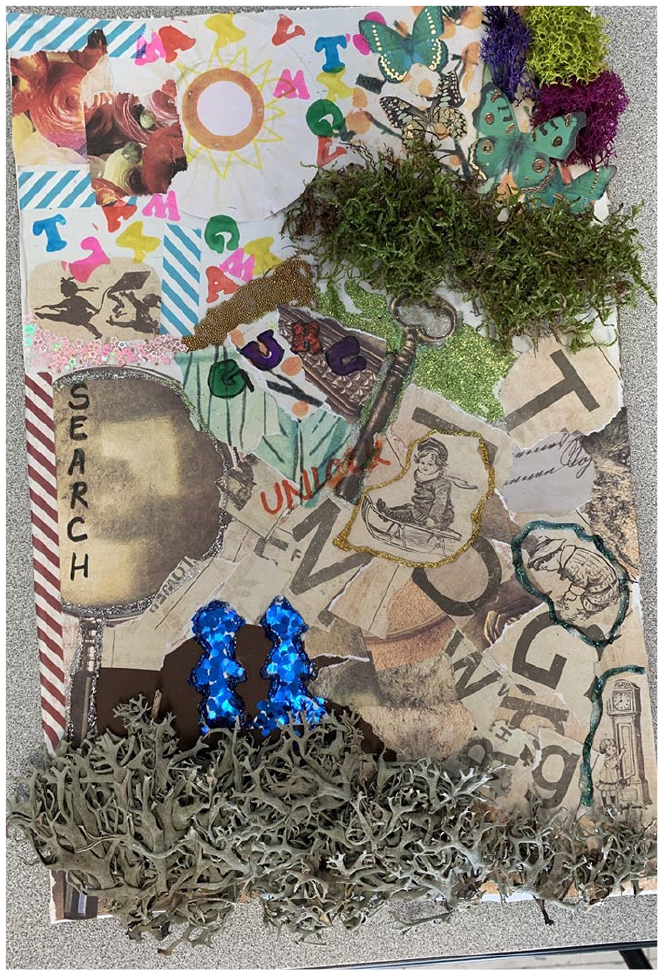
As members of the university community in Atlantic Canada, we are all too familiar with the limits and oppressive forces working upon us by a colonial system designed to serve settlers on this land (Stein, 2022). Some of us benefit from this system while others do not. Two members of this research team are international students having to navigate our settler colonial system. In doing so, they find themselves having to ascribe to this way of knowing to fit in and be successful in this environment (Shokirova et al., 2022). It is no wonder that upon first impression, we note the presence of hierarchical and colonial structures within the collages. Some of the students came from colonized countries and have lived this reality before ever arriving in Canada. What we noticed however is that when we “read” and “re-read” these stories being told, and peel away the outer layers of coloniality, new meanings were revealed. While coloniality existed on the outside, deep within lay humanized notions of leadership. In our discussion of the collages, these are revealed.
In the collage, we see two worlds with the colorful world above and the less colorful world below. At the center is the guru/leader, the bridge between these worlds. The word “unlock” appears in the center as well, indicating the role the guru takes up in this space. In the less colorful world below, children are circled and highlighted however they also appear in the colorful world, running and jumping and flying a kite. This interpretation aligns with what was stated in the oral narration, positioning the attainment of enlightenment through the guru or leader. At one point in the oral narration connected to this collage, the participant referred to the “expelling of ignorance.” The use of this language drew us to visions of children as empty vessels and this was confirmed when we looked at the collage through this lens. We began to see how the leader exposes individuals to diverse experiences, perspectives, and aspects of the world as represented by color. In this sense the leader becomes a vehicle through which others can broaden their understanding and appreciation of the world. As keepers of knowledge, leaders expose others to what is possible. The perspective is limiting in that its focus is on the leader as the keeper of knowledge. It is hierarchical in the sense that the leader has hold of the knowledge and passes it on to others, negating or ignoring the knowledge held by our students. In a study that is trying to decenter normative notions of leadership, this was troubling for us. However, as we reviewed the collages further, we noted the theme of shelter emerging which seems connected to, but not wholly about hierarchy.
One participant said, “I see myself as a leader. I see myself as a shelter where everybody can fit in.” This notion of shelter is expressed visually in this participant’s collage (Image 2) as a colorful umbrella.
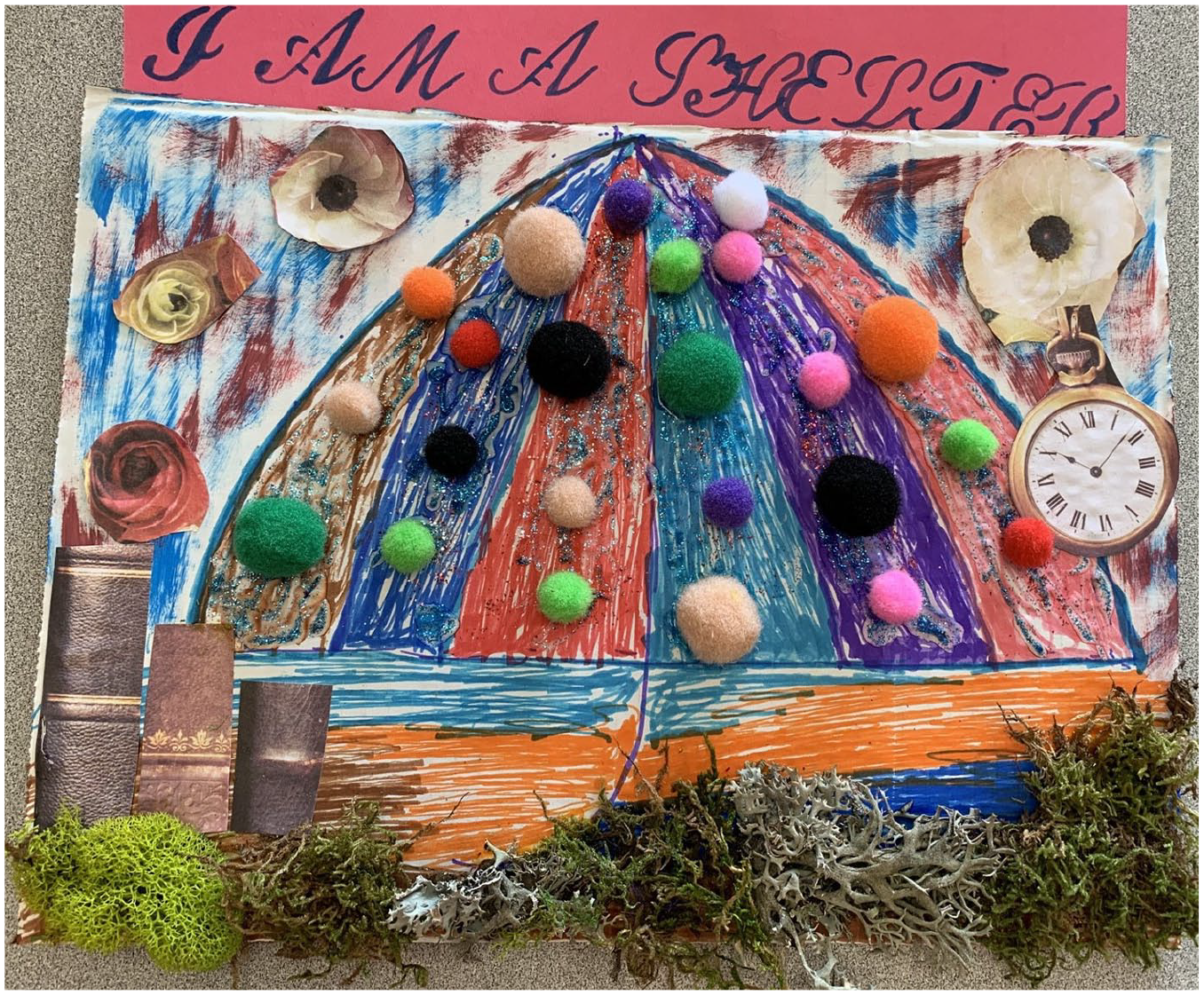
The image of the umbrella overpowers the collage, expressing the importance of shelter to this participant’s identity as a leader. For us, the different colors and differently sized balls reflected diversity, and this was confirmed in the participant’s oral narrative when they stated the following. “I give the umbrella different colors because I believe that in any setting, people are different, and my ability as a leader to give everybody a room to have a sense of belonging is what makes me a leader.” Here we see the leader as the provider of a sense of belonging. The differently colored and sized balls represent the people the leader serves, all belonging within the space with no one left out. While the umbrella denotes shelter and potentially a hierarchical positionality, it is inclusive of all who bring different perspectives and experiences. The intent appears to be about care rather than control, domination, and order.
Another theme which emerges from this notion of shelter is one of connection by embracing empathy. One participant shares, “. . . I see myself as a leader with empathy . . . . and my definition of leading with empathy will be actively listening, showing genuine interest in personal or professional development . . .” In their collage, the participant incorporates a heart encompassing the words “empathy,” “connect,” “feeling,” and the phrase “I see you,” and “I hear you.” We read this heart as representative of providing shelter, embracing all children within this empathetic space. The presence of the ear denotes listening and the butterflies gives off a sense of freedom. The flowers denote a further sense of connection and their varied colors point to diversity (Image 3).
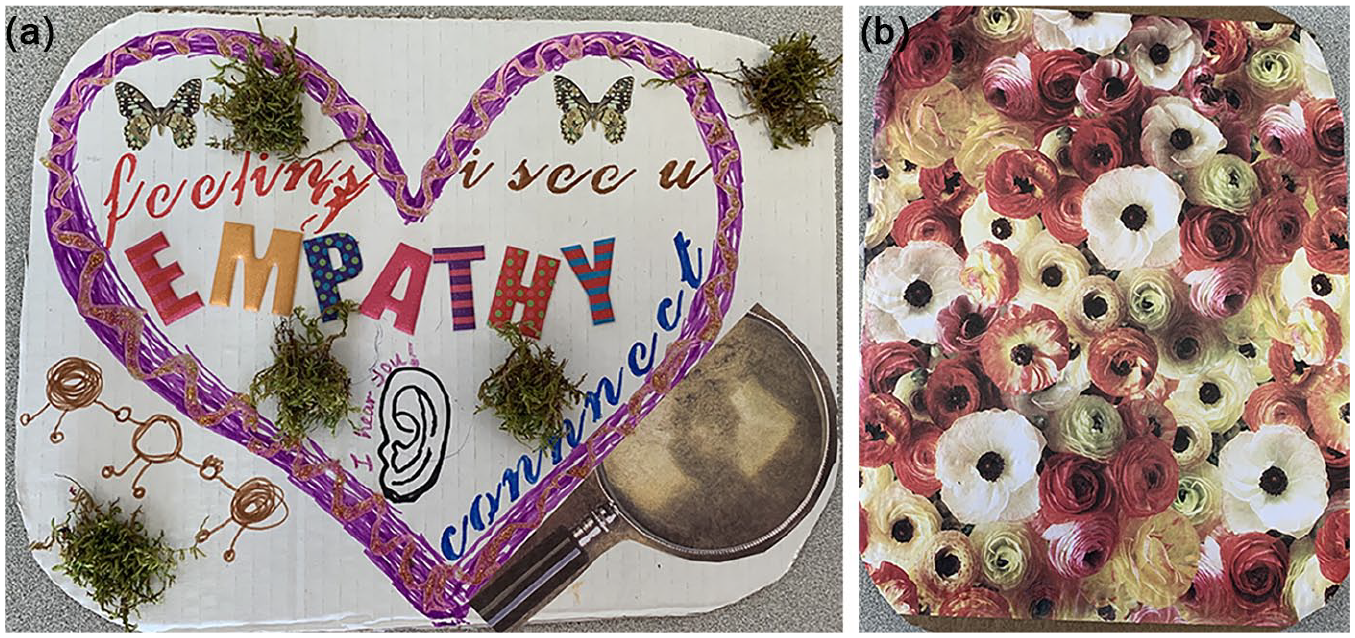
In our analysis of this collage, we noted that the role of the leader was primarily defined in relation to children being served, protected, and cared for. While we were initially drawn toward an interpretation which highlighted constructs of leadership formed out of colonialism, a deeper consideration of the visual narratives as well as the oral stories led us toward a more humanized approach to leadership, one we began to see as heart work.
Glaze (2018) writes of the heart of leadership defining it in relation to the courage to do what is right, and to follow one’s moral compass while centering the needs of children as learners. For Glaze, heart work is about building capacity in others. It’s about the stewardship that is required to ensure no child slips through the cracks. One participant states, “I used to tell my students that you have a lot inside of you. Try to bring it out. So how do I do that? I do that with love, with hope.” A leader is called to love the children they serve. Their role is to help the children realize their potential, to inspire hope. We see this reflected in Image 4 below.
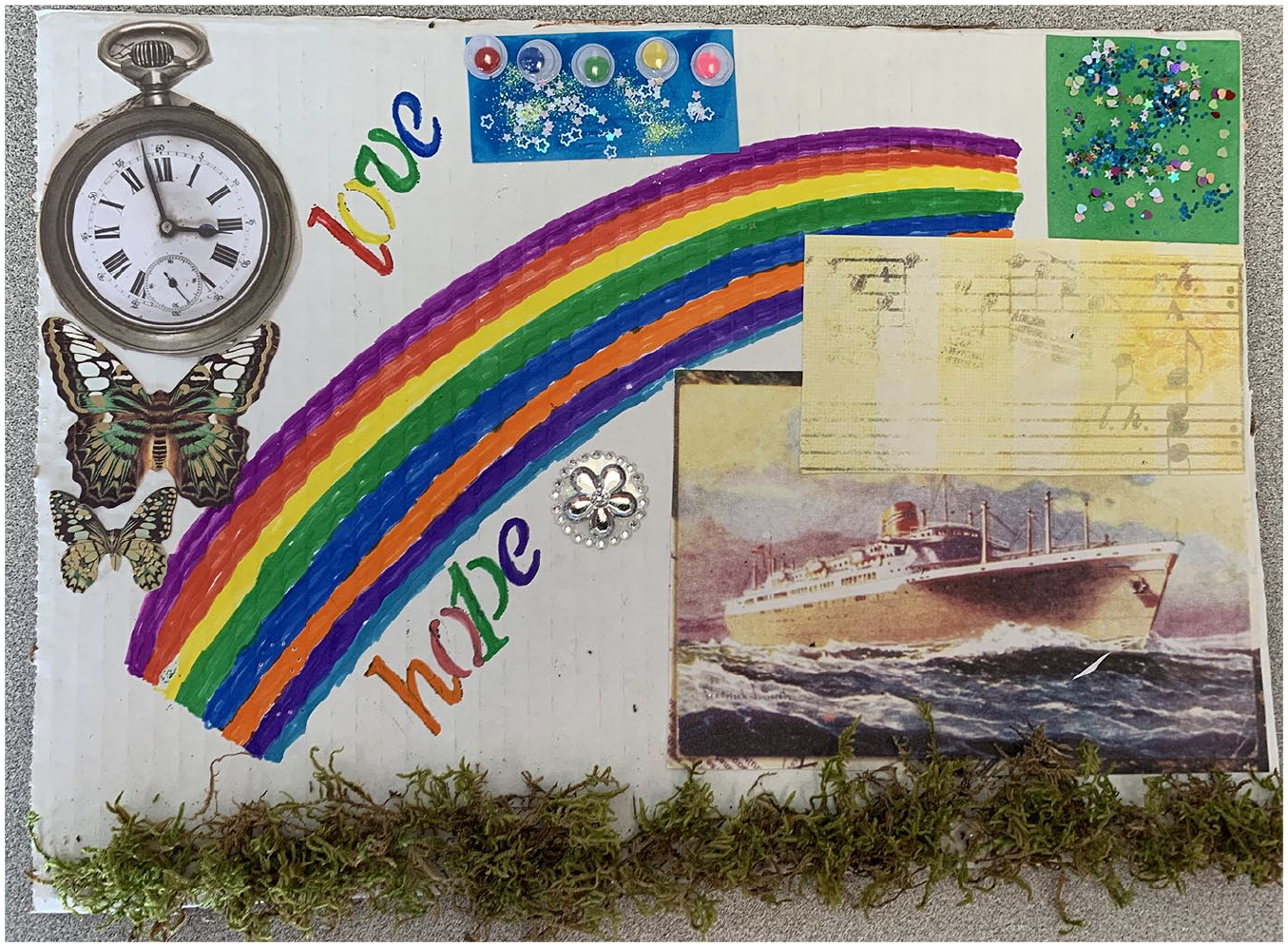
In this collage we clearly note the use of the words love and hope as critical to the participant’s understanding of leadership. The participant described the rainbow in the center as representative of the inclusion of all stating, “I present diversity, inclusion and I like my students to explore because I’m exploring.” We interpreted the rainbow as a journey, a pathway toward new understanding and new learning. The presence of the ship on the sea confirms this for us with the sea representing the trials and tribulations which come with the journey. As leaders, we know that the journey can be hard hence the need for love and hope. In this way, leadership is portrayed as a journey which is not a new conceptualization of leadership however in this context it is humanized. This conception of leadership is not based in skills or competencies, procedures, or practices. It is based in love, care, hope, and empathy for others. It is child-centered and it is about heart work. Younger (2021) writes that if people know that you care about them, they will do amazing things. Arar et al. (2023) writes of the humanization of leadership through the lens and narratives of women in leadership roles. It is interesting to note that our participants in this study were also mostly women and we see emerging a humanized approach to leadership focused on empathy, hope, and care. It is one thing to lead as a means of inspiring others to achieve wonderful heights because they believe that you care about them. It is quite another to lead in a way which fosters care, empathy, and hope as a means of supporting and ensuring the success of all.
A final expression of leadership which emerged from our analysis surrounds the concept of wisdom. We initially wondered about where the wisdom lies and while there is suggestion that leaders hold wisdom, this collage points leaders to places from which wisdom might be gained. This participant comments, “For me, leadership comes from history. The Indigenous thing gives strength to everyone . . . . he or she is knowing of the land, the culture, and Indigenous things. Their customs, they give strength . . . and it is a transition from the knowing the history to knowing the future.” This same participant uses these words, Indigenous, culture, land, history, etc. within their collage (Image 5).
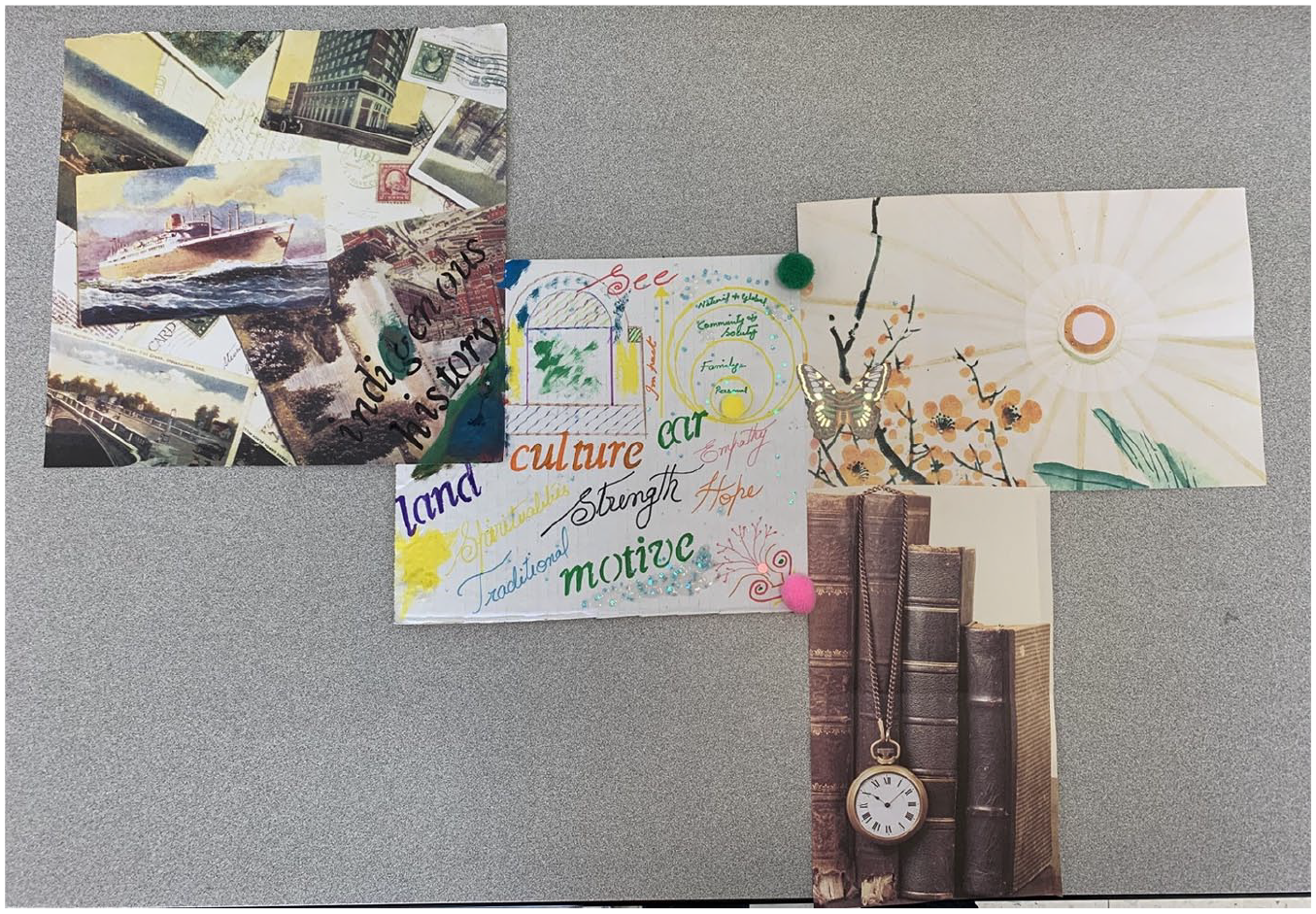
In this collage we see a trajectory which begins with images that reflect history and progress over time. The collage then moves through the center of the image in which culture is heard and seen and land is acknowledged which gives the leader strength and motivation. Finally, the collage depicts texts which appear to be from the past followed by the shining sun, seemingly depicting the future. These images speak to the participant’s central focus on Indigeneity, the importance of honoring history so that we can imagine a hopeful future. We interpret this as engaging wisdom, to know where you have been to know where you are going. With wisdom comes hope for a better future.
So, while our analysis began with a concern about the prevalence of colonial notions of leadership, a deeper analysis of the collages as visual stories and the oral narrations participants shared about their collage revealed a more humanized heart-filled view of leadership. We note that skills, competencies, specific acts or approaches to leadership were not revealed. Rather an overwhelming sense of care, love, empathy, and hope emerged. When we thought about these findings in relation to how we have been teaching and learning about educational leadership, we realized that we had completely missed this humanized aspect of leadership. This is about leadership which comes from within. It is heart work that is informed by the wisdom of those who have come before us. You cannot find this form of leadership in a textbook and within theory. This leadership approach and identity comes from within.
Implications of the Research
While this pilot study initially pointed toward an overarching notion of educational leadership as hierarchical, a deeper dive into our readings of the collages revealed a more humanized notion of leadership. The leader was positioned as the knowledge keeper who is called to lead others toward an enlightened state. When this image of leadership was circumvented by the notion of shelter, under which others were cared for, providing an empathetic space in which all can grow and succeed. Leadership became more about heartwork which is connected to notions of care, hope, and love. Leaders are called to do all they can to serve. They are guided by their moral compass. Leaders are reminded to lead with wisdom which is born out of history and Indigeneity. Leaders become the bridge over which others may pass on their learning journey.
As educational leadership scholars and instructors, we thought about whether these notions of leadership could be garnered from leadership theory? What benefits did the participants experience as they considered their leadership identities through collage? Could this same experience be replicated through textbooks? Our point here is that exploring leadership identity in this way provides an opportunity for students of educational leadership to experience a different, more holistic and humanized approach to the study of educational leadership. We were not asking them to apply their known leadership skills and experiences through a set of leadership theories or principles. We asked them to express their leadership identities as they emerged from the inside out. This is significant because in our experiences, students often found themselves having to align their thinking to theories learned in class, devising a leadership identity from the outside in. Sometimes this alignment is more comfortable than going deeper to discover and unpack their leadership identity. When [Sasha] used collage in the classroom, students resisted at first however, after exploring collage as a medium of expression, students began to recognize a different leadership identity emerging. We are not suggesting here that we learned something new about educational leadership. Rather, we believe that this experience enabled students to consider their leadership identities in a manner which may not have eliminated the influence of western, colonial constructs of leadership but nevertheless provided an outlet which was not informed solely by leadership theories taught in our program. This pilot study was about exploring leadership from the inside out.
This research is helpful in the following ways:
It serves as an example of how collage can be used as a methodological tool in the study of educational leadership. This is a novel approach to the study of educational leadership, and we feel this study points to the value of using arts-based methodologies in the field. This approach adds an additional, humanized layer to our understanding of leadership theories. It is hoped that expanded uses of this methodological approach will reveal even more ways to understand how leadership manifests itself in educational spaces.
It informs andragogical/pedagogical approaches to the teaching of educational leadership. [Mostafa] has begun to use collage in their classrooms and has plans to share their learning with faculty. The use of collage stands as a creative way to explore leadership from a different perspective. It reflects a student-centered approach to teaching about leadership from the inside out and is a refreshing change from the singular use of texts which teacher leadership theory from the outside in. We feel the use of collage creates a space for students to figure out how they fit within the theories of leadership they are learning in class. Our students have something to contribute to this discussion and collage gives them the outlet to do so.
The study serves as a reminder of the importance of de-centering colonial notions of what it means to lead and centering the experiences and identities of our students. This is unique to this study as we engaged international students as participants. We feel it important that we create space for students to bring themselves, their unique and diverse identities to the study of educational leadership rather than continuing to focus solely on the single story that is coloniality.
Finally, this study validates notions of shelter, care, empathy, hope, wisdom, and love as central components of what it means to lead in schools and other educational spaces. These are not new ideas however what makes them important is that they emerged from within the participants. This study centers these humanistic notions of leadership and in this time when human rights around the world are being challenged, leaders need to be in touch with these parts of themselves if they are to lead within educational spaces.
Limitations of This Study
We acknowledge that this is a very small pilot study and does not reflect a wide range of leadership identities amongst international students. We also recognize that by not having a deeper discussion with participants about our purpose and how collage might be used as an expression of identity, may have limited what participants ultimately included in their collage. We may have been overly mindful of our influence as researchers and perhaps not mindful enough. The point is that this was a new venture for us all and we learned a great deal about arts-based research in relation to educational leadership research. More research is needed in this area to better understand what the arts might tell us about how people lead in educational spaces.
Concluding Thoughts
We wanted to end this article by recalling the words of Wagamese (2016) in which they remind us that nothing grows from the outside in. We knew what we had to offer our students in the classroom as we talked about and defined educational leadership. What we did not know is what our international students brought to this dialogue. We now have a small but meaningful taste of how a group of students understood their leadership identity. We learned that they are grounded in heart work and value empathy, care, hope, love, and wisdom as the guiding features of their leadership identities. We noted the influence of colonialism and western notions of how one should lead in education; however, we focused on the images and words shared by these students which told a much deeper story of leadership. We have learned that collage provides a powerful and interesting landscape through which to explore leadership identity, and we look forward to using this modality in our leadership classrooms.
Footnotes
Acknowledgements
We would like to acknowledge the participants in this pilot study and thank them for going on this journey with us.
Declaration of Conflicting Interests
The author(s) declared no potential conflicts of interest with respect to the research, authorship, and/or publication of this article.
Funding
The author(s) disclosed receipt of the following financial support for the research, authorship, and/or publication of this article: We acknowledge that funding was provided by the University of Prince Edward Island’s internal 2023 SERG grant.
Ethical Approval
This project has been reviewed by the UPEI Research Ethics Board and it complies with Tri-Council guidelines for research involving human participants.
