




Abstract
The aim of this paper is to identify the characteristics that leadership must have in order to make a Professional Learning Community sustainable. A review of the literature is carried out from a qualitative perspective allowing us to identify a set of emerging themes from the literature studied. Among the results, it is highlighted that in order to achieve professional learning communities with sustainable leadership, it is necessary to distribute responsibilities, reflect jointly on what is taught and why, establish external relations with other institutions and schools, and care the emotional well-being of members of a school community.
Introduction
In the 1990s and the beginning of the new century, the idea of the school as a learning organization (Bolívar, 2017) began to take shape with the aim of restructuring, redesigning, and improving the school, professionalizing the teaching profession, strengthening the decision-making capacity of schools, and promoting commitment to institutional and organizational development.
Years later, the so-called “fourth wave” focused on school improvement and the building of learning at the local level (Hopkins et al., 2014), raising two questions: How can the schools themselves generate the capacity for change? How can such changes be made sustainable over time?
In response, international studies have highlighted the school model that ensures the sustainability of academic outcomes—Professional Learning Communities (hereafter PLC) (Hairon et al., 2017; Hargreaves & O’Connor, 2020; Tayag, 2020). This type of school involves new forms of leadership, school organization, collaborative work, and assumes new responsibilities for school members (Bolívar, 2017).
Leadership is a key element for school success if there are common goals, redesigned management, and shared values (Bush, 2017; Camarero-Figuerola et al., 2020). Similarly, Leithwood and Jantzi (2006) state that “there is not a single documented case of a school successfully reversing the trend in school performance without talented leadership” (p. 5) and a clear determination of the roles of principals, middle management, teachers, and other educational agents. From the work carried out, it can be highlighted that schools that work through professional learning communities are characterized by leadership that builds common purposes and shares them with their community. Leadership that empowers the different educational agents by sharing responsibilities, functions, goals, and challenges. In this sense, distributed leadership stands out.
Distributed leadership helps identify leaders in other levels and groups (Klar et al., 2016). As a result, leadership flows throughout the school, organizational capacity increases, the personal growth of teachers and others is enriched, and student learning improves (Bush, 2008). Put simply, distributed leadership is about developing new ways of understanding leadership in a shared way (Bolívar, 2015; Harris & Jones, 2017).
Furthermore, distributed leadership requires collective norms of coexistence, space and time for reflection for teachers and their practices, democratic decision-making, shared values, and a school culture that seeks the good of the whole educative community (Harris, 2005). But it is not only the development of distributed and effective leadership that makes schools function well; this also depends on the school’s capacities to initiate and manage change, as well as the mutual support and trust that enables effective and successful educative processes to take place (Hargreaves & Fullan, 2014). Eilers and Camacho (2007) argued that when the connections between leadership and school conditions are understood, an organization’s learning and improvement potential is increased.
Based on the above, and to understand more comprehensively the successful development of PLC schools and the role of distributed leadership in developing and sustaining these experiences, we have conducted a systematic review of the literature (hereafter SRL). This review aims to provide an overview of studies in this line of thinking, showing the elements that are key to leadership when creating sustainable PLC in elementary schools.
At the same time, this work focuses on four key objectives: (a) to identify the most relevant issues about the object of study and their implication in this area of knowledge; (b) to identify the key elements of successful and effective leadership for the development of a PLC; (c) to offer insights into new lines of research based on the studies analyzed; and (d) to achieve an international overview of the state of the art. To achieve this purpose, we formulated the following research questions:
RQ1: How has scientific production evolved on this subject?
RQ2: What are the topics that emerge from the studies analyzed?
RQ3: What are the challenges and emerging perspectives of work in PLC leadership research?
Theoretical Framework
From an international perspective, knowledge about PLC research has been growing as a model that involves collaborative work focused on improving learning outcomes and the school’s capacity to learn (Bolívar, 2017; Murillo & Krichesky, 2015). The term Professional Learning Community emerged in the late 1990s. Although initially it had been linked to school restructuring efforts, over time, it has come to occupy a prominent place as an innovative strategy for the development of more collaborative school cultures that effectively impact educational improvement (Escudero, 2016). Moreover, DuFour (2004) established three fundamental principles of a school as a PLC: (1) ensuring that all students learn, (2) establishing a collaborative culture, and (3) a pedagogical focus on student learning.
Currently, a PLC is defined in terms of its social and cultural context. However, there is an international agreement that PLCs are considered spaces where people share and reflect on the educational actions carried out in an ongoing, critical, and collaborative way (Harris & Jones, 2017). There is also agreement that PLCs enable educational change to be effective and sustainable (Hargreaves & O’Connor, 2020; Stoll & Louis, 2007). This means that professional learning is an outcome of school-community relationships and provides the space for developing collaborative cultures within and between schools while building networks with other schools and their social environment.
Recognizing a school as a PLC is a demonstration of improvement in the development and functioning of a school. For this, it is necessary for teachers and school management teams to join forces through distributed leadership (Doğan & Adams, 2018; DuFour & Reeves, 2016; Flores-Fahara et al., 2021; Harris & Jones, 2017).
Schools are there to meet the needs of learners. To this end, leadership provides opportunities for teachers to innovate, exchange experiences, and learn together (Bolívar & Bolívar-Ruano, 2014; Hopkins, 2008). Schools that believe in a PLC model increase teachers’ individual and collective capacity to impact student learning. For Hargreaves and O’Connor (2020), this can be achieved through a more collaborative professional culture that enriches the personal and social capital of the school. These aspects demonstrate the need for sharing roles, power, and decision-making while creating opportunities for distributed leadership that destabilize the rigidity with which the traditional school is characterized (Watson, 2014).
Bolam et al. (2005) stated that a fundamental condition for a school to function as a PLC is the support provided at all levels of education through leadership that makes it possible to maintain sustainability in the school’s functioning regardless of change processes. Some conditions support this sustainability, such as a learning-friendly culture, ensuring learning at all levels of the organization and promoting reflection and inquiry. Bolívar (2008) reinforced this idea by pointing out that the work of the school management team is paramount and must be supported by agents inside or outside the school—for example, the educational inspectorate and support services—although teachers can also be agents of change.
Moreover, empirical evidence leads us to consider the importance of fostering distributed and curricular leadership (Harris et al., 2020) and relying on middle leaders (Barrero et al., 2020; Grootenboer, 2018; Hargreaves et al., 2018). These figures act as hinges of the education system that articulate contextualized responses to the problems of each school, together with the local community, and networks with other educational agents or institutions (Hargreaves & Shirley, 2020). Similarly, leadership from the middle is a position-revealing expression. However, Rincón-Gallardo et al. (2019) and Fullan (2015) consider that middle leadership does not refer so much to their strategic position in an institution or technical and traditional leadership roles, but rather it implies a cultural and transformative function. This can allow for leading horizontally, having a broader sense of the various roles, positions, and perspectives (Azorín et al., 2022). This justifies and provides evidence for this form of expanded leadership in PLCs.
Methodology
The present study is a systematic review of the literature (Gough, 2007; Hallinger, 2014). Its main purpose is to construct a qualitative synthesis of the significant findings of research in leadership and Professional Learning Communities. To this end, a systematic review was conducted (Arksey & O’Malley, 2005; Levac et al., 2010) using the PRISMA protocol (Gough et al., 2012; Moher et al., 2009), to identify the aims, context, and design of studies in this field (Hallinger & Bryant, 2013). Similarly, we explored emerging themes and possibilities for future research and practice (De Vries et al., 2016; Voorberg et al., 2015).
This systematic review was carried out across three phases: (1) search and selection of studies; (2) analysis of selected studies; and (3) presentation of results.
Search and Selection of Studies
After defining the subject and objectives for the review, we selected the most important databases in the field of education (Web of Science and SCOPUS) for the rigor, reliability, and impact of their publications. The search was carried out in December 2021 and updated in February 2022.
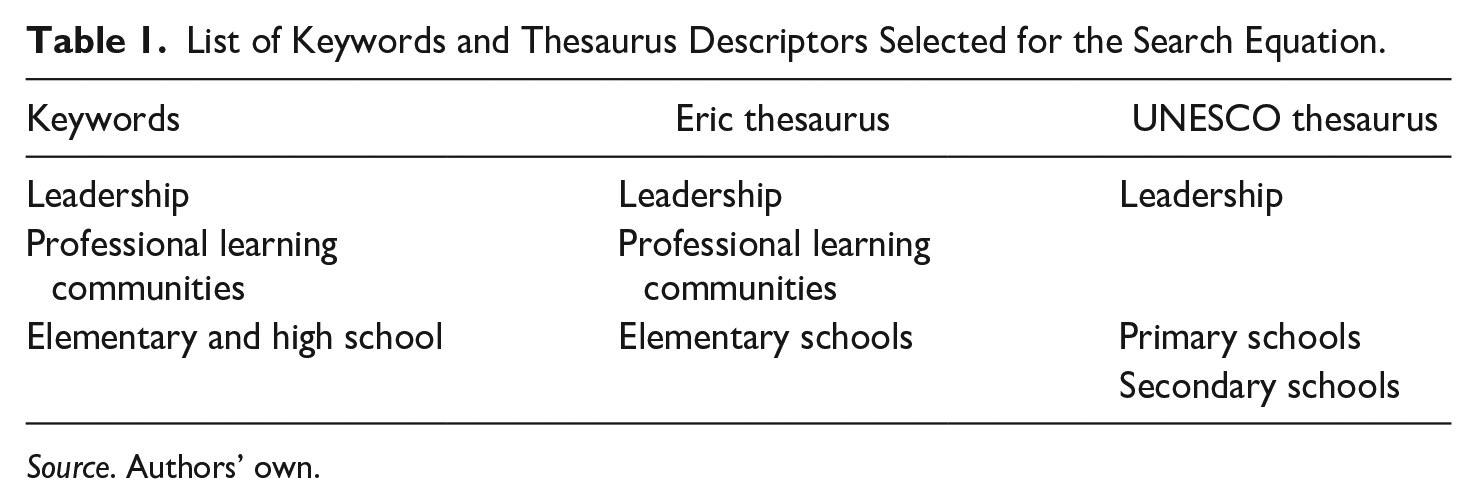
For this purpose, a search equation was formulated based on descriptors with a keyword meaning. To select the descriptors, the thesaurus of the ERIC database was consulted beforehand, extending the search with synonyms and other terms from the Unesco Thesaurus (Table 1). It is important to note that the term Professional Learning Community has not been found in the Unesco Thesaurus database. In your case, it has been found: Learning Community.
List of Keywords and Thesaurus Descriptors Selected for the Search Equation.
Source. Authors’ own.
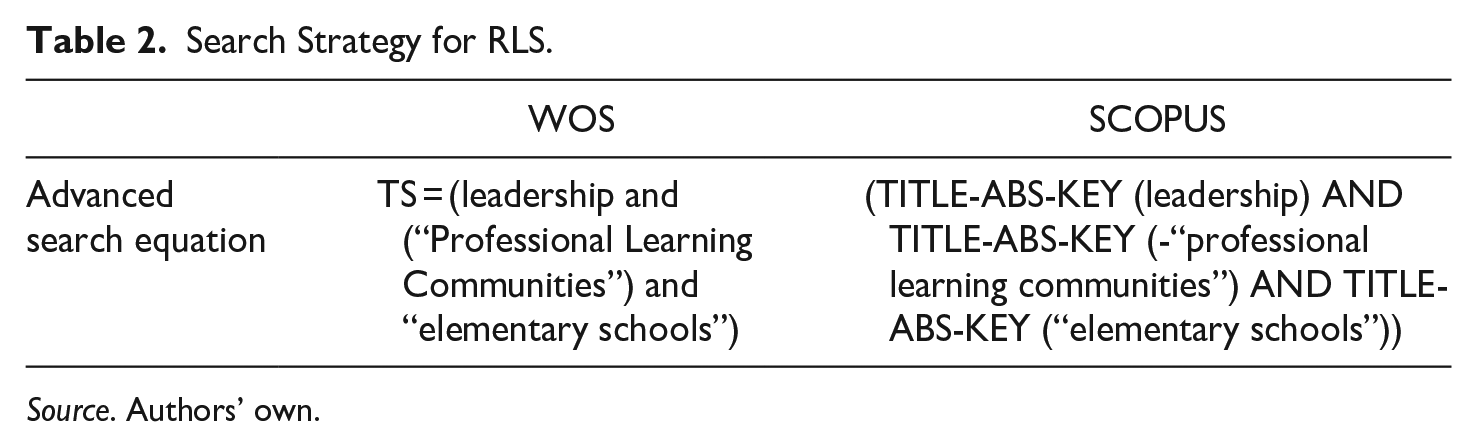
Regarding the search equation, we used the terms “leadership” and “professional learning communities” to avoid possible language biases—and “elementary schools.” The results of the equation applied to each database were as follows (Table 2).
Search Strategy for RLS.
Source. Authors’ own.
After the initial search of the database (the year 2000–2021 and type of document: article and review), duplicate documents in both databases were eliminated, considering only relevant documents based on their title and abstract. These were subsequently read more exhaustively and selected for the bibliographic review.
It should be noted that leading Professional Learning Communities is one of the most profitable and productive topics in the current literature. In recent years, this has been a prominent topic, with more than a 1,000 studies in each database consulted. For this reason, the filter “elementary schools” was used as a keyword to more precisely refine the search and selection of texts.
A more in-depth search was then conducted by further refining the initial assessment, using various inclusion criteria (empirical studies, appropriateness of the subject matter, and primary and secondary stage) to select a final number of studies for analysis.
In addition to the above information, Figure 1 shows the search strategy and process used to select the studies. In addition, and after independently reviewing a set of 30 articles, the researchers met to resolve any conflicts and ensure consistency in their decisions, the research questions, and the purpose of the research (Levac et al., 2010).
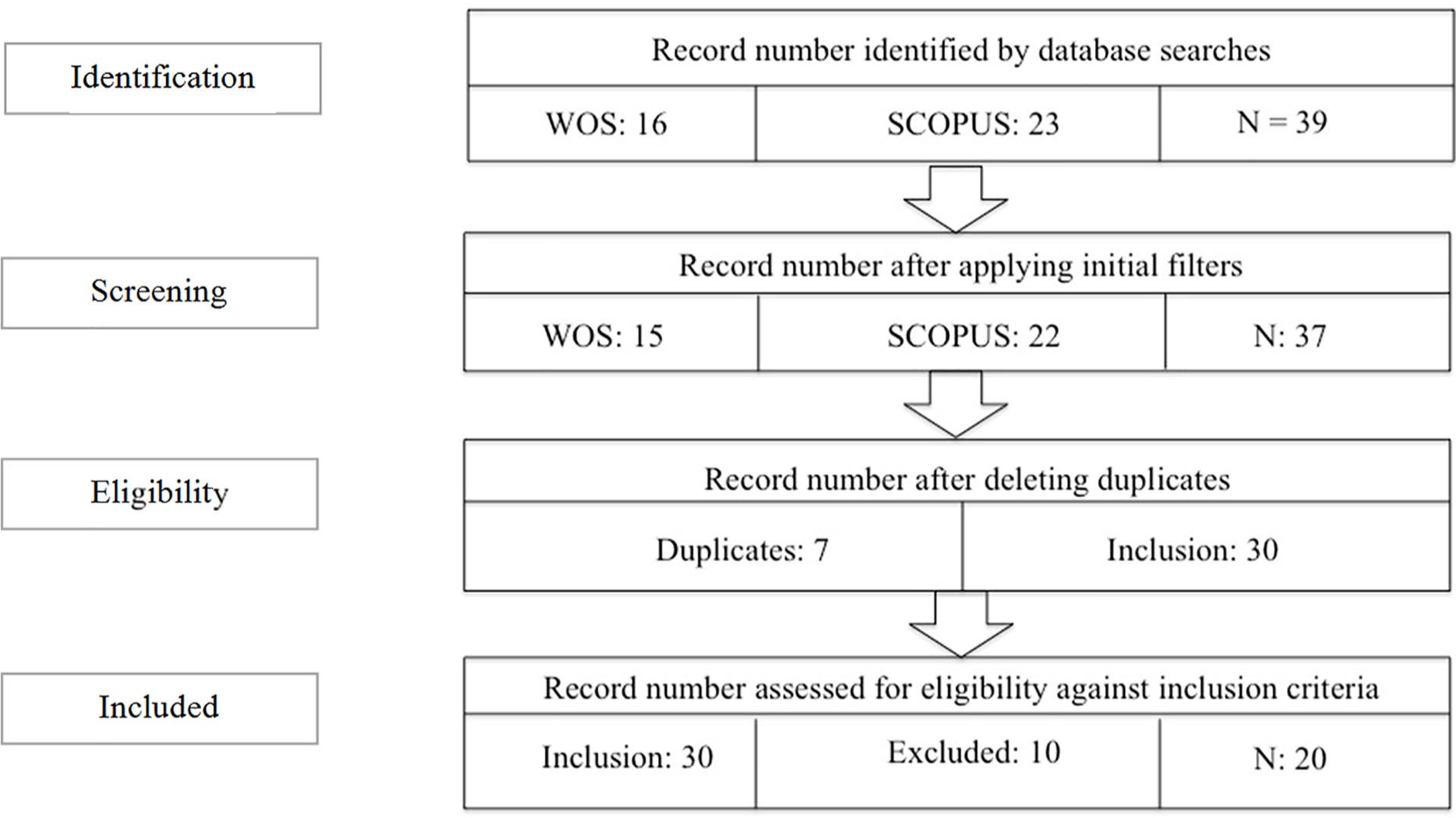
PRISMA flow chart of the study selection process.
Analysis of Selected Studies
Data collection, extraction, evaluation, analysis, and synthesis were carried out systematically. Following Moher et al. (2009), the documents were organized and analyzed using a Microsoft Excel spreadsheet containing the following categories: year, author, country, document title, purpose, methodological design, results, and topics (see Supplemental Appendix 1).
After data collection and synthesis, a process of “Bibliographic mapping” (Hallinger, 2013) was conducted, which allowed us to provide an initial descriptive analysis and explore the topics of study. This mapping describes the general characteristics of the scientific products, such as the number of publications per year, an international overview, the principal research methodology, the main objective of the study, and the subject matter.
For the thematic analysis, the NVIVO software was used to identify the most notable results of each study and assess the implications or challenges in the field of knowledge.
Analyzing the selected papers requires collecting and summarizing vast amounts of information. Therefore, the synthesis of the results presented here involved the systematic integration of information from the individual studies to describe the trend of the studies as a group (Gough, 2007).
Presentation of Results
Communicating and interpreting the meaning of findings are essential components of high-quality reviews (Hallinger, 2013). First, we will present the mapping of the studies analyzed, second, we present the most salient results in each study. Finally, we will discuss the results and evaluate any implications and challenges that these present for the scientific and educational community.
Results
General Characteristics of the Reviewed Works
To gain an insight into the key factors that shape our understanding of the field of study, a bibliographic map is shown, which includes the temporal evolution of the origin of the studies, the type of methodologies used, and the emerging topics or focuses of interest.
Evolution over time of the number of publications from 2000 to 2021
The first publications reviewed that deal specifically with PLC appeared in 2007. This coincides with the development and advancement of the field of study on school improvement, in which several authors refer to the “fourth wave” at the beginning of the 21st century (Bolívar, 2017; Hopkins et al., 2014) where school improvement processes addressed the needs of schools to create capacities for change in schools and teachers.
At the same time, in the first decade of this century, it was proposed that for educational change to be effective and sustainable, schools must become PLC. To illustrate, Graph 1 shows how the number of publications has evolved in the two databases, indicating a minimal but growing interest in the subject.
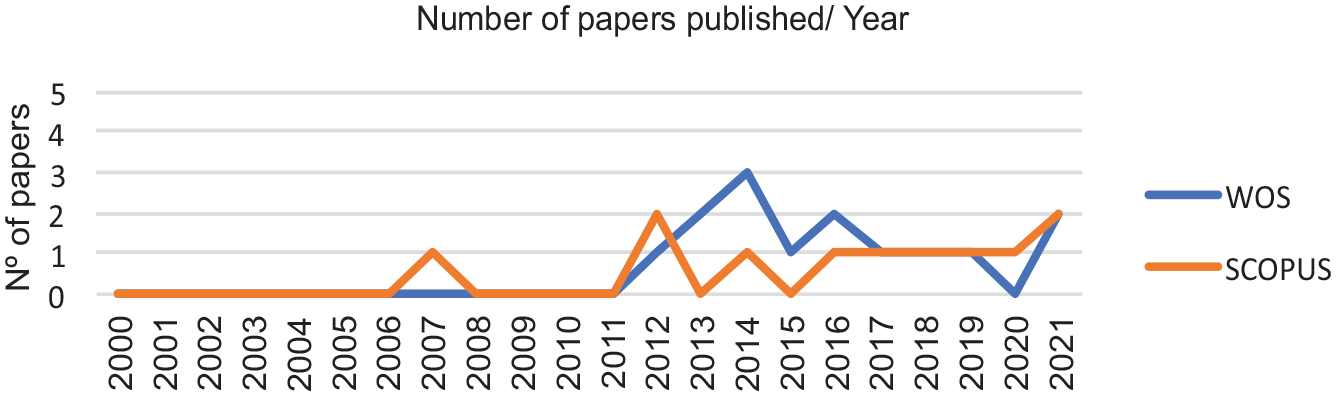
The number of papers published per year in the WOS and SCOPUS databases.
International overview
In this section, two aspects have been considered: the country of publication and the university of origin of the first author. Using these criteria, Graph 2 shows that the greatest scientific production comes from the United States, followed by South Korea. In the latter case, the main impetus for this increase in studies is the recent educational reform where schools have been transformed into new models focused on Professional Learning Communities of students, teachers, and school principals (Seo & Han, 2012).
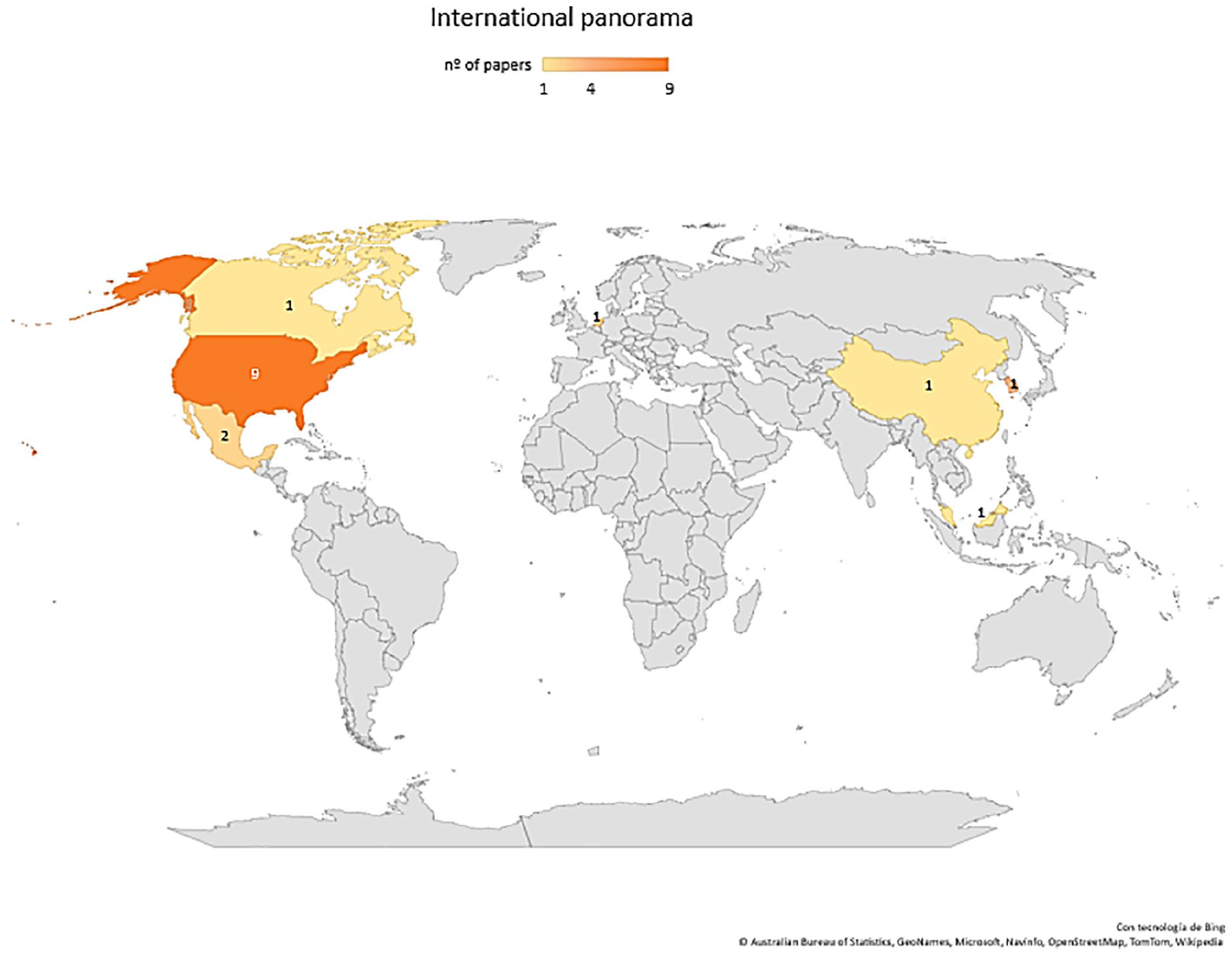
International overview of the studies reviewed.
Methodological design of the selected studies
Concerning research methodologies, Figure 2 shows a predominant use of the quantitative approach, particularly the descriptive survey method and research techniques and instruments such as questionnaires and national surveys. This is followed by studies with a qualitative and mixed approach, using case studies that involve participant observation, semi-structured interviews, and documentary analysis.
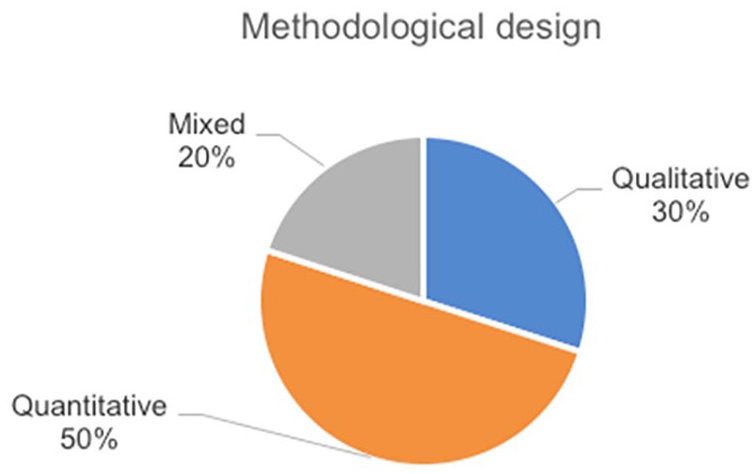
Methodological design of the studies.
Emerging themes
Figure 3 categorizes the studies according to three main themes: distributed leadership, developing a collaborative culture in Professional Learning Communities, and creating networks and supportive leadership.
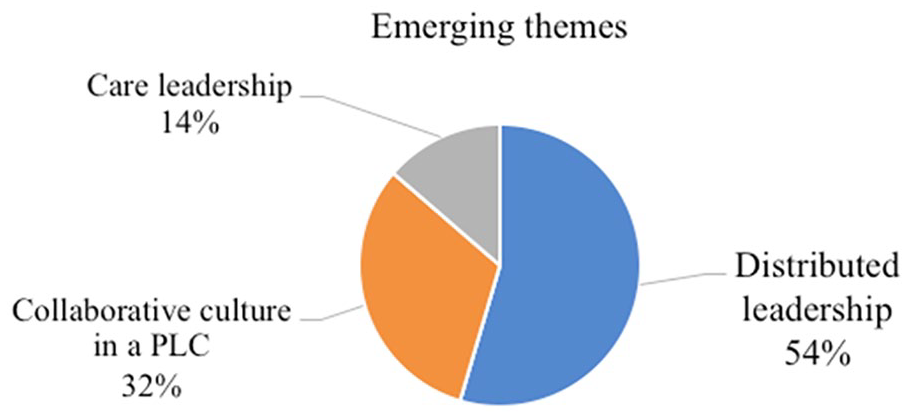
Emerging study themes.
Figure 3 indicates the predominant interest in works that address the various ways of exercising distributed leadership and the empowerment of the teacher as a leader. This is followed by the collaborative culture in a school, which is a hallmark of PLCs and their networks with the surrounding contexts of the schools.
Finally, we can highlight the importance of supporting the emotional well-being of the members of a school community and its impact on such a community. This support facilitates the sustainability of educational improvement.
Furthermore, Table 3 also summarizes the research on each of the themes and the corresponding authors.
Study Themes and Authors.
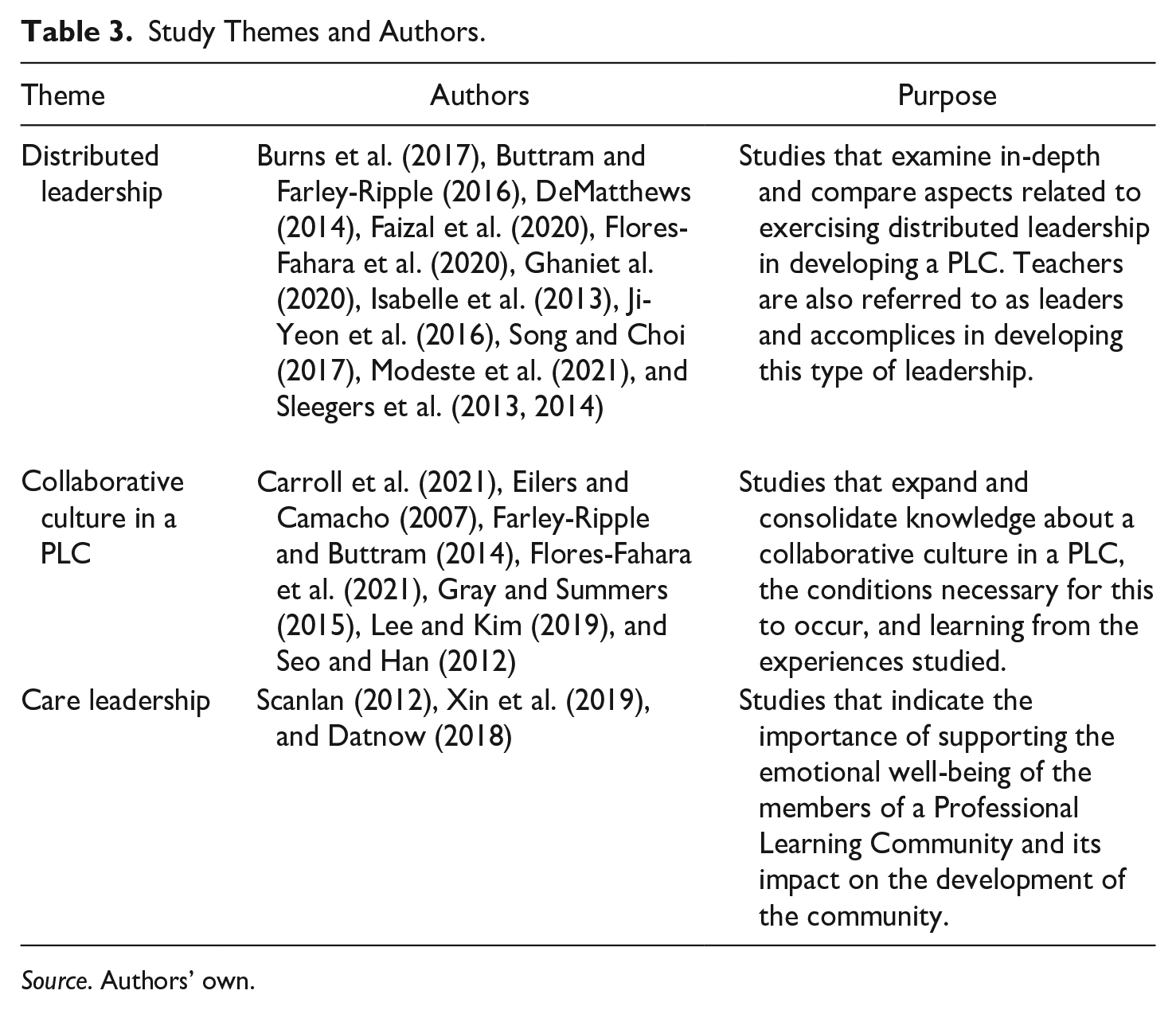
Source. Authors’ own.
Emerging Themes
Some of the review studies focus on distributed leadership work and its impact on the development of a PLC, while others highlight the key aspects of a PLC related to collaborative culture and networking within and outside the school. Finally, studies are shown concerning supportive leadership and its relevance in caring for the emotional well-being of the people who make up a PLC.
Distributed teacher leadership
Studies such as Isabelle et al. (2013) and Flores-Fahara et al. (2020) reveal that adopting distributed leadership facilitates the implementation of PLC in a school. Both leadership and PLC are powerful tools for school improvement, and this requires principals and teachers to work together to implement such leadership and create a school with such a feature.
Flores-Fahara et al. (2021) and Sleegers et al. (2013) emphasize that distributed leadership helps to promote the effective development of a PLC, as this leadership clearly states the roles that are assumed by principals, teachers, and other school staff, so that leadership actions are concrete and pre-defined to achieve organizational success. They point out that teachers and the school management team can work together in the different areas that comprise a school, including organization, curriculum planning, decision making, management, learning construction, pedagogical processes, and establishing professional and personal relationships inside and outside the school. To make more sense of the above, we should begin with the classrooms themselves, where each teacher is the leader of their space and actions (Buttram & Farley-Ripple, 2016). It is also possible to think collaboratively about professional learning and development for teachers and principals and give new identities to school culture (Carroll et al., 2021). This requires shared values, divided responsibilities, and democratic dialogue (DeMatthews, 2014).
All of this requires an overall vision of the school and its context and shared and specific objectives, and a motivation that is contagious and fosters the desire to do and achieve what is proposed (Eilers & Camacho, 2007). Distributed leadership has clear positive effects on the development of a PLC. It involves teaching, pedagogical, and management actions that go beyond the mere delegation of tasks (Flores-Fahara et al., 2021). In this sense, we can highlight the role of teachers, and their ability to make decisions, do and undo actions, and set objectives and goals. Therefore, identifying the objectives and demands of a school organization is the responsibility of the school management team and an obligation of all agents in a school community.
Teachers and principals leading a school toward a PLC can provide opportunities to overcome fears, emotions, and trust issues (Flores-Fahara et al., 2021; Xin et al., 2019). In addition, Lee and Kim (2019) argue that the principal is a catalyst for the leadership opportunities that a teacher can effectively develop, generating bonds of support, trust, and self-confidence and empowering teachers to be leaders.
Distributed leadership as an enabler of a collaborative culture
Studies such as Song and Choi (2017) argue that promoting a Professional Learning Community requires school cultures that encourage the participation of all members of a school.
The way in which principals distribute leadership, delegate, trust, and support the initiatives and responsibilities of teachers and other members of a community is essential to the effectiveness and success of the functioning of a PLC. Studies such as Buttram and Farley-Ripple (2016) and Ji-Yeon et al. (2016) support this notion by stating that principals must: (a) believe in teacher leadership; (b) have the ability to identify a teacher as a leader; (c) recognize that leadership determines the development of PLC; (d) hold shared values within PLC; and (e) look beyond traditional, hierarchical roles in leading a school.
In this sense, Flores-Fahara et al. (2021) consider that a school culture should be open, adaptive, flexible, and sustainable. Thus, despite the changes or challenges that a PLC might encounter, the established culture prevails and provides stability for the school organization.
Moreover, Flores-Fahara et al. (2020) and Seo and Han (2012) highlight that school improvement is possible through a collaborative school culture, as long as leadership addresses three key needs: collaboration, support, and trust. This approach generates internal loyalty among the members of a school organization, something that occurs when leaders are aware of these benefits and share their responsibilities, delegate power, and exercise horizontal leadership (any member of the school community can exercise leadership functions) that facilitates school success.
To this end, the working culture must be reframed and refocused (Carrol et al., 2021; Modeste et al., 2021) toward sustainability of the factors that enable a PLC to be successful.
Distributed leadership and curriculum planning
Studies such as Buttram and Farley-Ripple (2016) emphasize that distributed leadership must be present in a school’s curricular and didactic elements. This enables the sharing of pedagogical and effective practices through reflective dialogue and cooperative inquiry.
Ji-Yeon et al. (2016) also consider that pedagogical practices should be based on the needs of students and their abilities to improve and achieve school success. To this end, curricular areas are diversified, effective teaching strategies are designed, and implementation is reflected upon.
Likewise, Lee and Kim (2019) highlight distributed leadership as a factor that provides spaces to develop feedback on the pedagogical practices of colleagues. This means that curricular decisions and didactic actions are evaluated based on constructive criticism, thereby enabling school excellence to be achieved. At the same time, feedback provides mutual enrichment through shared experiences and knowledge. To make this possible, a reflective dialogue is needed (Ji-Yeon et al., 2016) that generates an awareness of the development of one’s practices, facilitates communication, the implementation of the pedagogical project, the teaching and management functions, and the performance of students. Also, studies by DeMatthews (2014) and Sleegers et al. (2014) emphasize collaborative inquiry as a process of action that constantly seeks to improve ways of consolidating pedagogical practices better and achieve collaborative curriculum planning.
Collaborative Culture in a PLC
Encouraging collaborative skills in teachers
For the development of a PLC to be sustainable and effective, it is important to foster a collaborative culture among teachers and generate, through leadership, spaces open to dialogue, reflection, and evaluation regarding the improvement of educational practice. Similarly, it is necessary to train teachers in collaborative strategies and dynamics.
Several studies (Carrol et al., 2021; Farley-Ripple & Buttram, 2014) show the importance of school leadership in supporting the implementation of collaborative professional learning approaches in schools and the benefits of creating training spaces for teachers so they can share experiences and knowledge to improve their school practice. Most teachers value collaborative partnerships positively as a space where teachers learn to improve their educational practice (Carrol et al., 2021; Farley-Ripple & Buttram, 2014) and collaboratively develop instructional plans, strategies, lessons, or lessons improvement plans. The supportive conditions that facilitate collaborative professional learning programs are a professional climate among teachers, strong leadership, and effective structural resources (Carrol et al., 2021).
Teachers involved in collaborative professional learning programs believe that collaborative teacher partnerships should be designed intentionally so that instructional improvement can be supported. They also believe that these partnerships encourage teachers to engage in their professional development in effective and beneficial ways (Carrol et al., 2021).
Regarding how schools implement actions based on collaborative professional learning, Farley-Ripple and Buttram (2014) studied a 90-minute weekly collaborative activity, where they found different modes of development on pedagogical practice. One notable finding was that collaborative work determines the relationships among certain variables, for example, working times, the support provided by local institutions, PLC specialists, or the type of collaborative activities carried out.
They also highlight the importance of school leaders and their contribution to a culture based on expectations, clear objectives, and standards concerning decision-making and assessment of student learning.
Organizational conditions: Collaborative culture as a key element
The results suggest the importance of professional, personal, and organizational factors in a PLC. Factors such as teacher, student, and parental satisfaction with their schools (Seo & Han, 2012), the existence of organizational conditions (Lee & Kim, 2019), or collective efficacy (Gray & Summers, 2015) are all essential for a collaborative culture.
Seo and Han (2012) investigated the community model in Korean schools to determine the characteristics and the relationship between its development and the satisfaction of teachers, students, and parents with their schools. They point out that elementary schools tend to function more like PLCs than secondary schools because collaboration among teachers is not common. They also highlight that functioning as PLCs is closely related to the satisfaction of teachers with their schools, but not that of students and families.
Recently, Lee and Kim (2019) analyzed the effects of factors influencing the level of development of Korean elementary schools as professional learning communities. The findings suggest an important role for organizational factors at the school level and other teacher factors to a lesser extent. Moreover, key factors such as leadership, joint decision-making, and teacher cooperation were highlighted.
Gray and Summers (2015) highlight trust and collective efficacy as frameworks for understanding differences in the level of development of schools as PLCs. The more established the school structures, trust in the principal, and collective efficacy, the more likely that PLC development will be sustained. They also believe that teaching actions are more effective if teachers collaborate more effectively. And this potential for joint working is more likely to be based on collaborative relationships. Finally, this work supports other research that considers collective efficacy and trust within a group as prerequisites for collaboration between Professional Learning Communities.
Collaborative work between teachers and principals: Curriculum planning
Several studies have shown how collaborative school culture can facilitate teacher leadership (Buttram & Farley-Ripple, 2016; Ji-Yeon et al., 2016). For example, Flores-Fahara et al. (2021) recently conducted a multi-case study in five Mexican public schools to determine what happens when teachers and principals engage in a PLC to develop school planning. Their study suggests a sense of fear of being lost in the initial phase of the process. However, the shared visions between teachers and principals about what it means to be a community, learning to learn together, the stimulation of coexistence and collaboration, the initiatives of teachers who support principals in their management, and the commitment to a different approach to work all help to calm this fear (Burns et al., 2017)
For Flores-Fahara et al. (2021), creating PLCs in Mexican schools is possible. They propose the creation of new school organization structures that support school leaders without ignoring the resistance that occurs when change processes are implemented. This work reinforces the idea that a collaborative school culture driven by principals’ leadership practices plays an important role in shaping how teachers become leaders to contribute to improving educational practice and student outcomes.
Building collaborative networks within and outside the school
Principals can influence teachers’ learning, educational practice, and student achievement. Eilers and Camacho (2007) emphasize that it is possible to build another type of school based on leadership and PLCs. To this end, they consider that leadership distributed among the different levels of a school organization and the different roles of each educational agent will promote improved school outcomes.
Their findings showed that the principal is a key element because of their pro-activity inside and outside the school. In addition, collaborative leadership between a community of professional learning and the school environment is important. The success of this collaboration lies in the quality of the relationships and their synergies to encourage effective collaboration. However, some types of leadership depend on a whole system both inside (school) and outside (context) and respond effectively to high management, organization, and administration levels.
Supporting the Emotional Well-Being of a School Organization: Care Leadership
The studies reviewed subscribe that along with leadership, a key factor in achieving success in a PLC is supporting and attending to the emotional state of the people who make up the community. Despite this commitment, current studies are currently but consistent enough to warrant consideration.
Studies such as that of Scalan (2012) make visible the sustainable relationships in a Professional Learning Community (PLC). For this, there is a shared common purpose, mutual commitment, solid identities of the school institution, support in adversity, trust in one’s own, and others’ actions so that there is an opportunity for building strong school communities.
Following this line of action, knowing, understanding, and accepting the emotional state of teachers and students in a school makes it easier to respond accordingly to their needs. Through empathy, successful school practices and effective leadership functions can be carried out, while reaching out to the social community can help to build strong and beneficial actions for improvement inside and outside the school.
Datnow (2018) reveals that strong collaborative school structures and spaces for innovation and reflection increase motivation and positive teacher status. In turn, and in agreement with Scalan (2012), a strong PLC is a source of support for teachers in stressful or changing situations. Similarly, this study aimed to vindicate the conceptualization and interpretation of emotions in teachers and students by the scientific and policy community in adverse times. As emotions occupy a space in teaching and change processes, it is important to continue working on connecting teachers’ emotions and professional capital within a PLC.
Further, Xin et al. (2019) argue for the effectiveness of leadership development in a PLC. This allows teachers to strengthen self-efficacy in the development of their practices. Effective and distributed leadership generates school climates of possibility and security for educational staff. It creates spaces for support, reflection, and dialogue, thereby strengthening the emotional well-being of a PLC. Leadership helps the emotional state of teachers and students through its ability to be supportive and safe.
Future Implications for Research Outlined in the Reviewed Papers
The reviewed studies have implications for both the scientific and educational community. We can highlight those works whose results can contribute to improving the practice of school leadership. For example, studies highlight the influence of providing support for teachers to work collaboratively (Burns et al., 2017; Buttram & Farley-Ripple, 2016; Eilers & Camacho, 2007; Farley-Ripple & Buttram, 2014; Gray & Summers, 2015; Ji-Yeon et al., 2016; Lee & Kim, 2019), improvements in student learning (Scalan, 2012), the use of tools for school self-evaluation (Sleegers et al., 2014), or how to develop shared leadership between the school community, the principal, and teachers to establish and develop the functioning of a PLC (Isabelle et al., 2013).
Another set of studies has implications for experts when it comes to assisting them in in-service professional development within school departments (DeMatthews, 2014) and confirms the value of emotions in teachers and students acknowledged by the scientific and political community in adverse times (Datnow, 2018; Scanlan, 2012).
Moreover, Korean (Seo & Han, 2012) and Mexican studies (Flores-Fahara et al., 2020, 2021) discuss the implications for current school improvement efforts in these countries. These authors study the development of schools as Professional Learning Communities and their relationship to school leadership, students, families and teachers. In Korea, schools working as PLC have little influence on student and parent satisfaction, while in Mexico, schools as PLC influence leadership, being distributed and collaborative between teachers and management.
Some studies have practical implications for teachers when it comes to questioning their ways of teaching and creating opportunities to work collaboratively (Song & Choi, 2017; Sleegers et al., 2014) and promoting teacher learning associated with educational practices (Ji-Yeon et al., 2016). In this sense, we refer to building Professional Communities of Practice as networks of interrelation, communication, and support for the learning of all and for all.
Finally, we found a study that contributes to providing a better understanding of the multidimensional and multilevel nature of the PLC concept (Sleegers et al., 2013), which can help academics and school leaders to assess the conditions necessary for the establishment and development of such communities. With the development of this research, three capacities were designed which are connected to each other and composed of eight dimensions. Each capability has a number of dimensions. It is highlighted with it. (1) Personal capacity (active and reflective construction of knowledge. Currency). (2) Interpersonal capacity (shared values and vision. Collective learning. Shared practices). (3) Organizational capacity (resources, structures, and systems. Relationships and climate. Stimulating and participative leadership).
Discussion
Studies on Professional Learning Communities (PLCs) as a school model for improving and moving forward collaboratively along with distributed and shared leadership, are growing, and being increasingly recognized at an institutional level (Harris et al., 2020). PLCs are central to sustainable change in education, leadership, and improvement of teaching practice, student learning, and academic achievement (Bolivar, 2017; Tayag, 2020).
This systematic review has shown how leadership determines educational success and improvement in a school PLC (Hargreaves et al., 2018). The studies note that leadership within these schools needs to be broadened and distributed, with the teacher also viewed as a leader. Even openly taking the view that traditional notions of leadership are no sufficient to understand how a school functions (Lovett & Andrew, 2011) . Moreover, Nguyen et al. (2019) highlight that a team of people led by teachers are models of collaboration, collegial reflection, and joint curriculum planning when it comes to leading schools. These factors positively impact teaching practice and student outcomes (Hargreaves & O’Connor, 2020; Muijs & Harris, 2007).
The results of this review reinforce the idea that leadership in teachers can be fostered by placing greater value on their teaching ability and professional development (Harris & Jones, 2017). If empowered to lead, teachers can be integral actors in school improvement and student achievement (Poekert et al., 2016; Shen et al., 2020). But it is not only leadership and its distribution that make it possible to develop a PLC; there is also a need for collaborative school cultures that promote improvement strategies and spaces open to change (Hargreaves & Fullan, 2014; Stoll et al., 2006).
Aside from a collaborative school culture, there is the need to increase and mobilize professional capital, supported by three factors: human, social, and decision-making (Fullan, 2019). The human factor determines the support for the emotional well-being of the people working in a school institution, while the social factor highlights the importance of relationships between professionals in a PLC, as well as the trust and mutual respect reflected in the goals and actions of a school organization. Finally, the decisional factor refers to the importance of the opinion of teachers and other educational agents in analyzing and optimizing the progress of a PLC.
The studies analyzed reveal the importance of supporting the socio-emotional well-being of people in an educational community (Louis & Murphy, 2017; Shirley et al., 2020; Smylie et al., 2020). Care leadership enables positive emotions to be fostered and encouraged in the school and among teachers to make improvement efforts sustainable in the face of changes and challenges. However, studies evaluating this aspect of PLCs are scarce (Datnow, 2018; Scanlan, 2012; Xin et al., 2019). Therefore, we should emphasize the importance of supporting resilience and emotional well-being in a school institution. By knowing the emotions of teachers and students, it is possible to act accordingly and respond to their needs, thus ensuring a sense of personal well-being and academic success (Louis et al., 2016).
Moreover, the social and decision-making factor in the professional relationships of a school and a PLC creates more participatory structures that facilitate professional learning and improvement from the “bottom-up” (López-Yáñez & Sánchez-Moreno, 2021). Similarly, this makes it possible to integrate the ideas of a network with the community, thereby generating internal and external networks that strengthen the actions carried out to achieve the desired school success. In this line of reflection, studies demonstrate the network perspective’s potential to help better understand school improvement processes (Ainscow, 2010; Rincón-Gallardo & Fullan, 2016).
Muijs (2010) posits collaborative teacher networks as a fourth phase of the school improvement movement. The research refers to networks within a school and inter-organizational networks (Leithwood, 2019; Liou & Daly, 2020; Pino-Yancovic et al., 2020), and socio-educational organizations made up of schools and organizations or bodies in the same field (Díaz-Gibson et al., 2017). Thus, collaborative action in professional learning is enhanced when moving from Professional Learning Communities to Professional Learning Networks (Prenger et al., 2021).
Conclusions
Among the most relevant conclusions of this work, the following stand out:
Leadership is an essential organizational element of the school that enables the sustainability of a PLC. This study has focused on the significance of leadership in the development of PLCs, demonstrating that distributed leadership—coupled with a collaborative teaching culture and the development of the emotional well-being of a whole community—contributes toward ensuring school improvement.
Leading is not only a function of the school head. Teachers and other school actors can distribute and exercise leadership, sharing responsibilities, along with horizontal and shared decision-making.
A collaborative school culture facilitates teacher leadership and allows for other curriculum planning and learning approaches in schools such as communities, networks, or teams. Leadership actions support these professional networks and interrelationships within or outside the school.
It is recommended that school and scholar context (local institutions and families) collaborate to establish improvement processes in student learning and school functioning.
It is important to support and attend to the emotional well-being of members of a school community. This support helps to understand staff needs better and build effective responses to such needs. In addition, being aware of the emotional state of teachers and students allows for tailored responses to specific needs and facilitates the sustainability of PLC.
To summarize, the studies analyzed confirm that PLCs ensure school improvement by generating collaborative cultures, shared responsibilities, and mutual support among professionals. These aspects facilitate the construction of school spaces that value and care for the emotions of all school actors. Driven by the leader and shared by teachers, students, families, etc. In turn, distributed leadership facilitates the creation and development of interrelations, shared learning, and democratic decision-making. The increase of social and professional capital within the PLC, establishing internal and external relationships with its community, encourages joint actions, constructing an educational sense of improvement, and, ultimately, the learning and success of an entire community.
Supplemental Material
sj-docx-1-jrl-10.1177_19427751221145207 – Supplemental material for Leading a Professional Learning Community in Elementary Education: A Systematic Review of the Literature
Supplemental material, sj-docx-1-jrl-10.1177_19427751221145207 for Leading a Professional Learning Community in Elementary Education: A Systematic Review of the Literature by Marta Olmo-Extremera, Lucía Fernández-Terol and Jesús Domingo-Segovia in Journal of Research on Leadership Education
Footnotes
Author’s Note
The author Marta Olmo- Extremera works in the the research group HUM- 386, teacher training, University of Granada.
Declaration of Conflicting Interests
The author(s) declared no potential conflicts of interest with respect to the research, authorship, and/or publication of this article.
Funding
The author(s) disclosed receipt of the following financial support for the research, authorship, and/or publication of this article: This article has been prepared in the framework of two research projects: (1) “Communities of professional practice and learning improvement: intermediate leadership, networks and interrelationships. Schools in complex contexts” (Reference: PID2020-117020GB-I00), funded by the State Research Agency of the Ministry of Science, Innovation and Universities of the Government of Spain. (2) “Communities of professional practice and learning improvement” (Reference: P20_00311), funded by the Andalusian Knowledge System of the Andalusian Regional Government. This article is part of a research project funded by the Spanish government. The article itself is not specifically funded, but is a product of the project.
Supplemental Material
Supplemental material for this article is available online.
Author Biographies
 .
.
References
Supplementary Material
Please find the following supplemental material available below.
For Open Access articles published under a Creative Commons License, all supplemental material carries the same license as the article it is associated with.
For non-Open Access articles published, all supplemental material carries a non-exclusive license, and permission requests for re-use of supplemental material or any part of supplemental material shall be sent directly to the copyright owner as specified in the copyright notice associated with the article.
