



Abstract
This study analyses teachers’ opinions concerning the actions taken by management teams in favor of policies which address inclusion in compulsory education schools in Granada (Spain). This is quantitative research in which the LIE-Q-Teaching Team has been used. Two hundred forty-three teachers participated in this study which involved a descriptive and inferential analysis. Results show that the actions promoting inclusion mainly relate to the management of teaching-learning processes and professional development. Results also reveal that there are significant differences based on the ownership of the school, its educational level and the socio-economic status of the area in which it is located.
Introduction
Guaranteeing quality inclusive education—as expressed in 2030 Agenda for Sustainable Development (UNDP, 2015)—has become a challenge for Spanish schools and for the professionals who work in them. “Inclusive education” is an education for all, although it has different meanings, as understood by UNESCO (2016) and Ainscow (2016). It is committed to equity, participation, and overcoming obstacles that hinder success, especially with respect to those who are marginalized or at risk of exclusion. This activist commitment, imbued with ethical values, constitutes the essence of inclusive education in its fight against structural and cultural inequalities inside and outside educational institutions. This points to a very close relationship with social justice (Ainscow, 2016; Lewis, 2016; Ryan, 2006). “It appears that diversity has expanded in many different organizations but there often remains a severe lack of inclusion in those same environments for faculty/staff in addition to student bodies” (Thompson & Matkin, 2019, p.16).
Theorists� and researchers’ interest in inclusive leadership has increased significantly in recent years. As Thompson and Matkin (2019) indicate in their literature review articles on inclusive leadership, these studies multiplied exponentially throughout the 2010 to 2019 decade. A growing diversity can be observed in educational institutions, together with the systemic inequalities suffered by students from certain social groups. This has led to greater attention being paid to school leaders and the way in which they address diversity in their organizations. Ainscow (2016), Black and Simon (2014), Cardno et al. (2018), Ryan (2006) and Szeto et al. (2019) highlight the work of school management teams in creating more inclusive schools and in articulating goals around agreed values. These authors also place importance on adopting positive perspectives on diversity and on improving teachers’ commitment to equity and the success of all students. However, few academics propose practical approaches to this type of leadership (Celoria, 2016; Quiroga & Aravena, 2018; Thompson & Matkin, 2019), and there is even less research, as noted by Cardno et al. (2018), Poon-McBrayer (2017) and Wang (2018), focusing on the strategies devised by school management teams to promote inclusive cultures and practices in their schools. This study aims to help fill the gap.
The objectives of this research are:
1. To specify the degree of implementation of those actions carried out by school management teams to encourage inclusion in compulsory education from the teachers’ perspective.
2. To determine if there are significant differences depending on the type of school ownership, the educational level of the school and the socio-economic status of the area in which the school is located.
Las preguntas que orientan la investigación son: The questions that guide the research are:
Are compulsory education management teams promoting actions to foster inclusion in their schools?
What actions are they undertaking and to what extent are they being implemented?
Are there significant differences in the actions carried out by school management teams depending on the socio-economic level of the area in which the schools are located?
Are there significant differences depending on the type of school ownership?
Do the inclusive actions of management teams vary significantly according to the educational level of the school?
Compulsory education in the Spanish school system entails two educational stages: Primary Education, which lasts for 6 years for pupils between the ages of 6 and 12, and Compulsory Secondary Education, which lasts for 4 years and applies to students from age 12 to 16. Undergraduate training of Primary Education teachers focuses on teaching methods, while undergraduate training of Secondary Education teachers focuses on academic disciplines and postgraduate training in teaching methods.
This study is part of a broader research project funded by the European Union’s European Regional Development Fund (ERDF) together with the Andalusian Board in Spain (Ref: B-SEJ-057-UGR18).
Being an Inclusive School Leader: A Tough Task
Transforming schools into inclusive spaces is a complex process which requires support, resources and commitment on different levels (political, institutional, professional, etc.), and it involves various factors. One of these is school leadership (Ainscow, 2016; Black & Simon, 2014; Echeita, 2017; Ryan, 2012; Szeto & Cheng, 2018). For Quiroga and Aravena (2018), school inclusion is a multi-dimensional process which requires ensuring learning opportunities for all students. It also demands, from the management team, “skills, knowledge and abilities to positively influence the mobilization of teaching practices and the development of trusting relationships between parents and teachers” (p. 91).
Furman (2012), Black and Simon (2014), Cardno et al. (2018), Wang (2018), Randel et al. (2018), and Brooks and Brooks (2018), among others, point to the complexity involved in the performance of this leadership. Some of the obstacles which these authors highlight include the lack of theoretical consensus around inclusion, the restrictions imposed by politics, the prevailing school culture, a lack of support in addition to the school leaders’ own convictions and deficiencies in their training. Szeto and Cheng (2018), for example, point out how those school management teams interested in promoting equity are forced to extend the limits imposed by educational policies, thus taking risks and facing dilemmas. By focusing on the individual level, Celoria (2016) believes that inclusive leadership involves challenging one’s own convictions, clarifying and strengthening values and aligning behaviors and practices with new beliefs and attitudes. Black and Simon (2014) acknowledge the relevance of the personal factor, but highlight that inclusive leadership entails a conflict with norms and values strongly rooted in the schools themselves.
According to Ainscow (2016), Causton and Teoharis (2017), López and La Malfa (2020), and Ryan (2012), there are organizational, functional and cultural aspects, inside and outside of the educational institution, that favor or hinder inclusion in schools. In this sense, the studies carried out by Díez (2014), López and La Malfa (2020), and López-López et al. (2021) have highlighted that teachers’ attitudes toward diversity vary according to the type of school, the educational level in which they teach (Primary/Secondary), their specialization and the subjects they teach. All of them agree that, for example, secondary school teachers are less supportive of diversity inclusion than primary school teachers, and relate this to their poor pedagogical training. In addition, Camarero et al. (2020), León et al. (2018), and Szeto and Cheng (2018) point out the impact of contextual aspects, such as educational policy or the degree of vulnerability of families and community members, on the management of diversity by school management teams. According to Camarero et al. (2020), the work of school leaders is more difficult and complex in disadvantaged contexts, while León et al. (2018) hold that management teams from schools located in advantaged settings are more committed to inclusion than those in more vulnerable settings.
This complex network of factors, and its many interconnections, affects the reactions that inclusion tends to elicit from school management teams. Based on numerous studies, Cardno et al. (2018) acknowledge that inclusion has not been a priority for school leaders, and illustrate how they tend to be reluctant to undertake the necessary personal, curricular, and organizational changes that this would entail. Furthermore, Quiroga and Aravena (2018) confirm that this is an issue that school management teams shy away from: “Headteachers condition inclusion in their schools to external circumstances, instead of linking it to internal actions that could depend exclusively on their ability to influence and professional performance” (p. 102).
Leaders committed to inclusion need resources and to feel supported. They also require a rigorous training program which allows them to reflect on, and critically analyze, their practice, in order to be able to exercise educational, transformative, and ethically committed leadership (DeMatthews et al., 2020; Furman, 2012; Harris et al., 2017; Lewis, 2016; Ryan, 2006; Shields, 2013; Szeto et al., 2019). According to Shields (2013), DeMatthews et al. (2020), and Lewis (2016), headteachers must have a strong foundation in values in order to overcome the many obstacles to equity and inclusion which exist in schools.
Black and Simon (2014), Causton and Teoharis (2017), Poon-McBrayer (2017), Harris et al. (2017), and Szeto and Cheng (2018) believe that inclusive leaders are professionals who:
start from a positive conception of reality,
promote environments supported by trust,
take risks,
are directly involved in the improvement of teaching-learning processes in order to facilitate the success of all students under conditions of equity,
support teachers and promote collaboration and critical reflection in their practice in order to drive the development of inclusive educational practices,
facilitate the participation of all members of the educational community, and
actively commit to transforming their institutions into inclusive spaces.
Consequently, inclusive school management teams must not only have a disposition which is favorable to diversity but they should also be ethically committed to inclusion. Furthermore, they must have the necessary training and strategies to promote it in their organizations and sustain it over time (Moral et al., 2020).
Much of the research on inclusive leadership undertaken to date has relied on information provided by school leaders themselves (Poon-McBrayer, 2017; Rodríguez-Izquierdo, 2016; Szeto & Cheng, 2018; Timothy & Agbenyega, 2018). However, since school management teams tend to be complacent about their practices (Pérez-García et al., 2018 ) and define themselves as inclusive leaders—despite the fact that their practices do not always confirm this (Cardno et al., 2018)—we have considered it pertinent to broaden the context of our research. We believe this can be done by assessing the vision that Spanish teachers have on the actions undertaken by their school management teams to favor inclusion.
Analyzing school management teams’ approach to inclusion from the perspective of the teachers interviewed offers an opportunity. It promotes reflection on the challenges presented by the inclusion of diversity policies in educational institutions. It can also favor new forms of leadership which are more committed to equity and the development of more inclusive educational practices in schools. This is because school leaders influence the way their teaching staff think, feel, and act (Black & Simon, 2014; Poon-McBrayer, 2017; Wang, 2018).
The Unusual Case of School Management in Spain and Its Commitment to Educational Inclusion
Educational inclusion is a statutory commitment in Spanish education enacted in recent decades. The current Spanish Education Law of 2020, in its only article, point 1.b, expressly points to equity, equal rights and opportunities, as well as universal access to education and educational inclusion, among other initiatives, as guiding principles of educational action. According to data provided by the Ministry of Education, Culture and Sports, and Eurostat, collected by Carrasco et al. (2018), the early school dropout rate of foreign students stands at 32.9%. This is double the rate of Spanish students, which is 16.4%. According to the latest report issued by the Ministry of Education and Professional Training (2021), the distribution of foreign students is uneven and tends to be concentrated in state schools (78.1%). The vast majority comes from Africa (30.7%), and are mostly Moroccans, while 8.1% are from the Americas, mainly from Latin American countries, especially Ecuador, Colombia, and Venezuela; and 24.2% come from other European Union countries.
In Granada, in addition to foreign students, there is a significant Roma community established since the 16th century. This is a minority community in Spain, as in the rest of Europe, and they are highly vulnerable from a social and economic point of view. According to data from various studies, 41% of Roma people have suffered some kind of discrimination in the last 5 years; specifically, 85% of Roma children are at risk of poverty and 62% of Roma youth have no education, employment, or training (European Commission, 2020).
In the same way, we should also point out the presence of students with special educational needs, who represent 2.8% of the total number of students. Most of them are enrolled in state schools (3.0%) and state-subsidized private schools (2.8%), their number being very low in private schools (0.6%). Specifically, state schools serve 3.3% and 3.2% of students with special educational needs in Primary Education and Secondary Education, respectively; while in the subsidized private schools figures drop to 2.1% in Primary Education and to 2.8% in Secondary Education (Ministry of Education and Professional Training, 2021).
These data show that, in practice, Europe and Spain are far from guaranteeing educational inclusion of all students (Echeita, 2017; Rodríguez-Izquierdo, 2016). Action is necessary to promote equality and equity in schools and to guarantee inclusive educational practices.
For Black and Simon (2014), “inclusive practice denotes the institutionalization of practices and policies in which all students enjoy unfettered representation, opportunity, access, participation, and success in culturally responsive educational programs in a unified system of delivery of supports” (p. 156).
The current Spanish law on education under Article 131, ratifies the commitment to educational inclusion and invites school leaders to combine their administrative and managerial responsibilities with a more pedagogical and educational leadership. Therefore, the possibility, for school management teams, composed of the headteacher, the head of studies and the secretary, to be more actively involved in inclusive strategies and in the fight against inequality has been opened up (Gómez-Hurtado, 2014; León, 2012; Murillo et al., 2010; Rodríguez-Izquierdo, 2016). However, the procedures established for the selection of and appointment to the position of school leaders, and the official training offered for this job, do not seem to contribute to this goal.
In Spain, headteachers of public schools are teachers selected by a commission managed by the educational administration which is ultimately responsible for their appointment. The head of studies and the secretary are appointed by the headteacher and their term of office depends on the headteacher. The post of headteacher lasts for a period of 4 years (renewable), but once it comes to an end, the headteachers resume their regular teaching activity alongside the rest of their colleagues. This limits professional autonomy and conditions practice and decision-making by school leaders whilst giving rise to dilemmas and tensions which hinder progress toward educational inclusion (Quiroga & Aravena, 2018; Rodríguez-Gallego et al., 2020; Rodríguez-Izquierdo, 2016). Sometimes, they have to choose between responding to the requirements of the educational administration, maintaining good relations with teachers, or satisfying the needs of the students and the context.
In addition, the Spanish Law on Education, under Article 135, establishes the need to present a management project and undergo a training program on management skills. The management project must be aimed at achieving educational success for all students and include, among other topics, content on gender equality, non-discrimination and the prevention of gender violence (art. 135.4). However, the training program established by the Ministry of Education, Culture and Sports (2014) for the performance of school management in Spain, fails to include any express mention of diversity, inclusion or the struggle against inequality. This disregards the recommendations of international and national experts who highlight the need to improve the training of school leaders and reinforce their commitment to inclusion and social justice (Echeita, 2017; León, 2012; Ryan, 2006; Wang, 2018). The scant attention given to the training of these professionals places school management members in a weak position (León & López, 2017), given that they may lack the knowledge, skills, and attitudes necessary to face the dilemmas, risks and obstacles involved in guaranteeing everyone’s right to an inclusive education in practice (Ainscow, 2016; Black & Simon, 2014; Furman, 2012; Poon-McBrayer, 2017; Szeto & Cheng, 2018).
This situation is aggravated by the scarcity of existing knowledge about the true role played by school management teams in the implementation of inclusion. This occurs both in the national context, where this line of research is virtually unexplored (López & León, 2018; Gómez-Hurtado et al., 2018; González, 2014; Rodríguez-Izquierdo, 2016), and internationally, where there is a specific requirement to expand existing studies and develop more practical approaches which help to promote this type of leadership (Cardno et al., 2018; Celoria, 2016; Poon-McBrayer, 2017; Quiroga & Aravena, 2018; Thompson & Matkin, 2019).
Thus, although this research explores the degree to which strategies favoring inclusion in the city of Granada (Spain) are undertaken by the school management teams in compulsory schools from the perspective of teachers we believe that its results will be of interest to administrators and education professionals elsewhere.
Method
This research is a cross-sectional, ex-post facto quantitative study which specifically responds to a survey design (Cohen et al., 2007).
Participants
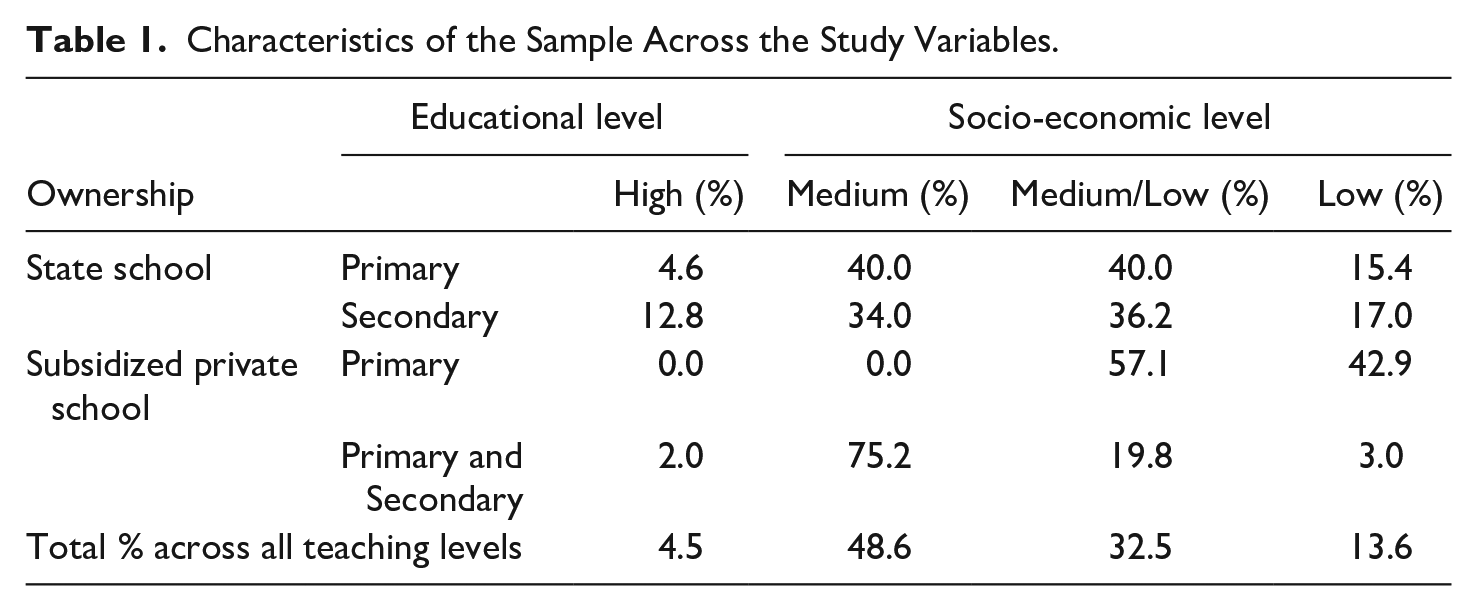
The research was carried out in compulsory education schools in the city of Granada (Spain). The selection of schools was made through purposive sampling (Etikan et al., 2016). The criteria followed were: educational level (Primary Schools, Secondary Schools or both), ownership (public and subsidized private schools), and location (socio-economic status of the area on which the school is located). Twenty schools took part, representing 21% of the total number of schools in the city of Granada and including the different typologies covered by the criteria. Primary Schools represent 39.1%, Secondary Schools represent 19.3%, and Primary and Secondary Schools 41.6%. Of these, 46.9% are public owned and 52.1% are subsidized private schools (receiving public and private financing). And 4.5% are located in areas characterized by a high socio-economic level, 48.6% are located in areas of medium socio-economic level, 32.5% in areas of medium/low level, and 13.6% in areas with a low socio-economic level.
The strategy used to access teachers in each participating school did not use any particular sampling method, as the questionnaire was given to all teachers in the participating schools (542). Of these, 243 teachers agreed to fill in the questionnaire, 60.4% were women and 39.1% men. This number of participants corresponds to a response rate of 44.8%.
The characteristics of the sample, presented cross-sectionally and taking into account the variables which are analyzed in this study, are shown in Table 1:
Characteristics of the Sample Across the Study Variables.
Procedure for Collecting Information
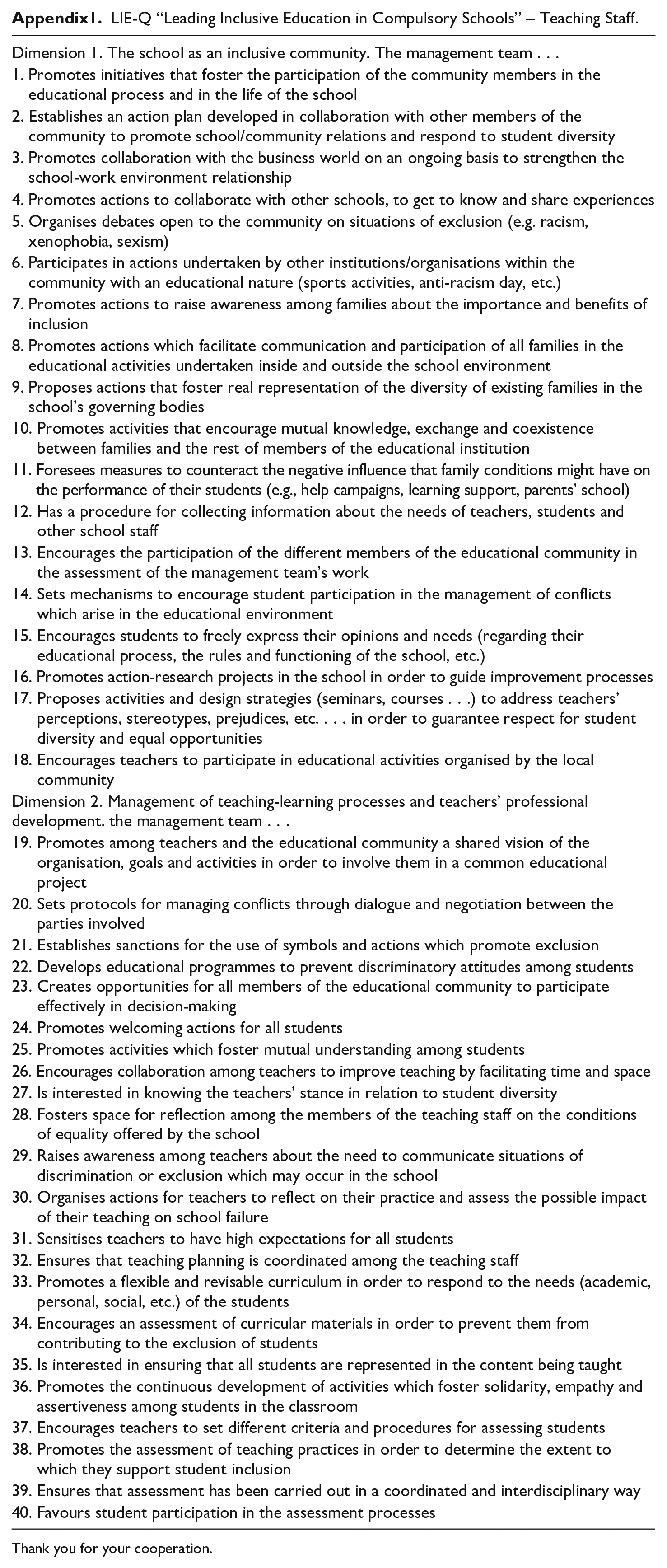
The means of collecting information was the “Leading Inclusive Education in Compulsory Education Questionnaire (LIE-Q-Teching Team)” (López-López et al., 2022) (Appendix 1). This was selected because it allowed for the disclosure of the teachers’ perceptions relating to the degree to which management teams have implemented measures to promote inclusion. It consists of 40 items split in two dimensions:
Dimension 1. The school as an inclusive community (18 items).
Dimension 2. Management of teaching-learning processes and teacher professional development (22 items).
The Likert-type scale has four answer options: (1) Not implemented, (2) Partially implemented, (3) Substantially implemented, and (4) Fully implemented.
This questionnaire, validated by statistics and experts, is reliable. Its internal consistency, measured through Cronbach’s Alpha Coefficient, is high (George & Mallery, 2006), both for the full scale (α = .97) and for each of its two dimensions (α = .92 year α = .96). The Exploratory Factor Analysis (EFA), carried out with individual variables (items), indicates an explained variance of 53.5% (Bartlett’s Statistic, 7,721.6, -gl = 946; p = .00-, and the Kaiser–Mayer–Olkin Test = 0.95). The Confirmatory Factor Analysis (CFA) offers the following fit indices, recommended for this type of analysis by Tabanick and Fidell (2018):
The collection of information was carried out by making direct contact with the schools during the 2019/2020 school year. It was administered on paper by different members of the study team, who took personal responsibility for ensuring that the procedure was carried out as planned. During data collection, measures to ensure the anonymous status of the participants were considered: (a) the questionnaire did not include any items on personal data that would allow the participant to be identified; (b) in the classification and analysis of the data, the questionnaires were identified by coding.
Appropriate ethical commitments were established in advance. These were based on the recommendations of the Economic and Social Research Council: a clear definition of responsibilities, no conflict of interest, transparency, respect for integrity, voluntary participation, confidentiality, anonymity, and informed consent (ESRC, 2016).
Analysis of Data
The information collected was then subjected to descriptive analysis, as well as to analyses of dimensions and items, and inferential analyses, using the Mann–Whitney and Kruskas–Wallis U tests. These were chosen after an analysis of normality which resulted in a non-normal distribution of the scores. Given that leadership practices are influenced by context (Hallinger, 2016; Harb & Karami-Akkary, 2021; Szeto & Cheng, 2018), the inferential analysis was carried out according to three relevant variables relating to the school context: type of school according to ownership (public, subsidized), type of education (primary, secondary) and the socio-economic profile of the area in which the school was located. The statistical program SPSS v.25 was used for this purpose.
Results
Descriptive Analysis
This type of analysis aims to respond to objective 1 of this research (To specify the degree of implementation of those actions carried out by school management teams to encourage inclusion in compulsory education from the teachers’ perspective). Table 2 illustrates the overall results of the descriptive analysis of the dimensions. Both result in mean values greater than three, so they can be considered substantially implemented.
Descriptive Questionnaire Dimensions.
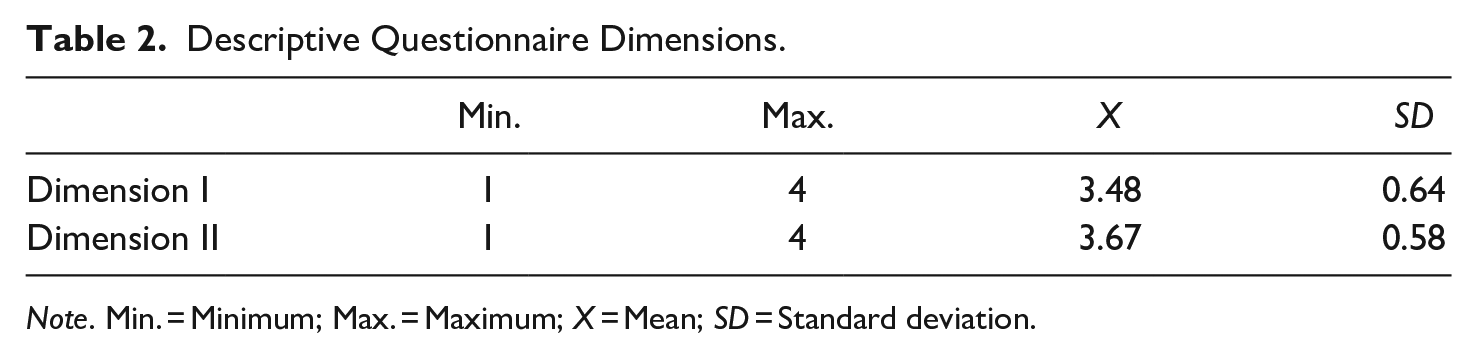
Note. Min. = Minimum; Max. = Maximum; X = Mean; SD = Standard deviation.
A more detailed analysis by items reveals higher scores in the second dimension.
According to the teachers surveyed, the actions in Dimension I most promoted by school management teams focus, largely, on the following:
improving communication and the participation of families in educational activities carried out both inside and outside the school environment (item 8, X = 3.35; SD = 0.78),
promoting community participation in the educational process and in the life of the school (item 1, X = 3.32; SD = 0.78),
encouraging students to freely express their opinion and needs (item 15, X = 3.28; SD = 0.87), and
foreseeing measures aimed at counteracting the negative influence that the family background could have on the success of students—for example, helping campaigns, learning support, parenting courses . . .—(item 11, X = 3.26; SD = 0.82).
Of the actions less frequently implemented by the management teams and resulting in the lowest average values, collaboration with the business world (item 3, X = 2.49; SD = 1.22), and with other schools (item 4, X = 2.88; SD = 0.99) stand out, as does the initiating of debates around exclusion which are open to the community (item 5, X = 2.86; SD = 1.00).
In Dimension II, the actions which are promoted the most by management teams are:
raising the teaching staff’s awareness of the need to report situations relating to discrimination, or exclusion, which may occur in the school (item 29, X = 3.47; SD = 0.77),
promoting the establishment of different assessment criteria and procedures by teachers, (item 37, X = 3.47; SD = 0.75), and
ensuring a flexible and revisable curriculum in order to respond to the students’ academic, personal, social, etc. needs (item 33, X = 3.46; SD = 0.75).
Item 40, “They favor the participation of students in assessment processes” (X = 2.79; SD = 1.052) is the aspect which is least implemented. In addition it is the one that accumulates the greatest dispersion of the teachers’ responses.
Inferential Analysis
This analysis makes it possible to determine if there are differences arising from the type of school ownership, the educational level of the school and the socio-economic status of the area in which the school is located (objective 2). If we focus on the results obtained after the inferential analysis, the Mann Whitney U test for independent samples indicates that there are no statistically significant differences between the dimensions in relation to type of ownership of the school (Dimension I: U = 6925.50, Z = −0. 89, p = .37 and Dimension II: U = 7023.00, Z = −0.77, p = .43).
However, there are significant differences in five of the variables in Dimension II, as can be seen in Table 3. In all cases, the highest average scores correspond to the subsidized private schools.
Mann–Whitney U test. School Ownership.
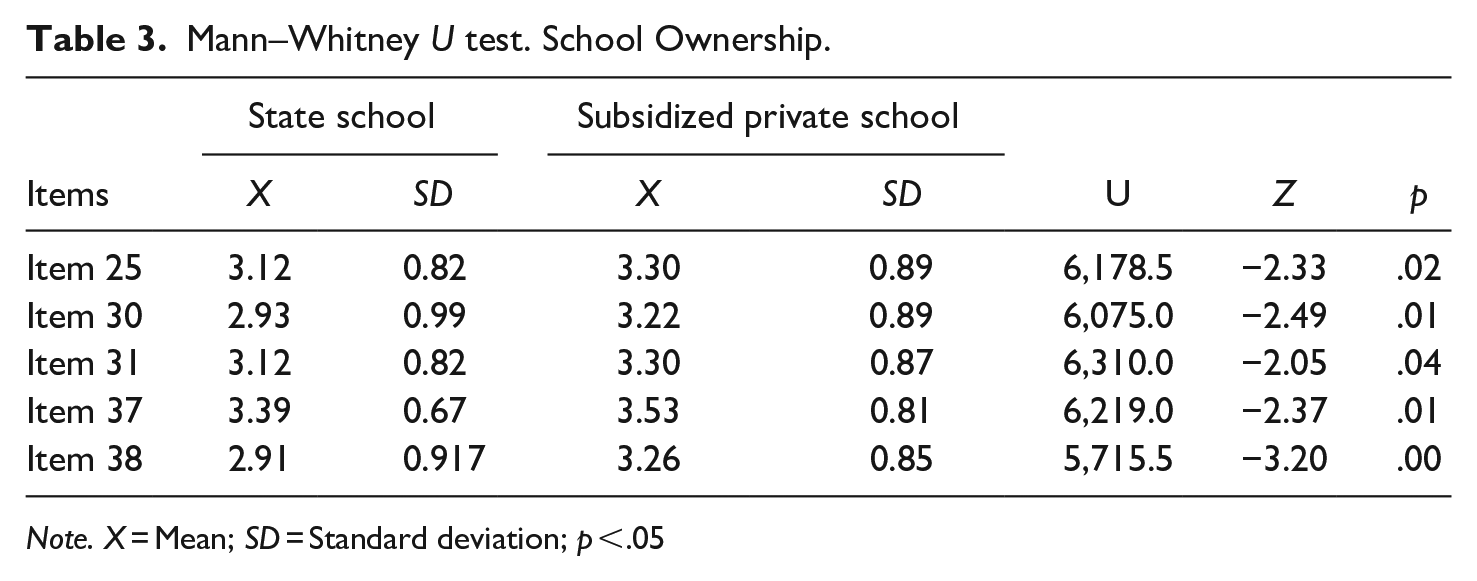
Note. X = Mean; SD = Standard deviation; p <.05
Similarly, there are no significant differences in the dimensions (Dimension I: χ2 = 1.15, p = .56 and Dimension II: χ2 = 0.76, p = .68) when it comes to the educational levels taught by the participating schools.
However, analysis of the individual items presents significant differences in 10 variables, illustrated in Table 4.
Kruskal-Wallis Test. Educational Level.
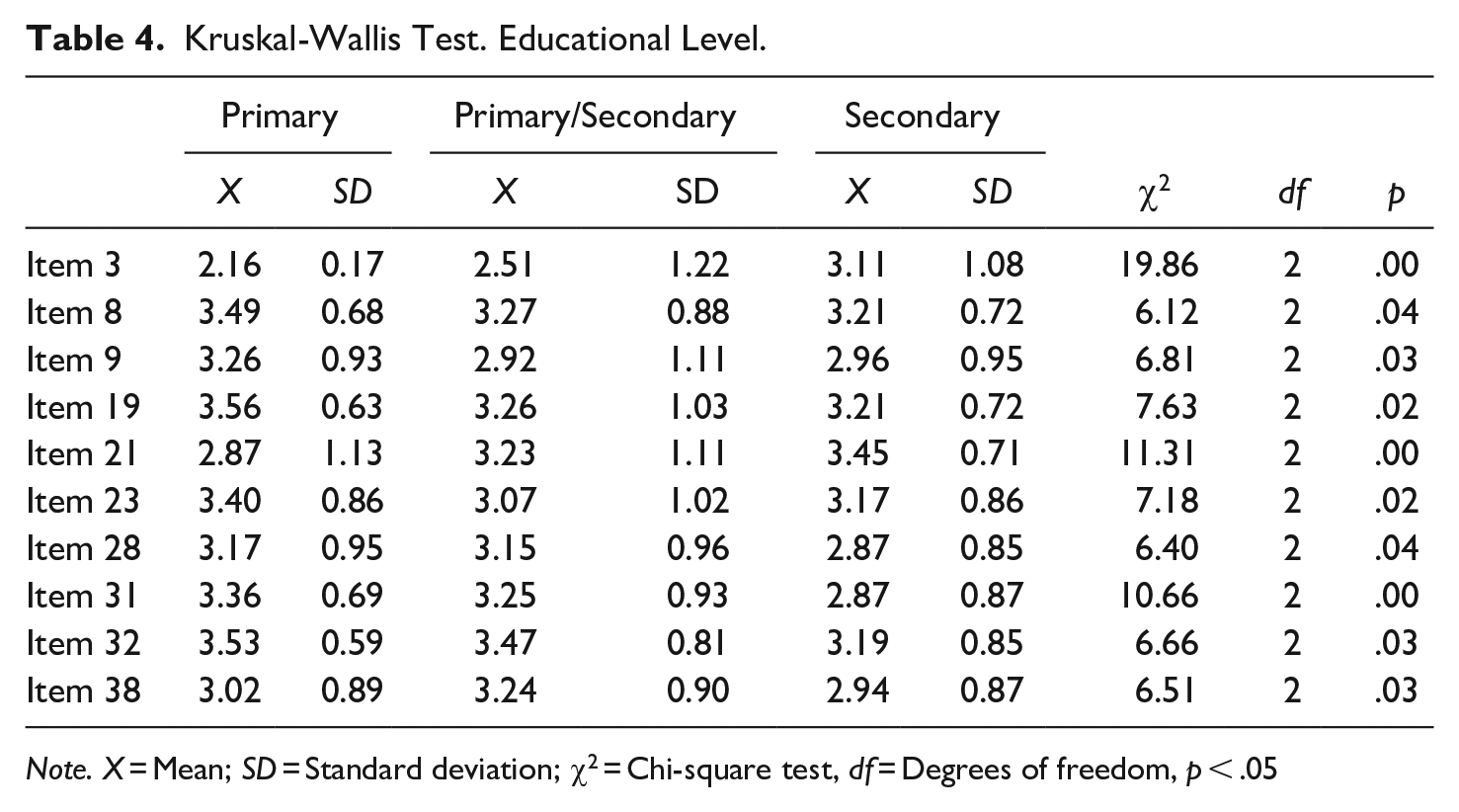
Note. X = Mean; SD = Standard deviation; χ2 = Chi-square test, df = Degrees of freedom, p < .05
The first three relate to the actions taken by the management teams in order to favor the opening of the school to the community and encouraging the participation of other social agents (Dimension I). The remaining differences (7) are focused more on the improvement of teaching-learning processes and the professional development of teachers (Dimension II).
If we look at the highest values of the means, it can be observed that they tend to be concentrated in Primary Schools, that is, according to the teachers, the actions that present significant differences are implemented to a greater degree in this type of school.
Regarding Dimension I, Secondary School teachers consider item 3 to be better implemented than Primary and Primary/Secondary Education school teachers. However, it is the Primary School teachers who believe that their school management teams have implemented items 8 and 9 to a greater extent.
Regarding Dimension II, the data show that the participants believe that the management teams in Primary Education are more committed to the measures included in items 19, 23, 31, and 32.
However, for Secondary School teachers, the findings show that their management teams are more interested in item 21.
Finally, the management teams of the schools which teach both Primary and Secondary students are those which, according to the opinion of the teaching staff, most promote item 38.
Regarding the socio-economic context of a school’s location, there are, according to our research, significant differences within Dimension II (χ2 = 7.70, p = .05), but not in Dimension I (χ2 = 7.08, p = .07). Thus, teachers from schools located in areas with a low socio-economic level (X = 3.67) believe, to a greater extent than their counterparts in areas with a medium (X = 3.58), high (X = 3.55) and medium/low level (X = 3.34), that their management undertakes teaching-learning processes, and teacher professional development, in a more inclusive way.
On the other hand, a detailed analysis of items reveals that there are significant differences in the variables of both dimensions.
It can also be observed that the highest average scores tend to be concentrated, both in Dimension I and Dimension II, in schools located in areas of medium and low socio-economic levels. This indicates a high degree of implementation, in these contexts, of most of the actions illustrated in Table 5.
Kruskal-Wallis Test. Socio-economic Level.
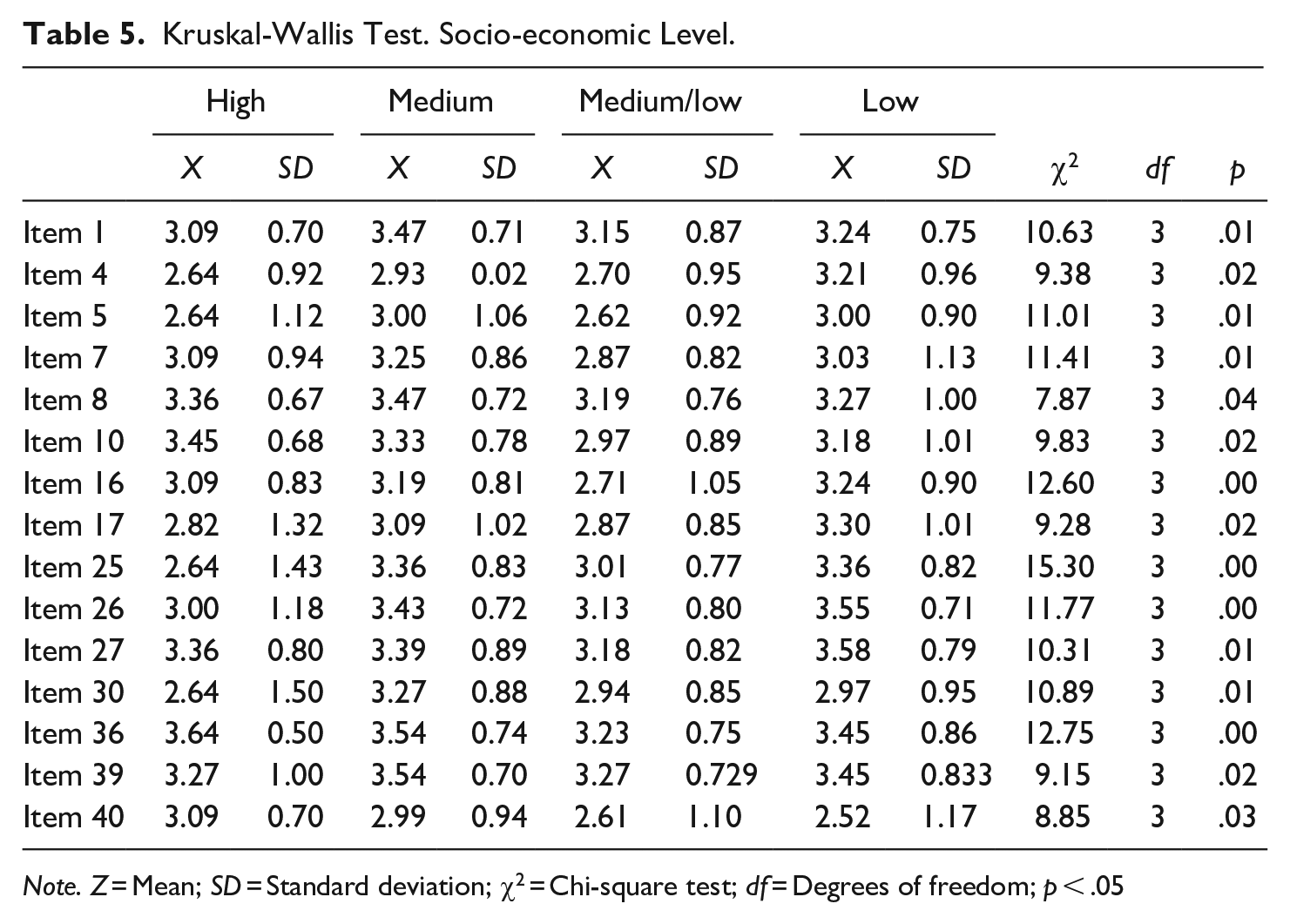
Note. Z = Mean; SD = Standard deviation; χ2 = Chi-square test; df = Degrees of freedom; p < .05
Dimension I shows that, according to the teachers, the leaders of schools in contexts of medium socio-economic level promote, to a greater extent, items 1, 7, 8, and 5.
The teachers who work in schools in low socio-economic contexts believe that their managers are implementing more substantially items 4, 16, and 17.
The management teams of the schools in contexts of high socio-economic level are those which, in the opinion of the teachers, promote item 10 the most.
The schools of medium/low socio-economic level are those that have the lowest scores. Item 5 is prominent in their scores, with the lowest average in Dimension I.
Regarding Dimension II, teachers from schools located in disadvantaged areas believe that their managers have implemented those actions represented in items 26, 27, and 25.
On the other hand, when it comes to items 30 and 39, it is the teachers from contexts with a medium socio-economic level who value their managers the most.
Participants from high socio-economic areas believe that their management teams are the ones which promote the items 36 and 40.
Discussion and Conclusions
In general terms the results of this study show that, according to the teachers surveyed, measures to promote the opening of schools to the educational community and the environment are well implemented by compulsory education management teams. This is in addition to measures guaranteeing the inclusion of all students in teaching-learning processes and promoting teachers’ professional development. These results differ from the perspectives obtained by Cardno et al. (2018) and Quiroga and Aravena (2018), who highlight school leaders’ lack of interest in, and commitment to, diversity and inclusion.
Discussion and Conclusions of the Dimension “The School as Inclusive Community”
Among the actions promoted the most by school management teams in order to foster openness to the educational community and the environment, the teachers surveyed highlighted:
the drive to improve communication with families and encourage their participation in educational activities carried out inside and outside the school,
favoring community participation in the educational process and the life of the school,
encouraging students to freely express their opinions and needs, and
foreseeing measures aimed at counteracting the negative impact that the family background could have on the success of students (e.g., solidarity campaigns, parenting courses, specific support for learning).
This confirms that the inclusive work of the management teams transcends the boundaries of the school and that they are committed to values of equality and social justice, since they address the disadvantages faced by students from vulnerable families or those at risk of social exclusion (Ainscow et al., 2012; Fernández & Paredes Scribner, 2018; Harris et al., 2017; Shields, 2013; Wang, 2018). This makes them activists for social change and the improvement of the environment (Ainscow, 2016; Lewis, 2016; Ryan, 2012).
There are many contributions in academic literature which highlight the importance of establishing, at the family and community level, a frank dialogue about inclusion and the obstacles that affect the academic success of students (Cardno et al., 2018; Fernández & Paredes Scribner, 2018; Ryan, 2006, 2012; Szeto et al., 2019). However, the results of this study show a certain reluctance, on the part of management teams, to organize community debates aimed at addressing issues surrounding inclusion. According to Black and Simon (2014), the ability of leaders to articulate these debates is “important in order to guide school communities” deliberations around the purposes and vision for inclusive practices’ (p.159). In order to understand this reluctance fully, it would be necessary to delve into the reasons behind it (for example low awareness, lack of training, low commitment, fears), with qualitative studies that enable clarification of the extent to which school leaders are willing to take risks to reduce the disadvantages faced by students and tackle social justice issues (Szeto & Cheng, 2018; Wang, 2018).
However, according to the teachers, the aspects most neglected by school management teams, when it comes to promoting openness to the community, are relationships with the business world and with other schools. Management teams must rethink their inclusive strategies with the environment with a more inter-institutional vision. This is a vision which focuses on not only transactions within the school, but also on collaboration between schools (Ainscow, 2016) and other sectors or non-academic institutions, as proposed by Ainscow et al. (2012) in “Ecology of Equity.”
Discussion and Conclusions of the Dimension “Management of Teaching-Learning Processes and teacher Professional Development”
In terms of the pedagogical leadership aimed at promoting inclusion exercised by school management teams, through the professional development of teachers and the improvement of teaching-learning processes, this research shows that teachers believe that management teams are particularly involved in raising awareness and sensitizing teachers. This is in order to report instances of discrimination and/or exclusion that occur in the school. They also think that management teams are focused on ensuring a flexible curriculum capable of responding to the needs (academic, personal, social, etc.) of students, and establishing different criteria and assessment procedures. This confirms that changing the mentality and attitude of teachers is one of the main concerns of school management teams (Black & Simon, 2014; Quiroga & Aravena, 2018; Ryan, 2006). As these authors have recognized, the challenge for school leaders lies precisely in how they can influence the attitude of those who resist inclusion. Poon-McBrayer (2017), Wang (2018) and Timothy and Agbenyega (2018) invite members of school management teams to develop a reflective practice and become more actively involved with inclusion. This is because when they act as exemplary leaders they become role models for teachers, influencing their motivation, their ways of thinking and feeling, as well as how they deal with the challenges of implementing inclusive practices in their schools. The relevance of the pedagogical work undertaken by school management teams should be considered when it comes to the selection, training and assessment of school leaders. The educational administrations, and those responsible for these processes, should rethink the criteria, and standards on which they are based. This is because, currently, training, and professional standards for educational leaders fail to reference the term inclusion (Celoria, 2016).
According to the teachers who participated in this study, the management teams in compulsory education have implemented sufficient actions aimed at promoting a flexible curriculum and the adoption of different criteria and assessment procedures. This confirms that they attach great importance to the school curriculum and to flexible objectives, methods, resources and assessment in order to respond to the different needs of students, as recommended by the Centre for Applied Special Technology (CAST, 2011). However, our data show that management teams are, on the whole, reluctant to facilitate the involvement of students in assessment processes. This represents a setback for the development of inclusive educational practices, since they should “meet three key conditions: a guarantee of the presence, participation and learning of all students in all the activities which are carried out in the classroom and at school” (Muntaner et al., 2016, pp. 36–37). According to Boscardin and Shepherd (2020) it is important for school leaders to reflect critically on the assessment methods adopted and their impact on students with disabilities or those who are culturally under-represented. They also recommend, among other things, the inclusion of all stakeholders in the assessment process.
Discussion and Conclusions Concerning the Differences Between Types of Schools
The results of this study also reveal that there are some significant differences relating to the ownership and educational level of the school and, above all, the socio-economic status of the area in which the school is located. These findings corroborate the fact that the practices of the school management teams are specific and vary according to the context (Hallinger, 2016; Harb & Karami-Akkary, 2021; Szeto & Cheng, 2018).
Differences according to school ownership
With regard to school ownership, it seems that management teams in subsidized private schools are more committed to promoting certain activities than their counterparts in state schools. These are activities which promote mutual knowledge among students and foster teachers’ reflection on, and assessment of, their practice, along with those activities which generate teachers’ high expectations toward all students, and promote the use of different assessment criteria and procedures. This added endeavor reported in subsidized private schools, may relate to the fact that these schools are co-financed privately, and thus they need to guarantee high levels of enrollment to ensure their income and achieve a favorable socially acceptable image of their schools. Another issue, also underlined by Szeto and Cheng (2018), is that of headteachers’ concern to protect the social image of their school in order to ensure funds which guarantee its operation. These pragmatic and school-specific considerations affect the decision-making and actions undertaken by school management teams with regard to inclusion, as has been highlighted by Poon-McBrayer (2017).
Differences According to the Educational Level of the School
With respect to the level of education provided by compulsory education schools, teachers believe that Secondary Education management teams are those who are more interested in collaborating with the business world. On the other hand, they believe that Primary Education leaders are more involved in improving communication with families and participating in educational activities (inside and outside of school community). This is in addition to increasing the representation of families from diverse backgrounds in the governing bodies of the school. This means, among other things, that the leading teams in Secondary School education. They are more aware of the needs and interests of the students (Causton & Teoharis, 2017; Echeita, 2017) as these students are closest in age to choosing a professional training or entering the labor market. With regard to the actions aimed at improving teaching-learning processes, and the professional development of teachers, Primary School teachers believe that their leaders focus their efforts on promoting high expectations for all students. They also hold that these leaders promote a shared vision and a common educational project between teachers and members of the educational community, encourage everyone’s participation in decision-making processes, and ensure coordinated planning within the teaching community. Management teams in Secondary Education, on the other hand, seem to be more involved in establishing sanctions for the use of symbols or actions that promote exclusion. Díez (2014), Rodríguez-Izquierdo (2016), and Malusà and Tarozzi (2017) have pointed out that the opinions of teachers and school leaders in relation to diversity and inclusion differ. In our study they differ in some specific aspects, depending on the educational level. These differences reflect contrasting professional identities and cultures relating to inclusion. Leadership teams in Primary Education tend to be more in favor of and willing to promote the changes necessary to enhance inclusion than Secondary School management teams (Rodríguez-Izquierdo, 2016). The Ministry of Education, and the Andalusian Board in particular, should take note of this and adopt measures which help Secondary school headteachers to overcome their resistance. The requirement, established by the Education Law in Spain in 2020, for the presentation of a non-discriminatory management project aimed at promoting the school success of all, in order gain promotion to headteacher is a wise development in this regard. However, this must be accompanied by a training plan which is committed to inclusion, as well as a system of monitoring practices developed by school management teams which help to strengthen their commitment to inclusive and quality education for all. This is especially applicable to secondary school leaders.
Differences According to the Socio-economic Status of the Area in Which the School is Located
Finally, in terms of the socio-economic level of the area in which the schools are located, the most significant differences are mainly linked to initiatives aimed at promoting inclusion in the teaching-learning processes and the professional development of teachers in disadvantaged contexts. Leadership teams in schools located in low socio-economic areas make more effort than their counterparts in more favored environments to promote action-research projects in their schools, enhance mutual knowledge among students and provide teachers with time and space to support collaboration and improve teaching methods. All of these aspects are relevant to successful inclusive leadership in schools (Black & Simon, 2014; Causton & Teoharis, 2017; Poon-McBrayer, 2017). The high degree of vulnerability characteristic of the context in which these school leaders work appears to intensify their commitment to school improvement and tangible support for teachers. Thus they respond to the requirements formulated by Poon-McBrayer (2017), underlining the need to provide tangible support for the professional development of teachers and the improvement of their working conditions. They also chime with the suggestions of Echeita (2017), Szeto and Cheng (2018) and Wang (2018), who call for greater commitment from school leaders to values of social justice in society as a whole and, especially, with respect to the most vulnerable sectors. European institutions, such as the European Regional Development Fund, together with local administrations such as the Andalusian Board, must be particularly sensitive to the added pressure that the development of inclusive and quality education for all entails for those school leaders working in disadvantaged areas. In order to help them specific aid programs and additional resources should be provided to the schools located in these contexts.
Implications
This study has important implications for the field of inclusive school leadership. On the one hand, it contributes to increasing the scarce knowledge available on the concrete actions implemented by school management teams to promote inclusive cultures and practices in schools. On the other hand, it offers an instrument that allows this type of study to be extended to other contexts and to compare results.
It is a study that highlights the multiple and diverse actions undertaken and contributes to raising awareness—among politicians, administrators, experts, trainers—on the strategic role played by school management teams in inclusion processes.
In addition to revealing the inclusive actions most implemented by management teams in compulsory education, the results of the study also uncover more neglected actions which require further commitment from these teams, such as the organization of community debates around inclusion, the participation of students in assessment processes and the need to strengthen relationships with other schools and institutions in order to generate inter-institutional synergies around inclusion. In this way, management teams are invited to critically reflect on their own practices as inclusive leaders, considering not only their own assessments but also the assessments made by other members of the community, in this case the teaching staff.
Having information on the inclusive actions undertaken by school management teams and their degree of implementation can also be useful to guide the design of training and professional development programs for school leaders. The aim here would be to develop training initiatives aimed at optimizing specific deficits that provide school management teams the knowledge, skills and attitudes necessary to exert a more inclusive leadership in their environments.
Finally, since there are significant differences in the inclusive actions undertaken by school managements teams depending on the type of school ownership, the educational level of the school and the socio-economic status of the area in which the school is located, this research invites to consider the impact of these variables in future studies on inclusive school leadership and to define standards for the quality assessment of schools and school management teams that take into account the impact of these variables. Failure to take into account the peculiarities of schools that affect the actions undertaken by management teams could undermine the progress in inclusion achieved in schools. According to the results of this study, there is a need to reinforce the commitment to inclusion, especially in the management teams of compulsory secondary schools, mainly in state schools and those located in medium/low and high socio-economic areas.
Limitations
This study highlights some of the weaknesses and strengths of the inclusion policies implemented by school management teams in compulsory education in Granada, Spain, while specifying some of the contextual, cultural, and social aspects which affect their performance. It has several limitations, however. The most important are: the unrepresentative nature of the sample, which limits the scope of the study, and thus its capability to generalize results, and the quantitative nature of the research approach adopted. As a result it has not allowed us to probe more deeply into the results that would be obtained from a more qualitative approach.
Recommendations for Future Research
In accordance with the limitations stated above, and given the opportunity to replicate this study in other contexts, it would be advisable to expand the scope of this research with a probabilistic and representative sample of teachers. It would also be prudent to complement this study with others of a qualitative nature which would allow for the strengthening of the quantitative data. In addition, it would be good to diversify the sources of information by incorporating the opinions held by other agents within the educational community, including students’ families. Further, it would be interesting to extend this type of inquiry to school management teams working in other European educational systems and thus enable comparative studies.
Footnotes
Appendix
LIE-Q “Leading Inclusive Education in Compulsory Schools” – Teaching Staff.
| Dimension 1. The school as an inclusive community. The management team . . . |
| 1. Promotes initiatives that foster the participation of the community members in the educational process and in the life of the school |
| 2. Establishes an action plan developed in collaboration with other members of the community to promote school/community relations and respond to student diversity |
| 3. Promotes collaboration with the business world on an ongoing basis to strengthen the school-work environment relationship |
| 4. Promotes actions to collaborate with other schools, to get to know and share experiences |
| 5. Organises debates open to the community on situations of exclusion (e.g. racism, xenophobia, sexism) |
| 6. Participates in actions undertaken by other institutions/organisations within the community with an educational nature (sports activities, anti-racism day, etc.) |
| 7. Promotes actions to raise awareness among families about the importance and benefits of inclusion |
| 8. Promotes actions which facilitate communication and participation of all families in the educational activities undertaken inside and outside the school environment |
| 9. Proposes actions that foster real representation of the diversity of existing families in the school’s governing bodies |
| 10. Promotes activities that encourage mutual knowledge, exchange and coexistence between families and the rest of members of the educational institution |
| 11. Foresees measures to counteract the negative influence that family conditions might have on the performance of their students (e.g., help campaigns, learning support, parents’ school) |
| 12. Has a procedure for collecting information about the needs of teachers, students and other school staff |
| 13. Encourages the participation of the different members of the educational community in the assessment of the management team’s work |
| 14. Sets mechanisms to encourage student participation in the management of conflicts which arise in the educational environment |
| 15. Encourages students to freely express their opinions and needs (regarding their educational process, the rules and functioning of the school, etc.) |
| 16. Promotes action-research projects in the school in order to guide improvement processes |
| 17. Proposes activities and design strategies (seminars, courses . . .) to address teachers’ perceptions, stereotypes, prejudices, etc. . . . in order to guarantee respect for student diversity and equal opportunities |
| 18. Encourages teachers to participate in educational activities organised by the local community |
| Dimension 2. Management of teaching-learning processes and teachers’ professional development. the management team . . . |
| 19. Promotes among teachers and the educational community a shared vision of the organisation, goals and activities in order to involve them in a common educational project |
| 20. Sets protocols for managing conflicts through dialogue and negotiation between the parties involved |
| 21. Establishes sanctions for the use of symbols and actions which promote exclusion |
| 22. Develops educational programmes to prevent discriminatory attitudes among students |
| 23. Creates opportunities for all members of the educational community to participate effectively in decision-making |
| 24. Promotes welcoming actions for all students |
| 25. Promotes activities which foster mutual understanding among students |
| 26. Encourages collaboration among teachers to improve teaching by facilitating time and space |
| 27. Is interested in knowing the teachers’ stance in relation to student diversity |
| 28. Fosters space for reflection among the members of the teaching staff on the conditions of equality offered by the school |
| 29. Raises awareness among teachers about the need to communicate situations of discrimination or exclusion which may occur in the school |
| 30. Organises actions for teachers to reflect on their practice and assess the possible impact of their teaching on school failure |
| 31. Sensitises teachers to have high expectations for all students |
| 32. Ensures that teaching planning is coordinated among the teaching staff |
| 33. Promotes a flexible and revisable curriculum in order to respond to the needs (academic, personal, social, etc.) of the students |
| 34. Encourages an assessment of curricular materials in order to prevent them from contributing to the exclusion of students |
| 35. Is interested in ensuring that all students are represented in the content being taught |
| 36. Promotes the continuous development of activities which foster solidarity, empathy and assertiveness among students in the classroom |
| 37. Encourages teachers to set different criteria and procedures for assessing students |
| 38. Promotes the assessment of teaching practices in order to determine the extent to which they support student inclusion |
| 39. Ensures that assessment has been carried out in a coordinated and interdisciplinary way |
| 40. Favours student participation in the assessment processes |
Thank you for your cooperation.
Declaration of Conflicting Interests
The author(s) declared no potential conflicts of interest with respect to the research, authorship, and/or publication of this article.
Funding
The author(s) disclosed receipt of the following financial support for the research, authorship, and/or publication of this article: This work was supported by the European Regional Development Fund of the European Commission (ERDF) and the Andalusian Board, in Spain (Ref: B-SEJ-057-UGR18).
