



Abstract
This article argues for a new methodological approach to research and impact in the social sciences—one based on sustained investment in people and projects at the community level, with the explicit aim of creating citizen-led solutions. The article draws on five years of experience in developing a citizen science methodology in Beirut, Lebanon, in which collaboration between academic researchers and citizen scientists has generated citizen-led interventions for numerous local challenges. We contend that long-term collaborative research and action enable the accumulation of knowledge within research teams, and strengthen trust and the duty of care towards others in the team and the community. We then present data from evaluation interviews with intervention users, showing how trust and the duty of care in research translate into intervention designs that are responsive to local needs, and forms of sociality that enhance the value of interventions for users’ quality of life.
The present article argues for a new methodological approach in the social sciences—one in which long-term collaboration between academic researchers and citizen scientists is the basis for designing and implementing citizen-led solutions to various social and economic challenges. This approach, we argue, opens up a new pathway for universities to engage members of the public in ways that not only deliver concrete provisions in response to local needs, but also create valuable forms of sociality that enhance quality of life. The article offers two examples of citizen scientist-led interventions that have emerged from a long-term collaborative research project in Beirut, Lebanon—the Jouwan Community Centre (led by Assia and Amanie), which delivers vital educational provision to children, and the Goods of Our City project (led by Ghadir), which specializes in building urban agricultural infrastructures in a city where green spaces are extremely scarce. The two case studies are selected to represent our work on both spatial interventions (involving construction of material infrastructures in space), and what we call “programmatic interventions” (programs of social engagement, capacity building, or service provision that do not create new material infrastructures). The two projects we give as examples are part of a bigger research initiative that we call Prosperity Co-Lab for Lebanon, or PROCOL Lebanon—a transdisciplinary network of partnerships and projects committed to developing methods, concepts, datasets, capacity building programs, policy proposals, and streams of funding for recovery and positive social change in Lebanon. The Jouwan Community Centre and the Goods of Our City are thus situated in an ecology of projects which PROCOL Lebanon runs in multiple sites across the country. In addition to our work in Beirut’s Hamra neighborhood, our team and partners have trained citizen scientists in Mar Mikhael and Ras Beirut (Beirut), El Mina (Tripoli), and Bar Elias (Beqaa Valley). The interventions that citizen scientists have created in these sites are extremely diverse. They include an online platform to promote small businesses and connect them to customers (Mintchev et al., 2022, pp. 10–13), newly constructed children’s playgrounds (Pietrostefani et al., 2022, pp. 99–108), the rehabilitation of a public park and the construction of urban infrastructures that encourage public sociality (Baumann et al., 2023; Dabaj et al., 2020), and a program of engagement activities for elderly people in response to a prolonged period of isolation during the pandemic.
The main argument of this article is that the citizen social science methodology through which these interventions were created generates forms of sociality that improve wellbeing and quality of life for users beyond the primary provision of the interventions. This argument is supported by the results of an evaluation of the impact of the two interventions that we discuss in the article. Approximately six months after the implementation of the interventions, we designed an evaluation strategy in which one of us (Rahaf) conducted semi-structured interviews about the benefits, drawbacks and challenges that participants experienced at various phases in the work. Rahaf, who was not involved in the research or intervention design for this project, conducted bespoke interviews with three groups of participants: the academic/supervisory team who facilitated and supported the process (Mariam, Mayssa, Nikolay, and Elisabetta), the citizen scientists who led on the interventions (Ghadir, Assia and Amanie for the two interventions discussed here), and two users of each intervention. The benefits for the first two groups were substantial in terms of learning, capacity building, networking, and professional development. The key finding that emerged from the assessment, however, was about the experience of the users: the interventions did not only provide a service to their users—educational provision in one case, improved space in the other—but also created much-needed sociality, which improved wellbeing and catalyzed a more vital and vibrant engagement with the people, places and activities that make up everyday life. This was the case for both the Jouwan Community Centre and the Goods of Our City, regardless of the fact that they provided very different services. In both cases, the ethos of collaboration, co-design and a duty of care for the community was a major factor that added value to the interventions and their benefit to users.
This key finding has important implications for research methodology, it shows how a long-term collaborations with citizen scientists that is based on sharing of resources, decision-making power, and benefits that emerge from the project, can translate to tangible impact for residents in the communities where the research takes place. To achieve such impact, however, we must abandon the assumption that participatory research outputs that stop short of solutions—whether it is at the point of training and data collection, or at the point of publication of findings—will somehow lead to such solutions in the future without proactive planning and action. The transition from research to impact has to be planned and facilitated by the research team, rather than taken for granted under the assumption that it will be picked up by somebody else.
Citizen Social Science and Its Model of Value Creation
The starting premise of participatory research is that members of the public who are not full-time or professional academics should be active participants in the research process. This collaborative approach can take a wide range of forms depending on academic discipline, size and duration of study, research topic, size of participant group, type of data that is collected, level of engagement, and types of activities that participants take part in. The variations of participatory research that emerge from this range of possibilities have been given an array of labels: “community research,” “community-based research,” “peer research,” “participatory action research,” and so forth. The term that we use in our work in English is citizen social science, with the explicit caveat that the notion of citizen is used in the participatory rather than legal sense, referring to participation in public life rather than the kind of passport that one holds. In our work in Lebanon, where many residents do not hold Lebanese citizenship, the Arabic term we use for citizen scientist—baheth mahaly (باحث محلي)—translates to “local researcher” or “neighbourhood researcher,” again with the caveat that just because much of one’s work takes place “locally” where they live or work does not preclude them from involvement in international dialogues for knowledge exchange (see Institute for Global Prosperity 2020 for an example of such dialogue).
Participatory research practices take many forms, but one thing that they all share is an aspiration to depart from the standard arrangement of highly centralized research in which academic knowledge and other outcomes are produced by university academics, circulated primarily in academic settings, and credited exclusively to the university researchers with little recognition of the knowledge and labor that others have contributed. There are a number of commonly cited themes that specify how participatory research departs from this centralization in order to integrate people with different professional backgrounds outside of narrow academic circles, and also to distribute benefits to members of the wider public: first, there is the building of capacity, whereby citizen scientists acquire new training, knowledge, and experience (e.g., Al-Harithy & Yassine, 2024; Bergold & Thomas, 2012, p. 204; Davies et al., 2022); second, collaboration with local residents make the research more responsive to the context of the research and the challenges relevant to it (e.g., Algabi & Iwama 2022; Minkler, 2005); and third, participatory research is an opportunity to democratize knowledge production, and to distribute resources and decision making power more equitably among the intended beneficiaries (e.g., Campos et al., 2021; Heigl et al., 2019; Purdam, 2014, p. 386; Soler & Gómez, 2020).
In addition to highlighting the importance of these three outcomes, we would argue that participatory research should be understood as an ethical project to institutionalize and uphold what Arjun Appadurai (2006) calls “the right to research.” The idea that research is, and ought to be, treated as a right is based on the premise that all human beings are already researchers anyway—we all engage in attempts to understand the world and tackle our individual and collective problems. Learning and acting in a systematized and disciplined fashion is not only an expression of human curiosity but also an expression of agency in solving problems and improving one’s circumstances. However, the ability to do high quality research, to exercise one’s right to research to the fullest, demands a cultural and institutional context that lends structural support on numerous levels, from training and guidance to funding and administration. This requires a serious rethink of university funding structures and career progression schemes, both of which currently overvalue individuals’ publication records in hard-to-access journals, while undervaluing more democratic forms of engagement aiming to serve and benefit the communities that researchers work with (see Mintchev et al., 2022, pp. 13–14).
Whether these aspirations are met or not is a matter of judgment that must be made on a case-by-case basis. Of course, this depends on the ability and willingness of academic researchers to follow through in delivering on outcomes and enacting the relevant principles, but it also depends on how the research is designed. Participatory research projects can range from massive initiatives in which thousands of people collect large data sets, to small scale projects with just a few team members (Campos et al., 2021; Vohland et al., 2021). They can also have vastly different levels of engagement, ranging from a “crowdsourcing” model in which citizen scientists collect data with no other input and with minimal intellectual contribution, to models in which citizen scientists interpret data, define problems, participate in analysis and publication of findings, and in some cases contribute to the creation of solutions (Haklay, 2013; Jallad et al., 2022; Kythreotis et al., 2019).
Our approach to citizen social science involves working in small areas at the meso or neighborhood scale, and recruiting and training small cohorts of citizen scientists (usually between 6 and 15 people per site). The small size of the team allows us to focus on high quality training, high level of engagement, and long-term, open ended collaboration across multiple activities. Citizen scientists are recruited from the neighborhood, either through team networks or through an open job posting, and there is no requirement of prior research experience and no educational or other criteria, apart from a commitment to the neighborhood and a passion to make a positive difference through research. It is important to reiterate that citizen scientists are not full-time university researchers, and most of them have other jobs and careers in various professions. This is significant because it means that they bring valuable professional skills and forms of knowledge and experience into the team, and these are invaluable for the design and implementation of interventions. As members of the research team, citizen scientists are offered training and mentorship in research design, quantitative and qualitative methods, research ethics, funding proposal development and writing, and in some cases also GIS mapping. The aim of such training in the context of our approach is not to turn people into professional academics—as is the case with trainings in university PhD programs, for example—but to enable citizen scientists to integrate the experience and knowledge they already have into new initiatives that use research as a pathway to social change (see Jallad et al., 2022).
There is a crucial point about research design that must be made here: in order to fully utilize the diverse skills and experiences within the team, the research design must be adaptable and open to multiple pathways to impact. Our work in Hamra and other sites in Lebanon addresses this by focusing on the study of prosperity, understood as a complex assemblage of multiple provisions, rights and forms value that people need in order to have a good quality of life. The theoretical commitment that underpins this approach is that prosperity is more than economic wealth and growth, and that it encompasses a range of factors, from affordable services and utilities, to secure and good quality livelihoods and improved public spaces (Moore & Mintchev, 2023). But in order to understand what exactly these factors are in different contexts across Lebanon, and also to start new local conversations about prosperity as a lens for understanding problems and creating solutions, our research begins with the collection of data about what matters to people locally. This data is subsequently used to construct a prosperity model for the neighborhoods where we work (Figure 1), and to guide further quantitative and qualitative data collection on the indicators that are identified as measures of context-specific prosperity (for a detailed account of this methodology, see Jallad et al., 2022; for the data from our Hamra research, see RELIEF Centre & UN Habitat, 2020). Hamra prosperity model with indicators.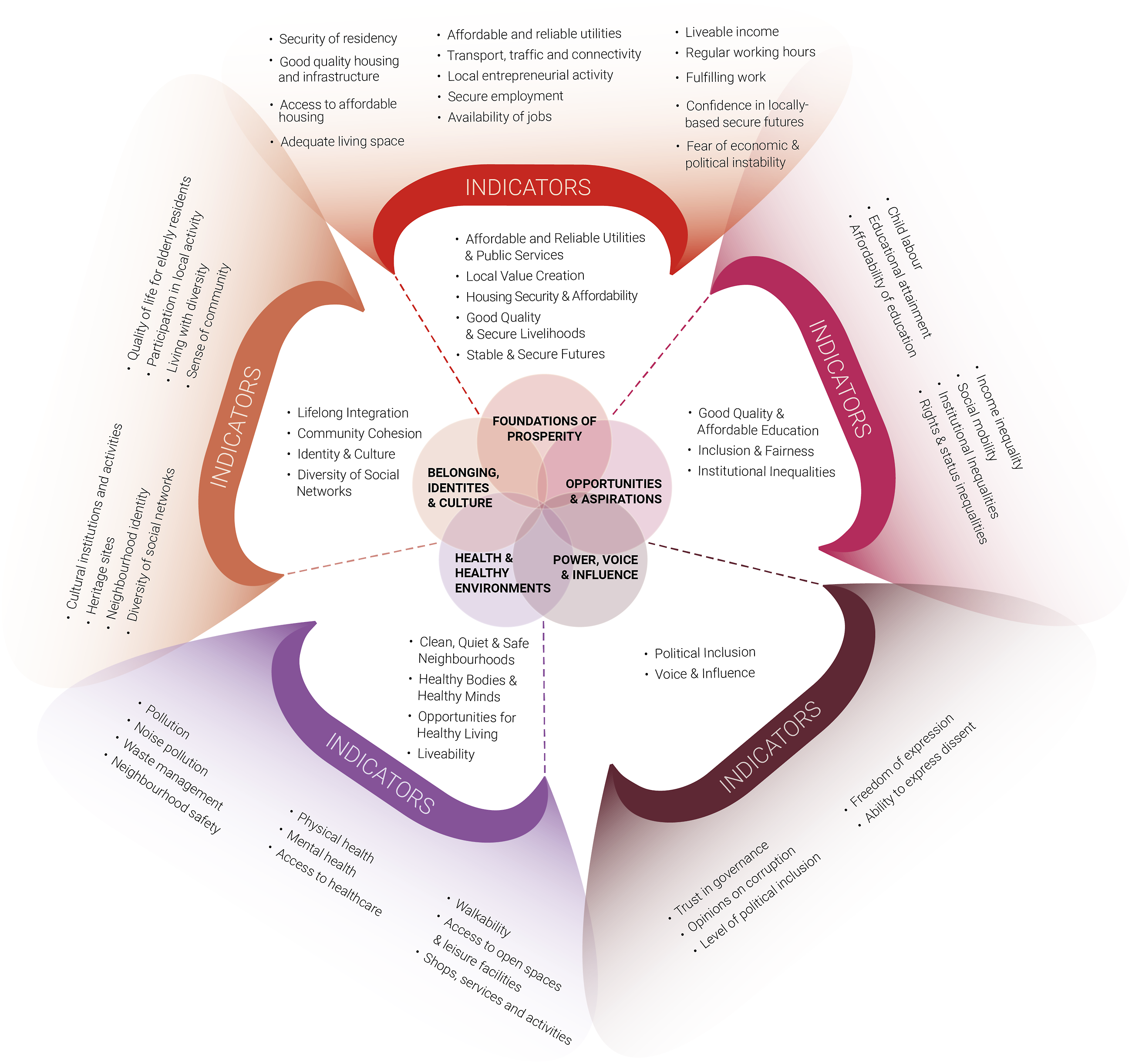
Theorizing prosperity as a multidimensional concept is closely related to the highly engaged nature of citizen social science as we practice it. The operational definition of prosperity as an intersection of multiple factors and indicators makes the process of creating solutions through citizen science open and flexible; it gives citizen scientists the freedom to focus on the challenges most relevant to them and the people they want to help, as long as this is done in line with the findings of the research and the priorities that emerge from it. At the same time, flexibility and freedom come with the responsibility to define the direction of the project, design an intervention and remain committed to delivering the work in the long run. The reason that this is an important responsibility is that the citizen scientists who design interventions often use specialized expertise and experience, meaning that their projects cannot be continued by anybody else, without, at the very least, a comprehensive handover strategy.
This raises an important question: why do citizen scientists maintain a long-term engagement with their work, and what is it that enables the methodology to produce successful outcomes? One part of the answer is the trust and duty of care between citizen scientists and the community of users, while another part is the trust and duty of care within the research team itself, the fact that the research team of citizen scientists and full-time researchers is itself a small community that offers a network of support and a shared purpose. Both of these factors are essential for the long-term success of collaborative research and the solutions that emerge from it. Without trust and duty of care, the likelihood of producing high quality research remains slim, as do the chances of creating effective interventions.
The importance of trust in various kinds of participatory research is well-known, and so is the fact that building trust requires both work and time (e.g., Armstrong et al., 2022; Christopher et al., 2008; Jagosh et al., 2015). As Andrea Armstrong and colleagues have argued, trust in participatory research can be extremely fragile for multiple reasons, and it requires continuous effort and negotiation. One frequently mentioned challenge of PR [Participatory Research] is a lack of trust between researchers and community members. This, in part, stems from research from which there was no direct benefit and sometimes actual harm to the community […]. More generally, a lack of feedback of results to the community contributes to mistrust and sometimes develops into anger and suspicion […]. When there is a legacy of mistrust, community members may hesitate to get involved in new projects. Once established, trust cannot be taken for granted and researchers must continually prove their trustworthiness (Armstrong et al., 2022: 4).
We would add to these points that the duty of care—which must also be continuously maintained and cannot be taken for granted—is of fundamental importance as well. It is what keeps citizen scientists focused and committed to the purpose at hand, which is ultimately to make a positive difference in other people’s lives. As we show in the second part of the article, the duty of care with which the interventions were designed and implemented played an important role in the outcome of the interventions for users—they encouraged users to engage with the interventions, take ownership of them, and ultimately benefit from them in ways that specifically reflected the ethos of care and engagement that was embedded in the intervention-building process. Trust and the duty of care are thus prerequisites for good quality research, as well as for effective solutions. Creating and maintaining them requires emotional, intellectual and sometimes physical work, but this work pays off in the form higher quality outcomes for everyone involved, including the users.
Sustained Citizen Science and the Building of Knowledge
What, then, does sustained collaboration in citizen social science look like? And how does it lead to better outcomes than shorter participatory research projects? Sustained citizen science, as we practice it, invites citizen scientists to take an active role in all phases of a research project. The value of partnership across multiple activities has a number of sides to it. On one level, it creates bonds and consolidates trust. On another level, it enables the team to accumulate experience and knowledge, and to do focused thinking over long periods of time about the challenges and solutions in the community. This is a cumulative process where learning from each activity is translated into the next, leading to both long-term commitments, and rigorous and original ideas.
To demonstrate how the accumulation and translation of knowledge and experience take place, we need to briefly recount the three main phases of our research in Hamra. These have been discussed in detail elsewhere (Jallad et al., 2022; Mintchev et al., 2022) so we only summarize them briefly in this article. The first phase is the creation of a prosperity model for the context of Hamra (Figure 1). This model is based on data from existing literature on Hamra, interviews with residents, and workshops with academic and NGO stakeholders about the relevant issues in the neighborhood.
The second phase is an extensive and rigorous data collection program. For our work in Hamra, this phase was designed in partnership with UN Habitat Lebanon and partially followed the data collection model of their Neighbourhood Profile series (e.g., UN Habitat, 2017). A large part of the data collection consisted of quantitative components: a survey of the size, age, and condition of every building in the neighborhood (n = 634); a population count of the residents in every building, usually provided by a natour (building superintendent) or a resident; a comprehensive survey of open spaces and the conditions of street-level infrastructure, including roads, sidewalks, wastewater network, storm water drainage network, and electrical infrastructure; an enterprise survey of local businesses (n = 300), recording age, size, and tenure (owned or rented); and, not least of all, a household survey for a sample of 688 households on prosperity, in line with the prosperity model constructed in phase one. These surveys were complimented with qualitative data: interviews with representatives of local institutions and focus group discussions with members of different demographic groups based on age, gender, and nationality. This deep-dive data collection was followed by data analysis, mapping, and visualization of the data, as well as writing up and publication of the findings (RELIEF Centre & UN Habitat, 2020).
The third phase of our work was the creation of citizen scientist-led interventions that address the problems that emerged in the data collection and analysis. The purpose of this phase was to follow-up the research with concrete action that benefitted the community. The starting point here was a team workshop where citizen scientists presented on the challenges that they wanted to address, and the kinds of projects they envisaged as possible solutions. Over the next 18 months—and in the midst of Covid-related disruptions, a political uprising, and the Beirut Port explosion—we convened several additional workshops in which we organized three sub-teams of Hamra citizen scientists to focus on different interventions, eventually creating intervention proposals with designs, plans for implementation, budgets, and timelines. All three proposals were funded by PROCOL Lebanon (known as the RELIEF Centre at the time), and eventually implemented. We have subsequently adopted this model for citizen-led interventions in other sites where we do research.
Accumulation of knowledge and experience played a significant role in the success of the interventions phase, as did various kinds of affective attachments of trust and duty of care. The data collection and analysis helped citizen scientists to improve their knowledge of the neighborhood and find out things that they were previously unaware of. As part of the data collection, they visited lanes, buildings, and shops that they had never visited before. They also spoke to people whom they had not previously encountered, and learned that some problems in the neighborhood were far more severe and widespread than they previously thought. The data collection process (as practical experience) brought these problems to attention in the first instance, and the data analysis and writing up (as academic knowledge production) confirmed what the fieldwork experience had initially revealed. This research process, which included both witnessing the problems at hand and working with the data about them, would subsequently become the basis for the citizen-led interventions that bear a real impact for people in the community.
Intervention I: Jouwan Community Centre
Our research in the Hamra neighborhood of Beirut led to three interventions, each with a distinct identity, branding and organizational structure. Here, for reasons of limited space, we only showcase two of these. The first, which was jointly led by Assia and Amanie, is the Jouwan Community Centre (مركز جوان المجتمعي) (JCC)—an educational program to support children who are either out of school or unable to access good quality education. Although Hamra is an affluent neighborhood in aggregate terms, it is also a very unequal place. The neighborhood has a historical reputation for its upscale hotels, cafes, and shops, as well as for being a hub for university students and intellectuals associated with the two prestigious universities located on its edges, the American University of Beirut and the Lebanese American University. More recently, the neighborhood has also seen significant regeneration, with the construction of high-end residential properties that are out of reach for the majority of local residents (Khechen, 2018). At the same time, Hamra residents, especially displaced Syrians but also many Lebanese, are facing high levels of poverty and multiple deprivations. One of the most serious effects of this is the proportion of children who are out of school, or are falling behind in their education. According to our household survey in 2019, only 58.1% of children aged 12–17 were attending school at the time of data collection. Lebanese children had a relatively high attendance rate at 97.2%, but for Syrian children this number stood at a mere 41.4% (RELIEF Centre & UN Habitat, 2020, p. 33). The scale of this problem was difficult to grasp from public observations alone because most severely deprived families, especially if they are Syrian, have a limited presence in public spaces.
Assia and Amanie, both of whom have professional backgrounds as teachers, but currently work for the NGO NAHNOO, started the JCC project as an effort to address this problem. The initial plan for the JCC was to provide in-person tutoring for children who were either out of school or did not receive sufficient education at overstretched public schools and were therefore falling behind in their learning trajectories with high risks of dropping out. The express aim of the JCC was to help children gain the foundational knowledge they need to pass the Brevet (Grade 9) exam, an achievement that would open opportunities to enter vocational training among other things.
However, as the plan for the intervention was put into action, the JCC team had to make several adaptations. One change was that teaching had to be moved to an online format because of the Covid pandemic. Funding that was initially allocated for venue hire to hold classes was repurposed to supply equipment such as tablets and earphones, “MyFi” internet routers, and power banks (batteries) to children without secure access to internet or electricity at home. Additionally, the program had to be modified in response to various factors, including strategic priorities, evolving community needs, and the changing demography of Hamra following the economic crisis and the pandemic. As a result of the high cost of living in the city, many low-income residents were forced to relocate while enrolled in the JCC program. This meant that the focus of the JCC was no longer on students living in Hamra alone. At the same time, the economic crisis and high inflation were impacting the quality of state-run educational provision. Schools were now drastically under-resourced, and this led to a series of teacher strikes, leaving many children without access to sufficient education. The children who were now in need of educational support were no longer only those who were out-of-school but also those in public schools; and the support they needed was not only for the Brevet exam but for their regular school exams also.
In order to roll out a high-quality teaching program, Assia and Amanie recruited and trained a team of volunteer teachers who were then able to support them with the project. The JCC team then developed a curriculum of lessons in Arabic, English and Maths, each taught for 2 hours per week, in parallel with the regular school year (Figure 2). The first iteration of the course started in January 2022 and had fifteen students (with an additional two students joining later in the year), all between the ages of 13 and 18, and enrolled in school at grades 6 to 9. After the first year of classes, two of the students took their brevet exams and passed, and all students passed their regular school exams. Currently, for the second year of its operation, the JCC is running online sessions with twelve students (four of whom were enrolled in the first cohort), in order to give them specialized support for the brevet. The tutoring sessions are carefully designed to address the specific educational needs of the children, taking into account their prior knowledge, areas that need improvement, and individual learning styles. The team has recruited experienced and qualified tutors to guide and support the students throughout the sessions, using interactive teaching methodologies and tailored instructional materials. A screengrab from a JCC online session.
Approximately one year after the launch of the JCC, we rolled out an impact evaluation strategy to understand if and how the JCC intervention had made a difference in people’s lives. The evaluation consisted of a semi-structured interview which one of us, Rahaf, carried out with two of the parents whose children were enrolled in the JCC. Both interviewees gave positive feedback, explaining that their children did not just improve academically, but also engaged, socialized and made new friends, all of which made a difference to their wellbeing. The JCC, as the evaluation revealed, was also beneficial for the parents who were under increased stress as a result of their children’s lack of access to good educational instruction. One of the parents (we will call her Naila) talked about the value that JCC had for her son (let’s call him Ali) in helping him deal with a tough period of lockdowns, school closures, and very limited educational provision delivered by overstretched staff at his school. Naila summarized the impact of the JCC in the following terms: my son benefited a lot, thank God. I cannot get him private tutors or put him in an institute to help him no matter what I do, it is very hard. This was a great opportunity in a very hard situation. So, it is very beneficial to the children and for me, as a mom. I was assured that he is in good hands in this critical stage of his life. I was very sad for him before because I felt that he was forgetting how to read and write during the long period he stayed at home during quarantine. So, I was relieved when I saw him studying and learning again in this hard situation.
Ali’s learning, according to Naila, was largely successful because the JCC team taught the children with patience and care: “In the intervention [during class], he asks about whatever he doesn’t understand, and thankfully his teachers love him [and answer his questions]. They also observed that he got better.”
Later in the interview, Naila explained that Ali also benefitted socially, especially during school closures when JCC offered a crucial lifeline for interaction with others: “he used to attend everything [all the JCC sessions] because he didn’t have anything else to do. He was always at home, especially in this situation where we can’t go out or do anything.” This experience, furthermore, helped Ali become more engaged with his teachers and the curriculum during his regular school classes: Rahaf: What would you say are the best features of the intervention? Naila: That he [Ali] had a new school and new friends and teachers. He started loving teachers more. After going back to school after Corona and the strikes, he was rejecting the idea of teachers. Now, it’s different. There was a lot of material that he didn’t love because he didn’t understand, but now he likes [the study materials] because he understands them.
As this input from Naila shows, the JCC did not only help Ali advance academically, it also helped him stay socially and mentally active, love his teachers, make new friends, and regain his interest in school. For Naila and Ali, this was a social intervention as much as it was an educational one.
The second JCC user who spoke to us about their experience was a woman whom we shall call Hiba. The feedback that Hiba gave us also pointed to academic improvement, sociality and wellbeing. Hiba explained that she had two children enrolled in the JCC, both of whom were highly enthusiastic about their classes. A third child, who was slightly older and had already passed the Brevet exams, was not enrolled in the program but listened in on the sessions anyway. The following excerpts from Rahaf’s conversation with Hiba, show how academic provision went hand in hand with sociality and wellbeing for Hiba and her children. Rahaf: Have you benefited from the intervention and how? Hiba: They [my children] benefited a lot. The teachers gave a lot of their time and did everything they could (ما قصروا). [The children] had better grades and there were many things they did not understand before because schooling was online. With the intervention, it got better because although the intervention is online, each student had the time they needed and more. Rahaf: Was there any benefit outside the academic domain? Hiba: Yes. In my children’s case, they don't go out a lot, they only go from home to school and back, so they met friends and were in contact with them. Rahaf: How has your learning experience at Jouwan differed from your experience at your school? Hiba: The teachers were giving more of their time to the students and there was more interaction. They started loving the classes and continuing the sessions. They started participating and interacting with the teachers. […] Rahaf: What would you say are the best features of the intervention? Hiba: That they strengthened their language skills in Arabic and English. They once took them on an activity [a trip to the library] and the kids enjoyed it a lot. They are psychologically relieved (مرتاحين نفسياً) because the teachers were giving them the time they needed.
Here, again, we see that the duty of care and devotion of the JCC team impacted the students by helping them advance academically, but also by giving them important opportunities to socialize and make new friends.
Intervention II: The Goods of Our City
A second intervention that our team implemented in Hamra is The Goods of Our City (خيرات مدينتنا) – a project led by Ghadir, who is an urban planner by profession, and whose passion for environmental solutions, nature and greenery inspired her to create an urban agriculture project that would enhance the livability of spaces in the neighborhood. The lack of public spaces, including green spaces, in Beirut is well-known (e.g., Naamani & Simpson, 2021; Nazzal & Chinder, 2018). The infrastructure and open space survey that we conducted as part of our data collection revealed just how hard it is to come across greenery and good quality public spaces in Hamra: of the neighborhood’s total area of 0.54 km2, only 0.007 km2 (1.4% of the area) are classified as public open spaces (RELIEF Centre & UN Habitat, 2020, p. 69). These, furthermore, are effectively unusable because they are either small roundabouts surrounded by traffic, or else uncomfortably close to traffic. Private and semi-private open spaces are more common, making up 11% of Hamra’s area, but these are mainly parking lots, plazas of building complexes, or inaccessible private gardens usually reserved for inhabitants of high-end residential buildings.
The Goods of Our City project wanted to make a contribution to redressing this problem by adding some greenery into the city and into people’s lives. To create a workable intervention for this, the project went through multiple phases of experimentation with different forms of greening before building a major installation. The first idea to be implemented, albeit with some significant challenges, was the creation of vertical planter designs that people could buy and install on their balconies and rooftops. The Goods of Our City team produced two designs, which were then constructed and piloted on the rooftop of a local community hub that agreed to lend its space to the project. Once the planter designs were completed, the planters installed, and the vegetables planted, Ghadir shifted her focus from design to outreach. She created social media accounts for the project to promote the designs, eventually accruing some local attention and interest in her work. She also organized social events on the rooftop where people could come and see the planters. At the same time, other problems were beginning to emerge: the maintenance of the plants that Ghadir had arranged turned out to be unreliable, the carpenter who built the planters had made mistakes, and the material that she first used was not suitable for outdoor weather. The planters were falling in disrepair and the plants were far from thriving.
Ghadir adapted to these challenges in a number of ways: first, she accelerated outreach in the neighborhood; second, rather than promoting the existing planter designs, she used them as examples of what her installations could look like, and offered to create custom designs in collaboration with the communities that she worked with; third, to avoid technical issues she did further research on carpenters, materials, and maintenance, and offered to support the community with the maintenance of the intervention after it had been built. Shortly after these adaptations, the Goods of Our City completed its first major project—a seating and gardening installation on the terrace of Hamra’s Near East School of Theology (NEST). After NEST’s initial expression of interest in the project, Ghadir gave a presentation to the community of staff and students with a proposal of what she was able to do for them. Based on the feedback she received, she then worked with the community to co-design the installation, and eventually build and plant the garden. Since the implementation, Ghadir has kept in contact with NEST staff to answer any questions and offer help with maintenance. Figures 3–6 Co-building the garden with the community. Co-building the garden with the community. The complete NEST community garden. The complete NEST community garden.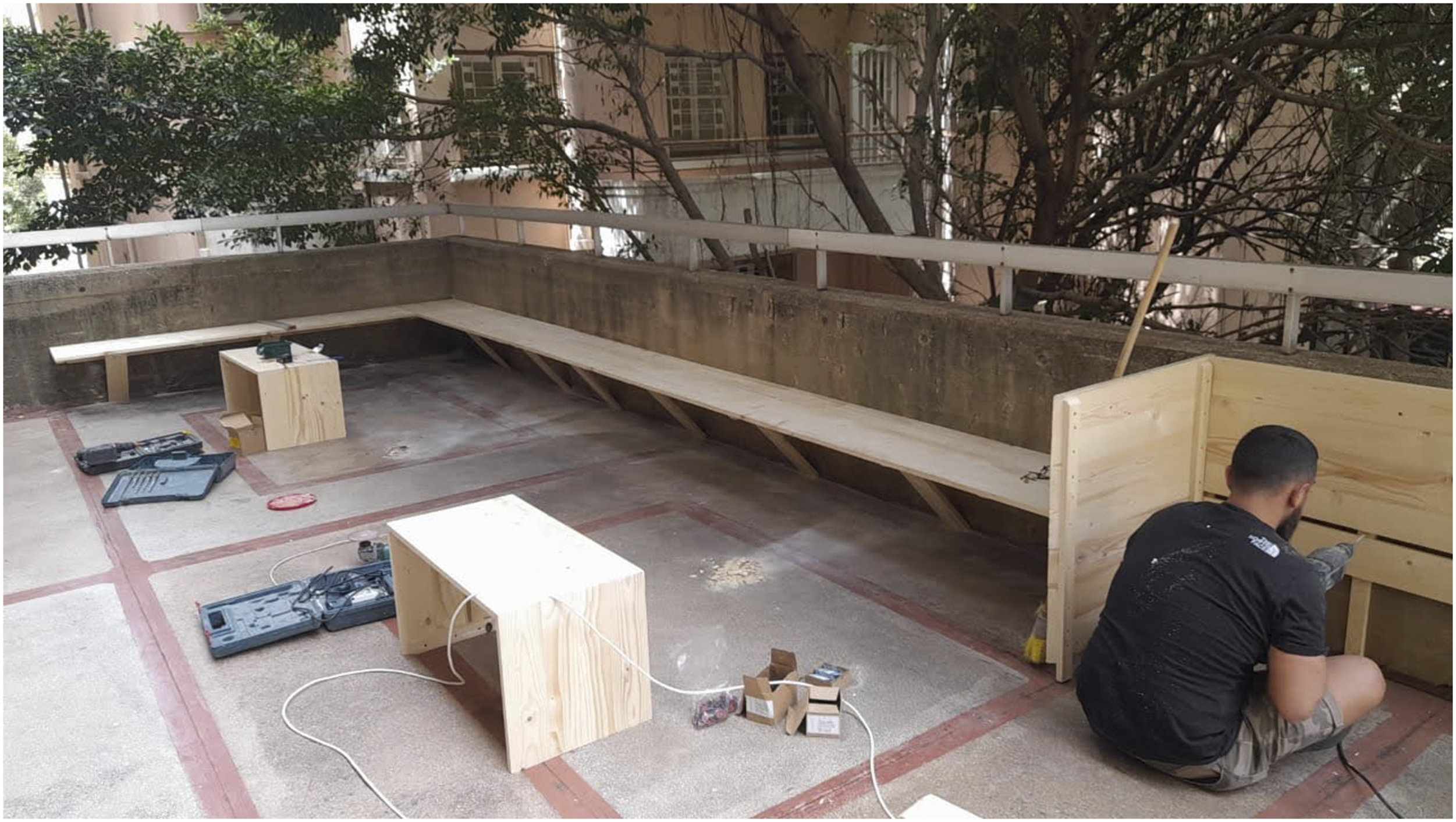
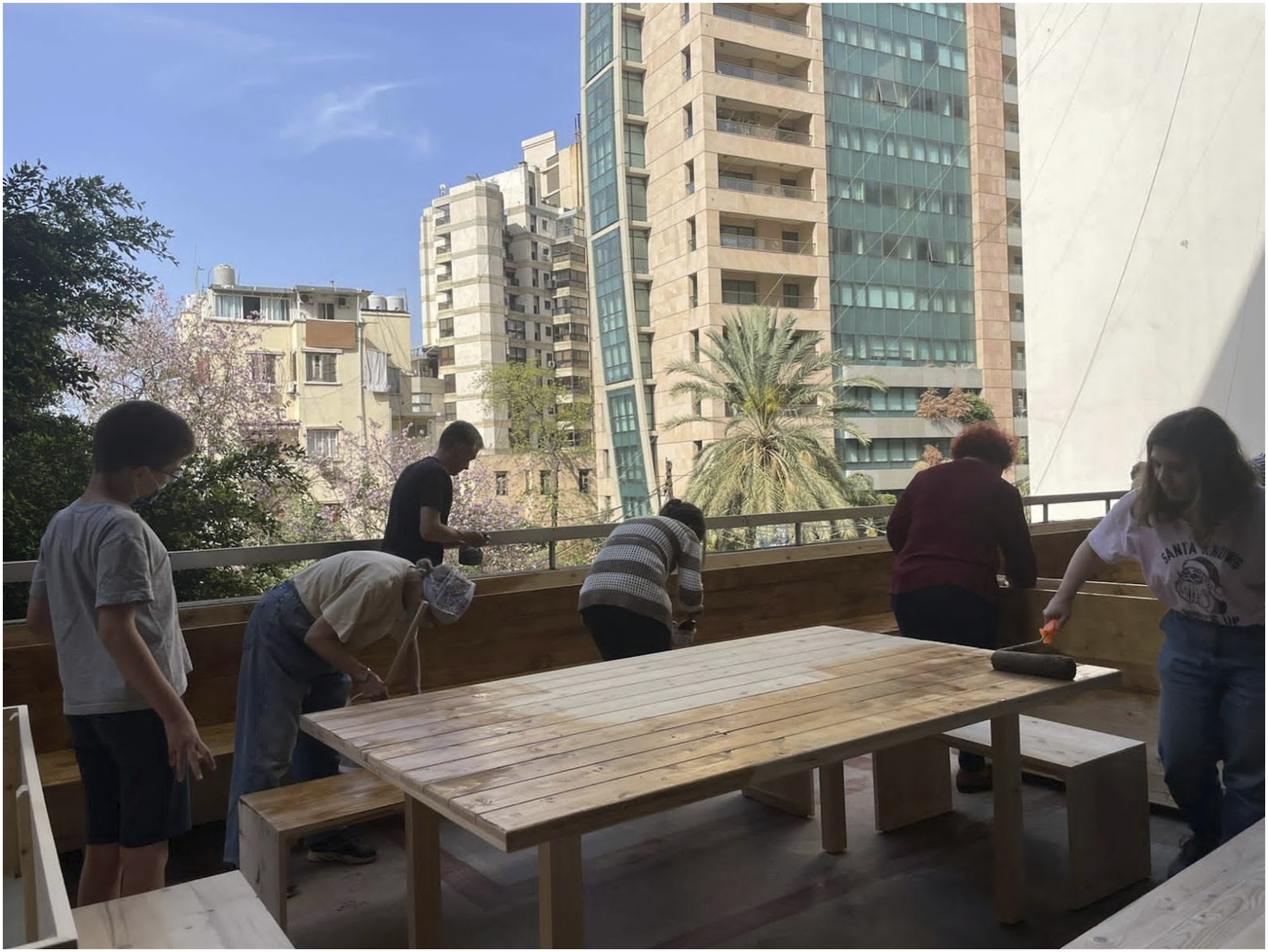
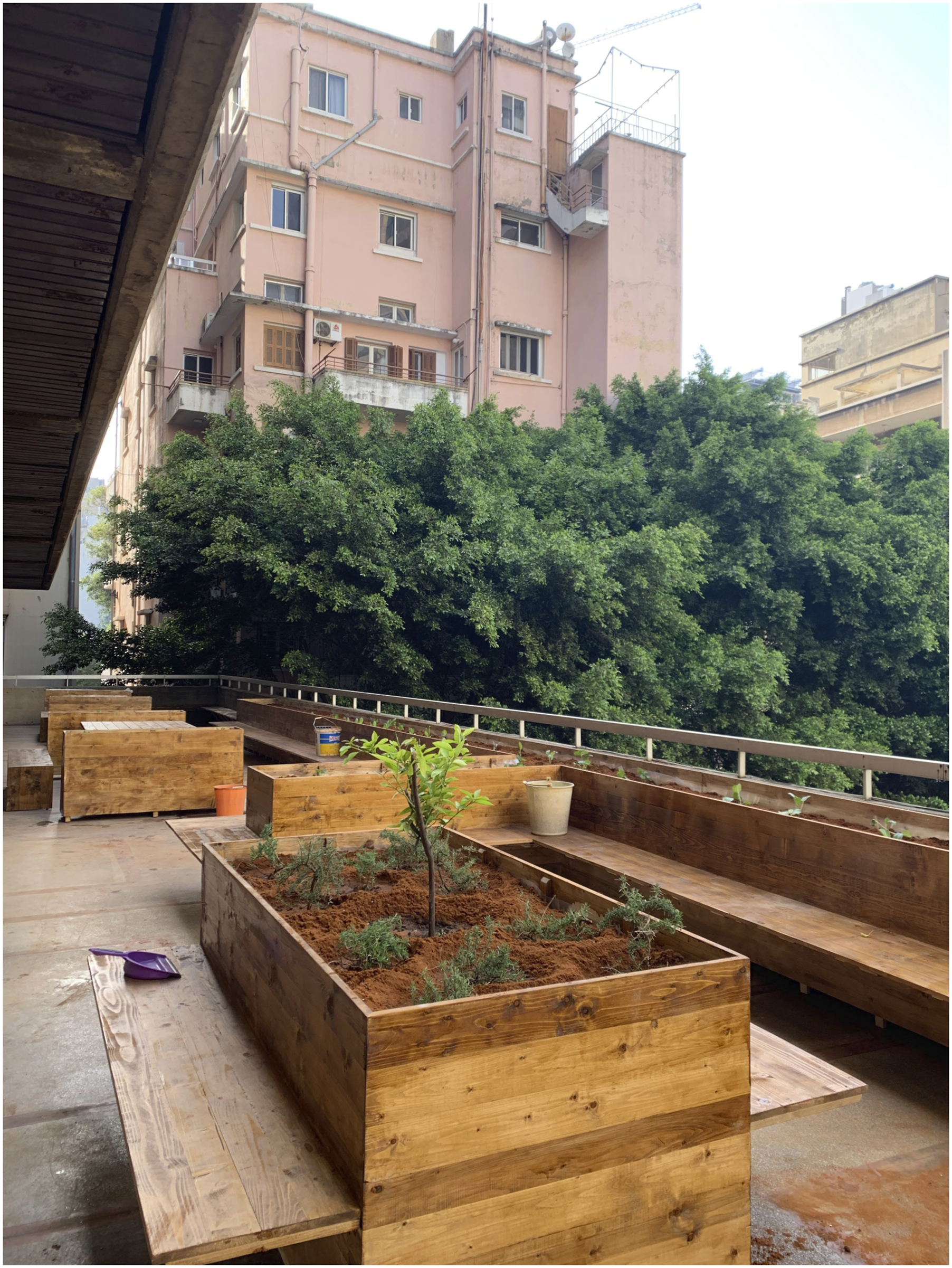
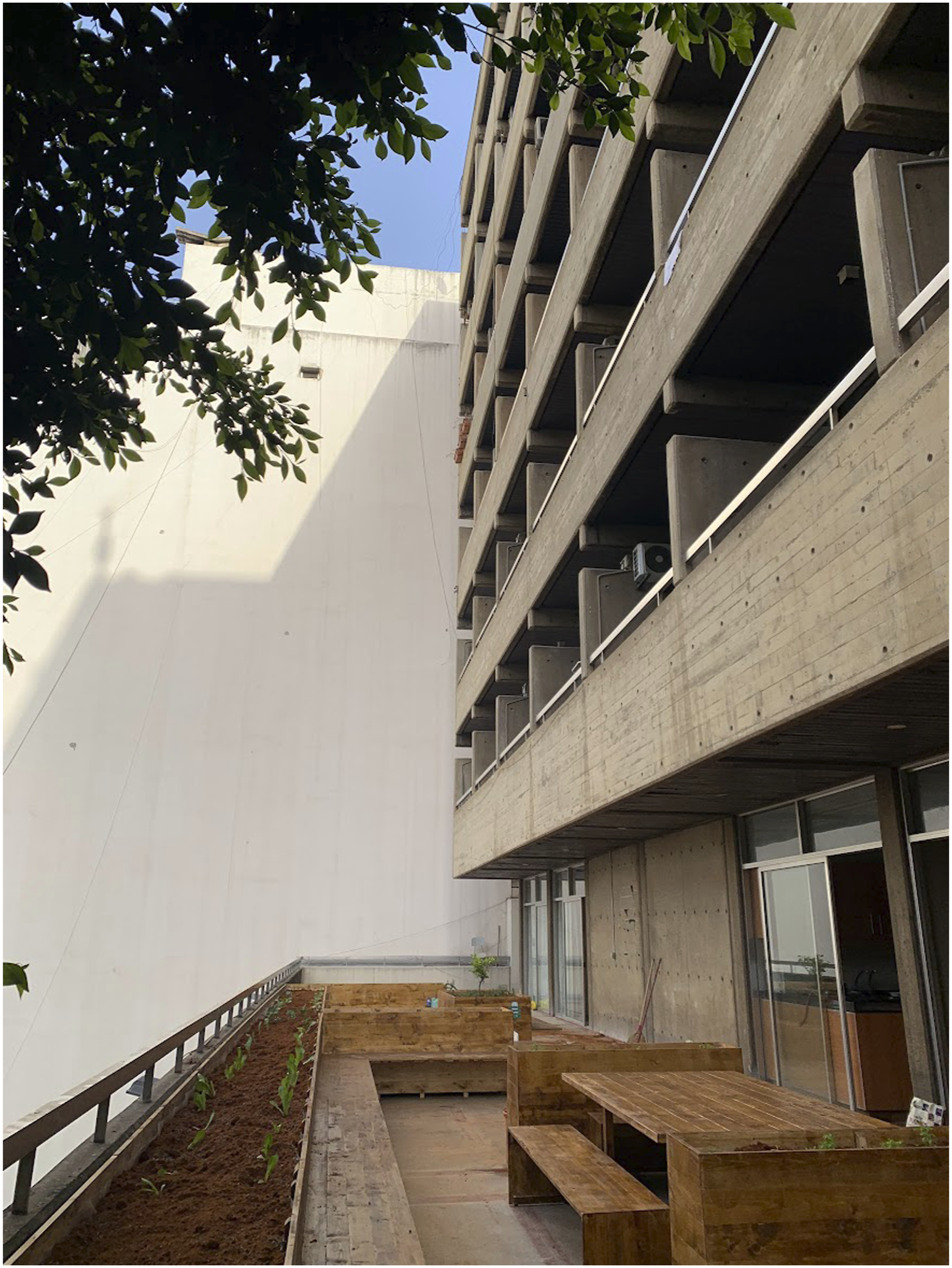
Half a year after the initial installation, we organized two evaluation interviews with NEST-based users to see if and how the project was benefitting the community. The interviews (again done by Rahaf) showed that the amount of food that the garden produced was negligible, firstly because the garden was not big enough to feed a community of fifty people, and secondly because birds were quick to eat the fruits as soon as they started ripening. Where the intervention had a more significant impact was in the quality of space that it provided for the NEST students and staff: everyone used it as a place to sit, eat and socialize; people organized themselves to water the plants; and they generally felt that the garden made the space more pleasant. One NEST member of staff—let’s call her Maria—explained that users were “benefitting in the sense of having a table to sit outside, have fun and enjoy. The ambience is more beautiful, and the view is more beautiful.” When asked about whether the intervention has changed the uses of the space, Maria elaborated as follows: Rahaf: Did you use this area before the implementation of the intervention? Maria: Yes, not me, the students, for coffee breaks after lunch, for example. They also used to chat there but not as much because it was a long empty ugly terrace. Now it’s very appealing. Rahaf: How has the experience changed? Maria: It is more fun for them. They even sometimes find a strawberry that they pick and eat and would be happy about that. Rahaf: Can we say that the space has a new role on the floor or the building? Maria: It added more life to this floor, really. It is a floor for students […]. Because our building is concrete-coloured, it does not have a lot of colours and it added a lot to this student floor. Rahaf: What would you say are the best features of the intervention? Maria: It added fellowship among students, I think.
In addition to providing a good quality space for sociality the intervention also gave students and staff an opportunity to do something meaningful and enjoyable in collectively taking care of the garden: “[The students] started to care about irrigating the plants. It had a good impact and we made a schedule of who should water the garden on which days and when so that we avoid everyone watering the plants and harming them. It was very interesting to everybody, they were very happy.” Maria herself was occasionally tasked with watering the plants, and she also planted seeds with a student who had prior agricultural knowledge. Although this was additional work in Maria’s already-busy schedule, it was an activity she enjoyed as a distraction from office work: “it added to my duties but it did not disturb me because as you know office work is very dry and to me agriculture and gardens are like therapy. So, when I felt like it’s too much, I'd go [in the garden] and enjoy it.”
The second interviewee, whom we call Michel, was the aforementioned NEST student with expertise in agriculture. Michel highlighted that the space had become much more pleasant for students to use and socialize in. Rahaf: So was the experience before the garden better? Michel: No, now it’s prettier. [The students] were happy, I saw their feelings while they were sitting outside among the plants and greenery. In the past there was nothing here, just the two pendulas. The strawberries have a great impact because they have this romantic sense with the students, but they need a lot of work. Now after it rained, they became green again, they were yellow before, and this planter also needs some cleaning to be productive again.
Michel expressed skepticism about the garden’s ability to be a productive source of food but as a student of theology he thought that it could be used for educational purposes: “We can also make it an educational space because it’s a university and a lot of people are not used to Middle Eastern plants because we have students from Europe, US, and so on.” Some of the examples that Michel had thought about were myrtle plants (حمبلاس), fig trees, and blackberries, all of which had theological significance and relevance to the region’s history. This last point by Michel showed that the garden’s value was multi-dimensional: in addition to providing a good space that enhances leisure, sociality, and rest from “dry” office work, the garden was also stimulating new ideas and conversations about education that the students could share within their community. As the garden goes into its second year of operation, the staff and students at NEST are planting new kinds of crops to fit their needs and the lessons learned from the first cycle of crops. Given the low food yield and the high aesthetic value of the garden, they are now planting more flowers and fewer vegetables, and they are also planting lemons, olives, figs, and the strawberries that everybody loves to pick.
Conclusion: From Care for the Community to Social Impact
The interview material presented above shows how citizen scientist-led interventions impact quality of life. Although the two interventions were designed to address very different problems and target different groups of users, they were both successful in engaging people socially and emotionally, in addition to providing a basic service. To understand where this additional value comes from, we have to return to the themes of trust and care, both of which were integral to the success of the interventions. In the case of the JCC, the parents of the students were first approached by partners and collaborators in the PROCOL Lebanon network whom they knew and trusted, and in some cases by other parents whose children were already enrolled. Being a part of a locally established network was thus an important factor for outreach and impact. But once the intervention was underway, what made the decisive difference for user experience was the JCC team’s attentiveness and responsiveness. The time and patience that the JCC team devoted to student needs during lessons was highly valuable for supporting both learning and wellbeing. We can add to that point that the duty of care also extended to supporting students and parents with other related issues such as fixing technical problems. Naila, for example, reported that “if anything happened, we’d contact Assia. She would recharge [the power bank] continuously without us having to ask and if it malfunctioned, she would fix it directly.” Hiba’s experience was similar; she insisted that “Assia was always there to help,” specifying that “she used to fill out our [internet] cards to watch the sessions.” Hiba also noted that “once, the power bank stopped working and Assia helped fix it.” This made a big difference in how users valued the intervention and both of the mothers interviewed expressed an enormous amount of gratitude for the support that they and their children received.
The Goods of Our City project, as different as it was from JCC, was attentive in its own way. In this case, the additional value beyond the materiality of the garden came from the co-design and co-construction of the installation. It was done in the way that users wanted and in line with the needs that they had, and it was also jointly built with their input and labor. As Maria explained, the project’s collaborative ethos made a difference to how people treated the installation. It encouraged users to take ownership of it and see it as something for them and their needs: “You did not bring a project and tell us this is it; you came, saw, and had a conversation with us and were flexible with what we wanted […]. This was encouraging because it’s not just that you wanted to implement the project, but you wanted us to want it and be satisfied with it.” Michel, like Maria, also made note of the collaborative process, but he was more taken by the swiftness with which the installation was created: “we want to work the professional way and [PROCOL Lebanon] is professional and fast. I was very happy that it happened fast: the idea was presented in March, we had a community debate in April, and in May it was executed.”
To conclude, we emphasize that collaborative projects that invest in people and interventions at the community level harbor tremendous potential for social engagement that enhances wellbeing and improves quality of life beyond the basic or primary functions of service provision initiatives. We have shown that this is the case for the two examples in this article, but there is evidence to suggest that this is also the case for other co-designed interventions (e.g., Baumann et al., 2023). The importance of the additional value that social engagement creates should not be underestimated or trivialized. If one accepts, as we do, that the purpose of the economy is to improve wellbeing and quality of life for the public, then community-based engagement and the wellbeing it creates are precisely what economies should be actively investing in. But even if we do not take sustainable wellbeing as a goal, and instead prioritize the economy in narrower market-oriented terms, then there is still a strong case that direct investment in capacities, opportunities, and projects at the community or meso level will boost, rather than inhibit, the creation of economic value. The multiple activities that we describe in this article—from research design and data collection, to the co-creation of interventions—have led to a range of benefits across different groups of participants: capacity building, creation of networks, opportunities for innovation and entrepreneurship, and sociality that inspires people to engage with the world. All of these are forms of value that are indispensable for a functioning economy and society.
The citizen science approach that we have developed in Hamra and elsewhere in Lebanon should be viewed as an experiment in methodology for pathways to recovery and prosperity—after all, the purpose of a Prosperity Co-Lab is to experiment with new possibilities for solutions. Our hope is that at least some of the ideas and lessons from this experiment will be taken up by other academics and practitioners interested in translating research into action. Beyond the domain of academic research, however, this work showcases the value that is created when communities and citizens are supported in driving the change that needs to happen. What is crucial here is the need for greater systemic and structural support for community-based work, both within and outside of the university. Citizens and communities cannot and should not shoulder the burden of creating solutions at their own cost; instead, they need policy that invests in them and their ability to create solutions, including investments that provide people with jobs and livelihoods while creating pathways to better quality of life.
Footnotes
Declaration of Conflicting Interests
The author(s) declared no potential conflicts of interest with respect to the research, authorship, and/or publication of this article.
Funding
The author(s) disclosed receipt of the following financial support for the research, authorship, and/or publication of this article: This work was supported by the Arts and Humanities Research Council/MENASP Network (AH/T008067/10), via the project “Livelihood Networks and Political Experience in Beirut, Lebanon”, and by the Economic and Social Research Council via the projects “RELIEF Centre” and “RELIEF 2” (ES/P008003/1 and ES/W007835/1). The authors are very grateful for the generous support of the funders.
