




Abstract
Arts-based research can exist as a stand-alone method, methodology, or reflect varying degrees of interweaving with other research approaches. With this in mind, this paper explores these relationships using examples from a recent arts-based research exhibition inclusive of various artistic works created to respond to, understand, and reflect nuanced experiences, narratives, contradictions, and diverse data sources in frailty and aging research. Taking an interdisciplinary perspective positioned between the arts and health sciences with specific attention to knowledge translation, the roles of object materiality, proximity to research data, and narrative reflection are considered, as are their implications for the creation and purpose of arts-based research more generally. The paper encourages researchers to consider how research data and arts-based research can continue to evolve and create deeply impactful and resonating findings.
Keywords
Arts-based research can be considered as a distinct methodology, or one that is inextricably linked to the paradigm of qualitative research. Yet, for those considering undertaking an arts-based form of inquiry—including arts-based approaches to dissemination—in tandem with qualitative and quantitative research, what is the nature of this relationship? How might justifications for using arts-based research be explicated more clearly to illuminate the gains and opportunities of using such approaches in conjunction with other forms of research? And, how do approaches and perspectives on arts-engagement influence the capacity to discover, tell, and re-tell our stories and the stories of others, through material and non-material art forms? While arts-based research is often approached as a stand-alone methodology in education, the social sciences, and less commonly in the health sciences, there are a growing number of researchers and practitioners in the health sciences and beyond that are turning to arts-based research as a component of larger qualitative or mixed methods research studies. Terms such as “arts-based knowledge translation,” “SciArt,” “A/R/Tography,” and “arts-based dissemination” for instance may reflect the artistic products that emerge from such cross-paradigmatic inquiry (Archibald, Caine & Scott, 2014; LeBlanc & Irwin, 2019). However, the nature of the relationship between these forms of data, the reasons for utilizing arts-based approaches, and the affordances or opportunities of using arts-based approaches to construct, re-construct, and intertwine narratives at the intersection of the personal with qualitative, quantitative, and/or mixed methods research derived data merits further attention (Archibald, 2018; Archibald & Gerber, 2018). This paper seeks to engage with these ideas with a particularly strong focus on health research applications (e.g., health science researchers, social sciences researchers interested in health concepts). Specifically, case examples from health research projects exploring frailty and healthy aging will be used to help uncover these relationships (between the diverse data); explore how engaging and re-engaging with data and materiality can provoke new avenues of inquiry; and encourage meaningful representations that invite questioning and ambiguity, thereby lending new justifications and affordances for each diverse arts-based approach.
Background
Accolades and Apprehensions Regarding Arts-Based Research
The knowledge “produced,” “uncovered,” or “discovered” through the arts-based research process has been the subject of much writing (Archibald, Caine, & Scott, 2017; Barone & Eisner, 2012; Boydell et al., 2012; de Jager et al., 2016; Hammond et al., 2018; van Katwyk & Seko, 2017). Arts-based research is often seen to provide new information not otherwise accessible through non–arts-based approaches. Arts-based approaches are credited with enabling embodied understandings, particularly when the maker of the artwork is also the researcher (i.e., researcher-as-practitioner stance, rather than researcher-as-observer stance wherein the research participant is the maker of the artwork) (Archibald et al., 2017). Arts-based research is seen to provide complementary information: presumably information that augments, challenges, extends, or even disputes that gained through other “non-arts based” means, such as through narrative interviewing associated with qualitative methodologies or even through the more generalizable understandings afforded through statistical measures. From these statements, it becomes apparent that those turning to arts-based research are at minimum curious of but more likely are convinced of the unique benefits offered by such methods.
Since its genesis, observers of arts-based research have noted distinct lineages to its development, some reflecting the robust histories of the visual in sociology more generally. Social science practitioners have had a pronounced influence of the visual on numerous methodologies, such as visual ethnography (Pink, 2013), and visual anthropology. Practitioners situated in education have birthed from their disciplinary origins writers, such as Barone and Eisner (2012), who have significantly shaped how arts-based research is conceptualized and operationalized (Barone & Bresler, 2006). Like each application, which carries particular emphasis and reflects particular origin, arts-based health research draws upon these bases yet has evolved with particular nuance. Reflective of the dominant orientation of the health science literature is that accolades associated with arts-based research processes tend to emphasize the epistemological “gains” of the work—an observation (or critique) also observed in the field more generally (Jagodzinski, 2013). Terminology and turns-of-phrase, such as “opening up space for dialogue,” “providing new perspectives not accessible through other means of representation,” and “going beyond the confines of written or verbal language” are common. Such phrases may be relevant to individuals (or teams) who are directly engaged in the practice of art making (i.e., researcher-as-practitioner, henceforth referred to as researcher-practitioner) but are commonly applied to situations where the researcher serves as an observer of the art making (i.e., researcher as observer, referred to henceforth as researcher-observer). The distinction that results from the extent of involvement in the actual art making is often overlooked in discussions of arts-based research in the health sciences (Archibald & Blines, 2021). This renders the experiential (ontological) and epistemological gains of arts-based research as equivocal regardless of the method of engagement, and results in a fundamental conflation.
Numerous factors influence the unequal emphasis on researcher-observer positioning over researcher-practitioner positioning in the health sciences; such critiques are likely to be applicable elsewhere. Some of these factors are external yet internalized—and certainly expected practices—such as the propensity to follow, be guided by, cite, modify and/or replicate previously published work and methods as a means of scholarly justification for methodological use and pursuit. While this is both a requirement of scholarly practice with merit in the critical appraisal, rigorous consideration of, and thoughtful application of previously published approaches, there is also the inherent risk of momentum and presumed acclaim that occurs through the process of academic publishing: published works have undergone peer review (a similarly contentious process currently subject to much criticism) and therefore are assumed—and often rightfully so—to embody a level of scientific or academic trustworthiness (or rigor—depending on one’s paradigmatic orientation). However, since this, like other safeguards, is not folly proof, and certainly the process of peer review (however rigorous) does not alter how the knowledge “product” (e.g., publication) is handled post-facto, knowledge “products” (like publications) exert significant agency in complex user-interactions after their publication. What can result is akin to a snowball effect, wherein it can be quite difficult to gain appreciation for a new approach (i.e., the initial snowball can be difficult to form), but once formed and pushed from the top of the hill (i.e., passing the threshold of peer review), the snowball can acquire significant additional material and catalyze its own momentum (i.e., citations, re-uses, however, legitimate or uncritical). Within the macrocosm of society and the microcosm of the academy, there is risk of a similar snowball effect, and in certain cases such an effect has been documented (Snow, 1959). Namely, while understandings can possibly reside in any or all of the cognitive, emotive, or embodied spheres, it is the expressible aspects of these learnings that are rewarded through scholarly exchange and publication. This external reward system serves to legitimize knowledge production in a manner similar to the continued rotation of the snowball down the hill, lending remarkable additional weight and dimension to the initial concept. Following that extent of legitimization, it comes to follow that different perspectives on knowledge “production” can be appreciated but raise questions such as “different from what,” suggesting that juxtapositions of “accepted” and “unconventional” are necessary when in fact they have become mandated through the very system of production. As a result of this neoliberal influence, the ontological gains—those associated with arts-based research as a way and place of being—are generally less recognized in part because they are harder to express, and because a system for appreciating their value within the health sciences has not achieved the same legitimacy as seen for other knowledge “products.” I will return to the influence of this production-based orientation later, as it has direct bearing on our willingness (and capacity) to engage, and re-engage with materiality and concepts using the arts, with significant implications for quality.
Despite recognition of the benefits and potentials of working with arts-based methodologies, arts-based research is considered by many working in the more traditionally biomedical disciplines that are less likely to be credited for the development, blossoming and subsequent proliferation of these approaches, as an alternative to the more “rigorous and established” qualitative and quantitative methodologies. Here, I am specifically referring to the health sciences that while broad and inclusive of such diverse disciplines as nursing, medicine, rehabilitation sciences, and psychology for example, do not lay claim (as education has) to the genus of this now rich and expansive range of approaches that we call “arts-based research.” Health disciplines come to this emphasis naturally. Nursing, for instance, sought to achieve professional designation under the dominance of medicine and its associated curative focus (Risjord, 2009). Legitimizing knowledge production to move nursing from “merely” a calling, an act of caring, or an art, required a renewed focus upon empiricism. Such an emphasis can be seen in the foundational work of nurse scholar Barbara Carper who in 1978, broke ground with her seminal publication regarding the ways of knowing in nursing (Carper, 1978). This remarkable work arguably did more to pull nursing into the realm of legitimate science and in doing so, created a distinction between “forms” of knowledge arising from empirical, ethical, aesthetic sources (Archibald, 2012).
Another domain of influence on the nature and focus of knowledge production in nursing and the health sciences is the applied nature of the disciplines (Thorne, 2008). This applied orientation holds true across the applied health sciences and as such, some of its implications are transferable and relevant. The effects of treatments, interventions, interpersonal and sociological influences, as well as the inner workings of persons’ physiological being (not in that order) are often prioritized when the relative importance of knowledge needed for practice is considered. While the need for holistic care and appraisal, and the caring space as a place of dynamic interaction have received some attention as subjects pertinent to the medical humanities, this engagement has not permeated the health sciences in a manner adjacent to its more curative foci—not even in nursing, which prides itself on its’ “art and science” footing. This footing, like most, suggests an equal weighting. However, this has not been achieved in the approach to knowledge production that has characterized the health sciences to date. Importantly, this argumentation is not meant to overlook the important work that has been pursued and achieved across medicine, nursing and other health sciences. Rather, the intent is to illuminate that there indeed exists a disparity in emphasis and this in part is catalyzed by a need for more attention to the connections between arts-based research with those methods and methodologies of more “traditional” value in the health sciences (e.g., quantitative research, and more recently and less consistently, qualitative and mixed methods research).
In an effort to make health research more useful generally, a movement towards finding ways to use and communicate research has ensued over the last 20 years. These paradigms, specifically the evidence-based practice and related knowledge translation paradigms, have mandated emphasis on how research is “produced” and “used” for communication, to improve awareness, understanding, promote behavior change, quality and consistency of care, and to concurrently reduce research waste and associated costs (CIHR, 2019). Knowledge translation specifically is regarded as a means of improving the reach and delivery of research findings to those individuals (e.g., decision makers) in need of the knowledge, and critically, requires that research is communicated in an accessible manner that enables it to be actionable (e.g., knowledge must be accessed, assessed, adapted and applied). As is argued, the focus on “production” rather than “unveiling” or “uncovering” for instance, and the presumed prioritization of explicit knowledge rather than tacit knowledge, created a unique circumstance for the arts which, in research, does emphasize the latter. However, the apparent restrictions or boundaries created by this evidence-based and knowledge translation framing has in many ways prompted practitioners and researchers alike to (re)consider the relationships between knowledge forms, and has created impetus to critically examine and question the dominance of certain types of knowledge over others (Archibald et al., 2014; Boydell et al., 2016). As a result, a new opportunity has emerged for integrating arts-based processes in what could be considered an unconventional space—specifically, the knowledge translation space. The opportunity of knowledge translation is one of many extant opportunities for arts-based praxis in the health sciences that will be discussed here. Of note, practitioners situated in education or the social sciences will be less familiar with this term and note abundant similarities in “re-presenting” research using arts-based approaches. A nuance worth considering when drawing such parallels is the intention and imperative of communicating knowledge for a particular purpose (such as improving research access, understanding and use by target audiences); the implications of creating through third party rather than first-hand engagement with art making thereby privileging products and epistemological gains of said products; and the possible impacts of such practices on the evocation and resonance of artistic outputs, which should be part of the corresponding evaluation as applicable, regardless of the modality of development.
Important to this manuscript is attending to conceptualizations of “translation” itself, as this is a concept of interest to the health sciences as well as many other disciplines (e.g., sociology). Merriam-Webster (2021) defines translation, in the following ways: a. Rendering from one language into another.
Also: the product of such a rendering b. A change to a different substance, form, or appearance: CONVERSION
Such definition, which sufficiently captures ideas of transforming, modifying, change, and conversion through different language forms, is not particularly aligned with the dominant understandings of knowledge translation present in health literature today—although notably this dialogue has been shifting to reflect the complexities and knowledge exchange concepts that are more pertinent to knowledge “production” than the mere “communication of knowledge” that knowledge translation is sometimes assumed to represent. The Canadian Institutes of Health Research (CIHR) (2019), which holds knowledge translation as central to its mandate, regards synthesis, dissemination, exchange and ethically sound application of knowledge as integral components. Despite explicit recognition of knowledge exchange and at times, co-creation, as well as relatively long-standing critiques highlighting the deficiencies of one-way models of information transfer (e.g., Lee & Garvin, 2003), there remain oft risky underlying assumptions that translation occurs as a one-one communication of explicit knowledge that remains unchanged through a linear pipeline from communicator to receiver (Engebretsen et al., 2017; Greenhalgh & Wieringa, 2011).
As a necessary history in brief, knowledge translation grew out of the evidence-based practice movement, which continues to shape and guide health care ideals today. The roots of this movement can be traced to the work of epidemiologist Archie Cochrane in the 1980s. The seminal work of Cochrane gave rise to the establishment of a “gold standard” for research synthesis (i.e., the Cochrane Database of Systematic Reviews) aimed at determining the effectiveness of interventions (i.e., to maximize benefit and reduce unnecessary research wastes/costs). Following the inaugural publication of Cochrane Database of Systematic Reviews (CDSR) in 1985, the term “evidence-based practice” was coined in 1992 with writings noted in the early and mid-1980s (Sackett, 1983; Sackett, Haynes & Tugwell., 1985). Evidence-based practice emphasizes a quantitative approach to informing decision-making (Elstein, 2004). Knowledge translation subsequently grew as a means to generate “useable” evidence through such approaches as the systematic review and find ways to “disseminate” this evidence or move it into practice, using various methods. For instance, auditing clinician performance and providing feedback on the performance (i.e., audit and feedback); conducting educational meetings; and organizational interventions aimed at improving healthcare delivery models are all examples of knowledge translation strategies, as are the traditional approaches of sharing research findings through academic publication and presentation.
Overtime, the conventional academic methods of dissemination such as academic publication and presentation broadened to include strategies that appeal to more than the purely cognitive domain of reasoning, and to reach a wider audience than those individuals with access to and appetite for these academic dissemination channels. This is critical since academic publication and presentation often fail to reach the stakeholders for whom the research-based information would be of use (e.g., healthcare providers, policy makers, families) (Archibald, 2021; Chenier, 2014). In recent years, practitioners have witnessed a growth of more “creative” approaches, such as those strategies involving storytelling, visual arts, performing arts, and various video-based modalities, for example (Archibald et al., 2021; Hall et al., 2019; Rieger et al., 2018). The growth and uptake of these approaches in the health sciences has occurred at times in tandem but more often in a laggard fashion to the predominance of these strategies in the social sciences (and also in education), where the integration of the visual—including documentary and other forms of film/video making—have more long-standing roots in anthropological and ethnographic research approaches and disciplines than in the health sciences. The overlay of the evidence-based practice impetus in health sciences has required a “different” handling of “other” research data in relation to those more commonly accepted (i.e., those of the qualitative, mixed and certainly the quantitative variety) in light of this pervasive influence.
As a result of this long-standing influence of evidence-based practice, there seems to have emerged two camps or domains of arts-based research in the health sciences (Archibald et al., 2017). It may be useful to consider these as a continuum between researchers tasked with maintaining the “integrity” of original qualitative, quantitative or mixed data when representing this through the arts, and those practitioners not situated within the evidence-based practice paradigm (or who are more absolved of its influence), who engage with arts-based research, perhaps still as a means of representation (Archibald & Blines, 2021). Conceptually this continuum can be considered as a byproduct of macro influences, namely, the influence of the evidence-based practice movement; and, (related) perceptions of relevant outcomes of inquiry. Such outcomes can be associated, for instance, with the creation of visually appealing knowledge “products” to impart knowledge to health practitioners to increase awareness and even change behavior, versus the creation of evocative and integrative artistic works that through both the process of their making and their representation provide new access points for decision makers who may not otherwise be aware of their existence. Since the formats of academic publication and presentation may be largely inaccessible to the public, new creative forms of delivery (tailored to the audience and knowledge of stakeholder groups) may increase access, promote understandings not otherwise possible, and change the nature of how the problem is conceptualized. Of interest to this inquiry are practitioners at either end of the continuum who consider arts-based research in relation to other data forms in the health sciences, whether that be as a presumed 1:1 relationship with representation through creative methods, or as a means of inspiration or contextualization for more distinct arts-based inquiry. This interest is based on an assumption that is best made public; namely, that those individuals engaged in practice-based arts inquiry (wherein arts-engagement is the central means of inquiry) have at the center of their practice, the re-engagement required of the arts. Uncertainty, experimentation, testing, re-engagement, and a resulting construction/re-construction of form are more likely to be paramount to this form of practice and are less applicable to the current discussion.
Figures 1 and 2 may help conceptualize how health researchers engage with arts-based research in the health sciences. Figure 1 reflects a continuum of arts-based research and translation in the health sciences emphasizing the researcher--observer stance, wherein arts-based methods are employed, but not by the researchers themselves. Data may be collected using arts-based methods with participants for example. Third party producers and/or artists may be engaged to represent the findings of qualitative, quantitative or mixed methods research data; artists may work with researchers and participants in varying degrees of co-creation. Along this continuum, there is some re-imagining of research data as it is translated into its new form, but the conversion is not as complete as with other approaches and hence the transformation is less apparent, lending fewer new insights into process and product. Continuum of arts-based research and translation: Researcher-observer stance. Continuum of arts-based research and translation: Researcher-practitioner stance.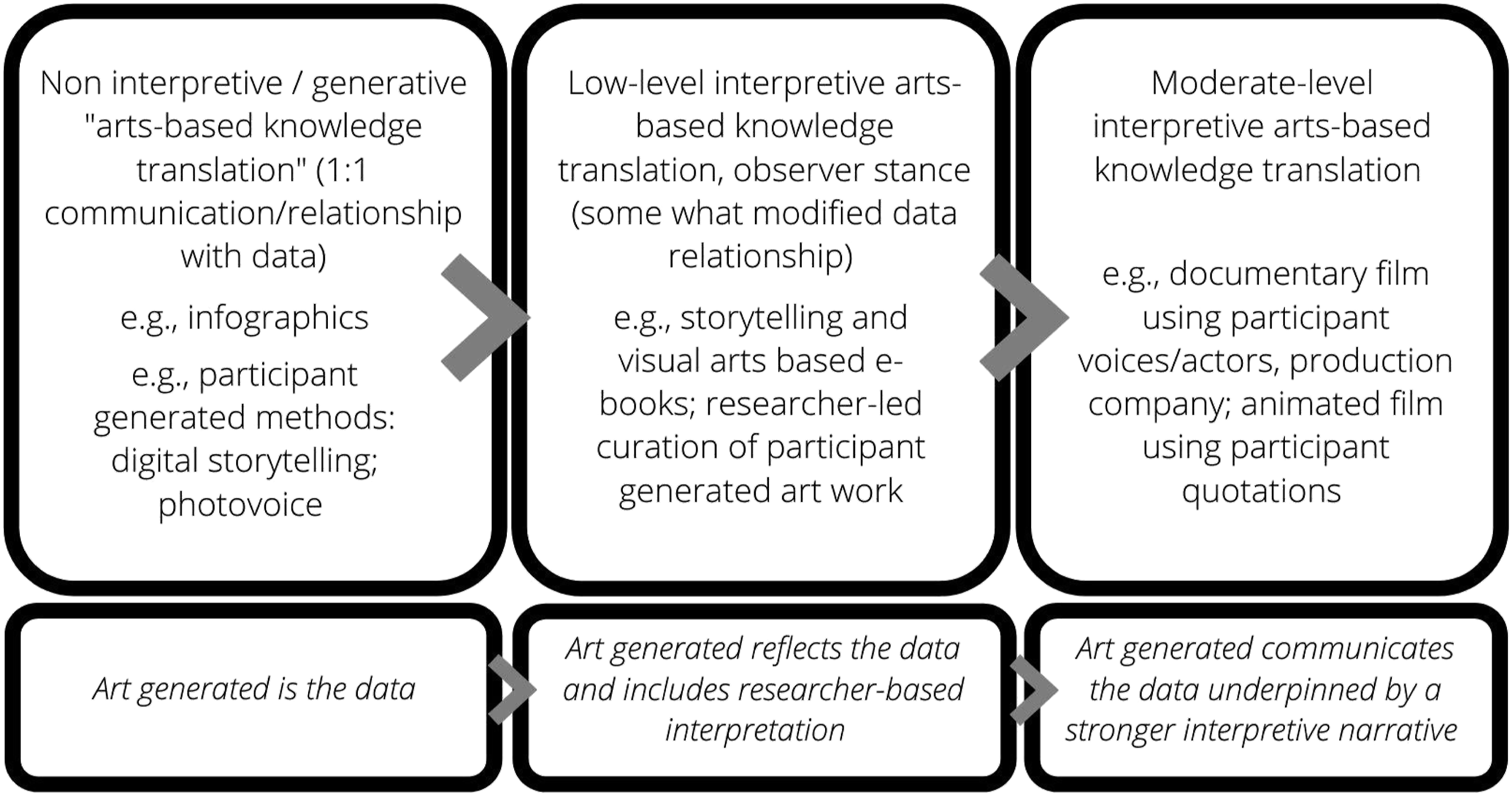
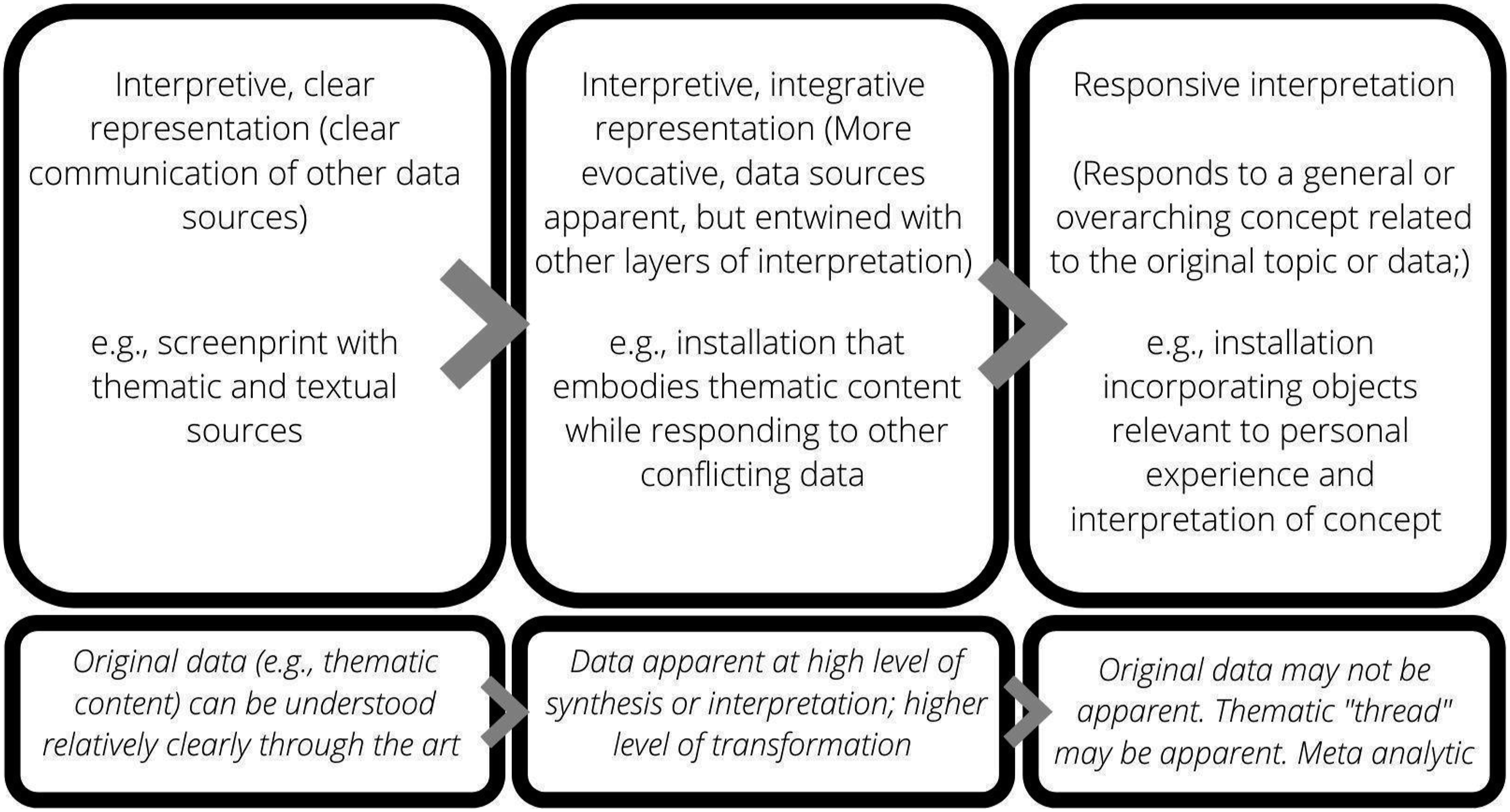
In contrast, Figure 2 reflects a continuum of arts-based research and translation in the health sciences from a researcher-practitioner stance. In this continuum, the researcher is the maker of the artwork, thereby enabling knowledge to be produced or uncovered through the act of making and first-hand engagement with form. The level of the data that is engaged with may change the interpretive nature of the work, lending new interpretations stemming from clear interpretations of data, to integrative representations of data, to more responsive interpretations. Each step may reflect a move away from the original data source and thus signify an interpretive departure. It follows that the justification for each method of engagement would differ, as would the presumed outcome of representing (telling, or re-telling) in each way. Another contingency is the extent of trial-error and open discovery required of each approach; higher degrees of uncertainty are characteristic of more responsive aspects of engagement since the artistic representation is less bound by its relationship to other data forms and the necessity of clear messaging and interpretation (Archibald et al., 2014). When working within this higher level of uncertainty, the role of imagination is likely to play an increasingly important role, catalyzing connections between the experienced and the reported, and the knowledge produced and uncovered. This commitment to re-constructing what was previously unimagined through what is fundamentally a mode of embodied engagement can help researchers move towards what Gerber and colleagues (2020) understand as a “radical imaginative philosophy.” Of note, however, is that the continuums represented in Figures 1 and 2 are not absolute; there may be crossover in the extent to which knowledge is co-created through artistic engagement depending on the extent and means of engagement.
Fundamental to the notion of a radical imaginative philosophy germane to the forthcoming presentation of case exemplars is that within the researcher-practitioner stance, one is able to engage first hand with the “dialectical tension of difference” (Gerber et al., 2020, p. 5) characteristic of arts-based research. Here, opposing forces such as the explicit and the tacit, and the constructed and the deconstructed, give way to a new space for meaning: meaning which surfaces, is constructed or discovered, is reflected upon, and through this recognition, becomes germane to new, different, or deeper understandings. And, as others have noted, it is through these means that arts-based research enables engagement with (and eventual deconstruction of) concepts and understandings entrenched in our psyche (e.g., socially constructed perspectives and associated discourses) (Gerber et al., 2020; Chilton et al., 2015). Further yet, is that such engagement can move us towards that “dialectical edge” and towards the space in between concepts that house innate potential for creative manifestation (Israelstam, 2007). It is with this in mind that I later present a reflection from arts-based researcher Dr. Nancy Gerber whose writing on imagination and arts-based research has much to offer in relation to the case examples presented.
Representation, Interpretation, and Integration in Arts-Based Research
Context for Case Exemplars
In 2015, the National Health and Medical Research Council (NHMRC) in Australia awarded 4 years of funding to a team of investigators, led by Professor Renuka Visvanthan, to establish and mobilize a transdisciplinary Centre of Research Excellence in Frailty and Healthy Aging. The core investigative team was based in Adelaide, South Australia, with numerous associate investigators located interstate (e.g., Victoria) and also internationally (e.g., Canada). In addition to the Chief Investigator—a geriatrician—the team comprised disciplines as diverse as health economics, health demography and geography, general practice, orthopedics, nursing, and knowledge translation science. The focus of this team was to understand the prevalence and incidence of frailty in South Australia, identify possible screening pathways and implementation opportunities within general practice, and create an economic model for frailty management in South Australia. Underpinning this approach was the cross-cutting theme of knowledge translation, a term notably familiar to all health researchers tasked with attaining funding in any Western nation given federal mandates for inclusion within grant applications. While previously described, simply stated, knowledge translation is the science concerned with how knowledge is mobilized and used to inform health related decisions (CIHR, 2019). My involvement with this group was as an arts-based and knowledge translation research fellow, supported by the Canadian Institutes of Health Research and the NHMRC (via the CRE), respectively.
Considering that a predominant challenge in frailty management was identified as a lack of understanding and awareness of frailty by both the general primary healthcare community (e.g., primary care physicians) and the public, it was clear that approaches to raising awareness of frailty in both domains were necessary. However, our early reviews of the published literature on frailty revealed that there was little research published on the perspectives of frailty and frailty screening held by older adults. Recognizing that the perspectives, experiences and assumptions held by individuals are remarkably powerful forces in shaping behavior, it can be problematic to overlook these essential viewpoints in exchange for an insular view towards implementation (since beliefs and attitudes can thwart even the best planned implementation activity). Since my work was primarily oriented towards consumer perspectives and the qualitative work that I led in this area was focused on older persons perspectives of frailty and frailty screening, we determined that arts-based research approaches oriented towards the public were the natural next step for arts-based knowledge translation development.
We have published extensively on the research and theoretical perspectives associated with this research program, and since those materials are readily available elsewhere, we do not replicate those writings here (Ambagtsheer et al., 2020; Ambagtsheer et al., 2017; Archibald, Kitson, et al., 2017; Archibald, Lawless, et al., 2021; Archibald, Kitson, et al., 2017; Archibald, Lawless et al., 2017; Archibald, Lawless, Gill, & Chehade, 2020; Archibald et al., 2021; Ambagtsheer et al., 2019; Lawless et al., 2020). Pertinent to this writing however are the predominant findings of the work, the higher-level concepts related to the program of research collectively, and the reflections germane to the topic of study, in order to delineate the relationships between these and the various artistic approaches undertaken. The relationship between the various approaches to inquiry and data generated or uncovered has a direct relationship to the affordances and opportunities offered by each modality. The selection of case examples is meant to illustrate these relationships.
High-Level Overview of Research Studies Informing Arts-Based Approaches.
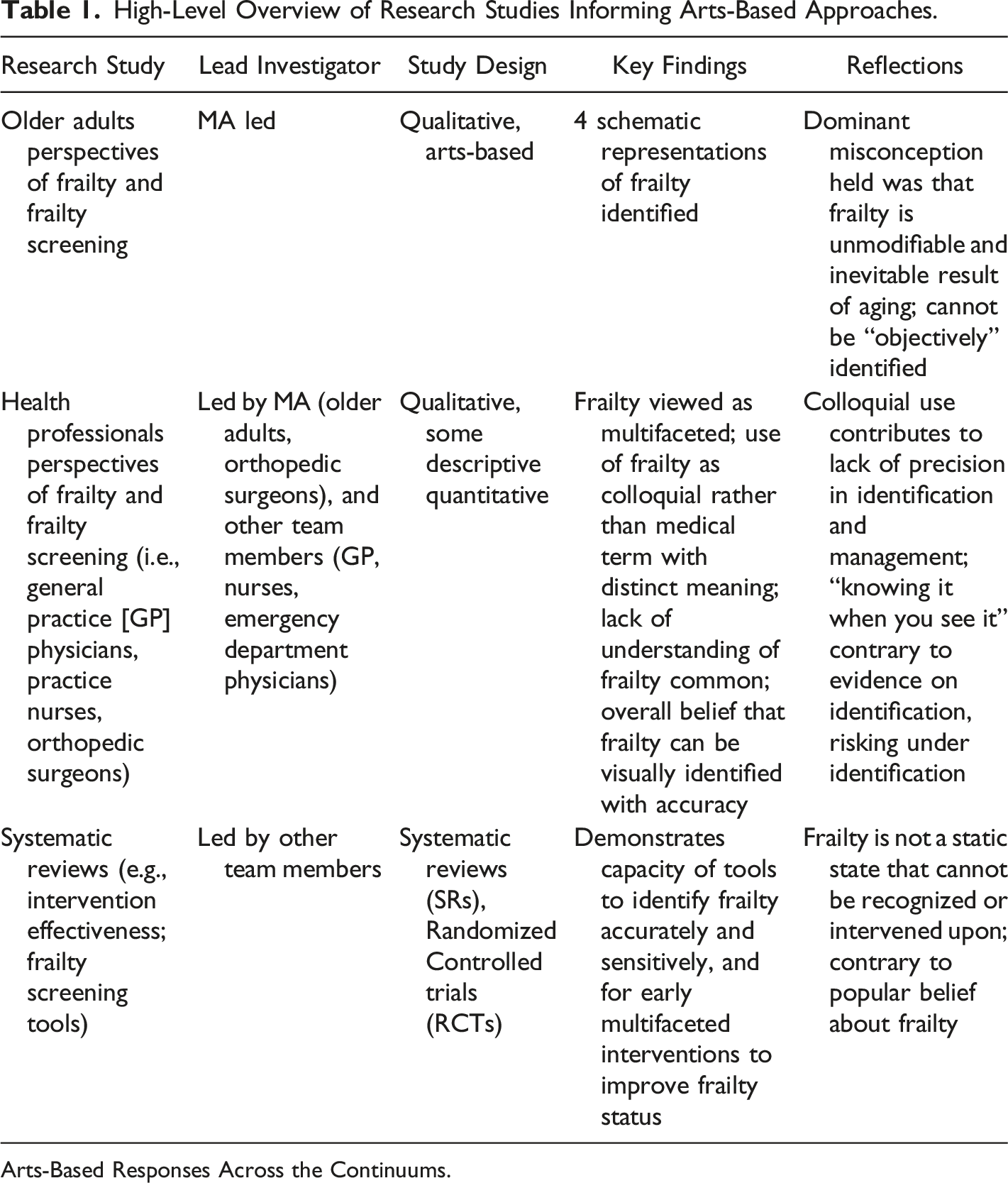
Arts-Based Responses Across the Continuums.
Considering, then, the continuums of Arts-Based Research and Translation in the Health Sciences across the Researcher-Observer (Figure 1) and Researcher-Practitioner (Figure 2), stances, we first undertook an activity involving older adults using co-design to integrate evidence sources in an attempt to dispel myths of frailty, and rectify the “evidence-experience” gap encountered. Co-design was understood as the meaningful participation of stakeholders or knowledge end-users in the process of decision-making (Archibald et al., 2021; Ocloo & Matthews, 2016). To do so, we undertook an engaged Researcher-Observer approach to develop an animated video to communicate the research findings from discrepant sources—recognizing, as acknowledged earlier, that the continuums (i.e., Figures 1 and 2) are overlapping at times. We directed the narrative and metaphorical aspects of the work (i.e., moderate-high engagement where the art generated communicates the data and is underpinned by a stronger interpretive narrative) and determined the artistic modality with our stakeholders. Although the majority of this article focuses on the more hands-on researcher-practitioner perspective, it is useful to provide this example as a means of illustrating the difference in ways of knowing and how the resultant knowledge is communicated to the end user. The direct relationship of the underpinning research to the representation of this research constrains the extent of interpretation enabled through the arts, reducing the opportunity for the full range of imagination and provocation to take hold, but providing the opportunity to improve comprehension and engagement through a visual rendering. Figure 3 provides the overview of the images generated in tandem with the animation company in the production of this co-designed video, and as informed by our meetings with our team of older adult co-researchers, academic and clinician partners (refer to Archibald et al., 2021 for a detailed description of this co-design process). Overview of animation images. Frailty: Every step You take matters animated Video; Archibald & Research Team, 2019. 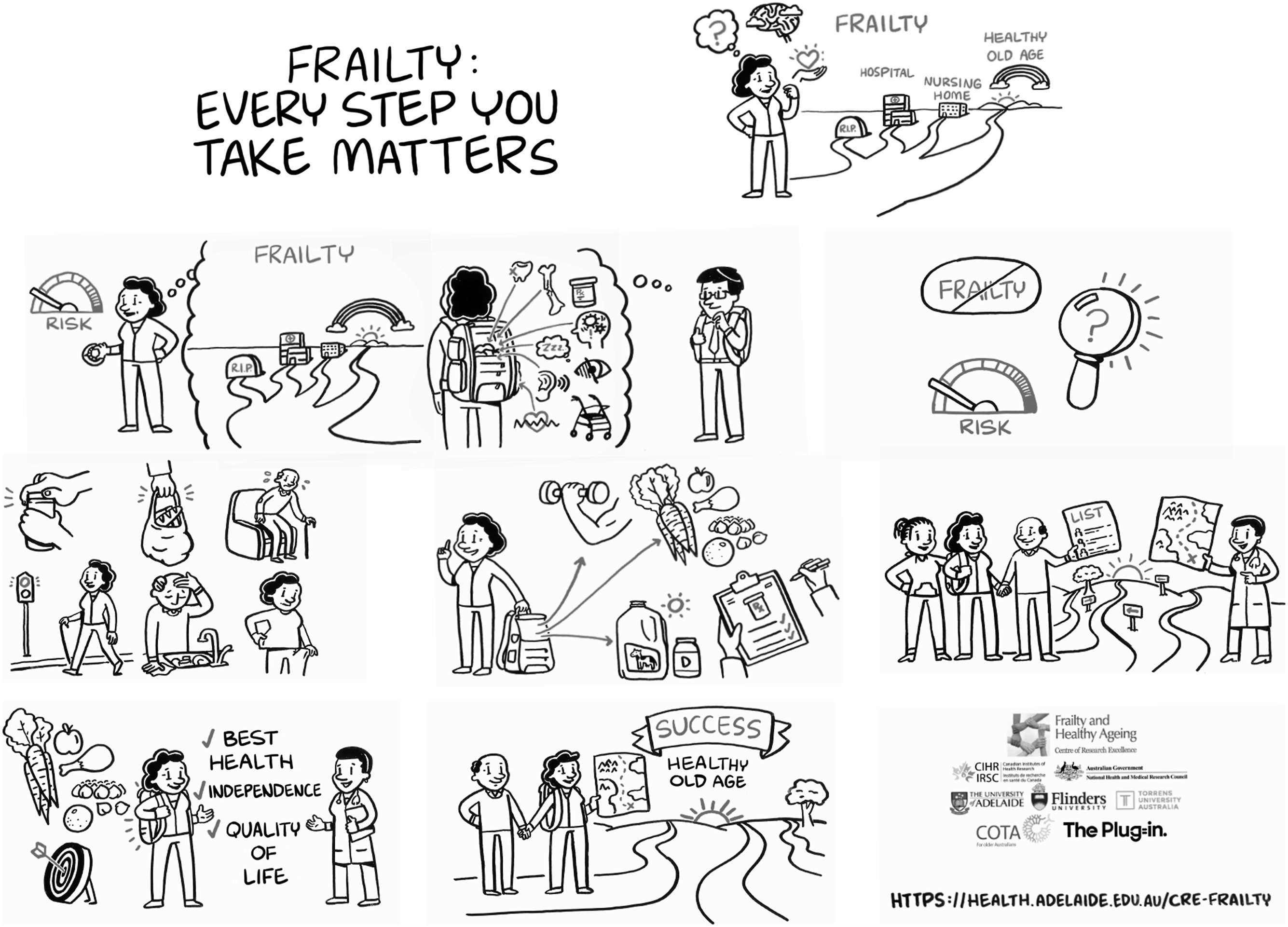
In developing this video, the generative emphasis was largely qualitative or narrative in nature; key messages and the underlying narrative came about through open discussion, at times facilitated through the viewing of other creatively presented videos of various modalities (e.g., documentaries, animations on similar topics). We used these video prompts to encourage consideration and discussion of such aesthetic concepts as tone, pace, and character development. These discussions focused mainly on the key messages to be delivered in relation to the qualitative, mixed methods, and quantitative research evidence; no hands-on arts-engagement by the team was undertaken, but engagement involved the viewing of other video-based material. In this way, the visual representations generated to reflect our group derived metaphor (e.g., the path to healthy old age) and key messages existed in a near 1:1 relationship with the research data; however, since the data communicated was synthesized across a variety of sources (e.g., various research studies and designs over time), identifying the most salient messages involved a high level of interpretation and situatedness within the qualitative aspects of older persons experiences, including those aspects of experience that were not readily expressed but inferred through in-depth qualitative research. Of note, the interpretation of engagement presents a source of overlap between the Researcher-Observer and Research-Practitioner stances as they relate to co-designed research: engagement is understood as the state of being engaged, and can be achieved in various ways (e.g., making, watching).
Working with the same data that underpinned the animated video, we (Archibald and collaborating artists John Blines and at times, Amber Cronin) engaged in various forms of art making as a means of juxtaposing the data. This was done in preparation for an exhibition at praxis ARTSPACE in Bowden, South Australia in April, 2019. We were aware that older adults’ first-hand experiences with frailty were at many times in opposition to the dominant biomedical narrative surrounding frailty and aging more generally. Other such dichotomies and continua emerged; such as the inevitability of frailty as a component of aging and as a natural progression towards loss of function and eventual death; the categorization of the self that emerges when a label of frailty is assigned; the social implications of loss of function that can arise and give rise to categories such as (socially) included or not included, and other critical binaries such as independent and dependent that, while appearing fixed and distinct, carry unique meanings and require differing thresholds for different individuals. For instance, while one older adult looked to a walker as a sign of dependence and loss of ability, another looked to a walker as a means of ensuring independence, and in contrast to the first participant, did not self-appraise as mobility dependent.
One of the early explorations that we (Archibald & Blines, 2021) engaged in was that of screen-print monotyping (Figure 4). We played extensively with materials typically associated with drawing (pastel) and painting (watercolor), and an applicative process of spontaneous mark making on screen printing frames before printing—first on paper, then on canvas. We would re-work our screen and subsequently re-print, enabling new layers to emerge from this unanticipated process. Critically, this process was done collectively: we worked in tandem on a single screen at a time, circling around the screen and one another, responding to both our primary ideas and those marks made by each other, in order to create a visual record of this dialogue. The resulting dialogue reflected in Figure 2 captures the interpretations of the primary research data but also our internalization of it and response to each other’s interpretation. This lended a new synergy that perhaps is more reflective of the juxtaposition of evidence sources that would be a “clean,” non-dialogic reflect of one source of evidence (e.g., that reflecting the dominant biomedical evidence governing frailty management). As such, what was afforded through this engagement was a spontaneity that enabled a collective visual dialogue; the use of text formed an access point for those viewing the work who were perhaps also interested in the underpinning qualitative research and themes which inevitably permeated our creation. The uninhibited engagement was also a catalyst for future artistic engagements in the series; we felt ready for continued collaborative work and to continue a material-based exploration. Not me. (Screen print monotype). (Archibald & Blines, 2019). (Photo credit: Sam Roberts Photography).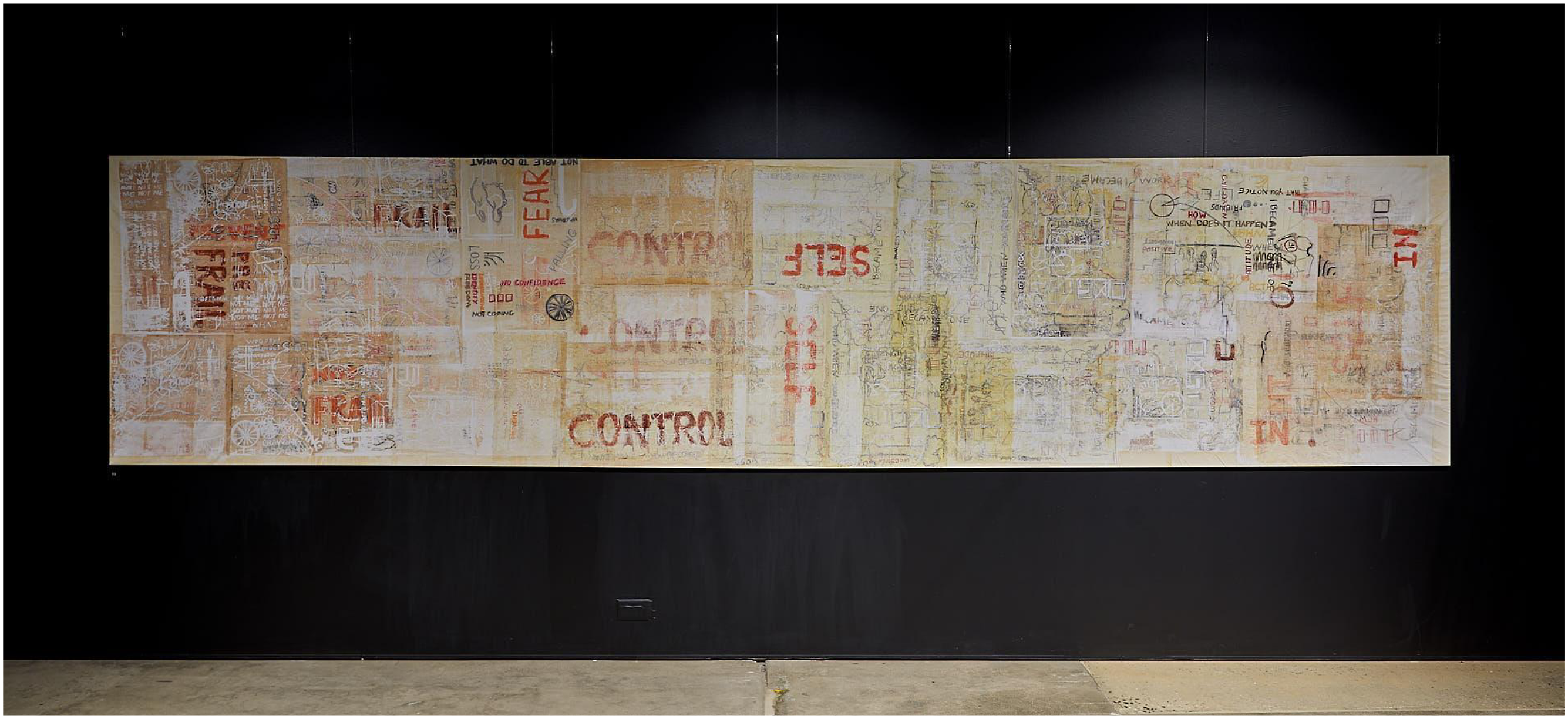
As we continued in our exploration, one of the concurrent works that we engaged with stemmed from a metaphor identified in the preliminary qualitative research data (Figure 5; Archibald et al., 2020). This metaphor related to frailty being like a breaking a cup on the ground, and conjured images of the frail person as irreparable, and of frailty as irreversible. In an associated manuscript, we detail this exploration and the relationship of the artwork to qualitative and quantitative data (Archibald & Blines, 2021). Here, it is worth noting how the extended process of material engagement and concurrent materialization of the concepts of interest to both the qualitative research and arts-based research processes provided objects of reflection, enabling higher levels of interpretation. Orientating the inquiry around the singular form—in this case, the ceramic cup—provided a structure to the narrative and concretization of the experience of breaking and re-pairing of each ceramic piece (i.e., wherein each ceramic cup was representative of an older adult in our qualitative research sample). We were able to embed, in this structure, multiple layers of interpretation, such as the cascading form (reflective of a frailty trajectory), cultural differences in perspectives of the aged and aging (embedded in use of various repair methods including Kintsugi, the traditional Japanese method of repair using precious metals such as gold), and (accurate/inaccurate) visual appraisal of frailty (important to the necessity and logic of frailty screening, and embedded in our systematic process of conducting pre-break assessments of each cup based on their observable characteristics). Following what was a longitudinal process of acquiring, assessing, breaking and reassembling cups that spanned numerous months, we selected a series of the reconstructed objects to construct, in context, a suspension installation entitled (Dis)Repair. The frail state of the materials were accentuated by their dialogical placement, enabling yet another interpretive parallel to be drawn between the opportunities afforded by arts-based research methods, and the actual materialization of an arts-based research work. While this work was highly interpretive, it did still offer grounding in the qualitative research data by way of a quotation positioned at the adjacent wall base, as well as a comprehensible metaphor to aid engagement and interpretation. This strengthened the link to the underlying data, while still providing an integrative representation. (Dis)Repair. (Dis)Repair. Modified ceramic suspension installation. (Archibald & Blines, 2019) (Archibald & Blines, 2021) (Photo credit: Sam Roberts Photography).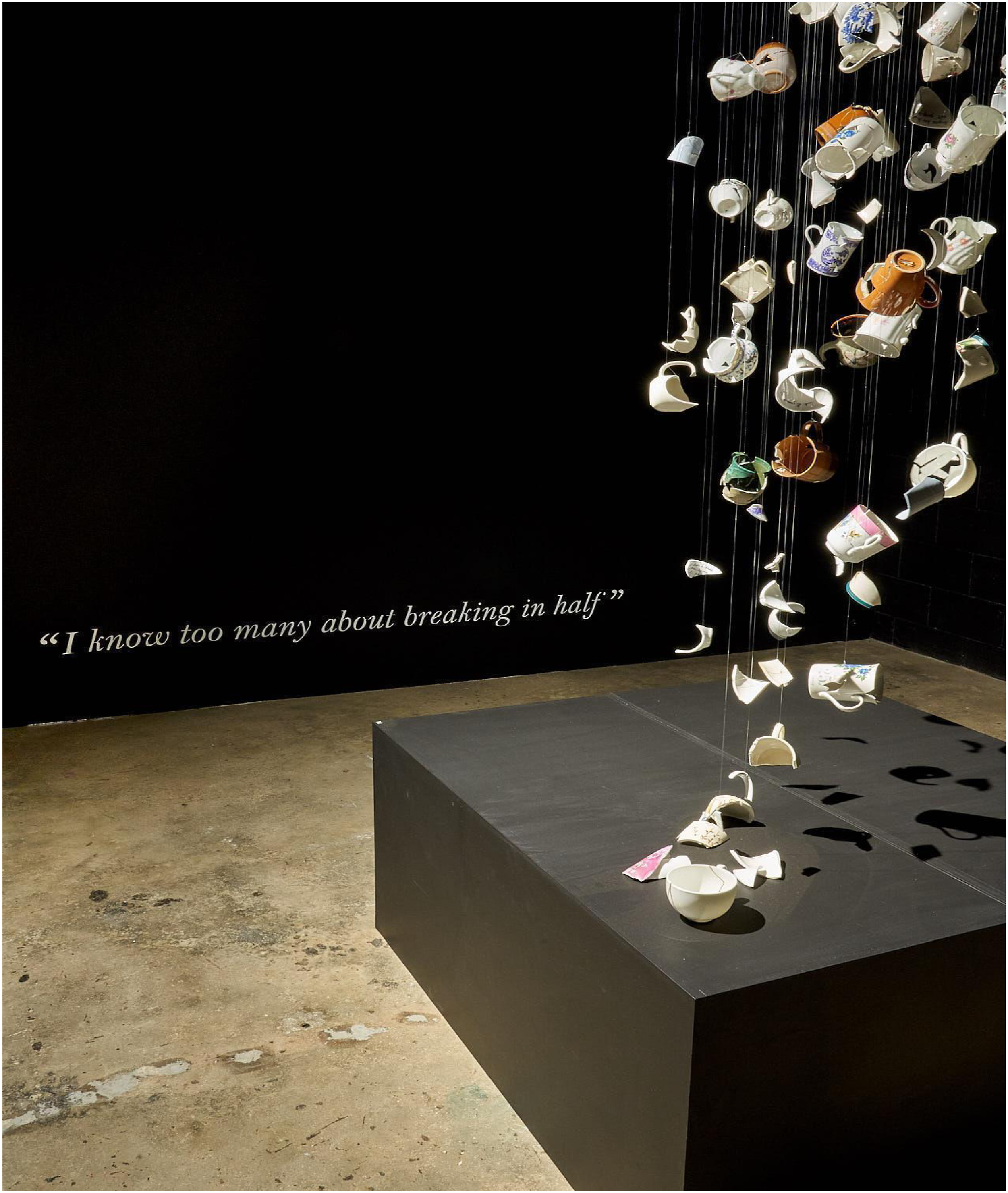
We continued in our material-based explorations towards imaginative, responsive interpretations of the research data, and increasingly internalized and responded to the data in more meta-analytic ways. Objects reflective of the frailty experience as expressed by participants and also as perceived as indicative of these experiences were located and selected, often for their aesthetic potential as much as for their direct alignment with the data. Reflected in Figure 6 (In Memory) is one such object—the clock—that needs little explanation in relation to aging. However, the experience of time as voiced by our research participants was of interest to this work. Time was perpetually relative; participants did not experience or view themselves as ‘old’, ‘aged’ or ‘frail’, in part because of their internal experience of themselves (as opposed to their external appearance signifying age), and in part because of the tendency to compare themselves to others (e.g., I can still walk without a walker, therefore, I am not frail; I can still walk with a walker and don’t use a wheelchair, therefore, I am not frail; I only use a wheelchair and am not in a ‘princess’ chair, therefore, I am not frail). Time was not an objective entity as we often refer to it (e.g., the simple question “what time is it” reflects an agreed upon measure of time external to our personal, internal experiences); time both accelerates in hindsight and is decelerates (or even freezes) in relation to aspects of the self and identity. As such, exploring time through slip casts of objects—including a simple metal clock—served multiple reflective purposes signifying responsive integration. In essence, the plaster “froze” the timepiece in pseudo preservation, and encapsulated time much as we do memories of our lives and ourselves over time. However, before long, the metal underneath the plaster slip began to rust. The rust seeped through and continued to exert an effect reminiscent of time. Thus, the irony of the work was that despite the clock being rendered inanimate in the conventional sense of no longer holding time, another marker of time emerged to signify the inevitability of change and transformation. In Memory (with study). Slip casted object, rust. (Archibald & Blines, 2019)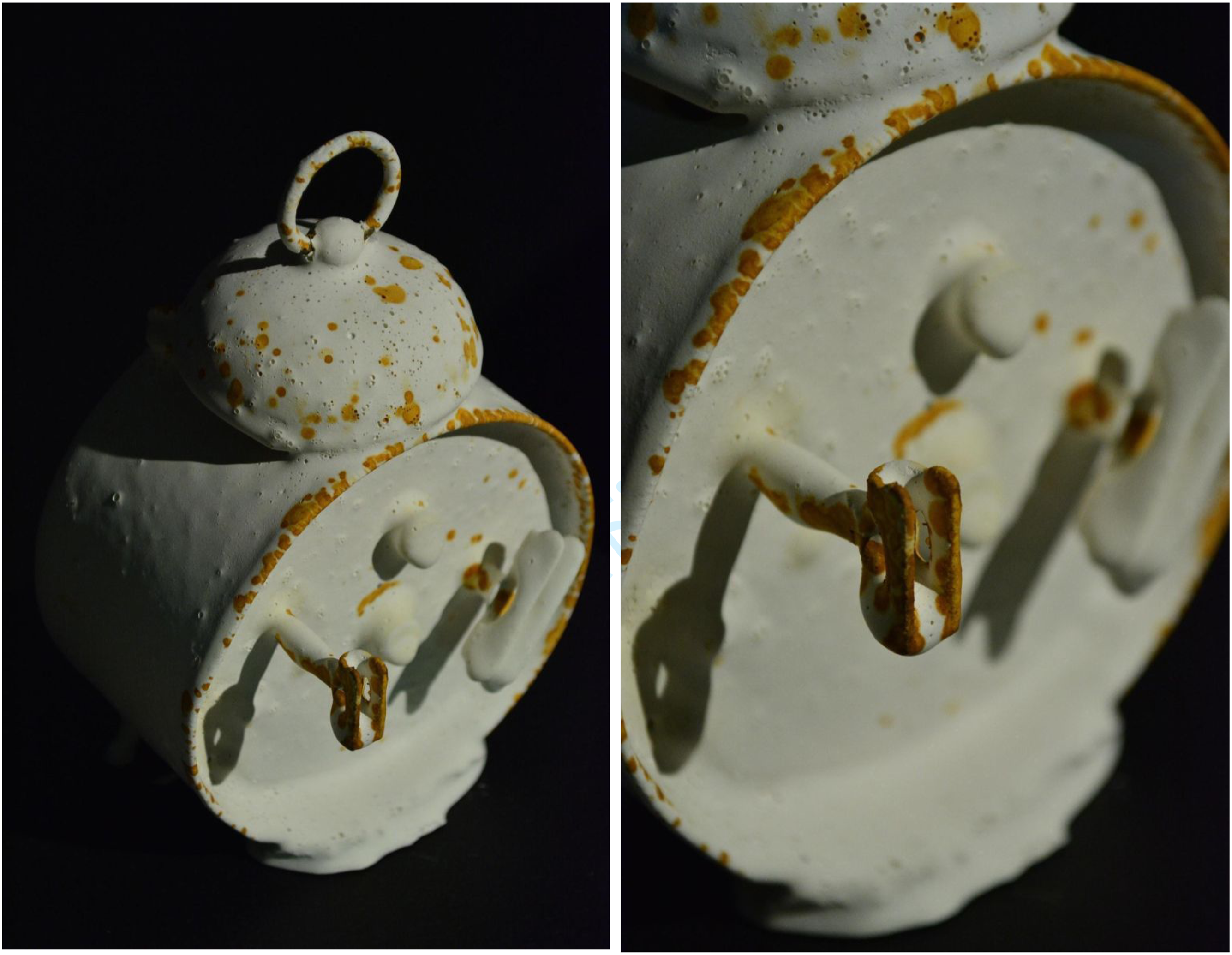
We continued to engage with a mindful and habitual practice reminiscent of crocheting or knitting, a past time which was reflected upon fondly by participating in our qualitative research sample (Archibald et al., 2020). Such a pastime, unfortunately, was lost for many individuals in our sample who faced age-related changes affecting their fine motor function. As such, we considered how we could work with this material on a large scale, in essence manifesting the magnitude of such a loss (as a valued pastime) to an individual (i.e., rather than portraying it on a smaller scale, which could diminish its impact).
Using a cumulative total of over one km of yacht rope, we collaboratively began a highly imaginative investigation that was largely explorative and materials based, based on the meta concept of contingencies in aging. Rather than working with a specific finding from the foundational research, we reflected upon how any life change, and any intervention taken towards preventing or improving a frailty related change, does not occur in isolation. Each modification and experience exists in a complex network of contingencies. This work, perhaps more than any other in the exhibition series, was created “in space”; it was created for a particular context and specific location in the gallery and was duly informed by this location. As such, this locality served as another departure point for consideration, encouraging questioning of how our life experiences and life stories are bi directionally shaped by the conditions of our living and circumstance. This reflection was of particular relevance to those older adults in our qualitative sample who had consolidated their possessions and were relocated to residential aged care facilities.
As pictured in Figures 7 and 8, “Conditional State” offers an imaginative engagement of the relationship between space and form. This relationship was well explicated in a collaborative essay written with Dr. Ash Tower—an artist and scholar exploring the constraints of knowledge systems—who was commissioned to contribute to the exhibition essay: Conditional State. Rope suspension installation. (Archibald et al., 2019). (Photo credit: Sam Roberts Photography). Conditional State. Conditional State, Rope suspension installation (study). (Archibald et al., 2019) . (Photo credit: Sam Roberts Photography).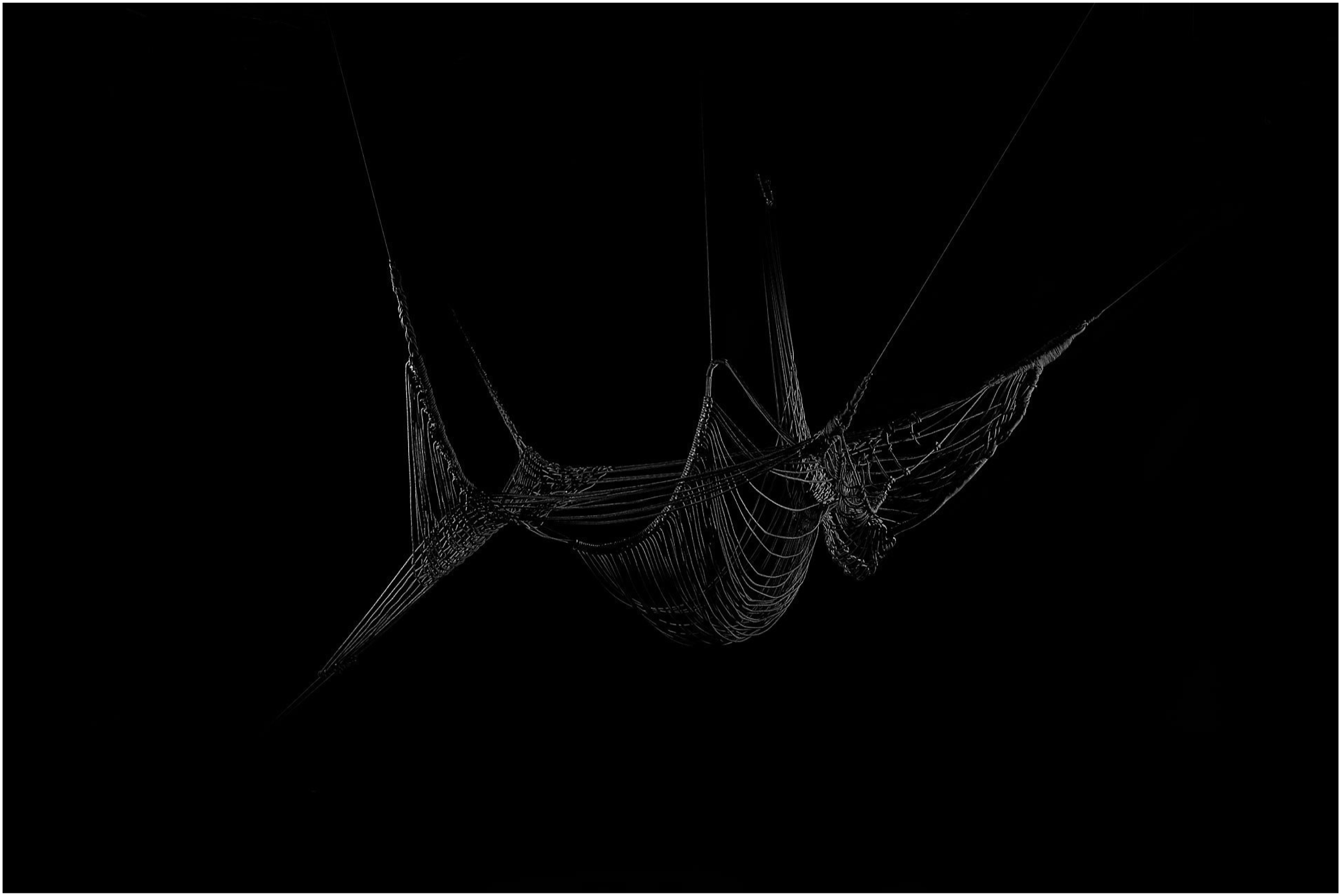
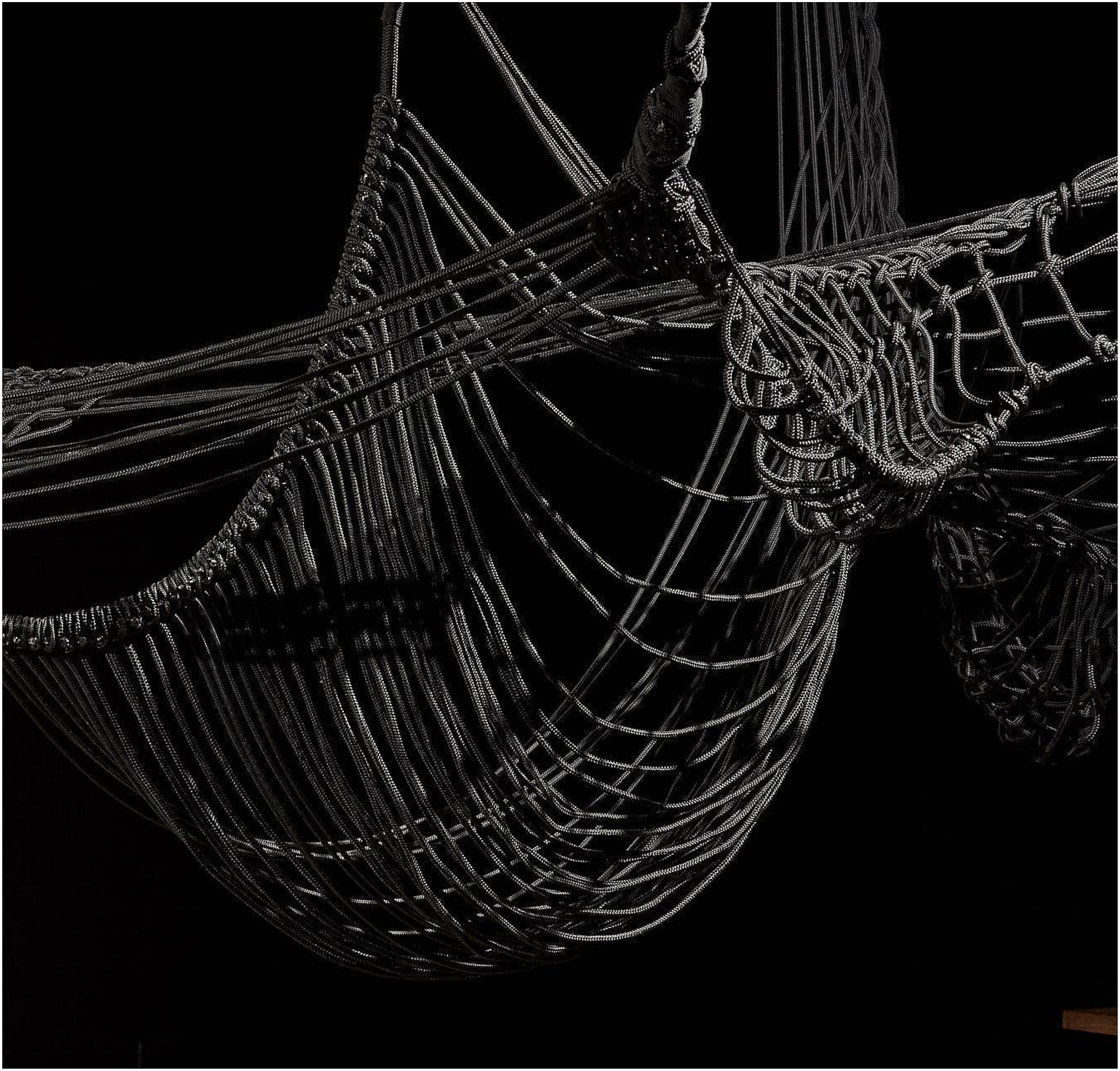
The delicate yet durable structure of conditional state heightens our awareness of the relationship between matter and space, drawing parallels to the aging body. Connections are only strengthened when tightened, each aspect reliant on the qualities of the next. Tension is offset by the delicate bowing of slackened rope; such constant downward pull goes largely unnoticed by the body until it becomes difficult to resist, and subsequently the rope draws a topography of gravity itself. Thus, the rope reflects a changing body that comprises interrelated areas of strength, deficiency and function (Tower, 2019).
The departure from the qualitative data towards a more meta inferential inquiry provided us with the opportunity to have limitless engagement with the material and emergent concepts. However, we were aware of an emergent tension that arose between such imaginative exploration and the need to have the work resonate with the viewer in the context of the exhibition motif. The departure from the data was not without risk from this perspective. However, each work in the exhibition was part of a collective, a continuum, reminiscent of the continuum of frailty encountered in our original participant sample and in the population more generally. Thus, our less representational inquiries and re-representations provided new opportunities to engage conceptually. Although the impact of such work may be less amenable to verbal expression, perhaps this was indeed the point.
Arts-Based Responsiveness: Interweaving Interpretations
Initial Conversation encouraging an arts-based response
As noted earlier, my trusted colleague and insightful arts-based researcher Dr. Nancy Gerber was gracious enough to accept an invitation to respond to the arts-based works and concepts included in this manuscript. Arts-based research is in many ways, contingent upon, and in other (certain) ways, enhanced through participant engagement with the arts-based research output. Without this engagement, we are left with little knowledge of how the work resonates (or not); and we have much to gain through the ongoing dialogue that arts-based research is often credited with “opening the space” in which to engage. However, seeking as we were to engage or mimic, to the best of our capacity, a dialogical space in the era of a global pandemic, we turned towards the digital means of Zoom video conferencing as the platform to initiate this dialogue. Hence, Dr. Gerber and my conversation began with a Zoom conversation in late January, wherein the simple yet one-dimensional act of screen sharing enabled me to showcase the images contained here with my accompanying narrative. As she expressed during our call, Dr. Geber felt struck by the progression of the work, commencing from the simple representation of the animation (Figure 3) to representations of an ever more imaginative nature. She felt inclined towards images that we do often associate, or at least, should often associate with aging—images of caring. Images of hands, holding. Fragile hands. We commented how these hands are the hands of making, and this interplay of capacity and signifiers of caring and fragility were a launch point for her interpretation.
In reflecting on this conversation, I was reminded of the opening night of “Beyond Measure” (praxis ARTSPACE, Bowden, South Australia, 11 April 2019). The work was derived through conversations with people: the work was about people, about experience, and about the humanism of aging and frailty. Yet, in creating the work, images of people were absent, with the exception of the dance on film, “A Perfect Simple”(Archibald et al., 2019), which focused on numerous people and faces under a lens of universality. The works emphasized the objects that surround us, the stories that we attribute to these objects, and how these narratives change over time and in turn, shape our internal self-narratives. I recall, amidst a good deal of feedback attesting to the resonance of the exhibition works, a comment that “this is an exhibition about frailty, but there are no people.” I came to this question with interest, since frailty is a social construction of vulnerability, rather than a state of depicting those who are frail, or not. Yet, the question stayed with me as a signifier of social perceptions held close. Further, I am reminded that while Dr. Gerber’s response might resonate with my earlier experiences, her response is largely tailored to the concepts of arts-based research rather than frailty, as presented in this manuscript. As is the case with arts-based research, however, we are often able to draw additional parallels in other areas even where they were unintended.
Initial Arts-Based Response: Dr. Nancy Gerber
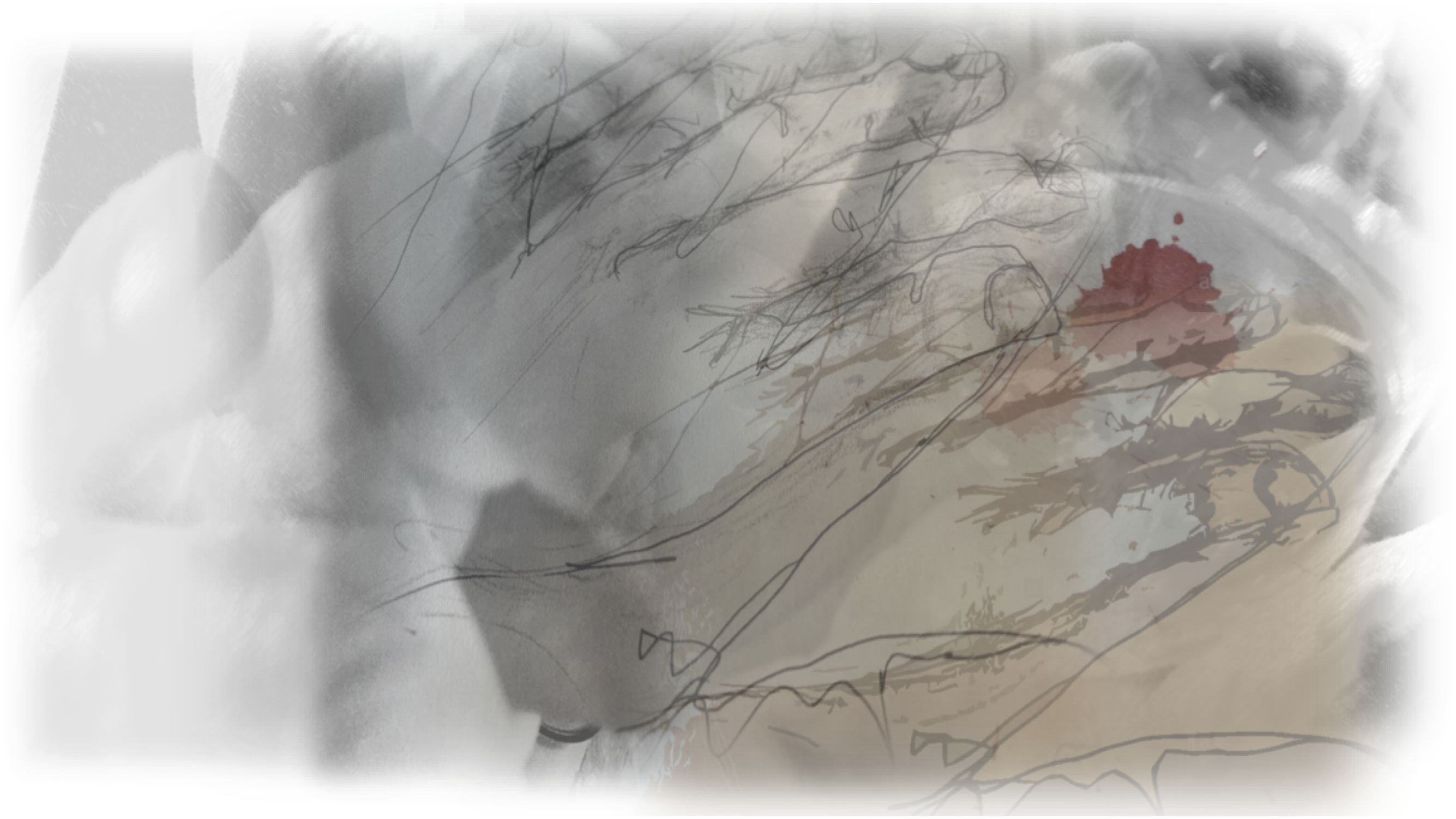
In February 2021, Dr. Gerber shared with me a slide show of five images that she created as arts-based responses. These, she communicated, resulted from playing with a combination of photographs, drawings, and digital effects. She was trying to capture the emergence of arts-based results from initial sensory, embodied and emotional data and forming these into an image. The images, particularly the early images, were like moving suggestions of form, which materialized into recognizable concepts as the images progressed. After additional play, discussion and exploration, Dr. Gerber presented a series of six images, pictured here (Figure 9–14), and an accompanying narrative. Of note, the initial images included an accent color of red, which, from a frailty perspective, suggested vitality and from a visual perspective, provided visual interest and focus. As with all other images in this manuscript, color has been changed to grey scale to accommodate publication requirements. The emergence of frailty, 1. Nancy Gerber, 2021 (Pencil, digital photography, and digital enhancement). The emergence of frailty, 2. Nancy Gerber, 2021 (Pencil, digital photography, and digital enhancement). The emergence of frailty, 3. Nancy Gerber, 2021 (Pencil, digital photography, and digital enhancement). The emergence of frailty, 4. Nancy Gerber, 2021 (Pencil, digital photography, and digital enhancement). The emergence of frailty, 5. Nancy Gerber, 2021 (Pencil, digital photography, and digital enhancement). The emergence of frailty, 6. Nancy Gerber, 2021 (Pencil, digital photography, and digital enhancement).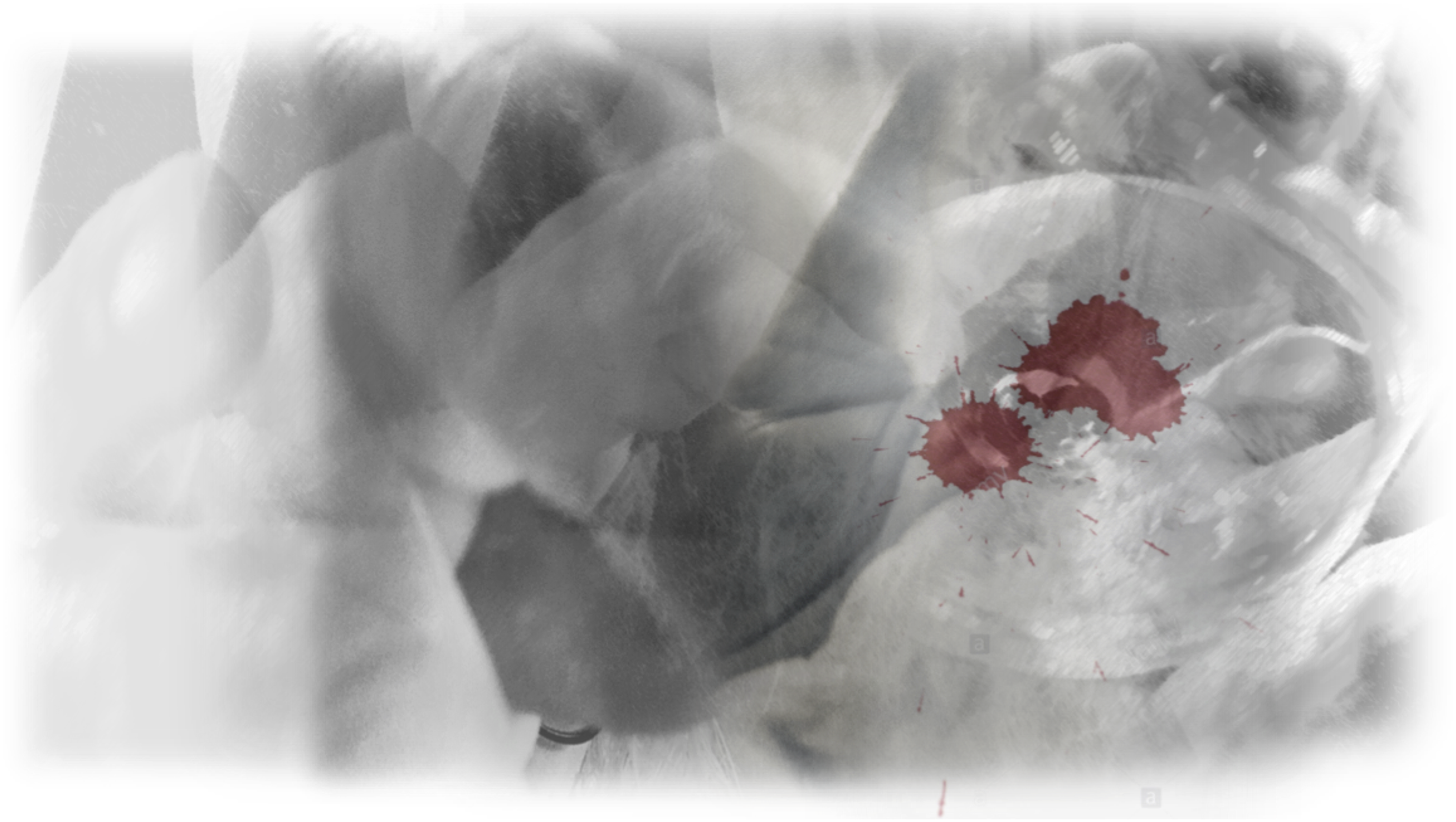
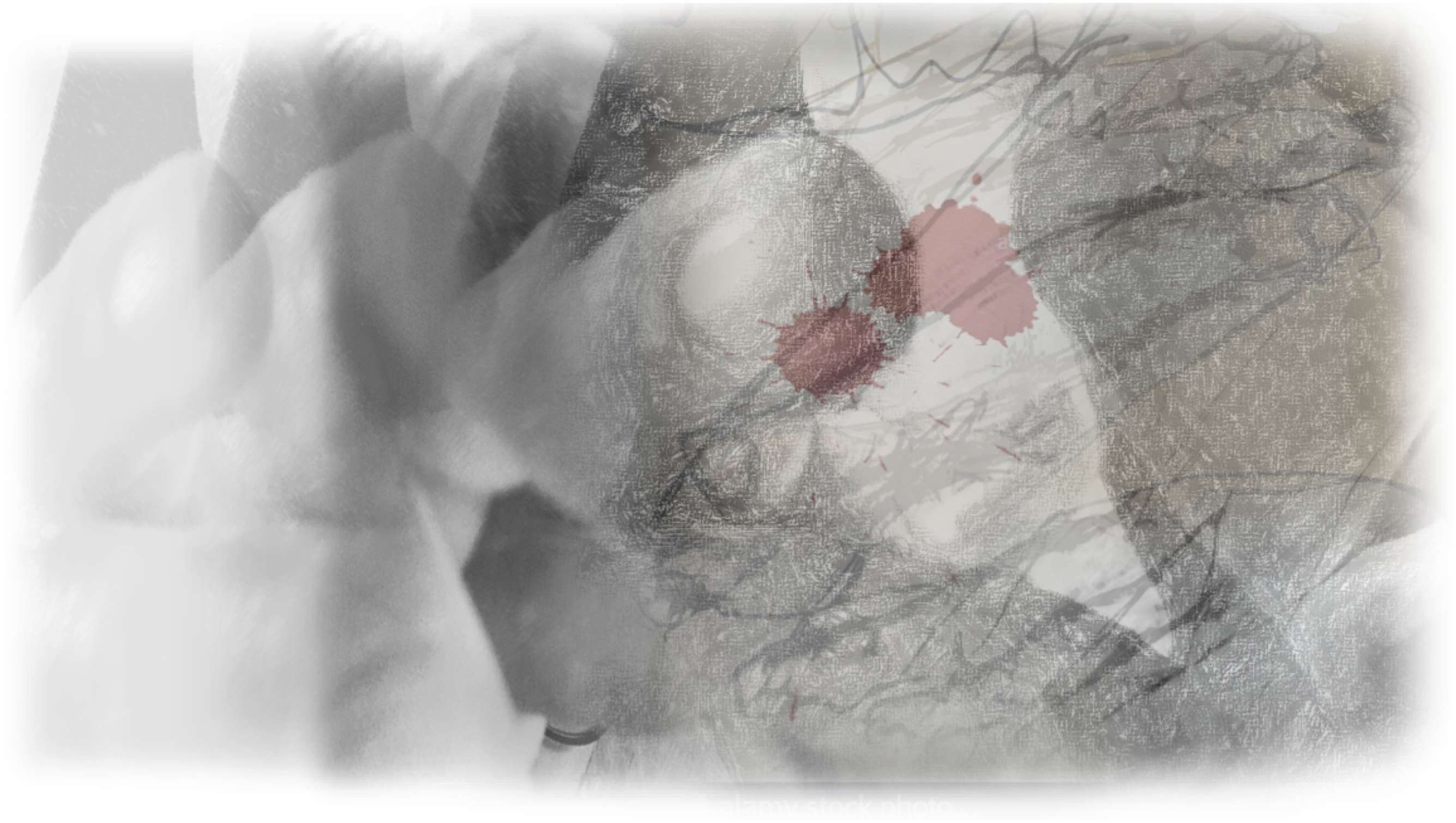
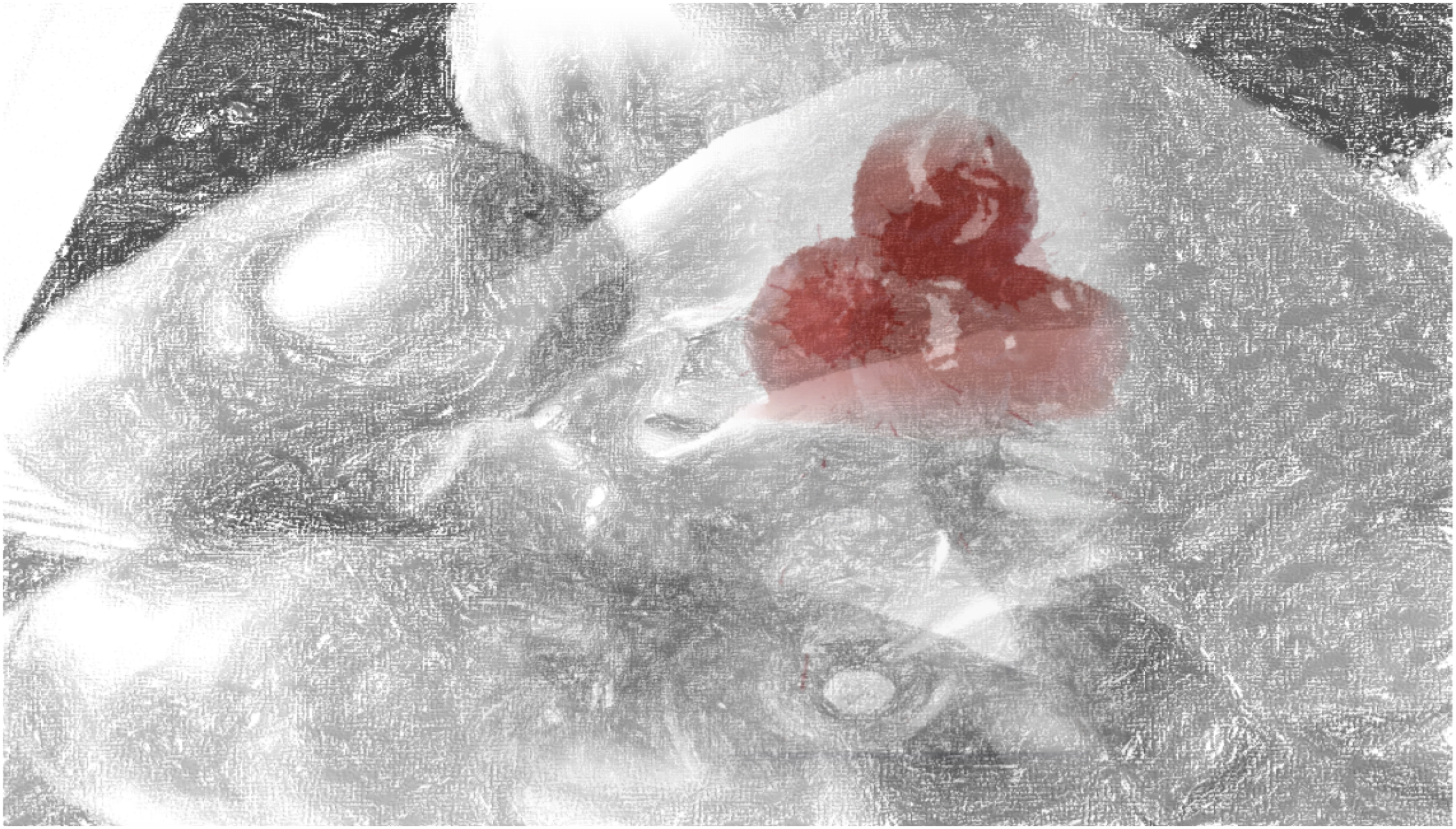
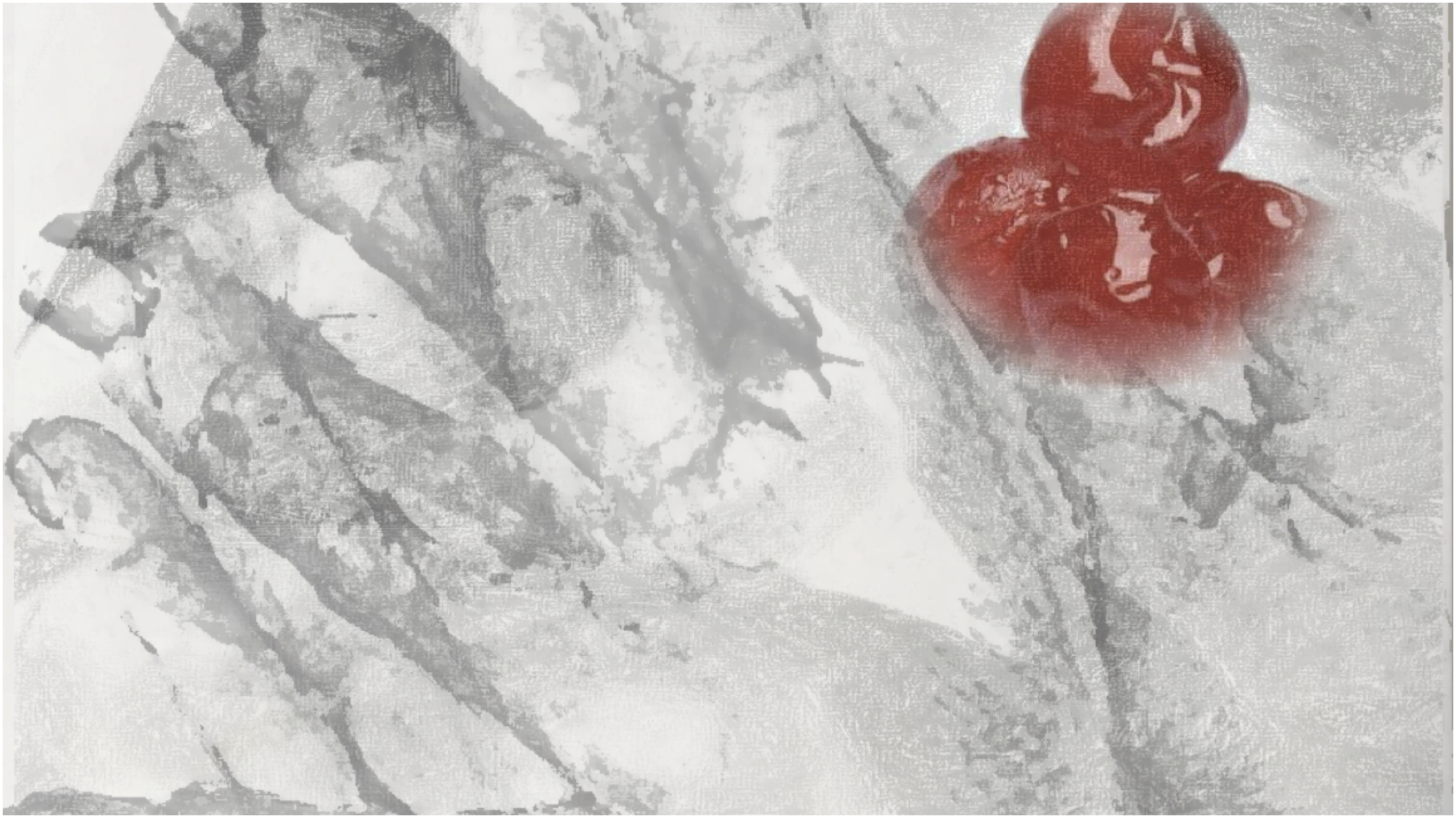
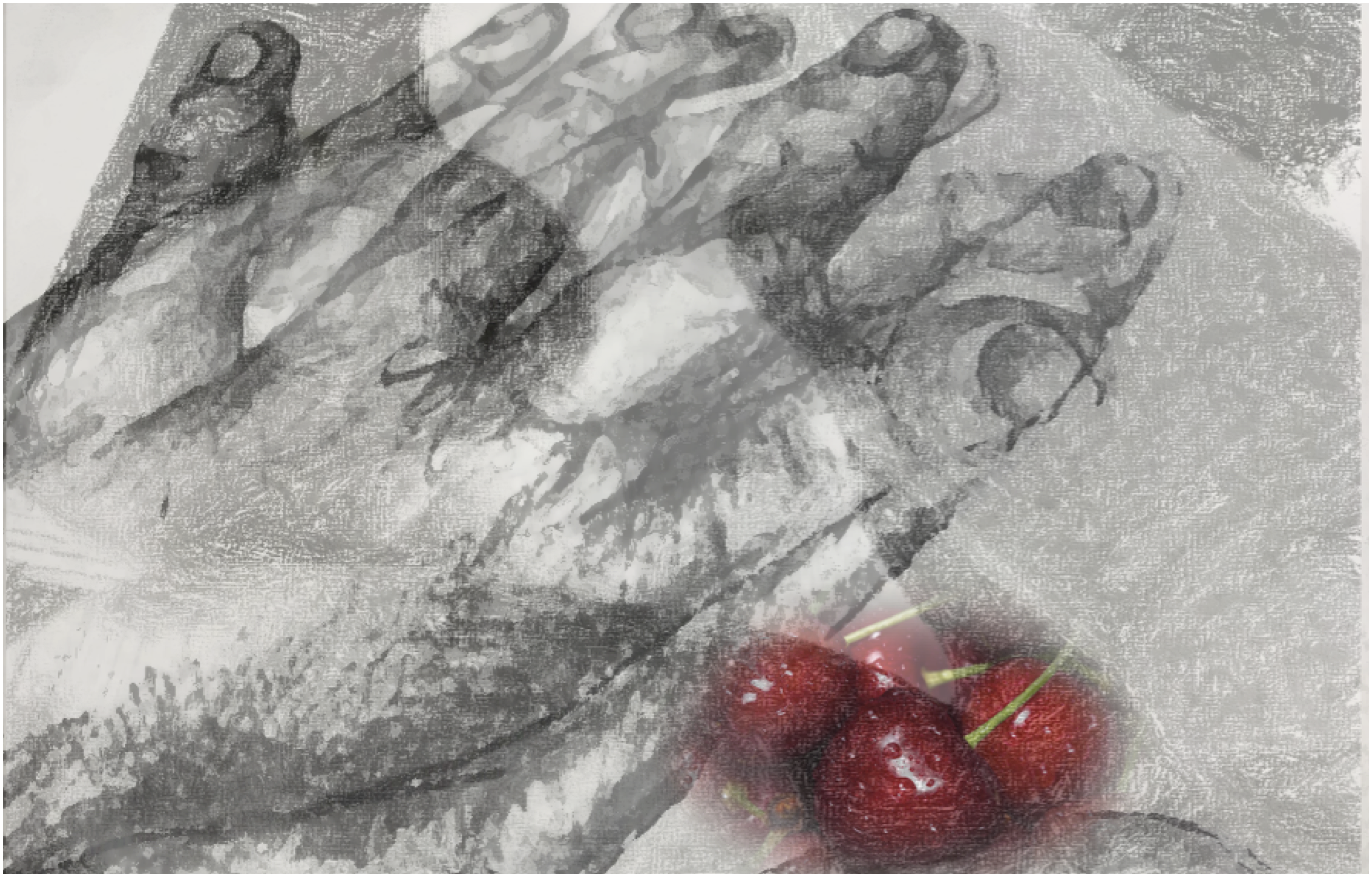
In reflecting on obscurity, I was also struck by two additional concepts pertinent to these works. The first, obscurity-to-clarity, is perhaps a tension more applicable to arts-based research in general. The obscurity-clarity tension or paradox is an experiential one; something that an arts-based researcher engaged in the process of making certainly has experience with. Qualitative researchers have discussed a similar process, wherein one moves from unknowing, a blank canvas, through the gaining clarity of the problem, and moving past a place where a “solution” seems untenable (Archibald & Blines, 2021; Barone & Eisner, 2012; Chilton, 2013; Gerber et al., 2020). This is reminiscent of what Dr. Gerber referred to in her reflection as the “fertile void” (cf. VanDusen, 1999)—a place of potential growth and productive value in creativity and in the therapeutic encounter. The associated concept of emptiness then, taken from a standpoint of materiality in reference to (Dis)Repair, is resonant: the cups themselves are vessels. In comparing Eastern and Western philosophies regarding this void, the West takes a deficit model: loss in Western society is associated with “holes: loss of time, loss of self, loss of direction, loss of control” (Biondo, 2019, p. 114). Interestingly, this cultural comparison was also present in the Kintsugi method selected for (Dis)Repair, which invited a revisiting of cultural views of aging and an embracing of what are perceived as deficits within the Western perspective. Similarly, the East is seen as embracing the void and celebrates the associated potential for growth (Biondo, 2019).
The second concept derived from obscurity was that of “shrouding” of the images, a concept most likely relevant to this arts-based research project in particular. Shrouding is a term that I did not engage with throughout the multi-year process of making of Beyond Measure (2019), or in the foundational research underpinning the exhibition (Archibald et al., 2020; Archibald et al., 2017; Archibald et al., 2021). I enjoy the play of this term in light of social perspectives of aging more generally: to conceal from view (experiences of aging as something hidden), to wrap/dress or prepare the body (for burial). In the context of this arts-based response, shrouding, as a means of obscuring and uncovering, reflects an aesthetic. Shrouding can be interpreted as something kept secret. In the context of research methodology, the concept of shrouding is relevant to what can be afforded by engagement with a particular research methodology: arts-based research can bring to the surface understandings not otherwise accessible or expressible. In other words, arts-based research can uncover knowledge of experience otherwise shrouded by the use, preference, or dominance of a particular methodology.
Conclusion
Arts-based research, when understood on a continuum of representation and imagination, allows us more nuanced consideration of relationships to other forms of research data, such as qualitative data of lived experience. Such consideration is paramount as the arts are looked towards not only as a first-hand engagement with form (researcher-practitioner) but increasingly as a tool to encourage other outcomes such as awareness or knowledge of an under recognized topic or finding as is often the case with arts-based knowledge translation in the health and social sciences. Through the use of case examples in the context of frailty and healthy aging, I offer examples of how these varying relationships can take form, and encourage playful discovery and diverse engagement with materials which catalyze further inquiry. Working and re-working materials in dialogue with underpinning data and corresponding reflective narratives provides new access points for qualitative and mixed methods research data, and alternative representatives—varying by departure and imagination from one another and from any predetermined direction. New directions are uncovered through the process of making, and enable new understandings of the relationship of the self to the arts-based research practice or praxis, as well as new understandings of the inquiry topic to materialize. I conclude this manuscript with the reflections of Dr. Gerber (2021) who speaks to the materialization, immersion and resonance that we hope to achieve through arts-based work:
I love to fall into the soft, fuzzy, beautiful unknown of almost-born ideas ready to be birthed through marks, movements, sounds and dialogues knowing they will grow into forms, pictures, and insights. Touching, sensing, falling into, rolling around in imaginative and arts-based ideata begins with the attentiveness to and high regard for the aesthetic as a valued form of knowledge; along with the embrace, tolerance, and trust in the creative precipice of nothingness, ambiguity, and anticipation. Arts-based researchers revel in exploring all dimensions of knowledge including pre-verbal, sensory, embodied, and imaginal ways of being and knowing that allow us to touch the invisible yet most essential and powerful aspects of the human experience. As we immerse ourselves in these sensory, embodied, and emotional processes we begin to collect fragments, whispers, flashes of ideata, which we acknowledge, value and begin to intuit, gather, and document in our art genres. Staying with, following, and resonating with those experiences, while interacting with others, and dialoguing with these ideata results in the emergence of new ideas, clarifications, insights, and images, sounds, or actions. These ideata, typically dismissed by more traditional researchers, are embraced, nurtured and gently birthed into a new form and existence adding understanding, empathy, and emotional connection to the phenomenon under study. In healthcare research, this connection with the multiple spiritual, psychological, and intergenerational dimensions and frailty of the human experience is essential to holistically understand the source, context, and relief from suffering.
I encourage new or ongoing consideration of how narratives, and those of research data related to arts-based research, continue to evolve in a continued process of telling and re-telling through our collective acts of re-engagement despite the dynamic and temporal diversity of our lives and experiences.
Footnotes
Acknowledgments
Much of the artwork shown here reflects the collaborative efforts undertook with South Australia based multimedia artist John Blines. Conditional State reflects further collaboration with South Australia based artist Amber Cronin. This work was supported by a Inspiring South Australia Regional Collaboration Grant.
Declaration of Conflicting Interests
The author(s) declared no potential conflicts of interest with respect to the research, authorship, and/or publication of this article.
Funding
The author(s) received no financial support for the research, authorship, and/or publication of this article.
