




Abstract
One year after beginning a large-scale research inquiry into how young people construct their identities I became ill and subsequently underwent abdominal surgery which triggered an early menopause. The process which was experienced as creatively bruising called to be written as “Artful Autoethnography” using visual images and poetry to tell a “vulnerable, evocative and therapeutic” story of illness, menopause, and their subject positions in intersecting relations of power. The process which was experienced as disempowering called to be performed as an act of resistance and activism. This performance ethnography is in line with the call for qualitative inquirers to move beyond strict methodological boundaries. In particular, the voice of activism in this performance is in the space between data (human voice and visual art pieces) and theory. To this end, and in resisting stratifying institutional/medical discourse, the performance attempts to create a space for a merger of ethnography and activism in public/private life.
Setting the scene: Performative Autoethnography as Artful and Activist
When I think of writing autoethnographically, I immediately return to that seminal work of Carolyn Ellis, The Ethnographic I. She defines autoethnography as an autobiographical genre of writing and research that displays multiply layered stories “affected by history and social structure which are dialectically revealed through actions, feelings, thoughts and language” (Ellis, 2004, p. 38). Ellis talks about the back and forth gaze of the autoethnographer as “they look through an ethnographic wide angle lens, focusing outward on social and cultural aspects of their personal experience; then…inward, exposing a vulnerable self that is moved by and may move through, refract and resist cultural interpretations” (p. 37).
One year after beginning a large-scale research inquiry into how young people construct their identities (see O’ Grady, 2018) I became ill and subsequently underwent abdominal surgery which triggered an early menopause. The process which was experienced as creatively bruising called to be written as “Artful Autoethnography” using visual images and poetry to tell a “vulnerable, evocative and therapeutic” (Ellis, 2004, p. 135) story of illness, menopause, and their subject positions in intersecting relations of power. The process which was experienced as disempowering called to be performed as an act of resistance and activism. Denzin (2018a, p. 49) reminds us that performance is used subversively as a strategy for awakening critical consciousness and moves us to take democratic action in the face of injustice. Madison’s (2012, p. 7) critical, performative autoethnography appealed here. She says performative autoethnography begins with an ethical responsibility to address suffering within an historical moment and with a commitment to perform acts of activism that advance the causes of human rights. These performances create spaces where “unjust systems…can be identified and interrogated” (Madison, 2010, p. 159) and hopeful futures imagined (Spry, 2016, p. 97). The post-oophorectomy event re-constructed here crystalizes in short vignettes as an encounter with doctor, and the performance moves outward to sites where memory, history, and structure intersect in an effort to interrupt hegemonic practices and structures of meaning (Denzin, 2018b, p. 37). Time collapses, drawing memories into the present, recreating experience “through fresh tropes with new tools” (Gannon, 2018, p. 180).
This performance ethnography is in line with the call for qualitative inquirers to move beyond strict methodological boundaries and representational thinking to experimentalism and new ontoepistemological practices (Grant, 2018, p. 107). Performance sensitive ways of knowing and being produce situated understandings that de-center the subject. I do not intend in this performance to use voice to signal the “true” presence of the speaker as was traditionally represented in qualitative inquiry. Influenced by Lisa Mazzei’s “Voice without Organs” (2013, p. 732), I see voice as “produced in an enactment among research-data-participants-theory-analysis.” In particular, the voice of activism in this performance is in the space between data (human voice and visual art pieces) and theory. To that end, it employs a variety of textual techniques; personal narrative, meditative visualizations; academic/expository readings; multiple voices; poetry and blank but not empty spaces of text. The juxtaposition of these writing/textual styles is also an attempt to get readers to make associations across categorical, discursive, historical, and stylistic boundaries. Juxtaposition is an aesthetic device inviting inconsistencies, ambiguities, and ambivalence, foregrounding the fact that there will always be “unspoken themes” that cannot be interrogated (Ellsworth, 1997, p. 13).
Because some of my reflective art work, which I engaged in during the early stages of the study, made visible physical disease of which I was not consciously aware, I include it here as part of the rhizomatic writing process. Re-membered moments from a creative sharing of research ideas in 2009 1 are recounted alongside narratives of illness, menopause, and their subject positions. In this performance, I consider the art pieces and bodies of writing, as active participants in the subject’s becoming as they too produce effects, thereby altering situations (Monforte, 2018).
“U-tear-us-Out” is an exhibit by Angela Elkins, 2 using sculpture and digital images to question the commonality of hysterectomies in America. It opened 5.15.09 and can be seen on HERS Gallery www.hersfoundation.com/ I include some of that work here—in a different sequence (figures 2., 3., 4. and 7.), because of its powerful political impact and its emotional content. Lines of flight are found through poetry. Changes in font style and size are random. The researcher throws her “coat to the wind”.
Deleuze uses the concept body-without-organs as a means of rhizomatically expressing freedom, of releasing the potential of the body from the constraints of habit, character, and affect (Gale & Wyatt, 2008, p. 13–16). This concept takes on further significance here. At the end of the performance, a body-without-reproductive
And so, to the performance…
Actor 1: The doctor is doing his final round of St Monica’s ward. A nurse accompanies him, leading the way down through the long sanitized corridor. They stop at bed number 3: the gynecologist looks at the chart, smiles, and in a hushed professional tone, says “goodbye and safe home. You have been a very good patient.” Lying on a protected mattress, in a lather of sweat, the patient smiles.
Actor 0: How prophetic was that whole creative research day back in January (2009); colleagues working together to hold open spaces and create mo(ve)ments in our research journeys. Catching thematic threads, throwing them out sometimes tentatively, sometimes with glorious abandon; narrative, story, image, text, unpicking the collective clothe, allowing it to unravel into a chaotic palimpsest of conflicting discourses, competing for visibility…
{Pause}
…Silence filled the space as we looked at the montage we co-created. I noticed that my threads obscured much of the color and texture of the loose under pelt, in some cases totally eclipsing more realist narrative threads. ‘Truth’, ‘core/false self’, ‘coherence’, ‘unity’, were concealed under a blanket of postmodern percepts; ‘storied self’, ‘multiplicity’, ‘fluidity’, etc. A deep sense of shame coursed through my body. Catching my breath, I rushed to explain: My last study was based on realist assumptions but this time I am struggling to challenge those…sorry, I seem to have covered over others’ work…
Actor 2: The cuckoo raids the nest pushing subtlety, nuance, bodily knowing to the margins, splitting mind and body, deaf to all the other bird songs.
Actor 0: We used guided meditation to help identify the tools and resources we might need at this point in our research. The meditation began with gentle panpipes carrying us into a thick, lush fragrant forest, redolent with eucalyptus and pine...
{Pause}
… It is a familiar place, one to which I have travelled many times when lost. I move tentatively towards an opening in the forest anticipating the arrival of a wise guide. A figure emerges from the translucent green foliage and moves towards the centre to greet me. Wearing a white blood-stained coat, he holds out a lump of fleshy meat, stops and stares momentarily before passing it to me and disappearing into the thicket of undergrowth on my left. The forest begins to close in on itself, blocking out the shafts of early summer light. Pulse racing, I struggle to keep my balance while holding this “tool for the journey”…
Actor 1: “The fibroid was the size of an eight-month old foetus,” the doctor gravely informed the patient, on his first round, the day after the operation. “You lost a lot of blood…it was a tough procedure.”
Actor 0: We were later invited by our facilitator to draw, sculpt, image in some way, the meditation experience. Each of us slowly moved towards the table to choose our art materials. A picture in a magazine of a knight in armour was discarded by one of my colleagues. I leaned forward to claim it. Arms laden, I returned to my work station to begin. With some curiosity, I carefully cut my knight into shape and pasted him firmly on the heavier display card, musing about King Arthur and the Knights of the Round Table, The Hero’s Journey, Jung’s archetypal Warrior, my own early years of reading the world as mythological drama. This figure is universal, strong, fearless, stoic, knows no obstacles. My arm stretched out with purpose to select a tube of red paint. Grasping it in my hand I squeezed it until the knight’s groin area carried an anthill of crimson oil. My body swam in nausea and confusion.
“Menstrual blood?” The facilitator asked tentatively.
Actor 2: The bleeding body is unspeakable, shame the consequence of slippage in practices of concealment…the male gaze (Ussher, 2006, p. 143).
Actor 0: It is extraordinary that I have not been able to find this image of the Knight in armour in spite of fine-combing my image-bank. When I told a colleague it had disappeared, she replied in a characteristically thought-provoking way, “Perhaps you have now shed the Knight!”
Actor 2: The knight is capable, effective, single-minded, bold, competitive. His body is numb. He is the polar opposite to the passive, invisible female child forever moving shamefully into puberty. In the university organization The Knight is fed and feeds itself on neo-liberal regimes of regulation. Through the regulation of time, space and movements his body grows harder and more sedimented, shaped to serve the organization. “The new panopticism in the new managerialist worksites works more or less invisibly through multiple eyes at every level” (Davies & Gannon, 2006, p. 62).
Actor 0: Everywhere around me I see examples of the discursive construction of identities, practices, meanings and knowledge. Institutionally fabricated systems of surveillance seem so thinly veiled; policy technologies with their panoptic gaze appear to determine care of the self and the emergence of docile bodies. (Gale & Wyatt, 2008, p. 47).
{Pause}
This knight has blood on his groin. There is nowhere to hide.
Actor 1: “Did you remove the ovaries?” The forty-seven-year-old female patient asked sheepishly. “Yes,” replied the gynecologist, “the ovaries, the uterus and the cervix, a complete cleanout.” ‘Fig. 2. U-tear-us-Out’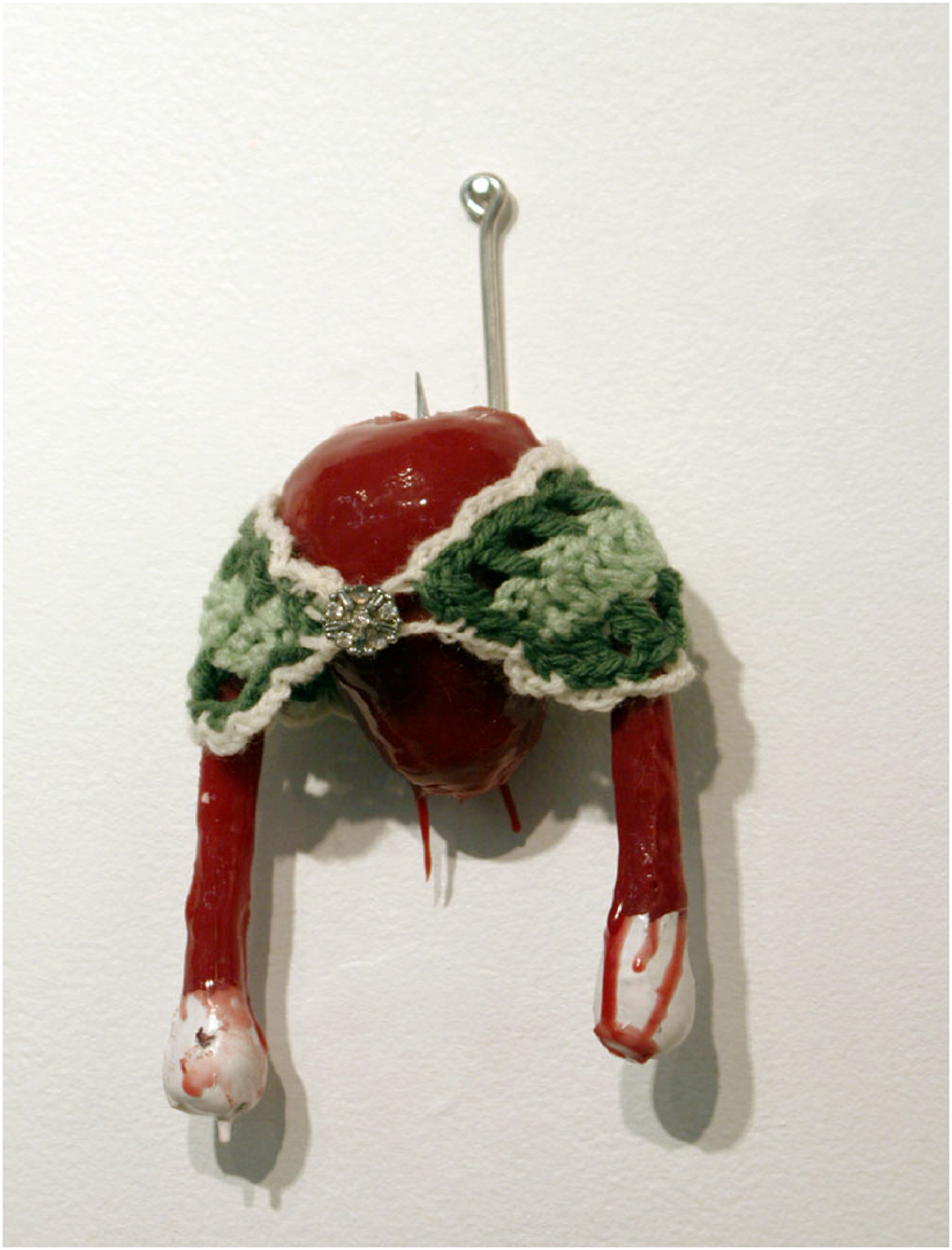
Actor 2: Induced menopause occurs if the ovaries are surgically removed (by bilateral oophorectomy).
{Pause}
Although hysterectomy is frequently performed for fibroids (benign tumor-like growths inside the uterus, itself made of muscle and connective tissue), conservative options in treatment are available by doctors who are trained and skilled at alternatives. It is well documented in medical literature that myomectomy (surgical removal of fibroids with reconstruction of the uterus) has been performed for over a century (HERS-Hysterectomy Educational Resources and Services Foundation www.hersfoundation.com).
Actor 1: “Was there a reason for the ovaries to be removed?” She asked hesitantly.
After a moment of silence, the doctor responded: “Remember you signed a form to give me permission to remove the ovaries. I thought it best to go ahead with that procedure.” ‘Fig. 3. U-tear-us-Out’ ‘Fig. 4. U-tear-us-Out’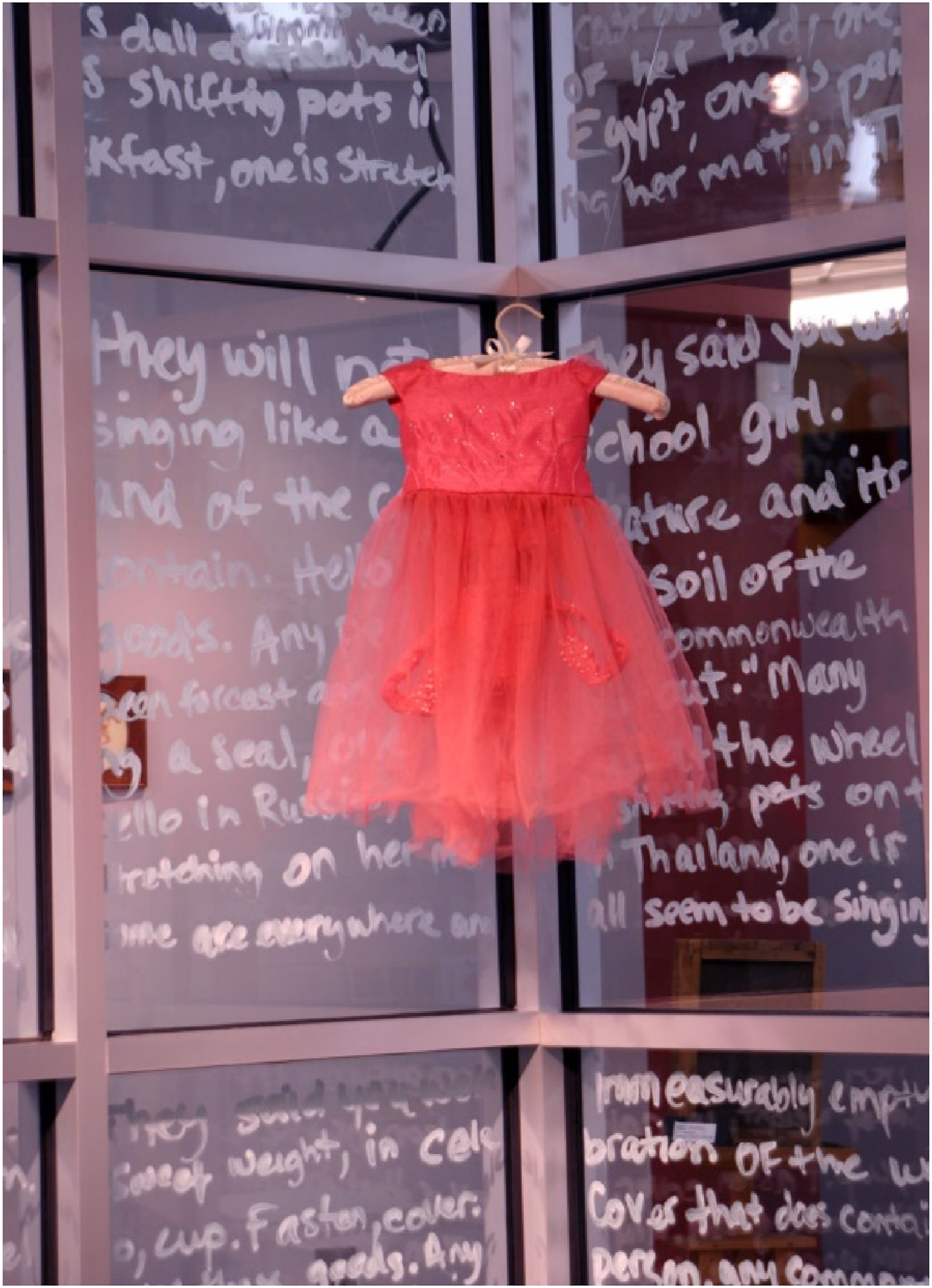
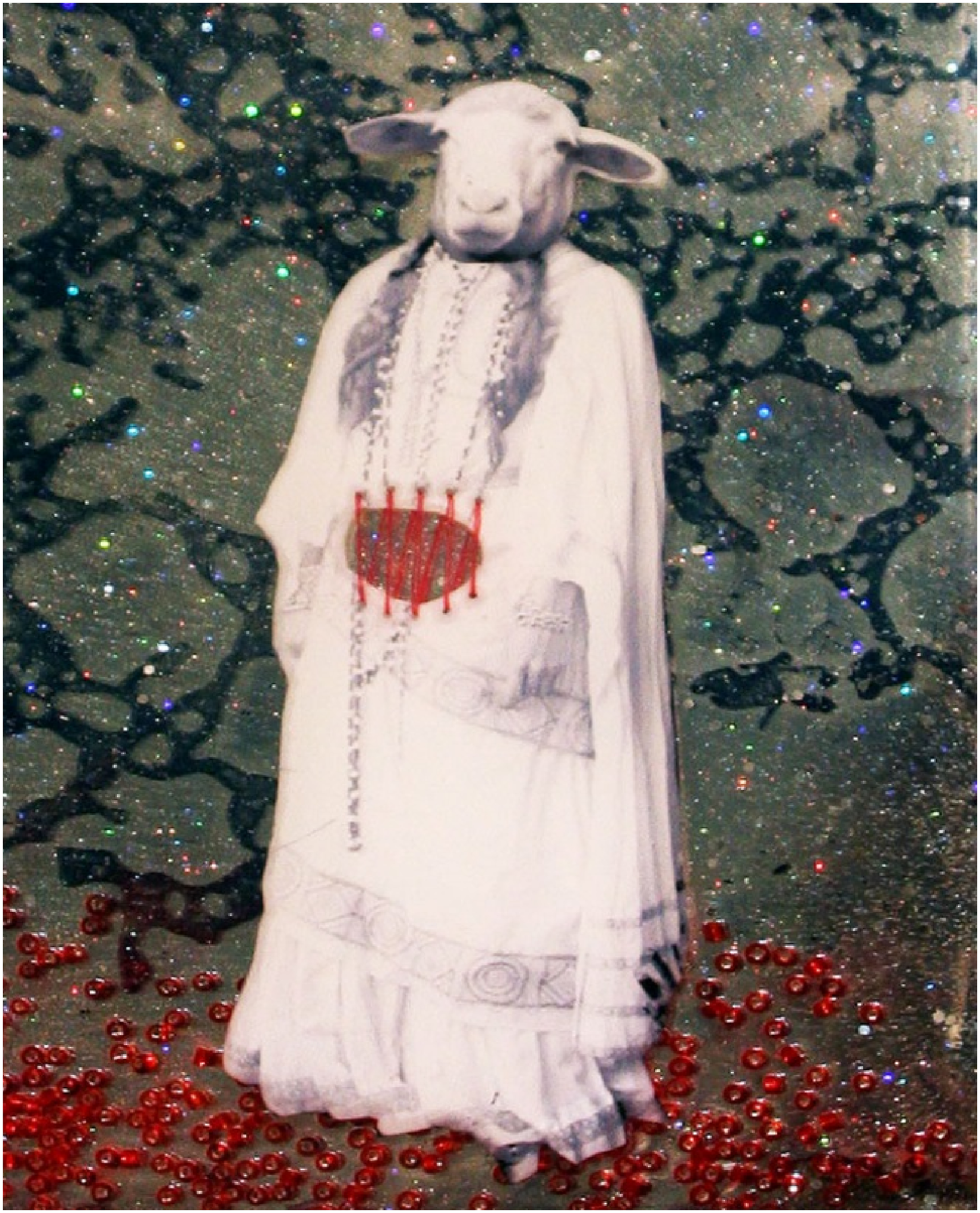
If needed! If needed! She remained mute.
{Pause}
Actor 2: Mammy knows best, teacher knows best, priest knows best, doctor knows best.
{Pause}
Foucault’s “docile bodies”: trained, shaped, inscribed.
{Pause}
HERS’ mandate is to provide information about the alternatives to and consequences of hysterectomy that are requisite to informed consent. This information is not made available to patients.
{Pause}
Power imbalance between head/body, doctor/patient.
Actor 2: It is our culture’s positioning of the fecund body as a site of danger and debilitation with its shameful seepage that leads to a split between a woman and her body and the subjection of the unruly body to rigorous discipline and control (Ussher, 2006, p. 145).
Actor 1: Re-membering in the now dis-membered body, she hides the ‘monstrous feminine’, the shameful seepage, from the doctor’s professional gaze.
{Pause} The Good Girl/Being Good The Good Girl knows her place. She is no trouble; you’d hardly know she was there. Light presence on the landscape, silent, invisible even to herself. ‘Careful, if you cry they won’t love you!’ She was announced into the world as… a baby boy Yes, it was all worth it; the long months of incarceration in the sanatorium in Cork; the dreariness of St. Enda’s ward; the long hours, watching the movement of the sun, wondering how your first born baby girl was doing at home. Tuberculosis back again, brought on by the second pregnancy. She was announced a second time, as… a baby girl. Your husband’s disappointment must have been bitter. You couldn’t look at her yourself for two months. How could she ever live her father’s dream of her. Every gentle movement, gurgle, glance, reminded him of his aching loss. She learnt to hide.
Actor 2: The issue of power in healthcare is complex and, like Sibbett (2004, p. 2), can be experienced as liminal in its ambiguity. Whilst wishing to have more control, we can simultaneously be happy to trust in the “fiduciary relationship” with doctors, based on a perception of their “legitimate”, “expert,” and “referent” power.
{Pause}
If we can negotiate and resist the regimes of knowledge which position the fecund body as site of danger, disease or debilitation, we can resist the “myth of the monstrous feminine” and the medicalized regulation of the female body (Ussher, 2006, p. 162).
Actor 1: Dreams crowd her fitful sleep. She writes:
1.2.2008 I am falling through the floor of an old building. As I tumble towards the next story, the floor starts to cave in. Struggling to find something to hold on to, my grip loosens. The edifice of the building begins to crumble. I wake in a lather of sweat.
4.2.2008 In a boat, near the cliffs on the west end of my father’s homeplace, Clare Island, I battle with the skipper to try to take control at the helm. The seas are high and the boat is caught in a dangerous undercurrent circling around precariously close to the jutting rocks of the cliff. I wake panting.
Actor 2: The experience of disintegration is like that of vertigo; a sense of groundlessness and the absence of anything holding one in place and anchoring one’s actions. Frank (1995) uses the metaphor of “narrative wreckage” to characterize the experience of loss of grounding after a traumatic event.
Actor 1: While in her waking life she moved through her day with apparent efficiency, her dreams gave voice to a story of disorientation resulting in high levels of body anxiety. Patient’s Self-Portrait entitled Neutered Woman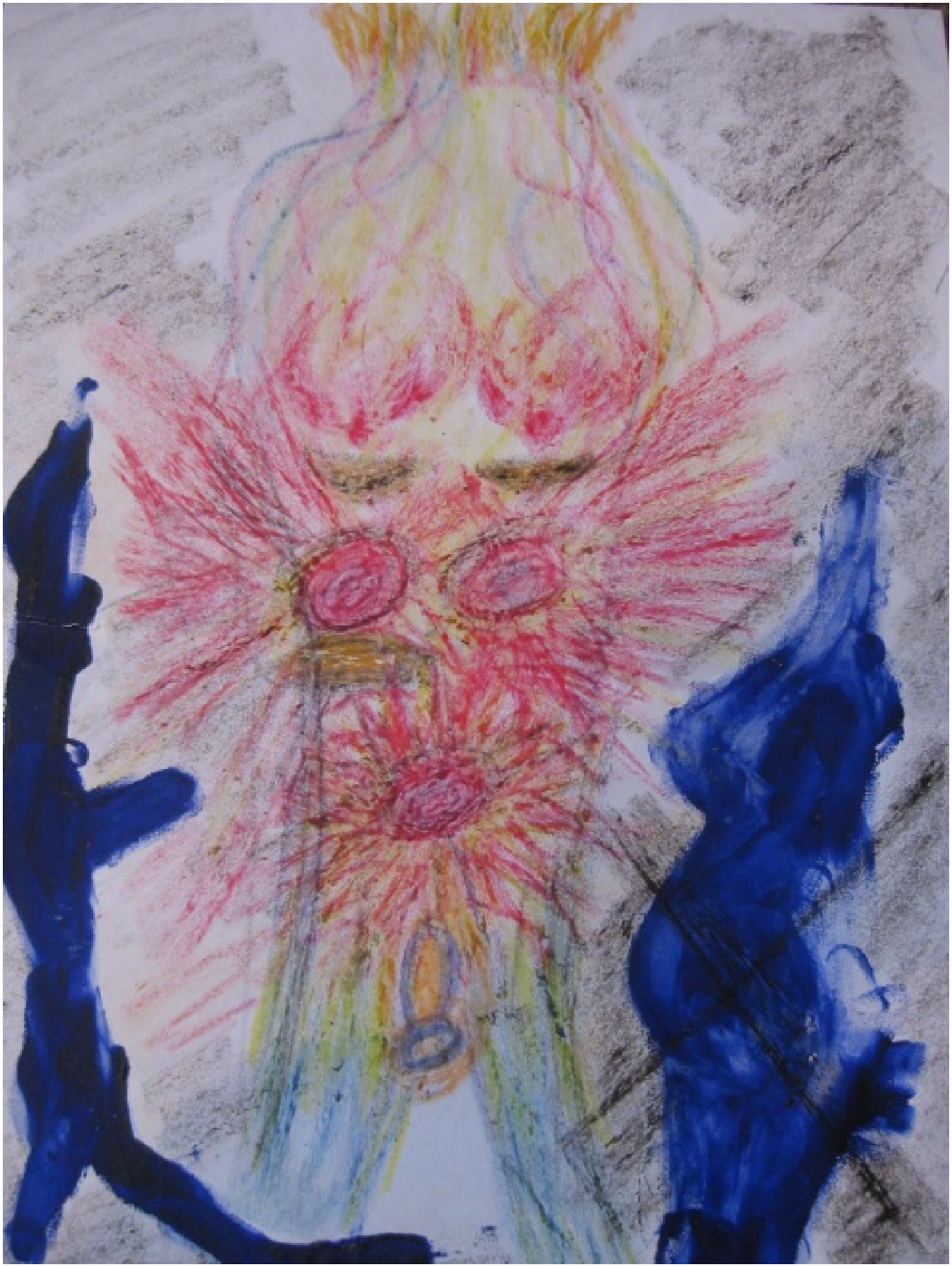
She wrote: Neutered Woman Violated, goods stolen, empty gaping space, sad, sad body no longer numb no longer invisible to itself - a burning emblazoned ‘calling out’ for what? No more child bearing, infertile arid ground, scorched in a furnace of absence that never knew presence. No more carnality, scorched in a furnace of absence that never knew presence. ‘She didn’t know what she had ‘till it was gone’ In the deep, deep emptiness, sadness, grief rests a new opening to song…
Actor 2: The menopause brings senility and atrophy of the flesh, a disease of deficiency and decay? In the cultural imagination mid-life signifies the onset of ageing and is thus framed in a discourse of decline.
{Pause}
Each stage of a woman’s life is organized around what Goddess cultures called the blood mysteries: menarche, (the first monthly flow of blood); childbirth which is accompanied by blood from birthing, and menopause, when a woman’s wise blood remains inside to give her wisdom (Savage, 2009).
{Pause}
Painting by Drogheda artist, Rosemary Murray, entitled The Seventh Stage of Woman, dated 1991, opens a line of flight out of the discourse of decline. ‘The Seventh Stage of Woman’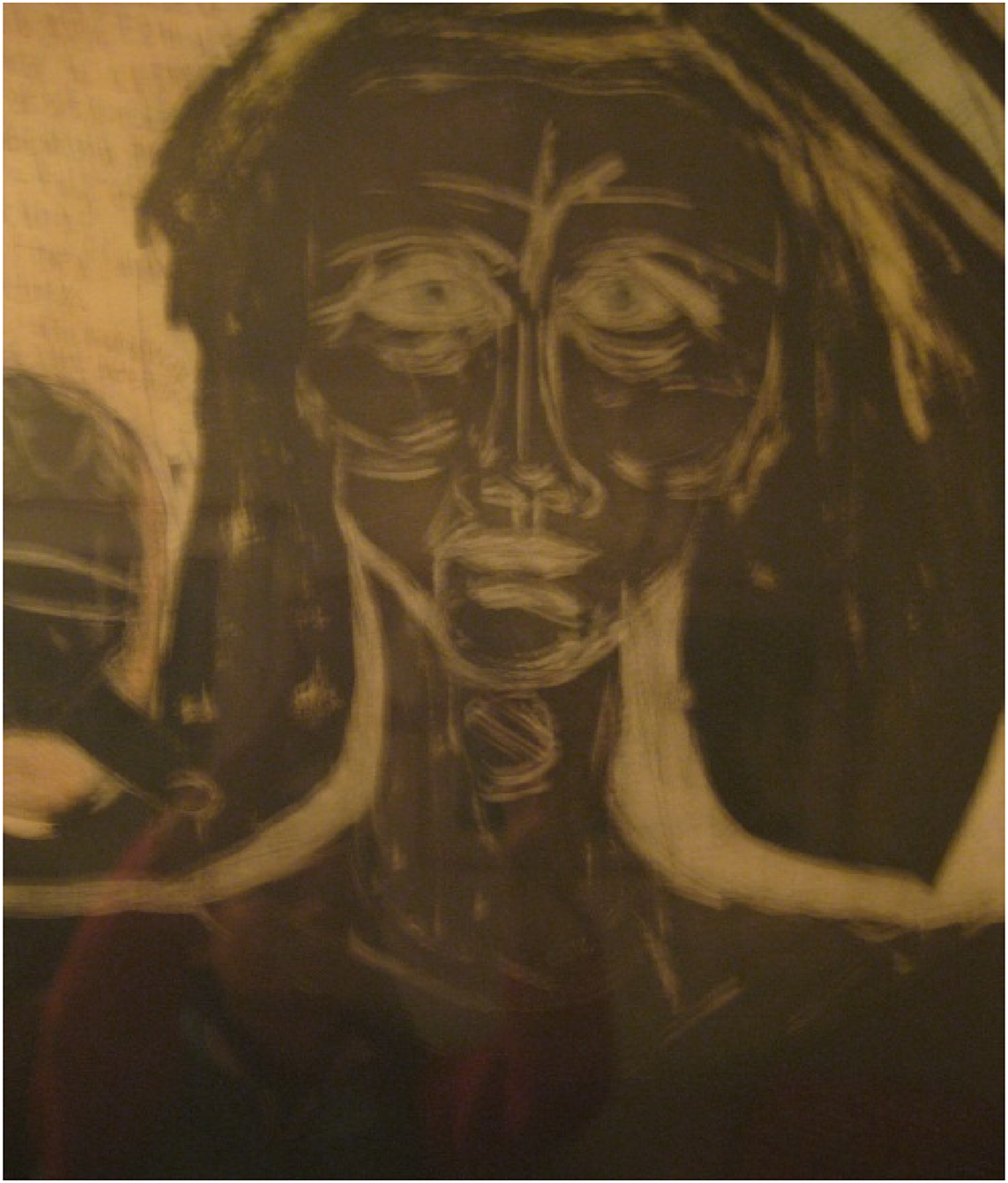
Actor 1: The writing on the left of the image reads: And so the final stage – life after the menopause? No more children, maybe no more womb Perhaps the best stage of all… Back on terms with yourself So free and still female But also so free as a person Without the stereotypical bonds of childbearing and All it entails – full of your own strange Eventful history! And facing everything. I grow old, I grow old, I shall do whatever the Hell I like! I will be sans nothing.
Actor 2: Drawing on Deleuze’s contemplation of the feminine, Gargett (2002, p. 36) writes: Becoming-woman disengages the segments/constraints of the molar identity in order to reinvent and be able to use other particles, flows, speeds and intensities. Becoming-woman involves a series of processes/movements, outside/beyond identity and subjectivity, fragmenting and freeing up lines of flight, releasing multiple sexes that identity has subsumed under the One.
Actor 1: Body without Reproductive Organs (BwRO)… ‘Fig. 7. U-tear-us-Out’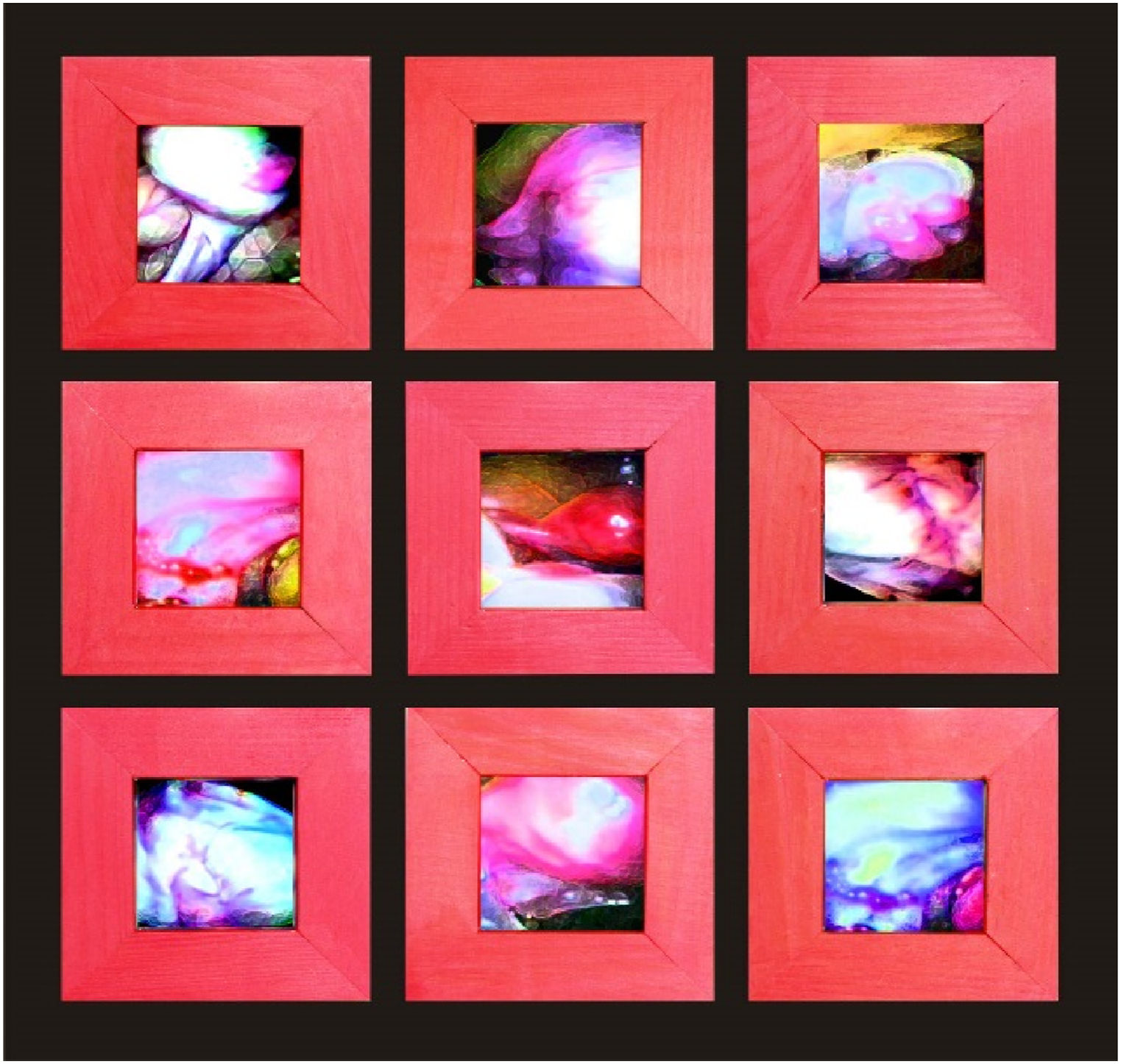
…decolonizing the female category.
3. And so…
The creative performance of the autoethnographic event—underscoring the medicalization of the menopause; the power differential between doctor/patient, the adult/child binary thinking; the effects of the panoptic gaze at work in an institution and creative lines of flight “beyond” inscription—seeks completion in the response of an audience. Denzin (2018b, p. 162–183) believes the value of politicized theory, of activist art and critical performance ethnography, lies in the ability to initiate a continuing process of social criticism in the public sphere. Like Grant (2018, p. 108) however, I have learnt to my cost and benefit that autoethnographic performances are never unproblematically “heard” or experienced in line with authorial intent. Having performed this research at the third European Congress of Qualitative Inquiry (2019) and again in the Gender Studies Department in the University of Malta that same year, I continue to be struck by the diversity of responses, all shaped by historical, contextual, and discursive circumstances. Interpretations focused on the stereotypically gendered male doctor and female patient; the “weakness” of the patient as opposed to imbalance of power; newer medical gynecological interventions inspired by Artificial Intelligence that are now available; the effectiveness of juxtaposed image and word that catch one’s breath; the affective dimension of anger, sadness, confusion as the performance connects with personal experiences nested in cultural, social injustices; the power of the Catholic Church in Ireland during the 1960s and 1970s in the institutional affairs of family, education, health; and more…
I agree with Grant (2018, p. 113) when he says that these varied responses “are essential in the dialectical business of storying life towards greater levels of social justice in constantly shifting interpretive communities.” This autoethnography strives to continue to unsettle fixed notions of subjectivity/identity, to trouble taken-for-granted knowledge and to locate the writing in the “between,” a productive and uncertain space, a textual body open to re-inscription.
Footnotes
Declaration of Conflicting Interests
The author(s) declared no potential conflicts of interest with respect to the research, authorship, and/or publication of this article.
Funding
The author(s) received no financial support for the research, authorship, and/or publication of this article.
Notes
Author Biography
 .
.