



Abstract
How do populists visually represent “the people”? While the literature on populism has tended to focus on text- and language-based documents, such as speeches, policies, and party documents to consider how populists characterize “the people,” in this article I undertake a systematic visual content analysis to consider how populist leaders on either side of the ideological spectrum visually represent “the people” in images from their official Instagram accounts (N = 432). Comparing the cases of Donald Trump on the populist right and Bernie Sanders on the populist left, I code for the majority gender, race, and age of “the people” in each image, and supplement this with a discussion of the depictions of these categories. I find that Trump’s images of “the people” are significantly more homogenous across all categories—specifically more white, more masculine, and with less young people—than Sanders’, and situate these findings in the context of the literature on the differences between left and right populism. This article contributes to the study of populist communication by highlighting the role of images in representing “the people”; analyzing how left and right populists do this differently; and developing a method for measuring the demographic characteristics of “the people” in populists’ images that can be used in future studies. In doing so, it seeks to push the literature forward by highlighting that images are not something “extra” to be studied in populist communication, but rather are a central battleground for the construction of populist identities.
Introduction
It is widely accepted that populism is premised upon a perceived divide between “the people” and “the elite,” with populist leaders claiming that they alone speak in the name of the former group (Mudde 2017; Müller 2016). Many scholars studying populism across the globe have examined the ways in which “the people” are characterized by populists, undertaking analyses of text- and language-based documents such as speeches, policies, and party materials (Bonikowski and Gidron 2016; De Cleen et al. 2020; Hawkins et al. 2019). But how are “the people” depicted by populist leaders in their visual communication—that is, in images? This remains a surprisingly underexplored question, especially given that it is widely acknowledged that we live in a “visual age” (Bleiker 2018: 1) of politics in which the circulation of images is central to political meaning-making, and as there is a growing understanding that visuals and aesthetics are important to populists in their appeal to “the people” versus “the elite” (Pels 2003).
To answer this question, I present a systematic comparative visual content analysis of how “the people” are portrayed by a populist leader on either side of the ideological spectrum in the United States: Donald Trump on the right, and Bernie Sanders on the left. Drawing on a sample of images of “the people” from these leaders’ official Instagram accounts from a six-month period in 2019 (N = 432), I code for three salient demographic characteristics—the majority race, gender, and age group in each image—then supplement this with a discussion of the depictions of these categories across each populists’ image corpus. I find that Trump’s images of “the people” are significantly more homogenous across all categories—specifically more white, more masculine, and with less young people—than Sanders’, and situate these findings in the context of the literature on the differences between left and right populism. As such, this article contributes to the study of populist communication by (1) highlighting the role of images in representing “the people”; (2) analyzing how left and right populists do this differently; and (3) developing a methodological approach for measuring the demographic characteristics of “the people” in populists’ images that can be used in future studies. In doing so, it seeks to push the literature forward by highlighting that images are not something “extra” to be studied in populist communication, but rather are a central battleground for the construction of populist identities.
Theory and Hypotheses
What is populism? Although the question has been asked many times, recent work on the topic broadly agrees that populism revolves around the central divide between “the people” and “the elite.” This view is shared across the three central conceptual approaches to the topic in the academic literature, despite their important ontological and methodological differences (Moffitt 2020): the ideational approach, which sees populism as a type of ideology or worldview (Mudde 2017; Hawkins et al. 2019); the strategic approach, which sees populism as an electoral strategy or mode of political organization (Weyland 2017); and the discursive-performative approach, which sees populism as a type of discourse, performance, mode of communication or political style (Laclau 2005; Ostiguy 2017). In this article, I focus on the first half of that binary—“the people,” given that “the people’ is both the central audience of populists, as well as the subject that populists attempt to “render-present” (Moffitt 2016: 43)—and adopt the latter theoretical approach.
The discursive-performative understanding of populism is useful here for three reasons. First, it not only acknowledges the divide between “the people” and “the elite” as being core to populism, but also recognizes the construction of “the people” as being constitutive of populism itself (Laclau 2005). In other words, populism is not just about representing a pre-existing political entity called “the people”—it is about constructing a particular vision of “the people” as a collective political subject, which can be done with words, but also with images. Second, as the discursive-performative approach has made clear, performances of populism are not just about what is said or written, but also what is symbolically mediated through performance (Ostiguy and Moffitt 2021). This might include embodiment (in the mode of aesthetic self-representation), or for present purposes, visual communication. Third, while not disregarding the obvious importance of analyzing text- or language-based materials like policies and party platforms, the discursive-performative approach methodologically highlights the value of analyzing a wider range of materials, from fashion choices to online memes to Instagram photos (Ostiguy 2017). 1
Nonetheless, the bulk of work in this tradition still focuses on written and spoken texts. Indeed, while Reinemann et al. (2017: 13) note that “populism is mostly reflected in the oral, written, and visual communication of individual politicians, parties [and] social movements,” it is often only the first two of these forms of communication that receive serious analytical attention. Visuals tend to be either ignored or treated as an addendum to more familiar material such as speeches, party platforms, media releases, and the like.
However, there is a small literature that has begun to pay attention to the visual aspects of populism. Several studies, for example, have examined the visual propaganda of populist radical right parties or movements in Europe by examining the semiotic aspects and “visual narratives” of their campaign posters (Adami 2020; Doerr 2017; Freistein and Gadinger 2020; Richardson and Colombo 2013) or their in-house publications (Albertazzi 2007), while Critical Discourse Analysts have long embraced multi-modality in their analyses of populism (Wodak 2015; Wodak and Forchtner 2014). Others have specifically turned their attention towards the use of visuals by populist actors online. For example, Hokka and Nelimarkka (2020) have used “visual big data” methods to track the circulation of what they call “national-populist images” from Finland on Facebook. Other studies have focused on populists’ use of Instagram, including studies of Brazilian President Jair Bolsonaro (Mendonça and Caetano 2021), Donald Trump (Dobkiewicz 2019), and several Spanish populist parties such as Vox and Podemos (Turnbull-Dugarte 2019; Sampietro and Sánchez-Castillo 2020).
This article adds to the literature on the visual dimensions of populism in three ways. First, I offer a theoretical contribution by considering the important role of images in populist communication, specifically arguing that images provide an insight into the way that populists construct their core subjects that may not be as clearly indicated by their words. In line with this, I do not ask the broad question of “how does populist x use Instagram?,” as some other scholars have done, but rather hone in on the vital issue of their visual construction of “the people,” given the centrality of the concept in populism. 2 Second, I do not just focus on one ideological variant of populism, but rather put forward a comparative perspective by analyzing the differences between left and right populists’ visual depictions of “the people.” Accordingly, I draw on the extant theoretical literature on the differences between left and right forms of populism in terms of how they linguistically represent “the people” to derive several hypotheses about how they might visually represent “the people,” focusing on three salient demographic categories that are often invoked in the literature: race, gender, and age. 3 Third, unlike the close readings of a small number of images offered by several authors noted above, I examine a larger N of images, and offer a methodology for measuring the characteristics of “the people” in populists’ images that can be adopted by other scholars.
What does the literature tell us we can expect in terms of the differences in “the people’s” race, age, and gender dimensions between left and right populism? In terms of race, I expect that the visual representations of “the people” of right populists will be more racially homogenous than those of left populists (hypothesis 1). This is because right populism is often associated with nativism (De Cleen 2017), which Mudde defines as “an ideology, which holds that states should be inhabited exclusively by members of the native group (the nation) and that nonnative elements (persons and ideas) are fundamentally threatening to the homogenous nation-state” (Mudde 2007: 19). In comparison, left populism is often characterized as somewhat more heterogeneous than right populism (Mouffe 2018; Katsambekis 2020), and sometimes even described as “inclusionary” in terms of its characterization of “the people,” as in the literature on populism in Latin America (Mudde and Rovira Kaltwasser 2012).
In terms of gender, I expect that the visual representations of “the people” of right populists will feature more people of more stereotypically masculine appearance than those of left populists (hypothesis 2). This is because a growing body of evidence on the gendered dimensions of populism has shown that populist right parties are often Männerparteien, or “men’s parties” (Erzeel and Rashkova 2017; Mudde 2007); that traditional gender roles, misogyny, and heteronormativity are often core to the populist right’s ideology (Löffler, Luyt, and Starck 2020); and that there is a “gender gap” between populist right and populist left party voters in Europe (Spierings and Zaslove 2017).
In terms of age, I expect that the visual representations of “the people” of left populists will skew younger than those of right populists (hypothesis 3). Although there is less explicit work in the literature upon which to develop hypotheses concerning differences between left and right populism when it comes to age (as compared to race and gender), it is fair to claim that many recent left populist movements, at least in the European and US contexts—from the “Movements of the Squares” that birthed Podemos in Spain and SYRIZA in Greece, to Occupy Wall Street and the strong youth support of Bernie Sanders—have been associated with younger people (Andretta and della Porta 2015; Aslanidis 2016; della Porta 2019). Taking these demographic categories together, my overarching hypothesis is that visual representations of “the people” of left populists will be more diverse than those of right populists (hypothesis 4).
Cases, Data, and Methods
Case Selection
The United States in 2019 provided a useful environment for comparing left and right populism given that there was a right populist in the White House, President Donald Trump, and one of the leading candidates for the Democratic Presidential nomination was a left populist, Bernie Sanders. Although Joseph Biden won the Democratic Party nomination for the 2020 Presidential election (and indeed, the election itself), Sanders was Biden’s main competitor in the primaries, both in terms of national polling and in the number of primary races won. This is a relatively unique situation and is thus worthy of analysis: while somewhat similar right versus left populist presidential match-ups have occurred in France (Marine Le Pen vs. Jean-Luc Mélenchon), Peru (Keiko Fujimori vs. Pedro Castillo) and Chile (José Antonio Kast vs. Gabriel Boric) in recent years, these remain exceptions to the rule—if populists run for president, they are usually up against “mainstream” candidates. The comparison of Trump and Sanders as populists from either end of the ideological spectrum is common in the academic literature (Groshek and Koc-Michalska 2017; Jensen and Bang 2017; Hawkins and Rovira Kaltwasser 2018; Lacatus 2019; Oliver and Rahn 2016; Schoor 2017). In line with the discursive-performative approach to populism outlined earlier, each candidate has clearly and consistently utilized the populist style, and indeed have been identified as exemplary cases of left and right populism by Moffitt (2020). While I do not claim here that the Republican or Democratic parties are populist parties, I do claim, following Lee (2020), that Trump and Sanders were populist candidates. Beyond this, Trump and Sanders were also chosen on the basis of their prominence and influence on other populist leaders internationally: Trump’s success saw his “script” become something of a model for other populist right leaders across the globe (Casullo, 2017), while Sanders established institutional links with left populist initiatives in Europe (Progressive International, 2018). As such, while we might not expect their visual depictions of “the people” to be strictly imitated in other settings, it is fair to say that their broader communication strategies are at very least likely to be influential.
Methods
Data were collected manually by a research assistant and me from both Trump and Sanders’ official Instagram accounts (@realdonaldtrump and @berniesanders). I chose Instagram over other potential sources of visual data (such as posters, party websites, or message boards) for several reasons. First, Instagram offers a large N of images; second, Instagram images are distributed through verified accounts, meaning they have some kind of “official” imprimatur from the campaign; and third, Instagram images are easily trackable over time given the way they are archived on the site, meaning I could ensure the data sets were temporally directly comparable. Drawing visual data from Instagram also has several benefits over other social media platforms. While platforms such as Twitter, Snapchat, and Facebook also include options for image posting, this is Instagram’s primary purpose (Leaver, Highfield, and Abidin 2020). 4 Beyond this, there are good empirical reasons to draw on Instagram images as data when examining US presidential politics: in the 2016 campaign, every presidential primary candidate used Instagram as a campaign tool to “shape their image, humanize the campaign, foster a sense of unity, communicate with voters about issues, and engage with followers” (Towner and Muñoz 2018: 488); it was the second-most used social network in terms of frequency of posts by candidates after Facebook (Bossetta 2018: 481); and Trump and Sanders were among its highest frequency users in this cohort (Muñoz and Towner 2017: 298).
Instagram offers politicians three major advantages as a political communication tool. First, it allows them the ability to engage in image management and visual political marketing, giving them a way to broadcast visuals that can shape the perception of their persona and highlight their specific strengths (Lalancette and Raynauld, 2019). Second, it offers a way to “pursue personalization strategies” (Farkas and Bene 2021: 125) through the sharing of images, foregrounding the individual candidate, rather than their party, which is obviously useful in a presidential campaign, thus extending an “invitation into their campaign tents” (Eldin 2016: 252) of sorts. Third, Instagram allows politicians to convey a sense of intimacy, closeness, and availability by purporting to offer users an “inside” look into their life—a way of projecting the “self” outside traditional modes of political communication (Muñoz and Towner 2017). It is important to note that Instagram’s political usage tends to be more about broadcasting than mobilization (Filimonov et al. 2016)—that is, about sharing visual content in a top-down manner, rather than using the platform as a way of actively organizing followers. 5
Yet how does one go about analyzing the political use of Instagram images? Existing studies have focused on variables around perception, image management, and interactivity (Russmann and Svensson 2016); visual motifs (Liebhart and Bernhardt 2017); aspects of visual grammar including gaze, size of the frame, perspective, spatial distribution, salience, and framing (Dobkiewicz 2019; Sampietro and Sánchez-Castillo 2020); or the general structure and composition of images and captions (Lalancette and Raynauld 2019; Farkas and Bene 2021). The methodological strategy of this article is more straightforward than these studies. While these works often attempt to capture the broad characteristics of a politician’s Instagram use, thus having to account for a vast array of variables, my question here is far narrower and more focused: “how do populists visually represent ‘the people?’", with the sample of images drawn from Instagram. As such, I use a systematic visual content analysis (Bleiker 2015; Bleiker et al. 2013), a method which allows us to empirically track the frequency with which certain characteristics of “the people” appear in Trump and Sanders’ Instagram posts. I then compare the two in terms of the overall percentages of these characteristics as a share of their image corpuses, in order to identify and analyze the differences between left and right populist visual constructions of “the people.”
Collection of Data
Images were gathered from Trump and Sanders’ Instagram accounts from the first three months (1 January–31 March) and last three months (1 October–31 December) of 2019. These time periods were chosen following an initial pilot in which we sampled images from across a broader period of 2019. These two periods provided an appropriately comparable contextual backdrop for the leaders which a more time-limited data set would have not. For example, we determined in the pilot that focusing on the latter period posed issues for image comparison given Sanders was in a campaign mode for the Democratic presidential nomination for the 2020 election, whereas Trump was not.
Our data set was limited to still images from these Instagram accounts. Where multiple still images appeared in a single Instagram post in slideshow or montage format, we treated and saved each image as a standalone image. We excluded videos and gifs given that their length, complexity, and divergent interpretive possibilities did not make them directly comparable to still images. 6 For each image we collected, we recorded the Instagram caption as well as a brief image description, using the caption to contextualize the subject or focus of the image if it was unclear.
From this data set of images, we then undertook a sorting exercise to exclude all images that did not constitute a representation of “the people” as we interpreted the term. In practice, this meant that we excluded images depicting the leader alone or with (clearly identifiable) family or friends, other politicians, international statespersons, officials, employees (such as White House officials or security detail), or with individuals clearly operating in a professional capacity, such as reporters at a press conference or an official White House event. We also excluded images depicting celebrity endorsers or well-known figures such as actors, musicians, or sportspeople (whether with the leader or not), although in cases in which the central focus of the image was a performer on stage but also included “the people” in terms of a discernible crowd, we kept the image as they were still formally depictions of “the people.” Overall, the corpus of depictions of “the people” consisted of 432 images—129 from Trump and 303 from Sanders. 7 There are two reasons for the difference in the samples: one to do with content, the other with technology and composition. First, Sanders simply posted more images that depicted “the people” than Trump. While Trump tended to post images of himself, his achievements, his family, and friendly media coverage—and not much of “the people” beyond adoring crowds at his rallies or people in uniform—Sanders was far more likely to include varied images of “the people,” both with him and without, in line with his campaign slogan “Not Me. Us.” Second, Sanders’ Instagram was far more likely to post slideshows, which can include up to 10 images per post, as well as include montages in his corpus, which as can be seen in Table 1 below, he certainly took advantage of in the October–December 2019 period, when he was actively campaigning for the Democratic presidential nomination. As noted above, the only way to account for these methodologically was to treat them as discrete images. This, however, did not impact the results in a deleterious way: given I compare not the raw N of the codes below, but rather the percentage of images that were coded as a share of the total number of images from each candidates’ corpus, Trump and Sanders’ data sets are directly comparable. Moreover, this sample size is very much in line with the N used in the articles analyzing the political use of Instagram using similar forms of manual coding noted earlier (see Supplementary Information file).
Coding
With a complete corpus, we then coded the images. The codebook (see Supplementary Information file) was developed deductively, given we had a clearly delineated research question to guide analysis, and were thus able to derive categories from the salient characteristics assigned to “the people” in the academic literature. Namely, we coded for the categories of race, gender, and age, and sought to determine who the majority group for each of these categories in each image was, or whether there was a numerical balance of groups. 8 We understand race and gender as socially constructed categories—that is, we do not see them as objective biological facts, but rather as categories that are used to separate and manage human differences, and to inscribe and reinforce power differences and social relations. This is particularly important when analyzing such categories within images: we rely on visual referents that are based in and on sociocultural norms in order to make judgments about the divisions within these categories. 9
Race
For this category, we sought to determine the majority racial composition of “the people” represented by populists. Here, race is understood, distinct from ethnicity, as a socially constructed category that separates groups on the basis of physical phenotypes (that otherwise have no biological basis in actually delineating or explaining group differences, as biological understandings of race might argue) (Clair and Dennis 2015). Given that judging race via a person’s appearance is a problematic exercise, and that we were concerned about avoiding incorrect or offensive labeling in our coding, we utilized the broad codes of “majority white,” “majority non-white,” “balance of racial groups,” and “not discernible or unsure.” 10 While this did not allow us to code in a granular manner (as per the codes for the race in the US Census, for example), and was based on complexion, which is a rudimentary proxy for race, our approach was ethically preferable to separating specific groups within images as such categories are too difficult and problematic to assign to images, given that in the Census they are self-identified (rather than other-assigned) categories. Furthermore, images often included a racially diverse collection of people that could not be coded numerically beyond when there was a clear majority. We relied on supplementary textual information to contextualize and inform our judgments—for example, captions indicating a photo was from a protest at a Historically Black College or University; or a photo from a Native American cultural festival, which indicated to us when our judgments about the photo of “the people” being “majority non-white” were sound.
Gender
For this category, we sought to determine how “the people” were represented in terms of gender, which we understand (as distinct to sex) as “culturally specific characteristics associated with masculinity and femininity” (Hawkesworth 2013: 36). As with coding for race, we were aware that judging gender based on appearance could be a fraught exercise, and we were concerned about misgendering people. As such, the codes here were not “majority male” or “majority female,” but rather “majority masculine appearance,” “majority feminine appearance,” “balance of gendered appearance,” and “not discernible or unsure.” While such an exercise relies on a gender binary that may not reflect the wide range of gender identities people identify with, our categories in terms of stereotypical gendered appearance sought to account for this. In making our judgments, we relied on clear visual cues of gendered performance such as dress, hair style, facial hair, and bodily appearance, while we also relied on textual information either in the image or in its accompanying caption, and where possible, utilized people’s self-identified (rather than researcher-identified) identity categories. For example, we could confidently code a group of people wearing “Women for Trump” T-shirts as “majority feminine appearance,” or a caption such as “this is my grandfather” as a cue for coding “majority masculine appearance.”
Age
For this category, we were interested in how populists represented “the people” in terms of age: that is, were they younger or older? While age is obviously different from race and gender in that it accords to a biological fact—how long one has lived—the meanings accorded to age are socially constructed (such as ideas about maturity, wisdom, care, and so on) (Fealy et al. 2012). The codes used here sought to capture whether a clear majority of people in the image fell into a certain age category—“majority young people,” “majority mature adult,” “majority senior adult” —or whether there was a “balance of age groups” or it was “not discernible or unsure.” Visual cues here included hair color, skin tension, height, dress, and appearance of mobility devices associated with old age among others. Again, age obviously cannot be judged purely on appearance, but contextual and supplementary textual information generally addressed uncertainties. For example, an image comprising of students of very youthful appearance, together with captions indicating Sanders was at a college event, was coded “majority young people.” On the other hand, text indicating that Trump was meeting with veterans, combined with an image of men in military uniforms and of elderly appearance, was coded “majority senior adult.”
All images in the corpus were double-coded, and we used Krippendorff’s Alpha to test inter-coder reliability against generally accepted thresholds. Strong reliability (>0.8) was achieved with race and gender variables, and sufficient reliability for the age variable (>0.67) (Hayes and Krippendorff 2007) (see Supplementary Information file). Following the double-coding, in the cases where there were discrepancies, coders discussed and agreed on a code for the final results. 11
Results and Analysis
We now turn to the results of the study. The figures in the three tables below indicate the percentage of images that were coded as a share of the total number of images from each candidates’ corpus.
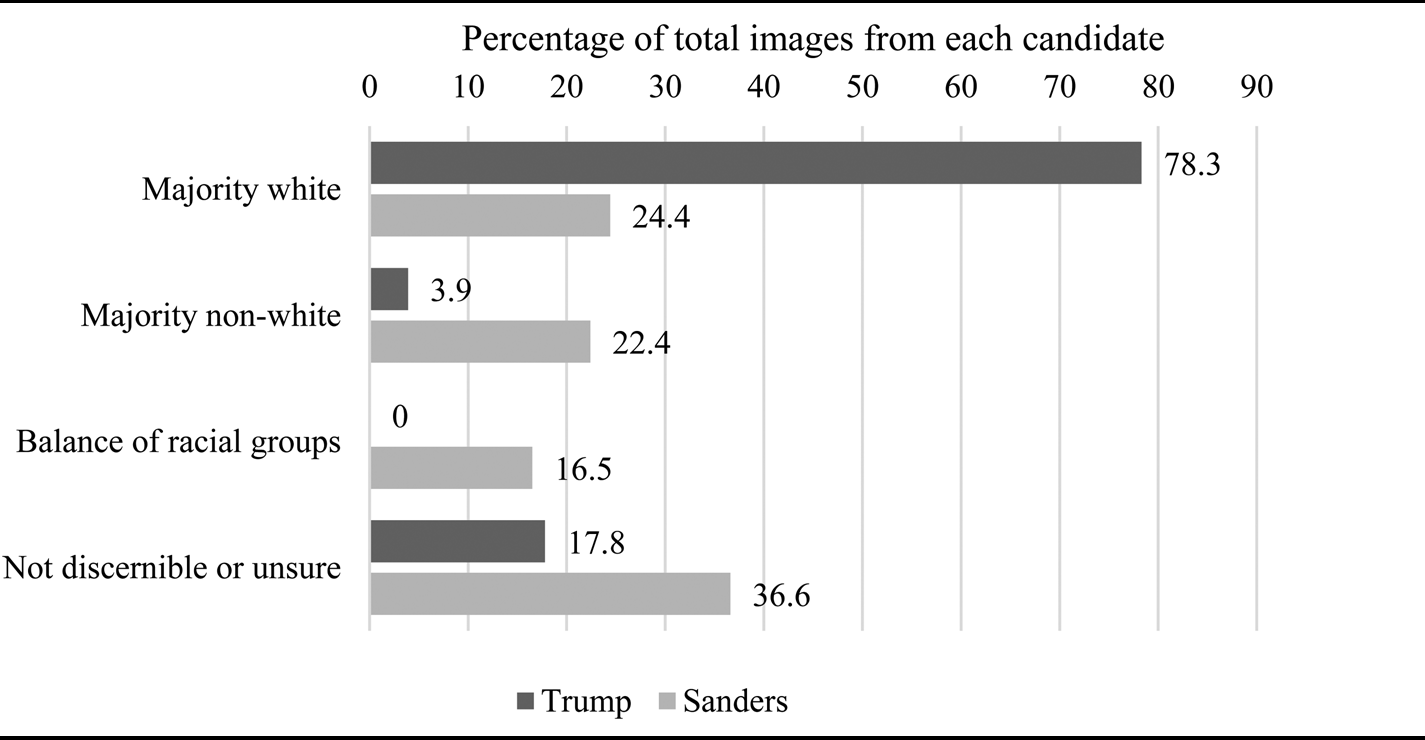
Regarding the category of race, H1 was born out in a striking manner. As Table 2 shows, Trump’s “people” were far more racially homogeneous than Sanders’ “people.” Specifically, a large majority of Trump’s images of “the people” were majority white (78.3%), as in Figure 1 below, while only 3.9% were majority non-white.
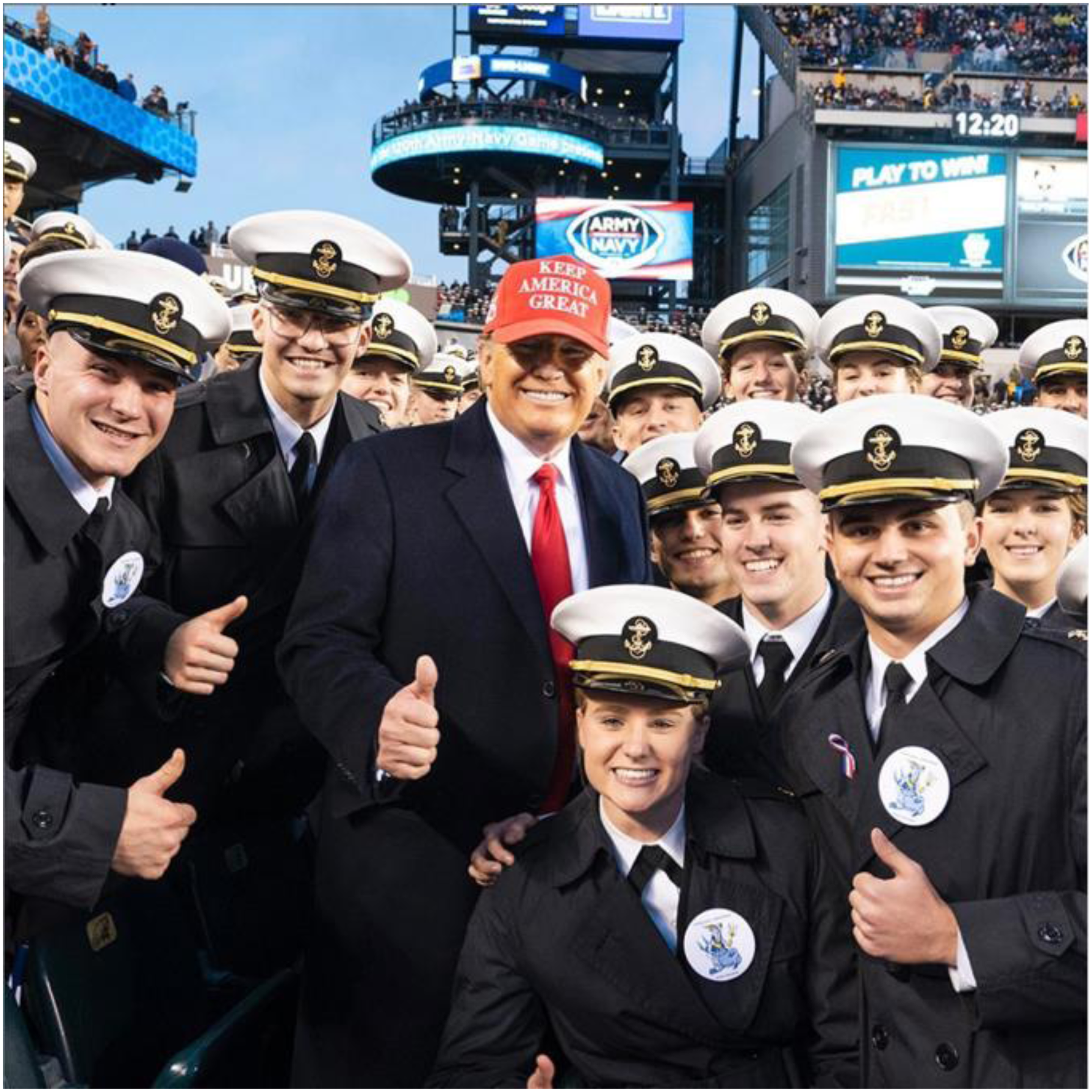
@realdonaldtrump 15 December 2019.
Number of Images of “The People” Selected from Trump’s and Sanders’ Instagram Accounts.

Race in Populists’ Depictions of “The People.”
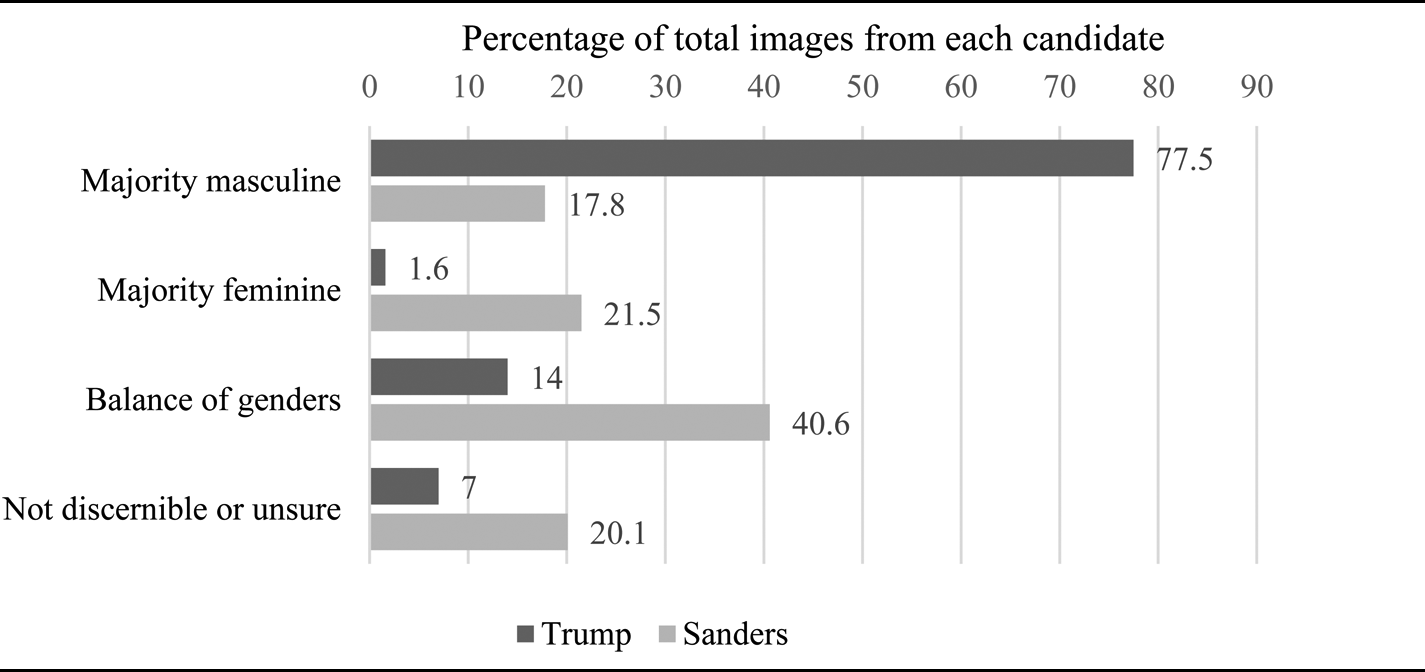
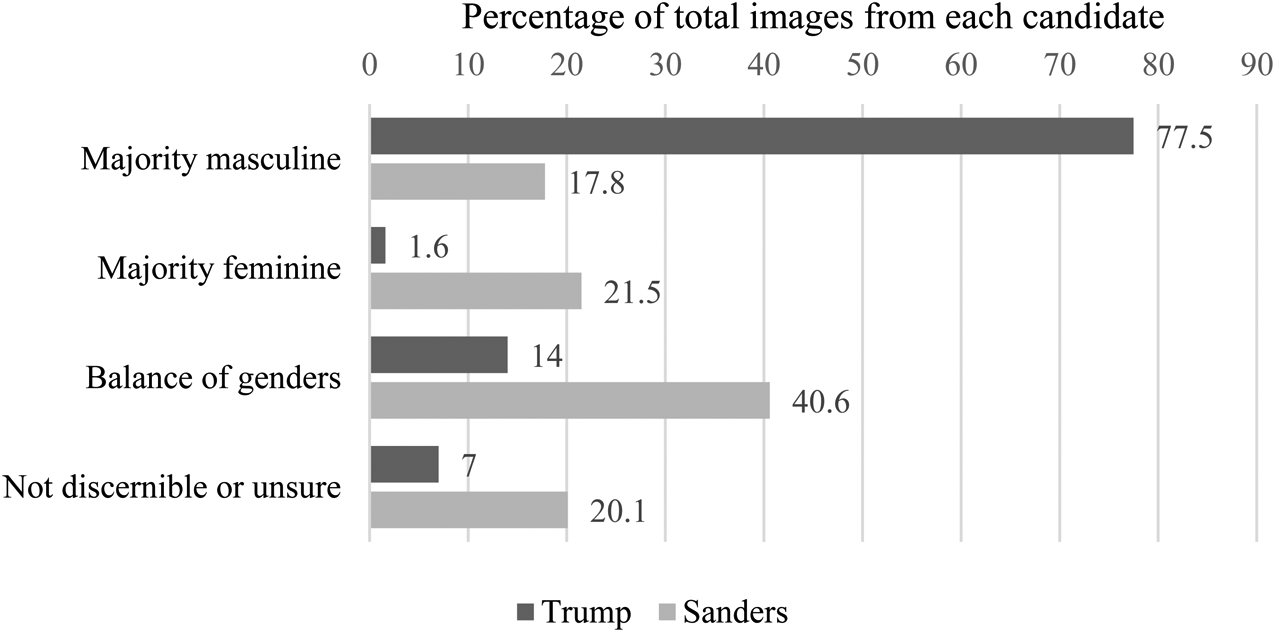
Gender in Populists’ Depictions of “The People.”
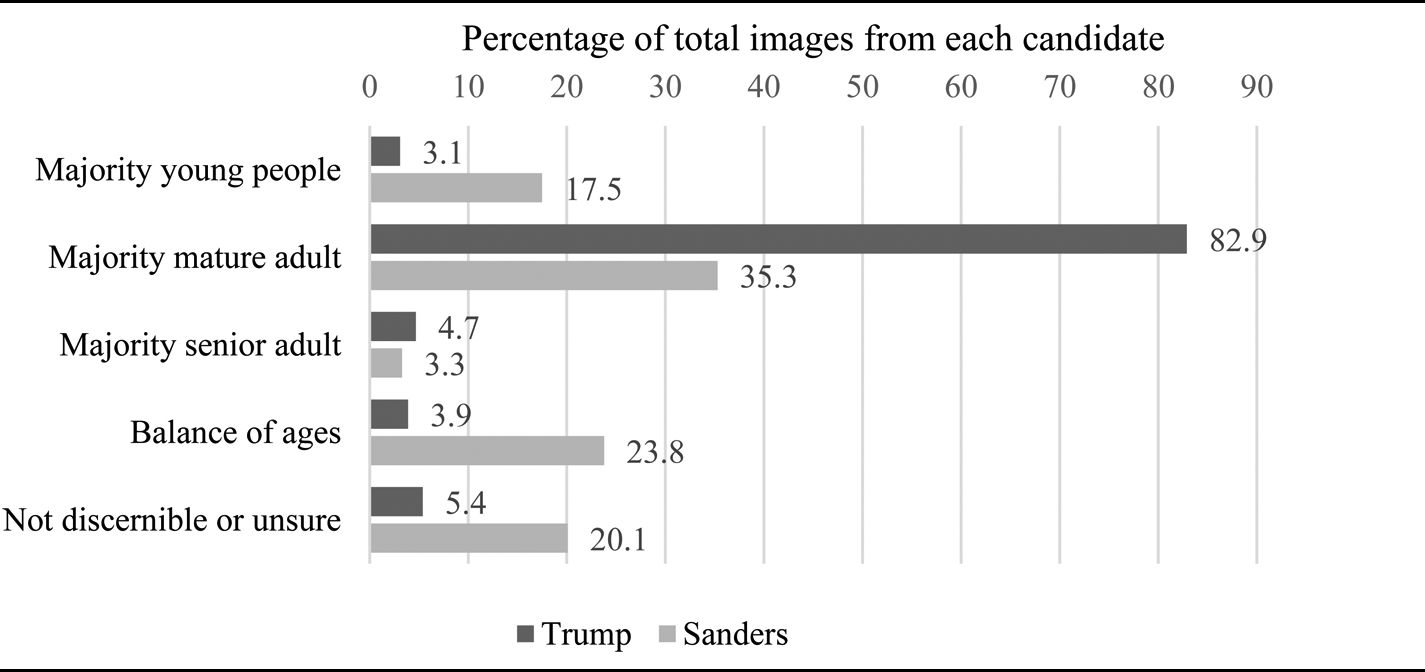
Age in Populists’ Depictions of “The People.”
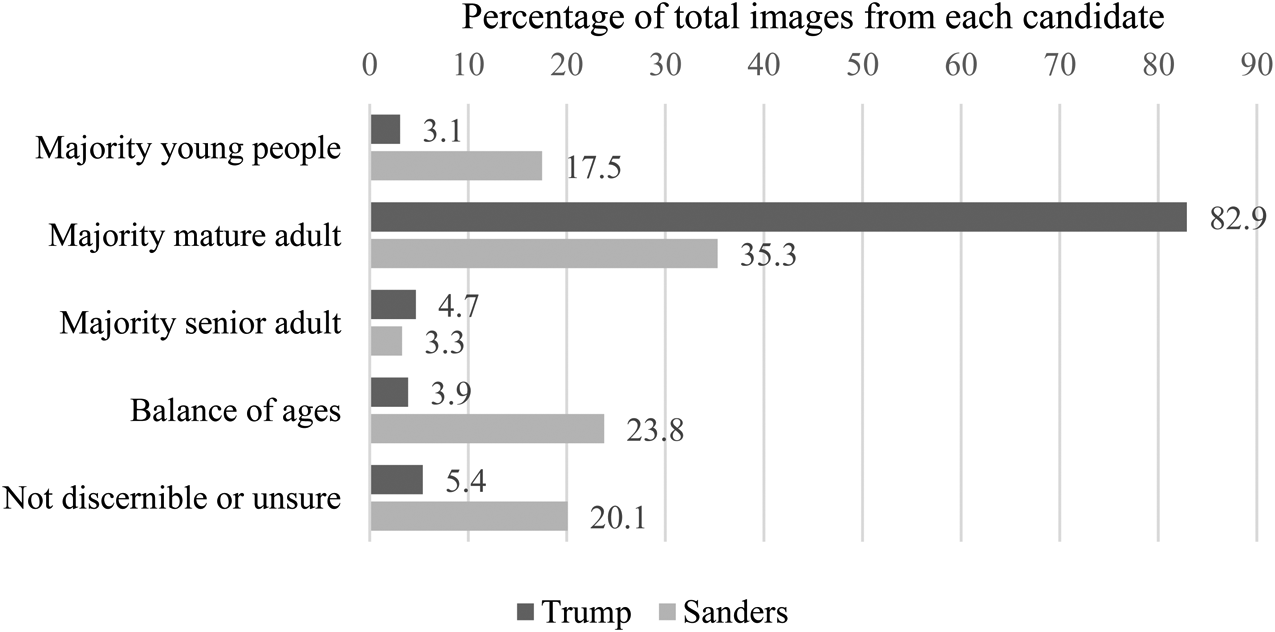
In stark contrast, the percentage of Sanders’ images of “the people” that were majority white (24.4%) and majority non-white (22.4%) were almost the same, demonstrating far more diverse visual characterizations of “the people” than Trump’s. It is also worth qualitatively noting that within the non-white category, Sanders not only included a significant number of Black people, but people of other visible minorities as well, such as Native Americans, Latinx people, Asian people, and people of self-identified Argentinian Colombian, Dominican, and Mexican backgrounds. Indeed, in Sanders’ depictions of “the people,” there was a concerted effort to highlight racial diversity, as in Figure 2 below, with several slideshows depicting the diversity of his supporters and making an explicit argument about strength through difference. Moreover, it was striking to note that while 16.5% of Sanders’ images included a balance of racial groups, not a single image in the Trump corpus did. These results highlight that the nativism at the core of Trump’s appeals to “the people” (Abramowitz and McCoy 2019) was also reflected in his visual depictions of “the people” —they were overwhelmingly majority white.
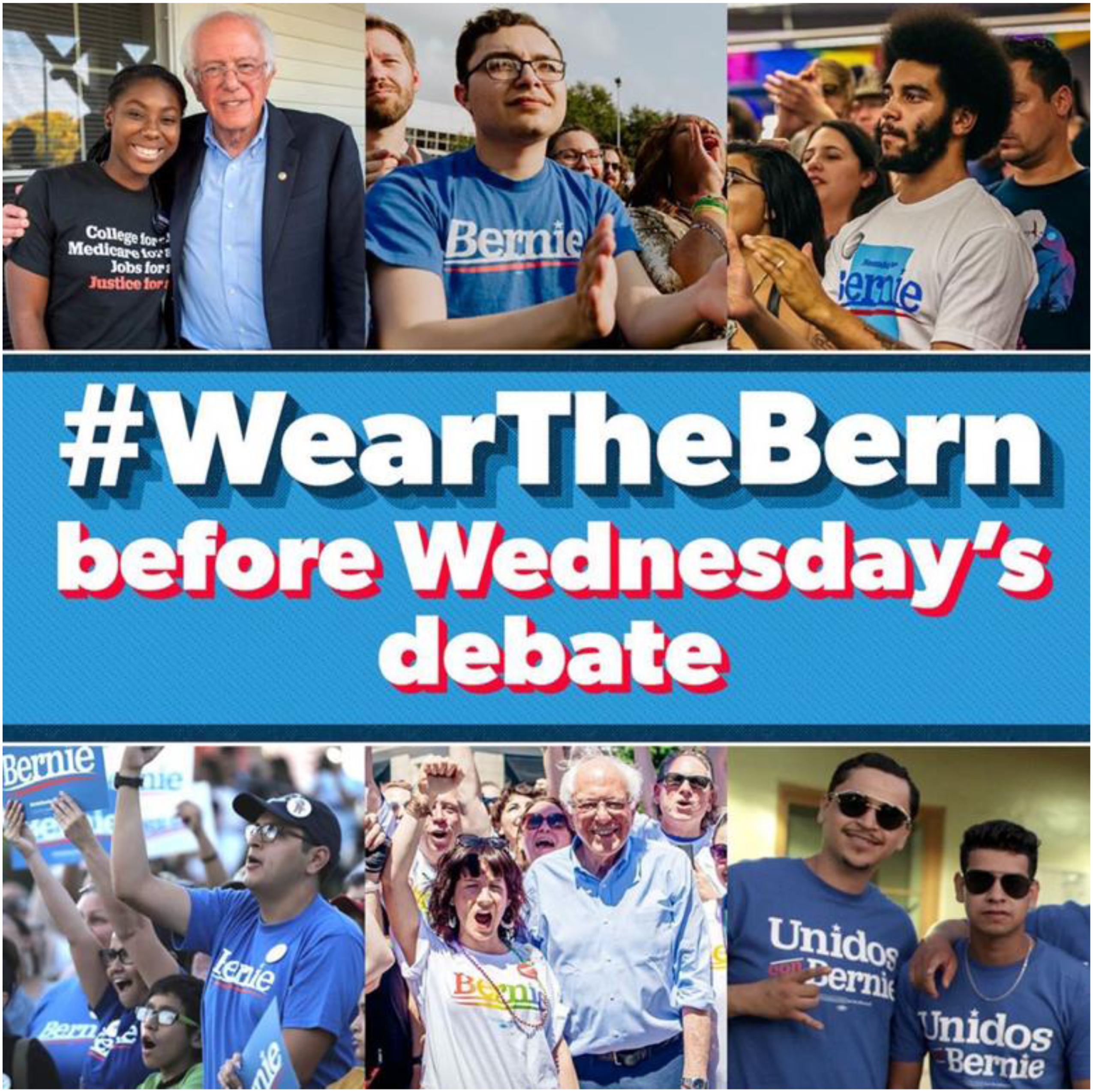
@berniesanders 20 November 2019.
In relation to gender, H2 is confirmed: as can be seen in Table 3, a vast majority of Trump’s images of “the people” fell into the “majority masculine appearance” category (77.5%), whereas only 17.8% of Sanders’ images of “the people” were the same. Sanders’ images of “the people,” meanwhile, were far more diverse: while his largest category was a balance of genders (40.6%), his second highest category was “majority feminine appearance” (21.5%), with “majority masculine appearance” his least common category (17.8%), the latter being an even lower percentage than the “not discernible or unsure” category (20.1%). In contrast, Trump’s images of “the people” that were of “majority feminine appearance” was a paltry 1.6%: 2 images out of a data set of 129.
While these results reflect the findings of the small extant literature on populism and gender that explicitly compares left and right populism, and which argues left populism is more gender-inclusive and right populism is more gender-exclusive (Mudde and Kaltwasser 2015), this may reveal less about populism than the left–right divide more broadly. As Kantola and Lombardo (2019: 1124) note, “political ideology matters. Left-wing parties, though populist, are still better allies of feminist politics than right-wing parties both in terms of empowerment and transformation.” This is unsurprising to anyone familiar with these specific cases: Trump’s misogyny, anti-feminism, and record of sexual assault are on the record (Benoit, 2017), and his presidency sought to turn back legislation around sexual harassment and women’s health (Stark 2018). Although Sanders’ 2016 campaign was tarnished by accusations of sexism in the form of the “Bernie bro” (Wilz 2016), it appears that there was a concerted effort to counter this perception through visual depictions of “the people” in 2019, given the higher representations of people of feminine appearance, as in Figure 3 below.

@berniesanders 14 November 2019.
For Trump, the high number of majority masculine images were also qualitatively reflected in the subject or focus of many of his images of “the people”: namely, figures from typically “masculine” careers such as the military, law enforcement, mining or manufacturing, as Figure 4 shows. In fact, approximately 45% of all of Trump’s images of “the people” fell into this category. This was a striking result, indicating not only the gendered dimension of who Trump’s people are, but also how traditional masculine roles were connected to his program of tough “law and order” politics. In many ways, this mirrors the authoritarianism that Mudde (2007: 23) argues is a core ideological component of the populist radical right.

@realdonaldtrump 10 January 2019.
Regarding age, H3 was confirmed, but not as strongly as previous categories. As Table 4 shows, while both leaders’ most common code in this category was “majority mature adult,” this was far higher for Trump (82.9% of images) as compared to Sanders (35.3%). An example of this in Trump’s corpus can be seen in Figure 5, a photograph from one of his rallies that is almost exclusively made up of mature adults. Sanders’ image set also included many more majority young people images (17.5%) compared with Trump’s (3.1%). Many of Sanders’ images in this category were photos of his crowds and audiences at university events. More so, Sanders’ depictions of “the people” had a far higher percentage of images with a balance of age groups (23.8%) as opposed to Trump’s (3.9%). Neither Trump nor Sanders included many photos with a majority of senior adults, with such groups only representing 4.7% and 3.3% of the images of “the people” respectively.
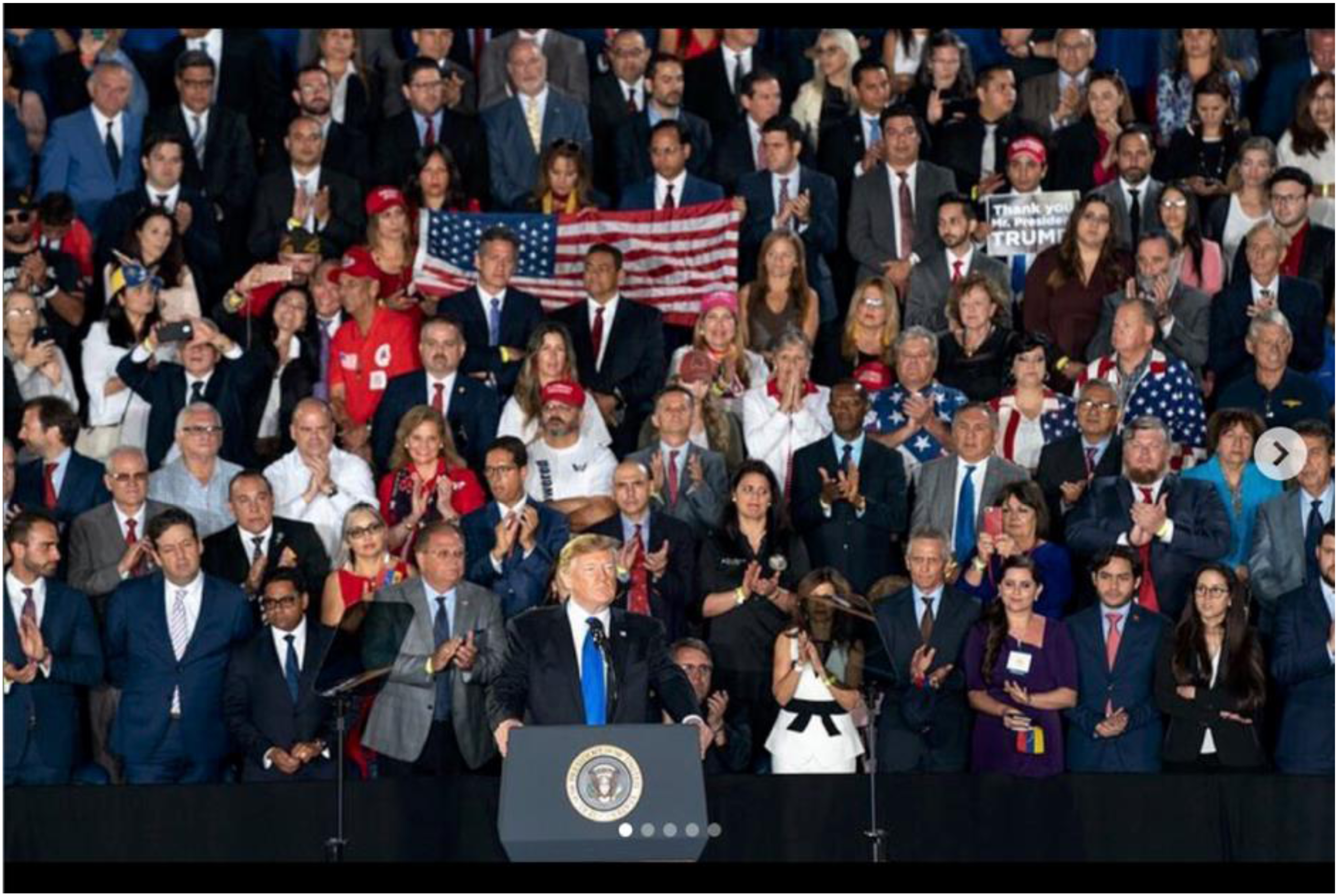
@realdonaldtrump 19 February 2019.
The focus on young people in Sander’s images was unsurprising given his support among young voters (which was highlighted in posts from his Instagram, as in Figure 6) as was the opposite tendency in Trump’s images, given his lack of popularity with young people (Shelley and Hitt 2016). The lack of senior representation was more surprising initially, especially in the case of Trump, whose voter base was older. The explanation here may lie in the platform: Instagram usage is extremely low among senior adults (Statista Research Department, 2022), so it is unlikely that there is much to be gained from broadcasting a visual characterization of “the people” that skews senior if this group are unlikely to see it. 12 Moreover, the measure of “majority” groups used in the article is somewhat blunt, and misses the fact that senior adults were certainly more frequently depicted in Trump’s images than Sanders’, even if they were not the majority group.
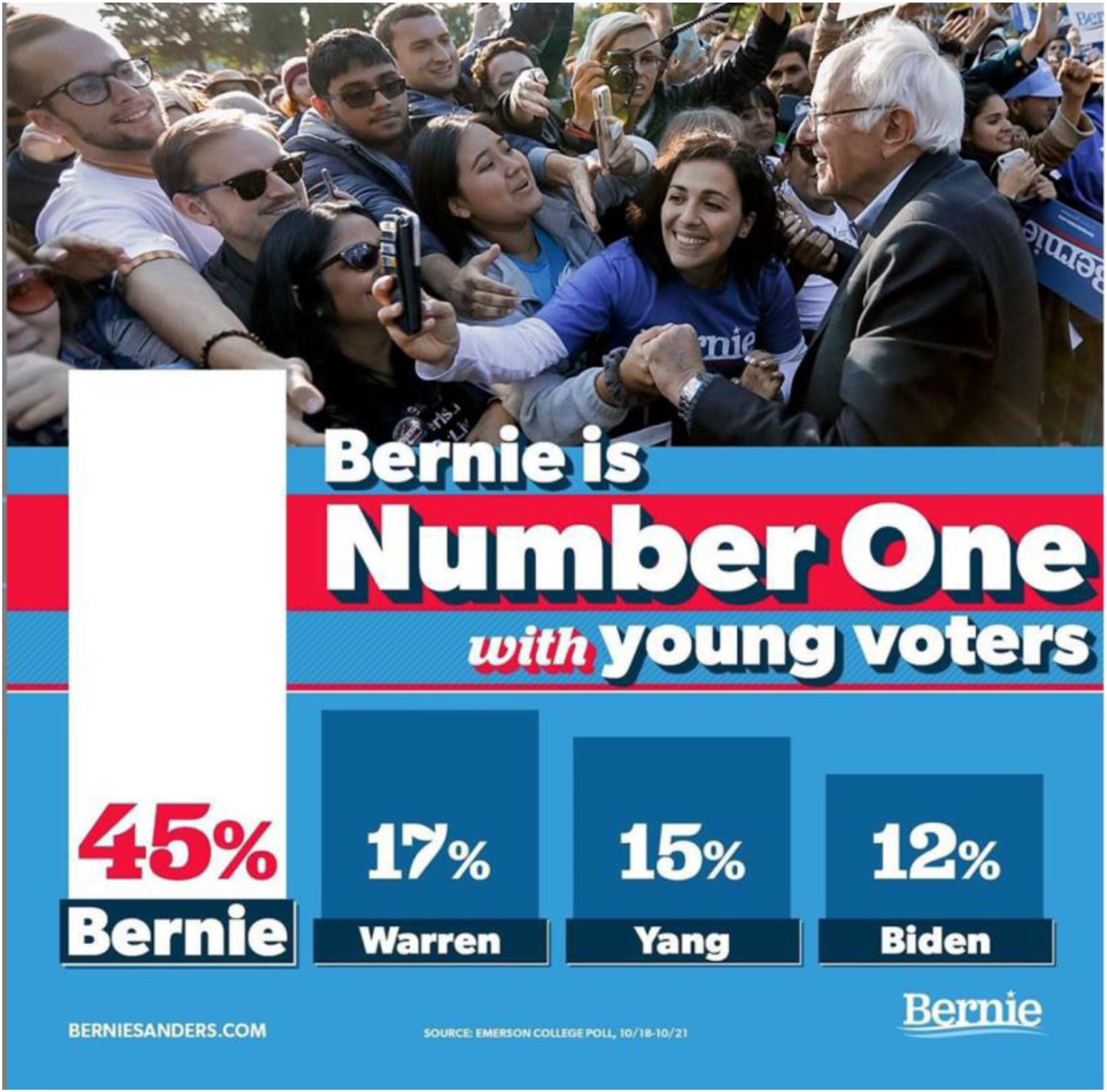
@berniesanders 24 October 2019.
While the differences between Trump’s and Sanders’ representations of the gender, age, and race of ‘the people’ are individually striking, it is also worth considering how these demographic dimensions of ‘the people’ intersect, to gain insight into the most common combinations of such categories in these representations. Building on the above results, the analysis of cross-tabulations (see Supplementary Information file) allows us to do this, and to see that H4 is confirmed: overall, the visual representations of ‘the people’ of left populists are more diverse than those of right populists in the case of Trump and Sanders. Unsurprisingly, the most common representation of ‘the people’ in Trump’s corpus is majority white, majority masculine in appearance, and majority mature adult, representing 59% of his images.
In comparison, the cross-tabulations of the demographics in Sanders’ images of “the people” were far more evenly distributed, with no combination being anywhere as dominant as that of Trump’s. In fact, Sanders’ most common combination, at 16% of all images, was actually all 3 categories—race, gender, and age—being “not discernible or unsure,” with the next most common combinations only representing 5% of his corpus. While Sanders had a high number of potential combinations of race, gender, and age populated (54 out of 80 possible combinations), Trump’s were far more limited (18 out of 80 possible combinations), a reflection not only of Trump’s smaller image corpus, but also the very small number of images with people of majority feminine appearance or majority non-white race, and the total absence of any balance of racial groups in Trump’s images.
Conclusion
Although understudied, populists’ visual communication provides important insight into how populists view and characterize their “people” in terms of their demographic characteristics. While a populist might not explicitly make a statement like “‘the people’ are white, male adults, and I am not interested in representing non-white citizens, females or young people”—for the obvious reason this is discriminatory and inflammatory—the images of “the people” they put out for public consumption can communicate this message in a very direct and straightforward way. As such, it is important to take populists’ visual communication seriously: it can tell us things that their words might not, or at least communicate such matters more clearly.
In comparing how a left populist (Sanders) and right populist (Trump) and visually represented “the people” on their Instagram accounts, I found that Sanders’ “people” were overall far more demographically diverse than that of Trump’s, whose “people” were overwhelmingly white, of stereotypical masculine appearance, and did not include nearly as many young people. In comparison, Sanders’ “people” included a far greater mix of racial groups, was far more balanced in its gender representation, and made more space for young people alongside mature adults in his images. This accords in many ways with characterizations in the literature about the differences between left and right populism in terms of their exclusionary versus inclusionary characteristics (Mudde and Rovira Kaltwasser, 2013), whereby left populism’s broader definition of “the people” leaves open more space for the political integration of different social sectors and groups, while right populism’s a more limited definition of “the people” does not, given a particular ethnic and often gendered group is often implicitly or explicitly targeted as being representative of the legitimate “people.” Yet it also challenges assumptions in the literature about populism’s alleged homogeneity in terms of how it sees “the people.” While Mudde’s influential definition of populism states that it “considers society to be ultimately separated into two homogeneous and antagonistic groups” (2007: 23)—a claim echoed by Müller who argues that “populists create the homogeneous people in whose name they had been speaking all along” (2016: 49)—it is difficult to claim that Sanders’ “people’ is homogenous at all following this analysis. His “people” is clearly open to difference—across race, gender and age lines—which suggests either that such variants of left populism should not actually be considered as “populist” if strictly adopting such a definition, or that populism is not quite as homogeneous (or homogenizing), at least on the left, as might be sometimes claimed. 13
This being said, an important question that needs to be asked is: how universal are these findings? After all, this article has obviously only focused on two American cases, so we must be wary of about drawing conclusions about populism in general. While similar findings regarding visual depictions of “the people” can likely be expected in cases of populism in (Western) Europe, Australia and Canada, given that there is significant overlap of the themes on which that populists tend to mobilize—on the right, nativism and fears about immigration and cultural change; on the left, economic insecurity—and there are shared demographic and economic factors that unite these settings, it is difficult to say the same of populism in Latin America, Africa, Asia, or India. In Latin America and Africa, for example, some populists have made ethnic appeals that are primarily inclusive, targeting them towards indigenous and minority groups—what Madrid (2008) and Cheeseman and Larmer (2015) have referred to as “ethnopopulism” —which is a sharp distinction to how ethnic appeals are articulated in US populism, and thus likely to have very different ramifications in terms of how “the people” are visibly portrayed in terms of race. Moreover, in such settings, race categories such as “majority white” and “majority non-white’ may need to be changed to fit the context more accurately. Gender depictions may also be quite different—left populism in numerous regional contexts is still dominated by machismo “strongman” politics (Kampwirth, 2010), and this may be reflected in depictions of who the populist “people” are. Beyond this, there may be other visual categories that may need to be included in terms of capturing the visual dynamics of “the people” in other environments: for example, religious attire and symbols may be core to understanding visual representations of “the people” in settings like India, where Narendra Modi’s Bharatiya Janata Party is strongly associated with Hindu nationalism, or Turkey, where the Justice and Development Party is strongly associated with Islam. As such, while this article represents an important starting point, its methodological categories can be adapted as needed to make it more comparatively applicable beyond “Western” cases.
There are also limitations to this study worth mentioning. First, it has only used images from Instagram, which may differ in both content and intended audience than other types of images (such as party advertisements), and as such, may not be representative of a populists’ visual media strategy in general. Moreover, it has only focused on images, and not dealt with the way in which text and images interrelate on the platform, or indeed, more broadly in communication (Bateman, 2014). Second, the systematic visual content analysis utilized in this article relied on a primarily quantitative methodological approach, which obviously cannot get at the richness of a closer qualitative reading of a small number of sources. Third, the codes used to analyze demographic categories were relatively blunt instruments, in terms of who was the majority group (or if there was a balance of groups) in the image. Although the reasons for doing this have been explained in terms of a striving for accuracy and the avoidance of misjudging people’s identities, such coding has the potential to overlook important nuances. Finally, this article has only focused on the content of images of “the people,” but not the aspects of the production or reception of those images (Rose 2016), which are beyond the purview of a single article, but remain nonetheless important, since images of course do not simply appear, nor are they passively received by audiences.
In light of this, there are several ways forward for the systematic visual analysis of populism. The first is to extend this analysis beyond the two cases compared here. Utilizing the framework and methods outlined in this article to analyze different cases across the globe would provide an indication of whether such findings are indeed more universally relevant, and would provide an insight into the visual cultures and aesthetic representations of “the people” used by populists in different regions. The second would be to open up the comparison beyond populism: for example, it would be interesting to see how depictions of “the people” by mainstream leaders are similar to or different from those of populists. The third would be to supplement this analysis with digital methods to investigate how certain images of “the people” are shared, commented on and gain circulation in social networks. The fourth would be to analyze other key signifiers within populism in this way: for example, an analysis of how “the elite” —equally important as “the people” in populist discourse or performance—or “dangerous others” are portrayed in populists’ visual communication would provide great insights to these vital parts of the populist appeal.
In sum, populism is not simply about the words political actors speak or write in the name of “the people,” but is also about their visual communication. This dimension of populism is arguably more important than ever, and Bucy and Joo are correct to argue that “it is no longer sufficient to analyze … [populists’] persuasive communication from a rhetorical perspective alone; increasingly, nonverbal aspects of public communication and televised behavior—the embodied or visceral aspect of their mass appeal—must be taken into consideration” (Bucy and Joo 2021: 11). Thinking creatively and innovatively about the ways populists visually communicate, and how we can measure and track these underappreciated elements of their appeal, is an important step for making sense of the evolution, and indeed, the popularity, of populism around the globe.
Supplemental Material
sj-docx-1-hij-10.1177_19401612221100418 - Supplemental material for How Do Populists Visually Represent ‘The People’? A Systematic Comparative Visual Content Analysis of Donald Trump and Bernie Sanders’ Instagram Accounts
Supplemental material, sj-docx-1-hij-10.1177_19401612221100418 for How Do Populists Visually Represent ‘The People’? A Systematic Comparative Visual Content Analysis of Donald Trump and Bernie Sanders’ Instagram Accounts by Benjamin Moffitt in The International Journal of Press/Politics
Footnotes
Acknowledgments
Special thanks to Dr Evelyn Rose, who provided invaluable research assistance for this article, including the development and refinement of codes, collection of data, content analysis, and feedback on earlier drafts. Thanks also to Associate Professor Annika Werner and Dr Haydn Aarons for their advice, and to the peer reviewers and editors who provided generous and helpful comments about how to improve the article.
Declaration of Conflicting Interests
The author declared no potential conflicts of interest with respect to the research, authorship, and/or publication of this article.
Funding
The author disclosed receipt of the following financial support for the research, authorship, and/or publication of this article. This work was supported by the Australian Research Council (grant number DE190101127).

Supplemental Material
Supplemental material for this article is available online.
Notes
Author Biography
References
Supplementary Material
Please find the following supplemental material available below.
For Open Access articles published under a Creative Commons License, all supplemental material carries the same license as the article it is associated with.
For non-Open Access articles published, all supplemental material carries a non-exclusive license, and permission requests for re-use of supplemental material or any part of supplemental material shall be sent directly to the copyright owner as specified in the copyright notice associated with the article.
