



Abstract
While increasing scholarly attention has been devoted to news avoidance, there are only few studies taking the distinction between intentional and unintentional news avoidance into consideration, and none that has investigated the linkage between the two types of news avoidance and knowledge about politics and society. To fill this void, this study explores this relationship while distinguishing between knowledge related to uncontested issues and knowledge related to issues that have been subject to public controversies (climate change, vaccination, genetically modified organisms, crime, and immigration). Relying on a large-scale survey among Swedish citizens conducted in 2020 (N = 2,160), we find that the relationship with patterns of news use is substantially different across these types of beliefs. Among other things, the results suggest that knowledge of uncontested issue domains is positively related to news use, but knowledge of contested issue domains is not. The intentional avoidance of news is only negatively related to knowledge of contested issues. Taken together, the results suggest that the mechanisms driving beliefs related to uncontested versus contested issues are substantially different.
In the context of a digitizing media environment in which the latest news is available anytime, anywhere, research has shown patterns of decreasing news consumption, despite the abundant supply. Blekesaune et al. (2012), for example, find a slow but steady increase in number of “disconnected citizens” across Europe, and similar findings pertain to the share of “news avoiders” that have been found in a number of country-level studies (e.g., Prior 2007; Strömbäck et al. 2013, but see Lelkes 2020). Considering research on media effects, such developments might imply declining levels of knowledge as most citizens use(d) the news as a source of information on the basis of which they learn (e.g., Kruikemeier et al. 2018; Shehata and Strömbäck 2021).
Important to note though is that there are different forms of news avoidance. Following Skovsgaard and Andersen (2020), an important distinction should be made between intentional avoidance on the one hand and unintentional avoidance on the other. In their conceptualization, intentional news avoidance is based on a conscious and active choice to opt-out of news exposure because of an antipathy towards the news. Unintentional news avoidance, on the other hand, is related to one's relative preference for news vis-à-vis other content. In a high-choice media environment, it is easier for people to find their preferred content (Prior 2005), and when preferences are oriented towards sports or entertainment, they may consume less news without having a specific dislike for it. So, while the actual behavior might be similar—not consuming the news—the underlying mechanisms are different (Skovsgaard and Andersen 2020). This might have implications for the extent to which people learn from the news.
Based on this, we distinguish between intentional and unintentional news avoidance and explore how patterns of news use and avoidance relate to the presence of knowledge. We believe that this is important as it contributes to our understanding of the consequences of news avoidance. More specifically, we examine this relationship while distinguishing between knowledge related to uncontested issue domains versus knowledge related to issues that have been subject to ongoing public controversies. In the former case, we explore how news use and avoidance relate to the presence of knowledge; people can be informed or uninformed. In the latter case, we examine how news use and avoidance relate to the accuracy of people's beliefs related to contested issue domains; people can be informed but can be misinformed as well (Flynn et al. 2017; Kuklinski et al. 2000).
Against this background, the overall purpose of this study is to investigate three hitherto unaddressed questions: (1) Which patterns of news use can be identified when distinguishing between intentional and unintentional news avoidance? (2) How are these patterns of news use and avoidance related to the presence of uncontested knowledge?, and (3) How are these patterns of news use and avoidance related to the accuracy of beliefs related to contested issue domains? Empirically, our analyses are based on a large-scale survey among Swedish citizens (N = 2,160) that was fielded in 2020, in which patterns of news use and avoidance as well as people's beliefs related to uncontested and contested issue domains were measured. In the latter case, the focus is on five key societal issues: climate change, vaccines, genetically modified organisms (GMOs), crime, and immigration.
Literature Review
News Use and Knowledge—Intentional Versus Unintentional Avoidance
With the emergence of a digital media landscape, information has become more widely available and accessible than ever before. As a result, patterns of news consumption have changed significantly; across the globe, people have adopted new, mostly digital media platforms at the expense of traditional ones. With the invention and diffusion of touch screen mobile devices, citizens can access the news wherever and whenever they like and even engage in cocreation by sharing content themselves (Westlund 2013). In such a high choice media environment, citizens are able to create their own media diets, selecting news in accordance with their individual preferences (Van Aelst et al. 2017). However, increased access and choice does not guarantee increased consumption. Instead, research has pointed to the phenomenon of news avoidance, which has been identified in multiple country level studies including Norway, Sweden, and the United States (e.g., Karlsen et al. 2020; Ksiazek et al. 2010; Strömbäck et al. 2013) as well as in cross-national studies that demonstrate considerable variation across countries (e.g., Blekesaune et al. 2012; Kalogeropoulos 2017; Toff and Kalogeropoulos 2020).
One problem though is that research on news avoidance has been plagued by conceptual ambiguity, which has led to diverging findings related to the nature and scope of the phenomenon. To remedy this, in a recent review, Skovsgaard and Andersen (2020: 463) define avoidance as low news consumption over a continuous period of time caused either by a dislike of the news or by a higher preference for other content. Based on this definition, they propose a conceptual model that distinguishes between intentional news avoidance on the one hand and unintentional news avoidance on the other. According to their conceptualization, intentional news avoidance involves the deliberate choice not to consume news because of an antipathy towards it. The literature offers several explanations for this antipathy. For example, people might avoid the news because they do not trust it (Strömbäck et al. 2020; Tsfati and Cappella 2003). This lack of trust is closely related to a highly skeptical attitude towards the mainstream media (Toff and Nielsen 2018), which are considered biased (Newman and Fletcher 2017). People may also avoid the news because it makes them feel upset, powerless, or depressed (Kalogeropoulos 2017). Indeed, as news is typically characterized by negativity and conflict (Bartholomé et al. 2018; Damstra and Boukes 2021), the information presented by the news media may have a negative bearing on the mood of those who consume it. Finally, people may avoid the news to escape from the endless stream of options offered to them (Skovsgaard and Andersen 2020).
In contrast, unintentional news avoidance is not based on an active choice to opt-out of news exposure. Instead, it is considered a byproduct of the current high choice media environment in which individual preferences have become a more important factor shaping people's personal media diets. People can satisfy their strongest preferences at the expense of their weaker ones, which implies that those with a strong preference for entertainment and a weaker preference for news might increasingly satisfy their need for entertainment at the expense of time spent on news (Prior 2005, 2007). Thus, unintentional avoidance is not driven by a dislike of the news but is rather the result of a high choice context. In such a context, algorithms might furthermore reinforce the influence of preferences, as these select content based on prior consumption patterns (Thorson et al. 2019).
An underexamined question pertains to the consequences of different sorts of news avoidance. While recent work has mainly focused on the causes of the phenomenon (Kalogeropoulos 2017; Newman and Fletcher 2017) and possible solutions to it (Skovsgaard and Andersen 2020), less is known about its relationship with knowledge. As people learn about politics and current affairs mainly from the news, traditionally provided to them by newspapers and television broadcasts (e.g., Chaffee and Kanihan 1997), minimal news consumption should come with less learning, and, subsequently, less knowledge. However, as intentional versus unintentional news avoidance are driven by different mechanisms, the ramifications for knowledge acquisition also may diverge. In addition to active news seeking, people come across news inadvertently, especially in information-rich environments (e.g., Fletcher and Nielsen 2018). The literature on incidental exposure has demonstrated how this may facilitate passive learning and, as a consequence, lead to knowledge gains (e.g., Lee and Kim 2017; Tewksbury et al. 2001). Applied to the focus of the current study, recent work by Marcinkowski and Došenović (2020) suggests that the probability of learning from (online) incidental exposure may be different for intentional versus unintentional avoiders. Studying incidental online exposure to political information in the context of German elections, they find that passive learning only occurs among those who do not avoid information intentionally. Among those who intentionally avoid political information, inadvertent exposure leads to psychological reactance which hinders the occurrence of passive learning.
Based on the above, we expect that lower news consumption is related to lower levels of knowledge. As the different mechanisms driving intentional versus unintentional news avoidance lower the chances of inadvertent learning for the former, we also expect that intentional news avoidance relates to less knowledge. It remains an open question however whether the intention to avoid the news also affects the relation between (not) using the news and levels of knowledge. To explore this, we add a research question. More specifically, our first two hypotheses and our first research question are:
News Use and (Mis)beliefs—Intentional Versus Unintentional Avoidance
So far, we have treated knowledge as an asset of which people possess a little or a lot, but that is not subject to public debate itself. However, in recent decades, certain issue domains have become increasingly contested, including scientific facts that serve as a basis for policy making in those domains (Flynn et al. 2017; McIntyre 2018). As a result, a number of public controversies around policy-relevant issues continue to persist, despite the availability of compelling and widely accessible empirical evidence (Wolters and Steel 2017). Related to anthropogenic climate change, for example, research shows how general publics across the world hold polarizing views despite a broad scientific consensus (e.g., Kvaløy et al. 2012; Poortinga et al. 2011). Similarly, vaccination programs have been mired in controversy. A telling example is offered by the Human papillomavirus (HPV) vaccine preventing cervical cancer among women; despite broad support of scientists and health officials alike, the public got deeply divided about mandatory vaccination and coverage of HPV vaccinations has remained low to the present day (e.g., Kahan et al. 2010). Similarly, the use of GMOs—foods that contain at least one ingredient stemming from a plant with an altered genetic composition—has sparked heated debates (e.g., Mampuys and Brom 2015; Noussair et al. 2004 ). Again, a relative broad consensus among scientists and policy makers alike does not seem to mitigate public controversy around these and other issues but might fuel it instead.
To understand the phenomenon of contested issue domains in which people hold polarizing beliefs despite the presence of scientific consensus, the role of ideology and personal values is often discussed as are identity-related considerations. Informed by theory on directional motivated reasoning (Kunda 1990), it has been argued that people's interpretation of information is influenced by their desire to reach a conclusion consistent with existing attitudes (e.g., Flynn et al. 2017; Nurse and Grant 2020). Once a policy issue grows into a controversy, this tendency to conform the understanding of evidence to one's prevailing position gets stronger, as the connection to affinity groups who share the same understanding also grows (Kahan et al. 2017). This suggests that holding beliefs that are not compatible with the best available evidence is not the result of a lack of knowledge or comprehension per se, but is driven by other mechanisms (Flynn et al. 2017).
While news use is found to be positively associated with knowledge related to rather uncontested issue domains, less is however known about the impact of news use on the formation and continuation of (mis)beliefs related to contested issues. On the one hand, consuming the news should make people more aware of scientific evidence, and, as a result, it should contribute to perceptions that are compatible with the best available evidence. On the other hand, exposure to news may have less of an impact when people already have decided not to accept scientific evidence as true. As outlined above, when people affiliate themselves with others who reject scientific evidence, being exposed to the news may not make much of a difference. Finally, the news itself may also contribute to misbeliefs, as some media (in some countries) have become more polarized over the years (Hmielowski et al. 2014). For example, research shows how in the United States, exposure to conservative outlets has contributed to inaccurate beliefs related to climate change (e.g., Feldman et al. 2014). However, it remains an open question to what extent these findings can be transferred to less polarized country contexts, such as Sweden. To explore this aspect, we propose a second research question that targets the relationship between patterns of news use and the presence of beliefs related to five contested issue domains: climate change, vaccination, GMOs, crime, and immigration
In addition, intentional avoidance may also matter for the accuracy of people's beliefs. In other words: the relationship between avoidance and beliefs may be contingent on the underlying reasons for why people do not follow the news. Intentional avoidance may be driven by a lack of trust and a highly skeptical attitude toward the news media in general (Strömback et al. 2020). Information presented in the Swedish mainstream media is typically in line with the best available scientific evidence. This might imply that intentional avoidance correlates with or is driven by a worldview that deviates from the one presented in the news. Unintentional news avoidance, in contrast, is not driven by mistrust or a skeptical attitude toward mainstream news media, but by a relative preference for other sorts of content (Skovsgaard and Andersen 2020). While this might coincide with holding misbeliefs, there is no reason why this would be particularly likely. Therefore, we expect that intentional avoidance relates more strongly to the presence of misbeliefs than unintentional avoidance, which is formalized in the third and final hypothesis:
Case Selection, Data, and Method
To investigate our hypotheses and research questions, we rely on a large-scale survey conducted in Sweden, which media system is a typical example of the Democratic Corporatist Model (Hallin and Mancini 2004). In brief, Sweden is characterized by high levels of press freedom as well as media trust (Andersson 2020), which in general is negatively correlated with rates of news avoidance (Strömbäck et al. 2020; Toff and Kalogeropoulos 2020). Nevertheless, the share of news avoiders has increased over the years (Strömbäck et al. 2013) and, similar to many Western democracies, the use of traditional news sources is on decline (e.g., Blekesaune et al. 2012). In addition, the use of alternative, partisan websites is relatively high in Sweden (Westlund 2020).
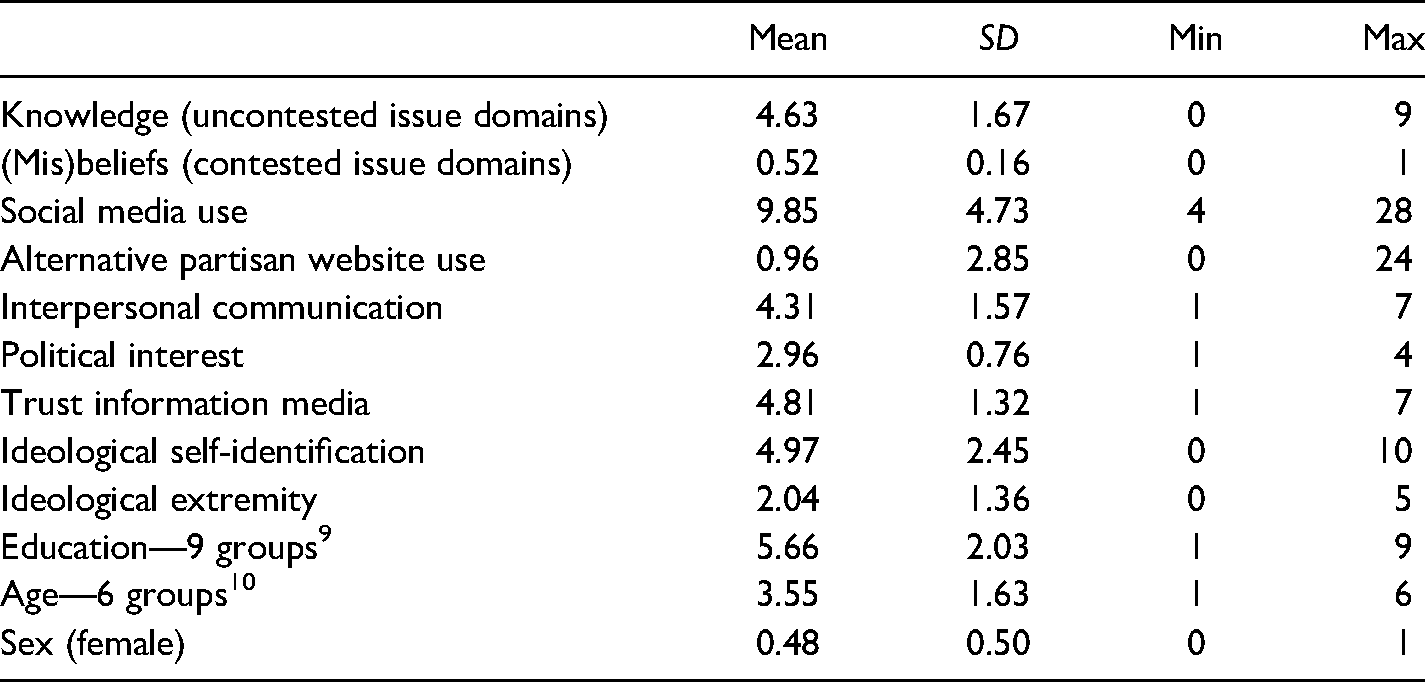
Data is collected by the Laboratory of Opinion Research, a research infrastructure affiliated to the University of Gothenburg. A probability sample with the net sample size of 5,523 Swedish residents has been invited to participate in the web-based survey, which was fielded from February 24, 2020 to March 25, 2020. 1 Of these citizens, 3,433 completed the whole questionnaire, resulting in a net participation rate of 62.2 percent. After excluding those with missing values on any of the variables, the final sample used in this study consists of 2,160 respondents. Missing data were for the most part caused by item nonresponse, related to the knowledge variables (making up the “knowledge-index,” one of the dependent variables). Close examination of the sample before and after removing those respondents reveals no substantive changes in each of the variables under study (see for a more detailed discussion, online Supplemental information file, Table A1). Table 1 shows the descriptive statistics of all variables.
Descriptive Statistics of all Variables (N = 2,160).
To develop categories of news users, we first need to distinguish between people who regularly consume the news and those who do not. Towards that end, respondents are asked a series of questions about their news use. The questions are outlet specific, asking how often in a typical week they use a certain mainstream news medium in its traditional format or online. For all questions, the response categories range from 1 (“one day per week”) to 7 (“seven days per week”), respondents who use the medium less score 0 (“less than one day per week”). The selection of media includes all the major national newspapers as well as television and radio news broadcasts. 2 To identify news avoiders, we cannot rely on the sum or mean score of these news use variables, as for example, people who only consume one outlet on a regular basis—say three or four times per week—might then count as news avoiders while there are good reasons to not consider them as such. To circumvent this issue, we rely on cluster analysis to identify those people who consume little mainstream news, considering the whole range of available sources (Bos et al. 2016). More specifically, we conduct a K-means cluster analysis to identify various types of news consumers. Based on fit statistics, and in particularly the mean distance to the cluster center, we identify four clusters as most appropriate. Based on the mean scores on each of the outlets per cluster (final cluster centers), the clusters are labelled, and the following types of news users are distinguished: news minimalists (n = 1,060); television users (n = 807), news omnivores (n = 675); and tabloid users (n = 565) (for more information—see the online Supplemental information file, Table A2). For the purpose of the current study, the first group is of particular interest to us. 3 It should be noted that these people do consume some news but their overall consumption is considerably lower than that of the other citizens. Because we are not interested in the specific differences between people who do use the news on a regular basis (such as differences between news omnivores and television users), we collapse the other clusters into one overarching category of regular news users of mainstream media.
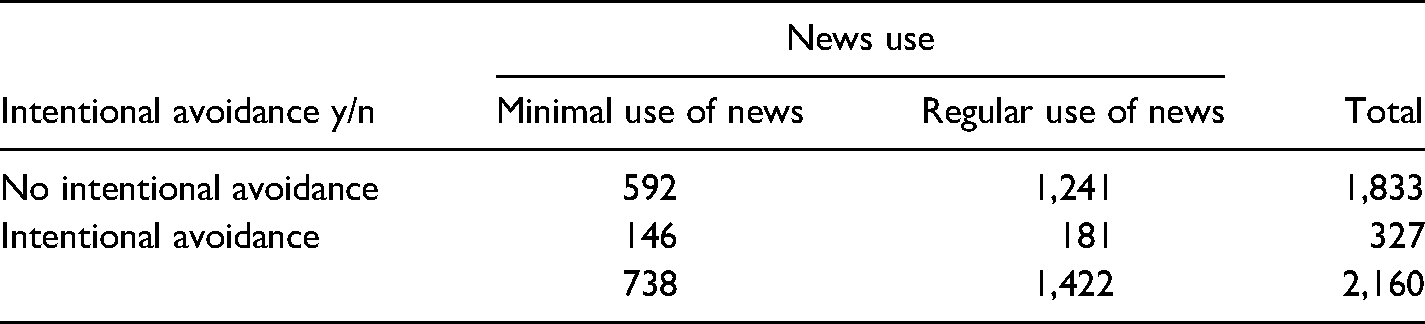
Following Skovsgaard and Andersen (2020), we further distinguish between people who intentionally avoid the news and people who do so unintentionally. Intentional news avoidance is measured by means of the following variable “In a typical week, how often do you actively try to avoid the news?,” with response categories ranging from 0 (“never”) to 7 (“several times a day”). In a next step, we define those who actively try to avoid the news for at least 5–6 days a week as intentional news avoiders. The other respondents with minimal news use are considered unintentional news avoiders. Table 2 shows the frequencies of both categories. Of people who use the news to a minimal degree, the majority does not report to avoid the news actively or intentionally: 80 percent (n = 592) is an unintentional news avoider, whereas 20 percent (n = 146) indicates actively avoiding the news. Respondents who regularly consume the news score lower on active avoidance: 87 percent (n = 1,241) does not intentionally try to avoid news, but 13 percent (n = 181) does. Based on these scores, we are able to identify four types of news users which we will refer to by the following labels: unintentional avoiders (27 percent), intentional avoiders (7 percent), regular users (57 percent), and regular users/avoiders (8 percent). 4
Actual News Use and (Un)intentional Avoidance.
Knowledge related to uncontested issues is measured by means of an index based on ten items tapping into people's beliefs related to political institutions and demographic trends in Swedish society. Descriptive statistics of the separate items can be found in the online Supplemental information file, Table A3. Based on these items, a new variable (“knowledge-index”) is created measuring the number of correct answers people give, running from 0 (no correct answer) to 10 (10 correct answers).
Following Garrett et al. (2016), we define our second dependent variable as beliefs about issue-relevant facts that are consistent with the best available evidence. Misperceptions are defined as beliefs that are inconsistent with the best available evidence. Based on this, we have operationalized (mis)perceptions for five policy issues that have been subject to public controversies: climate change, vaccination, GMOs, crime, and immigration. For each topic, respondents are asked to indicate whether four factual statements are correct, with answer scales running from (1) (“Very certain it is false”) to 5 (“Very certain it is true”). For each topic, two of the statements are compatible with publicly held information, such as relevant scientific evidence, while two of the statements represent misperceptions; not being compatible with existing evidence. We have carefully created issue and statement combinations for which a high degree of expert consensus exists (Vraga and Bode 2020). 5 Items were recoded so that the answer categories of every item runs from 1 (“strong misbelief”) to 5 (“strong accurate belief”). Combined, these twenty items form a reliable scale with an α of 0.75. For each respondent, the scores of the twenty items were summed, generating an overall score between 20 (“100 percent misbeliefs”) and 100 (“100 percent accurate beliefs”). Then we applied min–max normalization x′ = (x−min(x))/(max(x)−min(x)), whereby x′ refers to the normalized value and x to the original value. The result is a normalized scale running from 0 (lowest value in population) to 1 (highest value in population). Additional analyses show that the knowledge index and this index tapping into the presence of (in)accurate beliefs are only weakly associated (r = .27) and can thus be considered distinct concepts.
To account for alternative ways in which people may inform themselves, we also include a measure tapping into news consumption through social media platforms. Respondents are asked how often, in a typical week, they come across news or discussions about politics and society through (Facebook; Twitter; Instagram; YouTube). The answer categories range from 1 (“never”) to 7 (“several times a day”). Based on these items, we create a scale measuring the summed score (α = 0.58). In addition, we control for the use of alternative news media by including the three most widely used, partisan alternative online media (Westlund 2020). Respondents are asked how often, in a typical week, they use (Fria Tider; Samhällsnytt; Nyheter Idag), with answer categories ranging from 1 (“1 day per week”) to 7 (“7 days a week”). Respondents who use these websites less than once a week score 0. Again, we create a scale of the summed scores (α = 0.82). Finally, we control for interpersonal communication as an alternative way to get information. We use the item “How often do you talk to others about politics?,” with answer categories ranging from 1 (“never”) to 7 (“very often”).
In addition, we control for political interest (Lecheler and de Vreese 2017), which is measured in a straightforward way. Respondents are asked: “Generally speaking, how interested are you in politics?,” with response categories ranging from 1 (“Not at all interested”) to 4 (“Very interested”). We also control for media trust by asking “Generally speaking, to what extent do you trust information from the news media in Sweden?”, with response categories ranging from 1 (“Do not trust at all”) to 7 (“Trust completely”). Ideological self-identification is measured by the question “In politics, people sometimes talk of ‘left’ and ‘right’. Where would you place yourself on this scale, where 0 means the left and 10 means the right?.” In addition, we create a variable tapping into ideological extremism. Following Jost et al. (2007), we subtract the scale midpoint from each original score on the ideological self-identification scale and take the absolute value of that result. Finally, we include a number of demographic questions: level of educational attainment, running from 1 (“Not completed elementary school”) to 9 (“Ph.D. degree”); age, running from 1 (“Under 30”) to 6 (“70 years or older”); and sex (0 = “male”; 1 = “female”).
Results
Patterns of News Use and Knowledge
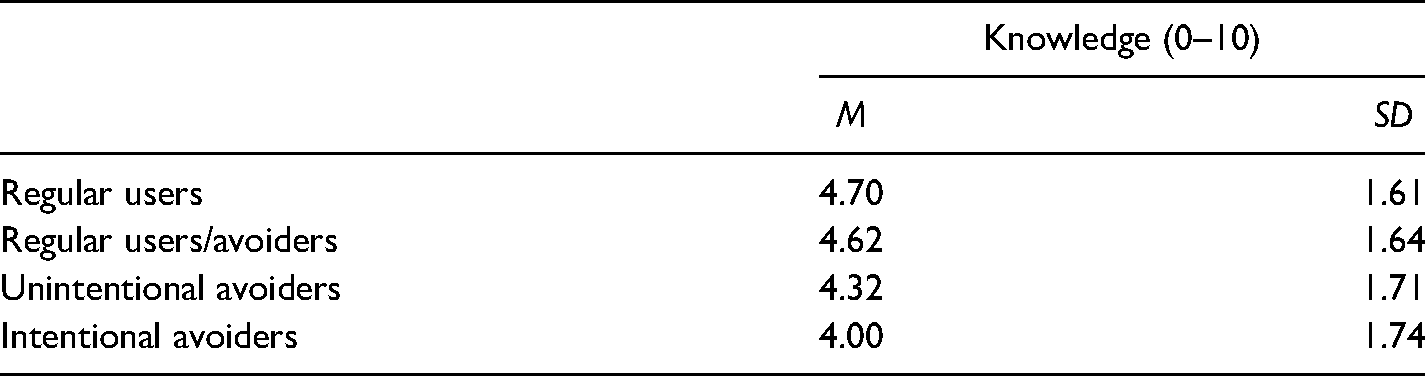
Turning to the results, Table 3 presents the mean levels of knowledge across the four groups of news users. In line with our theoretical expectations, the average knowledge score is highest among those who consume the mainstream media on a regular basis. Minimal users who intentionally avoid the news score lowest. Results of variance analyses (not displayed here) indicate that differences between groups are significant ((F (3, 2156) = 12.56, p = .000), and Tukey tests show that the differences between the intentional avoiders and the regular users and users/avoiders are statistically significant, as is the difference between the unintentional avoiders and the regular users. 6
Knowledge Across Groups of News Users.
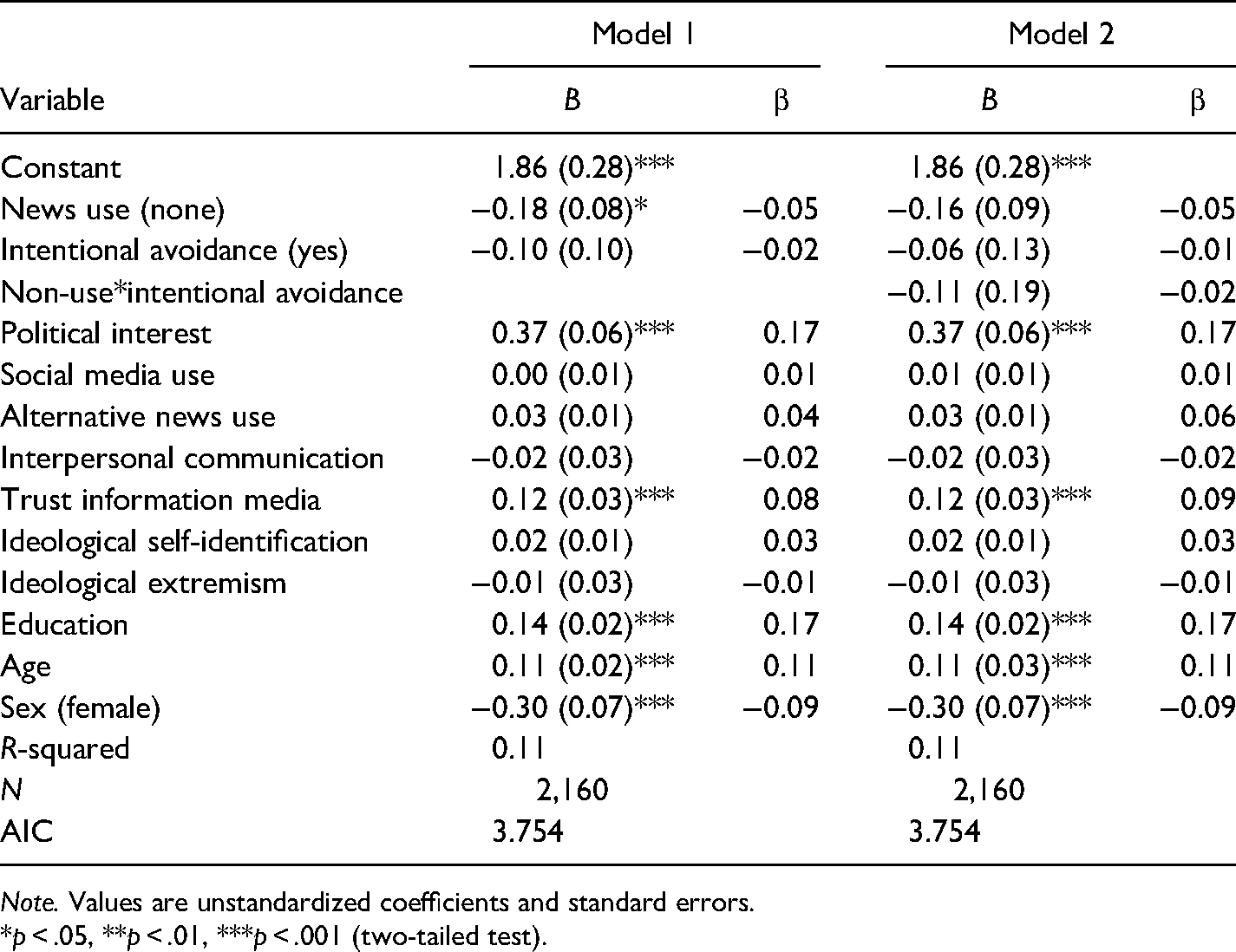
Moving from describing patterns to multivariate analyses, we conduct ordinary least squares (OLS) regression analyses in which we include two binary variables to assess the impact of news use (0 = regular news use, 1 = no/minimal news use) and intentional avoidance (0 = no intentional avoidance, 1 = intentional avoidance). 7 This approach allows us to explore a possible interaction between actual consumption and intentions. The results of Model 1 (Table 4) show that using mainstream media for news consumption relates to higher levels of knowledge (negative effect of non-use). Intentional avoidance is not significantly related to political knowledge, as its main effect in Model 1 and the interaction term in Model 2 do not reach the conventional 95 percent level of statistical significance. The results also show that political interest and trust in information from the mainstream media have a positive bearing on levels of knowledge. In addition, demographic factors also matter, as knowledge is positively related to level of educational attainment, age, and being male. No association with ideological orientations is however found. Based on all this, we can accept H1, as less consumption indeed is related to lower levels of knowledge. In response to H2 and RQ1, the results show that intentional news avoidance does not have an impact on knowledge.
OLS Regression, Predicting Knowledge (0–10).
Note. Values are unstandardized coefficients and standard errors.
*p < .05, **p < .01, ***p < .001 (two-tailed test).
Patterns of News Use and (Mis)beliefs
While the above results pertain to uncontested knowledge, a key question is whether the same patterns hold in the context of more contested issue domains. To investigate this, we conduct the same set of analyses to investigate the relationship between news use and avoidance and differences in the degree to which people have correct beliefs related to climate change, vaccines, GMOs, crime, and immigration. For the ease of interpretation, we combined the scores into one overarching index. Importantly, and different from the previous dependent variable knowledge, lower scores on accurate beliefs do not indicate the simple absence of knowledge. Instead, lower scores imply a larger presence of misbeliefs; beliefs that are not compatible with the best available scientific evidence. Also, while knowledge was measured on a 10-point scale, the beliefs index runs from 0 (100 percent misbeliefs) to 1 (100 percent accurate beliefs).
Table 5 shows the mean levels of the accurate beliefs index across the four groups of news users. These results show that intentional avoiders score lowest on accurate beliefs, very closely followed by the regular users/avoiders. In other words: those who indicate to avoid news actively hold the strongest misbeliefs with regard to these issues. This is different from the results related to uncontested issue domains (Table 3) in which the non-users scored lowest, regardless of their intentional avoidance. Variance analysis furthermore confirms that group differences are significant (F(3, 2156) = 6.30, p = .000) and Tukey tests reveal that the unintentional avoiders and the intentional avoiders and users/avoiders differ significantly as do the intentional avoiders and regular users.
Accuracy of Beliefs Across Groups of News Users.
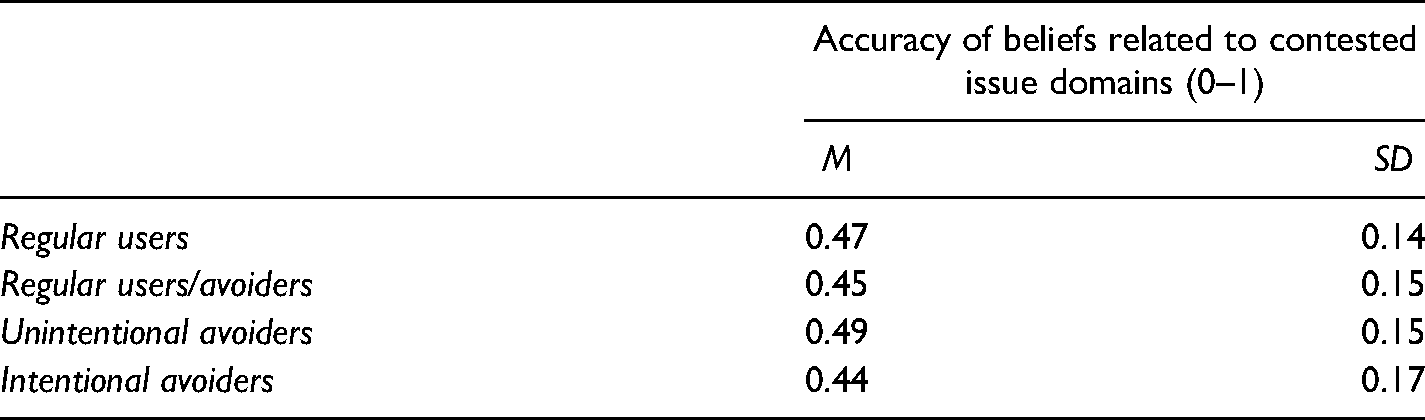
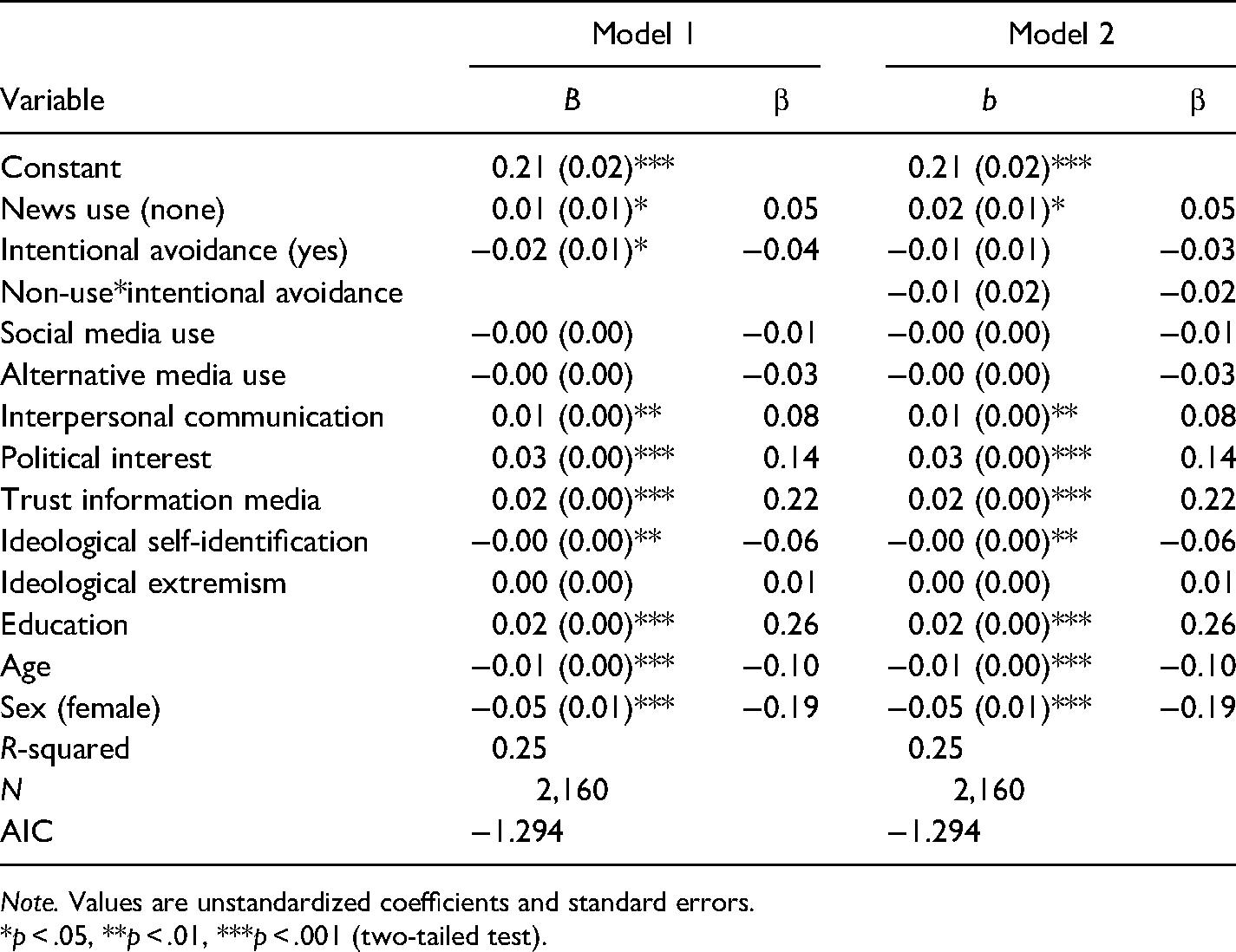
Table 6 presents the results of a simple OLS regression predicting the accuracy of beliefs. Different from the findings reported in Table 4, we find that not using the news from mainstream media is positively related to the accuracy of beliefs. In other words: while mainstream media use is positively related to knowledge when issues are uncontested, there is a negative association when issues are subject to public controversies. 8 To answer RQ2 in more detail, we conducted an additional analysis that further breaks down the group of news users based on the cluster analysis reported in the methods section. The results show that the non-users indeed have most accurate beliefs and differ significantly from the news omnivores, that is, those with the most diverse news diet, who score on average 0.033 point lower than non-users. No significant relationship is found between the accuracy of beliefs and the use of television or tabloid news (see also online Supplemental information file, Table A6). In line with Hypothesis 3, we find that intentional avoidance is negatively related to the accuracy of people's beliefs. Another analysis indicates that news frequency as such, measured by simply adding the frequency scores of the eight separate national outlets does not affect the accuracy of beliefs (see online Supplemental file, Table A7). Key is thus the type of news use and not the frequency of news use.
OLS Regression, Predicting Accuracy of Beliefs Related to Contested Issue Domains (0–1).
Note. Values are unstandardized coefficients and standard errors.
*p < .05, **p < .01, ***p < .001 (two-tailed test).
Beyond this, the standardized regression coefficients indicate that media trust is a strong predictor of correct beliefs; people who trust the media tend to hold more accurate beliefs (and vice versa). Also demographics matter: education is strongly and positively related to the accuracy of beliefs but age and gender (female) have a negative effect. Different from the results in Table 4, we see that ideological orientations do play a role when explaining (mis)beliefs. The negative coefficient indicates that a more right-leaning political orientation is related to less accurate beliefs. For knowledge related to uncontested issues, no association with ideological self-identification was found.
Finally, we observe a substantial difference in degrees of explained variance. The set of variables does explain some of the variation in levels of knowledge in our sample (R2 = 0.11). However, they do a much better job when predicting (mis)beliefs, as our model indicates that 25 percent of the variance is explained. Based on this, combined with the diverging main effects, we conclude that the factors to which knowledge is related differ substantially across issue domains.
As an additional robustness check, we reran the model five more times, each time excluding the questions for one issue in the construction of our dependent variable. We compared the coefficients of these models with those from Model 1 presented in Table 6. In all instances, we see that the coefficients are in the same direction. When excluding questions related to vaccines, the effects of both news use and intentional avoidance are significantly smaller than in the original analysis, with the news use one turning insignificant. When excluding the crime questions, the effect of intentional avoidance increases significantly. These additional analyses indicate that the strength of the reported effects depends upon the composition of the beliefs index, as some issues are indeed more contested than others.
Discussion
The main purpose of this study was to investigate three hitherto unaddressed questions: which patterns of news use can be identified when distinguishing between intentional and unintentional news avoidance, how are these patterns related to knowledge, and how are these patterns related to the accuracy of beliefs related to contested issue domains. Based on K-means cluster analyses, we identified four patterns of news use, and examined how these patterns relate to both uncontested and contested knowledge. This approach was revealing, as the results show that the relationship is substantially different: whereas uncontested knowledge is positively related to mainstream news media use, the accuracy of beliefs related to contested issues does not benefit from using the mainstream news media. Also, intentionally avoiding the news is not related to levels of uncontested knowledge but is negatively associated with the accuracy of beliefs. A possible explanation for this result is that people who actively avoid the news, do not agree with the worldview dominant in mainstream news coverage. As most Swedish mainstream media bring the news in line with the best available scientific evidence—e.g., reporting about anthropogenic climate change—, people who believe otherwise might not want to expose themselves to this information. This also prompts the question about causal direction; it might well be that holding misbeliefs and intentional avoidance of mainstream media is bidirectional or is driven by the former. All in all, the results suggests that different mechanisms are at work for uncontested knowledge versus knowledge related to contested issue domains, a claim that is further supported by the observation that the same model has a much higher explanatory power when predicting the accuracy of beliefs than it has when predicting uncontested knowledge.
The results speak to a growing literature on misperceptions that examine the origins, spread, and consequences of beliefs not compatible with available evidence in contested issue domains (e.g., Flynn et al. 2017; Reedy et al. 2014). However, as the vast majority of evidence stems from the U.S. context, this study illustrates that the difference between uncontested and contested issue domains also pertains to less polarized countries. This raises interesting questions about the role of ideology and partisanship. In the United States, the two dominant parties not only compete on the basis of policy stances, but they also fight over facts. Combined with a highly polarized media landscape (Benkler et al. 2018), scientific evidence may quickly become controversial. In many ways, Sweden is different. Having a multiparty system, strong public broadcasters, and a less polarized public sphere, Sweden is a less likely case to observe a gap between uncontested and contested issue domains. And yet, we do.
We conclude that when studying knowledge, it is useful to consider the degree to which issues are subject to public controversies. In the case of uncontested issues, the absence of knowledge indeed refers to beliefs not being present. However, when dealing with more contested issues, the absence of knowledge may actually imply the presence of different beliefs, namely beliefs that are not compatible with scientific evidence or expert consensus. Furthermore, the finding that people do seem to learn from the news but only in the realm of uncontested issues, is in line with previous research. People holding misbeliefs on contested (or politicized/polarized) issues may encounter correct information but use it to develop counterarguments or interpretations that support their existing (mis)beliefs (e.g., Flynn et al. 2017; Taber and Lodge 2006).
Of course, our paper is not without limitations. First, we have focused on news minimalists and not on those citizens who literally do not consume any news at all. One could argue that such an operationalization comes at the expense of conceptual clarity, but we believe that adopting a broader definition has advantages that outweigh the limitations. Most importantly, focusing on those who consume zero outlets comes with the risk of underestimating the phenomenon because this group is typically very small. In a society in which the latest news is readily available 24/7, one must work rather hard to not consume any news at all. Second, having a knowledge index as one of the dependent variables also meant that we lost a considerable number of observations (due to nonresponse on one or more items). Additional analyses indicated a number of small, yet significant differences between our final sample and these excluded respondents (see Table A1 in the online Supplemental information file). As our focus has been on the exploration of relationships—and not on providing point estimates of population means—we believe that these differences do not bias our results. However, as empirical researchers we consider, of course, a substantial loss of observations undesirable. Finally, we choose to combine five issues that have been subject to public controversies. The issues vary in terms of their degree of politicization, their salience in the public sphere, and level of obtrusiveness. An alternative approach would be to present the results for each issue separately and reserve more room for reflection on the specific characteristics of each of them. Because our focus has been on the diverging mechanisms driving uncontested versus contested knowledge, we considered such an approach too specific, but it might be an interesting avenue for future research.
We believe that our paper addresses important questions about patterns of news use and avoidance, and about the relationship of these patterns with different types of knowledge. As our analyses are based on cross-sectional data, we must be careful with causal inferences. That said, the findings speak to different literatures as they combine insights from research on news avoidance with extant work on misbeliefs. We hope that by bridging these fields, this study provides a fruitful point of departure for future research that may focus on the causal direction of the established relationships.
Supplemental Material
sj-docx-1-hij-10.1177_19401612211031457 - Supplemental material for Knowledge and the News: An Investigation of the Relation Between News Use, News Avoidance, and the Presence of (Mis)beliefs
Supplemental material, sj-docx-1-hij-10.1177_19401612211031457 for Knowledge and the News: An Investigation of the Relation Between News Use, News Avoidance, and the Presence of (Mis)beliefs by Alyt Damstra, Rens Vliegenthart, Hajo Boomgaarden, Kathrin Glüer, Elina Lindgren, Jesper Strömbäck and Yariv Tsfati in The International Journal of Press/Politics
Footnotes
Declaration of Conflicting Interests
The authors declared no potential conflicts of interest with respect to the research, authorship, and/or publication of this article.
Funding
The authors disclosed receipt of the following financial support for the research, authorship, and/or publication of this article: This work was supported by the Riksbankens Jubileumsfond (grant number M18-0310:1).

Supplemental Material
Supplemental material for this article is available online.
Notes
Author Biographies
References
Supplementary Material
Please find the following supplemental material available below.
For Open Access articles published under a Creative Commons License, all supplemental material carries the same license as the article it is associated with.
For non-Open Access articles published, all supplemental material carries a non-exclusive license, and permission requests for re-use of supplemental material or any part of supplemental material shall be sent directly to the copyright owner as specified in the copyright notice associated with the article.
