



Abstract
The transition from low- to high-choice media environments has had far-reaching implications for citizens’ media use and its relationship with political knowledge. However, there is still a lack of comparative research on how citizens combine the usage of different media and how that is related to political knowledge. To fill this void, we use a unique cross-national survey about the online and offline media use habits of more than 28,000 individuals in 17 European countries. Our aim is to (i) profile different types of news consumers and (ii) understand how each user profile is linked to political knowledge acquisition. Our results show that five user profiles – news minimalists, social media news users, traditionalists, online news seekers, and hyper news consumers – can be identified, although the prevalence of these profiles varies across countries. Findings further show that both traditional and online-based news diets are correlated with higher political knowledge. However, online-based news use is more widespread in Southern Europe, where it is associated with lower levels of political knowledge than in Northern Europe. By focusing on news audiences, this study provides a comprehensive and fine-grained analysis of how contemporary European political information environments perform and contribute to an informed citizenry.
A fundamental prerequisite for well-functioning democracies is that their citizens are at least reasonably informed about politics and current affairs (Delli Carpini and Keeter 1996). This is not to say that everyone has to be an expert on all facets of politics: scholars might argue about exactly how informed citizens should be and what kind of knowledge is most important (Delli Carpini and Keeter 1996; Lupia 2016), but few would dispute the contention that an informed citizenry helps democracy perform better.
Against this background, today's political information environments, characterized by innumerable ways to become exposed to and produce political information, provide both new opportunities and new challenges. In this paper, political information environments are conceptualized as encompassing both the supply of news about politics and current affairs and the demand for such news and information (Van Aelst et al. 2017). A basic assumption is that the wider the supply of verified and trustworthy news about politics and current affairs that political information environments provide, and the more individuals are exposed to such news, the higher the likelihood that citizens will learn about politics and society (Aalberg and Curran 2012).
One key question in this context is how people combine the use of different types of media and how that combination is related to political knowledge. Thus far, comparative research investigating citizens' media use has been predominantly descriptive, focusing on the use of different media types such as newspapers and television. Furthermore, virtually all comparative research about media effects on political knowledge focuses on the impact of using different media or media types (Aalberg and Curran 2012; Fraile and Iyengar 2014; Soroka et al. 2013). Neither strand of research considers that citizens increasingly use multiple media sources and that it is this combination that might ultimately matter most for what people learn.
In recent years, more in-depth research on media use has focused on investigating different news user repertoires, user profiles, or news diets, identifying news user repertoires such as, for example, minimalists, traditionalists, and online only (Bos et al. 2016; Edgerly 2015; Hasebrink and Domeyer 2012; Kim 2016; Strömbäck et al. 2018; Wolfsfeld et al. 2016). These studies have provided valuable evidence on media use patterns in single countries, but this approach has not yet been applied in comparative research. Hence, it is unclear to what extent these findings can be generalized to other cultural contexts or countries.
By applying an audience-oriented perspective to the study of political information environments, the purpose of this paper is hence to (1) explore and map what news user profiles can be found across European countries and (2) examine the relationship between different news user profiles and citizens' knowledge about politics and current affairs. To this end, we build on a unique cross-national survey tapping online and offline media use habits of more than 28,000 individuals across seventeen European countries. Our results indicate that both traditional and some online-based news user profiles are associated with higher political knowledge. However, online-based news use is more prevalent in Southern Europe, where it also seemingly conveys lower levels of political information. Implications of these and other findings for comparative research and the conditions of informed democracy are discussed in the conclusion.
An Audience-Oriented Perspective on European Political Information Environments
That informed citizens are key to a well-functioning democracy is well documented in the social science literature. Individuals in tune with current affairs and politics are more able to discern argument quality and political competence, are more politically involved, and are better equipped to connect their vote decisions to their interests and worldviews (Brady et al. 1995; Delli Carpini and Keeter 1996; Hochschild and Einstein 2015). While scholars might argue about exactly how informed citizens need to be and what kind of knowledge is most important (Delli Carpini and Keeter 1996; Lupia 2016), few would debate that the media is an important driver of political learning as it allows citizens to frequently monitor the political process and improve their ability to make sense of the political realm (Aalberg and Curran 2012; Althaus 2003; Dimitrova et al. 2014; Luskin 1990; McLeod et al. 1996; Soroka et al. 2013; Shehata and Strömbäck 2021).
A relevant concept in this context is the political information environment (Esser et al. 2012). While this concept has both a supply side and a demand side (Van Aelst et al. 2017), we focus here on the audience side, referring to citizens' consumption of news media and political information. From a normative standpoint, investigating people's consumption of political news is necessary to elucidate how effective different media architectures are in making available, conveying, and helping individuals process relevant information. As the argument goes, the wider the use of verified and trustworthy news about politics and current affairs, the higher the likelihood that citizens will learn about politics and competently participate in public life. Furthermore, putting audiences at the center of comparative media research provides a broader understanding of how media operates in current high-choice media environments, where media suppliers find themselves under increasing pressure to target specific audiences, and audiences' preferences have become more important predictors of the amount and quality of information that media outlets provide (Strömbäck et al. 2018).
While some studies have engaged in comparative analyses of the media supply side (Hallin and Mancini 2004; Humphreys 1996), less attention has been devoted to empirically scrutinizing how different political information environments perform from an audience-driven perspective. A few exceptions are worth mentioning. Esser et al. (2012: 252), for example, used aggregated levels of TV news viewing or newspaper circulation in a country as “structural parameters of political information environments”. Similarly, Brüggemann et al. (2014) employed levels of newspaper reach to measure the inclusiveness of a media market (Brüggemann et al. 2014), while Shehata and Strömbäck (2011) assessed the TV centrality and newspaper centrism of media environments. Their findings show that media environments characterized by press centrism are associated with narrower information gaps between more and less educated individuals and more and less politically interested citizens (Shehata and Strömbäck 2011). Examples include the Scandinavian countries and other small media markets such as Switzerland and Austria. In such countries and in others that belong to the so-called democratic corporatist model (Hallin and Mancini 2004), media seem to play a more all-encompassing and equalizing role than in most Southern and Eastern European countries. This inclusive and more informative role of the media is also due to the strength and high audience share of high-quality public service news media, which has proven potential to spill-over to other media channels (Aalberg and Curran 2012; Castro-Herrero et al. 2018; Pfetsch 1996; Van der Wurff 2005). Spillovers from public to private media outlets are also attested to by the high distribution and reach of more plural, catch-all media outlets in most of these media environments (Marquis et al. 2011; Nord 2016).
A more recent strand of comparative studies has also shown country variance with respect to the use of different types of media for accessing the news. In some European countries, online news outlets and social media are now the most important sources of information, ahead of TV (Newman et al. 2019; Westlund and Ghersetti 2015). Extant research suggests that Italian, Hungarian, Romanian, and Polish users tend to follow social media for news in greater numbers than users in the United Kingdom, Germany, Switzerland, Sweden, and Norway, where consumption of traditional media and higher subscriptions to national news brands with a long tradition of professional journalism persist (Fletcher and Nielsen 2018; Newman et al. 2019). In contrast, in Italy and Poland, negative perceptions and low trust in institutional media tend to be more widespread (Steppat et al. 2020). At the same time, research has shown that alternative media outlets and antiestablishment voices that undermine the credibility and legitimacy of mainstream and more traditional media have proliferated in recent years (Figenschou and Ihlebæk 2019; Heft et al. 2020; Ladd 2011).
While comparative research on citizens' media use has advanced over the last years, it remains predominantly descriptive and focused on the use of different media types such as newspapers or television. Such studies have not taken into account the fact that citizens increasingly engage in media and outlet mixing.
A Mix of News Media Uses
As media environments and patterns of (news) media use have become increasingly complex, scholars have realized that it is insufficient to investigate the use of individual media or media types—or the effects thereof. Consequently, a growing number of studies in recent years are using sophisticated analytical techniques to explore the combinatory use of different media sources and formats (Strömbäck et al. 2018: 415; Wolfsfeld et al. 2016). While the terminology varies, research in this area has found an array of personal news repertoires or typologies of user profiles or news diets by examining patterns of media use in Austrian, German, Swedish, Dutch, and Israeli news media markets (Bos et al. 2016; Hasebrink and Schmidt 2012; Strömbäck et al. 2018; Trilling and Schoenbach 2013; Van Cauwenberge et al. 2010; Van Rees and Van Eijck 2003; Wolfsfeld et al. 2016). These typologies span the use of traditional and online-only media, social media, as well as public service media, tabloids, and other popular formats. Wolfsfeld et al. (2016), for example, found four types of political information repertoires in Israel, which they labeled news avoiders, traditionalists, social, and eclectics. These repertories were built along a traditional-social media continuum through a series of analyses of variance. As another example, by using principal component analysis and cluster analysis, Edgerly (2015) identified six news repertoires in the United States, which she labeled news avoiders, online only, TV and print, online and liberal, conservative, and news omnivores.
More recently, Bos et al. (2016) and Strömbäck et al. (2018) used latent class analysis to identify individual news profiles in the Netherlands and Sweden, finding four and five news user repertoires, respectively. Focusing on the Netherlands, Bos et al. (2016) found a group of news minimalists, popular news consumers, users of public media, and omnivores who watch and read all sorts of news and current affairs media profusely. Strömbäck et al. (2018) identified a similar typology of users for Sweden, with minimalists, public and popular news users, as well as local news consumers and users of social media news. Notably, both studies found the largest group to be news minimalists, that is, individuals consuming little news compared to the rest of the user profiles. Against this background, the first research question (RQ1) this study will explore is which news user profiles can be identified across the seventeen countries considered. The second research question (RQ2) asks how widespread the identified news user profiles are across different countries.
Although some of the above-mentioned studies associated different user profiles with various degrees of offline and online participation (Edgerly et al. 2018; Strömbäck et al. 2018), and levels of political knowledge (Wolfsfeld et al. 2016), thus far, there is no comparative study investigating the prevalence of different user profiles and their relationship with political knowledge. Hence, it is not clear how generalizable existing findings are with respect to the nature and implications of different user profiles.
News Use and Political Knowledge
Extant research has investigated the impact of using individual media types or specific news media content on political knowledge. These studies have scrutinized the particular role of newspaper and TV consumption, public and commercial media news, alternative media and infotainment, social media, or else selective media exposure in explaining levels of political knowledge (Aalberg and Curran 2012; Castro Herrero and Hopmann 2017; Dimitrova et al. 2014; Fraile and Iyengar 2014; Shehata and Strömbäck 2011, 2021; Skovsgaard et al. 2016; Soroka et al. 2013). As an example, previous research has shown that the use of public service broadcasting for news is positively associated with knowledge of hard news, albeit to different degrees depending on the country (see Aalberg and Curran 2012; Soroka et al. 2013). More recently, a growing number of studies have focused on the information potential of online and social media. Shehata and Strömbäck (2021), for example, conducted a longitudinal survey in Sweden and found that using social media for news, in contrast to online news websites and more traditional outlets, has null effects on political learning. Several other studies in different contexts have confirmed that people usually learn very little about political or societal relevant issues by following social media platforms like Facebook (Boukes 2019; Lee and Xenos 2019; van Erkel and Van Aelst 2020). Scholars have suggested multiple explanations for these findings, from the more personalized and one-sided streams of news to information overloads or simply a lack of relevant factual information on social media.
While research shows that the knowledge gains from using news media vary across news sources and media types, as mentioned above, there is no study investigating the joint implications of different constellations of news media uses on political knowledge across countries with differing opportunity structures for political information. Filling this void is important for two main reasons. First, in reality, people consume a mix of different news and news sources, and ultimately the mix should matter more than the use of specific media or media types. Second, in some countries, public service media or traditional news brands set the quality standards of news and provide more and often more ideologically diverse information (Castro-Herrero et al. 2018). As previous research has shown, where accessing high quality, diverse, and cross-cutting news is less costly, people's agency tends to play a weaker role in explaining news habits and their effects than in contexts where media have less of a leveling effect and do not cut across different individual preferences to the same extent (Nir 2012; Shehata and Strömbäck 2011). This suggests it is not necessarily the case that different user profiles are related to political knowledge in the same way in different countries. Hence, a final set of research questions in this study asks what the linkage is between the identified news user profiles and political knowledge acquisition (RQ3) and whether this relationship differs across countries (RQ4).
Since this is the first comparative study aiming to identify different news profiles and their relationship with political knowledge across a wide array of European countries, it is largely exploratory. By adopting an audience-driven perspective to the study of political information environments, we will dissect European political information publics along dimensions relevant to characterize news patterns and inductively build different news repertoires. We will also examine attitudinal and demographic correlates of different media user profiles to better understand the idiosyncrasies and motivations of each news profile. Finally, we will analyze levels of political knowledge for each user profile. Taken together, this will allow us to predict how informative each of these mixes of media uses is. We will then explore how prevalent each news profile is across Europe and whether these profiles convey the same level of information across different countries.
Methods
Data
To identify and map different news user profiles and describe how they are linked to levels of political knowledge across different European information environments, we relied on the first wave of a two-wave panel survey we fielded in seventeen European countries (Austria, Belgium, Denmark, France, Germany, Greece, Hungary, Israel, Italy, the Netherlands, Norway, Poland, Romania, Spain, Sweden, Switzerland, and the United Kingdom) in December 2019. The rationale for only using the first wave is that the COVID-19 pandemic that hit the world in early 2020 unfolded between the first and the second wave, making the results for the second wave barely generalizable. 1
The survey contains a large battery of questions about the use of different offline and online news outlets as well as political information habits and political attitudes, cognitions, and behaviors, making it particularly suitable to investigate news audiences across different political information environments. The fieldwork was conducted by Dynata, and quotas were used for age, gender, and metropolitan region. A total of 28,317 respondents completed the online survey in Wave 1 and are used for the analyses. The sample size per country ranges from 1,600 to 1,723 cases. The average age in Wave 1 was 42, and 55.4 percent of the sample were female. The sample in each country is fairly representative of the population at large, although lower-educated and older citizens are slightly underrepresented (country-by-country sample composition and representativeness available from the authors).
Variable Description and Analytical Strategy
To identify different news user profiles along theoretically relevant dimensions, we employed latent profile analysis (LPA) (Bos et al. 2016; Strömbäck et al. 2018). More specifically, we inductively defined each individual's class/profile membership by using fourteen survey items (see Table 1 for item description and question wording for each indicator). When selecting survey items, we built on and extended previous operationalizations used in the literature on repertoires of news users and news consumption. We included (1) frequency of use of different media types, such as TV news use, radio, and public service broadcasting for news and frequency of newspaper reading (Strömbäck et al. 2018). We also included two questions tapping (2) the frequency of use of Internet-based news sources and of social media for news (Newman et al. 2019; Westlund and Ghersetti 2015) and two questions tapping (3) the number of news sources visited, namely, the number of social platforms for news and number of news outlets used (Trilling and Schoenbach 2013). Additionally, we included two items tapping (4) particular content genres (Bos et al. 2016; Kim 2016), namely, the use of alternative media and infotainment. Finally, specific news seeking patterns, that is, (5) selective exposure, incidental news exposure, news avoidance, and exposure to nonjournalistic sources, were also added to our LPAs to account for how actively and selectively people expose themselves to political information in times of abundant media choice. By considering these patterns, our analysis resonates with more comprehensive approaches resorting to both media outlets and the nature of their content to build ideologically-driven news repertoires (Edgerly 2015), partisan media diets (Moehler and Allen 2016), or to assess audience fragmentation online (Yang et al. 2020). The later study investigated various audience divides (ideological segregations, informed users/news avoiders) to illustrate the extent to which people take advantage of current online news options. Overall, our operationalization of news user profiles accounts not only for the number and combination of sources citizens use “to keep up with the political world” (Wolfsfeld et al. 2016: 2099), but also the frequency of use of different formats and genres and a wide variety of news-seeking and political information habits inherent in current high-choice media environments.
Survey items and question wording.
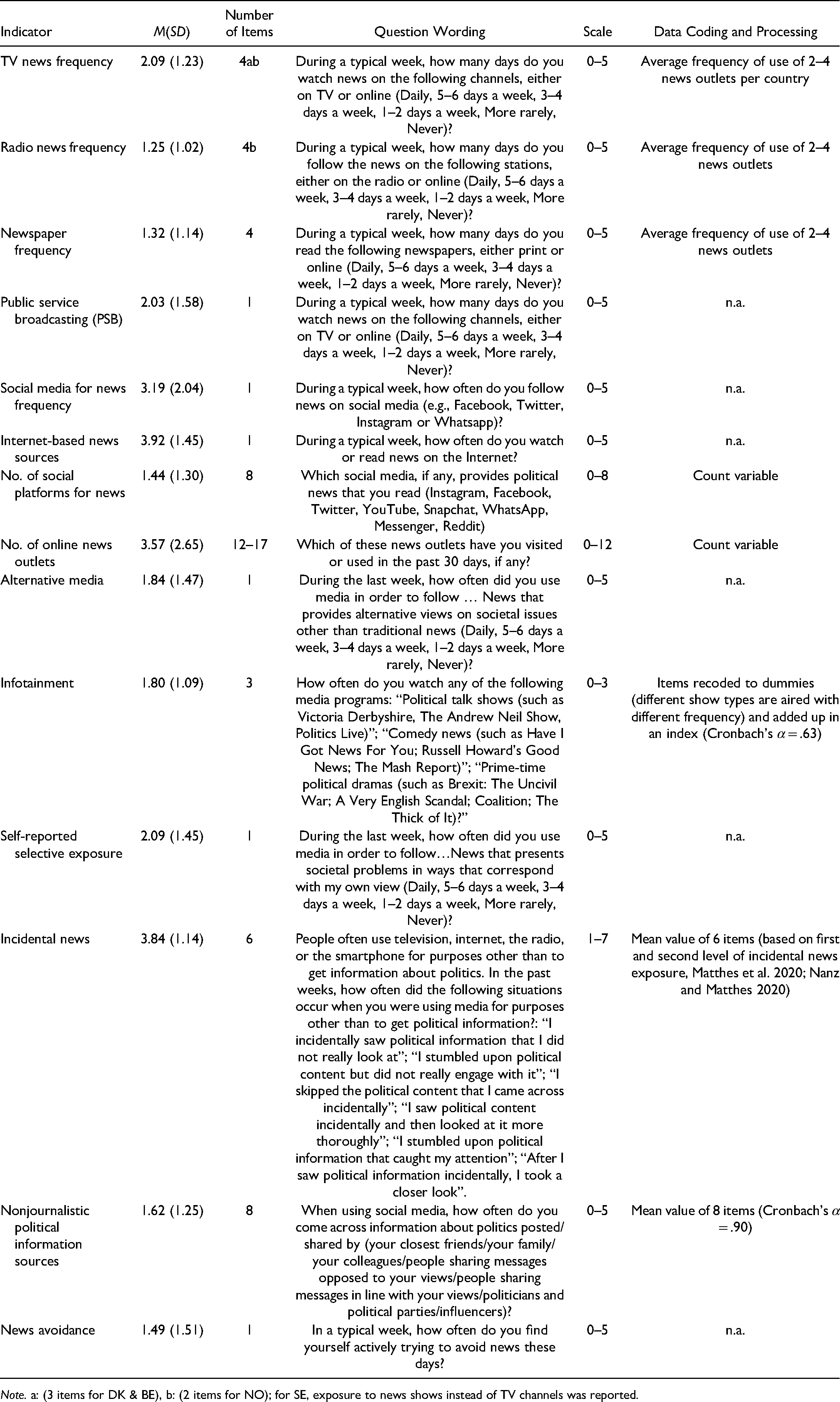
Note. a: (3 items for DK & BE), b: (2 items for NO); for SE, exposure to news shows instead of TV channels was reported.
The resulting news profiles were additionally regressed on socio-demographics and individual predictors to characterize in greater detail each user profile. To this end, we used mixed-effect models with restricted maximum likelihood (REML) and an adjustment for the relatively small number of clusters (countries) using the Kenward–Roger correction (Kenward and Roger 1997; McNeish and Stapleton 2016). 2 In these models, we included several variables that research has shown to have an impact on news media use. More precisely, we included political interest (responses ranging from (1) “Not at all” to (7) “Very interested”) (Delli Carpini and Keeter 1996), media perceptions and attitudes such as trust in media (operationalized as an additive index of twelve to seventeen items assessing the trustworthiness of different specific national media brands), and news-finds-me perceptions (Miller and Krosnick 2000; Strömbäck and Shehata 2019). We operationalized news-finds-me perceptions as in Gil de Zúñiga et al. (2017). 3 Finally, we also included age, gender, and education 4 in our models as controls.
To investigate levels of knowledge among different user profiles, we used a battery of questions tapping surveillance political knowledge (Barabas and Jerit 2005; van Erkel and Van Aelst 2020). More specifically, we used seven multiple-choice questions capturing knowledge about both international and national affairs, and both policy-specific and actor-centric political knowledge (question wording of the items for all countries is listed in the Supplemental Material file). Using these items, we constructed an additive index with recoded binary variables of correct answers to several questions. Altogether, relating different news profiles to levels of surveillance knowledge allows us to identify the kind of political knowledge people may acquire when following information through the media and the extent to which respondents' media diets are associated with the higher recall of events and people covered in the news.
Five News User Profiles
Turning to the results, in order to explore the different kinds of news users and address RQ1, we first ran a LPA (also called latent class analysis, see Strömbäck et al. 2018 for a similar approach), which allowed us to assign individuals with similar news use patterns to the same groups. In these analyses, we used the fourteen indicators summarized in Table 1. As the respondent distribution and scale for each of these fourteen variables differed, the LPA model was estimated using Gaussian, Poisson, and logit regressions for a combination of continuous variables, counts, and ordinal variables. We then performed the LPA five times to determine which model fitted the data better. A series of model fit indices were then examined to test optimal class solution. The Bayesian information criterion, which corrects for the inclusion of predictors, showed that the five-profile solution was more parsimonious than any other model. The entropy index (which considers the predicted probability of each individual to belong to a class and indicates the extent to which each profile is homogenous and well delineated, see Bos et al. 2016) also revealed that the five-class solution was preferable as it yielded values closer to 1 (see Table A1 in the Supplemental Material file for fit indices). Similar results emerged when we performed the models with covariates such as age (results available from the authors).
Figure 1 shows the five resulting news profiles and average levels of each indicator considered in the LPA. Based on the characteristics of each profile, we have labeled them news minimalists, social media news users, traditionalists, online news seekers, and hypernews consumers.
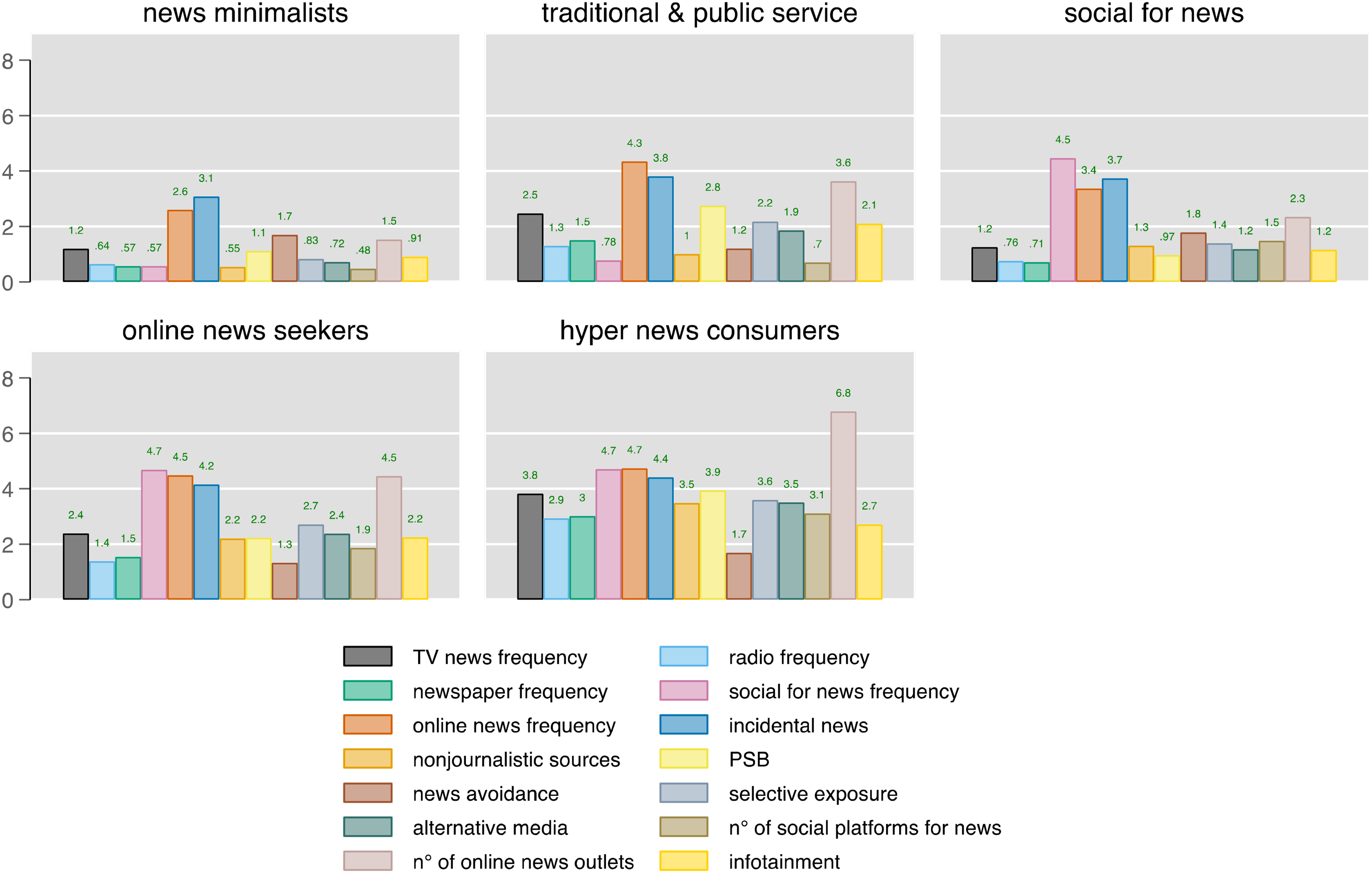
Five news use profiles.
The first group, news minimalists, comprises 17 percent of respondents. This group includes those who seldom consume news and use very few media outlets or platforms, if any. Compared to the other user profiles, minimalists score lowest on all the dimensions considered except news avoidance. As the coefficient plot in Figure 2 further shows, they are also the least politically interested, do not perceive they will be well-informed regardless of their actively following the news (news-finds-me perceptions) and are older and slightly more educated than the average news user (results of regression models are shown in Table A2 in the Supplemental Material file).
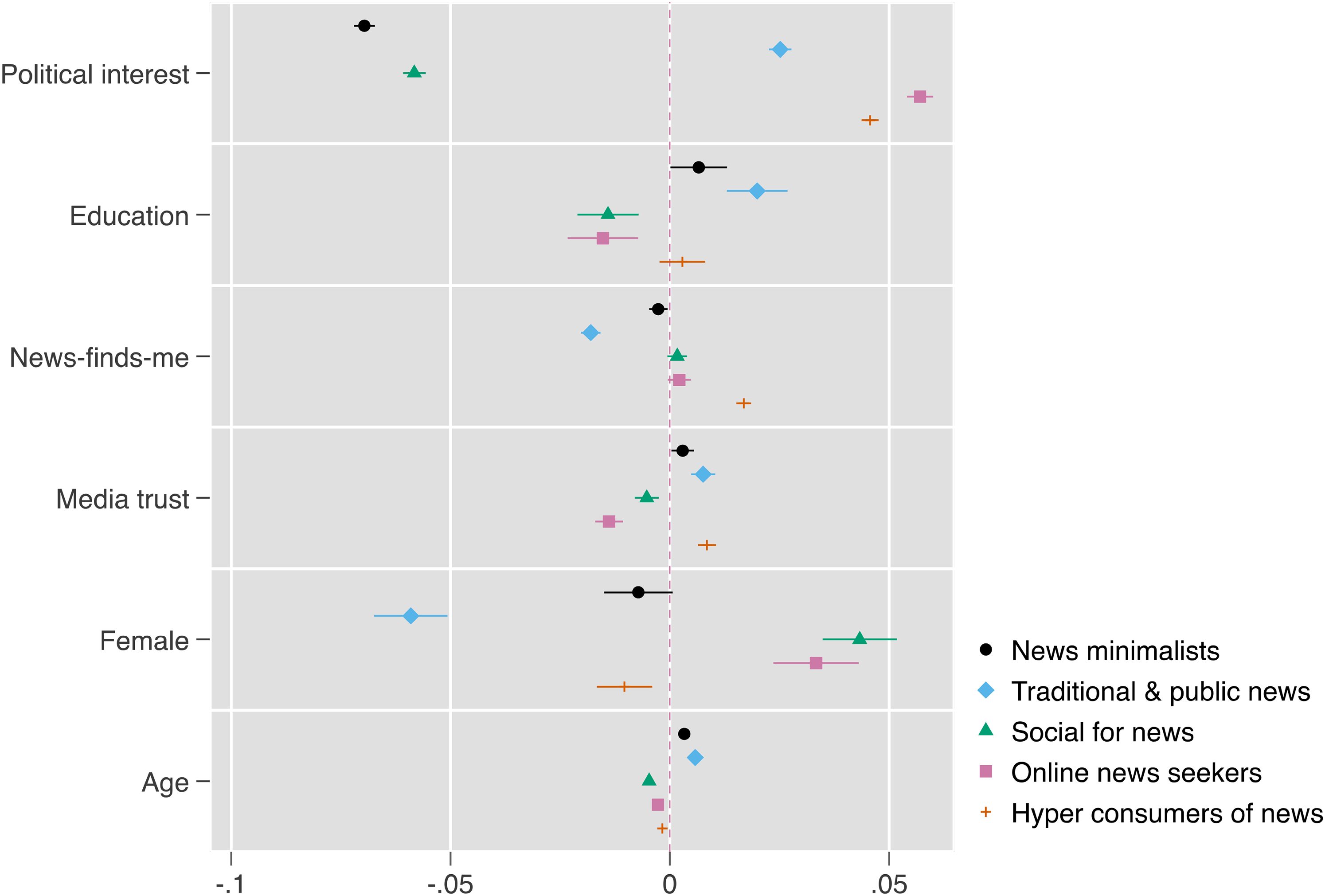
Individual predictors of each news profile (Models 1–5, Table A2 in the Supplemental Material file).
The second group of users mainly inform themselves through social media and consume little information beyond that. We labeled their profile social media news users, which comprises 22 percent of respondents. Individuals embedded in this profile show slightly higher levels of inadvertent news viewing than minimalists and are frequently exposed to news through social platforms such as Facebook, Twitter, or Instagram. Accordingly, they also express higher levels of news-finds-me perceptions, are younger than the average news user, and show low levels of media trust. They are furthermore the least educated and politically interested (see Figure 2).
We identified a third group of consumers as traditionalists (19 percent of the sample), representing those who prefer traditional and public service-oriented news sources. They watch TV more than the two previous profiles (supported also by higher levels of exposure to infotainment TV shows) and use traditional newspapers and radio. Additionally, they are the oldest and best educated, politically interested, trustful of the media, and barely feel that “news will find them.” They are, for the most part, men.
The fourth group of individuals, online news seekers, comprising 32 percent of the sample, are also often exposed to news and tend to actively use various news outlets and online platforms (although they also score high in the use of traditional news) and are generally women. They have a richer and more sophisticated news media repertoire (high number of news outlets, diverse genres, and media types) than all the above-mentioned profiles, as they engage in higher levels of selective exposure and are more prone to seeking like-minded perspectives in political information. They are also more likely to use alternative media and nonjournalistic sources than those in the former profiles and are the most skeptical and distrustful of mass media brands.
Finally, the results show a fifth group of news users that we have labeled hyperconsumers of news. They represent 10 percent of the sample. Individuals in this group use all sorts of news outlets and platforms profusely. Accordingly, on average, they score the highest on all the indicators considered (except news avoidance) and reported using between six and seven news outlets and more than three social platforms to follow the news in the last 30 days. They are also very politically interested and trustful of the media and score higher in news-finds-me perceptions.
Mapping News User Profiles Across Seventeen European Countries
While the results above pertain to the aggregated level, a key question that previous single-country studies have not been able to address is how common different user profiles are in different countries (RQ2). Figure 3 addresses this question by showing the relative distribution of each user profile by country.
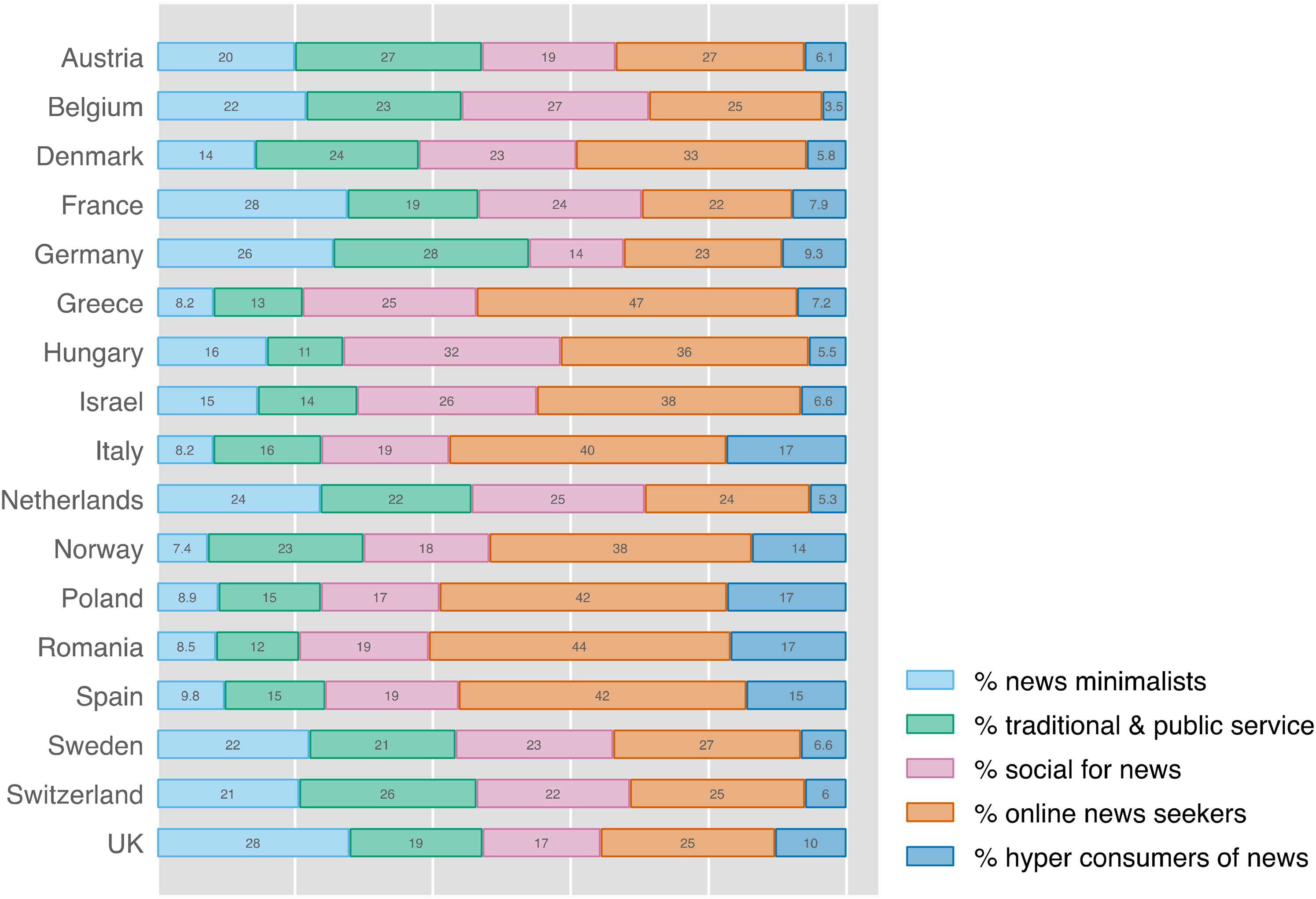
Distribution of news use profiles by country.
While all user profiles can be found in every country, significant country differences in the share of respondents belonging to each profile unfold. 5 We want to draw particular attention to four geographical patterns. First, the share of news minimalists is largest in those countries characterized by the highest degree of economic, social, and political globalization. This is true for Austria, Belgium, France, Germany, the Netherlands, Sweden, Switzerland, and the United Kingdom. These societies seem to have more diffused and internationally integrated cultures, economic openness, and stronger social mobility. 6 Second, the share of hyperconsumers is particularly large in those countries where the share of online news seekers is also large. This applies above all to two Southern and two Eastern countries: Italy, Spain, Poland, and Romania. In these four countries, the politically highly interested online news seekers strongly satisfy their thirst for information with internet- and social media-based media because (1) these sources are easily and cheaply available and because (2) the established media is generally less trusted due to a history of political partisanship and instrumentalization (Castro et al. 2017; Hallin and Mancini 2004; Steppat et al. 2020). Norway not only shows comparatively high levels of online news seeking and hyperconsumption of news, but also shows unusually high levels of traditional and public media use. In this vein, the largest group of traditional and public service users is indeed found in affluent Western welfare societies. Their media policies have been particularly supportive of public broadcasting (e.g., in Austria, Switzerland, Germany) and the press (e.g., in Denmark, Norway, Sweden), and their audiences have shown great loyalty to those traditional outlets that are considered national news leaders (Brüggemann et al. 2014; Shehata and Strömbäck 2014).
To more clearly visualize the geographic distribution for two theoretically relevant user groups outlined above, Figure 4 maps the average probability for individuals in each country to belong to the traditionalist user profile, while Figure 5 displays the average probability that a respondent belongs to the online news seekers profile. While higher levels of traditional news use are observed in the democratic-corporatist media systems of Germany, Austria, Switzerland, the Netherlands, and Belgium, as well as in the Scandinavian countries, online news seekers are concentrated in the polarized-pluralist countries of Southern Europe (Greece, Spain, Italy) and Central and Eastern Europe (Poland and Romania).
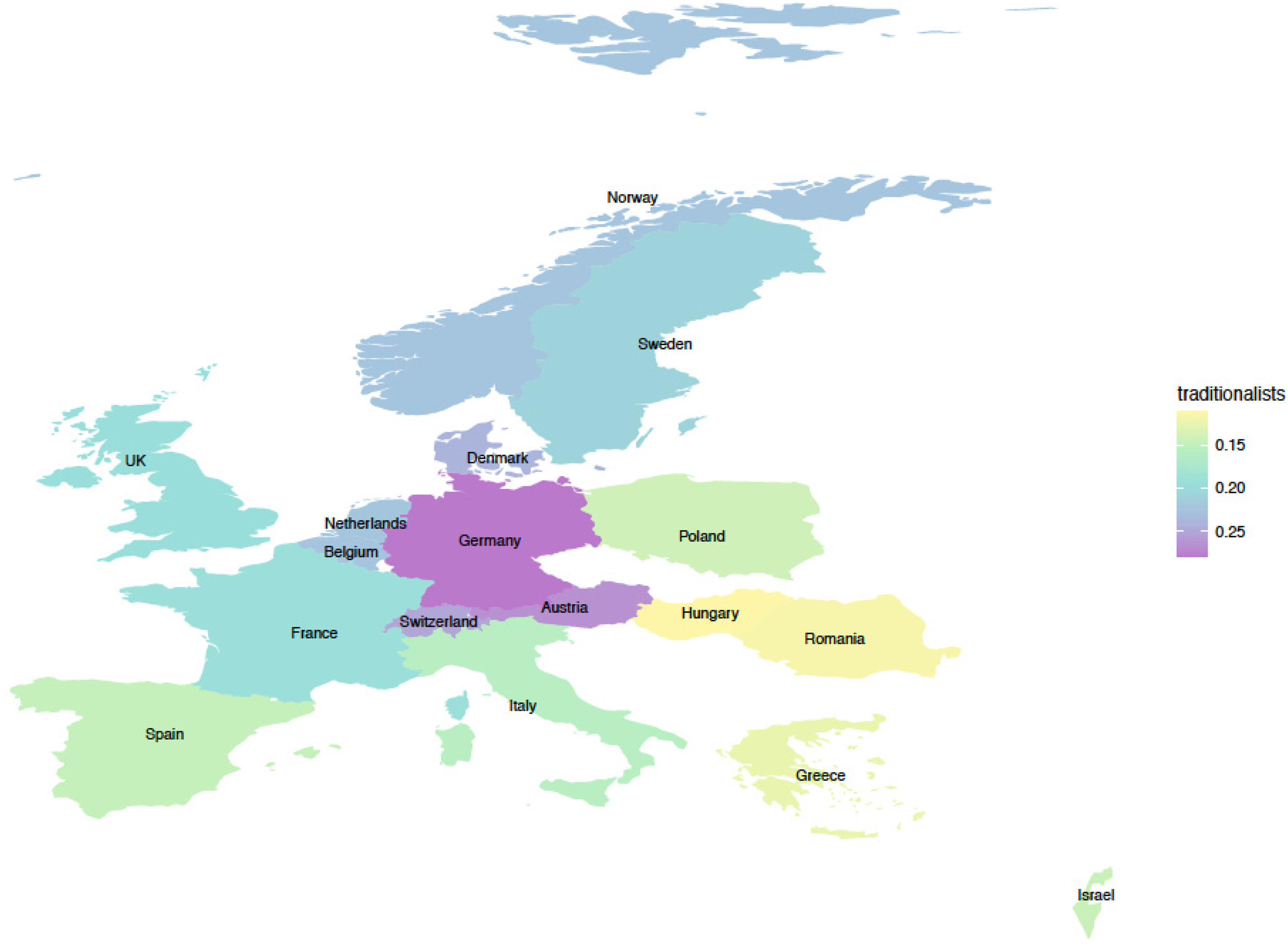
Spatial distribution of traditionalists across seventeen European countries.
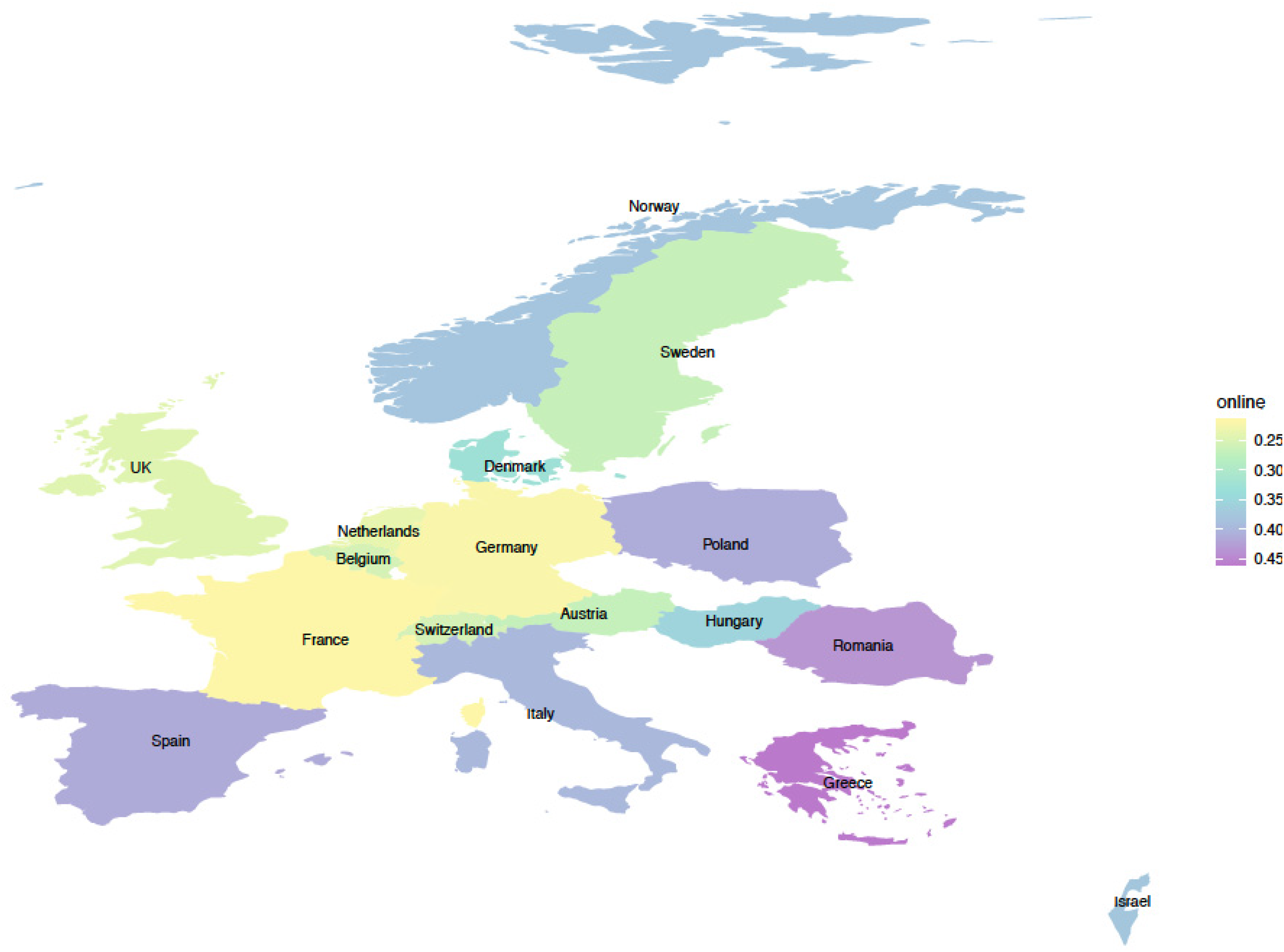
Spatial distribution of online news seekers across Europe.
News User Profiles and citizens' Knowledge About Politics and Current Affairs
Moving beyond the presence and distribution of different user profiles across countries, a key question is the linkage between these news user profiles and political knowledge (RQ3) and whether this linkage differs across countries (RQ4). To investigate these relationships, we tried to proxy how much information news users belonging to different user profiles retrieve from their news use across Europe. The results are shown in Figure 6 and are based on a multilevel regression model with surveillance political knowledge as the dependent variable and membership to the five different news profiles as the main independent variables. For the sake of interpretability, in the figure, we have plotted coefficients displaying the average marginal effects of all covariates, while the detailed results are shown in Table A3 in the Supplemental Material file. 7
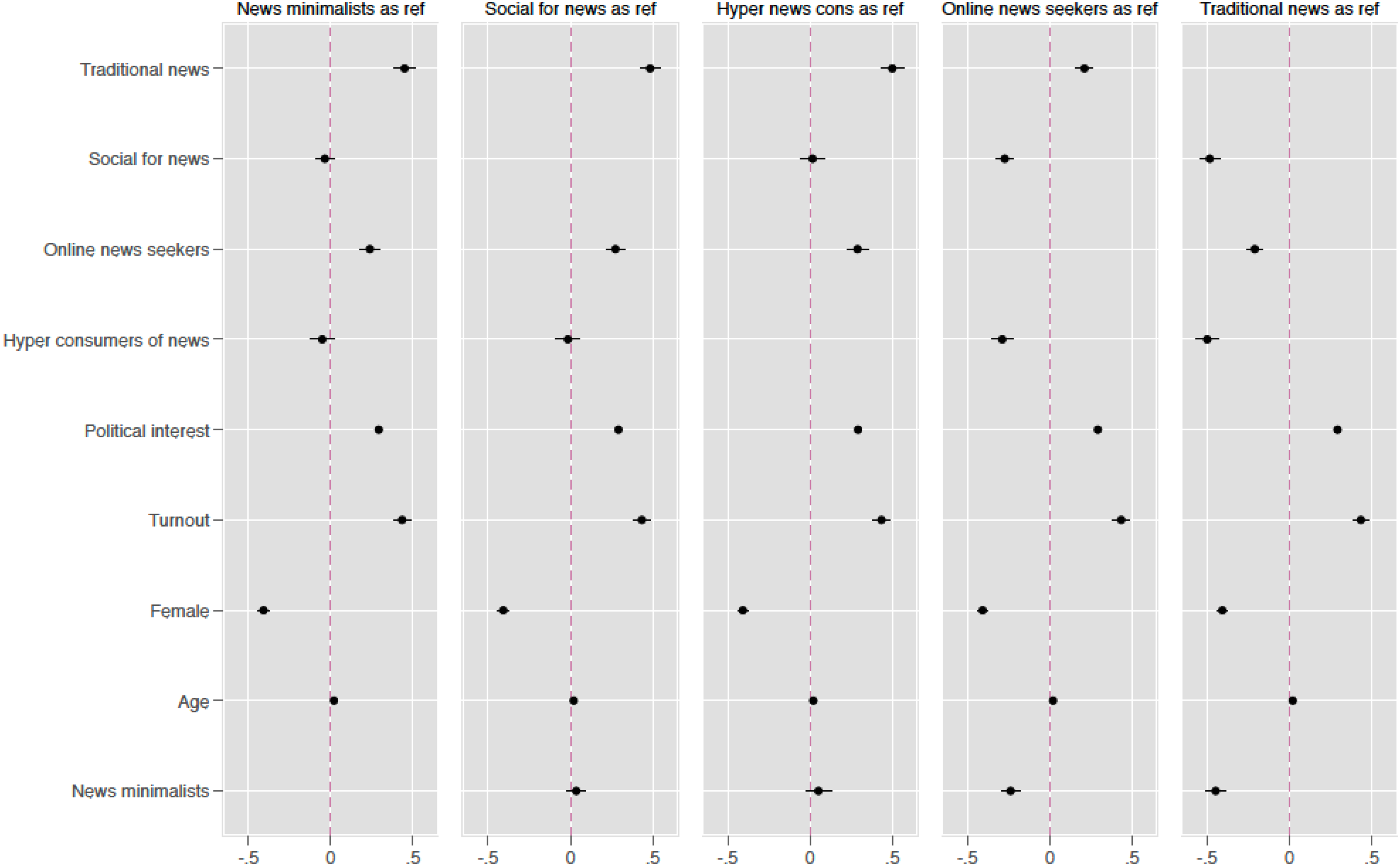
Regression coefficients of news user profiles on levels of surveillance political knowledge (Models 1–5, Table A3 in the Supplemental Material file).
As shown in Figure 6, a key finding is that only two user profiles (traditionalists and online news seekers) are positively and consistently correlated with political knowledge compared to the rest of the user profiles (see the reference category on top of each coefficient plot). More specifically, the results show that those having a more selective and richer online news diet (online news seekers) are more likely to hold higher levels of surveillance knowledge compared to all groups of news users with the exception of those using traditional and public media, who are comparatively better informed than all the rest. Strikingly enough, the hyperconsumer of news profile shows either nonsignificant associations with political knowledge or (when compared with traditional and online news seekers) even negative correlations. We anticipate the most plausible explanation thereof stems from information overloads, as we more extensively discuss in the final section of the paper.
While the results displayed in Figure 6 pertain to the aggregate level, the question is how well the patterns highlighted above “travel” across all investigated countries. To address this question, we plotted the marginal effects of belonging to the traditional and online news seeker profiles on individual political knowledge country by country. The results are displayed in Figure 7, where purple areas depict countries where regression coefficients are nonsignificant (p values equal or higher than .05), and yellow areas are those where the effect is found to be positive and significant. Notably, the use of traditional sources (TV, newspapers, radio, and also public media) is associated with higher levels of political knowledge throughout Europe, except for Italy, where the positive effect is significant only at the 10 percent level, and Greece and Poland (not significant). On the other hand, online news seekers seem to be more knowledgeable in the Scandinavian countries, Austria, Switzerland, Hungary, Romania, and Israel, yet not in the Southern European countries (Italy and Greece), the United Kingdom, and the Netherlands. 8 These findings suggest that the same user profiles are not equally linked to political knowledge in all countries and are discussed in the following section.
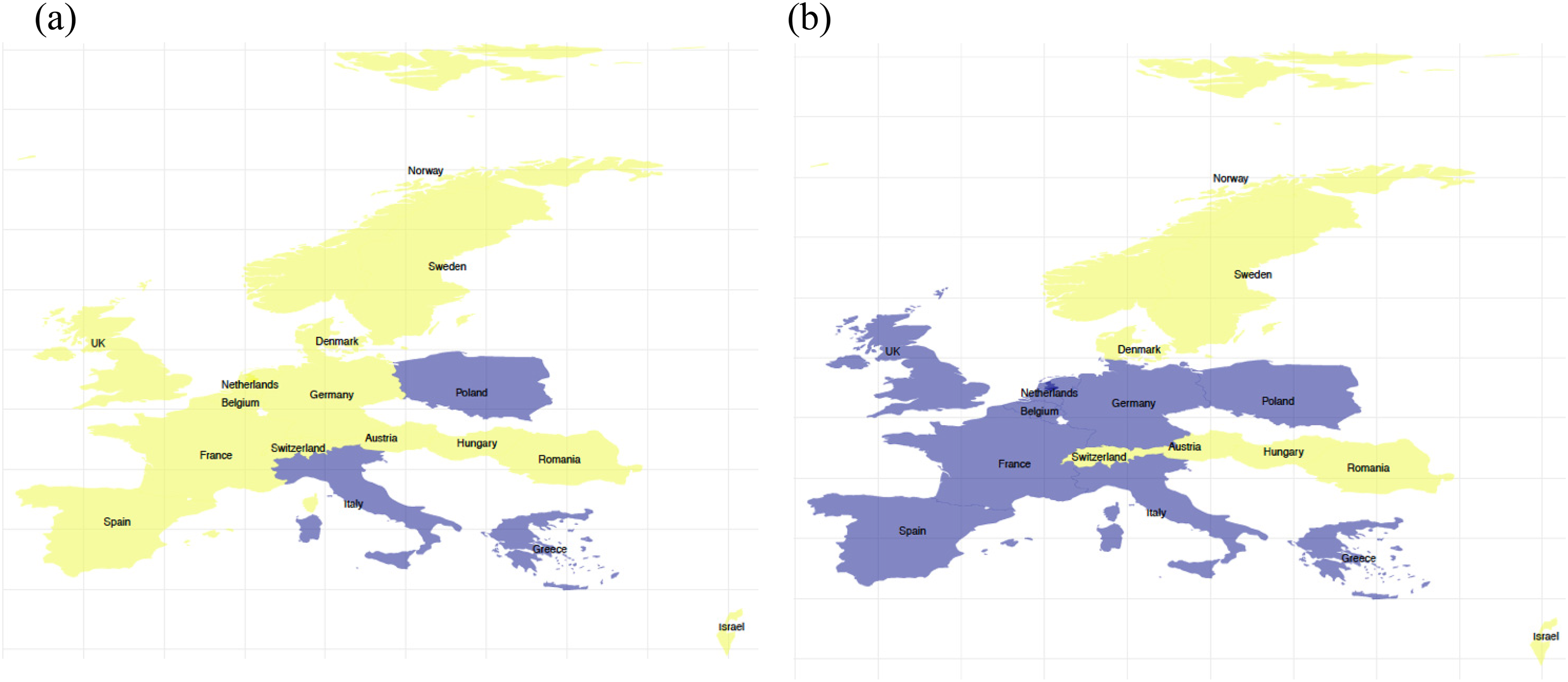
Marginal effects of use of (a) traditional and public media and (b) online news seekers on individual political knowledge (purple = no effect, yellow = positive and significant effect at the 5 percent level). (The color figure is available in the online version of the journal).
Discussion
In this paper, we heeded the call for an audience-driven approach to studying European political information environments (Van Aelst et al. 2017). Toward that end and building on a comparative analysis including seventeen European countries, we have identified five different user profiles (news minimalists, social media news users, online news seekers, traditionalists, and hyperconsumers of news) and illustrated their prevalence across countries. We have also investigated the linkage between different user profiles and political knowledge both at the aggregate level and in each country.
Our findings have important implications for the conditions of informed democracy. First, they show that although there is a growing proliferation of media options to consume news, a considerable proportion of respondents—the minimalists—oftentimes opt out of news use or have a low-source, low-frequency news media diet. The composition of the news minimalist group depends on many contextual and personality factors, which have been discussed at length in single-country studies of Germany (Hasebrink and Domeyer 2012), Israel (Wolfsfeld et al. 2016), the Netherlands (Bos et al. 2016), and Sweden (Strömbäck et al. 2018). From our comparative international perspective, however, an interpretation suggests itself that has been overlooked so far: News minimalists are most prevalent in globalized, heterogeneous societies that exhibit a high movement of people through labor mobility, migration, and cosmopolitanism. This finding calls indeed for future research that put forth news use measures able to account for processes of diffusion and globalized patterns of news use (beyond national news brands). This could also uncover whether the higher levels of news minimalism we detected in more globalized countries are due to undetected levels of news use.
We also identified a group labeled social media news users who primarily inform themselves via social networks. Social media news consumers have been profiled as a relatively homogeneous repertoire in previous studies (Bos et al. 2016; Strömbäck et al. 2018). In our study, the news consumption of this group is particularly minimal, both in terms of amount and frequency of exposure to political information. Like news minimalists, they are also distrustful of the media and barely interested in politics and public affairs. Accordingly, their political learning from media use is also more limited. This is in line with findings from Shehata and Strömbäck (2021), among others, who showed that people do not learn much from following the news on social media. This suggests that the potential positive effects of incidental exposure to news information through social networks might be offset by, for example, exposure to a sizable proportion of user-generated content and unreliable information conveyed through personalized streams and like-minded others.
Nevertheless, our analyses also uncovered a group of online and seemingly selective news users referred to as online news seekers. This was also the largest group in the sample. Importantly, individuals belonging to this group are comparatively much more knowledgeable than those following the news primarily through social media. The main difference with the group of social media users is that they combine information conveyed by social platforms with direct visits to news websites. This result is in line with previous findings (Dimitrova et al. 2014) and shows that what matters is not only whether citizens access news information via online or offline sources, but also which news sources are used. Online news users may learn more when they are aware of where information is being accessed from and when directly using the online sources that gather, investigate, select, and distribute original news and information following professional journalistic processes, regardless of whether these are online versions of traditional media, online-only, or even more alternative news brands.
The extent to which online news seekers learn about politics and current affairs varies across countries, however. We found clear differences between two groups of countries. While online news seekers from smaller, welfare-oriented, consensual media systems in Northern Europe (e.g., Norway, Sweden, Denmark, Switzerland, Austria) learn about politics through the news, this pattern does not apply to citizens from the more polarized, pluralistic media systems in the Mediterranean region (e.g., Greece, Italy, Spain, France).
Such a spatial-cultural difference is not evident in another user profile that is also conducive to learning, in which the use of traditional media (TV, newspaper, radio, and public service media) takes center stage. This user profile, which we labeled as traditionalists, was identified by previous single-country studies (Wolfsfeld et al. 2016) and is found to be more common in Scandinavian and democratic-corporatist systems (Hallin and Mancini 2004). Our findings show that users of traditional news and public media tend to score better than any other user profile on all sorts of knowledge questions virtually everywhere. Furthermore, at the aggregate level, a stronger audience-orientation toward traditional and public media, and by extension, more diverse, high-quality, and objective information (Castro-Herrero et al. 2018; Esser et al. 2017; Soroka et al. 2013) may have an ecological effect on other news organizations through a mechanism called market conditioning: it encourages rivals who compete for the same audience to increase their quality (Aalberg and Cushion 2016; Castro-Herrero et al. 2018; Van der Wurff 2005). An indication of this potential ecological effect is that where traditionalists constitute a larger group (Scandinavian plus German-speaking countries), belonging to other information-rich user profiles (online news seekers) tends to be positively and significantly correlated with political knowledge.
Overall, the findings suggest that traditional news media—in their offline and online formats—convey a more valuable array of political information and are more successful in providing a general overview of what is going on in politics and society than other news sources. Indeed, our findings suggest that it is more about quality than quantity since traditionalists consume information from a lower number of sources than most news profiles identified in this study. Accordingly, consuming news from a broader range of news outlets, channels, programs, and platforms does not necessarily make for a more informed citizenry, and it may even lead to the opposite. As our analyses show, respondents embedded in the hyperconsumers news profile are less politically knowledgeable than the average news user. In line with previous research (van Erkel and Van Aelst 2020), this may be due to information overloads and a tendency for news snacking over actual news reading. The avalanche of information and constant stream of news stories people are currently exposed to (not least on social media) makes it plausible that individuals using a multitude of sources find it ever harder to retrieve and process information from their available media. Indeed, compared to the other news profiles, hyperconsumers of news use a greater number of online news outlets and social platforms for news. 9
While we believe this study represents a significant contribution to extant research, it is not without limitations. First, the use of cross-sectional data does not allow us to resolve potential issues of reverse causality. Although our theoretical assumptions build on data from more than 28,000 individuals in seventeen countries and results are highly generalizable, further longitudinal research is needed to investigate both the causality and stability of the patterns found in this study. Second, conducting content analyses of news sources used by respondents in our sample would have helped put more “flesh on the bone” (Schuck et al. 2016: 206) by providing a better grasp of the exact type of messages that are being accessed and the actual impact of frequent information habits. For example, a future content analysis would be useful to investigate whether the North–South differences in the profile of online news seekers might be due to the fact that the “aesthetics-driven, expressive, associative” news style attributed to Mediterranean countries is less conducive to knowledge acquisition than the “factual, rational, and condensed news style” attributed to the Scandinavian-Germanic countries (Umbricht and Esser 2016: 103).
Although some of our results square well with cross-country and individual differences in news consumption patterns found in previous studies, future research coupling survey data with digital trace data could provide robustness to our findings and offset frequent limitations associated with self-reports, such as individuals' problems to recall frequency of media exposure, satisficing strategies in online surveys, or social desirability bias conducive to overestimations of news media consumption (De Vreese et al. 2017; Prior 2009; Scharkow and Bachl 2017). The alternative (employing online behavioral data) also has well-known shortcomings. These include the difficulties to install trackers in certain devices, the limitations of drawing on media content at the URL or domain level, low consent rates to share or low penetration rates of certain social networks or search engines in some countries. That said, only the combination of survey and unobtrusively collected observational data could help elucidate whether, for instance, low political knowledge levels among individuals embedded in the hyperconsumption of news profile are indeed due to their tendency to engage in news snacking and information overloads, or are instead motivated by systematic patterns of overreporting news consumption. The use of more sophisticated approaches to the analysis of digital trace data could also add to the study of news use repertoires by simultaneously tracking individuals' media use and navigation patterns across multiple platforms and devices. This could further uncover how exposure, attention, and learning from certain content might be moderated by the use of different devices. For example, a recent study that investigated the learning effects of using the same traditional news media on different platforms found that people mainly learn from using these in their traditional formats (Andersen and Strömbäck 2021. See also Edgerly et al. (2018), Taneja et al. (2012) for studies on media repertoires including self-reported use of different devices).
These shortcomings notwithstanding, this study has gone beyond the current state of knowledge by investigating complex news repertoires in-depth and cross-nationally for the first time, as well as their linkages to political knowledge. Three key takeaways are worth reiterating: First, there are systematic links between the distribution of user profiles and country factors, for example, more news minimalists in more globalized countries; online news seekers in polarized-pluralist countries and more traditionalists in affluent welfare societies. Second, these micro–macro links also exist with regard to news knowledge: northern corporatist media systems offer users more favorable opportunity structures for knowledge acquisition than southern polarized ones. Third, mere intensity does not matter: hyperconsumers have much greater problems converting their news use into knowledge than traditionalists and selective online news seekers.
Supplemental Material
sj-docx-1-hij-10.1177_19401612211012572 - Supplemental material for Navigating High-Choice European Political Information Environments: a Comparative Analysis of News User Profiles and Political Knowledge
Supplemental material, sj-docx-1-hij-10.1177_19401612211012572 for Navigating High-Choice European Political Information Environments: a Comparative Analysis of News User Profiles and Political Knowledge by Laia Castro, Jesper Strömbäck, Frank Esser, Peter Van Aelst, Claes de Vreese, Toril Aalberg, Ana S. Cardenal, Nicoleta Corbu, David Nicolas Hopmann, Karolina Koc-Michalska, Jörg Matthes, Christian Schemer, Tamir Sheafer, Sergio Splendore, James Stanyer, Agnieszka Stępińska, Václav Štětka and Yannis Theocharis in The International Journal of Press/Politics
Footnotes
Acknowledgments
We thank the editor and anonymous reviewers for improving this manuscript. We are also grateful to participants of the IJPP virtual conference 2020 for their comments and suggestions.
Declaration of Conflicting Interests
The authors declared no potential conflicts of interest with respect to the research, authorship, and/or publication of this article.
Funding
This project was financially supported by the Network of European Political Communication Scholars (NEPOCS). Data collection in Denmark was supported by the University of Southern Denmark. The collection of data in Hungary and Poland was supported by the Economic and Social Research Council [ES/S01019X/1]. The collection of the data in France was supported by an Audencia Foundation grant. The collection of data in Sweden was supported by the research project “Knowledge resistance: causes, consequences, cures”, funded by Riksbankens Jubileumsfond. Yannis Theocharis would like to acknowledge the support of the ZeMKI Lenkungskreis which generously contributed to funding this research.
Supplemental Material
Supplemental material for this article is available online.

Notes
Author Biographies
References
Supplementary Material
Please find the following supplemental material available below.
For Open Access articles published under a Creative Commons License, all supplemental material carries the same license as the article it is associated with.
For non-Open Access articles published, all supplemental material carries a non-exclusive license, and permission requests for re-use of supplemental material or any part of supplemental material shall be sent directly to the copyright owner as specified in the copyright notice associated with the article.
