



Abstract
We argue that, above and beyond the usual suspects, some campaign strategies are more successful in attracting media coverage. We specifically focus on two elements of campaign content: the tone of the campaign (i.e., whether or not to go “negative” on opponents) and the use of emotional appeals (fear and enthusiasm messages). We argue that both negativity and emotions matter for media coverage. We rely on an original comparative data set about the campaign strategies of 507 candidates having competed in 107 elections in 89 countries worldwide between 2016 and 2019. The data set is based on a survey distributed to samples of national and international experts. Confirming our expectations, the analyses reveal that candidates using a more negative tone and, especially, candidates making a greater use of emotional appeals receive a greater media coverage; the effect of emotional appeals dwarfs all other drivers of media coverage. Our analyses also show that media coverage is significantly higher for candidates who go negative and use fear appeals, and when candidates go positive and use enthusiasm appeals. Finally, media coverage is significantly greater for candidates who go negative in countries where the media system has a marked preference for infotainment and sensationalism.
Introduction
One thing I’ve learned about the press is that they’re always hungry for a good story, and the more sensational the better [. . .] The point is that if you are a little different, or a little outrageous, or if you do things that a bold or controversial, the press is going to write about you. I’ve always done things a little differently [. . .] The result is that the press has always wanted to write about me.
After Donald Trump’s victory in the 2016 presidential elections, political analysts tried to explain his success. Several observers quickly pointed to the role played, voluntarily or not, by the news media. By providing a sensational and unprecedented coverage to the unusual candidate, the media—some argue—“created Trump.” 1 At the end, Trump “dominated,” “colonized,” “took over” the media, 2 with the consequence that his rivals received much less media attention. The Trump case raises the more general question about why some candidates running for office receive a lot of media coverage whereas other candidates have a difficult time to make it in the news. Research has extensively addressed this question. The reason for this is that a media bias in the sense that candidates of some parties receive more coverage than others might cause the momentous impression at the side of the voter that politicians who are more prominent covered by the media are more important, receive more public support, and are more likely to be successful in elections than politicians with a lower media presence. In addition, those who gets news coverage might have better chances to provide citizens their view on politics. Indeed, research on the effects of media bias demonstrates that the amount of attention the media spend to political actors can have serious consequences for their electoral success (e.g., Maddens et al. 2006; van Erkel et al. 2018; Wauters et al. 2010).
Research has identified several other types of unbalanced media visibility of politicians beyond partisan bias. In particular, it has been demonstrated that the social and personal profile and the political role of a candidate have strong effects on his level of media attention. However, models explaining the volume of candidates’ media coverage usually are only able to explain a limited amount of variance (Tsfati et al. 2010: 176) indicating that some variables are still not considered yet. We claim that two important factors influencing the amount of a political actor’s media coverage are missing, especially in a comparative perspective: strategies and appeals. More specifically, we ask to what extent are some campaigning strategies and appeals more likely to drive media attention. To study the impact of these factors is of particular interest as there is much talk about how campaigns are changing over time. For instance, several U.S. scholars claim that campaign strategies become more and more negative (e.g., Fridkin and Kenney 2004; Geer 2012). In addition, the use of emotional or populist appeals seems to be en vogue (Brader 2006; Ridout and Searles 2011). Moreover, focusing on the impact of campaigns on media attention is interesting as the use of strategy and appeals is something a politician can actively influence. It is easy for candidates to decide how they want to get their message across. Compared with this, social and personal characteristics such as demographics, attractiveness, or personality are fixed. In addition, large parts of the political profile are difficult to change, too.
In this paper, we are particularly interested in the effect of two aspects of campaigns on media coverage: first, the tone of a campaign (i.e., positive or negative); second, the use of emotional appeals (particularly enthusiasm and fear). With respect to the tone of the campaign, existing research suggests that candidates have to make the fundamental decision if they want to follow a positive or a negative campaign strategy (see, e.g., Nai and Walter 2015a for a summary). Positive and negative strategies follow very different logics (e.g., Benoit 2007). The aim of a positive campaigns strategy is to increase a sender’s favorability by praising the own policy or character. In contrast, when a candidate goes negative, he or she tries to increase the own likelihood to get elected by damaging the reputation of the political opponent. Emotional appeals can be very diverse. However, enthusiasm and fear appeals are considered to be among the most important types of emotional messages (Brader 2006; Ridout and Searles 2011). On one hand, drumming up the enthusiasm can mobilize the own camp. On the other hand, raising anxiety on relevant issues is able to persuade undecided voters (e.g., Brader 2006; Jerit 2004). As the mass media is still the most important source of information for most voters, campaign strategies will only unfold their complete persuasive power if the media cover them. Hence, getting the message across via the media seems to be an important prerequisite of electoral fortune (e.g., van Erkel et al. 2018; van Santen et al. 2015). However, we still lack information on whether campaigns employing a specific tone and emotional campaigns (or some combination of it) can catch the attention of the media (Ridout and Smith 2008); this is especially true for the role of emotions. Moreover, although it has been argued that the media—increasingly—focuses on negative news (e.g., Lengauer et al. 2012; Soroka et al. 2018; van Santen et al. 2015) and there is some evidence that the media tends to emotionalize their coverage of politics (e.g., Umbricht and Esser 2016), we do not know a whole lot which campaign design—going negative or stirring emotions—is most successful in terms of gaining media visibility (but see Haselmayer et al. 2017, 2019), especially not adopting a comparative perspective. The aim of this paper is to provide a first large-scale comparative empirical evidence on the effectiveness of these election campaign strategies for increasing the volume of media coverage.
Available research on the question which factors drive media attention often has the shortcoming that it is limited to a specific case—usually the U.S.—and to a handful of explanatory variables. In this article, we expand on the existing literature on three fronts. First, we test the impact of campaign strategies on a candidate’s likelihood of being covered by the media against the “classical variables” (i.e., the social and political profile of politicians). This approach will provide us a more complete understanding of which factors turn up the volume of media coverage. More precisely, this approach will shed some light on the question how much of the media coverage a candidate is receiving is determined by factors which they cannot change (i.e., their social and political profile)—and how much of the media’s attention can be influence by choosing a particular campaign strategy. Second, we analyze the impact of campaign strategies on the amount of media coverage on a large-scale comparative database, which allows us to circumvent the curse of extreme geographical uniformity of existing studies. By doing so, we provide a significant contribution to the developing field of comparative political communication. Third, most research focuses on members of parliaments. In contrast, our study analyzes the media visibility of top candidates, that is, the candidates running for president, prime minister, or chancellor. To the best of our knowledge, there is no systematic research here.
Our analyses are based on an original comparative data set (Gerstlé and Nai 2019; Nai 2018) that contains systematic information about campaigning strategies of 507 candidates having competed in 107 presidential and parliamentary elections in 89 countries worldwide over the three-year period between June 2016 and July 2019—covering almost all national elections that happened in that period. The data set is based on a systematic survey distributed to samples of national and international scholars with expertise in elections and politics in the surveyed country, and includes ratings provided by 2,106 different experts. The data set includes information about elections held all around the globe, spanning across all types of electoral and party systems and vary considerably in terms of competitiveness, closeness of the results, and media coverage. Furthermore, the data set includes information about world key players, such as Donald Trump, Emmanuel Macron, Angela Merkel, Vladimir Putin, and many other. According to our rough estimation, at least 2.6 billion citizens took part cumulatively in these elections, with many more exposed to the campaigns of the competing candidates. The data set, in other terms, reflects a sizeable chunk of the population of the whole planet (Figure 1). See Supplementary Information file A for the full list of elections and candidates.
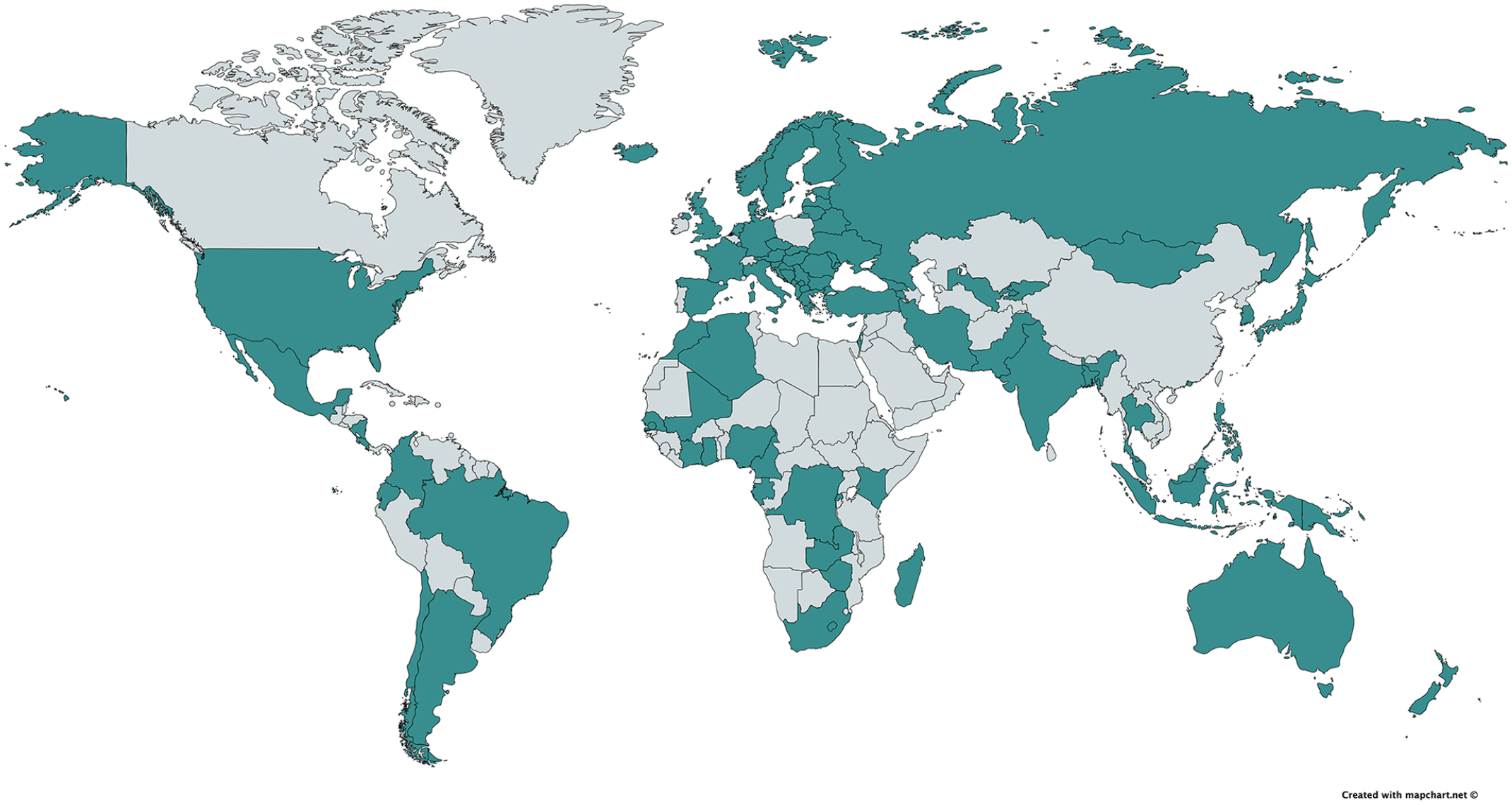
Geographical coverage of the data set.
Determinants of Media Coverage
One of the most important daily routines of journalists is to select information for news coverage out of a literally endless stream of events. A prominent theory explaining this selection process is news value theory (e.g., Galtung and Ruge 1965). News value theory claims that journalists will assign a set of so-called news factors to each event. News factors reflect the relevant characteristics of an event. The more news factors apply to an event the higher its news value—and the likelihood to get published. Although the number of news factors varies from study to study and there is no agreement about a final set and its exact operationalization yet (for a summary see, e.g., Maier and Ruhrmann 2008), empirical evidence exists that journalists particularly consider how important the persons involved in an event are, how much conflict and negativity is carried by an information, how many people are potentially affected by an event, and whether an incident is unexpected or already well established (e.g., Harcup and O’Neill 2017).
Research indicates that some aspects of the social and political profile of a politician are considered as a news factor and therefore account for higher news values. For instance, some studies find that younger politicians have a higher likelihood to be covered (e.g., Midtbø 2011) as they “might be more attuned to the needs of the media” (Squire 1988: 143); this effect is however contested elsewhere (e.g., Markowitz-Elfassi and Tsfati 2019). There is then ample evidence that female politicians receive significant less media attention than their male colleagues (e.g., Lühiste and Banducci 2016; Wauters et al. 2010). By showing a more dominant behavior, men reinforce the media’s impression that they are more important than women (e.g., Aaldering and van der Pas 2018; Renner and Masch 2018). However, research in this field reported more contradicting results (e.g., Kittilson and Fridkin 2008). Furthermore, news coverage tends to focus more on incumbents than on challengers. This is in line with news value theory as incumbents have more formal power than members of the opposition (e.g., Galtung and Ruge 1965). Incumbents govern, and their decisions matter for a significant number of citizens. In contrast, challengers “do not actually ‘do’ anything” (Schoenbach et al. 2001: 520); they are only able to announce what they will do if elected. However, with respect to election campaigns the findings are mixed. Whereas some studies confirm the advantage of incumbency (e.g., Hopmann et al. 2011), other results indicate that the coverage of government and opposition is more balanced (e.g., Helfer and Van Aelst 2016). Furthermore, although there is less evidence that the media coverage of politicians is driven by party affiliation (Tresch 2009), several studies indicate that candidates with extreme ideology are more visible in the news than mainstream or moderate political actors (e.g., Waismel-Manor and Tsfati 2011). In line with this, Squire (1988) argued that “political mavericks,” that is, candidates with a more extreme legislative record, attract the attention of the media.
Most of the factors identified as important correlates of media attention have one characteristic in common: They are very unlikely—if at all—to change. By focusing on those factors, research draws the picture of passive politicians who are at the mercy of journalists’ selection routines. However, theories on the mediatization of politics (e.g., Mazzoleni and Schulz 1999; Strömbäck 2008) argue that candidates can actively attract news coverage by adapting the logic of the media and giving them information they are looking for. Hence, whether the media will cover a candidate does not only depend on his unalterable social and political profile but also on the message which is actively provided, embedded in a strategy and linked to specific appeals. In other words, “If politicians produce material that appeals to news values, they can take advantage of the enhanced coverage” (Sides et al. 2015: 220). From this perspective, the question then is not if candidates can attract the media with their campaign, but which type of campaign works best.
In this paper, we focus on the association between campaign tone and emotional appeals used in campaign communication on one hand and media coverage of the campaign on the other hand. With respect to tone, positive and negative campaigns can be distinguished. Positive campaigns rely on acclaims, that is, “statements that stress a candidate’s advantages or benefits” (Benoit 2007: 36). In contrast, negative campaigns are based on attacks on the political opponent, that is, they focus on “an opponent’s undesirable attributes or policy missteps” (Benoit 2007: 36). With respect to emotions, campaigns particularly make use of enthusiasm and fear appeals. Enthusiasm is caused by information indicating “that the execution of one’s plans [. . .] matches [. . .] expectations (or success)” (Brader 2006: 60). In contrast, fear appeals “suggests it is [. . .] potentially unsafe to go about one’s business as usual” (Brader 2006: 60); anxiety or unease will be the result. Although both strategies are empirically interrelated—positive campaign communication is often linked with enthusiasm (e.g., Obama’s “Yes, we can!”), attacks are often related to fear appeals (the probably most famous example is President Johnson’s Daisy spot: “These are the stakes: To make a world in which all of God’s children can live, or to go into the dark. We must either love each other, or we must die!”)—self-promotion and criticism can, of course, also be expressed without any emotional appeals. Therefore, both concepts are analytically distinct.
However, empirical research on the resonance of different campaign strategies in the media is limited. This is particularly true for the coverage of emotional campaign strategies. In this context, some studies working on the media coverage of populist leaders—that is, politicians usually using a highly emotional communication style—or populistic messages exist (e.g., Bos et al. 2010; Gerstlé and Nai 2019). However, they yield no clear-cut results whether emotional campaigns cause more media attention. The situation is very different for campaign tone. On one hand, a huge body of literature demonstrates that the media cover campaigns through the lens of “game frames” or “strategic frames” (e.g., Aalberg et al. 2012; Schmuck et al. 2017). Research indicates that the media closely monitor candidates’ campaign strategies and tactics—especially those employing negative campaigning (e.g., Pedersen 2014) or rely on personal attacks (Gerstlé and Nai 2019). On the other hand, research on political advertising demonstrates that the media often amplifies the attention for campaign spots with their coverage, particularly those with negative content (e.g., Geer 2012; Ridout and Smith 2008). Part of this story is also the increasing attempts of the media to “watch” ads and check the claims made with respect to its facts (Meirick et al. 2018). Again, negative ads are usually more likely to be under investigation (e.g., Amazeen 2016).
Hypotheses
Negative campaigns are newsworthy, as they provide information that political journalists crave: negativism, damage, failure (e.g., Galtung and Ruge 1965). This assumption is supported by empirical analyses on the impact of news factors related to negativism on political news coverage (e.g., Maier and Ruhrmann 2008). The reason for the primacy of negative information is that negative messages carry information about risks (Fridkin and Kenney 2012), and the chance to avoid (personal) hazards motivates us to process this information (e.g., Lau 1985). As a result, negative information attracts more attention (e.g., Pratto and John 1991) and elicits stronger and more sustained physiological reactions than positive messages (e.g., Soroka 2014; Soroka et al. 2019). Because people weigh information about possible losses more heavily than information about likely gains, negative messages play a major role when it comes to evaluation and decision making (e.g., Kahneman and Tversky 2000). Hence, as these mechanisms often described as “negativity bias” are universal for humans (e.g., Soroka 2014; Soroka et al. 2019), there is a high likelihood that the news media decide to report on negative campaign messages. In addition, as negative information attracts recipients, too, journalists can be confident voters will expose themselves to news stories on negative campaigning. Recent research by Haselmayer et al. (2017, 2019) for the Austrian case shows indeed that negative campaigning is a successful strategy to capture the attention of the media. We believe that this should be the case across the board.
Going negative is not the only way how candidates can push their media visibility. We expect that each individual candidate’s media coverage is also a function of the emotional appeals made. This assumption stems, on one hand, from the fact that emotions, particularly when visually displayed, are an important news value (e.g., Maier and Ruhrmann 2008). On the other hand, the assumption is based on the observation that the media tends to frame political events in terms of infotainment. Increased competition between an ever-growing number of media outlets, the emergence of new forms of news media organizations, and sheer market pressure have set the stage in recent decades for a shift toward “infotainment journalism” (Albæk et al. 2014), visible in the increasing preference for “soft” over “hard” news (e.g., de Vreese et al. 2017) and for “hype” over substance (Fox et al. 2005). By framing their campaigns via the use of emotional appeals, candidates respond to the media imperative of presenting news stories in an entertaining way and should thus be rewarded with a greater coverage (Jerit 2004).
Campaigns particularly make use of two types of emotional appeals: enthusiasm and fear. The functions of the two types of appeals are different. Enthusiasm appeals should help to get citizens more involved in the campaign and supportive toward the sponsor of a message (Marcus and MacKuen 1993). However, enthusiastic citizens do so by relying strongly on their predispositions (Brader 2006; Marcus et al. 2000). Hence, enthusiasm appeals are designs to communicate to a sender’s supporters. In contrast, fear appeals stimulate anxiety (Brader 2006). Anxious citizens are likely to pay more attention to information and campaigns, which makes them easier targets for persuasion (Nai et al. 2017), and they do so by uncoupling themselves from previously held predispositions (Marcus et al. 2000). Whether candidates use enthusiasm or fear appeals depends on a complex set of factors including, for example, the candidates’ political profile and the strategic context (e.g., Brader 2006; Jerit 2004). However, to the best of our knowledge, it is unclear yet whether enthusiasm or fear appeals receive more media attention.
It seems likely that uplifting enthusiasm appeals are strongly linked with positive campaigns, whereas negative campaigns are a perfect platform to launch fear appeals. To be sure, neither positive nor negative campaigns require emotional appeals per se; positive campaigns can turn out very sober and abstain from any form of emotional messages, and attacks against political opponent can just focus on facts. Yet, we believe that a case can be made that enthusiasm appeals are “in character” with positive campaigns, very much the same way that fear appeals are “in character” with attack politics. This “redundancy” (or repetition) of similar frames is likely to enhance the effects of the messages (see, e.g., Stephens and Rains 2011). We thus formulate the following hypotheses:
Gatekeeping theory—another prominent approach to explain media content—argues that not only the journalists’ evaluation of an event as newsworthy influence the likelihood of publication but also factors located on the organizational level of the media itself, the extra-media level, or the system level (e.g., Shoemaker and Reese 1996). These layers of influence explain differences within a given media system but also in a cross-national perspective (Esser et al. 2017). Media systems differ in their logic and their traditions how to cover politics (e.g., de Vreese et al. 2017). One aspect relevant for our analysis is the degree of how much attention the media pays for sensational aspects of events and stories (e.g., Otto et al. 2017) or, more broadly to the entertainment component of news stories (“infotainment,” Albæk et al. 2014). In line with theories pointing to greater newsworthiness of sensational, entertaining, and negative news (e.g., Harcup and O’Neill 2017), we expect that media systems characterized by high “infotainment” should be more likely to cover negative and emotional campaigns, which is “consistent with the media’s preference for drama and excitement in news reporting” (Jerit 2004: 563). In other terms, we expect that the use of negative and emotional campaigns should particularly drive media coverage in countries where media have a preference for infotainment and sensationalism.
Data and Methods
The Data Set
We test our expectations via an innovative data set (Gerstlé and Nai 2019; Nai 2018) 3 that contains information about the campaigning strategies of 507 candidates having competed in 107 presidential and parliamentary elections in 89 countries worldwide between June 2016 and July 2019—covering virtually all national elections that happened worldwide in that three-year period, excluding some micro-states with less than 100,000 inhabitants (e.g., Cayman Islands, Palau, Bermuda) or noncompetitive elections (e.g., Turkmenistan, or the uncontested election in Singapore of September 2017). The data set contains information based on a systematic survey distributed to election-specific samples of national and international scholars with expertise in elections and politics in the surveyed country in the weeks following each election. Because of its broad comparative scope, and because it relies on the time and willingness of experts to provide their ratings, the data set explicitly focuses on each election’s top candidates—that is, party leaders or main frontrunners in presidential elections—instead of all competing candidates or MPs. This increases the chances that experts do have an opinion about the candidates and increases at the same time the comparability of the data across different countries and elections. On the other hand, it should be noted that the data set does thus not provide a full image of all candidates having competed in the election covered; because only the top candidates are covered, lower variations in media coverage should be expected, thus also yielding potentially conservative estimates in the analyses discussed below.
At least three independent experts must have provided their ratings for the candidate to be included in our data set. The data set includes responses of 2,106 different experts, which were contacted via a personalized email and received two reminders, respectively, one and two weeks after the first invitation. Experts were identified by looking at existing relevant academic publications (including conference papers), classes taught, or described expertise on professional website for scholars working in the country were the election took place. Samples of approximately 50 to 100 experts per election were established in the weeks leading to each election with the help of research assistants. If not comprehensive, these expert samples can be considered to be conceptually representative of scholars with expertise on elections in the countries surveyed. On average, 19.6 experts per country completed the questionnaire, with an average response rate of approximately 20 percent. On average, experts in the whole sample lean to the left (M = 4.39/1–10, SD = 1.83), 73 percent work in the country for which they were asked to evaluate the election, and 31 percent are female. Overall, experts declared themselves very familiar with the elections (M = 8.03/0–10, SD = 1.75), and estimated that the questions in the survey were relatively easy to answer (M = 6.56/0–10, SD = 2.36). For detailed information, see Table B1 (Supplementary Information file B). Experts were asked, among other things, to assess the extent to which national media covered each candidate, and the nature and content of candidates’ election campaigns.
Advantages and Limitations of Expert Measures
It might seem unorthodox to rely on expert ratings to measure phenomena such as media coverage of candidates or the content of their campaigns. Common approaches usually rely on content analyses, for instance, measuring the tone of election campaigns via the systematic coding of, for example, campaigns spots, TV debates, party manifestos, press releases, or online communication (for an overview, see Nai and Walter 2015b). Apart from the enormous costs to achieve comparable content analyses for a sample large as ours these approaches are, however, unlikely to be effective in a large-scale comparative setting. Analyzing media coverage of candidates from Albania to Zimbabwe raises severe complications in terms of, for example, which comparable media to code across these extremely diverse countries. The same goes for the content of election campaigns, which are implemented rather differently across the globe—for instance, TV ads are the norm in the United States, but are prescribed in other countries and rather marginal in others. In other words, because of the extreme diversity of cases covered in our study, “classical” approaches to content analysis are unlikely to result in comparable measures.
Experts, on other hand, can be asked to assess campaign coverage (or the content of campaigns) on the whole, thus avoiding the pitfall of noncomparable channels. 4 This conclusion highlights an additional advantage of experts: Their opinions about media and campaign content can be uncoupled from the medium; even assuming that a comparable campaign channel, for instance, exist across all countries investigated here (which is unlikely), results of a content analysis of that channel would yield a partial figure, dependent on the nature and limitations of that specific channel. Experts, again, can be asked to provide more holistic ratings, thus moving beyond problems of comparability across channels (e.g., Walter and Vliegenthart 2010).
To be sure, expert ratings should be used critically: Are experts able to assess complex constructs such as the content of election campaigns? Is their judgment objective, or instead does the composition of expert samples bias the aggregate results? Concerning the first critique, we demonstrated elsewhere (Nai 2018) that experts make valid judgments when it comes to the tone of election campaigns, as their aggregate answers to a series of vignettes representing campaign messages reflects quite accurately their tone (that is, they correctly evaluate more negative vignettes as more “negative”). Similarly, we showed elsewhere that expert opinions about the personality of candidates tend to be more nuanced and substantially less “biased” than those of the public at large (Nai and Maier 2019). In addition, our measures are broadly in line with existing independent measures of, for example, media coverage or campaign tone (see below). Experts tend, furthermore, to agree with each other to a relatively large extent. We report in Supplementary Information file B the standard deviation on the key measures of media coverage, campaign tone, and use of fear and enthusiasm appeals, for each candidate (Supplemental Appendix Table B2). The mean standard deviation across all candidates (last row in Supplemental Appendix Table B2) is relatively low—for instance, just over 17 out of 100 for media coverage. Finally, to exclude major effects of sample biases, we will discuss below a series of robustness checks where our models are controlled by the composition of expert samples, including the average left-right position of the sample (see Supplementary Information file C, Tables C4–C6). Results are, by and large, robust. In other terms, the “skewness” of expert samples across several characteristics does not alter the main results of our analyses.
All in all, we believe that given the broad comparative scope of our research question, expert ratings are likely to provide data where “usual” approaches have—to the best of our knowledge, and up to this point in time—not yet succeeded, while at the same time yielding data that is considerably less “biased” than one might assume. Not a perfect approach, by any means, but probably the best to effectively meet our large-scale objectives.
Media Coverage
Experts were asked how much each candidate featured in the national news media during the election campaign (for coding and descriptive statistics of all variables, see Table 1). The average candidate received a score of 61.2 points out of 100, but the distribution is relatively heterogeneous (SD = 22.5). Lacking data from independent sources for such a large-scale sample of candidates, it is virtually impossible to validate the construct validity of our measure for all candidates. This being said, we were able to independently assess the media coverage in terms of presence in the main news media for a subsample of sixty-nine candidates in twelve election; for these candidates, we retrieved the number of times they were mentioned in the media in the national language (e.g., news in Italian for the Italian election) during the week prior to the election (for details, see Supplementary Information file D). The two measures correlate very strongly, r(67) = .86, p < .001, suggesting high construct validity of our expert measure. Simply said, candidates who were mentioned the most in the news media are those who score the highest in the expert assessments, and vice-versa.
Descriptive Statistics.
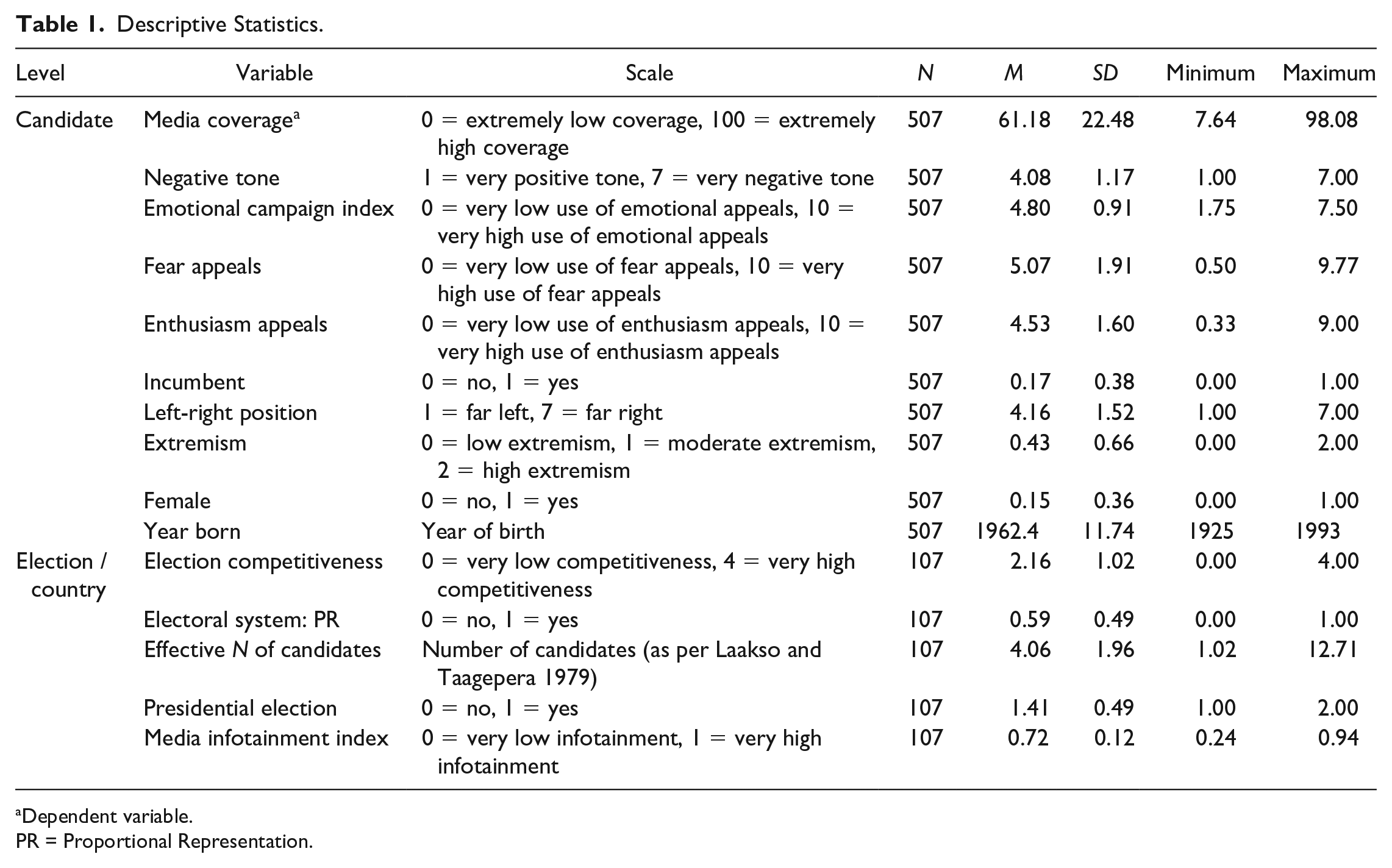
Dependent variable.PR = Proportional Representation.
Independent Variables
Campaign tone
Experts were asked to evaluate the campaign tone of selected candidates, on a scale ranging between −10 (exclusively negative) and 10 (exclusively positive). We have to account for the fact that experts from different traditions and working on different cases might have slightly different understanding of what “negativity” in campaigns entails (Sigelman and Kugler 2003). With this in mind, we asked experts to rate the tone of six vignettes (from −10 “very negative” to 10 “very positive”), framed as examples of campaign messages that were either positive, comparative, or negative (see Nai 2018 for a detailed discussion on this issue). We used the answers to these vignettes to “anchor” their judgments via a series of parametric adjustments (Hopkins and King 2010) through gllamm models, also controlling for the left-right self-positioning of experts; the adjusted variable, used in our analyses, is a continuous measure of campaign negativity that ranges between 1 “very positive” and 7 “very negative.”
As for media coverage, lacking data about the content of election campaigns for such a large sample of diverse candidates worldwide, it is virtually impossible to provide construct validity checks with alternative existing measures. This being said, for the U.S. 2018 Senate Midterms elections we were able to triangulate our expert data with information from two independent sources, measuring, respectively, the tone of the candidates’ campaign on social media (Twitter) and in TV ads. The triangulation is presented in Supplementary Information file E. First, we compared the measure of negativity coming from an expert survey (replicating the same questions as used in this article) with an independent automated coding of the tweets published by the competing candidates in the Senate midterms in the last months before the election. Overall, our results suggest that our “expert” measure of tone is positively and significantly associated with the candidate’s use of attacks on Twitter, even controlling for the profile of candidates and some covariates at the state level. To be sure, the two measures do not necessarily reflect the same phenomenon: The automated measure is specific to the content of campaigns is social media (on Twitter, in this very specific test), whereas experts were asked to assess the campaign of candidates in general, regardless of the medium. It is known that the use of negativity differs across different communication channels (Walter and Vliegenthart 2010). Some candidates, for instance, might go very negative in TV ads, and only use Twitter to promote events. To further develop the validity assessment and take these potential channel differences into account, Supplementary Information file E presents also the results of a second check. In this additional test, we compared our “expert” measure of tone with data from the Wesleyan project (Fowler et al. 2020) relative to the percentage of negative TV ads supporting the candidates. Our results show again that, even controlling for the profile of the candidates and some covariates at the state level, our “expert” measure of campaign negativity is positively and significantly associated with the percentage of negative ads in the Wesleyan data. All in all, these triangulations suggest that our “expert” measurement is a valid representation of the candidates’ campaigns; the fact that negativity in Twitter and in TV ads are only weakly associated provides a further indication that our experts are able to “pick up” the negativity in candidates’ campaigns beyond differences in these channels. Supplementary Information file E presents all the details of these two validity checks, including a discussion about outliers.
Emotional appeals
Experts were asked to assess the extent to which each candidate used fear and enthusiasm appeals. We provided experts with some selected examples of both fear and enthusiasm appeals, 5 and asked them to rate each candidate on a 11-point scale. Expert assessments were averaged for each candidate to provide the measures of fear and enthusiasm appeals. On average, the candidates in our data set made a slightly stronger use of fear (M = 5.07, SD = 1.91) than of enthusiasm appeals (M = 4.53, SD = 1.60). The use of the two types of emotional appeals is negatively and significantly associated, r(505) = −.48, p < .001, that is, the likelihood of using fear appeals is a negative function of the use of enthusiasm appeals, and vice-versa (see Figure 2).
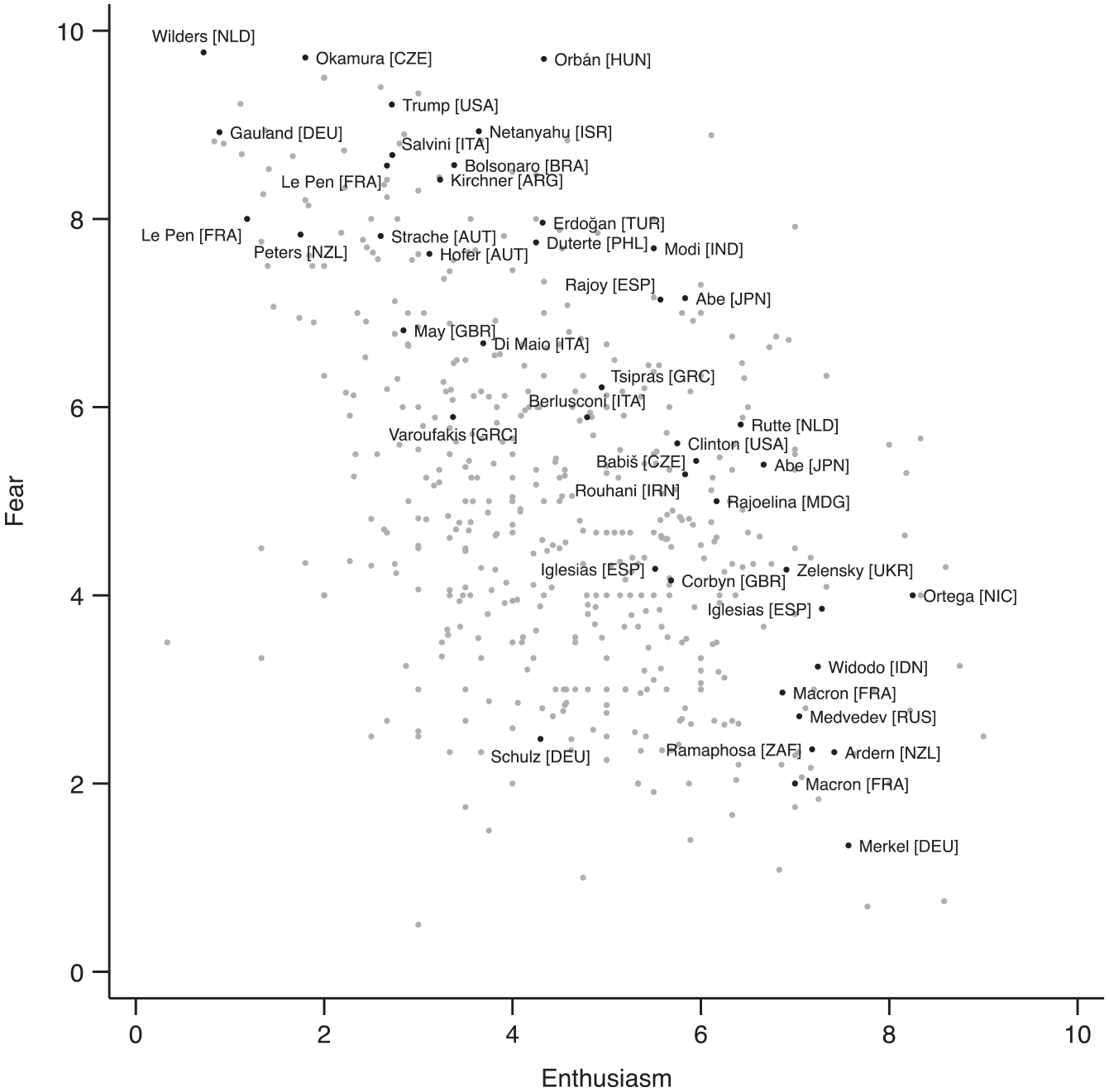
Fear and enthusiasm appeals, by candidate.
Given that we also expect a direct effect of using emotions (regardless of their valence), we computed, next to the two separate measures for fear and enthusiasm, a general “emotional campaign index” which is simply the average score on the two measures. Candidates scoring high on this variable make a great use of emotions in their campaigns, regardless of the type of emotions employed.
Covariates
To measure the ideology of candidates, lacking again a comprehensive and systematic repository covering all the candidates in our data, we relied on information provided by the Wikipedia pages for each candidate (for details, see Table A2 in the Supplementary Information file A), resulting in a 7-point scale ranging from 1 “far left” to 7 “far right.” Although not ideal, Wikipedia has been shown to provide quality factual information when it comes to electoral results and party competition (Brown 2011). As we discuss elsewhere (Nai 2018), furthermore, our measure strongly correlates with other measures that exist for subsamples of candidates; for instance, our measure correlates very strongly with the measure in the Chapel Hill Expert Survey (CHES; Polk et al. 2017), r(53) = .87, p < .001. The left-right variable is, then, simplified and folded on itself to create the “extremism” variable, ranging from 0 “low extremism” (which includes parties from “center left” to “centre right”) to 2 “high extremism” (parties from the “far left” and the “far right”). Age, gender, and incumbency status are extracted from media reports and online resources.
To test H5, we use a measure of media infotainment that comes from the expert survey. Experts were asked to rate three dimensions of infotainment: sensationalism, personalization, and negativity. More specifically, they were asked to assess the extent to which the national news media as a whole in their country of expertise provide attention to “the sensational aspects of events and stories” (sensationalism), “individual candidates, their characters and motivations” (personalization), and “attacks and negative campaigning between parties, candidates” (media negativity); all variables from 0 “No attention” to 4 “A great deal of attention.” The three variables converge substantially (α = .76), and we used them to create an index of media infotainment which we forced into a 0 to 1 scale.
It is a relatively hard task to assess the content of news media in a comparative perspective; indeed, most comparative work only does so for a handful of countries (e.g., Arbaoui et al. 2020; Hallin and Mancini 2004). Nonetheless, as for media coverage and campaign tone (see above), we were able to proceed to an external validity test for a subset of our data by comparing the scores on our “media infotainment index” with independent data from the World of Journalism Study (WJS; Hanitzsch et al. 2019). The WJS which gathers data about the perceptions, ethos, practices, routines, and opinions of journalists across the world. As described in Supplementary Information file F, we compare our index and the perception of journalists in the WJS that the “pressure toward sensational news” in their country has increased or decreased. Our infotainment index correlates positively and significantly, even if not excessively strongly, r(55) = .27, p < .044, with the percentage of journalists that believe that the pressure toward sensationalism has “strengthened a lot” or “somewhat strengthened” in the past 5 years in their country. Furthermore, our expert measure correlates positively and significantly with the journalists’ perception that “economic considerations” such as advertising and profit expectations play an important role in their work, r(58) = .32, p < .014. All in all, expert assessments of “media infotainment” in our database are in line with the perceptions of journalists across the world; they positively and significatively correlate with the perception of journalists that there is an increasing pressure toward sensational news, as well as with their perception that economic and commercial consideration have a strong impact on their work.
Controls
We measure competitiveness of the election via a question in the expert survey that asked them to evaluate how much they agree that “the race was not competitive, the winner was clearly known beforehand.” We use the formula by Laakso and Taagepera (1979) to measure the total effective number of candidates, which yields a number reflecting the number of competing candidates with a similar strength. We use a binary variable that sorts countries with a PR electoral system (including mixed-member proportional representation [MMP]) from countries with a plurality/majority system (including mixed-member majoritan systems [MMM]; Gallagher 2014). We finally computed a simple binary variable to distinguish between presidential and legislative elections. All our models are controlled by the geographical region of the country (categorical variable).
Results
Direct Effects
We test our expectations by regressing the candidates’ media coverage on their profile, campaign strategies, and characteristics of the election and country. Due to the continuous nature of the dependent variable and the hierarchical nature of the data, we use linear multilevel models.
The first model (M1) in Table 2 presents the “baseline” model which includes all candidate and context covariates but excludes all campaign variables. The model shows that incumbents receive significantly and substantially more media coverage. Furthermore, candidates on the right and candidates facing off in more competitive elections receive more media attention, whereas extreme candidates get less coverage than “mainstream” candidates.
Media Attention by Candidate Profile and Campaign Strategies.
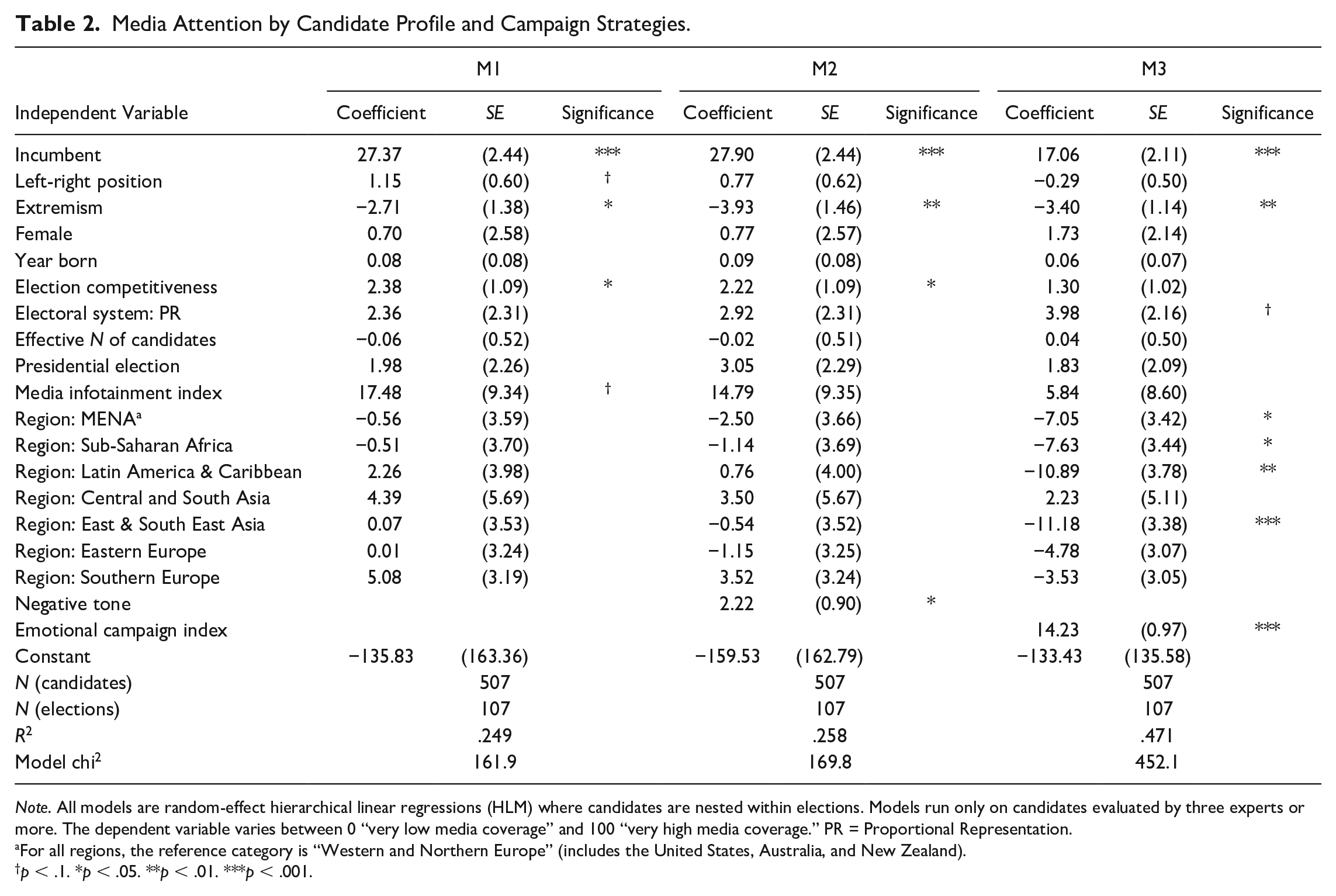
Note. All models are random-effect hierarchical linear regressions (HLM) where candidates are nested within elections. Models run only on candidates evaluated by three experts or more. The dependent variable varies between 0 “very low media coverage” and 100 “very high media coverage.” PR = Proportional Representation.
For all regions, the reference category is “Western and Northern Europe” (includes the United States, Australia, and New Zealand).
p < .1. *p < .05. **p < .01. ***p < .001.
Model M2 introduces the direct effect of campaign tone, on top of the effects shown in model M1. Above and beyond these effects, candidates using a more negative tone receive a greater coverage, b = 2.22, z(501, 92) = 2.48, p = .013; otherwise said, increasing the negativity of the campaign by one point (out of 7) is associated with an increase of 2.2 (out of 100) coverage points, which implies that candidates who go fully negative receive on average 15 points more of media coverage than candidates who go fully positive. This strongly confirms H1.
Model M3 replicates this analysis, but tests instead for the direct effect of campaign emotionality (regardless of their valence). The model shows that, as expected, candidates who use emotional campaigns are significantly and substantially associated with greater media coverage, b = 14.23, z(501, 92) = 14.73, p < .001. In other terms, compared with a candidate making only an average use of emotions in their campaign, a candidate who goes fully emotional is associated with about 70 (out of 100) more points of media coverage. This strongly confirms H2.
Table 3 dives deeper into the effects of emotional campaigns and disentangles the effects of positive (enthusiasm) and negative emotions (fear). Model M1 shows, first, that both emotions are, directly, associated with greater media coverage. Candidates who make a strong use of fear appeals receive a higher media coverage, b = 6.52, z(502, 91) = 12.64, p < .001, and the same for candidates who make a great use of enthusiasm appeals, b = 8.19, z(502, 91) = 13.02, p < .001. Models M2 and M3 test for the joint presence of a negative tone and fear respectively enthusiasm. The models show that media coverage is significantly higher for candidates who go negative (tone) and use fear appeals, b = 1.21, z(501, 91) = 3.85, p < .001, confirming the greater newsworthiness of negativity. Contrariwise, using simultaneously a negative tone and enthusiasm appeals seems counterproductive, as media coverage is lower in this case (M3), b = −0.84, z(501, 91) = −2.19, p = .029. Figures 3 and 4 substantiate these effects via marginal effects with 95 percent confidence intervals. These results confirm our hypotheses H3 and H4.
Media Attention by Candidate Profile and Tone × Emotions.
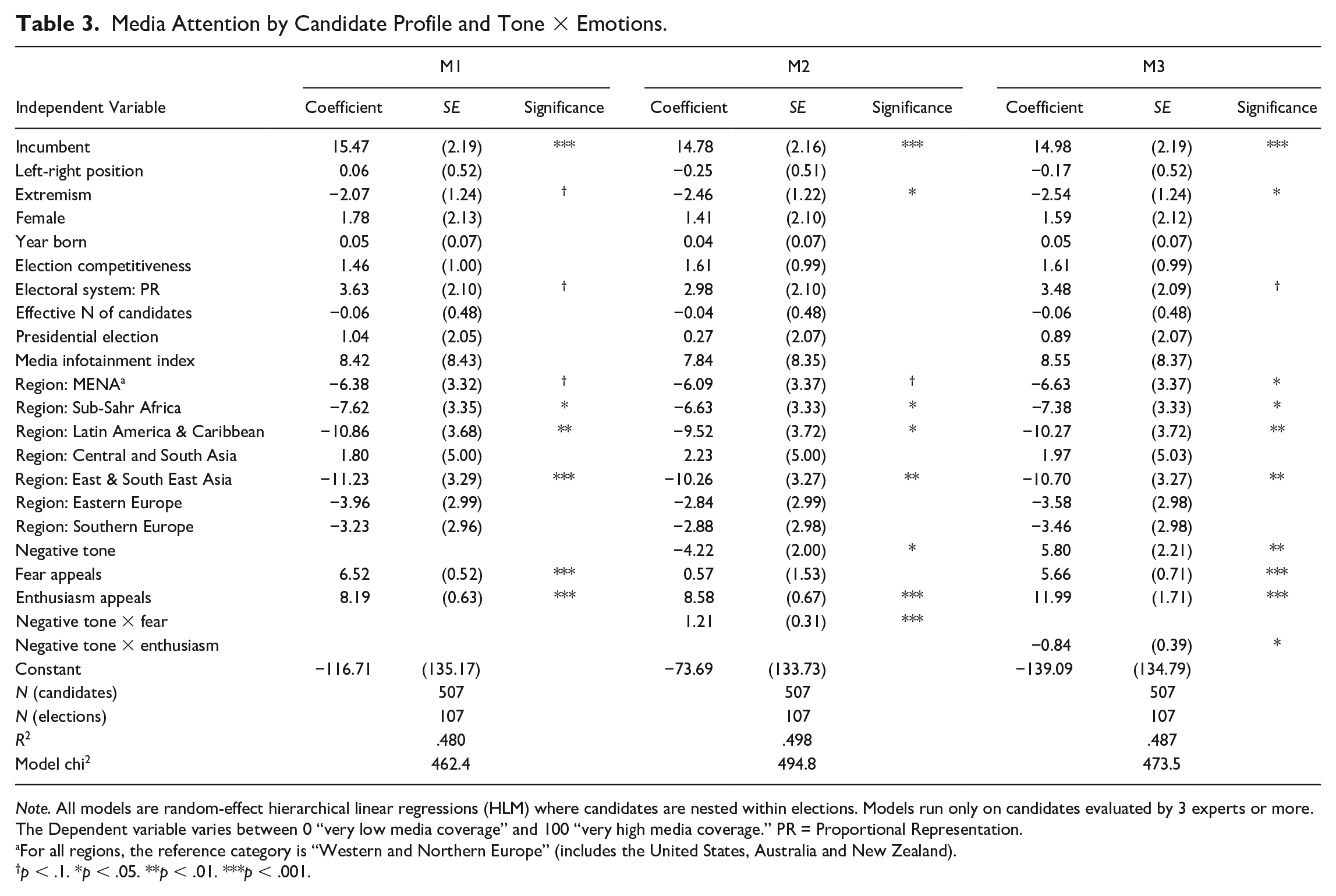
Note. All models are random-effect hierarchical linear regressions (HLM) where candidates are nested within elections. Models run only on candidates evaluated by 3 experts or more. The Dependent variable varies between 0 “very low media coverage” and 100 “very high media coverage.” PR = Proportional Representation.
For all regions, the reference category is “Western and Northern Europe” (includes the United States, Australia and New Zealand).
p < .1. *p < .05. **p < .01. ***p < .001.
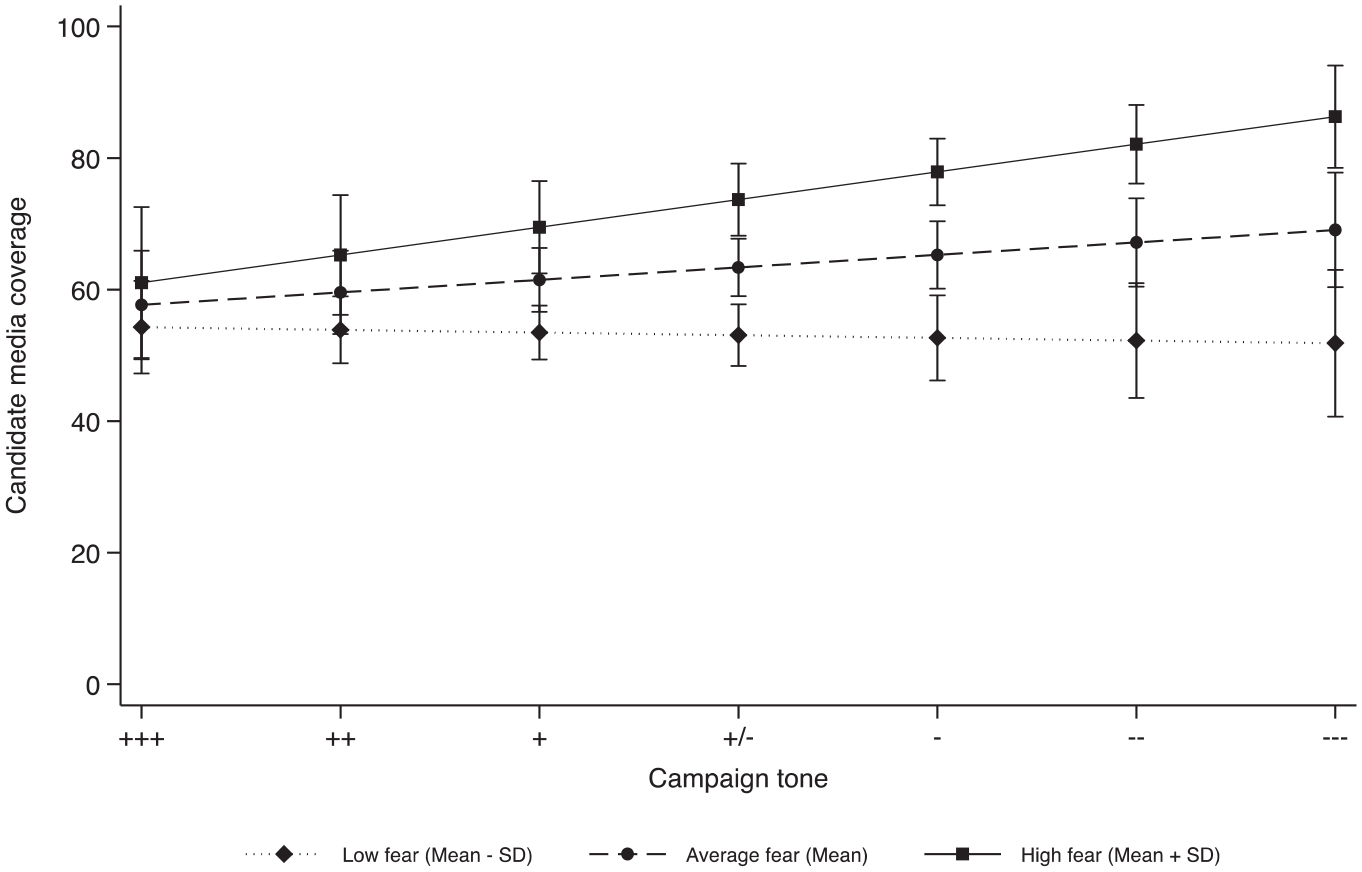
Media coverage by negative tone × fear.
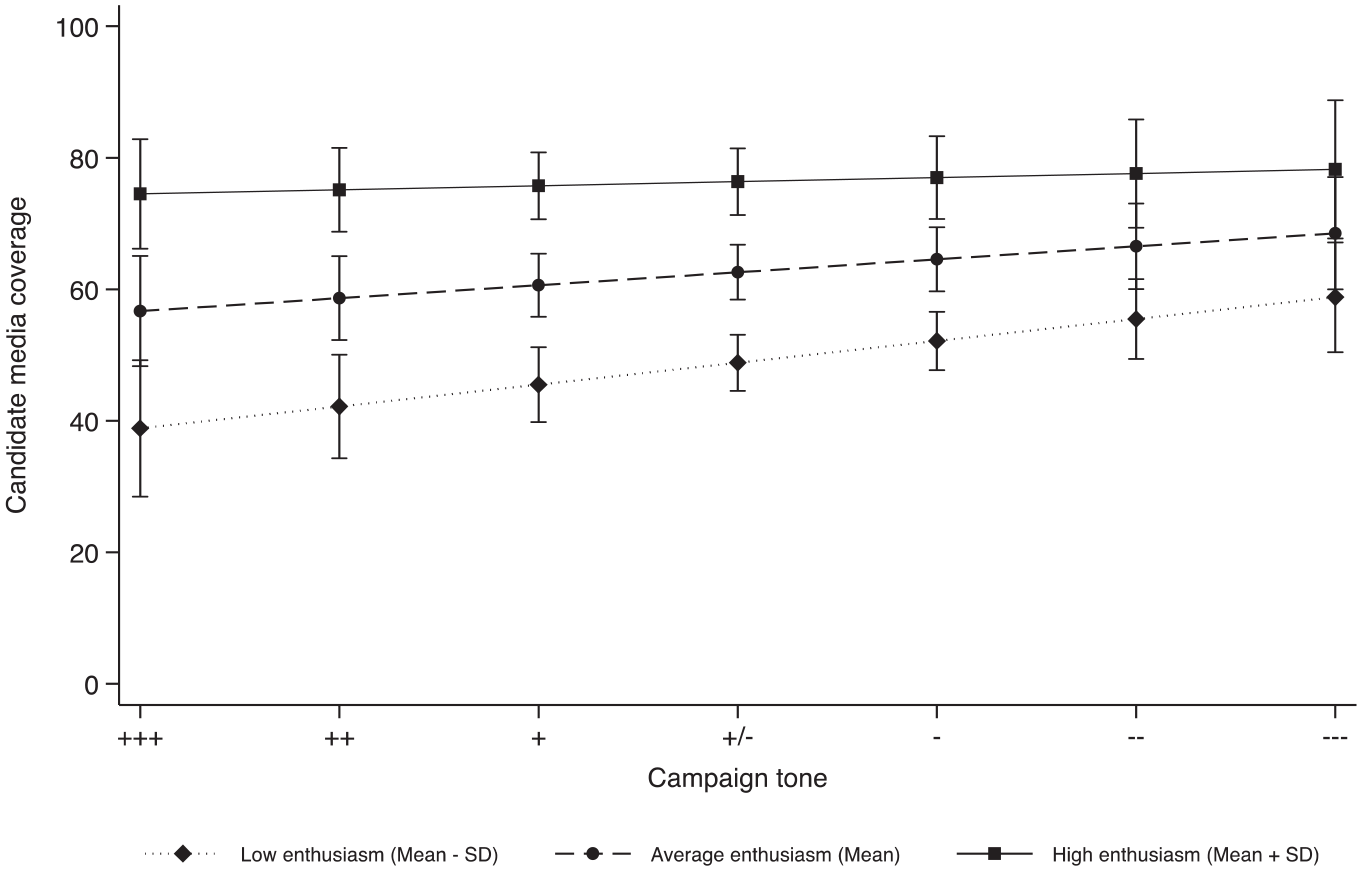
Media coverage by negative tone × enthusiasm.
Media Matters
We finally expected that the effects of campaign negativity and emotionality on media coverage are a function of the media environment—and, more specifically, are stronger in settings where the media have a marked preference for infotainment and sensationalism (H5). Table 4 tests for this assumption, via cross-level interaction effects between our index of media sensationalism and campaign tone (M1) and emotionality (M2).
Media Attention by Candidate Profile and Campaign Style × Media Infotainment Index.
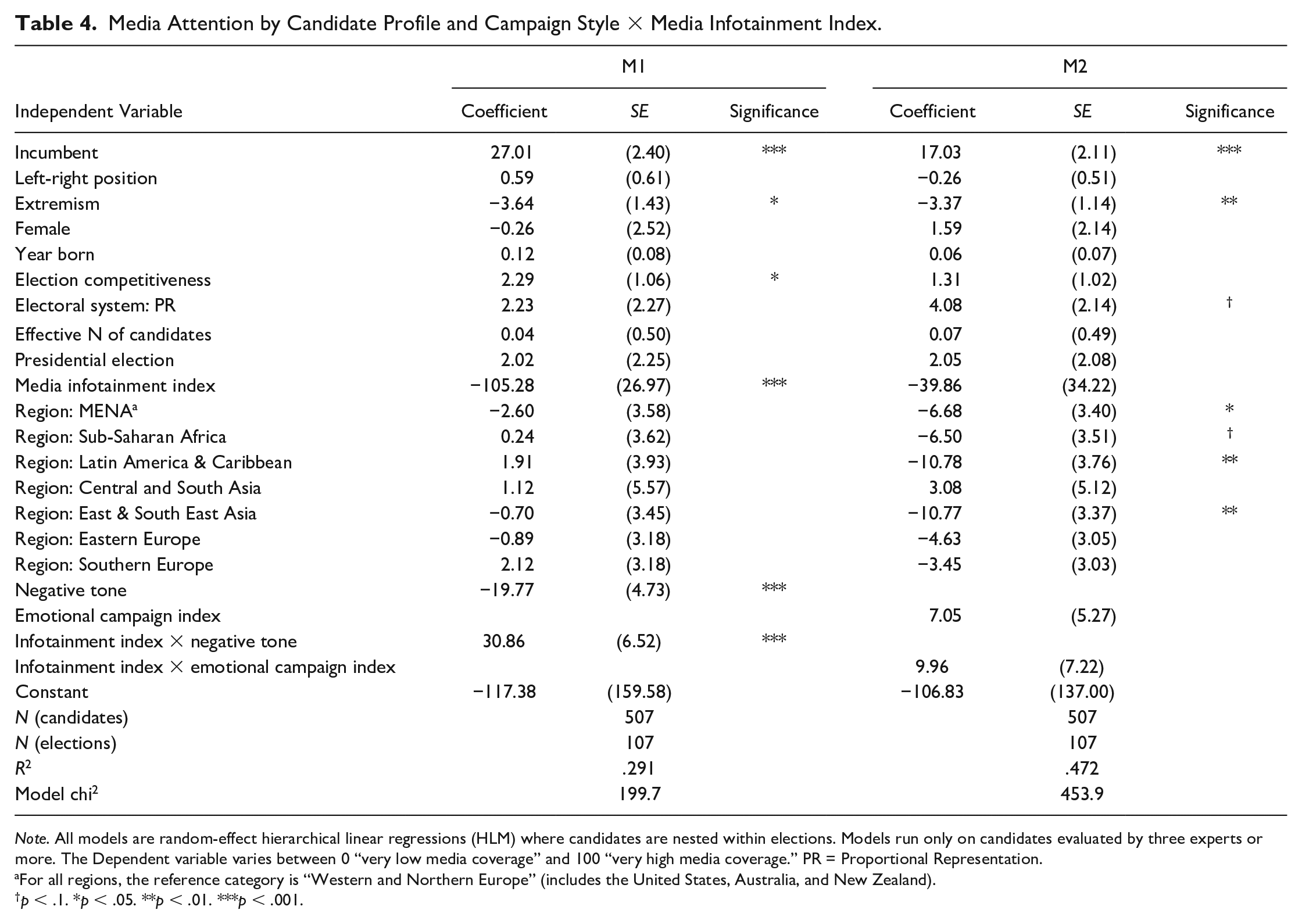
Note. All models are random-effect hierarchical linear regressions (HLM) where candidates are nested within elections. Models run only on candidates evaluated by three experts or more. The Dependent variable varies between 0 “very low media coverage” and 100 “very high media coverage.” PR = Proportional Representation.
For all regions, the reference category is “Western and Northern Europe” (includes the United States, Australia, and New Zealand).
p < .1. *p < .05. **p < .01. ***p < .001.
Results show that hour hypothesis H5 is confirmed, but for campaign negativity only. As shown in M1, media coverage is significantly higher when candidates use negative campaigns in a country with high media infotainment when compared with countries that score lower on the infotainment index, b = 30.86, z(501, 92) = 4.73, p < .001. The interaction effect is substantiated via marginal effects with 95 percent confidence intervals in Figure 5; the significant difference in slopes (i.e., effects of negative tone on media coverage) between low and high infotainment appears clearly.
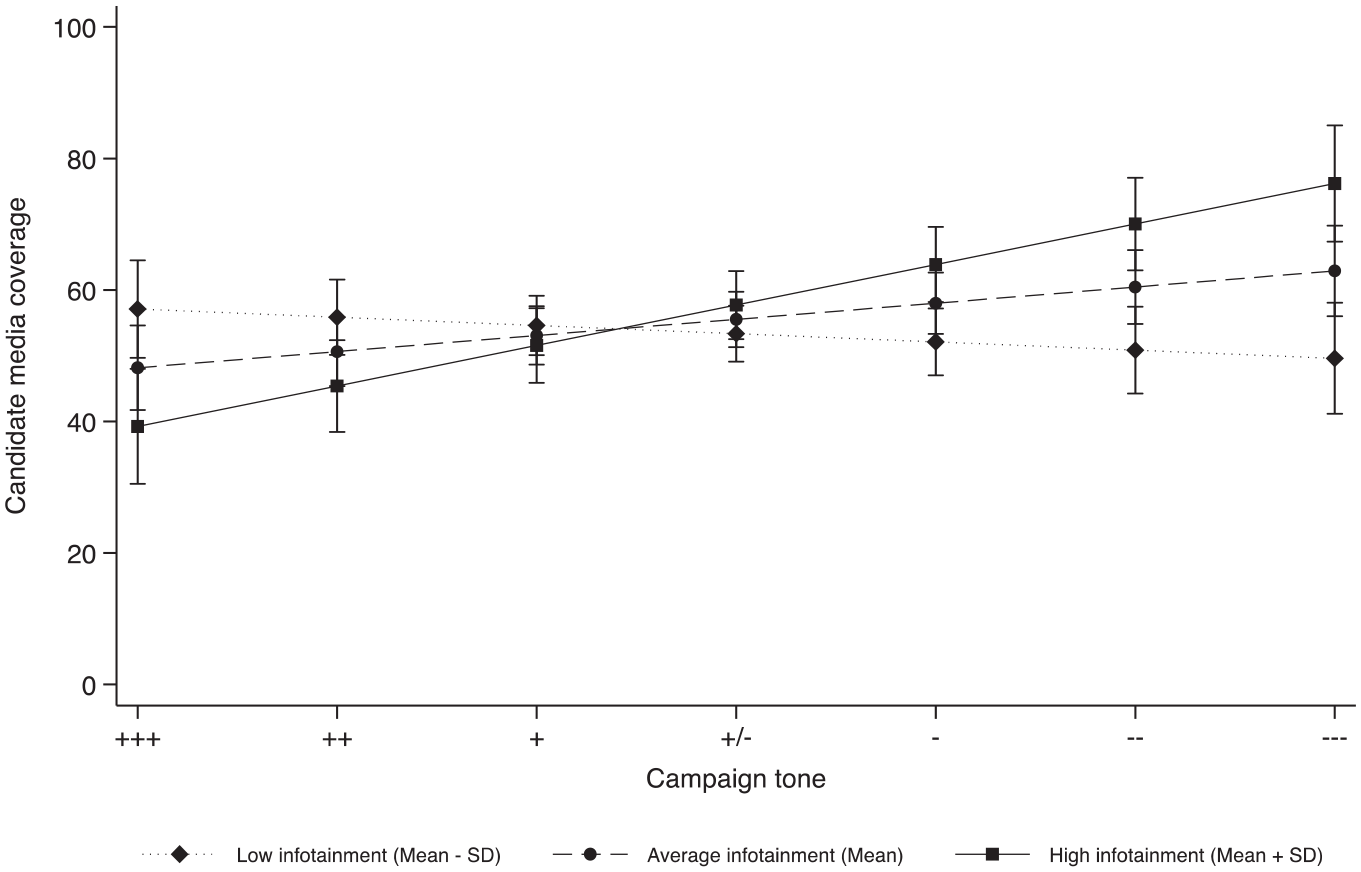
Media coverage by negative tone × media infotainment index.
Robustness Checks
A series of robustness checks (Supplementary Information file C) replicate the main results discussed above with alternative specifications. First, we replicated all models but only for candidates for which at least 10 experts provided their ratings (which excludes 107 candidates having competed in 27 elections; Supplemental Appendix Tables C1–C3); the effects not only are robust, but are often even stronger than the ones in the main text even if run on a smaller sample. Second, we replicated the main models controlling for the composition of the expert samples (Supplemental Appendix Tables C4–C6); results are again robust, and show only scattered and marginal effects on perceived media coverage due to sample composition. Third, we replicated all models using two alternative measures for “media infotainment”: On one hand, using the journalists’ perceptions that economic and commercial consideration have an impact on their work (from the WJS; Hanitzsch et al. 2019), Supplemental Appendix Tables C7 to C9 show results that are globally in line with what discussed in the main text, even if slightly weaker at times—perhaps due to the comparatively smaller N in these analyses. On the other hand, because the experts’ perception of media negativity (one of the three components of our “infotainment index”) could potentially be endogenous with their perception of campaign negativity, we replicated our models using a more limited index that is only built on the two other dimensions (media sensationalism and personalization); results, represented in Supplemental Appendix Tables C10 to C12, show again results that are consistent with the main ones in the text. All in all, our results broadly resist these alternative specifications and seem thus robust. Finally, Supplemental Appendix Tables C13 and C14 show that multicollinearity can be excluded throughout.
Discussion and Conclusion
Results at a Glance
To what extent is the content of election campaigns related to the way candidates are covered in the national media? Using an innovative data set covering the campaigning style of 507 candidates having competed in 107 elections in 89 countries worldwide, we demonstrated that the two are quite likely to be associated. Confirming our hypotheses, the results show that candidates using a more negative tone (H1) and make a greater use of emotional appeals, (regardless of their valence) receive a greater coverage (H2). The relative magnitude of these effects varies, however. Figure 6 presents the results of regressions that replicate the main models discussed above but using instead standardized independent variables (M = 0; SD = 1); due to statistical standardization, the absolute magnitude of the effects showed in the graph can be compared across different variables and models.
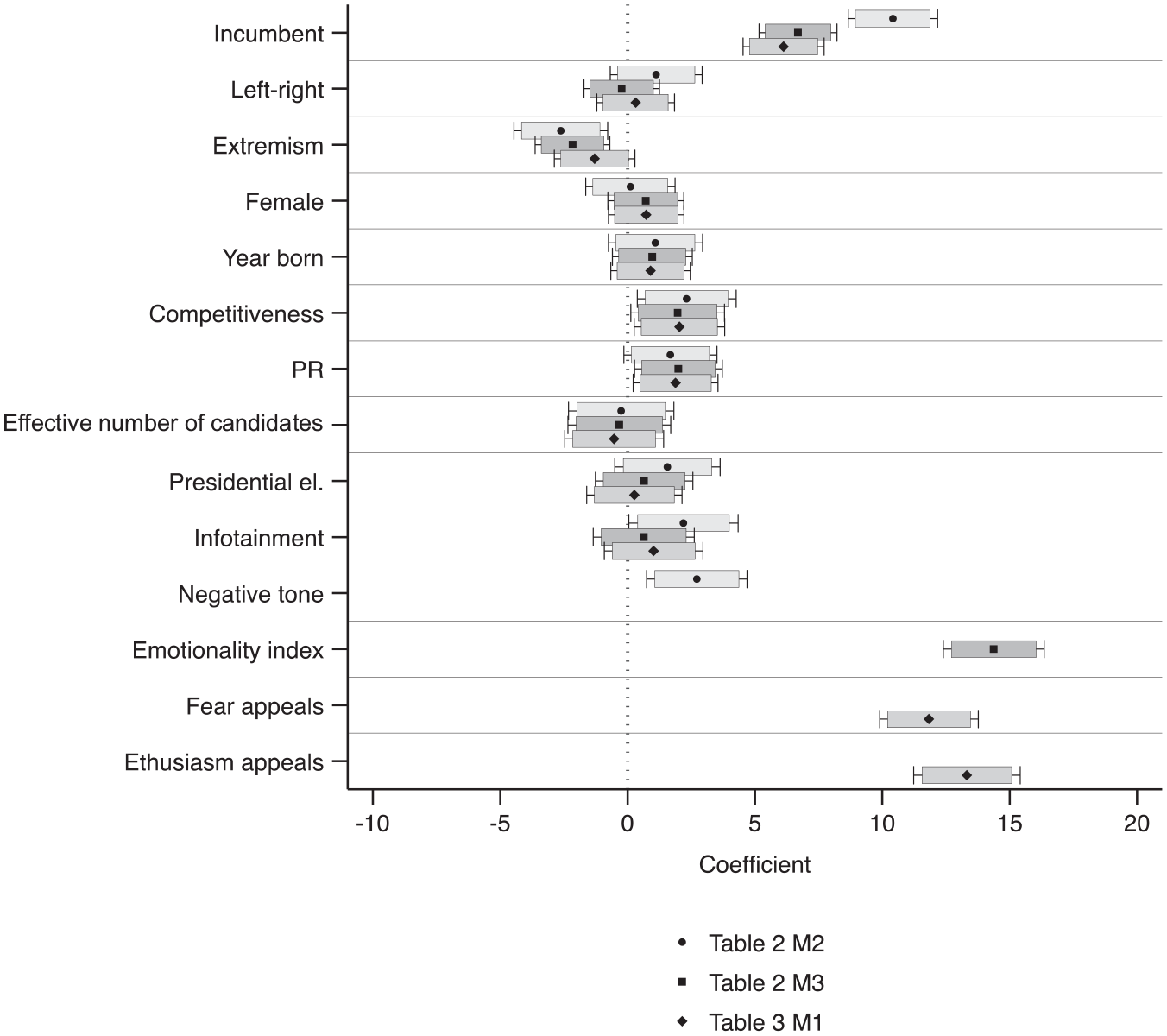
Coefficient plot with standardized variables.
The figure shows that the standardized effect of campaign negativity is, all things considered, relatively modest, and only marginally stronger than the effects of other variables such as election competitiveness. The use of emotional appeals is, however, very strong; not only the effects of the emotion variables dwarf the effects of campaign negativity, but they also surpass the magnitude of the candidate incumbency status—perhaps the single most important factor associated with media coverage in elections. Confirming H3 and H4, our analyses show that positive and negative emotional appeals (respectively, enthusiasm and fear appeals) have opposite effects when associated with campaign negativity: Media coverage is significantly higher for candidates who combine negativity and fear appeals, and when candidates go positive and use enthusiasm appeals; these affects are probably due to the fact that enthusiasm (fear) appeals are tonally consistent (“in character”) with a campaign framed on a positive (negative) tone. Finally, our results confirm that negative campaigns (but not emotional campaigns) are more effective to attract media coverage in countries where the media system is characterized by a marked preference for infotainment and sensationalism (H5). All in all, our results suggest that the candidates can actively influence the level of media attention by choosing a particular campaign strategy. This is particularly the case in a media environment seeking for sensational news.
Limitations and Implications for Further Research
These results come with some limitations. First, due to the nature of the data, we were not able to take into account the dynamic relationship between campaigning and media coverage over time. Lacking longitudinal data, we cannot confidently affirm that the direction of causality goes from the content of campaigns to media coverage; knowing the journalists crave negative content (Geer 2012), perhaps candidates are incentivized to go negative as a reaction of low coverage. Second, and relatedly, we are not able to assess the effect of increasing or decreasing negativity of the course of the campaign (Nai and Martinez i Coma 2019)—In other terms, we are not able to assess to what extent candidates adjust their campaigning strategies over time. Third, the large-scale nature of the data set prevented us from including more fine-grained and nuanced controls at the candidate and contextual levels. To be sure, we do not claim that the models shown here are comprehensive to explain what drives media coverage of competing candidates. Many elements that are potentially relevant to explain why and how much media focus on competing candidates are not included in our models; for instance, a recent strand of research shows that good-looking politicians receive more media coverage (e.g., Tsfati et al. 2010; Waismel-Manor and Tsfati 2011). Fourth, several variables used here are expert perceptions and not, for example, content coding of secondary or primary data. We are keenly aware that expert ratings are often met with skepticism in terms of construct validity and reliability (e.g., Budge 2000; Curini 2010). In terms of validity, a case could, for instance, be made that expert perceptions of campaign negativity are endogenous to how experts perceive the media. In terms of reliability, a question could be raised as to wether experts are able to emit unbiased assessments. Yet, we have presented in this article a series of tests that should dissipate the major concerns in this sense. For all key measures used in our analyses, we were able to provide several external validity tests showing that our measures are associated with similar independent constructs (e.g., the degree of negativity in tweets and TV ads). All results discussed above resist alternative specifications of the models, using variables that are not coming from the expert survey or that are conceptually less endogenous. Furthermore, all results resist when controlling for the average profile of experts that provided the ratings on the key variables, suggesting that profile biases should not be overestimated. All in all, we believe that expert ratings can be a valid alternative to direct measures—especially in large-scale comparative studies like this one; we hope that the evidence provided here helps dissipating this initial skepticism, beyond the fact that quite often no valid or better alternatives to expert ratings exist for large-scale comparative studies.
These limitations notwithstanding, the results presented in this article contribute to the state of the art in a threefold way. First, from a theoretical standpoint, they develop the emerging field of comparative political communication (de Vreese et al. 2017) by simultaneously addressing the effects of election campaigning and the drivers of media coverage for a sizeable part of the world. In this sense, our results contribute to the existing research and further develop the bridges between electoral communication and media studies. Second, from a normative standpoint, the results shown here suggest that negativity in politics is not likely to fade away anytime soon. Much evidence exists that negativity and emotionality in election campaigns matter for electoral dynamics (for a discussion, see Gerstlé and Nai 2019). Our result suggests that the media system is an important element in the persistence and salience of political negativity, and that campaign and media content are involved in a symbiotic relationship with mutual benefits. Third, from a practical standpoint, the results presented here should be of great interest to campaign managers, communication directors, and other political spin doctors as the final net effects of campaign negativity are yet still unclear (Lau et al. 2007). Our study suggests that campaign negativity—matched with the use of negative emotions—is effective to capture the attention of the media, which few would regard as inconsequential for electoral success.
Supplemental Material
Maier_and_Nai_online_supp – Supplemental material for Roaring Candidates in the Spotlight: Campaign Negativity, Emotions, and Media Coverage in 107 National Elections
Supplemental material, Maier_and_Nai_online_supp for Roaring Candidates in the Spotlight: Campaign Negativity, Emotions, and Media Coverage in 107 National Elections by Jürgen Maier and Alessandro Nai in The International Journal of Press/Politics
Supplemental Material
Supplementary_Information_file_C – Supplemental material for Roaring Candidates in the Spotlight: Campaign Negativity, Emotions, and Media Coverage in 107 National Elections
Supplemental material, Supplementary_Information_file_C for Roaring Candidates in the Spotlight: Campaign Negativity, Emotions, and Media Coverage in 107 National Elections by Jürgen Maier and Alessandro Nai in The International Journal of Press/Politics
Footnotes
Declaration of Conflicting Interests
The author(s) declared no potential conflicts of interest with respect to the research, authorship, and/or publication of this article.
Funding
The author(s) disclosed receipt of the following financial support for the research, authorship, and/or publication of this article: Alessandro Nai acknowledges the support of the Swiss National Science Foundation (Grant Ref. P300P1_161163).

Supplemental Material
Supplemental material for this article is available online.
Notes
Author Biographies
References
Supplementary Material
Please find the following supplemental material available below.
For Open Access articles published under a Creative Commons License, all supplemental material carries the same license as the article it is associated with.
For non-Open Access articles published, all supplemental material carries a non-exclusive license, and permission requests for re-use of supplemental material or any part of supplemental material shall be sent directly to the copyright owner as specified in the copyright notice associated with the article.
