




Abstract
Background and research aim: This paper analyses the governance in the Jaragua-Bahoruco-Enriquillo Biosphere Reserve (RBJBE), located in the southwest of the Dominican Republic along the borders with the Republic of Haiti. Methods: Construction and validation of an integrated scale of good governance and its subsequent analysis using factorial methods were carried out to identify good governance factors, and then regression analysis was performed. Results: Participation and coordination mechanisms are key factors in explaining governance of the biosphere reserve and critical factors in supporting a transition from an AINH (as if nothing happened) governance mode to good governance. Conclusion: The RBJBE operates in an AINH
Introduction
This paper aims to analyze the governance of the Biosphere Reserve Jaragua-Bahoruco-Enriquillo (RBJBE) in the Dominican Republic (DR), understanding governance in general terms as the political arrangement of institutions, structures and processes that determine the dynamics of decision-making in terms of who makes the decisions, how they are made, who is affected, as well as the actions derived from the decision-making process and its particular effects and the groups affected (Bennett & Satterfield, 2018; Hare et al., 2018; Lockwood et al., 2010). So, the governance of the environment and natural resources goes beyond management. The latter can be understood as an aftermath of the former, so governance implies a set of principles such as justice, equity, efficiency, directionality, and social legitimacy, among others (Cox et al., 2010; Hare et al., 2018; Lockwood et al., 2010). Thus, it also implies supporting conservation and sustainable development, considering a stakeholder perspective on conservation and local development expectations (Acheson, 2006; Bennett et al., 2019; George & Reed, 2017; Wilkie et al., 2006).
Therefore, this paper provided empirical evidence about how local stakeholders value the overall performance of governance of the environment and natural resources in the context of a biosphere reserve about achieving conservation and local development in terms of good and bad governance, which refers to the degree of success of the local structure of power and institutions to supporting conservation and sustainable development based on the governance mentioned above principles of (Bennett & Satterfield, 2018; Eagles et al., 2013; Islam et al., 2017).
This perspective on governance may support a better interpretation of the concept of the biosphere reserve (BR) in the context of the DR in terms of closing the gap between the concept and its implementations by providing some answers to the questions about what critical factors may explain the governance of the RJBE and which of them can improve it, considering the nuances and sometimes opacity in defining and deploying conservation spaces in the DR (Ferreira et al., 2020; Pasachnik et al., 2016).
The BR concept, developed by Man and the Biosphere Program (MAB), an initiative of the United Nations Educational, Scientific, and Cultural Organization (UNESCO) formally established in 1971, represents a sustained effort over time in pursuit of reconciling the conservation of biodiversity and natural resources by incorporating a landscape perspective (Borsdorf et al., 2013; Price, 2002). With the support of the MAB program was created in 2002 by the Dominican government. Figure 1 shows the location of the RBJBE in the Hispaniola. Location of the RBJBE in the Hispaniola. Source: Own elaboration.
Governance matters by considering the generally conflictive interactions between disputed local-based interests in development and conservation and the emergence of the biosphere reserve (BR) concept constitute an alternative to fostering more socially grounded practices on conservation and local development that contribute to harmonizing such interests (Ishwaran et al., 2008; Price, 2002). It is specifically valid in the case of the DR in which many protected areas (PAs) were created in a social conflict context, especially in the 70s and 80s of the XX century (Holmes, 2014), when some of the PAs that constitute the RBJBE were created, including Lago Enriquillo National Park, the Jaragua National Park, and the Sierra de Bahoruco National Park (Gómez-Valenzuela et al., 2018).
The conflictive nature of the Dominican protected areas has yet to be studied in the formal academic literature (Holmes, 2010, 2014). However, the works related to the political and social crises of the 80s and 90s on the restrictive policy of using forest timber resources or related problems stand out with agriculture in protected areas and the issues of property rights of small and medium producers or more relatively more recent approaches on co-management practices and local support for conservation practices in PAs (Holmes, 2010, 2013). Attention to the governance problems of protected areas in DR also acquires a regional dimension as it occupies two-thirds of the Island of Hispaniola, the most biodiverse in the region, and shares with the Republic of Haiti (Cano-Ortiz et al., 2016; MARENA, 2020; Muñoz et al., 2022), a country facing structural challenges in terms of sustainability (Mombeuil, 2020). In addition, around a quarter of the Dominican island territory comprises protected areas (MARENA, 2020), which sometimes function as paper parks, overlapping social conflict with conservation challenges (Pasachnik et al., 2016).
At the same time, there needs to be more evidence of empirical approaches to the issue of governance in the context of the Caribbean and Latin America (LAC). It has prevailed more qualitative approaches to some governance dimensions, such as managing natural resources or the importance given to community participation (Brenner & Job, 2012; Isacch, 2008; Ruiz-Mallén et al., 2015; Stoll-Kleemann et al., 2010). Thus, this article makes a relevant contribution of empirical basis for analyzing the governance of natural resources and ecosystems in the context of biosphere reserves in Latin America and the Caribbean, advancing a novelty approach intended to address complexity in natural resources management by combining a qualitative approach with quantitative methods and putting governance analysis in the center to highlight the social dimension of conservation and sustainable development in the context of a BR in the Caribbean (Bodin & Tengö, 2012; Cumming et al., 2020). It also approaches a better local-based understanding of the complex policy governance scenario of the RBJBE trapped in a crossroads of conservation and development (Gómez-Valenzuela et al., 2021; Sánchez-Valdez, 2015).
Conceptual Framework
Understanding Governance
As indicated, in general terms, governance refers to the political arrangement of institutions, structures, and processes that determine the dynamics of decision-making and its aftermaths, considering the power exercised by structures and sociocultural and political processes (Bennett & Satterfield, 2018; Lockwood et al., 2010; UICN, 2019). It also includes how decisions are made, responsibilities are assigned, and the mechanisms for different stakeholders to express their views and participate (Lockwood, 2010). In this analytical context, management refers to the resources, plans, and actions that are the product of applied governance (Hockings et al., 2015). Thus, management is a consequence of applied governance (Bennett & Satterfield, 2018). It is an elusive and challenging topic to be addressed in empirical terms because of the socially conflictive aspects related to the access and use of natural resources by the communities (Hockings et al., 2015; Lockwood et al., 2010; Slough et al., 2021; UICN, 2019).
Regarding bad or good governance, aspects such as its directionality and impacts should be nuanced regarding the expected conservation and sustainable development outcomes over time. Thus, bad or good governance in this analytical context refers to the degree of success in achieving conservation and development goals, referring to bad governance in terms of adverse outcomes and good governance as the positive outcomes over time, both depending on the quality of the institutional interactions around the environment and natural resources (Acheson, 2006; Schliep & Stoll-Kleemann, 2010). Therefore, it is a multi-level and multi-stakeholder process with uneven results conditioned by the institutions' quality, interactions, and regulatory compliance capacities (Acheson, 2006; Bodin & Tengö, 2012; Rodriguez Solorzano & Fleischman, 2018).
Good governance principles.

Source: Own elaboration based on Lockwood (2010).
The seven principles in Table 1, in terms of outcomes, define the standard of good governance. Thus, performance in good governance refers to the commitment and the ability to deliver to a permissible extent the planning and resource allocation concerting to the expected outcomes (Golebie et al., 2022; Pomeranz & Stedman, 2020). It has, in terms of effective governance, a direct impact on the assertiveness of planning processes, on the management of available resources to achieve the expected objectives in terms of conservation and local development, and on the promotion of mechanisms that ensure effective stakeholder participation, considering their rights and the potential of their contribution to the achievement of the proposed objectives. Thus, good governance is a constructive process of political and institutional articulation based on principles, which seeks to harmonize the actors' different interests and leads to socially acceptable conservation and sustainable development results (Lockwood, 2010; Van Cuong et al., 2017).
A fundamental issue is the existence of synergies between conservation and local development objectives so that good governance ensures that using natural resources can support the livelihoods of communities in protected environments (Lockwood, 2010; Van Cuong et al., 2017). It implies that the elements of good governance, such as legitimacy, participation, accountability, transparency, and management capacity, among other elements, are vital to ensuring the delivery of results in conservation and local development (Bennett & Dearden, 2014; Bernedo Del Carpio et al., 2021). Thus, bad governance is a perverse process associated with the extractive and socially inequitable use of natural resources, leading to their depletion, environmental degradation, and biodiversity (Assa, 2018; Dressler & Roth, 2011). The elements' absence, deficiency, or profound imbalances define good governance (Dressler & Roth, 2011; Eagles et al., 2013; Vedeld et al., 2012). It is related to the depletion of resources, environmental degradation and loss of biodiversity, political corruption, poor quality of institutions, as well as low levels of regulatory compliance that lead to highly extractive and socially inequitable outcomes in terms of development and use of natural resources (Assa, 2018; Busse & Gröning, 2013).
BRs as management tools
The first BR was established in 1976, and since then, BRs have grown, covering about 134 countries and over 600 million hectares in about 738 reserves (UNESCO, 2021a). In Latin America and the Caribbean, there are 137 BRs in 22 countries, the leading countries México (41) and Argentina (15), while the insular Caribbean accounts for 11 BRs, of which six are located in Cuba, one in the DR, two in the Republic of Haiti, one in Saint Kitts and Nevis and one in Trinidad and Tobago (UNESCO, 2021b). In 2012, La Selle Biosphere Reserve in Haiti next to the RBJBE, and since 2017, efforts have been made to promote cross-border management of the two biosphere reserves; however, this goal is challenging to achieve given, on the one hand, the problem of political stability in Haiti and the asymmetries in institutional capacities between the two countries that share Hispaniola (Marzelius, 2020; Sheller & León, 2016).
BRs are an instrument for managing natural spaces and landscapes that extend the more traditional scope of Protected Areas (PAs) since it is intended to harmonize the interactions between communities and nature (Price, 2002). A fundamental issue that differentiates the management approach of the BRs concerning the PAs is that in the case of the former, the natural and the built cultural landscape are considered together, allowing paying more attention to buffer and transition zones (Bridgewater, 2002; Ishwaran et al., 2008). However, in the case of PAs, the management approach tends to focus on conservation priorities within their spatial limits, including the natural resources in it (Ishwaran et al., 2008).
Nevertheless, even in the more flexible concept of BR, achieving locally based conservation and sustainable development objectives is a complex, long-term process that implies different levels of political articulation that do not necessarily understand the concept of a biosphere reserve in the same way, resulting in uneven outcomes in both conservations a sustainable development (Schliep & Stoll-Kleemann, 2010). It is particularly relevant in contexts of high socioeconomic asymmetries combined with social pressures derived from the local contexts that are integrated into the landscape of the biosphere reserve, as occurs in the case of the RBJBE, located in the southwest of the DR along the border with the Republic of Haiti (Gómez-Valenzuela et al., 2021; Sheller & León, 2016).
In between bad and good governance, an intermediate state can be defined as AINH (as if nothing happened) governance, which, despite moving toward lousy governance, can be characterized by an elementary recognition of the already existing institutions, their representatives, and structure, with a presence in the territory but with limited capacities for regulatory compliance and with low levels of control that give rise to corrupt practices that affect natural resources and biodiversity. The theory of institutional development and the economic policy approaches to natural resources could support an interpretation of this entropy state of AINH governance and connect to the theory of institutional change by explaining the transition from one institutional state to another and its implications in terms of performance and sustainability (Acheson, 2006; Collier, 2010; Reimer, 2013; Yeboah-Assiamah et al., 2017). In addition, the intermediate governance mode could correspond to a business-as-usual scenario used for managing ecosystem services as part of the Targeted Scenario Analysis (TSA) approach (Alpizar & Bovarnick, 2013; Kumar et al., 2013). Therefore, a characterization of the governance of the RBJBE as a management commitment to conservation and sustainable development at the local level is proposed based on a three-mode typology: f bad governance, AINH governance, and good governance.
Material and Methods
The Jaragua-Bahoruco-Enriquillo Biosphere Reserve
The RBJBE has three core conservation areas represented by Lake Enriquillo National Park and its surroundings, the Sierra de Bahoruco National Park, the area around it, and the Jaragua National Park and its surroundings. It has around 4,858 km2; approximately 65% (3,184 km2) corresponds to the nuclei conservation zones, 9.5% (460 km2) to the buffer zones, and 25% (1,214.46 km2) corresponds to transition zones (Gómez-Valenzuela et al., 2021; Leon et al., 2011). Figure 2 shows the three core conservation areas of the RBJBE. Core conservation areas of the Jaragua Bahoruco-Enriquillo Biosphere Reserve. Source: Own elaboration.
The population of municipalities within the RBJBE.

Source: Own elaboration based on ONE (2020).
The three most populated municipalities of the RBJBE present significant poverty indicators concerning the number of poor households in the country (40.4%). In the case of the municipality of Neiba, the proportion of poor households rises to 69.4%, Pedernales to 66.4%, and Jimaní to 65.8 % (Morillo Pérez, 2014). Poverty and illegal immigration are socioeconomic factors that add conflicts concerning access to natural resources and have previously been identified as challenges to conserving the reserve's biodiversity (Leon et al., 2011). Added to the situation above depicted is the still challenging socioeconomic situation of the north side of the RBJBE, generated by the flooding of Lake Enriquillo, which almost doubled its surface between 2003 and 2014 (from around 200 km to approximately 395 km) and which ended with estimated global losses between US$50 and US$70 million (Gomez-Valenzuela et al., 2021). All those mentioned socioeconomic, political, institutional, and environmental factors together exert direct pressure on the natural resources and on the ecosystem services provided by the RBJBE, affecting the efficiency of its governance, generating local conflicts, and limiting the potential for achieving the reserve's conservation and sustainable development goals.
Measuring Governance
Governance can be measured by building indices that summarize the sets or dimensions of the related variables in a similar way to the measurement of factors of social capital or perception of conservation (Islam et al., 2017). To analytically connect perceptions and measurement of governance and performance, a 1 to 7-point governance Likert scale type was built (see Appendix A) (Bennett & Dearden, 2014; Hockings et al., 2015; Lockwood, 2010; Lockwood et al., 2010; Slough et al., 2021; UICN, 2019; Van Cuong et al., 2017). The governance scale was validated in in-person two-round workshops with the RBJBE Coordination Committee and local stakeholders between September and December of 2021, taking place the third one on March 4, 2022, in the city of Barahona in the local facilities of the Ministry of Environment and Natural Resources (see Figure 3 for some pictures of the validation process). Additional online consultations with national experts were conducted to improve the scale, resulting in a more simplified measuring instrument (see Appendix A). Some pictures of the governance scale validation workshops.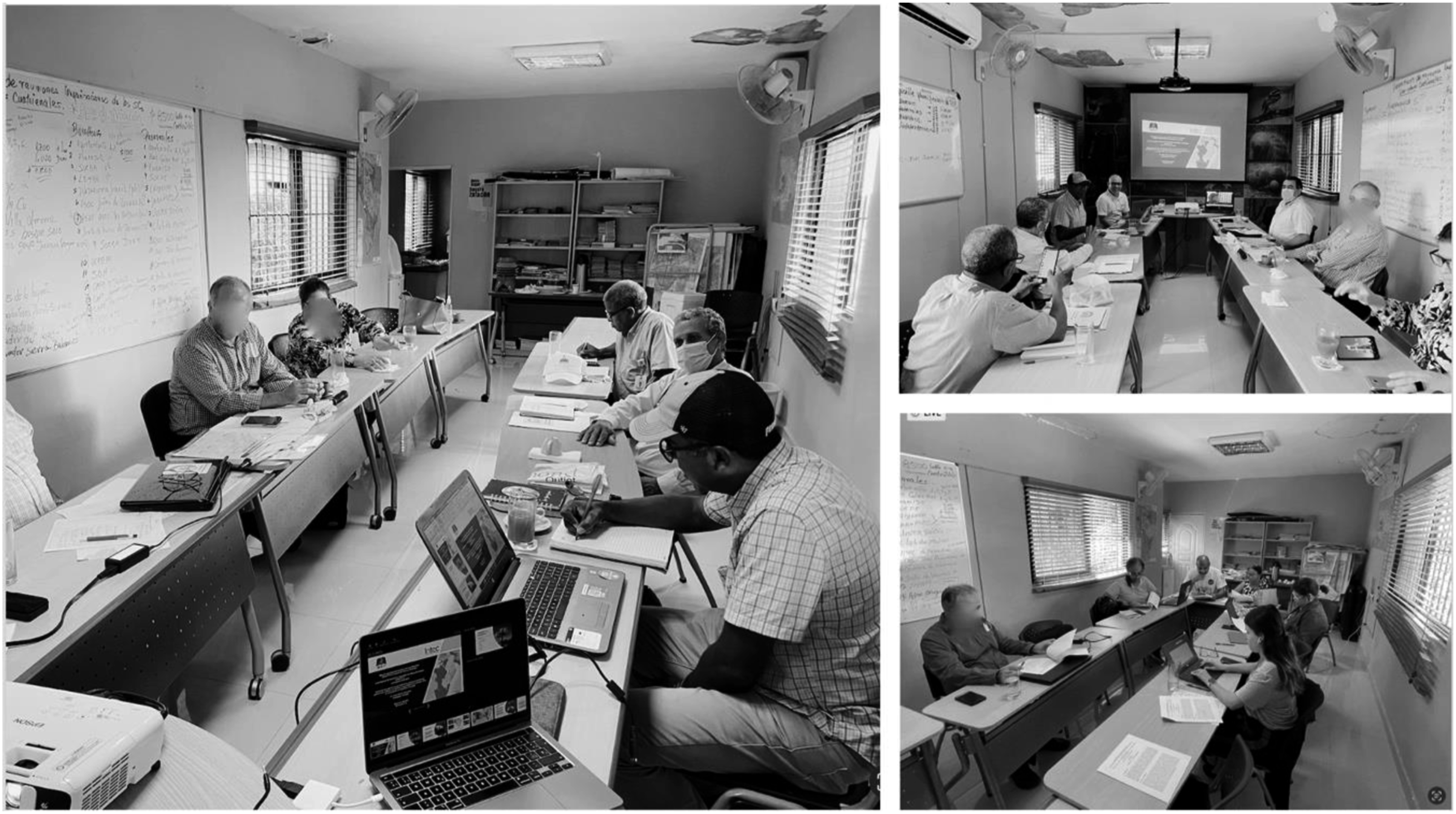
The Exploratory Approach
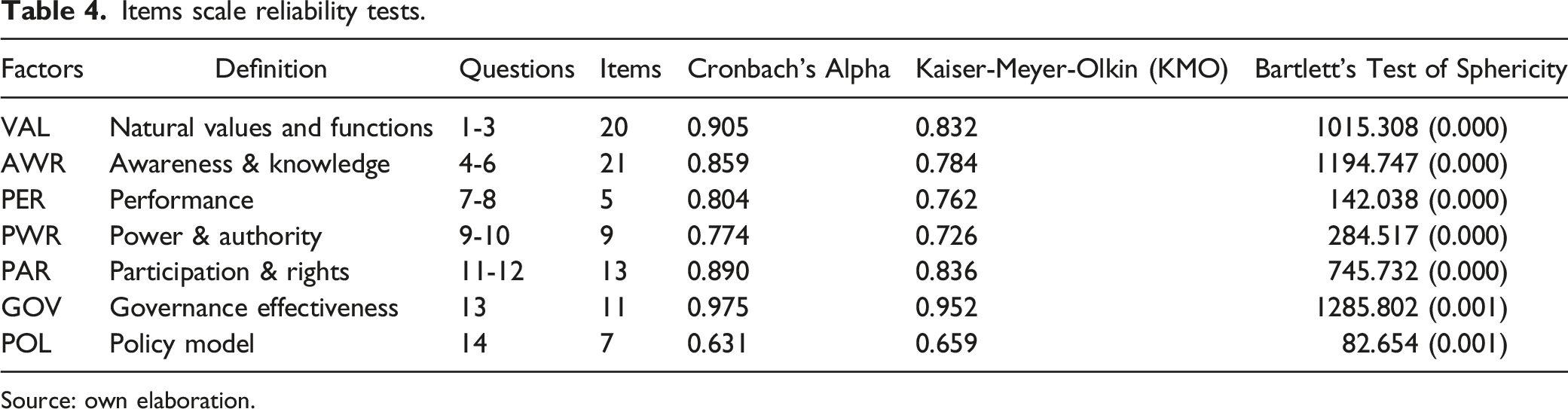
As part of the exploratory approach, a statistical reduction dimension of the scale item variables was run to simplify and group them into a set of factors (Cuong, Dart, Dudley et al., 2017a; Islam et al., 2017). However, one previous step to reduce the number of item variables into factors is to test the scale reliability. Two tests were conducted: Cronbach's alpha and the Kaiser–Meyer–Olkin (KMO). The first one tests the reliability of the governance and performance scales through correlations between items and is recommended to keep in the analysis items with values over 0.6 to ensure proper internal consistency of the scale items (Bollen et al., 2005). Secondly, the KMO test helps identify the factor variances that could be analyzed, and values over 0.6 indicate good scale consistency (Shrestha, 2021; Williams et al., 2010).
Based on the 90 total responses of the RBJBE stakeholders, through an online survey applied, a Dimension Reduction (DR) statistical procedure was performed using Principal Component Analysis (PCA) to identify those factors with the most significant weight (Islam et al., 2017; Shrestha, 2021; Williams et al., 2010). The PCA used VARIMAX rotation to reduce the number of variables into fewer factors. The PCA selects factors with eigenvalues greater than one considered statistically significant. The factors score functioning as indexes will be used in multiple linear regression to examine the relationship between governance and performance in the context of the RBJBE (Shrestha, 2021; Williams et al., 2010).
Governance factors at RBJBE.

Source: Own elaboration.
Regression Model
Based on Table 3 and the results of the dimension reductions, several factors were defined by grouping a set of items variables according to the posted definition criteria and following the question sequence as it was defined once the final questionnaire was set out. The factors were defined thanks to PCA analysis to operate as variables. A multiple regression analysis was carried out to determine the statistically significant relationships between the various factors of governance and performance indicators. The regression carried out was based on the method of ordinary least squares. The dependent variable is the governance factor (GOV), and the independent variables are the Participation (PAR), Awareness (AWR), Performance (PER) factors, and policy model (POL).
Characterizing Governance
Following the 1-to-7-point scale defined, it is proposed to characterize governance based on the depicted typology of bad, AINH, and good governance. It is essential to point out that in the case of the AINH, governance tends to prevail over the years the status quo of natural resources and landscape governance and management without significant political actions or interventions that change its course in the short-medium term, preventing thus favorable conservation or sustainable development outcomes.
Therefore, based on Figure 4, governance characterization can be understood as a continuum ranging from bad to good governance mode, considering a medium-long-term perspective. The general idea is that the upper limits of each typology are closer than the extreme values, implying that as governance mode improves, the upper limits of each typology could quickly move to the next level following an institutional transition dynamic (Reimer, 2013; Rodriguez Solorzano & Fleischman, 2018). Proposed governance typology. Source: Own elaboration.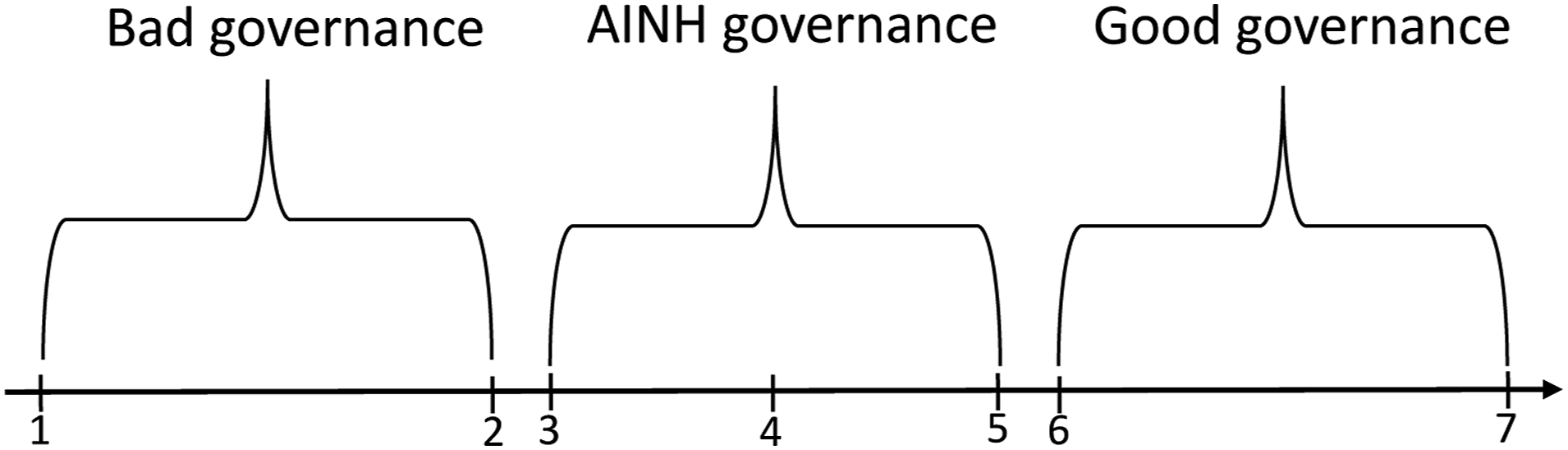
Sampling and Data Gathering
Identifying the RBJBE stakeholders has been one of the critical components of this research. The stakeholders referred to here are local actors with direct interests in the biosphere reserve, mainly representatives of community organizations of producers, women, and non-governmental civil society organizations with a presence in the territory (Fraser et al., 2006; Knight et al., 2006; Lockwood et al., 2010; Mejía Acosta, 2013). The BR Coordination Committee provided the sampling framework of around 150 local stakeholders randomly distributed along the different communities surrounding the RBJBE. Most of the selected stakeholders (more than 65%) were part of community-based organizations such as women's groups, producer associations, youth groups, social and cultural clubs, and representatives of local NGOs, and to a lesser extent (around 35%) of municipal officials, university professors and representatives of the Ministry of Environment and Natural Resources. Ninety (90) complete responses were received for a 60% response rate of the provided sampling framework, which allowed us to reach the minimum statistical criteria of quality for small sampling and parametric analysis (Norman, 2010; Zou et al., 2023). Between May and July of 2022, the governance scale was administrated using an electronic survey platform, allowing the stakeholders to respond to the scale by their available means, such as computers, tablets, or smartphones. The research team conducted frequent follow-ups with the stakeholders, including emails and phone calls. All offered their consent to participate. Data analysis was carried out using SPSS Statistics™ version 29.
Results
Factor Analysis
Items scale reliability tests.
Source: own elaboration.
According to Table 4, the scores of Cronbach's alpha test (5 of 7) are above 0.8 except for the item scales of PWR=0.774 and POL=0.631, even with these being good results. The scales showed their reliability as measurement instruments of the defined items, with which the reduction of dimensions anticipates a reliable result. It was confirmed by the results obtained with the KMO test and the associated Bartlett sphericity test (six of seven values above 0.7 and statistically significant), indicating that the dimension reduction was efficient.
Values, Awareness, and Performance Factors
Natural values and functions (VAL), awareness about them (AWR), and the perception of performance (PER) in their conservation and terms of local, sustainable development are critical elements of the perceptions about conservation and sustainable development (Soliva & Hunziker, 2009; Sturiale et al., 2020). From the point of view of the RBJBE, these factors gain relevance by considering the tensioning environment in which the daily life of its stakeholders, especially twenty years after its creation, is what the scales defined for this purpose try to measure and grouped into the three indicated factors. As seen in Appendix B, concerning factor VAL, 11 variables were included (those with the higher loading factors), including those related to ecosystem services provided by the RBJBE. Ecological functions such as soil conservation (0.777) and clean air/pollution mitigations are recognized as RBJBE values, including bodies of water and wetlands (0.691).
Concerning factor AWR, the dimension reduction analysis generates two related but independent factors: the perceived threats to the integrity of the RBJBE (THR) and the level of knowledge (KNW) of the biosphere reserve of the indicated stakeholders (see Appendix B). In the case of the perceived threats, all of them are human-related, including illegal occupation and invasion of conservation lands (0.815), the related land use change (0.790), and the associated habitat destruction (0.762), amongst others. The divided AWR factor allows for distinguishing between the role of perceived and acknowledged threats and the importance of knowledge. However, these new factors support decision-making regarding good and effective governance of biosphere reserves and PAs (Cuong, Dart, Dudley et al., 2017a; Eagles et al., 2013; Lockwood, 2010).
Finally, the PER factor gathered those variables related to the perception of conservation and local development outcomes of the RBJBE more than two decades after it was created in 2002. Appendix B shows that all five variables were included, meeting the strict exclusion criteria of leaving out the dimension reduction of those variables below 0.6 of factor loading. All these variables gathered in the PER factor not only validate the ability of the scale to capture performance issues but also are aligned with what the broader empirical-based literature on governance of natural resources is telling us about the critical insights between good governance and performance in conservation and local development (Bennett & Dearden, 2014; Dressler & Roth, 2011; Eagles et al., 2013; Lockwood, 2010).
Power, Participation, Governance, and Policy Model
Power and authority (PWR), participation (PAR), efficiency governance (GOV), and policy model (POL) are, in fact, intertwined factors of the policy system directly related to the success of conservation and local sustainable development in both protected areas and biosphere reserve (Hockings et al., 2015; Islam et al., 2017; Ostrom, 2002; UICN, 2019; Van Cuong et al., 2017). In the context of the RBJBE, there is no doubt that it is a relevant issue not only for the present but also for the future of the RBJBE in terms of assuring its broader recognition beyond written documents (Pasachnik et al., 2016; Sheller & León, 2016).
Concerning the PWR factor, likewise in the case of the AWR factor, two new interrelated factors were generated (see Appendix C). The first one consists of a polyvalent and variable recognition of some cases, with indirect stakeholders as a source of power and authority in the RBJBE (PWRL), even if they are not part of any formal governance structure as the Coordination Committee. It is especially relevant for the cases of the Ministry of Agriculture (0.757) or the Ministry of Energy and Mining (0.656). The second factor consists of the recognition of the more traditional and conventional source of power (PWRC) by recognizing the role of the current Coordination Committee (0.725), which directly depends on the Ministry of Environment and Natural Resources (0.668).
In the case of the PAR factor (see Appendix D), all eight items' related variables were included in the dimension reduction procedure with high factor loading (almost over 0.8). The three top variables covering critical issues related to participation in the sustainable management of natural resources are conflict resolution mechanisms (0.867), regulated agreed access to natural resources (0.866), and a voice and participation in decision-making (0.844)(Cuong, Dart, Dudley, et al., 2017a; Islam et al., 2017; Slough et al., 2021). Concerning POL, AWR and PWR were split into two different ones (see Appendix D). The first one consists of a more decentralized, participative, and bottom-up model of organizing and exerting power (BTU), and the second one in a more conventional top-down (TDW) model or organizing power and authority in the RBJBE, both in the middle of a fundamental discussion about natural resources management (Cuong, Dart, Dudley, et al., 2017a; Golobič, 2010).
About the GOV factor, the central one in this study connects all the mentioned factors because good governance is related to the effective management of natural resources based on a set of fundamental principles such as legitimacy, transparency, accountability, inclusion, fairness, connectivity, or the ability to connect the different levels of public authority and of course resilience, related to the capacity for learning, adaptation and continuous improvement (Lockwood, 2010; UICN, 2019). Appendix D shows that all 11 items’ variables were included in the dimension reduction.
Regression Analysis

Regression analysis.

Source: Own elaboration.
The two models show exciting results concerning the analyzed factors as an explanatory variable of good governance. Both models have an adequate adjustment level. The general model presents an R of 0.82, an R2 of 0.68, and a significant F value at 1%, which means that it is valid in statistical terms and explains 68% (R2) of the variance observed. At the same time, the restrictive model presents an R of 0.81 and an R2 of 0.66, although with a value of F higher than the general model. The restrictive model explains 66% of the variance, with both models having a similar explanatory power.
In the general model, VAL, KNW, PWRC, PAR, and TPW have a positive sign, generally recognizing these factors in good governance (Eagles et al., 2013; Pomeranz & Stedman, 2020). However, only PWRC and PAR are statistically significant, indicating that these factors' improvement significantly influences good governance (Eagles et al., 2013; Van Cuong et al., 2017). These two factors are the only ones in the restricted regression model, and the current analysis is also valid. In this research context, the PAR factor combines variables ranging from conflict resolution mechanisms to effective decision-making (Cuong, Dart, Dudley, et al., 2017a; McKinley et al., 2017).
On the other hand, the PWRC factor refers to the fact that at the local level, the importance in terms of the legitimacy of the established authority is recognized and that, in this way, it is possible to improve the governance of the RBJBE, a perspective related to the TPW (which is statistically significant at 10% of confidence level), highlighting the role of the established power structures. Do these results mean that the participation requirements are met, that the locally recognized authority is fully fulfilling its duties, or that the governance of the RBJBE is effective? No. The PAR and PWRC factors show that improvements in good governance are highly dependent on these factors (Islam et al., 2017; Lockwood, 2010; Van Cuong et al., 2017).
However, the THR, PER, PWRL, and BTU factors have negative signs but are not statistically significant; these results may indicate a discriminating judgment in their role as factors related to governance. In other words, they indicate a negative perception of the perceived threats in the RBJBE, including land-use change, habitat destruction, and forest fires. It is the same with the PER factor regarding the general conservation and local development results without this perception becoming statistically significant (Watson et al., 2014). Factors PWVR and BTU also have negative signs. Although they are not statistically significant, they may point out the need for more confidence in local sources of power and authorities as local governments, amongst others. Generally speaking, the regression results can be understood as a map of governance shortcomings likely related to the lack of proper understating of the role of a BR as a tool for meeting conservation and local development goals (Cox et al., 2010).
In the restricted model, the two significant factors are PAR and PWRC, the first being the most significant, with a coefficient almost triple that of PWRC. It coincides with similar findings which indicate that participation is the most critical dimension related to the success of BRs and broadly understood, covers attributes such as solid stakeholder commitments and collaboration, awareness, and communication, and their lack is related to those less succeeded BRs (Van Cuong et al., 2017).
This finding indicates that the significant improvement in participation substantially improves the governance of the RBJBE, validating the relevance of effective participation in environmental governance (Bodin, 2017). In the same way, the factor PWRC is a clear nod to the need to improve the efficiency of the coordination mechanisms with authorities of the central government (mainly the Ministry of Environment and Natural Resources), indicating that an improvement of these capacities contributes significantly to the good governance of the RBJBE, coinciding with similar findings in the literature on BRs (Baker & Chapin, 2018; Cuong, Dart, Dudley, et al., 2017a; Islam et al., 2017). Finally, it can be stated that good governance is a multifactorial outcome which, in the case of the RBJBE, requires substantial improvements in the participation structures and in strengthening the action mechanisms of the authorities of the central government in terms of spurring conservation and local development as critical roles of the BR.
Characterizing Governance
T-Test of good governance of the RBJBE.

Source: Own elaboration.
As seen in Table 6, the scores of item variables indicate failures in achieving good governance standards related to the defined principles, practices, and outcomes, especially those related to legitimacy and accountability. Considering good governance as a gold standard based on principles (Lockwood, 2010), achieving it is a long-term process supported by a solid commitment to conservation and sustainable development and anchored in high-quality participation dynamics. So, the AINH governance score of the RBJBE indicates the continuity of the status quo in terms of management since the BR was created in 2002 and may reflect an institutional scenario facing actual challenges in struggling in favor of the strengthening institutional capacities to support a transition to good governance which will require better policy coordination at the different governance scales (Acheson, 2006; Baker & Chapin, 2018). Therefore, good or bad governance may depend on the positive (good) or negative (bad) institutional and participation flow dynamics, which may affect perceptions of conservation and sustainable development outcomes at the local level (Baker & Chapin, 2018; Cox et al., 2010).
Finally, governance is a fragile and vulnerable process, especially in a developing context, and it is possible to experience setbacks from higher to lower levels (Acheson, 2006; Kettunen, 2008; Schliep & Stoll-Kleemann, 2010). However, it is expected that once the institutional systems are in place and social empowerment is generated through positive, participatory dynamics, the system's resilience improves and its ability to advance to conducive levels of good governance (Baker & Chapin, 2018; Cox et al., 2010).
Discussion
The RBJBE was created after the Seville Strategy 1995, which redefined the objectives, scope, and expected results of biosphere reserves at a global level with a perspective focused on sustainable development (Batisse, 1995; Price, 2002). Integrated landscape management and participatory processes are at the core of the Seville consensus, as well as the connection with research networks and services that ensure the flow of knowledge and resources for proper governance of these spaces (Ishwaran et al., 2008). However, its creation and subsequent deployment as BR did not make a difference concerning the problems of conservation and management of natural resources that already existed in the area, mainly because the land use conflicts already existed with the protected areas that preceded them. to the creation of the reserve and were not addressed as part of its deployment and development. The expansion of the agricultural frontier within the boundaries of protected areas and the loss of forest cover are evidence of limited performance in terms of conservation and sustainability achievements at the governance level of the RBJBE.
It can be stated that the latent and manifests conflicts and crises about access to lands in its resources in the RBJBE, such as the expansion of avocado plantations, agriculture livestock in protected areas, as well as mining activities and tourism development (Gómez-Valenzuela et al., 2021; Gomez-Valenzuela et al., 2021), after its creation in 2002 are related to lack of understanding and the gap in implementing the BR concept and still governing its landscapes under the rationalize of traditional PAs. PAs are spaces legally devoted to biodiversity conservation in land and coastal-marine ecosystems and thus are considered consistent tools to achieve conversation goals through different management categories (Leroux et al., 2010; UICN, 2019; Watson et al., 2014). However, PAs are spaces susceptible to social and primarily political conflicts in developing countries due to the restrictions on access to natural resources, particularly under weak institutional frameworks, as has happened in the case of DR (Bennett & Dearden, 2014; Bonilla-Mejía & Higuera-Mendieta, 2019; Holmes, 2014). In some cases, these conflicts generate such a high level of social tension that they become barriers that prevent these natural spaces from achieving their objectives (Bennett & Dearden, 2014; Pasachnik et al., 2016; Wilkie et al., 2006).
Comparing PAs, BRs, and OECMs.

Source: Own elaboration.
Therefore, the BR concept and its implementations constitute an alternative that may contribute to harmonizing socioeconomic and conservation interests in conflicts (Ishwaran et al., 2008; Price, 2002). It is particularly relevant in contexts of high socioeconomic asymmetries combined with significant conservation values and pressures derived from the local contexts that are integrated into the landscape of the biosphere reserve, as occurs in the case of the RBJBE, located in the southwest of the DR along the border with the Republic of Haiti (Gómez-Valenzuela et al., 2021; Sheller & León, 2016).
Thus, in the context of the RBJBE, good governance of natural resources has been elusive, implying a complex challenge when considering the governance of natural resources in asymmetric contexts by considering the perspective of power, blurs between the limits of understanding power and its exercise through authority and local administrative structures, regarding the recognition, on the one hand of the weight of the central government and, on the other, of the need to strengthen local participation dynamics (Busse & Gröning, 2013; Reimer, 2013). This particular and apparent state of indeterminacy of governance (in which, on the one hand, the importance of central power is recognized, but more participation is requested through locally articulated mechanisms) can be seen in what happened with the AWR and POL factors that were fragmented in the dimension reduction analysis, each giving rise to two new factors. This fragmentation may result from a more instrumental origin, for which much more analysis is required (Pomeranz & Stedman, 2020). However, somehow and in a context of power asymmetry, institutional weakness, and social, political, economic, and environmental complexity (Yeboah-Assiamah et al., 2017), it could contribute to understanding the outcomes that lead to AINH governance in the context of the RBJBE (Acheson, 2006; Reimer, 2013).
Recap on the Research Questions
Regarding questions on critical factors in explaining governance and how to improve it posted in the Introduction, the answer offered by the empirical analysis is quite clear: the critical factors are participation and its implication in natural resources management and strengthening it is a critical factor to improve governance (Cuong, Dart, Dudley, et al., 2017a). This answer would seem like a manual, but the empirical results of this study support it. It should be remembered that here, the participation factor includes a broad vision and is much more articulated with the principles of good governance, which range from conflict resolution to the consideration of the local perspective in decision-making (Lockwood, 2010; Van Cuong et al., 2017). These findings are coherent with the related literature on governance and social conflict in resources management, especially in PAs and in the context of BR's governance pitfalls, even in the Dominican Republic context (Bennett & Dearden, 2014; Celata & Sanna, 2012; Dressler & Roth, 2011; Pasachnik et al., 2016; Van Cuong et al., 2017; Vedeld et al., 2012). A relatively recent study refers to the differences regarding the success of the governance of the BRs created before and after 1995, being those after 1995 were the ones with the most significant success because the first generation focused on conservation models like the PAs (Van Cuong et al., 2017). Participation is broadly understood as the critical success factor of BR governance, as indicated below (Borsdorf et al., 2013; Cuong, Dart, & Hockings, 2017b).
Therefore, the BR fails to reach good governance standards but could be characterized by the AINH governance level but still unbalanced governance level (Assa, 2018; Bonilla-Mejía & Higuera-Mendieta, 2019; Pomeranz & Stedman, 2020). It is relevant considering the expected related outcomes, including the policy-making perspective at different meso and multi-level perspectives of natural resources governance (Child & Barnes, 2010).
The bottom line here is that the success of participating in governance in compliance with instrumental (performance) and normative (principles) objectives is highly variable and depends on the social and institutional context (Acheson, 2006; Kettunen, 2008; Slough et al., 2021). Issues such as the foundations of participation (its instruments and principles) and multi-level interactions (local, regional, national) of stakeholders located at different levels (public sector, local governments, civil society, community-based organizations, private sector) can favor the existing power hierarchy, benefiting certain interest groups instead of promoting deliberative democratic results (Baker & Chapin, 2018; Rodriguez Solorzano & Fleischman, 2018).
Implications for Conservation and Sustainable Development
Moving from an AINH governance mode to a good one implies strengthening the participation mechanism, as the Regional Council is in favor. In the case of public policies, more focus on local development is required (TPW was significant at a 10% confidence level). However, it should consider the quality of participation concerning governance, preventing the participation model in the RBJBE from supporting a more deliberative and democratic decision-making process instead of endorsing the established hierarchy of political power (Baker & Chapin, 2018; Rodriguez Solorzano & Fleischman, 2018). Thus, quality of participation toward good governance will first imply understanding it not only as a means but as a sine qua non for good governance. Secondly, the coordination of actions and interventions in public conservation and sustainable development policies must bring together a basic level of political coordination of national, regional, and local actors so that political action does not become unilateral due to part of the central government and therefore inactivates local dialogue capacities (Child & Barnes, 2010; Coenen et al., 2012; Schliep & Stoll-Kleemann, 2010). Third, implementing effective zoning and land use planning strategies linked to a more integrative landscape approach to conservation and local sustainable development objectives is a pending task in the context of the RBJBE, and it should be addressed based on empowering and mobilizing local and regional stakeholders (Van Cuong et al., 2017).
Coordinated political actions should seek to mobilize and strengthen the positive social capital of the biosphere reserve communities and create spaces for place-based governance for sustainability as a mechanism that mobilizes change and empowers communities to favor conservation and sustainable development (Child & Barnes, 2010; Edge & McAllister, 2009). This more comprehensive approach to governance promotes environmental justice and equity based on the challenges and socioeconomic inclusion challenges faced by communities around the RBJBE. George and Read (2017) identified five procedural sustainability drivers for place governance: local leadership, strong networks, diverse community engagement, learning together, and information sharing. All these drivers operating as part of a virtuous cycle of good governance and participation enact the communities and stakeholders to transition to an ecosystem governance approach and understand the BR's landscape mosaic as an integrated socio-ecological system (Ferreira et al., 2018).
Achieving good governance and avoiding bad or AINH governance is a long-term process, and, in the case of the RBJBE, after twenty years, it is an ongoing and continuous challenge. International cooperation initiatives, together with the active participation of national and local governments, with greater emphasis on improving local capacities to the place-governance for sustainability (Edge & McAllister, 2009), can underpin the adaptative management of natural resources and the social capital of communities and, above all the creation of stable networks of participation and commitment to conservation and sustainability in the context of the RBJBE (Baird et al., 2018; George & Reed, 2017).
Finally, more information on natural resources (monitoring, research, and evaluation) and their regulation, much more transparent and more defined access rights based on landscape planning, and effective and not merely nominal participation mechanisms can contribute to improving performance in terms of local conservation and sustainable development in the BR's context, limiting those dynamics of passive and nominal governance that can lead to AINH governance and its outcomes (Edge & McAllister, 2009; Van Cuong et al., 2017).
Limitations
It is necessary to clarify two critical issues on methodological concerns about good and bad governance. The methodological approach followed in this article, based on a quantitative exploratory factor-based analysis, has limitations, such as the scale factor related to the size of the sample and the limitations inherent to the use of scales as their complexity (Shrestha, 2021). In favor of the results obtained here, a 60% response rate was obtained concerning the sampling frame, and a thoughtful validation of the item scale was conducted. Statistical tests applied to validate the scales showed that they behaved within the corresponding statistical standards. However, additional research is required to validate this approach, pointing out the ability of local stakeholders to capture the meaning of the different item scales (Norman, 2010). Despite these methodological concerns, this approach clearly shows an exciting potential for studying the governance of the environment and natural resources, at least in the LAC context.
Secondly, it is necessary to clarify that the reference to bad or good governance must be understood within the analytical framework of the principles that offer direction to the governance of the environment and natural resources to avoid normative biases affecting their interpretation outside the limits stated here (Eagles et al., 2013; Pomeranz & Stedman, 2020).
Concluding Remarks
The RBJBE operates in an AINH governance mode with opportunities to improve by promoting more qualified stakeholders' participation. Thus, moving from an AINH governance mode to a good one promotes participation mechanisms and structures favoring the status quo. It effectively facilitates interaction between stakeholders who share a diverse landscape mosaic, considering their interests, perspectives, and knowledge of natural resources. Considering the AINH governance RBJBE context and extending it to similar BR scenarios worldwide, the implications are relevant from a more participatory perspective since the BRs incorporate a landscape approach to conservation and local development objectives. In the context of the RBJBE, zoning problems and a better definition of the rules of use and access, accompanied by a strong focus on land use planning, constitute elements that can reinforce or at least become an input for a constructive and deliberative dialogue that improves the quality of participation.
The empirical results presented above point to the fact that improving both the mechanisms and the quality of participation, as well as the coordinated interventions from the mechanisms of established power, can significantly improve good governance, and this must occur beyond the political discourse that favors the maintenance of the status quo or political or economic interests in the context of the RBJBE.
The findings presented in this article have their limitations, and one of them is that it was applied to a reduced sample of stakeholders directly involved in the Regional Management Council of the RBJBE. The next step should be to analyze governance based on a much broader sampling frame that can be achieved through a representative sample of the family units in the reserve environment. Another limitation of this research is that the results have yet to be segmented, considering the different nuclei into which the reserve is divided. It can yield exciting results from the point of view of the territories and their specificities. Despite the limitations, the results and the discussion carried out contribute to improving the understanding of the problem of good governance in the case of the RBJBE and the broader context of the global network of UNESCO biosphere reserves, which can promote an evidence-based debate on the need to continue strengthening the issues of good governance of natural resources in the context of global challenges and sustainable development goals.
Further research is required to understand the consequences of AINH governance in the RBJBE. An interesting approximation would be derived from a comparative analysis of the dynamics of land use change that makes it possible to compare, for example, the gains and losses of forest cover as a proxy for the level of achievement of the results of the governance model in terms of conservation.
Likewise, studies more focused on the socio-demographic characterization of the RBJBE population can shed light on the patterns and dynamics of socioeconomic change that could affect the governance of the reserve and the results of conservation and local sustainable development. In the same way, the analysis of factors such as the social perception of the communities around the reserve and of the reserve by the Dominican population can shed more light on the efforts focused on promoting citizen commitment to conservation and sustainability so that the concept of biosphere reserve expands and finds more fertile ground in Dominican society. The analysis of local productive systems from the point of view of the processes of sociotechnical transitions to sustainability is another line of research that requires development to achieve a better balance between conservation and local development. It may be particularly relevant for the most intensive agricultural activities in the reserve, such as coffee plantations or the management of avocado plantations, among others, so they can also respond to the challenges posed by climate variability and climate change, as indicated by the economic impact of the flooding of Lake Enriquillo in the northern zone of the reserve.
Finally, the governance of natural resources is a complex process in any context that depends on sociocultural factors, the socioeconomic context, and the political tradition of the different societies, so defining good or bad governance in the context of the BRs will depend not only on the good or bad results in terms of conservation and sustainable development but also of the political foundations and the quality of the mechanisms and instruments of participation.
Supplemental Material
Supplemental Material - Understanding Governance in the Jaragua-Bahoruco-Enriquillo Biosphere Reserve: An Empirical Approach
Supplemental Material for Understanding Governance in the Jaragua-Bahoruco-Enriquillo Biosphere Reserve: An Empirical Approach by Víctor Gómez-Valenzuela, Harro Van Lente, Katerin Ramírez, and Solhanlle Bonilla-Duarte in Tropical Conservation Science
Footnotes
Acknowledgment
The authors thank the CAReBIOS Project of the Technical Cooperation Service of the Federal Republic of Germany (GIZ) for the local support and information about their activities in the RBJBE, also to Ruffa Gómez and all the staff and technical team of the Coordinating Unit of the Jaragua-Bahoruco-Enriquillo Biosphere Reserve of the Ministry of Environment and Natural Resources. We also thank Father Antonio Fernández Rodríguez from FUNDASUR of the Diocese of Barahona and Yvonne Arias from Grupo Jaragua, Inc. We thank the anonymous reviewers for their comments and for challenging us.
Authors Contributions
Declaration of Conflict of Interests
The authors declare no conflict of interest concerning this article's research, authorship, and publication.
Funding
This research was supported by the National Fund for Scientific and Technological Research (FONDOCYT) of the Ministry of Higher Education, Science and Technology of the Dominican Republic. Grant number 2018- 2019-2B5-162.

Supplemental Material
Supplemental material for this article is available online.
References
Supplementary Material
Please find the following supplemental material available below.
For Open Access articles published under a Creative Commons License, all supplemental material carries the same license as the article it is associated with.
For non-Open Access articles published, all supplemental material carries a non-exclusive license, and permission requests for re-use of supplemental material or any part of supplemental material shall be sent directly to the copyright owner as specified in the copyright notice associated with the article.
