



Abstract
Keywords
Introduction
Agroecosystems are agriculturally managed ecosystems with interactions among physical, chemical, hydrological, socioeconomic, political, and technological subsystems in a given geographic area (Córdoba-Vargas et al., 2019). They consist of (i) the productive subsystem related to farmlands' management, often leading to significant adverse effects on biodiversity; (ii) the semi-natural or natural subsystem that occurs surrounding fields, focused on maintaining biodiversity; and (iii) the human subsystem comprised of settlements and infrastructure, which agricultural practices are decided, so influencing the productive and semi-natural subsystems (Moonen & Bárberi, 2008; Liu et al., 2022). Since these subsystems are interconnected, their use intensity and management can modify essential ecosystem services, such as productivity, regional climate modeling, water quality, biodiversity conservation, and carbon sequestration (Foley et al., 2005; Moushani et al., 2021).
Effectively managing these ecosystems has been highlighted as an alternative to achieving food security and sovereignty in the battle against hunger and worldwide poverty (FAO, 2021) because the ever-growing global demand for land resources contributes to land degradation worldwide (Li et al., 2018). Furthermore, given the growing recognition and international interest in developing methodologies to characterize and establish management practices to control soil degradation (Zornoza et al., 2015), soil quality assessment studies have been essential for developing sustainable agricultural strategies since disturbances notably change physical and chemical attributes. These parameters can be indicators to assess the agroecosystems' sustainability (Maurya et al., 2020).
Management practices can affect productivity, ecosystem functioning, and soil quality (SQ) (Zornoza et al., 2015). Although it is accepted that SQ can be understood as the ongoing capacity of the soil to function as a vital living ecosystem that supports plants, animals, and humans, Bünemann et al. (2018) add to this definition soil biota/biodiversity and related soil functions (e.g., habitat provision; cycling of elements, water, and organic matter; biological population; decomposition) and soil-based ecosystem services (e.g., production biomass; biodiversity conservation; erosion control; water quality; climate regulation), thus considering the self-organization of soils and the relation between soil organisms and soil structure (Lavelle et al., 2006). This parameter is primarily for enhancing the management of agroecosystems (Qi et al., 2009), evaluating soil management practices, and providing warning signs to anticipate adverse conditions (Gong et al., 2015). Thus, better practical knowledge about SQ is essential to improve soil management in agroecosystems.
Quantitative methods to assess SQ are based on indicator selection, indicator scoring, and integration of scores into an index (Andrews et al., 2004; Xue et al., 2010; Rahmanipour et al., 2014). The soil quality index (SQI) is one of the most used parameters due to its simplicity and quantitative flexibility. According to Chen et al. (2013), this method involves selecting and applying weights to indicators to calculate the SQI. SQ indicators suggest the soil's ability to provide vital environmental services and to be sensitive to management practices or changes in land use (Arshad & Martin, 2002). Physical attributes have been used because they are potential indicators of soil compaction, porosity, infiltration, and water retention. At the same time, chemical characteristics are sensitive indicators for determining nutrient-holding capacity, monitoring soil degradation, and increasing plant growth and crop yield (Muckel & Mausbach, 1996; Burger & Kelting, 1999). Thus, the choice of attributes should cover a wide range of soil features related to main functionalities linked to nutrient cycles and reflect changes in soil quality (Guo et al., 2017).
Numerous soil properties have been suggested in the literature as potential SQ indicators (Nabiollahi et al., 2018; Boafo et al., 2019; Qiu et al., 2019). In this study, the properties were chosen to reflect the effects of soil management practices. Soil texture, bulk density, and porosity were used to assess aeration, retention of nutrients and water, and soil erosion (Doran & Parkin, 1994), while acidity, exchangeable cations (e.g., Ca2+, Mg2+, and K+), total organic carbon, and available phosphorus are potential and sensitive indicators for determining nutrient holding capacity of the soil (Doran & Parkin, 1994; Askari & Holden, 2014; Juhos et al., 2019). However, despite the wide use of physical and chemical soil attributes, there still needs to be a consensus about which traits should be used to assess SQ (Liu et al., 2014), considering the immense variety of soils, management types, and lack of standards in determining methods with universal indicators (Li et al., 2018). Therefore, researchers agree that a minimum set of indicators should be adopted to reduce costs and decrease the necessity to determine multiple indicators (Qi et al., 2009).
These include Minimum Data Sets (MDS) methodology, widely used to evaluate SQ (Doran et al., 1994; Biwas et al., 2017; Nabiollahi et al., 2018). It includes physical, chemical, and biological parameters derived from an extensive set of SQ indicators, which, combined with mathematical models, provide an SQI (Zornoza et al., 2015; Bunemann et al., 2018). However, obtaining data for all these parameters is impossible due to the spatiotemporal variability of soil properties, different soil use patterns, and the collinearity among attributes. Consequently, several studies only selected physical and chemical properties due to their simple methods of analysis, low measuring costs, and available interpretation criteria (Qi et al., 2009; Li et al., 2018). From this perspective, many studies have used Principal Component Analysis (PCA) to select soil variables for inclusion in a minimum SQI set (Rahmanipour et al., 2014; Yuan et al., 2020). The PCA allows the identification of a set of variables (principal components) uncorrelated among themselves and obtained from the original variables through some transformations (Moral & Rebollo, 2017).
Soil quality studies have been widely reported in different regions (Qi et al., 2009; Biswas et al., 2017; Boafo et al., 2019). However, more attention must be given to soil quality assessment in Brazilian family agroecosystems, especially in the Northeastern region. This region is characterized by wide economic variation, recurrent droughts, and generalized rural poverty, in which the use of land by small farmers has implied ecological, economic, and social marginalization (Sietz et al., 2006). This scenario, allied to low organic carbon contents and risks of soil eutrophication, may reduce the quality of agroecosystems (Preston et al., 2017; Dobkowitz et al., 2020). Such circumstances are the main challenges for sustainable rural development in the region. In general, disturbances caused by extreme weather conditions and irrigation with poor quality water, overgrazing, slash-and-burn agriculture, fuelwood extraction, and monocropping have caused habitat loss and degradation in Northeastern Brazil (Silva et al., 2017). Previous studies reported adverse effects of habitat disturbance on termite species richness and diversity (Vasconcellos et al., 2010). In Northeastern Brazil, soil tillage in the Atlantic Forest biome increased soil susceptibility to degradation by reducing water-stable soil aggregates, organic C, and aeration pores (Cavalcanti et al., 2020). In the semiarid region of Northeastern Brazil, were observed increases in soil salinity when comparing uncultivated and cultivated (agroecosystems) and cultivated to desertified lands (Pessoa et al., 2022). Moreover, Oliveira et al. (2023) also reported reductions in soil fertility of agroecosystems plus intense soil degradation under conditions of pasture management in Northeastern Brazil.
Despite numerous efforts to understand the effects of anthropic actions on landscapes and agroecosystems in Northeastern Brazil, studies to measure SQ in these regions still need to be developed. Such studies provide a basis and practical application for sustainable subsystem management and identification of locations in need of distinct management practices.
Therefore, the present study used PCA to assess SQ in peasant agroecosystems in the Borborema territory, inserted in the Brazilian Northeast region, based on multivariate analysis of physical and chemical soil indicators. The objectives were: (i) to identify the variation of soil properties under agricultural subsystems in different agroecosystems, (ii) to establish an MDS with a proper indicator for soil quality assessment, and (iii) to evaluate the soil quality of these subsystems using SQI method. Thus, we hypothesized that (i) the conversion of forest into agricultural subsystems improves soil quality in different agroecosystems (pedoenvironments) and (ii) indicators selected in the MDS are appropriate for assessing soil quality in each agroecosystem evaluated.
Materials and Methods
Study Site of Agroecosystems
The study site is located in the Agreste Mesoregion of Paraíba state, in the Brazilian semiarid region (Figure 1), inserted in the geoenvironmental unit of the Borborema Plateau, formed by high massifs and hills varying from 650 to 1000 m. The region has abundant horizontal and sub-horizontal elevations of variable extension, with a highly undulating to mountainous relief with V-shaped valleys or slightly undulating with broad U-shaped valleys delimited by hills (Brasil, 1972). Map of Brazil, northeast region, Brazilian Semiarid (A); map of state of Paraíba, Agreste mesoregion, territory of Borborema (B); location of the studied peasant agroecosystems in the semiarid region of the Borborema territory (C). Solânea (agroecosystem A); Casserengue (agroecosystem B); Juazeirinho (agroecosystem C).
Three family agroecosystems (A, B, and C) were studied in the Borborema territory. These agroecosystems are representative because their production systems (subsystems) are widely used in the entire region and encompass a wide range of relief, vegetation, and soils. In addition, the forest subsystem considered reference for other agricultural subsystems, was included in all agroecosystems. Twenty-five (25) soil samples were collected in each agroecosystem from the 0-20 cm layer. After that, they were combined into five composite samples (5 repetitions). In total, 125 samples were obtained in each agroecosystem. They were homogenized, dried at room temperature, and passed through a 2-mm sieve for physical and chemical analyses.
Agroecosystem A is located in the municipality of Solânea (6°47'11.15“ S and 35°40'53.22” W, 500 m). According to Köppen's classification (Alvares et al., 2013), the location has a rainy tropical climate, with a rainy period from March to July and a mean annual rainfall of 877 mm. The mean annual temperature is 23.5°C, and December is the hottest month. The predominant soil in the area is the Eutric Rubic Sideralic Arenosol (Ochric) (IUSS Working Group, 2022), formed by enigmatized orthogneisses and granites. Agroecosystem A consisted of cassava, potato, backyard, pasture, and forest subsystems. In 2008, this agroecosystem was deforested, and vegetation was burned, an example representing agricultural practices used in the region. The soil of agricultural subsystems was prepared and managed with manual implements. Over the rainy season, the aerial part of legumes, cereal grains, root tuber, and the material from regrowth was cut and incorporated into the soil in cassava, potato, and backyard. The perennial pasture is used as forage to maintain herds of female sheep and goats during the dry season. Crop residues (intercropping) and cattle manure (organic fertilization) were incorporated into the soil for improve its quality. All subsystems have been cultivated without applying mineral fertilizers. Only the backyard subsystem was irrigated. The dominant subsystem species were (i) cassava: Manihot esculenta Crantz, Phaseolus vulgaris Linn, and Abelmoschus esculentus; (ii) potato: Ipoema batatas (L.) Lam., Zea mays L. and Vicia faba; (iii) backyard: Lactuca sativa, Coriandrum sativum L., Solanum lycopersicum var., Piper nigrum L., Carica papaya, Passiflora edulis, and Musa sp.; (iv) pasture: The dominant species are Poa annua, Digitaria decumbens, Arachis pintoi, Stylosanthe capitata, Stylosanthe gracilis, and Stylosanthe grandifolia; and (v) forest: Anadenanthera colubrina, Handroanthus impetiginosus, Cordia alliodora, Inga edulis, Spondias mombin, and Enterolobium maximum Ducke).
Agroecosystem B is located in the municipality of Casserengue (6°46'39.63“ S and 35°50'00.00” W, 450 m). The climate is warm, with winter rainfall, a rainy period from February to August, and a mean annual rainfall of 625 mm. The average annual temperature is 25.1°C, and January is the warmest month. The predominant soil is the Leptic Luvisol (Clayic, Differentic) (IUSS Working Group, 2022), formed from schists. The Agroecosystem B comprised bean, maize, prickly pear, prickly pear field, and forest subsystems. In 2015, this agroecosystem was deforested, and vegetation was burned, followed by a fallow period. During the rainy season, bean and maize subsystems were removed for domestic use, while the regrowth material was cut and incorporated into the soil. The manure collected from herds is applied in all agricultural subsystems. The organic residues are incorporated in the soil annually. During the dry season, forage, crop residues, and cactus pear were used as dietary supplement for herds of sheep and goats. All subsystems have been cultivated without applying mineral fertilizers or irrigation. The dominant species in subsystems were (i) bean: Vigna unguiculata and Sorghum bicolor; (ii) maize: maize and Gliricidia (Gliricidia sepium); (iii) prickly pear: Opuntia ficus-indica intercropped with Gliricidia sepium, Capparis flexuosa L., Prosopis juliflora DC., Ziziphus joazeiro Mart., and Spondias tuberosa Arruda; (iv) prickly pear, limber caper (Capparis flexuosa L.), and mesquite, and; (v) forest: catingueira (Caesalpinia pyramidalis), jurema (Mimosa tenuiflora), mandacaru (Cereus jamacaru), umbu (Spondias tuberosa Arruda).
Agroecosystem C is located in the municipality of Serraria (6°50'31.37“ S and 35°37'09.18” O; 380 m). The climate is tropical, with dry summers and a rainy period from January to September, while the average annual rainfall is 1115 mm. The average annual temperature is 23.6°C, and December is the warmest month. The predominant soil is Ferric Abruptic Lixisols (Loamic, Differentic) (IUSS Working Group, 2022), formed from the alteration of granodiorite orthogneisses and migmatites. Agroecosystem C was formed with banana, vegetable garden, grass, polyculture, and forest subsystems. In 2010, the agroecosystem was deforested, and vegetation was burned. The soil of agricultural subsystems was prepared and managed with manual implements. During the rainy season, beans, bananas, and vegetables were used domestically, while crop residues were incorporated into the soil annually. The perennial pasture is used as forage to maintain herds of female sheep and goats during the dry season. All subsystems have been cultivated without applying mineral fertilizers. Manure was incorporated into soils of all agricultural subsystems. Only the vegetable garden subsystem was irrigated. The dominant species in subsystems were (i) banana: Musa sp., Zea mays L., and V. faba; (ii) vegetable garden: L. sativa, C. sativum L., Brassica oleracea var. capitata, Capsicum annuum, A. esculentus, and S. lycopersicum var.; (iii) grass: Pennisetum purpureum; (iv) polyculture: Bixa orellana. P. vulgaris, V. unguiculata, Cajanus cajan, Z. mays L., and M. esculenta; (v) forest: Cecropia palmata Willd, Hymenaea courbaril, Genipa americana, Inga edulis, S. mombin, and Handroanthus albus.
Physical and Chemical Analyses
All analyses were performed at the Laboratory of Soils at the Center of Human, Social, and Agricultural Sciences (CCHSA) of the Federal University of Paraíba (UFPB), Bananeiras municipality, Paraíba state, Brazil. The soil samples for physical and chemical analysis were collected in March 2019. Sampling was performed at the 0-20 cm layer following the standards for Brazil's principal agricultural species. Nine single samples were collected from each subsystem to form three composite samples, totaling fifteen samples per agroecosystem.
The samples were air-dried, grounded, and passed through a 2-mm sieve for physical and chemical analyses. The hydrometer method was utilized for particle size analysis (Gee et al., 2002). Particle density (PD) was determined by the volumetric flask method. In contrast, bulk density (BD) was determined using the oven-dry weight and the known volume of the samples (Blake et al., 1986). The PD and BD values were used to calculate the total porosity (TP) according to Teixeira et al. (2017).
Chemical analyses were performed according to the analytical procedures described by Teixeira et al. (2017). The pH in water was determined by mixing the soil samples with deionized water (1:2.5, w/v). Exchangeable cations Ca2+, Mg2+, and Al3+ were extracted with KCl 1 mol L-1, while available P, K+, and Na+ were extracted with Mehlich 1 solution (HCl 0.05 mol L-1 + H2SO4 0.0125 mol L-1). Potential acidity (H + Al) was determined with 0.5 mol L-1 calcium acetate at pH 7.0. Ca2+ and Mg2+ were determined by complexometric titration, Al3+ was determined by titration, K+ and Na+ were determined by flame photometry, P was determined by colorimetry, and H + Al was determined by titration. The soil organic carbon (SOC) was determined according to Walkley and Black (1934). Based on these data, the following parameters could be determined: sum of bases (SB), cation exchange capacity (CEC), and base and aluminum saturations (BS% and AS%, respectively) (Teixeira et al., 2017). The SOC stocks (kg m-2) were calculated by [(SOC content x BD x soil thickness (0-20 cm)]/100]. Soil pH and its physical and chemical parameters were interpreted according to Hazelton and Murphy (2007).
Statistical Analyses
Multivariate statistical analyses of chemical and physical soil indicators followed the stages: (i) Stage 1: hierarchical clustering analysis for each agroecosystem by calculating the Euclidean distance according to the number of subsystems using Ward's algorithm to obtain clusters (Jiang et al., 2015). At this stage, the standardization was carried out by dividing each variable by its respective standard deviations (corresponding Z scores) (Davis and Sampson, 2002); (ii) Stage 2: Kruskal Wallis test to compare variables among agroecosystems; (iii) Stage 3: Spearman correlation analysis with the attributes that showed significant differences in agroecosystems, subsequently choosing the non-redundant and correlated properties ≥ 0.70 for the following stage; (iv) the non-redundant properties were subjected to Principal Component Analysis (PCA) to reduce the number of independent variables and compose a Minimum Data Set (MDS) (Zuber et al., 2017). Finally, the principal components with eigenvalues ≥ 1 and explaining more than 5% of the variance in the data set were selected.
The results determined the SQI for all agroecosystems and associated agricultural subsystems. A multivariate Normality test was performed to verify data normality through Mardia's MVN, Henze-Zirkler's MVN, and Royston's MVN tests. All analysis of normality were rejected, indicating multivariate normality. Then, the indicators retained in MDS were normalized by the non-linear scoring function, according to Nabiollani et al. (2018). In this research, the “more is better” function was applied to all MDS indicators except BD, for which the “less is better” function was used. Each observation of “more is better” indicators was divided by the highest observed value and received a score of 1. In contrast, the lowest observed value of “less is better” indicators was divided by each observation, also receiving a score of 1 (Sinha et al., 2014). For non-linear scoring, a sigmoidal function (Equation (1)) was used (Nabiollani et al., 2018):
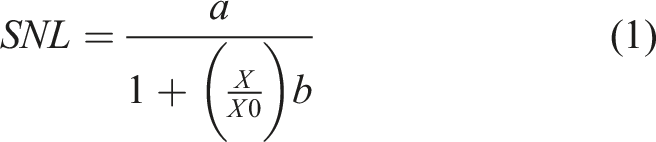
The standardized indicators of the MDS were integrated into the model for calculating the Soil Quality Index (Andrews et al., 2004). Weights were determined as a function of the variation of the factor weights concerning the accumulated variation (Biswas et al., 2017). Selected indicators were combined to obtain the Additive Soil Quality Index (SQIa) (Andrews et al., 2002a; 2002b).

These results allowed for determining the Soil Quality Index (SQIw) (Doran et al., 1994). The classification of SQIw was evaluated using Kappa statistic, correlation coefficients, and regression, following the limits agreement none (< 0.00), poor (< 0.00-0.19), weak (0.20-0.39), moderate (0.40-0,59), strong (0.60-0,79), excellent (0.80-1.00) (Nabiollani et al., 2018). All procedures were performed with the statistical software R, version 3.5.3.
Results
Physical and Chemical Properties
Agroecosystem A
Soil physical attributes of the studied agroecosystems in the semiarid region of the Borborema territory, state of Paraíba – Brazil. Solânea (Agroecosytem A); Casserengue (Agroecosystem B); Juazeirinho (Agroecosystem C).

Means followed by the same letters within rows (subsystems) do not differ at 5% of error probability (p < 0.05), according to Tukey’s test. BD: bulk density; PD: particle density; TP: total porosity.
Soil chemical attributes of the studied agroecosystems in the semiarid region of the Borborema territory, state of Paraíba – Brazil. Solânea (Agroecosytem A); Casserengue (Agroecosystem B); Juazeirinho (Agroecosystem C).

Means followed by the same letters within rows (subsystems) do not differ at 5% of error probability (p < 0.05), according to Tukey's test. Ns: non-significant. EB: exchangeable bases; CEC: cation exchangeable capacity; BS: base saturation; AS: aluminum saturation; SOC: soil organic carbon.
The SOC was high in the forest (40.9 g kg-1), very low in the pasture (8.5 g kg-1), and low in the other subsystems (11.4-14.0 g kg-1). The SOC stock was also high in the forest (54.1 g kg-1), whereas the lowest values were found in the pasture (16.6 g kg-1). Thus, the SOC contents and SOC stock also are significantly higher in forests (SOC: 40.98 g kg-1; SOC stock: 5.41 kg m-2) (p < 0.05).
Agroecosystem B
The results of soil properties of agroecosystem B are shown in Table 1. The forest showed the lowest BD (0.81 g cm-3) and the highest TP (63.1 m3 m-3) (p < 0.05; DF: 19). In contrast, a significantly higher BD (0.97 g cm-3) and the lower TP (55.6 m3 m-3) were found in the maize subsystems (p < 0.05; DF: 19) (Table 1).
In Agroecosystem B, the prickly pear field was strongly acidic (pH 5.25), whereas the prickly pear subsystem was neutral (pH 6.77), and the other subsystems were slightly acidic (pH 6.34-6.47) (Table 2). The Ca2+ contents were significantly higher in the forest (7.59 cmolc kg-1) and bean subsystems (7.23 cmolc kg-1) (p < 0.05; DF: 19), although they showed no significant difference regarding prickly pear or prickly pear fields (Table 2). The Mg2+ contents were significantly higher in the forest (5.18 cmolc kg-1) than in prickly pear, maize, and bean subsystems (7.23 cmolc kg-1) (p < 0.05; DF: 19) but without difference regarding the prickly pear field (Table 2). Despite the high P contents in all subsystems (111-180 mg dm-3), the values are notably higher in the forest and bean subsystems (p < 0.05; DF: 19), contrasting with the lower values found in the prickly pear field (p < 0.05; DF: 19). The H + Al was significantly higher in agricultural subsystems (H + Al: 1.72-3.87 cmolc kg-1) than in the forest (H + Al: 6.61 cmolc kg-1; p < 0.05; DF: 19). Consequently, the CEC contents were remarkably higher in the forest (CEC: 17.9 cmolc kg-1; p < 0.05; DF: 19). Base saturation ranged from high (bean, prickly pear, and forest) to very high (maize and prickly pear field). These contents were significantly higher in maize (82.7 %) and prickly pear fields (84.3 %), with the forest showing contents significantly lower (65.6 %) (p < 0.05; DF: 19).
The SOC contents were extremely low in the maize subsystem (2.80 g kg-1), very low in the bean and prickly pear subsystems (8,70-7.81 g kg-1), and low in the prickly pear field and forest (12.30-14.80 g kg-1). The SOC stock was higher in the forest (24.1 g kg-1) and prickly pear field (21.1 g kg-1). Thus, the SOC contents and SOC stock also were significantly higher in the forest (SOC: 14.86 g kg-1; SOC stock: 24.08 kg m-2), with contents notably lower in the prickly pear subsystem (SOC: 1.95 g kg-1; SOC stock: 3.63 kg m-2) (p < 0.05; DF: 19).
Agroecosystem C
The results of soil properties of Agroecosystem C are shown in Table 1. BD value was significantly lower (0.52 g cm-3) in the vegetable garden subsystems (p < 0.05; DF: 19), but no significant differences were observed in the remaining four subsystems (Table 1). PT value was also remarkably higher in the vegetable garden subsystem (81.1 m3 m-3) (p < 0.05; DF: 19). These PT values were similar between banana and forest and statistically different from grass and polyculture subsystems (p < 0.05).
The vegetable garden was moderately acidic (pH 5.87), whereas other subsystems were slightly acidic (pH 6.16-6.35) (Table 2). Ca2+ content was higher in the grass subsystem (5.92 cmolc kg-1) (p < 0.05; DF: 19), but there were no significant differences for vegetable, polyculture, and forest subsystems (p < 0.05; DF: 19) (Table 1). Mg2+ content was significantly higher in the banana subsystem (4.98 cmolc kg-1) (p < 0.05; DF: 19), while the H + Al contents value was considerably higher in the grass subsystem (5.81 cmolc kg-1) (p < 0.05; DF: 19). There was no significant difference in K+ and P contents among subsystems (p < 0.05; DF: 19). The BS was significantly higher in the vegetable subsystem (75.9%) (p < 0.05; DF: 19). The SOC content was very low in the grass subsystem (9.60 g kg-1), moderate in the vegetable garden subsystem (18.50 g kg-1), and low in the others. Hence, SOC contents were significantly higher in the vegetable subsystem (18.59 g kg-1) (p < 0.05; DF: 19). The SOC stock was markedly higher in vegetable (19.52 kg m-2) and grass subsystems (19.81 kg m-2) (p < 0.05; DF: 19).
Hierarchical Clustering
Hierarchical clustering demonstrated that all agroecosystems' subsystems are similar regarding their physical and chemical attributes (Figure 2a, 2b, and 2c). These results allowed comparing the agroecosystems regardless of the occurrence of different subsystems. Except for Na+ and H + Al, the Kruskal Wallis test showed significant differences (n = 60; p < 0.05) for all other soil quality indicators evaluated. Hierarchical clustering analysis for the studied agroecosystems in the semiarid region of the Borborema territory, state of Paraíba – Brazil. A) agroecosystem A: (A1-A4: cassava; A5-A8: potato; A9-A12: backyard; A13-A16: pasture; A17-A20: forest); B) agroecosystem B: (B1-B4: bean; B5-B8: maize; B9-B12: prickly pear; B13-B16: prickly pear field; B17-B20: forest); C) agroecosystem C: (C1-C4: banana; C5-C8: vegetable garden; C9-C12: grass; C13-C16: polyculture; C17-C20: forest).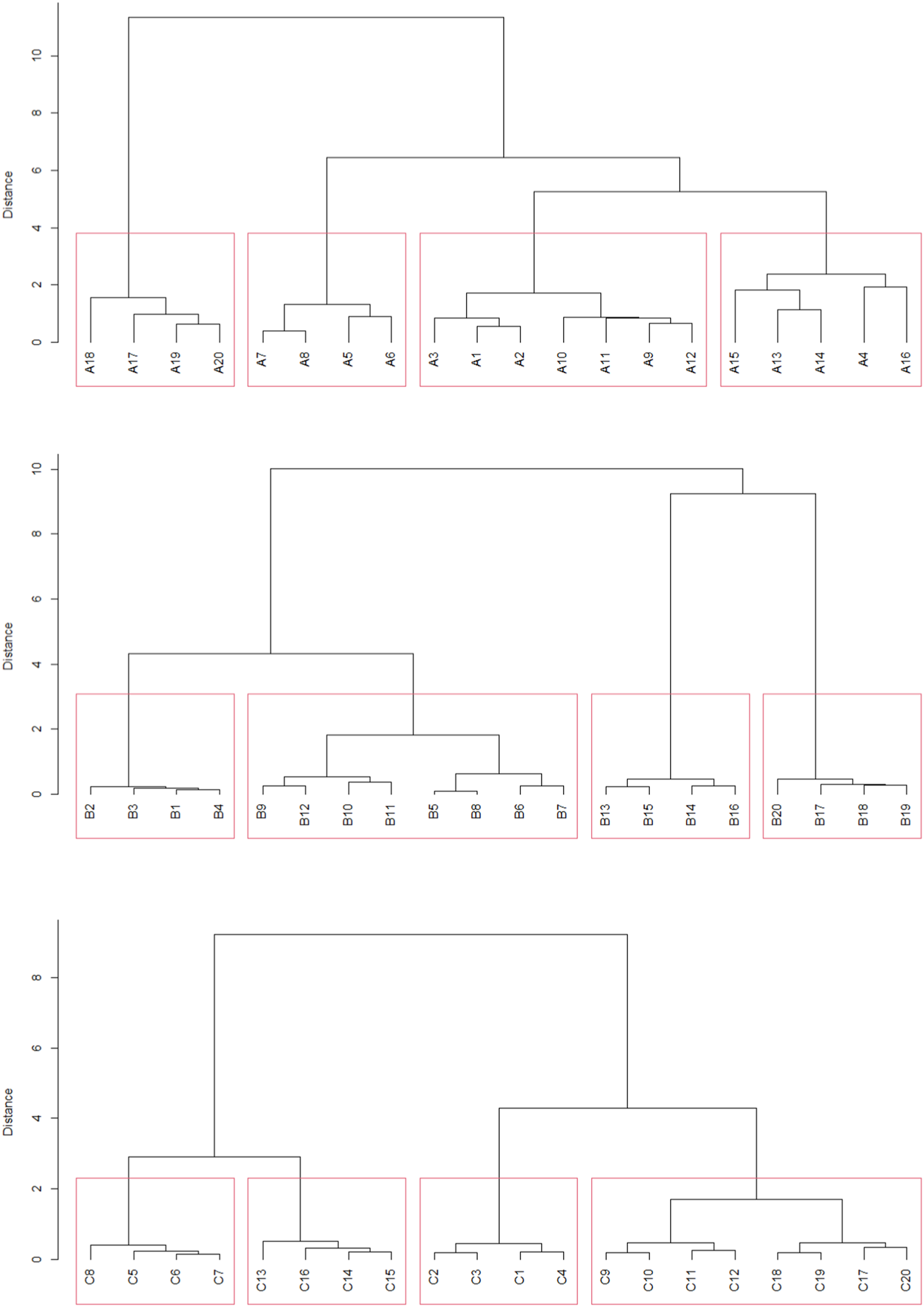
Correlation and Principal Component Analysis
The physical and chemical attributes were subjected to the Spearman correlation analysis. A strong positive correlation was obtained between EB and Ca+2 (0.9), P and sand (0.8), and EB and CEC (0.7). Conversely, a strong negative correlation was observed between sand and clay (-0.9), P and clay, BS and H + Al, sand and silt (-0.8), and between Al3+ and Ca2+, Al3++ and EB, AS%, and Ca2+, and EB and AS% (-0.7) (Figure 3). Correlogram of the physical and chemical attributes of the studied agroecosystems in the semiarid region of the Borborema territory, state of Paraíba – Brazil. EB: exchangeable cations ; CEC: cation exchange capacity; BS: base saturation; AS: aluminum saturation.
The principal component analysis of soil attributes is shown in Figure 4. Regarding the eigenvectors, Ca+2 (0,329), P (-0.307), the sand (-0,337), clay (0,303), BS (0,313), silt (0,339), Al3+ (-0,349), and AS% (-,0335) had high loading concerning PC1, while EB (0,411), CEC (0,367), H + Al (0,672) had high loading concerning PC2, being selected to represent these PCs. PC1 explained 42% of the data set total variance. This PC discriminated all agricultural subsystems of Agroecosystem A mainly based on the higher AS% index and high contents of Al3+ and H + Al (negative quadrant). The positive quadrant comprised all other studied subsystems. Bean, maize, prickly pear, and forest subsystems of Agroecosystem B were notably discriminated by EB and CEC, and the remaining subsystems by the similar contents of silt and clay. PCA 2 explained 28% of the total data variance. This PC allowed discrimination of Agroecosystem B agricultural subsystems, particularly the prickly pear field subsystem of Agroecosystem B, plus all subsystems of Agroecosystem C (negative quadrant). These subsystems were mainly grouped due to the similarity in silt and clay contents. The positive quadrant comprised all remaining subsystems based on P contents and EB and CEC indices. Principal component analysis (PCA) of the physical and chemical attributes of the studied agroecosystems in the semiarid region of the Borborema territory, state of Paraíba – Brazil. A) agroecosystem A: (1-4: cassava; 5-8: potato; 9-12: backyard; 13-16: pasture; 17-20: forest); B) agroecosystem B: (1-4: bean; 5-8: maize; 9-12: prickly pear; 13-16: prickly pear field; 17-20: forest); C) agroecosystem C: (1-4: banana; 5-8: vegetable garden; 9-12: grass; 13-16: polyculture; 17-20: forest).
Soil Quality Index
Weighted additive soil quality index (SQIw), scoring method, standard score functions and SQI equation of agroecosytems avaluated.


Soil Quality Index (SQI) of the studied agroecosystems and associated subsystems in the semiarid region of the Borborema territory, state of Paraíba – Brazil.
Discussion
Soil Features in Agroecosystems
Our results show that different agroecosystem management practices significantly affected soils' physical and chemical quality. This evidence agrees with previous studies showing that many soil properties are negatively changed after clearing the natural vegetation to establish agricultural fields (Vinhal-Freitas et al., 2017; Nabiollahi et al., 2018; Tsufac et al., 2021).
The agricultural subsystems of Agroecosystem A showed lower base saturation than the reference forest. These results can be explained by increased Ca2+ export by the crops, with consequent accumulation of acid cations in the exchange complex. The higher Al3+ contents in the soil solution also reduced pH owing to the acidity generated by Al3+ hydrolysis. These Arenosols have a coarse texture, accounting for their high permeability and low water retention, leading to a poor nutrient storage capacity. The significant reduction in carbon contents with the forest conversion contributes to high nutrient losses in agricultural agroecosystems.
High available P contents were also observed in the agricultural units of Agroecosystem A. A natural ecosystem also showed significantly lower available P values than grazing and agroecosystems in a dryland region in the Negev Desert of Israel (Levi et al., 2020). A recent study in Brazil showed that SQI weighted with fewer soil indicators, including available P, may be an effective technological tool for soil management (Marion et al., 2021). The incorporation of weed residues using raised rows, especially in the cassava and sweet potato units, accelerated the mineralization of these organic sources and increased the P contents in the soil solution. From an agronomical perspective, this available P increase is beneficial as it directly influences plant growth and increases local productivity.
These soils show no significant changes regarding soil parent material due to the low intensity of soil-forming processes, particularly given the water deficit in the region and the higher resistance to the weathering of predominantly quartzite granites and orthogneisses from which these soils originated (Santos et al., 2011). These factors resulted in soils with low clay contents and lower cation and anion retention capacity. Considering the predominantly acidic nature of the source material, these soils also show low iron contents, implying reduced available P adsorption by iron oxides such as goethite and hematite (Santos et al., 2011). Therefore, evidence of P and vertical ionic migration and losses by deep drainage in these sandy soils subjected to organic fertilization has already been verified in the Agreste region of Paraíba (Galvão et al., 2009; Xavier et al., 2009; Azevedo et al., 2018). Our results corroborate these previous studies due to the strong association between P and sand to evidence high P availability but low adsorption capacity for this nutrient in sandy soils (Figures 3 and 4). This scenario may cause economic losses to local farmers and result in groundwater contamination and eutrophication of surrounding water bodies.
In Agroecosystem B, the Ca2+ and Mg2+ contents and the CEC are lower in the agricultural subsystems than in the hyperthermophilic Caatinga vegetation (Table 2). However, agricultural activities increased these cations' participation in the exchange complex to the detriment of H + Al, reducing the potential acidity and increasing the base saturation of soils. In agricultural subsystems, organic fertilization is conducted annually, and the use of manure is a widely adopted alternative for supplying nutrients, mainly N and P, in areas of family farming in the semiarid and rugged region of Northeast Brazil (Menezes & Salcedo, 2007). Organic fertilizers promote the quick release of nutrients and significantly increase carbon mineralization, which is directly related to the composition and abundance of microorganisms (Garcia-Pausas et al., 2011; Grunwald et al., 2016; Guo et al., 2019). Our results suggest that organic fertilization with goat manure increased the basic cations in the agricultural subsystems, providing better conditions for organic matter mineralization due to the higher microbial activity. The lower SOC values in these subsystems concerning the forest confirm this statement. In the bean and backyard subsystems, the breakage of aggregates by conventional tillage practices (e.g., plowing and harrowing of land) decreased the physical protection of organic matter, accelerating its mineralization due to greater exposure to microorganisms.
Increases in Ca2+ and Mg2+ contents in the prickly pear field subsystem enhanced the base saturation of soils after ten years of implementation. Such increments mean that this subsystem can contribute with critical ecosystem support services such as nutrient cycling, which is fundamental for maintaining soil fertility and productivity. Also, these systems can provide other essential ecosystem services, such as water conservation, improving microclimatic conditions, increased productivity, nutrient cycling, and controlling agricultural pests and diseases (Verchot et al., 2007; Neufeldt et al., 2008). In semiarid agroforestry systems, tree legumes integrating forage cactus enhance the microbiota, microbial biomass, and microbial quotient (Camelo et al., 2021). Under such conditions, basic cations are released via mineralization, increasing their content in the soil solution, and contributing to the increase of CEC. This also contributes to the gradual reduction of H + Al in the soil solution, with later losses of these acid cations via leaching. The negative correlation and clear difference between Ca contents and H + Al in PCA (Figures 3 and 4) confirm this evidence.
Soil Organic Carbon in Agroecosystems
The parameters most influencing the SOC stock in Brazilian soils are the soil type, climate (temperature and rainfall), relief, and vegetation (Gomes et al., 2019). In the 0-5 and 5-15 cm soil layers of the Caatinga biome, these authors found maximum SOC stock values of 0.95 and 1.6 kg m-2, respectively. The SOC stock (0-20 cm) in the forest subsystem of Agroecosystem C within this range probably reflects the high rates of organic matter decomposition due to the improved microbial activity in humid environments (Li et al., 2013). Forests present higher primary production and produce vast amounts of leaf litter, which increases the available resources for decomposers, raising decomposition rates through the physical fragmentation of complex molecules into organic and inorganic compounds (Pausas & Bond, 2020). The litter quality (probably of lesser chemical recalcitrance) must also be considered.
On the other hand, the forest system in agroecosystems A and B showed SOC stocks higher than the average values reported by Gomes et al. (2019). The higher SOC stock in Agroecosystem A is related to a remarkable forestry development in the site, favoring the input of decaying plant biomass and confirming the importance of vegetation as a driver of organic matter accumulation (Gomes et al., 2019). In Agroecosystem B, the relatively lower soil moisture may have contributed to the slower decomposition rates of litterfall and, consequently, the lower substrate transformation capacity due to limited microbial activity (Chen et al., 2015). Thus, high carbon levels are found in these Caatinga sites where higher primary production is associated with intense biological activity, promoting the incorporation and stabilization of organic matter over time.
This study confirmed that agroforestry practices (Agroecosystem B), here represented by the integration of prickly pear (O. ficus-indica) and legumes with forage/timber potential (limber caper – C. flexuosa L.; mesquite – P. juliflora DC.), have a similar capacity to store SOM in the soils when compared to soils under Caatinga vegetation. This Seasonally Dry Tropical Forest and Woodland (SDTFW) is constituted of low forests and woodlands dominated by deciduous trees and shrubs mainly intermixed with cacti, Aphyllous euphorbias, and terrestrial bromeliads (Lima et al., 2023). Other studies also showed improvements in soil carbon sequestration through agroforestry (Eddy and Yang, 2022). These systems can also improve the provision of soil ecosystem services (Rodriguez et al., 2021; Yadav et al., 2021) when increasing the organic matter inputs to restore soil quality (Thomazini et al., 2015), so enhancing soil fertility and reducing soil nutrient losses (Dori et al., 2022). The increase in soil organic matter is significant in the Brazilian semiarid because it constitutes a viable alternative for recovering and maintaining carbon in the topsoils of extensive areas susceptible to degradation and desertification (Macedo et al., 2021; 2023). Luvisols predominate in these areas, such as those evaluated in Agrosystem B, favoring significant losses of nutrients and organic matter by erosion, with direct impacts on the depletion of soil ecosystem services (e.g., nutrient cycling, water storage, and carbon sequestration) (Macedo et al., 2021). Hence, combining leguminous (e.g., bean and Gliricidia), grass, and tree species improves soil carbon and nitrogen stocks (Tonucci et al., 2023), as well as increasing plant residue on the soil surface, reducing fluctuations in soil temperature and humidity (improving soil structure) (Errouissi et al., 2011). Assuming the complexity of agroforestry systems, they can also provide environmental services such as those of Caatinga soils, emphasizing CO2 mitigation, contributing to regional climate regulation, and adaptability of small producers to microclimatic variabilities (Verchot et al., 2007). Moreover, these practices also make soils eutrophic (BS ≥ 50%) (Santos et al., 2018) by increasing the participation of essential cations in plant nutrition in the exchange complex. These results corroborate other observations performed under different environmental conditions (Santos et al., 2021; Tsufac et al., 2021), demonstrating the potential of these systems to increase the sustainability of family agroecosystems at a regional level.
Boosts in soil organic matter in areas under cultivation compared to non-cultivated sites have already been reported in other semiarid regions of Northeast Brazil (Faria et al., 2007; Preston et al., 2017). In this study, the grass and vegetable garden subsystem soils (Agroecosystem C) showed higher SOC and SOC stock contents than the reference forest. The correlation between CEC and SOC (r = 0.52; p < 0.05) and P x SOC stock (r = 0.54; p < 0.05) (Table 2) in the grass subunit emphasizes the effect of phosphorus fertilization on carbon stabilization in these forage banks. Conversely, the high correlation between SOC and Mg (r = 0.94; p < 0.05) and SOC and clay (r = 0.88; p < 0.05) in the vegetable garden indicates that Mg humates/fulvates and clay minerals contribute to organic matter stabilization in these subsystems (Corrêa et al., 2003). Consequently, the vegetable garden subsystem showed the largest carbon stocks, with direct implications in declining CO2 emission, contributing to regional climate regulation. The improved SOC also implies higher soil aggregate stability and water and nutrient retention capacity, significantly improving the quality of local family agroecosystems. This effect is even more critical in Agroecosystem C, where the higher rainfall rates can promote substantial nutrient losses by leaching and high organic matter mineralization rates (Brasil, 1972). Also, nutrient loss in these soils can occur along with material removal from the soil surface by runoff.
Soil Quality Index and Indicators
In this study, we determined the appropriate indicators to assess soil quality in peasant agroecosystems based on a non-linear function to calculate the SQI. With SQI and multivariate analyses, our approach revealed low-quality soils in the studied agroecosystems. Nine soil attributes were selected for the SQI by considering the most crucial soil quality indicators, such as sand, silt, available P, Ca+2, Al+3, BS, AS, H+Al, and EB. Other studies have also used these indicators (Nabiollahi et al., 2018; Abraham et al., 2019; Li et al., 2020).
Soil texture has been highlighted as an indicator of SQ and microbial biomass activity (Vinhal-Freitas et al., 2017; Abraham et al., 2019). Silt and clay were also retained in the MDS used to determine the SQI of the Robinia pseudoacacia community (tree site) in Shandong Province, China (Zhang et al., 2022). In this study, the sand, silt, and clay fractions were used as soil quality indicators in the studied agroecosystems. The silt and clay contents are related to the Lixisols of agroecosystem C. Throughout the evolution of Lixisols, which involves the leaching of basic cations, the partial removal of silicon (densification), and the residual concentration of Fe and Al oxides (ferrallitization) (Buol et al., 2011), easily weathered minerals are accumulated with the weathering of biotite gneisses, such as biotite and potassium feldspars (Brasil, 1972), thus increasing the silt contents. Likewise, the lower rainfall rates of agroecosystem B mitigate the hydrolysis process in Luvisols, contributing to the permanence of considerable contents of easily weathered minerals in these soils.
On the other hand, the developing action of pedogenic processes, allied to the granitic material, results in the formation of essentially sandy soils in agroecosystem A (Arenosols), justifying using the sand attribute in the SQI. These attributes are inherent to soil formation factors and processes, not showing relationships with the forms of use of the agroecosystems. However, they indirectly affect soil quality as the minerals of the silt fraction act as a source of basic cations to increase the EB and CEC. In contrast, sands indirectly make these sandy soils more prone to acidification due to their non-colloidal property and low cation retention capacity.
All other soil quality indicators studied are related to the management practices of the subsystems. P and CEC (including Ca2+ and EB) are soil quality indicators that affect its fertility and change its microbial community (Moral and Rebollo, 2017; Li et al., 2020). High available P contents in sandy soils of Northeast Brazil have been credited for inhibiting or reducing inorganic P transformation into more stable forms, increasing P cycling in soils (Oliveira et al., 2008). Using sequential extraction, these authors obtained high P contents (organic and inorganic) extracted with NaHCO3, suggesting weak adsorption of phosphate anions on the surface of minerals. These results highlight that residue incorporation using raised rows and legumes in Agroecosystem A probably contributed to the accumulation of P labile forms, which were weakly adsorbed to the surface of minerals and organic matter, justifying the high correlation observed between P and the sand fraction in the agricultural subsystems of Agroecosystem A. Thus, our results indicate that the mineralization of organic P in the agricultural subsystems and litter decomposition in the forest were the primary sources of available P, where biological processes exert important control in soil P transformation.
Concerning the contents of Ca2+ and, consequently, SB and CEC, these are mainly related to the agricultural units of agroecosystem B, in addition to the beneficial effect on soil fertility provided by agroforestry practices and the intercropping of maize and sorghum with legumes. In these systems, the roots can actively alter the chemistry in the rhizosphere to increase nutrient concentration in soil, e.g., via exudation of H+ and OH- and organic acids. Roots in deep soil layers improve the safety-net effect, weathering of mineral materials, and facilitating nutrient pumping, especially NO3-, Ca2+, and K+ (Isaac & Borden, 2019). Thus, the nutrient supply via mineral weathering should also be considered in Agroecosystem B since Luvisols derived from gneisses in the state of Paraíba show calcite nodules and considerable contents of plagioclase and hornblende (easily weathered minerals), in the surface horizon, which release Ca2+ due to dissolution and hydrolysis (Oliveira et al., 2008; Macedo et al., 2021). This process is necessary because although the Ca2+ is exported by crops and lost by leaching, the supply of this element is continuous in these areas, strongly contrasting with Agroecosystem A, which shows reduced Ca2+ contents with the implantation of agricultural units as well as lower Ca2+ supply via mineral weathering due to the granitic material of the Regosol has fewer mineral sources of Ca2+ (Brasil, 1972).
Soil Quality, MDS, and Agricultural Subsystems
The forest contributed significantly to the MDS in agroecosystem A due to its higher Ca2+ and BS contents and lower sand, H+Al, and AS contents. The conversion of these areas to pasture decreased soil quality to increase AS and H+Al and reduce Ca2+ levels, mainly due to the reduction in SOC levels. Despite the higher levels of P, using these areas as the cassava subsystem also reduces the soil quality by increasing the levels of Al and H+Al. The backyard subsystem also contributed to MDS due to significantly lower BS contents, mainly due to the increase in H+Al and reduction in Ca2+ contents. Thus, the MDS was effective in demonstrating the fragility of sandy soils to management practices, where the removal of vegetation significantly reduces fertility (BS%: forest: 82.6; cassava: 50.0; potato: 51.5; backyard: 47.9) and the SOC contents of the soils. Therefore, this MDS can be used in future studies to assess the quality of sandy soils under different uses in the Brazilian semiarid ecosystem.
The forest subsystem of agroecosystem B presents high levels of P, Ca2+, BS, and sand and reduced levels of Al, AS, and silt, strongly contributing to the MDS. The conversion of the forest to the bean and prickly pear subsystems did not significantly alter the levels of P and Ca in the soil, both retained in the MDS. Our results also confirm that using soils with the bean, maize, prickly pear, and prickly pear field subsystems positively affects soil quality by significantly reducing H+Al and increasing soil BS, also retained in the MDS. However, it must be considered that the greater H+Al in the forest is related to the higher organic matter contents of these systems, which may indicate losses of essential functions performed by the organic colloidal fraction of the soil (e.g., water retention), with negative impacts on soil quality. Our data also show that despite being retained in the MDS, the Al, and AS indicators could have been more helpful in assessing the quality of these naturally eutric soils. On the other hand, the silt indicator must be used in these soils, given that their fertility is also strongly credited to the weathering of easily weatherable primary minerals (Macedo et al., 2021; 2023). Therefore, the MDS found must be adjusted to the soil conditions of these Luvisols, especially concerning exchangeable acidity and AS.
The banana subsystem was the one that reduced Ca levels the most in the soil of agroecosystem C. Together with the grass subsystem, it also significantly reduced BS and increased the potential acidity of the soil, notably concerning H+ levels. Therefore, the conversion of the forest to these subsystems should significantly contribute to reducing the soil quality of the region. On the contrary, there was an increase in Ca2+ and SOC levels and a significant reduction in H+Al with the installation of the vegetable subsystem, significantly increasing BS and improving soil quality. The exchangeable levels of Al, available P, and AS retained in MDS were not adequate indicators to assess the quality of soils in agroecosystem C.
Our results showed that the MDS appropriately represents the complexity of soils from Brazilian semiarid regions and the associated management practices. However, some adjustments in MDS can be optionally used in some pedoenvironments without compromising the assessment of soil quality, which includes the non-use of exchangeable acidity and AS for naturally eutrophic soils such as Luvisols, as well as the exchangeable levels of Al and P available for Ultisols subjected to high rainfall. Furthermore, our results show that converting forests into traditional agricultural subsystems of the Brazilian semiarid only sometimes improves soil quality. Therefore, the assessment of the quality of soils in the Brazilian semiarid region must be carried out considering land use systems and soil management practices (agroecosystem), also considering the specificities (e.g., physical and chemical attributes) of different pedological systems of the region (pedoenvironments).
Soil Quality Index and Reference Soil Group
In the Brazilian semiarid, Arenosols have low levels of nutrients, especially Ca2+ and P, low levels of organic matter, and a scarce nutrient reserve given their mostly quartzite mineralogy (Dos Santos et al., 2012). Our data show that converting the forest into the agricultural subsystems did not improve the soil chemical quality, reducing the levels and stock of carbon. Forest-cultivated land conversion usually leads to carbon losses due to forest biomass burning and soil organic matter decomposition (Don et al., 2011). The lowest chemical quality of these soils is mainly explained by the essential quartzite nature of the parent material and the essentially sandy nature, which provides low nutrient retention capacity (Dos Santos et al., 2012). These authors also emphasize that the sandy constitution associated with low organic carbon contents confer the low cation exchange capacity of these soils, which favors intense leaching of the elements during the rainy seasons and, consequently, their low exchangeable contents in the soil. These results indicate that agricultural practices in these environmentally fragile soils, even for subsistence purposes within the scope of family farming, must be conducted carefully to avoid losses of essential ecosystem services provided by soils when under forest vegetation, such as provision services (e.g., supply of wood, energy) and regulation (shading, local climate regulation).
The semiarid climate of Agroecosystem B favors the mobilization of clay from surface horizons with succeeding accumulation in the subsurface and clay formation at deeper horizons (marginalization), given the hydrolysis of easily weatherable primary minerals. Both processes form a textural B horizon, which, due to their favorable chemical characteristics (e.g., high-activity clays and eutrophic conditions), these soils can be classified as Luvisols (Dos Santos et al., 2012). Unlike the Arenosols, implementing agricultural subsystems in these soils contributed significantly to the increase in base saturation, mainly due to the reduction of potential acidity. This fact can be explained by the fact that the evolution of soils occurs according to the bissialitization process, where there is the formation of 2:1 clay minerals with high charge density (e.g., biotite) and, therefore, high CEC that allows a gradual supply of basic cations instead of adsorption of acidic cations (H + Al) (Dos Santos et al., 2017; 2018). Finding an increase in base saturation, even with a reduction in TOC levels, confirms the effect of pedogenesis in helping the improvement of soil quality even after converting the forest into agricultural systems with a low technological level. However, it should be noted that TOC losses with agricultural subsystems can contribute to the reduction of quality and ecosystem services provided by these soils, mainly due to the greater susceptibility to erosion processes due to the occurrence of abrupt textural changes in these Luvisols (Macedo et al., 2021).
In humid tropical regions in Northeast Brazil (e.g., agroecosystem C), soils are in the advanced weathering stage, including soils with argic horizon with low-activity clays or dystric qualifier (Lixisols) (Santos et al., 2018). Our results show that using these soils with appreciable clay contents with subsistence crops can improve their chemical quality, notably concerning acidity reduction, increased exchangeable cations, and increased contents and carbon stock. These results confirm that such practices, when used in weathered soils but responsive to management practices (high adequate depth, considerable clay content, water retention) associated with favorable climatic conditions, can contribute to the supply of food and income for local populations, still representing a viable alternative for the maintenance of some ecosystem services provided by the soils when under forested conditions.
Conclusions
The soil quality of three peasant agroecosystems in the semiarid region of Brazil was carried out through the soil quality index (SQI). We concluded that multivariate tools were essential to identify a set of soil quality indicators (sand, silt, P, Ca+2, Al+3, H+Al, BS%, and AS%) that should be considered in future strategic actions to monitor changes and determine improvement or deterioration of agroecosystems under similar conditions. All the agroecosystems showed low soil quality indices, mainly related to the low soil organic matter content, reinforcing the need to expand conservationist practices in the agricultural subsystems, with emphasis on minimum mechanical soil disturbance (no-tillage), crop species diversification (crop rotation), mulch soil cover, use of plant species as green manure, and contour farming. The current study also demonstrated that agroforestry practices can significantly increase soil fertility and soil carbon sequestration, contributing to regional climate regulation and increasing food security and sustainability in the family agroecosystems of the region. Thus, to a future perspective, these practices should be a viable alternative for recovering areas susceptible to degradation in the Brazilian semiarid. Finally, our study contributes significantly to the growing public interest in assessing land use's effects on soil quality relative to the sustainability in peasant agroecosystems of many environments worldwide.
Implications for Conservation
Land use/land cover changes (natural forest to cultivations of soils) result in degradation of soil quality due to the loss of organic matter, deforestation, tillage, and accelerated erosion, which, as ecologically sensitive components of the tropical forest ecosystem, are not able to buffer the effects of agricultural practices (Islam & Weil, 2000). Similarly, forest management practices in semiarid Northeastern Brazil have brought about declines in soil C storage and consequent suppression of soil quality (Araújo Filho et al., 2021), suggesting that a substantial portion of the Caatinga can be currently threatened. Chronic anthropogenic disturbances erode its biodiversity and natural resources (Antongiovanni et al., 2020). Our results partially agree with these studies, given that no significant improvement in soil quality occurred with the conversion of the forest to agricultural agroecosystems. In general, losses of carbon contents and stocks were observed, which implies essential losses of ecosystem services provided by soils. Thus, the evaluated agroecosystems presented low soil quality, confirming that agricultural practices with a low technological level associated with adverse local issues (e.g., prolonged water deficits, soil dystrophy, and lack of specialized technical assistance) are significant obstacles to the development of sustainable agriculture in the region.
In areas with higher precipitation, practices in agroforestry systems, such as organic fertilization, crop diversification, and straw maintenance, can significantly increase soil carbon stocks and nutrient levels. These results indicate that such practices can be a viable alternative for agriculture in the region, mainly due to their ability to remineralize soils with low nutrient reserves and reduced levels of nutrients. Therefore, authorities should encourage family farmers to adopt sustainable agroforestry practices to improve the quality of agroecosystems, with direct implications for food security in the region, increase in agricultural productivity with positive economic effects, and reduction of conventional practices that are harmful to the environment (e.g., heavy chemical fertilization, pesticides).
The landscape structure influences the production of ecosystem services. Landscapes with low complexity (e.g., monocultures, intensive pastures) can provide temporary products (e.g., food) but need more capacity to support ecosystem services. In contrast, highly complex landscapes (e.g., forests) can regulate and control ecosystem services but have limited ability to provide temporary services (Araújo et al., 2021). Therefore, intermediate-grade landscapes are preferable for local populations (Arroyo-Rodríguez et al., 2020; Araújo et al., 2021). Our results are in agreement with these authors for showing that (i) the maintenance or regeneration of forest areas are vital for maintaining important services to the local population (e.g., raw material) and for the sustainability of agricultural landscapes (e.g., climate regulation); (ii) that diversity and intercropping must be sustainable alternative practices to be adopted in small properties; and (iii) that agroecosystems with low input of organic matter compromise the production of temporary services, generating high social and environmental costs for the local population.
Footnotes
Authors’ Contribution
S.M.S.G.N., A.E.A., A.M.PM, supervised the project; D.M.A.M., A.M.PM, M.R.G.O., R.S.M., wrote the manuscript and other provide editorial advice; M.R.G.O. performed statistical analyses; D.M.A.M., A.M.PM, R.S.M., analyzed the data; All authors reviewed the manuscript.
Declaration of Conflicting Interests
The author(s) declared no potential conflicts of interest with respect to the research, authorship, and/or publication of this article.
Funding
The author(s) received no financial support for the research, authorship, and/or publication of this article.
