




Abstract
The COVID-19 pandemic presents a potential threat to wildlife resources in Africa. In this review, using Tanzania as a case, we examine the impacts and risks that wildlife sectors in Africa are facing or are likely to face as a result of this pandemic. We recognize loss of revenues from tourism as a major impact that could negatively influence the management of wildlife species and habitats. Loss of tourism revenues reduces capacity of the conservation agencies to fund conservation operations and support the benefit sharing schemes. Furthermore, it undermines the efficacy of conservation to compete with alternative economic activities which are ecologically damaging. Increased unemployment and household poverty due to closure of businesses may exacerbate wildlife crime and unsustainable activities. Additionally, contributions from donor-funding organizations and development partners cannot be guaranteed as revenues may be diverted to support other sectors including health. In order to address and minimize the impacts and reduce the risks to the wildlife sector, the following policy measures are recommended: ensure adequate budget for conservation; develop a crisis management plan; reconsider protocols for conducting wildlife trade; develop a comprehensive tourism recovery plan; promote scientific studies focusing on zoonoses and adopt a One-Health Approach as a matter of urgency in dealing with COVID-19 and future pandemics.
The Corona Virus Disease (COVID-19), caused by a virus known as Severe Acute Respiratory Syndrome CoronaVirus2 (SARS-CoV-2), was first reported in the large animal market in the Chinese City of Wuhan in Hubei Province in December 2019 (Huang et al., 2020). It was declared ‘a Public Health Emergency of International Concern’ and ‘a pandemic’ on 30 January and 11 March, 2020, respectively (WHO, 2020a, 2020b). As of 23 January 2021 about 9.7 million cases were confirmed in 219 countries with the number of deaths approaching 2.1 million (WHO, 2021). The confirmed cases in WHO Regions were 43,133,022 for Americas; 31,857,099 (Europe); 12,627,306 (South-East Asia); 5,484,650 (Eastern Asia); 2,437,945 (Africa) and 1,336,632 (Western Pacific) (WHO, 2021). The disease is believed to be zoonotic – transmitted between humans and other animals (Ahmad et al., 2020). About 50% of emerging zoonoses are attributed to land use and land cover changes through deforestation and the modification of natural habitats (Loh et al., 2015; WWF, 2020a).
The COVID-19 pandemic is pushing the world towards a devastating economic recession (FAO, 2020; Jenkins, 2020; ILO, 2020; IMF, 2020; Lindsey et al., 2020; WEF, 2020; 2021). International Monetary Fund (IMF, 2020) describes the recession as the worst since the Great Depression. 1 It is expected that the COVID-19 induced recession will be far more punishing and long-lasting due to interventions taken by the governments to halt the spread of the COVID-19 pandemic by intensifying restrictions on business and travel (ILO, 2020; IMF, 2020; WEF, 2020). According to the International Labour Organization (ILO, 2020), the impacts of COVID-19 on employment are deep, far-reaching and unprecedented, leaving about 3.3 billion members of the world’s workforce affected.
The negative impacts of COVID-19 are predicted to be higher in developing countries, not only as a health disaster in the short term, but as a devastating social and economic crisis over the long term (AUC, 2020; IUCN, 2020; ODA, 2020; UNDP, 2020). The massive disruption of the global economy through global value chains, the abrupt falls in commodity prices and fiscal revenues and the enforcement of travel and social restrictions will lead to negative growth (AUC, 2020). Predictions reveal that, developing countries will lose over US$220 billion of their incomes and leave about 55% of the global population without social protection (UNDP, 2020). These losses will reverberate across the societies by impacting socio-economic aspects such as education, business, human rights, employment and food security (FAO, 2020; UNDP, 2020).
Lockdowns imposed as a measure to contain the spread of COVID-19 pandemic have caused tensions in African nations including Ghana, Nigeria, Kenya, Uganda, Zimbabwe and South Africa (Allen & du Plessis, 2020). Following the outbreak of COVID-19, and subsequent economic fallout, some governments have provided direct payments and other economic measures to support their citizens and businesses facing hardships. Countries like Canada, Denmark, Spain, UK, France, Ireland and South Korea are paying workers' salaries on behalf of employers on condition that workers are not dismissed (EU & International, 2020; Government of Canada, 2020; KPMG Global, 2020; Namgoong, 2020; WEForum, 2020a). While this strategy can feasibly work in the high-income nations governments in low-income 2 countries can hardly guarantee such back-up for their citizens. Employees and businesses in low-income nations are, therefore, subjected to disproportionate vulnerability due to the lack of reliable mechanisms that can cushion the impacts of economic losses as a result of disruption of their businesses.
This paper seeks to examine the impacts and risks that the wildlife sector in Tanzania is likely to face following an outbreak of the COVID-19 pandemic. The paper presents the negative impacts of the pandemic on the tourism industry – a potential source of revenues for wildlife conservation and management of protected areas (see e.g., Buckley & Mossaz, 2018; Lindsey et al. 2020; TANAPA, 2020; Van der Merwe, Saayman, & Botha et al. 2020; Zanamwe et. al. 2018). The negative impacts include the growth of illegal and unsustainable activities such as poaching and habitat destruction caused by the limited livelihood options as a result of staff retrenchment and slump in businesses (Figure 1). Moreover, contributions from donor organizations and development partners in support of conservation efforts cannot be guaranteed as most of the revenues may be diverted to support other sectors including health (Lindsey et al., 2020). Failure of wildlife to generate adequate revenues and, therefore, disrupt benefit sharing programmes and the failure of conservation to compete effectively with other land uses also presents a potential threat to wildlife (Lindsey et al., 2020). Besides reducing the household burden to contribution for development activities, communities around the protected areas also benefit from revenues generated from wildlife-based tourism through Community Conservation Banks or COCOBA (also known as a village savings and loans groups). The model supports the communities financially by allowing them to invest in environmentally-friendly projects and businesses such as poultry keeping, bee-keeping, fish farming and outdoor leisure/sports shops (Nyamsingwa, 2013). Other economic-related benefits to households include employment and market for local commodities.

Top left (a): Corona virus cell (Source: Intrahealth.com); Top right (b): Great wildebeest migration in Serengeti (Photo: Globe Trotting); Bottom left (c): Tourists in Serengeti National Park (Photo: Conservation Action Trust); Bottom right (dD): A WCS info graphic calling for a ban of wildlife trade and consumption in order to prevent future pandemic (Photo: WCS).
Tanzania Wildlife Resources
Tanzania is endowed with a variety of wildlife resources. It hosts 20% of the large mammal population of Africa (URT, 2015). Of 14,500 wildlife species confirmed to exist in the country (URT, 2014), 1,255 are threatened (WCS, 2019). Tanzania ranks the second country hosting the highest number of IUCN Red Listed threatened species in Africa after Madagascar and the seventh globally (WCS, 2020). Tanzania’s number of plant species exceeds 10,000, of which 1,100 are endemic (Nahashon, 2013). About 25% of the total plant species found in Tanzania have medicinal value with the ability to prevent and cure numerous diseases. Essentially, about 60% of the entire Tanzanian population depends on medicinal plants to meet their primary health care (Hilonga et al., 2019; Nahashon, 2013). As elsewhere in the world, there is an increasing trend of exploiting plant species in attempt to combat COVID-19.
Wildlife-based tourism sustains rural communities through creation of employment and provision of market for commodities sold to tourists and investors. Further to its role as the main pillar of tourism sector, which contributes 17.5% of the GDP and 25% of the foreign currency (URT, 2016), wildlife resource contributes immensely to rural livelihoods among the societies living around and within Tanzanian protected areas. Although previous conservation policies deprived local communities the rights of access over wildlife related benefits, the policies adopted over the past three decades advocate for economic benefits as a way of achieving conservation and development objectives (URT, 2007). Outreach and benefit-sharing schemes run by wildlife management authorities support communities sharing land with wildlife in a number of ways. For example, Tanzania National Parks Authority (TANAPA), sets aside 7.5% of its annual operational budget for benefit sharing with local communities through a Fund known as Support for Community Initiated Projects (SCIP). Through the fund, Communities contribute 30% in kind and TANAPA contributes 70% of the project costs. The wildlife management authorities also support poverty alleviation efforts among the communities through provision of small loans and support the establishment of income generating activities which are ecologically friendly (Mashauri, 2017; NCAA, 2020).
Wild meat is important source of protein for rural communities living around the protected areas. However, for years this meat has been obtained illegally (Knapp, 2016; Loibooki et al., 2002). Recognizing a need and right for rural communities to access the wild meat legally, the Tanzanian government recently enacted the ‘Wildlife Conservation (Game Meat Selling) Regulations, 2019’. The Regulations outline the conditions for establishment of game meat selling facilities, procedures for application and registration of game meat selling facilities and management and operations of game meat selling facilities (URT, 2019). The formalization of wildlife butchers was preceded by the setting aside of five pilot areas for resident hunting through Government Notice No. 664 of November 2018 (i.e. Kilwa North, Kitwai, Kisarawe, Simbanguru and Ugalla).
Impacts and Risks of COVID-19 on the Wildlife Sector
Tanzania’s wildlife species are subjected to unprecedented pressures caused by numerous factors including human population growth, urbanization, climate change, poverty, habitat loss and poaching (see e.g., Kideghesho et al., 2020; Kimaro & Kisingo, 2017; Knapp, 2012; Loibooki et al., 2002). Hostile human-wildlife interactions and poor relations between conservation authorities and local communities present another challenge to conservation of wildlife (Kideghesho et al., 2007; Mayengo et al., 2017; Ntalwila et al., 2017). Efforts to address these challenges have been apparent – through strategies such as the establishment of wildlife protected areas, land use planning, continual support of research and monitoring activities, effective law enforcement, conservation education and benefit sharing with local communities (Kideghesho, 2020). However, the emergence of COVID-19 pandemic is exacerbating these challenges and diluting the efficacy of the strategies adopted in the past. The impacts and risks of COVID-19 pandemic on the Tanzanian wildlife sector are presented below by examining the repercussions on the tourism industry, conservation budgets, employment, wildlife management areas, donor funding, exploitation of species and participation in international events.
On Tourism
The rapid and widespread impacts of COVID-19 are in many ways unprecedented for the 21st century tourism industry in Africa. Previous experience has demonstrated the fragility of the industry to socio-economic, political, climatic and environmental circumstances. Examples include: two subsequent global economic recessions between the 1970s and 1980s (Yeager, 1986); simultaneous terrorist attacks of the US embassies in Nairobi and Dar es Salaam in 1998 (Korstanje & Clayton, 2012; Kuto & Groves, 2004); the 2007 post-election violence in Kenya (Kalternborn et al., 2011; Nzau & Mwanzia, 2016; Porhel, 2008); the Fast Track Land Reform Programme in Zimbabwe and associated negative publicity (Mangudhla, 2007; Mutenga, 2018); civil wars and the perception of insecurity in Rwanda, Burundi and the Democratic Republic of Congo (Alluri, 2009; Jerry et al., 2015; Nkurunzisa, 2018); and health-related threats such as Ebola, Avian Flu and Severe Acute Respiratory Syndrome –SARS (Gössling, 2020; Maphanga & Henama, 2019; Pforr & Hosie, 2010; Rosselló, 2017; WTTC, 2018).
The tourism industry is once again facing severe challenges following restrictions imposed on travel and businesses due to the outbreak of COVID-19. The industry is among the hardest hit by the pandemic (AUC, 2020; UNWTO, 2020a,2020b). The recent assessment of the likely impact of the pandemic on international tourism released by the World Tourism Organization (UNWTO) estimates a fall of international tourist arrivals globally by 20-30% (translating to a loss of US$300-450 billion) in 2020 compared to 2019 figures (UNWTO, 2020b). This implies that the economic situation in destinations will be worse than the situations experienced in previous crises. A survey conducted by Safari Bookings.com in April 2020, involving 443 safari tour operators in Eastern Africa region revealed that over 90% experienced a decline in new bookings by 75% and massive cancellations of existing bookings (Safaribookings.com, 2020).
Tanzania is in no way exceptional from the above scenario. Although the full potentials of the tourism sector are yet to be realized, its contribution to economy has been immense. The sector absorbs 12.2% of the country’s workforce, contributes 17.5% of the GDP and 25% of the foreign currency (URT, 2016) with its revenues accounting for 61% of all service receipts (Tanzania invest, 2020). The 2018 Tourism Statistical Bulletin released by the Ministry of Natural Resources and Tourism (URT, 2018a) shows an increase of international visitor arrivals in Tanzania by 32.4% from 1,137,182 in 2015 to 1,505,702 in 2018. This, along with strict payment and taxation systems which the government introduced, gave rise to the increase of revenues from US$1,901.95 to US$2,412.30 million.
As Tanzanian tourism is mainly wildlife based, the COVID-19 pandemic is increasingly disrupting these positive trends and, therefore, threatening to undermine wildlife conservation efforts in the country. Like in other African countries, Tanzania has experienced cancellation of bookings and a decrease of new bookings, a situation attributed to lockdown and the cancellation of international flights, including Turkish Airline, Emirates, KLM, Qatar and Swiss Air from 25th–28th March, 2020 (Odunga, 2020). Authorities in Serengeti National Park and Ngorongoro Conservation Area, the leading safari destinations in Tanzania, reported a sharp drop of foreign tourists in April, 2020. Serengeti registered a decline from 6,000 to 24 a day (Nyakeke, 2020) while Ngorongoro registered not more than three tourists (Daily News, 2020). During the presentation of the Budget Speech for financial year 2020/21 on 7 May, 2020, the Minister for Natural Resources and Tourism said that the number of tourists would drop from the projected figure of 1,867,000 to 437,000, a decline of 76.6% (URT, 2020). This decline would, consequently, lower the revenues from 2.7 trillion Tanzania shillings to 598 billion Tanzania shillings. Table 1 shows the projected drop of tourism revenues as a result of the outbreak of COVID-19 for four natural resources management authorities in 2019/2020.
Projected Tourism Revenues Under Scenarios of ‘NO COVID-19’ and ‘WITH COVID-19’ for Four Management Authorities in 2019/2020.

Source: URT (United Republic of Tanzania), 2020. TAS 2,300 = US$1.
Expounding the likely impacts on tourism the Minister added that: “In confronting this crisis, our major tourism inbound source markets in Europe, America, and Asia and elsewhere in the world, have pursued numerous strategies to curb the spread of this pandemic. These strategies involve imposing travel restrictions for their citizens. For this reason, almost all airlines have cancelled their international flights. This has, consequently, amounted to a sizeable fall of tourism industry in Tanzania and all over the world. This situation will last for a long time before normalcy returns. Even when the COVID-19 crisis ends, the tourism industry will still suffer for a long period of time due to global economic downturn caused by this crisis. Even with our huge optimism, which in reality is a mere optimism that this crisis will end in October, and that there won’t be impacts of economic recession thereafter, still the impacts on tourism industry will be enormous.”
“The risk of contracting COVID-19 in Dar es Salaam is extremely high. Despite limited official reports, all evidence points to exponential growth of the epidemic in Dar and other locations in Tanzania. The Embassy has strongly recommended that U.S. government personnel and their families remain at home except for essential activities (e.g., grocery shopping) and substantially limit into private homes the entry of anyone but regular residents. Many hospitals in Dar es Salaam have been overwhelmed in recent weeks. Limited hospital capacity throughout Tanzania could result in life-threatening delays for medical care, including for those with COVID-19” (Source: U.S. Embassy in Tanzania, 2020).
A decline of tourists and, consequently, loss of revenues implies that only meager financial resources will be available for reinvestment into wildlife conservation and management of protected areas. The activities such as law enforcement, ecological monitoring, administration and infrastructure and equipment maintenance and development will obviously suffer. Furthermore, disruption of people’s livelihood options, by hitting the informal economy and forcing staff retrenchment in different tourism firms, will subject protected areas and wildlife to anthropogenic pressures including poaching and habitat destruction (Figure 2). These scenarios are discussed in detail below.
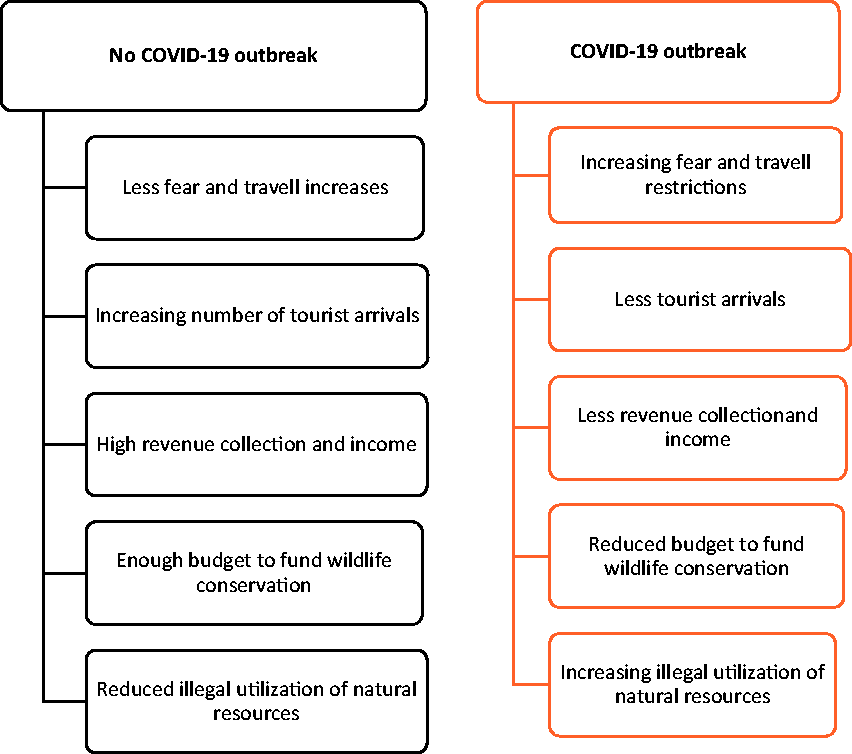
(a) Top-down COVID-19 effect on tourism and its subsequent effects on wildlife conservation: Disease intervention through travel restrictions and lockdown reduce budget allocated for conservation and, therefore, reduce capacity to combat wildlife crime. (b) Trickle-down effect of tourism in wildlife resource management during non-pandemic period: increasing number of tourist arrivals increases revenues which are reinvested in conservation and, therefore, guarantee capacity of management authorities to combat wildlife crime.
Besides the direct contribution to conservation of wildlife, a mere presence of investors, employees and tourists in protected areas increases the security of wildlife species and habitats. Travel restrictions and, consequently, the absence of tourists, temporary closing of businesses and laying-off of employees in the protected areas, may pave a way for criminals to target wildlife and other natural resources. Reports on a surge of poaching and deforestation since COVID-19 lockdown in Brazil, Columbia, Zimbabwe, Botswana, South Africa and Kenya (AWF, 2020; Nebe, 2020; Newburger, 2020; Price, 2020) illustrate this scenario.
On National Budget for Conservation
Basically, the survival of wildlife in Tanzania, as in many other developing countries, depends on the performance of the tourism industry. Revenues generated through tourism are used by the central government for development of national projects/services, and partly ploughed back to support conservation activities including law enforcement, infrastructure development and improvement, research and ecological monitoring (URT, 2018b). Furthermore, wildlife protected areas share benefits from tourism with local communities to improve relationships and, therefore, win local support in conservation efforts.
However, experience shows that even in the absence of a pandemic or economic recession, inadequate funding has often featured as one of the challenges facing the conservation of wildlife in developing countries (Emerton et al., 2006; Kideghesho, 2016b). The current COVID-19 crisis will definitely exacerbate the situation. To a large extent, the conservation budget can be met by revenues generated through tourism. However, a high proportion of these revenues is retained centrally to cater for other priorities such as education, health, energy, infrastructure and security (Ministry of Finance and Planning, 2020; TANAPA, 2020). This leaves the wildlife sector with inadequate staffing, inadequate and poor state of equipment and infrastructure, and inadequate routine maintenance of protected areas and anti-poaching operations (Emerton et al., 2006; Kideghesho, 2016b; Wildlife Division, 2013). For example, the Tanzania Wildlife Division required US$60.7 million in order to execute its activities effectively between 2010 and 2012. However, only 10% of this budget was released (Kideghesho, 2016b; Wildlife Division, 2013). Under the current crisis of the COVID-19 pandemic and, the subsequent drop of tourist arrivals, it is unreservedly true that the underfunding of the wildlife sector will worsen and this may give rise to increased wildlife crime and the destruction of certain species (Figure 3). A spike of rhino poaching reported in South Africa and Botswana during the first week of the lockdown in which nine and six rhinos were killed in the two countries, respectively, can stand as a case in point (AWF, 2020; Newburger, 2020).
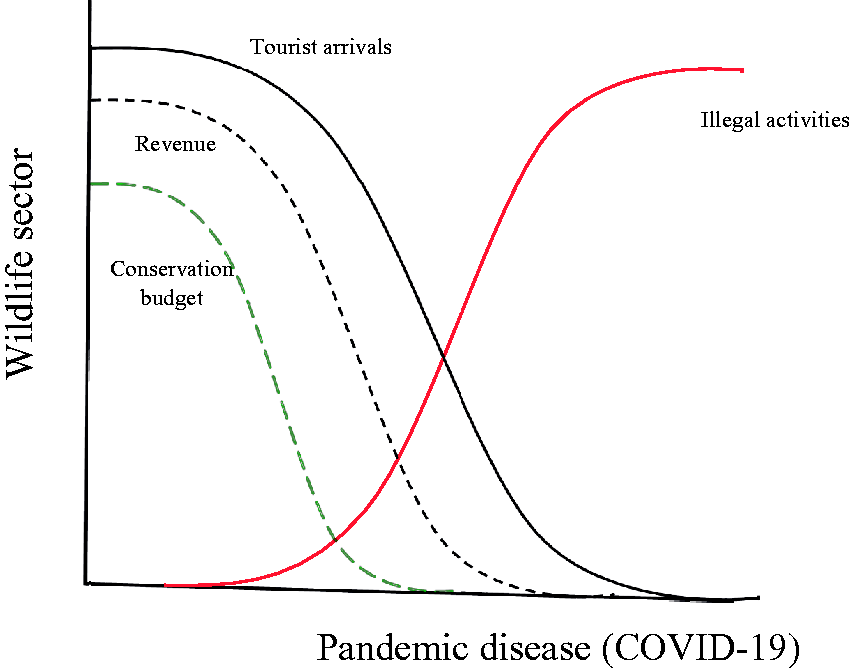
Prediction of Relative Importance of Outbreak of Pandemic Diseases on Tourist Arrival (Solid Black Line), Revenue Collection (Dotted Black Line), Conservation Budget (Dotted Green Line) i.e. Protection Budget, Community Outreach Budget, Ecological Monitoring and Illegal Activities (Solid Red Line).
An inadequate budget for wildlife sector may also disrupt the ongoing national projects and plans undertaken by the Government to transform the governance and enhance the conservation efforts in the country. One of the projects likely to suffer is the protected areas which have recently been upgraded to higher categories. These include the six gazetted national parks – namely Burigi-Chato (4,702 km2), Nyerere (30,893 km2), Kigosi (7,460 km2), River Ugalla (3,863 km2), Ibanda-Kyerwa (294 km2) and Rumanyika-Karagwe (255 km2) (Kideghesho, 2020). Furthermore, eight protected areas of lower categories are in the final stages to be upgraded to game reserves. These are Kilombero Game Controlled Areas or GCA (6,787 km2); Lake Natron GCA (7,718 km2); Wembere (13,800 km2); Luganzo-Tongwe (5,128 km2); Inyonga GCA (6,337 km2); Ugalla (7,646 km2); Wami-Mbiki Wildlife Management Area (2,400 km2) and Litumbandyosi-Gesimasowa Open Area (Kideghesho, 2020). These new projects call for huge financial investment to cater for manpower, offices and other infrastructures. The current crisis creates a risk for these protected areas to remain as “paper parks” i.e. parks lacking adequate management status.
Previous experience demonstrates the huge damaging impact of economic recessions on Tanzania’s natural resources sector (wildlife, forestry and fishery). For instance, the two global economic recessions – 1974 to 1975 and 1979 to 1982 – caused serious budget cuts for the sector. From 1976 to 1981 the Sector was the least funded compared to health and education sectors – allocated only 1.2% from the national development budget (Yeager, 1986). This reduced the capacity and efficiency of the country to enforce laws against widespread poaching 3 (Borner, 1981; Kideghesho & Msuya, 2012; Yeager, 1986). In the 1980s, the poaching crisis was marked by a dramatic decline of elephants (Loxodonta africana) and disappearance of black rhinos (Diceros bicornis) in many parts of the country including areas which were recognized as their strongholds (Borner, 1981). Elephant populations declined to only 55,000 in 1990 from approximately 370,000 in 1970 (WSRTF, 1995). In Selous Game Reserve, a stronghold for elephants and rhinos, the elephant population was reduced by half, from 110,000 in 1976 to 55,000 in 1986 and further to 22,000 in 1991. The rhino population declined from 2,500 in 1976 to 50 in 1986. In 1991 there was virtually no rhino in Selous (WSRTF, 1995).
On Donor Funding for Wildlife Conservation
Traditionally, conservation efforts in developing countries have been complemented by support from public institution donors, international philanthropic, development agencies and NGOs. Donor contributions account for 32% of protected area (PA) funding in Africa, reaching 70–90% in some countries (Lindsay et al., 2018; Lindsey et al., 2020). Under the current situation where virtually all countries and institutions are excessively hit by the Corona virus-induced recession, it is difficult to predict their ability and willingness to support conservation efforts in developing countries. Even with pledges for support to combat the COVID-19 crisis from some organizations (OECD, 2020; UNDP, 2020), it is not clear to what extent the support will benefit wildlife conservation, given the competing priorities in the recipient countries. The funds may be channeled to the health sector, leaving out the natural resources and related sectors and, thus, increase the vulnerability of wildlife to anthropogenic pressures and reduce the capacity of conservation agencies to deliver their planned activities (Gitari-mitaru, 2020; Vyawahare, 2020). It is also likely that the COVID-19 pandemic will disrupt the flow of development assistance from rich to poor countries, as the former may use the crisis as an excuse, following the huge economic losses they are currently facing.
On Wildlife Management Areas
A Wildlife Management Area (WMA) “represents an important option for wildlife conservation outside the core protected areas and acts as a buffer against human impacts while enhancing rural economic development” (URT, 2018b). The establishment of WMA is one of the strategies of implementing the Community Based Conservation (CBC) approach, which was adopted in the early 1990s as an alternative to the fences-and-fines approach (URT, 2007). The later was perceived to have failed to conserve wildlife following widespread poaching and increased hostility between local communities and protected areas (Kideghesho & Mtoni, 2008). Currently, Tanzania has gazetted 22 WMAs, and 16 others are under different stages of establishment (URT, 2018b). A total of 334 villages have contributed their land to establish the WMAs (ibid.). Through WMAs, local communities take responsibility of managing the wildlife resources and derive the economic benefits through consumptive and non-consumptive use (see e.g. Table 2 below). However, only few WMAs are doing well while some are yet to meet the expectations of their establishment.
Revenues (US$) From Hunting and Photographic Tourism Disbursed to Three Selected WMAs From 2016/2017 to 2017/2018.
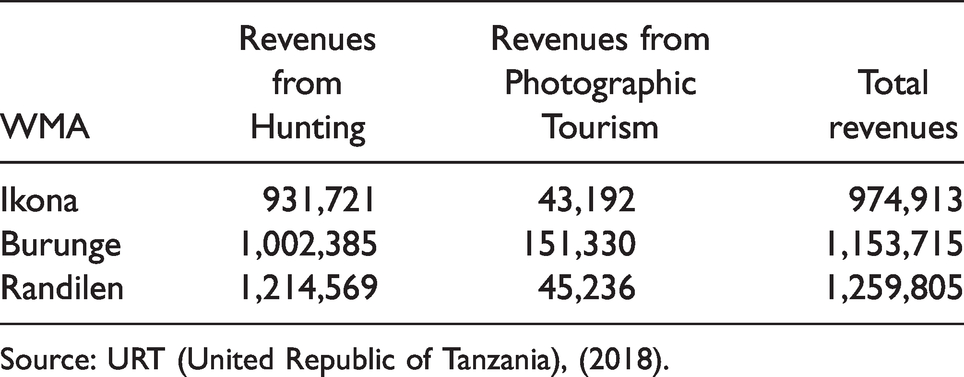
Source: URT (United Republic of Tanzania), (2018).
Essentially, economic benefits are currently the main incentive enticing people to support conservation efforts and refrain from activities which are illegal and damaging to resources. Wildlife conservation can excel if it can compete effectively with alternative land uses which are incompatible with conservation such as agriculture, livestock grazing and mining. The effects of the current economic recession on tourism are posing a serious threat to existing WMAs and the whole concept of WMA. The WMAs that are excelling are prototype or success stories for other wildlife-rich areas. The failure of Tanzanian WMAs may turn the whole concept of WMA redundant. Besides the reduced incentive to conserve through WMAs, inadequate financial resources may not be sufficient to cater for managerial activities including law enforcement and infrastructure improvement. The communities may, consequently, demand their land back and put it into alternative uses which are more economically rewarding but ecologically destructive. Furthermore, subsistence poaching by local communities may increase in response to the combination of a lack of effective patrols and increasing economic hardships induced by COVID-19.
On Employment
The informal sector plays a significant role in economic growth and is the leading employer in Tanzania, absorbing about 76% of the country’s workforce (UNDP & URT, 2018). Lack of the necessary social protection coverage and adequate strategies to cope with loss of livelihoods among the people working in the informal economy, subjects them to vulnerability of the COVID-19 impacts (ILO, 2020b). People working in the informal economy are faced with reduced demand, lack of a market and restricted mobility for their goods and services. Currently, rural areas are increasingly being perceived as a refuge for people who are working in the informal economy in urban areas. Therefore, urban-rural migration is taking pace as a strategy of evading risk of contracting COVID-19 and looking for livelihood alternatives (Kideghesho, personal observation). Limited livelihood strategies in rural areas may prompt involvement in criminal activities including wildlife poaching and deforestation.
Globally, tourism plays a significant role in employment creation. Its multiplier effects in the economy allow the creation of employment in the tertiary sector as well as growth in the primary and secondary sectors of industry (Figure 4). In Tanzania, the Tourism Sector employs over 600,000 people and up to two million people indirectly (URT, 2016). The current outbreak of COVID-19 and, consequently, travel and business restrictions, are sending thousands of Tanzanians, whose livelihoods rely on the tourism industry, directly and indirectly, into a tailspin of decline. The Budget Speech for the financial year 2020/21 shows that the direct employment in the tourism sector would drop by 77% from the current 622,000 to 146,000 (URT, 2020).

Multiplier Effect of Tourism in Economy (Source: Travel and Tourism, 2014).
Beneficiaries of the tourism industry, among many others, include tour operators, providers of accommodation facilities, parking, transport, cultural goods and services, food and beverages. Many informal sectors will suffer due to the disruption of value chains associated with the closing of restaurants, bars, retailers, informal commerce etc. A study conducted on the 300 km stretch between Arusha and Serengeti in 2009 revealed that there were about 3,500 crafts and souvenir stalls that employed about 7,000 sellers and 21,000 crafters (Steck & ODI, 2009). About 20% of the earnings (US$100 million per annum) reached the local people through wages and tips following employment by tourism providers (ibid.). Furthermore, over half of the food consumed on this route is provided by the local small producers.
The loss of jobs in tourism can reverberate through the wildlife sector as a potential threat on wildlife species and habitats. The majority of the unemployed people may turn to wildlife poaching and deforestation as a coping strategy against economic hardship. Previous studies in Tanzania show a direct link between wildlife crime and loss of or limited livelihood options (Knapp, 2012; Loibooki et al., 2020; Ntalwila, 2017). Unemployment may also water down the local support to conservation initiatives around the protected areas as employment in the tourism sector is considered one of the incentives engendering this support (Kideghesho et al., 2007; Stone & Nyaupane, 2015). Furthermore, in implementing cost-cutting measures, protected area managers might be forced to cease some of the operations and grant a leave without pay to a number of their employees. This will definitely affect efforts towards management of wildlife and increase criminal activities in protected areas as reported recently in Zimbabwe, Botswana and South Africa (AWF, 2020; Nebe, 2020; Newburger, 2020).
On Human-Wildlife Interactions
Wildlife conservation is often associated with economic and social costs to local communities, experienced through livestock depredation, crop damage, destruction of infrastructures, lost opportunities for use of land and related resources and human mortalities (Kideghesho et al., 2020; Kissui, 2008; Ntalwila et al., 2017). Benefit sharing and consolation schemes for property damage and human injuries or deaths are construed as important drivers of tolerance towards these costs among the communities (Barua et al., 2013; Dickman & Hazzah, 2016; Ravenelle & Nyhus, 2017). These schemes have become popular in Tanzania 4 and have engendered local support to conservation (Kideghesho, 2007; Kideghesho & Mtoni, 2008). In the absence of these schemes, victims of the conservation-induced costs respond through retaliatory and pre-emptive killing of the problem and dangerous wildlife species (Kissui, 2008; Lyamuya et al., 2014; Masenga et al., 2013). Unfortunately, the revenues to cater for these schemes are generated through tourism (Melita & Mendlinger, 2013; TANAPA, 2020), which is currently hard hit by the COVID-19 pandemic. This being the case, it is apparent that the ability for conservation agencies to cope with human-wildlife conflicts will be limited – a situation posing risks to wild animals and exacerbating poor relations between communities and wildlife authorities.
On Wildlife Trade
The COVID-19 pandemic has stimulated increasing calls globally to ban live animal trade, wet markets and the consumption of live animals, which are believed to be the source of the current outbreak of COVID-19 and potential source of future pandemics (Briggs, 2020; Coalition to End The Trade, 2020; Congress of the United States, 2020; World Animal Protection, 2020). Tanzania had imposed a ban on live animal trade since 2016 following a concern over illegal trafficking of live wild animals. Yet, such bans can affect employment and livelihoods of local people including rural and indigenous communities.
Whilst studies often focus on trade in large charismatic species (Conrad, 2012; Kideghesho, 2016a; Venturini & Robert, 2020), the live animal trade in Tanzania and other African nations also involves species that are considered to be vermin and pests such as rodents, primates, quelea and grasshoppers (Abernethy & Obiang, 2010; Leader-Williams et al., 1996; Maligana et al., 2020). However, knowledge gaps exist on impact of a ban of the live animal trade on these species and how this (in absence of control measures) could increase food insecurity and force people to adopt coping strategies which are potentially harmful to both long-term wildlife conservation and sustainable development objectives. For example, in the East Usambara (a part of eastern arc mountains in Tanzania) the ban has affected approximately 400 butterfly farmers, who initially earned their living through ecologically damaging activities such as logging and cultivation in Amani Nature Reserve (Daily News, 2019; Sanchez, 2016; WEF, 2016). The butterfly pupae ranged between US$1 and $2.50 each to live butterfly exhibits in the U.S. and Europe (Sanchez, 2016). The farmers received 65% of the proceeds and 7% was directed to community development fund to finance education and health projects (Sanchez, 2016).
The Tanzanian government expressed an intention to reopen the live animal trade once the proper procedures and system to control illegal trafficking of live wild animals were in place. However, the COVID-19 pandemic and, subsequently, global campaigns against wildlife trade, may force Tanzania to rethink its position on whether to resurrect the live animal trade or not. The choice to ban the trade permanently because of the current pandemic, will affect hundreds of poor Tanzanians who take part in this trade. This will, consequently, diminish the value of the species targeted for the trade and there may be increased pressure on species as people search for alternative sources of economic income. For example, the dependence of butterflies on native species in East Usambara encouraged farmers to refrain from destruction of habitats by keeping the land intact with naturally occurring vegetation (Daily News, 2019; Sanchez, 2016). As the household income generated through butterfly farming provides an incentive to conserve forests and habitats; a permanent ban may force people to revert to environmentally damaging activities. Essentially, many conservation agencies, consider butterfly farming projects as one of the strategies for enhancing conservation efforts by providing people with alternative livelihood options which are environmentally friendly (Ashley & Hussein, 2000; EACFE 2006; GEF 2003; WEF, 2016). This example underscores an urgent need to establish appropriate controls of live animal trade based on robust scientific evidence and monitoring in view to realizing sustainable development at local and national scales.
On Wildlife Research
Wildlife research plays a crucial role in providing information essential for addressing the conservation challenges and for guiding the decision-making process (Corlett et al., 2020; Kideghesho, 2019). Tanzania’s exceptional and diverse wildlife species and habitats attract many wildlife researchers (both local and foreign) to undertake scientific studies under different themes. The main themes include human-wildlife interactions; biodiversity conservation; water resources and wetland conservation; climate change and ecosystem dynamics; wildlife health and diseases; beekeeping, bee ecology and pollination services; wildlife ecology and ecological interactions; and natural resources governance and infrastructure development (TAWIRI, 2019a).
The current lockdowns and travel restrictions following an outbreak of COVID-19 have halted virtually all wildlife research projects in Tanzania (Mwakatobe, personal communication, 2020), thereby undermining the contribution of research in enhancing the wildlife sector (Corlett et al., 2020). In the 2017/18 financial year, Tanzania Wildlife Research Institute (TAWIRI) – a government institution responsible for carrying out research, coordinating and supervising all wildlife research in the country – registered 193 research projects and 526 researchers (325 foreigners and 201 Tanzanians) (TAWIRI, 2019a). In 2018/2019 financial year a total of 176 projects and 492 research scientists were registered of which 292 were foreigners and 200 Tanzanians (TAWIRI, 2019b). Currently, no research activity is going on and all foreign researchers have left (Mwakatobe, personal communication, 2020). Furthermore, applicants for this year have cancelled their applications pending the upshot of the situation. Furthermore, besides the suspension and disruption of the current research projects, some funding organization have closed their offices and suspended the release of funds to researchers pending the eradication of COVID-19 (Rufford, 2020). Future funding will depend on the extent of economic hardships that the funding organizations have experienced and the weight they will place on research, among other competing priorities.
On Local and International Conservation Events (Meetings, Conferences, Workshops)
The COVID-19 pandemic has disrupted the schedule for local and international meetings, workshops and conferences which were set for 2020. This has denied the scientists, practitioners and policy makers an opportunity to discuss and deliberate on important agenda for conservation and management of natural resources, including wildlife (Corlett et al., 2020). Examples of postponed global events include: The 2020 UN Climate Change Conference of the parties (UNFCCC COP 26); The IUCN World Conservation Congress; and the bi-yearly negotiation of the United Nations Convention on Biodiversity (Table 3).
Examples of the Major International Conservation Events Postponed Due to COVID-19 Crisis.
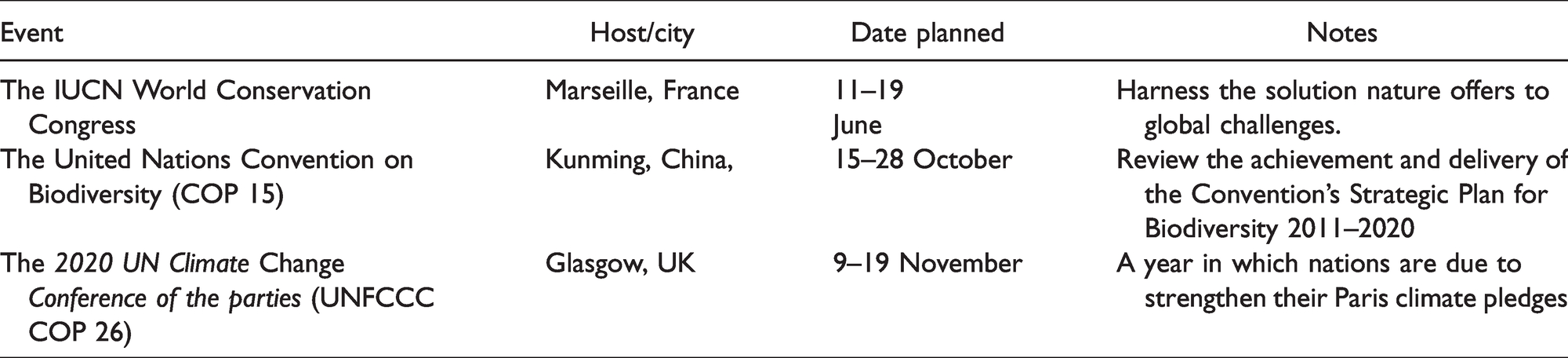
These events among other agenda, aimed at drawing attention to 2020 as the “Super Year for Nature,” by bringing together conservation leaders and policy makers for discussion and deliberation on climate change, biodiversity and livelihoods.
On Exploitation of Wild Species for Medicinal Use
To cope with challenges of novel emerging diseases, people may turn to traditional medicines which are derived from wild plants and animals. Beliefs and misconception may subject the exploited species to a risk of extinction. As elsewhere in the world, most of the people in Tanzania tend to trust fabricated stories on efficacy of certain medicine even without having a scientific backing. For instance, in the 1990s, a misconception that giraffe brain and bone marrow could cure HIV/AIDS subjected this species to heavy poaching (Mahenya & Chacha, 2020; Strauss et al., 2015). In December 2020, the Tanzania National Parks Authorities (TANAPA) reported a new wave of elephant poaching swayed by rumours that elephant liver and oil extracted from elephants have the power to cure liver cancer, cervical cancer and ulcers (IPPMedia, 2020; The Citizen, 2020). Likewise, in the 2010s, reports of an emerging ‘miracle herb’ capable of treating all ailments including HIV/AIDS attracted thousands of people from East Africa to Loliondo area in Northen Tanzania’s Ngorongoro District. The concoction which was derived from the “Mugariga” tree (Carissa edulis) and administered by Pastor Ambilikile Mwasapile left the species overharvested.
With a growing panic over COVID-19, it is unlikely for wild species to escape the pressure as humans seek to prevent or cure the disease (Fobar, 2020; Hilonga et al., 2019). Currently, there is an increased wave of harvesting wild plants which are believed to provide a remedy against the disease. One of the species which is heavily being harvested is Tetradenia riparia, a situation that has been accelerated by the official launching of the herb remedy by the President of Madagascar (Alfa, 2020). The culture and beliefs may motivate people to opt for medical products from wild species regardless of whether they are fake or unproven to prevent and cure the disease, as long as the pandemic persists. In contrast to exploitation of Carissa edulis, whose dose was only one cup and strictly administered by a single person, the current exploitation of wild plant species is widespread, massive and involves self-administering. This, therefore, subjects species to an even higher risk of extinction.
Currently, there is no evidence of exploitation of wildlife species as a remedy against COVID-19 in Tanzania, although this may emerge with time. In China, the government has already recommended use of an injection containing bear bile, to treat severe and critical COVID-19 cases (Fobar, 2020).Besides demand for medicinal use, association of some wildlife species with the COVID-19 pandemic as hosts of corona virus might drive massive killing of these species and destruction of their habitats as one of the control measures. This was the case in 2004 when the Chinese authorities endorsed the persecution of 10,000 civet cats (Paradoxurus hermaphroditus) and other mammals to curb the spread of SARS (Severe Acute Respiratory Syndrome) (Watts, 2004).
Conservation Implications
The COVID-19 pandemic is more than a health crisis. It is an economic, social, political and environmental challenge. Its long-term impacts on the global economy will reverberate through the wildlife and natural resources sectors. With meager budgets caused by a dramatic decline of tourism revenues, it will be virtually impossible to meet the national and global commitments for the conservation of wildlife. Numerous conservation activities in protected areas, including law enforcement, ecological monitoring, infrastructure maintenance and administration will suffer and, consequently, exacerbate the decline of wildlife populations as observed in previous decades (Borner, 1981; Yeager, 1986). Furthermore, limited funds for research may limit the development of sound management interventions and affect evidence-based decision making.
Despite the likely grim repercussions, COVID-19 may present some opportunities for researchers and scientists. A need to establish the link between pandemic diseases and environmental studies could rank at the top in research agenda and, therefore, be accorded a higher priority in funding. A new hypothesis of the amplification effect could take the lead in the future research agenda, where scientific studies will explore the scenarios on how environmental and human behavior changes contribute to an increasing zoonotic diseases as human beings come into closer contact with new pathogenic species. The pandemic is also an opportunity to promote the rationale of One Health approach by allocating adequate funds for conservation actions. The Approach is defined by One Health Commission (2020) as a collaborative, multi-sectoral, and trans-disciplinary approach – working at local, regional, national, and global levels – to achieve optimal health and well-being outcomes recognizing the interconnections between people, animals, plants and their shared environment.
Likewise, the outbreak of COVID-19 is both a warning bell and a learning opportunity for conservationists, policy-makers, investors and the general public over a need to adopt sustainable behaviours and make rational decisions that can enhance the conservation of ecosystems and biodiversity. A growing awareness about the linkage between ecosystem degradation and emerging pandemics prompts a need for more investment in terms of manpower and financial resources to support conservation efforts (i.e. law enforcement, research and community development programmes).
Recommended Policy Measures
Sustaining a future for wildlife in the face of COVID-19 pandemic, calls for consideration and implementation of numerous measures. Among these, the focus should be on funding for the sector, awareness and sensitization of the general public on the pandemic and its impacts, crisis management, wildlife trade, and current and future research priorities. These measures are discussed briefly below.
Funding
Of the key sectors calling for adequate financial investment in the face of COVID-19 crisis, conservation of wildlife species and habitats should receive a special priority. This is imperative as besides economic benefits, conservation of nature provides assurance for human and planetary health including reducing the risk of emerging pandemics. An adequate budget is required to cater for protection, benefit sharing with local communities and the control of problem and dangerous animals. This will pre-empt wildlife crime and persuade local communities to tolerate costs associated with wildlife. At this time, when tourism is underperforming, the international community and conservation partners should be approached to increase their support for funding to the wildlife sector. It is high time to promote the philosophy that wildlife is a global asset and that countries where this asset is found are conserving on behalf of the entire world. In 1961, the first President of Tanzania, Mwalimu J.K Nyerere, expounded this in the Arusha Manifesto – a document which laid the foundation for wildlife conservation in Africa: “The conservation of wildlife and wild places calls for specialist knowledge, trained manpower, and money, and we look to other nations to cooperate with us in this important task – the success or failure of which not only affects the continent of Africa but the rest of the world as well”(URT, 2007).
Lay Out a Comprehensive Tourism Recovery Plan
Given the role of tourism as a primary source of funding for wildlife conservation and one of the major employers, it is critically important to develop a comprehensive recovery plan that will outline concrete measures that will ensure a quick recovery of the industry. This should include developing travel protocols that will guarantee individuals safety, thereby restoring confidence and preference for wildlife tourism destinations in Tanzania and Africa at large. Cooperation and common health care interventions at the regional levels and among the conservation agencies and private sectors will hasten tourism recovery, as the existence of COVID-19 in one African country or region is likely going to reduce visitor confidence and thus making them avoid to travel to Tanzania and other African countries.
Avoid Blanket Ban on Wildlife Trade
The outbreak of COVID-19 has prompted a growing pressure from some international NGOs and animal welfare groups to call for a strict ban of all wildlife trade as “a measure” of eradicating the risk of zoonotic diseases. However, a poorly planned blanket ban may not provide a lasting solution for the survival of wildlife species. The strategy may rather be detrimental through reducing the value of species to the public, and increasing human-wildlife conflicts and, therefore, prompting habitat destruction and retaliatory or pre-emptive killing. Global actions proposed by WWF (2020b) are laudable and should be adopted in developing countries. These include scaling up efforts to combat illegal wildlife trafficking, and halting the trade of high-risk taxa and strengthening efforts to reduce consumer demand for high-risk wildlife products.
Capacity Building for Crisis Management
The COVID-19 pandemic should serve as an eye-opener for conservation authorities in developing countries to build capacity against crises from the national to protected areas levels. As conservation budgets mainly depend on tourism performance, it is imperative that crisis management plans are developed and budgets are set aside to accommodate any future risks. The crisis management plan will reduce shock, set a direction for cost-effective strategies and operational plans, and ensure sustainable funding of essential conservation operations during the crisis period, leading to the rescue of wildlife resources from potential loss. In line with this, it is high time for the training institutions to develop curricula which will accommodate the modules on risk management in order to equip the managers in the wildlife and tourism sectors with appropriate skills for dealing with similar predicaments in the future.
Research Priorities
The fact that COVID-19 is a zoonotic disease and that it is linked to the destruction of natural ecosystems, it is imperative that scientific studies focus on establishing the potential reservoirs for corona virus in wildlife species and improve our understanding of the interactions between ecosystem change, disease regulation and human well-being. The studies should seek to produce clear evidence on the possibility of transmission of SARS-COV-2 from human beings to wildlife species as well as transmission among the wildlife species. It is also high time to promote and adopt the concept of One Health Approach.
Awareness Creation and Sensitization
Besides the impacts on the economy, the outbreak of COVID-19 has brought with it a number of lessons which should be evident to conservationists, policy-makers and the general public. There is a critical need to increase public awareness of how the destruction of nature contributes to the outbreak of pandemics and, therefore, underscore a need for behavioral change and making rational decisions aimed at enhancing the health and quality of ecosystems and biodiversity.
Conclusion
From this review it is evident that COVID-19 pandemic presents serious risks and impacts on the wildlife sector by undermining the tourism industry, reducing national budget for conservation and lowering funding from local and international conservation partners. Furthermore, the impacts of the pandemic on the local economy and livelihoods, due to loss of employment and increased human-wildlife conflicts, may fuel the illegal use of wildlife resources and dilute the willingness of local communities to take part in conservation initiatives including sustaining the existing wildlife management areas (WMAs). The pandemic has also interrupted research projects and international events and, therefore, denied conservation authorities important data and information for informed decision-making and planning. In order to address the COVID-19 crisis and ensure the survival of the wildlife sector in developing countries such as Tanzania, adoption of pragmatic policy measures is a matter of urgency. The measures include: giving priority for alternative funding for the sector while considering the impact of the destruction of nature in furthering the pandemics; developing a comprehensive tourism plan outlining the concrete measures to restore normality; creating awareness to the general public on the role of nature conservation in preventing pandemics, avoiding a blanket ban of wildlife trade. The research should focus on understanding the zoonoses and the relationship between ecosystem dynamics and the outbreak of pandemics.
Footnotes
Acknowledgement
Authors would like to thank the Editorial Board of the Tropical Conservation Science for opportunity to contribute this article. Thanks are further extended to Ms Jane Petring -English Language Specialist – for editing the manuscript. Finally, we thank the TCS Editorial Board and anonymous reviewers for inputs that have immensely shaped this article.
Declaration of Conflicting Interests
The author(s) declared no potential conflicts of interest with respect to the authorship and/or publication of this article.
Funding
The author(s) disclosed receipt of the following financial support for the research, authorship, and/or publication of this article: The authorship of this article was made possible through the support provided by the College of African Wildlife Management, Mweka.
