




Abstract
Heterosphecia tawonoides Kallies, a “lost” species of clearwing moth known only from a single specimen from 1887 (the holotype, which is missing important morphological features), was observed and filmed for the first time in its natural habitat. Our studies have shown that it is associated with Malaysian primary lowland dipterocarp forests, ecosystems which are vanishing rapidly due to extensive human activity. This is the first record of H. tawonoides in Malaysia. Behavioral aspects, such as mud-puddling among bees and acoustic mimicry, are discussed and shown in a video. A morphological redescription, including features visible on live individuals only, is provided. The DNA barcode sequence is given, with comparison to closely related species.
Introduction
The rainforests of Southeast Asia are one of the most biodiverse areas on earth. Because of
climate change and a high deforestation rate, among others, they are also one of the most
vulnerable. Over the last 2 million years, during glacial periods, sea levels in Sundaland
were lower than at present. Sumatra, Java, and Borneo were linked to Peninsular Malaysia and
the Asian mainland by the Sunda Shelf, enabling species migration, especially along rivers
(Corlett & Primack, 2011;
Sathiamurthy & Voris,
2006). That is why today flora and fauna of these lands are similar. The genus
Heterosphecia (Le
Cerf, 1916), which includes eight species, occurs from South India to Sumatra and
Borneo; however, it is known only from several records. Thus, their conservation status is
currently unknown. Heterosphecia tawonoides was described in 2003 by
Kallies based on a unique specimen collected in Sumatra (Indonesia) in 1887 (exact location
unknown) and kept in the Natural History Museum in Vienna. Thus, it is a “lost species,”
such as those defined by Global Wildlife Conservation, an organization which along with more
than 100 IUCN Species Survival Commission’s Specialist Groups established a project entitled
“The Search for Lost Species” (https://lostspecies.org/) aiming to
rediscover and protect species which have not been seen for many years. H.
tawonoides (Figures 1,
3 and 5(e), 5(f)) was observed by
the authors in 2013, 2016, and 2017 in the rainforests of Peninsular Malaysia. In May 2016,
four individuals of H. tawonoides were collected and analyzed
morphologically and genetically. Genitalia morphology confirmed that the collected specimens
are indeed H. tawonoides. All of the observed individuals were seen
mud-puddling on a sandy/pebble river bank, a behavior recorded only recently for the family
Sesiidae (Gorbunov, 2015; Skowron, Munisamy, Hamid, & Węgrzyn,
2015; Skowron Volponi &
Volponi, 2017; Szabolcs &
Pühringer, 2016). Heterosphecia tawonoides puddling on a dry leaf washed out by the
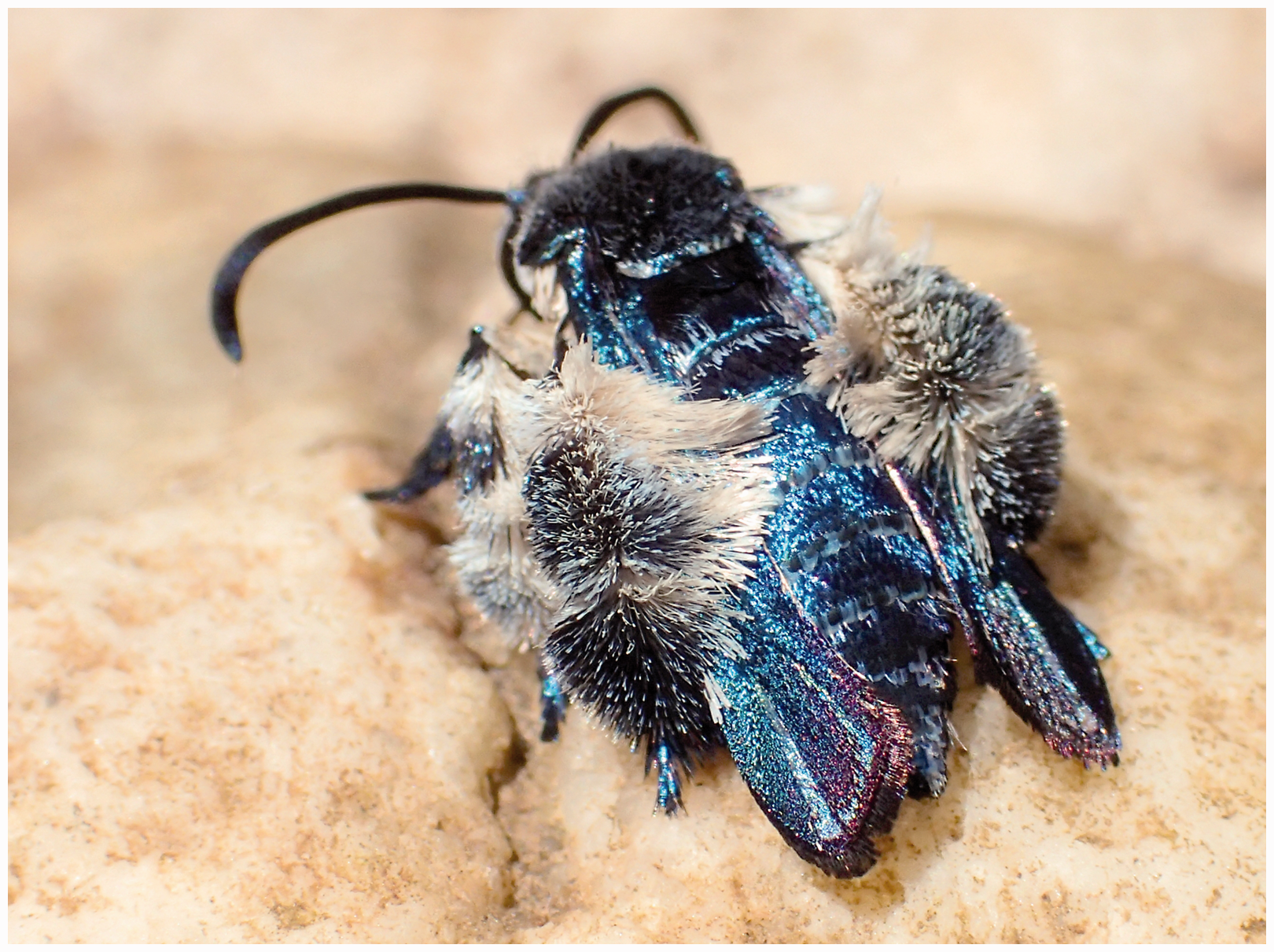
river. Map of Peninsular Malaysia. Pahang state is marked in green. In sunlight, Heterosphecia tawonoides has a strong blue sheen on
wings, abdomen, and tarsomeres.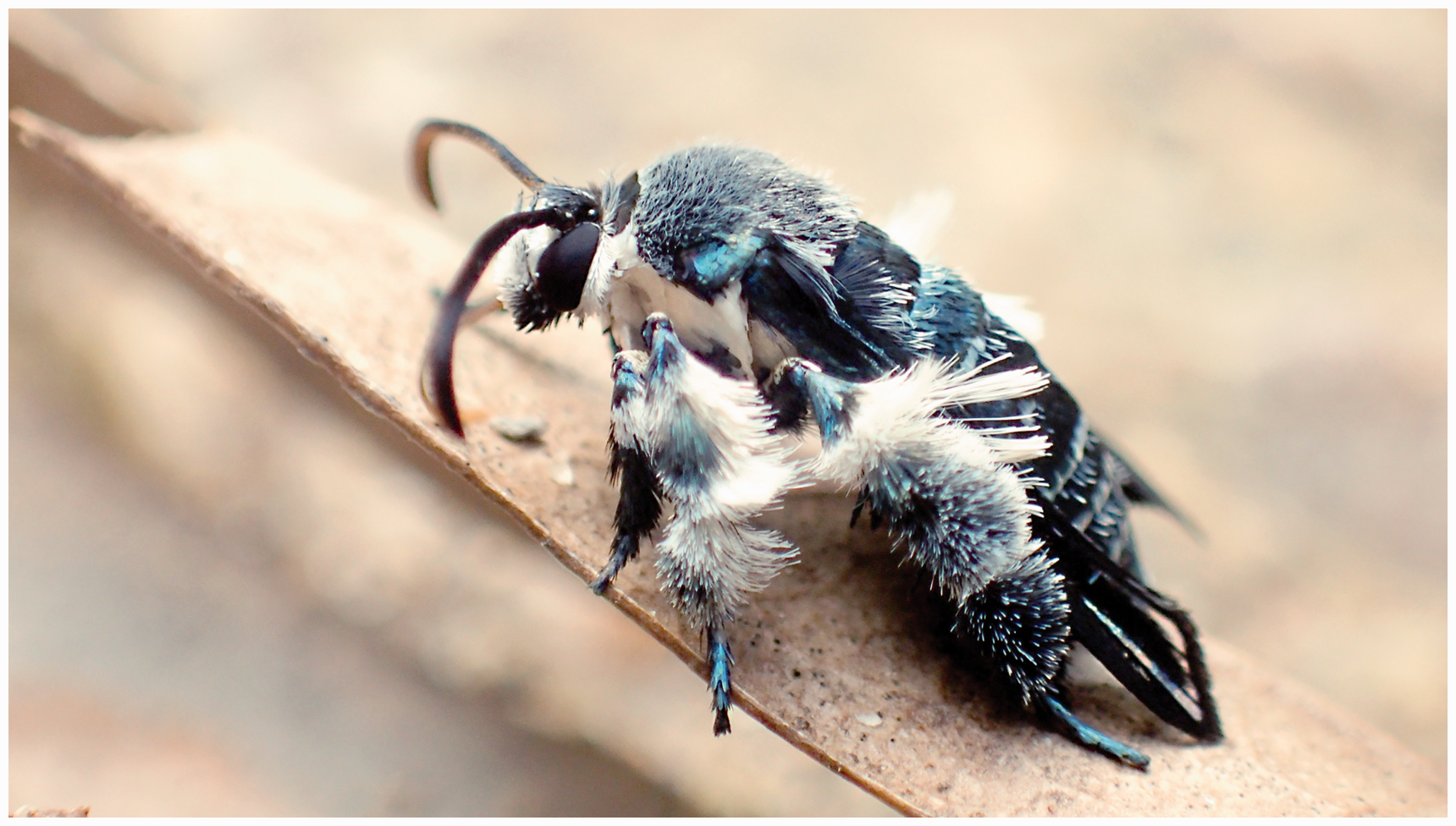

The original description of H. tawonoides was made based on a single, old specimen, which is missing important morphological features. The genus Heterosphecia is characterized by tufts of hair-like scales on the hind legs. The holotype lacks the hind legs and currently also the abdomen (utilized for dissection by Kallies, 2003), and its body coloration has faded. Moreover, the natural habitat and behavior of this species remained unknown. Recent observations of H. tawonoides in its natural habitat, described herein, have allowed to notice not only behavioral aspects, but also important morphological details, including those visible only on live individuals.
Methods
Temperature and humidity measurements in the field were made using a TFA Dostmann electronic thermo hygrometer in the shadow each time that H. tawonoides was observed. Photographic and video documentation was made with Olympus TG-3, Sony DSC-RX10, and Sony PXW-FS5 digital cameras. Photographic and video documentation, as well as behavioral observations were made in the natural habitat of H. tawonoides, in three locations (approximately 20 km and 50 km away from each other) in lowland dipterocarp forests of Pahang State, Malaysia (Figure 2). Four individuals were collected in Kuala Tahan, Malaysia, and pinned for morphological analyses. Male genitalia were dissected and prepared as follows: (1) maceration of the abdomen in boiling 10% KOH, (2) dissection in 10% ethanol, (3) dehydration in 30%, 60%, and 100% ethanol, respectively, and (4) mounting in Euparal. Morphological details were studied with a Leica M80 stereomicroscope and photographed using a Leica M205A. Morphology of male genitalia was compared with Figure 7 in the study of Kallies (2003). DNA barcoding (on total DNA isolated from a single leg) was conducted at the Canadian Centre for DNA Barcoding, University of Ontario, Guelph, Canada. Tissue lysis and DNA purification was carried out using a silica-based method which includes binding DNA to a glass fiber membrane in the presence of chaotropic salts (Ivanova, DeWaard, & Hebert, 2006). Cytochrome c oxidase subunit I gene (COI) was PCR amplified with the use of primers described by Hebert, Penton, Burns, Janzen, and Hallwachs (2004). DNA was sequenced using an ABI Prism 310 automated sequencer with ABI Prism BigDye Terminator Cycle Sequencing Ready Reaction Kit (Perkin Elmer Applied Biosystems, Foster City, CA, USA). Barcode sequences were analyzed through BioEdit, the Basic Local Alignment Search Tool (BLAST), and Barcode of Life Data System (Ratnasingham & Hebert, 2007) Identification tool.
Specimens Examined
1 ♂: Peninsular Malaysia: Pahang, 01/05/2016, coll. M. A. Skowron Volponi (British Museum of Natural History, London—BMNH), 1 ♂: Peninsular Malaysia: Pahang, 02/05/2016, coll. M. A. Skowron Volponi (private collection), 2 ♂: Peninsular Malaysia: Pahang, 06/05/2016, coll. M. A. Skowron Volponi (private collection).
Results
Redescription
Alar expanse: 20.0 to 22.5 mm; body length: 9.7 to 10.0 mm; antenna: 5.0 to 6.0 mm.
Head: Antenna clavate, dorsally black, ventrally yellow, tuft of black setae at tip of club; frons white; vertex covered with black and in the middle a few white elongate scales; complex eyes and ocelli brown; proboscis orange, well-developed, functional; labial palpus long and upturned, with white elongate scales ventrally and apically, black basally; pericephalic hairs white with a few black hairs dorsally.
Thorax: Parapatagia black with blue sheen, patagia white; mesothorax dorsally covered with white hair-like erected scales on a background of smooth black scales; smooth black scales with blue sheen at wing base and a small tuft of elongated black and white hair-like scales; metathorax black with blue sheen; lateral side of thorax white.
Legs: Fore femur smooth-scaled exteriorly and with elongated scales interiorly, mid and hind femur smooth scaled; tufts of hair-like scales present on all tibia but are longest on hind legs; fore tibia and tarsus with elongate scales gradually shortening toward fifth tarsomere; mid and hind tuft cover entire tibia and two basal segments of tarsus and are narrowed in the middle; fore coxa white dorsally and apically and black ventrally; fore, mid, and hind femur white dorsally and black ventrally; fore tibia black with a creamy white patch subbasally; tarsomeres black with blue sheen, mid tibia with alternate bands of black elongate scales with a blue sheen and white tips and white elongate scales; spurs and three to five tarsomeres black with blue sheen; hind tibia black with blue sheen basally, tuft of hair-like scales creamy white basally, then black with blue sheen and white tips, creamy white in place of narrowing and again black with blue sheen and white tips until the second tarsomere, three to five tarsomeres and spurs black with blue sheen, the strongly elongated creamy white hair-like scales of hind tibia extending interiorly over folded wings and abdomen in natural resting position (Figure 3). Hind tibia and tarsus only slightly longer than abdomen.
Abdomen: Black with strong blue sheen, smooth-scaled with several short white hair-like scales, bigger and strongly light-reflecting blue scales on margins of each tergite form distinct bands in sunlight (Supplementary video TC: 00:59–01:04, 01:45–01:47), abdomen creamy white laterally, sternites 1 to 7 creamy white with two rectangular black patches; Segment 8 black; anal tuft very small, black with blue sheen.
Forewing: Entire forewing with strong blue sheen (both transparent areas and those covered with bluish black scales (Figure 3, Supplementary video TC: 01:45–01:47), pattern as described by Kallies (2003), cilia black with metallic sheen.
Hindwing: Transparent, covered with semi-hyaline scales at base in cell between veins CuP and 1A and cell below 1A, veins black with blue sheen; cilia black with metallic sheen.
Male genitalia (Figure
4): Very similar to those of the holotype but with slight differences: tip of
valva shorter and broader, base of saccus flat, tegumen slightly thinner (compare Figure 4 with Figure 7 in the study by
Kallies, 2003). Male genitalia show slight morphological differences from the holotype.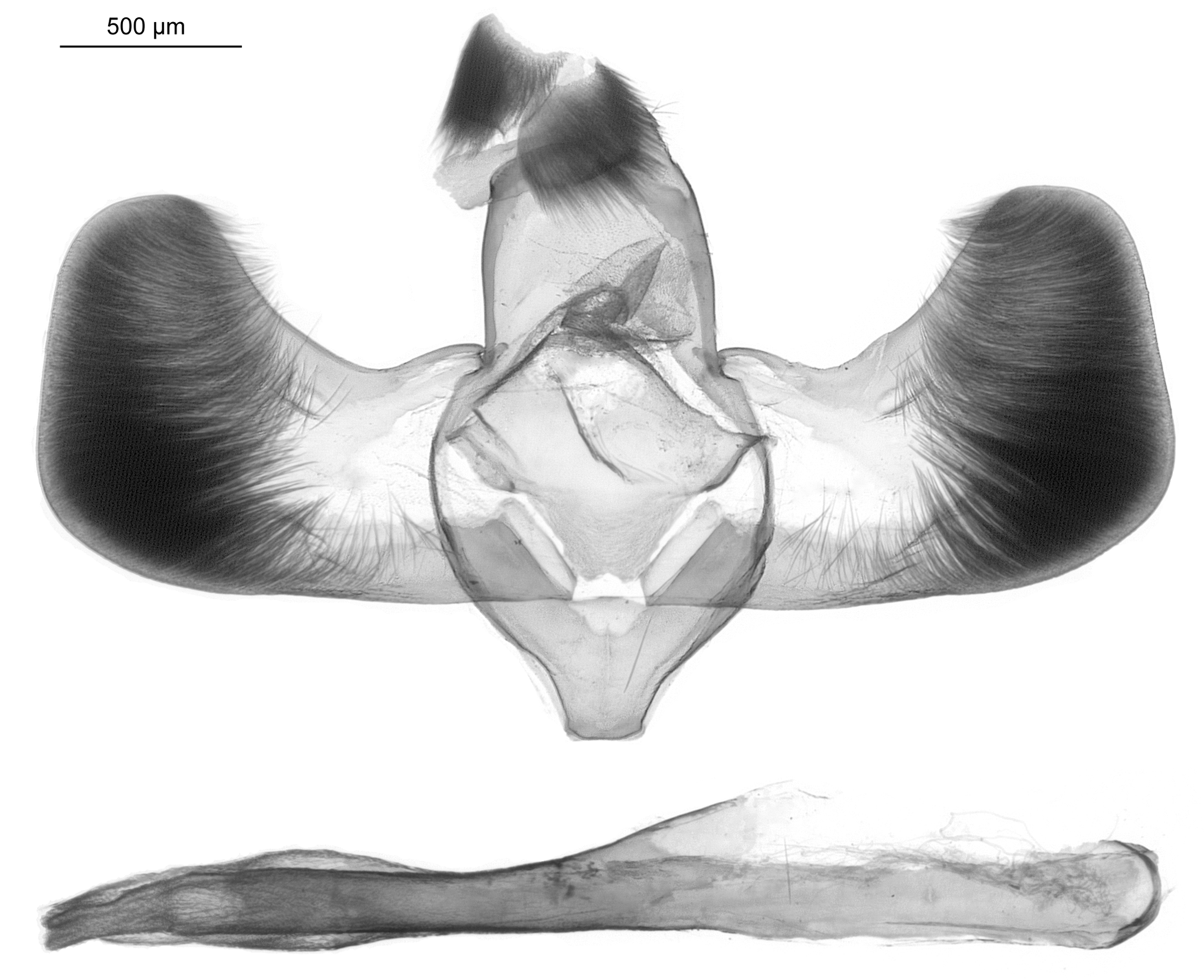
Novel Morphological Details Observed on Live Individuals
Strong blue sheen on wings (both transparent and scaled areas, Supplementary video TC: 01:44–01:49, Figure 3); Legs and abdomen: Bigger and strongly light-reflecting, metallic blue scales on margins of each tergite form distinct bands in sunlight (Supplementary video TC: 01:00–01:05, 02:50–02:58). Characteristic tufts of hair-like scales present on all tibia but are longest on hind legs, with alternate shiny blue and creamy white coloration (Figure 1). Strongly elongated, creamy white hair-like scales of hind tibia extend interiorly over folded wings and abdomen in natural resting position.
H. tawonoides is most similar to Heterosphecia
robinsoni, Heterosphecia indica, and Heterosphecia
melissoides (Figure 5)
but it can be distinguished by the strikingly blue and white coloration of the body.
Unfortunately, coloration of pinned specimens fades easily (compare Figure 5(e) with Figure 5(f) herein) and distinguishing
Heterosphecia species from museum collections without detailed
morphological analyses may cause difficulties. Precise differential diagnosis was
published by Kallies (2003) and
Arita and Gorbunov (1995,
2000). Representatives of the Heterosphecia genus: (a) H.
robinsoni (♂ holotype, BMNH), (b) H. indica (♂ holotype,
BMNH), (c) H. melissoides (♀ holotype, BMNH), (d) H.
hyaloptera (♀ holotype, BMNH), (e) pinned ♂ H.
tawonoides, and (f) H. tawonoides alive in its
habitat.
Behavior
H. tawonoides was observed mud-puddling on a river bank in a lowland dipterocarp rainforest. This behavior is generally associated with male Lepidoptera (Beck, Muhlenberg, & Fiedler, 1999). The four collected specimens were indeed males, and thus it is highly probable that so were the remaining observed individuals. H. tawonoides flies in full sunlight or half-shade between 10:30 and 16:30, in a temperature 29–35℃ and humidity 51%–88%. One individual was observed in July 2013, nine from the end of April to mid-May in 2016, and two in March 2017. H. tawonoides flies individually; only once two individuals were seen in the same area but far from each other. The flight is rapid, although the sesiid is easily spotted in sunlight because of its shiny blue coloration. When puddling, H. tawonoides walks around and flies from one rock to another, evidently searching for the best spot with its proboscis, by licking the rock/moist sand. It often puddled among many different species of bees, including the much bigger Apis dorsata Fabricius (Supplementary video TC: 01:20–01:49). It is worth noting that H. tawonoides was the only Lepidopteran which mud-puddled among bees; other butterflies gathered in a distance from the hymenopterans. Even when startled, the clearwing moth often returned to the same spot in a few seconds, perhaps because it had found a good source of nutrients. It was also seen puddling on a dead leaf washed out by the river, on human skin, and once on a patch of sand smelling of rotten fish, which could mean it is searching not only for salt but also for proteins, a habit previously recorded for Nymphalidae, Hesperiidae, and Lycaenidae (Beck et al., 1999).
When startled, H. tawonoides pushes itself away with its legs rapidly and unfolds its wings while already in the air (Supplementary video TC: 02:16–02:29). However, when taking off calmly, it will unfold its wings when still on the ground and push itself away from the ground (Supplementary video TC: 02:30–02:57). In flight, it keeps its legs folded against its abdomen. Moreover, H. tawonoides makes a buzzing sound which has been recorded (Supplementary video TC: 03:00–03:13). This might be a case of acoustic mimicry of bees.
Distribution and Habitat
One record from Sumatra, the holotype, (exact type location unknown) and several records
from three locations, approximately 20 km and 50 km away from each other, in Peninsular
Malaysia (Figure 6). Found in
Pahang State on pebble and sandy river banks exposed to sunlight in a primary lowland
dipterocarp forest (Figure 6).
The natural habitat of Heterosphecia tawonoides in Peninsular
Malaysia. Arrow indicates the sesiid mud-puddling on rocks.
DNA Analysis
COI Sequence Divergence of Species Closely Related to Heterosphecia tawonoides With Barcode of Life BIN Numbers.

COI = cytochrome c oxidase subunit I gene.
Discussion
H. tawonoides observed in the wild shows evident resemblance to bees. The bee and wasp mimicry of Sesiidae is widely known (Duckworth & Eichlin, 1974). A species of Heterosphecia very similar to H. tawonoides, H. robinsoni (Kallies, 2003) was collected in Sabah, Borneo, in 1973 by K. M. Guichard, who suggested it is a Crocisa (= Thyreus Panzer) bee mimic. The close similarity of the two Heterosphecia species supports the idea that this might also be the case in H. tawonoides. It has been proven that mimics do not have to be perfect imitations of another species to gain protection (Dittrich, Gilbert, Green, McGregor, & Grewcock, 1993), mimicry is often not a one-to-one species relationship (Edmunds, 1999). Imitating widespread features, for example, bright bands on the abdomen, is common in Sesiidae and might be more profitable than being a specialized mimic. In the field, the most eye-catching characteristic of H. tawonoides is its strikingly blue, shiny coloration (Supplementary video TC: 00:21–00:23; 00:59–01:11; 01:44–01:48, 02:35–02:44; Figure 3) similar to that of many species of the genus Thyreus occurring in Malaysia (Lieftinck, 1962), as well as other bees including Amegilla cingulata Fabricius or Xylocopa caerulea Fabricius. It is worth noting that A. cingulata was seen puddling at the exact same location as H. tawonoides and that both of these insects have blue, light-reflecting bands on the abdomen. Thus, H. tawonoides is most probably not a mimic of a single model species, but imitates features found in many bees which are widespread in Southeast Asia (Lieftinck, 1962). Behavioral and acoustic mimicry, as well as the biology of this elusive clearwing moth, would be interesting topics for future studies on this species. Finding the food plant would allow to answer the question how strictly H. tawonoides is associated with its habitat. Can the larvae be found on plants which occur only in Southeast Asian primary rainforests?
Implications for Conservation
Knowledge on the habitat, behavior, and conservation status of Oriental Sesiidae is scarce and photographic documentation exceeding that of pinned specimens in museum collections is extremely uncommon. New species descriptions are often made based only on 100-year-old specimens and are limited to morphological features. Even DNA barcoding is rarely done in such cases. It is also not uncommon that an old holotype is the only known record for a taxon providing no information whatsoever if the species still exists (Hochkirch, 2016). This was also the case for H. tawonoides until its rediscovery described herein. This species, as well as other sesiids studied by the authors (Skowron Volponi & Volponi, 2017; Skowron et al., 2015), seems to be associated with a very specific habitat: banks of clean rivers flowing through Malaysian primary lowland dipterocarp forests. These highly vulnerable ecosystems are vanishing rapidly. Malaysia has one of the most biodiverse ecosystems and the highest deforestation rates in the world. Forest loss reached 14.4% between 2000 and 2012. At the same time, Malaysia’s oil palm plantations grew by approximately 50% (Butler, 2013).
Because of their elusive nature, members of the Sesiidae family are rarely observed in their natural habitat, and thus it is impossible to estimate the size of specific populations. However, over several years of studies in the same area, observing habitats typical for sesiids, the authors observed only 12 individuals of H. tawonoides (or maybe even less as they might have been the same moths returning to a chosen spot). This, as well as the fact that this species has not been seen for 130 years, indicates that it is not common. H. tawonoides is only an example of a species associated with primary rainforests: other sesiids but also charismatic mammals such as tigers, elephants, gibbons, and sun bears, to name just a few, are additional animals which will vanish along with these ecosystems. Given the current rate of habitat loss and species extinction, it is of crucial importance to study and catalog both species new to science and those that have been discovered many years ago and not seen since that time. Without knowledge of biodiversity, its conservation is impossible.
Footnotes
Acknowledgments
I thank Economic Planning Unit and the Department of Wildlife and National Parks, Malaysia, for giving research permission and especially Badmanathan Munisamy for being my research counterpart. I would also like to thank Eng Lim Law for his support and advice every time I visit Malaysia. My cordial thanks to Dr. David Lees (Natural History Museum, London) for allowing me to examine his Sesiidae collection. I am grateful to Dr. Axel Kallies for his opinion on the described specimens. I thank Professor Grzegorz Węgrzyn for his support. Microscopic photographs were taken in the Department of Invertebrate Zoology and Parasitology, University of Gdansk, Poland.
Declaration of Conflicting Interests
The author(s) declared no potential conflicts of interest with respect to the research, authorship, and/or publication of this article.
Funding
The author(s) disclosed receipt of the following financial support for the research, authorship, and/or publication of this article: M. A. Skowron Volponi received funding through a doctoral scholarship registration number 2016/20/T/NZ8/00541 from the National Science Centre in Poland. This study was partially funded by task funds nos. DS 530-L140-D242-17 and DS 530-8645-D691-17.
Supplemental Material
The supplementary material for this article is available online.
References
Supplementary Material
Please find the following supplemental material available below.
For Open Access articles published under a Creative Commons License, all supplemental material carries the same license as the article it is associated with.
For non-Open Access articles published, all supplemental material carries a non-exclusive license, and permission requests for re-use of supplemental material or any part of supplemental material shall be sent directly to the copyright owner as specified in the copyright notice associated with the article.
