



Abstract
Military training areas (MTA) are increasingly recognized as sites that harbor high levels of biodiversity, including large numbers of endangered species, yet their conservation value has not been rigorously assessed. Here, we studied the species richness and composition of medium- and large-sized mammals in Formosa MTA, a Brazilian military area, as a case study to assess the conservation value of military areas. We also made an evaluation of Brazilian MTAs regarding size, distributions, and representation of within ecoregion/biome compared with other protected areas. The medium- and large-sized mammal community composition fits the pattern described for the Cerrado, characterized by species of wide distributions, but locally rare. The Formosa MTA supports a relatively higher richness (n = 29) than protected areas in nearby regions and is a refuge for eight endangered species. Our study identified 52 MTAs covering a total area of 3 million ha. Our findings highlight the relevance of Formosa MTA for the conservation of regional mammalian fauna and indicate the potential of other military areas in the context of biological conservation.
Loss, degradation, and fragmentation of natural habitats are the main causes of species extinctions, potentially contributing to a decline in ecosystem function and services (Brennan & Kuvlesky, 2005; Gibbons et al., 2000). Protecting endangered species and ecosystems in situ, that is, protecting natural areas, still is the best cost–benefit approach for protecting biodiversity (Butchart et al., 2010; Geldmann et al., 2013). Thus, global efforts to avoid biodiversity loss rely heavily on the establishment of protected areas, although the simple act of creating and keeping a protected area does not guarantee that the fauna and flora, as well as the ecological processes, are preserved in the long term (Noss, 1993). As loss of natural habitat continues, protected areas become insular and interspersed within matrices of human land uses (Woodroffe & Ginsberg, 1998). Moreover, many of these protected areas are too small to support viable populations of large species over the long term, and local populations in small, isolated patches are more likely to go extinct (Wikramanayake et al., 2004). Effective conservation of biodiversity must therefore integrate the use and protection through a landscape mosaic, identifying where the human use of the landscape can enhance the ecological integrity of the landscape as a whole (Sanderson, Redford, Vedder, Coppolillo, & Ward, 2002). In this context, military training areas (MTAs) may represent important elements for biodiversity conservation, due to their large size, the representativeness of the original ecosystem that they harbor, and their restricted access to the public (Stein, Scott, & Benton, 2008). Many MTAs are found in some of the most biologically rich countries (Zentelis & Lindenmayer, 2015), playing an important role in protecting biodiversity and a significant number of endangered species (Cizek et al., 2013).
The Cerrado is the third richest Brazilian ecoregion with 253 mammal species, after the Amazon rainforest and the Atlantic forest (Paglia et al., 2012, updated with Gutiérrez & Marinho-Filho, 2017). The latest estimates indicate that only 47% of its original savanna-like vegetation cover remains (Beuchle et al., 2015) due to the intense transformation of natural vegetation to agricultural areas, with approximately 80 million ha being converted into pastures and agriculture, mostly in the last 50 years (Rocha, Ferreira, Ferreira, & Ferreira, 2011; Sano, Rosa, Brito, & Ferreira, 2010). On a regional scale, the main threats to the biodiversity are the adoption of a development model based on intensive and mechanized monoculture, with crops such as soybean, corn, and cotton replacing the natural landscapes, as well as the introduction of exotic grass species for intensive cattle ranching (Klink & Machado, 2005).
Brazil safeguards a large and complex network of protected areas that includes strictly protected and sustainable-use conservation reserves (International Union for Conservation of Nature [IUCN] Categories I–VI; Brazil, 2000) as well as Indian Territories and military areas. Nevertheless, integral protection conservation units cover no more than 3% of the total Cerrado area (Brazil 2016a). Most protected areas (n = 68; total area of 107,965 km2) are environmental protection areas (IUCN Category V; Brazil 2016a) that regulate land use to protect natural resources and guarantee environmental quality for local communities while still allowing human use of the environment through management plans and zoning. However, biodiversity conservation increasingly depends on the identification of natural areas of occurrence of endangered species as well as of areas that still contain representative sets of species and natural communities to be preserved or managed at the landscape scale.
MTAs occur in all major ecosystems and are likely to be playing an important role in biodiversity conservation. This aspect, if confirmed, might be extending the protection already provided by the global protected area network (Aycrigg, Belote, Dietz, Aplet, & Fischer, 2015). However, the current location, extent, and environmental value of MTAs are poorly understood (Jenni, Peterson, Cubbage, & Jameson, 2012). Herein, we studied the species richness and composition of medium- and large-sized mammals in a Brazilian MTA that has been considered one of the priority areas for biodiversity conservation within the Cerrado biome (Brazil, 2016b). This effort represents a case study to assess the potential conservation value of military areas. We also took the opportunity to present data on the Brazilian MTAs regarding their size and distribution.
Method
Study Area
The study was carried out in the Formosa MTA, which is located in the municipality of Formosa, Goiás state, Brazil (Figure 1), between the 15°30′S and 16°03′S parallels and the 47°23′W and 47°05′W meridians, and which has an area of 114,985 ha (Figure 1). The Formosa MTA is covered by a well-preserved natural mosaic of Cerrado vegetation that includes open grasslands, shrubby grasslands with scattered trees, open woodland savannas, gallery forests, and wet meadows. The climate is tropical (Köppen Aw) with two well-defined seasons, one dry winter (May to September), and a rainy summer (October to April; Cardoso, Marcuzzo, & Barros, 2014). Access by the public is restricted. The Formosa MTA has two impact areas where rocket-launching exercises are performed (Figure 1). From the border, at a range of 2 km, the Brazilian Army established agrarian contracts with neighboring landowners and rural settlements in the form of leasing, permitting only livestock.
Map of the study area, and camera trap locations in the Formosa Military Training Area, Goiás state, Brazil.
Data Collection
To evaluate the potential conservation value of MTAs, during July 2014, we distributed 50 capture stations consisting of one camera trap activated by heat and motion (Bushnell Trophy Cam HD) in the Formosa MTA, excluding the impact areas where access is prohibited. From August 2014 to May 2015, we conducted a camera trap survey of medium- and large-sized mammals (sensu Chiarello 2000; i.e., species with adult biomass > 1 kg) using a systematic grid (Ramesh et al., 2014), covering all vegetation types present in the study area. The average minimum distance between traps was 2.0 km. The study site covered an area of 15,000 ha located in the southern portion of the Formosa MTA. Cameras were placed along animal trails or close to tracks, burrows, feces, and so on, 50 cm above the ground and left to operate for 24 hr everyday, with a minimum interval of 30 s between shots. Vegetation was removed within the view range of cameras to avoid blank shots. We checked stations at least once during each 30-day period to change batteries and verify whether cameras were working properly. On each visit, we replaced the camera memory card and also downloaded photos.
Data Analysis
Sampling effort was calculated multiplying the number of camera traps by sampling days (1 day = 24 hr; Tobler, Carrillo-Percastegui, Pitman, Mares, & Powell, 2008). We calculated relative abundance index (RAI) for each species (Carbone et al., 2001). This index is calculated using the number of independent pictures of the focal species divided by the sampling effort. We used an interval of 24 hr between pictures of the same species to guarantee independence between them (Tobler et al., 2008). Sampling effort was evaluated using a species accumulation curve with 1,000 simulations (Colwell, 2013). The curve was based on sampling events, considering each day as a sample. Expected richness was obtained through the nonparametric estimator Jackknife 2. This estimator is suitable for the analysis of communities with low evenness among species (Brose, Martinez, & Williams, 2003). All the analyses were carried out using EstimateS 9.1 (Colwell, 2013). The global and national threat status for each species was accessed from the IUCN Red List (2015) and Brazilian Threatened Fauna Red List (Brazil, 2014), respectively.
Military Training Areas in Brazil
We searched for geographic data from official government websites (Brazil 2015, 2016a, 2016c) to obtain information on the current location, extension, and size of terrestrial MTAs. Thus, several thematic layers were stored as a geodatabase, and we performed cross analysis procedures with the identified Brazilian MTAs using ARCGIS 10.1.
Results
Community Patterns in the Formosa MTA
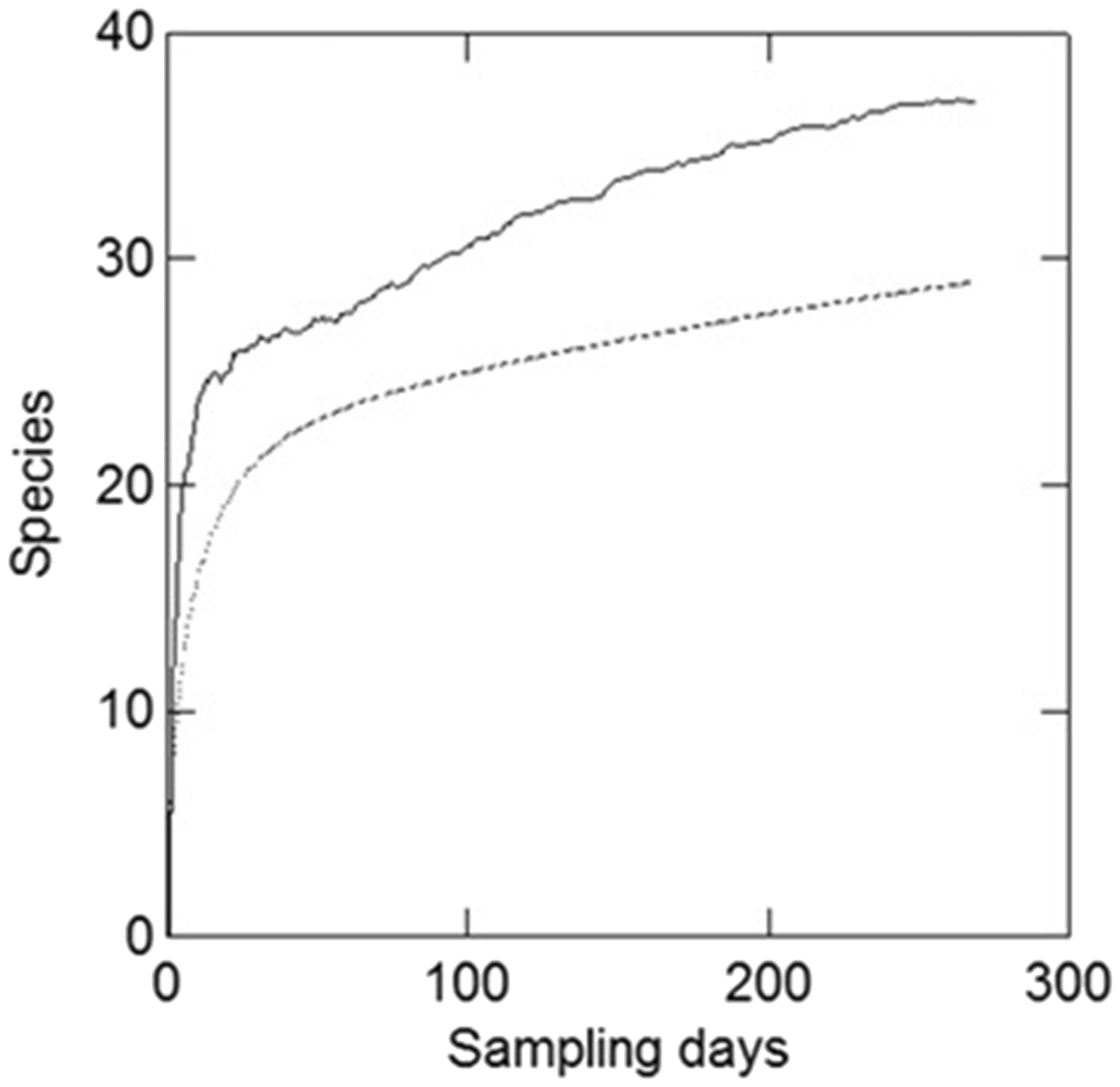
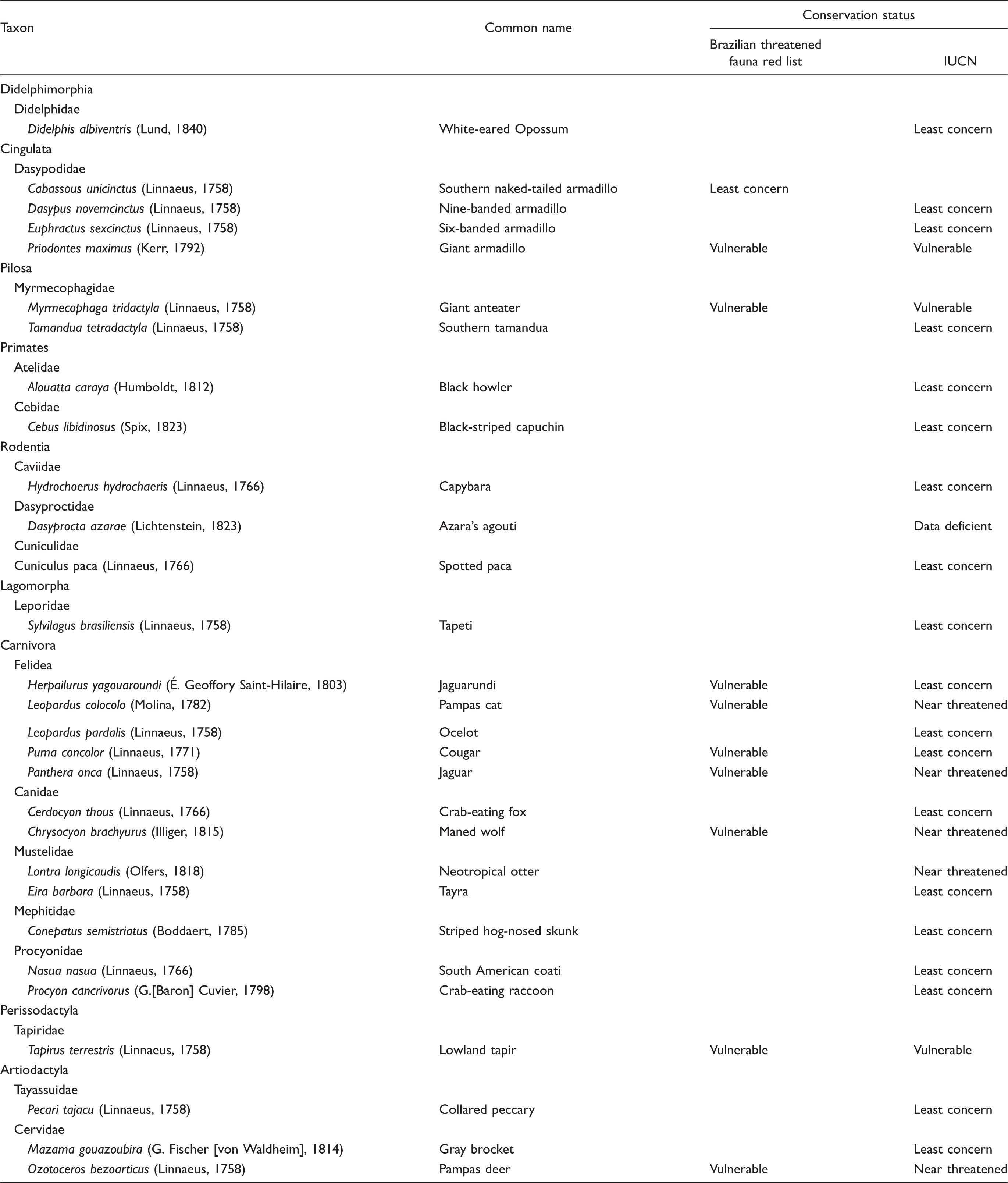
A total of 29 species of medium- to large-sized mammals (nine orders and 17 families) were recorded in the Formosa MTA during our surveys (Table 1). The sampling effort with camera traps was equivalent to 426,250 trap days, which yielded 1,584 independent records. The order Carnivora was the most representative, with 12 species of five families (Table 1). The highest RAIs were of giant anteater (Myrmecophaga tridactyla; 25%), Pampas deer (Ozotoceros bezoarticus; 18%), tapir (Tapirus terrestris; 11%), and maned wolf (Chrysocyon brachyurus; 9%; Figure 2). The smallest RAIs were obtained for Neotropical otter (Lontra longicaudis), crab-eating raccoon (Procyon cancrivorus), six-banded armadillo (Euphractus sexcintus), jaguarundi (Herpailurus yagouaroundi), black howler (Alouatta caraya), and black-striped capuchin (Cebus libidinosus; Figure 2). Eight species are considered as threatened with extinction by the Brazilian official list of endangered species (Brazil, 2014; Table 1). Four domestic species were recorded in study area: Canis familiaris, Sus scrofa, Bos sp., and Equus caballus. The accumulation curve did not reach an asymptote, and the expected richness was 37 species (Figure 3).
Relative frequency (%) and number of records by species (over the bar) of medium-sized and large mammals in the military training area, Formosa, Goiás state, Brazil, from August 2014 to May 2015. Species accumulation curve (dashed line) and expected richness (solid line) for medium-sized and large mammals at a military training area, located in the municipality of Formosa, Goiás state, Brazil. Mammals Recorded at the Formosa Military Training Area (Formosa, Goiás State, Brazil) and National and Worldwide (IUCN Red List) Threatened Status.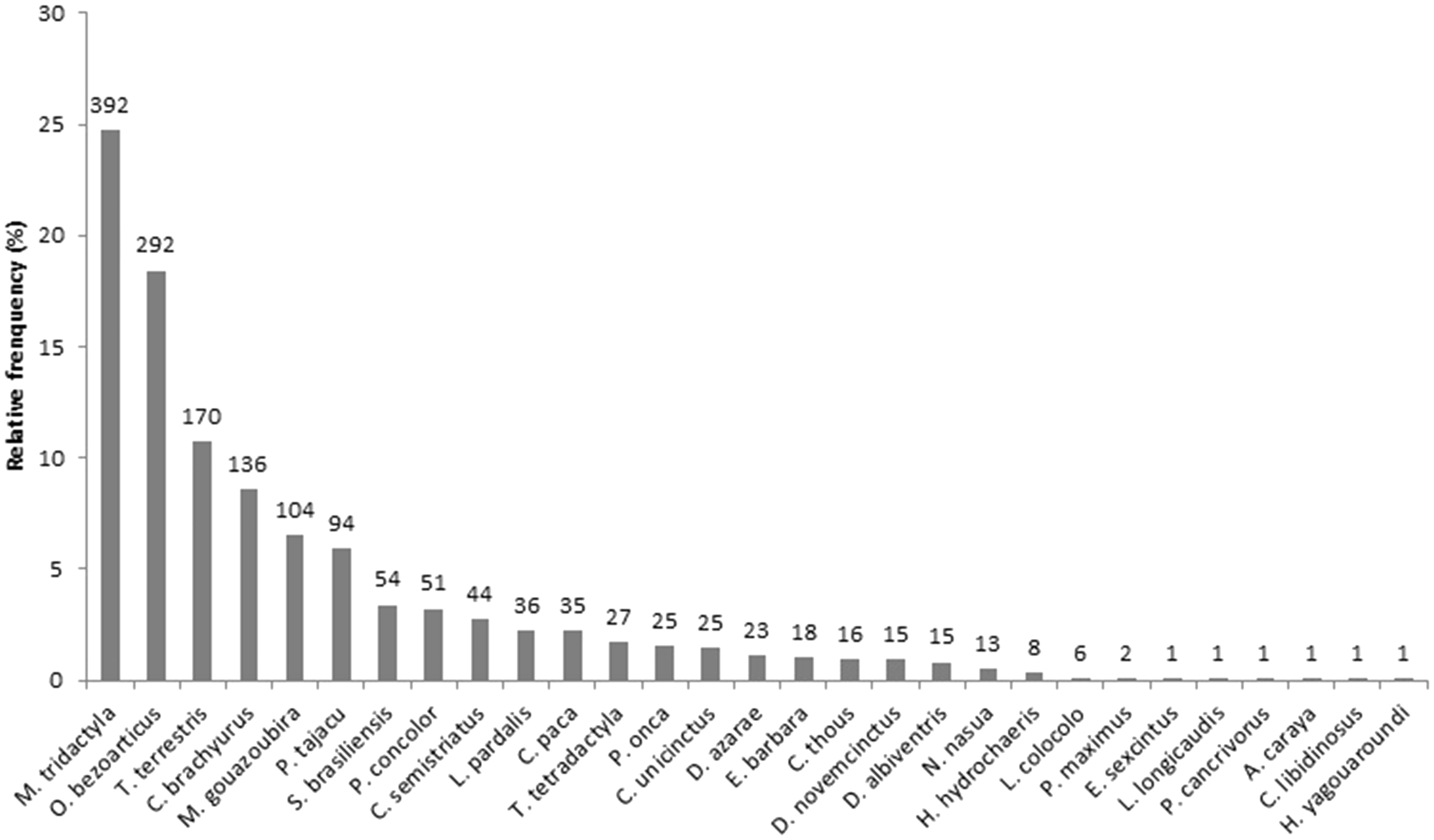
Military Training Areas in Brazil
A Summary of the Number (N) and Area (ha) of the Brazilian Protected Area Categories Located in Each Biogeographical Subregion (Brazil, 2015, 2016a, 2016c).


Brazilian federal network of protected areas including strictly protected and sustainable-use conservation reserves, Indian Territory, and military training areas (MTAs). Points were placed in MTAs locations to increase visibility of smaller areas. In detail, the location of the Formosa MTA, at Goiás state, and three other protected core areas in the Federal District, Brazil (Source. Brazil 2015, 2016a, 2016c).
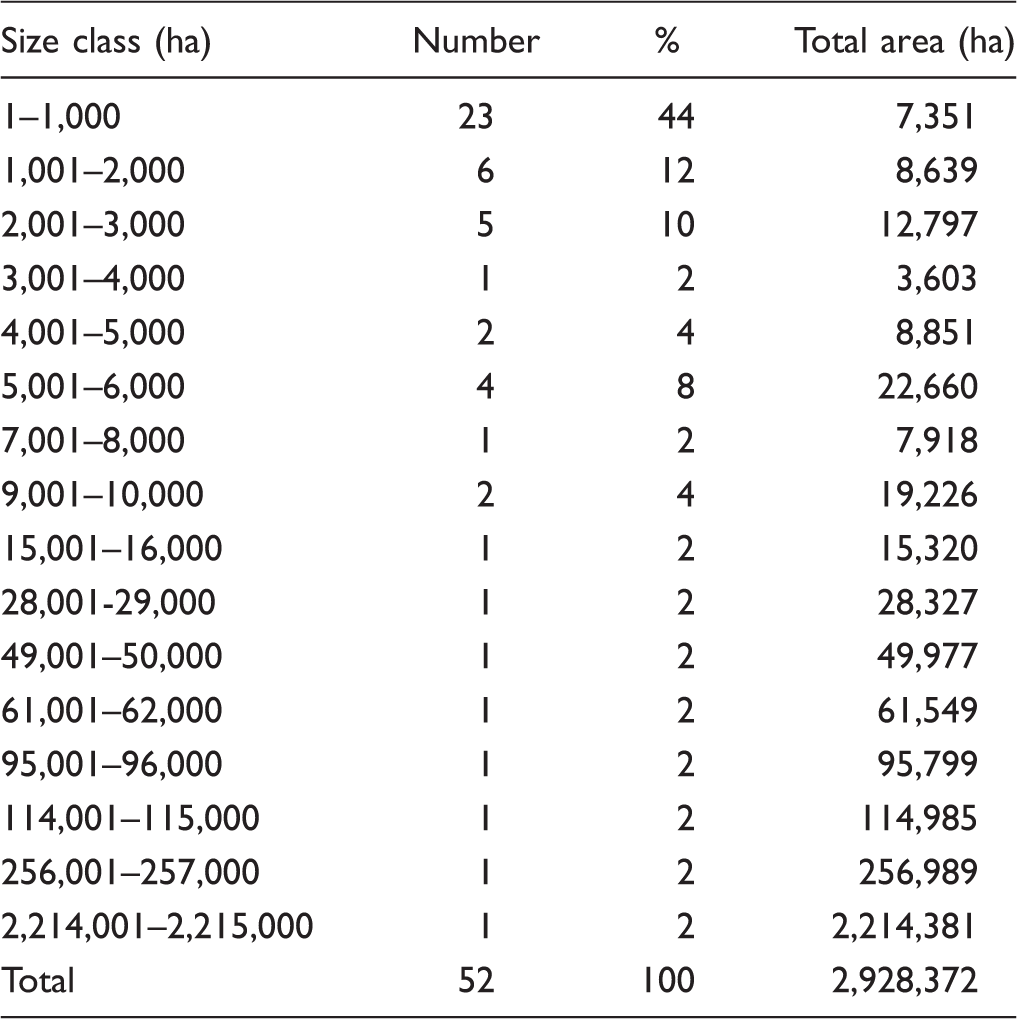
Distribution of Military Training Areas by Sizes Class (ha) and the Total Area (ha) of the Class.
Discussion
Our study corroborates the idea that MTAs may have a high conservation value based on the presence of a rich biodiversity and the occurrence of endangered species (Delaney et al., 2011). The species richness (29 spp.) found in the Formosa MTA represents approximately 62% of the medium- and large-sized species recorded in all the Cerrado range (Marinho-Filho et al., 2002; Paglia et al., 2012) and is higher than the richness found in the three other protected areas located in the Federal District combined (N = 24; Juarez, 2008). Other studies carried out in the Cerrado reported species richness between 15 and 29 species (Alves, 2014; Bocchiglieri, Mendonça, & Henriques, 2010; Bruna et al., 2010; Rocha & Dalponte, 2006; Rodrigues et al., 2002; Lessa, Alves, Lena, & Barreto, 2012; Moreira et al., 2008; Ribeiro & Melo, 2013). However, the species accumulation curve does not show an asymptotic tendency, indicating that the species richness in the Formosa MTA should be even higher. Some species, such as hoary fox (Lycalopex vetulus), are known to occur in the region but are rare and can be difficult to detect. Additional fieldwork with combination of different sampling methods may increase the number of mammal species.
The community structure of the medium- and large-sized mammals at the Formosa MTA resembles the natural pattern described for the Cerrado elsewhere, which is characterized by species of wide distribution ranges, inhabiting a great variety of environments, but that tend to be locally rare (Marinho-Filho, Rodrigues, & Juarez, 2002). Flagship species for Cerrado conservation, such as the M. tridactyla, O. bezoarticus, T. terrestris, and C. brachyurus, are relatively abundant in the study area probably due to the size and conservation status of Formosa MTA and the its habitat heterogeneity. These species are threatened with extinction due to habitat loss and fragmentation caused mainly by agricultural expansion, hunting pressure, and the long-term negative effects of isolation and small population size (Brazil, 2014). However, RAI has clear limitations to assess animal abundance, as already largely discussed in the current literature (Rovero, Martin, Rosa, Ahumada, & Spitale, 2014; Treves, Mwina, Plumptre, & Isoke, 2010), since it does not consider detection probability. Thus, these patterns are probably an underestimation of the real occupancy probabilities, so that species occurrence rates can be even higher in the Formosa MTA. Species considered rare or absent in other areas of Cerrado, such as the pampas cat (Leopardus colocolo), the tayra (Eira barbara), and the ocelot (Leopardus pardalis; Bocchiglieri et al., 2010; Bruna et al., 2010; Lessa et al., 2012; Ribeiro & Melo, 2013) were recorded in the Formosa MTA. In spite of the low probability of detection of tree dwelling species by ground-level camera-trapping methods, we recorded two primate species restricted to forest habitats, A. caraya and C. libidinosus.
The presence of top predators at the study area, such as the jaguar (Panthera onca) and cougar (Puma concolor), is remarkable. They are strong indicators of environmental quality (Swank & Teer, 1989), but their populations may be facing a negative trend. Even considering that 32% of the Cerrado can still harbor P. onca populations, they are distributed in small fragmented subpopulations suffering continued decline (Morato, Beisiegel, Ramalho, Campos, & Boulhosa, 2013). A population of 323 adult jaguars is estimated to live throughout the biome (Moraes, 2012).
The giant armadillo (Priodontes maximus) and two peccary species are also indicators of pristine environments (Desbiez et al., 2012). The giant armadillo is described as an ecosystem engineer since its excavations change the biotic and abiotic characteristics of its environment, providing shelter for predators and thermal shelter for numerous species (Desbiez & Kluyber, 2013). It is considered extinct in most natural areas of Southern Brazil (Marinho-Filho & Medri, 2008). Other species that had their populations reduced or were locally extinct in other Cerrado areas due to intensive poaching—such as the Azara's agouti (Dasyprocta azarae) and the collared peccary (Pecari tajacu; Azevedo & Conforti, 2008; Chiarello, 1999)—seem to be abundant in the Formosa MTA. These are all indications of the importance of Formosa MTA for the conservation of the Cerrado’s large mammals.
It may seem paradoxical that an area subjected to military use could provide habitat for a disproportionately large numbers of sensitive and endangered species that require large and undisturbed areas. However, military training is often restricted in space and time. During our research, one large magnitude training with the participation of 2,000 marines and launching rockets exercise occurred in October 2014 and lasted a week. The use of live ammunitions and rocket launching exercises are restricted to impacted areas that are surrounded by large buffer or safety zones. Tanks and other heavy vehicles tend to be used on well-defined tracks or dirty roads. The net result is that only a small fraction of the area is impacted and tends to diminish with distance from established targets (Houston & Doe, 2005). Thus, MTAs provide vast portions of habitat for species that are disturbance sensitive (Gazenbeek, 2005).
Lindenmayer et al. (2016) quantified the effects of military training on vertebrates at Beecroft Weapons Range in south-eastern Australia. They found no differences in species richness when comparing it within and outside the impact area for mammals and reptiles. However, bird species richness was seemingly reduced within the impact area. The authors also report negative responses by several groups of bird species to burned areas. Mammal species richness and several individual species of mammals were most likely to be recorded on sites characterized by a relatively long time since wildfires (Lindenmayer et al., 2016). In North America, the endangered Sonoran pronghorn antelope (Antilocapra americana sonoriensis) exhibits a significant preference for high explosive target areas, presumably in response to increased productivity of grasses and forbs in those areas (Krausman et al., 2005). Similarly, the occupancy probability for O. bezoarticus may have been positively influenced by the recent burning of open grassland areas (Arimoro, 2015) in the Formosa MTA. By promoting rapid vegetation regrowth and inducing flowering, fire provides an abundant supply of the preferred food resource to O. bezoarticus during dry seasons (Rodrigues et al., 2002). Additional research is needed to address potential impacts of military activity on animal populations (Lawrence, Zolderdo, Struthers, & Cooke, 2015), but it seems to be related to the amount of available natural cover, topography, and type and intensity of military activity (Delaney et al., 2011; Gese, Rongstad, & Mytton, 1989; Quist, Fay, Guy, Knapp, & Rubenstein, 2003; Smith, Turner, & Rusch, 2002).
The greatest threat to wildlife seems to come from outside the MTA boundaries. The confirmed co-occurrence of domesticated pigs may represent a significant threat to the survival of peccaries at Formosa MTA, due to the risk of transmission of infectious diseases, such as brucellosis and leptospirosis (Paes et al., 2009), and to a potential overlap of food niches with native peccaries (Galetti et al., 2015). There is evidence that competition among peccaries and feral pigs in the Pantanal wetland is not an issue of concern (Oliveira-Santos, Dorazio, Tomas, Mourão, & Fernandez, 2011). However, climate conditions found in the Cerrado may impose different constraints to these species, associated to resource limitation during the dry season.
There are also indications of hunting pressure on mammal species at Formosa MTA. Our camera traps recorded domestic dogs accompanying people on horseback in both daytime and at night. Dogs also can exert negative edge effects in a fragment of an original landscape composed by a mosaic of different habitat types in a matrix of highly modified rural and urban landscape (Lacerda, Tomas, & Marinho-Filho, 2009). The presence of large, wide-ranging species in this area emphasize the need for regional planning to provide dispersal opportunities, linking areas of original landscape mosaics, such as Formosa MTA, to other protected areas through the matrix of highly modified landscapes.
In Brazil, nearly 2% (3 million ha) of public forests are categorized as MTAs (Brazil, 2015). These lands cover a wide range of natural habitats and ecosystems in the main Brazilian biomes. Most of these areas (91%) are covered by Amazonian forests, the richest terrestrial ecosystem worldwide, which harbors approximately 40% of the remaining rainforests in the world (Instituto Nacional de Pesquisas Espaciais, 2004). A smaller fraction (6%) of Brazilian MTAs lies on the Cerrado biome, one of the world's hotspots of biodiversity (Myers, Mittermeier, Mittermeier, Fonseca, & Kent, 2000).
Implications for Conservation
Zentelis and Lindenmayer (2015) estimated that MTAs cover at least 1% of the earth's terrestrial surface. In Brazil, MTAs cover an area of approximately 3 million ha. The existence of the MTAs has often acted as a brake on the intensification of land use (Gazenbeek, 2005). For instance, the Marechal Newton Cavalcanti MTA, state of Pernambuco, Brazil, established in 1944 through the expropriation of sugarcane plantations, was surrounded by fragments of Atlantic forest remnants since the Brazil wood cycle in XVI century. Today, the Marechal Newton Cavalcanti MTA is a mosaic of ombrophilous and semideciduous forests at various stages of natural regeneration and has been so for over 60 years (Guimarães, Braga & Oliveira, 2012), preserving the largest block of continuous Atlantic Forest located to the north of the São Francisco River (Lucena, 2009). This area is a refuge to four endemic bird species of the so-called Pernambuco Endemism Center as well as two other bird species endemic to the Atlantic Forest (Pereira, Araújo, & Azevedo-Júnior, 2016). Furthermore, the area harbors 18 angiosperm species endemic to the Brazilian Atlantic Forest (Stehmann et al., 2009) and the Connarus blanchetii tree, endemic to Pernambuco Endemism Center (Siqueira-Filho & Tabarelli, 2006). Moreover, military areas may also have inhibitory effect on agricultural frontier expansion in the Amazon Forest. The Brigadeiro Velloso MTA, at Serra do Cachimbo, a large tropical forest reserve seemingly acts as a major barrier against deforestation at the border of Mato Grosso and Pará states (Soares-Filho et al., 2010).
MTAs may have an important complementarity role to the system of formal protected areas. Forty-four percent of the Brazilian MTAs are smaller than 1,000 ha, but small areas should not be overlooked. In Atlantic Forest, small fragments constitute a large fraction of the forest remnants (83.4% with < 50 ha) and are essential in enhancing connectivity to the larger ones (Ribeiro, Metzger, Martensen, Ponzoni, & Hirota, 2009). Linking community forests, Indian Territory, and strictly protected areas is recognized as one of the most effective and recommended strategies for conserving the rainforest (Nepstad et al., 2006). Although there are potential conflicts between the military use and protection of nature (Jenni et al., 2012), the balance of these forces has been sought in a growing number of military areas trying to avoid the negative effects of human intervention in ecosystems, mainly through compliance with environmental laws (e.g., Brazil, 2010). Similar configurations may also occur in a number of countries, biomes, and ecosystems, which may function as an important and positive vector for the conservation of a great diversity of large wide-ranging mammals as well as of the ecological processes they perform in the ecosystems in which they live.
Footnotes
Acknowledgments
We are grateful to the Formosa Military Training Area for logistic support and to Rogério E. S. Uagoda (Lab of Physical Geography/UNB) for the coordination of the technical cooperation agreement between the University of Brasilia and the Brazilian Army. We are grateful to the Programa de Pós-graduação em Geociências Aplicadas, UNB for the financial and logistic support for fieldwork, to the Coordenação de Aperfeiçoamento de Pessoal de Nível Superior (CAPES) for the fellowships to O. A. S. Arimoro, and to the Conselho Nacional de Desenvolvimento Científico e Tecnológico (CNPq; Proc 506359/2013-1) for the support of a postdoctoral fellowship to S. Astete, and J. Marinho-Filho is grateful for financial support from CNPq (Proc. 309182/2013-1) and FAPDF/CNPq (PRONEX193000563-2009)
Declaration of Conflicting Interest
The author(s) declared no potential conflicts of interest with respect to the research, authorship, and/or publication of this article.
Funding
The author (s) disclosed the receipt of the following financial support for research, authorship and/or publication of this article: We are grateful to the Programa de Pós-graduação em Geociências Aplicadas, UNB for the financial and logistic support for fieldwork, to the Coordenação de Aperfeiçoamento de Pessoal de Nível Superior (CAPES) for the fellowships to O. A. S. Arimoro, and to the Conselho Nacional de Desenvolvimento Científico e Tecnológico (CNPq; Proc 506359/2013-1) for the support of a postdoctoral fellowship to S. Astete, and J. Marinho-Filho is grateful for financial support from CNPq (Proc. 309182/2013-1) and FAPDF/CNPq (PRONEX193000563-2009).