




Abstract
In recent tourism and hospitality literature, there has been a surge in research endeavors that center on the construct of authentic leadership. Given this increasing interest, our study reviews the empirical studies on authentic leadership in tourism and hospitality to provide a comprehensive framework and research agenda of this leadership style in these contexts. Through a systematic selection process using predefined inclusion and exclusion criteria, we obtained a sample of 37 empirical studies. Following the content analysis approach, we analyzed and synthesized the research results from these studies. Our review makes several critical contributions to the literature. First, our study casts light upon the divergent conceptualizations and approaches used for defining and measuring authentic leadership in the tourism and hospitality literature, thereby enhancing the depth of understanding of this multifaceted construct. Second, we present an overview of the theoretical frameworks and research designs employed in this domain. Third, we present a nomological network of authentic leadership in tourism and hospitality, highlighting the outcomes, moderators, and mediators. Based on these findings, directions for further studies are suggested to address the identified gaps in the literature. We also proposed several practical implications for managers and firms in tourism and hospitality industries to help leaders effectively influence their employees through their authentic behavior.
Introduction
In a competitive market environment, high-quality services and customer satisfaction are crucial factors to the success of hospitality firms. However, the distinct features of tourism and hospitality sectors, such as low compensation, demanding workloads, and irregular schedules (Papadopoulos & Ioannou, 2022; Qiu et al., 2019), can present significant challenges for employees to create high-quality services. These challenges often result in elevated turnover and absenteeism rates in these industries (Huertas-Valdivia et al., 2019). Scholars posit that addressing these issues and challenges within tourism and hospitality firms can be effectively achieved through the application of authentic leadership principles (Gardner et al., 2011; Luu, 2020). Authentic leadership has been adopted in corporate philosophies of several hotel chains such as White Swan, Starwood, and Ritz-Carlton (Ling et al., 2017) and widely applied in hospitality and tourism leadership training and development planning around the world due to its potential in these industries (Teng & O-Yang, 2022). Authentic leadership places emphasis on self-awareness, relational transparency, internalized perspective, and moral balanced processing, all of which collectively contribute to the creation of a positive and supportive work environment (T.-Y. Kim et al., 2023; Walumbwa et al., 2008).
While authentic leadership holds significance across all sectors, its importance within tourism and hospitality firms is vital. This is due to the perpetual pressure on these firms to deliver excellent service, necessitating that employees consistently exhibit respect, courtesy, and a genuine commitment to achieve customer satisfaction (Jacques et al., 2015; Ling et al., 2017). Given the high demands of tourism and hospitality customers, employees working in these sectors need to be emotionally and psychologically supported (Ling et al., 2017). Authentic leadership offers a way forward to address these issues as authentic leaders demonstrate a high level of authenticity and are able to promote employees’ credibility, respect, and trust (Qiu et al., 2019). Authentic leaders can also enhance employee’s psychological capacity and promote their authentic behaviors (Luthans & Avolio, 2003), which will result in higher work performance (Malik et al., 2023) and better customer satisfaction (Ausar et al., 2016). Therefore, it is conclusive that authentic leadership particularly fits to tourism and hospitality as it aligns with the trend toward leading with authenticity and high ethical standards to achieve organizational success (Ling et al., 2017).
As research on authentic leadership continues to evolve and a considerable body of empirical investigations explores the various outcomes of authentic leadership in the tourism and hospitality domain (Huertas-Valdivia et al., 2022), a comprehensive systematic review becomes crucial for a more effective synthesis of this expanding research domain and the identification of crucial research avenues. A review specifically focused on authentic leadership within labor- and service-intensive settings, such as tourism and hospitality, holds the potential to unravel service-oriented outcomes of this leadership style (e.g., service innovative behavior and prosocial service behavior) and illuminate service-oriented mechanisms (e.g., service climate and service recovery). Our systematic literature review (SLR) makes significant contribution to authentic leadership research within tourism and hospitality for several reasons. First, through the synthesis of empirical research on authentic leadership in these disciplines, we construct comprehensive models that comprise moderators, mediators, and outcomes associated with this leadership style, deepening our comprehension of the relationships of authentic leadership in tourism and hospitality. Second, building upon our results, we present a research agenda designed to identify future research opportunities in this field. Finally, we provide practical guidance for leaders who aspire to lead with authenticity within their organizations through the application of authentic leadership practices. To accomplish these research aims, we formulated research questions, following the approaches of previous reviews (Bavik, 2020; Hoang et al., 2021), as follows.
In the subsequent section, we delve into the importance of authentic leadership within the tourism and hospitality industries. Following that, we present the methodology adopted for our SLR. We then present our findings to address these research questions. Finally, our SLR offers a research agenda for future studies and proposes practical implications for tourism and hospitality organizations.
The Vital Roles of Authentic Leadership in Tourism and Hospitality
Authentic leadership concept was first proposed by Luthans and Avolio (2003) and later developed by Gardner et al. (2005), Avolio and Gardner (2005), and Walumbwa et al. (2008). Ever since, this leadership approach has attracted increasing scholarly attention as it demonstrates its effectiveness in enhancing business performance and addressing many organizational issues (Ling et al., 2017). Avolio and Gardner (2005) argued that authentic leadership is the “root construct” of other positive leadership approaches, such as transformational leadership, servant leadership, and spiritual leadership. However, authentic leadership has been recognized as a distinct leadership construct for its unique characteristics and thus warrant its study as an independent research stream (Gardner et al., 2011).
Compared to general management contexts, tourism and hospitality contexts are characterized by uncertainties and high pressure, in which authentic leadership has demonstrated to be an effective leadership style for several reasons. First, the job nature in these contexts frequently causes turnover and absenteeism (Ribeiro et al., 2020; Yang, 2010). Authentic leadership has been identified as a solution for this concern as an authentic leader is able to form a harmonious relationship with their followers by encouraging employees’ self-development, which prepares them for a challenging career in tourism and hospitality and motivate them to continue working in these sectors (Chang et al., 2020). Second, authentic leaders possess high authenticity and understand themselves; therefore, they can create a genuine environment and a fair and transparent work climate (Appels, 2023). In tourism and hospitality firms, where employees work under pressure from customer’s changing demands and have to create customer loyalty, these characteristics of authentic leaders will contribute to gain trust from employees and encourage their work engagement (Du et al., 2021). Third, the high workload and unstable working conditions in tourism and hospitality sectors may affect employees’ wellbeing (Kara et al., 2013). As authentic leaders care about the interests of their followers (Walumbwa et al., 2008), this helps reduce the pressure and emotional exhaustion and thus increase employees’ wellbeing. Fourth, in a labor- and service-intensive settings, such as tourism and hospitality, authentic leadership is considered to be of great relevance as it helps foster some service-oriented outcomes and mechanisms, such as service innovative behavior, prosocial service behavior, service climate, and service recovery (Qiu et al., 2019; Teng & O-Yang, 2022).
Empirical evidence from prior research revealed that authentic leadership has stronger effects on several employee outcomes in tourism and hospitality industries than other leadership styles, such as transformational leadership and ethical leadership (Schuckert et al., 2018). These effects were the case due to some particular challenges of tourism and hospitality sectors (Burke et al., 2013), and the leaders in tourism and hospitality organizations thus play a crucial role in promoting employees’ positive psychological capacities and creating a positive climate to enhance employee’s positive self-development. As authentic leaders possess high level of integrity, openness and transparency in interactions with employees, and attempt to create good conditions for employees to achieve their goals, these characteristics enhance employees’ positive attitudes toward their jobs by developing supportive, reasonable, and transparent connections with them (Ribeiro et al., 2020). Empirical findings from the study by Schuckert et al. (2018) indicated that authentic leadership demonstrated a greater impact on employees’ psychological capital and service innovative behavior than transformational leadership. This can be explained by the fact that authentic leaders may help employees perform more effectively in their tasks not only for the organization but also for their own interests, while transformational leaders focus more on achieving higher goals for organizations (Siangchokyoo et al., 2020).
Furthermore, authentic leadership proves to be distinct from related leadership styles, such as ethical leadership and servant leadership. While both authentic and servant leaders exhibit persuasive communication and role modeling, servant leaders prioritize the welfare of all stakeholders within an organization, and authentic leaders concentrate their efforts on cultivating a transparent work environment and establishing trust among their followers through the embodiment of authenticity (Lemoine et al., 2019). Authentic leadership prioritizes self-awareness and authenticity, whereas ethical leadership places a greater emphasis on moral management (J. Lee et al., 2019). Notably, authentic leadership engenders a unique set of outcomes within the tourism and hospitality context, differentiating it from ethical leadership. For instance, authentic leadership mainly centers on reducing employee stress, burnout, and cynicism (Rahimnia & Sharifirad, 2015), while concurrently fostering service innovative behavior and employee loyalty (S.-M. Lee et al., 2016). Conversely, ethical leadership predominantly centers on the enhancement of employee ethical behavior and ethical practices (Brown & Treviño, 2006).
In summary, authentic leadership has emerged as an effective leadership style, particularly well-suited for the unique demands of the tourism and hospitality sectors. It has garnered a growing body of scholarly interest and recognition for its effectiveness. In the subsequent section, we present our approach to conducting an SLR focused on authentic leadership within the specific contexts of tourism and hospitality.
Method
Our SLR focuses on the studies that empirically investigated the authentic leadership concept in tourism and hospitality settings. In the pursuit of this goal, our SLR follows the framework for conducting SLRs as established by Thomé et al. (2016). This methodical approach includes the following steps: identifying the problems, searching and selecting relevant studies from the literature, evaluating the quality of studies, and synthesizing and interpreting the findings.
Search Methods and Sample
To identify high-quality studies published in peer-reviewed journals, we conducted systematic searches in Scopus and Web of Science databases, adhering to established practices in the field (Bavik, 2020; Hoang et al., 2021). Our search process was characterized by predefined inclusion and exclusion criteria, ensuring that selected studies met the following conditions: (a) publication in a refereed journal, (b) utilization of the English language, and (c) incorporation of specific terms in the title, abstract, or keywords, including (“authentic leader” OR “authentic leadership”) AND (“hospitality” OR “hotel” OR “tourism” OR “travel” OR “accommodation” OR “airlines” OR “event” OR “restaurant” OR “catering” OR “recreation” OR “casino” OR “cruise”) (Hoang et al., 2021). The cutoff date for the search process was set until the end of August 2023. The initial search process from both databases yielded 248 articles containing the identified keywords. We then examined these articles to remove duplicates and obtain 162 articles with chosen keywords.
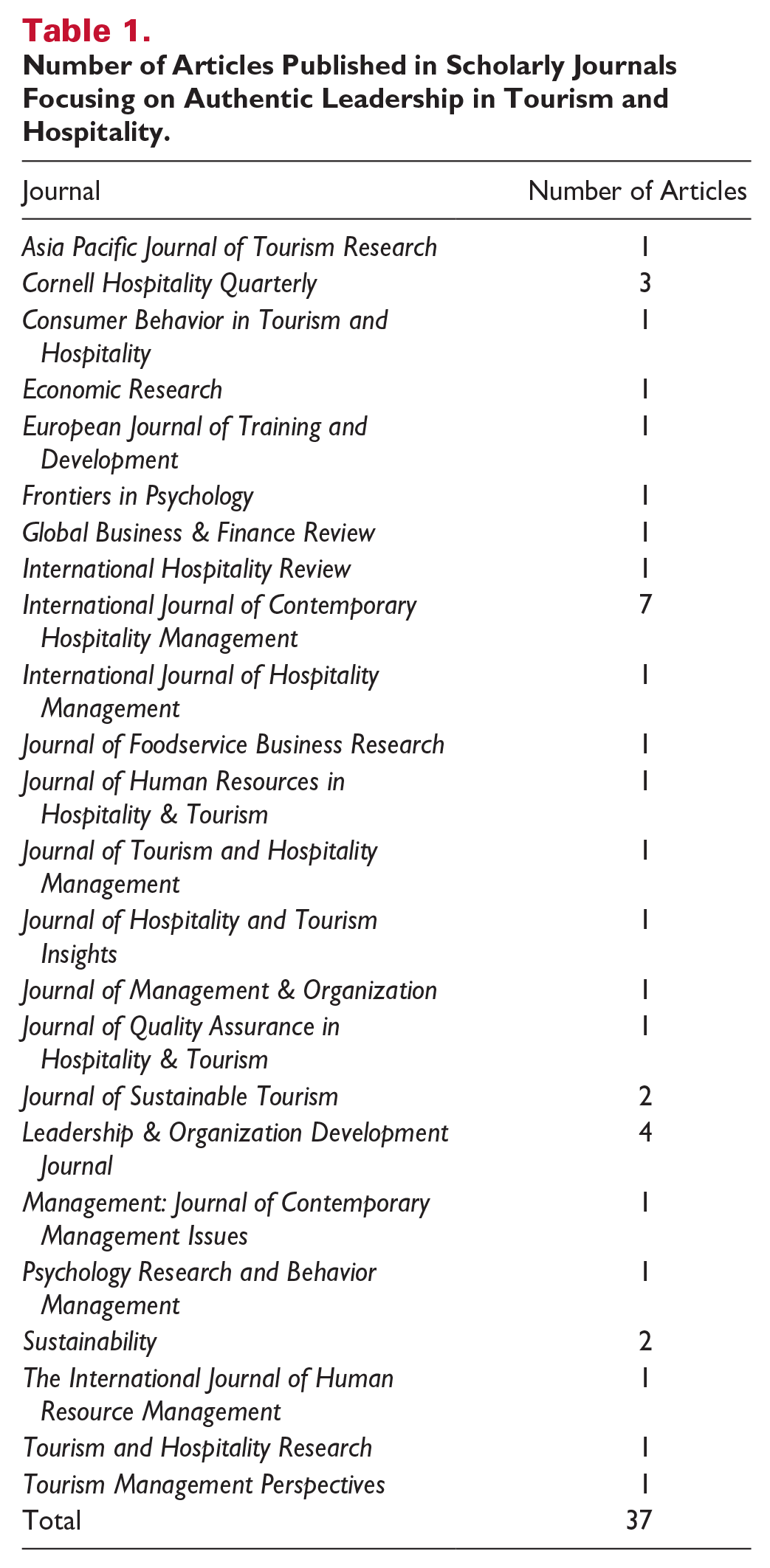
In the second step, we conducted a thorough review of the main texts to assess the eligibility of these studies. We filtered the articles based on three criteria, such that the article has to (a) be an empirical research; (b) investigate authentic leadership as the main topic; and (c) focus on the effects of authentic leadership in tourism and hospitality contexts. The studies that lack at least one of these criteria were removed from the sample. To ensure that these criteria are met, all articles were screened to identify those that were not empirical studies (i.e., scale development or conceptual papers). A total of 89 articles were retained after this round and were used for further analysis. We then conducted a second screening to exclude studies that did not investigate authentic leadership as the main topic or did not use a data sample from the tourism and hospitality industries. The evaluation of full-text articles resulted in a final sample of 37 empirical studies (Figure 1). The studies in our sample were published in 24 journals between 2015 and 2023 (Table 1). Among these 37 studies, 27 only used a quantitative method, 2 only used qualitative method, and 1 used a mixed method. A flowchart of the search-and-selection process is exhibited in Figure 1.
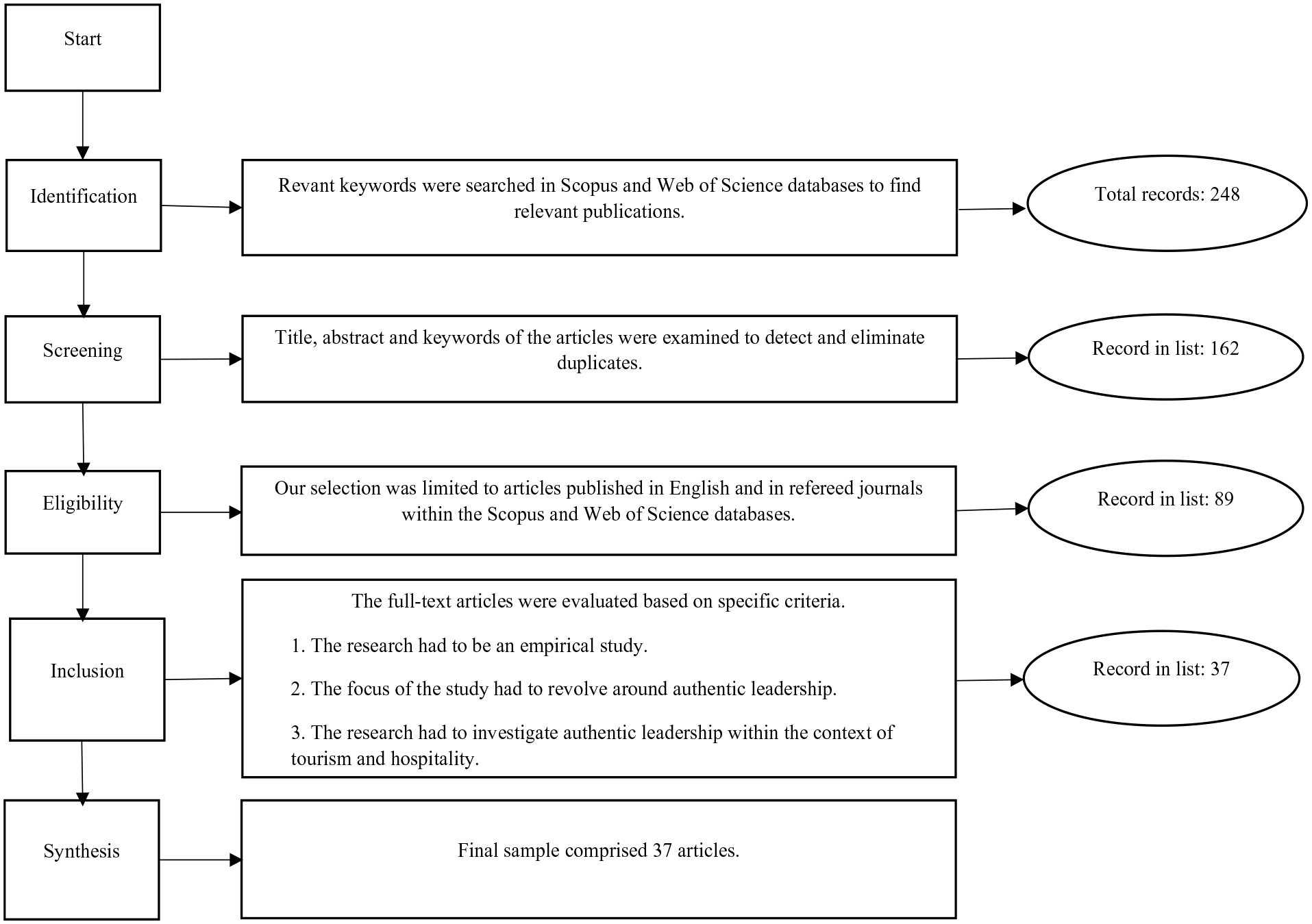
Flowchart of Article Search for SLR on Authentic Leadership.
Number of Articles Published in Scholarly Journals Focusing on Authentic Leadership in Tourism and Hospitality.
Analytical Approach
In the systematic synthesis and categorization of empirical findings from the studies within our sample, we adopted an analytical approach based on content analysis and aligned with the principles outlined by Gardner et al. (2011). First, the basic information of each article was coded including author name(s), journal name, article title, year of publication, definitions, and contexts of study, using the NVivo software. Next, the information on research design, methods, and findings was coded separately for qualitative and quantitative studies. Regarding qualitative research, we coded the theoretical framework, methodology, data collection, and data analysis. Regarding quantitative research, we coded the theoretical framework, hypotheses, sample type and sample size, data collection, measures, data analysis, antecedents, mediators, moderators, and the outcomes of authentic leadership.
The conclusions from these qualitative and quantitative studies were synthesized to formulate emergent themes. To avoid biases, two independent researchers in the research team participated in the coding process, and one researcher critically reviewed and evaluated the coding results. A table summarizing all authentic leadership studies in our sample is provided in Appendix. In the next section, we discuss the results of our SLR in connection with the proposed research questions.
Findings
Defining Authentic Leadership in Tourism and Hospitality
Our SLR attempted to find a common definition of authentic leadership used in tourism and hospitality contexts and found several similar words but no single universally agreed definition. Among the definitions cited in 37 empirical studies in our sample, those by Walumbwa et al. (2008) and Luthans and Avolio (2003) were the most frequently cited. Aside from these two definitions, other studies cited the definitions proposed by Avolio and Gardner (2005), Ilies et al. (2005), Lux et al. (2019), and Northouse (2012). The following discussion analyzes and integrates the authentic leadership concepts used in the empirical studies.
The first key concept of authentic leadership focuses on the process that authentic leadership leverage their values and behaviors to progressively enhance the development of both leader and employee involved in the interaction process. This concept has been highlighted by Luthans and Avolio (2003, p. 243) who define authentic leadership as “a process that draws from both positive psychological capacities and a highly developed organizational context, which results in both greater self-awareness and self-regulated positive behaviors on the part of leaders and associates, fostering positive self-development.”
Meanwhile, Walumbwa et al. (2008, p. 94) argued that authentic leadership is a multidimensional construct, as such, “authentic leadership is a pattern of leader behavior that draws upon and promotes both positive psychological capacities and a positive ethical climate, to foster greater self-awareness, an internalized moral perspective, balanced processing of information, and relational transparency on the part of leaders working with followers, fostering positive self-development.” This definition emphasizes the actions of the authentic leaders, specifically in understanding their own advantages and weaknesses, analyzing information objectively, involving employees in the decision-making process, expressing their true feelings and thoughts, and setting a high moral and ethical standard for the followers and for themselves (Walumbwa et al., 2008).
Theories Utilized in Authentic Leadership Research in Tourism and Hospitality
Our SLR findings revealed several theory streams utilized in studying authentic leadership in tourism and hospitality contexts. The first commonly appeared theory stream was social-based theories, including social exchange theory (Blau, 1964), social contagion theory (Avolio & Gardner, 2005; Luthans & Avolio, 2003), social cognitive theory (Bandura, 1986), social identity theory (Tajfel, 1978), and social learning theory (Bandura & Walters, 1977). Among these social-based theories, the social exchange theory was most dominant, which suggests that social exchanges are formed by voluntary actions initiated by an organization’s treatment of employees, with the expectation that such treatment will be responded by the employees (Blau, 1964). In light of social exchange theory, tourism and hospitality studies have investigated how authentic leaders encourage employee’s behaviors and work outcomes, such as work engagement (Du et al., 2021), employee performance (S.-M. Lee et al., 2016), prosocial service behaviors (Teng & O-Yang, 2022), adaptive performance, career satisfaction (Kaya & Karatepe, 2020), and organizational commitment (Ling et al., 2017). Other theories in this stream are also effective in explaining how authentic leadership affects employee’s behavioral outcomes. For instance, through the lens of social contagion theory, Megeirhi et al. (2018) found that authentic leadership reduces employee cynicism, tolerance to workplace incivility, and job search behavior.
The second most frequently used theory in explaining the impact of authentic leadership in tourism and hospitality was conservation of resources (COR) theory (Hobfoll, 1989). The main tenets of the COR theory posit that employees make effort to attain, preserve, and protect valued resources, such as personal characteristics, objects, and social support (Hobfoll, 1989). The COR theory has been utilized to assess the associations between authentic leadership and individual outcomes, such as career satisfaction (Chang et al., 2020), employees’ surface acting and deep acting (Wang & Xie, 2020), green creativity (Luu, 2021a), prosocial service behaviors (Teng & O-Yang, 2022), prosociality (helping behavior and proactive customer service behavior) (Wu & Chen, 2019), meaningfulness of work, and job strain (need for recovery) (Luu, 2021b).
Contexts for Investigating Authentic Leadership
To comprehend the contexts of authentic leadership in the tourism and hospitality management literature, we investigated the research contexts of 37 tourism and hospitality studies that explored authentic leadership. The results showed that authentic leadership has been studied in various cultures and diverse tourism and hospitality sectors. Out of these studies, the majority (i.e., 35 studies) investigated authentic leadership in a particular country or territory, and only two studies of authentic leadership were cross-cultural in nature. The United States and eastern Asia countries (e.g., South Korea, China, Taiwan, and Vietnam) were the most frequent research contexts for the investigation of authentic leadership in the tourism and hospitality industries. Moreover, the results indicated that the sectors of these tourism and hospitality studies included hotels, tourism agencies/departments, restaurants, casinos, and a mixture of hotels, restaurants, and other hospitality organizations. It can be concluded that authentic leadership was studied mainly in the hotel context in the tourism and hospitality literature.
Methods and Measures Used to Study Authentic Leadership
Out of the 37 studies included in the present SLR, 34 studies employed quantitative methods, 2 studies utilized qualitative methods, and 1 study used fuzzy-set qualitative comparative analysis (fsQCA) to explore authentic leadership in the tourism and hospitality contexts. One of the two qualitative studies collected data through interviews, written personal reflections, organizational documentary analyses, and observations. The other one collected data through a case study method.
In studies utilizing surveys to explore authentic leadership, a notable trend within our review reveals a prevalent reliance on follower reports. In addition, a limited number of investigations in our sample, which employed field study designs, have delved into the effects of authentic leadership across various levels of analysis. Although certain articles have centered on the organizational and team impacts of authentic leadership, the predominant emphasis gravitates toward the individual or leader level of analysis. It is noteworthy that a substantial proportion of studies have predominantly employed a single-level analysis in testing hypotheses; nonetheless, there are instances where a multilevel analysis approach has been applied.
In our reviewed studies, most of them employed quantitative designs and collected data through questionnaires. In these studies, authentic leadership was measured through different authentic leadership scales. Among the quantitative studies reviewed in this SLR, more than half of them (i.e., 19 studies) adopted the 16-item authentic leadership scale of Walumbwa et al. (2008). This 16-item authentic leadership scale had four dimensions, namely self-awareness, relational transparency, internalized perspective, and moral balanced processing. Therefore, the 16-item authentic leadership scale of Walumbwa et al. (2008) has been most widely adopted in studies in the tourism and hospitality discipline.
The 14-item Authentic Leadership Inventory (ALI) of Neider and Schriesheim (2011) and the 16-item Authentic Leadership Questionnaire (ALQ) of Avolio et al. (2007) were also frequently used and found in nine and three studies, respectively. The 14-item ALI of Neider and Schriesheim (2011) was developed based on the 16-item authentic leadership scale of Walumbwa et al. (2008), and it also contained four dimensions, namely self-awareness, relational transparency, internalized perspective, and moral balanced processing. The 16-item ALQ of Avolio et al. (2007) was the same scale as the authentic leadership scale of Walumbwa et al. (2008), but it was presented to the Mind Garden (ALQ by Avolio et al. (2007); Cervo et al., 2016). These two scales shared the same four dimensions and 16 items to measure authentic leadership. Hence, the 14-item ALI of Neider and Schriesheim (2011) and the 16-item ALQ of Avolio et al. (2007) are common scales used after the scale of Walumbwa et al. (2008) to assess authentic leadership in the tourism and hospitality contexts.
Antecedents of Authentic Leadership
Several systematic reviews on leadership concluded that contextual factors (e.g., organizational culture and organizational climate) (Brown & Treviño, 2006; Eva et al., 2019; Tuncdogan et al., 2017) and individual characteristics of leaders (Eva et al., 2019) can serve as the antecedents of leadership (e.g., ethical leadership and servant leadership). Nevertheless, in our sample of 37 studies that investigated authentic leadership in tourism and hospitality, there was no study examining the antecedents of authentic leadership. Therefore, it is advisable that future studies pay more attention to the antecedents of authentic leadership in the tourism and hospitality contexts.
Outcomes of Authentic Leadership
Individual Outcomes
According to the results of our SLR, authentic leadership had a significant effect on individual outcomes among tourism and hospitality employees, including the five aspects of attitudinal, cognitive, affective, behavioral, and performance outcomes. In terms of attitudinal outcomes, authentic leadership had positive associations with employee loyalty (S.-M. Lee et al., 2016) and employees’ customer orientation (Ribeiro et al., 2020). However, it diminished tolerance to workplace incivility (Megeirhi et al., 2018) and turnover intention (Ribeiro et al., 2020). The theoretical reason behind these negative associations was that authentic leaders concentrate on employee development through providing feedback on their works, admitting employees’ mistakes, helping employees to improve their capabilities, making decisions based on employees’ core beliefs and interests, and establishing trust relationships with employees (Walumbwa et al., 2008), thereby mitigating employees’ negative attitudes such as turnover intention.
Regarding cognitive outcomes, we found that authentic leadership promoted the employee’s intrinsic motivation (Jacques et al., 2015) and meaningfulness of work (Luu, 2021b) and perceived workplace to be a humane organization (Dimitrov, 2015). As for affective outcomes, job satisfaction (Baquero et al., 2019; Jacques et al., 2015; Shulga, 2021), career satisfaction (Chang et al., 2020; Kaya & Karatepe, 2020), organizational commitment (Ausar et al., 2016), job strain (need for recovery; Luu, 2021b), and employee burnout (Jeong et al., 2017) were revealed as the outcomes of authentic leadership in the tourism and hospitality contexts. Our analysis highlighted an important role of authentic leadership in tourism and hospitality such that this leadership style can help reduce employee’s stress and improve their wellbeing, which is a vital condition for workers in a labor-intensive industry where employees must overcome challenges from high workload, customer demands, and time pressure.
The findings also unpacked that authentic leadership had significant impact on various behavioral outcomes at the individual level, including work engagement (Baquero, 2023; Du et al., 2021; Kaya & Karatepe, 2020), employees’ surface acting (Wang & Xie, 2020), employees’ deep acting (Wang & Xie, 2020), organizational citizenship behavior (Huang et al., 2022; Qiu et al., 2019; Yen et al., 2023), prosociality (helping behavior and proactive customer service behavior) (Wu & Chen, 2019), prosocial service behaviors (role-prescribed service behaviors and extra-role service behaviors) (Teng & O-Yang, 2022), helping behavior and voice behavior (Peyton et al., 2023), service innovation behavior (Schuckert et al., 2018), employee creativity (Yıkılmaz & Sürücü, 2021), employee green creativity (Luu, 2021a), job search behavior, and employee cynicism (Megeirhi et al., 2018). Our findings highlight that authentic leadership is of relevance to tourism and hospitality settings as it fosters service-oriented outcomes and the outcomes needed to deal with uncertainties and demands in this service context such as voice behavior and helping behaviors. Apart from the negative influences of authentic leadership on job search behavior and employee cynicism, authentic leadership was found as an antecedent enhancing most behavioral outcomes. These findings highlight the influence of authentic leadership in a service-intensive setting, such as tourism and hospitality, on several service-oriented outcomes at individual level such as prosocial service behaviors, proactive customer service behavior, and service innovation behavior.
Authentic leadership exerted a positive effect on performance outcomes at the individual level, including task performance (Huang et al., 2022), employee job performance (S.-M. Lee et al., 2016; Ling et al., 2017; Nasab & Afshari, 2019), adaptive performance (Kaya & Karatepe, 2020), and service quality (Qiu et al., 2019). The consistent results were in line with the view of Walumbwa et al. (2008) that authentic leadership involves a leadership style emphasizing psychological capacities and ethical environment to improve self-awareness, relational transparency, internalized ethical perspective, and moral balanced processing at workplaces, thereby contributing to better work performance at different levels. In addition, authentic leadership focuses on building trust between leader and employees, which drives employees to make more efforts and invest more resources (e.g., knowledge on work tasks) for the improvement of individual and/or collective work performance to reciprocate their authentic leaders (Du et al., 2021; S.-M. Lee et al., 2016).
Group and Organizational Outcomes
Out of 37 tourism and hospitality studies we reviewed, only three studies investigated the collective outcomes (i.e., group and organizational outcomes) of authentic leadership in the tourism and hospitality industry. At the group level, Shulga (2021) reported that employees’ perceptions of leadership brand authenticity promoted group service climate in a U.S.-based hotel chain. At the organizational level, Kurian and Nafukho (2021) reported organizational justice (i.e., procedural justice, distributive justice, interactional justice, informational justice) as the outcome of authentic leadership in the U.S. hotel industry. Specifically, authentic leadership had stronger effects on interactional and informational justice than on procedural and distributive justice in such a context. Moreover, Mrak and Kvasić (2021) provided empirical evidence to support that operational performance was an organizational outcome of authentic leadership using the data from 24 hotels operated in Croatia. Although the results demonstrated the effects of authentic leadership on both group and organizational outcomes in the tourism and hospitality contexts, the lack of studies investigating collective outcomes limits the comprehensive understanding of the relationships between authentic leadership and its collective outcomes in the tourism and hospitality management literature. Therefore, future studies are advised to explore more collective outcomes of authentic leadership in such a context.
Mediators
Most of the reviewed studies investigated the mediating effects between authentic leadership and its outcomes. The results showed that the mediators behind authentic leadership could be grouped into five types: job-centered mediators, employee-centered mediators, leader-centered mediators, team-centered mediators, and organization-centered mediators.
Job-centered mediators included job crafting (Luu, 2021b), green crafting (Luu, 2021a), person-job fit (Teng & O-Yang, 2022), and job insecurity (Wang & Xie, 2020). As for employee-centered mediators, they could be categorized into six types: first, engagement (i.e., physical, cognitive, and emotional engagement (Huang et al., 2022), work engagement (Kaya & Karatepe, 2020; Shulga, 2021), and vitality (Chang et al., 2020); second, passion (i.e., harmonious environmental passion (Luu, 2021a); third, psychological capital, (i.e., follower psychological capital (Schuckert et al., 2018) and psychological contract violation (Arici, 2018); fourth, ability (i.e., self-efficacy (W.-H. Kim et al., 2022); fifth, bonds (i.e., organizational identification (S.-M. Lee et al., 2016), affective commitment (Ribeiro et al., 2020), and relational energy (Wang & Xie, 2020); last, performance and behavior (i.e., job performance (S.-M. Lee et al., 2016), extra effort (Jacques et al., 2015), and customer-oriented OCB (Qiu et al., 2019).
Out of 30 studies exploring the mediators behind authentic leadership, six of them concerned leader-centered mediators. Specifically, leader effectiveness (Jacques et al., 2015), Leader–member exchange (LMX; Du et al., 2021; Yıkılmaz & Sürücü, 2021), and trust in leaders (Jeong et al., 2017; S.-M. Lee et al., 2016; Qiu et al., 2019) were found to mediate the linkages between authentic leadership and its outcomes in the tourism and hospitality industry. Two studies found that team-centered factors mediated the relationships between authentic leadership and its outcomes. These team-centered mediators were collective mindfulness, collective thriving (Wu & Chen, 2019), and group trust climate (Ling et al., 2017). As for organization-centered mediators, organizational trust (Jeong et al., 2017) and organizational commitment (Ausar et al., 2016; Nasab & Afshari, 2019) were reported as the organization-level mediators underlying authentic leadership in tourism and hospitality organizations.
Moderators
Authentic Leadership as a Moderator
The moderating effect of authentic leadership was reported in eight studies out of 37 studies we reviewed. For example, Arici (2018) found that authentic leadership strengthened the negative effect of perceived supervisor support on turnover intention in Turkish five-star hotels. Moreover, authentic leadership was found as a positive moderator of the link between nepotism perception and tolerance to workplace incivility in Turkish four- and five-star hotels (Arasli & Arici, 2020).
Contrary to the aforementioned findings, two studies reported a negative moderating effect of authentic leadership. Specifically, a study by Luu (2021b) indicated that authentic leadership negatively moderated the relationship between socially responsible human resource practices and job crafting, as well as the indirect effects of socially responsible human resource practices on the two employee outcomes via job crafting in four- and five-star hotels operated in Vietnam. Luu (2021b) identified that the interaction of socially responsible human resource practices and authentic leadership has a negative effect on its outcomes because the higher degrees of authentic leadership may lead to less dependence on the resources from socially responsible human resource practices in tourism and hospitality organizations, thereby leading to a negative moderating effect of authentic leadership. Another work by Luu (2021a) also found a negative moderating role of authentic leadership that perceived environmentally-specific authentic leadership attenuated the effects of perceived green human resource management practices on green crafting and harmonious environmental passion in the Vietnamese tourism sectors.
Psychological, Cultural, and Demographic Factors as Moderators
Out of the 37 tourism and hospitality studies, only a limited number of studies investigated moderators of the direct and/or indirect relationships between authentic leadership and its outcomes. The results showed that psychological factors were mainly considered as moderators strengthening such direct and/or indirect relationships. For example, Megeirhi et al. (2018) reported that team psychological capital accentuated the negative relationship between authentic leadership and tolerance to workplace incivility in international hotels located in Jordan. Psychological contract fulfillment was found as a moderator strengthening the indirect relationship between authentic leadership and career satisfaction via either learning or vitality in the U.S. hotel industry (Chang et al., 2020).
Other than psychological factors, our findings also revealed that a cultural factor (i.e., perceived power distance) was a moderator strengthening the effect of authentic leadership on its outcomes. Specifically, Du et al. (2021) found that power distance orientation positively moderated the indirect relationship between authentic leadership and employee work engagement via leader-member exchange in the context of Chinese five-star hotels. The results also revealed that employee demographics (such as employees’ age and gender) could strengthen the relationship between authentic leadership and self-efficacy in the Korean casino context (W.-H. Kim et al., 2022).
Overall, psychological, cultural, and demographic factors were reported as moderators of the direct and/or indirect relationships between authentic leadership and its outcomes. However, only a limited number of studies tested the moderating effects behind such relationships in the tourism and hospitality contexts (e.g., Chang et al., 2020; Du et al., 2021; Megeirhi et al., 2018), which may limit the comprehensive understanding of authentic leadership in the tourism and hospitality management literature. Therefore, we recommend that future studies pay more attention to the moderating effects behind authentic leadership.
Discussion
Theoretical Implications
Integrated Framework
This SLR gathers, analyzes, and synthesizes the results of empirical studies on authentic leadership and builds nomological networks of this leadership style with its outcomes and mediation and moderation mechanisms (see Figures 2 to 4).
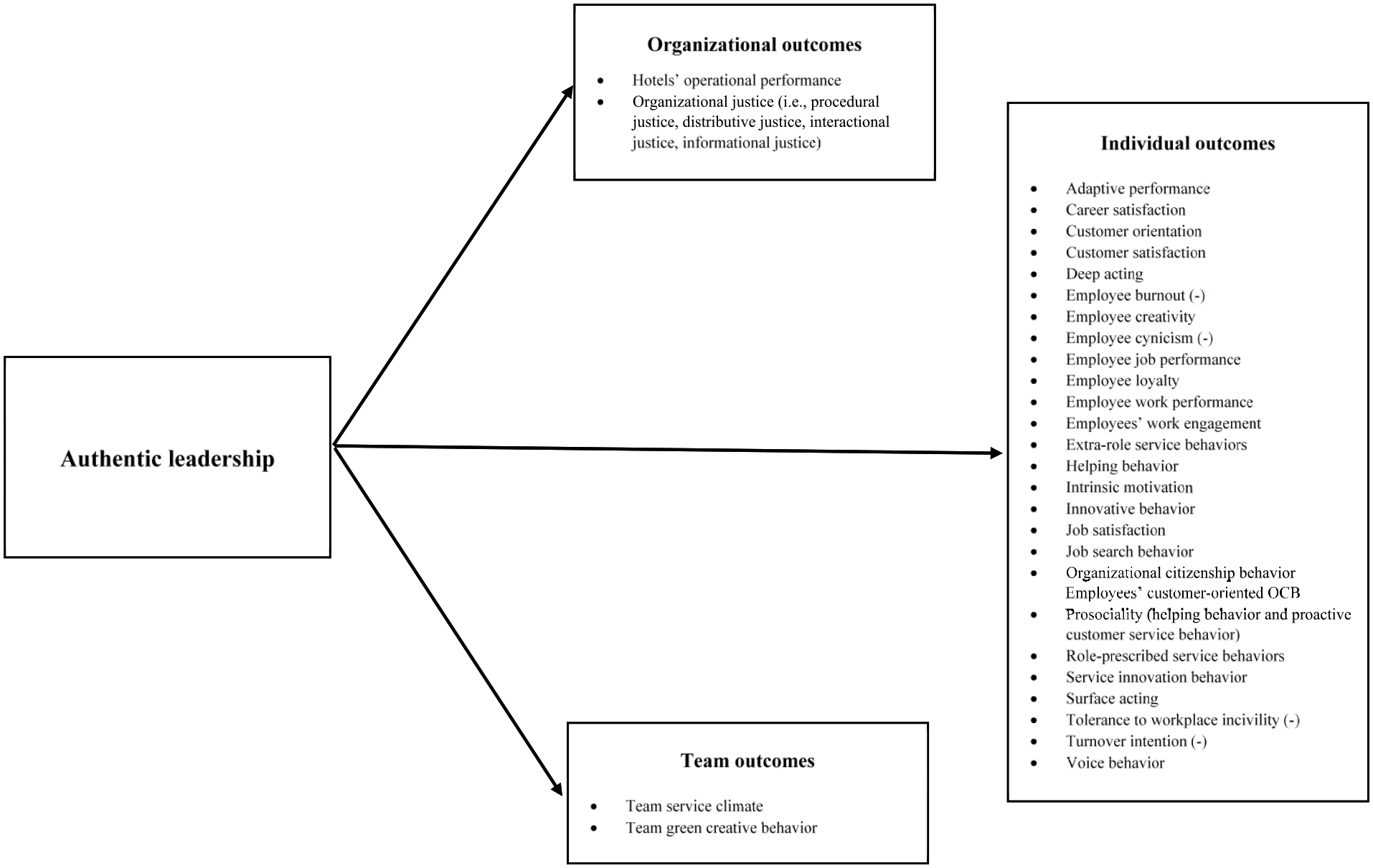
The Associations Between Authentic Leadership and Its Outcomes.
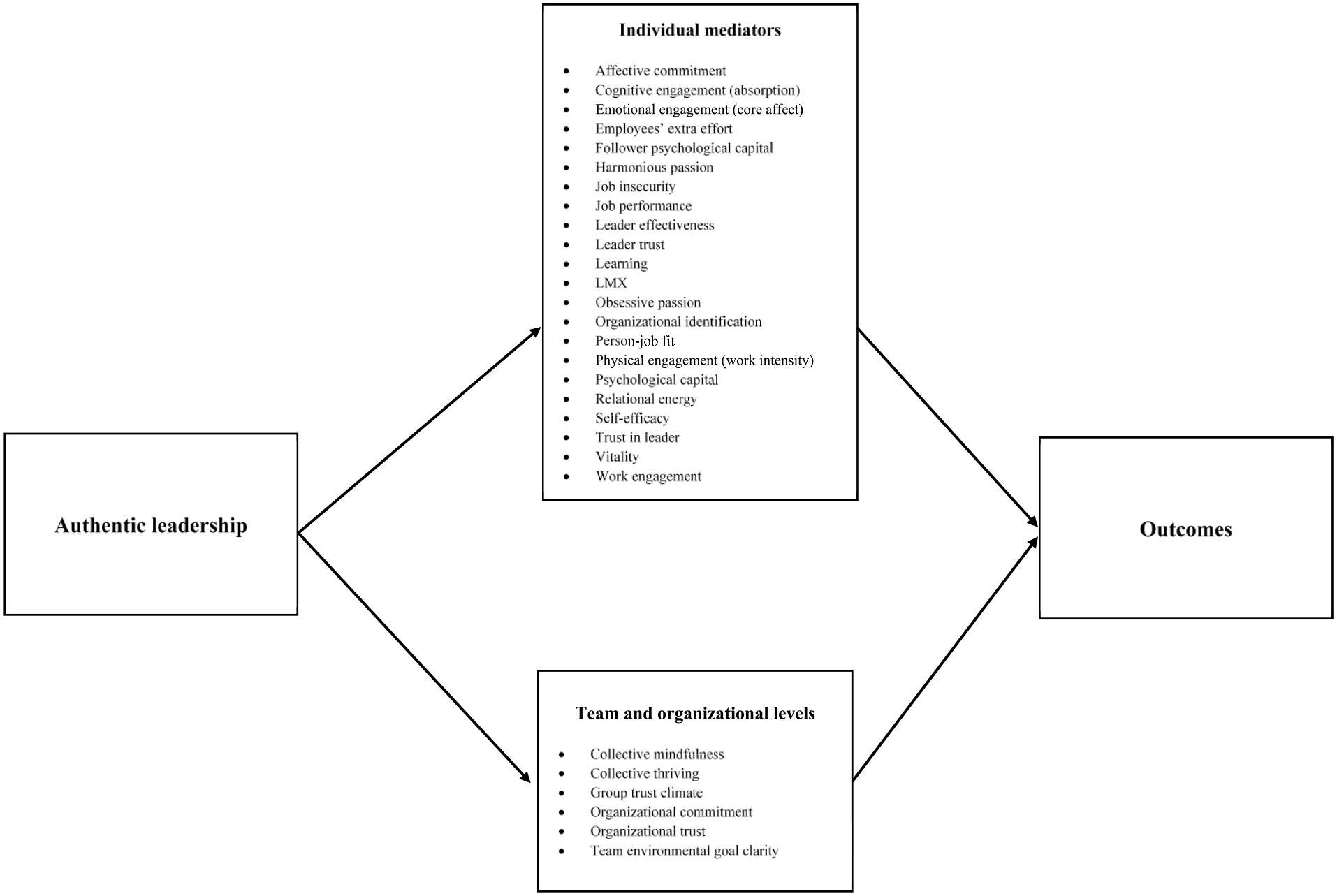
The Mediators of the Relationship Between Authentic Leadership and Its Outcomes.
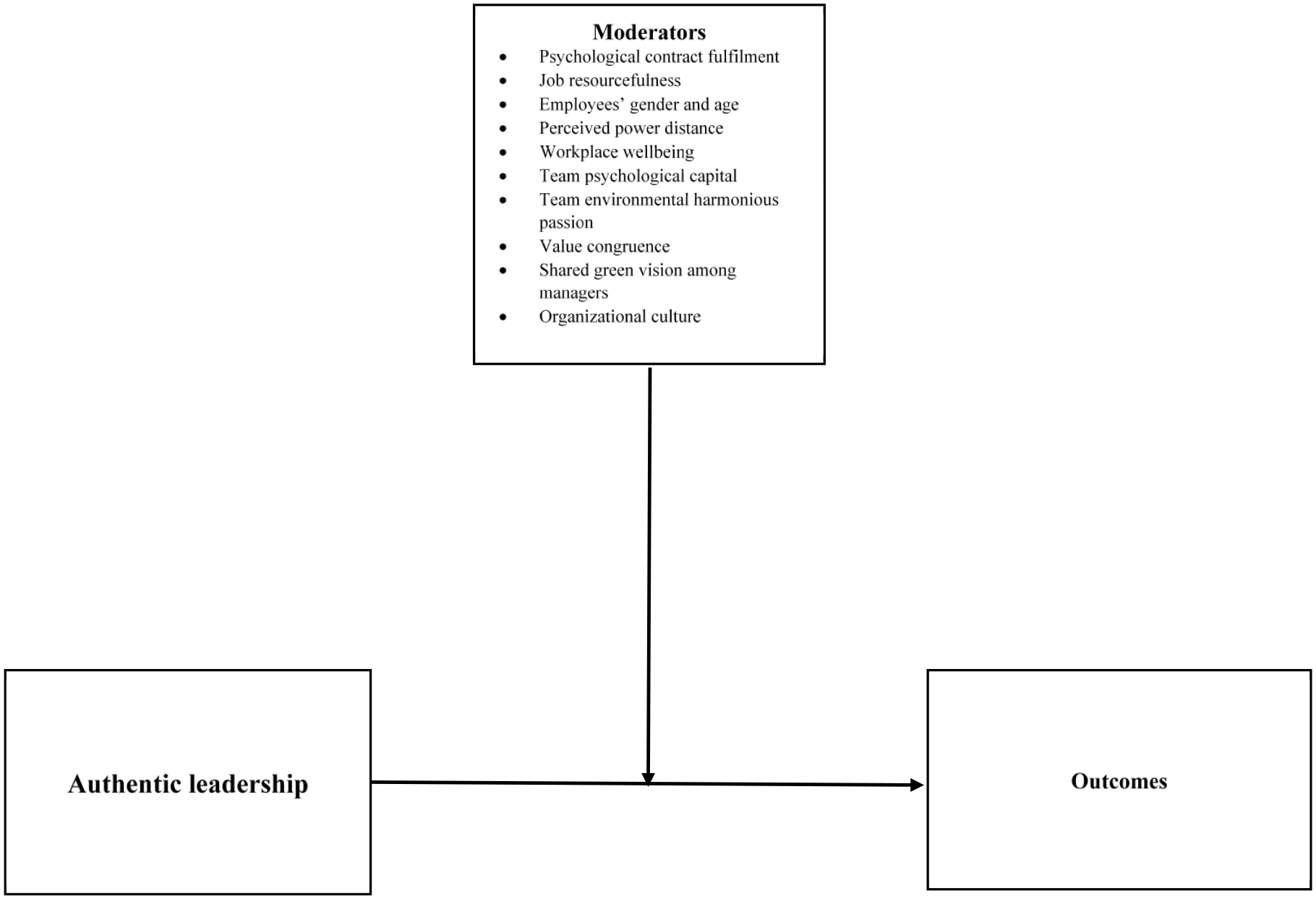
The Moderators of the Relationship Between Authentic Leadership and Its Outcomes.
Future Research Agenda
Studies on authentic leadership demonstrate four important gaps in this SLR: (1) research designs; (2) predictors, outcomes, and intervening mechanisms of authentic leadership; and (3) theoretical lenses that shed light on authentic leadership and relationships around it.
First Recommended Direction: Employing Various Research Designs
This SLR reveals more quantitative studies (27 studies) than qualitative studies (3 studies) conducted on authentic leadership. As reflected in the current SLR, research on authentic leadership in the tourism and hospitality sector indicates a focus on retrospective survey measures. This suggests that future research in this sector should use more direct measurement of authentic leadership, such as content analysis of speeches of authentic managers, as suggested by Bligh et al. (2004) in their work on leadership. Moreover, the most common form of qualitative research in this SLR is the case study approach. Other qualitative approaches, such as phenomenology and ethnography, should be used to provide meaningful explanations for the context and nature of authentic leadership relationships. More mixed-method studies should also be performed on the future paths to explore in depth the “why” component underlying the effects of authentic leadership.
While controlled experiments, although rare, has been used in studying authentic leadership in general management (Nübold et al., 2020), this method has not been used to study authentic leadership in the tourism and hospitality sector. A quasi-experimental approach should be used in future tourism and hospitality studies to explore the causality of antecedents and outcomes of authentic leadership, as well as address endogeneity concerns. Experimental designs can also surmount the limitations of quantitative designs with cross-sectional data collection by not merely assessing temporal variance in employee, team, or organizational outcomes yielded by authentic leadership but likewise estimating the degree to which authentic leadership training interventions can produce authentic leadership among supervisors.
Furthermore, while the trend on multi-study approach to leadership is on the rise in general management (Gardner et al., 2020), this trend should be followed in inquiries into authentic leadership in the tourism and hospitality discipline to eliminate competing explanations for the identified links as well as elaborate on authentic leadership processes. In addition, research in general management reflects a continuing increase in multilevel analysis of leadership and its associated outcomes (Gardner et al., 2020), whereas a rare use has been found for multilevel approach to authentic leadership and its outcomes in general management, as well as in the tourism and hospitality sector as reflected in this SLR. Multilevel understanding of authentic leadership and its outcomes should be achieved in future research in tourism and hospitality settings. Moreover, while research in general management, albeit rare, has tested competing models of the predictive power of authentic leadership versus other leadership styles such as transformational, servant, and ethical leadership (Hoch et al., 2018; Legutko, 2020), our SLR indicates that such comparative analyses have received insufficient scholarly attention in the tourism and hospitality sector (Kaya & Karatepe, 2020; Ling et al., 2017). Future research in this sector is encouraged to conduct comparative analyses of predictive utility and mechanisms underlying authentic leadership versus other leadership styles.
Second Recommended Direction: Enriching the Existing Set of Associated Variables of Authentic Leadership
The current SLR reveals lack of inquiries into antecedents of authentic leadership in the tourism and hospitality discipline, which limits our insight into effective ways to nurture authentic leadership in succession planning in tourism and hospitality organizations. This gap in terms of antecedents of authentic leadership in tourism and hospitality research is crucial and needs bridging in future research since the review studies in general management as well as other disciplines (e.g., healthcare) have uncovered some predictive factors behind authentic leadership. For instance, the SLR of authentic leadership by Gardner et al. (2011) reported hope, optimism, and resilience as its antecedents. A recent meta-analytical review by Zhang et al. (2022) found leader emotional intelligence and ethical climate as antecedents of authentic leadership. The SLR of authentic leadership in healthcare service contexts by Alilyyani et al. (2018) identified structural empowerment as a precursor of authentic leadership. Furthermore, other studies in general management regarding authentic leadership have observed individual precursors of authentic leadership, such as leaders’ authentic personality (Liang, 2017), emotional intelligence (Kotzé & Nel, 2015; Zhang et al., 2022), empathy (Singh et al., 2016), trait mindfulness (Nübold et al., 2020), psychological capital (Jensen & Luthans, 2006), identity interference (Sims et al., 2017), self-knowledge, self-consistency (Peus et al., 2012), accountability (comprising responsibility, openness, and answerability) (Frederick et al., 2016), self-importance of moral identity, mature principled moral reasoning and mental resilience (Olsen & Espevik, 2017), moral reasoning (Sendjaya et al., 2016), and meaningful work (Sarkar, 2019). Accordingly, future research is advised to examine how these individual factors of leaders as well as other individual factors can shape their authentic leadership behavior in tourism or hospitality firms since individual factors may produce different levels of their behavior or performance outcomes in different service contexts (Licata et al., 2003; Spielmann & Babin, 2011).
When it comes to the predictive role of personality traits, Shahzad et al. (2020) unpacked the negative link of neuroticism with authentic leadership and also the positive associations of agreeableness, conscientiousness, extroversion, and openness to experience with authentic leadership. Future research in tourism and hospitality settings is invited not only to test whether such Big-Five personality traits relate to authentic leadership in the same manner but also to identify the difference in the variance that these personality traits contribute to authentic leadership among managers who work in the tourism and hospitality environment with different degrees of customer demands and environmental uncertainty from other contexts. This is because personality traits may relate to various levels of behavioral outcomes in various service settings (Spielmann & Babin, 2011).
In addition, leadership studies have drawn attention to the predictive role of the “Dark Triad” of personality traits (i.e., Machiavellianism, narcissism, and psychopathy; Furtner et al., 2017). Research in general management has also unveiled the associations of the dark triad of personality traits with moral development or judgment, which is related to the “moral perspective” component of authentic leadership (Walumbwa et al., 2008). For instance, a work of Campbell et al. (2009) revealed the positive associations of high levels of psychopathy and Machiavellianism with low scores on moral development. A study by Dinić et al. (2021) unfolded the positive links of all dark triad traits, except for psychopathy, with utilitarian moral judgment. Accordingly, to fill the gap in relation to the predictive role of the dark triad of personality traits in the stream of authentic leadership research, these personality traits should be tested as individual antecedents in future models of authentic leadership in tourism and hospitality research.
Moreover, the moral component of leader behavior can be fostered by cognitive moral development (Jordan et al., 2013), moral identity internalization and symbolization (Mayer et al., 2012), or core self-evaluation (Ahn et al., 2018). However, as indicated by the present SLR, previous review studies, and recent studies of authentic leadership as mentioned previously, the predictive role of these individual factors has not been examined in the stream of authentic leadership research, particularly in the tourism and hospitality sector. This encourages future studies in this discipline to delve into these individual antecedents of authentic leadership.
While tourism and hospitality research indicates lack of investigations into contextual antecedents of authentic leadership, the review studies in general management as well as in other disciplines have observed the predictive role of few contextual factors such as structural empowerment (Alilyyani et al., 2018; Haddad, 2013) and ethical climate (Zhang et al., 2022) in shaping authentic leadership. This gap in relation to contextual antecedents of authentic leadership in the tourism and hospitality sector should be covered by exploring more contextual precursors that studies in general management have not unfolded. For instance, future research in the tourism and hospitality discipline is encouraged to unpack the predictive role of contextual factors such as organizational justice, corporate social responsibility, or owner’s values or business strategy since these contextual factors have been viewed or reported to influence leaders’ moral perspective (Duane Hansen et al., 2016; O’Keefe et al., 2020) or self-awareness (Park et al., 2016), which are key components of authentic leadership (Walumbwa et al., 2008).
The current SLR identifies the scholarly focus on individual-level outcomes, leaving a knowledge gap in outcomes at the team and organizational levels, as well as multiple levels. As the SLR reveals, individual outcomes of authentic leadership fall under various categories consisting of attitudinal, cognitive, affective, behavioral, and performance outcomes. It is advisable to advance authentic leadership research by engaging other employee outcomes such as different aspects of wellbeing and non-work domain outcomes (e.g., work-family enrichment).
Moreover, studies in this SLR have concentrated on group service climate, organizational justice, and operational performance as group or organizational outcomes of authentic leadership in the tourism and hospitality setting. Other team- and organization-level outcomes should be considered in authentic leadership studies in this context. Future studies should engage financial performance or service innovative performance as organizational outcomes potentially promoted by authentic leaders of tourism or hospitality firms. Likewise, future research should examine if authentic leaders in tourism or hospitality firms can foster other team-level outcomes (besides group service climate found in this SLR) such as team ethical decision-making, team job crating, virtual team performance, and team service innovation.
This SLR identifies only one study (Shulga, 2021) examining the outcomes at both individual (job satisfaction) and group level (service climate). Future research should adopt a multilevel perspective to unpack multiple-level outcomes of authentic leadership in tourism or hospitality organizations, as well as multiple-level mechanisms that translate authentic leadership into single-level outcomes or multiple-level outcomes. This will provide a comprehensive insight into the nuanced nature of the effects of authentic leadership and help tourism or hospitality firms optimally channel organizational strategy into authentic leadership and further translate authentic leadership through multiple intervening mechanisms into desired outcomes.
The findings in our SLR present that mediation pathways that translate authentic leadership into employee, team, or organizational outcomes in the tourism and hospitality realm fall under five categories consisting of job-, employee-, leader-, team-, and organization-centered mediation pathways with a focus more on individual mediators than on team- and organization-centered mediators. Future tourism and hospitality research should consider more team- and organization-level mediators other than team-centered mediators (i.e., collective mindfulness, collective thriving, group trust climate) and organization-centered mediators (organizational trust, organizational commitment) found in this SLR. Moreover, the findings in this SLR indicate a knowledge gap in the tourism and hospitality discipline with regard to the trickle-down effect perspective (Byun et al., 2020) in relation to authentic leadership. Recent sentiment in general management studies has been drawn toward how authentic leadership cascades from higher-level managers to lower-level ones (Zheng et al., 2022), or from managers to subordinates (Nair et al., 2022). Evidence in general management literature has been lent to the cascading effect of department leaders’ authentic leadership on team authentic leadership (Hirst et al., 2016), the trickle-down effect of top managers’ authentic leadership on middle manager authentic leadership (Zheng et al., 2022), and the trickle-down effect of authentic leadership on authentic followership (Nair et al., 2022). Therefore, research in the tourism and hospitality stream should continue this trend to explore not only the trickle-down but also the trickle-up effects of authentic leadership between managers, as well as between managers and subordinates.
Although research in the tourism and hospitality discipline has reported contingencies for the effectiveness of authentic leadership, this set of contingencies still has been modest and fallen under only three clusters comprising: psychological factors (team psychological capital, psychological contract fulfillment), cultural factors (power distance), and demographic factors (age, gender). Future tourism and hospitality studies are encouraged to unfold contingent roles of other contextual factors (e.g., team or organizational culture) and other individual factors (e.g., personalities, moral identity).
Third Recommended Direction: Employing More Theoretical Perspectives
Our SLR demonstrates that various theoretical frameworks have been employed in quantitative and qualitative studies in the tourism and hospitality discipline to shed light on the effectiveness of authentic leadership. Among the three qualitative studies, solely one study explained the influence of authentic leaders through leadership trait theoretical lens (McGehee et al., 2015). Quantitative studies in this SLR have concentrated on two groups of theoretical perspectives consisting of social-based theories and COR theory. Social exchange theory has been mostly used in authentic leadership studies in the tourism and hospitality realm, compared to other social-based perspectives such as social contagion theory, social cognitive theory, social identity theory, and social learning theory. Future research should further apply less-utilized theories as well as other theoretical frameworks to comprehend new mechanisms underlying authentic leadership effectiveness.
The studies in the current SLR reveals the utility of social exchange framework in understanding mechanisms via which some employee outcomes are shaped by authentic leadership (e.g., Arici, 2018; Du et al., 2021; Kaya & Karatepe, 2020 S.-M. Lee et al., 2016; Ling et al., 2017; Luu, 2021b; Teng & O-Yang, 2022). In addition to social exchange framework, collective social exchange perspective was developed by Gong et al. (2010) to explain the links between contextual antecedents and group outcomes. However, this perspective has rarely been used to formulate the impact of authentic leadership on team- and organization-level outcomes. Collective social exchange perspective should thus be drawn upon to advance our understanding of how authentic leaders promote outcomes at the team or organizational level in tourism or hospitality organizations.
There is a growing number of tourism and hospitality studies that have adopted COR theory to explicate the effects of authentic leadership on employee outcomes (e.g., Chang et al., 2020; Luu, 2021a, 2021b; Teng & O-Yang, 2022; Wang & Xie, 2020; Wu & Chen, 2019). Nonetheless, the job demands-resources (JD-R) model, a derivation of the COR theory (Bakker & Demerouti, 2007), has seldom been drawn on to explore the effects of authentic leadership on job resources and job demands, or the interactive effects of job resources provided by authentic leaders and demands (e.g., job insecurity, role ambiguity, work overload, time pressure) from tourism and hospitality jobs, albeit the JD-R model has been used to shed light on the effects of other people-oriented leadership styles in relation to job resources and job demands (Krick et al., 2022; M. C. C.Lee et al., 2023). Future research in tourism and hospitality settings is encouraged to examine and enhance our understanding of such effects of authentic leadership through the lens of the JD-R model.
Furthermore, other theoretical perspectives, besides theories found in the current SLR, should be premised on to uncover more mechanisms through which authentic leadership can nurture employee outcomes. For instance, attachment theory (Bowlby, 1969; Mayseless & Popper, 2019) can be of use to illuminate mediation mechanisms, such as relational attachment or psychological attachment/detachment, through which authentic leaders shape employees’ behavioral outcomes. Cognitive mediation mechanisms, such as cognitive flexibility, cognitive appraisal, and moral reflectiveness, underlying the effects of authentic leadership can be investigated through the lens of cognitive evaluation theory (Ryan, 1982). These theories have been used to unfold the mechanisms behind other people-oriented leadership styles (Bharanitharan et al., 2019) but have been rarely used to investigate attachment or cognitive mechanisms in relation to authentic leadership. This indicates the usage of these theories in future research in the tourism and hospitality area to expand our understanding of cognitive or attachment mechanisms via which authentic leaders influence employees’ behaviors or performance.
Practical Implications
The crucial role of authentic leadership in the field of tourism and hospitality management has garnered not only scholarly attention but also managerial attention. In light of our review, we unveil several valuable implications for both managers and organizations in these sectors. First, our SLR underscores the substantial influence of authentic leaders in driving positive outcomes across various levels. Therefore, it is imperative for tourism and hospitality firms to prioritize the cultivation of authentic leadership among managers at all levels to realize these favorable outcomes. To this end, organizations in the tourism and hospitality sectors can institute training programs aimed at helping managers understand the significance of authentic leadership and hone their skills in demonstrating this leadership style in their daily interactions and communication with employees. In addition, in the process of recruiting and selecting candidates, human resources departments should give preference to candidates who exhibit high level of self-awareness (i.e., understanding their own advantages and weaknesses), balanced processing (i.e., analyzing information objectively and involving employees in the decision-making process), relational transparency (i.e., expressing their true feelings and thoughts), and internalized moral perspective (i.e., setting a high moral and ethical standard for the followers and for themselves; Ling et al., 2017; Walumbwa et al., 2008). Furthermore, certain personality traits like agreeableness, extraversion, openness, and conscientiousness have been identified as predictors of authentic leadership, making personality tests a valuable tool for candidate selection (Searle & Al-Sharif, 2018; Shahzad et al., 2020).
Second, the results of our SLR shed light on the mediating mechanisms that translate authentic leadership into positive outcomes. To enhance the effectiveness of authentic leadership, tourism and hospitality firms should actively employ these mediators, such as fostering trust in leadership and encouraging extra effort among employees. Authentic leaders can play an instrumental role in this by openly sharing information with their teams to bolster trust in the leader and create a climate of trust (S.-M. Lee et al., 2016; Qiu et al., 2019). In addition, seeking input from employees prior to decision-making has been recognized as an effective strategy for tourism and hospitality leaders in promoting employee engagement and motivating them to exert extra effort (Jacques et al., 2015).
Finally, our SLR emphasizes the complex nature of authentic leadership and the substantial effort it demands from the management team. As such, we propose a third implication regarding the contingent conditions that have been identified, such as psychological contract fulfillment and psychological capital (Chang et al., 2020; Megeirhi et al., 2018). To cope with the competitive pressures inherent in the tourism and hospitality sectors, organizations should invest in training programs for team leaders and employees to help them comprehend the significance of psychological contract fulfillment (Chang et al., 2020) and individual and team psychological capital (Megeirhi et al., 2018). These efforts will contribute to the overall success and sustainability of businesses operating in this dynamic and challenging industry.
Limitations and Future Reviews
Despite the rigorous processes adopted in this SLR, it is essential to acknowledge certain limitations that, in turn, reveal promising avenues for future investigations in the realm of tourism and hospitality management. First, our SLR only incorporated articles from peer-reviewed journals and systematically excluded nonjournal publications like conference papers, dissertations, book chapters, and editorial notes. In addition, our search process was constrained to articles published in the English language, featured in indexed journals within Scopus and Web of Science databases, thus neglected nonindexed journals and working papers. While these constraints are consistent with the methodologies employed by numerous scholars in both the general management and tourism and hospitality domains (e.g., Le et al., 2019; Vasist & Krishnan, 2022), it is important to recognize them as trade-offs made to maintain the SLR’s consistency and uphold its standard of quality. To facilitate future SLRs, we recommend a continued commitment to rigorous approaches with thoughtful consideration. Second, with the growing scholarly attention in tourism and hospitality directed toward authentic leadership, we anticipate the existence of additional empirical studies conducted in languages other than English that could either support or challenge the existing findings. However, due to the linguistic limitations of the authors, this SLR was restricted to the English language. This signifies a promising opportunity for scholars to perform a review in languages other than English.
Third, more reviews on authentic leadership in other contexts, including manufacturing industries and technology services, should be conducted to enrich the existing literature. Finally, it is important to acknowledge that our SLR did not account for potential publication bias, a phenomenon recognized by Rosenthal (1979). This bias involves the tendency to prioritize the publication of significant findings while keeping insignificant or unexpected results unpublished (Bedi et al., 2016; Rosenthal, 1979). Future SLRs can significantly benefit from addressing both nonpublication and publication biases, thereby offering a more comprehensive representation of the research landscape and facilitating the provision of accurate and reliable answers to the research questions posed in this SLRs.
Footnotes
Appendix
Summary of Authentic Leadership (AL) Studies.
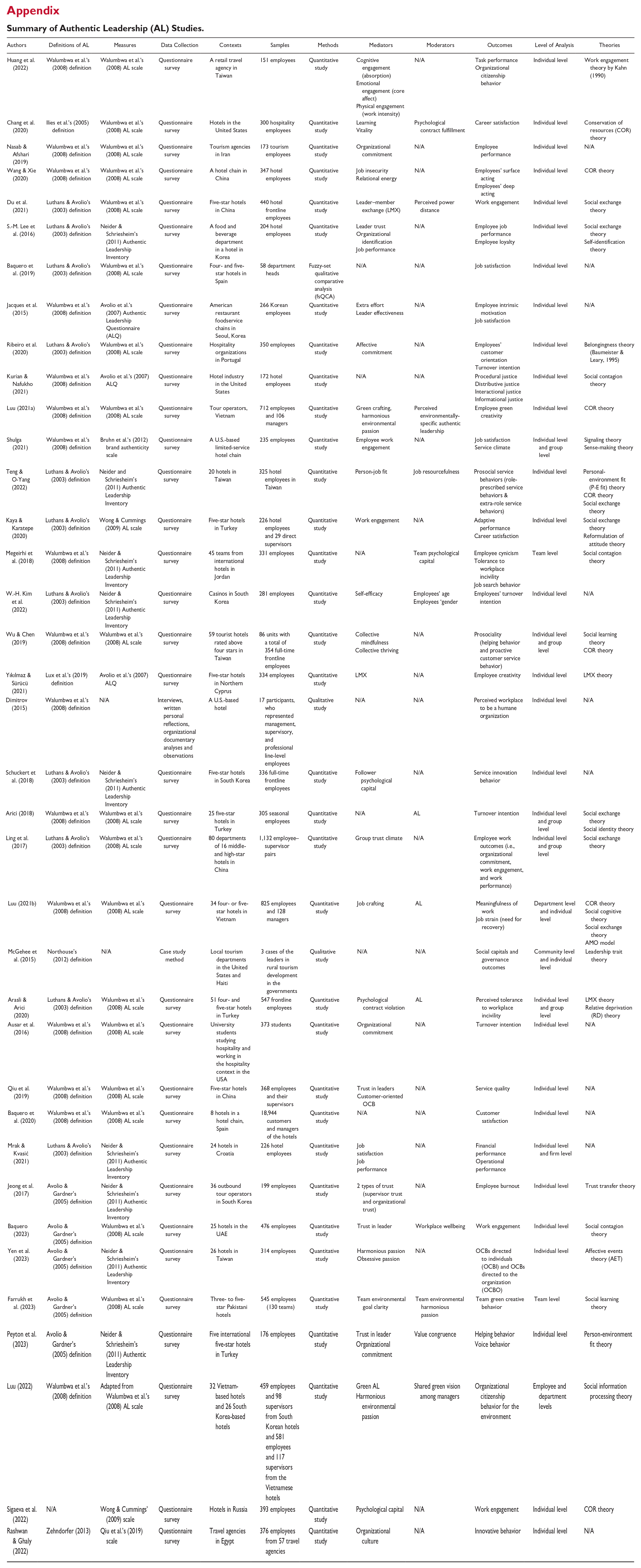
| Authors | Definitions of AL | Measures | Data Collection | Contexts | Samples | Methods | Mediators | Moderators | Outcomes | Level of Analysis | Theories |
|---|---|---|---|---|---|---|---|---|---|---|---|
| Huang et al. (2022) | Walumbwa et al.’s (2008) definition | Walumbwa et al.’s (2008) AL scale | Questionnaire survey | A retail travel agency in Taiwan | 151 employees | Quantitative study | Cognitive engagement (absorption) Emotional engagement (core affect) Physical engagement (work intensity) |
N/A | Task performance Organizational citizenship behavior |
Individual level | Work engagement theory by Kahn (1990) |
| Chang et al. (2020) | Ilies et al.’s (2005) definition | Walumbwa et al.’s (2008) AL scale | Questionnaire survey | Hotels in the United States | 300 hospitality employees | Quantitative study | Learning Vitality |
Psychological contract fulfillment | Career satisfaction | Individual level | Conservation of resources (COR) theory |
| Nasab & Afshari (2019) | Walumbwa et al.’s (2008) definition | Walumbwa et al.’s (2008) AL scale | Questionnaire survey | Tourism agencies in Iran | 173 tourism employees | Quantitative study | Organizational commitment | N/A | Employee performance | Individual level | N/A |
| Wang & Xie (2020) | Walumbwa et al.’s (2008) definition | Walumbwa et al.’s (2008) AL scale | Questionnaire survey | A hotel chain in China | 347 hotel employees | Quantitative study | Job insecurity Relational energy |
N/A | Employees’ surface acting Employees’ deep acting |
Individual level | COR theory |
| Du et al. (2021) | Luthans & Avolio’s (2003) definition | Walumbwa et al.’s (2008) AL scale | Questionnaire survey | Five-star hotels in China | 440 hotel frontline employees | Quantitative study | Leader–member exchange (LMX) | Perceived power distance | Work engagement | Individual level | Social exchange theory |
| S.-M. Lee et al. (2016) | Luthans & Avolio’s (2003) definition | Neider & Schriesheim’s (2011) Authentic Leadership Inventory | Questionnaire survey | A food and beverage department in a hotel in Korea | 204 hotel employees | Quantitative study | Leader trust Organizational identification Job performance |
N/A | Employee job performance Employee loyalty |
Individual level | Social exchange theory Self-identification theory |
| Baquero et al. (2019) | Luthans & Avolio’s (2003) definition | Walumbwa et al.’s (2008) AL scale | Questionnaire survey | Four- and five-star hotels in Spain | 58 department heads | Fuzzy-set qualitative comparative analysis (fsQCA) | N/A | N/A | Job satisfaction | Individual level | N/A |
| Jacques et al. (2015) | Walumbwa et al.’s (2008) definition | Avolio et al.’s (2007) Authentic Leadership Questionnaire (ALQ) | Questionnaire survey | American restaurant foodservice chains in Seoul, Korea | 266 Korean employees | Quantitative study | Extra effort Leader effectiveness |
N/A | Employee intrinsic motivation Job satisfaction |
Individual level | N/A |
| Ribeiro et al. (2020) | Luthans & Avolio’s (2003) definition | Walumbwa et al.’s (2008) AL scale | Questionnaire survey | Hospitality organizations in Portugal | 350 employees | Quantitative study | Affective commitment | N/A | Employees’ customer orientation Turnover intention |
Individual level | Belongingness theory (Baumeister & Leary, 1995) |
| Kurian & Nafukho (2021) | Walumbwa et al.’s (2008) definition | Avolio et al.’s (2007) ALQ | Questionnaire survey | Hotel industry in the United States | 172 hotel employees | Quantitative study | N/A | N/A | Procedural justice Distributive justice Interactional justice Informational justice |
Individual level | Social contagion theory |
| Luu (2021a) | Walumbwa et al.’s (2008) definition | Walumbwa et al.’s (2008) AL scale | Questionnaire survey | Tour operators, Vietnam | 712 employees and 106 managers | Quantitative study | Green crafting, harmonious environmental passion | Perceived environmentally-specific authentic leadership | Employee green creativity | Individual level | COR theory |
| Shulga (2021) | Walumbwa et al.’s (2008) definition | Bruhn et al.’s (2012) brand authenticity scale | Questionnaire survey | A U.S.-based limited-service hotel chain | 235 employees | Quantitative study | Employee work engagement | N/A | Job satisfaction Service climate |
Individual level and group level | Signaling theory Sense-making theory |
| Teng & O-Yang (2022) | Luthans & Avolio’s (2003) definition | Neider and Schriesheim’s (2011) Authentic Leadership Inventory | Questionnaire survey | 20 hotels in Taiwan | 325 hotel employees in Taiwan | Quantitative study | Person-job fit | Job resourcefulness | Prosocial service behaviors (role-prescribed service behaviors & extra-role service behaviors) | Individual level | Personal-environment fit (P-E fit) theory COR theory Social exchange theory |
| Kaya & Karatepe (2020) | Luthans & Avolio’s (2003) definition | Wong & Cummings (2009) AL scale | Questionnaire survey | Five-star hotels in Turkey | 226 hotel employees and 29 direct supervisors | Quantitative study | Work engagement | N/A | Adaptive performance Career satisfaction |
Individual level | Social exchange theory Reformulation of attitude theory |
| Megeirhi et al. (2018) | Walumbwa et al.’s (2008) definition | Neider & Schriesheim’s (2011) Authentic Leadership Inventory | Questionnaire survey | 45 teams from international hotels in Jordan | 331 employees | Quantitative study | N/A | Team psychological capital | Employee cynicism Tolerance to workplace incivility Job search behavior |
Team level | Social contagion theory |
| W.-H. Kim et al. (2022) | Luthans & Avolio’s (2003) definition | Neider & Schriesheim’s (2011) Authentic Leadership Inventory | Questionnaire survey | Casinos in South Korea | 281 employees | Quantitative study | Self-efficacy | Employees’ age Employees ‘gender |
Employees’ turnover intention | Individual level | N/A |
| Wu & Chen (2019) | Walumbwa et al.’s (2008) definition | Walumbwa et al.’s (2008) AL scale | Questionnaire survey | 59 tourist hotels rated above four stars in Taiwan | 86 units with a total of 354 full-time frontline employees | Quantitative study | Collective mindfulness Collective thriving |
N/A | Prosociality (helping behavior and proactive customer service behavior) | Individual level and group level | Social learning theory COR theory |
| Yıkılmaz & Sürücü (2021) | Lux et al.’s (2019) definition | Avolio et al.’s (2007) ALQ | Questionnaire survey | Five-star hotels in Northern Cyprus | 334 employees | Quantitative study | LMX | N/A | Employee creativity | Individual level | LMX theory |
| Dimitrov (2015) | Walumbwa et al.’s (2008) definition | N/A | Interviews, written personal reflections, organizational documentary analyses and observations | A U.S.-based hotel | 17 participants, who represented management, supervisory, and professional line-level employees | Qualitative study | N/A | N/A | Perceived workplace to be a humane organization | Individual level | N/A |
| Schuckert et al. (2018) | Luthans & Avolio’s (2003) definition | Neider & Schriesheim’s (2011) Authentic Leadership Inventory | Questionnaire survey | Five-star hotels in South Korea | 336 full-time frontline employees | Quantitative study | Follower psychological capital | N/A | Service innovation behavior | Individual level | N/A |
| Arici (2018) | Walumbwa et al.’s (2008) definition | Walumbwa et al.’s (2008) AL scale | Questionnaire survey | 25 five-star hotels in Turkey | 305 seasonal employees | Quantitative study | N/A | AL | Turnover intention | Individual level and group level | Social exchange theory Social identity theory |
| Ling et al. (2017) | Luthans & Avolio’s (2003) definition | Walumbwa et al.’s (2008) AL scale | Questionnaire survey | 80 departments of 16 middle- and high-star hotels in China | 1,132 employee–supervisor pairs | Quantitative study | Group trust climate | N/A | Employee work outcomes (i.e., organizational commitment, work engagement, and work performance) | Individual level and group level | Social exchange theory |
| Luu (2021b) | Walumbwa et al.’s (2008) definition | Walumbwa et al.’s (2008) AL scale | Questionnaire survey | 34 four- or five-star hotels in Vietnam | 825 employees and 128 managers | Quantitative study | Job crafting | AL | Meaningfulness of work Job strain (need for recovery) |
Department level and individual level | COR theory Social cognitive theory Social exchange theory AMO model |
| McGehee et al. (2015) | Northouse’s (2012) definition | N/A | Case study method | Local tourism departments in the United States and Haiti | 3 cases of the leaders in rural tourism development in the governments | Qualitative study | N/A | N/A | Social capitals and governance outcomes | Community level and individual level | Leadership trait theory |
| Arasli & Arici (2020) | Luthans & Avolio’s (2003) definition | Walumbwa et al.’s (2008) AL scale | Questionnaire survey | 51 four- and five-star hotels in Turkey | 547 frontline employees | Quantitative study | Psychological contract violation | AL | Perceived tolerance to workplace incivility | Individual level and group level | LMX theory Relative deprivation (RD) theory |
| Ausar et al. (2016) | Walumbwa et al.’s (2008) definition | Walumbwa et al.’s (2008) AL scale | Questionnaire survey | University students studying hospitality and working in the hospitality context in the USA | 373 students | Quantitative study | Organizational commitment | N/A | Turnover intention | Individual level | N/A |
| Qiu et al. (2019) | Walumbwa et al.’s (2008) definition | Walumbwa et al.’s (2008) AL scale | Questionnaire survey | Five-star hotels in China | 368 employees and their supervisors | Quantitative study | Trust in leaders Customer-oriented OCB |
N/A | Service quality | Individual level | N/A |
| Baquero et al. (2020) | Walumbwa et al.’s (2008) definition | Walumbwa et al.’s (2008) AL scale | Questionnaire survey | 8 hotels in a hotel chain, Spain | 18,944 customers and managers of the hotels | Quantitative study | N/A | N/A | Customer satisfaction | Individual level | N/A |
| Mrak & Kvasić (2021) | Luthans & Avolio’s (2003) definition | Neider & Schriesheim’s (2011) Authentic Leadership Inventory | Questionnaire survey | 24 hotels in Croatia | 226 hotel employees | Quantitative study | Job satisfaction Job performance |
N/A | Financial performance Operational performance |
Individual level and firm level | N/A |
| Jeong et al. (2017) | Avolio & Gardner’s (2005) definition | Neider & Schriesheim’s (2011) Authentic Leadership Inventory | Questionnaire survey | 36 outbound tour operators in South Korea | 199 employees | Quantitative study | 2 types of trust (supervisor trust and organizational trust) | N/A | Employee burnout | Individual level | Trust transfer theory |
| Baquero (2023) | Avolio & Gardner’s (2005) definition | Walumbwa et al.’s (2008) AL scale | Questionnaire survey | 25 hotels in the UAE | 476 employees | Quantitative study | Trust in leader | Workplace wellbeing | Work engagement | Individual level | Social contagion theory |
| Yen et al. (2023) | Avolio & Gardner’s (2005) definition | Neider & Schriesheim’s (2011) Authentic Leadership Inventory | Questionnaire survey | 26 hotels in Taiwan | 314 employees | Quantitative study | Harmonious passion Obsessive passion |
N/A | OCBs directed to individuals (OCBI) and OCBs directed to the organization (OCBO) | Individual level | Affective events theory (AET) |
| Farrukh et al. (2023) | Avolio & Gardner’s (2005) definition | Walumbwa et al.’s (2008) AL scale | Questionnaire survey | Three- to five-star Pakistani hotels | 545 employees (130 teams) | Quantitative study | Team environmental goal clarity | Team environmental harmonious passion | Team green creative behavior | Team level | Social learning theory |
| Peyton et al. (2023) | Avolio & Gardner’s (2005) definition | Neider & Schriesheim’s (2011) Authentic Leadership Inventory | Questionnaire survey | Five international five-star hotels in Turkey | 176 employees | Quantitative study | Trust in leader Organizational commitment |
Value congruence | Helping behavior Voice behavior |
Individual level | Person-environment fit theory |
| Luu (2022) | Walumbwa et al.’s (2008) definition | Adapted from Walumbwa et al.’s (2008) AL scale | Questionnaire survey | 32 Vietnam-based hotels and 26 South Korea-based hotels | 459 employees and 98 supervisors from South Korean hotels and 581 employees and 117 supervisors from the Vietnamese hotels | Quantitative study | Green AL Harmonious environmental passion |
Shared green vision among managers | Organizational citizenship behavior for the environment | Employee and department levels | Social information processing theory |
| Sigaeva et al. (2022) | N/A | Wong & Cummings’ (2009) scale | Questionnaire survey | Hotels in Russia | 393 employees | Quantitative study | Psychological capital | N/A | Work engagement | Individual level | COR theory |
| Rashwan & Ghaly (2022) | Zehndorfer (2013) | Qiu et al.’s (2019) scale | Questionnaire survey | Travel agencies in Egypt | 376 employees from 57 travel agencies | Quantitative study | Organizational culture | N/A | Innovative behavior | Individual level | N/A |
Declaration of Conflicting Interests
The author(s) declared no potential conflicts of interest with respect to the research, authorship, or publication of this article.
Funding
The author(s) received no financial support for the research, authorship, or publication of this article.
