



Abstract
Biodiversity and the science that addresses its conservation, loss, and recovery, including conservation biology and restoration ecology, are high on the contemporary global agenda. While the hospitality industry has taken major steps toward net carbon zero and even net positive business, we argue that it has another significant advance to make. The United Nations has dedicated 2021–2030 as the decade of ecosystem restoration, and along with it, several other organizations offer guidance on how businesses should approach the natural environment. Considering the role of hospitality as a consumer of nature, we call for the industry to implement these principles in practice through nature-based solutions and restorative and regenerative hospitality. To strengthen this transformation, we urge hospitality management education to include the basic concepts of ecology, biodiversity, and environmental science, along with their application, in curricula. By doing this, education can advance from presenting sustainability actions as a necessity into illustrating and justifying their need on a planetary scale. The change will facilitate the next step the hospitality industry must take in transforming its relationship with the natural environment.
Keywords
Introduction
Climate action failure and biodiversity loss pose severe threats to the fabric of society and industrial activities. More than half of the world gross domestic product (GDP) results from or is dependent on nature and its ecosystem services (World Economic Forum [WEF], 2020), but natural capital has declined 40% per person in the last two decades (Dasgupta, 2021). Nature and its ecosystem services are also at the heart of the hospitality value proposition. Far beyond nature providing crops for food and beverage offers and access to construction materials, hospitality operations monetize the beauty of pristine natural settings at destinations, and they are often marketed to restore the bodies and minds of guests, central to the concept of well-being and guest experience (Legrand, 2021).
Following these developments, protecting and restoring biodiversity is high on the agenda of businesses, governments, and society, and they are cemented in the United Nations (UN) Decade on Ecosystem Restoration (Food and Agriculture Organization of the United Nations [FAO], 2021). Biodiversity and ecosystem services are featured across the 17 Sustainable Development Goals (SDGs). More precisely, SDG 15 of the 2030 Agenda for Sustainable Development is devoted to the protection and restoration of ecosystems (UN, 2022a). While the Aichi Biodiversity Targets were largely unmet (Nature, 2020), a global post-2020 strategy is in place. It ranges from the Glasgow Leaders’ Declaration on Forests and Land Use, recognizing the critical importance of nature in climate mitigation and adaptation (COP26, 2021), to the 15th Conference of the Parties (COP15) and further to the UN Convention on Biological Diversity (CBD) and the Kunming–Montreal Global Biodiversity Framework (CBD, 2022). The world of business in general, and hospitality in particular, may be at a turning point in terms of dealing with the two sides of the same coin: the climate decarbonization obligation and the biodiversity restoration imperative.
Biodiversity refers to the diversity of life on earth, and it forms the base for the proper functioning of ecosystem services. These systems are being pushed beyond planetary boundaries (Rockström et al., 2009) and reaching rapidly the point of destruction. Conservation biology is about practices to protect and conserve all aspects of biodiversity and understand how to minimize biodiversity loss through protection of habitats and ecosystems (Soulé, 1986). The field focuses on developing sustainable activities through designing nature reserves, restoring habitat, and reconciling conservation concerns with human needs. Restoration ecology focuses on rescuing ecosystem function where it has been degraded by human activities (Society for Ecological Restoration International [SERI], 2004). Ecological restoration implies returning a system to its previous intact state, often involving active management to re-establish native species or remove unnatural elements; smaller-scale restorative actions range from rehabilitation of natural elements to assisting natural recovery of a site. A step further, rewilding, focuses on allowing the free evolution of species, systems, and processes with minimal human intervention to restore self-sustaining and complex ecosystems, based on dynamic processes rather than a predefined end state (Perino et al., 2019).
In this article, we focus on the largely overlooked interplay between hospitality management and environmental biology. We start by introducing its subfields relevant to hospitality management (those that address biodiversity loss), including conservation biology, restoration ecology, and rewilding. Subsequently, we discuss key policies and measures that target the “nature crisis” emerging from biodiversity loss. In the “Business and Biodiversity” section, we move from generalized frameworks to those that focus particularly on business. Finally, we turn the spotlight on the hospitality industry and hospitality management education. In doing so, we not only obtain insights into the current situation but also understand how future leaders for the industry are developed. We call for action in both industry and education. First, to complement current sustainability actions, the hospitality industry must incorporate an ecological perspective in business management, and we discuss initiatives that exemplify such synthesis. Our first contribution is, therefore, to emphasize that future hospitality management must be based on ecological realities. To facilitate this future, our second contribution is a call for inclusion of relevant components of biology in the hospitality management curriculum, mirroring progressive views in the general management education field (Moratis & Melissen, 2022; Wasieleski et al., 2021). As explained in the “Actions to Encompass Conservation Biology, Restoration Ecology, and Rewilding in Hospitality Management” section, current competencies taught in higher education revolve around managerial and transferable skills but fall short of a cross-disciplinary approach to education that incorporates the vital dependence of business on ecosystem services. We argue that educating future generations of hospitality leaders in the basics of ecology will broaden their horizons beyond the traditional aspects of management. We further maintain that a fundamental shift in hospitality business practices, and how these are taught in universities, is urgently needed to adapt the industry to the escalating biodiversity crisis that threatens our planet.
Biodiversity Loss and Its Mitigation
Hospitality relies on the natural environment either directly as the location of destinations and resorts or indirectly as a consumer of ecosystem services. Despite this, biology is seldom discussed in connection with hospitality management. The purpose of this section is to introduce the key biological concepts that environmental sustainability efforts in hospitality must build on.
Biodiversity Loss
Biodiversity refers to the diversity of life on earth, encompassing the diversity within species (genetic diversity), between species (species diversity), and the diversity of ecosystems; subsequently, it is the basis for the proper functioning of ecosystem services that are defined as services nature delivers to humans (CBD, 2006). Certain ecosystem services cannot be replaced by humans (e.g., the production of fertile soils), or they can be replaced inadequately (e.g., the pollination of crops), or at a very high cost (e.g., the filtering of air and water). Earth systems are being pushed beyond safe operating spaces (planetary boundaries; Rockström et al., 2009) and moving rapidly toward several dangerous tipping points related to the destruction of ecosystems. Subsequently, industries that are responsible for this rapidly evolving biodiversity crisis cannot remain oblivious to the developments.
We are witnessing an ever-worsening biodiversity crisis, in which the loss of biodiversity and ecosystem services is accelerated primarily by five (manufactured) influences: direct persecution (hunting, fishing, and pest control), habitat destruction, pollution, introduction of invasive species, and climate change. A few facts clarify the impact of humans on biodiversity. Scientists found an over 75% decline in total flying insect biomass in protected areas over 27 years (Hallmann et al., 2017). Today, wild mammals and birds collectively account for about 0.38% of biomass on earth, while livestock, accounting for about 4% of biomass on earth, outweighs wild mammals and birds by a factor of 10 (Bar-On et al., 2018). Three quarters of the land-based environment and about 66% of the marine environment have been significantly altered by human actions, leading to a massive loss of natural habitat for most species (Intergovernmental Science-Policy Platform on Biodiversity and Ecosystem Services [IPBES], 2019a). Today, only 2% to 3% of land surface is ecologically intact (Plumptre et al., 2021). Today’s extinction rate might be 1,000 times higher than the long-term background extinction rate (Pimm et al., 2014), and the Living Planet Index shows an average 68% fall in the monitored vertebrate species populations between 1970 and 2016 (World Wide Fund for Nature [WWF], 2020).
Although at first this may seem mainly like bad news for the animal and plant species affected, it has dramatic implications for humans as well. The economic value of ecosystem services provided annually is estimated to be about twice as high as the global annual GDP (Costanza et al., 1997), and about 60% of GDP is highly or moderately dependent on ecosystem services (Dasgupta, 2021). This means that we are directly dependent on biodiversity and ecosystem services and, thus, on intact nature. This dependence is not only economic but also encompasses our survival as a species.
What is particularly threatening is that the loss of biodiversity and ecosystem services brings us closer to the so-called tipping points, at which the Earth system rapidly transitions from one state that is comfortable to another that is stable but undesirable for humans (Lenton, 2013). Examples of this are the deforestation of the Amazon, which is transforming it from a rainforest ecosystem into a savannah ecosystem; this, in turn, will have massive effects on the global water balance and on the precipitation regime (Nobre et al., 2016).
The loss of biodiversity and ecosystem services, together with climate change, can be considered a global and dramatic dual crisis. Climate change not only exacerbates the loss of biodiversity but also deprives us of important options to combat it. Nature-based solutions to climate change are not only more cost-effective and efficient than technical solutions but also provide additional benefits through the restoration of ecosystem services.
Conservation Biology
Soulè (1985, 1986) proposed the first multidisciplinary approach to deal with the threat of human-caused extinctions that has been named “Conservation Biology.” The loss of biodiversity in the last decades is, as discussed in the previous section, unquestionably a global problem. Hence, protecting the world’s biological diversity has become of popular interest and the role of conservation biology of key importance (Mills, 2012). Conservation biology is a discipline that aims to address the loss of biological diversity by evaluating human impacts and developing practical approaches to prevent the decrease and extinction of species (MacDonald & Service, 2007). By integrating conservation policies with ecological theories, the field aims to provide answers to specific questions that can address management decisions and develop sustainable human activities. The goal is to define best strategies for protecting threatened species, reducing habitat and biodiversity loss, designing nature reserves (Jeffries, 2006), and reconciling conservation necessities with the needs of local people, also through sustainable tourism.
Conservation biology matured in the last decades and its applications largely spread and increased over the world. By applying scientific ecological principles to the goal of conserving nature, the field evolved by shifting from pure ecological questions to the social and political aspects of dealing with conservation (Hintzen et al., 2019). Today, there is an increasing acknowledgment that economic, political, and social aspects are fundamental for effective conservation of nature. The field is growing, not only through many successful publications (Hintzen et al., 2019) but also through an increase in funding of conservation projects and governmental participation in conservation activities (Sher, 2022). Conservation biology is hence based on the idea that the protection of biodiversity cannot be achieved by science alone, because the cause of habitat loss and species extinction lies in people’s attitudes, society, economics, and politics. Hence, conservation biology is based on a multidisciplinary and participatory approach, which aims at developing practical solutions to prevent loss of habitats and species.
The concept of Ecosystem Services was coined in 1981 by Ehrlich and Ehrlich and developed over the years (Costanza et al., 1997, 2017). In this concept, biodiversity is considered the base for the proper functioning of Ecosystem Services, defined as those services that contribute directly or indirectly to human well-being (McHale et al., 2018). This approach reframed ecological concerns in economic terms to emphasize that conservation practices were valuable economically, with further political benefits (Peterson et al., 2010). However, there are also socioeconomic costs and potential negative consequences resulting from conservation actions that need to be properly acknowledged (Chan et al., 2007). Some initiatives demonstrated that ecosystem functions provide valuable service to humanity, justifying protection of nature for its economic value (Peterson et al., 2010). Yet some ecosystems do not provide clear human benefits or an effective market, and focusing on human benefits only might ignore some complex ecological interactions (Chan et al., 2007).
Chan et al. (2007) claim that conservation biologists should argue for “conservation for biodiversity’s sake, not for its direct human benefits” (p. 59). In this manner, a recent debate stresses that the intrinsic value of biodiversity and nature is not captured by utilitarian measures (Batavia & Nelson, 2017). Batavia and Nelson (2017) conclude with the need of offering logical and moral reasons of why nature is important for its intrinsic value, and this should be relevant not just in the framework of conservation biology. The beauty of nature itself should be the base of conservation activities, sustainable tourism, and education; the goal should be to find the right balance with economic aspects by trying not just to incorporate economics into ecosystems but also ecosystems into economic concepts and terminology (Peterson et al., 2010). It has also been recommended that conservation biology should structure scientific research around policies, generate indications even when full scientific knowledge is lacking, address the question of how conservation can contribute to the improvement of the quality of human life (Robinson, 2006), and operationalize the concept of sustainability in a scientific manner (Lélé & Norgaard, 1996). Conservation biology is, therefore, a science that is still developing following the world’s biodiversity crisis, and it might in the future better include ecosystem services as a tool for conservation (Egoh et al., 2007; Redford & Adams, 2009) to allocate efficiently the limited resources that are available for biodiversity conservation. This is as much a matter of social choice as of scientific debate (Balvanera et al., 2001).
Restoration and Rewilding
With so much of the earth heavily affected by human activities, protecting the last remaining intact ecosystems is crucial but insufficient; there is also an urgent need for ecological restoration, which is the process of assisting the recovery of degraded, damaged, or destroyed ecosystems through establishing or re-introducing native flora and fauna (SERI, 2004). Extensive ecosystem restoration is increasingly recognized as crucial to conserving biodiversity and stabilizing the climate (Strassburg et al., 2020). The restoration of trees is one of the most effective strategies for climate change mitigation through carbon storage (Bastin et al., 2019), as well as improving the quality of degraded soils (Sauer et al., 2012) and ameliorating climate-associated impacts of altered hydrological cycles, protecting coastal areas from increasing storms, and providing habitat for endangered species (Locatelli et al., 2015). Wetlands are other biodiversity hotspots that are globally largely degraded but contribute disproportionately to annual renewable ecosystem services, such as improving water quality, flood abatement, and carbon sequestration (Zedler & Kercher, 2005). Restoration is equally important for other ecosystems, such as rivers that may involve dam removal to improve connectivity and enhance watershed resilience (Magilligan et al., 2016), grasslands and savannah (Dudley et al., 2020), degraded coastlines (Sajjad et al., 2018), and everywhere else that human exploitation has damaged or destroyed ecosystem function from deserts (Shamsutdinov & Shamsutdinov, 2012) to coral reefs (Van Oppen et al., 2017).
Ecological restoration implies returning a system to its previous intact state, often involving active management to re-establish native species or remove unnatural elements. At its broadest scale, this would encompass ecosystem and landscape restoration. Restoration ecology is the science underpinning these management decisions, drawing on understanding of the abiotic (soil, minerals, water, sunlight) and biotic (plants, animals, soil micro-organisms) factors involved and the complex nutrient cycles and energy flows between them, as well as the human element, to deliver functions such as ecosystem services and resilience (Perring et al., 2015). It requires awareness of initial underlying ecosystems so that degraded grasslands and savannahs are not converted to forests, or native forests to monoculture plantations, in a misplaced hurry to store carbon in trees (Dudley et al., 2020).
Rewilding is a specifically more passive branch of restoration, differing in that it is not based on a predefined end state but rather on dynamic processes, focusing on allowing the free evolution of species, systems, and processes with minimal human intervention to restore complex, self-sustaining ecosystems; it often also involves the reintroduction of extirpated species or their functional analogs to re-establish ecosystem cycles (Perino et al., 2019). It can involve less cost and effort, but the resulting system might not resemble the original community that preceded the human degradation; some initial interventions may, therefore, be required to re-introduce key species (Hall, 2019). The natural return of other extirpated species to rewilded areas can provide hope and inspiration for people who feel despair at the overwhelming scale of environmental destruction. By allowing people to reconnect with nature close to home, rewilding initiatives can also relieve pressure on pristine protected areas. Even on a small scale, restored or rewilded land can help to create wildlife corridors, which are patches of safe habitat for wildlife linking larger areas of isolated habitat together, enabling movement and genetic exchange among populations in a fragmented landscape (Williams & Snyder, 2005).
There is great potential for the hospitality industry to embrace these approaches, moving beyond mitigating its impacts to actively improving the environment and enhancing biodiversity and ecosystem services, such as pollination, water regulation, carbon storage, wildlife corridors, and climate resilience. Rewilding, in particular, has great tourism potential, from birdwatching to wildlife safaris to nature retreats and recreation destinations; along with other ecosystem services, it provides a major economic justification for rewilding (Hall, 2019). Ecological restoration can also supply ethically meaningful experiences (Kuokkanen & Catrett, 2023) for environmentally conscious tourists, as well as improve conditions for local communities and contribute to the global struggle against climate change and biodiversity loss.
Global Policy Framework
The international community’s interest in biodiversity has led to numerous conferences since the seminal work accomplished at the 1992 Earth Summit, known as the Rio Conference. The establishment of the United Nations Framework Convention on Climate Change (UNFCCC) and the UN CBD are two influential outputs from the Earth Summit (UN, 1992a, 1992b). The UNFCCC drives the global agenda around climate change, with a key international treaty, the Paris Agreement, adopted at the 21st COP in 2015 (UNFCCC, 2022). At the center of the CBD is the understanding that biodiversity requires not only protection but also an equitable and sustainable use of its components, described as ecosystem services (CBD, 2016). The CBD is a multilateral legally binding treaty ratified by 196 nations (CBD, 2016; UN, 2022b).
Strategic plans are central to the way the CBD functions. It sets strategic goals and targets and calls parties to translate them into national biodiversity action plans (CBD, 2020d). The Aichi Biodiversity Targets set for the period 2011–2020 (CBD, 2020a) were largely unmet or only partially achieved (CBD, 2020b). The most notable points of criticism regarding CBD implementation include a lack of review systems on national implementation of targets and the absence of mechanisms for accountability of the parties (Ulloa et al., 2018). Despite the setback, the CBD is central to the way society understands and values its surroundings. The failure of the global community to meet the Aichi Biodiversity targets coincides with increased reports and scientific research publications on the steep decline in biodiversity (e.g., Ceballos et al., 2020; Cowie et al., 2022; IPBES, 2019a). Biodiversity loss and the sixth mass extinction (Barnosky et al., 2011) are “the most serious threat to civilization, because it is irreversible” (Ceballos et al., 2020, p. 13596). Ultimately, biodiversity and ecosystem services are fundamental to topics such as food production and food security, pharmaceutical innovations and medicine, clean air and water, and production of materials, for example, timber, necessary to the construction and design of infrastructures, including hotels.
The Kunming–Montreal Global Biodiversity Framework
The major policy work on biodiversity, known as the Post-2020 Global Biodiversity Framework, was planned for 2020. However, the COVID-19 pandemic, while bringing increased attention to humanity’s impact on the natural environment and the effect of ecosystem disturbances, resulted in a postponed COP15. The Kunming–Montreal Global Biodiversity Framework was eventually adopted by the parties to CBD in December 2022. The agreement is designed to address the ongoing biodiversity crisis through a set of four long-term goals (2050) and another set of 23 targets for the conservation and sustainable use of biological diversity to be achieved by 2030 (CBD, 2022). The specific targets include the active restoration of 30% of degraded land and marine ecosystems (Target 2) and the conservation of 30% of land, water, coastal, and marine areas by 2030 (Target 3; CBD, 2022). In addition, the global community engages itself in reducing pollution from all sources by 2030 to levels that are not harmful to biodiversity and ecosystem functions and services (Target 7) and agrees to increase funding for biodiversity from domestic, international, public, and private sources to at least US$200 billion per year by the same year (Target 19; CBD, 2022). The private sector plays a critical role in this latter target by investing in biodiversity through impact funds, green bond biodiversity offsets, and other public–private partnerships, further discussed in “The Private Sector and the Policy Frameworks” section.
Conventions Supporting the CBD
The CBD provides an umbrella biodiversity framework with an additional set of international agreements covering specific biodiversity issues, such as the Ramsar Convention on Wetlands (Ramsar, 2022), the Convention on International Trade in Endangered Species of Wild Fauna and Flora (CITES, 2022), the Convention on the Conservation of Migratory Species of Wild Animals (CMS, 2022), and the UNESCO World Heritage Convention (WHC, 2022). Each convention established specific mandates for cooperation with biodiversity-related topics, and joint programs were designed to ensure a greater cross-disciplinary approach. The IPBES fosters the science–policy interface and knowledge building for biodiversity and ecosystem services; these include the publication of the annual Global Assessment Report on Biodiversity and Ecosystem Services (IPBES, 2019b).
National Biodiversity Strategy and Action Plans
While a complete listing of national biodiversity policies is beyond the scope of this article, we note that the Aichi Biodiversity Target 17 called for each country to develop and adopt a policy instrument by 2015 and implement a national strategy and actions (CBD, 2020c). The CBD’s national biodiversity strategy and action plans (NBSAPs) are tools “for translating the measures set out in the Convention on Biological Diversity, and in other biodiversity-related conventions, into national action and for creating a path to the achievement of concrete outcomes” (United Nations Environment Programme [UNEP], 2018, p. 8). National reports are either available via a clearing-house mechanism and accessible on a dedicated platform (Clearing-House Mechanism, 2022) or by accessing the CBD portal (CBD, n.d.). In all, 177 countries have submitted NBSAPs since COP10. While the reports provide an overview of a country’s performance on the 2011–2020 Aichi Targets, they also give an overview of national legislation and regulation surrounding the implementation of the CBD. Numerous countries have also submitted national biodiversity strategy toward 2025 (e.g., Fiji) or 2030 (e.g., Australia; CBD, 2020c).
The European Union Green Deal and Biodiversity Strategy for 2030
The 2020 European Green Deal is a set of climate, energy, transportation, and taxation policies directed at transforming the European economy to achieve climate neutrality by 2050; in it, growth is decoupled from resource usage while aiming at a just transition for everyone (European Commission [EC], 2022a). However, the latest report on the state of nature within the European Union (EU) concludes that biodiversity has experienced a decline during 2013–2018 (EC, 2020). Two EU directives form the cornerstone of the EU biodiversity policy (EC, 2020): (a) Directive 2009/147/EC on the conservation of wild birds (known as the Birds Directive), and (b) Council Directive 92/43/EEC on the conservation of natural habitats and of wild fauna and flora (known as the Habitats Directive). A coordinated network of protected areas, Natura 2000, aims to ensure “the long-term survival of Europe’s most valuable and threatened species and habitats, listed under both the Birds Directive and the Habitats Directive” (EC, n.d., para. 2).
Following these separate actions, the EC adopted the EU Biodiversity Strategy for 2030 as the umbrella strategy. The strategy builds on four pillars: (a) protect nature, (b) restore nature, (c) enable transformative change, and (d) deploy action to support biodiversity globally (EC, 2021). While a key component of the EU Biodiversity Strategy for 2030 is protection, a “nature restoration law” has also been proposed with legally binding “targets to restore degraded EU ecosystems, in particular those with the most potential to remove and store carbon and to prevent and reduce the impact of natural disasters” (EC, 2022b, p. 2). However, operationalization and coordination between and within EU member states on the topic of biodiversity protection and restoration remains a challenge. Implementation of directives, adequate and sufficient funding, and designation and management of new protected areas cause disagreement among countries (Hermoso et al., 2022).
Impacts of Intergovernmental Platforms on the Private Sector
Intergovernmental platforms on biodiversity can have a significant impact on the private sector. By setting global targets, guidelines, and policies, the CBD ultimately informs and influences national laws and regulatory frameworks within which businesses operate. Similarly, those platforms can provide guidance on how to manage risks, reducing business exposure to potential financial, legal, and reputational risks. This is, particularly, the case for hospitality businesses that are dependent on biodiversity. Finally, the work of intergovernmental platforms on biodiversity can also create opportunities for the private sector and guide the biodiversity finance mechanisms, such as biodiversity offsets, forest and land use carbon finance, and similar tools (Organisation for Economic Cooperation and Development [OECD], 2020).
Business and Biodiversity
The socioeconomic case for biodiversity includes two aspects: (a) value of ecosystem services and (b) costs of inaction. Biodiversity is a source of significant economic value estimated at US$125 to 150 trillion per year, almost twice the global GDP (Kurth et al., 2021; OECD, 2019). The costs of biodiversity loss are estimated at US$4 to 20 trillion annually due to land-cover change and US$6 to 11 trillion annually due to land degradation (OECD, 2019). The root cause is a growing demand for food, water, land, and energy (OECD, 2019). From unstable supply of raw materials resulting from degraded natural conditions to losses due to extreme weather events, diminished ecosystem services pose numerous risks to the business sector.
The dependency on biodiversity and the impact of business activities are increasingly being addressed in yearly environmental, social, and governance (ESG) reports of companies under the concept of double materiality. Biodiversity can have significant impacts, positive or negative, on the financial performance of a business, defined as financial materiality (EC, 2019). Simultaneously, a company can affect biodiversity through its operations; this is known as social materiality. This double materiality was first introduced in the EU Non-Financial Report Directive (NFRD) and expanded under the EU Corporate Sustainable Reporting Directive (CSRD), which requires businesses to address both the financial and social materiality in disclosing their ESG performance (EC, 2019). Double materiality also means identifying sustainability risks. Regarding biodiversity and business, relevant risks “include ecological risks, i.e., operational risks related to biodiversity impacts and resource dependency, scarcity and quality; liability risks, i.e., risk of legal suits; regulatory risks; reputational and market risks, linked to stakeholders’ pressures or preferences changes; and financial risks” (OECD, 2019, p. 13). Supporting global biodiversity frameworks and state and local conservation and biodiversity restoration programs is, simultaneously, risk management and a way to engage with stakeholders to maintain a license to operate.
The Private Sector and the Policy Frameworks
The private sector has an important role to play in supporting the international and national policy frameworks. Public–private partnerships to implement solutions and support private sector investment in biodiversity conservation and habitat restoration are crucial. For example, the Global Partnership for Business and Biodiversity was launched by the CBD over a decade ago to engage businesses in conservation that addresses biodiversity loss (CBD, 2021). The International Union for Conservation of Nature (IUCN) has established a business and biodiversity program that includes regular publication of guidelines (see section “Biodiversity Measures and Performance”; IUCN, n.d.). Similarly, the Iberostar hotel group entered a public–private partnership with the German Agency for International Cooperation (GIZ) and the Ministry of Environment of the Dominican Republic, with the aim of implementing a series of conservation measures of marine-coastal ecosystems, including coral and mangrove restoration (Iberostar, 2022a; Infoturdominicano, 2021). Cooperating with stakeholders from local and Indigenous communities and conservation organizations to identify and address the most pressing biodiversity challenges is an important step to ensure that business operations do not negatively affect biodiversity or threaten the livelihoods of those who depend on it (Sterling et al., 2017).
Policy frameworks can also translate into supporting state and local conservation programs and non-governmental organizations (NGOs) that are working to conserve and restore biodiversity via technical and financial support or donation of goods and services. The 1t.org, an initiative of the WEF, aims to conserve, restore, and grow 1 trillion trees by 2030, and it is an example of private sector mobilization to support the UN Decade on Ecosystem Restoration (1t, 2022). More than 80 companies have supported the initiative to date, with action in more than 65 countries through multi-stakeholder partnerships (1t, 2022). Another example is encouraging biodiversity research, such as the provision of scholarship and other direct funding, toward the development of new conservation technologies and the implementation of monitoring programs that track changes in biodiversity (i.e., scholarships for rebuilding coral reefs provided by the Iberostar Foundation). The private sector can support biodiversity frameworks by empowering employees to volunteer for local conservation and restoration programs and by promoting consumer awareness through transparency on product and service performance on biodiversity. Along the same lines, adopting sustainable operational practices that reduce impact on biodiversity, such as mitigating greenhouse gas emissions, implementing responsible sourcing practices, and adopting a circular approach to resource management, are critical steps for the private sector to implement (Legrand et al., 2022).
While biodiversity and ecosystem services are crucial to the development and proper functioning of businesses, research reveals that they still struggle with the biodiversity topic (Wagner, 2022). Companies wanting to report on biodiversity require clear and simple measures and indicators that are relevant to their specific sectors (Addison et al., 2018). Disclosing biodiversity impacts and performance is an important transparency step that enables stakeholders not only to hold businesses accountable but also to encourage them to improve biodiversity conservation and restoration. The hospitality sector has a different relationship with the natural environment compared with, for example, the mining or forestry sectors. In practice, this means that “whilst some businesses are seeking one indicator to be used across a variety of business applications, the reality is that assessing biodiversity performance for different business applications at different temporal and spatial scales will often require different indicators” (Addison et al., 2018, p. V). Developing indicators that represent the complexity of biodiversity and natural systems is a challenge tackled by scientific researchers, conservation organizations, governmental and non-governmental institutions, and businesses, with promising results (Stephenson & Carbone, 2021).
Biodiversity Measures and Performance
There is an increased number of guidance and frameworks on defining and establishing biodiversity indicators for businesses. These include, but are not limited to, the following:
Capitals Coalitions and Cambridge Conservation Initiative (2020): Biodiversity guidance
Conservation Standards (2020): Open standard for the practice of conservation
Global Reporting Initiative (2018): GRI 304 Biodiversity 2016
IUCN (Stephenson & Carbone, 2021): Guidelines for planning and monitoring corporate biodiversity performance
Science-Based Targets Network (2021): Science-Based Targets for Nature—Initial Guide of Business
Taskforce on Nature-Related Financial Disclosures (2022): The TNFD framework
Cambridge Institute for Sustainability Leadership (CISL) and the Natural Capital Impact Group developed the Biodiversity Impact Metric to “to assess and track how a business’s sourcing affects nature, through the biodiversity lost as a result of land and habitat transformation for agricultural production and the intensity of land use” (CISL, 2020, p. 7). In managing its supply chain risks, a business using the Biodiversity Impact Metric must identify the type of commodity purchased, the sourcing country, and the quantity purchased. This information that guides the metric calculation is based on land area (i.e., hectares required to grow a commodity), land use, and biodiversity abundance impact from commodity production (compared with a pristine state) as well as biodiversity importance (i.e., species richness and uniqueness) (CISL, 2020).
The purpose of the metric is for any business to “undertake a rapid risk-screening of its sourcing in order to identify where the greatest impacts are likely to occur, thereby helping to prioritize further investigations and interventions” (CISL, 2020, p. 7). There are some limitations to a single-metric approach in the hospitality sector. First, the complexity of hospitality development and operations, with one hotel chain owning, operating, or franchising thousands of hotel properties across the globe, each with an extensive supply chain, which makes biodiversity impact assessment difficult. Second, the food and beverage department deals with end-products that include hundreds of ingredients and lengthy procurement routes, and the creation of impact scoring for these remains a tedious endeavor. Therefore, there is still room for improvement in planning, measuring, and monitoring corporate biodiversity performance. The IUCN published a detailed report laying out guidelines for planning and monitoring corporate biodiversity performance (Stephenson & Carbone, 2021). The four-stage approach includes (a) understanding a company’s impacts on biodiversity, (b) developing a company biodiversity strategy, (c) developing a framework of indicators, and (d) collecting, sharing, and analyzing data and adapting accordingly (Stephenson & Carbone, 2021). Examples of corporate biodiversity goals, objectives, key strategies, and types of indicators are presented, supported with an explanation of the types of data collected and data collection methods.
The World Benchmarking Alliance (WBA), a multi-stakeholder consortium, has developed the Nature Benchmark methodology related to corporate impacts on nature (WBA, 2022). The idea behind a benchmark on nature is for businesses to understand their relative performance when compared with peers to inform stakeholders. The Nature Benchmark is built around 25 transformation indicators and 18 core social indicators on human rights, decent working conditions, and ethical conduct (for details, WBA, 2022). In a “race to the top”–approach, where laggards catch up with leaders, the WBA plans to assess 1,000 of the largest companies using the Nature Benchmark by the end of 2023 (WBA, 2022.
Biodiversity Offsets
The use of biodiversity offsets has increased in popularity with governments and businesses adopting offsetting policies and practices to address the environmental impacts of development (Droste et al., 2022). Biodiversity offsets are a mechanism for compensating for biodiversity losses through equivalent gains elsewhere (Bull et al., 2013). The IUCN defines biodiversity offsets as “measurable conservation outcomes designed to compensate for adverse and unavoidable impacts of projects, in addition to prevention and mitigation measures already implemented” (IUCN, 2016a, para. 1). However, potential abuse of biodiversity offsets has raised concerns (Maron et al., 2015, 2016). One major concern is that offsets can be used as a license to continue negatively affecting biodiversity, with businesses relying on offsets to justify damaging activities (Maron et al., 2015). In addition, there are questions about the effectiveness of offsets in achieving the goal of “no net loss” in biodiversity, as it can be difficult to accurately measure and account for the complex interactions and dependencies between different species and ecosystems (zu Ermgassen et al., 2019). Offsets may also exacerbate social and environmental inequalities, as marginalized communities could be disproportionately affected by biodiversity loss and may not benefit from offsetting activities (Tupala et al., 2022).
To provide guidance for the design, implementation, and monitoring of such offsets, the IUCN established a Policy on Biodiversity Offsets (IUCN, 2016b). It emphasizes a mitigation hierarchy, where offsets should be the last resort after efforts to avoid, minimize, and reverse impacts have been exhausted (IUCN, 2016b). Offsets should also be designed to achieve “no net loss” or, preferably, a “net gain” of biodiversity that refers to the outcome achieved by the offsets compared with the reference scenario (IUCN, 2016b). The policy stresses the importance of stakeholder engagement and transparent decision-making processes, as well as the need for long-term monitoring and adaptive management. Overall, biodiversity offsets have the potential to be a useful tool for addressing the impact of business activities on biodiversity by compensating for negative impact (no net loss) and reversing losses (net gain). However, they require careful planning and monitoring and should be handled as parts of a broader strategy that prioritizes the protection and restoration of ecosystems.
Nature-Positive Hospitality
The 10 principles for ecosystem restoration (Table 1) are components of a roadmap to transform the way economies function. This proposes a paradigm shift from doing less harm via mitigation of impacts and adaptation strategies toward a nature-positive approach. Various terms are used to refer to a state of regenerated or increased levels of biodiversity. The term “net gain” in biodiversity refers to achieving a positive conservation outcome that exceeds compensating for the negative impacts of development, resulting in an overall increase in biodiversity (IUCN, 2016b) with specific positive outcomes for local communities (Jones et al., 2019). Moilanen and Kotiaho (2021) discuss the concept of “net positive impact” on biodiversity when using biodiversity offsets. More recently, there is a general shift toward the use of “nature positive” rather than “no net loss/net gain/ net positive impact,” but without an agreed definition (zu Ermgassen et al., 2019). Nature positive, as a generic term, describes a context where nature, with its diversity in species, ecosystems, and natural processes, is actively supported via protection and restoration activities that ensure greater planetary and societal resilience (Holdorf et al., 2021; UNDP, SCBD & UNEP-WCMC, 2021; WWF, 2020). Nature positive also implies transformation of economic activities, with a focus on “net positive outcomes for nature” (Bull et al., 2020, p. 1). Central to the concept of net positive is “to ensure that any biodiversity losses are not ecologically irreplaceable, that they are socially acceptable and that they are more than fully compensated for, so that overall, nature is retained or restored in net terms” (Bull et al., 2020, p. 1). For businesses, this implies a quantification of biodiversity losses and gains following accepted, transparent, and reliable frameworks, as discussed in the previous section.
Ten Principles for Ecosystem Restoration, Declaring 2021–2030 the United Nations Decade on Ecosystem Restoration.
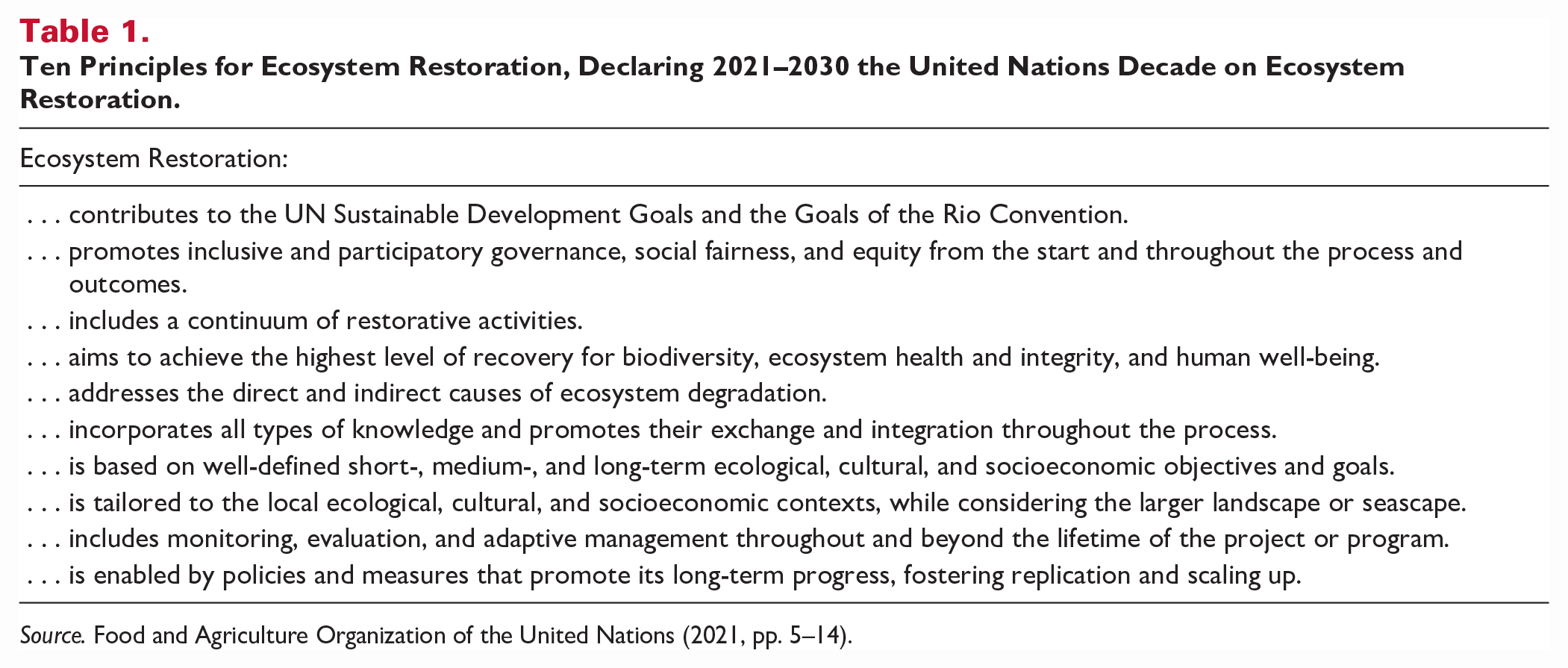
Source. Food and Agriculture Organization of the United Nations (2021, pp. 5–14).
The Nature-Based Economy Working Group of Task Force III of the EC defined nature-based economy as follows: “The Nature-based Economy encompasses all production, exchange and consumption processes related to activities concerned with the protection, conservation, restoration and sustainable use of natural resources by consumers, industry and society” (McQuaid et al., 2021, p. ii). The Nature-Positive Hub at the CISL (2022) uses the term nature-positive economy and defines it as an economy in “which businesses, governments and others take action at scale to minimize and remove the drivers and pressures fueling the degradation of nature, to actively improve the state of nature itself and to boost nature’s contribution to society” (para. 3). The restoration of biodiversity and sustainable use of ecosystem services are common to both definitions.
In the hospitality sector, net zero, rather than nature positive, has taken center stage. The hospitality industry has entered the 2021–2030 decade with a series of high-level commitments and pledges toward net zero emissions by mid-century (e.g., Glasgow Declaration on Climate Action in Tourism; Net Zero Roadmap for Travel and Tourism) with supporting methodologies (e.g., Net Zero Methodology for Hotels). Net zero refers to balancing the amount of greenhouse gas emissions that are released into the atmosphere with an equal amount of greenhouse gas removals through technology, such as carbon capture and storage, or nature-based projects, such as restoring forests or wetlands (International Organization for Standardization, 2022). Net positive goes beyond net zero, with the aim to actively improve environmental conditions (e.g., The Sustainable Hospitality Alliance’s Pathway to Net Positive). Developing biodiversity goals, monitoring and measuring impacts, and investing in reversing the degradation of ecosystems and restoring the natural beauty of destinations that the industry monetizes are crucial in moving forward. However, the sector must look further into nature-positive hospitality, and the implementation of nature-based solutions and the integration of biophilic design can provide human well-being and biodiversity benefits simultaneously (IUCN, 2016c; Kellert, 2016).
Actions to Encompass Conservation Biology, Restoration Ecology, and Rewilding in Hospitality Management
Signs of incorporating the relevant fields of environmental biology are emerging among operators in the hospitality industry. In the following section, we first present examples that support the feasibility of merging biology conservation and ecological restoration with hospitality business. The industry also includes examples where merely ceasing a practice bad for biodiversity would improve things, but as our focus is on incorporating conservation and restoration actions in hospitality, we disregard them on purpose. Next, we turn to hospitality management education, thus far dormant on the subject, and argue for the importance of incorporating relevant fields of biology as curriculum components for the future leaders of the industry.
Nature-Based Solutions
Nature-based solutions are defined as “actions to protect, sustainably manage, and restore natural or modified ecosystems that address societal challenges effectively and adaptively, simultaneously providing human well-being and biodiversity benefits” (IUCN, 2016c, p. 1). Of these solutions, green roofs, walls, and spaces are particularly applicable to the built environment, such as hotel real estate (Dumitru & Wendling, 2021; Winch et al., 2020; World Bank, 2021). A hotel company with the goal of combating urban heat, while restoring the biodiversity destroyed or negatively affected by construction, may consider using a green cover replacement strategy, such as the Green Plot Ratio (GnPR), and plan the building construction accordingly. The GnPR is a metric representing the amount of greenery present at a specific site to estimate benefits, such as water drainage, carbon sequestration, and source of nectar for insects (Ong, 2003). The Parkroyal Collection Pickering and the Oasia Hotel Downtown, both in Singapore, are examples of extensive green cover replacement in hotel buildings. In fact, urban areas are a significant source of floral diversity for insects, with 85% of the nectar sources attributed to residential gardens, supporting the importance of greening urban buildings and spaces (Tew et al., 2021).
A thorough analysis of the environment a hotel operates in helps to support the development of an effective biodiversity strategy. Iberostar (2022b) owns and operates hotel properties located at seaside, and coastal health is critical to the company’s success. Coral reefs and mangroves ensure coastal protection from storm surge, flooding, and erosion (Spalding et al., 2014). Protection and restoration work is a matter of managing the physical and the reputational risks. A healthy coast is a magnet for travelers who may enjoy seaside activities, such as snorkeling and scuba diving, and report positively on their stay experience. Finally, coastal restoration represents an important socioeconomic value for local communities (Ellison et al., 2020). Such activities can not only improve the livelihoods of the social and natural environments but also offer a competitive advantage to a hotel through providing customers with ethically meaningful customer experiences and develop purpose for the industry (Kuokkanen, 2020; Kuokkanen & Catrett, 2023).
The Impact of Hospitality on the Ecosystem: Regenerative Hospitality
Contemporary hospitality is based on a linear value chain of suppliers, distributors, operators, and consumers with a system of inputs (e.g., reservoirs of raw material) and outputs (e.g., pollution). Attention is given to reducing and minimizing the impacts of both input and output stages. Beyond minimizing impacts, parts of the hospitality sector engage in restorative hospitality, which focuses on fixing and repairing damaged habitats and natural processes along the principles of restoration ecology. Regenerative hospitality is a step beyond restoration, and it “takes place when the ecological, social or climate systems are in better condition because the company is present in society” (Legrand, Cavagnaro, et al., 2020, p. 166). Regenerative hospitality involves a collaborative relationship between humans and nature with an inclusive approach to economic systems, and it implements the principles of circular economy in hospitality (Jones & Wynn, 2019), while aiming at a long-term improvement in the ecosystem that surrounds a business. While best practice examples of ecosystem restoration and conservation are varied (Legrand, Gardetti, et al., 2020), we have chosen two illustrations that best reflect the inclusion of restoration ecology and rewilding into the hospitality offering.
The Long Run
The Long Run (TLR, 2022) is a network of nature-based properties, destinations, and travel partners dedicated to fostering the positive impact of travel experiences; its approach is anchored in the 4Cs framework of conservation, community, culture, and commerce. TLR works with Preferred by Nature, a non-profit organization dedicated to improving land management and business practices through certification, awareness, and capacity building programs (Preferred by Nature, 2022). Collectively, more than 50 members of TLR conserve 23-million acres of land where fauna and flora can thrive in biodiverse ecosystems (TLR, 2022).
Two members of TLR represent cases of proactive, privately established and managed marine protected areas (MPAs): Chumbe Island in Zanzibar, Tanzania, and Misool Marine Reserve in Indonesia (Northrop et al., 2022). They join a growing number of privately protected areas (PPAs), defined as “a clearly defined geographical space, recognized, dedicated and managed, through legal or other effective means, to achieve the long-term conservation of nature with associated ecosystem services and cultural values” (Mitchell et al., 2018, p. ix). The conserved areas and conservation efforts are established and managed by an individual landowner, whether a non-profit (e.g., university, NGO) or a for-profit business (Mitchell et al., 2018). PPAs demonstrate evidence of not only conservation successes (Clements et al., 2018) but also potential and real conflicts (Borrie et al., 2022).
Chumbe Island and Misool Marine Reserve are examples of the successful establishment of marine privately protected areas (M-PPAs) led by recognized ecotourism businesses (Northrop et al., 2022). Chumbe Island developed a series of eco-bungalows to fund the conservation effort and education programs (Northrop et al., 2022). The Coral Reef Sanctuary is a 55-hectare protected area hosting more than 400 reef fish species (Chumbe Island, n.d.-a). Beside the M-PPA, Chumbe Island Forest Reserve is home to hundreds of plant and bird species, crustaceans, non-poisonous snakes, and lizards, as well as rare and endangered species such as the “Ader’s Duiker, a critically endangered mini-antelope and a large population of Coconut crabs, the largest living arthropod in the world” (Chumbe Island, n.d.-b, para. 3). By becoming an M-PPA, the “fish biomass in the no-take reef sanctuary has increased by 750 percent, with the spillover effect supporting sustainable fisheries and food security many kilometers from Chumbe’s borders” (Northrop et al., 2022, p. 73). Similarly, the Misool Marine Reserve in Indonesia is a PPA with a no-take zone (NTZ), which prohibits the extraction of marine resources (Day et al., 2019). The “fish biomass in the NTZ areas has increased by 250 percent, and there are approximately 25 times more sharks within the reserve than directly outside of the protected areas” (Northrop et al., 2022, p. 73).
TLR’s 4Cs approach provides member organizations and businesses with a framework on how to protect ecosystems and engage with communities while generating the financial means to support their long-term business endeavors (Northrop et al., 2022). TLR members are located in diverse biomes with distinctive geography, topography, and climate features, and dedicated commitment to the conservation of land or marine environment is an essential component of becoming a member of TLR.
Rewilding at Knepp Estate
The Knepp Wildland project in West Sussex, England, is a prominent example of a successful rewilding initiative (Knepp, 2022). Through the introduction of significant numbers of grazing and browsing animals to what was previously an intensively farmed estate, the landscape has regenerated into a mix of scrubland, forest, and savannah, supporting the spontaneous return of several endangered species, including turtle doves, nightingales, and peregrine falcons while increasing biodiversity and ecosystem services and generating economic activity and employment in the hospitality sector (Dempsey, 2021).
Knepp’s business, which offers a variety of walking or vehicle-based wildlife safaris; accommodation in shepherd’s huts, tree houses, yurts, and cabins; as well as a camping area and a shop, has a turnover of around £800,000 per year, with a 22% profit margin (Rewilding Britain, 2022). The free-roaming red deer, fallow deer, and roe deer, as well as Exmoor ponies, longhorn cattle, and Tamworth pigs, all serve to create disturbances in the vegetation, maintaining a mosaic of shifting habitats. This has provided homes for an ever-increasing number of bird, bat, and butterfly species, as well as attracted visitors. Culling the herds also supplies a “wild meat” business that produces 75 tons (live weight) of organic, pasture-fed beef, venison, and pork per year, bringing in around £120,000. As the animals live outside all year round, with no supplementary feeding or routine medication like antibiotics, inputs are low and profits are high (Tree, 2018). Wild meat is of increasing interest to meat-eating consumers, who want healthier and less polluting alternatives to conventionally raised meat or who are concerned about the ethical treatment of animals. Without antibiotics or added hormones, wild meat is healthier than farmed meat. Furthermore, it has a much smaller carbon footprint, as land is not cleared for pasture and animals are not fed grain or other supplemental feed; natural ecosystems are left intact and the animals range freely in natural social structures.
The biodiversity gains achieved have been astonishingly fast. They consist of a resurgence of wildlife, including rare and declining species (e.g., white storks, skylarks, and 13 species of bats); provision of vital ecosystem services, including soil restoration, flood mitigation, water storage, air purification, and carbon sequestration complement the gains (Tree, 2018). Knepp is an influential example of how ecological restoration can provide exciting and positive solutions to the biodiversity crisis while supporting truly sustainable and restorative tourism and hospitality opportunities.
The Role of Biology in Hospitality Management Education
According to Johanson et al. (2011), the first study that focused on hospitality higher education and investigated the content of related programs was published in 1983. Ever since, the competencies of hospitality managers have been a topic of active research and debate, sometimes causing conflict between industry and academics (Johanson et al., 2011). A widely cited typology of competencies (Delamare Le Deist & Winterton, 2005) divides them into cognitive, functional, social, and meta competencies, based on their characteristics as conceptual, operational, occupational, or personal. The importance of technical competencies is reciprocal to the organizational level (Katz, 1955), and their role in hospitality management education has also diminished (Johanson et al., 2011; Predvoditeleva et al., 2019). However, understanding the science behind the biodiversity crisis and its mitigation through conservation biology, ecological restoration, and rewilding constitutes a technical competency, focusing our interest in this category.
We searched literature for articles that investigate management competencies in hospitality education with the goal of understanding whether and how sustainability and the relevant fields of biology feature among them. This amounts to a mapping review, suitable for categorizing existing literature (Grant & Booth, 2009). We chose to start our search from the year 2011, matching it with the start of the UN Decade on Biodiversity (CBD, 2020a). An initial search on EBSCO Hospitality and Tourism Complete and ScienceDirect for articles that investigate competencies of hospitality students and employees yielded 28 articles, with Journal of Hospitality and Tourism Education, Journal of Human Resources in Hospitality and Tourism, Journal of Hospitality, Leisure, Sport and Tourism Education, and International Journal of Hospitality Management each including more than one article. Based on the notion of biology as a technical competency, we excluded studies that only focused on soft skills. Subsequently, we were left with 16 qualifying studies that investigate desirable technical competencies of a hospitality graduate as conceptual development, or empirically using academics, practitioners, or students (or any combination of the three) as samples.
Technical Competencies in Hospitality Management Programs
Table 2 presents the technical skills discussed in the literature that we covered. While the naming of competencies varies across the studies, we classified them into eight main categories. The main outcome is the lack of sustainability competencies in all studies bar the two that specifically focused on the field. Mainstream hospitality education research does not appear to consider sustainability as a technical competency.
Technical Competencies in Hospitality Management Education Research.
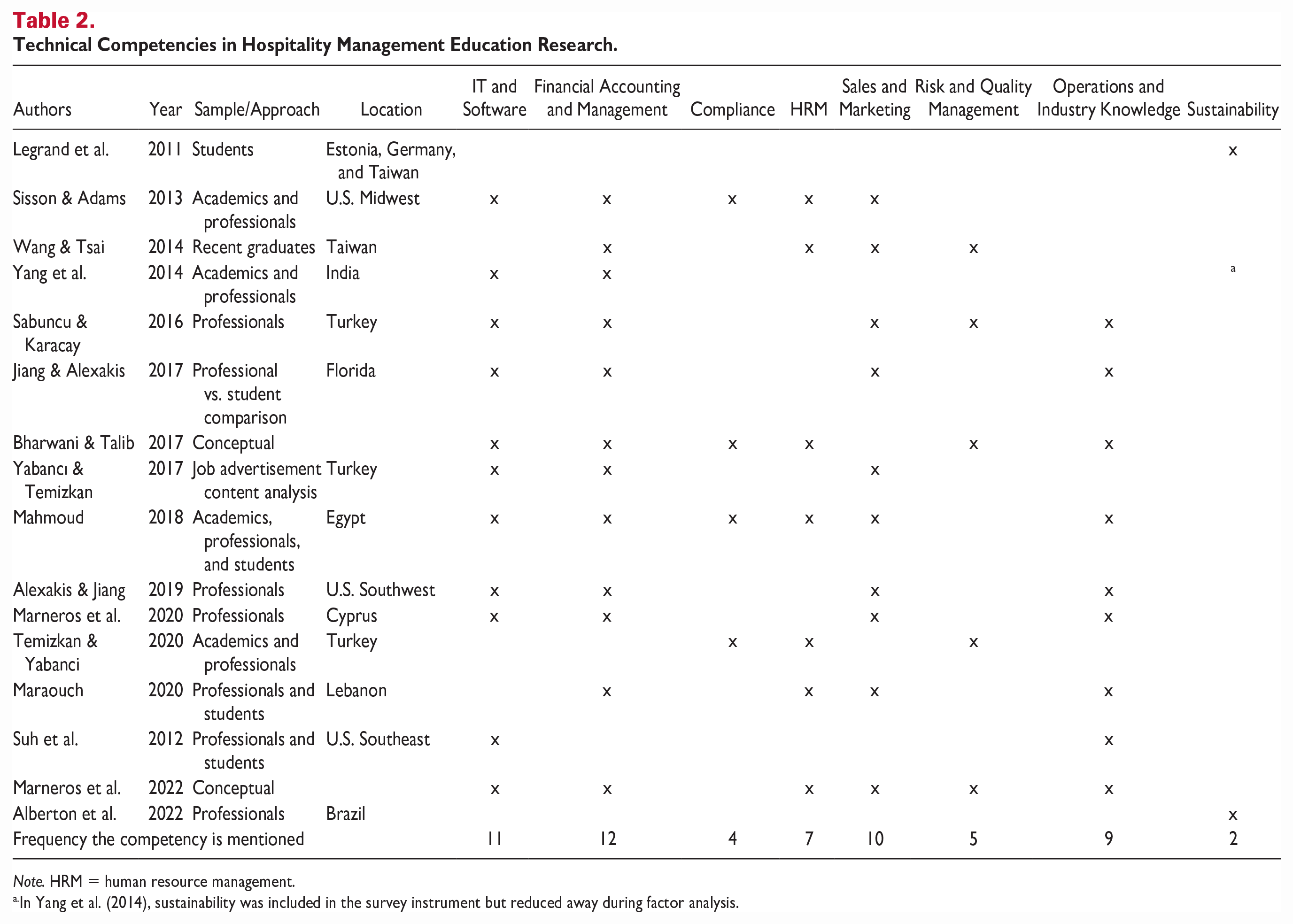
Note. HRM = human resource management.
In Yang et al. (2014), sustainability was included in the survey instrument but reduced away during factor analysis.
While sustainability has been recognized as a significant subject in hospitality management studies for decades (Johanson et al., 2011), only three studies considered it something akin to a competency in their designs. While this is surprising at first glance, the finding may be the result of sustainability getting bundled as a subcomponent of personal competencies related to ethics (Delamare Le Deist & Winterton, 2005). Furthermore, sustainability competencies, as defined in mainstream education literature, do not include technical aspects (Wiek et al., 2011). Independent of the reason, the consequence is that technical sustainability competencies appear overlooked in hospitality education and research that investigates it, even when sustainability modules are a core component of the education programs in the field (Chawla, 2015).
Of the three studies mentioned, Yang et al. (2014) proposed sustainability as a technical competency, but during the factor analysis they performed, it was reduced away from being an independent factor. This suggests that, less than 10 years ago, their sample of academics and professionals did not perceive a need for it. Legrand et al. (2011) explored the perceived importance of sustainability-related topics, with some of the items amounting to technical sustainability competencies, such as knowledge of natural resource depletion and awareness of planetary problems. In a recent study, Alberton et al. (2022) investigated sustainability in the Brazilian hotel industry with a set of examples that also included technical competencies. They conclude that “in short, sustainability competencies are not yet present in an expressive way among the employees of the companies investigated, which demonstrates the urgency to discuss the subject in both academic and business practices” (Alberton et al., 2022, p. 568). The authors further emphasized the role of sustainability competencies in building good relations with strategic stakeholders.
Call
for Curriculum Change to Incorporate Conservation Biology and Restoration Ecology in Hospitality Education
Despite the lack of research around sustainability competencies in hospitality management, the topic is prominently present in curricula. The modules, when focused on the environmental aspect of sustainability, discuss topics from environmental management (e.g., waste and carbon emissions reduction) to environmental auditing and ecotourism (Chawla, 2015) and thus amount to technical competencies around sustainability in practice. Yet Alberton et al. (2022, p. 566) discover that while engaging employees in developing sustainability skills is important, “there is no incentive from employers to do so.” For an industry that depends on the natural environment, this is a troubling finding. We argue that, in addition to the policy frameworks and actions discussed earlier in this article, a change in the way sustainability is taught in hospitality management higher education can contribute to a positive change.
Wasieleski et al. (2021) maintained that sustainability and corporate social responsibility “fall far short of bringing the crucial understanding about natural processes, systems understanding, and core scientific insights drawn from the wide variety of so-called hard sciences into management theory” (p. 13). They further urge a transformation for sustainability, also in education, that observes the planet “holistically, as a global system of dynamic interactions between humans and other life forms, with a range of interactive and interdependent ecosystems” (Wasieleski et al., 2021, p. 18). This coincides with the argument of Sipos et al. (2008), who urged higher education to aim for transformative sustainability learning. We synthesize these approaches and argue that including the relevant components of biology as hard science in the hospitality management curriculum will give sustainability the scientific weight and urgency it deserves. This will further transform it into a competency as fundamental as finance or human resources.
In practice, we propose that fundamentals of biodiversity, conservation biology, restoration ecology, and rewilding should be included in the hospitality management curriculum as crucial knowledge for understanding how the industry threatens the ecosystem. Arguably, this proposition amounts to a reverse in the trend of de-emphasizing technical skills. However, we believe, adopting the assertion of Wasieleski et al. (2021), that introducing students not only to sustainability action as something that should be done, but including a science-based reasoning to why environmental actions are needed, will develop the motivation needed for real change. A hospitality workforce conscious of not only the risks of unsustainable practices but also the science behind why such behavior will eventually destroy the planet will find the motivation to apply and develop sustainability competencies, missing in the results of Alberton et al. (2022). Naturally, this does not remove the requirement for current hospitality leaders to engage in these fields, as the current state of the planet does not allow the luxury of waiting for the next generation of leaders to take charge of running the sector better.
Conclusion and Next Steps
While the hospitality industry has made significant progress in becoming more sustainable and mitigating the effects of its operations, the ongoing biodiversity crisis calls for further, more profound action. We have discussed multiple frameworks and conventions that can help the industry in transforming to a new normal, where businesses are accountable for the consequences of their actions. For example, a new eco-resort may be built according to net zero principles, but all construction will affect the ecosystem negatively and, in most cases, lead to permanent loss of biodiversity. The conventions and frameworks that focus on restoration are aimed at avoiding such consequences. While large businesses have more resources available, small and medium-sized businesses, most common in the hospitality industry, may find biodiversity impacts and measurement complex and difficult to implement in their daily operations. However, the entire hospitality industry, with its small businesses and large corporations, monetizes the natural beauty of destinations and regularly damages or destroys habitats. The industry must prevent, halt, and reverse the degradation of ecosystems, paying back into the upkeep and restoration of the natural environment.
We further argue that, in addition to the frameworks and conventions, understanding the science behind biodiversity loss and its mitigation should be mandatory in the hospitality industry. This will allow sustainability to ascend from a “requirement” that the industry faces into an inspiration that allows the combination of ecosystems, economics, and improvement in quality of life, as called for in conservation biology. This inspiration can drive restorative business models, such as the examples covered in this article. We further argue that hospitality management education plays a key role in achieving the goal. Currently, sustainability is taught as a requirement, with practical actions covered in varying detail. However, the underlying reasoning for why sustainability is mandatory is largely missing. Including the basics of biodiversity, conservation biology, and restoration ecology as technical competencies in hospitality management programs will develop a future workforce that not only appreciates environmental sustainability but also understands why it is not optional.
Further work must proceed on three fronts. First, the hospitality industry needs to become familiar with the multiple frameworks and conventions to create awareness of the profound impacts it has on the natural environment. Second, the industry, particularly the small and medium-sized businesses, need guidance on how to become restorative and regenerative, while maintaining the realities of for-profit business. Finally, hospitality management curricula must be thoroughly analyzed; adding the new component we call for will likely require the removal of one or more subjects currently featuring in the programs, a task that requires careful consideration.
Footnotes
Declaration of Conflicting Interests
The author(s) declared no potential conflicts of interest with respect to the research, authorship, or publication of this article.
Funding
The author(s) received no financial support for the research, authorship, or publication of this article.
