



Abstract
Keywords
Introduction
The concept of “walkability” generally refers to the accessibility of amenities by foot in our built environment. There is no single, widely accepted definition of walkability. But generally accepted principles of walkability include land-use density and diversity, street connectivity, and sidewalk availability, with the rationale that these features would make walking an easier choice in daily routines (Lo, 2009). In recent decades, walkability has been increasingly promoted to facilitate residents’ physical activity and healthy lifestyles while reducing the environmental footprint of land development (Giles-Corti et al., 2016). In the US, the Leadership in Energy and Environmental Design for Neighborhood Development (LEED-ND) rating system was introduced in 2007 to evaluate the sustainability of community environments (U.S. Green Building Council, 2012). This system emphasizes key features of walkable communities, such as walkable streets, compact developments, mixed-use neighborhood centers, and access to public transit and recreation facilities. In 2015, the U.S. Surgeon General released a call to action to promote walking and walkable communities, further highlighting the link between neighborhood environments and population health (U.S. Department of Health and Human Services, 2015).
Meanwhile, the concept of “livability” has become increasingly popular in neighborhood development and urban planning, with a focus on neighborhood quality in relation to quality of life and residential satisfaction (Ahmed et al., 2019; Appleyard et al., 2014; Ruth & Franklin, 2014). Interest in livability emerged in the 1960s and 1970s as part of the urban social movements to contest the growth- and function-centered urban politics at the time and to advocate for a more people-focused approach (Kaal, 2011). In 2009, livability gained further momentum when multiple US federal agencies introduced the six principles of livability as part of the Partnership for Sustainable Communities (U.S. Department of Housing and Urban Development, U.S. Department of Transportation & U.S. Department of Environmental Protection Agency, 2013). Previous studies on neighborhood livability identified relevant predictors from multiple domains, including individual and household characteristics (e.g., age, income, race, ethnicity, gender, housing tenure, household size, and marital status); social structural characteristics (e.g., racial/ethnic heterogeneity, perceived crime, friendly neighbors, trust, social cohesion, and social and physical disorder); and neighborhood physical environments, for which subjective measures have shown more significant roles than objective measures (Adams, 1992; Bruin & Cook, 1997; Cook, 1988; Galster & Hesser, 1981; Grinstein-Weiss et al., 2011; Grogan-Kaylor et al., 2006; Hipp, 2009; Lu, 1999; Mouratidis & Yiannakou, 2022; Oh, 2003; Parkes et al., 2002).
While walkability focuses on the physical features of built environments, livability is different in that it is a perception measure reflecting the intersection of (or the fit between) built environments and personal lifestyle and preferences. For example, Appleyard et al. (2014, p. 62) define livability as “an individual's ability to readily access opportunities to improve his or her personal quality of life (for commuting, work, education, rest, rejuvenation, etc.).” As such, an individual's perception of a neighborhood's livability involves dynamic interactions between specific neighborhood features and individual values and contexts (Ahmed et al., 2019; Amérigo & Aragones, 1997; Appleyard et al., 2014). For example, households with and without children may value specific neighborhood features and assess overall livability differently due to varying household structures and daily routines. Given such dynamic interactions between neighborhoods’ physical features and individual values and contexts, it is important to understand how walkability affects perceived livability, with the presence of influences from other physical features and individual cofounders.
In fact, despite the growing interest in walkability, the public's market preference for walkable communities remains divided, likely because walkability's impacts on livability were interpreted differently across individuals with different value systems. In a 2023 national survey, about half (56%) of the respondents preferred walkable communities over conventional suburban communities with lower walkability, while others reported opposite preferences (National Association of Realtors n.d.). Meanwhile, the longitudinal trend from this survey showed a slight increase in the preference for walkable communities over recent years. To be able to further promote walkable communities for their health and environmental benefits, we need to better understand how walkability affects perceived livability across diverse individuals, and thereby address the existing gaps and gain stronger public support and market acceptance.
Among those favoring conventional suburban communities, one underlying concern about walkable communities is that generally recognized benefits of walkability (e.g., convenient access to transportation and services) may compromise other aspects important for livability such as environmental quality (due to increased traffic, air pollution, and noise) and social cohesion (with increased social conflict resulting from living closer to neighbors and sharing more amenities). Limited empirical studies have explored the actual impacts of walkable communities on residents’ satisfaction with overall livability. For example, a Norwegian study in the Oslo metropolitan area showed that residents living in compact areas had greater neighborhood satisfaction than their counterparts in sprawling suburbs, although the subgroups of households with children did not show such a difference (Mouratidis, 2018). The authors argued that compact developments could be more livable when other urban problems such as safety concerns, lack of parks and open space, excessive noise, traffic, litter, or social inequities are addressed. An Australian study used objective measures of dwelling density, street connectivity, and net retail areas, and showed a modest positive association between neighborhood walkability and residents’ sense of community (Du Toit et al., 2007). A US study in the Phoenix, AZ, region showed that residents in objectively more walkable neighborhoods and those with greater satisfaction with neighborhood parks had higher life satisfaction (Pfeiffer et al., 2020). Another US study (Yang, 2008) showed that higher density and mixed land use on the neighborhood level was associated with higher neighborhood satisfaction in Portland, OR, but lower neighborhood satisfaction in Charlotte, NC.
In addition, residential equity is an important dimension related to walkability-livability relationships. Gentrification is a common concern with large-scale walkable developments featuring diverse amenities such as recreational facilities, walkable destinations, and high-quality urban design. These walkable developments tend to drive housing prices up, making it difficult for lower-income populations to benefit from and even continue living in the affected area (Immergluck & Balan, 2018; Knight et al., 2018). To ensure equity in walkable developments, it is important to find ways to make them affordable and accessible to people of different income levels. One such approach is the use of public-private partnerships to add mixed-income as an additional criterion for the development of walkable communities (Office of Policy Development & Research).
Overall, important knowledge gaps remain regarding the walkability-livability relationship and the future directions of walkable communities, including (1) whether walkable communities comprise environmental quality and social cohesion, (2) how mixed-income walkable communities address residential equity, and (3) whether livability related to raising children is different from overall general livability (i.e., a good place to live) in terms of the importance of environmental features (Clark et al., 2013; Gough, 2015; Reis et al., 2019; Szibbo, 2016). Moreover, previous studies on this topic have been mostly cross-sectional and have not fully utilized residential relocations as research opportunities to assess causal impacts. To address these research gaps, this study examined residential relocation to Mueller, a walkable and mixed-income community in Austin, TX, and the resulting changes in residents’ satisfaction with specific neighborhood features and two overall livability measures (i.e., a good place to live and a good place to raise children). The specific research questions are listed below.
Did relocation to this walkable, mixed-income community improve residents’ satisfaction with not only overall livability but also specific neighborhood features, including environmental quality and social cohesion? A subquestion is whether affordable housing residents experienced greater improvement in satisfaction than market-rate housing residents? How did neighborhood environmental features and residents’ sociodemographic and household characteristics predict residents’ satisfaction with the two livability measures? What environmental changes from relocation predicted improvement in residents’ satisfaction with the two livability measures?
Study Design
Study Setting
This study is part of a larger project that utilized a longitudinal, case-control study design to examine the impacts of moving to this walkable and mixed-income community on residents’ physical activity and healthy lifestyles, with support from the National Institutes of Health (Zhu et al., 2022). Mueller is a 700-acre master-planned community developed on the old municipal airport, and an award-winning, LEED-ND-certified neighborhood. It is also a public-private partnership project, guided by the development agreement between the city and the master developer. Mueller's plan represents not only the most cited features of walkable communities (e.g., high residential density, small blocks, connected streets, complete and safe pedestrian and bicycle facilities, mixed land uses, and walkable destinations) but also other important amenities such as extensive green infrastructure systems and diverse housing types.
The Mueller master plan also includes a mixed-income commitment by providing various home types and prices. Based on the city's S.M.A.R.T. Housing™ (safe, mixed-income, accessible, reasonably priced, transit-oriented) policy, Mueller's master plan specified requirements for 25% of housing units throughout the community to be affordable (Office of Policy Development & Research). The prices of affordable units for sale (or rent) are set to be no more than 30% of household income for households at or below 80% (or 60%) of the median family income (MFI)). The significant number of affordable housing units in Mueller offered a rare opportunity to explore how the impacts of moving to a walkable community might differ among residents from different socioeconomic backgrounds.
Methods
The study procedure was reviewed and approved by the Institutional Review Board at Texas A&M University. We distributed an online survey to adult Mueller residents, beginning with online posts in December 2016 on Mueller neighborhood online forums and at our project website, followed up with a recruitment postcard in April 2017 and two letter reminders in May and July 2017 to all Mueller home addresses (purchased from the United States Postal Service) that had not responded to the survey. A $10 Target, Amazon, or Walmart gift card was offered as a token of appreciation for each valid survey response.
The survey asked about participants’ satisfaction with overall livability and specific neighborhood features, personal and household factors, social factors/influences, perceptions of neighborhood environments, and reasons for choosing their home location. We were interested in measuring these variables both before and after relocation to allow pre-post comparisons but were also mindful of the recall difficulties for earlier movers. As a result, we asked all participants to complete questions about current post-move conditions and asked a subsample of “recent movers” to complete additional questions about pre-move conditions. We defined recent movers as those who moved to Mueller after the opening of the HEB grocery store in July 2013. This threshold was used because it was a significant milestone for the community that was easy to recall, and it occurred about three years and five months before the launch of our survey, within which we expected recall for pre-move conditions to be relatively easy and accurate.
We captured satisfaction with overall livability using two Likert-style survey items, “How satisfied are you with your neighborhood as a good place to live?” and “How satisfied are you with your neighborhood as a good place to raise children?” with the five-point scale choices ranging from strongly dissatisfied to strongly satisfied. Including both items allowed us to assess the potential differences between the general concept of livability and the more specific livability goals related to raising children. In addition, we asked about participants’ satisfaction with twenty-one specific neighborhood features related to public transportation, shopping, and healthcare facilities; work and school commute time; social cohesion in the neighborhood; crime and traffic safety; and noise, using the same response options. Furthermore, we captured residents’ perceived neighborhood environments using twenty-four items that focused on actual design features related to access to services, places for walking and cycling, neighborhood surroundings, streets, and crime and traffic safety. Survey items about neighborhood satisfaction and perceived environments were adopted from the Neighborhood Environment Walkability Scale, which has been validated and widely applied to assess neighborhood environments related to walking, physical activity, and neighborhood satisfaction (Cerin et al., 2019, 2013). After the survey, we generated objective environmental measures, including Walk Score, street intersection density, and street density, based on respondents' home locations.
For Question 1, we used paired t-tests to examine whether the relocation improved recent movers’ satisfaction with overall livability and specific neighborhood features. We also used independent t-tests to understand whether affordable housing residents experienced greater increases in satisfaction than market-rate housing residents. For Question 2, we first used principal component analysis to reduce the number of variables and identify domains of neighborhood features and kept variables with factor loadings of 0.4 or higher in the correlation matrix (Estupiñán & Rodriguez, 2008; Fabrigar et al., 1999). We then conducted binary logistic regressions to test how these domains of neighborhood features and residents’ personal and household characteristics predicted their satisfaction with two livability measures. Likert-scale livability measures were recoded as binary variables of strongly satisfied versus less satisfied due to skewed distributions. Finally, for Question 3, we ran multiple linear regression models to predict the pre-post differences in satisfaction with a good place to live (model 1) and raise children (model 2) using sociodemographic and household factors, and the pre-post differences in neighborhood environments. Stepwise regressions were used to test the statistical significance of adding or removing potential explanatory variables. A p-value of less than .05 was used as the threshold/indicator for statistical significance.
Results
Survey Responses
We considered survey responses valid if they were at least 95% complete and did not miss key outcome variables. We received 392 valid responses with a final response rate of 17.5% (see supplementary Figure 1). The full sample of 392 participants was used to conduct analyses for Question 2. The subsample of 213 recent movers, who completed both pre- and post-move questions, was used for pre-post analyses for Questions 1 and 3.
The survey participants represented a range of socioeconomic statuses (Table 1). To assess the potential response bias, we used the sociodemographic features of the population living in the census block group where Mueller is located and accounted for 84.15% of the total area. The 2012–2016 American Community Survey five-year estimates were used to best match the time of the survey (December 2016 to July 2017). Compared to the whole block group population, our full sample was slightly older (mean age of 45.1 years versus 40.9 years for the adult population in the block group), had a higher percentage of women (67.4% versus 53.4%) and non-Hispanic white people (73.7% versus 61.8%), and had a lower percentage of families with children (29.2% versus 49.9%) and Hispanic people (13.8% versus 23.3%). Our sample also had higher education levels (50.9% versus 35.0% with graduate/professional degree or higher) and household income (44.2% versus 36.8% with $100,000 or higher; 14.7% versus 36.8% with less than $50,000) than the block group population. The subsample of recent movers had mostly similar characteristics but was significantly younger (mean age of 40.8 years) and had a somewhat lower percentage of households with children (20.3%). In addition, comparisons of pre- and post-move neighborhood environments based on the residential locations geocoded in GIS showed significant increases in Walk Scores and street intersection density after the move.
Descriptive Statistics for Study Participants’ Sociodemographic Characteristics, the Importance of Various Factors for Choosing Their Current Neighborhood, and Neighborhood Physical Environmental Measures.
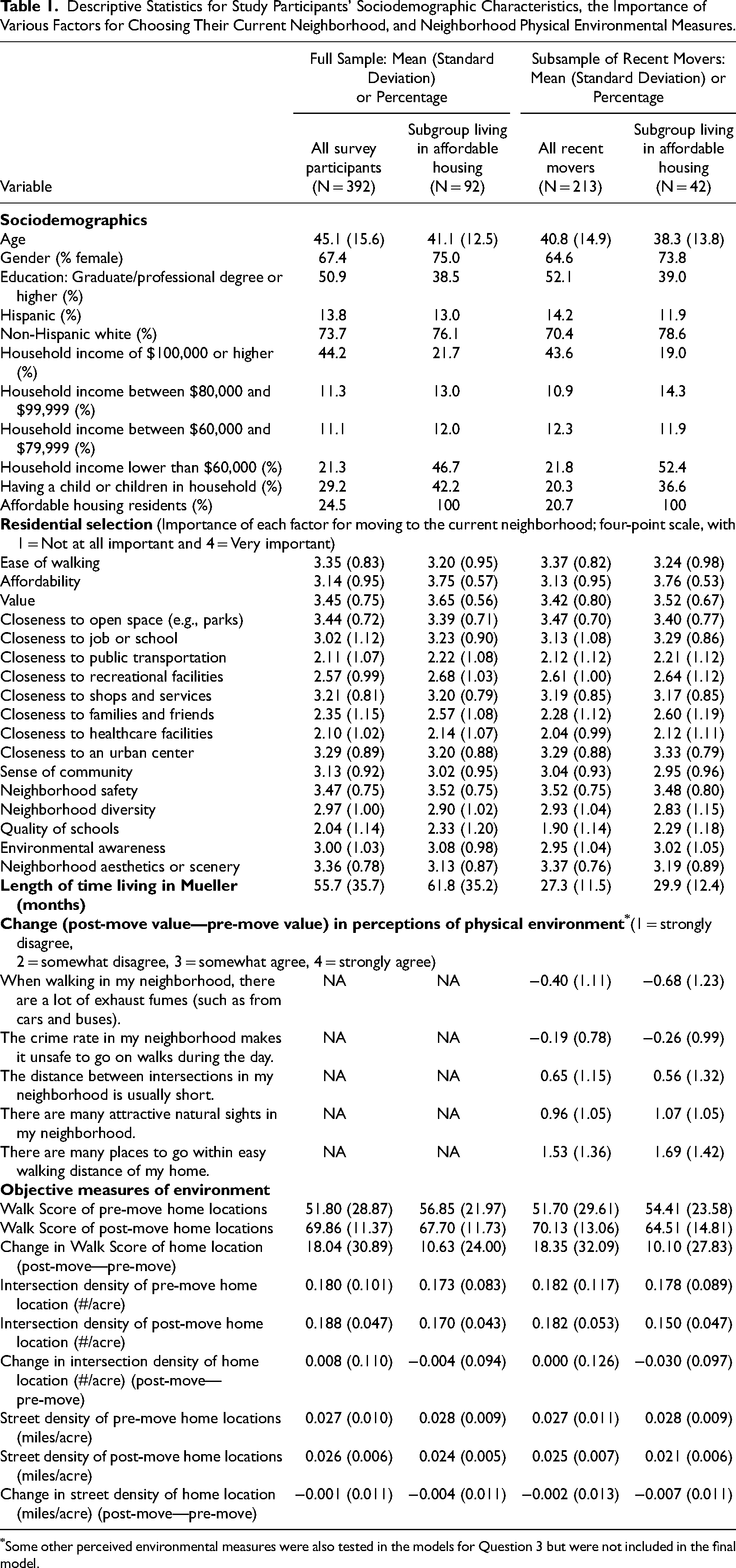
Affordable housing residents (N = 92) accounted for 23.5% of the full sample and 19.7% (N = 42) of the subsample of recent movers. Compared to market-rate housing residents, affordable housing residents had lower levels of education and household income and were more likely to have one or more children. The survey also asked participants about the importance of various factors that they considered when moving to Mueller. T-test results showed that affordable housing residents in the full sample placed significantly more weight on the affordability and value of the home, quality of the school, and distance to job or school/family and friends than did market-rate housing residents, and they placed relatively less weight on the ease of walking and neighborhood aesthetics and scenery. However, the importance of other considerations when choosing to move was generally similar between affordable housing and market-rate housing residents.
Among the full sample, 267 (68.1%) lived in single-family units, and 125 (31.9%) lived in apartments or other types of multi-family units (Figure 1). These participants had moved to Mueller from diverse locations (metropolitan, micropolitan, small town, and rural areas) and varying walkability levels (e.g., Walk Scores ranging from 0 to 100). A total of 258 participants had moved to Mueller from within Austin's city boundaries. Of the other participants, 26 had moved from outside Austin's city boundaries but within the Austin metropolitan area, 38 had relocated from other areas in Texas, 60 had moved from other US states, 2 had come from other countries (Mexico, Canada), and 8 did not provide pre-move home locations.
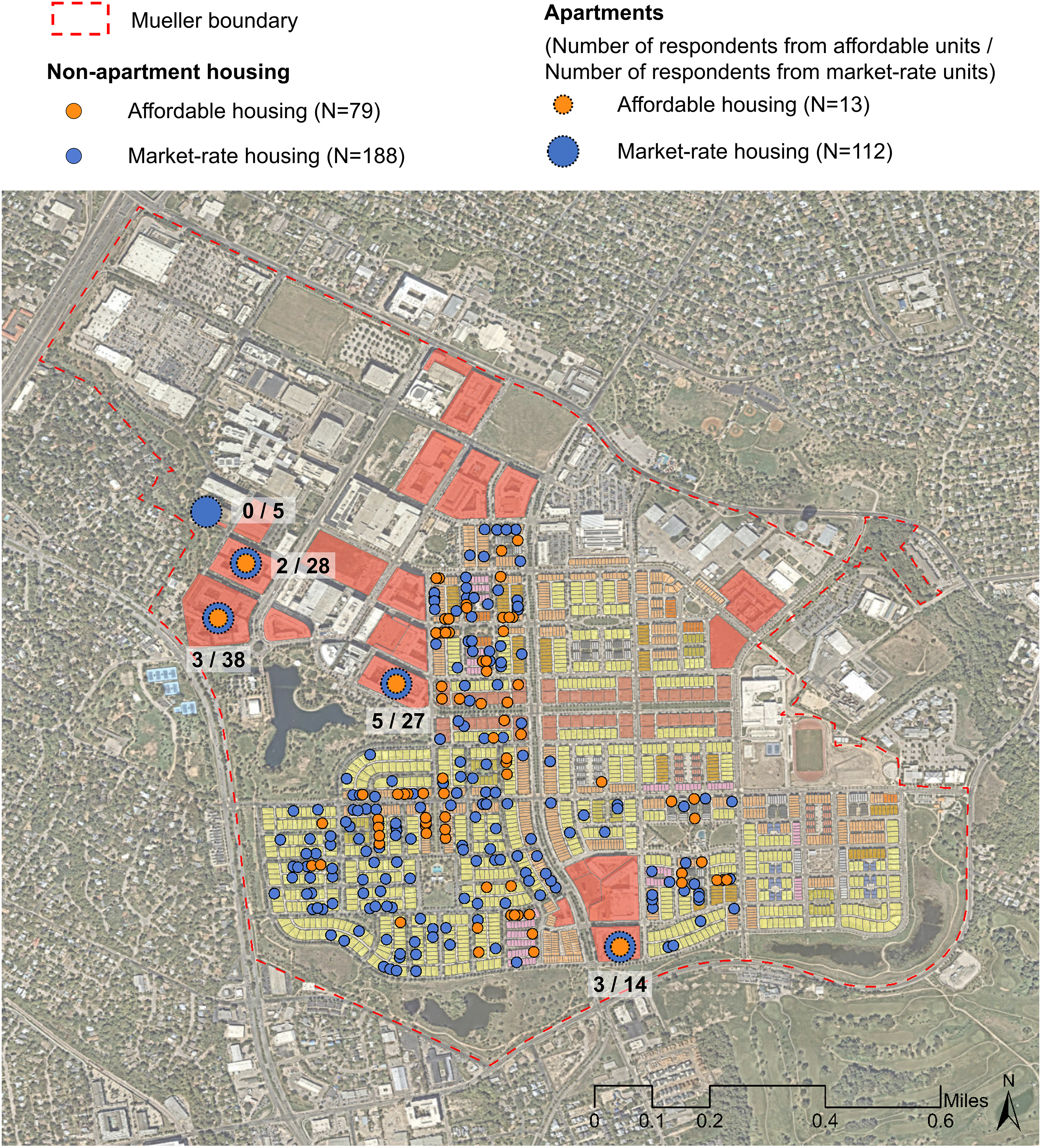
Study participants’ post-move home locations and types.
Question 1
Recent movers’ satisfaction with the neighborhood being a good place to live and to raise children increased after the move by 0.99 and 0.82, respectively, on a five-point scale (p < .001) (Table 2). Furthermore, satisfaction with all specific neighborhood features, including those related to environmental quality and social cohesion, also increased significantly, with an average increase of 0.79 on a five-point scale. This is encouraging given the existing public concerns that walkable communities may compromise environmental quality and social cohesion. When comparing different features, the post-move improvement in mean values was the greatest for access to entertainment, followed by increases in the neighborhood being easy and pleasant for walking and for bicycling; for access to shopping, grocery stores, and restaurants; and for being close-knit. This reflects the availability of different destinations in Mueller and their positive impacts on neighborhood satisfaction. Such entertainment and food-related destinations may have also served as important “third places” (Oldenburg, 2001) and contributed to social cohesion/interaction in the neighborhood, which also improved significantly after relocation. One relevant, notable change was in considering the neighborhood to be close-knit, which had the lowest pre-move value but was one of the variables with a more remarkable post-move improvement. One exception for the overall improvement in satisfaction was for the subgroup of recent movers in affordable housing. Despite the significant improvement in all other items, their satisfaction with people who share the same values trended lower post-move but was not statistically significant, and there was no significant pre-post difference in their satisfaction with people getting along with each other.
Pre-Post Differences in Residents’ Satisfaction with two Overall Livability Measures and Specific Neighborhood Features among Different Groups.
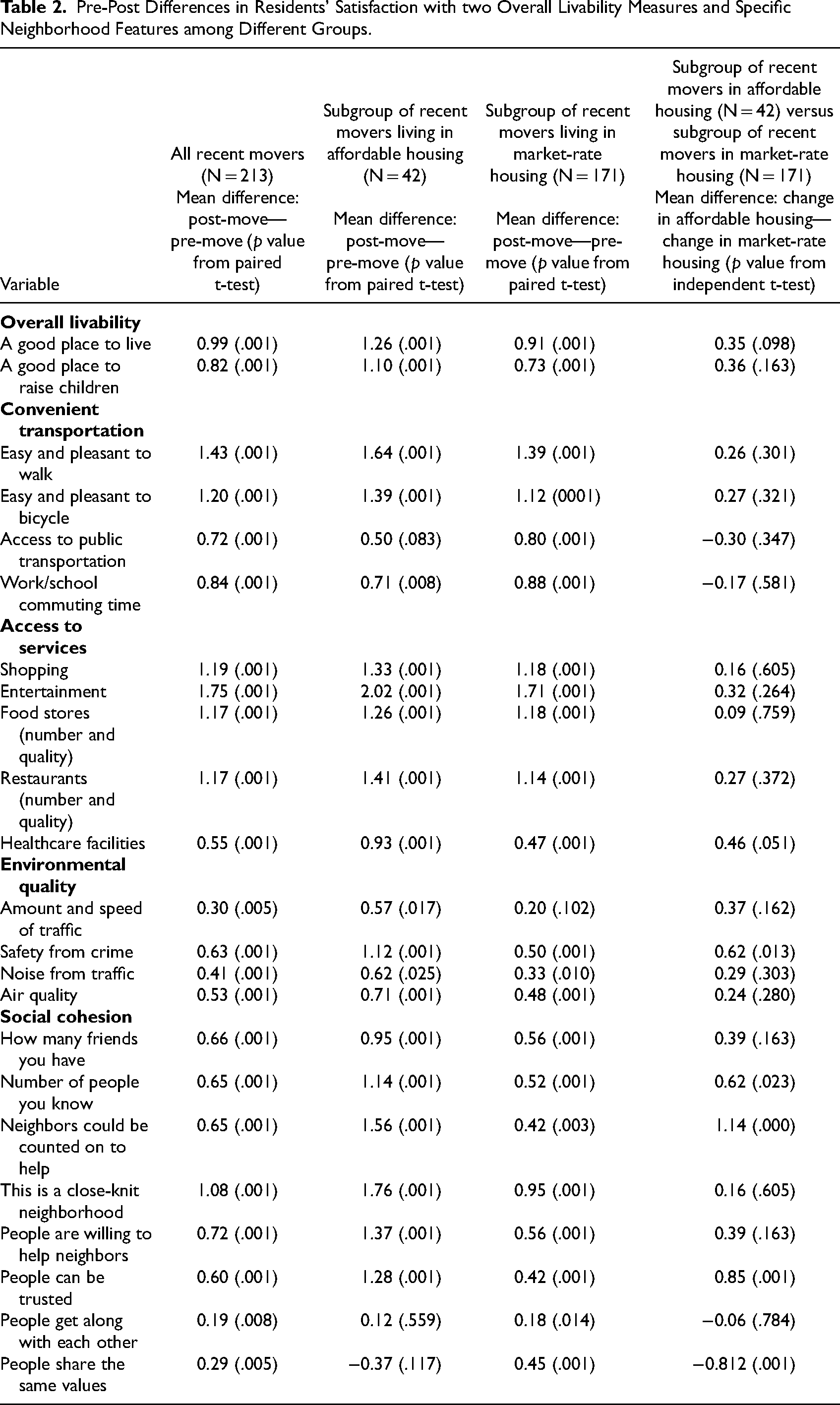
It is also important to note that standard deviations of the two overall livability items and most individual neighborhood satisfaction items (19 of 21) decreased after the relocation for recent movers, implying reduced disparities in satisfaction after relocation. The largest decrease in the standard deviation was for the neighborhood being easy and pleasant for walking, followed by access to entertainment and restaurants, being a good place to live, work/school commute time, access to food stores and shopping, being easy and pleasant for bicycling, trustworthiness of people in the neighborhood, and access to public transportation.
One subquestion was whether affordable housing residents experienced greater increases in their satisfaction than market-rate housing residents. For the subgroup of recent movers living in affordable housing, increases in satisfaction with crime safety, the number of people one knows, that neighbors could be counted on to help, and that people can be trusted were significantly greater than for recent movers in market-rate housing (Table 2). However, for the change in satisfaction with people who share the same values, recent movers living in market-rate housing had a significantly greater increase.
Question 2
From the principal component analysis, we rotated four components to a varimax (orthogonal) solution, accounting for 60.8% of the total variance and capturing the underlying domains of satisfaction with neighborhood features (Table 3). The four resulting domains are (1) convenient transportation, (2) access to services, (3) environmental quality, and (4) social cohesion. The last two domains reflect neighborhood features that are sometimes considered worse in walkable communities.
Rotated Factor Loadings Matrix for Satisfaction with Specific Neighborhood Features.*
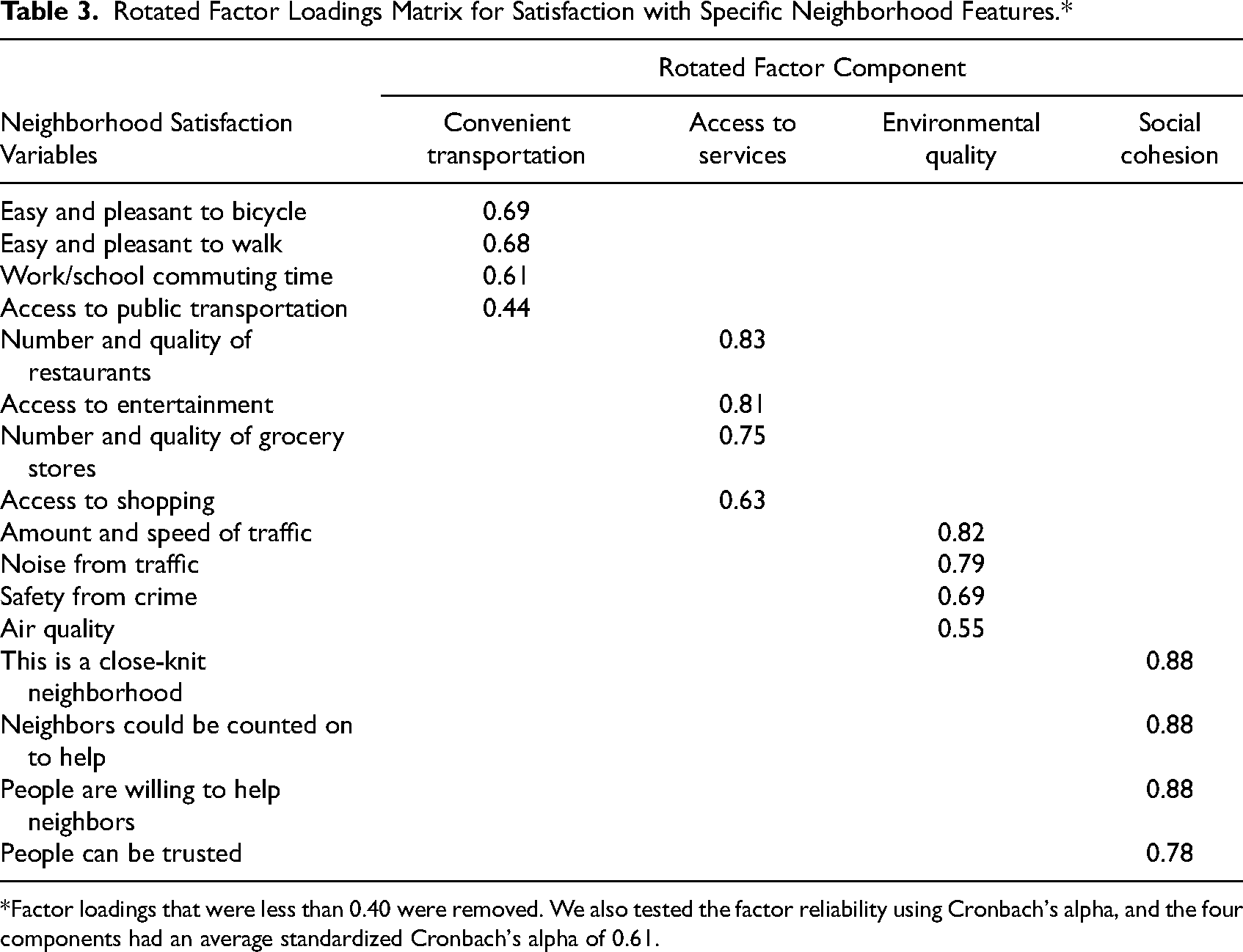
Factor loadings that were less than 0.40 were removed. We also tested the factor reliability using Cronbach's alpha, and the four components had an average standardized Cronbach's alpha of 0.61.
We tested two binary logistics regression models that predicted two livability measures using factors of satisfaction with specific neighborhood features and residents’ sociode-mographic and household characteristics (Table 4). Overall, two models showed consistently significant relationships between domains of neighborhood features and overall livability. One exception was convenient transportation, which was a positive predictor for a good place to live but insignificant for a good place to raise children. The other three factors were positive correlates in both models, with access to services and social cohesion having greater odds ratios in the model for a good place to live. Among the ten sociodemographic and household variables, only one variable was significant in each model, implying the general consistency across different sociodemographic groups regarding how satisfaction with specific neighborhood features predicts their satisfaction with overall livability. Higher levels of education were positively associated with the odds of strong satisfaction with the neighborhood being a good place to live. Living with one or more children was associated with an increased likelihood of being strongly satisfied with the neighborhood being a good place to raise children. For the model of a good place to live, the factor of social cohesion had the greatest odds ratio, suggesting that livability is not only about physical form but also social support and relationships.
Binary Logistic Regressions Predicting two Measures of Overall Livability (N = 392).
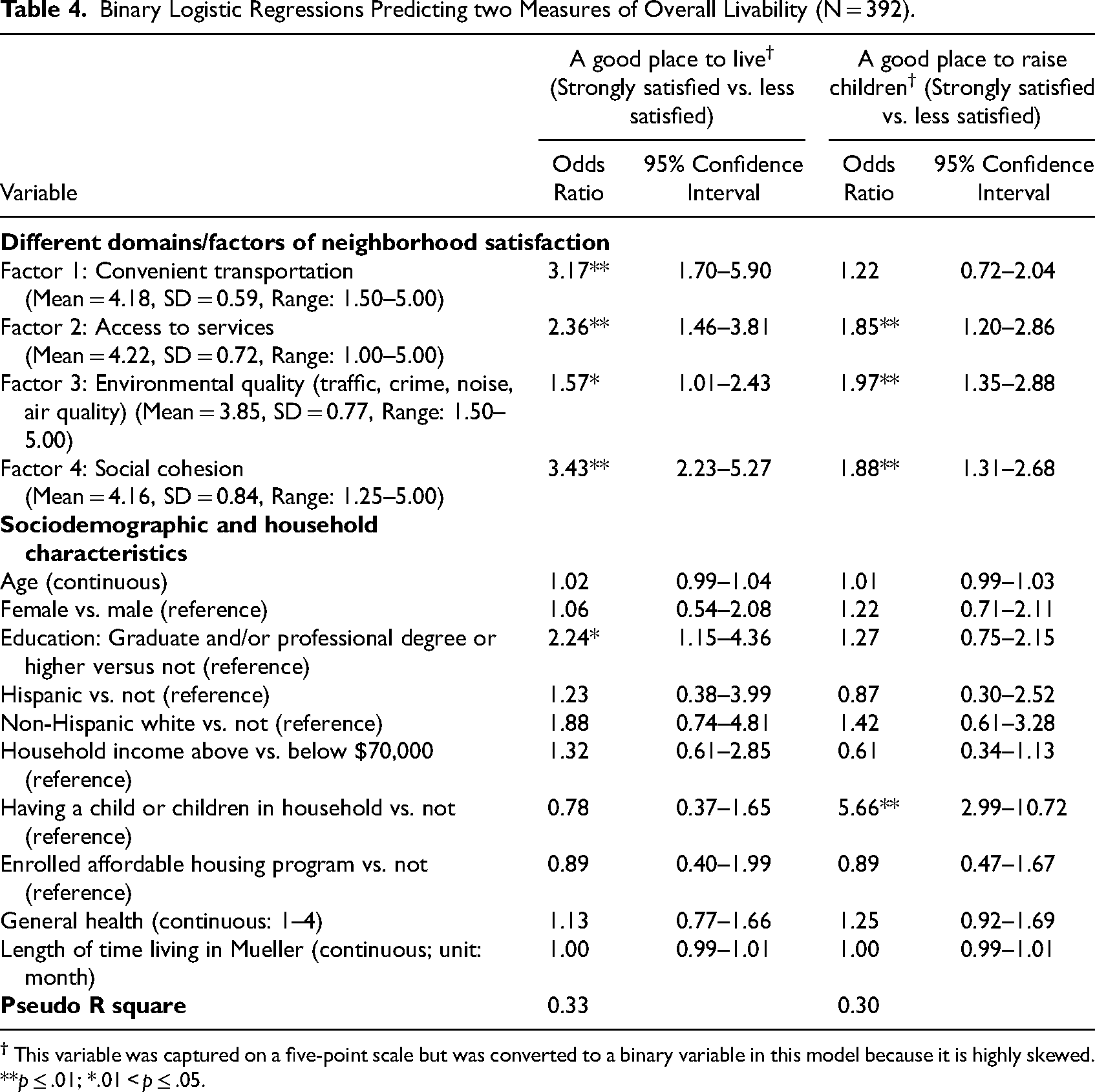
**p ≤ .01; *.01 < p ≤ .05.
Question 3
We tested two multiple linear regression models to examine how changes in the neighborhood's physical environment affected the pre-post difference in residents’ satisfaction with the neighborhood being a good place to live (model 1) and raise children (model 2), respectively, after considering sociodemographic and household factors (Table 5). We included five variables for pre-post differences in perceived physical environments in the final models. Fewer concerns about crime and traffic-related air pollution and increases in the number of places to go within walking distance led to increases in both models, and they had larger coefficients for model 2 than for model 1. Increased perception of attractive natural surroundings was another significant variable that contributed to the increase in the two livability measures, with a slightly larger coefficient for model 1. Increased street density (i.e., short distances between intersections) had a positive impact in model l only. Unlike perceptions of physical environments, changes in objective environmental measures were mostly insignificant. One exception was the change in Walk Score (values ranging from 0 to 100) of the home location, which showed a negative impact in model 2, but the coefficient was very small (–0.02). Most sociodemographic and household variables were insignificant in predicting the change in perceived livability, except that Hispanic or Latino origin was a negative predictor in both models.
Multiple Linear Regressions Predicting Changes in Satisfaction with two Overall Livability Measures (N = 213).
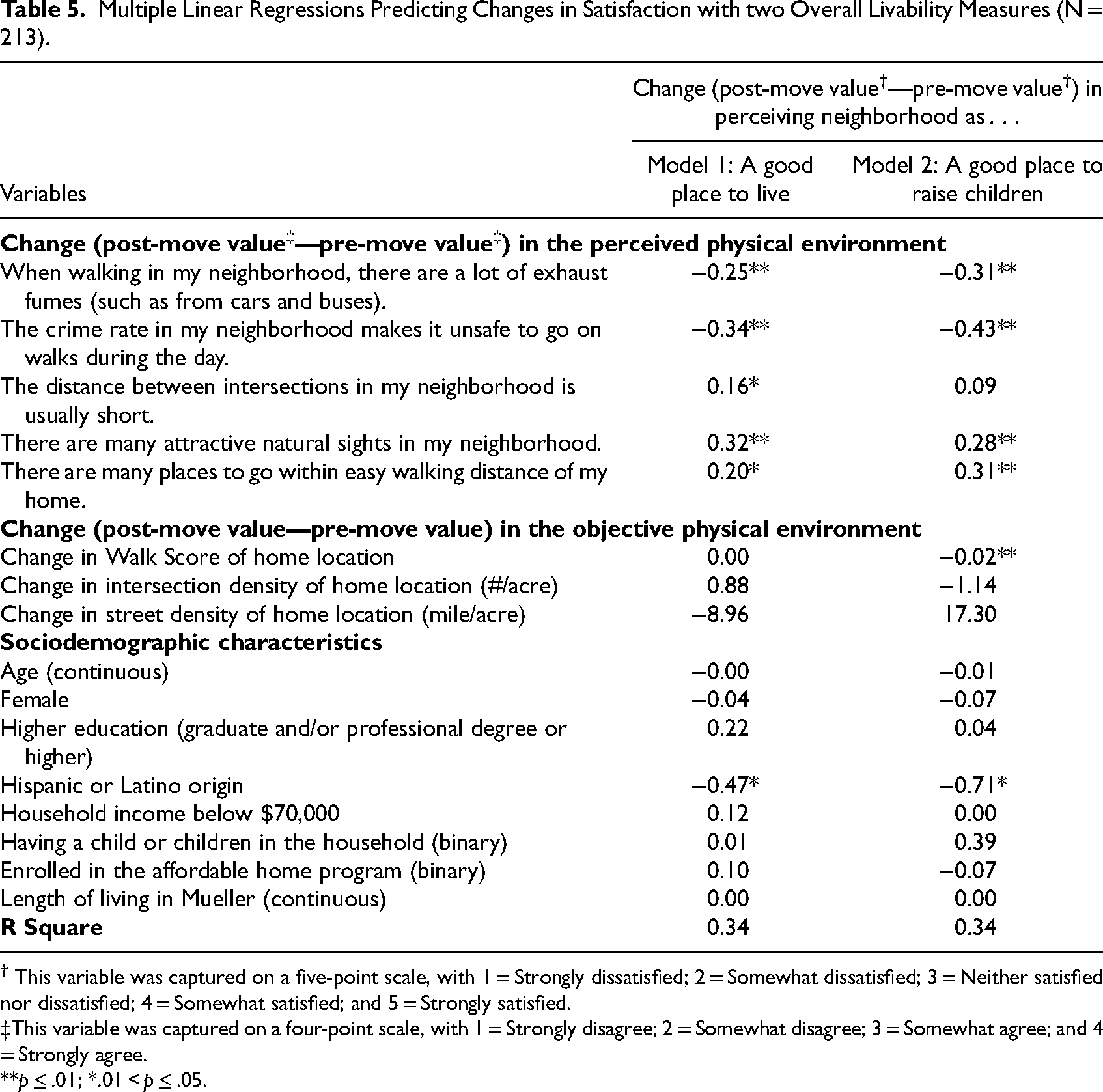
This variable was captured on a four-point scale, with 1 = Strongly disagree; 2 = Somewhat disagree; 3 = Somewhat agree; and 4 = Strongly agree.
**p ≤ .01; *.01 < p ≤ .05.
Discussion and Conclusions
Findings from this study illustrate the complex and nuanced consequences of relocation to a walkable, mixed-income community on residents’ satisfaction with overall livability and specific neighborhood features. For the first knowledge gap about walkable communities’ impacts on environmental quality and social cohesion, findings from Mueller showed an improvement in satisfaction with these domains after relocation. In light of these positive changes in satisfaction, we compared the Mueller master plan, design book, and planned unit development ordinances with the City of Austin land development codes to identify critical strategies used to balance walkability and livability (Catellus, 2022). These analyses pointed to a few design and development strategies that might have contributed to balancing walkability and livability, especially in terms of ensuring environmental quality and social cohesion. First, to compensate for the small lot sizes and living spaces within individual homes, the community provides extensive parks and open spaces, accounting for 20% of its total land, and includes five miles of hiking and biking trails (Catellus, 2022). The master plan also ensures that each residential unit has access to a park or open space within 600 feet. Second, innovative housing design and diverse arrangements of clustered units might have helped address potential safety and privacy concerns typical of higher-density housing developments while promoting neighborly interactions and reducing social conflict. Examples include homes with shared courtyards or gardens, where multiple residential units face common open spaces that are far away from vehicle traffic and safe for pedestrians and children's play activities. Residents in these units reported significantly higher ratings for the neighborhood being a good place to raise children. Third, all residential units were elevated relative to sidewalks so that the proximity between residential units (often with front porches) and sidewalks—intended to promote neighborly interactions and the positive perception of “eyes on streets” (Jacobs, 1961)—would not compromise residents’ privacy. Furthermore, the master plan emphasized the safety and attractiveness of walking environments by using narrower streets to reduce vehicle speed and sufficient landscape buffers between sidewalks and roadways to improve pedestrian safety.
In addition, improvement in social cohesion is an encouraging finding from this study, given existing concerns about social conflict that may emerge from greater residential density and the increasing challenge of the epidemic of loneliness and isolation (Office of the U.S. Surgeon General, 2023). Compared to their pre-move condition, participants knew more people and had more friends in Mueller, felt more positive about living in a close-knit neighborhood, and could trust and count on neighbors to help. Such improvements were even greater among lower-income affordable housing residents, who are generally at higher risk for loneliness and isolation (Office of the U.S. Surgeon General, 2023).
The second knowledge gap we considered was the impact of not only walkable but also mixed-income communities on residential equities. Findings from Question 1 imply the potential of walkable communities to reduce livability gaps across income levels, demonstrated by (1) lower standard deviations in satisfaction with multiple neighborhood features and overall livability after relocation and (2) greater improvements in satisfaction with several neighborhood features related to crime safety and neighborly relationships among affordable housing residents (Table 2). These improvements may be related to the neighborhood's public amenities (e.g., parks, lake, trails, greenways) and accessible attractions (e.g., free entertainment opportunities such as concerts in the park), from which lower-income residents might benefit most. Conversely, satisfaction with people who share the same values was the only neighborhood feature that showed a decreased value, although insignificant, among the subgroup of affordable housing residents. This decrease may be due to Mueller's larger range of income levels and sociodemographic characteristics compared to participants’ previous neighborhoods, and the fact that socioeconomic status tends to influence people's thoughts, behavior, and value systems (Manstead, 2018). Nevertheless, affordable housing residents’ satisfaction with neighborly relationships, including the number of people they know, that neighbors could be counted on to help, and that people can be trusted, all improved significantly after relocation. For Question 3, being an affordable housing resident was insignificant in predicting changes in the two livability measures (Table 5). One possible reason may be that some of the variability in the affordable housing residence variable had already been observed within the income measure, and that the sample size of affordable housing residents was relatively small. Future research is needed to offer greater insight into this equity issue.
Hispanic or Latino residents were more likely to perceive decreased livability after relocating to Mueller, although the full sample of recent movers (mostly non-Hispanic) showed a significant increase in perceived livability. Data from this study does not directly address the reason for this correlation. However, we posit that this decreased perception of livability may be because Hispanic or Latino residents are underrepresented in Mueller (13.8% of the total study sample versus 33.1% for the city of Austin average) (U.S. Census Bureau, 2022). Previous studies reported that Hispanic populations often congregate in predominantly Hispanic neighborhoods (Frey, 2021), which may facilitate stronger cultural support and social ties than in areas where Hispanic populations are not well represented. This finding echoes the earlier discussion that livability encompasses multiple dimensions (e.g., cultural and social elements) that go beyond the physical form of space, and it is essential to consider population differences in relevant research and practice (Ahmed et al., 2019; Appleyard et al., 2014; Mouratidis, 2018).
To address the third knowledge gap, we examined the potential difference in terms of specific neighborhood features' impacts between the more general concept of livability (i.e., a good place to live) and the more specific livability concept related to raising children. For Question 2, the factor of convenient transportation (e.g., public transit) was a positive predictor for being a good place to live but insignificant for being a good place to raise children. Possible reasons may be that using public transit systems with children is still rather challenging in our study context, and public transit might be perceived as dangerous for children and their caretakers. As a result, child-friendly traffic infrastructure should be prioritized to ensure that walkable communities are also child-friendly. For Question 3, we also observed differences between the two models for changes in the two livability measures (Table 5). A shorter distance between intersections (indicating greater street density) predicted increased satisfaction with being a good place to live but was insignificant for predicting the change in being a good place to raise children. The reason might be that families with children were more likely to be concerned about increased traffic volume resulting from greater street density, mixed land use, and the potential for children to run into traffic. Changes in objective environmental measures were mostly insignificant, except for the change in Walk Score, which was a negative predictor for the change in satisfaction with being a good place to raise children but with a small coefficient (–0.002). This may be because Walk Scores mainly capture daily destinations for adults, and adult-oriented destinations are not always welcome features among families with children. In contrast, the perception of having many places to go within easy walking distance from home was a positive predictor for the increase in satisfaction with the neighborhood being a good place to raise children, likely because these perceived environmental measures reflected the actual destinations participants visit regularly. Overall, these differences highlight that some design and planning strategies can contribute to both livability goals, whereas others may have differential impacts on the two livability measures.
Despite this study's contribution to addressing these knowledge gaps, it is important to note that it was limited to a particular community and point in time, thus reducing its generalizability to other areas. Similar studies in more diverse settings with various populations will help inform future research and practice. Using a retrospective survey, this study was also subject to potential recall bias and self-selection bias given that residents chose to move into this community.
For future research, more longitudinal studies with case-control comparisons are needed to further understand the causal impact of residential relocation and self-selection on residents’ residential satisfaction. More in-depth studies about population-specific differences in livability (e.g., the different impacts on Hispanic/Latino residents) would also help develop a better understanding of the walkability-livability relationship. The role of child-friendly design features should be further explored to help make neighborhoods a better place for raising children.
Regarding future practice, it is critical for urban planners and designers to know which neighborhood factors are associated with overall livability and for whom, and how placemaking can help reduce residential inequities. The possible compromise on livability due to compact and mixed land use could be addressed by considering complementary design strategies. This point is supported by our study's findings about the improvement in all neighborhood satisfaction items among recent movers after relocation, and the positive roles of improvements in attractive natural surroundings, air quality, crime safety, and walkable destinations for increasing both livability measures in our final models. In addition, providing affordable and diverse housing options in terms of size and price appears necessary for addressing the equity and gentrification issues that often accompany projects like Mueller. For example, a wide range of housing types and ownership opportunities (e.g., owning versus renting) can both accommodate and benefit lower-income residents in this type of walkable community. Future practice can also benefit from our findings about the crucial differences between the two livability items. Specific projects may customize their priorities based on the characteristics of the population they are serving (e.g., the proportion of households with children). A holistic approach that integrates walkable communities’ health, livability, and equity benefits will help steer future policies and practices toward more viable development strategies and long-term success.
Implications for Practice
Walkable and mixed-income communities have the potential to improve neighborhood livability and reduce residential inequities. Improvements in a neighborhood's crime safety, natural surroundings, walkable destinations, and air quality can help improve residents’ perception of livability. Specific neighborhoods should customize their priorities based on the characteristics of the population they are serving (e.g., the proportion of households with children). A holistic approach that integrates walkable communities’ health, livability, and equity benefits will help steer future policies and practices toward more viable development strategies and long-term success.
Supplemental Material
sj-tif-1-her-10.1177_19375867251317238 - Supplemental material for Walkability Versus Livability: Changes in Neighborhood Satisfaction After Relocation to a Walkable, Mixed-Income Community in Austin, Texas
Supplemental material, sj-tif-1-her-10.1177_19375867251317238 for Walkability Versus Livability: Changes in Neighborhood Satisfaction After Relocation to a Walkable, Mixed-Income Community in Austin, Texas by Xuemei Zhu, Minjie Xu, Chanam Lee, Hanwool Lee and Marcia G. Ory in HERD: Health Environments Research & Design Journal
Footnotes
Declaration of Conflicting Interests
The authors declared no potential conflicts of interest with respect to the research, authorship, and/or publication of this article.
Funding
The authors disclosed receipt of the following financial support for the research, authorship, and/or publication of this article: This study is partially supported by a grant from the National Institutes of Health (Grant #: 1R01CA197761).

Supplemental Material
Supplemental material for this article is available online.
References
Supplementary Material
Please find the following supplemental material available below.
For Open Access articles published under a Creative Commons License, all supplemental material carries the same license as the article it is associated with.
For non-Open Access articles published, all supplemental material carries a non-exclusive license, and permission requests for re-use of supplemental material or any part of supplemental material shall be sent directly to the copyright owner as specified in the copyright notice associated with the article.
