



Abstract
Many developmental theories, including Erikson's theory (Erikson, 1982), view old age as life's final stage. These theories often assume a curvilinear relationship between age and physical/psychological health (Bühler, 1968; Cumming & Newell, 1960; Peck, 1965). Aging is often seen as a loss of roles (Burton-Jeangros & Zimmermann-Sloutskis, 2016), a state of ill-being (Salman Roghani et al., 2019), and a period of poor self-image (Bai et al., 2021). However, changing these negative perceptions of aging is crucial for positively influencing the biological and societal factors contributing to the global aging trend. The global aging trend is also evident in Türkiye.
The aging population in Türkiye is increasing rapidly due to declining fertility and mortality rates, which stands out compared to global trends (Arun & Holdsworth, 2020). The percentage of people aged 65 and older has risen from 3.5% in 1935 to 10% in 2020, projected to exceed 17% by 2040. This demographic shift in Türkiye has negative implications for social and economic development, leading to fragmented health and long-term care services for older adults, as well as limited access to education, employment, and life opportunities (Arun & Holdsworth, 2020). Addressing these challenges involves promoting the wisdom and strength associated with maturity.
Tornstam (1994) proposed that an individual's identity and personality continue to evolve even in advanced age. He defined gerotranscendence (Tornstam, 1989) as a stage in aging where individuals are motivated by past challenges and prepare for death. This concept, a relatively new theory in aging psychology, suggests that existing theories fail to fully address older adults’ experiences. “Gero” refers to aging, and “transcendence” implies surpassing life's limitations while focusing on death’s approaching aspects (Wang et al., 2015). This perspective shift suggests a move to a cosmic level of understanding, leading to greater life satisfaction (Tornstam, 1989), and involves three levels of change. The first level is the cosmic level, which refers to being part of the larger universe. Cosmic refers to a redefined perception of time, space, life, and death, leading to a greater sense of affinity with past, present, and future generations (Tornstam, 1994). The second level is coherence, which refers to a sense of unity, the discovery of hidden parts of the self, and a decrease in self-centeredness (Jewell, 2014). The third level is solitude, which means a change in the importance of personal and social relations and an increased need for meditation (Tornstam, 2011). While this third level suggests a need for isolation, which may offer valuable insights into the psychological development of older adults, it should be viewed in conjunction with loneliness. Addressing loneliness among older adults requires a multifaceted approach, which falls outside the scope of this study. Loneliness can be ameliorated through individual, community, or societal interventions, such as promoting social connections through community programs, providing access to transportation and mobility aids, and encouraging intergenerational activities.
While gerotranscendence can lead to successful aging and personal growth in later life, it's not a guaranteed process (Wang, 2011). Factors such as life events and mindfulness practice can influence gerotranscendence (Nilsson et al., 2015; Read et al., 2014). Studies have also looked at activities like Tai Chi and the role of religiosity in gerotranscendence (Abreu et al., 2023; Duan et al., 2016). Asiri et al. (2019) evaluated the Persian version of the gerotranscendence theory in Iranian community-dwelling older adults. They found the use of the gerotranscendence scale as a measure of lifespan development among Iranian older adults. Despite this, previous research has often overlooked the integration of behavioral and spatial aspects in understanding gerotranscendence. This gap highlights the need to consider how older adults’ behaviors and living environments impact their journey toward gerotranscendence. This study builds on existing research to explore the relationship between gerotranscendence, environmental factors, and behavior in aging individuals.
Aging well is closely tied to the design of the environment in which older adults live (Grazuleviciute-Vileniske et al., 2020; Wahl et al., 2012; Wu & Kaushik, 2015). Therefore, a comprehensive view of the gerotranscendence theory that considers both environmental and behavioral aspects is crucial for its successful application in older adults. Gerotranscendence was chosen for this study for several reasons. Firstly, it involves not just a mental shift but also a behavioral change (Tornstam, 2011). This shift can lead older adults to value people and activities that are meaningful and significant (Abreu et al., 2023). Secondly, while there is extensive literature on environmental gerontology (Wahl & Wiesman, 2003), the relationship between gerotranscendence and sustainable behaviors—defined as actions planned to protect the world and its resources (Corral-Verdugo et al., 2010)—remains unexplored (Pillemer et al., 2011). Thirdly, the biophilic characteristics of living environments have been found to be closely related to older adults’ positive aging experiences (Afacan, 2023). Finally, understanding the connections between sustainable behaviors, biophilic environments, and nature connectedness is crucial for the health and well-being of older adults, particularly concerning gerotranscendence, an area that has received limited attention.
This study builds on prior research (Afacan, 2023), which found the coherence and solitude dimensions of gerotranscendence as the most significant dimensions, which were affected significantly by the biophilic character of the environment. It seeks to redefine positive aging by focusing on the relationship between biophilic environments and older adults’ connection to nature. The study suggests that biophilic environments can encourage sustainable behaviors in older adults, which in turn significantly contribute to positive aging. Sustainable behaviors, such as caring for the environment, can reflect a person's self-identity and environmental concerns (Gifford & Sussman, 2012). The current study further investigates whether the significance of biophilic design in living environments, coupled with sustainable behaviors, impacts the gerotranscendence experience of older adults. It aims to explore the facilitators of the gerotranscendence theory by analyzing correlations among sustainable behaviors, biophilic design, and nature connectedness. It addresses the following research question in order to update the views beyond the positive aging theories: (RQ) How are the multiple levels of the gerotranscendence theory influenced by the sustainable behavior and attitude toward the biophilic design of older adults? The study proposes that an individual's perception of the importance of biophilic design (as opposed to the actual importance) influences their sustainable behavior, impacting their ability to have a transcendent experience. This leads to the following hypotheses:
The study's hypothesized model is depicted in Figure 1. A mixed-method design was employed to test these hypotheses. Initially, a cross-sectional survey was conducted among older Turkish adults exposed to biophilic elements in their living environment. This survey was supplemented by qualitative data gathered from interviews.
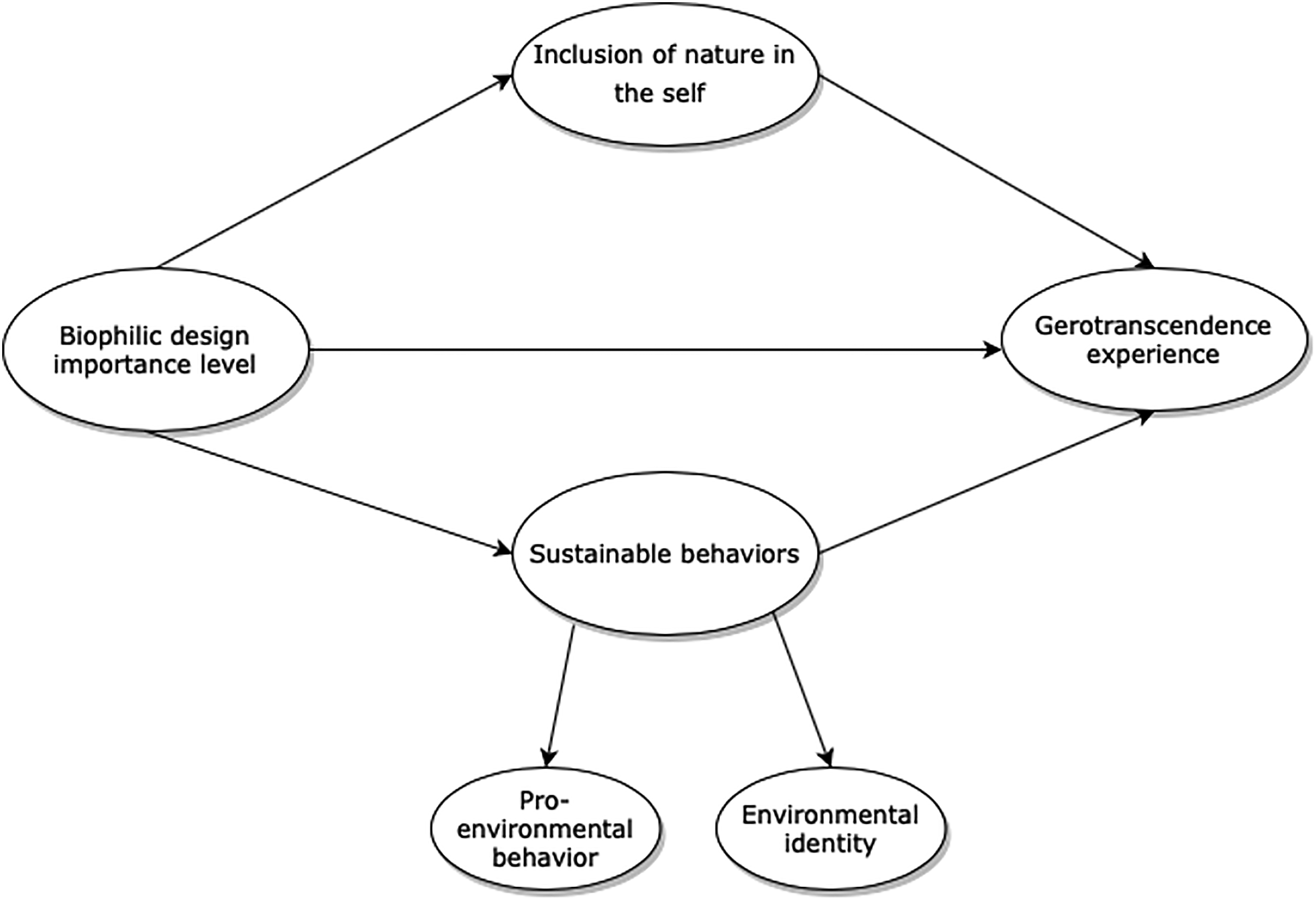
Hypothesized model of the study, depicting the direct effect of biophilic design importance level on gerotranscendence experience including sustainable behaviors, and inclusion of nature in the self.
Theoretical Framework
Biophilic Design
Biophilic design is based on the idea that humans have evolved as part of the natural world (Wilson, 1984), with the term “biophilia” originating from the Greek words for “life” and “love of nature.” Biophilic design has gained greater importance in the context of increased urbanization and the COVID-19 pandemic. Pioneered by Kellert et al. (2008), biophilic design represents a new paradigm in environmental design, addressing contemporary architectural deficiencies. Their work defines over 70 strategies across six categories: environmental features, natural shapes, patterns, light, place-based design, and human–nature relationships. These strategies aim to create three types of experiences (Kellert & Calabrese, 2015): direct experiences of nature (e.g., sunlight, air, water), indirect experiences (e.g., natural colors, geometries), and experiences of space and place (e.g., organized complexity, mobility).
Studies on biophilic design showed its psychological, physiological, and neurological benefits and therapeutic effects on behaviors. Increased daylight and views of nature improve productivity, performance, and creativity in offices and schools, while healthcare environments benefit from indoor plants and natural materials helping with stress recovery (Richardson & Butler, 2021). Richardson et al. (2020) state that nature connectedness promotes pro-environmental behaviors. Unfortunately, the modern urban lifestyle disconnects people from nature (Schiebel et al., 2022). Although biophilic design has the power to influence behaviors, there is a need for guidance in theoretical research to use biophilic elements to navigate the critical challenges of self-transcendence.
Sustainable Behavior
Sustainable behavior entails actions that consider future generations and protect the environment. Studies highlight pro-environmental behaviors and environmental identities as key predictors of sustainable behavior (De Leeuw et al., 2015). This study measures older adults’ sustainable behavior by their level of pro-environmental behavior and environmental identity. Pro-environmental behavior involves intentionally reducing negative environmental impacts, reflecting a concern for both physical and social environments. Research by Tucker and Izadpanahi (2017) showed that children in sustainably designed schools exhibited more pro-environmental behaviors than those in conventional schools. This study compared children’s environmental attitudes in three sustainably certified schools with those in four conventional schools in Australia, suggesting that schools should consider sustainable design to foster children's connection with nature and promote sustainable attitudes.
Environmental identity is akin to self-identity, where individuals behave sustainably, fostering environmentally friendly consumption patterns. It encompasses personal characteristics such as nationality, gender, culture, sexuality, and ethnicity (Connolly, 1991). Those with a strong environmental identity feel connected to and reliant on the natural world, influencing their thoughts about nature and themselves, making nature emotionally significant (Clayton et al., 2021).
In the literature, various tools have been developed to measure environmental identity, and one of the most widely used is the Environmental Identity Scale (EID) introduced by Clayton (2003). The EID tool has primarily been utilized in environmental education. It has been used to highlight the importance of the academic curriculum in fostering a strong environmental identity (Prévot et al., 2018), assess teachers’ environmental awareness (Gkargkavouzi et al., 2018), and explore early childhood and upbringing experiences as significant factors in shaping individuals’ environmental identity and pro-environmental attitudes (Green et al., 2016). While environmental identity and environmental behavior are different constructs, they are closely interconnected within the scope of this study. To explore the link between environmental identity, actions reflecting concern for others and the environment, and sustainable behavior, this study incorporated environmental identity as a significant predictor of sustainable behavior. Additionally, it employed the combination of environmental identity and pro-environmental behavior to provide a more comprehensive assessment of sustainable behavior. In this study, environmental identity refers to how older adults define themselves based on their sustainable behaviors.
Inclusion of Nature in the Self
Inclusion of nature in the self refers to a close emotional bond with natural environments (Richardson & Butler, 2021). This connection to nature has been associated with positive psychological effects, including improved emotional well-being and cognitive abilities. Greater inclusion of nature in the self is linked to better mental health outcomes (Capaldi et al., 2014). Immersing older adults in nature could potentially mitigate the negative aspects of aging, promote environmentally friendly behaviors, and alleviate age-related degenerative conditions. The level of nature inclusion may impact older adults’ emotional, behavioral, and cognitive regulation. This study explores the relationship between nature inclusion and gerotranscendence to understand its influence on sustainable behaviors. Schultz (2001) developed the Inclusion of Nature in the Self Scale (INS), a self-report tool measuring connectedness with nature and cognitive beliefs about nature.
It is important to re-emphasize that this study bases itself on the potential affordances of the relationship between attitudes toward biophilic design, inclusion of nature, and sustainable behaviors, as well as the implication(s) of this laid out relationship. Furthermore, it sees these dynamic relationships as the facilitators of the gerotranscendence theory. Thorough evidence-based research is crucial to better connect design considerations of the environment with the expected behaviors of older adults.
The Link Between Gerotranscendence and the Concepts
The gerotranscendence theory, developed by Tornstam (2005) and rooted in Erikson's (1982) psychosocial stages of development, offers a new cosmic understanding of life. Tornstam (2005) identifies two types of transcendence: cosmic transcendence, a journey to a meta-perspective, and ego transcendence, a shift towards solitude and meditation. This theory has been embraced by philosophers, psychologists, sociologists, and designers, who recognize three levels of gerotranscendence: the cosmic level, involving a change in perception of time and space; the coherence level, marked by reduced self-centeredness and existential questioning; and the solitude level, characterized by increased interrelatedness with others and a connection to past and future generations (Jewell, 2014; MacKinlay & Trevitt, 2012). According to Wong et al. (2016), gerotranscendence goes beyond the physical and material, fostering spiritual aspirations for inner fulfillment, a more meaningful life, and a positive view of death.
Researchers are increasingly interested in the relationship between a meaningful life, psychosocial theories (such as Ulrich et al.’s (1991) Stress Reduction Theory (SRT) and Kaplan & Kaplan’s (1989) Attention Restoration Theory (ART)), and environmental factors, seeking both experimental and observational evidence on physical and mental well-being (Bratman et al., 2021; Lin et al., 2022; McMahan & Estes, 2015; Vemuri & Costanza, 2006; Wang et al., 2016). The concept of a meaningful life and its connection to successful health and well-being has also been explored in biophilia research (Grinde & Patil, 2009). It highlights the positive impact of biophilic environments on well-being, affecting physiological aspects (reducing anxiety), psychological aspects (reducing negative emotions), and cognitive functions (improving creativity and performance) (Andrews, 2017). Studies by MacKerron and Mourato (2013) indicate that people living in natural environments are happier than those in urban settings. Similarly, Tornstam (1994) found that gerotranscendent older adults experience less anxiety and psychological strain. Other research on gerotranscendence, such as that by Abreu et al. (2023), Janhsen et al. (2019), and Wang et al. (2015), links the theory to positive outcomes in physical and mental health, as well as life satisfaction, suggesting a developmental progression toward maturity and wellness with age. Morris (2003) also found a positive correlation between biophilia and inner health, indicating physical, mental, and social benefits.
Charitable behavior, which is positively associated with happiness (Layous et al., 2012), suggests that sustainable behaviors and biophilic environments can shape the multiple levels of gerotranscendence for future societies, emphasizing the spiritual dimensions of human well-being. However, existing literature lacks guidance on which biophilic features govern this correlation. The novelty of this study lies in merging these three concepts and investigating how older adult–nature interaction patterns and sustainable behavior, directly and indirectly, affect the positive aging process. This study stands out as the first to integrate biophilia, sustainable behaviors, and gerotranscendence, as these concepts have not been synthesized together in the literature.
Method
Participants
The study consisted of two phases. In the first phase, data were collected from 318 Turkish participants residing in similar urban neighborhoods in Ankara, Türkiye. Sample size calculation followed Thompson's (2000) study, with the sample size being at least ten times the indicator variables for adequate statistical power in structural equation modeling. The study included 30 indicator variables (one for gerotranscendence score, 13 for pro-environmental behavior excluding organically grown fruits and vegetables and washing temperature, 14 for environmental identity, one for overall biophilic design importance, one for inclusion of nature in the self).
Of the participants, 300 provided usable data on self-reported measures, with ages ranging from 65 to 96 years (162 female, 138 male, M = 6.53, SD = ±1.3). Based on UN criteria (Kowal & Dowd, 2001), participants were categorized into three groups: young old (65–69 years), old (70–79 years), and old old (80 years and older). In the second phase, 30 older adults from the initial 300 participants volunteered to participate. The socio-demographic characteristics of the participants are detailed in Table 2 of the results section, providing descriptive statistics.
Participants were recruited based on two criteria. First, for the purposive sampling, living environments with a biophilic index of 10 or higher were selected. In the selection process, the study referred to Salingaros’s (2019) biophilic index equation, which includes ten components: sunlight, color, gravity, fractals, curves, detail, water, life, representation of nature, and organized complexity. Three architects, each with 20 years of experience in sustainability projects, selected the dwellings from the Ankara City Municipality database by applying the biophilic index equation with a score sheet. They examined the architectural plans, facades, and immediate surroundings, entering the information into a biophilic index grid score sheet (represented by B) ranging from 0 to 20 based on the building characteristics.
The architects calculated a numerical estimate based on the intensity and presence of these ten biophilic components (none = 0, some = 1, a large amount = 2) as defined in Salingaros’ (2019) study, with a value of 10 indicating an average intensity and presence of these components. The calculated mean index value of these environments was 11.05, ensuring a balanced representation of both environmentally rich and poor environments. Examples of biophilic components in these dwellings include the presence of daylight through double-height spaces with mezzanines, the use of earth-tone and green colors, wood as a natural material on vertical and horizontal surfaces, nature patterns (circular plan layouts), organic forms (curvilinear staircases), and the presence of plants and the visual and audible presence of water outdoors.
Second, participants were required to meet specific criteria: they must have lived in the selected dwellings for at least 10 years, have a floor area between 130 and 160 square meters, and be in the medium income level. This sample was chosen because finding an adequate number of biophilic living environments at low-income levels in Türkiye, a developing country, may be challenging. Additionally, examining the impact of biophilic design on gerotranscendence necessitates a certain level of exposure to such design. Lower biophilic index values could compromise the reliability of the responses. Including participants from high-income environments with a high biophilic index would reduce the generalizability of the results. Thus, based on the above explained metrics used to assess the index value, this specific sample provides a diverse range of biophilic living environments with varying levels of biophilic characteristics.
According to the Barthel Index (Mahoney & Barthel, 1965), all participants were independent in their daily living activities and mentally healthy based on records from their Family Health Centers. The author verified the health data of each participant by visiting their registered Health Center and comparing their statements with written records. The Bilkent University Institutional Ethical Review Board (the approval number: 2020_01_15_231) approved the study ethically.
Measures
Quantitative Measures of Phase I
The study has five quantitative measures in phase I: Gerotranscendence Scale (The GS Type-2 scale), Pro-environmental Behavior (PB) Scale (PEBS), the Environmental Identity Scale (EID), Inclusion of Nature in the Self Scale (INS), and Biophilic Design Importance Level (BDI). The author selected these scales based on a review of relevant literature, considering factors like gerotranscendence content, reliability, and quantitative approach. The GS Type-2 scale, emphasizing elements like time, space, and objects for cosmic transcendence, was chosen (Tornstam, 1997). For measuring sustainable behaviors, the PEBS by Markle (2013), the EID by Clayton et al. (2021), and INS by Schultz (2001) were selected for their reliability, validity, and popularity to reflect environmental identity, nature connection, and behavior implications (Scopelliti et al., 2018). To quantify biophilic design importance level for exploring biophilia interventions, the study selected the “biophilic index” developed by Salingaros (2019). Table 1 illustrates the detailed list of each quantitative measure, including its reference, items, purpose and process and contribution.
Quantitative Measures List and Summary.
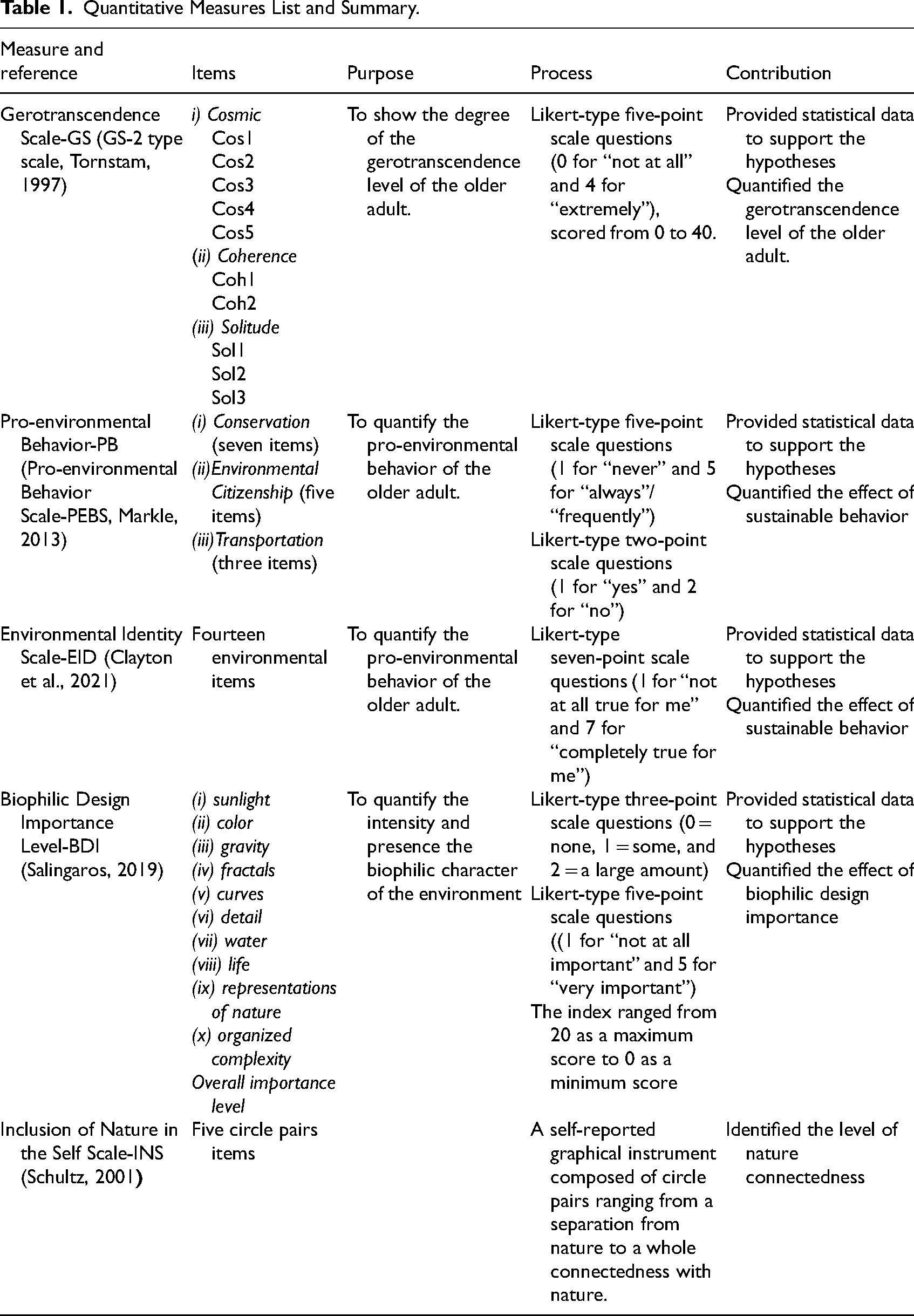
The three Turkish researchers independently translated the items belonging to each scale, later discussed them, and reached a consensus. A bilingual environmental designer and psychologist who has been working in academia for 20 years also reviewed the translated version. After the back-translation, they edited the items in several iterations to obtain the correct translation version (see Supplemental material for the detailed list of measures and their items). GS was the only measure constructed as a total score, while the rest of the measures were constructed as mean values.
Qualitative Measures of Phase II
Diary Logs on Sustainable Behaviors and Open-Ended Questions
Participants were asked to keep a daily diary for 5 weeks, noting changes in positive aging attitudes linked to sustainable behaviors. The diary logs addressed sustainable behavior items highly correlated with the gerotranscendence experience. The frequency of these behaviors varied among participants based on their daily living patterns. The study aimed to collect data on the frequency of sustainable behavior rather than their daily activities. Therefore, at the end of each week, each participant was also contacted by phone by a trained interviewer, who asked the following three open-ended questions: (a) How has behaving more sustainably changed your life-meaning (or meaning of life) and purposeful aging? (b) How has behaving more sustainably changed your perception of life and death? (c) How have your social and personal relationships with others changed as you’ve behaved more sustainably? This part of the study aims to deepen the understanding of how sustainable behaviors relate to the lived experience of gerotranscendence in older adults.
Procedure
The first phase occurred between October 2020 and December 2021, with trained interviewers conducting individual home visits with 318 participants. Participants received brief information about the study by phone before the visits. During the visits, which lasted approximately 75–90 min, participants completed the five scales in a single session, with questions randomly ordered to reduce common method bias.
The second phase, conducted between January and February 2022, involved 30 volunteers who received 5-week home visits. On the first day, a 30-min introductory session introduced participants to keeping diary logs. They documented their completion of sustainable behaviors daily in the diary and were called each Sunday to respond to three open-ended questions about the impact of these behaviors. The phone interviews, conducted over 5 weeks, lasted an average of 75 min per participant, with each weekly interview lasting about 15 min. Interviews were recorded and later transcribed to protect participant identities.
The study selected nine items from the pro-environmental behavior scale and one from the EID based on the highest mean values calculated from the first phase's participants. These activities were to be undertaken for 5 weeks (see Table 2). It's important to note that not all items in Table 2 may represent the participants’ regular sustainable behaviors. The second phase aimed to investigate how behaving sustainably relates to the shift in the lived gerotranscendence experience of older adults rather than assessing pre- and post-sustainable behaviors or exploring whether participants are more environmentally sustainable or receptive to change. Each week, participants were provided a new list to note the frequency of particular behaviors.
Sustainable Behavior Checklist Items for the Qualitative Part of the Study.
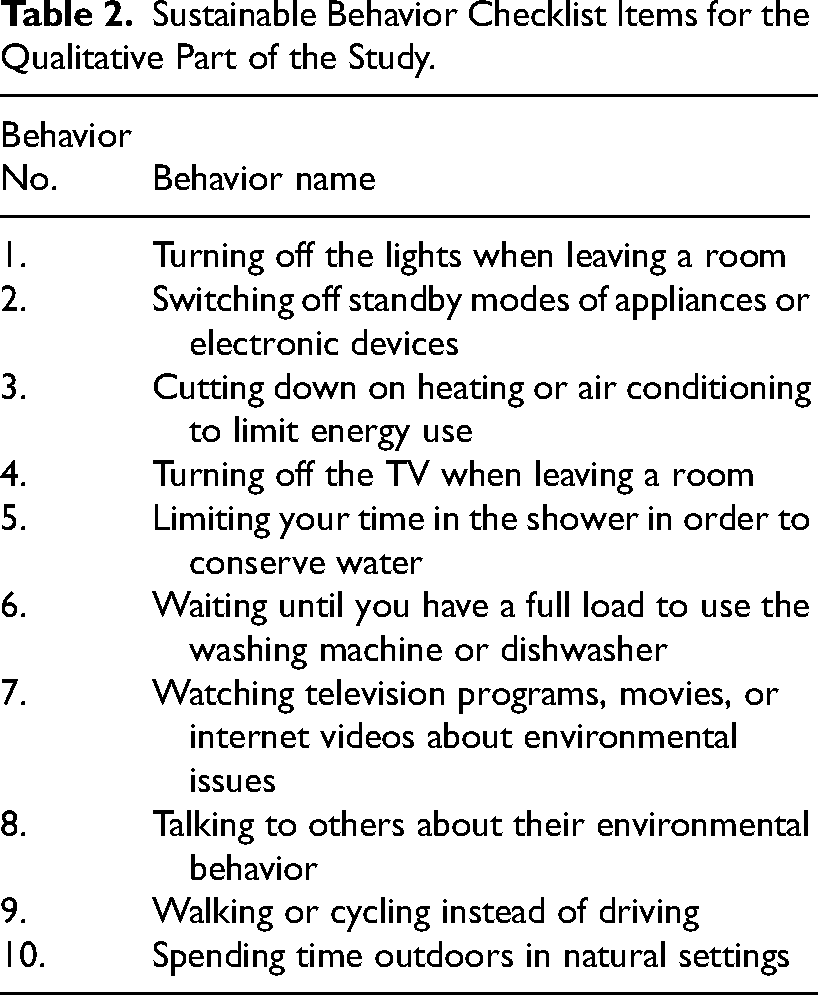
The three questions in the qualitative phase aim to thoroughly analyze the reflections of older adults based on their experiences. These reflections over 5 weeks could provide opportunities for interpreting their gerotranscendence while shedding light on sustainable behavior issues that are important to the participants. The author is aware that these questions might provoke older adults to believe that change has occurred, whether it has or hasn’t. The study considered that when analyzing results and employed the following strategies; contextualizing responses to help participants understand the purpose and scope of their responses, framing questions in a neutral manner to avoid leading participants to believe that change has occurred, conducting the affinity diagramming method of open-ended responses to identify common themes and patterns, and validating findings with participants to ensure that their responses accurately reflect their experiences
Data Analyses
The quantitative data were analyzed using IBM SPSS Statistics 22.0.0. Bivariate Pearson correlations and internal consistencies (Cronbach's alpha) were calculated for the measures. One-way ANOVA compared group means, adjusting for demographic variables. Structural Equation Modeling tested hypotheses, with direct and indirect effect analyses conducted using AMOS Software version 22 and JASP 16.0. The significance level was set at p < .001. Qualitative data were analyzed using affinity diagramming (Holtzblatt et al., 2005). Two environmental gerontology experts familiar with gerotranscendence theory conducted this process. They extracted key points from participant responses, grouped them based on similarities, and coded them into categories aligned with gerotranscendence dimensions.
Results
Sample Characteristics
A total of 318 questionnaires were completed, but 18 participants had missing data in various questionnaire items and were excluded from the analysis. Detailed findings on the socio-demographic characteristics of the participants can be found in Table 3.
Socio-Demographic Characteristics of the Participants (n = 300).
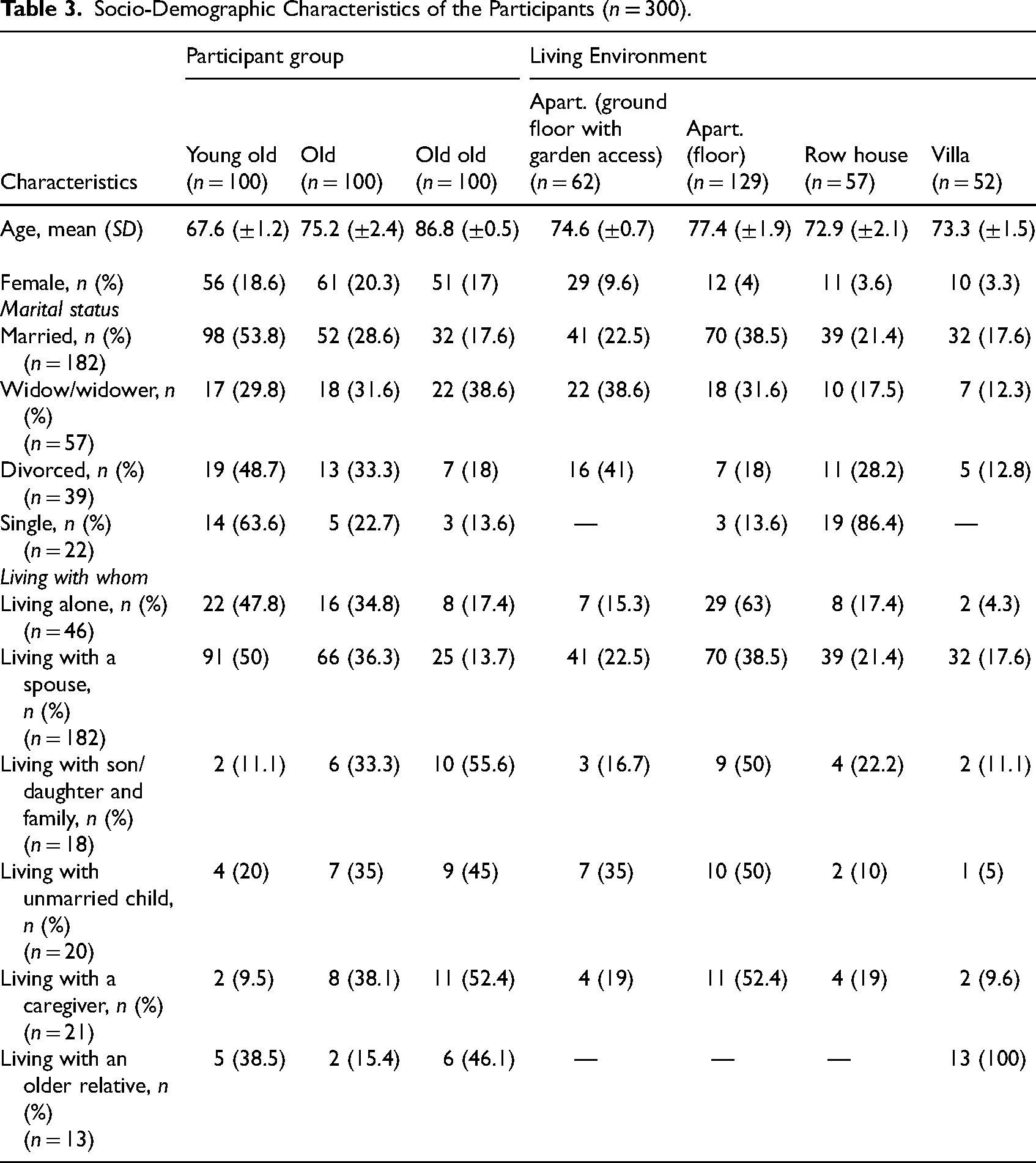
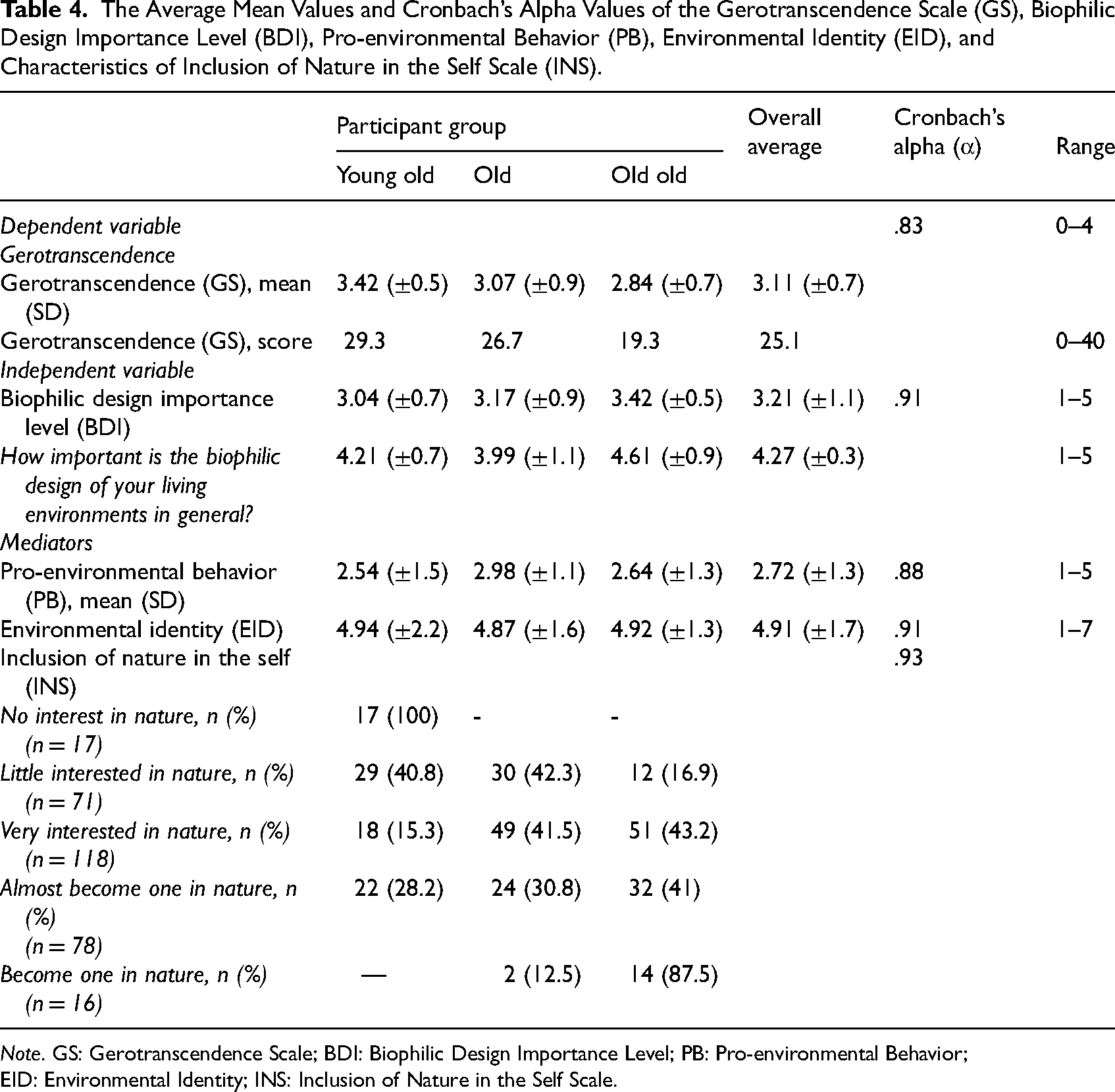
Table 4 presents the measures’ average mean values and Cronbach alpha values. The overall average GS score was 25.1. Unexpectedly, the young old group had the highest GS score. Although the journey toward gerotranscendence is a unique and individual process, as people age, their priorities often shift from materialistic and superficial concerns to more profound values (Tornstam, 1989). Among the age groups, the cosmic dimension had the highest average mean value of 3.21 (±1.1). Additionally, the BDI had an average mean score of 3.21 (±1.1). Participants rated sunlight, life, and representations of nature as the top three most crucial biophilic design components, with scores of M = 4.32 (±0.5), M = 4.11 (±0.7), and M = 3.89 (±1.1), respectively.
The Average Mean Values and Cronbach’s Alpha Values of the Gerotranscendence Scale (GS), Biophilic Design Importance Level (BDI), Pro-environmental Behavior (PB), Environmental Identity (EID), and Characteristics of Inclusion of Nature in the Self Scale (INS).
Note. GS: Gerotranscendence Scale; BDI: Biophilic Design Importance Level; PB: Pro-environmental Behavior; EID: Environmental Identity; INS: Inclusion of Nature in the Self Scale.
Table 4 indicates that the average mean value of PB was 2.72 (±1.3). The highest overall average mean value was for conservation behavior (M = 4.12 ± 0.1). The EID had an average mean value of 4.91 (±1.7), with the highest overall mean value for the identity item “I like to spend time outdoors in natural settings” (M = 6.37 ± 0.1 for young old, M = 5.11 ± 1.7 for old, M = 6.89 ± 0.1 for old old). Only 17 participants reported no interest in nature, all in the young old group.
The ANOVA results indicated a statistically significant difference in self-reported BDI rankings among older adult age categories, particularly in the old old group (p = .000). However, there was no significant difference between the young old and old age groups (p = .351, p = .128, respectively). The old old group also showed a significant difference in gerotranscendence experience. Regarding PB measures, no significant differences were found among age groups (p = .341 for young old, p = .220 for old, p = .187 for old old). For the EID measure, the old old group showed a significant difference (p = .571 for young old, p = .387 for old, p = .001 for old old). The INS measure results indicated a significant difference between the young old group and the old and old old groups (p = .000 for young old, p = .136 for old, p = .471 for old old).
Correlations among Self-Reported Measures of Sustainable Behavior, Biophilic Design, and Gerotranscendence
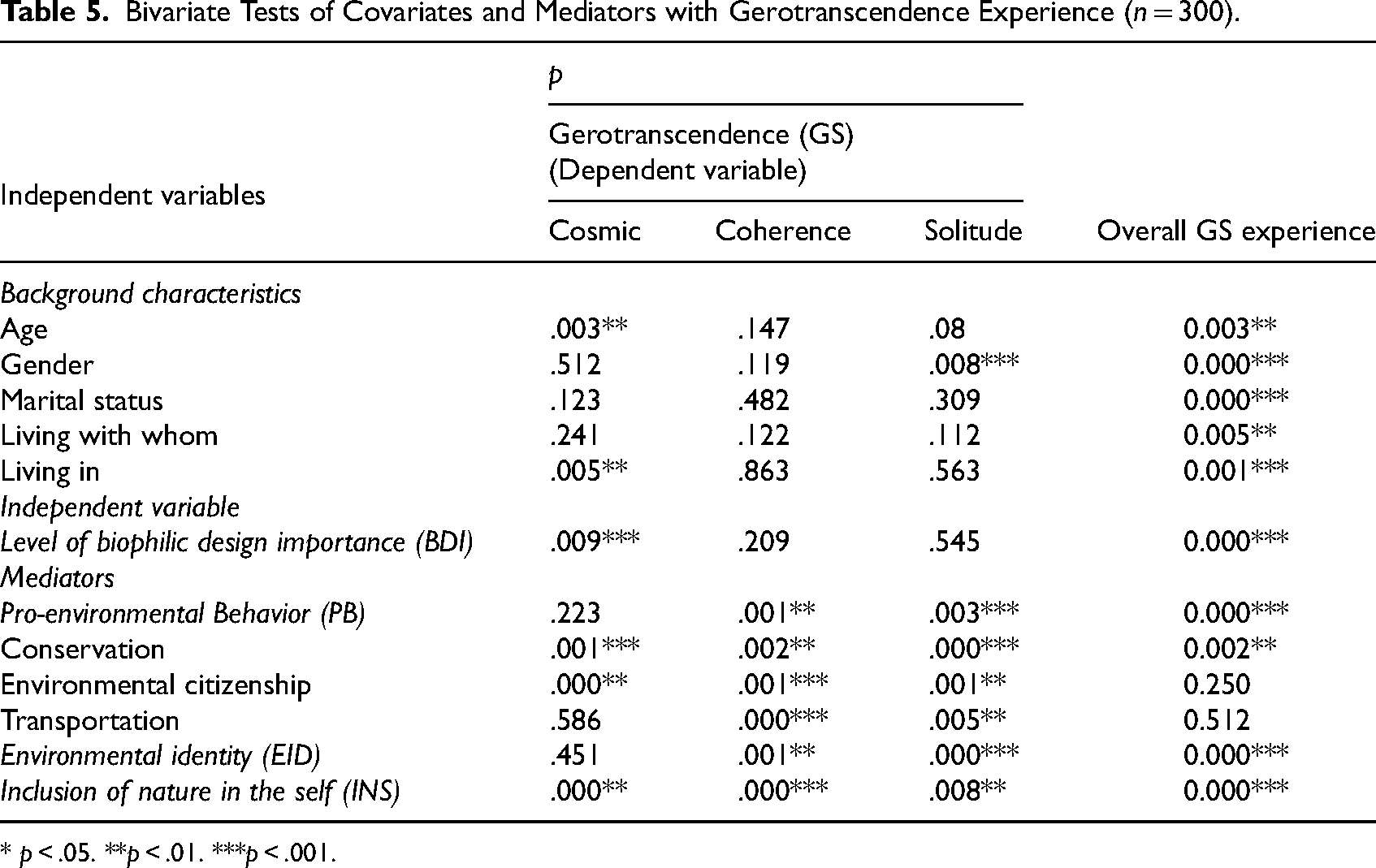
Table 5 shows significant correlations between background characteristics, biophilic design importance, inclusion of nature in the self, and the overall gerotranscendence experience. Among sustainable behaviors, only the conservation category and environmental identity were significantly correlated with gerotranscendence. So, one hypothesis of the study was rejected: (H3) All sustainable behaviors of older adults are positively correlated with their gerotranscendence experience.
Bivariate Tests of Covariates and Mediators with Gerotranscendence Experience (n = 300).
* p < .05. **p < .01. ***p < .001.
The correlation analysis revealed varying levels of statistical significance between each background characteristic and the three GS dimensions. The cosmic dimension showed significant correlations with age and dwelling type. Older adults in the old old age group living on the ground floor with garden access redefined their relationship with the physical world through interactions with nature in their gardens. Those with higher cosmic dimension scores placed more importance on biophilic design components and engaged more in conservation and environmental citizenship behaviors, feeling a stronger connection with nature. However, they tended to engage less in sustainable transportation behavior.
The coherence dimension was significantly correlated with sustainable behavior and nature connectedness but not with background characteristics or biophilic design. Older adults with lower sustainable behaviors and less connection to nature perceived their lives as more chaotic.
The solitude dimension was significantly correlated with gender, with females feeling more connected to the universe than males. It was also correlated with sustainable behaviors and nature connectedness, indicating that older adults reporting sustainable behaviors had a strong interest in nature and more social relations.
Indirect Effect Analyses of Biophilic Design Importance Level on Gerotranscendence Experience
The hypothesized model's estimation yielded the following statistics: (χ2/df = 2.22; p < .001; IFI = 0.970; CFI = 0.996, TLI = 0.979; RMSEA = 0.042; SRMR = 0.43). The study evaluated the model's fit according to Hu and Bentler's criteria (1999), in which CFI > 0.95 or RMSEA < 0.06 in combination with SRMR < 0.08 were defined as acceptable levels of type I and type II error rates. In the model (Figure 2), two variables were entered; sustainable behaviors and inclusion of nature in the self. The confidence intervals (95th percentile confidence interval) were best calculated through the bias-corrected bootstrap. In the study, the bootstrap method was used to analyze the sample distribution and indirect effects. The bootstrapping was set at 5000 samples.
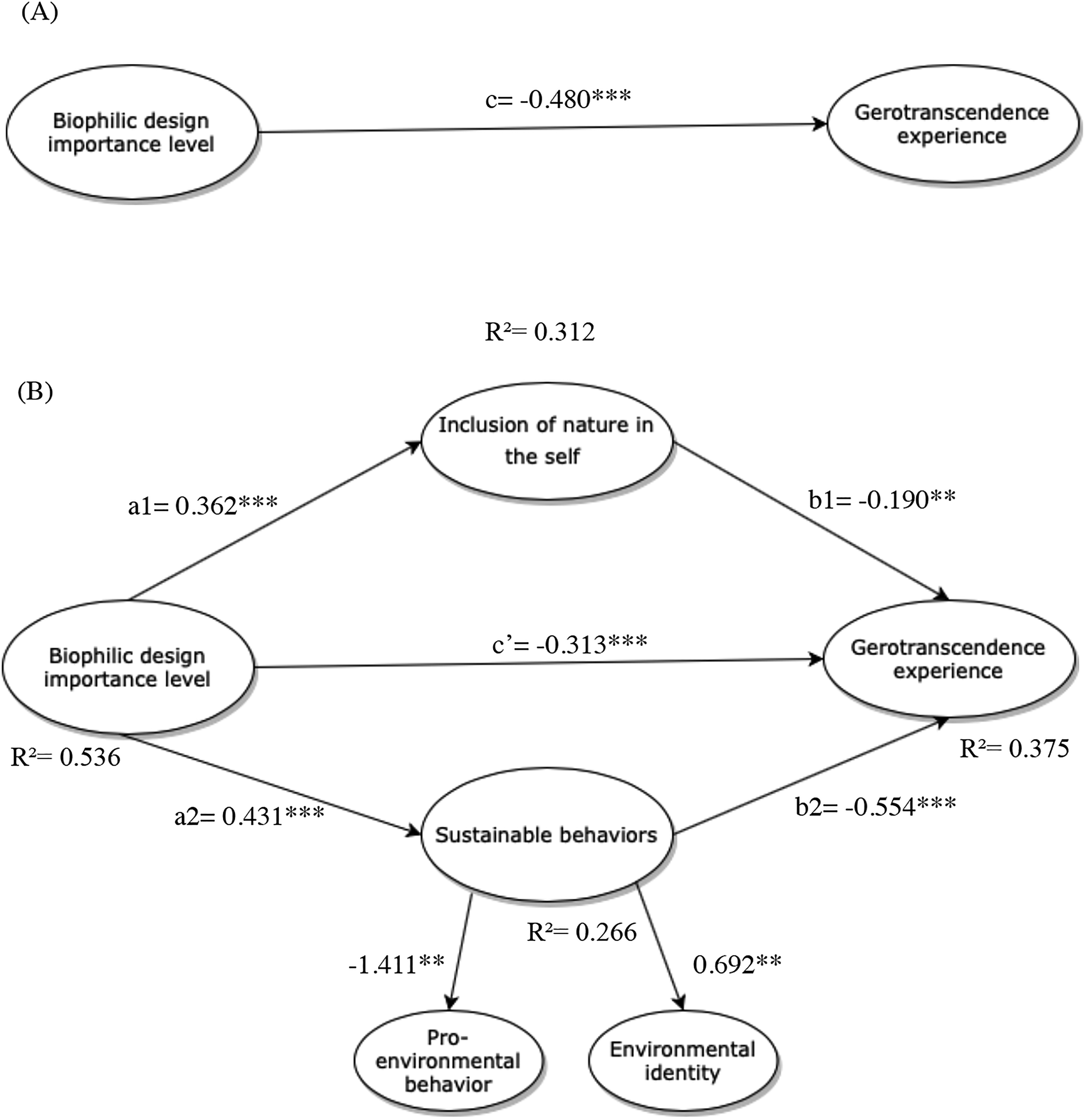
Result of structural model testing. Notes. Path names and values represent unstandardized coefficients. Graph A depicts the total effect of the biophilic importance level on the gerotranscendence experience. Graph B depicts the indirect effects of sustainable behaviors and the inclusion of nature in the self on the gerotranscendence experience. *p < .05. **p < .01. ***p < .001.
The model analyzed the significance of the indirect effect of biophilic design importance level (independent variable) on gerotranscendence experience (dependent variable). The weights of paths a (a1 and a2) were calculated as the effect of the independent variable on sustainable behaviors and inclusion of nature in the self, and the weights of paths b (b1 and b2) as the effect of sustainable behaviors and inclusion of nature in the self on the dependent variable, with background characteristics controlled. The direct effect was calculated as the weight of path c, and the indirect effect as the weights of a×b.
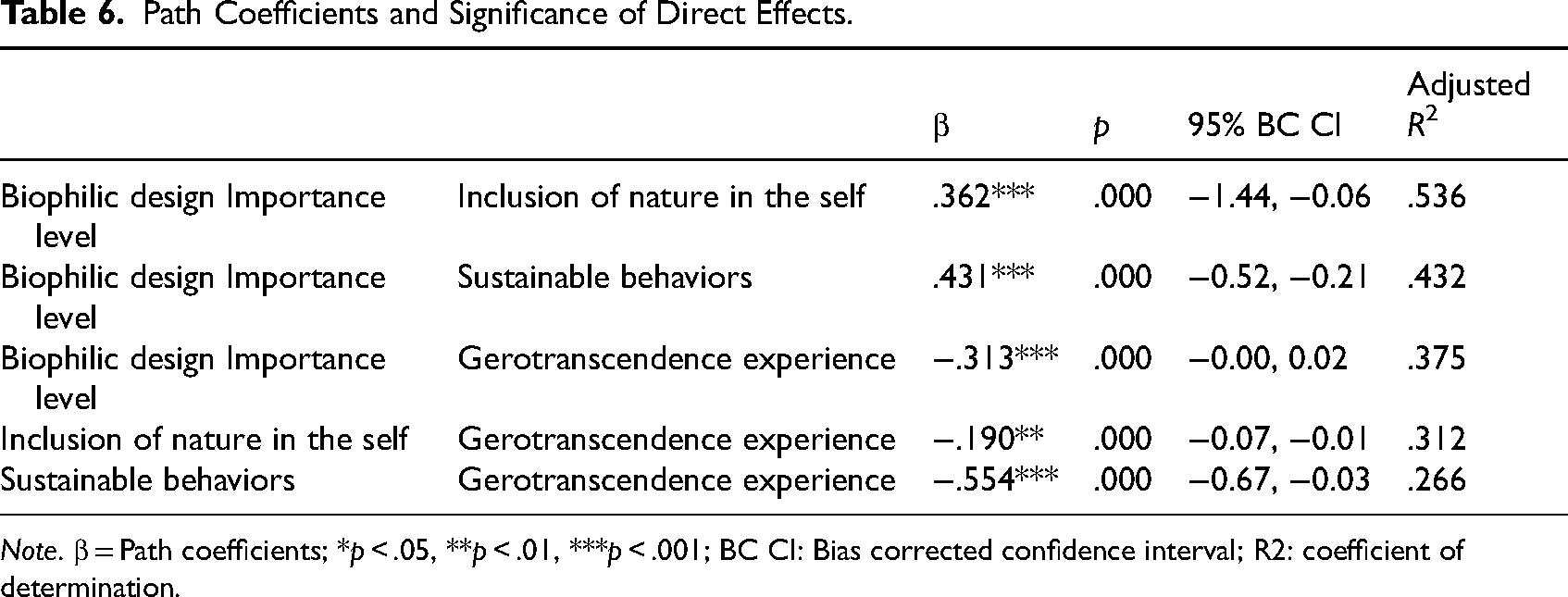
Table 6 summarizes path coefficients and the significance of the hypothesized relationships among the constructs. Biophilic design importance level has a significant positive effect on the inclusion of nature in the self (β = .362, p < .001) and sustainable behaviors (β = .431, p < .001). The results revealed that higher biophilic design importance levels were associated with more inclusion of nature in the self. Higher biophilic design importance levels were associated with higher levels of sustainable behaviors. According to the R2 values in Table 6, the biophilic design importance level explained 53.6% variance in the inclusion of nature in the self, 43.2% variance in sustainable behaviors, and 37.5% in gerotranscendence. As evident in Table 7, the indirect effects of the inclusion of nature in the self and sustainable behaviors were found to be statistically significant. Thus, the indirect effect of the biophilic design importance on the gerotranscendence experience through sustainable behaviors and inclusion of nature in the self was significant (p = .000, H1 and H2 supported).
Path Coefficients and Significance of Direct Effects.
Note. β = Path coefficients; *p < .05, **p < .01, ***p < .001; BC CI: Bias corrected confidence interval; R2: coefficient of determination.
Testing Indirect Effects.
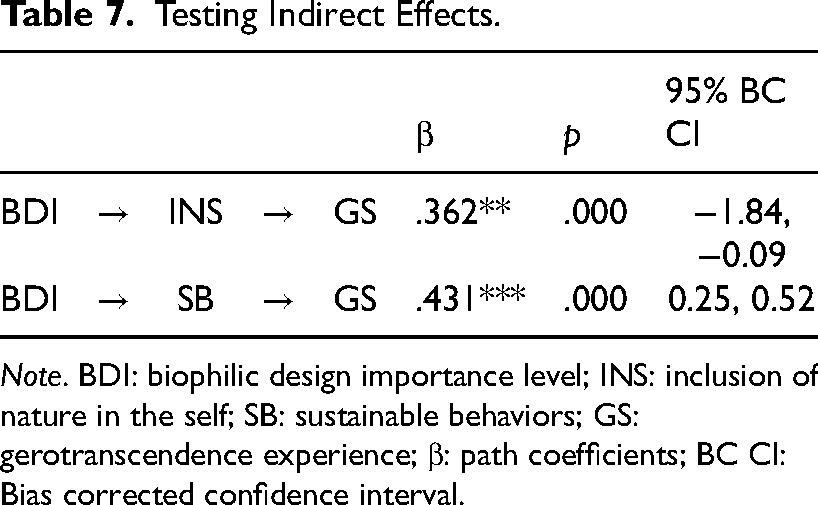
Note. BDI: biophilic design importance level; INS: inclusion of nature in the self; SB: sustainable behaviors; GS: gerotranscendence experience; β: path coefficients; BC CI: Bias corrected confidence interval.
Diary Log Findings
Thirty older adults (17 female, 13 male, M = 74.2, SD = ±4.8) volunteered and consented to participate in the study's second phase (Supplemental material for exemplary quotations from diary log findings). With regards to maximum variation, 11 participants were young old (M = 67.2, SD = ± 1.8), 12 participants were old (M = 76.2, SD = ± 2.4), and seven participants were old old (M = 81.8, SD = ± 4.9). The majority of the participants (19 out of 30) were living on the ground floor of apartments with garden access, five participants were living in a villa, and six participants were living on one of the upper floors of apartments. For the first 2 weeks, turning both the lights and the TV off when leaving a room were the most engaged behaviors, while during the last 2 weeks, the following three sustainable behaviors became popular: (a) Talking to others about their environmental behavior, (b) Walking or cycling instead of driving, and (c) Spending time outdoors in natural settings.
Responses to Q1, “How has behaving more sustainably changed your life-meaning (or meaning of life) and purposeful aging?” were grouped into two main themes: (a) Increased feeling of unity with the universe and (b) Help in finding a new reason for living. The significant correlation of sustainable behaviors with the cosmic dimension provided insight into these themes. The first theme suggests a redefined place in the physical and mental world, as supported by bivariate analyses correlating sustainable behavior indicators with gerotranscendence dimensions. The second theme relates to a change in behavior and thinking toward future generations, fostering a sense of continuity and broader perspectives on life.
Behaving more sustainably helped me shift my thinking to a more meaningful life to care for future generations. (Participant #21, 72-year-old man)
Spending more time outdoors in parks helped me a lot in terms of not being isolated at home. (Participant #28, 85-year-old woman)
The responses to Q2, “How has behaving more sustainably changed your perception of life and death?” were grouped under three main issues: (a) An increased sense of satisfaction, (b) A positive image of life, and (c) Accepting aging as a natural stage. These themes could be linked to the coherence dimension, which was significantly correlated with all indicators of the pro-environmental behaviors and environmental identity in quantitative findings (see Table 4). The first theme “increased sense of life satisfaction” concerns how sustainable behaviors gave their lives meaning and purpose. The sense of usefulness was achieved by behaving sustainably, which led to a positive self-image and positive feelings as a second theme. Life satisfaction is closely related to well-being, and older adults experience positive aging if they are satisfied with their lives (Raeesi Dehkordi et al., 2021). The third theme, “accepting aging as a natural state,” is highly related to the spiritual belief to cope with aging threats. Although most participants (23 out of 30) stated they needed more time to respond to this question more accurately, all participants highlighted the essential role of sustainable behaviors on positive aging, which resulted in increased satisfaction with life.
I started to go shopping on foot. Walking makes me more energetic. (Participant #17, 69-year-old man)
As I cycle, I do not feel old. (Participant #29, 75-year-old man)
The responses to Q3, “How have your social and personal relationships with others changed as you’ve behaved more sustainably?” were grouped under the two main issues: (a) A new perspective for social relationships and (b) Preventing being isolated. These two themes highlight the importance of the solitude dimension. Similar to the correlations of the coherence dimension in Q2, the bivariate analyses demonstrated a statistically significant relationship between sustainable behaviors and the solitude dimension. The first theme, a new perspective on social relationships, supports social transcendence, which refers to being more selective in making new friends and spending time with others. The second theme is about positive solitude, which suggests spending more time on important things for older adults. Not socially withdrawing doesn't imply that older adults are less mature; instead, their priorities are multifaceted. For example, they might engage in social interactions centered around sustainable topics or activities involving nature. Thus, withdrawing from children or friends and spending more time in nature is not a negative sign of loneliness but a healthy indicator of maturity.
I started to enjoy meeting with my friends, with whom we started to compare our electricity bills as a fun game. (Participant #8, 76-year-old man)
We created eco nights, where I meet with my friends to watch environmental movies. I gained a new perspective for my social relationships as I have behaved more sustainably. (Participant #9, 66-year-old woman)
Discussion
The current study aimed to redefine positive aging dimensions. It moved away from the current three dimensions of gerotranscendence by examining the correlations among sustainable behaviors, biophilic design importance levels, and nature connectedness. It provided new insights into the experiential qualities of the gerotranscendence theory. The two hypotheses of the study were supported: (H1) The indirect effect of the biophilic design importance on the gerotranscendence experience through sustainable behaviors is significant; (H2) The indirect effect of the biophilic design importance on the gerotranscendence experience through inclusion of nature in the self is significant. One hypothesis was rejected: (H3) all sustainable behaviors of older adults are positively correlated with their gerotranscendence experience. This implies that while some sustainable behaviors may contribute to feelings of gerotranscendence, others may not have the same effect. Further research could explore this hypothesis to understand the closer relationship between conservation behavior, which is significantly correlated, and the experience of gerotranscendence. The results were consistent with prior studies (Corral-Verdugo et al., 2010; Hung & Chang, 2021) reporting that nature connectedness and environmentally significant behaviors were associated with enhanced psychological health and well-being.
Contrary to gerotranscendence theory predictions, the cosmic dimension was the only significantly affected dimension in the correlations among sustainable behaviors, biophilic design importance levels, and nature connectedness. This finding underscores the positive impact of sustainable behaviors on redefining the aging experience. These results align with previous studies (Wang et al., 2021) that found evidence from 31 countries supporting the role of pro-environmental behavior in an aging world. The relationship between aging and environmental sustainability is bidirectional. Older adults’ sustainable behaviors play a crucial role in enhancing environmental quality and their own physical, psychological, and mental well-being through exposure to biophilic and sustainable environments. The correlations among these environmental factors seem indispensable to facilitating the cosmic dimension of gerotranscendence. When discussing engaging with nature, it's crucial to consider how physical limitations affect relationships with nature and introspective processes. For older adults, these challenges can significantly limit their ability to engage with the outdoors, both physically and mentally fully. Understanding these limitations is essential when exploring how individuals connect with the natural world through biophilia.
The qualitative study addressed active aging as a dynamic process influenced by sustainable behaviors, presenting both challenges and opportunities for enhancing gerotranscendence. Positive aging involves transcending cosmic, solitude, and coherence dimensions, which depend on individuals’ internal experiences and behaviors. Older adults value their connection with nature but may not always act to preserve it. These findings underscore the importance of nature connectedness and sustainable behaviors in providing purpose and meaning in later life. Although their quotes refer to meeting with friends rather than withdrawing from them, the qualitative findings of the study highlight the importance of older adults becoming more selective in their social engagements. This selectivity suggests that older adults may distance themselves from superficial relationships to focus on those that bring genuine joy and support. They tend to prioritize meaningful social interactions over frequent ones, seeking conversations and relationships that are enriching and aligned with their values, such as discussing sustainable topics or participating in activities that connect them with nature.
Interestingly, the study found that as people engage more in sustainable behaviors, their interest in nature also increases, leading to a more satisfying life. This relationship influences how biophilic design contributes to positive aging. Components like sunlight, live plants, and representations of nature were crucial in this regard. However, sustainable transportation behavior was not significant, possibly due to walking habits among older Turkish adults and the poor quality of street environments.
The correlations of gerotranscendence dimensions varied across age groups. Older adults aged 80 years and older had a unique relationship with nature, affecting their spiritual growth and social relations. The indirect effect analyses revealed that higher levels of engagement in sustainable behaviors and greater self-awareness, acceptance of death, and sense of meaningfulness in life were associated with higher levels of BDI. Additionally, the inclusion of nature in the self significantly influenced the relationship between BDI levels and GS.
This study stands out from previous research on gerotranscendence (Jewell, 2014) by highlighting the impact of sustainable behavior on the gerotranscendence experience, a novel approach in this field. It is the first to explore how sustainable behavior and nature connectedness influence this phenomenon. A comprehensive understanding of gerotranscendence involves considering individuals’ background characteristics, pro-environmental behavior, environmental identities, and self-definition. The degree of self-definition as part of nature influenced social relationships, reducing isolation positively. Additionally, it led to an increased feeling of unity with the universe.
The qualitative findings suggest that sustainable behaviors, biophilic design, and nature connectedness facilitate gerotranscendence, helping older adults find new meaning in life, fostering a sense of unity, and accepting aging as a natural process. Although the relationship between sustainable behaviors and nature connectedness may vary across life stages, this study found significant associations with gerotranscendence, particularly when influenced by biophilic design components in living environments. Sustainable behaviors and the inclusion of nature in self-identity emerge as strong predictors of positive aging.
Limitations
The study's limitations include its focus on the Turkish culture, which limits generalizability. Additionally, the sample size and duration of the qualitative part are constraints. The study used a non-probability sampling method. The qualitative findings were confined to specific questions, which may have led participants to provide reasons for change even if sustainable behavior had not impacted that aspect of their lives. Moreover, this study does not account for the specific impact of housing types. While it acknowledges the potential for gardening, it does not consider how different housing types can lead to varying sunlight conditions, noise, and views, irrespective of housing density. Another limitation is using the total score of pro-environmental behavior in the structural equation modeling, which may have provided limited insights.
Conclusion
This study contributes to aging literature by examining the factors that promote gerotranscendence. It considers how attitudes toward biophilic design, pro-environmental behaviors, environmental identities, and nature connectedness collectively influence the experience of old age. While these behaviors are likely just one aspect influencing gerotranscendence, this study represents an initial step in questioning popular psycho-social theories (Erikson, 1982; Tornstam, 1994) about the relationship between environmental challenges and aging. Older adults are particularly susceptible to the adverse effects of severe temperatures, reduced mobility, and disruptions in food and water supply (Pillemer et al., 2011). Therefore, examining the global challenges associated with maintaining physical, psychological, and cognitive activity in old age is crucial. This examination requires revising current theories to incorporate new findings and explore the intersections between aging and contemporary trends.
The study highlights the importance of biophilic design in supporting sustainable environmental behaviors and positive aging. By integrating gerotranscendence and biophilia, recognizing their connection to sustainable behaviors, and including nature in self-identity, the study contributes to understanding the meaning of older age. It raises awareness about environmental sustainability and promotes positive aging, which in turn supports overall well-being and life satisfaction.
Future research could benefit from including all constructs of pro-environmental behavior for a more comprehensive analysis. While the study's correlations and interviews offered valuable insights, expanding the analysis to include all constructs could enhance the study further. Furthermore, it is important to note that the definition of environmental identity can substantially vary across different cultures and life stages (Clayton, 2003). Hence, it is worth considering that in future studies, another potential correlation link could be established if environmental identity were examined concerning other constructs related to environmental decision-making or self-identity. Future studies could consider longitudinal designs to track the gerotranscendence process of the same older adults over time. The future research could also compare the gerotranscendence levels of individuals in moderate and low biophilic environments. Furthermore, it could focus on exploring each of the independent variables separately. Behavioral observation and photovoice could provide rich qualitative data by allowing older adults to capture images of elements in their environment that they find meaningful or activities related to sustainable living, representing their experiences.
Implications for Practice
The study results have significant social, physical, and spiritual implications.
Socially, older adults’ active participation in society, including their ecological behaviors, could enhance sustainable social capital and promote a shift towards a more holistic perspective.
Physically, older adults benefit from engaging with nature both outdoors and indoors, suggesting the importance of incorporating natural elements into built environments for their health and well-being.
Spiritually, embracing sustainable behaviors and connecting with nature can foster a sense of meaning and peace, aligning with the cosmic dimension of the gerotranscendence theory.
These implications suggest opportunities for designers, architects, planners, social scientists, and policy-makers to explore theoretical models for promoting positive aging through biophilic design and supportive policies, ultimately contributing to a more humane world for people of all ages.
Supplemental Material
sj-pdf-1-her-10.1177_19375867241271433 - Supplemental material for Exploring the Facilitators of the Gerotranscendence Theory: Correlations among Sustainable Behaviors, Biophilic Design, and Nature Connectedness
Supplemental material, sj-pdf-1-her-10.1177_19375867241271433 for Exploring the Facilitators of the Gerotranscendence Theory: Correlations among Sustainable Behaviors, Biophilic Design, and Nature Connectedness by Yasemin Afacan in HERD: Health Environments Research & Design Journal
Footnotes
Acknowledgments
The author thanks participants, trained interviewers, the three Turkish researchers who translated the items of each scale, two academicians who participated in affinity diagramming, and the three architects who assessed the dwellings in the database. This study was not preregistered. Researchers who would like access to the data can contact the author to discuss the institutional process of submission of the study. Additionally, study materials can be made available upon request of the first author. The OpenAi GPT-3.5 checked the readability of the manuscript. Applying the technology was done with the author's oversight and control, and the author carefully reviewed and edited the results.
Authorship Contribution Statement
YA contributed to conceptualization, methodology, data curation, writing–original draft preparation, visualization, and writing–reviewing and editing.
Declaration of Conflicting Interests
The author declared no potential conflicts of interest with respect to the research, authorship, and/or publication of this article.
Funding
The author received no financial support for the research, authorship, and/or publication of this article.

Supplemental Material
The supplemental material for this article is available online.
References
Supplementary Material
Please find the following supplemental material available below.
For Open Access articles published under a Creative Commons License, all supplemental material carries the same license as the article it is associated with.
For non-Open Access articles published, all supplemental material carries a non-exclusive license, and permission requests for re-use of supplemental material or any part of supplemental material shall be sent directly to the copyright owner as specified in the copyright notice associated with the article.
