




Abstract
Objective:
The present study aimed to explore the biophilic design attributes within a hospice care center from the healthcare professionals’ perspective by utilizing a qualitative research and investigated the effect of hospice professionals’ attitudes toward the uncovered green features on the prediction of their workplace attachment through a quantitative research.
Background:
In hospice establishments, studies showed that applying biophilic design principles significantly reduces stress and improves emotional well-being. Yet, despite its importance, attitude toward biophilic design, and its significant influence on well-being, satisfaction and attachment to the workplace of hospice healthcare professionals have not yet been researched.
Methods:
The qualitative research used semi-structured in-depth interviews among hospice professionals to reveal biophilic design features that exert an influence on their activity, while the quantitative research employed a confirmatory factor analysis and the structural equation modeling to analyze the data.
Results and Conclusions:
The qualitative research generated five biophilic design features, such as open spaces with natural light, natural decorative elements, landscape provided by nature through windows, wooden furniture, and colors that create a warm atmosphere within the hospice care center. The quantitative approach indicated that attitude toward the uncovered biophilic design features in the context of the COVID-19 pandemic significantly improved the healthcare providers’ emotional well-being. This dimension, in turn, contributed to their satisfaction with green features/natural decor and attachment to the workplace. Results of this study provide practitioners and researchers valuable strategies to incorporate biophilic design features in the working environments of hospice settings.
Keywords
The current COVID-19 pandemic determined by the severe acute respiratory syndrome coronavirus has affected the healthcare system worldwide (Marazziti et al., 2021) and has increased pressure on healthcare professionals (Ercolani et al., 2021). Healthcare systems have been strongly impacted by austerity measures imposed by governments worldwide, forcing healthcare professionals exposed to COVID-19 virus to take critical health-protective decisions for their patients (Galiana et al., 2020). As a consequence, healthcare workers reported multiple psychiatric symptoms, the most common of which were chronic stress, insomnia, depression, burnout, and anxiety (Marazziti et al., 2021).
In context of this pandemic, mental health and well-being of hospice professionals while providing healthcare to their patients are of critical importance. Within hospice establishments, healthcare professionals offer expanded support for the terminally ill patients. However, in the wake of the current COVID-19 pandemic, hospice healthcare professionals were frequently exposed to difficult end-of-life care challenges. These demanding tasks included addressing end-of-life care with families remotely and reducing the number of visitors of terminally ill patients (Tavabie & Ball, 2020). In addition, hospice healthcare means were overburdened as the interest for end-of-life care, medication, ventilators, and trained care providers increased (Kates et al., 2021). In this pandemic context, palliative care in Romania, in particular, was provided exclusively to patients diagnosed with life-limiting diseases. In addition, as public hospitals were required to close their oncology wards temporary, hospice care settings faced an increased demand from terminally ill patients. In order to respond to these demands, hospice care establishments provided home care and assistance by telemedicine to patients from 36 (87%) counties of Romania.
While hospice healthcare providers need to deliver medical and physical care to the current standard, they also need to provide supportive, person-centered and customized end-of-life care to patients (Porter et al., 2021). The effects of these physically and mentally pressing responsibilities during the current pandemic as well as the delicate and emotional nature of end-of-life care can influence substantially the health and well-being of the hospice healthcare professionals. Indeed, early evidence has found preponderance of poor mental health and well-being during the COVID-19 pandemic (Li & Wang, 2020). In the long term, this pandemic can cause hospice healthcare providers to confront with acute stress symptoms from emotional overload to multiple affective pathologies or psychosomatic responses (Galiana et al., 2020).
In order to maintain the physical and psychological health of hospice healthcare professionals, the workspace should be designed in accordance with their responsibilities related to the physical and emotional care giving of patients. Previous studies on the effect of workspace design show that applying biophilic design principles (i.e., the affinity people have for the green/natural spaces) is an effective approach that helps to relieve stress and improve emotional well-being of healthcare employees (Kellert, 2018; Kost, 2014). More specifically, Zhang et al. (2021) examined residential exposure to different types of green spaces. Findings revealed that workspaces incorporating biophilic design features are more recreational. In addition, this biophilic environment was found to enhance employees’ physical, mental, and social health, as well as job performance and job satisfaction. In a lodging context, Lee (2019) investigated whether implementing biophilic design improve guests’ emotional responses, perceived quality, and behavioral intentions. Results indicated that guests who are exposed to biophilic features have positive emotions, favorable attitudes, and behaviors. Sanchez et al. (2018) also observed that workspaces incorporating green/natural features positively influence employees’ health, attitudes, and productivity. Moreover, in the context of the current pandemic, some studies explored the associations between green/natural environments and public health. Results of these studies revealed that exposure to green spaces could increase peoples’ physical, emotional, and mental health (Pouso et al., 2021). While there is a growing interest in the effect of biophilic design on employees at workplace, studies regarding its effects on physical and psychological health of employees in hospice and palliative care establishments have received very little attention in the literature. In order to fill this gap in the existing literature, the present study aims to investigate the possible influence of biophilic design elements on employees in hospice and palliative care settings.
While healthcare providers are confronting with symptoms like anxiety, depression, fatigue, insomnia, and burnout during the current pandemic, green/natural environments have an essential role in enhancing their well-being (Geng et al., 2021). For example, Pouso et al. (2021) examined the effect of green environment on mental health in the context of the COVID-19 pandemic and observed that individuals perceived that such green spaces helped them to cope with the lockdown difficulties. Likewise, Pouso et al. (2021) reported that individuals exposed to green/natural views were less likely to show symptoms like depression and anxiety as well as a more positive emotional well-being during COVID-19 lockdowns. Other cross-sectional studies (Spano et al., 2021) demonstrated that green/natural elements in indoor living spaces determined a lower increase in fear, irritability, anger, and sleep disturbances during the lockdown.
Furthermore, previous research indicated that biophilic design plays an important role in developing attachments to the workplace (e.g., Kellert, 2018; Korpela et al., 2010; Xia et al., 2021). For instance, Korpela et al. (2010) observed that green physical environments tend to increase individuals’ attachment to the workplace because of their capacity to improve mental restoration. In addition, Inalhan and Finch (2004) found that employees’ attachment to the workplace can contribute to the development of a sense of community and increases loyalty toward the organization.
Despite its importance, attitude toward biophilic design, and its significant influence on well-being, satisfaction and attachment to the workplace of hospice healthcare professionals have not yet been researched. Moreover, discussions regarding their influence under extremely stressful circumstances (such as during the COVID-19 pandemic) have received little attention in the literature. Even though health and emotional well-being of healthcare professionals are becoming an increasing concern in the current COVID-19 pandemic, an empirical effort of investigating how these constructs are linked to biophilic design principles in the context of a hospice setting is still very limited. In addition, the existing knowledge related to the impact of these types of relationships on satisfaction and workplace attachment among hospice healthcare professionals has not yet been examined. In particular, the investigations of the positive impact of attitude toward biophilic design in the context of COVID-19 pandemic on the emotional well-being of hospice healthcare professionals and the influencing association with satisfaction and workplace attachment through this impact have not been conducted.
Based on the evidence and reasoning presented above, the aim of the present research is to explore the biophilic design attributes within a hospice care center in the context of the COVID-19 pandemic through a qualitative research and investigates the influence of attitude toward the uncovered biophilic design features on hospice healthcare professionals’ emotional well-being, satisfaction, and workplace attachment. Accordingly, the objectives of this research are (1) to unearth the biophilic design elements within a hospice care center from the healthcare professionals’ standpoint, (2) to investigate the effect of healthcare professionals’ attitude toward biophilic design in the context of COVID-19 pandemic on workplace attachment within a hospice environment, (3) to test the intricate associations between attitude toward biophilic design, emotional well-being, and satisfaction, (4) to uncover how these associations contribute to increasing the attachment to the workplace, and (5) to investigate the mediation effect of the research variables within the suggested conceptual framework.
Literature Review
Role of Healthcare Providers in the Hospice Setting
Hospice is a concept of care for patients and their families at the end stages of life (National Hospice and Palliative Care Organization, 2012). According to Facility Guidelines Institute (2014), hospice care “supports terminally ill persons through the dying process with a focus on maintaining dignity and quality of life while providing palliation or controlling unpleasant symptoms to the extent possible.” Hospice care seeks to integrate the physical, emotional, social, and spiritual needs of patients and those of their family (Bray & Goodyear-Smith, 2013). Palliative care is provided by professionals including physicians, nurses, social workers, certified nursing assistants, dieticians, therapists, volunteers, as well as spiritual care providers (Verderber, 2014). These caregivers frequently work together to address the complex medical, social, psychological, and spiritual care needs of patients and their families (Dijxhoorn et al., 2021). They often perceive providing palliative care as a reward and derive meaningful life-long experiences from the provision of this care (Dijxhoorn et al., 2021). In addition, these providers experience personal development from caring for terminally ill patients (Dijxhoorn et al., 2021). In the present study, patient healthcare in hospice establishments is provided by physicians, nurses, volunteers, and social workers. Particularly, hospice care establishments value and appreciate the unique role that each volunteer plays within the organization. The skills and experience they bring improve and enrich the work of the hospice staff. The assistance of volunteers contributes to providing quality care to families and patients, both adults and children. With their support, the organization expands and develops strong links in the community by promoting the image of palliative care, through the care and help they provide.
Moreover, palliative care providers create an emotional bond with their patients and empathize with their suffering, which may be perceived as emotionally challenging (Ingebretsen & Sagbakken, 2016). Erickson and Grove (2007) indicated that emotional care giving can be exhausting and often lead to burnout and dissatisfaction among the hospice care providers. Previous research on care provider burdens carried out by Bialon and Coke (2012) also revealed a decrease in the physical and psychological health of care providers while performing end-of-life care tasks. In a study related to the issue of burnout syndrome among palliative care providers, Parola et al. (2017) found that 17% of palliative caregivers suffered from burnout and were at risk of withdrawing due to the work-related stress. Physical and psychological health issues emphasized in this study referred to high levels of stress, chronic lack of sleep, worsening of preexisting health state, significant increase or loss of weight, as well as feelings of guilt, anger, and sadness. Abendroth and Flannery (2006) reported similar results, showing that 26% of nurses in palliative care settings had an increased risk of developing compassion fatigue, while 52% of these caregivers had a moderate risk of developing such a syndrome.
Empirical research (e.g., Kellert, 2018) showed that exposure to nature and nature-based features at workplace can significantly improve employees’ physical and mental health, performance, and well-being.
Biophilic Design and Its Impact on Employees
One of the design strategies that is of critical importance for how a building is connected with nature is biophilic design. Biophilic design was defined as the incorporation of natural/green features and patterns into architectural design of a built environment in order to create a good habitat for people that improves health, fitness, and well-being (Kellert, 2018), thus facilitating their recovery from mental fatigue, stress, and negative moods (Kaplan, 1995). Two types of experience of nature represent the basic components of the biophilic design. The direct experience of nature includes the actual contact with natural/green features in the built environment. Such green elements include plants/trees/flowers, landscapes, views of nature, light, air, water, weather, animals, and fire. The indirect experience of nature involves a partial contact with nature encountered through pictures, images, photographs, video, computer simulations, and natural materials, such as wood, furnishings, woolen fabrics, and leather (Durante & Reddon, 2022; Kellert, 2018). For simplicity, in the present study, the direct experience of nature was termed as natural/green features (i.e., including flowers/plants/trees, large windows, and outside landscape), while indirect experience of nature was termed as natural decor (i.e., including interior wooden furnishings, nature-inspired paintings, and blue/green/earth tones colors).
Recent studies conducted during the COVID-19 pandemic investigated the influence of indoor/outdoor biophilic environment on human mental and physical health and well-being (Chi et al., 2022; Han, 2020). Generally, the results of these studies found positive correlations between exposure to green features and health (e.g., Corley et al., 2021; Larson et al., 2021; Pan et al., 2021). In particular, some studies showed that during the lockdown period, the frequency of exposure to green environment and spending time outdoor increased in comparison with the prepandemic period (Robinson et al., 2021; Venter et al., 2020). In a critical review on the effects of biophilic environment on human health and well-being, Labib et al. (2022) identified that exposure to green spaces mitigates the negative mental and behavioral impacts of lockdown. The positive effects of biophilic environment on human health and well-being were also emphasized in Afacan’s (2021) study, which found that participants living in nonbiophilic environments were more tense and unhappy during the pandemic compared to participants living in biophilic environments. In a healthcare context, Putrino et al. (2020) observed that 15 min of multisensory simulated nature in a “recharge room” decreased the level of stress among COVID-19 frontline healthcare workers. Likewise, Gola et al. (2021) indicated that even brief periods of medical employees’ exposure to nature during pandemic enhance their mental well-being.
Previous studies demonstrated that workspaces utilizing biophilic design principles often contribute to employees’ performance, productivity, satisfaction, and well-being. In particular, research focusing on office employees showed that direct/indirect exposure to natural/green environment may have a significant effect on employee’s physical and psychological health, improved morale and motivation, and superior recruitment and retention (Kellert, 2018). Other research conducted among employees to find out which green/natural components are preferred in their work environment revealed that plants, natural light, and vivid colors are the most sought-after features within the workplace (Kaplan, 1993). Leather et al. (1998) observed that exposure to natural/green elements at workplace decreases the negative effect of job stress on intention to quit. In addition, Elzeyadi (2011) found that employees with views of trees out of windows have decreased annual sick leave percentages than those who have not such views. Lohr et al. (1996) carried out a research for a windowless work environment and observed that employees display lower stress and are more creative when plants were included in the workspace. While conducting an experimental study, Yin et al. (2020) compared indoor biophilic elements (i.e., green plants, wooden material, and fish tank) and outdoor view condition (i.e., large windows with natural lights and views of trees and water). Results indicated that indoor green condition improved the recovery of individuals’ physiological stress, while windows with outdoor views and natural light facilitated the recovery of anxiety. Fjeld (2002) and Wood et al. (2006) found that nature views outside the work area significantly mitigate employees’ level of depression and frustration and enhance job satisfaction, patience, and contentment. Studies carried out on the effects of indoor plants placed near an employee’s desk revealed a positive correlation with their productivity (Planet Ark, 2016). Boubekri et al. (2013) conducted a survey to measure the possible effect of natural light in the workplace on employees’ sleep patterns and showed that those working in offices with windows were exposed to 173% more natural daylight and slept an average of 47 min more per night than their colleagues without windows. In three different studies, Nieuwenhuis et al. (2014) compared lean versus green office environments. Results of these studies revealed that the addition of plants to a previously lean office environment significantly improved employees’ satisfaction and self-reported levels of concentration. Heerwagen (2000) conducted a work-related research utilizing various biophilic design features. Questionnaires administered to employees before, immediately after and 9 months following the projects’ completion revealed a significant increase in productivity, motivation, well-being and emotional satisfaction, and reductions in absenteeism and stress.
In the healthcare context, previous studies indicated that exposure to natural environments at workplace can decrease stress and blood pressure and improve employees’ morale and performance (e.g., Kellert, 2018). Other similar research (Totaforti, 2018) that investigated the effects of biophilic design principles in a hospital emergency waiting room revealed a decrease in stress, hostility, and aggression of occupants. This study also showed that rooms with living plants, natural ventilation, and natural light significantly enhanced employees’ productivity and organizational capability.
Attitude Toward Biophilic Design in a Work Environment and Its Influence
Attitude was defined as “the degree to which a person has a favorable or unfavorable evaluation or appraisal of the behavior in question” (Ajzen, 1991, p. 188). Previous studies on biophilic design have experimentally examined individuals’ attitudes toward green/natural environment (Al-Ansi & Han, 2019; Moon & Han, 2019; Trang et al., 2019). Some of these studies showed that individuals tend to display more positive attitudes toward a place/building when the percentage of the green/natural features of the place/building increases (Vujcic et al., 2016). In a lodging context, Lee (2019) showed that customers display positive attitudes toward the hotels that incorporate biophilic features. These customers also perceived biophilic design of the building more pleasant and arousing and held positive attitudes toward the biophilic features of the hotel. In a study on the effects of plants in the workplace, Larsen et al. (1998) reported changes in the attitudes and productivity of employees after incorporating biophilic elements in the work environment. Lottrup et al. (2013) also found that the visual access to green environments at workplace was associated with a favorable attitude toward the workplace and a decreased level of stress. Vujcic et al. (2017) showed that individuals having interactions with green/natural spaces tend to have higher levels of mental health and well-being. Lee (2019) also revealed that the incorporation of biophilic features within a building/place fosters more favorable emotional well-being and behaviors than nonbiophilic environments.
Emotional Well-Being and Its Influence
Emotional well-being can be defined as a state of comfort, relaxation, safety, and calmness derived from the optimal functioning of hospice care providers at workplace. A wealth of studies emphasized that exposure to green spaces has a range of potential benefits for the emotional well-being of occupants in a building (Gharib et al., 2020; Han et al., 2020; Van den Berg et al., 2015). For example, Ulrich (1984) found that exposure to green/natural surroundings induced positive behavioral and emotional responses of patients within a hospital (i.e., had shorter postoperative hospital stays and took fewer analgesics). Hartig et al. (2014) and Tyrväinen et al. (2014) suggested that green environments significantly impact human health and well-being (measured by perceived restorativeness, vitality, mood, and creativity) and facilitate stress relief. Raanaas et al. (2011) revealed that natural materials such as wood may reduce levels of stress and improve emotional well-being of occupants in a building. Likewise, McMahan and Estes (2015) indicated that simply viewing photographs/paintings of a green environment can determine a higher emotional well-being and cognitive health restoration among patients when mentally fatigued. In the context of urban development, Vujcic et al. (2017) investigated nature-based solutions and their impact on residents’ behaviors. Results of this study revealed that a green environment has a significant influence on well-being (measured by recuperation from depression, anxiety, and stress). Research conducted by Heerwagen (2000) indicated a 20% increase in emotional well-being of employees after including biophilic design features in an office complex. In addition, Mack (2001) revealed that green spaces reduce stress and stimulate a general sense of well-being among hospital employees. In a tourism context, Hosany et al. (2017) explored the effect of emotional well-being on satisfaction and showed that positive emotions are a significant driver of satisfaction. Similarly, Bertram and Rehdanz (2015) showed that urban green spaces as nature-based solutions had a positive effect on residents’ well-being that promote the life satisfaction of residents.
Satisfaction and Workplace Attachment
In the present research, satisfaction refers to the employee’s favorable affective or fulfillment state that result from evaluating their experiences with biophilic design elements at workplace. Previous studies indicated that the integration of biophilic design elements in a work environment may represent a solution to improving employee’s satisfaction. Indeed, some studies showed that employees with access to biophilic features will have a lower level of stress and will be more satisfied with their jobs (Holloway Cripps, 2016; Lottrup et al., 2015). Other empirical research has indicated that contact with green/natural environment often improves employee’s job satisfaction, comfort, motivation, productivity, and retention (Kellert, 2018; Yu et al., 2020). Availability of green features in the workspace, natural views from window, and time spent in nature have all been found to increase well-being and job satisfaction (Leather et al., 1998; Lottrup et al., 2015; Nieuwenhuis et al., 2014). For example, Lottrup et al. (2015) reported that employees having access to green environments outside their workplace window displayed higher job satisfaction. Borisuit et al. (2015) examined the lighting conditions over the course of the day and concluded that access to natural light at workplace is an important dimension of employees’ work satisfaction. In addition, Kellert (2018) indicated that exposure to natural materials (e.g., furnishings, fabrics, and art) induces strong and deeply satisfying human responses. In the context of healthcare settings, some studies suggested that connection with green/natural environment significantly increases job satisfaction and performance of workers. For example, Kellert (2018) indicated that the positive presence of green/natural spaces in the healthcare workplace often results in enhanced employee morale.
Furthermore, workplace attachment was defined as an emotional bond between employees and their workplace that influence the performance at workplace and well-being (Rioux, 2005). Velasco and Rioux (2010) found that employees who have a strong workplace attachment and are more satisfied are less likely to leave their jobs compared to those who are less attached to the workplace. Hazan and Shaver (1990) showed that employees who have an increased workplace attachment will feel more competent and challenged at work, feel more secure with their job, and create more fruitful relationships with their colleagues. Rioux and Pavalache-Ilie (2013) also demonstrated that employees’ attachment to the workplace significantly influences the support offered to colleagues and team spirit of organizational citizenship behavior.
In addition, studies on the impact of satisfaction on the positive behavior of employees suggested that when employees have an increased satisfaction with the interior design of workspace, they will be more attached to the workplace (Scrima et al., 2021). Relph (1976) also stated that emotional bond/attachment to a place occurs when an environment satisfies a basic human need.
Hypotheses Development
Based on the above empirical studies, we argue that if hospice and palliative care providers have positive attitudes toward biophilic design, their emotional well-being at workplace will be activated. This positive emotional well-being, in turn, will positively influence healthcare providers’ satisfaction with green features and natural decor, which ultimately affect their attachment toward the workplace. Therefore, we propose the following hypotheses: H1. Attitudes toward biophilic design have a significant influence on emotional well-being. H2. Emotional well-being has a significant influence on satisfaction with green features. H3. Emotional well-being has a significant influence on satisfaction with natural decor. H4. Satisfaction with green features has a significant influence on workplace attachment. H5. Satisfaction with natural decor has a significant influence on workplace attachment.
Method
Qualitative Research
Identification process of the biophilic design features within a hospice care center
In order to achieve the first objective of the research, the qualitative research method was applied, using semi-structured in-depth interviews. These interviews were conducted among employees and volunteers who work in a hospice care center. In addition, the interviews were based on an interview guide that contained topics such as: “Are there elements in the interior design of this center that ensure access to nature for patients?” “How does these green features influence your activity within the hospice center?” and “What do you think are the things that distinguish hospice-type centers from other palliative care centers from the point of view of interior design and facilitating access to nature for patients, employees and volunteers?” Results of the qualitative research emphasized the important role of biophilic design attributes for hospice care employees and volunteers. Specifically, the in-depth discussion uncovered five general green features that have an important influence on employees and volunteers at workplace. The following biophilic design attributes were indicated as more important by participants, namely: (i) “open space with very good natural lighting,” (ii) “decorative elements that suggest natural forms (lamp in the shape of a tree, stickers with butterflies/birds/trees),” (iii) “landscape provided by nature from the outside of the care center,” (iv) “wooden furniture, to create an atmosphere of a welcoming, family home,” and (v) “the colors used in the interior design that create a warm atmosphere.” The importance of these green features at workplace in various contexts was also highlighted by some researchers in previous studies of biophilic design and environmental psychology (e.g., Kellert, 2018). These results were subsequently included in the survey questionnaire utilized for the quantitative research.
Measurements Scales and Questionnaire Development
A self-reply questionnaire was generated based on the above literature review and the uncovered biophilic design features. The initial questionnaire was designed into six sections that included (1) the introductory letter with a description of biophilic design, (2) attitudes toward biophilic design in the context of COVID-19 pandemic, (3) emotional well-being, (4) satisfaction with green features and natural decor, (5) attachment to the workplace, and (6) questions to collect demographic data. For attitudes toward biophilic design in the context of the COVID-19 pandemic, respondents were asked to evaluate their beliefs about the biophilic elements utilized in the hospice working environment. Five attitude items with a 5-point Likert-type scale from “extremely disagree” [1] to “extremely agree” [5] were evaluated in the questionnaire. Based on the study conducted by Han et al. (2020), five bipolar semantic-differential scales were used to assess emotional well-being (e.g., “uncomfortable” [1]–“comfortable” [5]). Five items utilized to measure satisfaction with green features and natural decor were adopted from Scrima et al. (2021) and slightly modified for the present research. The satisfaction items were anchored on a 5-point scale, from “totally unsatisfied” [1] to “totally satisfied” [5]. Three items were borrowed from Yuksel et al. (2010) and Scrima et al. (2021) to measure attachment to the workplace. These items were evaluated on a 5-point Likert-type scale from “extremely disagree” [1] to “extremely agree” [5]. The items included in the survey questionnaire are displayed in the Online Appendix.
Data Collection and Sample Profile
A web-based survey was employed in order to collect the data. The survey questionnaire was reviewed by experts and pretested to improve its content validity. Minor amendments were made through this process. After revision, an online survey methodology was utilized to collect the final data. The population of interest included hospice healthcare professionals (i.e., physicians, nurses, volunteers, and social workers) who have been working in a hospice in Romania for at least 1 year. The survey was run for approximately 6 weeks, which was from September 6 to October 17, 2021. The questionnaire was distributed to 300 hospice professionals, who were previously contacted by email and expressed their desire to respond the survey questionnaire. After excluding incomplete and improper cases, a total of 188 questionnaires were collected from the respondents, yielding a response rate of 62.7%, and further used for the data analysis. Of the 188 respondents, approximately 48% were males and 52% were females. About 46% of the respondents’ age was between 18 and 29 years, 35.1% of the respondents were between 30 and 49 years old, and 18.6% of them were more than 49 years old. In terms of educations, 57.4% of the participants responded that they had a bachelor’s degree, and 42.6% of them were high school graduates. With regard to participants’ household income, about 68.7% of the participants responded that their monthly income per family member was 600 Euro or less, and 31.3% of them asserted that their income per family member was more than 600 Euro (see Table 1).
Demographic Characteristics of the Sample.
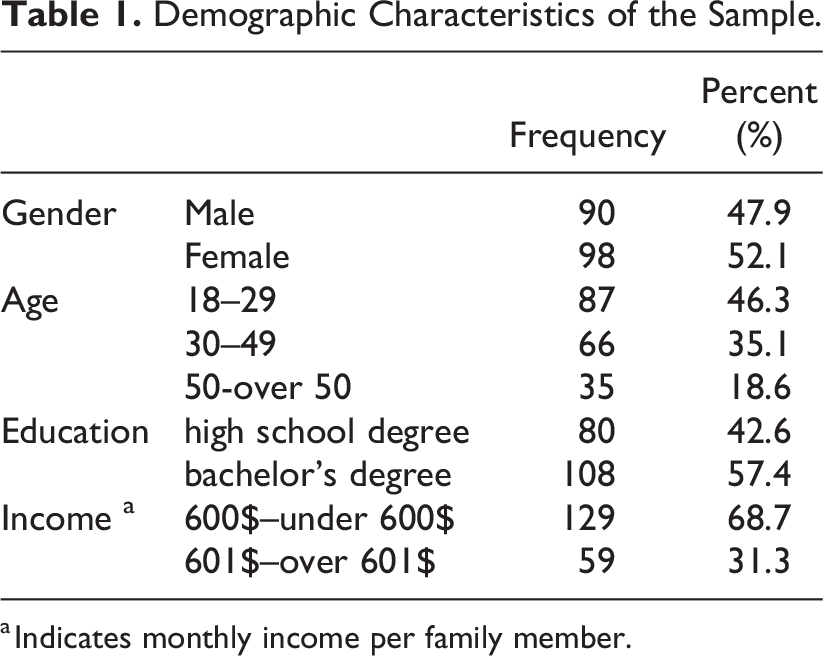
a Indicates monthly income per family member.
Results
Measurement Model Evaluation
A confirmatory factor analysis (CFA) with a maximum likelihood estimation method was utilized to examine the composite reliability, convergent, and discriminant validity of measurement items. In particular, CFA is a technique utilized to test the measurement model. CFA shows how the observed variables represent constructs (Malhotra et al., 2010). In addition, CFA seeks to verify whether the number of dimensions and the loadings of observed variables on them conform to what is expected on the basis of theory (Malhotra et al., 2010). CFA can be applied to refine an existing theory, support an existing structure, and evaluate a known dimensional structure in an additional population (DiStefano & Hess, 2005). In the present study, findings confirmed that the measurement structure of the proposed conceptual framework satisfactorily fitted the data (goodness-of-fit statistics: χ2 = 256.444, df = 124, χ2/df = 2.068, p < .001, root mean square error of approximation [RMSEA] = .076, comparative fit index [CFI] = .947, incremental fit index (IFI) = .948, and Tucker–Lewis index [TLI] = .935). All items (standardized) were significantly loaded to their associated latent dimension (p < .01). Composite reliability was calculated using factor loadings to measure consistency in measurements. As shown in Table 2, values ranged from .849 to .937, which exceeded the criterion of .700, as suggested by Hair et al. (2010). For the evaluation of construct validity, average variance extracted (AVE) values were estimated. The results confirmed that all AVE values ranged between .653 and .749, which were greater than Fornell and Larcker (1981) recommended value of .50. Moreover, these values exceeded the squared correlations between constructs (Table 2). Accordingly, these results supported the convergent and discriminant validity of the study variables.
Measurement Model Assessment.
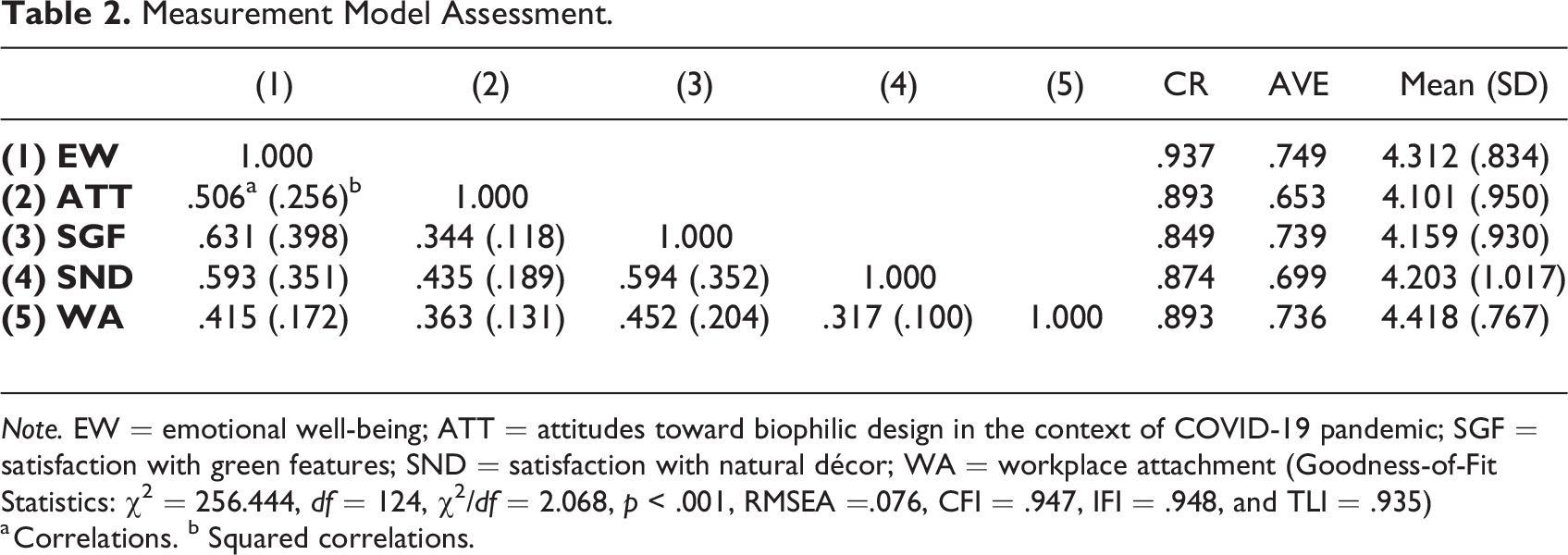
Note. EW = emotional well-being; ATT = attitudes toward biophilic design in the context of COVID-19 pandemic; SGF = satisfaction with green features; SND = satisfaction with natural décor; WA = workplace attachment (Goodness-of-Fit Statistics: χ2 = 256.444, df = 124, χ2/df = 2.068, p < .001, RMSEA =.076, CFI = .947, IFI = .948, and TLI = .935)
a Correlations. b Squared correlations.
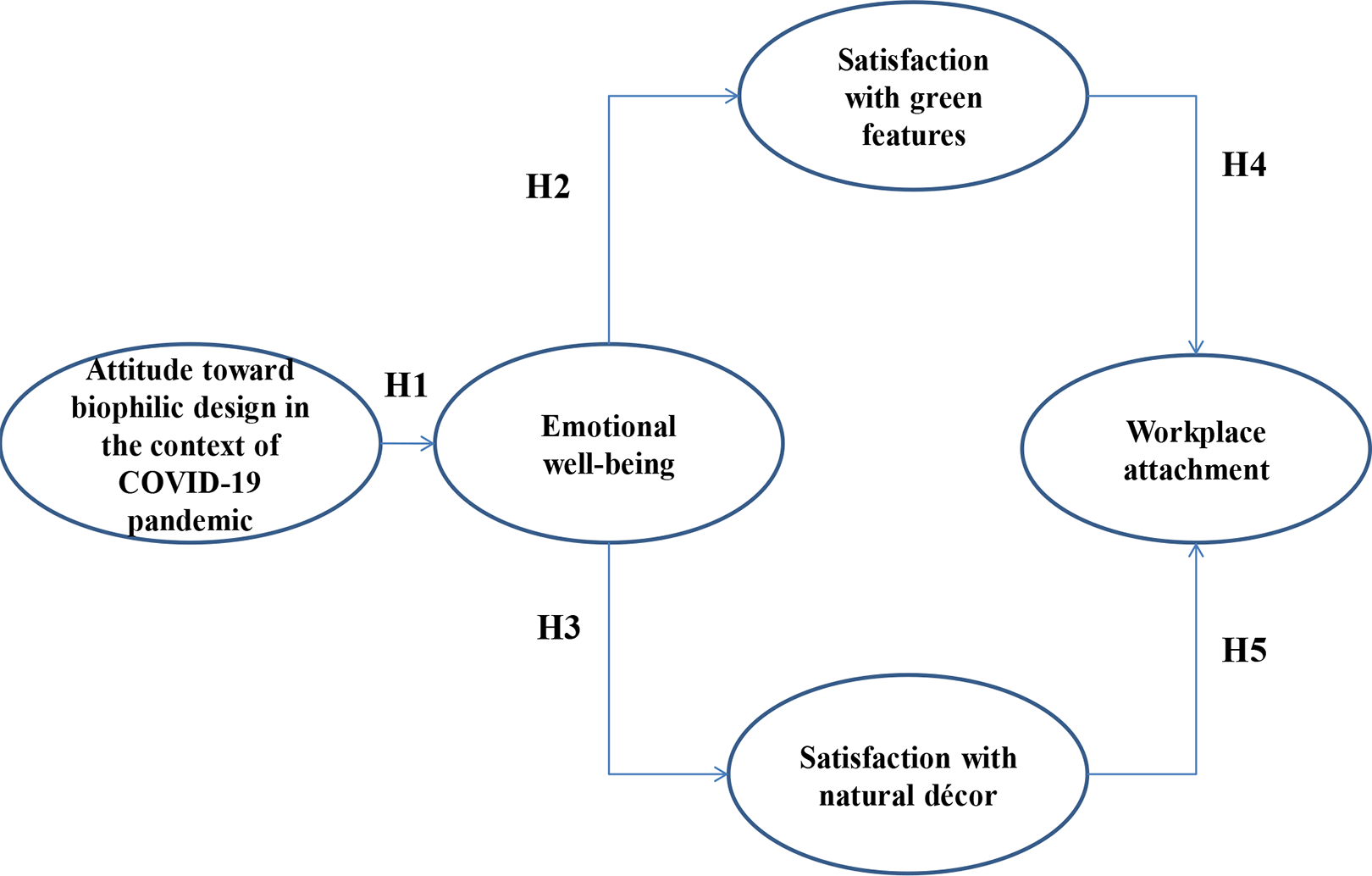
Conceptual framework.
Structural Model Assessment
Subsequently, the structural equation modeling (SEM) was run with the maximum likelihood estimation method. Particularly, SEM is a technique utilized to measure how well a proposed conceptual theory predicts the collected data (Kline, 2011). It indicates how the dimensions are related to each other (Malhotra et al., 2010). SEM uses both multiple regression and factor analysis methods to measure a series of dependent associations simultaneously, which is not possible utilizing other multivariate tools (Hair et al., 1998). This multivariate method is particularly applied for modeling tests, including several independent/dependent variables and mediators/moderators (Hair et al., 1998). In this research, SEM was employed to assess the hypothesized relationships among the research dimensions and the mediating effect of emotional well-being and satisfaction with green features and natural decor.
Results revealed that the model had an acceptable fit to the data (goodness-of-fit statistics: χ2 = 285.571, df = 129, χ2/df = 2.214, p < .001, RMSEA = .081, CFI = .938, IFI = .938, and TLI = .926). Our proposed conceptual framework satisfactorily accounted for the total variance in attachment to the workplace (R 2 = .220), emotional well-being (R 2 = .266), satisfaction toward green features (R 2 = .428), and satisfaction toward natural decor (R 2 = .374).
As shown in Table 3, attitude toward biophilic design in the context of the COVID-19 pandemic had a significant and positive effect on emotional well-being (ß = .516, p < .01). Accordingly, H1 was supported. In addition, the linkages from emotional well-being to satisfaction with green features (ß = .655, p < .01) and satisfaction with natural decor (ß = .612, p < .01) were positive and significant, thereby supporting H2 and H3, respectively. The effect of satisfaction with green features on workplace attachment was significant and positive (ß = .423, p < .01). Consequently, H4 was supported. However, the linkage from satisfaction with natural decor to workplace attachment was insignificant (ß = .095, p > .05). Therefore, H5 was not supported.
The Results of the Structural Equation Modeling, the Hypotheses Testing, and the Mediating Effects.
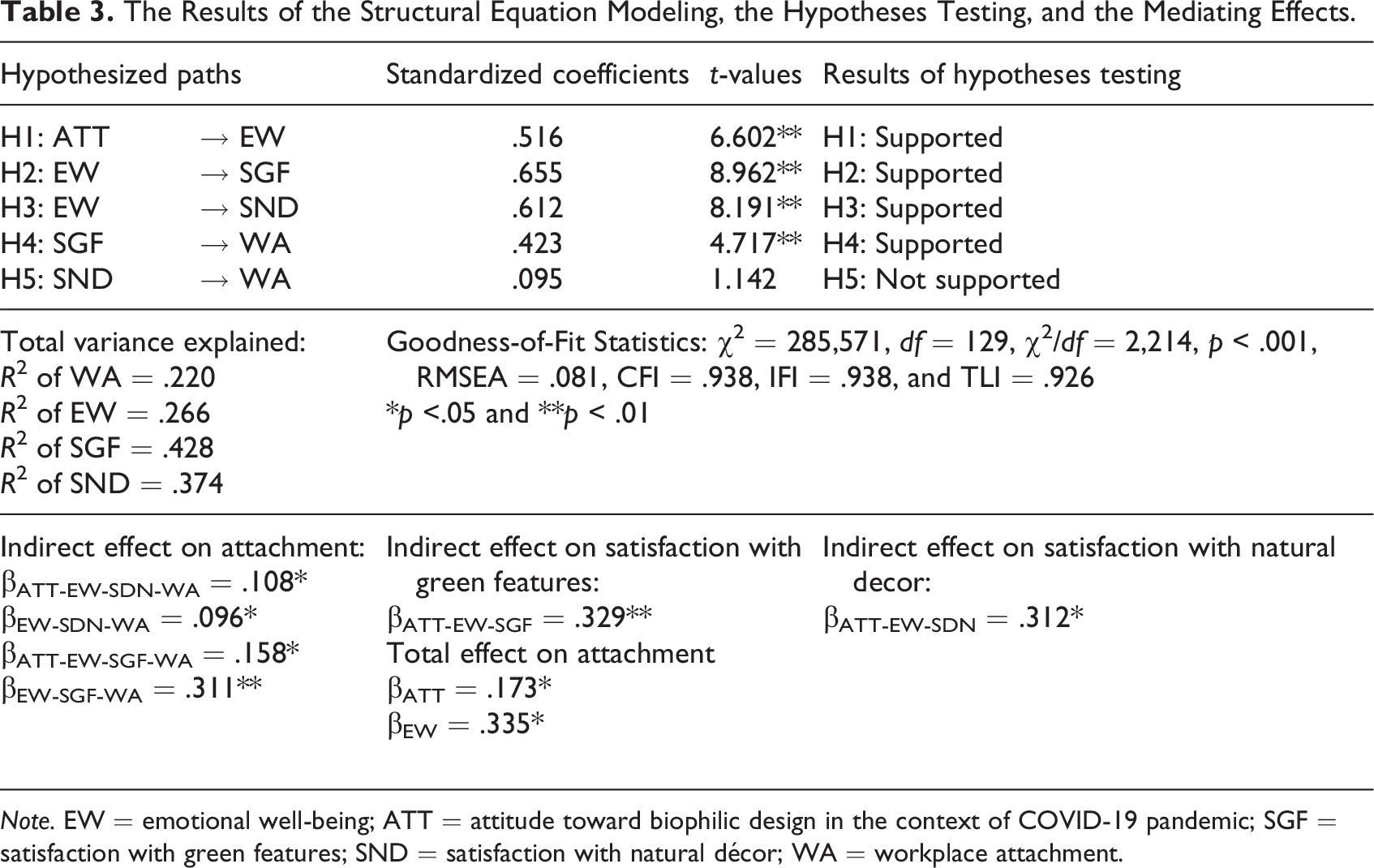
Note. EW = emotional well-being; ATT = attitude toward biophilic design in the context of COVID-19 pandemic; SGF = satisfaction with green features; SND = satisfaction with natural décor; WA = workplace attachment.
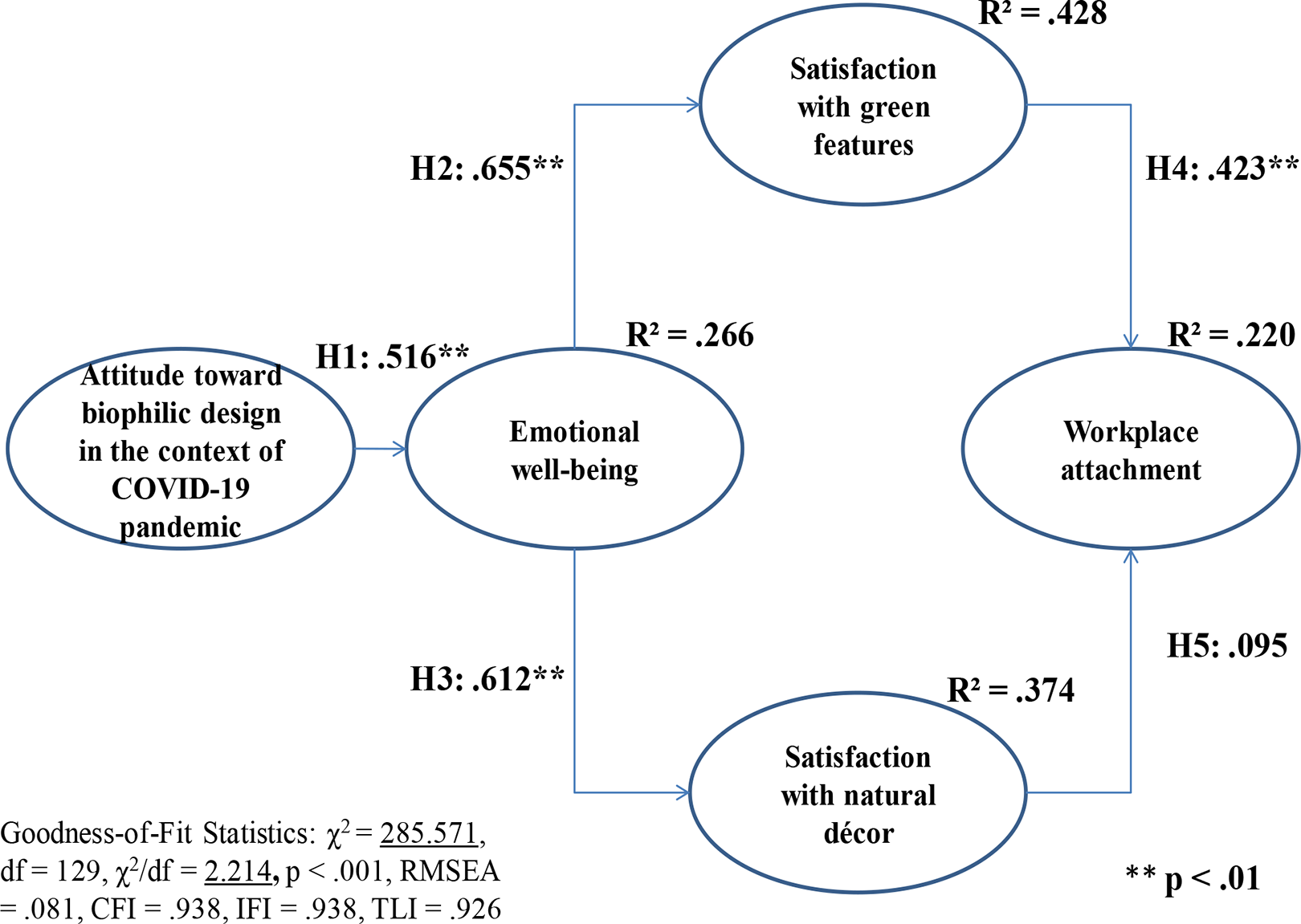
Structural model results.
As shown in Table 3, attitude toward biophilic design had a significant influence on workplace attachment indirectly through emotional well-being and satisfaction with natural decor (βATT-EW-SDN-WA = .108, p < .05) and satisfaction with green features (βATT-EW-SGF-WA = .158*, p < .05), respectively. Our findings also revealed that emotional well-being had positive and significant effects on workplace attachment indirectly through satisfaction with natural décor (βEW-SDN-WA = .096, p < .05) and satisfaction with green features (βEW-SGF-WA = .311, p < .01). These results indicated that emotional well-being, satisfaction with natural décor, and satisfaction with green features acted as mediators in the present conceptual framework. Similarly, emotional well-being acted as a significant mediator between attitude toward biophilic design and satisfaction with natural decor (βATT-EW-SDN = .312, p < .05) and between attitude toward biophilic design and satisfaction with green features (βATT-EW-SGF = .329, p < .01). Next, the total effect of the study constructs was calculated. Our results indicated that emotional well-being had the greatest effect on workplace attachment (βEW = .335, p < .05), followed by attitude toward biophilic design (βATT = .173, p < .05).
Discussion
The present research aimed to explore the biophilic design attributes within a hospice care center and uncover the important role of such features in increasing healthcare professionals’ attachment to the workplace by incorporating four critical concepts (i.e., attitudes toward biophilic design in the context of COVID-19 pandemic, emotional well-being, satisfaction with green features, and satisfaction with natural décor) into the proposed conceptual framework. Our empirical results demonstrated the importance of these constructs in determining hospice professionals’ attachment to the workplace. In the projected framework, the emotional well-being of hospice healthcare providers was activated by their attitude toward biophilic design. In addition, emotional well-being, satisfaction with green features, and satisfaction with natural decor acted as significant mediators between attitudes toward biophilic design and workplace attachment. Structural analysis revealed that these dimensions satisfactorily explained the variance in attachment to the workplace (R 2 = .220), emotional well-being (R 2 = .266), satisfaction toward green features (R 2 = .428), and satisfaction toward natural decor (R 2 = .374). Moreover, the findings from the structural model assessment indicated that the conceptual framework was applicable in a hospice context and included a significant predictive power for workplace attachment. The proposed relationships among constructs were generally confirmed and our research objectives were all achieved. The present work contributes to the very limited literature on hospice healthcare providers’ attachment to the workplace by utilizing the vital role of biophilic design during the COVID-19 pandemic.
In particular, the findings of the present research have revealed that hospice healthcare providers’ attitudes toward biophilic design exert a significant influence on their emotional well-being (ß = .516, p < .01). This result is in line with findings from previous research, showing that the presence of greenery in working environments has the ability to improve human attitudes and increase the overall well-being (Gray & Birrell, 2014; Yin et al., 2020). Recently, Pérez-Urrestarazu et al. (2021) found that green/natural elements placed in indoor living spaces significantly influenced emotional well-being during the COVID-19 pandemic. Theoretically, these results can help hospice practitioners better understand the specific nature of the relationships between attitude toward biophilic design during the COVID-19 pandemic and emotional well-being and their role. Yet, academic literature in the field of biophilic design, including in the hospice context, is still relatively rare. Few studies on biophilic design during the COVID-19 pandemic exist in the context of hospice settings, but the influence of biophilic working environments within the hospice facilities on healthcare providers’ attachment to the workplace has been rather unknown. From a practical perspective, hospice practitioners should pay more attention to creating/strengthening the biophilic design in the hospice working environments, by placing substantial efforts on extending green spaces, natural decor, and living plants/flowers/trees. In addition, hospice operators could provide larger glass windows/walls for natural light and increase the number of nature images in diverse areas of the healthcare setting. This effort could be an important strategy for boosting the emotional well-being of hospice healthcare providers.
Our results also demonstrated the significant mediating role of emotional well-being, satisfaction with green features, and satisfaction with natural decor between attitudes toward biophilic design and workplace attachment within the hypothesized conceptual framework. Moreover, our findings revealed that emotional well-being was the most influential construct in predicting attachment to the workplace (ßEW-SGF = .655, p < .01; ßEW-SND = .612, p < .01). This outcome implies that emotional well-being of hospice healthcare providers is a vital factor to gaining a deeper understanding of their attachment to the workplace. Recognizing the important contribution of emotional well-being and satisfaction, hospice practitioners should actively identify the strategies of increasing these critical factors. More specifically, hospice operators should focus their attention to including abundant connections to nature in the working environments and ensure physiological and psychological comfort for healthcare professionals. In such biophilic working spaces, healthcare providers should feel happier, more calm, confident, and aroused (Lee, 2019), which, in turn, will increase their emotional well-being and satisfaction with green features/natural decor. This support for healthcare professionals’ emotional well-being and satisfaction could result in spaces that enhance their workplace attachment.
Limitations
The present study contains several limitations. First, the proposed conceptual framework included attitude toward biophilic design, emotional well-being, and satisfaction with green features/natural decor as significant drivers of attachment to the workplace. Future research could further strengthen our conceptual framework by incorporating additional variables for its completeness (e.g., mental health, loyalty toward the workplace, job satisfaction, stress resilience, and emotional exhaustion). Second, the present research included only those biophilic design elements that were utilized in the studied hospice settings (i.e., natural lighting through glass walls/windows, plants/flowers/trees, wood furniture, and nature paintings/images). Accordingly, future studies could include more biophilic features, such as various materials, texture, shapes, and forms. Such biophilic elements were previously found to positively influence the psychological and physiological well-being of employees (Kellert, 2018). Third, the web-based survey method utilized in the present study did not allow us to assess immediate responses of hospice healthcare providers due to the movement restrictions imposed by the COVID-19 pandemic. A replication of this research using a field survey approach is thus necessary for future studies.
Implications for Practice
From a practical perspective, hospice practitioners should pay more attention to creating/strengthening the biophilic design in the hospice working environments, by placing substantial efforts on extending green spaces, natural décor, and living plants/flowers/trees. In addition, hospice operators could provide larger glass windows/walls for natural light and increase the number of nature images in diverse areas of the healthcare setting, which can contribute to the increase of emotional well-being among healthcare professionals. In addition, hospice operators should focus their attention to including abundant connections to nature in the working environments and ensure physiological and psychological comfort for healthcare professionals. In such biophilic working spaces, healthcare providers should feel happier, more calm, confident, and aroused, which, in turn, will increase their emotional well-being and satisfaction with green features/natural decor. This support for healthcare professionals’ emotional well-being and satisfaction could result in spaces that enhance their workplace attachment.
Supplemental Material
Supplemental Material, sj-pdf-1-her-10.1177_19375867231192087 - Biophilic Design and Its Effectiveness in Creating Emotional Well-Being, Green Satisfaction, and Workplace Attachment Among Healthcare Professionals: The Hospice Context
Supplemental Material, sj-pdf-1-her-10.1177_19375867231192087 for Biophilic Design and Its Effectiveness in Creating Emotional Well-Being, Green Satisfaction, and Workplace Attachment Among Healthcare Professionals: The Hospice Context by Elena-Nicoleta Untaru, Heesup Han, Andreea David and Xiaoting Chi in HERD: Health Environments Research & Design Journal
Footnotes
Declaration of Conflicting Interests
The authors declared no potential conflicts of interest with respect to the research, authorship, and/or publication of this article.
Funding
The authors received no financial support for the research, authorship, and/or publication of this article.

Supplemental Material
Supplemental material for this article is available online.
References
Supplementary Material
Please find the following supplemental material available below.
For Open Access articles published under a Creative Commons License, all supplemental material carries the same license as the article it is associated with.
For non-Open Access articles published, all supplemental material carries a non-exclusive license, and permission requests for re-use of supplemental material or any part of supplemental material shall be sent directly to the copyright owner as specified in the copyright notice associated with the article.
