



Abstract
In the early 2000s, governments’ need to understand and prevent the process of radicalization and violent extremism created a strong demand for knowledge. Within a few years, a new field was developed within a range of formal institutions, including governments, universities, the media, and outside of it by private and nonprofit sectors. In this paper, we will address three objectives: (1) identify radicalization and violent extremism expertise types; (2) analyze the specific objects, subjects, and clients; and (3) map the various types of expertise by identifying the particularities of each. The data was collected from experts’ and governments’ reports and websites and interviews with 15 academics, experts, or policymakers from 2018 to 2020 in Europe. Following the expertise theory of Eyal and Pok and the mapping method of Medvetz, the model shows that competition and cooperation between experts lead to different types of expertise, where each has its own goals, type of initiative (outcomes), and agenda in their pursuit of funding and authority in the field. This clarification of roles, tensions, and collaborations among government entities showed that the ambiguity between types of expertise should be viewed as a productive aspect of the field. The study concludes that our model can assist policymakers in understanding the mobilization of expertise.
Introduction
The phenomenon of domestic political violence has become a growing concern in Western democracies over the last two decades. The terms radicalization and violent extremism gained significance as subjects of study only after 2004. Before this date, there were studies focusing on engagement in political violence, but they were not necessarily considered under these terms (Ducol 2015). In the early 2000s, many governments developed prevention policies using the conceptual framework of radicalization and violent extremism (McLaughlin 2024). Departing from the idea of identifying the causes of terrorism, the main focus shifted toward understanding the process of engagement in violent extremism. This shift is why some scholars do not hesitate to speak about a “paradigm shift” (Ducol 2015:130–31).
The development of expertise in the study of political violence, particularly terrorism, has its roots in a broader historical context. As highlighted by Wicker and Connelly (2013), in the 1970s, studies often depoliticized political violence by categorizing actions as either immoral or irrational. However, a significant shift occurred in the early 2000s, marked by a tendency to psychologize and individualize the actors involved, instead under the terms radicalization and violent extremism. Nonetheless, some academics disputed the new terms. The literature underlined the lack of conceptual clarity (Rasheed 2016, p. 40) and difficulties concerning its operationalization (Borum 2011). It also had consequences for the way research is conducted. Research on radicalization and extremism emphasizes micropsychological analysis over historical context (Bailey and Edwards 2017). It also focuses on radicalized individuals and neglects their relationship with state actors and government policies (Kundnani 2012; Schmid 2016).
This transformation in approach reflects a nuanced understanding by addressing the psychological and individual dimensions of those involved in political violence. Furthermore, the emergence of the terms radicalization and extremism has not only brought about a change in research on political violence, but has also contributed to the creation of a new field of expertise. The expertise on radicalization and extremism emerged in close relation to the persistent sense of political urgency related to public security in Western democracies (McLaughlin 2024). To address this emerging issue, expertise was developed to respond to governments’ issues.
Therefore, the relationship between science and politics, and the imperative for governments to seek external expertise, warrants careful consideration. Balancing political imperatives with scientific standards, it is widely acknowledged in the literature that experts play a specific role as mediators between the production and utilization of knowledge (Stehr and Grundmann 2011). The work of an expert is, therefore, consistently influenced and directed by the imperatives of action (Castra 2013). This implies a recognized competence and the ability for the expert to maintain a certain distance from the subject matter or even their interests (Delmas 2011).
Experts are not passive; academics, consultants, policymakers, and others actively shape and are shaped by their status, agendas, practices, and strategies within dominant structures (Russo and Selenica 2022). Silva (2018) notes that to understand the rise of this new expertise, we must examine the structural transformation within the scientific network. The relationship between governments and science is, therefore, crucial. The limited availability of funding has compelled many private, nonprofit, and academic entities to adopt the new vocabulary associated with the prevention of political violence. This underscores the significance of public funding in advancing research outcomes, and counter-radicalization strategies increasingly emphasize “evidence-based” research to guide authorities in implementing best practices (Silva 2018).
This is why we want, in this paper, to address three objectives. The major one is to identify radicalization and violent extremism expertise types and their outcomes. Expertise takes many forms, and we need to understand their differences, goals and outcomes in the network. The second objective is to analyze the specific objects, subjects, and clients of this expertise. Finally, we aim to map the various types of expertise on radicalization and violent extremism by identifying the specific characteristics of each. Mapping the network will help us see clearly the differences and interconnectedness between the main types of experience related to radicalization and violent extremism.
Studying experts, expertise, and knowledge is not a novel pursuit. Numerous academics have contributed to our understanding of the roles, functions, and utilization of government expert knowledge. This encompasses the examination of the roles played by academics (Wendling 2011), think tanks (Ullrich 2004), and politics (Boukalas 2012). Furthermore, researchers have explored the impact of expertise in situations of controversy and uncertainty (Nowotny et al. 2001; Young and Matthews 2007) as well as in politicized topics (Wicker and Connelly 2013).
Disciplines related to political violence and expertise have also garnered attention in the past two decades. This includes studies on expertise in security (Bossong and Hegemann 2015; McQuade 2016; Schröder 2006) and terrorism (Jackson 2007, 2008); however, the analysis does not always address the sociological analysis of practices, looking at the cooperation and competition between expert groups and governments.
Our approach has been utilized by Stampnitzky (2013a) in her book, where she delves into the relational analysis of terrorism expertise. Some research has also addressed the relational perspective of radicalization and violent extremism expertise. Wicker (2022) wrote a paper about experiential knowledge, a type of expertise, which includes the perspectives of counter-radicalization practitioners, ex-extremists, and community experts. Often challenged and criticized, Wicker (2022) examines the credibility and participation of these nonestablished types of expertise. Russo and Selenica (2022) studied the information collected from EU-funded research projects on radicalization and violent extremism. They are interested in the role of expert knowledge in the processes of institutionalization and legitimation in public policy-making, as well as in the social construction of policy problems and responses. Their findings suggest that the funded knowledge reproduces a mainstream understanding of radicalization and violent extremism, along with the narratives it conveys (Russo and Selenica 2022).
Despite addressing the relational roles of legitimacy, credibility, and authority, the previously referenced research does not encompass the full spectrum of expertise types or the potential cooperation and competition among them. While there is a solid understanding of scientific practices and their relationship with funders, our focus lies on the analysis of expert social achievement (Evans 2015). Analysis of the expertise on radicalization cannot be limited to the competition for legitimacy and authority for government funding and policy-making. By mapping the types of expertise, we can see different roles and goals in their interaction.
Thus, the first section will present our theoretical framework. We will discuss the significance of a sociology of expertise (Eyal and Pok) and the mapping expertise methodology (Medvetz). We will highlight how this framework can help us achieve our objectives. Afterwards, we will investigate the specific objects, subjects, and clients of this emerging expertise. In addition, we aim to examine the various types of expertise on radicalization and violent extremism, identifying the particularities of each. By examining competition and cooperation from a relational perspective, we can evaluate the degree of dependence (autonomy) and the degree of engagement (openness) of each type of expertise in relation to radicalization and extremism (Medvetz 2012). Beyond questions of legitimacy and authority, this mapping aims to reveal whether different types of expertise have distinct roles, outcomes, and goals.
In the discussion, we will conclude our paper by defending that the results enhance our understanding of the roles and outcomes of radicalization and extremism expertise in our Western democracies. Furthermore, we will underline the potential application in social science research. We will demonstrate that experts and types of expertise are not always in direct competition with one another. Cooperation is an important characteristic of any expertise type. By comparing their level of institutionalization, we will demonstrate that “interstitial expertise” (Medvetz 2012). (less institutionalized expertise) fill an empty space between more established expertise.
Theoretical Framework
We have utilized a theory developed by Eyal and Pok to analyze the fragmented and diversified forms of expertise. The authors view expertise as an attribution, following a relational approach. This theory is critical of the traditional sociology of professions, which tends to focus on institutions rather than the expert practitioner (Eyal and Pok 2017). This perspective emphasizes that expertise refers to a social achievement rather than the quality of scientific practice or knowledge per se (Evans 2015). Therefore, expertise should not be conceptualized in terms of intrinsic characteristics or qualities possessed by an individual or a group, but rather as a network of actors interconnected by cultural arrangements, work instruments, institutions, and values. This approach allows us to avoid strictly labeling actors into professions or under the category of experts (Eyal and Pok 2017).
Adopting this theory of expertise raises the problem of delimiting the field in which practices take place. For instance, expertise on radicalization and violent extremism is characterized by its interstitial aspect, meaning that it is part of a network of “cultural production that has no defined limits and brings together actors, ideas, and techniques moving between several domains” (Stampnitzky 2013a:92). We can then consider, in the words of Medvetz (2012), “interstitial expertise” as a “space between domains,” indicating that groups of interstitial expertise are located at the convergence of other more established fields (pp. 24–25).
The field of expertise cannot be studied without specifying its relationship to the state. As sociologist Trépos (1996) points out, the state continually requires private expertise. However, as the significance of state sovereignty has decreased, there has been a growing focus on studying expertise from a transnational perspective. This shift in perspective makes it necessary to question and not rely solely on common perceptions of the transnational as mere geographic movements of people, objects, or ideas (Schmidt-Wellenburg and Bernhard 2020). This is why Eyal and Pok (2015) proposed in their theory of expertise to take a special look at the object, the subject, and the clients of expertise beyond the traditional national boundaries.
Research Design
This paper is part of a three-year research project aimed at enhancing our sociological understanding of the relationship between experts on radicalization and violent extremism. Two main types of data were collected for this study: (1) government reports and (2) reports and websites of expert groups. In addition, interviews with experts were conducted to triangulate the findings. The study spanned the period from 2018 to 2020 and encompassed European countries.
We selected (1) radicalization and violent extremism governmental reports published in Europe and by the European Union as our primary source of data. These reports represent a significant body of literature for understanding the implementation of new frameworks aimed at preventing political violence. Many countries have developed their own action plans and security reports to address policies related to radicalization and violent extremism. We have also selected information on (2) expert group reports and websites by scraping the internet for expertise on radicalization and violent extremism and extracted the reports and websites for the analysis. We made concerted efforts to encompass a diverse array of initiatives spanning all over Europe. Furthermore, (3) interviews were conducted with 15 experts (11 were relevant for this paper), comprising academics, practitioners, and government employees. During these interviews, we posed semi-structured questions regarding their roles, responsibilities, and, predominantly, their expertise fields, including aspects such as relationships between experts, their relationship with the client, and the product of their expertise. The interview was conducted online with a semi-structured questionnaire designed to be informative. For confidentiality, the individual who preferred not to be named has been anonymized to safeguard their identity. Refer to the Appendix for the list of interviewees.
It is important to note that our analysis did not necessitate exhaustive exploration for constructing our model. Instead, we relied on data saturation as the criterion guiding the scope of our investigation. Furthermore, we acknowledge several limitations of this study that will be discussed thoroughly in the Discussion section.
Modeling the Types of Expertise
In his book Think Tanks in America, Medvetz addresses the challenges of demarcating an interstitial field of expertise. According to the author, defining such a field remains problematic due to its interstitial nature, making this space challenging to grasp. Attempts at a rigorous definition run the risk of overlooking the subtleties of diverse practices and hastily excluding certain forms that do not fit into the established framework (Medvetz 2012). An overly strict definition would consequently neglect practices at the fringes of the field, thereby impeding a comprehensive understanding of the phenomenon under study. To address this challenge, Medvetz adopts Eyal and Pok’s approach, employing a historical method to identify the types of expertise associated with the domain. Subsequently, he explores the scope of this expertise by pinpointing the space occupied at the intersection of two variables used in the expertise theory, namely the concepts of dependence and engagement (Medvetz 2012).
The first mode of analysis involves considering the degree of dependence of domain expertise types: Expert groups can be assessed on a gradient of degrees of autonomy or heteronomy. The dependence criterion can be defined as indicating the level of importance and relevance of knowledge. It plays a role in the demand for services, manifesting as a tension between heteronomy and autonomy. Autonomy in research and practice is undoubtedly crucial for the quality of expertise. However, excessive autonomy would render the expertise meaningless and useless, as it might fail to meet the requester’s needs. The same applies to excessive heteronomy, which would make the production of knowledge too biased and instrumental to be truly relevant (Medvetz 2012).
The second mode of analysis involves identifying the degree of engagement, which includes assessing the level of openness and closure in the use and dissemination of expertise. The engagement criterion is defined as the level of control that expert groups have over service provision, creating a tension between openness and monopoly. The problem is analogous: If knowledge production remains too strictly controlled by a restricted group, the knowledge tends to become esoteric and sterile for the requester. Conversely, if knowledge production is too easily accessible or commonplace, there is no need to seek the expertise of outside groups. Therefore, expertise groups have a vested interest in finding the right balance, the famous “good distance,” enabling them to encourage exchanges through balanced cooperation with applicants, preserving distinct yet complementary fields of competence (Medvetz 2012).
This methodology will be useful to answer our main objectives. This approach will enhance our understanding of the roles and functions of different kinds of expertise in radicalization and violent extremism. The results will be presented and discussed further in the section Typologies and Mapping.
Results
The Three Relational Dimensions of a Field of Expertise
Eyal and Pok emphasize three dimensions that must be considered in any relational study of a network of expertise: (1) Identifying the object of expertise: since the network is constituted and communicates about—and in relation to—certain distinct objects (things, states, or persons). (2) Identifying the subjects of expertise: As the network is comprised of individuals and groups, it is necessary to specify the relationships that weave the web of interdependencies, as well as the boundaries between forms of expertise, forms of competition, and forms of mutual aid. (3) Studying the clients of the network of expertise: The crucial issue in this dimension is to question what can be done (the practical, applicable aspect) from the activity of the experts (Eyal and Pok 2015).
The Object of Expertise
European countries have faced the challenge of increasing Islamist terrorist attacks on their territory. The rising number of attacks and the innovation in the methods used by terrorists raise serious questions about the capacity of Western states to maintain order and ensure the security of citizens on their soil (Stampnitzky 2013a). This situation contributes to a feeling of a lack of control by governments (A2, 2020). Western states find themselves overwhelmed not only by this evolving form of terrorism, but also by the ongoing conflicts in the southern Mediterranean, the rise in foreign fighters, and the continued influx of refugees and irregular migrants (Boutin et al. 2016).
It is no coincidence that the emergence of new conceptual terms takes place in a context of political urgency; there is a need to name a reality that is perceived as new. Once named, this reality can be dealt with, controlled, and oriented (A2, 2020). The nomination of a social reality does not refer to a stabilized object, but is conceived as the result of various rearrangements, conflicts, and deliberations in a particular context that evolves over time. Certain privileged actors will be able to designate causes and take charge of the problem, the definition of which turns out to be an essential stake resulting from intellectual and practical struggles for meaning (Bigo and Bonelli 2007).
The relevance over time lies in the ability of the terms radicalization and violent extremism to adapt and remain pertinent to new issues. Each terrorist event on national soil has created an opportunity to bring these issues to the forefront (A3, 2018). The feeling of insecurity experienced by a part of the population has exerted strong pressure on policymakers and legislators (Hoskins and O’Loughlin 2011). Each time, experts are called upon to provide practical knowledge, make sense of events, or find solutions (A3, 2018).
Combating radicalization and violent extremism was initially a part of counterterrorism strategies in the early 2000s. The confusion of terms led to many problems, resulting in the surveillance and marginalization of communities at risk (A3, 2018). In response to accusations of stigmatization and discrimination against certain communities, governments decided to distinguish between two public policy strands (A10, 2019), gradually establishing a dichotomy. Terrorism became associated with repression policies, while radicalization became associated with prevention policies.
The Subject of Expertise
Expertise manifests itself as a network of actors (institutions, associations, organizations, individuals) that promote the production and use of knowledge. Therefore, the analysis of expertise must take into consideration the relationships between the subjects (Eyal and Pok 2015:49) and the boundaries that include competition as well as cooperation between experts.
The expertise is often developed in the field by reading, having research skills, and working with police, policymakers, radicalized individuals, or their families (6A, 2019). However, it remains challenging to determine who a genuine expert is. Some would not consider themselves experts on terrorism and radicalization, and legitimacy among experts seems to be a question of opinion (1A, 2019, 10A, 2019). The evaluation of competencies is only done between peers (6A, 2019; 7A, 2020). Training through practice and the test it imposes becomes the only way to ensure that one’s expertise is recognized. Governmental organizations, such as Radicalization Awareness Network (RAN), have developed evaluation procedures to guide the submission and receipt of requests for expertise (A9, 2019). Thus, clusters of producers and users of knowledge on radicalization and violent extremism must demonstrate that they meet the applicant’s expectations before receiving a contract (11A, 2019).
The solicitation of expertise, subject to considerable variations, has led to a number of displacements, mergers, or the creation of new structures (4A, 2020; 6A, 2019 & 7A, 2020). The demand for expertise has given rise to many service offerings, inevitably carried out by a series of new actors, hence the immense difficulty of objectively recognizing whether a group belongs to the network of experts. One participant (12A, 2019) considers with accuracy and humor the emergence of a new type of researcher: the “radicologist,” who would come from various academic disciplines and present himself as an “expert on political violence.”
Competition and cooperation are important aspects of any network of expertise. Since governments are the primary funders of expertise, managing public finances is a constant source of conflict (1A, 2019, 4A, 2020). Governments must ensure that funding is spent effectively. On the other hand, interest groups are lobbying to influence increased funding and the development of rules that would provide them with various benefits (11A, 2019).
The Client of Expertise
The third dimension to be considered concerns the clients and amounts to questioning what can be done concretely with the knowledge produced: to grasp, in other words, the applicable aspect of the experts’ thinking (Eyal and Pok 2015). Funding for expertise on radicalization and violent extremism not only serves to increase knowledge about the phenomenon but must also lead to practical, visible, and effective applications.
Government funding has undoubtedly played a major role in the development and evolution of this new field of expertise. Several funded initiatives have sought to establish the state of knowledge and bring researchers together in a distinct network (8A, 2018). This concrete aspect of expertise nourishes the network of actors in the production and utilization of knowledge, drawing inspiration from practices resulting from experiences in the field (8A, 2018). The second point to consider that practical expertise as a whole is always in flux. This is evident in the changing activities of many NGOs, which are increasingly called upon by available funds to consider issues of radicalization and violent extremism in their social projects. For example, Germany already had a culture of disengagement from extreme right-wing groups (Amadeu Antonio Stiftung N.d.). Therefore, it was quick and easy for some groups to include the new terms (8A, 2018) in their area of focus, slightly shifting their mandate.
Typologies and Mapping
Typology of Activities
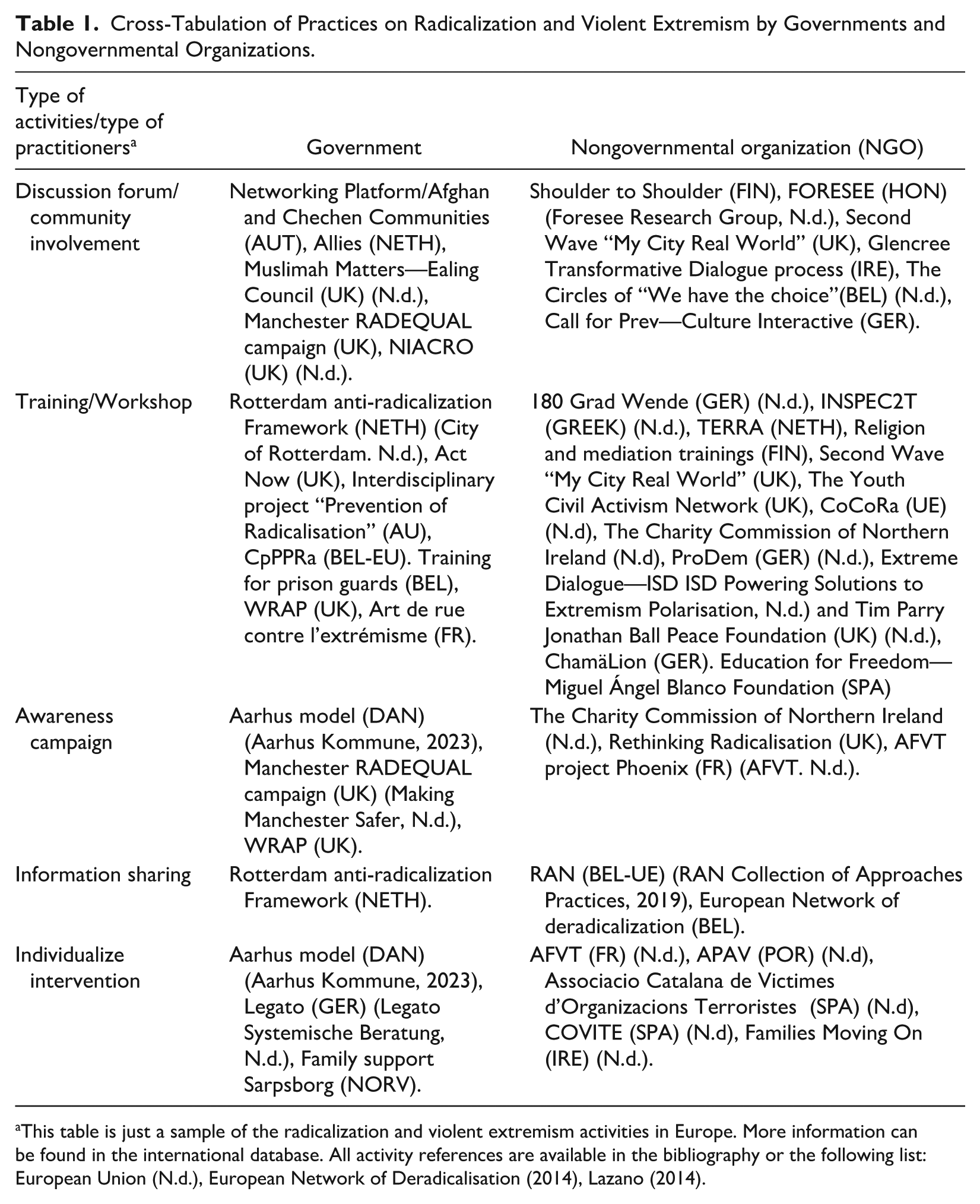
We propose a typological classification of the forms of initiative (outcome) of radicalization and violent expertise. We divided our typology into two categories of actors: governmental and nongovernmental. Subsequently, practices have been divided into five broad categories.
First, there are forums for discussion and community involvement. This category covers initiatives to address the challenges posed by radicalization and violent extremism with communities, as well as activities aimed at engaging the public in collective action. The second category concerns workshops and training sessions. In these practices, interveners meet with frontline practitioners to train them in prevention and support. This can range from equipping journalists intellectually to cover acts of terrorism adequately to supporting some of the effective approaches offered by social workers. The third category looks at campaigns to raise awareness of social polarization, resilience in the face of acts of terrorism, and the prevention of radicalization and violent extremism. The aim of these initiatives is to raise awareness of these issues among the wider public and encourage community involvement. The fourth category covers initiatives aimed at sharing information at both practical and theoretical levels. These activities usually bring together practitioners and academics from different countries. They are important for maintaining a shared understanding of the issues surrounding political violence. The fifth category concerns individual intervention. This refers to the care of individuals in the process of radicalization or individuals who have committed acts of political violence. The category also includes all forms of individual assistance offered to victims of terrorism and affected families. These initiatives bring together experts in social intervention and legal, psychological, and spiritual support.
Table 1 shows an example of this typology. This list is nonexhaustive, and many groups proposed a diversity of activities and, in this way, fall into more than one category at the same time. Nevertheless, the table gives an overview of the practical expertise developed in the field by actors seeking to engage in prevention and support for social phenomena associated with political violence.
Cross-Tabulation of Practices on Radicalization and Violent Extremism by Governments and Nongovernmental Organizations.
This table is just a sample of the radicalization and violent extremism activities in Europe. More information can be found in the international database. All activity references are available in the bibliography or the following list: European Union (N.d.), European Network of Deradicalisation (2014), Lazano (2014).
It is challenging to draw a line between governmental and nongovernmental organizations, and between what falls specifically under the prevention of radicalization and prevention of crime more broadly. However, the table shows that expertise comes not only from scientific research but also from field practices, which are built through the lived experiences of practitioners. These practices are highly relevant, as the knowledge developed is clearly an important source of information for the entire network.
As mentioned earlier, the vast majority of NGO initiatives are funded by various levels of government. However, there is no single model: The influence of funders should be analyzed on a case-by-case basis. Another important point is the role played by NGOs in training and frontline prevention initiatives. NGOs and municipalities are effective mediators between vulnerable groups, victims, affected families and governments. The second point to consider is that practical expertise as a whole is constantly evolving. This can be seen in the changing activities of many NGOs, which are being called upon by the funds available to take increasing account of the issues of radicalization and violent extremism in their social projects. These shifts are directly linked to the increase in state funding, sometimes causing frustration in the field.
Toward a Social Typology of Expertise
Our previous typology was designed to facilitate the distinction between practitioners’ activities. However, it does not provide information on the diverse expertise structure and its relationship with the government and the public. Medvetz pointed out that non-regulated expertise is a set of constitutive relationships that gives the actors in the field a “family resemblance.” In this case, the historical approach seems to be the most relevant way to identify the various types of expertise that will be evaluated by considering two main variables. The first mode consists of considering the degree of dependence, and the second mode involves identifying the degree of engagement (Medvetz 2012).
While recognizing the fluidity of these boundaries, Table 2 showed seven types of expertise on radicalization and violent extremism: (1) government-affiliated expertise; (2) semi-governmental expertise; (3) autonomous and independent expertise; (4) university-affiliated expertise; (5) academic expertise; (6) citizen expertise; and (7) media expertise.
A Nonexhaustive List of Expert Groups Categorized by Type of Expertise on Radicalization and Violent Extremism in Europe and North America.
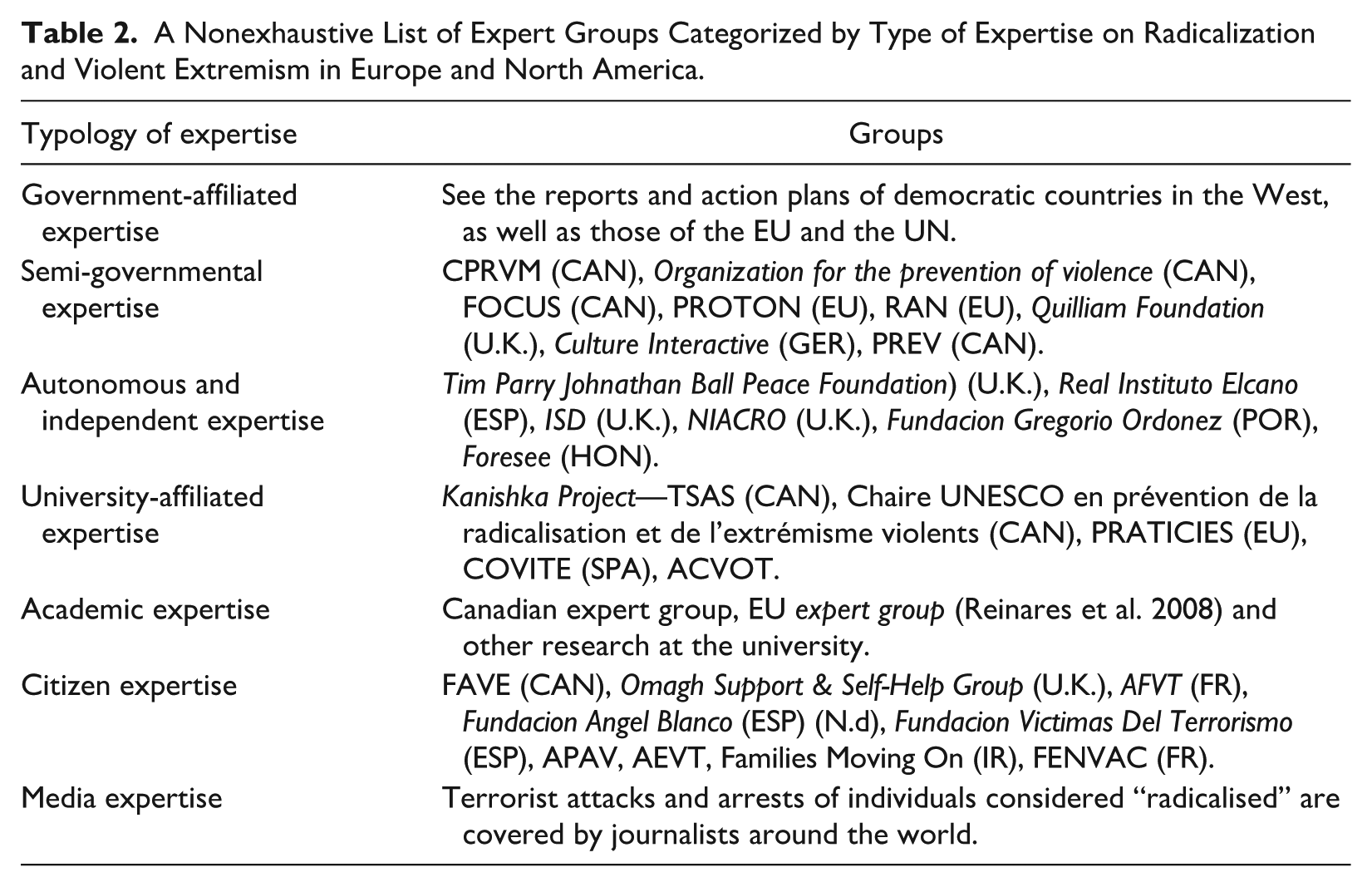
The network of expertise on radicalization and violent extremism largely tends to amalgamate and combine the different types. Thus, Table 1 provides a nonexhaustive illustration of these types.
Mapping the Scope of the Field of Expertise
Like any field with blurred and shifting boundaries, sociological analysis is hampered by the problem of demarcation. The first obstacle is that these groups benefit from not being clearly identified in a “box” or under a label. This leads to a second problem: These interstitial groups adapt quickly to changing socio-economic and political situations. The blurring of boundaries is thus amplified by the multiple demands that emerge in the public space, producing permanent mobility and malleability. This dynamic nature of the activity, of course, makes any proposal of an operative definition perilous (Medvetz 2012).
The government, the media, and universities are forms of expertise that have the characteristic of being highly institutionalized, yet they share few common characteristics. Administrative structures within the government and media remain very dependent, as they are hierarchically subject to the government’s directives. Conversely, academics and the media retain a large degree of autonomy in the exercise of their expertise. While the media claim to have the objective of making knowledge accessible to the public, the state’s secret services are, on the contrary, subject to very strict confidentiality. Their strong institutionalization leads them to preserve themselves over time through a relatively stable systemic structure of functioning, integrating internal modifications by permanent readaptation to new data. What they have in common is that they can be highly publicly engaged. Nevertheless, it is possible to observe a polarization. As shown in Figure 1, these three forms of highly-instituted expertise present very contrasting degrees of autonomy.
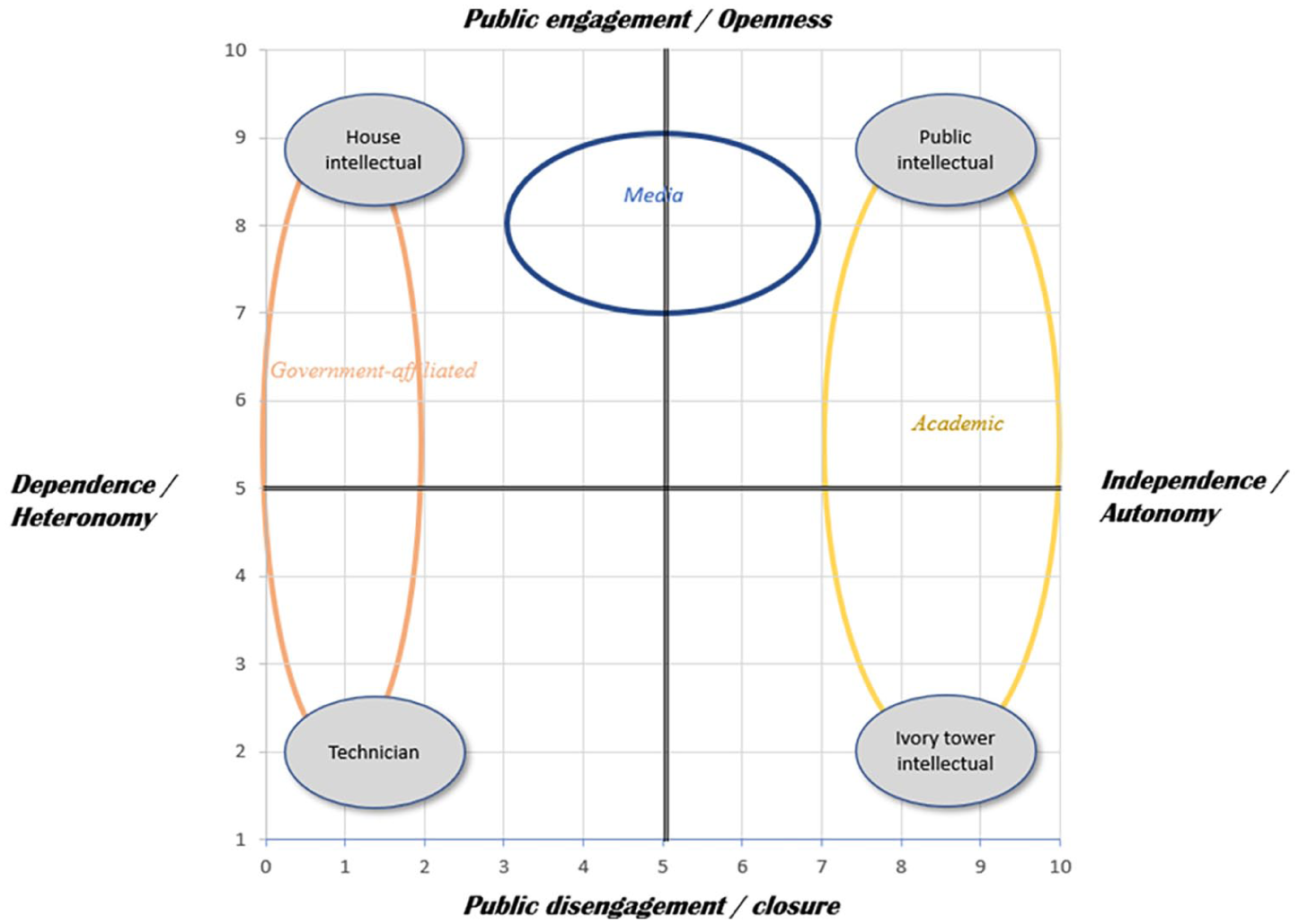
Expert groups on radicalization and violent extremism, highly instituted, according to their degree of dependence and their degree of engagement.
In contrast, there are more characteristics that bring together the diverse forms of interstitial expertise. The demand for expertise primarily comes from governments or government-funded institutes. However, government funding restricts the autonomy of less-instituted expertise: These groups are less autonomous than academics and the media but more so than state officials, occupying a middle position. They must claim independence of choice and direction for their research, seeking to develop their capacity to adapt to offer effective and innovative products. The working conditions remain demanding, as less-instituted expertise must produce a lot but in a limited time. In Figure 2, interstitial expertise shares more common traits than its more institutionalized counterpart (Medvetz 2010).
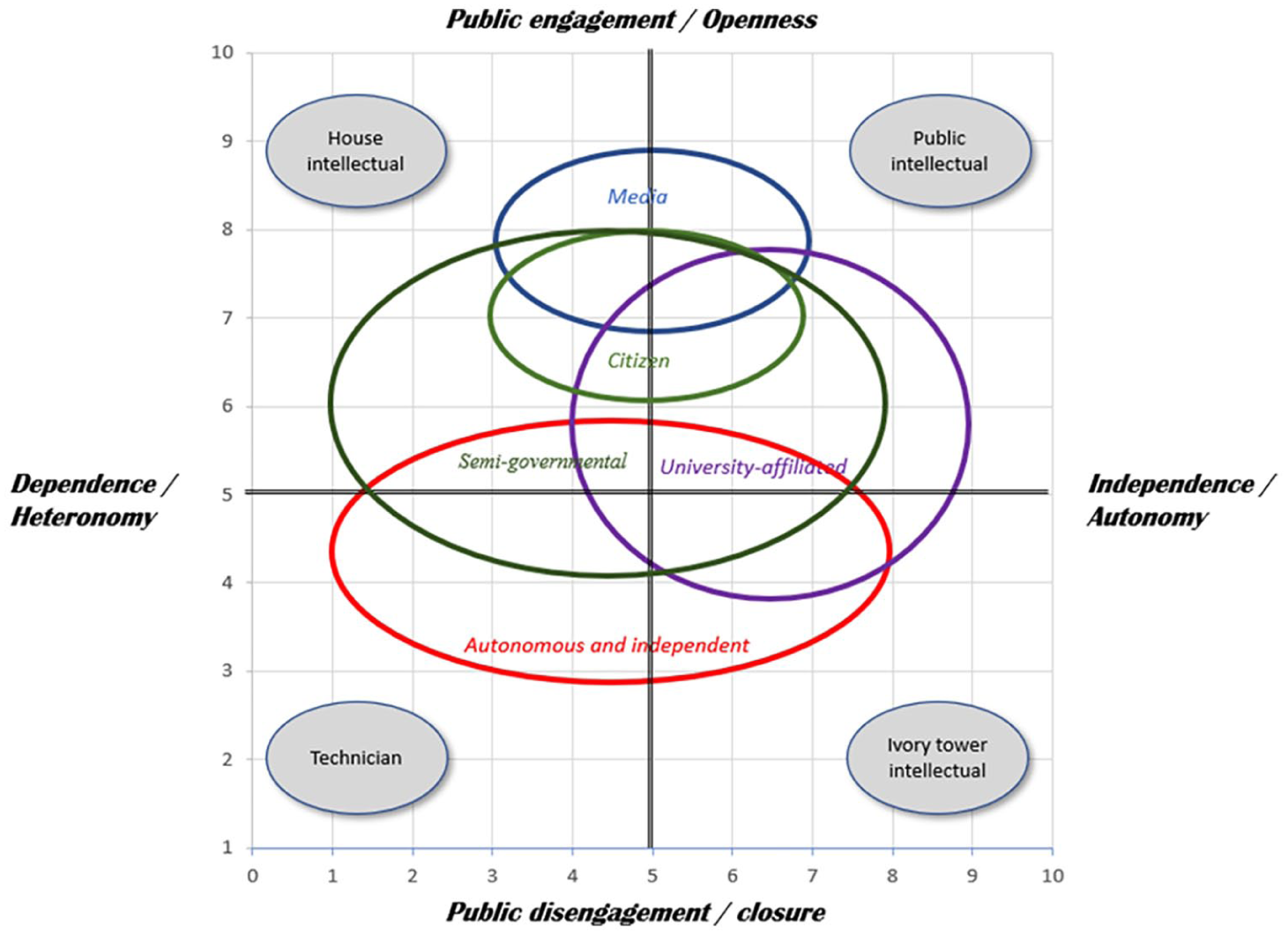
Interstitial expert groups on radicalization and violent extremism, according to their degree of dependence and their degree of engagement.
Less-instituted expertise is not in direct competition with highly-instituted expertise. On the contrary, it fills the gap left by the latter by proposing a production and use of knowledge in an adaptive and plural form. The illustration shows that types of expertise with a little institute do not benefit from disengaging from the public or monopolizing knowledge: Indeed, the strength of this space lies not in its organizational structures but in its interrelation and adaptive capacity to maintain constant relevance. Developing an expertise that is too dependent or too autonomous would undermine its ability to nurture relationships with other nodes in the network. Unlike highly-instituted expertise, this “space between domains” survives by maintaining an unstable equilibrium and a shifting capacity to adapt between dependence and engagement. Those groups benefit from blurred boundaries and porous borders (Stampnitzky 2013b), unfolding in the empty space opened by the most instituted groups. Medvetz (2012:214) refers to “indistinction” to describe the willingness of interstitial groups to blur boundaries rather than occupy a specific space.
Interstitial expertise is therefore conceived as “a space between spaces,” at the intersection of the state, the media, and universities. For McGann, interstitial expertise groups have an obscure mediation function that is too often neglected in public policy-making. The willingness to include civil society contributes to the legitimacy of these expert groups, representing, for some policymakers, the only known and competent mediator between the state and the public (McGann 2015).
If we combine the previous graphs, it is evident from Figure 3 that interstitial expertise fills a space left free by the most instituted types of expertise. No type of expertise has an interest in being completely dependent or autonomous, open or closed: It is always the ability to connect, initiate actions, take initiatives, and exchange and share information that strengthens the network.
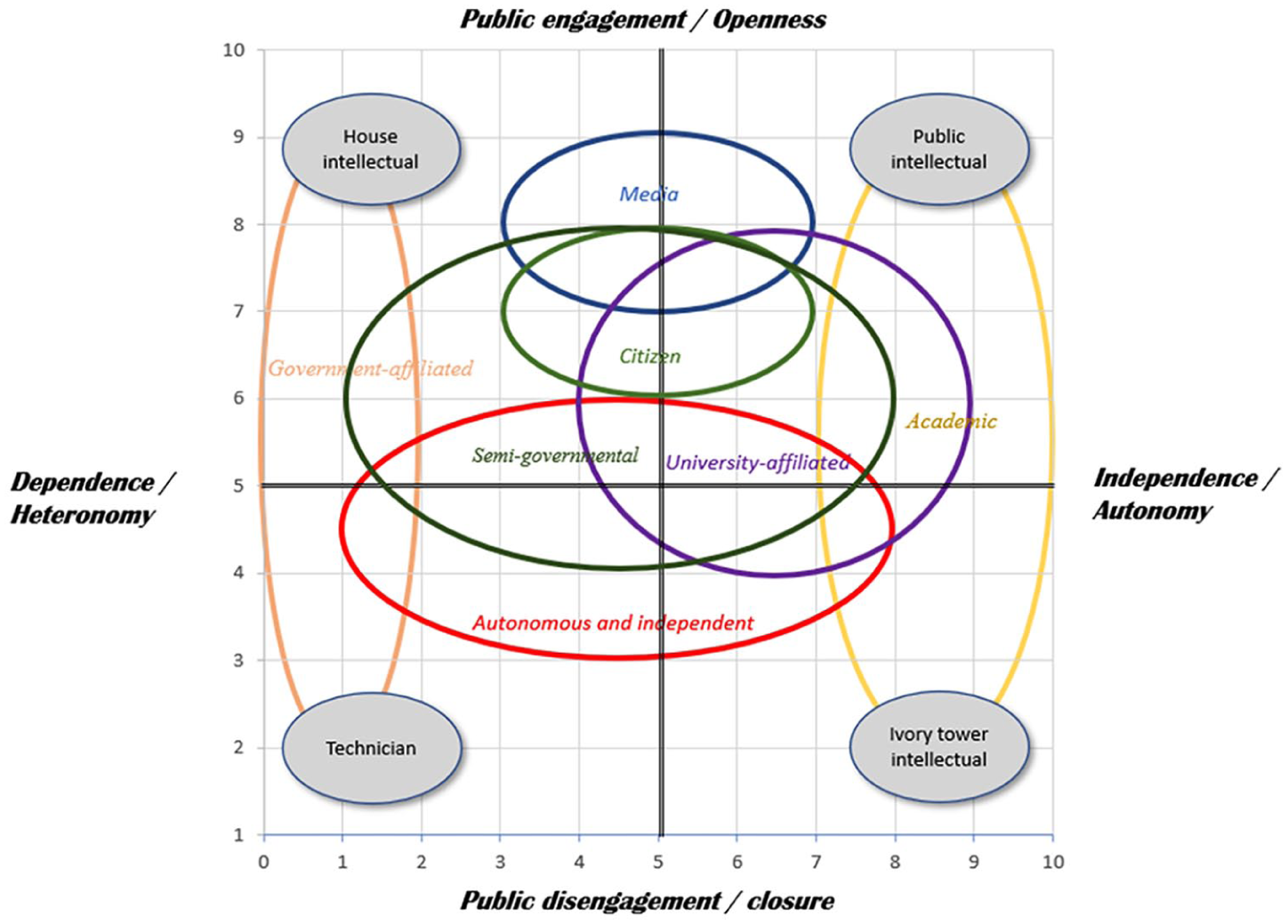
Radicalization and violent extremism expertise groups, according to their degree of dependence and their degree of freedom.
These tables are illustrative in nature and should be considered within their historical context, indicating the forms of expertise that have emerged in Western democracies in recent years. There is no reason to predict that interstitial expertise will occupy this space for long, or even if this form of expertise will exist in the next few years. Thinking in terms of domains has made it possible to construct an empirical object of interstitial expertise installed between more instituted expertise. The instability of the loosely instituted expertise is generated by the shifting relationships that groups have with the state, the media, and universities.
As a result, interstitial expertise groups have an interest in adapting to their environment and maintaining links with sources of practical innovation. It is then possible to define interstitial expertise on radicalization and violent extremism as a subfield of knowledge production and use that has emerged primarily at the intersection of the academic, political, and media fields. Just as Medvetz points out, the mapping approach does not aim to describe the specific properties of each organization but rather to view interstitial expertise as “a structured social space with distinct emergent properties, characteristic rules of operations and inner logic, a history of its own, and singular actors who, in turn, possess unique ways of being and doing, qualifications, and abilities” (Medvetz 2010:195). It is therefore part of a social space in which the different forms of expertise constitute a specific domain.
Discussion
Experts as the Mediators between Science and Politics
Radicalization and violent extremism have evolved into a central conceptual framework within a new field of expertise. As the issue of domestic political violence has generated a sense of urgency, political actors have been compelled to take proactive measures to address this context of uncertainty (McLaughlin 2024). One such response has been the formulation of policies aimed at preventing violent extremism. This novel approach to policy, transitioning gradually from counterterrorism, necessitates knowledge for effective implementation.
The theory sheds light on the fact that the expertise on radicalization and violent extremism was built on trust, reputation, and social connection (Evans 2015). Access to money and prestige creates strong competition between groups and experts. Due to their objective to please the client, this expertise is also adaptive and cooperative. We can see this expertise as an epistemic community with its own codes and subcultures (Wicker 2017).
As in any community, tensions and conflict can emerge. For instance, while the diversity of knowledge is regarded as complementary, it often brings conflict. Although less formalized expertise frequently faces criticism for its minimal reliance on scientific knowledge and inherent subjectivity, academics are often condemned for being overly abstract and disconnected from practical applications (Wicker 2022).
Despite the competition for credibility, real authority in expertise, as noted by Russo and Selenica (2022), relies on the ability to be considered “advisers” to policymakers, the capacity to access rare information, and the aptitude to influence important decisions. Governments regularly solicit expertise to develop comprehensive preventive strategies, and due to their proximity to communities, they also fund practitioners to deliver specific services to the population (Wicker 2022).
Findings, Implications, and Perspectives
Our model has implications for the sociology of radicalization and extremism’s expertise. By comparing two scales (autonomy and heteronomy versus openness and closure), we can identify where each type of expertise sits. This method illustrates that interstitial expertise fills a void left by institutionalized expertise. This brings us to understand the role of “interstitial expertise,” which represents a subspace at the intersection of academia, the state, and media, regulating the circulation of knowledge. This need for more practical knowledge has resulted in the formation of an interstitial subspace located at the crossroads of the academic, state, and media spheres.
In comparison to most other forms of expertise (Eyal and Pok 2017; Medvetz 2012), the private sector does not significantly act as a client for expertise in radicalization and extremism. This means that the governments play a central role in the network. The actors in the network need to understand the codes and norms to navigate within the system (Evans 2015). To access resources (money) and power (influence), these groups must offer knowledge-based services, compete with other expert groups, join forces in some initiative, quickly adapt to changes, and consistently justify their credibility and legitimacy. Expertise mapping and categorization of groups can help identify changes in the structure over time, such as government incentives, policy changes, or political reorientation. By focusing on the object, subject, and client, we can develop a greater knowledge of the expertise culture and tactics within the network. This is why we have conceptualized expertise as a network of actors interconnected by cultural arrangements, work instruments, institutions, and values (Eyal and Pok 2017).
Therefore, expertise is not only skills or knowledge in a particular field but also the ability of the network’s actors to legitimate their relevance. Expertise groups participate actively in conferences, media, community and government discussions. They need to be present, to show themselves as a solution to the problematic issue. In France, for instance, Bigo and Bonelli (2007) observed that experts need to legitimize their status in the social sphere. Some actors will have the privilege to designate the causes and who should take charge of the problem. The authors stated that identifying issues and processes to solve the problem is therefore the result of intellectual and practical struggles for meaning (Bigo and Bonelli 2007).
Political and economic events greatly influence the expertise’s network. McGann (2015) found that significant events have a substantial impact on the funding available for security and international relations expertise. Our interviews echoed the same situation. Each instance of terrorism, riots, and other forms of political violence contributes to maintaining the importance of the issue. Some practitioners (A8; A11) expressed concerns about funding decreases when they effectively prevent political violence. This is why some groups adjusted their focus to address emerging challenges, such as the rise of the extreme right and hate crimes (A8; A11). The demand for expertise has given rise to numerous service offerings, inevitably carried out by a series of new actors, hence the immense difficulty of objectively recognizing whether a group belongs to the network of experts.
Our contribution was to develop an empirical model explaining how practical expertise in radicalization and violent extremism is shaped, utilized, and classified across different sectors. The study also reveals how traditional boundaries between experts are increasingly blurred. With the theory, we showed that strategic ambiguity should be viewed as a productive aspect of the field. This clarification of roles, tensions, and collaborations among experts illustrates how prevention on this subject emerged, was enacted, and adapted over time. Our result can assist policymakers in understanding the mobilization of expertise potentially fostering interdisciplinary dialogue among experts and policymakers.
Limitations and Suggestions for Future Research
To stay relevant, interstitial expertise groups must adapt rapidly to the evolution of governments. As interstitial expertise survives mostly by government funding, maintaining the issue in the public space is mandatory for interstitial expertise groups to survive. Further research should be conducted to look at the main theme of this expertise today.
Many groups may have disappeared since 2019. This makes it difficult for researchers to establish the network and potential relationships between these groups over a period of time. The result is also limited by its geopolitical landscape in Europe. Other regions have now included prevention policies on radicalization and violent extremism. Their application might be different from our results.
Our goal was to understand the expertise on radicalization and violent extremism from a relational perspective. This led us to highlight the different roles and statuses among various types of expertise. However, this approach limited our ability to understand the specific relationship between governments and experts. Each country has its own culture and structure related to the utilization and production of knowledge on radicalization and violent extremism, which will need to be developed in another paper.
Built on the saturation of governmental reports, expert reports, and interviews, our theoretical model contributes to the understanding of relationships between this new expertise on radicalization and violent extremism. Further research is needed to understand the relationship between politics and science. The government’s imperatives have a considerable effect on the production and utilization of knowledge. The impact of this involvement deserves more attention.
Footnotes
Appendix
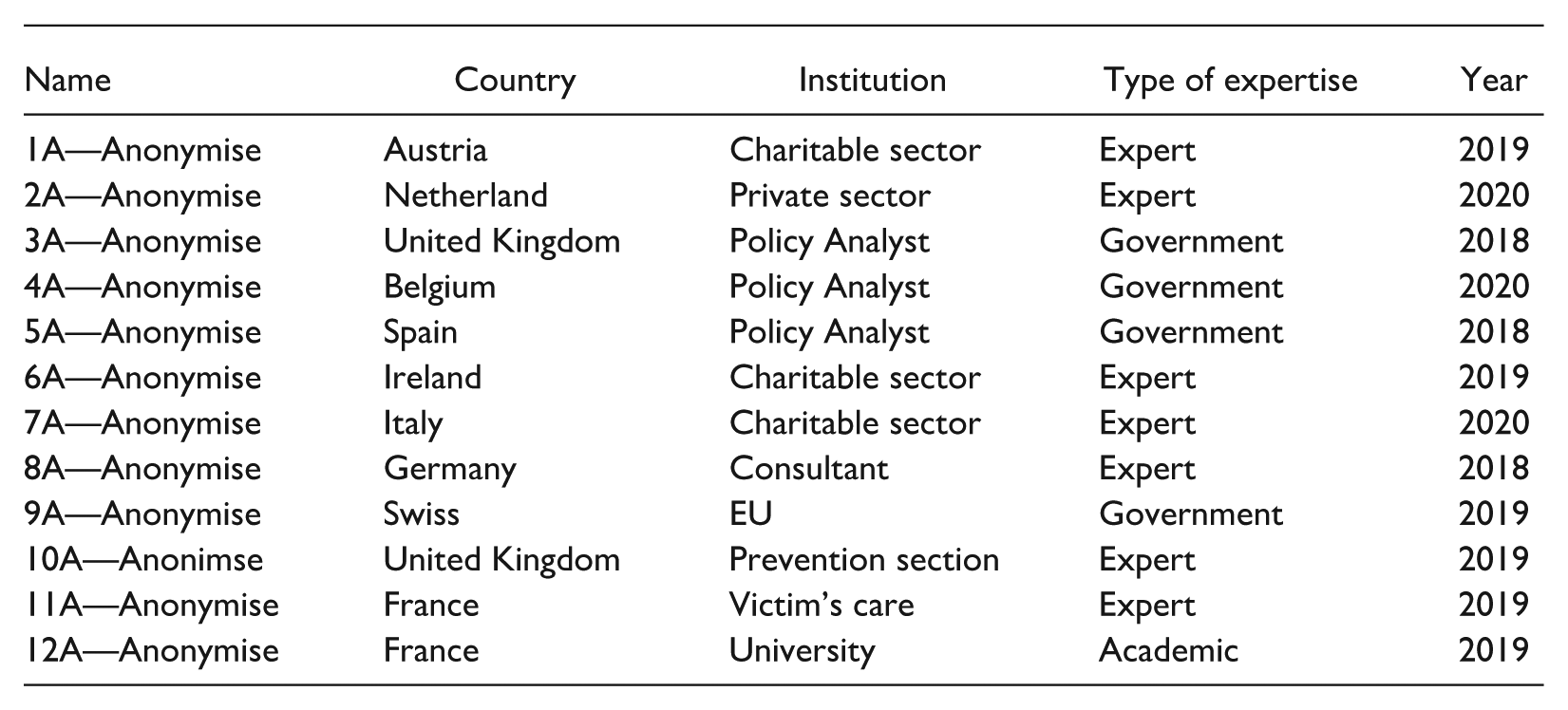
| Name | Country | Institution | Type of expertise | Year |
|---|---|---|---|---|
| 1A—Anonymise | Austria | Charitable sector | Expert | 2019 |
| 2A—Anonymise | Netherland | Private sector | Expert | 2020 |
| 3A—Anonymise | United Kingdom | Policy Analyst | Government | 2018 |
| 4A—Anonymise | Belgium | Policy Analyst | Government | 2020 |
| 5A—Anonymise | Spain | Policy Analyst | Government | 2018 |
| 6A—Anonymise | Ireland | Charitable sector | Expert | 2019 |
| 7A—Anonymise | Italy | Charitable sector | Expert | 2020 |
| 8A—Anonymise | Germany | Consultant | Expert | 2018 |
| 9A—Anonymise | Swiss | EU | Government | 2019 |
| 10A—Anonimse | United Kingdom | Prevention section | Expert | 2019 |
| 11A—Anonymise | France | Victim’s care | Expert | 2019 |
| 12A—Anonymise | France | University | Academic | 2019 |
Declaration of Conflicting Interests
The authors declared no potential conflicts of interest with respect to the research, authorship, and/or publication of this article.
Funding
The authors disclosed receipt of the following financial support for research, authorship, and/or publication of this article: This study was funded by the Canadian Social Sciences and Humanities Research Council.
