




Abstract
In this study, we clarified the effect of training by enterprise size for the training service (TOSA Marugoto Business Academy Project [Tosa MBA]) provided by Kochi Prefecture in Japan by applying structural equation modeling to online survey data. In large enterprises, expert knowledge that can be used at work had a positive effect on job satisfaction rather than career status such as annual income and job title. This may have been the case as while promotion involves higher wages and greater privileges, in large enterprises, the extent of responsibility and working hours increase even more. Conversely, in small and medium-sized enterprises (SMEs), career status has a more positive effect on job satisfaction than does expert knowledge. For SMEs with a simple organizational structure, job position has a greater influence on work attitudes. The results present meaningful suggestions to enhance the design of local government training services.
Over the last 25 years, the service-profit chain has continued to be an important theme for practitioners and researchers (Hogreve, Iseke, and Derfuss 2021). It is a state in which in a good enterprise, internal services enhance employee job satisfaction (or employee satisfaction), which results in improved service quality and a continuous cycle of contributing toward the enterprise’s growth (Heskett et al. 1994). In-house services contribute toward organizational competitiveness in responding to changes faster than competitors in today’s rapidly changing market environment (Bayraktar et al. 2017). In other words, companies should prioritize employees before customers (Madhani 2019). This is known as internal marketing (Kanyurhi and Akonkwa 2016). The validity of the service-profit chain has been confirmed in many literature-based meta-analyses (Hogreve et al. 2017).
Job satisfaction does not improve merely with an increase in monetary rewards, as people do not work for money alone (Elmadağ and Ellinger 2018). Especially in knowledge labor, it has long been supported both theoretically and practically that rewarding work is as important as or even more important than financial incentives (Amabile and Kramer 2015; Ogbonnaya, Tillman, and Gonzalez 2018). Concerns around burnout have been discussed frequently. COVID-19 increased the risk of burnout (Torrès et al. 2022). Since the pandemic began, the proportion of people who felt rewarded at work fell from 36 to 27 percent, and the proportion of those who experienced burnout increased from 14 to 23 percent (Lievens 2021). To prevent burnout, it is essential to make work rewarding (Baugh and Raja 2021).
Training can reward employees and keep them highly motivated (Memon, Salleh, and Baharom 2016). The development of training programs has merits for both companies and workers, and is a major management issue (De Grip and Sauermann 2013). The benefits of training from a corporate perspective are that it can improve loyalty to the organization (Bulut and Culha 2010; Cappelli 2004; Hanaysha 2016; Jaworski et al. 2018; Ocen, Francis, and Angundaru 2017), productivity (Ibrahim, Boerhannoeddin, and Bakare 2017; McNamara et al. 2012; Tabassi, Ramli, and Bakar 2012), service quality to consumers (Dhar 2015; Shen and Tang 2018; Son, Kim, and Kim 2021), employee retention rate (Costen and Salazar 2011; Newman, Thanacoody, and Hui 2011; Picchio and Van Ours 2013; Zheng and Lamond 2010), and corporate performance (Guerrazzi 2016; Sung and Choi 2014; Úbeda-García et al. 2014). The benefits of training from an employee’s perspective include the acquisition of expert knowledge (Görlitz and Tamm 2016; Guan and Frenkel 2018; Gupta and Bennett 2014; Truitt 2011) and improvements in wages and job titles (Albert, García-Serrano, and Hernanz 2010; Bjerge, Torm, and Trifkovic 2021; Cherif 2021; Gault, Leach, and Duey 2010; Mihail and Kloutsiniotis 2014; Muller and Nordman 2017), as well as satisfaction (Boissy et al. 2016; Hanaysha and Hussain 2018; Krumbiegel, Maertens, and Wollni 2018; Leppel, Brucker, and Cochran 2012).
Several studies have focused on the benefits of training. However, these studies lack the following perspectives. First, they did not include the local government as a training provider. It is quite possible for large enterprises to prepare their own training programs. The cost of human resource development is more for small and medium-sized enterprises (SMEs) where management resources are not abundant (Briggs, Deretti, and Takashi 2020; Lai et al. 2016). In Japan, there are 3.5 million SMEs, which account for 99.7 percent of the total number of companies; they are indispensable for the nation’s economic activities (SME Support Japan, n.d.). Thus, the local government improves the working environment in SMEs by offering them high-quality training programs. It is important to extend the discussion on the impacts of training to this context. Second, although the work environment differs significantly between large enterprises and SMEs, the differences have not been fully considered. Therefore, in the current study, we clarify the benefits of training on job satisfaction by enterprise size, targeting “Tosa MBA” (TOSA Marugoto Business Academy Project) (Kochi Prefecture, n.d.) as provided by the Kochi Prefectural Government of Japan. Figure 1 shows the 2022 pamphlet of the Tosa MBA. Tosa (土佐) is the old name of Kochi prefecture. The training mainly offers management, marketing, and finance courses at affordable prices to those who work for local companies. Lecturers of the training consist of university faculty members and practitioners (large enterprises and SMEs). For example, in the 2022 marketing course, a practitioner working at Honda Motor is in charge. The course started in 2012 and has been taken by more than 34,000 people by 2021. Although the name MBA is used, the course does not culminate in a degree. Reportedly, this is the first study to evaluate the training effect by enterprise size in the context of local government services. Improving labor productivity is more important for SMEs than for large enterprises (Onkelinx, Manolova, and Edelman 2016). This study addresses the two gaps identified above and expands academic knowledge on human resource development. It also provides practical suggestions toward improving local government training services.

Tosa MBA 2022 pamphlet.
Literature Review and Hypotheses Development
Significance of Training in Human Resource Management
One of the oldest and toughest tasks that all managers face is managing employee motivation (Rahimić, Resić, and Kožo 2012). Energetic and active employees have positive impacts on organizational productivity (M. T.Lee and Raschke 2016). Companies continue to look for ways to manage motivation to prevent employee burnout. Human resource practices that manage motivation rely on monetary and non-monetary rewards (Tumi, Hasan, and Khalid 2022). The former corresponds to the establishment of an evaluation and wage system, and the latter to the provision of training (F.-H. Lee, Lee, and Wu 2010). Building organizational capacity through training is a major strategic human resource practice adopted by successful companies (Memon et al. 2016). Investment in human capital has gained importance in recent times for the following reasons. First, as the pace of technological innovation accelerates, it is essential for companies to supplement the skills of their human capital (Bapna et al. 2013). Second, in aging developed countries, lifetime investments in training are important in increasing or at least limiting the decline in the productivity of older workers (Belloni and Villosio 2015). Third, millennials, who are expected to account for 75 percent of the workforce in 2030, value rewarding work in a meaningful connection with their employers rather than monetary compensation (Mankins, Garton, and Schwartz 2021). Fourth, it is necessary to deal with the risk of burnout as a result of COVID-19 (Baugh and Raja 2021; Lievens 2021; Torrès et al. 2022). Thus, implementing a human resources retention strategy for employee motivation and job satisfaction is essential to an organization’s competitiveness (De Sousa Sabbagha, Ledimo, and Martins 2018).
Effect of Training on Corporate Activities
From the perspective of the enterprise, the effects of training are as follows. First, it can improve loyalty to the organization. General-purpose skills training can serve as an incentive for employee commitment instead of high wages and employment security (Cappelli 2004). This was confirmed at universities in Malaysia (Hanaysha 2016), hotels in Turkey (Bulut and Culha 2010), and banks in Uganda (Ocen et al. 2017). A similar trend is seen among part-time employees (Jaworski et al. 2018).
Second, it can improve productivity. By giving employees a break and enrolling them in training programs during the break, the productivity of the organization can be improved (Ibrahim et al. 2017). Employee training improved motivation and task efficiency in Iran’s construction industry (Tabassi et al. 2012). A study of 3,654 organizations in 19 countries showed that the mean number of days spent training employees annually had an impact on the speed of innovation and the level of productivity (McNamara et al. 2012).
Third, it can improve service quality to customers. Service-related training in a Korean coffee chain created a positive work environment for employees and improved the quality of service (Son et al. 2021). There was a strong relationship between employee training and the quality of service in the Indian hotel industry (Dhar 2015). Cross-industry studies in China, including clothing, electronics, and automobiles, have shown that training indirectly affects the quality of customer service through job satisfaction (Shen and Tang 2018).
Fourth, it can decrease turnover rates. Employees who feel that they can develop new skills at luxury hotels in the United States were more likely to stay in the organization as they were satisfied with their work, and their loyalty to the organization increased (Costen and Salazar 2011). Employee perceptions of training in China reduced turnover rates (Newman et al. 2011). Similar trends were found in a study of 529 multinational corporations in six Asian countries (Zheng and Lamond 2010). An analysis of Dutch workers based on data from the European Community Household Panel showed that training helped retain older employees (Picchio and Van Ours 2013).
Fifth, it facilitates overall improvement in corporate performance. Training for human capital development improved business outcomes at hotels in Spain (Úbeda-García et al. 2014). A study by the Italian Institute for the Development of Vocational Training showed that employer-sponsored training had a positive and significant effect on key corporate performance indicators (Guerrazzi 2016). In-house training enhanced innovative corporate performance in 260 Korean companies across various industries (Sung and Choi 2014).
Effect of Training on Employees
Although there is a general perception in the literature that training improves corporate performance, research has not always provided evidence to support this. One reason for this is that training does not directly affect an enterprise’s performance but rather does so indirectly by improving employee performance from a microscopic perspective (Aragón, Jiménez, and Valle 2014). Training returns can be more precisely verified by measuring the performance of each employee than by enterprise-level performance, which is affected by various factors (Wang, Dou, and Li 2002). From an employee’s point of view, training has the following impacts.
First, it enables the acquisition of expert knowledge. A study of American universities and businesses showed that training had a direct impact on job proficiency (Truitt 2011). A training voucher program in Germany had a positive effect on the ability to perform extraordinary analytical tasks (Görlitz and Tamm 2016). In the Chinese manufacturing industry, training of semi-skilled manufacturing employees enhanced job performance (Guan and Frenkel 2018). In the context of the MBA program, the main reason for contributing to the career development of graduates is the knowledge and skills acquired while taking the course (Gupta and Bennett 2014). However, for the knowledge gained in the training to be meaningful, it must have practical application in actual work. Therefore, we focused on the acquisition of knowledge that is useful to practice, and not just the mere acquisition of knowledge. Accordingly, the following hypothesis was derived:
Second, there is an improvement in wages and job titles. Wages are affected positively by training (Muller and Nordman 2017). Significant wage returns for training in six European countries were reported based on the European Community Household Panel from 1995 to 2001 (Albert et al. 2010). An analysis of an industry panel covering all sectors of the Tunisian economy from 2000 to 2014 revealed that the benefits of training had a positive impact on workers’ wages (Cherif 2021). For Vietnamese companies, on-the-job training enhanced labor productivity for women and closed the wage gap between men and women (Bjerge et al. 2021). The MBA degree contributed toward career development in the form of, for example, promotions (Mihail and Kloutsiniotis 2014). Even undergraduate students with internship experience have full-time opportunities and tend to get high starting salaries (Gault et al. 2010). Thus, we derived the following hypothesis:
Third, it results in an improvement in job satisfaction. Training at a public university in Malaysia had a significant positive effect on employee motivation (Hanaysha and Hussain 2018). The correlation between job satisfaction and training was confirmed at a food export enterprise in Ghana (Krumbiegel et al. 2018). In addition to improving patient satisfaction scores, burnout rates were reduced among doctors through training in American hospitals (Boissy et al. 2016). A study of American workers reported that the availability and quality of training had a positive effect on job satisfaction among older workers (Leppel et al. 2012). The factors that connect training and job satisfaction can be divided into adaptive knowledge that can be used for work and career status. Environments in which specialized knowledge can be used at work, especially in recent years, have been given great importance (García et al. 2018). Career development has a significant impact on employee morale (Frenkel and Bednall 2016; Nguyen, Dang, and Nguyen 2015). The voluntary turnover rate increases when workers obtain graduate degrees but decreases significantly when they are promoted thereafter (Benson, Finegold, and Mohrman 2004). Therefore, we derived the following hypotheses:
Differences in the Work Environment between Large Enterprises and SMEs
The work environment differs greatly between large enterprises and SMEs. The higher the position, the greater the scope of responsibility and the effort of coordinating with other departments. In Japanese companies, consensus-building, also known as “nemawashi,” is essential. It is “an informal process of quietly laying the foundation for some proposed change or project, by talking to the people concerned, gathering support and feedback, and so on” (Kar and Kar 2017). In Japan, it is common for skilled managers to not make choices until the consent of the relevant department is obtained. They spend time building consensus when compared with Western countries (Pillai 2011). Carlos Ghosn, former CEO of Nissan Motor Co., Ltd., stated that he had practiced the painstaking process of building consensus (nemawashi) by sharing information across the huge organization to arrive at a final decision (White 2018). Nemawashi takes place in all large-scale organizations such as governments and hospitals (Omura, Stone, and Levett-Jones 2018; Ranga, Mroczkowski, and Araiso 2017). Long working hours and great responsibilities are the main stressors in the workplace (Carr et al. 2011; Caruso 2014; Johnston and Lee 2013). Therefore, it was inferred that a work environment in which one’s expertise is used in daily work is more likely to result in satisfaction. In other words, employees of large companies may be more likely to pursue intrinsic rewards than to obtain stressful positions. From the above, we derived the following hypothesis:
Promotion opportunities for SMEs with a simple organizational structure are more strongly associated with work attitudes than with large enterprises (Lai, Saridakis, and Blackburn 2015). The authority of each manager is strong. The discretion is great. Training employees is a heavy burden for small businesses with a limited number of employees (Briggs et al. 2020). Especially during a recession, large enterprises tend to actively adopt new human resource measures, whereas SMEs tend to focus on cost reduction owing to human resource development (Lai et al. 2016). Accordingly, in SMEs, there is a strong tendency to seek ready-to-work personnel as needed to fill vacancies or increase staff (Lubatkin et al. 2006). SMEs do not have the habit of regularly incorporating training to improve employee skills when compared with large enterprises. Therefore, we derived the following hypothesis:
Method
Survey
From August 20 to 28, 2021, we conducted an online survey of office workers living in Kochi prefecture. A total of 200 office workers who had taken the Tosa MBA course were randomly selected to take the survey. They were all from Kochi prefecture. A total of 200 non-participants, living in Kochi prefecture, of the Tosa MBA were distributed the survey from a database owned by Cross Marketing Group Inc, a Japanese research company. Finally, 103 valid responses were obtained for participants and 74 valid responses were obtained for non-participants.
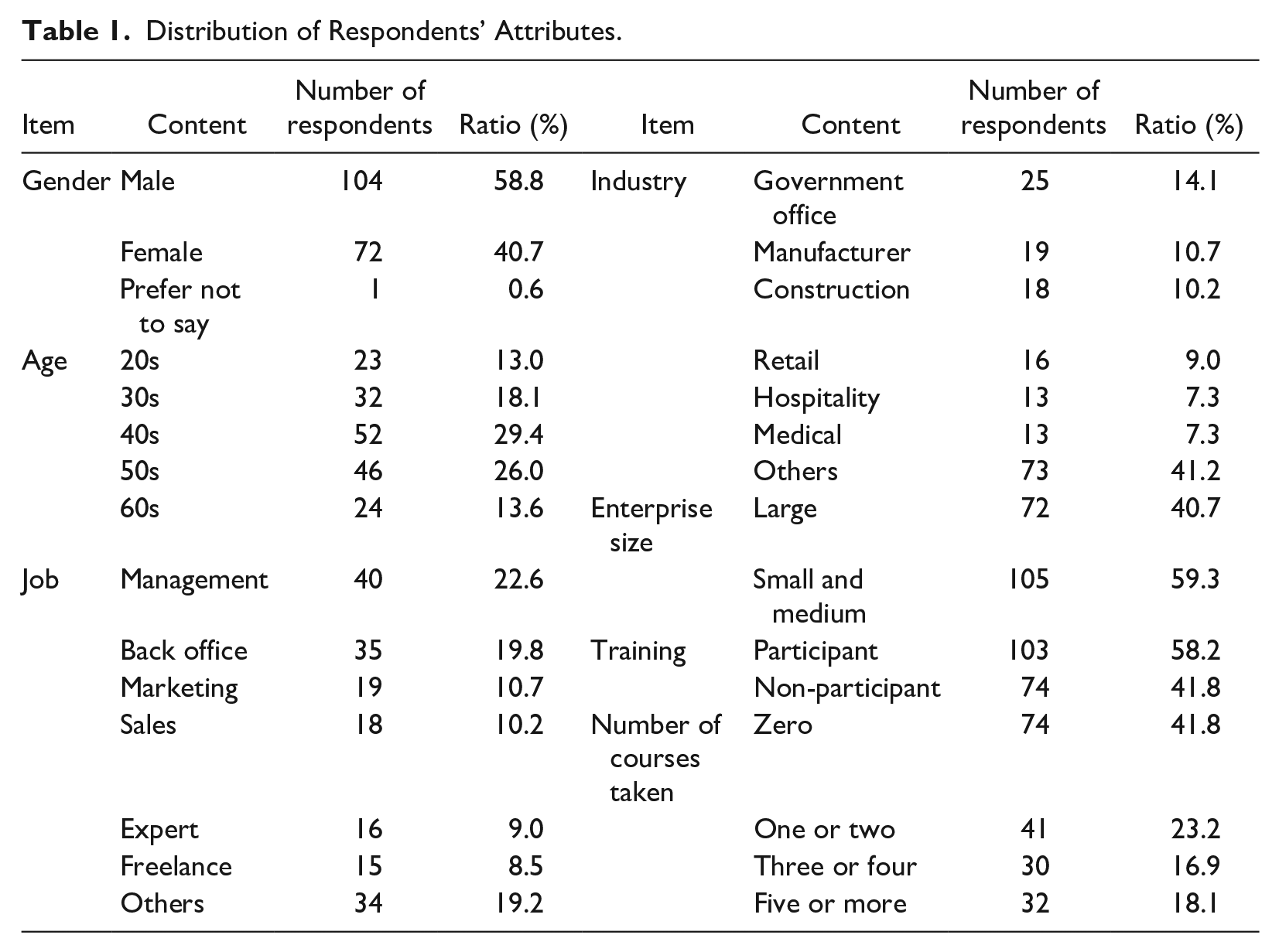
The survey gathered data on (1) gender, (2) age, (3) job, (4) industry, (5) enterprise size, (6) job title, (7) annual income, (8) degree of expert knowledge in the fields of management, marketing, and finance (5-point Likert scale), (9) degree of job satisfaction (7-point Likert scale; 1: very unsatisfied, 7: very satisfied), and (10) degree of job rewards (7-point Likert scale). Questions (1) to (5) pertained to basic attributes. Table 1 presents the distribution of the basic attributes. The number of courses taken was drawn from the course databases. Based on previous studies (Brunello, Comi, and Sonedda 2012), the enterprise size was defined thus: those with 100 or more employees were large enterprises and those with less than 100 employees were SMEs. As this study covered local areas, few companies had thousands of employees. Questions (6) and (7) pertained to career status. Question (8) related to expert knowledge in the hypotheses, and the questions are as follows: “How much do you feel you are using the expert knowledge and abilities of management / marketing / finance in your current job?” Questions (9) and (10) pertained to job satisfaction, and the questions are as follows: “How satisfied are you with your current job?” and “How rewarding do you find your current job?”
Distribution of Respondents’ Attributes.
Verification
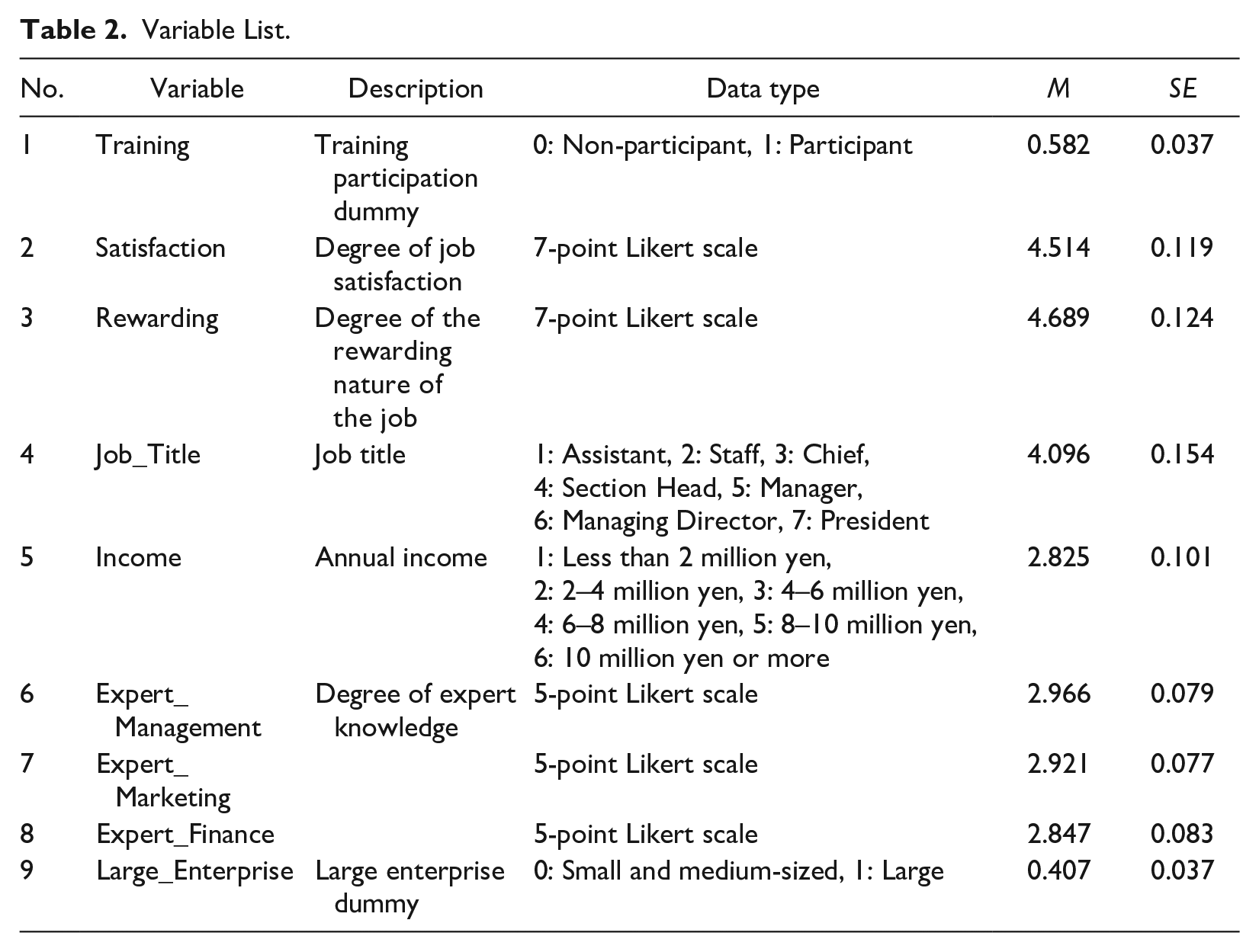
We tested the hypotheses through structural equation modeling (SEM). Factors were first extracted from Variables 2 to 8 as shown in Table 2 through exploratory factor analysis (EFA). The number of factors was determined based on eigenvalues of 1.0 and above. The factor rotation was ProMax rotation. Next, a confirmatory factor analysis (CFA) was applied based on the factors extracted. The following fit indices were used: comparative fit index (CFI), goodness of fit index (GFI), root mean square error of approximation (RMSEA), and standardized root mean square residual (SRMR). Generally, CFI and GFI are .90 or higher, and RMSEA and SRMR are .05 or lower. Based on the established factor structure, SEM was conducted using the hypothetical model presented in Figure 2. In H3-1 and H3-2, multiple-sample SEM was performed using the large enterprises dummy of Variable 9 shown in Table 2. The analysis was conducted using statistical analytical software R.
Variable List.
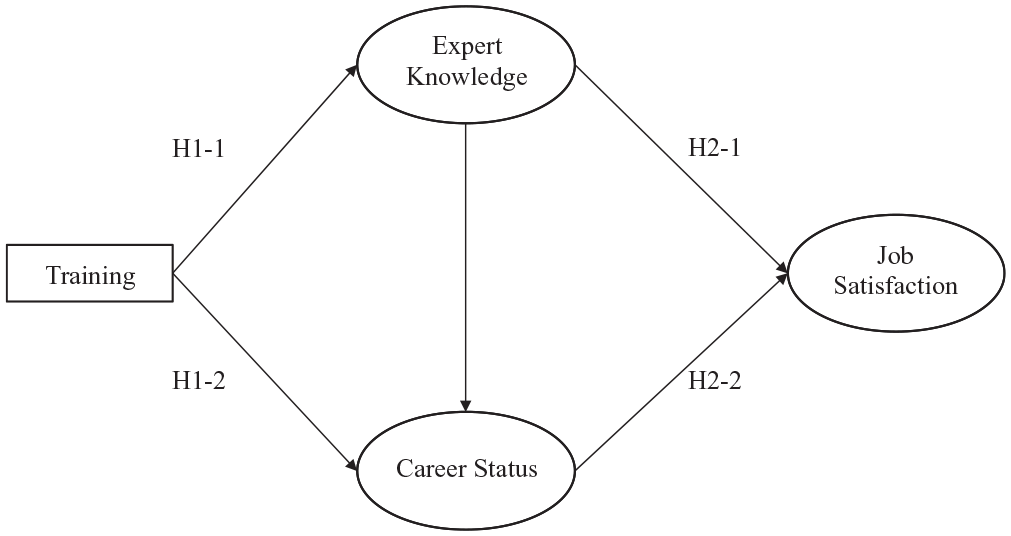
Hypothetical model.
Results
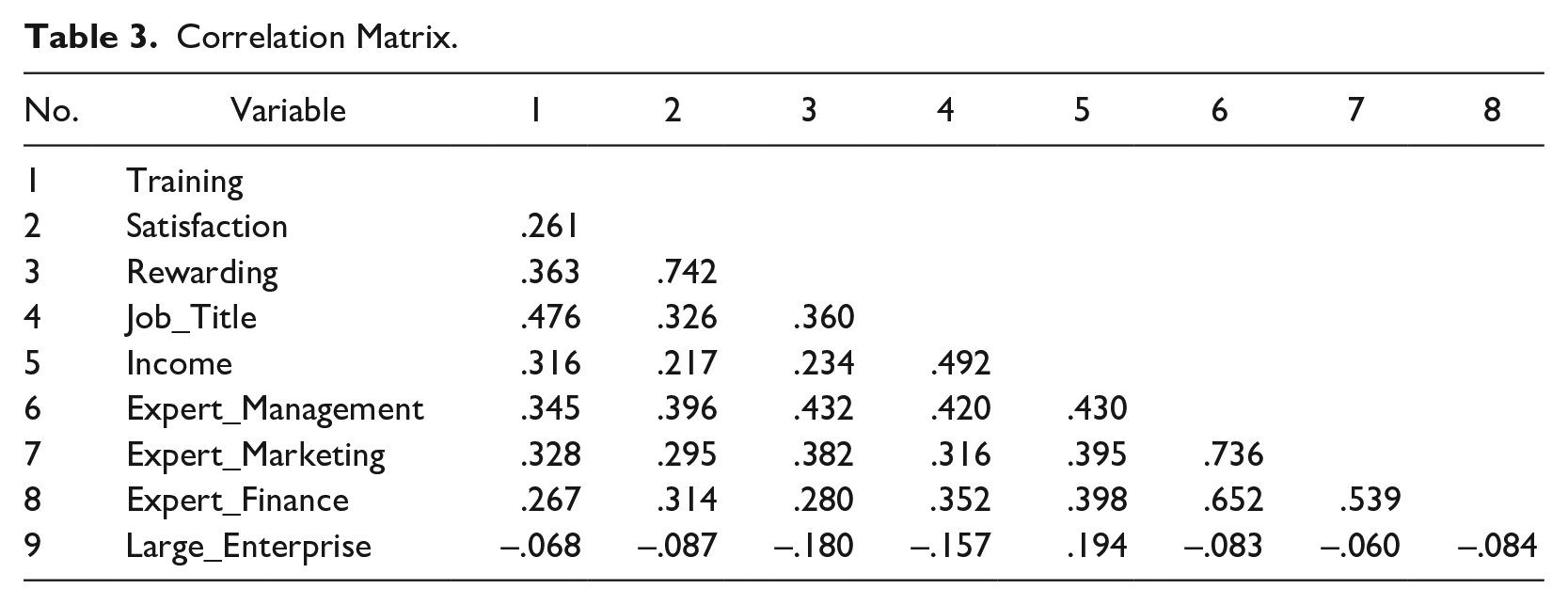
As shown in Table 3, training was positively correlated with Variables 2 and 3 (pertaining to job satisfaction), 4 and 5 (pertaining to career status), and 6 to 8 (pertaining to job satisfaction). No correlation was detected with Variable 9, which referred to the size of the enterprise.
Correlation Matrix.
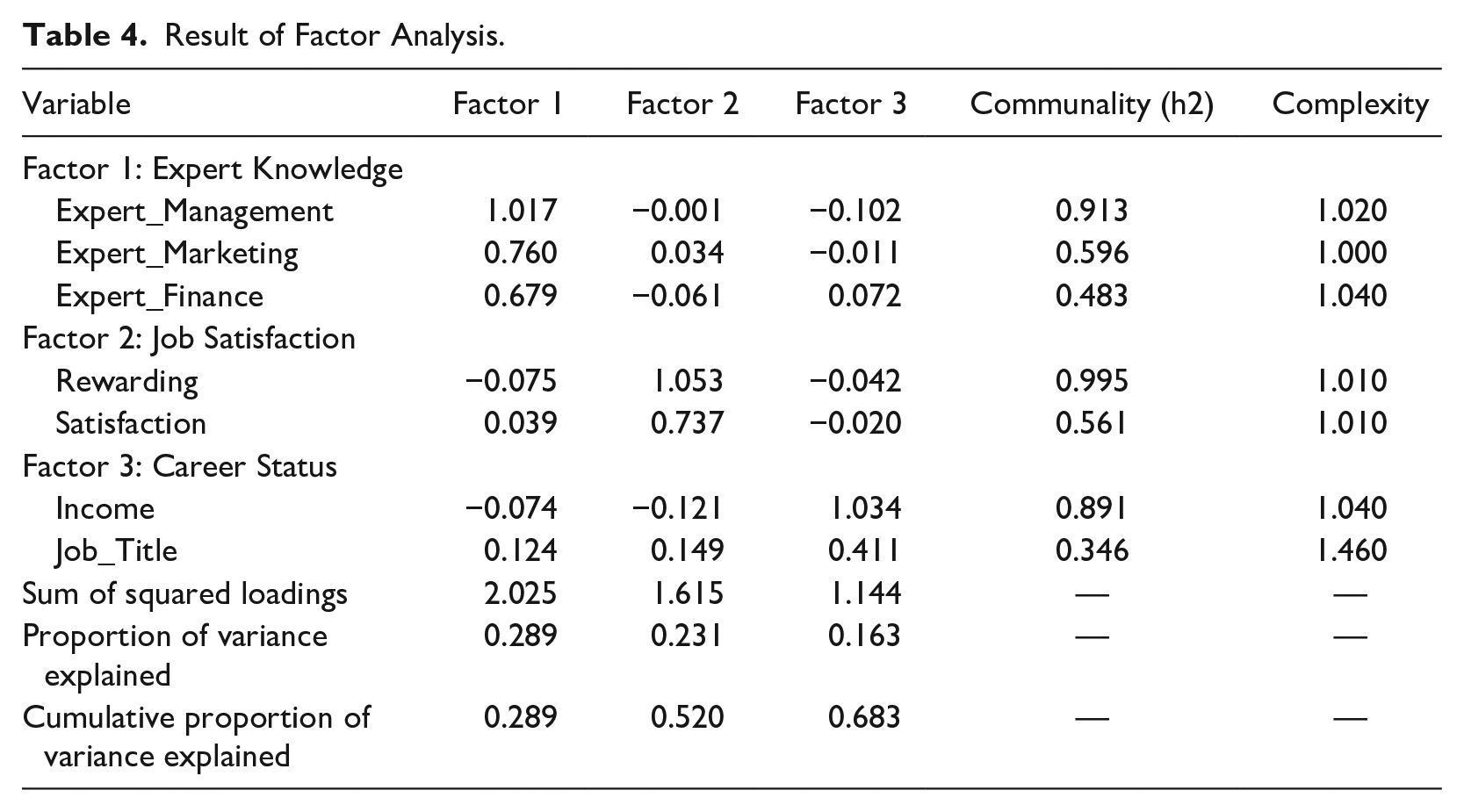
Next, the factors were extracted from the variables observed in the survey using EFA. As shown in Figure 3, three factors were adopted as the number of factors whose eigenvalue exceeds 1 in the scree plot. As shown in Table 4, the first factor was expert knowledge, the second was job satisfaction, and the third was career status. Applying a CFA based on the factors extracted through EFA resulted in high compatibility (Table 5).
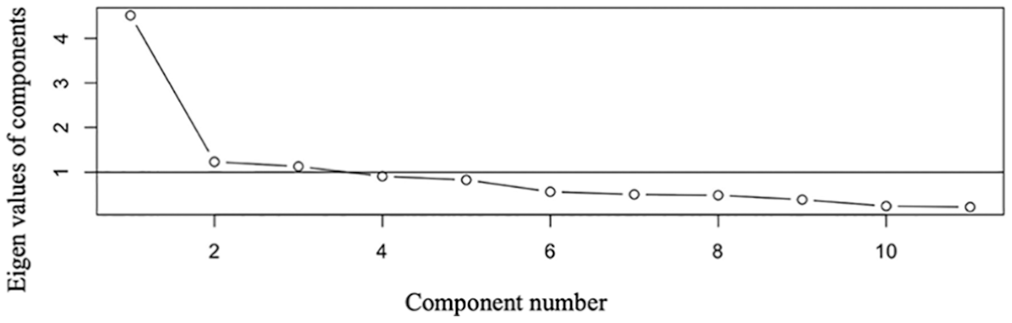
Scree plot.
Result of Factor Analysis.
Result of Confirmatory Factor Analysis.

Figure 4 shows the result of the SEM analysis. Similar to the CFA result, each fit index had a good value. Training contributed to expert knowledge and career status, which was also affected by expert knowledge, and both had a positive effect on job satisfaction. Therefore, H1-1, H1-2, H2-1, and H2-2 were supported.
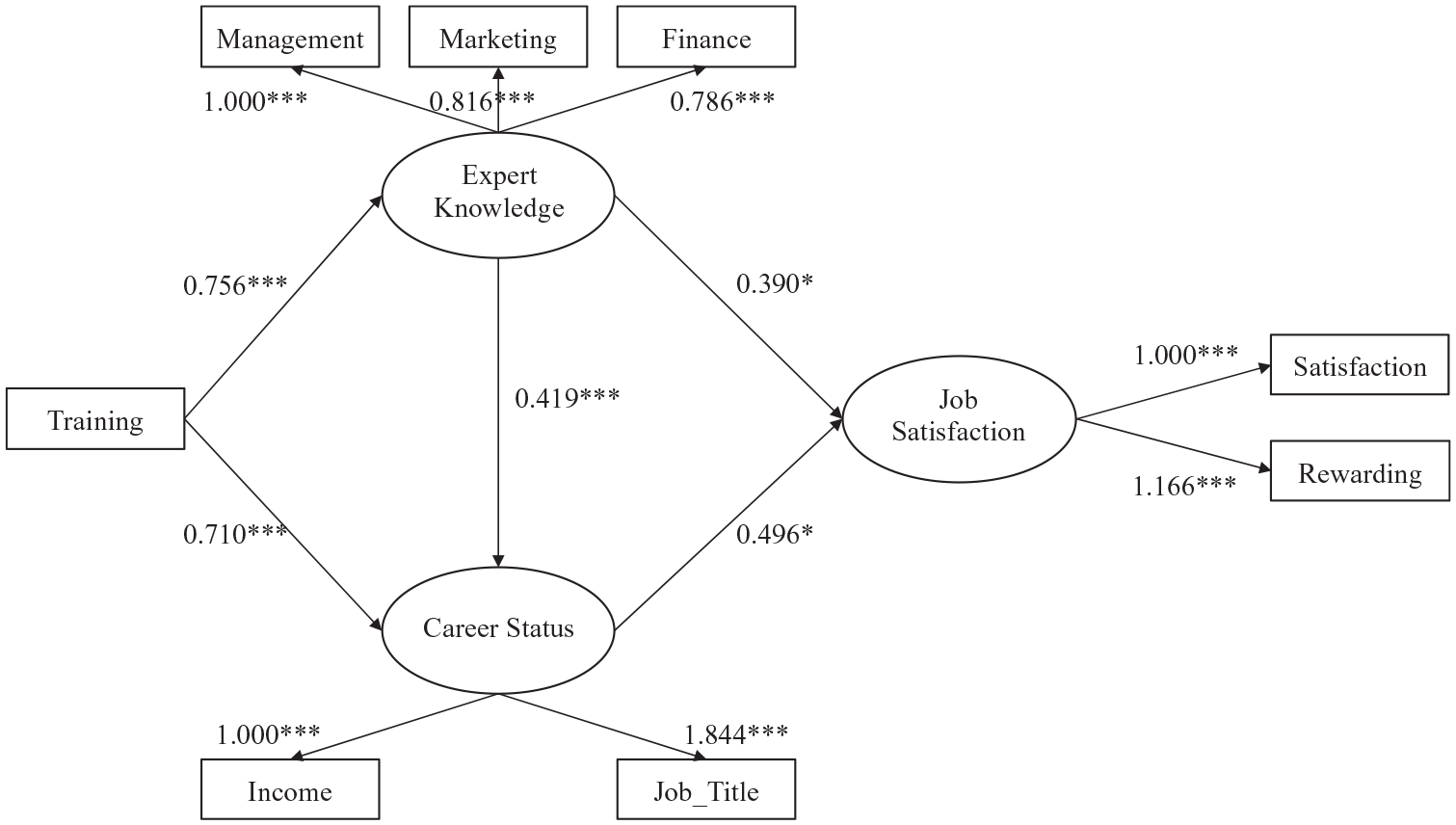
Results of structural equation modeling.
The results of multiple-sample SEM based on the size of the enterprise are shown in Figures 5 and 6. In these figures, only the paths that became significant at the 5 percent level are shown. As seen in Figure 5, in large enterprises, training had a positive effect on job satisfaction through expert knowledge. However, the effects of career status through training and job satisfaction through career status were not detected. Conversely, SMEs showed contrasting results. As seen in Figure 6, training contributed to both expert knowledge and career status, but only career status had a direct effect on job satisfaction. Expert knowledge was limited to indirect effects through career status. Thus, H3-1 and H3-2 were supported.
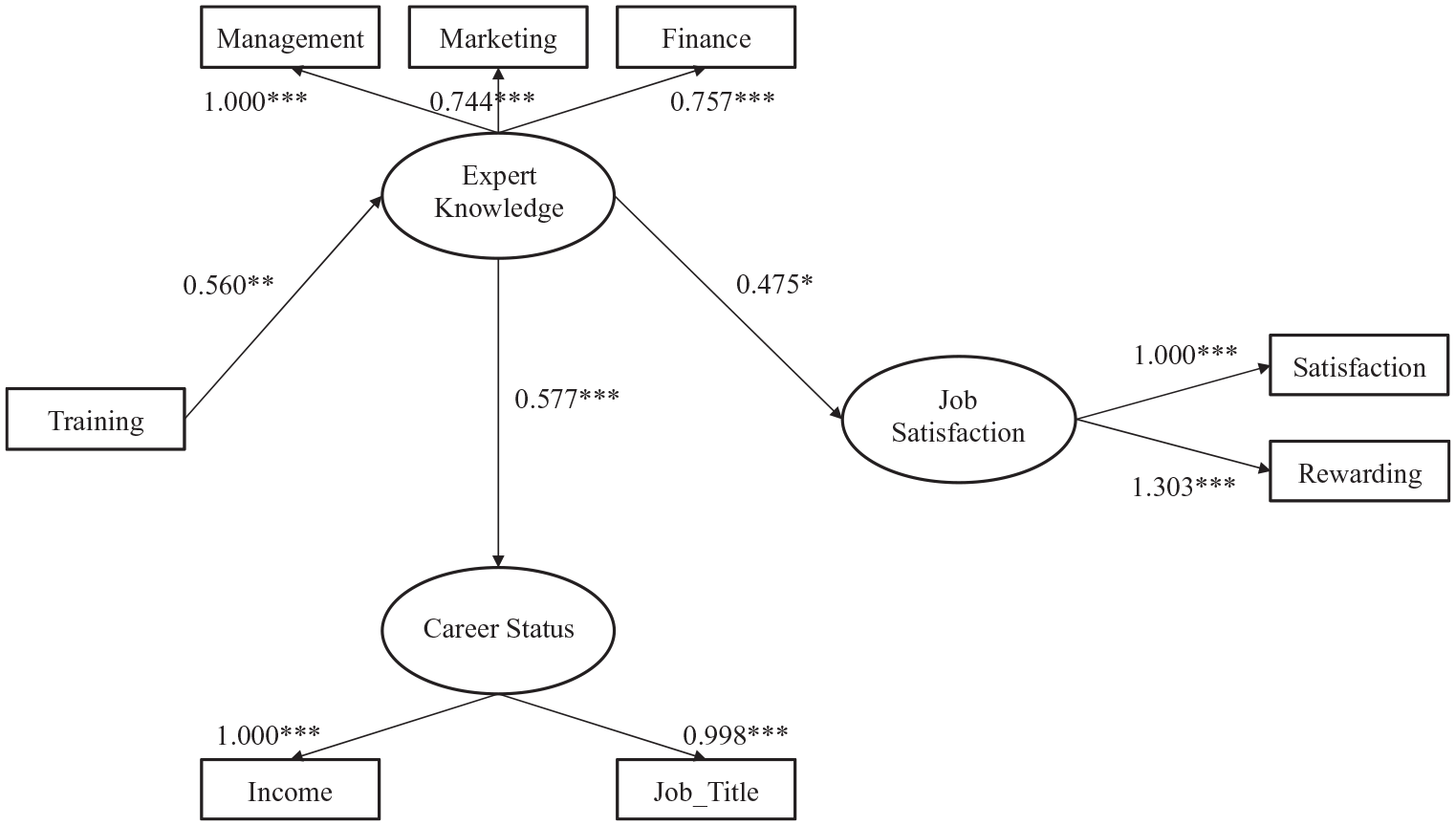
Result of standard error of the mean in large enterprises.
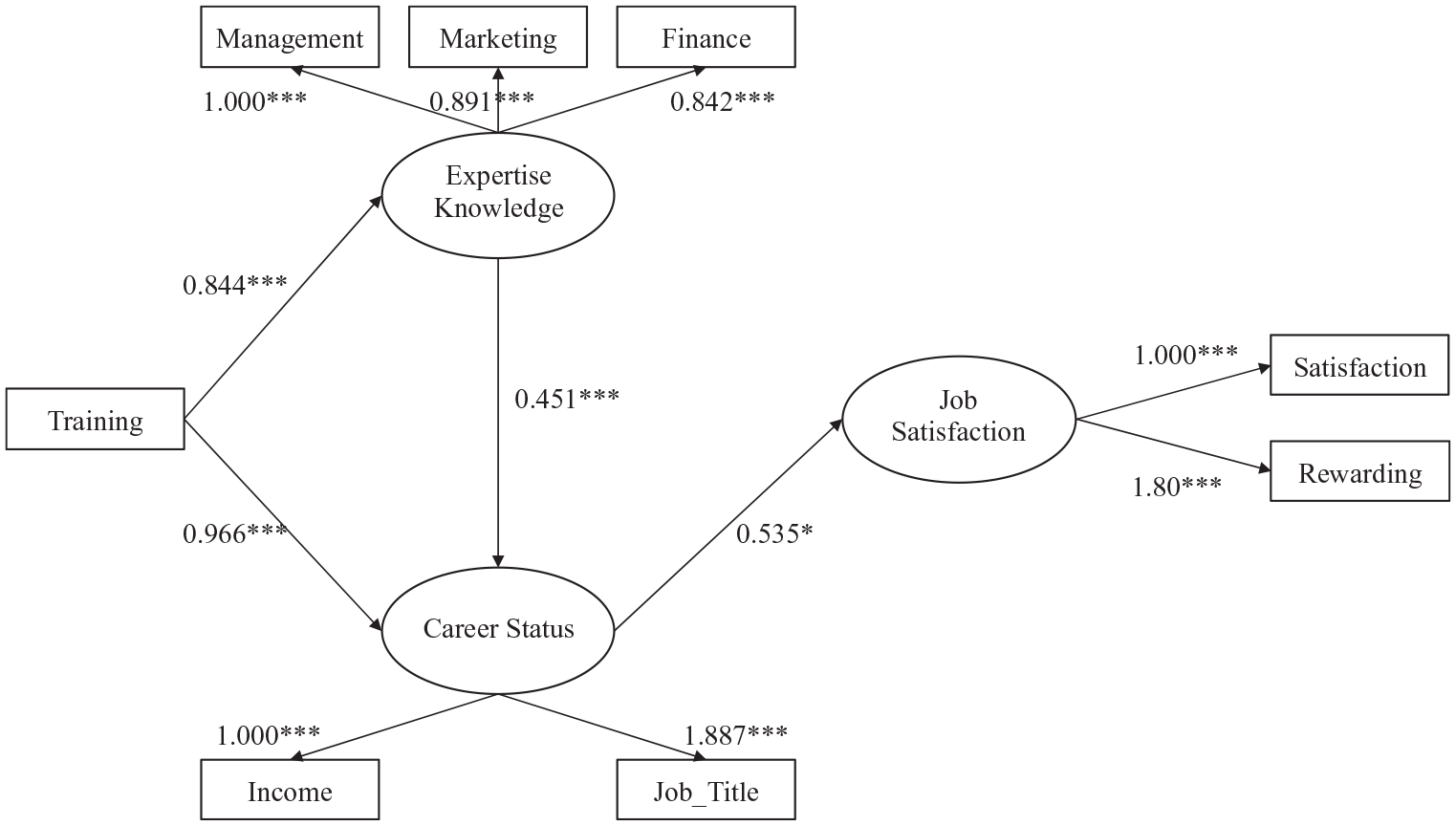
Result of standard error of the mean in small and medium-sized enterprises.
Implications
Theoretical Implications
Training has long been emphasized as a means to make the best use of human resources, which is an extremely important resource for organizations. There are several studies on the effects of training. This study contributes to the expansion of academic theory from the following two perspectives. The first refers to the expansion of the scope of training providers to include the local government. In existing research, in-house (Boissy et al. 2016; Bulut and Culha 2010; Costen and Salazar 2011; Dhar 2015; Hanaysha 2016; Jaworski et al. 2018; Leppel et al. 2012; McNamara et al. 2012; Newman et al. 2011; Ocen et al. 2017; Picchio and Van Ours 2013; Shen and Tang 2018; Son et al. 2021; Sung and Choi 2014; Tabassi et al. 2012; Úbeda-García et al. 2014; Zheng and Lamond 2010) and on-the-job training (Albert et al. 2010; Bjerge et al. 2021; Muller and Nordman 2017; Truitt 2011) were the main areas of focus. Others included internship programs (Gault et al. 2010), training vouchers (Görlitz and Tamm 2016), and university education (Benson et al. 2004; Cappelli 2004; Gupta and Bennett 2014; Mihail and Kloutsiniotis 2014), although the above research lacks the perspective of local governments. SMEs account for 99.7 percent of Japanese companies (SME Support Japan, n.d.), but this tendency is universal. Looking at the world, SMEs account for about 90 percent of all enterprises and over 50 percent of employment (The World Bank, n.d.). Thus, it is not useful to limit discussions to large enterprises where trainings can be and are conducted in-house. In evaluating SMEs, it is important to extend the perspective to training services provided by local governments.
The second perspective seeks to clarify the difference in the effect of training on job satisfaction between large enterprises and SMEs. Although some studies have examined the relationship between training and wages by company size (Brunello et al. 2012), the causal structure of job satisfaction is fragmentary. Typical factors for job satisfaction are expert knowledge (Costen and Salazar 2011; Görlitz and Tamm 2016; Guan and Frenkel 2018; Gupta and Bennett 2014; Ibrahim et al. 2017; Newman et al. 2011; Shen and Tang 2018; Truitt 2011), wages (Albert et al. 2010; Bjerge et al. 2021; Cherif 2021; Gault et al. 2010; Görlitz and Tamm 2016; Krumbiegel et al. 2018; Muller and Nordman 2017), and job position (Benson et al. 2004; Costen and Salazar 2011; Mihail and Kloutsiniotis 2014; Newman et al. 2011). A few studies have comprehensively highlighted the difference between large enterprises and SMEs.
Practical Implications
This study has the following practical implications. First, local governments that want to revitalize local industries should consider providing training programs to office workers. This study showed that on the lines of in-house and on-the-job training provided by large enterprises, training provided by the local government also contributes to job satisfaction through expert knowledge and career status. Although the format of distributing subsidies to each company is one of the options, it is wise to supervise the local government to disseminate high-quality training widely.
Other implications are measures by company size. Of course, it should be noted that this study is limited to one case and cannot be completely generalized. Second, in large enterprises, expert knowledge should be emphasized more than career status to improve job satisfaction. Promotion entails higher wages and greater privileges, but increases responsibility and working hours; thus, it is less likely to affect worker health and well-being (Johnston and Lee 2013). In Japanese companies, managers invest a great deal of effort in an informal consensus-building process called nemawashi (Omura et al. 2018; Pillai 2011; Ranga et al. 2017). Even if there is a short-term effect on job satisfaction, the career status cannot be identified as a positive effect from a long-term perspective. Therefore, in large enterprises, it is important for employees to acquire the expert knowledge that supports the rewarding nature of their daily work. Large enterprises are more suitable for the claim that the knowledge gained in the training must be capable of being used in actual work to be meaningful.
Third, in SMEs, to improve job satisfaction, employees should be informed that training leads to career status. In SMEs, expert knowledge also contributes to job satisfaction indirectly. Thus, both perspectives are important. However, the direct effect is an improvement in career status. The reason for this may be that SMEs with a simple organizational structure are more strongly related to their job titles (Lai et al. 2015). A study investigating the relationship between training subsidies and wages in Italy showed that small businesses were more effective than were companies with over 100 employees (Brunello et al. 2012). In this study as well, the effect of training on career status was seen in SMEs alone. To maximize the effectiveness of training, enterprises should design a system based on factors that contribute to job satisfaction.
Conclusion and Directions for Future Research
Based on a survey of training services provided by Kochi Prefecture in Japan, this study expanded the academic knowledge on the effects of training from two perspectives. The first is the expansion of the scope of training providers, which were mainly limited to in-house training in the literature, to include local governments. The second is to clarify the difference in the effect between SMEs, which account for about 90 percent of all companies in the world, and large enterprises. Applying SEM to the data obtained from the online survey showed that in large enterprises, expert knowledge that can be used for work has a positive effect on job satisfaction rather than career status. In SMEs, career status has a positive effect on job satisfaction rather than adaptive knowledge that can be used for work. The results of this study help to understand the employee preferences for expert knowledge and job status by company size.
This study has seven limitations. First, the survey was limited to Kochi prefecture in Japan. Thus, a complete generalization of the conclusions is difficult. Second, the difference in effect based on the attributes of employees was not taken into consideration. The impacts of various attributes such as age (Barría and Klasen 2016), years of enrollment (Kampkötter and Marggraf 2015), occupation (Colombo and Stanca 2014), and job suitability (Iqbal et al. 2020) were reported. The cross-cultural difference is also an important point of view. Third, the objectives and goals of the training participants were not taken into consideration. In the training, those who set specific goals can enjoy higher effects (Kato 2020; Sitzmann and Weinhardt 2018). Fourth, we did not compare the participants before and after training. Fifth, this study does not focus on the negative effects of training. For example, from the worker’s point of view, there may be some people who do not want to acquire new knowledge through training because it is a heavy burden. From the management’s point of view, there is a risk that some employees who have acquired new expert knowledge will change jobs. Sixth, this study does not consider expert knowledge gained through other means than training. It is also effective to compare the effects of multiple expert knowledge acquisition methods. Seventh, there is a lack of perspective in designing a work environment that can use the expert knowledge acquired in the training. Based on job-characteristic theory, it is necessary to provide a work environment that meets the needs of employees as a means of promoting organizational performance (Jabagi et al. 2019). These perspectives are important research topics in the future.
Promoting innovation requires close interaction among universities, industries, and government (Etzkowitz 2003); hence, such a broad perspective is being actively discussed in the field of social science research. Revitalization of local businesses and regions through the transfer of technology and academic knowledge is an important theme in the field of social science research (Etzkowitz 2013). Furthermore, recently, computational social science, which applies the benefits of the development of new data acquisition technology and advanced data analysis technology to the real world, has been emphasized (Chang, Kauffman, and Kwon 2014). Internet companies such as Google and government agency such as the U.S. National Security Agency are actively leading the way (Lazer et al. 2009). Therefore, it is necessary to extend these benefits to not only large companies but also SMEs. We believe that the results of this study will improve the decision-making capabilities of local businesses and governments.
Footnotes
Declaration of Conflicting Interests
The author(s) declared no potential conflicts of interest with respect to the research, authorship, and/or publication of this article.
Funding
The author(s) disclosed receipt of the following financial support for research, authorship, and/or publica-tion of this article: This work was supported by Nomura School of Advanced Management (A-004).
