



Abstract
Seed oils from the Cucurbitaceae family represent a promising yet under-reviewed class of natural products for therapeutic development. This review provides a comprehensive synthesis linking their distinctive phytochemistry to pharmacological mechanisms and biotechnological applications. We detail characteristic profiles rich in polyunsaturated fatty acids and unique Δ7-phytosterols, chemotaxonomic markers serving as distinctive chemical fingerprints. Evidence is synthesized demonstrating how these components drive anti-inflammatory, antioxidant, and wound-healing activities via key pathways like NF-κB and Nrf2. Furthermore, we explore how biotechnology leverages genetic diversity and molecular tools, such as marker-assisted selection and DNA barcoding, to enhance oil yield, ensure authenticity, and support sustainable production. While preclinical evidence is compelling, translating these oils into validated therapeutics requires focused clinical trials and standardized formulations. By integrating phytochemical, pharmacological, and biotechnological evidence, this review establishes a robust foundation for developing Cucurbitaceae seed oils into next-generation nutraceuticals and plant-based pharmaceuticals, offering a transformative paradigm for sustainable therapeutic development.
Keywords
Introduction
The Cucurbitaceae family, comprising diverse species such as watermelon (Citrullus lanatus), melon (Cucumis melo), cucumber (Cucumis sativus), pumpkin (Cucurbita pepo, C. maxima, C. moschata), squash (Cucurbita spp.), gourds and African melon (Cucumeropsis mannii) is globally recognized for its nutritional and medicinal significance.1,2 This value is largely due to the seed oils these species produce, 3 which are gaining increasing attention for their unique phytochemical profiles and demonstrated pharmacological activities, positioning them as valuable resources for developing plant-based therapeutics and nutraceuticals. 4
The cultivation of these species is a significant global agricultural endeavor, generating substantial quantities of seeds as primary by-products. The valorization of the seeds, often considered waste, presents a considerable economic opportunity within the circular bio-economy framework. For instance, pumpkin seeds are recognized as ‘nutritional powerhouses’ due to their excellent nutrient profiles, 5 while the underutilized parts of other species like chayote (Sechium edule) offer new sources of bioactive components. 6 The conversion of these low-cost by-products into value-added products like functional foods and nutraceuticals is a key driver for sustainable resource utilization.7,8
Cucurbitaceae seed oils (CSOs) are predominantly characterized by a high content of unsaturated fatty acids, especially polyunsaturated types like linoleic acid, which can constitute over 60% of total fatty acids. 9 For example, honeydew (Cucumis melo) seed oil contains approximately 69.22% linoleic acid. 10 These oils also contain significant amounts of monounsaturated fatty acids like oleic acid and saturated fatty acids such as palmitic and stearic acid, all contributing to their physicochemical properties. Specifically, Cucurbita moschata seed oil comprises about 75% unsaturated fatty acids and is abundant in antioxidants like vitamin E and carotenoids, conferring considerable nutritional value and documented health benefits. 11 The unsaponifiable fraction is rich in bioactive compounds including phytosterols (eg, stigmasterol and β-sitosterol), terpenoids, tocopherols, and squalene, 12 which are integral to the oils’ antioxidant, anti-inflammatory, and cell-protective functions. 13
Advanced analytical techniques, such as gas chromatography-mass spectrometry (GC-MS), have facilitated comprehensive profiling of CSOs’ chemical constituents, 14 verifying diverse bioactive fatty acids, sterols, and distinctive volatile organic compounds (VOCs) that contribute to quality and bioactivity. 9 Comparative studies reveal that while many oils share linoleic acid-dominant profiles, notable differences exist; for example, bitter gourd seed oil contains a high proportion of α-eleostearic acid (approx. 55.38%), differentiating it from other CSOs and conferring distinct biological activities. 9
Recent studies have highlighted CSOs’ potent antioxidant activity, suppression of inflammatory pathways, antimicrobial effects, and facilitation of tissue repair. For instance, honeydew seed oil promotes wound closure and tissue regeneration by downregulating AGE/RAGE pathways, activating cytoprotective enzymes like Nrf2 and HO-1, and reducing pro-inflammatory mediators including TNF-α and NF-κB. 15 These molecular mechanisms underscore the oils’ ability to modulate oxidative stress and inflammation, key hallmarks of many chronic diseases. 16
From a biotechnological perspective, research focuses on elucidating genetic diversity and phylogenetic relationships to improve the yield and quality of seed oil. 17 Molecular markers and genomic tools enable precise breeding and quality control, ensuring consistent production of oils with desirable therapeutic properties. 18 These advances are critical for establishing sustainable practices and standardizing medicinal products, challenges that persist due to species variability and environmental influences on phytochemical composition.
Despite accumulating evidence for their health benefits, significant gaps persist in the understanding of CSOs, particularly concerning clinical efficacy, long-term safety, and precise molecular mechanisms. The development of robust formulations, delivery systems, and standardized regulatory frameworks further constitutes a major translational hurdle. To address these gaps, this review provides a unique integrative synthesis designed to explicitly bridge three critical domains: (1) advanced biotechnological strategies for oil improvement and authentication; (2) the chemotaxonomic significance of unique Δ7-phytosterol profiles as authentication biomarkers; and (3) the systematic connection of this distinctive phytochemistry to molecular mechanisms, notably the NF-κB/Nrf2 pathways, and translational standardization. This integrated analysis of phytochemical, pharmacological, and biotechnological perspectives seeks to establish a comprehensive foundation for future research and to guide the strategic development of CSOs into validated nutraceuticals and plant-based pharmaceuticals.
General Chemical Composition of Cucurbitaceae Seeds and Implications for Oil Production
The chemical composition of the whole seed directly influences the efficiency of oil extraction and the quality of the final product. Beyond the valuable lipid fraction, Cucurbitaceae seeds are recognized for their high nutritional density, contributing significant protein, dietary fiber, ash, and essential minerals. 5 For instance, pumpkin seeds (Cucurbita pepo) are particularly noted for their substantial levels of fat and protein, alongside essential minerals such as phosphorus, potassium, and magnesium. 19 This co-composition is critical for the economic viability of oil extraction. The residual by-product, known as seed cake, is often rich in protein and other valuable nutrients, transforming it from a waste product into a valuable resource for applications in functional foods and animal feed, thereby enhancing the circular bio-economy of the process. 13
However, the presence of antinutritional factors (ANFs) in the whole seed is a crucial consideration for oil production and by-product valorization. Compounds such as trypsin inhibitors, phytates, and tannins can interfere with mineral absorption and protein digestibility, potentially limiting the use of the residual cake. 20 The Cucurbitaceae family contains various ANFs, including alkaloids, saponins, tannins, oxalates, and cyanogenic glycosides. Notably, cucurbitacins, while possessing anticancer properties, are toxic in higher concentrations and can accumulate more in stressed plants, particularly in the skin, seeds, and stems. 13
The distribution of these ANFs varies significantly between seed fractions and has direct implications for processing. An analysis of pumpkin seeds revealed that the unpeeled seed and the peel itself contain higher concentrations of compounds like tannins, phytate, and oxalate. In contrast, the peeled seed kernel shows a marked reduction in these antinutrients, with cyanide being undetectable. 19 This underscores the importance of pre-processing steps, such as dehulling, prior to oil extraction to mitigate the transfer of undesirable compounds into the oil and to improve the quality of the defatted meal. Furthermore, processing techniques applied to seed or cake, including cooking, fermentation, extrusion, ultrasound, and enzymatic processes,can effectively reduce ANFs and enhance the nutritional quality and safety of the co-products.13,21
Valorization opportunities also extend to other often-discarded by-products from seed preparation. The peel fractions of both pumpkin and various melon species demonstrate high ash and fiber content.22,23 Specifically, pumpkin peels contain substantial fiber and carbohydrates, although their protein content is lower compared to the kernel fractions. 19 These materials present a promising avenue for waste-to-resource strategies, contributing to the overall sustainability and economic feasibility of CSO production.
Extraction and Characterization
The extraction of CSOs utilizes a range of methods, each with distinct implications for yield and the preservation of bioactive compounds. For commercial production, cold pressing is a preferred technique for oils from species like watermelon (Citrullus lanatus) and pumpkin (Cucurbita pepo) seeds, as it effectively preserves heat-sensitive polyunsaturated fatty acids and antioxidants, thereby enhancing the oil's nutritional quality and stability. 24 Experimentally, cold pressing pumpkin seeds yields approximately 13%–14% oil, though the literature indicates the inherent seed oil content can range much higher, from 22% to 64%, depending on the variety and processing efficiency. 25
As a green alternative, supercritical CO₂ (SC-CO₂) extraction has emerged as a technology applied to pumpkin (Cucurbita pepo) and winter melon (Benincasa hispida) seeds. This method operated at low temperatures to preserve bioactive compounds and offers tunable selectivity through adjustments in pressure and temperature. For instance, optimized SC-CO₂ extraction of winter melon seed oil achieved a high crude yield of 176.3 mg extract/g dried sample and produced oil richer in unsaturated fatty acids like linoleic acid and with superior antioxidant activity compared to Soxhlet and ultrasound-assisted extraction. 26 Although SC-CO₂ yields, such as the 36% reported for pumpkin seed, can be lower than those from solvent extraction, the technique provides high-purity extracts with fewer environmental impacts.27,28
Similarly, ultrasound-assisted extraction (UAE) has proven highly effective for enhancing the recovery of bioactive compounds from melon seeds, including winter melon (Benincasa hispida) and bitter melon (Momordica charantia). This approach significantly reduces extraction time by 40%–60% compared to conventional methods. Optimization studies have demonstrated its efficacy; for winter melon, a yield of 108.62 mg/g dried matter was achieved, while for bitter melon phenolics, an optimal yield of 34.84% with high antioxidant activity was obtained.26,28 Consequently, despite sometimes yielding less than Soxhlet, UAE extracts consistently exhibit higher antioxidant activity and phenolic content due to minimized thermal degradation. 29
Furthermore, conventional solvent extraction remains a standard method, particularly for African melon (Cucumeropsis mannii) seeds. In this process, dehulled and ground seeds are subjected to either mechanical press2,30 or Soxhlet extraction using n-hexane, which enables efficient lipid recovery with yields reported between 44.4% 31 and 45.60%. 32 The oil derived from this method demonstrates favorable physicochemical properties, including low acid and free fatty acid values alongside high saponification values. Its iodine value classifies it as a semi-drying oil, making it suitable for various industrial applications in soap, paint, and pharmaceutical production. 33
The choice of extraction techniques critically influences the yield, quality, and bioactive composition of CSOs. Each method presents a unique balance of efficiency, selectivity, and preservation of compounds, from the commercial simplicity of cold pressing to the tunable, green profiles of SC-CO₂ and ultrasound-assisted extraction, and the high yield but potential degradation of conventional solvent methods. Table 1 provides a comparative summary of these techniques, serving as a practical guide for method selection based on desired oil quality and application.
Comparison of Extraction Methods for Cucurbitaceae Seed Oils.
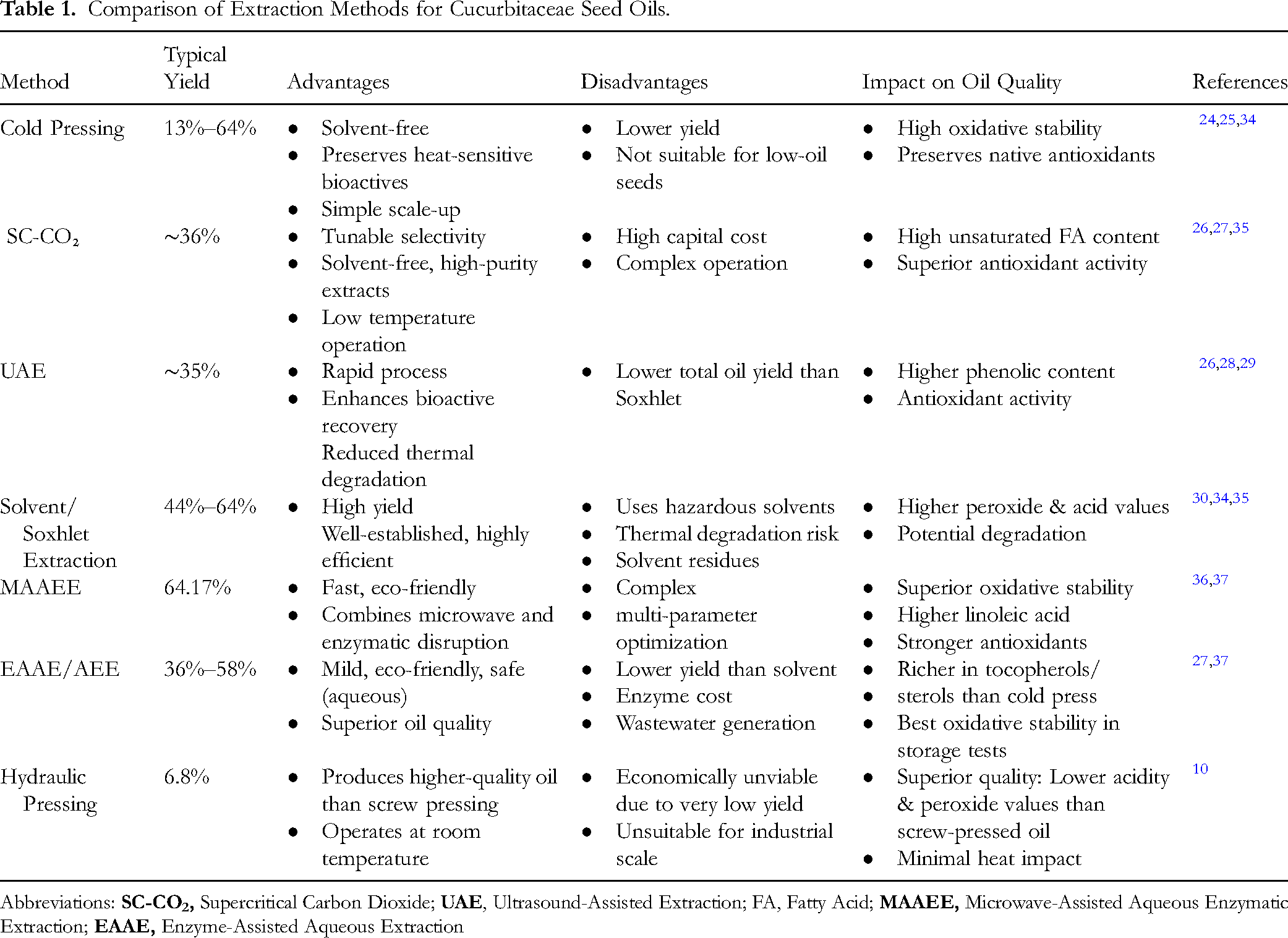
Abbreviations:
Phytochemical Profile of Cucurbitaceae Seed Oils
CSOs represent a rich source of diverse bioactive compounds with significant nutritional and therapeutic effects. Their phytochemical profiles vary considerably across species but generally feature high concentrations of unsaturated fatty acids, tocopherols, phytosterols, and phenolic compounds. 38 Advanced analytical techniques including gas chromatography-mass spectrometry (GC-MS) have revealed complex chemical compositions containing numerous volatile organic compounds primarily consisting of aliphatic aldehydes, alcohols, esters, and ketones, with bitter gourd seed oil exhibiting the most distinctive volatile characteristics. 9
Identification and Quantification of Bioactive Compounds
The characterization of Lagenaria siceraria (bottle gourd) seed oils further exemplifies the consistent physicochemical quality observed across Cucurbitaceae species. Notably, Essien et al 39 reported oil yields of 23.0–29.5%, accompanied by favorable stability indices, including low free fatty acid content (1.8-2.1%) and peroxide values (1.9-2.5 meq O₂/kg), which underscore the oil's robustness against oxidation. Nutritionally, the fatty acid profile is dominated by unsaturated constituents (70.0-72.0%), with linoleic acid (55.2-60.3%) being predominant, followed by oleic, palmitic, and stearic acids. This composition not only supports dietary relevance but also indicates suitability for industrial applications requiring high oxidative stability.
Further reinforcing the nutritional value of bottle gourd, Olaofe and Adeyeye 40 previously documented a crude fat content of 28% in seed flour, with linoleic acid comprising 67.7% of total fatty acids. The notably high n-6/n-3 ratio of 41.1, alongside the substantial caloric contribution from lipids (60.9%), highlights the energy-dense nature of this material and its suitability for functional food formulations. Beyond conventional lipid profiling, recent metabolomic investigations have deepened the understanding of bioactivity in Cucurbitaceae seeds. For instance, Zhang et al 41 identified 370 sary metabolites in bitter gourd (Momordica charantia), including phenolic acids, flavonoids, and triterpenoids, with strong correlations established between specific metabolite classes and antioxidant capacity. These findings support the premise that CSOs represent a promising reservoir of bioactive compounds with nutraceutical and therapeutic applications.
To complement the comparative functional profiles summarized in Tables 2 and 3, Table 4 provides a detailed, compound-specific breakdown of key phytochemicals identified in CSOs using advanced analytical techniques such as Gas Chromatography-Mass Spectrometry (GC-MS) and Liquid Chromatography-Mass Spectrometry (LC-MS). This detailed list of fatty acids, sterols, tocopherols, phenolics, and volatile compounds, along with their reported concentrations and biological implications, offers a precise chemical reference that supports the bioactivities discussed throughout this review.
Phytochemical Composition, Bioactivity, Extraction Characteristics, and Pharmacological Effects of Selected Cucurbitaceae Seed Oils.

Phytochemical Composition, Bioactivity, Extraction Characteristics, and Pharmacological Effects of Selected Cucurbitaceae Seed Oils.
Physical, Organoleptic, and Quality Attributes of Selected Cucurbitaceae Seed Oils.

Phytochemical Constituents of Selected Cucurbitaceae Seed Oils Identified via Advanced Techniques.

Abbreviations:
Comparative Phytochemical and Functional Profiles
Table 2 presents a comprehensive overview of the phytochemical components, bioactivity, extraction characteristics, and pharmacological or therapeutic effects of CSOs. Pumpkin seed oil (Cucurbita pepo) is particularly noteworthy for its exceptional phytosterol content, with cold-pressed oils containing 718.1–897.8 mg/100 g. Notably, Δ7-phytosterols constitute up to 87.6% of the total sterol fraction, with spinasterol and 24β-ethylcholesta-7,22,25-trienol serving as distinctive chemotaxonomic markers.42,43
The selection of extraction method significantly influences both yield and quality parameters. While Soxhlet extraction provides higher yields (64.1% vs 36.3% for cold pressing), it typically results in elevated peroxide and acid values, indicating greater oxidative degradation. In contrast, cold pressing better preserves native antioxidants and oxidative stability.34,45
Nutritionally, these oils are characterized by high concentrations of unsaturated fatty acids, particularly linoleic acid, which ranges from 50.3% to 70.2% across watermelon and melon species.46,47 The bioactive profile is further enhanced by significant antioxidant components. Melon (Cucumis melo) seed oil contains exceptionally high levels of phytosterols (≥6995 μg/g) and γ-tocopherol (≥600 mg/kg), while watermelon seed oil demonstrates substantial phenolic content (89.5 mg GAE/100 g) with potent antioxidant capacity, exhibiting over 80% DPPH radical inhibition.4,45
Interestingly, Cucumeropsis mannii seed oil presents a particularly complex phytochemical profile, characterized by strong radical scavenging activity and a nutritionally favorable mineral composition. 31 Its diverse phenolic compounds include flavonoids (17.8 ± 10.95 g/100 g), 49 along with substantial levels of phenols (30%), tannins (20%), additional flavonoids (18%), terpenoids (15%), glycosides (10%), and alkaloids (5%), with minimal HCN content (2%).2,50 This comprehensive phytochemical profile highlights the significant value of Cucumeropsis mannii seed oil as a source of bioactive compounds.
Physical and Organoleptic Attributes
The quality, stability, and commercial applicability of CSOs are fundamentally determined by their physical and organoleptic properties. These attributes, including color, flavor, and key chemical indices like acid and peroxide value, are directly influenced by the oil's chemical composition, extraction method, and seed origin. A comprehensive overview of these characteristics for major CSOs is presented in Table 3, providing a critical reference for quality control and prospective applications.
Pharmacological Evaluation
The bioactive constituents of CSOs contribute to a range of demonstrated pharmacological effects (Table 2). Pumpkin seed oil has shown efficacy in managing benign prostatic hyperplasia and, when administered via phonophoresis, chronic nonbacterial prostatitis.43,57 Cucurbita pepo seed oil additionally exhibits protective effects against metabolic and neurological disturbances, effectively improving lipid profiles and restoring cerebral enzyme activities in models of tramadol-induced toxicity. 44
African white melon (Cucumeropsis mannii) seed oil demonstrated particularly broad protective capabilities against chemical-induced toxicities through antioxidative and anti-inflammatory mechanisms. Research has documented its ability to ameliorate BPA-induced dyslipidemia and adipokine dysfunction, significantly reducing triglycerides, cholesterol, leptin, and LDL-C while increasing adiponectin and HDL-C levels. 51 The oil's hepatoprotective properties were also significant, reducing markers of oxidative stress (malondialdehyde, ROS) and inflammation (NF-κB, IL-6, IL-1β, TNF-α) while restoring hepatic enzyme levels and histological architecture, effects associated with its high flavonoid content. 49
Recent investigations have further revealed the protective effects of Cucumeropsis mannii seed oil against cyclophosphamide-induced hepatorenal toxicity, normalizing antioxidant enzymes (CAT, SOD), reducing inflammatory mediators (iNOS, IL-1β), and restoring both functional parameters and histological integrity. 50 Importantly, Agu and his colleagues demonstrated the oils efficacy against BPA-induced reproductive toxicity by restoring hormonal balance and sperm quality. 58 Similarly, Ale et al 2 reported its renoprotective effects in nephrotoxicity models, noting improved kidney function and reduced oxidative injury.
The therapeutic benefit of Cucurbitaceae seeds extends beyond their valuable oil to include defatted meals and powders, as supported by in vivo evidence. For example, a 28-day dietary intervention in alloxan-induced diabetic rats demonstrated that whole pumpkin seed powder (15 g) significantly reduced blood glucose levels to 128.33 mg/dL and improved plasma lipid profiles, showcasing potent antihyperglycemic and antihyperlipidemic effects that complement the known benefits of the seed oil. 59 Similarly, bitter gourd seed powder was found to be the most effective fraction of the fruit, markedly lowering blood glucose from 296.20 to 123.10 mg/dL and improving lipid parameters in a dose-dependent manner, outperforming the flesh and peel. 60
These findings support the holistic use of Cucurbitaceae seeds, demonstrating that both the oil and the residual cake have significant therapeutic value for managing metabolic and oxidative stress-related diseases.
Molecular Mechanisms Underlying the Pharmacological Effects
The pharmacological effects of CSOs are linked to their modulation of cellular pathways involved in oxidative stress and inflammation. Bioactive constituents such as phenolic compounds, tocopherols, and unique fatty acids act synergistically to restore redox balance and suppress inflammatory cascades. The CSOs exert their effects by modulating key molecular pathways, including inhibition of NF-κB activation, reduction of pro-inflammatory cytokines (IL-1β, IL-6, TNF-α), suppression of NLRP3 inflammasome, downregulation of AGE/RAGE signaling, and activation of cytoprotective enzymes (Nrf2 and HO-1), ultimately mitigating inflammation and oxidative stress. 15 Antioxidant effects involve induction of endogenous enzymes like superoxide dismutase, catalase, and glutathione peroxidase, in addition to direct free radical scavenging. 61
Core Mechanistic Interplay of NF-κB and Nrf2 Pathways
The therapeutic efficacy of CSOs can be largely attributed to their dual action on two principal regulatory pathways: the pro-inflammatory NF-κB pathway and the cytoprotective Nrf2 pathway. In vitro and in vivo evidence consistently demonstrates that CSOs and their components inhibit the activation of the NF-κB signaling cascade. This inhibition leads to the downstream reduction of key pro-inflammatory cytokines and mediators, including TNF-α, IL-1β, IL-6, and iNOS, thereby mitigating inflammatory tissue damage.2,49,50 Simultaneously, CSOs activate the Nrf2 signaling pathway, which promotes the transcription of antioxidant response element (ARE)-driven genes. This results in the upregulated expression of endogenous antioxidant enzymes such as heme oxygenase-1 (HO-1), catalase (CAT), and superoxide dismutase (SOD), significantly enhancing cellular defense against oxidative insult.15,51 The activation of the Nrf2 pathway promotes cellular antioxidant defenses and tissue repair. 62 This coordinated modulation of NF-κB and Nrf2 pathways supports the observed antioxidant, anti-inflammatory, and tissue-protective effects of CSOs across various models of toxicity and disease.
Specific bioactive components contribute to these mechanisms. Cucurbitacin B, the most abundant cucurbitacin in the Cucurbitaceae family, exhibits antiproliferative and immunomodulatory effects in tumor cells (eg, liver, gastric, and colorectal cancer cells) by modulating JAK/STAT and MAPK signaling pathways. 63 Furthermore, studies on specific oils elucidate detailed mechanisms. The study by Aja et al 51 demonstrates that Cucumeropsis mannii seed oil counters Bisphenol A-induced reproductive toxicity by restoring redox balance and repressing inflammatory signaling. Ale et al 2 reports molecular signatures of reduced fibrosis and inflammation in kidney tissue associated with Cucumeropsis mannii oil treatment, demonstrating its renoprotective mechanism.
These coordinated mechanisms are summarized in Figure 1. Bioactive compounds such as phenolics, fatty acids, tocopherols, and cucurbitacins reduce oxidative stress by scavenging reactive oxygen species (ROS) and activating the Nrf2 antioxidant pathway. Concurrently, they inhibit the NF-κB signaling pathway, leading to decreased production of pro-inflammatory cytokines (IL-1β, IL-6, TNF-α), thereby mitigating inflammation. The combined reduction of oxidative stress and inflammation promotes tissue repair and healing, supporting the pharmacological efficacy of these seed oils.

Schematic representation of molecular and cellular mechanisms from in vitro and in vivo studies of Cucurbitaceae seed oils, summarizing their antioxidative and anti-inflammatory roles through key pathways. It highlights established molecular targets and downstream effects integral to their therapeutic effects.
Biotechnological Advancements in Cucurbitaceae Seed Oil Improvement
The development of high-quality CSOs requires an integrated, multi-stage approach. A systematic biotechnological framework for this multi-stage improvement pipeline is proposed in Figure 2. This integrated model outlines the progression from genetic resource characterization to the release of elite cultivars, supported by a multi-omics and AI-driven platform for predictive breeding.
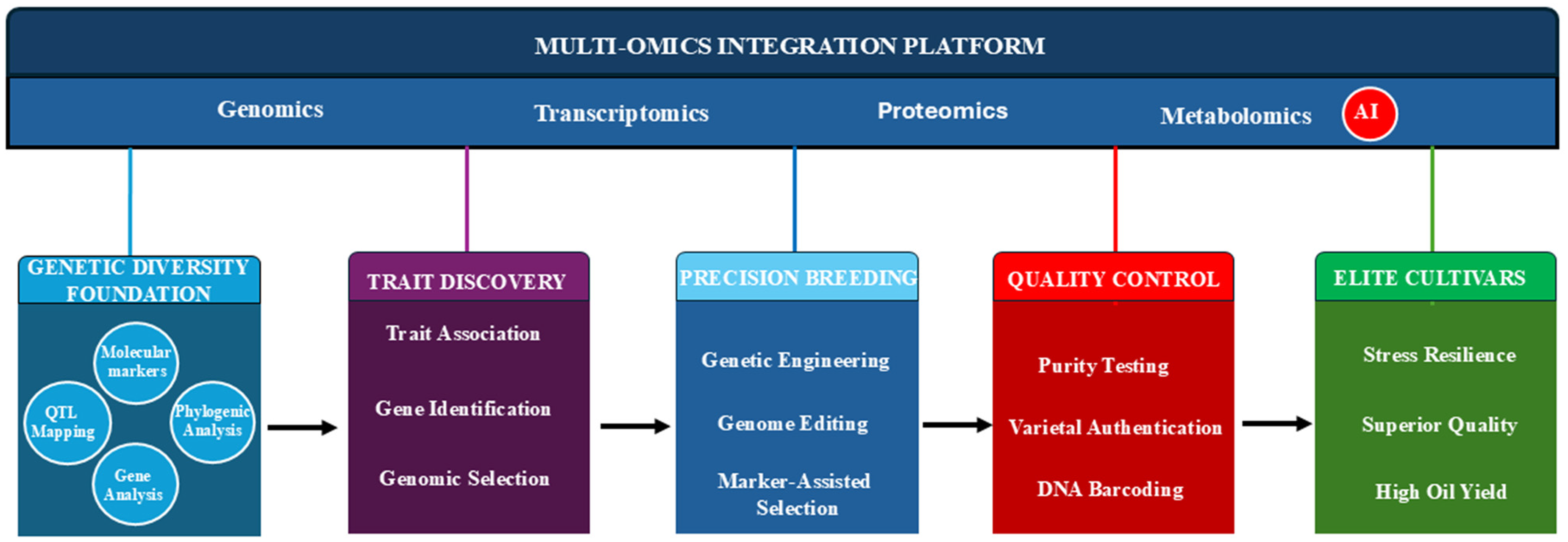
A systematic biotechnological framework for the improvement of CSOs. This integrated pipeline illustrates the multi-stage strategy for developing elite cultivars, from the foundational characterization of genetic diversity to the final release of improved varieties. The process flows through five core stages: (1) Genetic Diversity Foundation, utilizing phylogenetic analysis and molecular markers; (2) Trait Discovery, enabled by genomic selection; (3) Precision Breeding, applying techniques like marker-assisted selection and genome editing; (4) Quality Control, ensuring varietal authenticity and purity through DNA barcoding and profiling; and (5) the output of Elite Cultivars with optimized oil profiles, yield, and stress resilience. The entire pipeline is supported by a Multi-Omics Integration Platform (Genomics, Transcriptomics, Proteomics, Metabolomics) augmented with AI, which enables predictive breeding and data-driven trait discovery across all stages.
Harnessing Genetic Diversity for Trait Enhancement
The Cucurbitaceae family exhibits extensive genetic diversity, which critically influences seed oil yield and composition. 64 Molecular phylogenetic studies using chloroplast genomes and other markers have clarified evolutionary relationships and taxonomy, confirming distinct genera such as Citrullus, Cucumis, and Cucurbita, with C. ficifolia identified as sister to other Cucurbita species.65,66 Notably, analyses of C. ficifolia revealed 21 distinct haplotypes, highlighting substantial intraspecific diversity. 66 Furthermore, Pleistocene-era climatic shifts and geographical isolation are recognized as key drivers of speciation within the genus. 67
Cucurbita species exhibit remarkable genetic diversity, particularly in fruit characteristics. Cucurbita pepo demonstrates the highest level of polymorphism among Cucurbita species, especially in fruit peel color diversity. Recent genetic studies have identified specific genes regulating fruit peel color, with the Cp4.1LG05g02070 gene emerging as the primary candidate responsible for regulating green fruit peel color in C. pepo. 68 This genetic understanding provides valuable tools for breeding programs. The genetic loci controlling fruit morphology and quality often have pleiotropic effects or are linked to genes influencing seed composition. 69 This is evident in cucurbits, where a quantitative trait locus (QTL) for fruit and seed traits is frequently co-located, 70 and where significant variation in seed oil profiles is observed across cultivars defined by distinct fruit characteristics. 71 Therefore, by selecting for desirable fruit traits linked to specific genetic markers, breeders can indirectly select for superior seed quality and oil profiles, as these characteristics are often developed in tandem. 72
At the molecular level, simple sequence repeat (SSR) markers demonstrate high variability in species such as C. pepo and C. melo, with this diversity showing strong correlation to oil traits valuable for breeding programs. 73 Genomic studies further reveal that ancient whole-genome duplication events expanded gene families, thereby facilitating adaptive evolution in oil-related traits.74,75 Collectively, these insights provide a robust foundation for strategic conservation, germplasm management, and targeted breeding approaches for oil optimization.
Biotechnology-Driven Yield and Quality Enhancement
Modern biotechnological tools are revolutionizing approaches to improve CSO yield and quality. Specifically, marker-assisted selection (MAS) and genomic selection (GS) are accelerating the development of elite cultivars through efficient identification and introgression of genetic loci associated with high oil content and desirable fatty acid profiles.73,74 The availability of sequenced genomes has proven particularly pivotal for trait discovery and marker deployment.73,75 Recent pangenomic research strategies for cucurbits aim to capture the full spectrum of genetic diversity, providing a superior resource for identifying genes that control complex traits such as oil composition and stress resilience. 17
Concurrently, genetic engineering approaches, including the overexpression of lipid biosynthesis genes, have successfully enhanced beneficial fatty acids such as linoleic and oleic acid. 18 Moreover, CRISPR (Clustered Regularly Interspaced Short Palindromic Repeats)/Cas9-mediated genome editing now enables precise modification of genes regulating oil accumulation, stress tolerance, and plant architecture, thereby facilitating the development of improved non-transgenic varieties.76,77 Importantly, these biotechnological applications also contribute substantially to developing stress-resilient crops, which ensures more stable and sustainable oil production under challenging environmental conditions.74,77
Recent reviews have synthesized the genetic insights and molecular mechanisms that underpin oil content, highlighting how modern breeding approaches, including genomic selection and genome editing,are being leveraged specifically for oilseed crop improvement. 78 Looking forward, the integration of multi-omics data,encompassing genomics, proteomics, and metabolomics,with artificial intelligence (AI) approaches promises to unlock further advances in predictive breeding.18,79
Molecular Markers for Quality Control and Authentication
Molecular markers have become indispensable tools for ensuring the quality control and authentication of CSOs. The globalization of seed trade and the rise of transgenic varieties have intensified the need for precise seed quality testing, where genetic purity and seed health are paramount. 79 This need is further emphasized by the evolving regulatory landscape, where the European Union now recognizes Cucurbita pepo seed preparations under traditional herbal medicinal product regulations. 80
Among molecular markers, simple sequence repeats (SSRs) stand out due to their genome-wide distribution, high reproducibility, multi-allelic nature, and co-dominant inheritance, making them ideal for establishing varietal identity and assessing seed purity.79,81 For example, a recent study developed a core set of SSR markers capable of distinguishing over 98% of 306 cultivated Cucurbita varieties in China, providing a powerful tool for genetic identification and purity testing. 82 Advancements in next-generation sequencing have popularized single nucleotide polymorphism (SNP) markers, which, alongside SSRs, enable rapid and accurate genetic differentiation. Notably, Fluidigm SNP genotyping has been successfully applied to distinguish commercial F1 hybrid cultivars in squash (Cucurbita moschata), ensuring cultivar purity and detecting contamination due to outcrossing. 83 Furthermore, the development of SNP markers sets for constructing unique DNA fingerprints provides a precise method for varietal authentication. This approach has been successfully validated for cultivar identification in bottle gourd (Lagenaria siceraria), where a specific set of 22 SNPs was established for genetic fingerprinting. 84 This high-resolution genetic capability is fundamental for supporting variety registration, germplasm preservation, and intellectual property protection.
The integration of molecular authentication techniques into pharmacopoeial standards represents a significant advancement in ensuring product authenticity and quality in global markets. This trend towards more sophisticated, DNA-based quality control is essential for ensuring product authenticity, safety, and efficacy, as demonstrated by the successful barcoding of bitter melon (Momordica charantia) (Voucher: FPSCU SS-124) using ITS2 (LC461945), matK (LC461946), rbcL (LC461947), and trnH-psbA (LC46194) markers. 85
Molecular assays also play a critical role in seed health testing. Methods such as PCR (including nested, multiplex, and real-time PCR), loop-mediated isothermal amplification (LAMP), and DNA microarrays provide sensitive, rapid detection of seed-borne pathogens, outperforming traditional assays. 79 These molecular tools, combined with thorough multi-laboratory validation, establish robust standards for seed purity and health testing, essential for regulatory compliance and industry quality assurance.
Industrial Prospects, Safety, and Standardization Challenges
The commercialization of CSOs requires navigating a complex landscape of industrial applications, safety profiles, and quality control. The strategic pathway for commercialization, highlighting the essential interplay between valorization, safety, and standardization, is illustrated in Figure 3. This framework underscores that successful market entry depends on simultaneously addressing these three interconnected domains.

Strategic framework for commercialization of CSOs. The schematic illustrates the integrated pathway from agricultural by-products to market-ready products, emphasizing three critical domains that require simultaneous development: (1) Industrial Valorization through food, cosmetic, and pharmaceutical applications; (2) Safety Assessment addressing allergenicity and processing considerations; and (3) Quality Standardization managing genetic variation and adulteration risks. Economic viability and authentication protocols serve as essential cross-cutting systems that enable successful market entry.
Industrial Applications and Economic Viability of CSOs
CSOs have gained significant industrial interest due to their unique phytochemical profiles and versatile applications. In the food industry, these oils serve as valuable functional ingredients and cooking oils. The organoleptic properties detailed in Table 3, such as the mild, pleasant, and slightly grassy flavor of watermelon seed oil and the fresh, characteristic scent of cucumber seed oil, are key drivers of consumer preference. This is evidenced by the particularly high consumer acceptability scores for Lagenaria siceraria (bottle gourd) and Cucumis sativus (cucumber) seed oils, which are comparable to conventional soybean oil. 86 The desirable nutty and roasted flavors of oils like pumpkin seed oil further enhance their market potential in the health-conscious and gourmet food sectors. Beyond culinary applications, Cucumeropsis mannii seed oil has emerged as a promising biodiesel feedstock, characterized by high oil content (40.8%) and favorable fuel properties. 87
The cosmetic industry has embraced CSOs for their moisturizing and antioxidant properties, aligning with the growing demand for natural ‘green beauty’ products. 52 The safety of these applications is supported by the Cosmetic Ingredient Review (CIR) Expert Panel, which has confirmed the safety of Cucumis sativus seed oil in cosmetic formulation. 88 In the pharmaceutical sector, CSOs demonstrate remarkable therapeutic potential, with Cucumis sativus seed oil showing potent anticancer activity against prostate cancer in both in vitro and in vivo studies. 3
The economic feasibility of CSO production is enhanced by several factors. The valorization of seeds as agricultural by-products within circular bio-economy frameworks significantly improves and enhances their commercial value. 89 This is particularly relevant for egusi (melon) seed, which has substantial global production of 1.0 million tonnes, predominantly in Africa. 90 Optimization of extraction processes, such as achieving 41.5% oil yield from Cucurbita maxima seeds at low moisture content, 91 along with advanced extraction technologies, 52 further supports large-scale production viability.
Safety Profile and Processing Considerations
The safety profile of CSOs is well-documented, with preclinical assessments confirming the safety of Cucumis sativus seed oil for topical applications in cosmetics. 88 However, allergenicity remains a significant consideration, as computational studies have identified putative allergenic proteins in various pumpkin species, 92 and clinical evidence exists for cross-reactivity between cucumber, watermelon, and other foods. 88
However, processing methods play a crucial role in enhancing oil quality and safety. Advanced techniques like ultrasound-assisted extraction and encapsulation help preserve bioactive compounds and ensure formulation stability,6,8 while conventional methods such as roasting have been shown to improve oxidative stability and sensory properties. 93
Standardization Challenges
Standardization of CSOs faces multiple challenges due to inherent variations in phytochemical composition. Significant genetic diversity results in substantial variation in oil content, ranging from 21.04% in wild cucumber to over 55% in cultivated varieties,55,94 while environmental factors and climate change further impact oil quality and production yields.95,96 To ensure authenticity and quality within regulatory frameworks, the implementation of robust, multi-parameter authentication protocols is essential. The unique Δ7-phytosterol profile (eg, spinasterol and 24β-ethylcholesta-7,22,25-trienol) of oils like pumpkin seed oil serves as a reliable chemical fingerprint.42,43 This can be integrated into pharmacopoeial monographs as a purity test, like sterol profiles used for olive oil, to detect adulteration with cheaper vegetable oils. 97
For raw material authentication, DNA barcoding techniques using loci such as ITS2, matK, and rbcL,already employed in herbal pharmacopoeias for species identification, 85 can be adopted to verify the botanical identity of seeds prior to processing. A practical quality control framework would combine: (1) Chemical Standardization (HPLC/GC analysis of Δ7-sterol markers and fatty acid ratios),9,43 (2) Molecular Authentication (DNA barcoding for species verification using loci such as ITS2, matK, and rbcL), 85 and (3) Bioactivity Assessment (antioxidant capacity assays). 38 Establishing such species-specific integrated standards is imperative to guarantee batch-to-batch consistency, prevent adulteration, meet regulatory requirements, and foster consumer confidence in the global marketplace.
Conclusion and Future Research Directions
Conclusion
This review synthesizes the evolving body of research that transitions CSOs from traditional use to scientifically substantiated candidates for nutraceutical and therapeutic applications. The documented bioactivities, including antioxidant, anti-inflammatory, antimicrobial, and regenerative effects, are robustly correlated to a unique phytochemical signature dominated by unsaturated fatty acids,
Future Research Directions
Despite considerable progress, several critical research priorities demand attention. A fundamental limitation persists in the scarcity of long-term, randomized controlled human clinical trials necessary to confirm therapeutic efficacy, establish optimal dosing regimens, and verify long-term safety. In parallel, a comprehensive economic analysis of scaling advanced extraction technologies, such as SC-CO₂ and encapsulation, for commercial implementation is required. Future investigations should also prioritize elucidating the synergistic ‘entourage effect’ of the complete phytochemical matrix in CSOs, shifting the focus from isolated compounds to a holistic understanding of their integrated bioactivity. Furthermore, the development of standardized, species-specific authentication protocols through concerted effort is imperative to guarantee product quality, prevent adulteration, and foster consumer confidence in the global marketplace. Realizing the full capabilities of CSOs requires a dedicated interdisciplinary strategy. The integration of pharmacology, agronomy, bioengineering, and regulatory science is fundamental to creating sustainable production pipelines, optimized formulations, and targeted delivery systems. Successfully navigating these challenges via strategic investigation and coordinated innovation is paramount for advancing CSOs from investigational candidates to established therapeutic and nutraceutical products.
Footnotes
Acknowledgment
None

Ethical Approval
Not applicable
Statement of Informed Consent
Not applicable
Funding
The authors received no financial support for the research, authorship, and/or publication of this article.
Declaration of Conflicting Interests
The authors declared no potential conflicts of interest with respect to the research, authorship, and/or publication of this article.
Data Availability
Data are available upon reasonable request from Patrick Maduabuch Aja (aja.patrick@kiu.ac.ug) and Boniface Anthony Ale (alebonifaceanthony@gmail.com).
Clinical Trial Number
Not applicable
Statement of Human and Animal Rights
Not applicable