



Abstract
Ginseng (Panax spp., Araliaceae) is one of the most widely consumed and researched herbal medicines worldwide. The main commercially used Panax species include Asian ginseng (P. ginseng), American ginseng (P. quinquefolius), and tienchi ginseng, also known as sanchi ginseng (P. notoginseng). The high demand, morphological similarities, and common name confusion contribute to both unintentional and economically motivated adulteration. Ginseng root and ginseng root extract adulteration occurs in many ways, such as the marketing of other plant species as ginseng, substitution with lower-cost species within the Panax genus, adulteration with undeclared aerial parts of ginseng, adding high amounts of undeclared excipients or fillers, and admixing previously extracted waste plant material to unextracted root materials.
This review study aims to compile data on ginseng adulteration from studies assessing the authenticity of commercial samples across global markets, based on published results from genetic, chromatographic, and spectroscopic analyses. It also examines the main adulterants, variations in adulteration rates according to analytical methods, geographical regions, product types, regulatory status, points of sale, as well as trends observed over five-year periods. Forty-eight peer-reviewed publications reporting the authentication of a total of 911 ginseng commercial products were included. Findings of forty studies show that 211 of 853 commercial ginseng products were found to have authenticity problems (24.7%), mainly due to the substitution of the declared species with powdered roots or extracts from lower cost plants. Eight studies provided evidence for the presence of chemical adulterants, including conventional drugs used for erectile dysfunction or to lower blood sugar, in 28 of 58 ginseng products (48.3%). Results showed regional differences in mislabeling and adulteration rates and highlight the importance of educational efforts on the topic, fit-for-purpose testing methods, and adequate regulatory enforcement to ensure product authenticity.
Keywords
Introduction
Major Ginseng Species and Their Origins
Ginseng, a name referring to several species within the Panax genus, is a shade-loving perennial herb characterized by its fleshy roots and green, oval-shaped leaves. The Panax genus (Araliaceae) includes 16 species, with Panax ginseng C.A. Meyer, P. quinquefolius L., and P. notoginseng (Burk.) F.H. Chen being the most commonly cultivated and used due to their well-documented and widely promoted health benefits. 1
Panax ginseng (Asian ginseng) is native to the mountain regions of eastern Asia and has been cultivated in Korea, China, and Japan for centuries. Panax quinquefolius (American ginseng) is native to Canada and the eastern United States, but it's also cultivated in China.2,3 Panax notoginseng (tienchi ginseng) is native to Vietnam 4 and it's cultivated only in a narrow mountainous habitat in China. 5 Today, most ginseng materials are derived from cultivated sources or controlled, sustainable wild harvests, with uncontrolled wild collection playing a minor role. 6
Medicinal Applications, Demand, and Products
The roots of P. ginseng have been a cornerstone in traditional medicine systems of Eastern Asia for over two thousand years. In Traditional Chinese Medicine (TCM), ginseng is used as a tonic to restore balance between yin and yang—the opposing but complementary forces believed to govern health and vitality. Its primary indications include physical exhaustion, general weakness, chronic fatigue, irritability, insomnia, and sexual problems. Rather than acting as a specific curative agent, ginseng is used to support overall vitality and enhance mental and physical performance. It is classified as an adaptogen, with benefits best achieved when used for three months or longer.2,7,8 American ginseng has been a key part of North American herbal traditions for centuries, and Native American tribes across the plant's growing range used it extensively. 9 Tienchi ginseng is mainly used to influence blood viscosity and is applied both internally and externally to help dissolve blood clots and stop bleeding. 9 Ginseng products are distributed in over 190 countries, and the worldwide ginseng market is predicted to possibly reach US $17.9 billion by 2030. 5 While market demand continues to grow, retail sales of ginseng dietary supplements in the United States increased by 12.6%, reaching $8 million in mainstream retail channels in 2023 10 but were down 9% to $7.4 million in 2024. 11
Commercial Asian ginseng materials are available in various forms in the global market: (i) white ginseng: the roots harvested at 4-7 years, washed, peeled, and dried, and (ii) red ginseng: steamed fresh roots, translucent and cartilaginous due to post-harvest heat treatment.2,6,7 Additionally, there are various forms and qualities of Asian ginseng, such as wild, cultivated, woods-grown, processed red without sugar, and processed red with sugar, etc. 9 The cut root slices (discs) and dry powder extracts are used to prepare ginseng tea. On the other hand, ginseng root is a component of numerous teas, herbal medicinal preparations, and Chinese patent medicines (CPM) dispensed by practitioners of TCM. Other dosage forms include pills*, capsules, tablets, extracts, along with tonic drinks, wines, and lozenges.2,12–17 (* In TCM, pills are a common pharmaceutical form used for delivering herbal medicines, including ginseng. Pills are small, round preparations made by mixing powdered herbs with a binding agent, traditionally honey or water, and forming them into spherical shapes.)
Phytochemistry and Adulteration
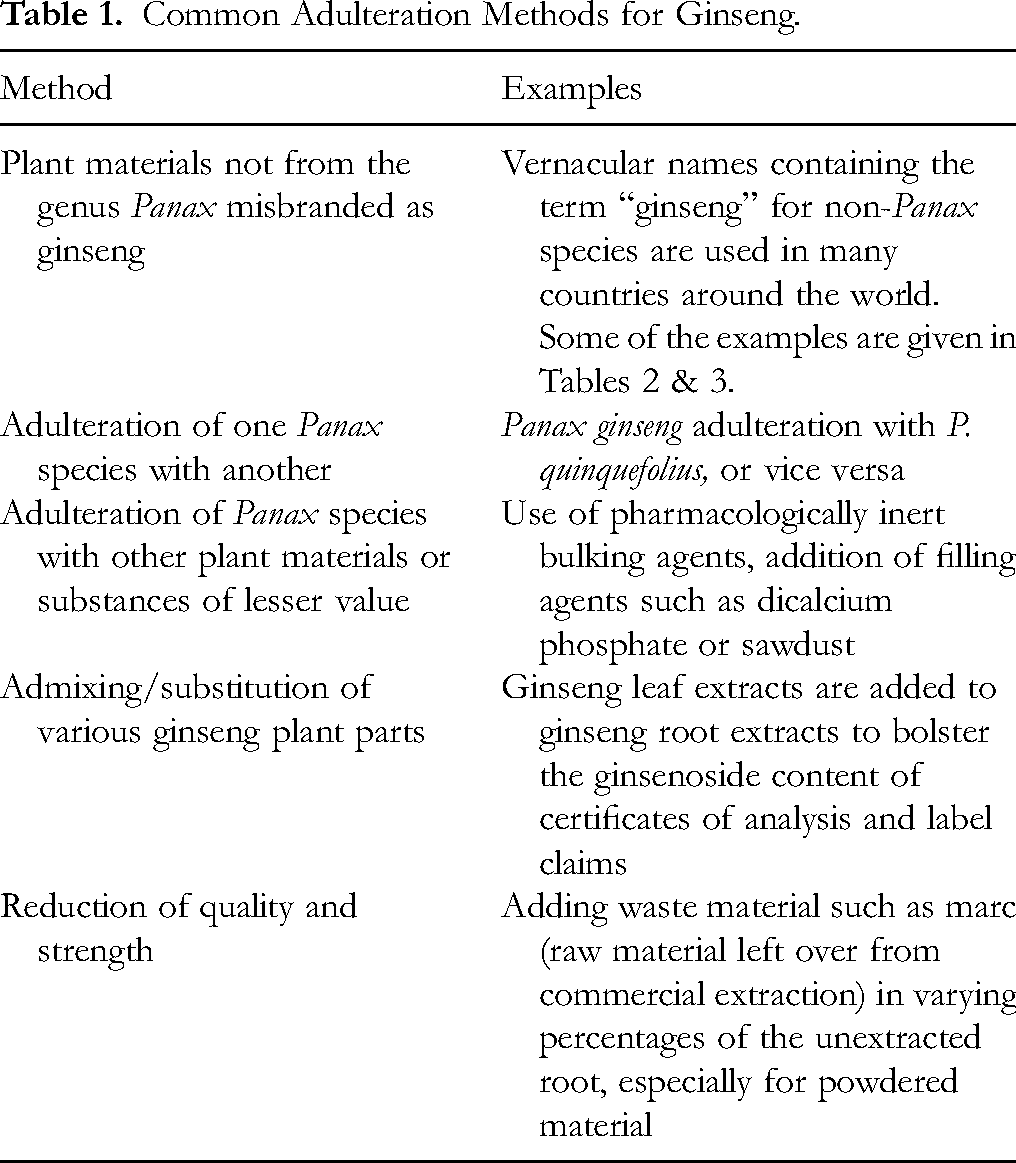
Asian ginseng roots contain a wide range of constituents, including alkaloids, amino acids, carbohydrates, fatty acids, peptidoglycans, phenolic compounds, polyacetylenes, polysaccharides, saponins, sesquiterpenes, minerals, and vitamins.2,18 However, the primary biochemical and pharmacological effects are mainly attributed to dammarane-type triterpene saponins known as ginsenosides. The content of these ginsenosides in the root and root-hair increases with the age of P. ginseng from one to five years. 12 Analyses of Asian ginseng leaves and roots revealed ten major ginsenosides (Rb1, Rb2, Rb3, Rc, Rd, Re, Rf, Rg1, Rg2, and Rh1) with leaves typically showing higher concentrations than roots, and a different quantitative profile of these major ginsenosides. Ginsenoside levels in leaves peak during the first and second years of growth, while roots reach maximum levels around the fifth year. 19 Due to the higher market value of five and six year-old roots (being 30-60% more than four-year-old ones), adulteration with leaves or younger roots is a common practice. 18 Table 1 summarizes the common methods of ginseng adulteration, including the substitution with other plant materials or lower-cost Panax species, the use of undeclared aerial parts, excessive amounts of fillers or excipients, mixing extracted or waste root material with unextracted roots, and blending various ginseng parts other than roots or roots of similar-looking species with authentic ginseng products.3,6,7,9,20–22
The earliest record of ginseng trade from China to Europe is attributed to Ibn Hazm of Cordoba, who reportedly brought ginseng to Spain around 850 CE. Centuries later, in 1294, Marco Polo is said to have introduced ginseng from the Far East. During the 16th and 17th centuries, ginseng appeared in various books on the history of China, and the translation of these works into multiple European languages helped raise awareness of the plant across the continent. As ginseng's popularity grew, so did the demand, leading to overharvesting and habitat loss that significantly reduced its natural range in China by the early eighteenth century. Although ginseng cultivation expanded in China, Korea, and Japan, limited supply led to soaring prices and consequently to economically motivated adulteration. After 1720, Canada started exporting American ginseng to China, which led to the need to differentiate between Asian and American ginseng. By the 1740s, wild Asian ginseng roots were increasingly mixed with cultivated ones, considered adulterants at the time, a practice that became more widespread in the early nineteenth century. One of the most hazardous forms of past adulteration methods involved opening holes in the roots and filling them with lead to increase their weight. Adulteration persisted due to both financial incentives and widespread confusion between Asian ginseng and other species, both inside and outside the family Araliaceae. 7
Main Adulterants of Ginseng
In TCM, the term “seng (參)” refers to fleshy roots used to make tonics. As a result, many plants with roots resembling those of ginseng are also referred to as “seng” or “shen,” leading to confusion and mislabeling in the herbal trade. One example is Codonopsis pilosula (codonopsis or dang shen, Campanulaceae), which is sometimes called “poor man's ginseng.”9,23 Additionally, various unrelated species are referred to as “ginseng” in different countries. Common examples include Siberian ginseng (Eleutherococcus senticosus, Araliaceae), Indian ginseng (Withania somnifera, Solanaceae), and Brazilian ginseng (Pfaffia glomerata and P. paniculata, Amaranthaceae).7,24,25 A notable case of product mislabeling involving ginseng occurred in the United States in the 1970s. Commercial products labeled as “wild red desert ginseng” were found to contain canaigre (Rumex hymenosepalus) roots, a species in the Polygonaceae family, unrelated to Panax species or the Araliaceae family.26,27 The Latin and common names of plants improperly marketed as ginseng are listed in Table 2.7,9,24–28
Plants Improperly Sold as “Ginseng”.

Despite the shared common name ginseng, the three major Panax species differ significantly in chemical composition and pharmacological activity. While these species have overlapping traditional uses, their unique ginsenoside profiles present distinct pharmacological properties.1,2 Differentiating roots of P. ginseng from P. quinquefolius and P. notoginseng through morphological characteristics and microscopic methods is challenging but various spectroscopic, chromatographic, and genetic methods have been successfully used to distinguish Panax species and their adulterants.
Ichim and de Boer published a review of ginseng adulteration in 2021, which evaluated 507 products from studies up to 2020. 6 Our study includes a much larger set of 911 samples through September 2025, expanding the dataset both temporally and geographically. In addition, this study aims to determine the percentage of adulteration in ginseng products in the global market, to compare the adulteration rates of the commercial products according to analytical methods, geographical regions, product types, regulatory status, points of sale, as well as trends observed over five-year periods. By providing a comprehensive overview, this review seeks to inform researchers, regulators, and industry stakeholders about the current state of ginseng product authenticity and the challenges in ensuring product quality.
Materials and Methods
Search Strategy and Study Selection
In this review, Google Scholar, PubMed, and ScienceDirect were used to identify studies investigating adulteration in commercial ginseng products, including whole, sliced, or powdered roots, and finished “ginseng” dietary supplements. The literature search was not restricted by a starting date and included all relevant publications up to September 2025 using the Boolean operators: (ginseng OR Panax) AND (authentication OR adulteration OR contamination OR substitution OR mislabeling); (Panax ginseng OR Asian ginseng) AND (adulteration); (Panax quinquefolius OR American ginseng) AND (adulteration); (Panax notoginseng OR tienchi ginseng) AND (adulteration); (ginseng OR Panax) AND (adulteration) AND (drug substance); (ginseng or Panax) AND (adulteration) AND (sildenafil OR tadalafil OR caffeine OR tolbutamide). In addition, the references of the retrieved publications were examined to find further relevant papers. The articles were assessed for eligibility according to the following criteria: (1) Full-text articles, reports, theses, and posters investigating the authentication of commercial products, (2) Commercial product, including whole, sliced, or powdered roots, herbal tea packs, tea granules, extracts, pills, and dietary supplements in various pharmaceutical forms (eg, capsules, tablets), (3) Any authentication method was accepted, including genetic, chromatographic, spectroscopic, or other validated techniques, (4) Publications written in English, German, French, or Turkish are included. Exclusion criteria: (1) Duplicate publications, (2) Studies that did not report data directly relevant to the authentication of commercial raw materials or herbal products, (3) Publications written in other languages, such as Chinese or Korean, which could not be reliably assessed by the authors.
Additional Information on the Products and Analytical Methods Included
The number of adulterated samples was based on the study authors’ assessment and, in some cases, by the authors of this review. The extent of adulteration is calculated as the total number of adulterated samples in relation to the total number of samples analyzed.
The investigated commercial products were obtained through different channels, such as pharmacies, grocery stores, mass market retailers, health-food stores, markets, online retailers, or directly from the producer companies in various countries. When information was provided, herbal products were grouped as “powder/tea” or “extracts”. The “powder/tea” category includes products in tea bag form, powdered roots, and whole roots. The methods used for the investigation of adulteration were divided into genetic and chemical methods. Chemical methods of analysis included thin-layer and high-performance thin layer chromatography (TLC, HPTLC), high-performance and ultrahigh-performance liquid chromatography (HPLC, UHPLC) methods with various detectors such as mass spectrometers (MS) and UV detectors, and spectroscopic (IR, NMR) methods.
Additionally, the prevalence of adulteration with undisclosed active pharmaceutical ingredients was estimated based on eight studies specifically targeting such adulterants in commercial ginseng products.
Results of the Adulteration Studies on Commercial Ginseng Products
In total, we identified 48 peer-reviewed publications reporting the authentication of 911 commercial herbal products labeled to contain ginseng.
Authentication of the botanical ingredients was reported for 853 products in 40 studies, and their results are included in Table 3 and Figure 1. Adulteration was analyzed by (I) geographic region, (II) product type, (III) regulatory status, (IV) point of sale, and (V) analytical method.

Adulteration percentages with standard error bars according to geographic region (I), product type (II), regulatory status (III), point of sale (IV), and analytical methods (V). Error bars represent the standard error of the proportion (SE = √[p(1–p)/n], where p is the proportion of adulterated samples and n is the number of samples in each subgroup). Sample sizes in some subgroups (eg, ANZ, n=4; SA, n=30) are small, and the corresponding error bars should be interpreted with caution. Key: ANZ: Australia + New Zealand, NA: North America, SA: South America, Ad: adulterated.
Summary of Investigations into the Authenticity of Commercial Ginseng Bulk Ingredients and Finished Dietary Supplements.

Key: Ad.: Adulteration, Chem: Chemical, Gen: Genetic, -: No information, NA: North America, SA: South America, ANZ: Australia and New Zealand. The high number of papers lacking information about the sample composition, purchase location, or sample origin is one of the limitations of this review.
I. Geographic Region
Of the samples for which the country in which the sample was purchased was indicated (n = 771), 569 were from Asia (China, Hong Kong, Korea), 113 were from North America (United States, Canada), 30 were from South America (Brazil), 55 were from Europe, and 4 were from Australia and New Zealand. The adulteration percentages for the continents are shown in the Group I section of Figure 1. The highest adulteration percentage was detected in South America (100%) while all the samples (n = 30) were collected from Brazil. 24 The reason for the high adulteration rate in South America is that in the only study retrieved, all the 30 products were found to contain so-called Brazilian ginseng (Pfaffia glomerata, P. paniculata, Amaranthaceae) instead of Asian ginseng. While the highest number of products were purchased from Asia, the adulteration percentage in Asia (20.7%) was found to be lower than the overall average adulteration rate of 24.7%.
II. Product Type
The tested commercial ginseng products included 65 extracts and 453 products containing whole or powdered root. Product types were not mentioned for 335 products; thus, they are indicated as unknown. The percentage of adulterated ingredients sold in whole and powder form (23.2%) was similar to that of the finished products sold as extracts (23.1%) (Group II of Figure 1).
III. Regulatory Status
Among the 853 products, 100 were mentioned to be sold as dietary supplements in different types of formulations such as capsules, softgels, tablets, and 159 products were TCM or CPM, mostly formulated as pills. The regulatory status of 594 products is missing and they are mentioned as unknown in Figure 1 (Group III). The adulteration percentage for dietary supplements (43.0%) was found to be higher than that of traditional herbal medicinal products (TCMs and CPMs) (28.3%).
IV. Point of Sale
The lowest adulteration rate was found in samples for products that were directly purchased from companies (n = 37, Adulteration %: 13.5%) while the adulteration rate for products obtained from pharmacies, health food stores, and food markets (n = 452, Adulteration %: 27.7%) was the highest. The adulteration rate of products obtained from online retailers (n = 195, Adulteration %: 23.6%) was similar to the one of the group of products for which information about the purchase source was not provided (n = 169, Adulteration %: 20.7%) (Group IV, Figure 1).
V. Analytical Methods
The analytical methods used across the 40 publications which examined adulteration with other plant materials are provided in Figure 2. Researchers used only genetic methods in 22 studies. DNA could not be isolated from 26 of the 576 commercial samples submitted to genetic testing.5,24,33,52 These 26 samples were not classified as adulterated, as highly processed herbal materials often do not yield extractable DNA. 59 Therefore, they were excluded from the tables and total count. Thirteen studies used only chemical methods while the remaining five studies used a combination of genetic and chemical methods. Additionally, eight studies investigated the presence of chemical adulterants in 57 ginseng products and these studies are summarized in an individual table. The mean adulteration rate using chemical methods was 17.0% (35/205) while it was 24.9% (137/550) for genetic methods.

The distribution of laboratory analytical methods used to detect botanical adulteration.
The studies that used a combination of these methods found higher adulteration rates with a mean adulteration percentage of 39.8% (39/98) (Group V, Figure 1).
Trends Observed in Five-Year Periods
To evaluate changes in the adulteration rate of ginseng products in the global market over time, we grouped the studies by five-year publication intervals (Figure 3). The number of tested products has increased continuously since 2000, reflecting the ongoing interest in researching the quality and authenticity of ginseng-containing products. Although only publications published prior to September 2025 were included in the study, the number of tested samples (n = 344) reported in the 2021-2025 period already exceeds all previous five-year periods. The adulteration rate for the 2021-2025 period was 22.1%, which is close to the mean adulteration rate (24.7%) calculated in this study. This rate is higher than that reported in the previous interval (2016-2020; 13.7%), while the highest adulteration rate was observed in the 2006-2010 period (49.1%). Conversely, the lowest adulteration rate (4.3%) was reported in 2000-2005, but this low rate is likely influenced by the limited number of studies, more limited scope of the investigations, analytical test methods, and low number of samples analyzed during that period. While there is no consistent trend in adulteration percentages across the timeline, the findings highlight that adulteration remains a persistent issue.

Changes in adulteration percentages of commercial ginseng products over time.
Main Adulterants Detected
The main adulterants found in ginseng products were the aerial parts 3 or roots of other Panax species, particularly P. ginseng, P. quinquefolius, and P. notoginseng, substituted for one another. These substitutions may be intentional or unintentional, driven by cost differences, regional availability, or misidentification. In rarer cases, roots of unrelated plant species were found mislabeled as ginseng. While the roots of Platycodon grandiflorus, Physochlaina infundibularis, and Phytolacca acinosa were evaluated as the adulterants in commercial ginseng products by NIR, 35 in most of the studies, the adulterants were determined using genetic methods, in which case adulteration with other plant parts cannot be evaluated. Table 4 summarizes the primary adulterants of commercially used Panax species detected in the reviewed studies. Although other Panax species are also commonly used as adulterants, they are discussed in detail in the text; therefore they are not included in the table. Fillers such as members of the grass family (Poaceae), including rice (Oryza spp.), and other undeclared plant species (Cicer spp., Cucurbita pepo, Melochia corchorifolia, Moringa spp., Persea americana, Trigonella foenum-graecum, and Withania frutescens) were identified in ginseng products by DNA barcoding, but these results are not supported by Multiplex PCR results; thus, these results are not included in the table. 5
The Primary Adulterants (Excluding Panax species) of Commercially Used Panax Species Detected in Reviewed Studies.

Adulteration with Undisclosed Active Pharmaceutical Ingredients
Eight studies focused on the adulteration of ginseng products with undisclosed active pharmaceutical ingredients, including testosterone, tadalafil, sildenafil, tolbutamide, glimepiride, and metformin. These substances, commonly used to treat conditions such as erectile dysfunction and diabetes, were not listed on product labels, and, although they may be used as prescription medications when proper dosing is followed, their undisclosed presence in consumer products labeled as dietary or food supplements may pose serious health risks to consumers. Among the 58 analyzed samples, 28 (48.3%) were found to contain at least one of these pharmaceutical adulterants. Eighteen of the adulterated products originated from China, four from Bangladesh, and one each from England, Malaysia, Romania, Spain, and Sweden, while the origins of two products were unknown. Table 5 provides a detailed overview of these investigations, listing the specific compounds detected and the corresponding product details.
Summary of Investigations on the Active Pharmaceutical Ingredient Adulterants Detected in Commercial Ginseng Products.

Key: DS: Dietary supplement.
Interpretation, Discussion, and Limitations of the Study
Botanical ingredients are widely used in teas, dietary or food supplements, phytomedicines, functional foods, and cosmetics. 8 Among these, ginseng (Panax spp.) is one of the most popular and commercially valuable herbal ingredients, used globally for its adaptogenic and tonic properties. Products containing ginseng are consumed by a broad range of users and are also recommended by health professionals in many countries. Although standards and quality requirements for Asian, American, and tienchi ginseng are included in various pharmacopeial monographs,68–81 there are still ongoing problems in the accurate identification of ginseng raw materials, extracts, and their products. Numerous studies have reported cases of adulteration, often economically motivated, involving the substitution or dilution of authentic ginseng material with lower-cost alternatives, including other Panax species or species that are not members of the Araliaceae family. Adulteration can also be influenced by supply chain complexity and differences in regional regulatory oversight.
In agreement with the review by Ichim and de Boer, 6 substitution of the labeled species with roots or root extracts from another Panax species was the most frequently reported type of adulteration. With the exception of so-called “Brazilian ginseng”, which is frequently mislabeled as “ginseng” in Brazil, adulteration with species that inappropriately include the term “ginseng” as part of the common name (Table 2) appears to be rare.
Despite the shared common name “ginseng”, the three major Panax species differ in chemical composition and pharmacological activity. While these species have overlapping traditional uses, their unique ginsenoside profiles present distinct pharmacological properties.1,2 Many researchers worked on the identification of species-specific ginsenosides to determine the authenticity of commercial ginseng products. For example, Asian ginseng root contains ginsenoside Rf, which can help differentiate it from American ginseng roots.3,13,82–84 24(R)-pseudoginsenoside F11 is found to be specific to American ginseng, while tienchi ginseng root contains notoginsenoside R1, which can be used as a marker to distinguish it from Asian ginseng and American ginseng roots.3,13,82,84 White Asian ginseng root also contains malonyl ginsenosides Rb1, Rb2, and Rc, but red Asian ginseng root does not contain them since these compounds degrade during the steaming process to produce red roots from the naturally-occurring fresh white roots. 82 Additionally, the ratios between some of the ginsenosides, such as Rb1:Rg1, Rb1:Rb2, ginsenoside Rf:24(R)-pseudoginsenoside F11, and the levels and ratios of other protopanaxadiol and protopanaxatriol glycosides can be used for testing the authenticity of ginseng extracts.3,19,51 The ratio of ginsenoside Rg1:Rb1 has been widely used for differentiation of the three main commercial species; ratios of less than 0.4 are indicative of American ginseng, whereas a higher ratio is characteristic of Asian and tienchi ginseng.2,83 Ginsenoside ratios, eg, the ratios of ginsenoside Rb1:Rd, ginsenoside Rb1:Re, or ginsenoside Rg1:Rb1 are also helpful to detect the presence of undeclared Asian ginseng leaf extract in ginseng root extracts. 3
Differentiating the roots of P. ginseng from P. quinquefolius and P. notoginseng through morphological characteristics and microscopic methods is difficult. 9 Techniques such as liquid chromatography-mass spectrometry (LC-MS),43,46,54,57 liquid chromatography-ultraviolet spectrometry (LC-UV),3,16,39,51 thin-layer chromatography (TLC), 24 and high-performance thin-layer chromatography (HPTLC),3,16,31 near infrared spectroscopy (NIR), 35 nuclear magnetic resonance (NMR), 55 and other marker constituent-based detection techniques have been employed to distinguish Panax species. There are a few studies that reviewed these ginseng analyses, including emerging techniques, analytical trends with advances, and challenges.25,85 These approaches primarily rely on ginsenosides for identification, even though the profiles of ginsenosides among the commercial species in the genus Panax exhibit some resemblance.
In our previous study examining the extent of adulteration in five popular herbs including black cohosh (Actaea racemosa L.) rhizome, echinacea (Echinacea spp.) root or herb, elder berry (Sambucus nigra L.), ginkgo (Ginkgo biloba L.) leaf, and turmeric (Curcuma longa L.) root/rhizome, chemical methods were predominantly (85%) used to detect the botanical adulterants. 86 In contrast, in the current review, genetic methods were used in almost half of the studies (52.9%), despite the fact that no such methods are included in official pharmacopeial monographs,68–81 that such tests are unable to differentiate among plant parts and thus are unable to detect adulteration with ginseng leaves, and that genetic tests are not commonly used by dietary supplement and herbal medicine manufacturers. This may be because a majority of the studies was carried out in Asian countries where genetic testing is more established than in other areas of the world.
Notably, studies that combined both chemical and genetic methods reported a significantly higher adulteration rate (39.8%) compared to those using genetic (24.9%) or chromatographic/spectroscopic methods (17.1%) alone, showing the usefulness of orthogonal test methods to detect adulteration. It is not clear why chromatographic and spectrometric methods resulted in a lower adulteration rate compared to genetic testing, although the study by Choi et al, 39 which reported that none of the 61 commercial ginseng samples were adulterated, may be partly responsible. In this study, adulteration was determined using lobetyolin and ononin as marker compounds of adulteration with Platycodon grandiflorum, Codonopsis lanceolata, and Pueraria lobata, which does not allow the detection of many of the common types of ginseng adulteration. In this instance, the limitations in one study with a large number of samples may have had a relatively large impact on the overall findings. These results indicate that relying on a single analytical technique may not always be sufficient to capture the full extent of ginseng adulteration. A practical workflow could involve a tiered approach: DNA-based methods can be employed as a first step to confirm species identity for whole, cut, or powdered ingredients, followed by chromatographic techniques such as HPTLC or HPLC-UV/Vis to confirm the plant species and plant part. For the detection of the presence of chemical adulterants, the use of HPLC-MS is desirable. In addition, calculating relevant ginsenoside ratios may provide further insight into species differentiation and the detection of adulterated materials. Together, such an orthogonal testing strategy would offer a more comprehensive assessment and could serve as a robust approach for ensuring ginseng authenticity.
Of the 48 publications included in this study, eight were investigating the adulteration of ginseng products with undisclosed active pharmaceutical ingredients, and 40 of them were focusing on botanical adulterants. The mean adulteration rate among products tested for pharmaceutical ingredient adulteration was 48.3%. Adulteration with these drug substances can often be detected by a single analytical method such as HPLC-DAD, HPLC-MS, GC-MS, or TLC.63,65,67 This type of adulteration is intentional, aimed to mimic or increase the therapeutic effect of ginseng. Adding an undeclared active pharmaceutical ingredient may expose consumers to serious health risks, including unexpected drug interactions, adverse effects, and potential toxicity. According to previous studies, the most common adulterants found in traditional herbal medicinal products are sildenafil analogues in male enhancement products, anxiolytics, antidepressants, or sibutramine in weight-loss products, and anabolic steroids in bodybuilding dietary supplements.87–89 A systematic review on pharmaceutical adulteration in weight-loss natural products determined the prevalence of adulteration as 37.5% by examining the results of 22 peer reviewed studies, highlighting the importance of regulations and consumer awareness to safeguard public health and market integrity. 89
One of the aims of this review was to compare the adulteration rates of the commercial ginseng products based on from which retail outlet they were purchased. Samples obtained directly from the manufacturer companies had the lowest adulteration rate (13.5%) but also represent the smallest sample size. Products purchased from pharmacies, health food markets and food stores showed a higher adulteration rate (27.7%) than those bought online (23.6%), which is contrary to expectations. Among the 452 products collected from these stores, 125 were found to be adulterated; of the 58 products from China, 33 contained American ginseng instead of Asian ginseng, 56 all 30 samples from Brazil contained only so-called Brazilian ginseng. 24 Additionally, 14 of 35 samples from the USA and Canada were found to be substituted with Asian (n = 11) or American ginseng (n = 1) and adulterated with undeclared materials (n = 2). 52
Although substantial differences in the percentage of adulterated ginseng samples were reported in various geographic regions, the limited number of samples in many areas does not permit the extrapolation of our findings to the market in these regions. In particular, the small number of samples analyzed from Oceania (n = 4), South America (n = 30), and Europe (n = 55) does not allow any conclusion regarding the quality of ginseng supplements sold on these markets. Ichim and de Boer 6 reported adulteration rates of 21% in Asia, 23% in North America, and 35% in Europe. These numbers are very similar to the results of this study, in which the estimated extent of adulteration was 20.7% in Asia, 27.3% in North America, and 38.1% in Europe. Despite sample numbers of five or less, Ichim et al also provided adulteration rates for South America (100%), Australia (75%), and Africa (0%), although the two “African” samples may be due to an error by the authors who appear to have inadvertently put Saudi Arabia on the African continent.
The observed differences in adulteration rates across regions, product types, and points of sale may be influenced by several factors. For example, higher rates in South America are explained by the small number of samples (n = 30) and the apparently common substitution of Asian ginseng with so called Brazilian ginseng, reflecting both local trade practices and limited regulatory oversight while the high estimated adulteration rate in Australia (75%) is probably due to a sampling bias as the small sample size (n = 4) does not represent the whole market. The higher adulteration rate observed among dietary supplements compared to traditional herbal medicinal products (TCMs/CPMs) likely reflects differences in regulatory oversight. In Europe, traditional herbal medicinal products (THMPs/TCMs/CPMs) are generally subject to more rigorous pre-market requirements, including registration, quality documentation, and GMP compliance, while dietary supplements are regulated as foods under the Food Supplements Directive and face a less demanding framework. Similarly to the food supplements in Europe, dietary supplements in the US are regulated as food under the Dietary Supplement Health and Education Act of 1994 (DSHEA) and do not require pre-market approval, which may contribute to higher variability in quality. In Asia, many traditional preparations fall under national pharmacopeial or pharmaceutical regulations, while dietary supplements may be subject to less stringent requirements. These regulatory differences, together with variations in supply chain control and economic pressures, may contribute to the differences in adulteration rates of geographical regions and product types in this review. The higher adulteration rate in products obtained from pharmacies, health food stores, and food markets compared to those purchased directly from companies may reflect a sampling bias as companies that participate in research on the authenticity of their ingredients and products are likely to take extra care that they supply high quality materials to the testing laboratories.
Overall, the estimated extent of adulteration gathered in our study (24.7%) is very similar to the ca. 25% mislabeling and/or adulteration rate found in ginseng products analyzed as part of the American Botanical Council Ginseng Evaluation Program initiated in 1993, which evaluated more than 500 commercial samples of American ginseng, Asian ginseng, and eleuthero, including standardized extracts of these plants (M. Blumenthal oral communication, March 6, 2025). The adulteration rate is also very close to a systematic review by Ichim and de Boer, examining the authenticity of 507 commercial ginseng samples analyzed by various research groups up to the end of 2020, reporting an estimated adulteration rate of 24%. 6 Our findings indicate that this rate remained almost unchanged over the past five years, with a mean adulteration rate of 24.7%. Additionally, this is in line with previous investigations reporting on the extent of botanical ingredient adulteration in the global market.86,90,91
Determining the extent of adulteration has many challenges and limitations. Studies investigating botanical adulteration do not include uniform information, and often lack details such as the production and purchase locations, label claims, dosage form, and listed ingredients of the products. A significant limitation of the available literature is the high proportion of products for which regulatory status (n = 594), point of sale (n = 169), or geographical region (n = 82) information was not reported. These “unknown” data restrict our ability to fully assess patterns of adulteration by regulatory category or purchase source and may introduce bias in the observed trends. Future studies should aim to provide complete metadata for each sample to allow a more comprehensive evaluation of factors influencing ginseng adulteration. The lack of data from certain geographic regions, especially Africa, Australia, and South America, prevents a truly global estimation of the extent of ginseng adulteration. Therefore, studies on the authenticity of ginseng products in these markets would be very valuable. An additional limitation of this review is the exclusion of studies published in Chinese, Japanese, or Korean, due to the language constraints of the authors. Although the precise number of ginseng studies reported in these languages is unknown, their omission may have influenced the overall findings and potentially underrepresented certain regional trends. If studies published in Chinese, Japanese, or Korean had been included, the overall global adulteration rate might have been slightly lower, given that the observed adulteration rate in Asia (20.7%) is lower than the total adulteration rate in other regions (32.7%). Inclusion of non-English literature in future reviews would allow for a more comprehensive assessment of ginseng adulteration and provide a more balanced view of regional differences.
While appropriate methods for authentication purposes are described in the pharmacopeias, the combination of the ingredients and complex matrices may prompt researchers to use alternative or modified analytical methods. In other cases, researchers, especially in academia, may use the development of a new method as a means to get their research published more easily even when the method has not been properly validated. As a result, the findings of these studies depend on the products selected, the analytical methods used, and the interpretation of the results by the researchers. Further, as shown with the publication by Choi et al, 39 publications that report testing results with a large number of commercial products using a test method with a very narrow scope, ie, the detection of ginseng adulteration with Platycodon grandiflorum, Codonopsis lanceolata, and Pueraria lobata, can substantially alter the outcome of the conclusions.
Additional challenges can be exemplified by a study from 2014, which investigated the authenticity of various forms of processed ginseng products, such as dried root slices, dried flowers, flakes (thinly sliced dried root pieces), whole dried roots, and powder labeled as American or Asian ginseng. 50 Twenty samples were purchased from Korea and eight from China, and genetic methods were used to detect adulteration. While the results of Korean samples were reported in detail, the authors mentioned the detection of additional nonspecific bands in Chinese samples, but did not disclose the number of adulterated samples or provide their results. Consequently, these eight samples were not included in our study. This lack of transparency in reporting is a common challenge, as it limits the ability to assess the full extent of adulteration and reduces the comparability across studies. Additional limitations and challenges are discussed in detail in our previous study on the extent of adulteration of popular commercial herbal products. 86
Conclusion and Recommendations
This article aims to assess the extent of adulteration in commercial ginseng products worldwide. The results of the study are in agreement with previous reviews on the extent of ginseng adulteration. Ginseng adulteration remains a significant concern, with differences depending on the type of ginseng, product form, and region. Generally, dietary supplements appear to have a higher risk of adulteration than powdered ginseng root or ginseng sold as herbal tea. Analytical test methods combining genetic assays with chromatographic and/or spectroscopic methods appear to be more successful at detecting adulteration than genetic or chromatographic/spectroscopic methods alone. The findings highlight the need for better quality control measures, stricter enforcement of existing regulations, and more accurate product labeling to ensure consumer safety and trust.
Strategies to minimize adulteration include rigorous authentication, good manufacturing practices, enhanced regulatory monitoring, and greater transparency in labeling and sourcing. Education of manufacturers, distributors, health professionals, and consumers about common adulterants and reliable sourcing practices can further reduce risks. These approaches align with the mission of the BAPP to promote the integrity, quality, and authenticity of botanical ingredients globally.
Footnotes
Acknowledgments
A part of this review, specifically the results on the authenticity of 631 commercial ginseng samples analyzed between 2015 and 2025, was previously presented as a poster entitled “Truth in the Roots: An Investigation into Ginseng Adulteration 2015-2025” at the International Conference on the Science of Botanicals at the University of Mississippi in Oxford, Mississippi, in April 2025. Unlike the poster, which was limited to studies from 2015-2025 and included only preliminary findings, the present article covers a longer time period without a beginning time limit and provides a more comprehensive analysis including 911 commercial samples.

Funding
The authors disclosed receipt of the following financial support for the research, authorship, and/or publication of this article: This study was financed by the ABC-AHP-NCNPR Botanical Adulterants Prevention Program (BAPP). ABC is the American Botanical Council, a nonprofit, tax-exempt, research and education organization in Austin, Texas, USA; AHP is the American Herbal Pharmacopoeia, a nonprofit, tax-exempt organization in Scotts Valley, California, USA; NCNPR is the National Center for Natural Products Research at the University of Mississippi in Oxford, Mississippi, USA. BAPP is financially supported by members of the herb, medicinal plant, dietary supplement, tea, and natural product industries in the United States and internationally. BAPP also receives financial support from nonprofit research and standard-setting organizations. Funders, supporters, and endorsers of BAPP are not responsible for its publications.
Declaration of Conflicting Interests
The authors declared no potential conflicts of interest with respect to the research, authorship, and/or publication of this article.