



Abstract
The rising global obesity rates and related health problems have led to more studies focusing on dietary interventions. Anthocyanins have become a subject of great interest as a bioactive compound. This study employs a comprehensive bibliometric analysis of 945 publications from the Web of Science Core Collection (WoSCC) (2003-2024) to map the evolving research landscape linking anthocyanins to obesity management. Analysis using VOSviewer, CiteSpace, and R-bibliometrix revealed a substantial increase in the cumulative number of publications in the field, with the USA and China dominating in terms of research output. Keyword analysis identified current main research themes in the field: “anthocyanins”, “obesity”, “insulin resistance”, “oxidative stress” and “antioxidant activity” reflecting current mechanistic investigations into metabolic regulation and inflammatory pathways. The focus of research has shifted from initial compositional studies to molecular mechanisms and interactions, including intestinal flora regulation, metabolic and inflammatory regulation. This reveals a shift in research trends from phenomenal observations to precise interventions. Emerging frontiers emphasize interdisciplinary integration. In the future, anthocyanin and obesity research is expected to advance precision nutrition strategies as disciplines such as metabolomics and genetic engineering are integrated. Anthocyanin-rich formulations are expected to be adjunctive therapeutic agents for personalized obesity therapies. This highlights the dual role of anthocyanins as functional food ingredients and therapeutic agents. At the same time, it also maps out the critical path for future research including bioavailability optimization and the clinical validation of multi-target mechanisms. These findings provide new ideas and insights for interdisciplinary collaboration and innovation in the development of functional foods for metabolic health.
Introduction
Following the recognition of the overwhelming global rise in obesity prevalence, the World Health Organization (WHO) declared obesity a pandemic in 1997. 1 Obesity is a chronic metabolic disease characterized by abnormal or excessive accumulation of body fat, with its pathological mechanism involving imbalances in energy metabolism, abnormal neuroendocrine regulation, and the interactions of environmental factors. 1 Clinical diagnosis is based on a body mass index (BMI) threshold of ≥ 30 kg/m², though ethnic-specific variations exist. 2 Since the 1970s, global obesity rates have exhibited exponential growth, with the number of affected adults surpassing 890 million in 2022 and projected to exceed 1.02 billion by 2035. 3 Obesity leads to multisystem health consequences with distinct pathophysiological features. Metabolically, its well-documented associations with type 2 diabetes mellitus (T2DM), non-alcoholic fatty liver disease (NAFLD), and atherosclerosis are supported by robust clinical evidence. 4 Anatomically, visceral adipose tissue deposition increases risks of mechanical complications, particularly obstructive sleep apnea (OSA) and osteoarthritis, through biomechanical overload and systemic inflammation. 2 From a psychological perspective, individuals experiencing weight stigmatization exhibit a 2–3-fold higher prevalence of depression and anxiety disorders relative to normal-weight populations. 1 Notably, the economic burden of obesity-related diseases is becoming increasingly severe, with direct medical costs attributable to obesity exceeding $260 billion annually in the USA alone. 5
Current obesity management confronts dual therapeutic challenges. On the one hand, conventional lifestyle interventions demonstrate sustained adherence rates of less than 20% over extended periods. 4 On the other hand, despite the approval of numerous medications for the treatment of obesity, many have been withdrawn due to severe adverse events such as cardiovascular complications and psychiatric disorders. 6 In recent years, the interrelationship among diet, health, and dietary bioactive compounds has garnered significant attention. As a result, there is an increasing consumer interest in foods that not only meet nutritional needs but also enhance physiological functions, promote health, and reduce the risk of disease. 7 Plant-derived bioactive compounds, particularly anthocyanin-rich foods, have garnered considerable interest due to their widespread presence in commonly consumed foods globally and their minimal reported side effects, thereby positioning them as promising candidates for addressing obesity and metabolic disorders. 8
Anthocyanins, a class of water-soluble natural pigments abundant in fruits, vegetables, and grains (such as black goji berries, blueberries, purple cabbage), are notable for their potent antioxidant, anti-inflammatory, and metabolic regulatory properties. Belonging to the flavonoid family, anthocyanins primarily exist in nature as glycosylated derivatives, with acylated forms less common. Structurally, they consist of two aromatic rings connected through an oxygenated three-carbon heterocyclic bridge. The conjugated double bonds within the anthocyanin moiety form a chromophore, which connects the two aromatic rings through this heterocyclic system. 9 The predominant anthocyanins commonly found in plants (including fruits and vegetables) include cyanidin, malvidin, delphinidin, pelargonidin, peonidin, and petunidin. 8 Studies have shown that anthocyanins exert anti-obesity effects through multiple synergistic pathways, not only by regulating adipokine secretion and inhibiting inflammatory signaling pathways (such as NF-κB, JNK/MAPK), thereby improving metabolic and inflammatory states, but also by modulating the gut microbiota to reduce obesity.10–12 The pleiotropic pharmacological properties of anthocyanins, together with their ability to orchestrate multiple regulatory mechanisms, underscore their potential as promising therapeutic candidates for obesity-related metabolic disorders.
Although existing studies highlight the potential of anthocyanins in obesity prevention and management, several research gaps remain. For instance, variations in efficacy across populations and mechanisms remain unclear, and optimal dosages, administration protocols, and bioavailability in obesity interventions have not been rigorously validated. Furthermore, the complex interplay between anthocyanins and obesity-related factors—including gut microbiota dynamics, epigenetic regulation, and metabolic crosstalk—requires more comprehensive mechanistic exploration. Current research has primarily concentrated on molecular pathways or isolated experimental models, with limited systematic analyses of global research trends, interdisciplinary linkages, and geographical collaboration networks. Bibliometrics, integrating mathematical, statistical, and bibliographic frameworks, helps address these limitations through quantitative analysis of publication metrics, including journals, authors, citations, keywords, and institutional or national collaborations.13,14 This methodology delineates the current scientific landscape across multiple research dimensions while mapping academic communication networks. It establishes a robust foundation for understanding publication patterns, collaboration dynamics, and scholarly impact within specific disciplines. In medical research, bibliometric methods facilitate the systematic synthesis of extensive literature, allowing the identification of emerging trends, knowledge clusters, and domain-specific evolution. 15 Particularly suited to interdisciplinary fields, this approach has gained widespread adoption in cross-domain studies. This study employs bibliometric analysis to investigate the relationship between anthocyanins and obesity, conducting systematic visual analyses of academic publications from 2003 to 2024. The core objectives are as follows: (1) To reveal the relationship between anthocyanins and obesity and assist researchers in knowledge discovery and synthesis; (2) To identify research hotspots, evolutionary trends, and intrinsic connections within the field, thereby promoting interdisciplinary collaboration and providing new insights for the development of anthocyanin-based obesity prevention and treatment strategies.
Methods
The reporting of this bibliometric review conforms to the Preliminary Guideline for Reporting Bibliometric Reviews of the Biomedical Literature (BIBLIO), 16 and the completed checklist is provided as Supplemental material (Table S1).
Data Sources and Search Strategy
The Web of Science Core Collection (WoSCC) database is the largest scientific citation database in the world, providing comprehensive coverage of scholarly literature across all disciplines. It is renowned for its stringent selection criteria and quality control measures, ensuring access to reputable and high-impact sources of academic articles.17,18 WoSCC is more comprehensive than MEDLINE, which only focuses on biomedical fields. Compared with Scopus, WoSCC encompasses a largely similar range of databases. 19 Scopus lacks reference data prior to 1996, which limits its utility for comprehensive retrieval. 20 Furthermore, when employing CiteSpace for visualization, knowledge maps generated from WoSCC data are generally considered more informative than those derived from other databases. 21 In addition, many previous studies in scientometrics and visualization have adopted WoSCC as their single database.22–24
Therefore, we searched the WoSCC database for publications on anthocyanins and obesity in order to conduct a bibliometric analysis. The detailed search query was formulated as follows: TS = (Anthocyanins OR Anthocyanin OR Anthocyanidins OR Anthocyanidin OR Leucoanthocyanidins OR Cyanidin OR Malvidin OR Delphinidin OR Pelargonidin OR Peonidin OR Petunidin) AND (Obes* OR Overweight). The search was performed on August 6, 2025, covering publications from 2003 to 2024. Inclusion criteria were limited to English-language publications with document types limited to “Article” or “Review”. Exclusion criteria included non-English publications and document types other than “Article” or “Review”. The initial search yielded 1007 documents. According to the exclusion criteria, we excluded 55 non-research articles or review articles (including 20 proceedings papers, 18 meeting abstracts, 9 early access articles, 4 book chapters, and 4 editorial materials) and 7 non-English articles (including 3 in Spanish, 2 in French, 1 in Japanese, and 1 in Malay). Ultimately, 945 articles were included in the analysis. The complete records of the acquired literature items and the cited references were exported for subsequent bibliometric analysis. The workflow for article selection and analysis is shown in Figure 1.

Flowcharts of the Publication Selection.
Data Analysis and Visualization
Each software tool has its own strengths and unique features. The combined use of multiple tools can provide a more comprehensive analytical perspective and more reliable conclusions. For example, CiteSpace may be good at revealing key paths and turning points in the evolution of a discipline, while VOSviewer provides a better user experience in drawing clear and beautiful co-occurrence network maps.25,26 This study employed multiple specialized software tools through an integrated analytical framework to conduct a systematic bibliometric analysis.
VOSviewer (v.1.6.2) was used to generate co-occurrence network visualizations of countries, institutions, and authors, with minimum publication thresholds set at 1, 4, and 2 entries respectively. No threshold has been set for the number of citations. CiteSpace (v.6.3.R1 Advanced) was used to generate citation co-occurrence networks, detect temporal keyword bursts, and construct dual-map overlays of journals. Geospatial mapping of international research collaborations was performed using the R bibliometrix package (v.4.4.1), whereas the annual publication distribution was visualized with GraphPad Prism (v.10.1.2). Additional international collaboration mapping was conducted through the online bibliometric platform (https://bibliometric.com/) to provide a comprehensive spatial visualization of research.
The CiteSpace visualization was configured with the following parameters: 1) Time slices defined from January 1, 2003 to December 31,2024 with a slice interval of n = 1; 2) The g-index (k = 25) was applied to identify the top 50 most cited or co-occurring items, which provides a broader measure of influence by integrating highly cited papers with total citation counts; 3) All other settings were retained at their default values. This multi-software approach facilitates cross-validation of results while maintaining methodological consistency in network topology analysis, temporal trend detection, and geospatial pattern mapping.
Ethics Statement
The research exclusively utilized de-identified data from open-access database and does not contain any studies with human or animal participants, therefore no ethical review was necessary.
Results
Trends of Annual Publications
A comprehensive investigation of scholarly output from 2003 to 2024 revealed a total of 945 published articles addressing anthocyanins and obesity (Figure 2). Prior to 2008, annual publication volumes remained extremely low, averaging only 3 publications per year. From 2008 onward, the annual publication count exhibited a substantial and sustained increase, with cumulative annual output maintaining a consistent upward trajectory. This trend reflects a growing global research interest in the field, attracting heightened attention from the scientific community.

The Cumulative and Annual Number of Publications From 2003 to 2024.
Country/Region Distribution
Over the past 22 years, a total of 78 countries/regions have published articles on anthocyanins and obesity. Among the top 10 contributors, China ranked first with 193 publications (20.42%), followed by the USA (179 articles, 18.94%), Brazil (82 articles, 8.68%), Italy (71 articles, 7.51%), and South Korea (68 articles, 7.20%) (Table 1). The USA had the highest total citation count (10,321), followed by China (7976), Italy (4575), Japan (2964), and Brazil (2859) (Table 1). These citation metrics highlight the dominant influence of the USA and China in advancing research on anthocyanins and obesity. The co-authorship network, generated using VOSviewer, incorporated all 78 countries/regions (Figure 3A). Countries such as the USA, Italy, Japan, and South Korea were among the earlier countries to research on anthocyanins and obesity, while countries such as China, Brazil, Spain, and Australia joined the field later. The density visualization map further illustrates the volume of publications per country/region, with the darkest shades corresponding to China and the USA, highlighting their leading contributions (Figure 3B).

Country Cooperation Network Map. Taiwan is a Region of China. (A) Visual Mapping Of Country Co-Author Coverage Using VOSviewer. The Varying Node Colors In this Visualization Represent the Average Appearance Year (AAY) For Each Country, As Indicated by the Color Gradient in the Lower Right Corner. Light Purple Hues Signify Early Engagement in this Research Field, Whereas Yellow Nodes Denote Recent Entrants. (B) Density Map Of Country/Region Postings. As the Density Increases, Indicating A Greater Number of Papers Published in That Particular Country/Region, The Color Transitions Toward a Deeper Red, Signifying a Higher Proportion of the Overall Publication Volume Originating from that Location. (C) The International Collaboration Among Pertinent Countries/Regions. (D) Collaborative Network Shown on the World Map. The Countries/Regions where Articles were Published are Shown in Blue, with The Number of Articles Indicated by the Depth of the Blue Color, and the Red Line Represents Cooperation between Countries.
The top 10 Countries/Regions with the Highest Publications in Anthocyanins and Obesity.

Global collaborative trends were analyzed using geographical visualization to reveal patterns of international research cooperation (Figure 3C). Regions are color-coded by country, with area size proportional to publication volume and connecting lines representing collaborative relationships. A world map of international collaboration (Figure 3D) also shows that China and the USA not only have the highest number of publications but also lea
Institutional Distribution
The intricate inter-institutional collaboration network map vividly illustrates the complex cooperative relationships among institutions and their respective research domains. Among the top 10 institutions worldwide in terms of publication output, the leading contributors were from China, the USA, Brazil, and Italy. Zhejiang University ranked first with 28 publications, followed by Sun Yat Sen University (China, n = 20), University of Milan (Italy, n = 15), Tianjin University of Science and Technology (China, n = 15), China Agricultural University (China, n = 15), and University of Estadual Campinas (Brazil, n = 15), among others (Table 2). A total of 1314 institutions worldwide contributed to this field of research.
The top 10 Institutions with the Highest Number of Publications in Anthocyanins and Obesity.

We conducted a comprehensive visualization and analysis of institutions engaged in anthocyanins and obesity research using VOSviewer, with a minimum inclusion threshold of 4 publications. A total of 124 institutions met this criterion and were divided into 15 distinct color-coded clusters (Figure 4). The red cluster represented the largest collaborative network, encompassing institutions such as University of Estadual Campinas, University of Fed Sao Paulo, and University of Sao Paulo. This cluster demonstrates that these institutions have fostered robust collaborations particularly in interdisciplinary research on anthocyanins and obesity.
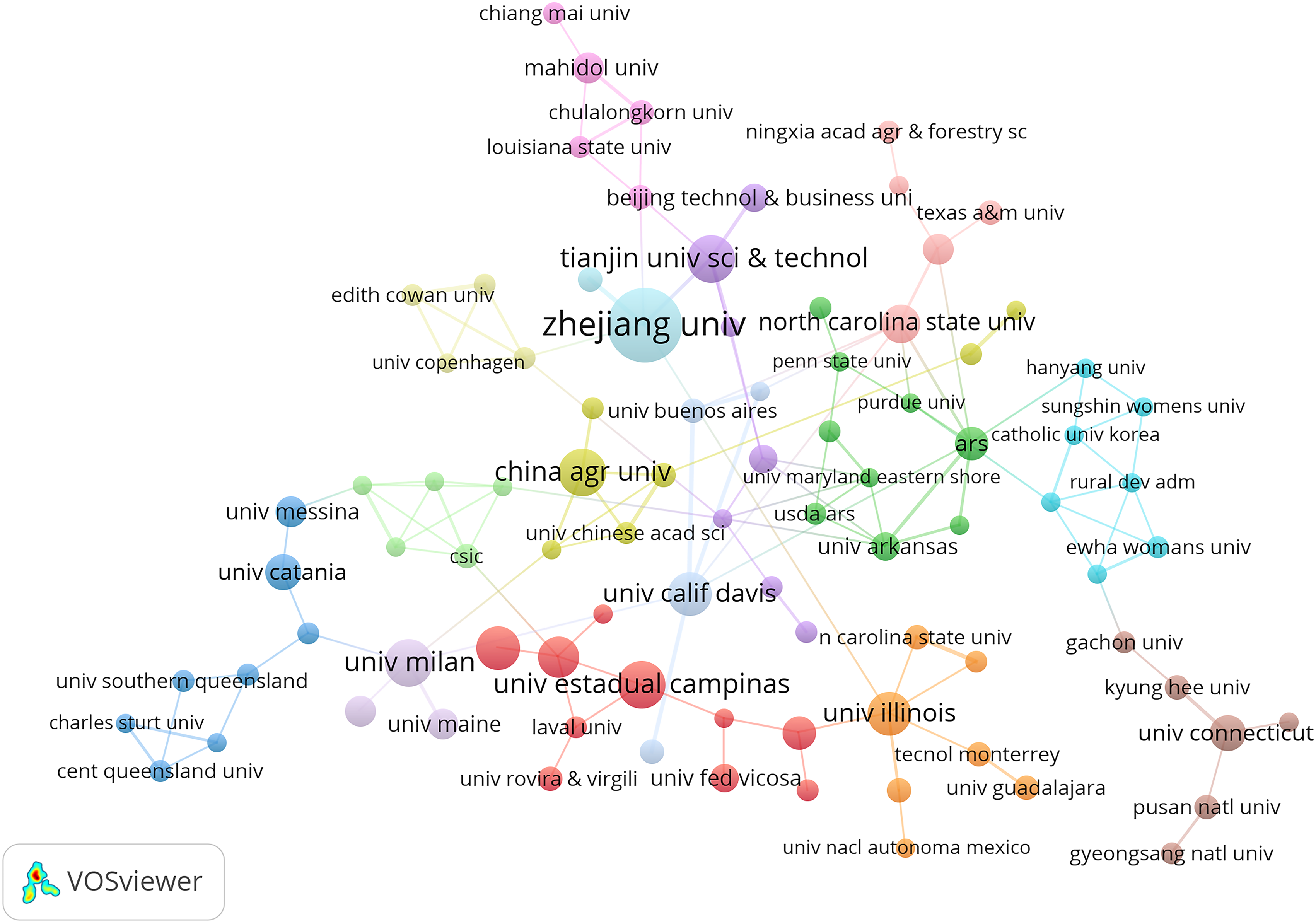
Network Diagram of Institutions in Anthocyanins and Obesity.
Author Analysis
A total of 4703 authors contributed to these studies, among whom 651 authors met the threshold of publishing at least 2 articles. Early contributors to anthocyanins and obesity research include Xia, Min and Guo, Honghui, while authors such as Li, Weilin and Chen, Jian have recently entered the field (Figure 5). Notably, 9 of the top 13 authors by publication volume (69.2%) were affiliated with Chinese institutions. Zheng, Xiaodong emerged as the most prolific researcher with 17 publications, followed by Ling, Wenhua (14 articles), Wu, Tao (12 articles) and Chen, Wei (12 articles) (Table 3). Although Tsuda, Takanori did not rank highest in publication volume, his work received the highest citation count, underscoring the exceptional quality and impact of his research in this field.

Network Diagram of Authors in Anthocyanins and Obesity.
The top 13 Authors with the Highest Number of Publications in Anthocyanins and Obesity.

Journal Analysis
From 2003 to the present, 269 journals have published articles on anthocyanins and obesity. Among the top 10 journals by publication volume, Nutrients ranked first with 68 articles, while Food Research International had the highest impact factor (JCR IF = 7). In terms of cited journals, the Journal of Agricultural and Food Chemistry led with 3963 total citations, while Food Chemistry had the highest impact factor (JCR IF = 8.5) (Table 4).
Top 10 Journals and Co-cited Journals in Terms of the Number of Publications Relating to Anthocyanins and Obesity.

A dual-map overlay analysis was employed to visualize citation relationships between journals and to reveal interdisciplinary intersections (Figure 6). The left side represents citing journals, while the right side depicts cited journals. The thickest citation paths highlight five core citation trajectories. The yellow pathway indicates that journals categorized under “Veterinary, Animal, Science” predominantly cite research originating from “Environmental, Toxicology, Nutrition” and “Molecular, Biology, Genetics.” Similarly, “Molecular, Biology, Immunology” journals primarily draw from “Environmental, Toxicology, Nutrition” and “Molecular, Biology, Genetics.” The green pathway demonstrates that articles on anthocyanins and obesity published in “Molecular, Biology, Genetics” journals are frequently cited by “Molecular, Medical, Clinical” journals, reflecting cross-disciplinary knowledge exchange.

The Dual-Map Overlay and Corresponding Disciplines. The Citing Journals Were on the Left, The Cited Journals were on the Right, and the Colored Path Represents the Citation Relationship
References Co-cited Analysis
A co-citation relationship occurs when two articles are simultaneously cited in the reference list of a third publication. Using CiteSpace, we visualized and analyzed 945 articles published between January 2003 and December 2024. Figure 7A displays the co-citation network of highly cited references on anthocyanins and obesity. A knowledge base for the field was generated using the most frequently cited articles over the past 22 years. The references were divided into 14 distinct clusters (Figure 7B). Notably, these clusters showed strong structural integrity (Q = 0.762) and high credibility (S = 0.8985). Of these, “leptin” (cluster 1) focuses on conformational states and is central to the continuum of research. A key reference in this cluster is the article by Prior RL (2009) in Molecular Nutrition & Food Research. Clusters such as “cyanidin” (cluster 9), “rosaceae” (cluster 8), “absorption” (cluster 14) progressively refine and extend the “leptin” (cluster 1). The research progressed from “leptin” (cluster 1) to “myrciaria jaboticaba” (cluster 11), “brown adipose tissue” (cluster 0) and finally to “liver steatosis” (cluster 7) and “gut microbiota” (cluster 5).

Analysis of Co-cited References in Anthocyanins and Obesity in CiteSpace. (A) Reference Co-Occurrence Network. (B) Cluster View of Co-Cited References in Anthocyanins and Obesity.
To identify the most influential recent references, we analyzed the top 25 articles with the strongest citation bursts (Figure 8). The publication year indicates the temporal origin of each study, while burst strength reflects the intensity of scholarly attention. The start and end points denote the duration of frequent citations, corresponding to red segments in the figure. As of 2024, the most recent citation bursts include Naseri R, 2018 (strength: 7.89, spanning 2020-2024), Khoo HE, 2017 (strength: 12.54, spanning 2020-2022), Jamer G, 2017 (strength: 7.43, spanning 2018-2022), and Lee YM, 2017 (strength: 11.04, spanning 2018-2022). The earliest citation burst emerged in 2004, while the latest began in 2020. The reference with the strongest citation burst (strength: 14.64), written by Prior RL et al, 27 had citation bursts from 2009 to 2013. The reference with the second strongest citation burst (strength: 12.55) was also published by Prior RL as the first author, 28 which was published in the Journal of Agricultural and Food Chemistry, with citation bursts from 2011 to 2015. Overall, these 25 references exhibited burst strengths ranging from 6.54 to 14.64 with durations of 2–5 years.

Top 25 References with the Strongest Citation Bursts.
Keyword and Hotspot Trend Analysis
Keyword co-occurrence analysis characterizes research hotspots, while burst keywords reflect emerging frontiers in obesity research. In CiteSpace, keywords were analyzed and visualized through co-occurrence, clustering, and timeline mapping. Figure 9A shows the keywords used in research on anthocyanins and obesity, including “anthocyanins”, “obesity”, “insulin resistance”, “oxidative stress”, “antioxidant activity”. Among the keywords, “activated protein kinase”, “antioxidant activity” and “adipose tissue” have better centrality. Clustering analysis of keywords from 2003 to 2024 generated 11 distinct clusters (Figure 9B). Cluster 0 (“insulin resistance”) occupied the largest thematic area. A timeline map further illustrated the emergence and decline of research hotspots over this period (Figure 10). From 2003 to 2010, high-impact keywords primarily related to “insulin resistance”, “antioxidant activity”, “obesity”, “anthocyanins”, “oxidative stress” and “metabolic syndrome”. The earliest cluster, Cluster 5 (“isolated rat adipocyte”), highlighted historical findings regarding the role of anthocyanins in obesity mitigation and health promotion. Subsequent clusters, such as Cluster 1 (“high fat diet-induced obese mice”), Cluster 4 (“gut microbiota”) and Cluster 6 (“oxidative stress insulin resistance”), reflect evolving research trajectories. A chronological examination reveals a marked progression in research priorities, emphasizing the dynamic evolution of keywords from 2003 to 2024. Figure 11 shows the top 25 keywords with the strongest citation bursts, indicating terms experiencing abrupt increases in citation frequency. The keyword “antiobesity” (2007-2017) garnered sustained attention, whereas recent bursts include “gut microbiota” (2021-2024), “association” (2021-2024), “bioactive compounds” (2022-2024), and “stability” (2022-2024), suggesting future research will prioritize these themes. The strongest burst (strength = 14.58) lasted for at least 2 years, with “antiobesity” exhibiting the longest duration (10 years). These trends highlight shifts in scholarly focus and underscore the field's responsiveness to emerging biological and mechanistic inquiries.

Analysis of Keyword in Anthocyanins and Obesity in Citespace. (A) A Visual Analysis of the Keyword Collaboration Network. The Size of Each Node Indicates The Frequency of the Keyword, While the Color and Texture of The Inner Circle Indicate its Temporal Distribution. Purple Outer Rings Represent High Centrality (≥0.1). (B) Cluster Analysis of Keyword.

The Timeline Graph of Keywords, with Each Horizontal Line Representing a Cluster. The Size of the Nodes Reflects Their Co-citation Frequency, and the Links between Nodes Indicate Co-citation Relationships. The Year of Nodes' Occurrence Indicates when They Were First Co-cited.

The Top 25 Keywords with the Strongest Citation Bursts. The Blue Line Indicates the Time Interval, and The Red Line Indicates The Period When the Keyword Burst Occurs.
Discussion
In recent years, there has been growing interest in foods that not only fulfill nutritional requirements but also enhance physiological functions, promote health and reduce disease risk, 7 which has likely been a critical driver of the rapid expansion of research in this field over the past decade. This study aims to address a research focus that has been extensively explored over a defined period. Through a scientometric analysis of 945 publications using CiteSpace, VOSviewer, and R-bibliometrix, this study systematically mapped the knowledge architecture, identified current research frontiers, and revealed emerging trends. This was achieved via a multidimensional evaluation of scholarly contributions across countries, institutions, journals, authors and keyword networks. These findings provide a basis for the subsequent development of enhanced anthocyanin-based interventions for obesity as well as for in-depth exploration of related targets of action.
Evolution and Contributions of General Research
Since 2008, the annual cumulative number of publication output on anthocyanins and obesity has exhibited steady global growth. However, fluctuations in average annual output, including periods of growth and decline, may reflect fragmented or low-quality studies, shifts in research focus, or unresolved scientific questions.
Among the 78 countries/regions that have published articles on anthocyanins and obesity, China and the USA dominate in terms of both publication volume and citation impact. The USA exhibits substantial influence in this research domain, demonstrating the highest level of collaborative engagement. China also displays robust activity within research collaboration networks, maintaining close partnerships with USA, Italy, and other nations, underscoring its strategic advantage in scientific cooperation. The prominence of these countries may be attributed to the recent surge in overweight or obese populations within their jurisdictions. 29 At the institutional level, Zhejiang University is a leading institution in terms of both publication volume and citation impact, serving as a key contributor to research on anthocyanins and obesity. It is worth noting that Chinese scholars have also made outstanding contributions to academic output in this field. Professor Zheng Xiaodong, the most prolific author in this domain, has made significant contributions through his research on anthocyanin-mediated metabolic regulatory mechanisms, gut microbiota modulation, synergistic effects, and preclinical dietary intervention models. In 2018, Zheng Xiaodong et al reviewed the molecular mechanisms, physicochemical and physiological characteristics, therapeutic potential, and microbial biosynthesis prospects of anthocyanins, offering insights for future research on their role in obesity management. 30 Although Professor Tsuda Takanori's publication output is comparatively limited, his work ranks highest in citation impact. His pioneering 2003 article, which first demonstrated anthocyanins’ capacity to ameliorate obesity, constitutes a foundational milestone in this field, 31 cementing his enduring scholarly impact.
Peer-reviewed journals remain pivotal for scholarly dissemination, with core journals consistently publishing essential research in this domain. Researchers may prioritize submission targets based on publication volume and journal metrics, where IF and JCR quartiles (Q1-Q4) are widely regarded as key indicators of journal influence. Nutrients emerged as the most prolific journal in anthocyanin-obesity research, while Food Research International held the highest impact factor (IF = 7). Among cited journals, the Journal of Agricultural and Food Chemistry (IF = 5.7) ranked first in citation frequency, whereas Food Chemistry (IF = 8.5) exhibited the highest IF. Notably, 80% of the top 10 journals by publication volume and 70% of the top 10 cited journals were classified as Q1. Despite China's substantial contributions to anthocyanin-obesity studies, Asian publishers remain underrepresented in top-tier journals, highlighting the need to cultivate internationally competitive journals within Asia.
The co-citation clustering map reveals that the “leptin” cluster is at the core of the research network on anthocyanins and obesity. Its foundational literature provides key theoretical mechanisms for the field and serves as a central bridge integrating multiple research directions. Direct connections to the “rosaceae” and “cyanidin” clusters indicate that plant sources and monomeric chemical foundations are the starting points for understanding leptin regulation. Additionally, research on the “absorption” cluster underscores the importance of bioavailability. The progression from “myrciaria jaboticaba” to “brown adipose tissue” outlines a “dietary intervention–thermogenesis activation” cascade pathway. Further extending to “liver steatosis,” “gut microbiota,” and “brain function,” it suggests that anthocyanins can intervene through multiple metabolic networks to improve physiological functions and microbiota regulation, while also contributing to cross-organ barrier synergistic effects via the “gut-X axis”. In summary, the leptin signaling pathway serves as the central axis linking anthocyanins from dietary intake to their multifaceted health benefits, a consensus that significantly advances the depth and breadth of research in this field. Therefore, although it is known that leptin is one of the main inhibitory factors for appetite and the association between leptin and obesity, the use of leptin-based therapies to treat obesity remains to be fully explored.
Analysis of the 25 most-cited references revealed citation bursts, reflecting heightened scholarly attention. The two strongest citation bursts originated from foundational studies by Prior RL et al (2008, 2010), which established critical theoretical frameworks for anthocyanin-obesity research. In 2008, Prior RL et al 27 employed a C57BL/6J obese mouse model to compare the differential effects of whole berries (blueberries, strawberries) versus purified anthocyanins on high-fat diet-induced obesity. In 2010, Prior RL et al 28 further investigated blueberry juice versus purified anthocyanins, incorporating sucrose controls. Their findings demonstrated the efficacy of low-dose purified anthocyanins, diminished effects at higher doses, and inferior outcomes for blueberry juice compared to purified compounds. The most recent highly cited work, a 2018 review by Naseri R et al 32 systematically evaluated the pharmacological mechanisms, bioavailability, and clinical potential of anthocyanins (ANTs) in managing metabolic syndrome (MetS). Integrating data from in vitro experiments, animal studies, and preliminary clinical trials, the authors elucidated the multifactorial roles of ANTs—including antioxidant, anti-inflammatory, and glucolipid metabolism modulation—in ameliorating MetS. They also highlighted the promise of nanoformulation technologies for enhancing therapeutic efficacy. These studies reflect shifting trends in anthocyanin-obesity research, transitioning from investigations of purity-dependent efficacy to mechanistic explorations of molecular pathways and advanced delivery systems. The integration of nanotechnological approaches underscores a growing emphasis on overcoming bioavailability limitations to maximize clinical translatability.
Hotspots and Trends
By conducting a bibliometric analysis using CiteSpace, we identified emerging research trends and hot areas through keyword burst detection, which is an important indicator of conceptual evolution. Research on the association between anthocyanins and the pathogenesis of obesity indicates that biomedical science is undergoing a major transformation—from purely discovering mechanisms to one of translational applications based on precision medicine for prevention and intervention. Based on keyword timeline visualization maps and keyword burst characteristics, research on anthocyanins and obesity can be roughly divided into three developmental stages.
The period between 2003 and 2009 corresponds to the early developmental stage of this research area. Keywords such as “gene expression,” “antioxidant,” and “cholesterol” began to surge, while nodes like “antioxidant activity,” “in vitro,” and “phenolic acids” emerged on the timeline. Research during this period primarily focused on the fundamental biological activities of anthocyanins and their preliminary association with obesity. Obesity has been shown to be associated with impaired insulin regulation of glucose and lipid metabolism in peripheral tissues. Increased adipose tissue is associated with elevated levels of circulating free fatty acids and tumor necrosis factor-α (TNF-α).33,34 Studies have shown that dietary anthocyanins can modulate the gene expression of tumor necrosis factor and suppress the mRNA expression of enzymes involved in fatty acid and triglyceride synthesis in white adipose tissue, thereby alleviating insulin resistance and regulating lipid metabolism. 31 This finding provides a biochemical and nutritional basis for utilizing anthocyanins as a potential functional food component in the prevention of obesity and diabetes. However, research at this stage remains predominantly experimental with relatively limited methodologies, primarily relying on animal studies and in vitro biochemical analyses. A systematic mechanistic framework or clinical translation pathway has yet to be established.
The second phase spanned from 2010 to 2015, when keywords such as “oxidative stress”, “non-alcoholic fatty liver disease” and “NF-κB” emerged. With the diversification of research methodologies and the widespread application of molecular biology techniques, the focus shifted toward investigating the specific molecular mechanisms through which anthocyanins influence obesity, particularly their roles in metabolic regulation. Additionally, researchers increasingly focused on the potential of anthocyanins to ameliorate obesity-related metabolic syndrome. Studies have revealed that anthocyanins significantly alleviate insulin resistance, adipose tissue inflammation, and hepatic steatosis by inhibiting the JNK/FoxO1 signaling pathway, while also reducing blood glucose and levels of inflammatory factors. 35 During this phase, a series of mechanistic studies gradually increased in both number and depth, and the mechanisms through which anthocyanins alleviate obesity and its associated metabolic syndrome became increasingly clear. Additionally, scholars began to focus on the impact of structural variations in anthocyanins, such as different glycoside forms, on their bioactivity.36,37 The application of cell-based experiments and transgenic animal models has increasingly been employed, and research designs have become more mechanism-oriented, thereby providing deeper molecular evidence for the metabolic regulatory effects of anthocyanins.
The third phase began in 2016 and continues through 2024. The most notable feature of this phase is the pronounced emergence of the keyword “gut microbiota”. Recent research has increasingly been directed toward the field of microbe-host interactions, including gut microbiota dynamics, inflammatory pathways, and metabolic effects, with important implications for the formulation of health policies. The gut microbiota has emerged as a promising frontier as a novel target of anthocyanin action. Studies have shown that gut dysbiosis may be one of the factors contributing to obesity-related diseases, including changes in microbial composition and metabolite profiles. 38 Anthocyanins have been shown to prevent obesity via gut microbiota interactions, and their underlying molecular mechanisms have been explored in in vitro studies, animal models, and clinical trials.39,40 However, studies have shown that individual differences in age, sex, menstrual cycle, and medical treatments make it difficult to draw consistent conclusions regarding the regulatory effects of anthocyanins on gut microbial communities. 41 Moreover, numerous studies have demonstrated that anthocyanins can ameliorate associated metabolic syndromes, such as T2DM, by modulating the gut microbiota. T2DM is a metabolic disorder characterized by hyperglycaemia that progressively develops as a consequence of insulin resistance. 42 Multiple studies have shown that anthocyanins and their metabolites can improve diabetes by enhancing insulin sensitivity, supporting β-cell function, and attenuating postprandial glucose fluctuations.43–46 Although published findings to date have been encouraging, uncertainty remains as to whether anthocyanins can reverse the complex pathophysiological processes underlying obesity and T2DM. While some studies support this possibility, the number of relevant investigations remains insufficient and their methodologies lack rigour. Despite encouraging findings to date, it remains uncertain whether anthocyanins can reverse the complex pathological processes associated with obesity and T2DM. Though studies support this possibility, they are limited in number and lack methodological rigor. To date, no long-term human intervention studies have investigated the relationship between anthocyanin intake and T2DM incidence, and few clinical studies have examined the effects of anthocyanin-rich dietary interventions on intermediate risk factors for T2DM, such as glucose homeostasis and insulin resistance. 47 Anthocyanins have been extensively studied for their potential health benefits and are regarded as promising candidates in disease prevention. However, owing to their low bioavailability, the effective concentrations demonstrated in in vitro studies often exceed the physiologically attainable levels achieved through dietary intake in humans. 10 Moreover, anthocyanins exert multifaceted effects in the context of a healthy gut, affecting multiple aspects of chronic disease pathophysiology. Consequently, it is crucial to investigate whether these compounds exhibit synergistic or complementary actions in combination with different metabolic forms. Furthermore, the anthocyanin treatment doses and frequencies employed in in vitro studies and animal feeding experiments do not directly correspond to human requirements, posing a persistent challenge for translating these data into clinical research. Given the inter- and intra-individual variability in gut microbiota composition, future clinical studies stratifying subjects by age, sex, diagnosis, disease stage, and medication status may provide deeper insights into anthocyanins’ health benefits and their potential in disease prevention.
Over time, research has progressively deepened, with a subtle yet significant shift in focus areas. Keyword burst analysis revealed that terms such as “gut microbiota”, “association”, “bioactive compounds” and “stability” have exhibited strong burst intensities over the past three years. This suggests that these topics will continue to be research priorities, offering insight into emerging trends and key areas in anthocyanin–obesity studies.
Gut microbiota: a Central Target for Anthocyanin-Regulated Metabolism
The human body harbors a unique “ecosystem” — the gut microbiota — comprising trillions of microorganisms that profoundly influence host metabolic functions. Defined as the complex microbial communities colonizing the gastrointestinal tract, the gut microbiota encompasses over 1000 species of bacteria, archaea, fungi, and viruses. 48 Their collective genome (microbiome) interacts dynamically with the host to regulate energy metabolism, immune homeostasis, and intestinal barrier function. 48 This rapidly expanding research field has gained prominence due to microbiota-mediated modulation of critical signaling pathways with significant local and systemic health implications. 49 Through participation in food digestion (particularly fermentation of indigestible polysaccharides), gut microbiota sustains nutritional balance, enhances intestinal barrier integrity, and maintains immune tolerance in gut-associated lymphoid tissue. 50 Emerging evidence positions gut microbiota as a pivotal mediator in both obesity pathogenesis and anthocyanin-mediated anti-obesity mechanisms. Obesity exhibits distinct microbial signatures characterized by altered composition, reduced diversity, and differential metabolic activity compared to lean individuals, notably featuring an elevated Firmicutes/Bacteroidetes ratio, decreased Akkermansia muciniphila abundance, and diminished short-chain fatty acid (SCFA) production.51,52 These dysbiotic changes promote chronic low-grade inflammation induced by endotoxin (LPS) translocation and upregulate fasting-induced adipose factor (FIAF), thereby enhancing lipid accumulation. 52 However, recent large-scale population studies have revealed a more complex relationship between the gut microbiota and obesity, rather than the simplistic notion of merely reduced beneficial bacteria or increased harmful bacteria. For instance, a metagenomic analysis of 1005 Chinese individuals with obesity conducted by the Ruijin Hospital team revealed a significant enrichment of the genus Megamonas in the obese population. 53 Furthermore, it was found that Megamonas and host genetic risk exert an additive effect on the development of obesity. This study further demonstrated through animal models that Megamonas rupellensis, a representative species of the genus Megamonas, drives the development of obesity by degrading intestinal inositol and promoting lipid absorption. This finding provides an important complement to the previous paradigm that primarily focused on the absence of beneficial bacteria, and untangles the active pathogenic mechanisms of specific obesity-enriched bacteria, offering new insights into the microbial etiology of obesity.
Recent studies have demonstrated that anthocyanins exert anti-obesity effects by remodeling the gut microbiota. Specifically, they selectively enrich beneficial taxa (Bifidobacterium, Lactobacillus, and Akkermansia muciniphila) while suppressing pathogens like Clostridium histolyticum. 11 Notably, a study directly comparing anthocyanins from different berries provides a more nuanced perspective. This research systematically evaluated and compared the antioxidant capacity and gut microbiota modulatory effects of nine common berries. Although the regulatory effects of these berries on the gut microbiota of high-fat diet-fed mice were essentially similar, certain differences were observed. For instance, black raspberry exhibited the most pronounced ability to increase the alpha diversity of the gut microbiota, whereas blackberry was most prominent in significantly elevating the relative abundance of beneficial bacteria such as Lactobacillus. 54 These findings complementarily confirm the commonality of anthocyanins’ regulatory effects. However, a study on blueberry anthocyanins revealed that their amelioration of obesity-induced lipid metabolic disorders and gut dysbiosis is dependent on the suppression of the TLR4 pathway, as the protective effects of anthocyanins were almost completely abolished in TLR4 knock-out mice. 55 This differs from the conventional understanding that the TLR4 pathway primarily mediates inflammatory responses, suggesting the need for caution when interpreting results based on a single mechanism. Anthocyanins from different berries may exert their effects through diverse pathways, which could be closely associated with their distinct polyphenolic compositions and antioxidant capacities. Therefore, anthocyanins likely function via an integrated network involving immune recognition, metabolism regulation, oxidative stress balance, and microbiome modulation, rather than relying on a single pathway.
Regarding microbial metabolites, short-chain fatty acids (SCFAs) have been widely recognized as key mediators in the health benefits conferred by anthocyanins. SCFAs not only activate the AMPK signaling pathway and inhibit lipoprotein lipase (LPL) activity, thereby reducing lipid storage in adipocytes, but have also been demonstrated to suppress hepatic histone deacetylase 9 (HDAC9), consequently activating the transcription and expression of fibroblast growth factor 21 (FGF21) in the liver.56–58 As a pivotal endocrine hormone, the production and function of FGF21 are precisely regulated by the gut microbiota. Studies have shown that activation of hepatic p38 signaling promotes the expression and secretion of FGF21 via the transcription factor XBP1, thereby stimulating lipolysis in adipose tissue. 59 However, under conditions of metabolic disorders, sustained activation of p38 downregulates the FGF21 co-receptor β-Klotho (KLB), leading to hepatic FGF21 resistance—that is, a reduction in the liver's biological responsiveness to FGF21. This, in turn, promotes ectopic lipid deposition in the liver and contributes to the development of fatty liver disease. 59 Therefore, anthocyanins may ameliorate FGF21 resistance and restore its physiological functions in promoting fatty acid oxidation and insulin sensitivity by modulating the gut microbiota-liver FGF21 axis, providing a novel perspective for understanding their anti-obesity mechanisms. Although the gut microbiota-liver FGF21 axis represents a promising hypothesis, there remain gaps in the current chain of evidence. Direct experimental data are still required to elucidate how anthocyanins precisely influence specific gut microbiota, and how such microbial changes subsequently regulate hepatic FGF21 signaling. For instance, whether through SCFAs or other metabolites affecting p38 signaling or KLB expression. Particularly, it is crucial to determine whether and how anthocyanins can reverse hepatic FGF21 resistance, a phenomenon observed in the context of obesity, which may represent a key focus for future research. In addition, recent studies have highlighted the contributions of other important metabolites. A research team from Westlake University discovered that metabolites such as 4-hydroxyphenylacetic acid (4HPAA), produced by gut microbiota through the metabolism of aromatic amino acids, can effectively prevent obesity via gut immune control. 60 Furthermore, anthocyanins themselves, after being metabolized by the gut microbiota, may exhibit significantly enhanced bioactivity in their metabolites, such as phenolic acids. 10 This suggests that the role of anthocyanins extends beyond their direct bioactivity to include “secondary effects” arising from their interaction with the gut microbiota. These metabolites collectively form a signaling network that modulates host metabolism.
Although studies have suggested that microbial metabolites may influence central appetite regulation via the gut–brain axis61,62 high-quality evidence directly demonstrating that anthocyanins exert significant anti-obesity effects through this pathway remains limited. Instead, a greater body of research attributes the beneficial effects of anthocyanins on body weight primarily to their improvements in peripheral metabolism and inflammation. This highlights the need for future studies to more precisely delineate the contribution of the gut-brain axis in this process. Mounting evidence has linked gut microbiota dysregulation to comorbidities associated with obesity, including hypertension and atherosclerosis progression. 63 Current research on microbiota–host interactions remains incomplete. Researchers should further elucidate the mechanisms of microbiota-mediated metabolic regulation in the context of anthocyanin intervention, identify potential co-regulators or alternative signaling pathways, and ultimately establish microbiota-targeted therapeutic strategies for obesity and metabolic diseases.
Association: Integration of a Network of Multidimensional Mechanisms
The multifaceted interplay between anthocyanins and obesity manifests as a multi-organ, cross-system regulatory network spanning metabolic, inflammatory, and neural dimensions. Mechanistically, anthocyanins inhibit lipogenesis and lipid accumulation via activation of AMPK signaling, suppressing the activities of acetyl-CoA carboxylase (ACC) and fatty acid synthase (FAS) activities while downregulating transcription factors SREBP-1c and ChREBP.64,65 Concurrently, they enhance insulin sensitivity by promoting GLUT4 translocation via the PI3 K/Akt pathway and restoring IRS-1 function through inhibition of TNF-α-induced JNK phosphorylation.66,67 In inflammatory modulation, anthocyanins attenuate pro-inflammatory cytokine release (IL-6, TNF-α) via NF-κB and JNK pathway blockade, while mitigating oxidative stress through ROS scavenging and upregulation of superoxide dismutase (SOD) and glutathione peroxidase (GPx) activities.68,69 Notably, anthocyanins drive white adipose tissue browning via PRDM16/UCP1 pathway activation, enhance mitochondrial thermogenesis through upregulation of PGC-1α and TFAM, and promote beige adipogenesis via cAMP-PKA signaling pathway.70,71 The gut-brain axis further mediates anthocyanin-induced metabolic benefits, characterized by increased secretion of anorexigenic hormones GLP-1 and PYY, suppression of neuropeptide Y (NPY), and modulation of hypothalamic energy balance signaling pathways, collectively reducing caloric intake and augmenting energy expenditure. 72 Thus, the multi-target mechanisms of anthocyanins likely involve synergistic and hierarchical interactions rather than functioning in isolation. More importantly, the remodeling of gut microbiota by anthocyanins may represent a pivotal upstream event underlying their systemic benefits. As previously mentioned, anthocyanin-induced alterations in gut microbiota promote the production of short-chain fatty acids (SCFAs), which can act as signaling molecules to directly or indirectly activate AMPK, thereby modulating lipid metabolism and inflammatory responses. This suggests that the direct effects of anthocyanins on metabolic pathways and their indirect regulatory role via the gut microbiota-metabolite axis may function synergistically, with the latter potentially serving as a driver for the former.
However, a critical gap exists between these robust findings from ex vivo and animal models and the outcomes of certain clinical studies. A meta-analysis encompassing 31 randomized controlled trials indicated that anthocyanin supplementation did not exert statistically significant effects on anthropometric measures such as body weight, body mass index (BMI), and body fat percentage. 73 This discrepancy may be attributed to complex factors, including limitations in bioavailability, variations in intervention duration and dosage, as well as heterogeneity in baseline population characteristics. Therefore, caution must be exercised when directly extrapolating well-defined cellular and molecular mechanisms to the complex human physiological environment. Obesity emerges from complex interactions among genetic predisposition, dietary patterns, metabolic dysregulation, and physical inactivity, 74 serving as a critical risk amplifier for chronic diseases including diabetes, cardiovascular disorders, hepatic steatosis, and hypertension. 75 Recent studies have demonstrated that anthocyanins not only ameliorate obesity but also exert beneficial effects on a range of obesity-related diseases. 76 However, it remains unclear whether anthocyanins can serve as an alternative to traditional drugs for treating obesity and related diseases, and the associated molecular mechanisms require further in-depth investigation.
Bioactive Compounds: Structural Diversity and Synergistic Effects
Anthocyanins, a subclass of flavonoid compounds characterized by their C6-C3-C6 skeleton, exhibit structural diversity through glycosylation, acylation, and hydroxyl/methoxyl substitutions. 77 Leucoanthocyanidin, a precursor in its biosynthetic pathway, serves as a key node for the formation of colored anthocyanidin aglycones. Under the catalysis of leucoanthocyanidin dioxygenase (LDOX) and anthocyanidin synthase (ANS), leucoanthocyanidins are ultimately converted into chromogenic aglycones such as cyanidin and delphinidin. These aglycones subsequently undergo glycosylation, acylation, and hydroxyl/methoxyl substitutions, leading to the final structural diversity. Additionally, leucoanthocyanidins can be further converted into corresponding catechin or epicatechin via the action of enzymes such as leucoanthocyanidin reductase (LAR). These compounds serve as direct monomers for proanthocyanidins (condensed tannins). 78 However, current experimental research directly investigating the anti-obesity effects of leucoanthocyanidin, particularly in vivo studies, remains very limited. This is primarily due to the challenges associated with its isolation and purification, as well as its susceptibility to transformation in vivo. Future studies undoubtedly require the development of more stable analytical methods to directly explore the metabolic fate and physiological functions of leucoanthocyanidins, in order to comprehensively evaluate the independent contributions and synergistic value of this class of anthocyanin precursors in combating obesity and its associated metabolic disorders.
To date, 27 naturally occurring anthocyanins have been identified, with six core aglycones—cyanidin, delphinidin, pelargonidin, peonidin, malvidin, and petunidin—accounting for 92% of reported anthocyanins. 79 These aglycones display distinct distribution patterns and functional properties. Cyanidin-3-O-glucoside (C3G), the most abundant anthocyanin in plants, exhibits potent antioxidant activity and is prevalent in berries and red vegetables. 8 Delphinidin, distinguished by three hydroxyl groups on its B-ring, exhibits blue pigmentation under alkaline conditions and suppresses macrophage M1 polarization to exert anti-inflammatory effects. 80 Pelargonidin, lacking B-ring hydroxyls, displays orange-red hues in strawberries and shows promise in food preservation via antimicrobial activity. 81 Methoxylated derivatives, such as peonidin and malvidin exhibit enhanced stability, with malvidin derivatives (major pigments in red wine) maintaining coloration across pH variations through acylated forms.8,81 Petunidin, featuring unique methylation patterns, demonstrates neuroprotective properties in blackcurrants. 82 Anti-obesity effects vary markedly among these aglycones. Cyanidin derivatives (such as C3G) regulate lipid metabolism via AMPK activation, modulating lipoprotein lipase (LPL) activity to reduce hepatic steatosis and plasma triglycerides, while suppressing adipogenesis through PPAR-γ inhibition in KK-Ay mice.76,83 Delphinidin-3-O-β-glucoside (D3G) enhances AMPK/ACC phosphorylation, promoting fat oxidation and inhibiting 3T3-L1 adipocyte differentiation. 84 Pelargonidin suppresses lipid accumulation in 3T3-L1 cells via PPAR-γ pathway inhibition. 85 Petunidin derivatives (such as P3G) ameliorate obesity by remodeling the gut microbiota and enhancing intestinal barrier function. 86 Despite emerging evidence, peonidin and malvidin remain understudied compared to other aglycones. Current research prioritizes cyanidin derivatives, particularly C3G, which demonstrates multi-target regulation of lipid metabolism, inflammation, and energy balance in preclinical models.76,87 In addition, the complementary effects of different structural anthocyanins synergistically regulate lipid metabolic pathways, promoting fatty acid oxidation and inhibiting lipid synthesis. 88 Metabolic derivatives, such as protocatechuic acid, cooperate with parent compounds to inhibit NF-κB/MAPK inflammatory pathways and modulate gut microbiota.87,89 Dose-dependent combinatorial effects are evident: cyanidin derivatives at low doses (<50 mg/day) predominantly activate AMPK-mediated fatty acid oxidation, while higher doses (>100 mg/day) synergize with delphinidin analogs to suppress SREBP-1c-driven lipogenesis. 87
These structurally diverse aglycones are often concentrated in specific dietary sources. Plant sources such as blueberry, strawberry, and raspberry have received relatively more research attention (Table S2 in the Supplemental materials).90–101 While this focus has helped establish the foundation of the field, it may also limit our understanding of the full potential of anthocyanins. Perhaps this also presents an opportunity to explore those underestimated sources that remain understudied yet hold significant potential. Future mechanistic studies targeting these sources would not only help validate the generalizability of existing pathways but also potentially uncover novel mechanisms of action. At the same time, the structural diversity of anthocyanins, ranging from their precursors such as leucoanthocyanidin to the final aglycones and their metabolites, collectively underpins their rich bioactivities and significant anti-obesity potential. Their synergistic anti-obesity effects also rely on the structural complementarity of multiple components, the modulation of various signaling pathways, and the combined effects of metabolites. Therefore, future research should not only explore the anti-obesity potential of a broader range of anthocyanin aglycones but also trace back to the physiological functions of their precursors, such as leucoanthocyanidin. Additionally, it is essential to elucidate the optimal ratios and dosages of different structural compounds (including precursors and end products) to achieve synergistic effects, thereby providing a more robust scientific foundation for the development of natural anti-obesity agents.
Stability Optimization: Technological Breakthroughs and Translational Challenges
Despite growing interest in anthocyanins for their bioactive potential and technological applications, their clinical translation faces critical challenges rooted in structural instability and pharmacokinetic limitations. This reveals a critical contradiction: a vast gap exists between numerous promising in vitro studies and actual in vivo efficacy. Consequently, the current research focus has shifted from merely discovering new functions to addressing how engineering techniques can overcome their biological limitations. The labile phenolic hydroxyl groups in anthocyanins render them susceptible to degradation under physiological conditions, with pH, temperature, light, oxygen, enzymes, solvents, metal ions, and proteins collectively compromising stability during processing and digestion.102,103 Notably, less than 1% of ingested anthocyanins reach systemic circulation due to poor intestinal absorption and extensive degradation, 104 severely restricting their therapeutic efficacy and industrial utilization. 105 Addressing these bioavailability barriers—through structural stabilization, gastrointestinal protection, and enhanced cellular uptake—has become imperative for the advancement of anthocyanin-based interventions.
Currently, the stability of anthocyanins can be enhanced through structural modifications (including glycosylation, acylation, pyranylation), co-pigmentation strategies (including intermolecular, intramolecular, self-conjugation, and metal complexation), and various delivery systems (such as microencapsulation, proteins, polysaccharides, liposomes, multiple emulsions, and composite carriers). Among them, acylation and pyranylation modifications are the main methods for modifying the structure of anthocyanins. 106 Acylated anthocyanins have been extensively characterized in in vitro model systems, demonstrating enhanced structural stability and stronger antioxidant properties compared with their non-acylated counterparts.107,108 However, acylated anthocyanins generally exhibit low conversion efficiency, and structural characterization of these compounds remains incomplete in most investigations. Furthermore, systematic analyses of their physicochemical properties remains underexplored. 109 Pyran-modified anthocyanins exhibit enhanced pharmacokinetic bioavailability and potentiated bioactivity while preserving their intrinsic hydrophilic properties.110,111 Nevertheless, the structures of the esterified and acylated anthocyanin compounds remain unknown, and relatively few studies have investigated their physiological activities. Exploring structural modifications represents a key dimension in studies of anthocyanins as emerging antioxidants and natural pigments. 112 While copigmentation enhances anthocyanin stability, the structural integrity and biosafety of delivery matrices necessitate rigorous investigation to advance therapeutic applications. 113 Optimizing anthocyanin structural stability, minimizing gastrointestinal degradation, and enhancing cellular bioavailability represent critical challenges requiring resolution to advance translational applications of anthocyanin-based interventions in nutritional and pharmaceutical sciences. 105 At present, delivery systems are key strategies for enhancing the stability and bioavailability of anthocyanins. Delivery systems are pharmaceutically engineered platforms that enable site-specific delivery with spatiotemporal control, encompassing the strategic integration of biofunctional cargo through adsorption, encapsulation, or covalent conjugation to nanostructured carriers. This paradigm exhibits transformative potential across biomedical applications by optimizing therapeutic payload precision. Rational exploitation of carrier matrix physicochemical attributes and tissue-selective distribution profiles effectively addresses pharmaceutical challenges including suboptimal aqueous solubility, chemical instability, and compromised bioavailability inherent in conventional drug delivery systems. 114 Advanced delivery systems enhance therapeutic dissolution kinetics and absorption, consequently augmenting drug bioavailability. Microencapsulation techniques moderately stabilize anthocyanins while enabling targeted gastrointestinal delivery to minimize luminal degradation. Nanotechnological advancements have introduced novel methodological approaches for investigating anthocyanin delivery. 115
In strategies aimed at enhancing the stability and bioavailability of anthocyanins, structural modification and delivery system development are not isolated technical approaches but exhibit clear complementarity and a hierarchical relationship. Structural modification serves as the foundation for enhancing their intrinsic stability at the molecular level, whereas delivery systems provide external protection from a pharmaceutical perspective. The most promising research is now attempting to integrate these two approaches. For instance, the succinylated casein-phospholipid nano-system (CLS) developed by Shenyang Agricultural University not only stabilizes anthocyanins via a molecular cap structure but also achieves lung targeting after oral administration, increasing pulmonary bioavailability by 25.7-fold. 116 This case extends beyond the conventional goal of “enhancing bioavailability,” opening new possibilities for organ-specific targeted therapy. It suggests that, similarly, delivery systems targeting adipose tissue or the liver could be designed in obesity research.
Nevertheless, studies on the structure–activity relationships of anthocyanin delivery systems with various wall materials and the interactions between anthocyanins and these materials are still scarce. 112 Moreover, current evaluations of anthocyanin-based drug release systems primarily rely on in vitro gastrointestinal tract simulation models. 112 Systematic preclinical-to-clinical studies are required to establish comprehensive pharmacokinetic profiles of encapsulated anthocyanins and delineate the mechanistic determinants of absorption efficiency and systemic bioavailability across nanostructured delivery vehicles. Therefore, future research should not only employ more sophisticated disease models to validate their efficacy and safety but also incorporate systematic clinical studies. Ultimately, the key to advancing the application of anthocyanins in areas such as obesity lies in integrating molecular biology, materials science, and clinical medicine to achieve the transition from demonstrating efficacy to ensuring applicability.
Future Perspectives on Anthocyanins and Obesity
Based on the aforementioned analysis, the following issues may represent key directions for future in-depth investigation. First, the causal role of the gut microbiota in mediating the anti-obesity effects of anthocyanins still requires confirmation in many studies, as this is fundamental to determining whether targeting the gut microbiota with anthocyanins can achieve the desired therapeutic outcomes. Second, the research focus should expand from the local intestinal environment to a systemic metabolic network integration. Current studies have suggested the existence of the gut-liver axis and gut-brain axis. Future efforts should aim to elucidate how anthocyanins facilitate inter-organ communication through these axes, which is crucial for understanding their systemic benefits. Third, overcoming the bottleneck of bioavailability is pivotal for translating laboratory findings into clinical benefits. The low absorption rate and rapid metabolism of anthocyanins in vivo significantly constrain their efficacy. Future technological efforts should adopt a dual-pronged approach: on one hand, enhancing their intrinsic molecular stability through structural modifications (such as acylation, pyranylation). On the other hand, actively developing advanced delivery systems (such as protein or phospholipid-based nanocarriers) aimed at achieving gastrointestinal protection and organ-targeted delivery, thereby bridging the gap from ex vivo efficacy to in vivo utility. Finally, individual variability and precision nutrition represent an inevitable trend for clinical translation. There remains a lack of high-quality randomized controlled trials (RCTs) with extended duration, well-defined dosages, and clearly characterized baseline profiles of participants. Future research should prioritize conducting such trials and, based on their outcomes, explore personalized intervention strategies grounded in individual genetic backgrounds, baseline gut microbiota characteristics, and metabolic phenotypes. By integrating multi-omics data with artificial intelligence (AI) analysis, the ultimate goal is to advance from general dietary recommendations to tailored precision nutrition interventions involving anthocyanins.
Limitations
This investigation presents four principal methodological constraints that warrant careful consideration. Firstly, the dataset was solely derived from the WoSCC, potentially excluding pertinent research indexed in complementary databases such as Scopus, MEDLINE, and Embase. WoSCC emphasizes English-language journals and basic research, potentially overlooking critical clinical reports from MEDLINE/Embase and interdisciplinary agricultural studies from Scopus.21,117 It may also fail to adequately reflect regional contributions and recent clinical innovations. Such gaps could distort key findings: identification of research hotspots might miss emerging themes, while author or institutional networks could overlook clinical trial centers. Citation analysis remains conservative, as WoSCC's indexing alone may exclude citations from high-impact studies that remain unrepresented. Secondly, while our search encompassed literature published from 2003 to 2024, this temporal demarcation excluded post-2024 publications currently in press, thereby imposing artificial boundaries on the historical scope and contemporaneous relevance of our analysis. Thirdly, the restriction to peer-reviewed articles and review articles may have introduced content bias by systematically excluding valuable gray literature, including conference proceedings, technical reports, and clinical trial registries. Such limitations may bias conclusions toward basic research. Grey literature serves as a critical bridge between basic and clinical studies, and excluding it may further widen the translational gap. Fourthly, our analytical approach using VOSviewer 1.6.19 and CiteSpace 6.2.R4 carries inherent technical limitations common to bibliometric tools: (1) The inability to perform deep semantic analysis of full-text content, including critical elements such as methodological details, tabular data, and graphical abstracts; (2) Predominant optimization for English-language corpora, potentially introducing geographical and linguistic bias through inadequate processing of non-Anglophone research outputs. Moreover, this limitation may overlook research topics based on local plant resources, traditional dietary practices, or specific cultural contexts, potentially biasing the identification of hot keywords and research directions. These methodological constraints collectively create selection biases that may affect the generalizability of findings, particularly regarding the underrepresentation of emerging research paradigms and non-traditional publication formats.
Conclusions
This study delineates the global research landscape and developmental trajectories in anthocyanin-obesity investigations from 2003 to 2024. Statistical analyses reveal a marked increase in cumulative publications, with the USA and China as leading contributors. Visualization techniques highlight the influence of interdisciplinary collaboration and key institutions, authors, and journals on this field. Research trends indicate that studies on anthocyanins and obesity have evolved from early component-focused investigations to in-depth analyses of molecular mechanisms, progressing from observational studies to precise interventions. This work establishes an evaluative framework for assessing the advancement of anthocyanin-obesity research. In the future, with the interdisciplinary integration of genetic engineering, metabolomics and clinical translational research and supported by public health policies, anthocyanins are expected to become a core component of personalized obesity treatment.
Supplemental Material
sj-docx-1-npx-10.1177_1934578X251392447 - Supplemental material for Research Progress and Emerging Trends Between Anthocyanins and Obesity: A Bibliometric Analysis
Supplemental material, sj-docx-1-npx-10.1177_1934578X251392447 for Research Progress and Emerging Trends Between Anthocyanins and Obesity: A Bibliometric Analysis by Junyi Liao, Mengping Wang, Zhen Zhang, Zhanyi Xu, Zhongyue Zhang, Min Xie, Xiaoping Yu, Yanfeng Zhu and Peiling Cai in Natural Product Communications
Footnotes
Acknowledgments
We are grateful for the financial support from the National Natural Science Foundation of China (82073539), the Natural Science Foundation of Sichuan Province (2023NSFSC0682), and the Center for Early Childhood Education Research, Sichuan (CECER-2022-B01). Additionally, this work received support from the National College Students’ Innovation and Entrepreneurship Training Program (202511079034), the College Students’ Innovation and Entrepreneurship Training Program of Sichuan Province (S202411079090), and the College Students’ Innovation and Entrepreneurship Training Program of Chengdu University (CDUCX2025774).
ORCID iDs

Authorship Contribution Statements
Funding
A project supported by Center for Early Childhood Education Research, Sichuan (CECER-2022-B01); A project supported by the Natural Science Foundation of Sichuan Province (2023NSFSC0682); A project supported by the National Natural Science Foundation of China (82073539); A project supported by the National College Students’ Innovation and Entrepreneurship Training Program (202511079034); A project supported by College Students’ Innovation and Entrepreneurship Training Program of Sichuan Province (S202411079090); A project supported by College Students’ Innovation and Entrepreneurship Training Program of Chengdu University (CDUCX2025774).
Declaration of Conflicting Interests
The authors declared no potential conflicts of interest with respect to the research, authorship, and/or publication of this article.
Supplemental Material
Supplemental material for this article is available online.
References
Supplementary Material
Please find the following supplemental material available below.
For Open Access articles published under a Creative Commons License, all supplemental material carries the same license as the article it is associated with.
For non-Open Access articles published, all supplemental material carries a non-exclusive license, and permission requests for re-use of supplemental material or any part of supplemental material shall be sent directly to the copyright owner as specified in the copyright notice associated with the article.
