



Abstract
Background
There is sufficient preclinical evidence that anthocyanins have various anticancer properties. However, a consistent and comprehensive review in this rapidly evolving field is still difficult to obtain. Currently, there is a lack of systematic and quantitative evaluation of its global development.
Methods
We obtained 2313 relevant articles from the Web of Science Core Collection (2004-2024). We carried out bibliometric analysis using VOSviewer, CiteSpace, and the R-Bibliometrix package to draw the publication trajectory, collaboration network, and dynamic keyword trend chart.
Results
In the past more than 20 years, the research achievements have shown a growing trend. The United States has 413 papers and China has 404 papers in the leading position. Top institutions such as Ohio State University and Harvard University belong to knowledge hubs. The Journal of Agricultural and Food Chemistry is the main place of publication. The research topics have changed, from basic action pathways to complex transformation strategies.Currently, the research focuses on the interaction between anthocyanins and gut bacteria, inflammation regulation, and compound synergy. It is worth mentioning that the rise of “double - blind trials” indicates a shift in the previous evidence - based clinical evaluation.
Conclusions
This analysis presents the trend of anthocyanins in cancer research. The research results clarify the trends, help find knowledge gaps, and also provide guidance for new directions in the field of cancer chemoprevention.
Introduction
Anthocyanins, subclass of flavonoids that are widely found in plants, 1 are responsible for the red, purple and blue colouration of many fruits and vegetables, including berries, grapes, and purple corn. 2 Beyond their capacity to colour foods, anthocyanins have attracted considerable scientific attention for their wide range of bioactivities, including antioxidant, anti-inflammatory and anticarcinogenic activities.3–6
Epidemiological data have important potential for translation. A recent study performed in the United States (US) on a large scale and as a cohort study has found a significant inverse association between dietary intake of anthocyanidin and lung cancer risk, especially among smokers. 7
Preclinical studies have shown that anthocyanins have anti-cancer effects. Its mechanisms include inducing apoptosis, inhibiting cell proliferation through the phosphoinositide 3-kinase (PI3K) protein kinase B (AKT)8,9 and β-catenin pathways,10,11 reducing matrix metalloproteinase (MMP)3–5 expression to inhibit metastasis, and regulating the gut microbiota. However, there are great challenges in translating in vitro/animal experimental data into clinical prevention. In this study, “cancer prevention” operationally refers to research related to chemoprevention. This definition includes clinical intervention trials as well as basic research based on cancer cell lines and animal models, because these preclinical studies are particularly important for finding natural products that can inhibit, reverse or prevent cancerization.
There are cases of information fragmentation in literature reviews. In traditional narrative reviews, specific aspects of mechanics are comprehensively expounded, but there are obvious gaps in the systematic quantitative framework used to map global resources. This framework is crucial for tracking the evolution of resource priorities and finding the gaps of unused resources, while a qualitative overview of the gaps cannot grasp the key points. For example, early research on oxidative stress and later changes in microbiome regulation.
Bibliometrics, applies mathematical and statistical tools to process vast amounts of literature, making it an ideal method for objectively uncovering trends and collaboration networks.12,13 However, metrics alone cannot fully explain biological context. Therefore, this paper pairs bibliometric analysis with a narrative review to connect quantitative data with qualitative interpretation. By examining the literature from 2004 to 2024, we map the field's historical evolution and current status, ultimately identifying the next frontiers in anthocyanin-based cancer prevention.
Methods
Data Source
To ensure we could spot research patterns clearly, we relied on the Web of Science Core Collection (WoSCC) for our data. This platform is generally seen as a dependable choice for this kind of study because of its sheer size—it covers over 12 000 journals across roughly 190 different fields.14,15 By using a database with such broad coverage and detailed citation records, we are able to effectively trace how the literature has evolved over time. 16
Data Collection
Retrieve all relevant records of WoSCC from 2004 to 2024. The search covers clinical trials as well as basic laboratory research (in vivo/in vitro), because biological mechanisms are relatively important in cancer prevention (such as clinical outcomes). To ensure data consistency, complete the entire retrieval and download work within one day to avoid data changes caused by daily database updates.
The final dataset comprised 2313 articles. While we used tools like CiteSpace and VOSviewer to track standard metrics, our analysis went deeper: we mapped the cluster dependencies of co-citations to uncover the field's intellectual roots. We also pinpointed the top 25 keywords that showed the most explosive growth.
We use a three-step protocol to clean and prepare the data. The first step is to run the “Remove Duplicates” tool in CiteSpace v.6.4.R1.Obtain all records from WoSCC at one time. During this process, it is checked that the data set is clean and has no duplicate situations. To ensure the reliability of the analysis, 1 retracted document is deleted. When viewing the citation metrics, the self-citations in the “total citation frequency” are retained. It is considered that this inclusive way can enable the research team to expand based on their own work, and then construct a more complete cooperation network map.
Figure 1 provides a visual roadmap of our selection process. To capture the full scope of the field, we queried WoSCC using the terms listed below, intentionally avoiding any filters for language or document type: Research Topic = (Cancer* OR Carcinoma* OR Tumor*) AND (Anthocyanin* OR Anthocyanidin * OR Anthocyanidins* OR Anthocyanins* OR Cyanidin* OR Malvidin*OR Leucoanthocyanidin* OR Petunidin* OR Peonidin* OR Delphinidin* OR Pelargonidin*). This initial sweep, covering the period from January 2004 to December 2024, identified a total of 2429 potential studies.
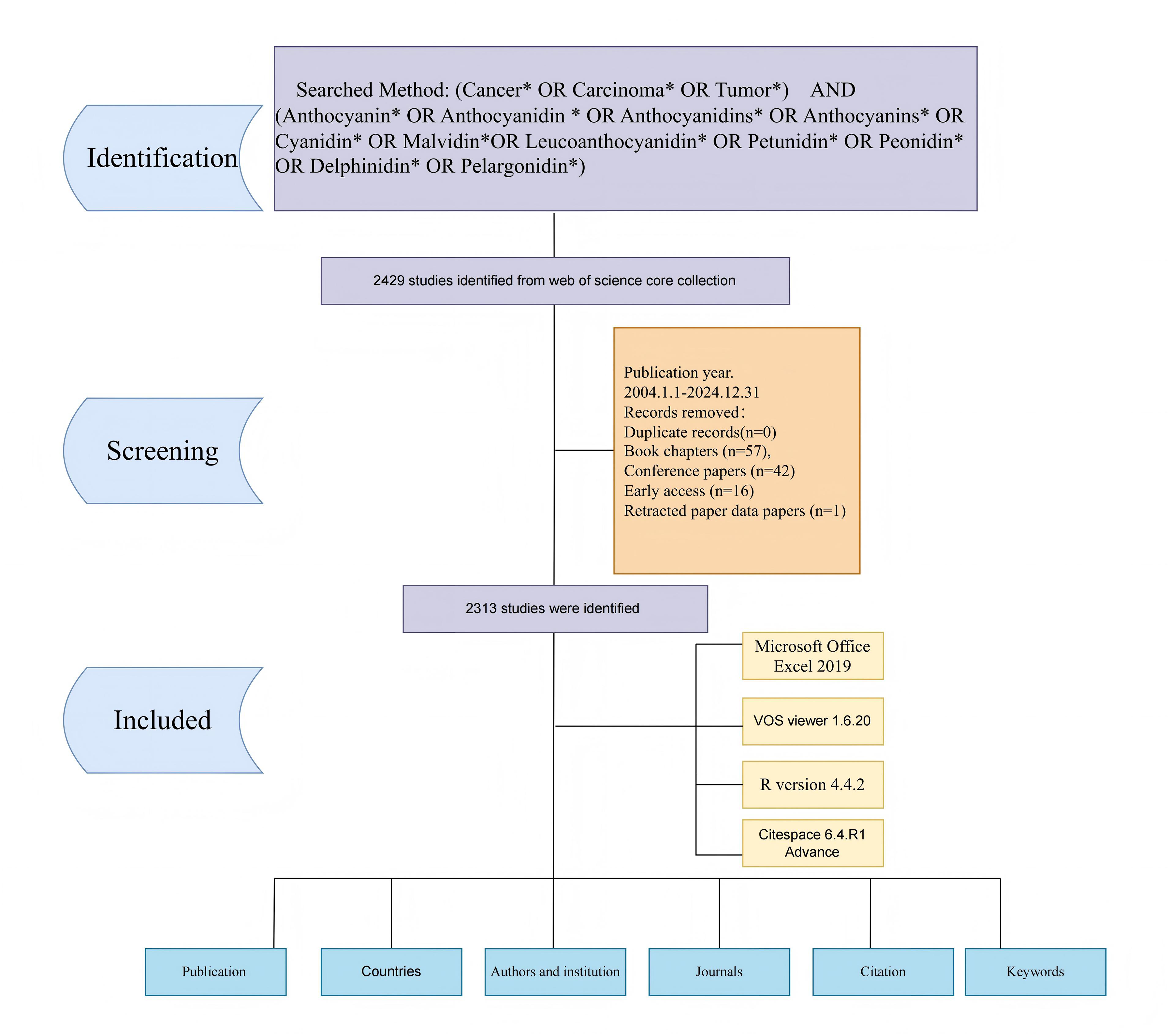
Flow chart of the publication selection.
To ensure high-quality standards, we then filtered this raw dataset. While we found no duplicate records (n = 0), we removed specific document types that didn't meet our criteria, including 57 book chapters, 42 conference papers, and 16 early access articles. We also excluded one retracted paper to maintain data integrity. This screening left us with a final core of 2313 studies.
Bibliometric Analysis
Using MS Excel 2019, R (version 4.4.2) and CiteSpace (version 6.4) to process data and visualize the data.VOSviewer 1.6.20. Use Excel to make basic annual trend graphs. Use VOSviewer and CiteSpace for complex cooperation network analysis and reference timeline sorting. Also use the R language package “bibliometrix” to analyze author profiles and journal performance. Select “full count” as the indicator. Different from score counting, this method gives full scores to all contributing institutions in multi-author papers, which can better reflect the cooperation situation. It should be noted that all the research in this study uses public data, and no ethical review is required.
Result
Global Overview
The search identified a total of 2313 documents published between 2004 and 2024, comprising 1803 original research articles and 510 reviews. The average citation frequency is 49.71, with two papers exceeding 1000 citations. The dataset involves over 10 200 authors from 92 countries and regions, spanning 700 journals. Over the past decade, publication volume has stabilized at approximately 162 papers per year. Despite this plateau in output, citation rates have continued to rise, suggesting that the field maintains high relevance within the scientific community.
Annual Publication Trend of Cancer and Anthocyanin
Industry trend analysis shows that the development of anthocyanins in cancer research is relatively fast, showing a strong non - linear growth trend, not a simple linear growth. The model exhibits high goodness-of-fit (R2 = 0.9811; Figure 2), with the specific formula being y = 0.0902x3–2.8164x2 + 25.114x–45.85. Notably, extrapolating this trend suggests that annual publications in this field are projected to exceed 200 by 2025. This clearly indicates that academic enthusiasm for research in this area continues to climb. The annual publication volume increased from 24 articles in 2004 to 168 in 2024. This trajectory corresponds to a Compound Annual Growth Rate (CAGR) of 10.2%. Although the WoSCC database generally expands by approximately 3%–5% annually, the growth rate in this field exceeds that baseline. This difference indicates that the observed trend reflects actual academic activity rather than being a primary result of database indexing expansion.

The cumulative and annual number of publications from 1995 to 2024.
Distribution of Publications by Country
The collaboration map in Figure 3A shows the trend of international cooperation. There are close research bridges connecting China with the United States and Canada; the United States is also relatively closely connected with India and the United Kingdom.Mexico and Brazil are associated with showing that these countries play a key role in the relevant shaping. In terms of total output, the top ten countries dominate, with the number of achievements more than twice that of other countries. As shown in Figure 3B, the United States (413 art articles) and China (404 art articles) are in the leading position, and Italy, India, and South Korea are in the second echelon (Figure 3B).
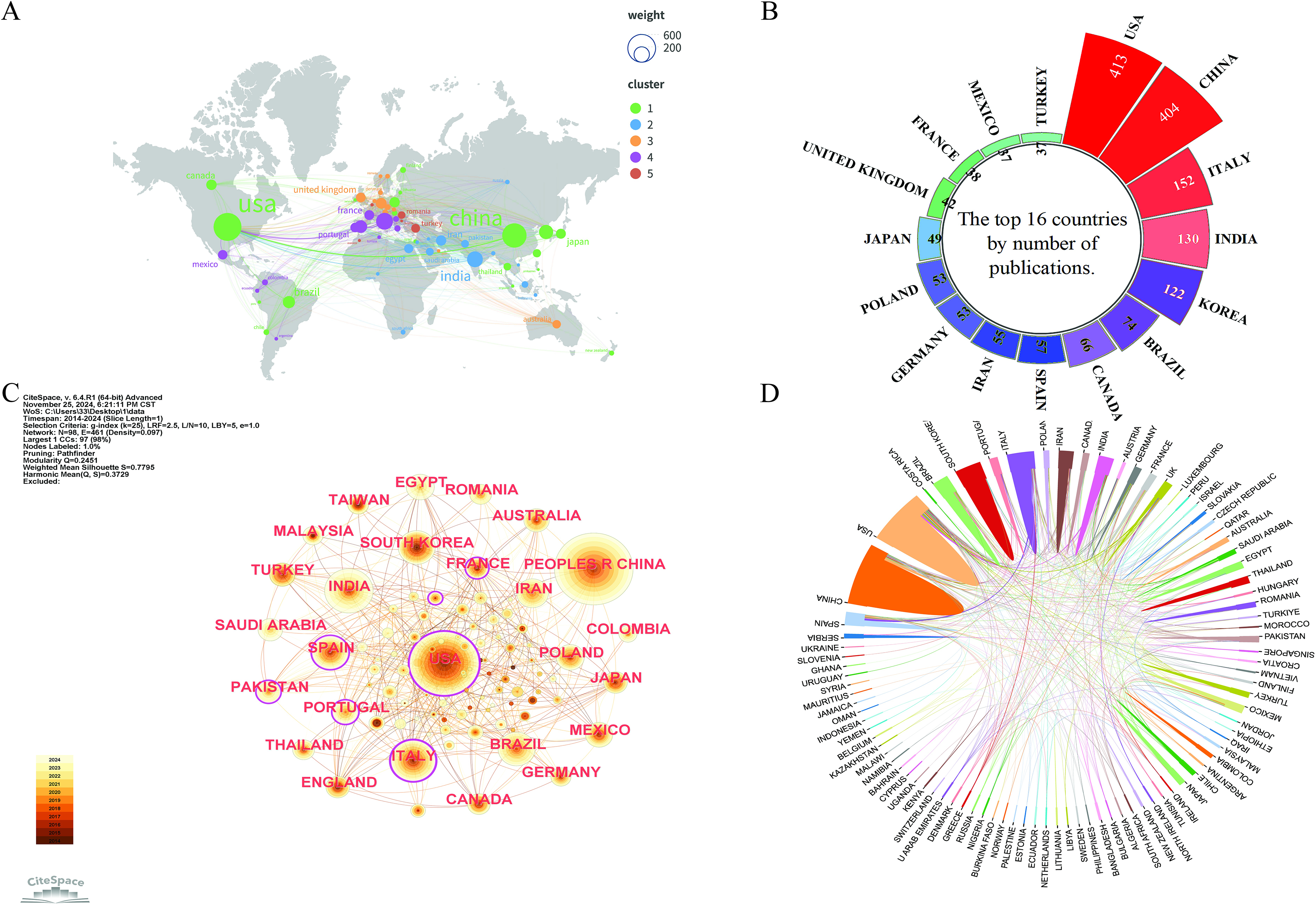
Country cooperation network map (A) collaborative network shown on the world map (B) top 16 countries by the number of publications (C) visual mapping of country co-author coverage using citespace (D) the international collaboration among pertinent countries/regions.
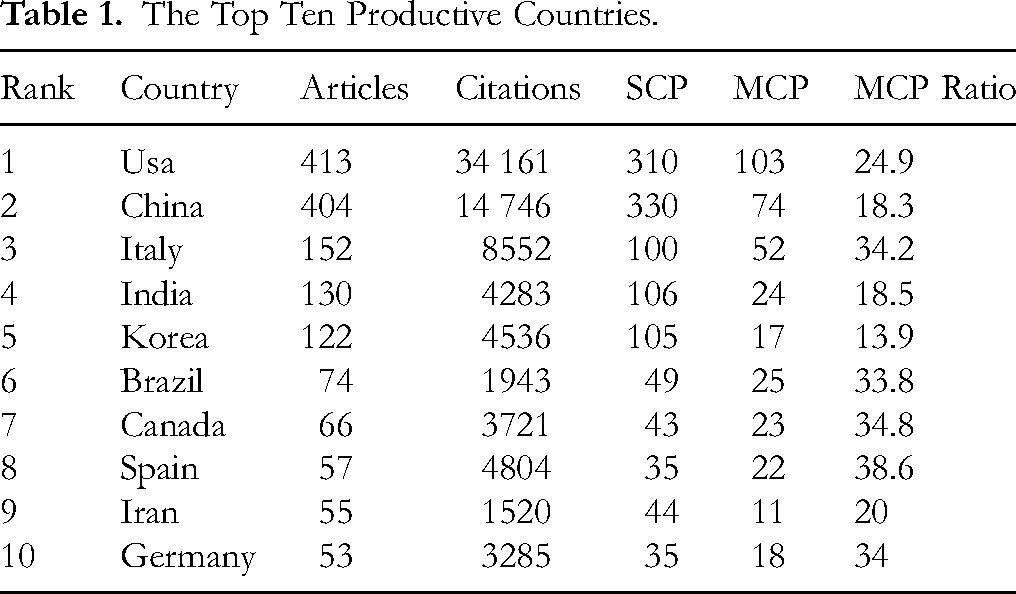
The United States is in the leading position in key indicators. The number of papers is 413, ranking first, the total number of citations is 34,161, ranking first, and the number of international cooperation papers is 103, ranking first. Countries such as China and Italy follow closely. There is a prominent point in Spain. Its total number of papers ranks eighth, while the international cooperation rate is the highest at 0.386 (see Table 1). This comparison shows that cross-border cooperation is effective, but it has not been fully utilized in this field as a whole.
The Top Ten Productive Countries.
In order to intuitively display the national cooperation network (Figure 3C and D), set the CiteSpace time slice to 1 year (2004-2024), and extract the top 50 countries with the most citations in each slice. The generated map shows that the research strength is concentrated in developed countries and China. The United States, Italy, and France (yellow-brown node levels) maintain a core position. The China-US cooperation link is the most stable axis in the network, which is the main channel for global knowledge flow.
Analysis of Authors and Affiliations
In terms of geographical distribution, the United States occupies half of the top ten high-yield authors in the world. Marche Polytech University has two core authors (conc). Stoner GD is the main contributor, with the largest number of published papers (34 papers) and the highest total citation times (2588 times). Ten of his papers belong to the core literature part. Their papers have been cited more than 10 000 times, and the G-index is relatively high (see Table 2).
The Most Productive Ten Authors.

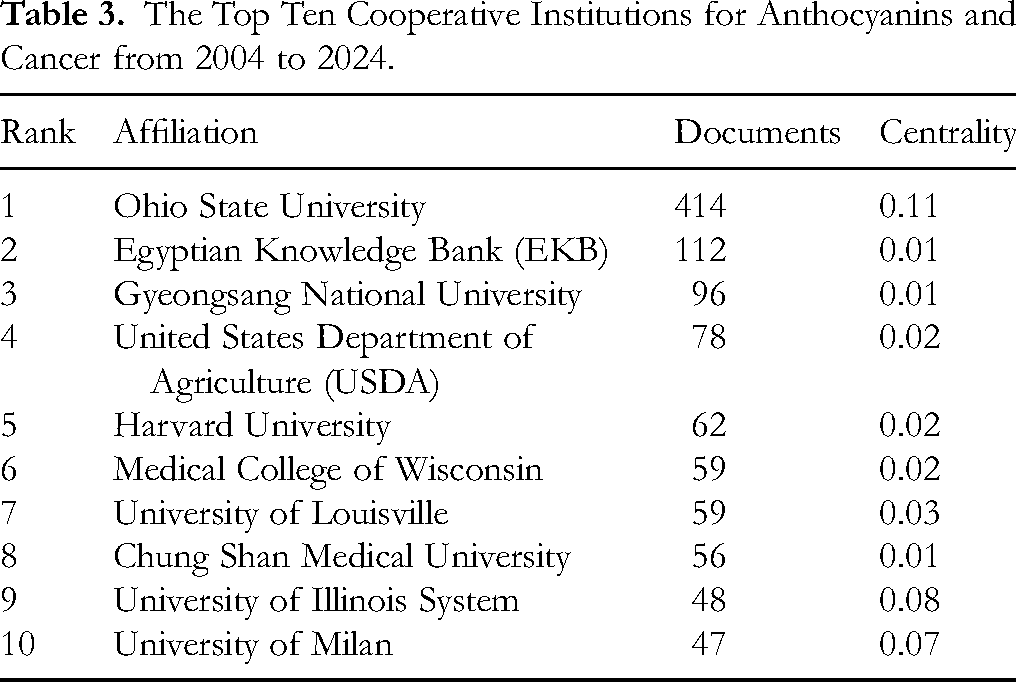
Collaborative mode analysis shows an obvious knowledge-centered trend. The author network of nearly 11 000 researchers drawn by VOSviewer identifies Stoner GD, Battino M and Wang LS as the core nodes of two main collaborative clusters (Figure 4A). The institutional collaboration network further strengthens this geographical and institutional concentration through CiteSpace analysis (Figure 4C and D). Ohio State University is a core institution, with 414 published papers ranking first, and the network influence is also obvious, with a between - centrality of 0.23, which is much higher than other major institutions (Table 3). The key researchers and the American institutions they belong to are both highly conspicuous, presenting a situation of highly concentrated knowledge production structures.
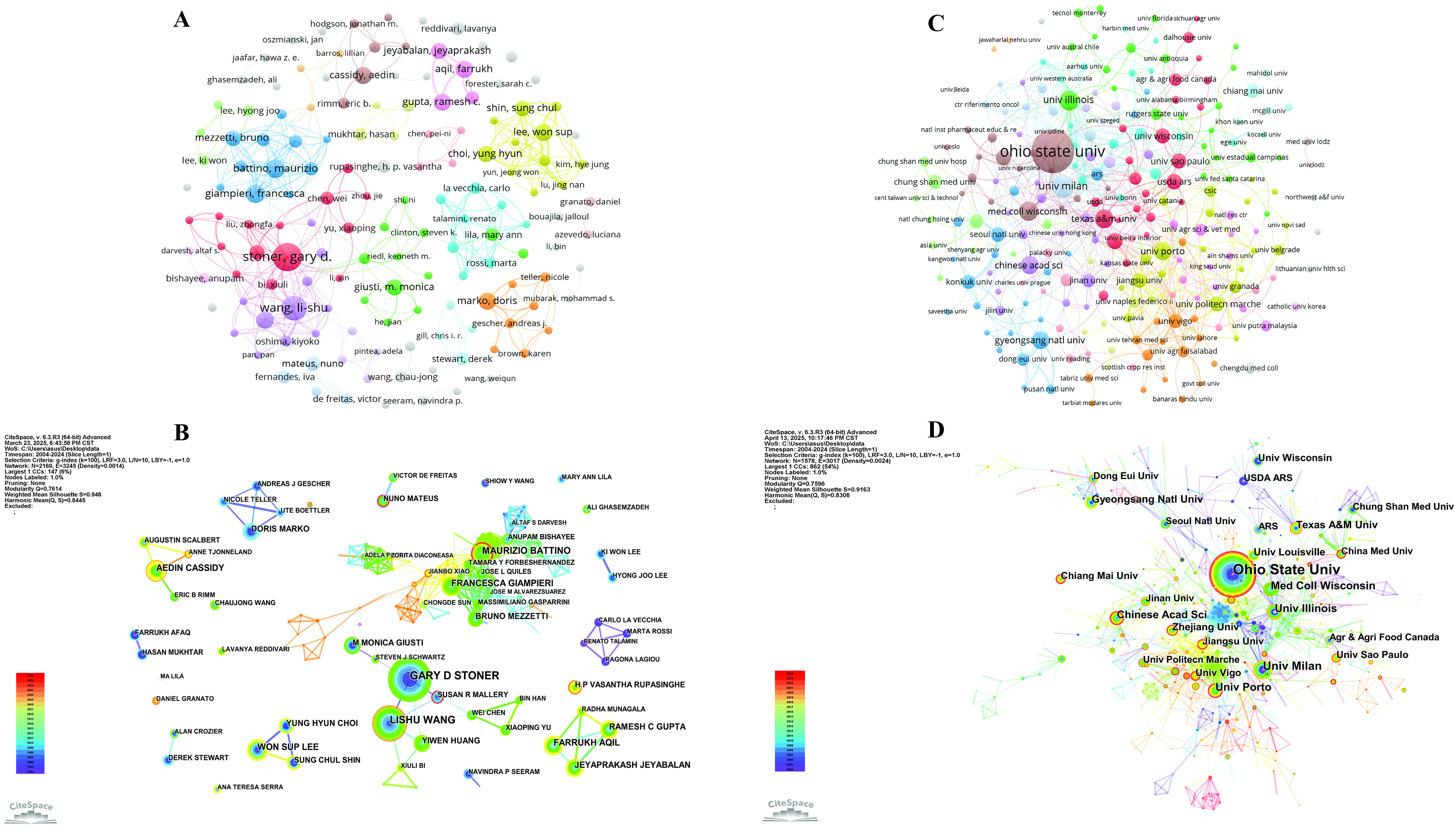
A collaborative network between authors and institutions on anthocyanins and cancer. (A) Visual map of the Vosviewer network between authors. (B) Visual map of the CiteSpace network in the authors. (C) Visual map of the Vosviewer network between institutions. and (D) a visual map of the CiteSpace network between institutions.
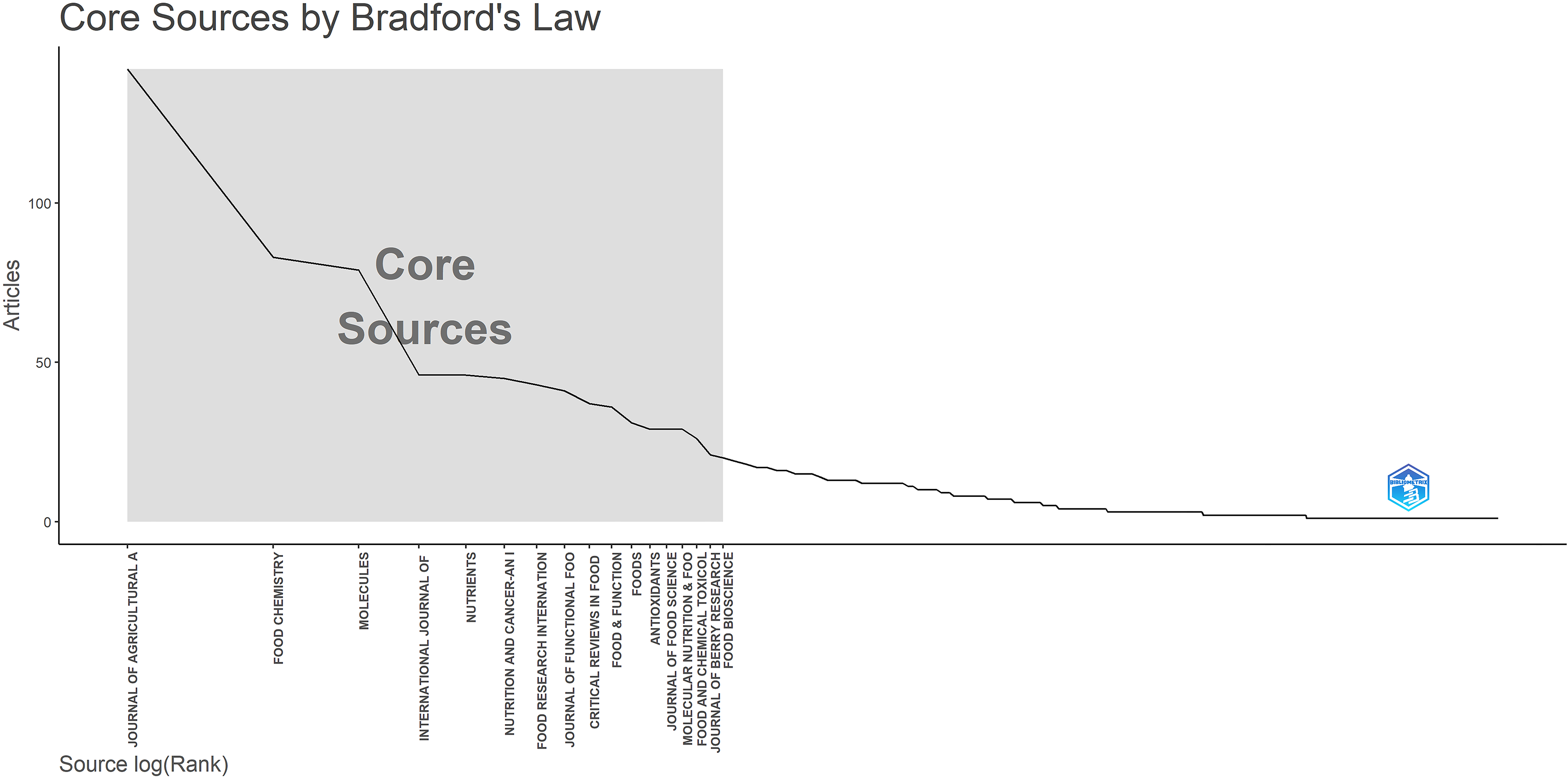
Bradford's law diagram.
The Top Ten Cooperative Institutions for Anthocyanins and Cancer from 2004 to 2024.
Analysis of Journal Distribution
Brad Law analyzed 679 source journals, and there is a particularly concentrated situation in the core area (Figure 5). 17 journals are core, publishing 33.85% of the literature (783/2313). Compared with the theoretically predicted 33%, the deviation is +0.85%. The remaining literature is distributed in area 2 (46 kinds, accounting for 34.2%) and area 3 (616 kinds, accounting for 31%).Please provide the specific text content that needs to be rewritten so that I can rewrite it according to the requirements.
Journal-specific output (Figure 6A) shows Journal of Agricultural and Food Chemistry (JAFC) leading with 142 papers, followed by Food Chemistry (83 papers) and Molecules (79 papers). Their growth patterns diverged: JAFC maintained long-term stability; Food Chemistry underwent rapid expansion from 2010 to 2018; while Molecules exhibited the steepest recent trajectory, doubling its publication volume from 2020 to 2024 (Figure 6B).
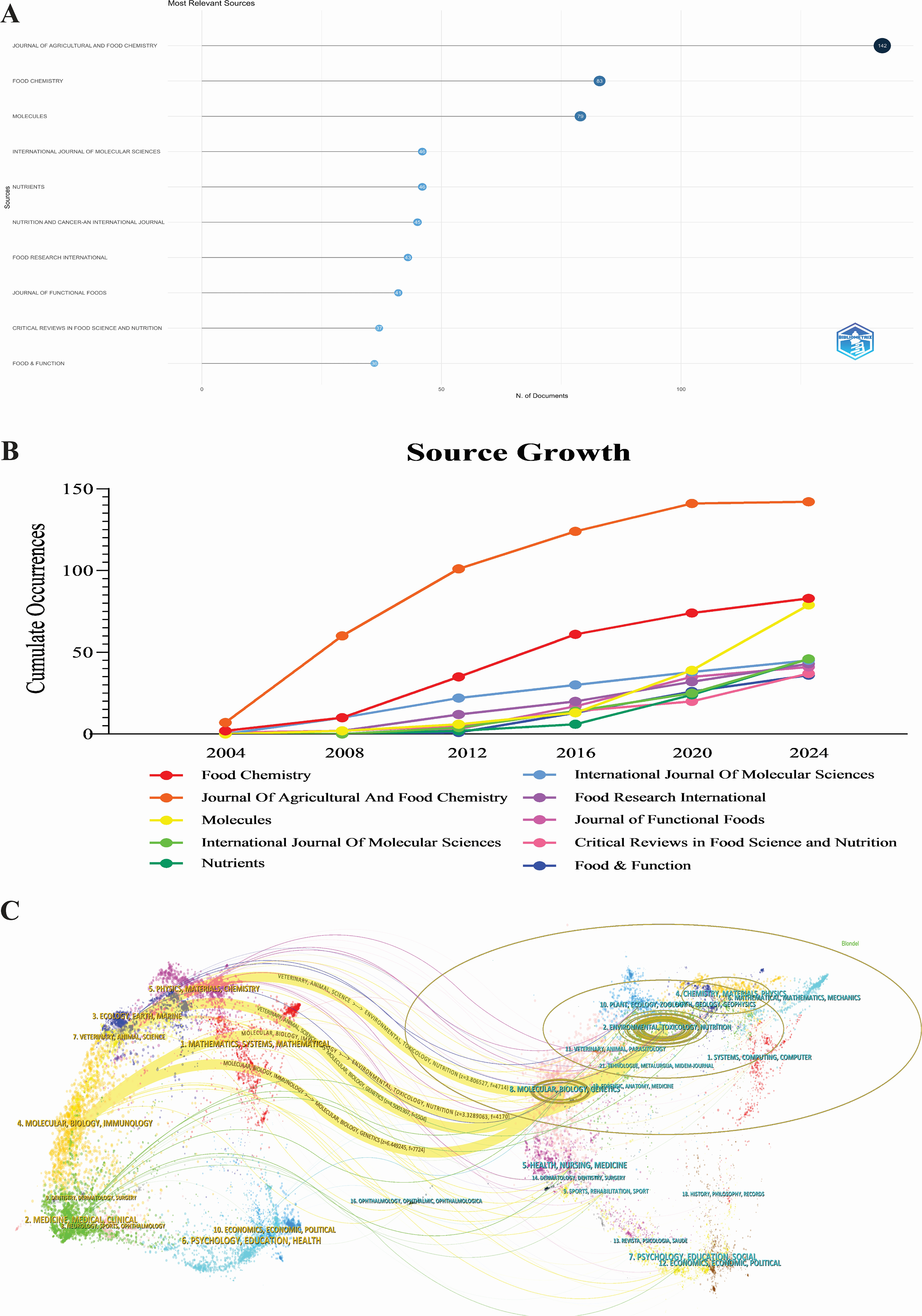
Journals analysis. (A) The top 10 most active journals. (B) The growth trend of publications in the top 10 productive journals. (C) Journals are double-cited.
“Food Chemistry” has the highest h-index (68) and g-index (121) among the influence indicators. It is a trend that high-impact journals such as “Nutrients” (with an impact factor of 6.706 in 2022) and “International Journal of Molecular Sciences” (with an impact factor of 6.208 in 2022) are more engaged. This shows that the research topics in this field go beyond the scope of traditional journals and gain more attention on broader interdisciplinary platforms.
Analysis of Highly Cited Papers
In the highly cited literatures in Table 4, the most influential one is a consensus review in 2008 (cited 870 times). This review summarizes the key anti - cancer mechanisms of anthocyanins, from inducing apoptosis to anti - inflammation, and also points out the main bottleneck in translational medicine: low bioavailability.
The Top Ten Papers with the Highest Number of Citations.

High-impact research forms the theoretical basis of this field, but also shows its limitations: most of the conclusions of preclinical models lack sufficient human evidence. The research explores specific pathways, such as dietary sources, structure-activity relationships (for example, positions 3 and 6) and the inhibition of colorectal cancer cells (position 4), but basic problems have not been solved, and there are vague molecular targets, uncertain doses and unknown long-term risks.Thus, future clinical translation relies on stronger clinical studies and precise mechanistic clarifications.
Changes in Trends of Research Disciplines
We visualized interdisciplinary knowledge flows through dual-map overlay (Figure 6C). The left panel shows citing journals, while the right panel displays cited publications. The width and color of colored arcs represent knowledge transfer pathways and intensity (quantified by metrics such as citation frequency and z-score centrality). 17
In Figure 6C, The analysis clearly reveals four primary citation trajectories. The most prominent path (yellow) indicates that research published in “Veterinary/Animal/Science” journalsprimarily draws its knowledge foundation from classic literature in “Environmental/Toxicology/Nutrition” and “Molecular/Biology/Genetics”. Equally important, another path indicates that new research in the field of “Molecular/Biology/Immunology” extensively cites prior work from the domains of “Environmental/Toxicology/Nutrition” and “Genetics”.
Co-Citation Analysis
The citation emergence map (Figure 7A) reveals recent literature receiving concentrated attention within the field. As of 2024, papers with the highest emergence intensity include those by Chen LL (2018; 11.32), Mattioli R (2020; 21.94), and Sung H (2021; 16.73).

Reference analysis. (A) Top 25 references with the strongest citation. (B) Cluster Dependencies of co-citations.
The co-citation-based literature clustering network (Figure 7B, analyzed using CiteSpace v.6.4.1) exhibits high structural validity (Q = 0.7214, S = 0.8849), forming 20 distinct clusters. Specifically, Cluster #1 (phenolic compounds) serves as a foundational cluster centered on Siegel RL (2021), connecting to specialized domains including Cluster #2 (Bcl-2 family), #4 (antioxidant activity), #7 (case-control studies), #8 (flavonoid intake), #10 (HT29 cells), and #11 (animal models). The knowledge evolution in Cluster #3 (Chemoprevention) notably stems from deepening insights into early studies within Clusters #0 (Colorectal Cancer), #8 (Flavonoid Intake), and #10 (HT29 Cells), with Wang LS (2008) serving as the pivotal node supporting this cluster. 18
Analysis of Keyword Co-occurrence
From the 25 most prominent keywords in 2024 (Figure 8), several distinct research focuses emerge. The two terms with the highest prominence scores—“bioactive compounds” (11.05) and “gut microbiota” (7.84)—demonstrate sustained prominence, collectively indicating that interactions between natural ingredients and the microbiome remain a priority area. Concurrently, emerging keywords like “extraction” (7.27) and 'inflammation' (6.8) point to current research interests in processing techniques and specific mechanistic pathways, respectively. Furthermore, the sustained prominence of terms such as “health benefits” (9.86) and “insulin resistance” (6.09) reflects the broad research landscape linking metabolic health to functional food applications. These trends collectively point to an interdisciplinary integration of precision nutrition and chronic disease prevention.
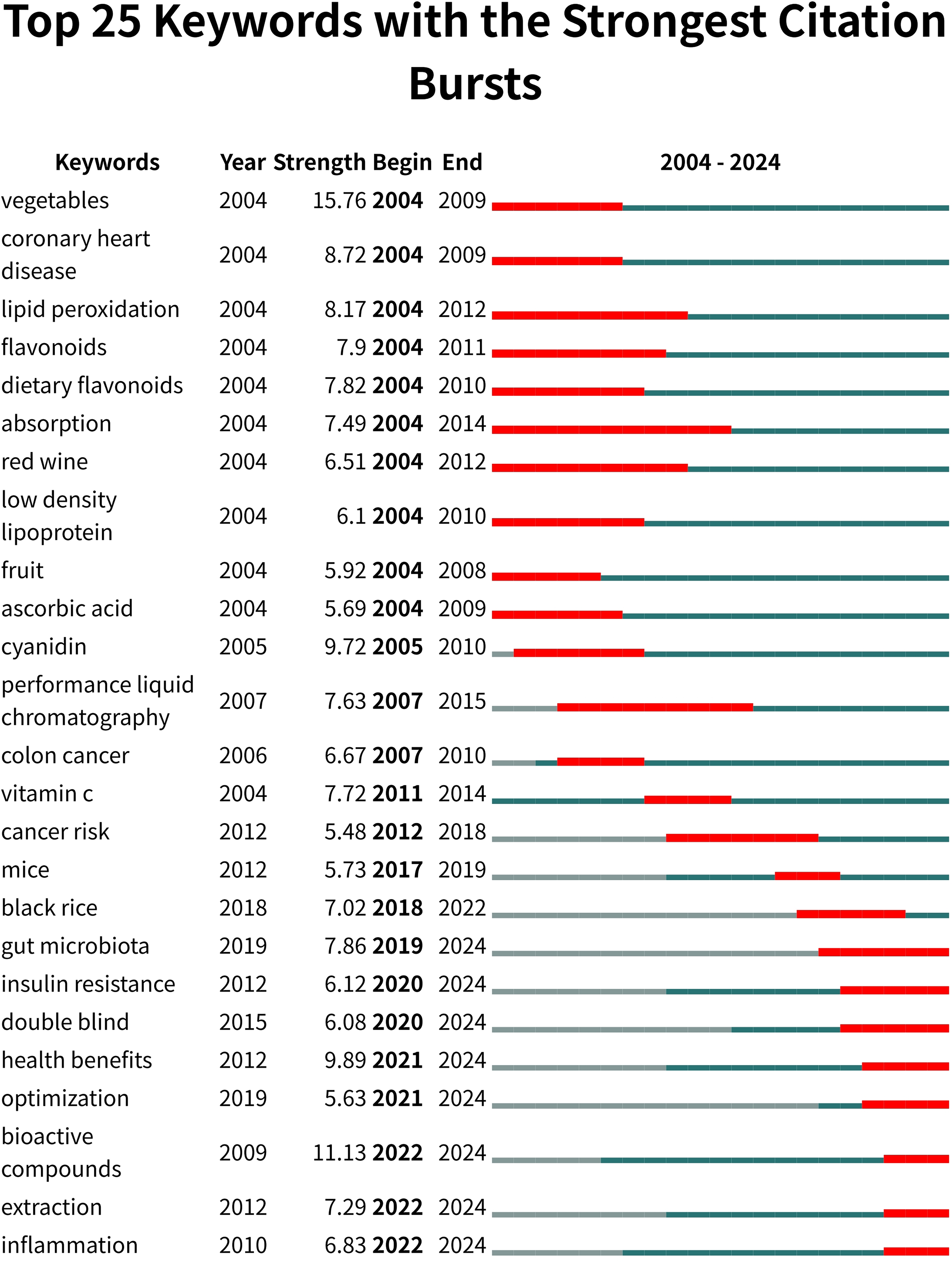
The top 25 cited references with the strongest citation bursts.
In the first snapshot (2004-2008), 250 papers were included in the calculation, yielding eight clusters for #0 genistein content, #1 growth inhibition, and #2 berry anthocyanins, etc (Figure 9A). In the second snapshot (2009-2013), 444 papers were considered, and 8 clusters were generated for #0 invasion, #1 antioxidant activity, and #2 oxidative stress, etc (Figure 9B). In the third snapshot (2014-2018), 596 papers were considered, and seven clusters were created for #0 chemoprevention, #1 antioxidant capacity, and #2 apoptosis, etc (Figure 9C). In the fourth snapshot (2019-2024), 1023 papers were included and seven clusters were generated, namely #0 cardiovascular disease, #1 phenolic compounds, and #2 bioactive compounds, etc (Figure 9D). Compared to the previous 15 years, some classic studies, such as #1 phenolic compounds, and #2 bioactive compounds, are still hotspots, while the emerging clusters #0 cardiovascular disease, #3 health benefits, #4 cancer prevention, and #8 ferulic acid have gained more attention from researchers.
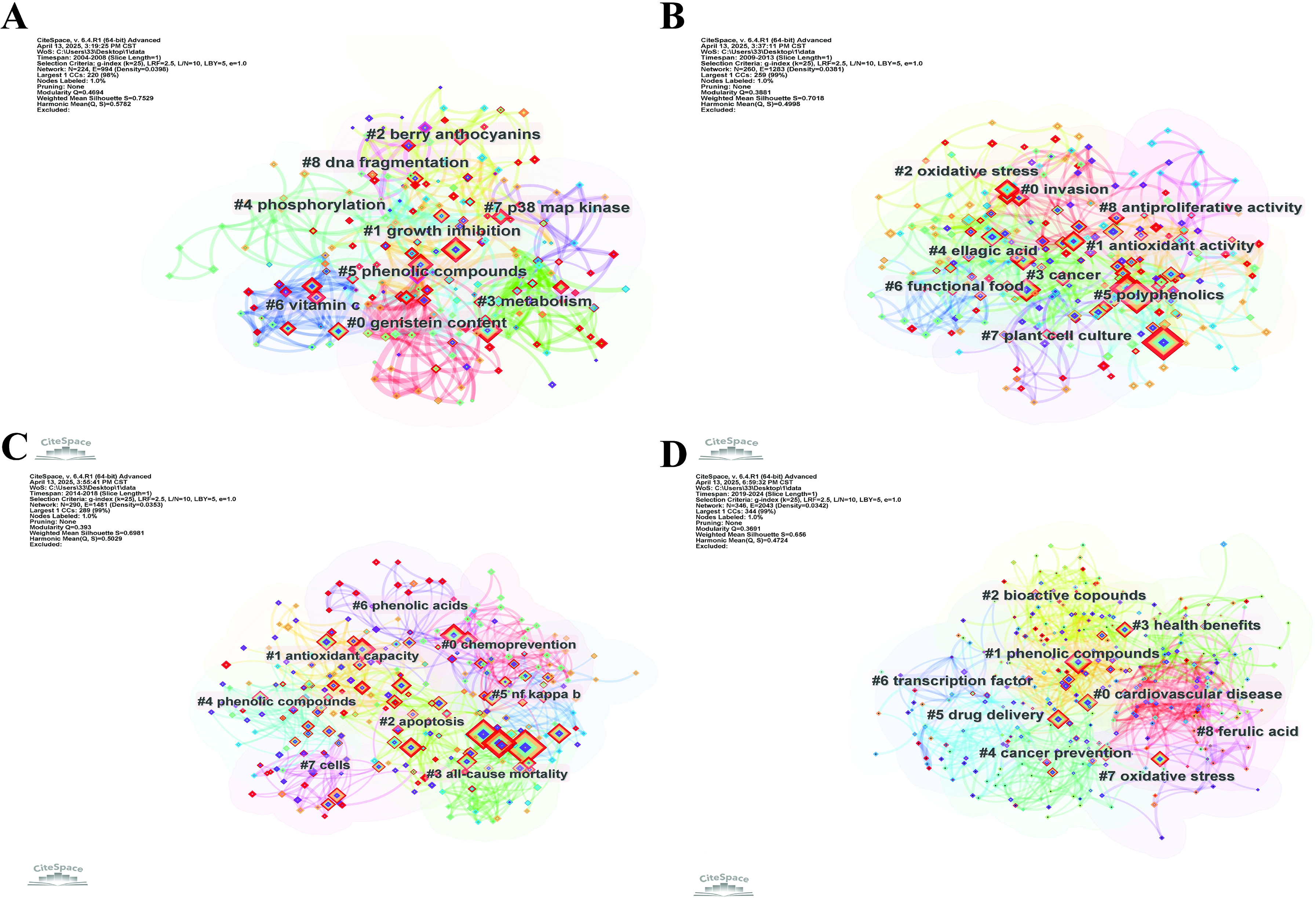
The keyword clusters snapshots in four periods. (A): 2004–2008, (B): 2009–2013, (C): 2014–2018, (D): 2019–2024.
Discussion
Cancer remains a complex and formidable global health challenge, which urgently requires attention and action. 19 Recent studies have shown that among the numerous health-promoting dietary compounds, polyphenols are notable for being the most abundant reducing agents ingested through human diets, playing a significant role in maintaining health.20,21 In particular, anthocyanins, a subclass of polyphenols, have garnered substantial attention due to their potent anti-tumor activities and are considered to hold great potential in cancer prevention and treatment. 22 Based on 2313 articles from the Web of Science Core Collection spanning 2004 to 2024, we conducted a systematic bibliometric analysis using CiteSpace, VOSviewer, and R-Bibliometrix. By constructing author and citation networks, we revealed the distribution patterns of research strength, the composition of core literature, and the emergence of frontier topics. Ultimately, this approach mapped the developmental trajectory of anthocyanin cancer research, tracing the shift in research focus from prevention to treatment.
General Information Research Development and Contributions
Over the last twenty years, research into anthocyanins and cancer has expanded steadily. This growth is driven primarily by interest in the compound's biological properties. 23 Technological improvements have also been a key factor; advances in ultrasonic-assisted extraction and mass spectrometry have refined purification methods, making these compounds more accessible for experimental use. 24 Furthermore, the convergence of pharmacology, molecular biology, and nutrition has provided a clearer mechanistic understanding of how anthocyanins function against tumors. 29
The global research and development is unevenly distributed, and the United States is in a leading position, and the same situation exists in countries such as Italy. In the collaborative network of developed countries, there are also hubs such as Ohio State University, the Egyptian Knowledge Bank, and Gyeongsang National University playing roles. At the individual level, Stoner GD in the United States has a relatively high influence. His review in 2008 in collaboration with Wang LS uses cell culture, animal models, and epidemiological data to evaluate the cancer prevention effect. Chinese data show that there are a relatively high number of papers published, but the network diversity is relatively limited. China's cooperation mainly relies on the US and South Korean models, and there is relatively little cooperation with the EU or Latin American regions. To solve the problem of “core-periphery” imbalance and shift to a more extensive framework, such as BRICS or regional platforms, it may enable China's academic influence to shift from the quantitative aspect to structural optimization.
Analysis of the Most Influential Journal and co-Cited Reference
The academic research in this field is mainly on journals such as “J Agric Food Chem”, “Food Chem”, “Molecules”, etc The citation network analysis shows that the research is interdisciplinary, drawing on knowledge from multiple disciplines such as “Environ Toxicol”, “Nutr”, “Mol Biol”, “Genetics” and even “Vet Sci”. The interdisciplinary nature originates from the need to understand the complex molecular interactions between different levels of biological organisms. Therefore, the connection of scientific disciplines helps to clarify specific molecular targets and biological responses. Recently, the integration of computational pharmacology, multi - omics and translational toxicology methods is changing the research paradigm - from isolated compound analysis to mechanism - based targeted treatment strategies.
The global cancer burden highlights the urgency. For example, Sung et al (2021) estimated that there were approximately 19.3 million new cancer cases worldwide in 2020, among which invasive breast cancer (2.3 million cases) surpassed lung cancer for the first time to become the most common diagnosed cancer type.It is predicted that by 2040, the number will reach 28.4 million, and perhaps grow by 47%. Such growth may have unbalanced impacts on transition countries.
Lin BW et al reviewed preclinical data, clinical trials, and theoretical frameworks to map the anticancer properties of flavonoids. Their analysis outlined antioxidant/anti-inflammatory effects, antimutation, and inhibition of proliferation through cell cycle arrest, apoptosis, and autophagy. The review also detailed regulators of specific molecules, such as activator protein 1 (AP-1), adenomatous polyposis coli (APC), antioxidant response element (ARE), autophagy-related 5 (Atg5), mitogen-activated protein kinase kinase (MEK), inducible nitric oxide synthase (iNOS), and receptor tyrosine kinases (RTKs).
The dietary sources and potential applications in Table 5 core literatures. The data show that the anti-cancer effects vary with different sources. For example, the extracts of black raspberries and blueberries play a role in colorectal cancer, which is achieved by regulating the Wnt signaling pathway and inducing apoptosis. While black soybeans and myricetin have a closer association with gastric cancer: the former helps to fight against Helicobacter pylori-related inflammation, and the latter can activate the KLF6 tumor suppressor. Map foods to mechanisms to provide a scientific basis for targeted nutrition strategies.
Source-Specific Anticancer Mechanisms of Anthocyanins Based on Highly Cited Literature.

Exploration of Emerging Topics
The trajectory of research in this field (shown through clustering timelines) has changed, moving from basic mechanisms to translational applications and recently to precision medicine. Early research (Early res) identified core concepts such as oxidative stress and the Bcl-2/apoptosis pathway, building a framework for understanding the biological activities of flavonoids. Subsequent work focuses on using preclinical models to verify the role of these mechanisms in chemoprevention to confirm the effect of tumor suppression. Current research emphasizes molecular precision, especially in the case of specific microbial metabolites (such as urolithin) involved in colorectal cancer. This approach connects the research of traditional natural products with the development of targeted therapy using metabolomics.
There are 6 main research themes in the top 25 highly cited burst analyses: gut microbiota, insulin resistance, double-blind trials, inflammation, bioactive compounds, health benefits or extraction. Term prominence has a multi - dimensional research strategy. The research key goals include: using the microbiome to enhance metabolite production, obtaining high - quality evidence through random trials, regulating inflammation in the tumor microenvironment, relying on structural optimization to improve bioavailability, and targeting dysregulated cancer metabolism. These efforts are comprehensive actions to promote deeper mechanistic understanding and effective clinical transformation.
Gut Microbiota
We conduct research on bibliometrics, and the results strongly show that there is a close physiological connection between colorectal cancer (CRC) and the gut microbiota. It is worth pointing out that “gut microbiota” is a high-intensity signal in keyword burst analysis, and CRC is in a core position in the co-citation network. This convergence situation indicates that the research is shifting from the broader antioxidant paradigm to paying more and more attention to the “gut microbiota-cancer axis”. In terms of function, this axis plays a two-way role: intestinal microbial enzymes are key to the bioactivation of anthocyanin metabolites (for example.Protocatechuic acid can help shape the microbial community and can also reduce pre-carcinogenic inflammation.
The significance of this axis is exemplified by high-centrality literature within Cluster #0. For instance, Chen et al (2018) 34 demonstrated that (BRB anthocyanins) exert chemopreventive effects against colorectal cancer in CRC (azoxymethane [AOM]/dextran sodium sulfate [DSS]-treated C57BL/6J mice). A supplementation significantly reduced colon tumor incidence, ameliorated carcinogen-induced gut dysbiosis (decreasing Desulfovibrio sp. and Enterococcus spp. 34 while increasing Eubacterium rectale, Faecalibacterium prausnitzii, and Lactobacillus spp.), and reversed epigenetic silencing of the tumor suppressor secreted frizzled-related protein 2 (SFRP2) via promoter demethylation. This upregulated SFRP2 expression while downregulating methyltransferases and pro-inflammatory signaling. The study indicates BRB anthocyanins prevent colorectal carcinogenesis through microbiota modulation, anti-inflammatory effects, and epigenetic regulation of SFRP2.
Significant gaps in understanding remain, however. A major challenge lies in the phenotypic diversity of anthocyanins themselves and the complexity of how gut microbes metabolize them. 35 To move from observing correlations to proving cause and effect, future studies need to advance past reliance on 16S rRNA sequencing. A promising approach would be to use germ-free mouse models and fecal microbiota transplantation (FMT) to directly test whether specific bacterial strains are necessary for the anti-tumor effects of anthocyanins. 36 To elucidate this mechanism, a powerful strategy would be to integrate metagenomic sequencing with untargeted metabolomics. This integrated approach enables the systematic identification of specific bacterial enzymes responsible for converting anthocyanins into active metabolites, such as protocatechuic acid.36,37 Mapping these molecular pathways thereby allows researchers to pinpoint the precise microbial interactions that drive the observed therapeutic effects.
Insulin Resistance
The clustering rise of the keyword “insulin resistance”. A research field is shifting to explore the metabolic functional abnormalities driving tumorigenesis. Cluster research indicates that anthocyanins mainly enhance insulin sensitivity by activating peroxisome proliferator-activated receptor gamma (PPARγ), 38 which highlights that these compounds have shared biological interfaces in intervening in metabolic and tumorigenesis pathways.
Functionally, PPARγ activation promotes lipid homeostasis—facilitating free fatty acid uptake and reducing ectopic fat deposition—which in turn alleviates insulin resistance and chronic inflammation. 39 Beyond direct gene regulation (eg, of high mobility group AT-hook 1 [HMGA1]), Fibroblast Growth Factor 21 (FGF21) has emerged as a critical downstream mediator. Anthocyanin intake upregulates this PPARγ-dependent hepatic hormone, enhancing systemic glucose control and lipid oxidation. 40
FGF21 is the key to the communication of the gut-liver axis. Anthocyanins regulate the gut microbiota, increase the abundance of Akkermansia, and promote the production of short-chain fatty acids. These metabolites stimulate the liver to secrete more FGF21, and FGF21 promotes metabolic flexibility and inhibits tumor inflammation. Thus, such a pathway emerges: from anthocyanins in the diet, through microbial and PPARγ/FGF21-mediated metabolic homeostasis, to chemopreventive effects. 41
Double-Blind Trials
The rise of 'double blind' as a high-strength keyword marks a definitive shift in the field's priorities toward clinical validation. This reflects a concerted effort to follow promising preclinical findings with rigorous human evidence. Although full-scale double-blind trials are still limited, initial studies are beginning to chart systemic biological effects. 42 For example, a presurgical trial in 35 patients with adenomatous polyps found that while a curcumin-anthocyanin supplement did not change primary biomarkers, it revealed novel network-level connections between inflammatory and metabolic pathways. 43 Other interventions targeting localized endpoints have shown measurable outcomes, such as reduced nuclear β-catenin and a 7% decrease in the Ki-67 proliferation index in colorectal tissue after a four-week combined regimen. 42 There are co-citation patterns, especially in case - control studies and animal model studies. It can be progressively shown that there is a gap between laboratory mechanisms and clinical effects. Most human studies are small - scale or only focus on pharmacokinetics. Whether dietary intake can reach the bioactive concentration showing regulatory effects is not clear. Individual differences and the practice of large - scale long - term randomized controlled trials are complex, which further adds to the translational challenges. So the development of this field needs to focus on high-quality randomized controlled trials, integrate personalized medication regimens, and also carry out long-term safety monitoring in different populations.
Inflammation
The marked increase in the appearance of “inflammation” as a keyword in recent years highlights its growing relevance. This trend reflects a clear shift in research focus toward examining how anthocyanins influence the tumor microenvironment to counteract cancer development. Our bibliometric network keyword clusters snapshot (Figure 9) connects this hotspot to the nuclear factor kappa-light-chain-enhancer of activated B cells (NF-κB) signaling pathway, which serves as a dominant mechanistic node within the intellectual structure. Biologically, high-centrality studies within these clusters elucidate that anthocyanins, particularly those from black soybean and tart cherries, block the NF-κB axis44,45 by inhibiting IκB kinase (IKK)(Ser176/180) phosphorylation and DNA binding. 46 For instance, specific monomers such as delphinidin-3-rutinoside have been observed to downregulate the expression of protein tyrosine phosphatase 1B (PTP1B) and suppress c-Jun N-terminal kinase (JNK) phosphorylation .thereby reducing NADPH oxidase (NOX3/NOX4)-mediated oxidative stress. 47 While these mechanistic studies highlight the suppression of H. pylori-induced oxidative stress and the activation of p38/p53-mediated apoptosis, 27 our citation analysis (Figure 7B Cluster #7) identifies a critical divergence at the population level. Notably, a Korean case-control study suggested a marginal protective effect of anthocyanins only in H. pylori-negative women, implying that host-specific factors (eg, inflammatory status, gastric pH stability) 48 may modulate their bioactivity. 49 Future research should integrate metabolomics and longitudinal inflammatory biomarker profiling to elucidate the temporal dynamics of anthocyanins in carcinogenic pathways, bridging the gap between mechanistic insights and epidemiological observations.
Bioactive Compounds
The close alignment between the predominant thematic clusters in our bibliometric analysis and established structure-activity relationships underscores a mature research focus. The centrality of specific monomers like delphinidin and cyanidin within the co-citation network (Table S1) reflects a consensus that their anticancer efficacy is dictated by distinct structural features, particularly the ortho-hydroxylation pattern on the B-ring which enhances interaction with key signaling hubs. 50
This evolution from studying anthocyanins as a broad class to targeting defined monomers marks a strategic shift. The persistent keyword association with transcription factors 51 (Figure 9) points to a concerted effort to decode how these precise structures—rather than generic extracts—regulate oncogenic pathways. 52 Consequently, structure-activity relationship (SAR) data now provide a critical framework for selecting scaffolds in drug discovery and precision nutrition.
Acknowledging the bioavailability constraint inherent to these active monomers (Table S1), current research momentum has pivoted toward overcoming this translational barrier. Stabilization strategies, especially nano-encapsulation and microbial biotransformation, dominate recent discourse, aiming to engineer reliable delivery systems for consistent therapeutic outcomes.
Extraction Technology
Anthocyanins have problems of inherent instability and low bioavailability, which are the main obstacles to transformation, making “extraction” the key word. Research is pivoting from conventional, often degradative methods (eg, SLE, thermal) toward advanced, greener techniques. 53 Supercritical CO₂ extraction, for instance, has demonstrated a remarkable capacity to preserve integrity, extending anthocyanin half-life to 216 days in studies clustered around “bioactive compounds”. 54 Parallel efforts focus on bioavailability. Deep eutectic solvents (DES) represent one promising strategy, 55 while the convergence with “drug delivery” themes (Cluster #14, Figure 7B) is evident in the development of sophisticated microencapsulation and nano-targeted systems (eg, liposomes, stimuli-responsive polymers). These aim to enable colon-specific release and overcome permeability barriers. A pivotal question for future translation is whether such protective delivery platforms can maintain their efficacy and ensure safety within the complex milieu of human physiology.
Further Perspective
Precision Nutrition and Stratified Clinical Designs
There are evidences in epidemiological research. Clinical applications are hindered by individual differences. Future trials need to carry out hierarchical design, distinguishing responder and non-responder situations. Including baseline gut microbiota screening (including Bacteroides and Prevotella genera) is the key to finding microbial components in predicting anthocyanin biotransformation. Also, integrating longitudinal multi-omics (paired plasma metabolome and tumor transcriptome) can track the dynamic changes of signaling axes such as NF-κB or PI3K/AKT. This double stratification is of great significance for predicting biomarkers, in line with the principles of precision oncology, combining treatment with precision medicine.
Advanced Delivery Systems and Biomimetic Design for Enhanced Clinical Translation of Anthocyanins
The clinical application of anthocyanins is limited because of their insufficient chemical stability and low oral bioavailability. To solve this situation, research has gradually focused more on advanced nano-encapsulation platforms. Delivery systems based on proteins (such as casein), phospholipids (liposomes), and polysaccharides can play a role in protecting compounds from degradation by the physiological environment, especially under different pH gradients. 56
Stabilization is carrying out the bionic design of precision delivery systems. There is still relatively little evidence in clinical applications, and most of the supporting data come from in vitro studies. This indicates that translational value requires comparative pharmacokinetic studies, comparing nanoanthocyanins with standard dietary sources. 57 More crucially, confirming tumor-targeted delivery-especially for colorectal cancer-requires developing stimulus-responsive mechanisms (such as.Building a complete evidence chain from formula stability to tissue-specific pharmacological effects (including pH-triggered release), 58 and verified by biopsy tissue q-analysis, is crucial for anthocyanins to transform from dietary supplements into reliable therapeutic candidates.
Anthocyanin-Based Multinutrient Synergistic Anticancer Nutritional Intervention
Current research indicates that anthocyanin efficacy is potentiated by nutrient synergy rather than isolation. Co-administration with prebiotic fibers, vitamins, or omega-3 fatty 59 acids appears to enhance antineoplastic activity. 60 Mechanistically, this interaction strengthens gut-immune surveillance while simultaneously disrupting tumor metabolism—specifically by targeting glycolytic dependency. 61 In a therapeutic context, anthocyanins function as adjuvant nutritional support, exploiting metabolic vulnerabilities in the tumor microenvironment. This approach aims to ameliorate treatment toxicity and potentially sensitize malignancies to standard regimens. 62 Consequently, future strategies should prioritize combinatorial interventions—whether through optimized plant-based dietary patterns or multi-nutrient supplementation—to leverage these synergistic benefits for precision oncology.
Limitations
The design of this study has specific limitations, mainly reflected in the data sources. Specifically, the Web of Science Core Collection (WoSCC) is used to obtain the standardized citation metrics required for VOSviewer and CiteSpace network visualization analysis. This selection method is helpful for drawing operations, but compared with Scopus/PubMed, its coverage is relatively narrow, and it is possible to underestimate non-English or regional niche research situations. However, WoSCC contains high-impact international journals, and its clustering results can represent the global mainstream research situation. Also, the analysis time range of this study is from 2004 to 2024, and it only focuses on peer-reviewed articles, excluding research before 2004, the latest unindexed data, and gray literature such as conference proceedings.Literature tools rely on metadata. The result is a generated structural pattern, not full-text semantic details. In the future, it may be possible to integrate multi-database retrieval and powerful text mining techniques to reduce these limitations.
Conclusion
Analyze the development trajectory of anthocyanin and cancer research from 2004 to 2024. The data shows that the United States and China are the main places of paper production, and Ohio State University is the unit with the highest institutional contribution. Italy performs well in specific small fields. From the perspective of theme evolution, there are clear contexts in keyword and citation analysis: early research focused on basic nutritional parameters, and now it has shifted to clinical transformation. The research focus in this field has gradually narrowed down, focusing on the interaction with the gut microbiota, and beginning to construct clinical dose-response curves. The results show that in the future, clinical nutrition (clin nutr) needs to be combined with molecular biology (molec biol) and epidemiology (epidem). This literature map is a strategic guide for finding high-impact research paths.
Supplemental Material
sj-docx-1-npx-10.1177_1934578X261433843 - Supplemental material for Anthocyanins in Cancer Prevention: A Bibliometric Review
Supplemental material, sj-docx-1-npx-10.1177_1934578X261433843 for Anthocyanins in Cancer Prevention: A Bibliometric Review by Jiali Yu, Zhen Zhang, Hongjie Jiang, Haomou Pu, Yaoyao Xiong, Yuling Fan, Keyi Li, Xiaoping Yu and Yanfeng Zhu in Natural Product Communications
Footnotes
Abbreviations
Acknowledgments
The authors would like to express their gratitude to the School of Basic Medical Sciences at Chengdu University for providing the necessary resources and platform for this study. We also appreciate the editors and the anonymous reviewers for their constructive comments and suggestions, which significantly improved the quality of this manuscript. This work was funded by the National Natural Science Foundation of China (82073539) and the Natural Science Foundation of Sichuan Province (No. 2023NSFSC0682).

Funding
The authors disclosed receipt of the following financial support for the research, authorship, and/or publication of this article: This work was funded by the National Natural Science Foundation of China (82073539) and the Natural Science Foundation of Sichuan Province (No. 2023NSFSC0682).
Declaration of Conflicting Interests
The authors declared no potential conflicts of interest with respect to the research, authorship, and/or publication of this article.
Data Availability
The data collected and analyzed in the article are from WOS, an open access database of scholarly articles, and are properly adopted and collected.
Supplemental Material
Supplemental material for this article is available online.
References
Supplementary Material
Please find the following supplemental material available below.
For Open Access articles published under a Creative Commons License, all supplemental material carries the same license as the article it is associated with.
For non-Open Access articles published, all supplemental material carries a non-exclusive license, and permission requests for re-use of supplemental material or any part of supplemental material shall be sent directly to the copyright owner as specified in the copyright notice associated with the article.
