



Abstract
Objective
The study evaluated the impact of gluten-free seaweed bread consumption on carbohydrate and lipid metabolism, demonstrating the potential benefits of including this type of nutraceutical in diets for the treatment of diseases such as diabetes and high cholesterol.
Methods
Ten volunteers of both sexes consumed seaweed bread for 6 weeks. Venous blood was collected three times: before (Initial) and after (Final) bread consumption. Four weeks after the end of bread consumption, a blood sample was collected solely to assess Hemoglobin A1c (HbA1c). Total cholesterol (TC), HDL-C (High-Density Lipoprotein Cholesterol), LDL-C (Low-Density Lipoprotein Cholesterol), Gluc (Glucose), Triglycerides (TG), CRP (C-reactive protein), and other levels were quantified. All analytical parameters were determined using commercial kits from Liquick Cor by Cormay, Lomianki, Poland, using the Prestige 24i equipment from Tokyo Boeki Medical System Ltd in Tokyo, Japan.
Results
The questionnaire demonstrated the prevalence of type 2 diabetes and hypercholesterolemia in the volunteers, highlighting the importance of functional diets containing seaweed. Favorable results were recorded in terms of biochemical markers, particularly in carbohydrate metabolism, with a decreasing trend in HbA1c levels and C-reactive protein, which is involved in the inflammatory process. There was also a downward trend in triglyceride concentrations.
Conclusion
The nutraceutical appears to show promising results in some of the parameters evaluated, particularly inflammation and lipid and carbohydrate metabolism. Its consumption may be beneficial in the prevention of cardiovascular diseases, improving the quality of life of the elderly population. However, additional research with more volunteers and over longer periods is needed to consolidate the results.
Introduction
Diabetes mellitus, osteoporosis, digestive disorders including celiac disease, cardiovascular diseases like arterial hypertension, myocardial infarction, and stroke, overweight/obesity, and some types of cancer are all diseases linked to food. A poor diet also has a significant role in the development of metabolic syndrome, a group of disorders that is predicted to worsen in many nations as populations age and obesity rates rise. Several dietary risk factors are linked to the onset of illness; among these, excessive salt intake, insufficient whole grain consumption, and a deficiency of fruits are regarded as the most significant contributors. 1 Conversely, the global population is expanding to a point where the existing food production system is unable to consistently meet food supply needs. It is projected that the demand for food will rise by at least 70% compared to current production levels. As a result, intensive agriculture has played a significant role in climate change and has had a considerable impact on the environment. Therefore, it is essential to conduct research aimed at developing new and sustainable food sources. 1
Considering the rising incidence of new diseases and the rapid increase in food-related illnesses, it is essential to evaluate both new and “old-new” sources of raw materials to encourage healthier eating habits, applicable to both raw and processed foods. In most advanced market economies, the average diet quality is poor due to the ready access to highly processed foods. Therefore, a possible approach is to change the components and manufacturing processes of processed meals to provide healthier options. Effective strategies are required to address the health issues associated with inadequate nutrition and diet since other remedies, such altering eating habits, do not appear to have been helpful enough. 1 One of the most promising sources of sustainable food ingredients is seaweed. They can grow rapidly in water, which lowers production costs and streamlines the manufacturing process. Despite being utilized as raw or processed food for millennia in Eastern nations like China, Japan, and Korea, macroalgae were first introduced as a food source in Western civilization a few decades ago, during a time when health was deteriorating, and food-related illnesses were becoming more prevalent. The physiologically active substances polysaccharides, phenolic compounds, proteins, polyphenols, pigments, and specific micronutrients like potassium, sodium, calcium, and iron are more abundant in macroalgae than in other taxonomic groupings. 2 Nutraceutical preparations are also being considered as a possible health benefit, and because of the components they contain, macroalgae have the potential to be used as dietary supplements and are linked to positive health outcomes when consumed. Nutraceuticals, also referred to as phytochemical or functional foods, are naturally occurring bioactive chemical molecules with properties that help prevent illness, promote health, or treat certain ailments. 3 The rising interest in functional foods and nutraceuticals has been paralleled by notable advancements in the analytical tools used to investigate their composition and effects.4,5
Environmental contamination from chemical contaminants, pesticide residues, and other unnatural chemicals, combined with the increased incidence of pests and pathogenic microbes such oomycetes, poses a significant risk to global food systems.5,6 These variables not only reduce crop yield but also have a direct impact on food safety and nutritional quality, creating concerns about both human health and market viability. Ensuring efficient monitoring and control of such risks has thus become a crucial issue, necessitating integrated approaches that incorporate agricultural techniques, food processing advances, and stringent quality assurance systems. In this context, the development of safe, functional, and nutritionally enhanced food items must consider potential environmental and biological dangers, linking food innovation with broader aims such as safety, sustainability, and consumer protection.4,5 . Thus, this studied applied quality and safety control systems.
Techniques such as nuclear magnetic resonance (NMR), FTIR-ATR and NIR spectroscopy and metabolomics now play a central role in the identification of bioactive compounds, contaminants, quality control and nutritional markers across a variety of food matrices.5,7,8 In particular, these methods have evolved significantly in terms of sensitivity and resolution, enabling a more precise characterization of low-abundance molecules with potential physiological relevance.9,10 These analytical capabilities are essential not only for understanding health-related effects but also for ensuring the quality and authenticity of complex food products, including nutraceuticals.5,11 As flavonoids and other bioactives present in seaweeds are increasingly recognized for their therapeutic potential, integrating these techniques supports the scientific validation of their functional properties. 12 Seaweed are crucial in addressing this nutritional shortage since they contain a wealth of bioactive chemicals that have been shown to protect against conditions including obesity, diabetes, hyperglycemia, metabolic disorders, and cardiovascular and neurodegenerative illnesses.1,13–17
Reducing the incidence of food-related illnesses requires a high degree of public awareness regarding nutrition and balanced dietary habits. However, there is a lack of scientific data about the general public's understanding of diet-related diseases and their associated risk factors. Given the growing interest in the role of functional foods in the prevention of metabolic diseases, it is essential to understand the physiological mechanisms involved and the biomarkers that allow monitoring their effects. Commonly used indicators include lipid profile components - such as total cholesterol (TC), high- and low-density lipoproteins (HDL-C and LDL-C), and triglycerides (TG), which are associated with cardiovascular and inflammatory conditions. Elevated TG levels are not only a cardiovascular risk factor but are also linked to the development of acute pancreatitis.18,19 In terms of glucose metabolism, fasting glucose and glycated hemoglobin (HbA1c) serve as critical markers for short- and medium-term glycemic control, respectively. 20 Additionally, hepatic enzymes such as ALT, AST, and GGT help evaluate potential hepatotoxic effects, while albumin (Alb) and total protein (TP) reflect nutritional status and inflammatory processes. 21 Markers such as creatinine (Crea), urea, and uric acid (UA) allow assessment of renal function, often compromised in patients with metabolic syndrome or type 2 diabetes.22,23 Finally, C-reactive protein (CRP) is one of the most widely recognized markers for systemic inflammation and cardiovascular risk. 24
This study aimed to evaluate the impact of a gluten-free seaweed-based nutraceutical on carbohydrate and lipid metabolism, in order to explore its potential role as a dietary strategy for managing conditions such as diabetes and hypercholesterolemia. As a result, the goal of this study was to conduct an exploratory, pre-clinical test with a small number of participants to design and standardize the methodological workflow, which included bread production and biological sample processing. This preliminary stage assessed potential dangers, validated processes, and laid the groundwork for larger trials along the value chain of seaweed-based nutraceutical development.
Materials and Methods
This study was designed as an exploratory, prospective, single-arm intervention to evaluate the effects of a gluten-free seaweed-based nutraceutical on selected biochemical markers in individuals with type 2 diabetes and hypercholesterolemia. The study had a total duration of 10 weeks, divided into two phases: a 6-week intervention phase during which participants consumed the nutraceutical daily, followed by a 4-week post-intervention phase without consumption, to assess residual metabolic effects. Participant recruitment was carried out jointly by the Marine Algae Laboratory (University of Coimbra) and the Coimbra Health School (Polytechnic University of Coimbra). The nutraceutical was developed and prepared at the Marine Algae Laboratory, where blood samples were also collected. All clinical and biochemical analyses were performed at Coimbra Health School.
Seaweed Based Product
The nutraceutical (Figure 1) has been developed from a gluten-free formulation enriched with edible seaweed to provide additional nutritional benefits. Based on EFSA-approved components and edible seaweed, its composition takes advantage of the biological qualities of seaweed, such as polysaccharides, proteins, phenolic compounds, and colors. This product has the potential to contribute to glycemic control and metabolic health, positioning itself as an innovative alternative in the food sector.

“Pão Mondego” the Seaweed-Based Nutraceutical (Mondego Bread – Seaweed Bread).
Sample Characterization
The study involved ten volunteers of both sexes (seven women and three men), aged between 20 and 72 years old. The objectives and characteristics of the project were explained to each participant, and inclusion in the study was confirmed by signing an informed consent form. The sample was selected based on the following inclusion criteria: age over 18, diabetic, high TC levels (200 mg/dL or higher), and an overall healthy appearance. There were no dietary restrictions. The PrediMed questionnaire was administered to assess adherence to the Mediterranean diet. 25 Another questionnaire was used to collect specific data, including demographic information, chronic diseases, food allergies, physical conditions, alcohol consumption, processed food consumption, and drug therapy.
The experiment lasted 10 weeks. For the first 6 weeks, volunteers consumed two slices (approximately 90 g) of seaweed bread daily (usually at home, maintaining their daily routine), ideally in the morning for breakfast. The slices were provided to the volunteers frozen and in individual portions (2 slices) for a period of seven days. Each serving was thawed at room temperature and consumed daily. After 4 weeks without seaweed bread intake, a final blood sample was collected to determine Hemoglobin A1c (HbA1c). 15
The seaweed bread was prepared at the Marine Algae Laboratory of the University of Coimbra, accredited for this purpose. Consumption took place at the volunteers’ homes, blood collection and biochemical analyses were carried out in the laboratories of the Coimbra Health School, Polytechnic University of Coimbra.
Sample Collection and Preparation
Venous blood was collected three times: (Initial) before seaweed bread (nutraceutical) consumption (Final) and 6 weeks after nutraceutical consumption. A third collection was performed 4 weeks after the nutraceutical consumption was completed to assess the concentration of a specific biomarker, Hemoglobin A1c. According to the protocol, HbA1c provides an indication of glucose levels over the previous 4-8 weeks. HbA1c was assessed at 6 weeks and 4 weeks after seaweed bread consumption. 26
Approximately 8 mL of venous blood was collected, with 5 mL placed in a tube with dry gel and 3 mL in a tube with anticoagulant (K3EDTA). In the third blood collection, only the tube with anticoagulant (K3EDTA) was used. After centrifuging the gel tube at 1800 g for 10 min at 4 °C, the serum was separated into aliquots and kept at −20 °C. Each tube was accurately recognized with its code and collecting time (Initial or Final). Several metabolites were determined, including lipid profiles: TC, high-density lipoprotein cholesterol (HDL-C), low-density lipoprotein cholesterol (LDL-C), triglycerides (TG); glucose (Gluc); glycated hemoglobin (HbA1c); albumin (Alb); total protein (PT); total bilirubin (TBil); direct bilirubin (D Bil); creatinine (Cre); UA; urea; alanine aminotransferase (Alt); aspartate aminotransferase (Ast); alkaline phosphatase (Alp); gamma-glutamyl transferase (GGT); CRP. All analytical parameters were determined using commercial kits from Liquick Cor by Cormay, Lomianki, Poland. Spectrophotometry was used to measure concentrations according to the protocol of the Prestige 24i equipment, Tokyo Boeki Medical System Ltd in Tokyo, Japan. In compliance with proper laboratory procedure, every determination was made twice.
Organoleptic Analysis
The volunteers evaluated the nutraceutical using a sensory analysis questionnaire in relation to its texture, color, taste, sedimentation, aroma, and hedonic value. The first one's parameters were evaluated on a scale of 0 to 5 points, with 0 representing the lowest level of acceptance and 5 representing the highest. The hedonic parameter was evaluated on a scale of 0 to 9.
Confidentiality and Data Protection
This study was conducted following the principles of the Declaration of Helsinki, namely, to guarantee the anonymity of the participants and the confidentiality of the results and approved by the Ethics Committee of the Polytechnic Institute of Coimbra under opinion no. 5/CEIPC/2024. Everyone participated voluntarily and had previous knowledge of the study. Before participating, all volunteers submitted sociodemographic information and signed a written agreement.
The idea and method are protected by the University of Coimbra – UC Business, number of registry 6.1.1.2023-057 (4318) – Pao Mondego – UC Bussiness PI 28/11/2024.
Statistical Analysis
The program SigmaPlot v.14 was used to do statistical analysis. The Shapiro-Wilk test was used to check for normality, and the Brown-Forsythe equal variance test was used to check for homogeneity. The Holm-Sidak approach was utilized in the study after the normalcy test was rejected. The results for each parameter were then compared using a one-way analysis of variance (ANOVA) to see whether there were any statistically significant differences. P-values less than .05 were evaluated to determine whether statistically significant differences were present. The Tukey multiple comparison t-test was employed after the one-way ANOVA null hypothesis (Holm-Sidak procedure) was rejected.
Results
To support the interpretation of the biochemical findings, Figure 2 provides a schematic overview of the potential physiological effects associated with the intake of the seaweed-based nutraceutical, based on the markers evaluated in this study.

Overview of the Biochemical Effects Potentially Associated with the Intake of the Seaweed-Based Nutraceutical, Including Observed Trends in Markers of Liver Function (ALT, AST, GGT), Lipid Profile (TG), Glycemic Control (HbA1c), Inflammation (CRP), and Renal Function (UA, Crea, Urea).
Sample Characterization
The study group initially consisted of ten volunteers; however, three later dropped out, leaving a group of seven. The results recorded some interesting variations in the biomarkers under study (n = 7), but it is important to emphasize that the volunteers may not have fully met the study objectives. According to the questionnaire responses, four of the volunteers (n = 4) had type 2 diabetes, allowing for a more coherent and consistent analysis. Consequently, the following results are based on this particular group.
The group of four volunteers considered themselves to have a reasonable daily diet (50%) and were in excellent health (75%), according to the questionnaire analysis (Table 1). The volunteers had type 2 diabetes and hypercholesterolemia. None were smokers, and 50% consumed alcohol with meals. BMI calculations showed that 75% were overweight. Regarding the Mediterranean diet, a score of 9.75 ± 1.50 was recorded, suggesting reasonable adherence to the Mediterranean diet. The study group was initially constituted of ten volunteers, but three of them subsequently withdrew, leaving a group of seven. Although there were some variations in the results of the biomarker values in the study group (n = 7), these are not considered precise, as the group is composed of volunteers with varying conditions who may not have complied with the study objectives. However, the volunteers with type 2 diabetes (n = 4) exhibited comparable behavior in the results, allowing for a more correct and consistent analysis. Consequently, the following results were based on this group in particular.
Description of the Volunteers with Type 2 Diabetes who Participated in the Study.

Some values are presented as means ± SD (n = 4) and others as percentages (%).
BMI: Body Mass Index.
Organoleptic Analysis
Texture, color, taste, sedimentation, scent, and hedonic acceptability were all assessed on a scale of 0 to 5 and 0 to 9, respectively, in the nutraceutical's organoleptic analysis, which is shown in Figure 3. Hedonic acceptance received the highest grade, indicating that the participants generally approved of the product. Color was another parameter with a good evaluation, however, attributes such as texture and sedimentation had lower results, indicating low acceptance by the volunteers.
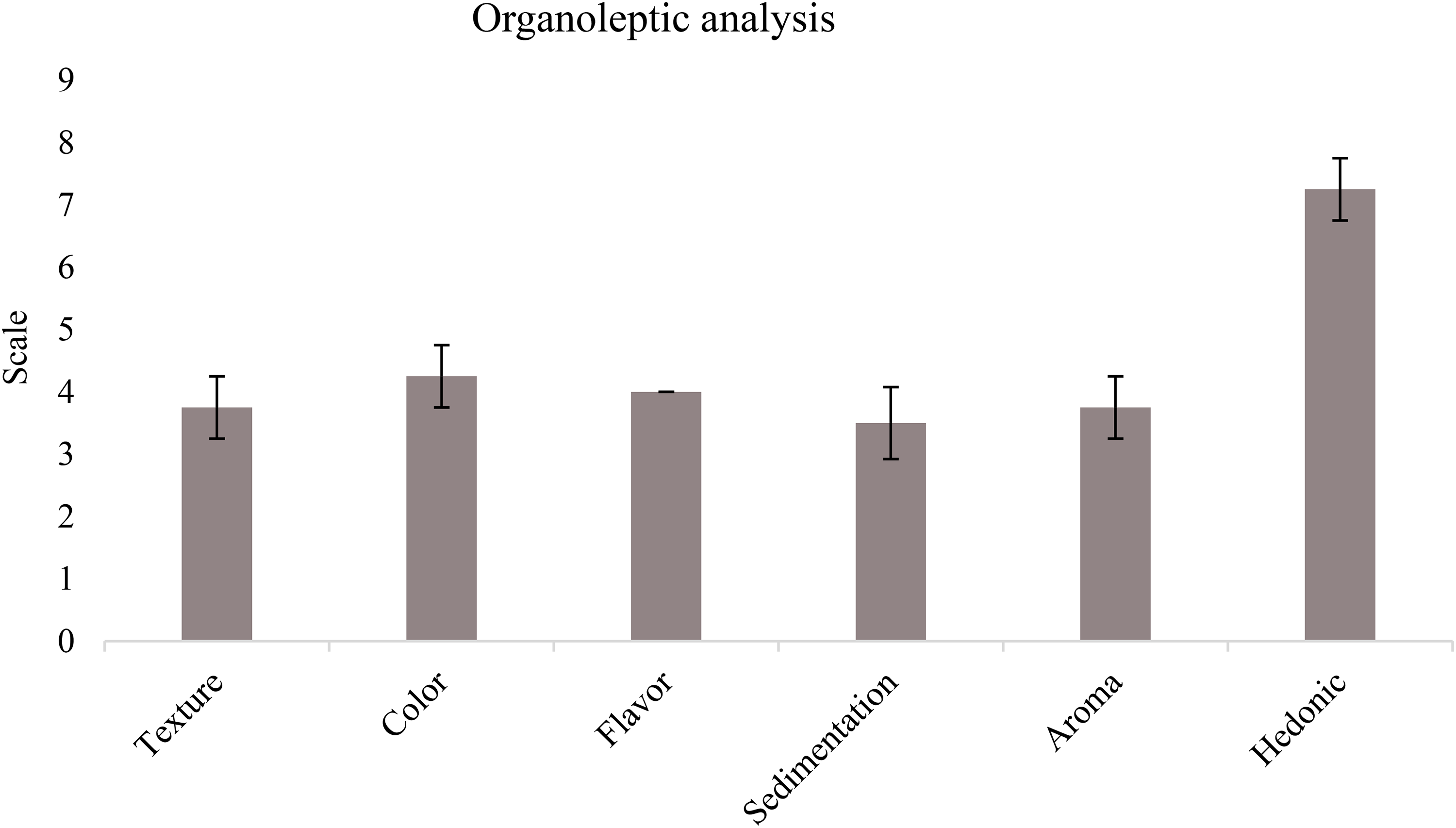
Organoleptic Analysis of Seaweed Bread. Evaluations Were Made on a Scale of 0 to 5 for the Following Attributes: Texture, Color, Flavor, Sedimentation, and aroma. the Hedonic Parameter was Evaluated on a Scale of 0 to 9. Values are Presented as Mean ± SD (n = 4).
Hepatic Function
The liver markers of individuals with type 2 diabetes are shown in Figure 4 before and after taking the nutraceutical for six weeks. The following determinations were analyzed: Alb, TP, T Bil, D Bil, Alt, Ast, Alp, and GGT. The slight differences in concentrations between before and after are not significant. These results appear favorable to us, suggesting the absence of liver toxicity during seaweed bread intake.

Hepatic Marker Profiles of Type 2 Diabetic Participants Before and After Taking Nutraceuticals for six Weeks. Alb: Albumin; TP: Total Protein; T Bil: Total Bilirubin; D Bil: Direct Bilirubin; Alt: Alanine Aminotransferase; Ast: Aspartate Aminotransferase; Alp: Alkaline Phosphatase and GGT: Gamma-Glutamyl Transferase are the Eight Hepatic Markers. the Darker Bars Show the Initial Concentrations, and the Lighter Bars Show the Final Concentrations. the Values (n = 4) are Shown as Mean ± SD.
Lipid Profile
Figure 5 shows the volunteers’ lipid profile. The results for TC, HDL-C, and LDL-C were stable; only a slight downward trend in TG levels was observed after consumption of the seaweed bread.

Type 2 Diabetes Volunteers’ Lipid Profiles Before and After Taking Nutraceuticals for six Weeks. The Beginning Concentrations of Four Lipid Markers – TC: Total Cholesterol; HDL-C: High-Density Lipoprotein Cholesterol; LDL-C: low-Density Lipoprotein Cholesterol and TG: Triglycerides are Shown by Darker Bars, While the Final Concentrations are Represented by Lighter Bars. The Values (n = 4) are Shown as Mean ± SD.
Renal Function
Figure 6 shows the volunteers’ renal function. While UA exhibited a propensity to decline, there was a minor tendency for the levels of Crea and Urea to rise.

Renal Function Parameters of the Type 2 Diabetic Participants Before and After Taking Nutraceuticals for Six Weeks. The Three Indicators’ Ultimate Concentrations—Creatine (Crea), Uric Acid (UA), and Urea—are Shown by Brighter Bars, While the Darker Bars Show the Starting Values. The Values (n = 4) are Shown as Mean ± SD.
Glucose Metabolism
Figure 7 illustrates the results of the volunteers in terms of glucose metabolism do not show a statistically significant change.

Type 2 Diabetes Volunteers’ Profiles of Glucose Metabolism Indicators Before and After Using Seaweed Bread for six Weeks. The Beginning Concentrations of Glucose (Gluc) are Shown by the Darker Bars, While the Final Concentrations are Shown by the Lighter Bars. The Values (n = 4) are Shown as Mean ± SD.
Figure 8 illustrates the results of the volunteers in terms of glucose metabolism. The results demonstrate a tendency for a reduction in HbA1c levels during the study period.

Glycated Hemoglobin (HbA1c) Levels (%) in Volunteers with Type 2 Diabetes Were Measured at Three Different Times: T0 (Before Consuming the Nutraceutical), T1 (After 6 Weeks of Consuming the Nutraceutical). The Values (n = 4) are Shown as Mean ± SD.
Indicators of Inflammation
Figure 9 represents the volunteers’ indicators of inflammation. The results show a tendency for a diminution in CRP values between the initial and final measurements.

Type 2 Diabetes Participants’ Inflammatory Markers Before and After Taking Nutraceuticals for Six Weeks. The C-Reactive Protein (CRP), a Measure of Inflammation, with Darker Bars for Starting Values and Lighter Bars for Ultimate Amounts. the Values (n = 4) are Shown as Mean ± SD.
Discussion
Organoleptic Analysis
The results of the hedonic evaluation were very positive (Figure 3). Foods that are pleasing to the palate are more likely to be consumed regularly, which is essential for people on controlled diets, whether to control cholesterol levels or improve diabetes.
Maintaining a controlled and beneficial diet becomes easier when the foods consumed are tasty, in addition to encouraging healthy eating habits. On the other hand, one of the negative comments about the product was the feeling of satiety it provided, which made it difficult to eat the recommended two slices.
Evaluation of the Metabolic Effects of the Nutraceutical on Volunteers
Throughout the six-week trial, the volunteers’ measurements showed no changes in most parameters related to nutraceutical intake. Although the small sample size prevented the results from being statistically significant, certain trends in specific parameters were noted, and while they are slight, they merit more examination and debate. The following discussion considers these minor alterations, which may be more prominent with a larger and more complete study sample. These changes included adjustments to the volunteers’ lipid, glucose, and inflammation markers, which may indicate an improvement in their metabolic health and that eating seaweed may help treat diseases like type 2 diabetes and dyslipidemia. Although the small sample size prevented the results from being statistically significant, certain trends in specific parameters were noted, and while they are slight, they merit more examination and debate. The following discussion considers these minor alterations, which may be more prominent with a larger and more complete study sample. In the hepatic profile, some slight changes are due to metabolism and are normal, and lend credibility to the administration of the nutraceutical, which does not reveal a cytotoxic effect at the liver level. Ast remained constant and GGT tended to decrease, however, Alt and Alp levels showed a tendency to increase (Figure 4). These modifications may be explained by pre-existing metabolic problems or by alterations in the volunteers’ hepatic function resulting in caused by the nutraceutical. 27 It is important to note that a tendency to increase in Alt and Alp level are associated with hepatic stress or inflammation. 28 According to Eid et al (2019), changes in these enzymes may indicate liver damage or adaptation, especially in metabolic conditions such as type 2 diabetes. The tendency for these parameters to increase can be interpreted as a response of the liver to the components present in the seaweed and the nutraceutical provided, which may have influenced the liver metabolism of the volunteers, especially in the synthesis of these hepatic enzymes. 29 According to research, high levels of Ast are linked to cardiovascular risk factors such insulin resistance, obesity, and metabolic syndrome (MetS). Ast is also known to connect with the risk of developing diabetes and cardiovascular disease.30,31 The slight tendency for Ast levels to decrease indicates that the nutraceutical may have a beneficial effect on this parameter, thereby reducing the risk of developing these conditions.
The study found a tendency for TP and Alb which may be caused by the bioactive substances in seaweed. Alb is a soluble protein that the liver produces and breaks down in the kidneys, liver, and muscle. 32 Ginoudis et al (2024) highlight that among its numerous vital physiological functions is the capacity to bind and transport diverse molecules, in addition to its antioxidant qualities. Additionally, the nutritional and inflammatory health of diabetics may be inferred from their Alb levels; for instance, low Alb levels are associated with chronic inflammation, poor nutritional status, and an increased risk of complications from diabetes. 21 Low Alb levels are a symptom of inflammatory processes, 32 therefore the study's noteworthy finding—that the biomarker increased, maybe due to the nutraceutical—suggests a possible decrease in inflammation. It is important, although, to notice that the literature is not entirely clear about the connection between Alb and inflammatory processes, especially in type 2 diabetics. 32
A decreasing tendency in the levels of TG and Gluc was observed, suggesting a positive effect on the modeling of these markers, which are important in controlling type 2 diabetes and reducing the cardiovascular risk associated with dyslipidemia. Notably, these results contrast with the findings from a human study using gelatin-based seaweed products, which reported an increase in TG levels 33 . This divergence may be attributed to the different seaweed species used, the presence of bioactive compounds such as carrageenan's (absent in our nutraceutical formulation) or other matrix and digestion-related factors. Such differences underscore the importance of characterizing the biochemical composition and physiological effects of each seaweed-based nutraceutical individually, particularly when translating findings from in vitro or animal models to human interventions. 34 The tendency to increase HDL-C levels, a measure that lowers LDL-C and protects against cardiovascular disease, is also important. 35 Considering that obesity and aging are linked to reduced HDL-C levels, the tendency observed is particularly relevant.36,37 The result observed in this parameter may be associated with compounds present in seaweed, such as fibers and polysaccharides, known to positively influence lipid metabolism.38,39 On the other hand, it is also important because changes in this biomarker among overweight and obese individuals are directly related to obesity and its impact on the lipid profile.36,37 The addition of the seaweed nutraceutical in the participants’ diet may have helped to offset the study's tendency to demonstrate a decrease in TG levels, which are carried by VLDL and whose rise is linked to high levels of TC and LDL-C. 40 Elevated triglyceride levels are not only a risk factor for cardiovascular disease but also contribute to the development of acute pancreatitis. 19 Therefore, even modest reductions in TG, as observed in this study, may have clinical relevance. On the other hand, the results showed an increasing tendency for TC and LDL-C, parameters associated with a higher cardiovascular risk, while the tendency to reduce TG levels is beneficial. These results may indicate an effect of seaweed on the lipid metabolism of volunteers, possibly due to bioactive compounds. 41 The results might be explained by the effects of seaweed polysaccharides, which are known to affect lipid metabolism by decreasing TC and increasing HDL-C.38,39 Brown macroalgae includes a form of polysaccharide called laminarins, which has been linked to decreased lipid levels and less intestinal absorption of cholesterol. 39 This supports the idea that the participants’ lipid profiles may have been favorably impacted by the seaweed's bioactive ingredients, which were incorporated in the nutraceutical. High TG levels, low HDL-C, and dense tiny LDL-C particles are all characteristics of people with type 2 diabetes that influence and increase their risk of cardiovascular disease.34,42 On the other hand, treatment for this type of person involves reducing LDL-C levels (< 70 mg/dL in diabetic patients at risk of cardiovascular disease and < 100 mg/dL for diabetics),34,43 and as well as the initial levels being within acceptable values, the final levels also remained within the limit, suggesting that the nutraceutical did not have a negative effect on this parameter and may even have helped to maintain these levels.
The slight tendency for Crea and Urea to increase (Figure 6) among the volunteers may indicate that the nutraceutical did not have a notable impact on these parameters. Additionally, the results remain within the usual range. 44
Consuming macroalgae has been associated to a decrease in elevated UA levels 45 (Figure 6). Therefore, seaweed's anti-inflammatory and antioxidant qualities have proved essential in lowering oxidative stress and avoiding other illnesses; in fact, it is advised to use this meal in diabetic treatment. 46 According to Le Couteur et al (2010), hyperuricemia is related to several diseases, including insulin resistance, type 2 diabetes, obesity, heart failure, hypertension, and MS. The decreasing tendency in UA levels observed may suggest a favorable impact of the nutraceutical, and it would be advantageous for volunteers who have type 2 diabetes, as elevated levels of this biomarker have been associated with the previously listed disorders. However, different research has already demonstrated that elevated UA levels can change the gut microbiota and harm the intestinal barrier. 47
Regarding glucose metabolism, in addition to fasting blood glucose, HbA1c was assessed as a marker of long-term glycemic control, allowing for a more rigorous assessment of the intervention's potential benefits on diabetes outcomes. The stability of HbA1c seen in this trial implies that the product did not impact glycemic management, while also providing an essential additional metric beyond short-term glucose changes. Although other variables, such as insulin sensitivity or oral glucose tolerance, could improve the analysis, they were outside the scope of this exploratory trial. Nonetheless, the addition of HbA1c in this preliminary study makes an important contribution, as previous research depend simply on fasting glucose. Future study with larger sample numbers and more markers is needed to fully assess the influence on glucose metabolism and diabetes risk. In the study, there was a tendency to decrease in both Gluc and HbA1c levels (Figures 7 and 8) during the duration of the study. This is in line with algal polysaccharides’ anti-diabetic qualities, which help to improve insulin sensitivity and regulate blood glucose levels.38,48
Previously, Thakuri et al (2024) showed that extracts of Gracilariopsis chorda (Rhodophyta) significantly decreased Gluc and insulin levels in the plasma of mice, indicating that seaweed can help improve glucose homeostasis, which reflects the positive results obtained in this study, even though the reduction in Gluc was not high. However, another study found a correlation between high amounts of TG and high levels of Gluc. 49 Thus, it can be said that the tendency to reduce Gluc observed in the volunteers may also be associated with and contribute to the tendency to reduce TG levels, in addition to the effect of the nutraceutical. Macroalgae's fibers and polysaccharides may be responsible for the nutraceutical's beneficial effects. Fiber has been linked to normalizing cholesterol and blood glucose levels. 39 These effects were observed in the research, suggesting that the positive might have been attributed to the fiber content of the seaweed. The anti-diabetic mechanisms of action of seaweed have been associated with various compounds, such as phlorotannin, fucoxanthin, polyphenols and polysaccharides48,50 which have been shown to suppress hepatic gluconeogenesis and lower the activity of digestive enzymes such aldose reductase, lipase, α-amylase, and α-glucosidase. 51 The inhibition of the lipase enzyme leads to the hydrolysis of fatty acids and monoglycerides, which prevents their absorption. In this way, there are benefits in weight loss and in the lipid and carbohydrate profile of individuals.52,53 On the other hand, a reduction in the activity of the α-glucosidase enzyme consequently slows down the digestion of carbohydrates, which leads to slower glucose absorption and reduces the dose of glucose absorbed in the body. 54 The HbA1c values showed a slight decreasing tendency. Given that this marker is based on a retrospective analysis of blood glucose readings taken during the previous four to eight weeks (Sherwani et al, 2016), it is reasonable to assume that these values would continue to decrease if consumption of the nutraceutical was continued, but this type of conclusion would be supported with a longer study duration and additional analyses.
Another key point for further analysis is the Pancreatic β-cells amylin-release, which regulates postprandial glucose levels by affecting stomach emptying, glucagon secretion, and satiety. Amylin production and aggregation have been linked to type 2 diabetes, namely β-cell malfunction and insulin resistance. 55 Although amylin was not formally tested in this study, the reported effects on glycemic indicators and lipid metabolism may have been impacted by amylin-related pathways. Given the potential interactions between dietary bioactive chemicals, amylin regulation, and metabolic health, future research should look at whether seaweed-derived nutraceuticals can influence amylin secretion or activity. Such findings can contribute to a better understanding of their involvement in glucose homeostasis and diabetes prevention.
Between the initial and final evaluations, the study also revealed a tendency to decrease CRP levels (Figure 9), an inflammatory marker, indicating a reduction in the inflammatory state. The reduction in long-term inflammation could have benefits for the individuals’ cardiovascular health. 56 This is likely because the nutraceutical seaweed is expected to have anti-inflammatory properties.41,48,50 Chronic inflammation is related to people with type 2 diabetes and/or cardiovascular disease. This result is in line with the study by Thakuri et al (2024), as previously mentioned. Conversely, the dietary fiber found in macroalgae has the potential to improve intestinal bacteria and lower inflammatory responses linked to disorders including metabolic syndrome and type 2 diabetes. 39 According to Chang et al (2019), there has been confirmation that the increase in Alb concentration in diabetic volunteers may indicate a decrease in inflammation. This finding on CRP levels is consistent with the discussion of Alb concentrations.
Although statistically significant differences in the results obtained were not observed, and the sample was a small size, it was possible to observe a trend towards improvement in some parameters, and all the previous discussion was based on and attempted to justify this trend. On the other hand, the absence of adverse effects and the maintenance of biochemical levels within normal ranges are positive results. These results indicate that seaweed nutraceuticals may be a safe option for individuals with diabetes and hypercholesterolemia, but further studies are needed, with a larger sample and a longer study period, to confirm the preliminary results obtained and explore potential additional benefits, beyond those seen in lipid and carbohydrate metabolism.
The growing complexity of functional foods and nutraceuticals has driven the need for advanced analytical strategies capable of elucidating their molecular composition, bioactivity, and safety. NMR-based metabolomics—both targeted and untargeted—has become a key tool for identifying bioactive compounds and potential contaminants in plant- and animal-derived matrices, thus improving our understanding of their health effects and nutritional value.7,8 Recent methodological advances have significantly increased the sensitivity and resolution of these techniques, enabling the detection of low-abundance metabolites and improving the interpretation of complex biochemical profiles.9,10 These approaches are particularly valuable when evaluating ingredients rich in fatty acids and proteins, such as algae, where even slight shifts in pH can influence protein folding, molecular interactions, and overall bioavailability. 57 In addition, metabolomic platforms have proven effective in ensuring product authenticity and quality, such as detecting adulteration in high-value oils using 700 MHz NMR coupled with chemometric tools - an approach that may also benefit future quality control and formulation strategies for seaweed-based nutraceuticals.11,12 Together, these developments highlight the importance of integrating metabolomic and biophysical techniques in the ongoing evaluation and optimization of functional food products.
Factors Affecting the Therapeutic Efficacy of Seaweed
One of the problems mentioned in the literature is the bioavailability of bioactive chemicals found in seaweed. 58 There is a lack of understanding about the bioavailability of chemicals found in brown seaweed, because of the variety of seaweed, which might change depending on the growing conditions. 58 This component is crucial as the kind of seaweed used and the conditions under which it is grown might have an impact on the variety and concentration of bioactive substances that are present. 27 While in vitro digestion studies are crucial for evaluating and comprehending the stability of seaweed components in extracts and the seaweed matrix, 59 in vivo/ex vivo studies and human studies should also be considered because the species of seaweed used can have a significant impact on absorption and metabolism. 39 Since biological activity is linked to bioavailability, these studies should evaluate the “absorption, distribution, metabolism and excretion” (ADME) profile of bioactive chemicals in addition to evaluating potential interactions with food or medications. 39
Other factors to consider are the processing and storage of the seaweed and the stability of the bioactive compounds during the production of the nutraceutical, which can significantly influence the final therapeutic efficacy. 27 The final safety of the product produced is also important because, although there were no negative or adverse effects in this study, it is important to consider certain aspects in the production of the seaweed nutraceutical to guarantee food safety and consistency in production.
Limitations of the Study
Despite the insightful findings, this study has limitations that should be acknowledged. Initially, the study consisted of a small sample to obtain accurate results of the nutraceutical's action, and the results would certainly be more representative if the number were larger and constant, and if the volunteers complied with the study's previously defined characteristics. This last factor is difficult to control as we cannot guarantee that each volunteer will comply with the practices they have committed to. Another important point would be to include young adults (18-25 years old) to assess the effect on younger individuals who don't have so many variables to consider; however, research in this age group is limited because it is difficult to reach and find this type of individual when compared to middle-aged adults and children. 60 On the other hand, it should be borne in mind that there is always variability between individuals in criteria such as physical exercise, pharmacological therapy and the diet they practice.
Another limiting factor in the development of the study topic was the small number of specific publications in the area. Additionally, most studies evaluating the effects of seaweed-derived compounds have been conducted in vitro or in animal models, which limits the direct applicability of their findings to human health. This highlights the importance of human-based trials, such as the present study, in expanding current knowledge on the metabolic impact of seaweed-derived nutraceuticals. 33 In addition, there is little uniformity in the studies, due to the different seaweed used, the modes of digestion, the parameters to be studied, the different methodologies used, etc. 27 In human studies, one of the most limiting factors is the dietary differences between populations, ensuring correct adherence to diet as well as the principles and objectives of the studies. 27 It should also be borne in mind that metabolism itself is not the same in all individuals and varies greatly, a limiting factor for studies carried out on humans.
One of the strengths of the study is that it is one of the few in the literature, which makes it difficult to interpret the results, but adds important new findings on the effect of seaweed nutraceuticals on carbohydrate and lipid metabolism. On the other hand, the seaweed used in the production of the nutraceutical is already approved for food.
In this study, TC levels were steady, showing that the product had no deleterious effects on lipid metabolism. Since TG metabolism is intimately connected with TC metabolism, as described above, the observed TG reduction without detrimental alterations in TC supports the intervention's potential positive effect. Furthermore, the results showed a decrease in CRP, indicating an anti-inflammatory impact, while also demonstrating the lack of possible liver damage. Consequently, this study is a unique and valuable nutraceutical analysis, as published studies frequently do not consider these extra indicators (CRP and hepatic biomarkers), which are essential for body homeostasis. As a result, this preliminary research included not only monitoring TC, TG, and glucose levels, but also assessing potential adverse effects, particularly those connected to liver function, which are critical to general human well-being. Thus, with results, we demonstrate that this product with some improvement can be target safely in a scale up trial with safety and system corroborated by this preliminary study, including all the product have the same quality in all the study without changing the quality, thus, reduction of the normal flaw in nutraceutical studies where the products can change between batches. However, in a scale up trial, there is a need to implement other biomarkers related to the Glucose metabolism, specifically to the diabetes-related indicators to provide a more complete assessment.
Conclusions
The consumption of the gluten-free seaweed-based nutraceutical led to favorable trends in several biochemical parameters. A slight reduction in HbA1c suggests a positive effect on glucose metabolism, which is particularly relevant given its role as a long-term marker of glycemic control. Moreover, a tendency for a decrease in triglyceride (TG) levels was observed - an important finding considering that elevated TG is a known cardiovascular risk factor and is also implicated in the development of pancreatitis.Thus, a bigger cohort is need to confirm the results and get some improvements which were found after this exploratory study.
Additionally, a mild reduction in CRP levels points to a potential anti-inflammatory effect, while stable hepatic markers confirm the absence of liver toxicity, reinforcing the product's safety profile. The organoleptic evaluation showed encouraging results regarding product acceptability, although further improvements in texture, flavor, and sedimentation are necessary to enhance consumer adherence.
Notably, these effects - though preliminary - may be particularly beneficial for the elderly population, who are more likely to exhibit chronic low-grade inflammation and are at higher risk for atherosclerotic and cardiovascular events. Therefore, the integration of such a nutraceutical could represent a valuable strategy to complement dietary interventions in vulnerable groups. The preliminary findings provide preliminary insights into the possible impacts of seaweed-based nutraceuticals, which we feel can serve as a standard platform for future investigations involving bigger population, thus one of the future perspective is to scale-up this type of analysis, using the value chain and methodology to improve the human population involved in the assay, recruiting more personnel and funds to develop a better system. This demonstrated the risks, problems and possible solutions, that in a bigger humans’ trials number were a critical flaw which can be a deadly for a cohort study. Because we do not control the human diet and now we gathered a safety mechanism to check everything with implementing a study quality control system in all the methodology from the seaweed biomass to the blood analysis and statistical analysis.
In conclusion, while this was a small-scale exploratory study, it contributes to the growing body of human-based research on marine-derived functional foods. The findings support the potential of seaweed-based nutraceuticals as sustainable, safe, and promising tools to help manage glucose and lipid metabolism, particularly in populations at metabolic risk.
Footnotes
Acknowledgments
This work was supported by FCT -Foundation for Science and Technology, I.P., in the structure of Project UIDB/04004/2025
- Centre for Functional Ecology -Science for the People & the Planet and DOI identifier 10.54499/UIDB/04004/2020 (

Institutional Review Board Statement
This study was conducted following the principles of the Declaration of Helsinki and approved by the Ethics Committee of the Polytechnic Institute of Coimbra (Coimbra, Portugal) under opinion no. 5/CEIPC/2024 (2024/01/31).
Consent to Participate
Everyone participated voluntarily and had previous knowledge of the study. They were provided with a comprehensive description of the study's goal, methods, potential dangers, and advantages, as well as the option to quit at any moment without penalty. Consent was acquired in compliance with Polytechnic Institute of Coimbra policies and all applicable ethical standards. Before participating, all volunteers submitted sociodemographic information and signed a written agreement.
Author Contributions
Conceptualization, J.O.T., J.C., A.V. and L.P. ; Conceptualization, J.O.T., J.C., A.V. and L.P. ; Laboratory work in seaweed-based nutraceutical, J.O.T and J.C. ; Laboratory work in Blood analysis, A.V. and A.C. Writing—original draft preparation, J.O.T; writing—review and editing, J.O.T., J.C., A.V. and L.P.; visualization, A.V.; supervision, L.P. and A.V. All authors have read and agreed to the published version of the manuscript.
Funding
The authors received no financial support for the research, authorship, and/or publication of this article.
Declaration of Conflicting Interests
The authors declared no potential conflicts of interest with respect to the research, authorship, and/or publication of this article.